




No CrossRef data available.
Article contents
Assessment of the anthelmintic effect of natural plant cysteine proteinases against the gastrointestinal nematode, Heligmosomoides polygyrus, in vitro
Published online by Cambridge University Press: 13 October 2004
Abstract
We examined the mechanism of action and compared the anthelmintic efficacy of cysteine proteinases from papaya, pineapple, fig, kiwi fruit and Egyptian milkweed in vitro using the rodent gastrointestinal nematode Heligmosomoides polygyrus. Within a 2 h incubation period, all the cysteine proteinases, with the exception of the kiwi fruit extract, caused marked damage to the cuticle of H. polygyrus adult male and female worms, reflected in the loss of surface cuticular layers. Efficacy was comparable for both sexes of worms, was dependent on the presence of cysteine and was completely inhibited by the cysteine proteinase inhibitor, E-64. LD50 values indicated that the purified proteinases were more efficacious than the proteinases in the crude latex, with purified ficin, papain, chymopapain, Egyptian milkweed latex extract and pineapple fruit extract, containing fruit bromelain, having the most potent effect. The mechanism of action of these plant enzymes (i.e. an attack on the protective cuticle of the worm) suggests that resistance would be slow to develop in the field. The efficacy and mode of action make plant cysteine proteinases potential candidates for a novel class of anthelmintics urgently required for the treatment of humans and domestic livestock.
Information
- Type
- Research Article
- Information
- Copyright
- © 2005 Cambridge University Press
INTRODUCTION
Infections with gastrointestinal (GI) nematodes have serious consequences for the health of millions of people world-wide, particularly in the tropics, and cause serious economic losses in livestock farming. A number of different control strategies, including anthelmintics, are widely used to limit the extent of infection with these parasites. However, whilst anthelmintic usage has been beneficial for the health of both humans and animals, this form of control is also associated with problems, including detrimental effects to the environment (Cox, 1999), consumer concern over potential synthetic drug residues in animal products (Knox, 2000; Dalton & Mulcahy, 2001), and loss of efficacy through development and spread of resistance. This latter problem is by far the most important because frequent mass chemotherapy with the currently available anthelmintics has generated an environment favouring selection for resistant parasites. Resistance is now virtually global among GI nematodes of livestock (Waller, 1986; Gill & Lacey, 1998; Jackson & Coop, 2000), and there are some indications of resistance among GI nematodes of humans (Coles, 1995; de Clercq et al. 1997; Reynoldson et al. 1997). Resistance has already developed to the three drug classes in current use (the benzimidazoles, the imidazothiazoles/tetrahydropyrimidines and the macrocyclic lactones), despite each class having a different mode of action (Coles, 1998; Martin & Robertson, 2000). With no signs of forthcoming new chemotherapeutic drugs or vaccines, alternative anthelmintic sources are urgently required.
For centuries, medicinal plants have been used in the treatment of GI nematode infections in developing countries. Among the earliest and most widely used have been plants which contain proteolytic enzymes of the cysteine catalytic class, such as papaya (Carica papaya) (Berger & Asenjo, 1940), pineapple (Ananas comosus) (Berger & Asenjo, 1939) and fig (Ficus species; Robbins, 1930). Extracts of the fruit or protective latex of these plants contain cysteine proteinases that have been shown to have anthelmintic activity in vitro and in vivo (Hansson et al. 1986; Satrija et al. 1994, 1995). For instance, Satrija et al. (1995) demonstrated that crude papaya latex significantly reduced the worm burden and egg output of mice infected with the GI nematode Heligmosomoides polygyrus. Although encouraging results for the anthelmintic efficacy of natural plant cysteine proteinases were provided by these studies, the mechanism by which the enzymes carry out this role is still not clearly understood. Also, to date, no comparative studies of the efficacy of a range of plant cysteine proteinases have been carried out. Therefore, we examined crude and purified enzymes from papaya (Carica papaya), fig (Ficus carica and Ficus benjamina), pineapple (Ananas comosus), kiwi fruit (Actinidia chinensis) and Egyptian milkweed (Asclepias sinaica), using the rodent GI nematode Heligmosomoides polygyrus, in an in vitro assay employing preparations that had been standardized for the number of active enzyme molecules, thus enabling direct comparison between enzymes.
MATERIALS AND METHODS
Animals
Female CD1 mice were purchased from Harlan UK Ltd (Oxon, UK) at 6 weeks of age and infected at 7 weeks of age. The animals were provided with food and water ad libitum. All animal procedures were carried out under UK Home Office licence number 40/2621 and under the regulations of the Animals (Scientific Procedures) Act 1986.
Parasites
Mice were infected with a suspension of 200 H. polygyrus L3 in 0·2 ml of distilled water. From 14 days post-infection, mature male and female worms were available for use in vitro. The mice were killed by exposure to CO2, the small intestine was removed in its entirety and opened longitudinally with a pair of blunt-ended dissecting scissors. The intestine was placed into a Petri dish containing pre-warmed (37 °C) Hanks' Balanced Salt Solution (HBSS) for 5–10 min to allow the worms to exit the intestine. The adult male and female worms were identified by observation under the microscope, separated and washed in pre-warmed HBSS before use.
Enzymes
The enzymes used throughout this study were cysteine proteinases that occur naturally in fruits and latices of a number of plants: papain (Sigma) and chymopapain (Sigma) from the latex of the papaya plant (Carica papaya) (Zucker et al. 1985), ficin (Sigma) from the latex of the fig plant Ficus carica (Kramer & Whitaker, 1964), stem bromelain (Sigma) from the stem of the pineapple plant (Ananas comosus) (Rowan, Buttle & Barrett, 1990), crude papaya latex (Sigma), Ficus carica latex (collected from the variety Brown Turkey growing in the University of Sheffield Experimental Gardens) and Ficus benjamina latex (University of Sheffield Experimental Gardens). Protein fractions containing cysteine proteinases were obtained by acetone precipitation (Rowan et al. 1990) from pineapple fruits, kiwi fruits (Actinidia chinensis; Sugiyama et al. 1997) and Egyptian milkweed latex (Asclepias sinaica). Pepsin (BDH), trypsin (BDH) and α-chymotrypsin (Sigma), as examples of non-cysteine proteinases found in the alimentary tract of mammals, were also tested.
Enzyme active-site titration assays
To determine the operational molar concentration of active cysteine proteinase, a known protein concentration of enzyme was titrated with increasing concentrations of the cysteine proteinase inhibitor, L-trans-epoxysuccinyl-leucylamido(4-guanidino)butane (E-64) (Sigma) (Zucker et al. 1985). Pepstatin (Sigma) was used in a similar manner for pepsin, TLCK (Sigma) for trypsin and chymostatin (Sigma) for chymotrypsin. E-64 titrations utilized tubes containing 0–0·5 μM of the inhibitor, in increments of 0·05 μM. Pepstatin was used at concentrations of 0–1 μM, in 0·1 μM increments; TLCK was used at 0–150 μM, in increments of 10 μM, and chymostatin at 0–15 μM, in increments of 1 μM. The activating buffer used for the E-64 titrations was 400 mM phosphate buffer, pH 6·85, with 16 mM L-cysteine (Sigma), whereas the buffer for the pepstatin titration was 0·1 M citrate buffer, pH 2·0, and for the TLCK and chymostatin titrations, trypsin assay buffer, pH 8·0 (50 mM Tris–HCl, 100 mM NaCl, 20 mM CaCl2) was used. The enzyme activity was detected using one of five substrates: benzoyl-arginyl-p-nitroanilide (Bz-Arg-pNA) (Bachem) for papain, chymopapain, crude papaya latex and trypsin; benzyloxycarbonyl-phenylalanyl-arginyl-p-nitroanilide (Z-Phe-Arg-pNA) (Bachem) for F. carica latex, F. benjamina latex, ficin, pineapple fruit extract, kiwi fruit extract and Asclepias sinaica latex extract; benzyloxycarbonyl-arginyl-arginyl-p-nitroanilide (Z-Arg-Arg-pNA) (Bachem) for stem bromelain; haemoglobin (Sigma) for pepsin; and N-glutaryl-L-phenylalanine-p-nitroanilide (GPNA) (Sigma) for chymotrypsin.
Effects of enzymes on the motility of adult worms
One adult male and one adult female worm were transferred to each well of a 4-well plate containing Hanks' saline, pH 7·2 (without phenol red) and 16 mM L-cysteine (Sigma), and one of the following enzyme preparations: 0–50 μM (in 12·5 μM increments) papain, 0–200 μM (in 50 μM increments) chymopapain, 0–200 μM (in 50 μM increments) crude papaya latex proteinase, 0–200 μM (in 50 μM increments) F. carica latex proteinase, 0–400 μM (in 50 μM increments) F. benjamina latex proteinase, 0–30 μM (in 5 μM increments) ficin, 0–200 μM (in 50 μM increments) bromelain, 0–200 μM (in 25 μM increments) pineapple fruit extract, 0–400 μM (in 100 μM increments) kiwi fruit extract proteinase or 0, 15 or 25 μM milkweed latex extract (one enzyme concentration per plate). One adult male and one adult female worm were also transferred to each well of 4-well plates containing either Hanks' saline buffered to pH 2·0 with 0·2 M glycine and 0–250 μM (in 50 μM increments) pepsin, or Hanks' saline buffered to pH 8·0 with trypsin buffer (Wang, Yang & Craik, 1995) and 0–200 μM (in 50 μM increments) trypsin or 0–200 μM (in 50 μM increments) chymotrypsin. Control wells were incubated in parallel, and contained either no enzyme and/or no cysteine, or enzyme which had been pre-incubated with E-64. These plates were incubated at 37 °C and the state of the worms was assessed visually every 15 min for 2 h, using a standard 0–5 motility scale, where 0 is motionless and 5 is fully active. The figures show the mean motility for specific treatments at given times (± standard error of the mean (S.E.M.)). In separate experiments, 3 male and 3 female worms were removed from plates containing either 25 μM papain, 200 μM chymopapain, 200 μM crude papaya latex proteinase, 200 μM F. carica latex proteinase, 400 μM F. benjamina latex proteinase, 30 μM ficin, 100 μM bromelain, 200 μM pineapple fruit extract, 400 μM kiwi fruit extract proteinase, 25 μM milkweed latex extract, 200 μM pepsin, 200 μM trypsin, 200 μM chymotrypsin, or HBSS with and without 16 mM L-cysteine every 30 min for 2 h and fixed in 2·5% glutaraldehyde in 0·1 M phosphate buffer, pH 7·2 for 1 h. These worms were then prepared for scanning electron microscopy (SEM) following post-fixation in 1% osmium tetroxide, dehydration in increasing ethanol concentrations from 30–100% and critical-point drying from CO2. Dried specimens were mounted on aluminium stubs with quick-drying silver paint (Agar Scientific Limited, Essex, UK) and sputter-coated with gold before examination in a JEOL JSM-840 scanning electron microscope.
Statistics
The data from the in vitro motility experiments were analysed using repeated measures ANOVA in SPSS (version 9.0). For analysis of changes in motility with time, we fitted time as the within-subject factor. Sex (male/female) of worms, enzyme (where several extracts were being compared), and cysteine (presence/absence) were fitted as between-subject factors, as relevant, and the concentration of latex or enzyme as a covariate, in full factorial models that incorporated all possible interactions. When the data did not meet the requirements of sphericity (Mauchley's Test of Sphericity), we used the Huynh-Feldt adjustment to the degrees of freedom to interpret significance on the side of caution. Figures show data for additional controls including worms maintained in Hanks' and/or Hanks' with cysteine, but these were only included in analyses when appropriate. In some experiments, where a priori predictions were relevant, we used contrasts between the specified groups and all others fitted in the analysis, as detailed in the results section. The linear and curvilinear lines illustrated on the figures were fitted using polynomial regression in Microsoft Excel.
RESULTS
Incubation of worms in varying concentrations of enzyme
Representative graphs of the time-course of enzyme activity for different concentrations of the plant cysteine proteinases are shown in Fig. 1A–D. Table 1 summarizes the results of the whole series of experiments in terms of the time for initial damage to become visually detectable. The derived LD50 values at 90 min incubation are shown in Table 2.

Fig. 1. The motility of Heligmosomoides polygyrus adult worms exposed to various natural plant cysteine proteinases in vitro. Data for male and female worms were combined because there was no significant effect of sex. (A) Crude papaya latex (0–200 μM) produced a time- (F4,144·6=15·2, P<0·001) and concentration-dependent (F1,36=73·62, P<0·001) decrease in motility. (B) F. carica latex (0–200 μM) produced a time- (F5,180=10·6, P<0·001) and concentration-dependent (F1,36=34·0, P<0·001) decrease in motility. (C) Pineapple fruit extract (0–200 μM) produced a time- (F4·7,93·6=14·1, P<0·001) and concentration-dependent (F1,20=34·3, P<0·001) decrease in motility. (D) Kiwi fruit extract (0–400 μM) produced a time-dependent decrease in motility (F5·4,250·9=12·7, P<0·001), which was seen in the control and in all concentrations of the extract, but no concentration-dependent decrease in motility.


It is evident that, with the exception of the enzymes extracted from the kiwi fruit, all of the cysteine proteinase preparations produced a rapid detrimental effect on H. polygyrus adult male and female worms. Motility of the worms declined in all experiments, including the controls, over the period of observation, but loss of motility was significantly greater among worms exposed to plant cysteine proteinases and there was no significant difference between the sexes (see also below). LD50 values for inhibition of motility after 90 min incubation clearly indicated that pineapple fruit extract, purified ficin and milkweed latex extract had the most potent effect in these assays (Table 2). This effect involved a major reduction in worm motility and, at the light microscope level, clearly observable signs of damage to the cuticle from 15–30 min, resulting in no obvious movement by the worms as the damage rapidly progressed. In contrast, loss of motility in Hanks' solution alone and in Hanks' with cysteine was markedly slower.
Importance of cysteine and the effect of the inhibitor, E-64
The cysteine proteinases utilize the thiolate anion (S−) of the active site cysteine in the hydrolysis of peptide bonds. If the thiolate group is oxidized to form a mixed disulphide or sulphinic acid, the enzyme is reversibly or irreversibly inactivated (Baker & Drenth, 1987). Catalytic ability is therefore maintained by the addition of a reducing agent and, in our experiments, we have used cysteine for this purpose. Adult worms were incubated in the presence of papain, F. carica latex, bromelain and Hanks' saline (control), with and without cysteine (results not shown). Worm motility was high in Hanks', with and without cysteine, but the activity of the two enzymes and the latex was crucially dependent on the presence of cysteine (for main effect of cysteine, F1,48=90·6, P<0·001). There was a time-dependent reduction in motility in the presence of cysteine proteinases (2-way interaction between time and treatment (4 levels, no enzyme, papain, F. carica latex and bromelain) F24,384=1·61, P=0·037), which was highly dependent on the presence of the activator, cysteine (3-way interaction between time×treatment×cysteine, F24,384=2·8, P<0·001).
E-64, which binds covalently to the active site sulphur of the enzyme on a 1[ratio ]1 molar basis, is a fast-acting and irreversible inactivator of papain and related cysteine proteinases (Varaghese et al. 1989). It is therefore very useful as a titrant of the active forms of cysteine proteinases. Pre-treatment of crude papaya latex, papain, chymopapain, F. carica latex, F. benjamina latex, ficin, pineapple fruit extract and stem bromelain with E-64 virtually abolished the anthelmintic activity, demonstrating that the cysteine proteinases were the major active principle. A representative experiment is illustrated in Fig. 2, where the motility of adult H. polygyrus was assessed in the presence/absence of papain, the presence/absence of cysteine and the presence/absence of E-64, in a full factorial design. We tested the a priori prediction that the worms treated with papain [+] and cysteine [+] but not E-64 [−] would differ significantly from all the remaining treatment groups in this experiment. Fig. 2 and the inserted table clearly show that only treatment with papain combined with cysteine, in the absence of E-64, resulted in a rapid decline in worm motility (F1,56=49·8, P<0·001). None of the other treatments varied significantly in terms of their effects on worm motility (F6,56=0·37, P=N.S.). Thus, the presence of cysteine is essential for the nematocidal activity of the cysteine proteinases in vitro, and E-64 completely blocks the loss of activity attributable to papain with cysteine.

Fig. 2. The motility of Heligmosomoides polygyrus adult worms exposed to 25 μM papain in an experiment based on a fully factorial design incorporating presence/absence of the enzyme and/or presence/absence of cysteine and/or presence/absence of the cysteine proteinase inhibitor, E-64. For clarity, changes in motility with time are illustrated only for 3 control groups, as shown. The table gives mean motility levels after 2 h for all 8 groups. Data were analysed as described in the text.
Incubation of worms in varying concentrations of mammalian intestinal proteinases
We also assessed the effects of alimentary tract proteinases. H. polygyrus adult worms remained active and motile in the presence of pepsin in acid medium and in the presence of chymotrypsin and trypsin in slightly alkaline medium (data not shown). These enzymes had no significant effect (P=N.S.) on the time-dependent (F7·4,326·5=12·7, P<0·001) reduction in the motility of adult worms.
Effect of cysteine proteinases on male and female worms
Finally, we assessed whether male and female worms were differentially affected by papain. For this, we combined data from three of the above experiments, selecting two treatments from each, in which motility was assessed in either Hanks' saline or Hanks' with papain and cysteine. The concentration of papain used was 25 μM (data not shown). Analysis was by 4-Way ANOVA with time as the within-subject factor, and experiment (3 levels), sex and papain (presence or absence of papain with cysteine) as between-subject factors. There were some minor differences between the three experiments but only in terms of the overall rate of decline of motility in the presence/absence of papain (2-way interaction between time and experiment and 3-way interaction between time, experiment and papain: F15,271·2=1·9, P=0·024 and F15,271·2=2·73, P=0·001, respectively). There was a significant reduction in motility over the 2 h period in all groups (main effect of time, F7·5,271·2=49·5, P<0·001), with a significantly greater reduction in the groups containing papain (2-way interaction between time and presence/absence of papain, F7·5,271·2=12·5, P<0·001). Papain was confirmed to have a highly significant effect (main effect of papain, F1,36=45·7, P<0·001). With these significant effects taken into consideration, there was no difference between the sexes in the degree or rate of loss of motility (main effect of sex, F1,36=0·041, P=N.S.).
SEM of worms incubated in various concentrations of different enzymes
The cuticle of H. polygyrus was observed, using SEM, at equivalent points along the body of adult male and female worms over a 2 h time-course. Neither pepsin nor incubation with HBSS containing cysteine produced any noticeable morphological change to the structure of the cuticle (Fig. 3E and F) over the 2 h of the experiment. In each of these treatments, the cuticular structure was similar to that reported previously in H. polygyrus and other trichostrongyles, with a synlophe comprising prominent longitudinal ridges or crêtes (Durette-Desset, 1971), a generally smooth appearance between the ridges and no transverse architecture.

Fig. 3. Scanning electron micrographs of Heligmosomoides polygyrus adult worms exposed to a variety of natural plant cysteine proteinases in vitro. Clear evidence of damage to the cuticle can be seen from 60 min in 200 μM crude papaya latex (A), 30 μM ficin (B), and 200 μM pineapple fruit extract (C). Note the transverse wrinkling leading to signs of shedding of the cuticle after 90–120 min. In contrast, worms incubated in 400 μM kiwi fruit extract (D), HBSS and 16 mM L-cysteine (E), and 200 μM pepsin (F) showed little sign of cuticular damage, even after 120 min incubation. Scale bar=10 μm.
Following incubation in all the cysteine proteinase preparations tested, with the exception of the kiwi fruit extract, there was obvious progressive damage to the cuticle characterized by the initial appearance of transverse wrinkles and folds, which appeared to give rise to sloughing of the outer cuticle (Fig. 3A, B and C at 60, 90 and 120 min). This cuticular damage was specific to the cysteine proteinases because pre-incubation with cysteine proteinase-specific inhibitor, E-64, almost completely abolished the damage on the cuticle as assessed through SEM (results not shown). It is notable that worms incubated in kiwi fruit extract, which contained active cysteine proteinase, showed no changes in cuticular morphology (Fig. 3D), consistent with its lack of effect in worm motility assays.
DISCUSSION
This is the first comparative study of the efficacy of a range of plant cysteine proteinases as anthelmintics, and demonstrates, in vitro, that cysteine proteinases from a variety of plant species are indeed efficacious as anthelmintics against H. polygyrus. Our observations clearly indicate that the mechanism of action of all the efficacious plant cysteine proteinases is similar, and probably identical, involving digestion and removal of the cuticle. It is evident that the loss of motility associated with incubation of H. polygyrus adult worms in cysteine proteinases occurs whenever the cuticle is damaged, suggesting that these nematodes are sensitive to cuticle removal/damage. This additionally suggests that the cuticle is crucial for survival of gastrointestinal nematodes. Damage to the cuticle of H. polygyrus was specific to cysteine proteinases because control assays measuring the motility of adult male and female worms exposed to the gut aspartic and serine proteinases pepsin, trypsin and chymotrypsin yielded normal, healthy, active worms at the end of the 2 h incubation under identical conditions.
The proteins in the cuticle that are sensitive to digestion by the cysteine proteinases remain unknown, although the nematode cuticle consists largely of collagens cross-linked by disulphide bonds (Maizels, Blaxter & Selkirk, 1993). The fact that neither the stomach aspartic proteinase pepsin nor the serine proteinases of the small intestine, trypsin and chymotrypsin, caused surface damage after a 2 h incubation with H. polygyrus adult worms may be due to these enzymes having different substrate specificities to the plant cysteine proteinases. However, lack of activity could also be due to the presence of inhibitors of these proteinases in the cuticle structure (Peanasky & Abu-Erreish, 1970; Zang & Maizels, 2001). Although some nematodes have been reported to express cysteine proteinase inhibitors, these are either tissue-resident species such as Onchocerca volvulus (Lustigman et al. 1992) or expression is intracellular, as in Haemonchus contortus (Newlands et al. 2001). To our knowledge, there have been no reports of cysteine proteinase inhibitors in the cuticle of gastrointestinal nematodes. Further work will determine the identity of the protein substrates in the cuticle and ascertain whether the efficacy is retained in vivo.
Not only has this study greatly extended the range of plant extracts and purified enzymes which have been examined for anthelmintic activity, but it was also our intention to eliminate enzymes with no in vitro efficacy against GI nematodes from the forthcoming in vivo studies, which represent the next step in assessing the extent of the anthelmintic efficacy of these extracts. The results from this current work showed that actinidain, from kiwi fruit extract, was the only enzyme tested not to show any detectable in vitro activity.
The data currently published on the in vivo efficacy of these enzymes indicates that a single dose of 8 g of crude papaya latex/kg resulted in >80% reduction in worm burdens and >90% reduction in faecal egg concentrations in mice infected with H. polygyrus (Satrija et al. 1995). This was also the case for pigs infected with Ascaris suum and then treated with 8 g papaya latex/kg (Satrija et al. 1994) and humans living in Amazonian regions who were infected with either Ascaris, Ancylostoma/Necator, Trichuris, or Strongyloides and treated with up to 1 ml Ficus glabrata latex/kg, without serious adverse side-effects (Hansson et al. 1986). Our work suggests that the use of the purified enzymes, papain and ficin, from these sources would have increased the efficacy.
If further in vivo studies prove to be equally successful, the plant cysteine proteinases will become useful candidates for a much-needed alternative treatment against GI nematodes of both humans and livestock, especially as these enzymes would provide a cheap and easily obtainable source of anthelmintic activity and would be environmentally safe. The risk of resistance developing would presumably be low, as it would require the nematodes to alter the structure or components of the cuticle, or encode cysteine proteinase inhibitors for insertion into the cuticle. It seems possible that proteinases from plants of local provenance, including plant species not yet evaluated for anthelmintic activity, could be utilized for many years as cheaper anthelmintics in tropical and subtropical regions of the world, where gastrointestinal nematode infections are most prevalent and in most need of new treatment regimes. The efficacy of the plant cysteine proteinases requires testing against a range of GI nematode species, and further in vivo studies are warranted.
The authors acknowledge the Leverhulme Trust (F/00114/P) for a research grant held by J.M.B., D.J.B. and I.R.D. We thank Steve Ellin and Ken Cartmell (Tapton Experimental Gardens, University of Sheffield) for their help in the maintenance of the fig trees and in the collection of the latex. We also thank Shereen Elbanna (University of Suez Canal, Egypt) for the gift of Asclepias sinaica latex. Finally, we are sincerely grateful to Simon Clifford, Neil Reay and Tim Smith for excellent technical assistance.
References
REFERENCES
BAKER, E. N. &
DRENTH, J. (
1987).
The thiol proteases: structure and mechanism. In
Biological Macromolecules and Assemblies: Vol. 3 – Active Sites of Enzymes
(ed. Jurnak, F. A. & McPherson, A.), pp.
313–368.
John Wiley and Sons,
New York.
BERGER, J. &
ASENJO, C. F. (
1939).
Anthelmintic activity of fresh pineapple juice.
Science
90,
299–300.CrossRefGoogle Scholar
BERGER, J. &
ASENJO, C. F. (
1940).
Anthelmintic activity of crystalline papain.
Science
91,
387–388.CrossRefGoogle Scholar
COLES, G. C. (
1995).
Chemotherapy of human nematodes: learning from the problems in sheep.
Journal of the Royal Society of Medicine
88,
649P–651P.Google Scholar
COLES, G. C. (
1998).
Drug-resistant parasites of sheep: an emerging problem in Britain?
Parasitology Today
14,
86–88.Google Scholar
COX, J. (
1999).
The nature conservation importance of dung.
British Wildlife
11,
28–36.Google Scholar
DALTON, J. P. &
MULCAHY, G. (
2001).
Parasite vaccines – a reality?
Veterinary Parasitology
98,
149–167.Google Scholar
DE CLERCQ, D.,
SACKO, M.,
BEHNKE, J.,
GILBERT, F.,
DORNY, P. &
VERCRUYSSE, J. (
1997).
Failure of mebendazole in treatment of human hookworm infections in the southern region of Mali.
American Journal of Tropical Medicine and Hygiene
57,
25–30.CrossRefGoogle Scholar
DURETTE-DESSET, M. C. (
1971).
Essai de classification des nématodes Héligmosomes. Corrélations avec la paléobiogéographie des hôtes.
Mémoires du Muséum National d'Histoire Naturelle (Série A. Zoologie)
69,
1–126 (in French).Google Scholar
GILL, J. H. &
LACEY, E. (
1998).
Avermectin/milbemycin resistance in trichostrongyloid nematodes.
International Journal for Parasitology
28,
863–877.CrossRefGoogle Scholar
HANSSON, A.,
VELIZ, G.,
NAQUIRA, C.,
AMREN, M.,
ARROYO, M. &
AREVALO, G. (
1986).
Preclinical and clinical studies with latex from Ficus glabrata HBK, a traditional intestinal anthelmintic in the Amazonian area.
Journal of Ethnopharmacology
17,
105–138.CrossRefGoogle Scholar
JACKSON, F. &
COOP, R. L. (
2000).
The development of anthelmintic resistance in sheep nematodes.
Parasitology
120 (Suppl.),
S95–S107.CrossRefGoogle Scholar
KNOX, D. P. (
2000).
Development of vaccines against gastrointestinal nematodes.
Parasitology
120 (Suppl.),
S43–S61.CrossRefGoogle Scholar
KRAMER, D. E. &
WHITAKER, J. R. (
1964).
Ficus enzymes II: Properties of the proteolytic enzymes from the latex of Ficus carica variety Kadota.
Journal of Biological Chemistry
239,
2178–2183.Google Scholar
LUSTIGMAN, S.,
BROTMAN, B.,
HUIMA, T.,
PRINCE, A. M. &
McKERROW, J. H. (
1992).
Molecular cloning and characterisation of onchocystatin, a cysteine proteinase inhibitor of Onchocerca volvulus.
Journal of Biological Chemistry
267,
17339–17346.Google Scholar
NEWLANDS, G. F. J.,
SKUCE, P. J.,
KNOX, D. P. &
SMITH, W. D. (
2001).
Cloning and expression of cystatin, a potent cysteine protease inhibitor from the gut of Haemonchus contortus.
Parasitology
122,
371–378.CrossRefGoogle Scholar
MAIZELS, R. M.,
BLAXTER, M. L. &
SELKIRK, M. E. (
1993).
Forms and functions of nematode surfaces.
Experimental Parasitology
77,
380–384.CrossRefGoogle Scholar
MARTIN, R. J. &
ROBERTSON, A. P. (
2000).
Electrophysiological investigation of anthelmintic resistance.
Parasitology
120 (Suppl.),
S87–S94.CrossRefGoogle Scholar
PEANASKY, R. J. &
ABU-ERREISH, G. (
1970).
Inhibitors from Ascaris lumbricoides: interactions with the host's digestive enzymes.
Proceedings of the International Conference of Proteinase Inhibitors, Munich, pp.
281–293.
Walter de Gruyter,
Berlin/New York.
REYNOLDSON, J. A.,
BEHNKE, J. M.,
PALLANT, L. J.,
MacNISH, M. G.,
GILBERT, F.,
GILES, S.,
SPARGO, R. J. &
THOMPSON, R. C. A. (
1997).
Failure of pyrantel in treatment of human hookworm infections (Ancylostoma duodenale) in the Kimberley region of North West Australia.
Acta Tropica
68,
301–312.CrossRefGoogle Scholar
ROBBINS, B. H. (
1930).
A proteolytic enzyme in ficin, the anthelmintic principle of Leche de Higueron.
Journal of Biological Chemistry
87,
251–257.Google Scholar
ROWAN, A. D.,
BUTTLE, D. J. &
BARRETT, A. J. (
1990).
The cysteine proteinases of the pineapple plant.
The Biochemical Journal
266,
869–875.Google Scholar
SATRIJA, F.,
NANSEN, P.,
BJORN, H.,
MURTINI, S. &
HE, S. (
1994).
Effect of papaya latex against Ascaris suum in naturally infected pigs.
Journal of Helminthology
68,
343–346.CrossRefGoogle Scholar
SATRIJA, F.,
NANSEN, P.,
MURTINI, S. &
HE, S. (
1995).
Anthelmintic activity of papaya latex against patent Heligmosomoides polygyrus infections in mice.
Journal of Ethnopharmacology
48,
161–164.CrossRefGoogle Scholar
SUGIYAMA, S.,
OHTSUKI, K.,
SATO, K. &
KAWABATA, M. (
1997).
Enzymatic properties, substrate specificities and pH-activity profiles of two kiwi fruit proteases.
Journal of Nutritional Science and Vitaminology
43,
581–589.CrossRefGoogle Scholar
VARAGHESE, K. I.,
AHMED, F. R.,
CAREY, P. R.,
HASNAIN, S.,
HUBER, C. P. &
STORER, A. C. (
1989).
Crystal structure of a papain-E-64 complex.
Biochemistry
28,
1330–1332.CrossRefGoogle Scholar
WALLER, P. J. (
1986).
Anthelmintic resistance in nematode parasites of sheep.
Agricultural Zoology Reviews
1,
333–373.Google Scholar
WANG, C.-I.,
YANG, Q. &
CRAIK, C. S. (
1995).
Isolation of a high affinity inhibitor of urokinase-type plasminogen activator by phage display of ecotin.
Journal of Biological Chemistry
270,
12250–12256.CrossRefGoogle Scholar
ZANG, X. &
MAIZELS, R. M. (
2001).
Serine proteinase inhibitors from nematodes and the arms race between host and pathogen.
Trends in Biochemical Sciences
26,
191–197.CrossRefGoogle Scholar
ZUCKER, S.,
BUTTLE, D. J.,
NICKLIN, M. J. H. &
BARRETT, A. J. (
1985).
The proteolytic activities of chymopapain, papain, and papaya proteinase III.
Biochimica et Biophysica Acta
828,
196–204.CrossRefGoogle Scholar

Fig. 1. The motility of Heligmosomoides polygyrus adult worms exposed to various natural plant cysteine proteinases in vitro. Data for male and female worms were combined because there was no significant effect of sex. (A) Crude papaya latex (0–200 μM) produced a time- (F4,144·6=15·2, P<0·001) and concentration-dependent (F1,36=73·62, P<0·001) decrease in motility. (B) F. carica latex (0–200 μM) produced a time- (F5,180=10·6, P<0·001) and concentration-dependent (F1,36=34·0, P<0·001) decrease in motility. (C) Pineapple fruit extract (0–200 μM) produced a time- (F4·7,93·6=14·1, P<0·001) and concentration-dependent (F1,20=34·3, P<0·001) decrease in motility. (D) Kiwi fruit extract (0–400 μM) produced a time-dependent decrease in motility (F5·4,250·9=12·7, P<0·001), which was seen in the control and in all concentrations of the extract, but no concentration-dependent decrease in motility.

Table 1. Length of time for various plant cysteine proteinases to cause a reduction in motility and to damage the cuticle of the adult worm stage of Heligmosomoides polygyrus in vitro
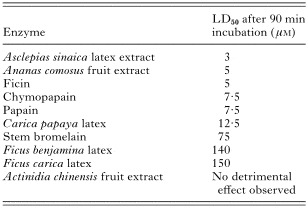
Table 2. LD50 values for plant cysteine proteinases, derived from dose–response relationships, after 90 min incubation with Heligmosomoides polygyrus adult worms in vitro

Fig. 2. The motility of Heligmosomoides polygyrus adult worms exposed to 25 μM papain in an experiment based on a fully factorial design incorporating presence/absence of the enzyme and/or presence/absence of cysteine and/or presence/absence of the cysteine proteinase inhibitor, E-64. For clarity, changes in motility with time are illustrated only for 3 control groups, as shown. The table gives mean motility levels after 2 h for all 8 groups. Data were analysed as described in the text.
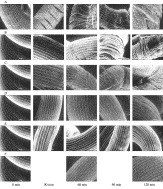
Fig. 3. Scanning electron micrographs of Heligmosomoides polygyrus adult worms exposed to a variety of natural plant cysteine proteinases in vitro. Clear evidence of damage to the cuticle can be seen from 60 min in 200 μM crude papaya latex (A), 30 μM ficin (B), and 200 μM pineapple fruit extract (C). Note the transverse wrinkling leading to signs of shedding of the cuticle after 90–120 min. In contrast, worms incubated in 400 μM kiwi fruit extract (D), HBSS and 16 mM L-cysteine (E), and 200 μM pepsin (F) showed little sign of cuticular damage, even after 120 min incubation. Scale bar=10 μm.
 You have
Access
- 112
- Cited by