


Highlights
-
• BCI games enable engaging, direct cognitive assessment without motor or verbal demands.
-
• Most studies focus on healthy adults and attention, with limited research on diverse populations and broader cognitive domains.
-
• Validated against standardized tests, BCI games show potential as inclusive and accessible assessment tools.
Introduction
Cognition encompasses the mental processes involved in acquiring knowledge, processing information and engaging meaningfully with the world. Reference Gauvain1 Consequently, a comprehensive understanding of cognitive abilities is essential, as changes in these areas can be early indicators of various neurological conditions. Reference Wolf, Ravienna and Salobrar-Garcia2 By accurately assessing these cognitive processes, clinicians and researchers can better understand brain function, facilitating precise diagnoses and enabling interventions tailored to an individual’s unique cognitive profile. Reference Cleveland3 Traditional assessment tools, such as the Alzheimer’s Disease Assessment Scale–Cognitive Subscale and the Wechsler Intelligence Scale for Children (WISC-V), have been widely used to evaluate cognitive functions across different age groups. Reference Wechsler4,Reference Rosen, Mohs and Davis5 However, these assessments often depend on verbal or motor responses, such as naming objects, recalling and repeating words, using a pencil or manipulating objects, which can present challenges for individuals with limited communication or mobility. Reference Poletti, Carelli and Solca6 As a result, these tools may not fully capture the individual’s cognitive abilities, potentially underestimating their cognitive capacity. Reference Karlsson, Honan and Warschausky7 This underscores the need for alternative or adaptive assessment methods that reduce motor and verbal demands and assess cognition independent of physical or communicative limitations.
Technology integration into cognitive science has transformed cognitive assessment, addressing many limitations inherent in traditional methods. Reference Parsons, Brahnam and Jain8,Reference Koo and Vizer9 Among the most promising developments are brain–computer interfaces (BCIs), which record and interpret neural signals directly, bypassing the need for motor or verbal responses. Reference Blankertz, Müller and Krusienski10,Reference Wolpaw and Wolpaw11 Of particular interest are BCI-controlled games, which go beyond standard BCI paradigms by embedding cognitive tasks within interactive, gamified environments. Reference Hamari, Koivisto and Sarsa12,Reference Leutner, Codreanu, Brink and Bitsakis13 This design approach enhances user engagement and ecological validity; assessments feel less clinical and more naturalistic, which is especially valuable for children and individuals with impairments. Reference Lumsden, Edwards, Lawrence, Coyle and Munafò14,Reference Khaleghi, Aghaei and Mahdavi15 The combination of real-time neural recording and motivating gameplay offers a richer, more authentic window into cognitive function than traditional tools can provide. Reference Lewandowski16 This is particularly relevant for individuals with conditions such as cerebral palsy (CP) or amyotrophic lateral sclerosis, who may be physically unable to perform the motor-based responses that traditional assessments require and can confound results and lead to underestimation of true cognitive ability. Reference Huggins, Karlsson and Warschausky17 For these populations, BCI games offer a clinically meaningful alternative, one that captures neural correlates of cognition, without placing undue burden on motor or communication abilities.
Previous studies have demonstrated the growing potential of BCI technology for cognitive assessment. A review analyzed the application of BCIs in neurotypical populations, highlighting the diverse methods for assessing cognitive skills, including auditory and visual attention tasks with a focus on user-appropriate control strategies to enhance BCI performance and usability. Reference Friedrich, Scherer, Neuper, Guger, Allison and Edlinger18 Another systematic review examined the use of BCIs in neurotypical populations and individuals with neurological disorders, identifying factors influencing the usability and efficacy of these systems, with particular emphasis on why standard BCI training protocols need to be revised to improve engagement and data quality. Reference Jeunet, Jahanpour and Lotte19 While both contributions advanced our understanding of BCI usability and training, neither focused specifically on game-based applications for cognitive assessment, nor did they evaluate how BCI-based tools compare against standardized neuropsychological measures. This scoping review addresses that gap by focusing specifically on BCI games as cognitive assessment instruments, evaluating their design, the cognitive domains they target and their comparability to validated neuropsychological measures across diverse populations.
Despite the growing interest in BCI technology for cognitive assessment, several critical knowledge gaps remain. Current research has primarily focused on proof-of-concept studies or small-scale trials, often emphasizing the technical feasibility of BCI systems rather than their broader applicability or integration. Reference Russo, Chodhary and Strik20,Reference Kojima and Kanoh21 While many studies have demonstrated the potential of BCI games to engage users and assess specific cognitive skills, there is limited research on their comparative validity and reliability against standardized cognitive assessment tools. Reference Ali and Puthusserypady22 This lack of benchmarking limits the generalizability and clinical adoption of BCI-based methods. Furthermore, existing studies often concentrate on healthy individuals, neglecting other groups, such as those with motor or cognitive impairments. Reference Käthner, Halder and Hintermüller23 To the best of our knowledge, there is insufficient exploration of BCI games for cognitive assessment in populations with developmental disorders or age-related cognitive decline, leaving a gap in understanding how BCI games can be tailored to these populations’ unique cognitive and physiological needs. Reference Tsai, Akpan, Tang and Lakany24 Although several reviews have examined BCIs more broadly, few have focused specifically on game-based applications for cognitive assessment. Existing reviews have primarily emphasized technical feasibility or rehabilitation applications, with limited attention to validating BCI games against standardized cognitive assessments or exploring their use across diverse populations. Reference Tsai, Akpan, Tang and Lakany24–Reference Ahn, Lee, Choi and Jun26 This review aims to map and analyze existing BCI games for cognitive assessment, examining trends across populations, cognitive domains and device technologies to identify gaps and inform future research directions. Specifically, we map, classify and critically evaluate BCI games used for cognitive assessment across populations, cognitive domains, devices and paradigms and their comparability with standardized assessment tools, through the following questions:
-
1. What BCI games are currently used for cognitive assessment, and in which populations?
-
2. Which cognitive or perceptual skills are measured by these BCI games, and how were they measured?
-
3. How do these BCI games for cognitive assessment compare to standardized and traditional methods?
-
4. What BCI technologies are used to assess cognition, what electrode placement is used and what brain waves are explored?
Methods
Design
We followed Arksey and O‘Malley’s scoping review approach and the Preferred Reporting Items for Systematic Reviews and Meta-Analyses extension for Scoping Reviews guidelines. Reference Arksey and O’Malley27,Reference Tricco, Lillie and Zarin28 Various strategies during the review process minimized bias. To address source bias, we searched for relevant papers across multiple databases. Reference Dickersin, Scherer and Lefebvre29 To ensure high conceptual and methodological rigor, we included only those published in peer-reviewed journals and conference papers. Reference Light and Pillemer30 During the paper selection process, two raters independently screened papers, with a third rater resolving any disagreements to mitigate potential rater bias in applying inclusion criteria.
Inclusion and exclusion criteria
Papers that included a BCI game to assess cognitive skills were considered. To ensure a comprehensive understanding of the current state of BCI research, this scoping review encompasses studies from all age groups, as research in BCI remains limited. Papers published in the last 10 years, in English, available in full text and appearing in peer-reviewed journals or conference proceedings were included. The 10-year timeframe was selected to capture the period of rapid growth in consumer-grade electroencephalogram (EEG) devices and BCI gaming applications, during which the majority of relevant research in this field has emerged. Master’s or doctoral thesis dissertations, one-page abstracts, gray literature and review papers were excluded. Full details regarding the inclusion and exclusion criteria are presented in Appendix A.
Search strategy
Our team developed key concepts, including BCI games and cognitive assessment, to guide the search. Using these concepts, keywords were combined with Boolean operators, and a health sciences librarian reviewed and approved our final search strategy. Appendix A provides detailed information regarding the search strategy.
Data sources
A systematic database search was conducted using seven electronic databases: MEDLINE (Ovid MEDLINE 1946 to present), EMBASE (Ovid EMBASE 1974 to present), IEEE Xplore, PsycINFO (Ovid APA PsycINFO 1806 to present), Scopus, Web of Science (All Databases) and ACM Digital Library, between May 5 and 25, 2024. This selection combined clinical and health sciences databases (MEDLINE, EMBASE and PsycINFO) with engineering and computer science databases (IEEE Xplore and ACM Digital Library) to reflect the interdisciplinary nature of BCI game research, which spans neuroscience, cognitive assessment and technology development. Scopus and Web of Science were included for their broad cross-disciplinary coverage.
Papers selection process
Papers were imported into the Covidence platform to conduct the review, where duplicates were removed. Before evaluating titles and abstracts, our team members (MA, ARR, SA, YA) were trained in applying inclusion and exclusion criteria. Two independent pairs of researchers (MA and SA; MA and YA) evaluated the titles and abstracts. Disagreements within pairs were discussed, and any unresolved issues were decided by a third rater (ARR). The same pairs reviewed the full texts of the selected papers, with any disagreements resolved by ARR, and reasons for exclusions were recorded. The level of agreement in the title, abstract and full-text screening phases was 96.3% and 91.8%, respectively.
Data extraction process
One researcher (MA) extracted the data from the final sample of the included papers and recorded it in an Excel file. Data extraction was guided by a standardized charting form developed a priori by the research team, which outlined the specific domains and variables to be extracted from each paper. Where inconsistencies or ambiguities arose during extraction, the extracting researcher flagged the item and, through discussion with at least one other team member (ARR, SA or YA), reached a resolution, with final decisions documented in the extraction file. Three researchers (ARR, SA and YA) reviewed multiple domains of the extracted data for each paper to validate the data. Papers were characterized according to their population (e.g., participants’ age, sex and medical condition), research methods used (e.g., settings, study design, sample size and length of the studies), the cognitive skills assessed (e.g., attention), the technology-based assessment methods (e.g., game metrics, EEG or eye tracking), the BCI technology used (e.g., Emotiv), the experimental procedure (e.g., hardware, electrode placements and the number of channels), its signal processing parameters (e.g., frequency and signal acquisition time), the game used (e.g., name, type, description) and the standardized assessments used for comparison.
Data analysis
After data extraction was completed, the papers were categorized into three main groups according to the age groups of the participants, namely: (1) children (birth to 18 years), (2) adults (18–65 years) and (3) older adults (65+ years). Game types were categorized inductively during data extraction, based on each game’s core design and primary objective as described in the included papers. Categories (including training games, action/adventure games, puzzle games, simulation games and narrative-driven games) were not defined a priori but emerged from patterns identified across the extracted data and were finalized through team discussion. Descriptive statistics were used to characterize the participants and bibliometric data of the papers in the literature review, utilizing Microsoft Excel for Mac (version 16.81). The following data fields were analyzed across all included papers: participant characteristics (age, sex and clinical status), cognitive domains assessed, BCI devices used, experimental paradigms, electrode placements, brainwave features and comparator assessments where available.
Results
Papers selection
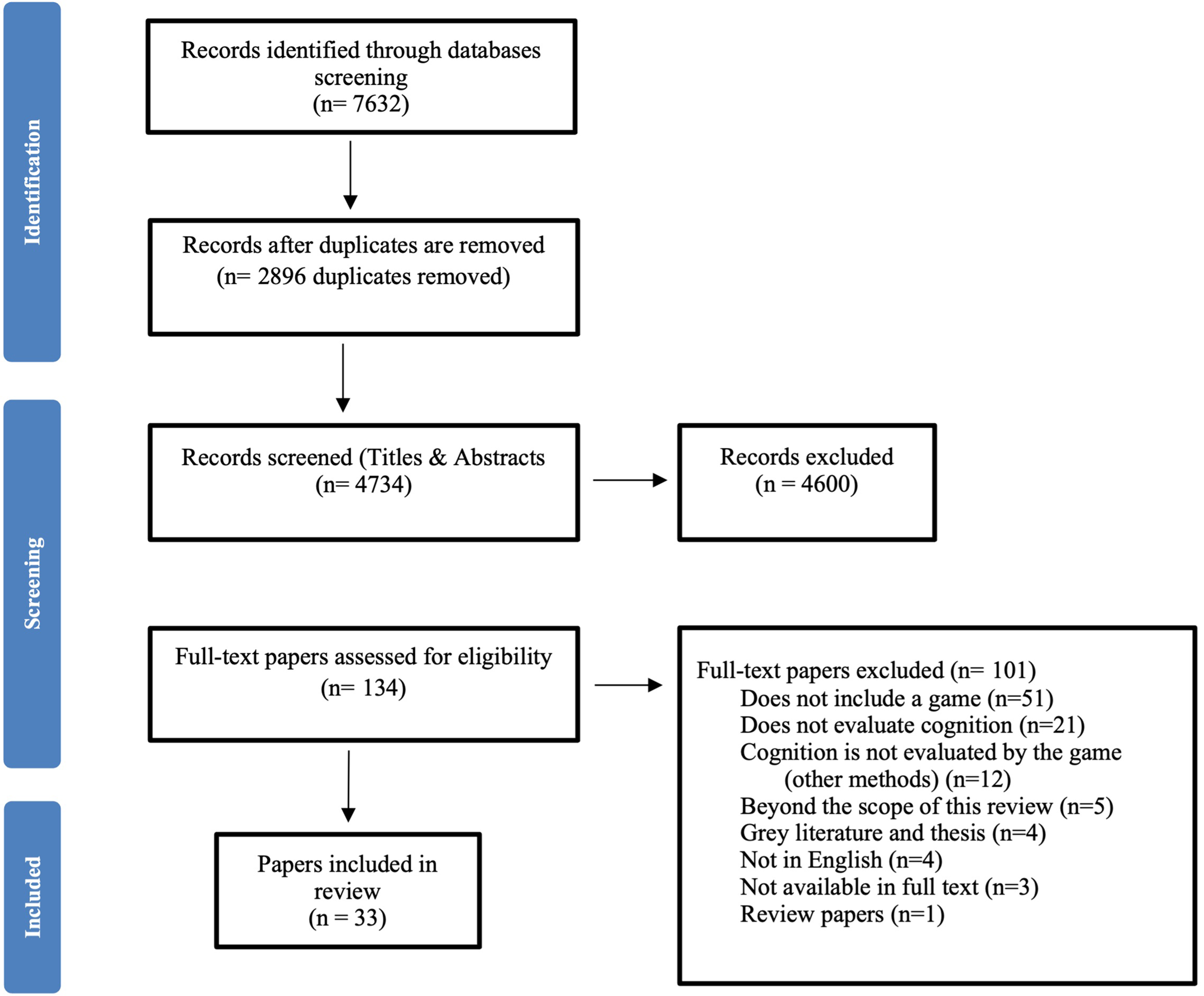
A total of 7632 papers were identified; after removing duplicates, 4734 remained for the title and abstract screening phase, 4600 were excluded during the title and abstract screening, and 101 were excluded during the full-text reading phase. Most of these studies were excluded because they did not include a game 50.5% (51/101); did not evaluate cognition 20.8% (21/101); cognition was not assessed by the game (e.g., cognition is measured by a standardized assessment and the game was used for other purposes like intervention) 11.9% (12/101); beyond the scope of the review 5% (5/101); not written in English 4% (4/101); were PhD or Masters’ theses, online news outlets, magazines or one-page conference paper 3% (3/101); not available in full text 3% (3/101); or gray literature and review studies 2% (2/101). A total of 33 papers met the inclusion criteria and were, therefore, eligible for data extraction (Figure 1).
PRISMA flow diagram illustrating the study selection process.

Bibliometric characteristics of the included papers
Of the 33 included papers, 54.5% (18/33) were published in academic journals, while 45.5% (15/33) were published in conference proceedings. The number of papers published per year shows a clear increasing trend, with a peak in 2019. Overall, the papers published in journals had a mean Source Normalized Impact per Paper score of 1.38 (SD = 0.56) and were primarily located in the Q1 ranking (30.3%), according to the SCImago Journal Rank classification. Reference Scimago31 Most papers had authors affiliated with Canada (15.2%, 5/33). Full details regarding bibliometrics are presented in Appendix B. The increasing publication trend, alongside the concentration of papers in high-impact Q1 journals, suggests that BCI game research is gaining scientific legitimacy, though the peak in 2019 and the high proportion of conference proceedings indicate that much of the work remains in early exploratory stages rather than mature clinical application.
Population characteristics
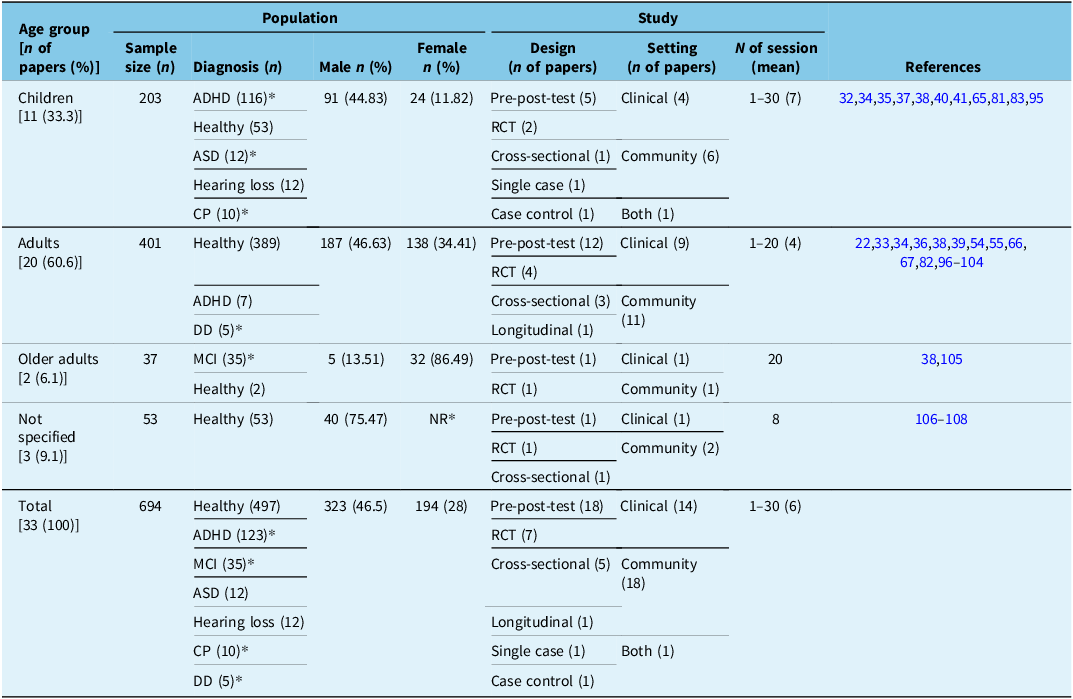
Table 1 summarizes the population characteristics. The papers included 694 participants; most papers included adults, 60.6% (20/33), while 33.4% (11/33) included children, and only 6.1% (2/33) included older adults. Only 21 out of 33 papers reported participants’ biological sex. Among the 694 participants in these studies, 28% (194/694) were female, 46.5% (323/694) were male and 25.5% (177/694) did not have their sex reported. Some studies included people with different diagnoses. Most studies included healthy participants (75.76%, 25/33), 21.2% (7/33) of the studies included individuals with attention deficit hyperactivity disorder (ADHD) and 15.15% (5/33) included other conditions like developmental disabilities (DD), autism spectrum disorder (ASD), mild cognitive impairment (MCI), CP and hearing loss. The heavy concentration of healthy adults and children with ADHD, combined with limited sex reporting and the near-absence of older adults, suggests that the field remains in a feasibility phase, with generalizability to diverse clinical populations yet to be established.
Participant characteristics across all included studies

Notes: ADHD = attention deficit hyperactivity disorder; ASD = autistic spectrum disorders; CP = cerebral palsy; DD = development disabilities; MCI = mild cognitive impairment; NR = not reported. Some studies included more than one age group and more than one diagnosis.
Research question 1. What BCI games are currently used for cognitive assessment, and in which populations?
The 33 included studies utilized 75 games, ranging from 1 to 14 games per study. Some of the games are commercially available, such as AVERT, Dreamskeeper, KittenQuest, CrazyFarm, Kunoichi, Brain-de-fer, Cog-Car, Pac-Man, Scalebridge, FarmerKeeper, BrainCats, REEFOCUS, FOCUS, Armis and SmartMind. Among the games used, 48% (36/75) were training, 21.3% (16/75) action/adventure, 13.3% (10/75) puzzle, 9.3% (7/75) simulation, 4% (3/75) racing, 2.7% (2/75) educational and 1.3% (1/75) narrative/story-driven.
The games were categorized based on their core design and objectives: training games focused on practicing specific cognitive skills like attention, impulse control or working memory; action/adventure games combined fast-paced challenges with exploration and problem-solving; puzzle games involved tasks like matching, sequencing or mental manipulation; simulation games replicated real-world tasks to enhance cognitive skills; racing games required participants to modulate attention to influence the speed or performance of a moving object; educational games incorporated learning objectives within game-based tasks; and narrative/story-driven games engaged players through interactive stories.
Most studies used active BCI games, where the game was actively controlled using brain signals, as opposed to those where the BCI system merely passively recorded brain activity during gameplay. The games varied in how participants interacted with them, with approximately 60% (45/75) using attention levels as the primary control command to modulate game elements such as the speed of a car, the movement of an avatar or the success of a task. Around 16% (12/75) of games used combined states (such as attention and relaxation) to influence gameplay, while approximately 12% (9/75) passively recorded EEG signals during gameplay, such as theta/beta ratios, P300 amplitudes or SMR activity, without using them to control the game directly. A smaller proportion, around 4% (3/75), employed hybrid approaches, where participants both actively controlled aspects of the game through EEG and had their brain activity analyzed for cognitive assessment.
Participant age groups categorized the 33 studies into children, adults and older adults. Three studies (9.1%) did not specify the age or age group of their participants. Of the 33 studies, 11 (33.3%) included children, with a total sample size of 203. The children included in those studies were diagnosed with ADHD (57.1%, 116/203), while 26.1% (53/203) had no diagnosis, 5.9% (12/203) had ASD and hearing loss each and 4.9% (10/203) had CP. Most children were male, at 44.8% (91/203), while females accounted for only 11.8% (24/203).
Most studies included adults, with 60.6% (20/33) of the total sample size of 401 individuals. The participants were predominantly with no diagnosis (97%, 389/401), with smaller proportions of ADHD (1.7%, 7/401) and developmental disorders (1.2%, 5/401). Among adults, the majority were males, comprising 46.6% (187/401), with females accounting for 34.4% (138/401).
Only two studies (6.1%) included older adults, with a total sample size of 37; most were diagnosed with MCI (94.6%, 35/37), and only two were healthy individuals (5.4%). Unlike the other age groups, most older adults were females (86.5%, 32/37), with males comprising 13.5% (5/37). The dominance of training games targeting attention, combined with the heavy reliance on active BCI control through attention modulation, suggests that game design in this field has been largely shaped by the availability of simple EEG paradigms and the characteristics of convenience samples rather than by a deliberate effort to assess a broad range of cognitive functions across diverse populations.
Research question 2. Which cognitive or perceptual skills are measured by these BCI games, and how were they measured?
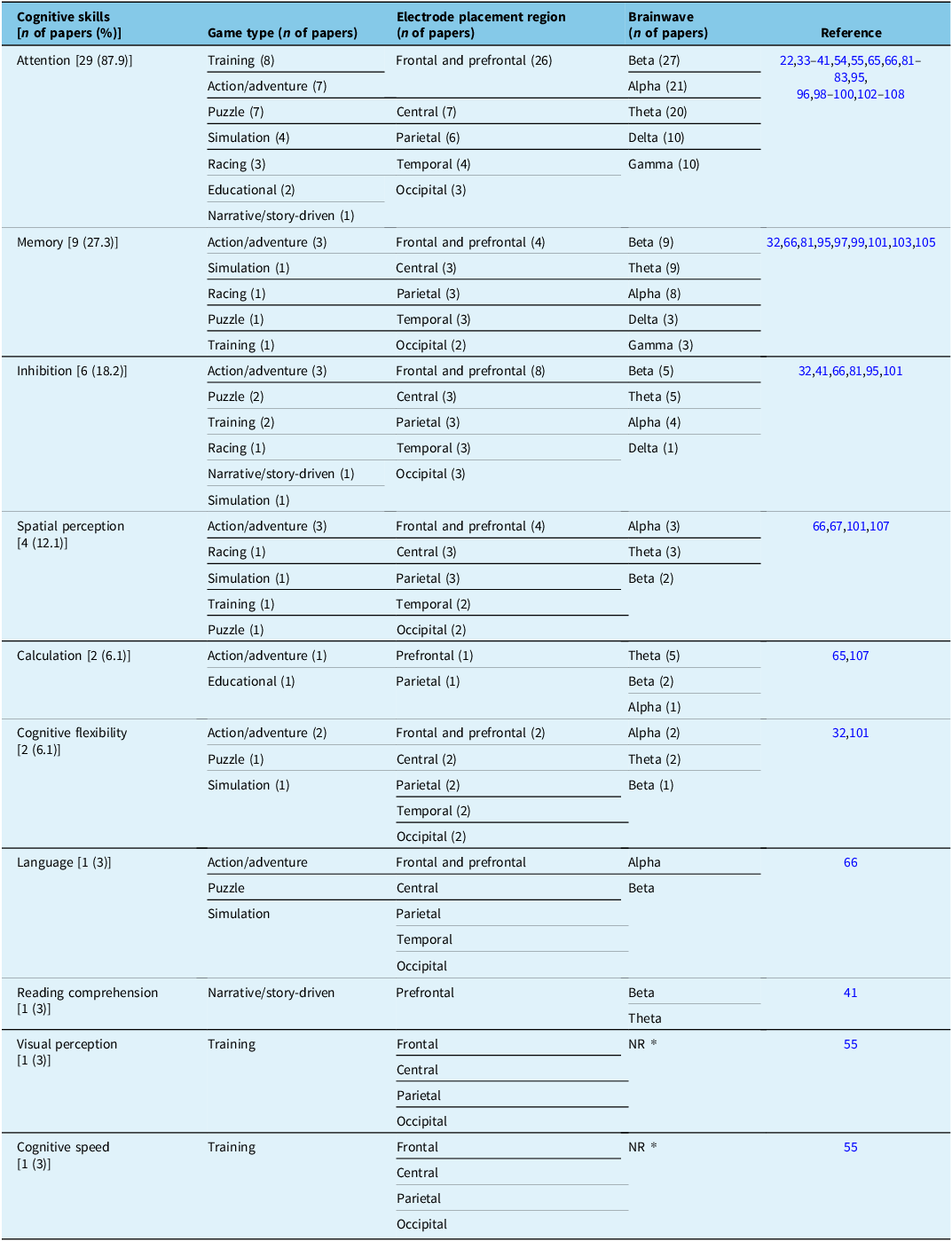
Table 2 summarizes the cognitive and perceptual skills assessed. Some studies assessed only one cognitive skill, while others included multiple skills. Attention, particularly sustained attention, was the most frequently explored cognitive skill, with 87.9% (29/33) of the studies assessing it. Memory, particularly working memory, was evaluated in 27.3% (9/33) of the studies and inhibition in 18.2% (6/33), and spatial perception was measured in 12.1% (4/33). Calculation and cognitive flexibility were assessed at 6.1% (2/33) each, and language, reading comprehension, visual perception and cognitive speed were each measured at 3% (1/33).
Cognitive and perceptual skills assessed across the included studies

Notes: NR = not reported. Some of the studies assessed more than one cognitive skill.
These cognitive and perceptual skills were assessed through different methods. Only one study (3%) evaluated cognition using game performance metrics alone, such as accuracy, reaction time and error rates. Reference Ali and Puthusserypady22 In contrast, brain signals (EEG) were used as the sole measure in 21.2% (7/33) of the studies. Reference Mondéjar, Hervás, Johnson, Gutierrez and Latorre32,Reference Myrden and Chau33,Reference Alchalabi, Elsharnouby, Shirmohammadi and Eddin36–Reference Navalyal and Gavas38 Most studies (66.7%, 22/33) combined both approaches, integrating metrics from game performance with real-time EEG data to capture participants’ ability to sustain attention, modulate arousal or engage in task-specific cognitive processes. The use of EEG allowed researchers to infer neural correlates of specific cognitive domains (such as attention, working memory or cognitive flexibility) by monitoring brainwave patterns (e.g., theta/beta ratios, P300 potentials), while game performance reflected behavioral manifestations of these cognitive skills (e.g., reaction time as a measure of attention, memory accuracy for working memory or error rates for impulse control). Additionally, one study (3%) utilized EEG and eye-tracking to measure attention and gaze patterns during gameplay. Reference Kosmyna, Wu, Hu, Wang, Scheirer and Maes39 Another study (3%) combined EEG, eye-tracking and game performance to assess multimodal engagement. Reference Mercado, Espinosa-Curiel, Escobedo and Tentori40 And a third study (3%) integrated EEG and motion sensors to evaluate both cognitive and motor outputs in a dynamic gaming context. Reference Park, Kihl, Park, Kim and Chang41 This multimodal approach highlights the growing interest in combining physiological and behavioral data to assess cognitive skills in a more holistic and ecologically valid manner.
The dominance of attention as the assessed cognitive domain, driven largely by its theoretical alignment with EEG paradigms and the overrepresentation of ADHD samples, indicates that BCI game research has yet to demonstrate breadth across the full spectrum of cognitive functions relevant to clinical assessment.
Research question 3. How do these BCI games for cognitive assessment compare to traditional methods?
Out of the included studies, only 9 (27.3%) used standardized cognitive assessments (not self-reported) in addition to the BCI games. There were 13 standardized assessments designed to evaluate different cognitive skills across various age groups: the Trail Making Test and Stroop Test assessed executive function and cognitive flexibility; the Tower of Hanoi measured problem-solving and planning; the Psychological Battery for Attention Assessment, Integrated Visual and Auditory Continuous Performance Test, Test of Variables of Attention (T.O.V.A.) and Conners’ Continuous Performance Test (CPT/KCPT) targeted attention and inhibitory control; the Montreal Cognitive Assessment-Thai and Thai Mental State Examination evaluated global cognitive function in older adults; the Cambridge Neuropsychological Test Automated Battery (CANTAB) assessed a broad range of cognitive domains including memory and attention; the Korean Kaufman Brief Intelligence Test (K-KBIT-2) and Wechsler Intelligence Scale for Children (WISC-IV) measured general cognitive ability and intelligence in children; and the KNISE-BAAT evaluated basic academic achievement in children with disabilities. Reference Wechsler4,Reference Reitan42–Reference Kim, Jang and Cho53
Six studies reported a correlation coefficient value ranging from moderate-to-strong correlations (r ranging between 0.52 and 0.92) between BCI game performance and standardized assessments. The strongest correlations were observed between BCI games and attention-focused tools such as T.O.V.A. and CPT, suggesting that BCI games are most valid for assessing attentional constructs, which aligns with the predominance of attention paradigms in the reviewed studies. Moderate correlations with broader cognitive batteries such as CANTAB and WISC-IV indicate that BCI games show preliminary convergent validity across a wider range of domains, though these findings require replication in larger, more diverse samples before clinical validity can be established. In those studies, BCI systems were often perceived as more engaging and adaptable compared to standardized tests. Games in some studies demonstrated high classification accuracies (i.e., 69.2%, 75%, 91.6%, 98.77%) in distinguishing attention states (identifying whether a person is in an attentive or inattentive mental state) comparable to or exceeding those of standardized tools. Reference Delisle-Rodriguez, de Oliveira and da Silva82 The limited use of standardized comparators across studies means that, while moderate-to-strong correlations are promising, they are insufficient to establish clinical validity at this stage, underscoring the need for more systematic psychometric benchmarking in future research.
Research question 4. What BCI technologies are used to assess cognition, what electrode placement is used and what brain waves are explored?
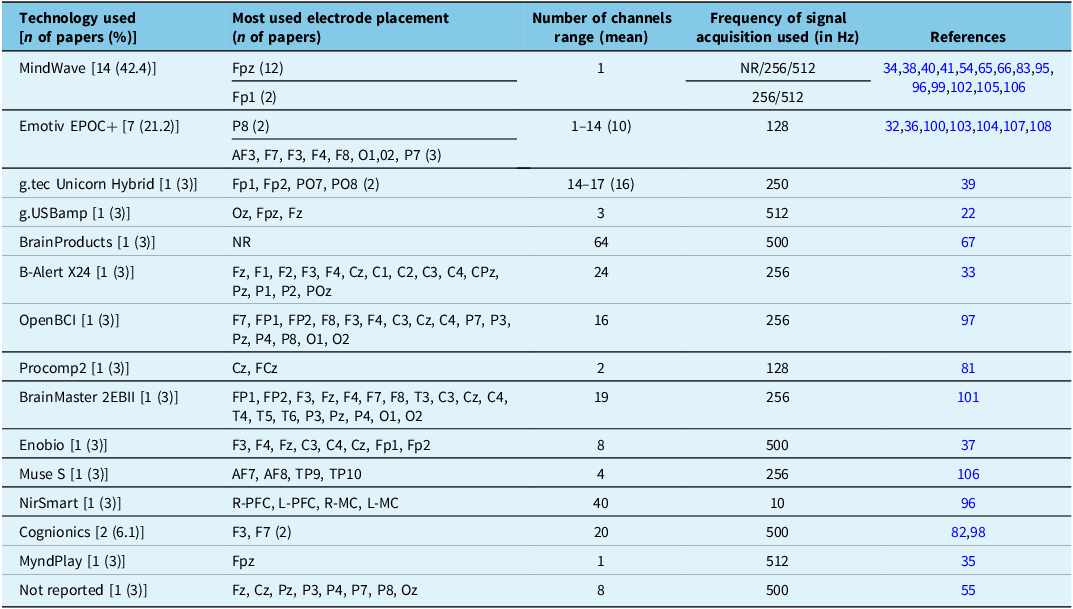
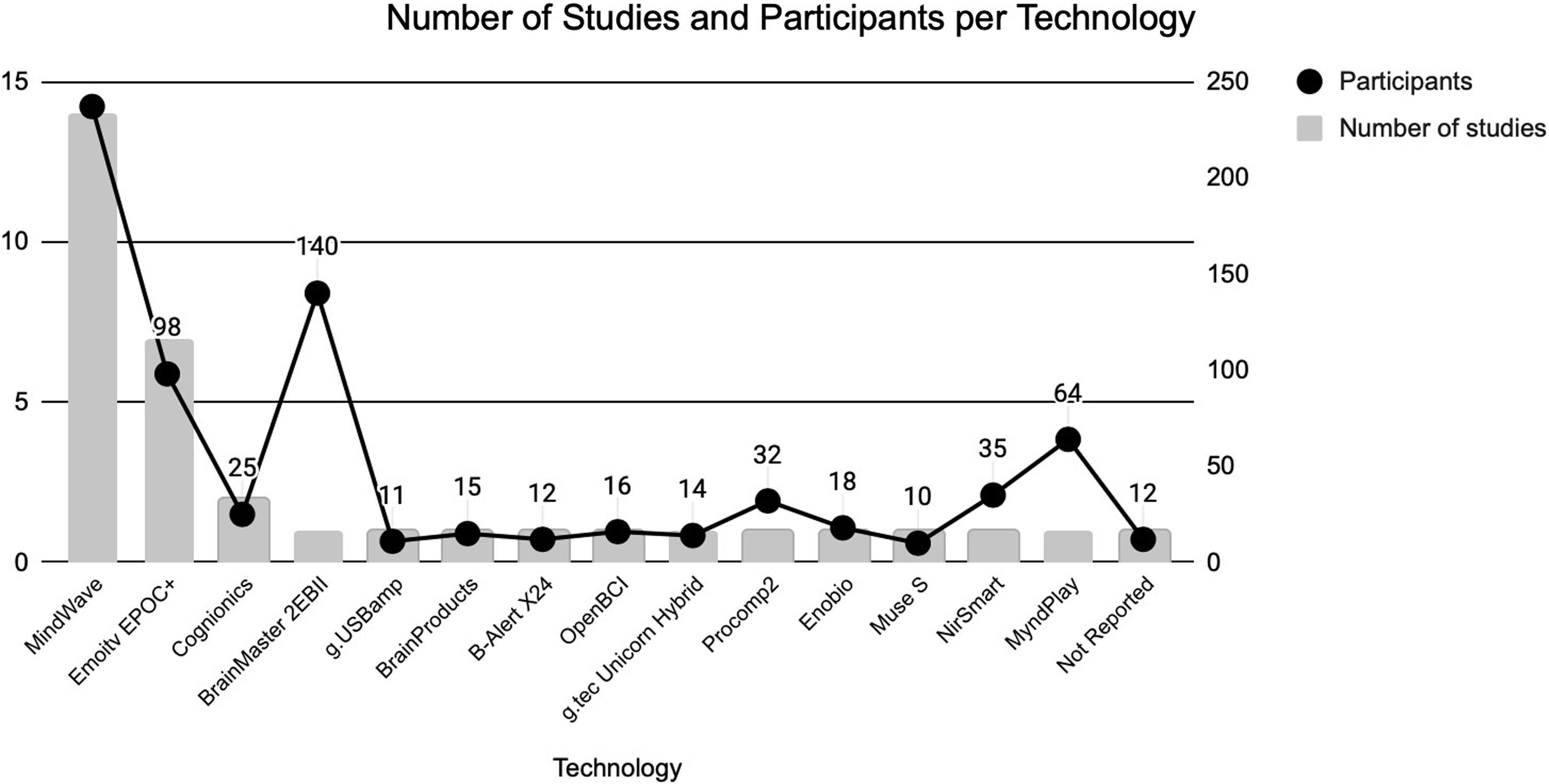
Fourteen different BCI technologies were used, as summarized in Table 3. MindWave was used the most at 42.4% (14/33), Emotiv EPOC+ was used at 21.2% (7/33) and Cognionics was used in 6.1% of the studies (2/33). The following technologies were used in one study, each with a percentage of 3%: g.USBamp, BrainProducts, B-Alert X24, OpenBCI, Procomp2, g.tec Unicorn Hybrid, BrainMaster 2EBII, Enobio, Muse S, NirSmart and MyndPlay. One study (3%) did not report the specific technology used (Figure 2).
Brain–computer interface technologies reported across the included studies

Notes: NR = not reported. Some of the studies assessed more than one cognitive skill.
Number of studies and participants per brain–computer interface technology used.

Although not all studies explicitly stated the specific BCI paradigm they employed, some described the underlying paradigm. For example, one study employed the P300 paradigm by using a three-level oddball-based game controlled via EEG, where target stimuli evoked P300 signals that were classified using the t-RIDE algorithm to adapt the game difficulty in real time. Reference De Venuto, Annese, Mezzina, Ruta and Di55 Another study employed the steady-state visual evoked potential paradigm, where participants focused on flickering visual stimuli at different frequencies (7 and 9 Hz) to control actions in a 3D virtual classroom game. Reference Ali and Puthusserypady22 A third study used the motor imagery paradigm, training participants to engage in distinct mental tasks such as imagining movement or performing mental arithmetic, which were then detected through EEG signals to guide navigation in a maze game. Reference Myrden and Chau33 The 10–20 system dominated as the standard framework, with electrodes commonly placed in the frontal, central, parietal and occipital regions, depending on the study’s focus. The most frequent sites were Fpz (forehead) for ground/reference, Fz for frontal activity and Cz/Pz for central and parietal monitoring. The number of channels varied from 1 to 64 in those studies. EEG findings were largely consistent with the cognitive constructs assessed. Beta (β) and theta (θ) waves, closely associated with attention modulation and working memory, were the most frequently reported, appearing in 87.9% (29/33) and 69.7% (23/33) of the studies, respectively, reflecting the predominance of attention-focused paradigms. Reference Spitzer and Haegens56,Reference Miller, Lundqvist and Bastos57 Alpha (α) waves, linked to cognitive inhibition and relaxation states, were reported in 72.7% (24/33) of the studies. Reference Klimesch58,Reference Foxe and Snyder59 Delta (δ) and gamma (γ) activity, associated with higher-order cognitive processing and problem-solving, were the least reported, each appearing in 33.3% (11/33) of the studies, suggesting that more complex cognitive constructs remain underexplored in current BCI game research. Reference Kan, Alexander and Verfaellie60,Reference Harmony61
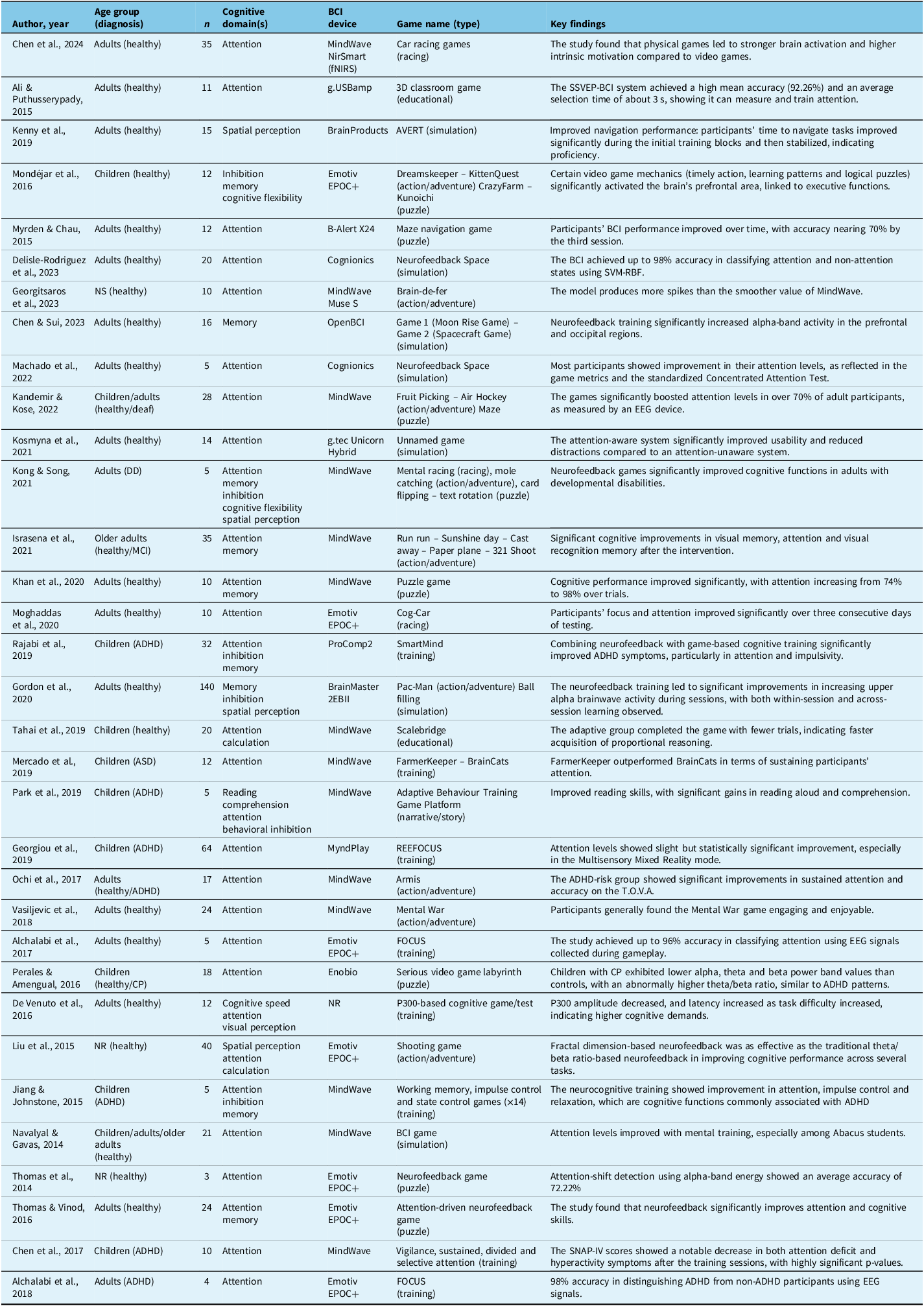
The predominance of consumer-grade single or low-channel devices such as MindWave and Emotiv, alongside the variability in electrode placements and brainwave features reported, reflects a field still negotiating the balance between accessibility and scientific rigor. Table 4 summarizes the included studies.
Summary of included studies

Note: n = sample size; ADHD = attention deficit hyperactivity disorder; ASD = autism spectrum disorder; CP = cerebral palsy; DD = developmental disabilities; EEG = electroencephalogram; MCI = mild cognitive impairment; NR = not reported; SSVEP-BCI = steady-state visual evoked potential-brain–computer interface; T.O.V.A. = test of variables of attention; SVM-RBF = Support Vector Machines with a Radial Basis Function.
Discussion
BCI games that are currently used for cognitive assessment and in which populations
Most studies in this review focused on healthy male adults, highlighting an underrepresentation in participant characteristics across age, sex and clinical status. The average age across studies is around 26.5 years, with pediatric samples being limited and fragmented, ranging from 3.5 to 16 years old. In terms of sex distribution, a marked imbalance was evident; most studies skewed heavily toward male participants, with some samples being 100% male. Most participants were healthy individuals (76%), with smaller subsets including individuals with ADHD (18%) and other conditions. Notably, the overrepresentation of ADHD in pediatric samples (57% of children participants) further narrowed the scope of BCI research, reinforcing a focus on attention-related assessments, a pattern likely driven by convenience sampling and the natural fit of attention tasks with EEG paradigms. While neurotypical adults offer a convenient starting point for assessing BCI game usability and performance, they do not represent the full spectrum of potential end-users, especially those who benefit most from nonverbal, adaptive cognitive assessments. This limits the external validity and real-world applicability of BCI game findings, underscoring the need for more diverse recruitment strategies and standardized sex-disaggregated reporting in future studies. Reference McEwan62–Reference Andrade64
The types of games used across studies varied, but a clear pattern emerged. Nearly half of the games were training games designed to target attention or working memory through repetitive tasks, neurofeedback and adaptive difficulty (e.g., FOCUS, REEFOCUS). Reference Georgiou, Thanos, Kanellos, Doulgerakis and Thomopoulos35,Reference Alchalabi, Elsharnouby, Shirmohammadi and Eddin36 Action/adventure games incorporated fast-paced challenges or exploratory tasks (e.g., FarmerKeeper, BrainCats). Reference Mercado, Espinosa-Curiel, Escobedo and Tentori40 Puzzle games involved logic, memory matching or spatial manipulation (e.g., Scalebridge, text rotation games). Reference Tahai, Wallace, Eckhardt and Pietroszek65,Reference Kong and Song66 Less frequently, studies used simulation games (e.g., AVERT) to recreate real-world tasks or narrative-driven games (e.g., fairy-tale games) to engage users in story-based interactions. Reference Kenny, Veitch and Power67 Most games relied on attention as the primary control command, with players modulating game elements such as speed, movement or task success based on EEG signals. A smaller proportion of studies combined EEG with other modalities, such as motion sensors or eye-tracking, to create more immersive, multimodal gaming experiences.
Cognitive and perceptual skills measured by BCI games, and how were they measured
The adaptability of BCI games stands out as a major strength, offering a flexible, user-centered approach to cognitive assessment. This is particularly relevant for populations with motor or communication challenges, where traditional methods often fall short. However, the narrow focus on specific cognitive domains, predominantly attention, limits the broader applicability of current findings. The overreliance on attention as the primary cognitive skill assessed in BCI games is a critical finding of this review. This narrow focus is directly tied to the participant demographics, particularly the overrepresentation of children with ADHD in pediatric samples. The suitability of EEG-based paradigms (e.g., theta/beta ratio) for detecting attentional variations makes this a theoretically grounded starting point for BCI research; however, it has inadvertently limited the scope of the field. Reference Herrera-Morales, Reyes-López and Tuz-Castellanos68,Reference Bluschke, Broschwitz, Kohl, Roessner and Beste69 Other cognitive domains are equally tractable via EEG: working memory can be indexed by theta oscillations and P300 amplitude, cognitive flexibility by frontal alpha asymmetry and error-related negativity and problem-solving by gamma-band synchronization. Reference Klimesch58,Reference Scharinger, Soutschek, Schubert and Gerjets70–Reference Sheth, Sandkühler and Bhattacharya72 BCI games targeting these domains could be validated against established neuropsychological tools, providing a principled psychometric bridge between neural signals and clinically recognized constructs. A more deliberate effort to expand beyond attention is needed to demonstrate the full potential of BCI games as comprehensive cognitive assessment tools. Future research should prioritize designing and validating BCI games for a broader range of cognitive domains, such as memory, problem-solving and executive function, to broaden the clinical applicability of this technology across diverse populations. In the few studies involving older adults, the focus shifted slightly toward attention and memory, reflecting the relevance of these domains for age-related cognitive decline and conditions like MCI. Reference Saunders and Summers73
Moreover, only a few studies have assessed skills such as memory, problem-solving or cognitive flexibility, highlighting a need for more comprehensive assessment frameworks. These findings align with previous studies, emphasizing the promise of task-specific BCIs for cognitive enhancement while noting protocol standardization and user adaptation challenges. Reference Simon, Bolton, Kennedy, Soekadar and Ruddy74 Similarly, other studies highlighted the role of gamification in improving engagement and stressed the importance of robust validation against standardized assessments – a recurring theme in this review. Reference Lumsden, Edwards, Lawrence, Coyle and Munafò14,Reference Barends, de Vries and van Vugt75–Reference Gomez, Ruiperez-Valiente and Clemente77
The methods used to measure these cognitive skills varied as well. Most studies combined game performance metrics (e.g., accuracy, reaction time, errors) with EEG signals, allowing researchers to infer neural correlates of cognitive states while also capturing behavioral outcomes. This combined approach enhances the ecological validity of assessments, as it links brain activity with task performance in real time. Reference Chaytor, Temkin, Machamer and Dikmen78,Reference Ewing, Fairclough and Gilleade79 However, a small number of studies relied solely on EEG data or game performance, which may limit the depth and reliability of cognitive insights, particularly in complex domains such as memory or problem-solving. A few studies incorporated additional sensors, such as eye-tracking and motion sensing technologies, to create multimodal BCI systems. These setups aimed to capture a more holistic profile of user engagement, combining neural, behavioral and physical data streams. While promising, these multimodal approaches also introduce technical challenges, including comfort issues with wearing multiple devices, data synchronization problems and potential signal interference between sensor systems. Reference Casson80
BCI games for cognitive assessment compared to traditional methods
Compared to traditional cognitive assessments, BCI games are emerging as promising alternatives that combine neurophysiological monitoring with interactive, user-centered design. Most studies reviewed demonstrated moderate-to-strong correlations between BCI game performance and standardized cognitive assessments, supporting their validity for evaluating cognitive functions. These findings suggest that BCI games hold promise as engaging tools for cognitive training, particularly in attention-related tasks, and may offer enhanced engagement compared to traditional assessments. Several studies report that BCI games increase participant motivation, enjoyment and sustained involvement, especially in children with ADHD, suggesting a potential advantage in user engagement. Reference Georgiou, Thanos, Kanellos, Doulgerakis and Thomopoulos35,Reference Park, Kihl, Park, Kim and Chang41,Reference Rajabi, Pakize and Moradi81–Reference Chen, Tang, Zhang and Shin83 Real-time feedback, gamified environments and the ability to tailor difficulty levels can enhance user engagement, contribute to higher classification accuracies and improve the quality of EEG signals by reducing movement artifacts caused by boredom, fatigue or inattention. When users are motivated and engaged, they are more likely to maintain focus and minimize erratic movements, resulting in cleaner and more stable EEG patterns that enhance the reliability of classification. These features align with previous research that emphasizes the role of gamification in improving motivation and data quality in cognitive assessments. Reference Jeunet, Jahanpour and Lotte19 For example, in a recent study, participants played a gamified “stunt plane” task with adaptive difficulty, and optimal engagement (measured via EEG indices like β/(θ + α)) correlated with high classification accuracy (within-subject F1 ≈ 0.89, cross-subject F1 ≈ 0.81), indicating that sustained engagement yields cleaner, more classifiable EEG patterns. Reference Ahmed, Ferguson-Pell, Adams and Ríos Rincón84 These findings point to adaptive difficulty as a particularly valuable design feature, one that simultaneously sustains user motivation and stabilizes EEG signal quality, making it a practical target for future BCI game development protocols.
BCI technologies used to assess cognition, the electrode placement used and the brain waves explored
The review revealed considerable variability in the BCI technologies and setups used to assess cognition. While the 10–20 system was the standard for electrode placement, the number of channels varied widely, ranging from single-channel consumer-grade devices to high-density 64-channel systems, reflecting a tension between accessibility and signal quality. Lower-cost, widely used devices like the MindWave and Emotiv EPOC+, the most frequently reported technologies in this review, offer ease of use and portability but are limited by factors such as fewer channels, fixed electrode positions and lower signal fidelity. Reference Rieiro, Diaz-Piedra and Morales85,Reference Williams, McArthur, de Wit, Ibrahim and Badcock86 Reduced electrode counts and fixed placements can affect both sensitivity and specificity. With fewer electrodes, the system has reduced spatial coverage, which limits its ability to detect subtle or localized neural signals associated with specific cognitive processes, thereby reducing sensitivity. Cognitive assessment research confirms that higher channel counts yield better sensitivity. Reference Shah, Golmohammadi, Ziyabari, Von Weltin, Obeid and Picone87 Specificity is also affected, as narrow spatial coverage and the inability to place electrodes optimally make it difficult to distinguish between true cognitive events and non-target or artifact activity. Previous research has demonstrated that reducing channel count is associated with increased false positive rates, suggesting that consumer-grade devices, ranging from a single channel (MindWave) to 14 channels (Emotiv EPOC+), may compromise the accuracy and reliability of cognitive signal detection despite their accessibility and ease of use. Reference Shah, Golmohammadi, Ziyabari, Von Weltin, Obeid and Picone87,Reference Song, Jeong, Kim, Jang and Kim88 Research-grade systems like BrainProducts ActiChamp, with 32–64 or more channels, provide higher resolution and more precise data and yet remain less feasible for scalable or real-world applications due to cost and complexity. Future studies should directly compare consumer-grade and research-grade systems within the same paradigm to quantify the trade-off between accessibility and signal fidelity and to establish the minimum channel count required for reliable cognitive assessment.
The choice of technology influences both the cognitive domains assessed and the brain signals captured. For instance, many studies using MindWave and Emotiv relied on predefined metrics like “attention“ and “meditation” scores based on proprietary algorithms, which can obscure the interpretability and reproducibility of results. These devices tend to focus on frontal or central sites (e.g., Fz, Cz, Pz), aligning with their emphasis on attention and executive functions. Beta (β) waves were the most frequently analyzed, followed by alpha (α) and theta (θ), reflecting their established relevance in cognitive tasks such as attention modulation, working memory and task engagement. Reference Spitzer and Haegens56–Reference Klimesch58 In contrast, delta (δ) and gamma (γ) activity were reported in only one-third of the studies, suggesting that cognitive processes linked to deep learning states or higher-order integrative functions may be underrepresented in current BCI game research. Reference Harmony61,Reference Fries89
Beyond device selection, the field would benefit considerably from standardized reporting practices across all stages of EEG data collection and analysis. The studies included in this review varied widely in how they reported electrode placement, sampling rates, preprocessing steps and analytic pipelines, making cross-study comparison difficult and limiting reproducibility. Inconsistent reporting of preprocessing decisions, such as filtering parameters, artifact rejection methods and reference schemes, has been shown to systematically alter signal quality and lead to notably different conclusions even when the same paradigm is used. Reference Vos, Ebrahimpour, van Eijk, Sarnyai and Rahimi Azghadi90 Adopting transparent and consistent reporting standards, including full documentation of electrode configurations, sampling rates, artifact-handling procedures and feature-extraction methods, is essential for building a cumulative and reproducible evidence base in BCI game research. Frameworks and open-source pipelines, such as Pipeline for EEG Processing and EEGLAB-based toolchains, have been proposed to support this standardization effort and should be considered reference points for future BCI game studies. Reference Bigdely-Shamlo, Mullen, Kothe, Su and Robbins91,Reference Delorme and Makeig92
As BCIs are increasingly considered for use with vulnerable populations, ethical and accessibility considerations must be addressed. Neural data collected through EEG can reveal sensitive information about cognitive and emotional states, raising concerns around data privacy and informed consent, particularly when participants are children or individuals with cognitive, speech and/or motor impairments. Reference Burwell, Sample and Racine93 Physical comfort and wearability of EEG devices also present practical challenges for these groups, as device fit and setup time can affect both participant tolerance and data quality. Reference Huggins, Karlsson and Warschausky17 Future studies should adopt user-centered design principles and clear data governance protocols to ensure BCI games are both ethically sound and genuinely accessible.
Limitations
This scoping review has limitations that should be acknowledged. First, the review included only English-language publications, which may have introduced language bias and excluded potentially relevant studies published in other languages. Reference Dickersin, Min and Meinert94 Furthermore, the exclusion of documents, such as theses and book chapters, may have led to an underrepresentation of emerging research in this field. Second, a device-related bias should be noted: several studies relied on proprietary metrics such as the “attention” and “meditation” scores generated by consumer-grade devices like MindWave and Emotiv EPOC+. Because these metrics are derived from undisclosed algorithms, they limit cross-study comparability and make it difficult to draw consistent conclusions about the cognitive constructs being assessed. Third, as is consistent with scoping review methodology, no formal quality appraisal of included studies was conducted; while this is appropriate given the review’s aim to map the breadth of available evidence, it means that study quality was not systematically weighted, and publication bias, whereby studies with positive or significant findings are more likely to be published, cannot be ruled out.
Future direction
Future research should address several critical priorities. First, BCI game-based cognitive assessments must be expanded to include diverse and underrepresented populations, particularly children with DD beyond ADHD, older adults with conditions like dementia and individuals with motor or communication impairments who could benefit most from non-verbal assessment tools. Second, the range of cognitive domains assessed should extend beyond attention to include memory, problem-solving, executive function and cognitive flexibility, through the development and validation of task-specific games. Third, future studies should rigorously validate BCI-based assessments against gold-standard neuropsychological measures using robust psychometric frameworks to establish reliability, validity and sensitivity to cognitive change. Fourth, transparent and consistent reporting of EEG configurations, preprocessing steps and analytic pipelines is essential to improve reproducibility and cross-study comparability. Finally, larger, longitudinal and ecologically valid studies are needed to assess the feasibility of integrating BCI games into clinical and educational workflows, examining outcomes such as user engagement, cognitive development trajectories and real-world diagnostic utility.
Conclusion
This scoping review demonstrates that BCI games are a promising and engaging medium for cognitive assessment, offering real-time neural insights without the motor or verbal demands of traditional tools. However, the field remains narrow in scope: research has disproportionately focused on attention in healthy adults and children with ADHD, while broader cognitive constructs, such as memory and clinically relevant populations, including individuals with motor impairments or age-related cognitive decline, remain underexplored. Equally pressing is the limited validation against standardized neuropsychological measures, which constrains clinical credibility and generalizability. Moving forward, the field must prioritize inclusive study designs, transparent reporting of BCI configurations and rigorous psychometric benchmarking to establish BCI games as reliable assessment instruments. With these advances, BCI-based games hold genuine potential to become accessible, motor-free tools for cognitive assessment that serve diverse populations across the lifespan.
Acknowledgments
We thank Janice Kung, who supervised and approved the implementation of the search strategy.
Author contributions
Munirah Alsubaie: Conceptualization, Data curation, Formal analysis, Investigation, Methodology, Project administration, Software, Supervision, Validation, Visualization, Writing – original draft, Writing – review & editing. Salamah Alshammari: Data curation, Investigation, Methodology, Writing – original draft, Writing – review & editing. Yusuf Ahmed: Data curation, Investigation, review & editing. Shaniff Esmail: Supervision, review & editing. Kim Adams: Supervision, review & editing. Hossein Rouhani: Supervision, review & editing. Adriana Rios Rincon: Conceptualization, Data curation, Investigation, Methodology, Supervision, Validation, Writing – original draft, Writing – review & editing.
Funding statement
This research did not receive any specific grant from funding agencies in the public, commercial or not-for-profit sectors.
Competing interests
The authors declare that they have no known competing financial interests or personal relationships that influenced this paper.

 Open access

