INTRODUCTION
Anthropogenic activities represent a major factor behind the loss of biological diversity in the world. According to Lovejoy (Reference Lovejoy, Reaka-Kudla, Wilson and Wilson1997), the combined impacts of these human activities on the environment may be responsible for accelerating the natural extinction rate of species by 1000–10,000 times. Within this context, most marine researchers report that the marine environment is particularly the target of many anthropogenic pressures threatening marine life, through overexploitation, bio-invasion, land reclamation, agricultural and industrial waste dumping, and other forms of pollution (Beatley, Reference Beatley1991; Ormond et al., Reference Ormond, Gage and Angel1997; Snelgrove, Reference Snelgrove1999). The impact of these anthropogenic pressures is important in the Mediterranean Sea, which is a small sea with low water circulation compared with the world oceans. Besides, the Mediterranean contour hosts cities and industrial hotspots including harbours, and industries which may be the source of various pollutants such as chemicals, hydrocarbons and heavy metals (Chandler et al., Reference Chandler, Kaufman, Mulsow, Mooney, Cushman, Medina, Sala and Schulze1996; Derraik, Reference Derraik2002; Souto et al., Reference Souto, Facure, Pavanin and Jacobucci2011). Among these, heavy-metal pollution represents a serious contamination of the marine environment since it can threaten the life of marine species (Larsen, Reference Larsen1992; Readman et al., Reference Readman, Kwong, Grondin, Bartocci, Villeneuve and Mee1993). Benthic community diversity and structure may be affected by heavy-metal pollution because of the sedentary behaviour of benthic animals, what makes them good indicators of the ambient conditions of the ecosystems in which they live (Gray et al., Reference Gray, McIntyre and Stirn1992; Blanchet et al., Reference Blanchet, Lavesque, Ruellet, Dauvin, Sauriau, Desroy, Desclaux, Leconte, Bachelet, Janson, Bessineton, Duhamei, Jourde, Mayot, Simon and de Montaudouin2008; Iwasaki et al., Reference Iwasaki, Kagaya, Miyamoto and Matsuda2009). Previous studies have reported that the benthic community can show responses relative to the presence and levels of some contaminants in sediments (Gray et al., Reference Gray, McIntyre and Stirn1992; Reice & Wohlenberg, Reference Reice, Wohlenberg, Rosenberg and Resh1993; Hall et al., Reference Hall, Frid and Proudfoot1996). Since the sensibility/resistance of benthic species to contaminants including heavy metals differs with species (Boesch & Rosenberg, Reference Boesch, Rosenberg, Barret and Rosenberg1981), the whole macrozoobenthic community can be variably affected (Nigam et al., Reference Nigam, Linshy, Kurtarkar and Saraswat2009; Ryu et al., Reference Ryu, Khimb, Kang, Kang, Lee and Koh2011). Moreover, the disappearance of some species, due to their sensitivity to some heavy metals, may lead to the overwhelming presence (preys) or disappearance (predators) of other dependent species through changes of interspecific relationships. Thus, the response to such a disturbance will be represented by some changes in the number of species and also their abundance and biomass (Boesch & Rosenberg, Reference Boesch, Rosenberg, Barret and Rosenberg1981). Consequently, the trophic structure can also be affected (Reice & Wohlenberg, Reference Reice, Wohlenberg, Rosenberg and Resh1993) as well as the ecological structure of benthic communities.
The present study describes the ecological response of benthic assemblages in the Gulf of Gabes to the sediment enrichment with six heavy metals, Cadmium (Cd), Chromium (Cr), Mercury (Hg), Lead (Pb), Zinc (Zn) and Copper (Cu). Together with estimating the heavy metals concentrations in marine surface sediments, the benthic community structure was examined and some ecological parameters were used including the classical diversity descriptors and the indexes of AMBI and BENTIX which can inform on the general health status of the benthic community. Therefore, the objectives of this work are (i) to assess and compare the heavy metals contents in marine surface sediments between various shallow localities spread in the Gulf of Gabes, (ii) to describe the spatial variations of the benthic assemblages of these localities taking into consideration the enrichment of marine sediments with heavy metals, and (iii) to discuss the potential sources or factors behind the metal pollution and the affected benthic communities.
MATERIALS AND METHODS
Study and sampling area
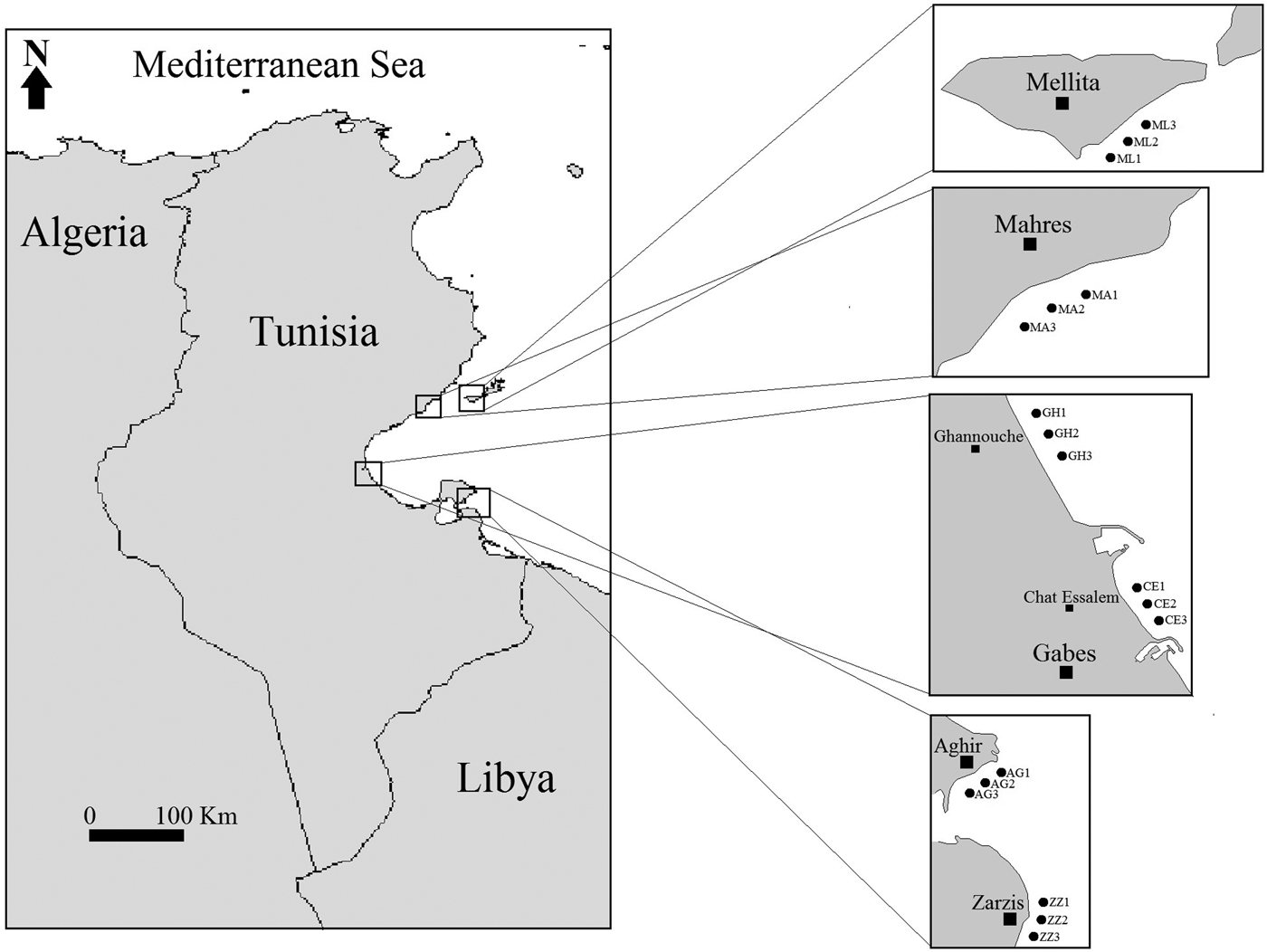
The Gulf of Gabes is a rather shallow area with a perimeter of more than 400 km. It extends from Ras Kaboudia in the north to the Tunisian–Libyan frontier in the south and contains two main islands: Kerkennah and Djerba (Figure 1). It is characterized by weak currents and low-energy waves. Salinity range is 37.5–39.3 psu and temperature ranges between 13.2 and 26.5°C (Ktari-Chakroun & Azouz, Reference Ktari-Chakroun and Azouz1971). The Gulf of Gabes has the largest tides in the Mediterranean. These tides are semi-diurnal and present a distinct spatial pattern: they are less developed at the periphery and more developed in the middle of the Gulf, at Gabes, with ranges of 1.2 m at spring low tides (Abdennadher & Boukthir, Reference Abdennadher and Boukthir2006; Sammari et al., Reference Sammari, Koutitonsky and Moussa2006). The Gulf of Gabes has a very large continental plateau with a very slight slope, so that a depth of 200 m is not reached until a distance of about 250 km from the shoreline (Seurat, Reference Seurat1934). It is one of the most productive Mediterranean regions and one of the most important fishing zones, with a variety of fishing activities. Marine pollution is intense in the Gulf of Gabes, especially because of the huge industrial activity in the cities located within this area, in particular Gabes city. Large quantities of phosphogypsum (calcium sulphate) from the phosphoric acid and chemical products industry are released into the Gulf of Gabes (Soussi et al., Reference Soussi, Ennet, Koponen, Sarkkula, Ben Mustapha, Ben Mammou and Kokkila1995; Zaghden et al., Reference Zaghden, Kallel, Louati, Elleuch, Oudot and Saliot2005). This chemical pollution has had negative impacts on biodiversity and has triggered the disappearance, or at least the reduction, of vegetal covering of the Gulf, in particular of P. oceanica meadows (Darmoul et al., Reference Darmoul, Hadj Ali Salem and Vitiello1980; El Afli et al., Reference El Afli, Ben Mustapha and El Abed2001).
Locations of the study areas and the sampling stations in the Gulf of Gabes. MLi stations sampled in Mellita (in Kerkennah Island), MAi stations sampled in Mahress, GHi stations sampled in Ghannouche, CEi stations sampled in Chat Essalem, AGi stations sampled in Aghir (in Djerba Island), ZZi stations sampled in Zarzis.

Sediment and benthos sampling
In this study, we sampled 18 stations belonging to six sites located along the coastline of Gabes Gulf. These sites are Mellita (located in Kerkennah Island), Mahress, Ghannouche, Chat Essalem, Aghir (located in Djerba Island) and Zarzis (Figure 1). In each site, three sampling stations were set up along a one-kilometre transect randomly established parallel to the shoreline, at a depth ranging from 2 to 4 m, for benthos and sediment sampling. From each station, three sediment samples were collected by a van Veen grab, covering a surface of 0.1 m2 each, and leading to a total of 54 sediment samples. In parallel to that, physico-chemical parameters, including temperature and pH, and environmental variables including substratum type and vegetal covering were noted. The surveys were carried out in May–June 2011.
Laboratory analysis
Approximately 100 g of surface sediments were removed from each grab sample for heavy metals analysis in each sampling station. The concentrations of the six heavy metals considered (Cd, Cr, Hg, Pb, Zn and Cu) in the sediment samples were determined using a Perkin Elmer Model 3100 Atomic Absorption Spectrophotometer. Prior to that, the sediment samples were dried in an oven at 105°C and sieved through a nylon mesh sieve. Since heavy metals were reported to be usually associated with very small grains (Morillo et al., Reference Morillo, Usero and Gracia2004), only the <63 µm fractions obtained were considered for sediment chemistry. The latter fractions were digested with a mixed solution HNO3-H2O2-HCL (US EPA, 1999). For macrofauna analysis, sediment samples were gently sieved through a 1 mm mesh (Borja et al., Reference Borja, Franco and Perez2000) and specimens retained were stored in 70% ethanol after sorting. Fauna was identified to the highest taxonomic resolution possible, usually to species.
Data analysis
The concentrations of heavy metals obtained were compared among the localities of study using ANOVA. The sampling localities were also compared taking into consideration the whole data obtained using a D1 Euclidean distance cluster and a Principal Component analysis (PCA) which can divide the sampling stations into different groups based on the differences in their concentrations of heavy metals analysed. Moreover, sediment pollution status in each of the sampling stations was deduced using the sediment quality guidelines and scaling suggested by US EPA (1991) and WDNR (2003).
The biological indexes evaluated at each sample and station, within a surface of 0.1 m2, were abundance (N), number of species (S), and the most widely used measure of diversity: Shannon–Wiener diversity (H′) (loge) (Costello et al., Reference Costello, Pohle and Martin2004). Moreover, to describe the trophic structure of the sampled communities, the collected species were classified into trophic groups according to the classification available in the literature (Fauchald & Jumars, Reference Fauchald and Jumars1979; Word, Reference Word1990; Grall et al., Reference Grall, Le Loch, Guyonnet and Riera2006). The trophic groups considered in the present work were the following: micrograzers (μG), carnivores (C), deposit feeders (DF), detritus feeders (Dt), herbivores (H), scavengers (SC) and suspension feeders (SF).
The AZTI Marine Biotic Index (AMBI), proposed by Borja et al. (Reference Borja, Franco and Perez2000), was used to establish the ecological quality of the macrofaunal communities. This index was developed in Europe and reported to be applicable in other areas of the world (Borja et al., Reference Borja, Dauer, Díaz, Llansó, Muxika, Rodríguez and Schaffner2008). The benthic species identified are classified into five ecological groups, based on the sensitivity/tolerance of fauna to pollution. The ecological groups correspond to: (I) sensitive to pollution, (II) indifferent to pollution, (III) tolerant to organic matter, (IV) second-order opportunists, (V) first-order opportunists (for details, see Borja et al., Reference Borja, Franco and Perez2000). The sensitivity/tolerances of species were assigned based on a number of references (Word, Reference Word1990; Borja et al., Reference Borja, Franco and Perez2000, Reference Borja, Dauer, Díaz, Llansó, Muxika, Rodríguez and Schaffner2008; Simboura & Zenetos, Reference Simboura and Zenetos2002). In addition, the BENTIX index (Simboura & Zenetos, Reference Simboura and Zenetos2002) was also calculated for each sampling station. This biotic index is based on the relative percentage of species' ecological groups in the fauna weighted analogously. The formula of the BENTIX index was developed as BENTIX = [(6 × %GI + 2 × (%GII + %GIII)]/100, where GI includes the sensitive and indifferent taxa, GII the tolerant and second-order opportunistic and GIII the first-order opportunistic taxa (Simboura & Reizopoulou, Reference Simboura and Reizopoulou2007). The Ecological Quality Status of media can be assessed from the AMBI and BENTIX indexes, as well as from Shannon–Wiener community diversity H′, based on the classification scheme of Ecological Quality Status assessments which was already done in accordance with the needs of the European Water Framework Directive. This scaling was adopted and/or modified from Borja et al. (Reference Borja, Franco and Perez2000), Labrune et al. (Reference Labrune, Amouroux, Sarda, Dutrieux, Thorin, Rosenberg and Grémare2006) and Simboura & Zenetos (Reference Simboura and Zenetos2002).
To check whether the differences between the sampled macrofauna communities are due to the environmental variables or not, certain factors were taken into consideration. These factors were the ‘Locality’ (Mellita, Mahress, Ghanouche, Chat Essalem, Aghir and Zarzis), ‘Location in the Gulf of Gabes’ (North of Gabes Gulf i.e. Mellita and Mahress, Centre of Gabes Gulf i.e. Ghannouche and Chat Essalem and South of Gabes Gulf i.e. Aghir and Zarzis), ‘Substratum type’ (sandy i.e. in Mellita, Mahress, Ghannouche and Zarzis stations and sandy-muddy i.e. in Chat Essalem and Aghir stations), ‘Vegetal Cover’ (Cymodocea nodosa–Posidonia oceanica i.e. in Mellita, Ghannouche, Chat Essalem and Zarzis stations and Cymodocea nodosa i.e. in Mahress and Aghir stations), ‘pH’ (Basic i.e. in all the locality except Chat Essalem and Acid in Chat Essalem stations), ‘Heavy metal pollution’ (non-polluted, slightly polluted and severely polluted for each heavy metal analysed). Non-parametric multivariate analyses of community structure (ANOSIM) and a Bray–Curtis clustering, as well as a non-metric multidimensional scaling (NMDS) were conducted considering the abundance data of the invertebrate species found in all the sampling stations. A SIMPROF test was also applied to test the significance of similarity between the samples tested. Statistical analyses of both sediment chemistry and community structure were performed using MS Excel and Primer E-6 Package (Clarke & Warwick, Reference Clarke and Warwick1994). The data of the macroinvertebrate community were first square-root transformed.
RESULTS
Heavy metals in marine surface sediments
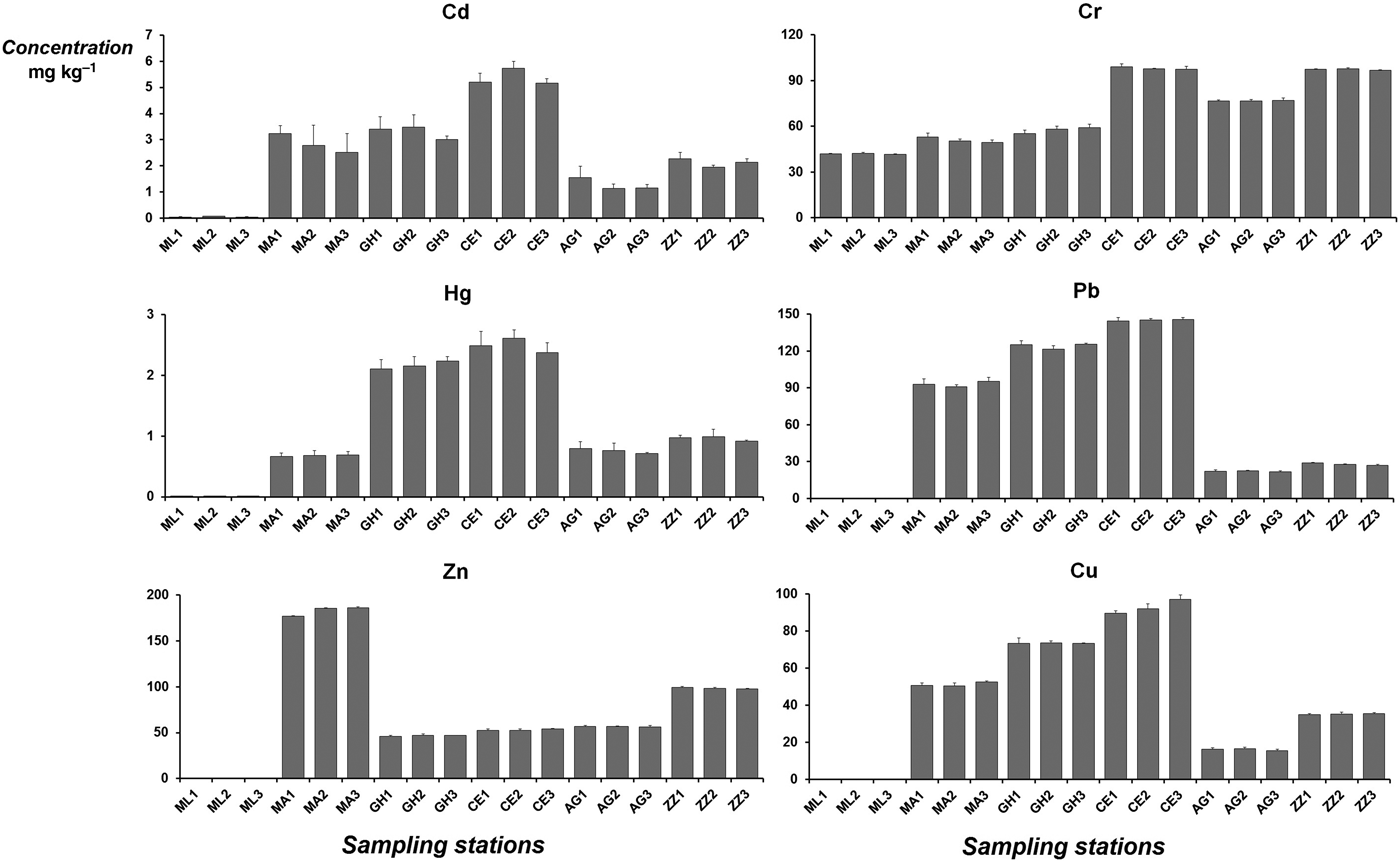
Average concentrations of heavy metals assessed in surface sediments collected from the study sites are presented in Figure 2. It is worth noting that the stations with the lowest average concentrations of heavy metals were those of Mellita, in Kerkennah Island. In contrast, the highest average concentrations were recorded in Chat Essalem stations, except for zinc of which the highest records were found in Mahress stations. Average concentrations of cadmium varied between 0.04 (in ML1) and 5.74 mg kg−1 (in CE2). As for chromium, average concentrations ranged from 41.69 (in ML3) to 98.90 mg kg−1 (in CE1). Average mercury concentrations were found to range between 0.01 (in ML1, ML2 and ML3) and 2.61 mg kg−1 (in CE2). Regarding lead average concentrations, they oscillated between 0.12 (in ML1 and ML2) and 145.67 mg kg−1 (in CE3). As for zinc, the minimal average concentration (0.07 mg kg−1) was recorded in ML1; whereas the highest (185.95 mg kg−1) was noted in MA3. Finally, copper average concentrations varied between 0.22 (in ML1) and 97.10 mg kg−1 (in CE3) (Figure 2). In addition, it seems that the most polluted stations are those of Chat Essalem and Ghanouche, followed by those of Aghir (in Djerba Island) and Zarzis and then followed by the stations of Mahress and Mellita (in Kerkennah Island). Table 1 summarizes the average concentrations of the six heavy metals, estimated in each locality (average of the six samples from each locality), with an assessment of the pollution levels of each site for each heavy metal, done by comparing the concentration found with those mentioned in the sediment quality guidelines suggested by US EPA (1991) and WDNR (2003). For the six heavy metals analysed, the locality of Mellita was found to be ‘non-polluted’ except for Cr with which the surface sediment was assessed as ‘slightly polluted’. The surface marine sediment in Mahress was found to be ‘slightly polluted’ for Cd, Cr and Zn and ‘severely polluted’ for Hg, Pb and Cu. As for the locality of Ghannouche, the marine surface sediment was assessed as ‘severely polluted’ by Cd, Hg, Pb and Cu, ‘slightly polluted’ by Cr and ‘non-polluted’ by Zn. Regarding Chat Essalem locality, it was found to host surface sediments ‘severely polluted’ with all the heavy metals analysed except for Zn of which the sediment quality was deduced as ‘non-polluted’. The surface sediment in Aghir locality was found to be ‘non-polluted’ by Pb, Zn and Cu, ‘slightly polluted’ by Cd and ‘severely polluted’ by Cr and Hg. Finally in the locality of Zarzis, the marine surface sediment was qualified as ‘slightly polluted’ with Cd, Zn and Cu, ‘severely polluted’ with Cr and Hg and ‘non-polluted’ with Pb (Table 1). D1 Euclidean distance cluster classification and Principal Component Analysis allowed separation of the sampling stations into two major clusters (Figure 3A, B). The first cluster was mainly represented by only the stations of Mellita, while the second consisted of the stations of the other sampling sites which presented 60% of similarity. At the level of 70% of similarity, the latter cluster was subdivided into two sub-clusters: one sub-cluster formed by the stations of Ghannouche and Chat Essalem and another sub-cluster represented by Mahress, Aghir and Zarzis stations. The latter sub-cluster showed, at 80% of similarity, a subdivision of the stations of Aghir and Zarzis (Figure 3A, B). Based on the PCA plot, it seems that the variable vectors Cd, Hg, Pb and Cu are responsible for the separation of Channouche and Chat Essalem samples which showed high contents of these heavy metals. The separation of Mahress samples seemed to be due to their high concentrations of Zn. Cr and Zn were found to be the variable vectors behind the separation of Aghir and Zarzis samples in one group. As for Mellita samples, they were obtained out of the circle of variable vectors; their separation is due to their low concentrations of all heavy metals analysed compared with the samples coming from the other localities of study (Figure 3A).
Average (±SD) concentrations of the heavy metals analysed in the marine surface sediments of the sampling stations in the Gulf of Gabes. MLi stations sampled in Mellita (in Kerkennah Island), MAi stations sampled in Mahress, GHi stations sampled in Ghannouche, CEi stations sampled in Chat Essalem, AGi stations sampled in Aghir (in Djerba Island), ZZi stations sampled in Zarzis.
D1 Euclidean distance cluster classification (A) and Principal Component Analysis plot (B) of the sampling stations based on the concentrations of heavy metals analysed and considering the ‘site/locality’ factor.
Average ±SD concentrations (average of the six samples within each locality) of heavy metals estimated in the sampling localities of Gabes Gulf, and an assessment of the pollution status of each locality. The pollution status (in parentheses) was estimated based on the scaling proposed by US EPA (1991) for Cr, Pb, Zn and Cu and that proposed by WDNR (2003) for Cd and Hg.
Benthos fauna
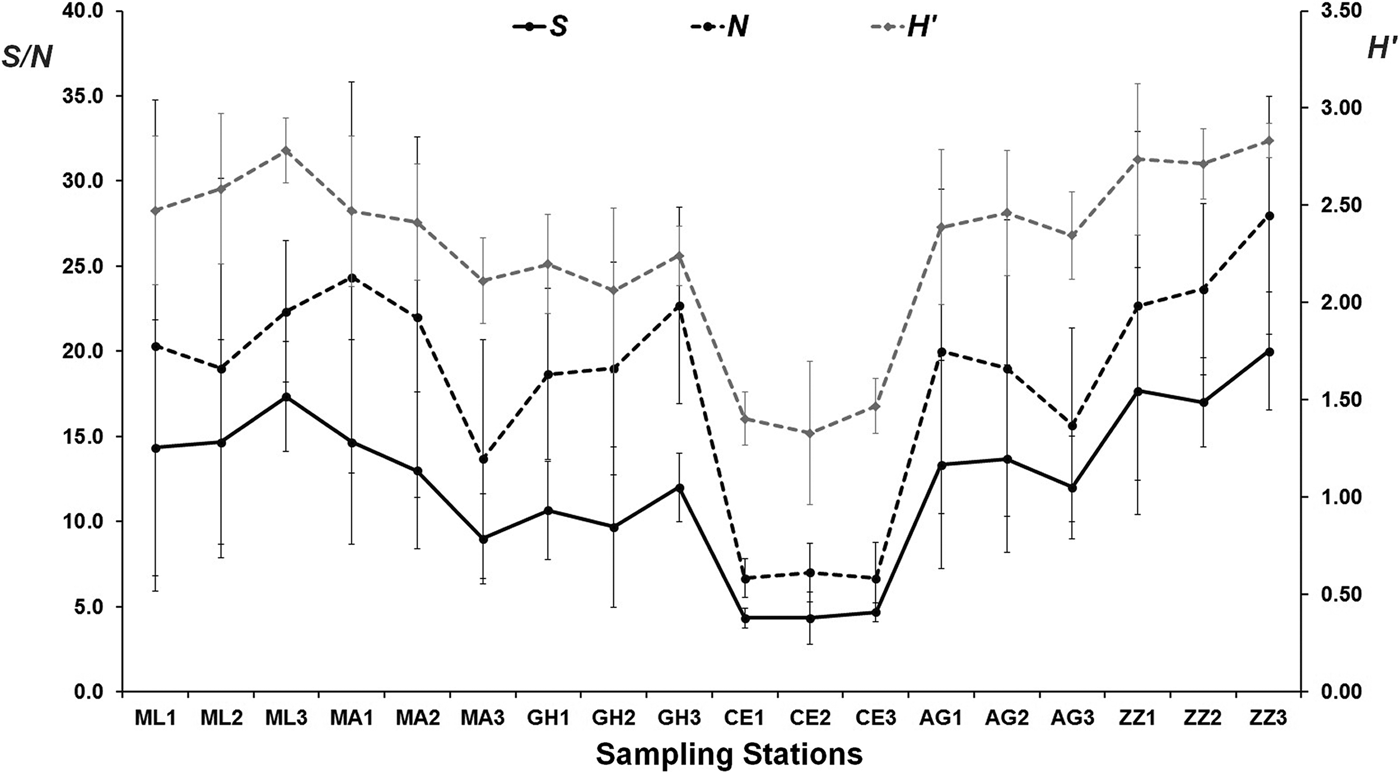
A total of 994 individuals belonging to 84 macro-invertebrate species were collected in the sampling stations of the six localities studied. Total number and abundance of species were mainly represented by molluscs, crustaceans and polychaetes, followed by cnidarians, echinoderms, ascidians, sponges and bryozoans. The highest species richness was noted in Zarzis locality where the stations' average values of species number varied between 17.0 ± 2.65 and 20.0 ± 3.46. Mellita locality occupied the second position with an average number of species varying between 14.3 ± 7.51 and 17.3 ± 3.21, followed by Aghir stations which were found to host an average number of species ranging between 12.0 ± 3.00 and 13.7 ± 5.51. We found thereafter the localities of Mahress and Ghannouche with average values ranging from 9.0 ± 2.65 to 14.7 ± 6.03 and from 9.7 ± 4.73 to 12.0 ± 2.00 species respectively. The poorest locality was found to be Chat Essalem with an average species richness ranging between 4.3 ± 0.58 and 4.7 ± 0.58. Concerning the abundance of individuals, the spatial variations of this parameter showed a similar pattern to that found with species richness. In fact, highest average station abundances were noted in Zarzis (from 22.7 ± 10.26 to 28.0 ± 7.00 individuals), Mellita (from 19.0 ± 11.14 to 22.3 ± 4.16 individuals) and Mahress (from 13.7 ± 7.02 to 24.3 ± 11.50 individuals), followed by the localities of Ghannouche (from 18.7 ± 5.03 to 22.7 ± 5.77 individuals) and Aghir (from 15.7 ± 5.69 to 20.0 ± 9.54 individuals). The stations sampled in Chat Essalem were found to host the lowest average abundance which was found to range from 6.7 ± 1.15 to 7.0 ± 1.73 individuals. As for the Shannon–Wiener diversity (H′), the highest station average values of this ecological descriptor were found in the localities of Zarzis (between 2.71 ± 0.18 and 2.83 ± 0.09), Mellita (between 2.47 ± 0.38 and 2.78 ± 0.17), Aghir (between 2.35 ± 0.22 and 2.46 ± 0.32) and Mahress (between 2.11 ± 0.22 and 2.47 ± 0.39), followed by Ghannouche (between 2.06 ± 0.42 and 2.24 ± 0.15). The lowest H′ was recorded in the area of Chat Essalem where the station average values varied from 1.33 ± 0.37 to 1.47 ± 0.14 (Figure 4).
Spatial variations of classical diversity parameters, species richness (S), total abundance (N) and Shannon–Wiener diversity index (H′) among the sampling stations and localities of study in the Gulf of Gabes. MLi stations sampled in Mellita (in Kerkennah Island), MAi stations sampled in Mahress, GHi stations sampled in Ghannouche, CEi stations sampled in Chat Essalem, AGi stations sampled in Aghir (in Djerba Island), ZZi stations sampled in Zarzis.
The results of Bray–Curtis clustering and NMDS analysis are given in Figure 5. The groups' clustering obtained was found to be matched well with both ‘Geographic location’ (Figure 5A) and ‘Locality’ (Figure 5B) factors. This was confirmed with SIMPROF test which gave a significant result (Pi = 9.638; significance level: 0.1%). Both analyses showed at the level of 15% of similarity a clear discrimination between two clusters: the first cluster consisted of the stations sampled in the localities of Mellita, Mahress, Aghir and Zarzis; whereas the second cluster was formed by the stations sampled from Ghannouche and Chat Essalem localities. At the level of 20% of similarity, the former cluster subdivided into two sub-clusters, one sub-cluster represented by Mellita and Mahress stations and another sub-cluster formed by the stations of Aghir and Zarzis. However, the latter cluster separated into sub-clusters represented by the stations of Ghannouche and Chat Essalem each. More sub-groups were obtained at higher levels of similarity (Figure 5A, B).
Bray–Curtis clustering (A) and nmMDS (B) of the sampling stations based on the abundance of species collected and considering ‘Geographic location’ and ‘Locality’ factors respectively.
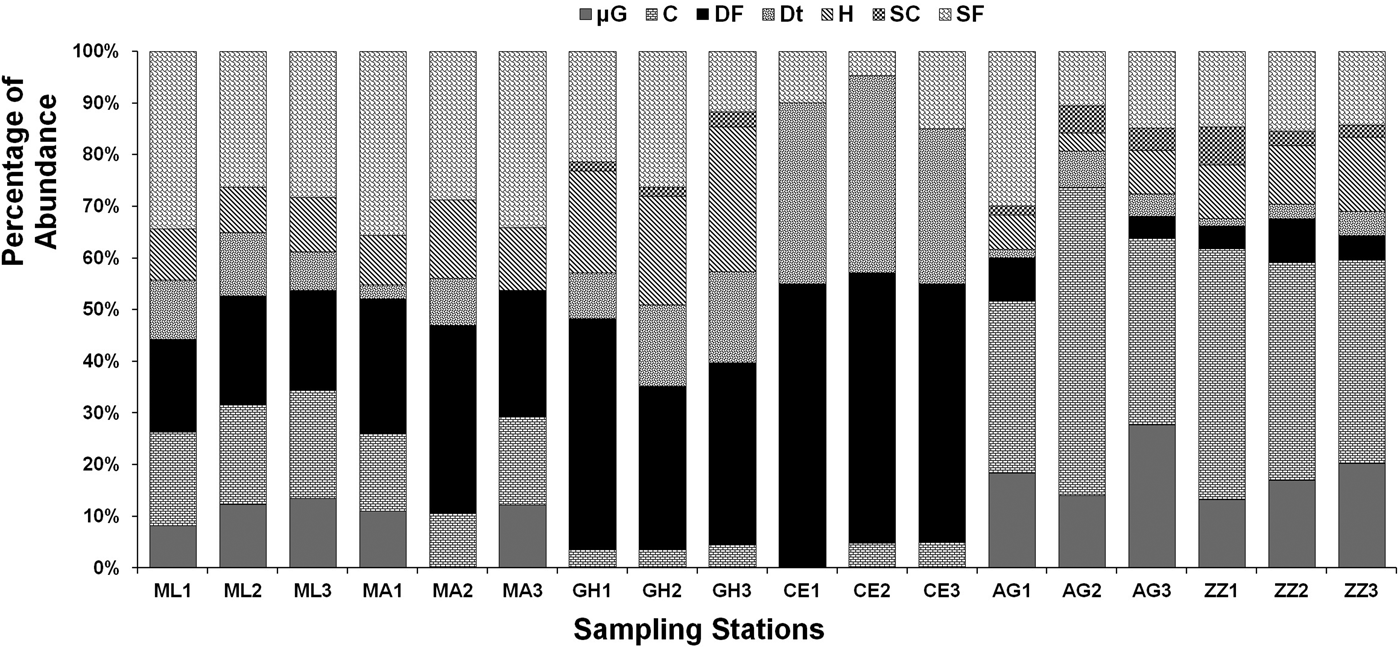
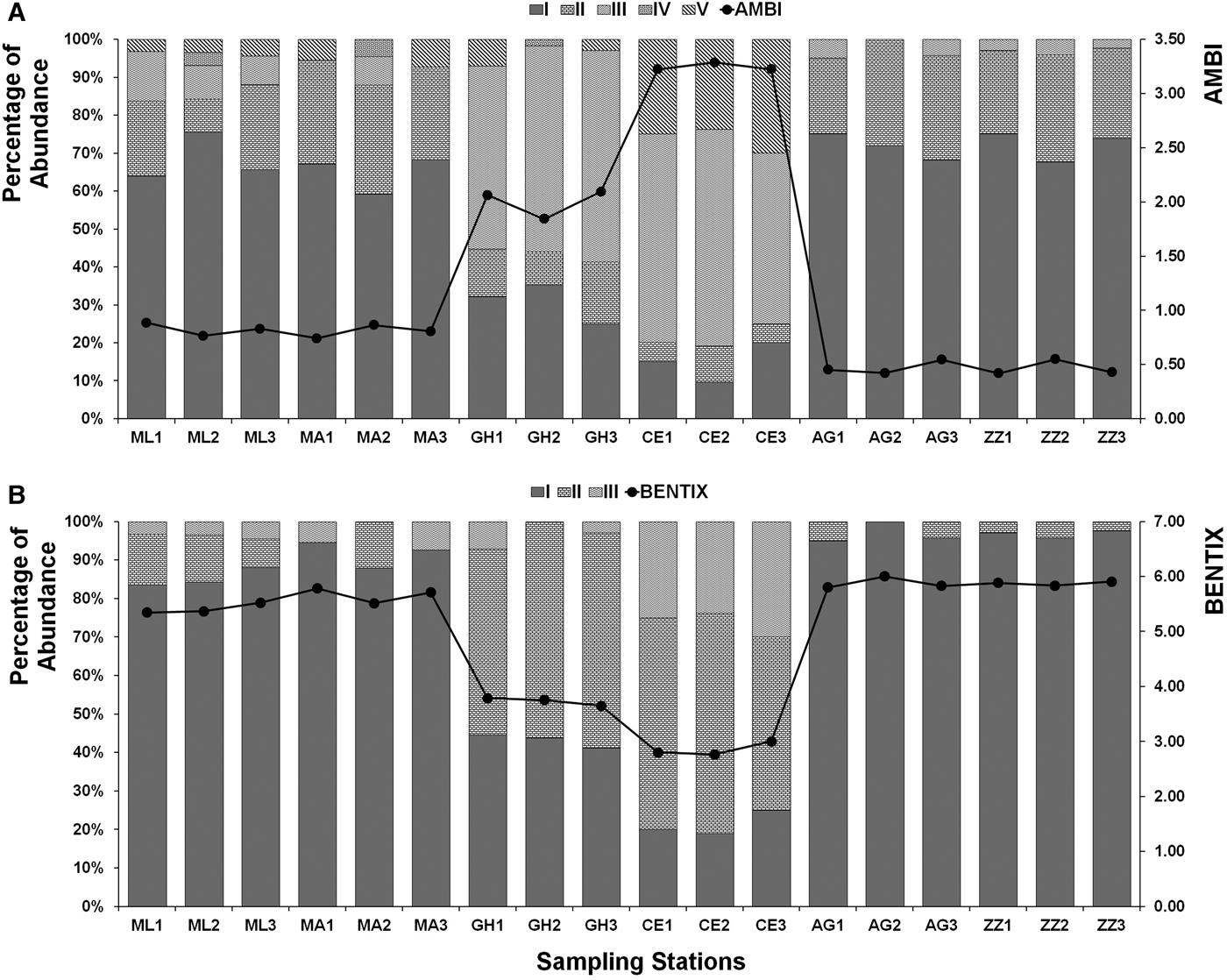
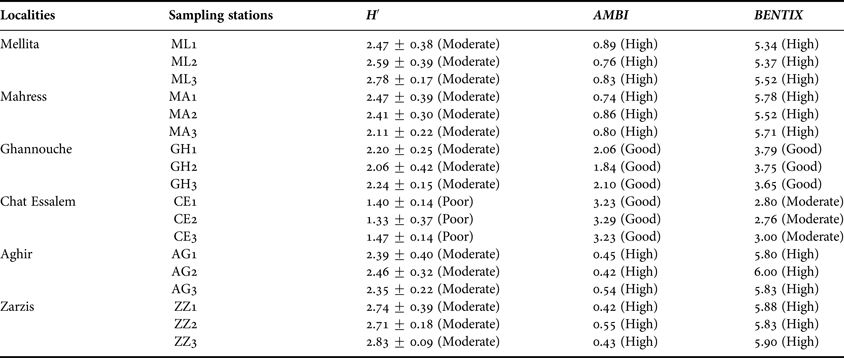
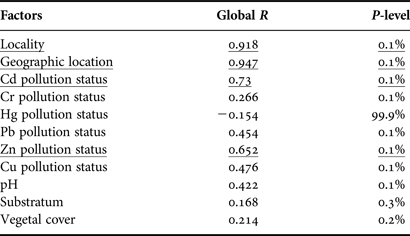
The trophic structure of the studied benthic communities showed some spatial variations. Suspension feeders prevailed in Mellita locality and in most of the sampling stations in Mahress. Deposit feeders were found to be the most abundant in the sampling stations located in both Ghannouche and Chat Essalem localities. However, in the case of Aghir and Zarzis, carnivores were found to be the most abundant in all the sampling stations. It is worth noting that the seven trophic guilds considered herein were all represented in the communities of Aghir (except AG2) and Zarzis localities. In the other localities, one or more trophic guilds were not found to be part of their relative benthic communities (Figure 6). As for the ecological structure of these benthic communities, taking into account the ecological index AMBI, it was found that ecological group I dominated in the stations sampled in the localities of Mellita, Mahress, Aghir and Zarzis, followed in general by groups II, III, V and IV in the case of the first two localities of study (i.e. Mellita and Mahress) and only by groups II and III for the other two sites (i.e. Aghir and Zarzis). As for Ghannouche and Chat Essalem, their sampling stations were found to be mainly represented by the species belonging to ecological group III, followed generally by groups I, II, V and IV for Ghannouche stations and by groups V, I and II for Chat Essalem stations (Figure 7A). Considering the BENTIX ecological groups, the ecological structure of the communities examined was found to follow a similar pattern to that described with AMBI ecological groups (Figure 7B). Consequently the AMBI and BENTIX indexes showed proportional reliable patterns to the ecological structures of the examined benthic communities. In fact, the lowest values of the AMBI index were recorded in Aghir and Zarzis localities, followed by those of Mahress and Mellita. The highest values were recorded in Chat Essalem and Ghannouche localities (Figure 7A and Table 2). In contrast, the lowest BENTIX values were recorded in Chat Essalem and Ghannouche localities; higher values were found with Mahress and Mellita and the highest records were noted in Aghir and Zarzis localities (Figure 7B and Table 2). The ecological quality status of benthic assemblages sampled from all the sampling stations are given in Table 2. Based on H′ scaling, all the localities of study were found to host ‘moderate’ benthic communities except for Chat Essalem which seems to host a ‘poor’ benthic assemblage. However, considering the AMBI index, the ecological quality of benthic community was deduced to be ‘Good’ in Ghannouche and Chat Essalem and ‘High’ in the other localities. Similar results were found with BENTIX, except for Chat Essalem locality of which the ecological quality status was qualified to be ‘Moderate’ (Table 2). The analysis of similarity between the benthos samples with respect to different environmental factors considered showed significant differences with ‘Locality’, ‘Geographic location’, ‘Cd pollution status’ and ‘Zn pollution status’ factors. Although the differences they showed were not statistically significant, the factors ‘Pb pollution status’, ‘Cu pollution status’ and ‘pH’ were found also to explain some optimal difference between the benthic assemblages analysed herein (Table 3).
Spatial variations of the trophic structure between the benthic communities collected from the sampling stations of the six localities of study in the Gulf of Gabes. μG, Micrograzers; C, Carnivores; DF, deposit feeders; Dt, Detritus feeders; H, Herbivores; SC, Scavengers; SF, suspension feeders. MLi stations sampled in Mellita (in Kerkennah Island), MAi stations sampled in Mahress, GHi stations sampled in Ghannouche, CEi stations sampled in Chat Essalem, AGi stations sampled in Aghir (in Djerba Island), ZZi stations sampled in Zarzis.
Spatial variations of AMBI (A) and BENTIX (B) indexes and their relative ecological structures, between the benthic communities collected from the sampling stations of the six localities of study in the Gulf of Gabes. MLi stations sampled in Mellita (in Kerkennah Island), MAi stations sampled in Mahress, GHi stations sampled in Ghannouche, CEi stations sampled in Chat Essalem, AGi stations sampled in Aghir (in Djerba Island), ZZi stations sampled in Zarzis.
Assessment of the ecological quality status of benthic communities based on the values of H′, AMBI and BENTIX indexes and using the scaling suggested within the WFD. The scaling were adopted and/or modified from Borja et al. (Reference Borja, Franco and Perez2000), Labrune et al. (Reference Labrune, Amouroux, Sarda, Dutrieux, Thorin, Rosenberg and Grémare2006) and Simboura & Zenetos (Reference Simboura and Zenetos2002).
One-way analysis of similarity test (ANOSIM) of sampled macrofaunal communities with the factors considered. Underlined rows represent the factors showing significant differences between the sampling stations.
DISCUSSION
In the present study, a clear gradient of sediment enrichment with heavy metals was highlighted from the northern and southern edges to the centre of Gabes gulf. The sediment concentrations of heavy metals analysed were found to be comparable to those recorded by other authors in the area of Gabes gulf (Ben Amor-Magouri, Reference Ben Amor-Magouri2007; Gargouri et al., Reference Gargouri, Azri, Serbaji, Jedoui and Montacer2011). The pollution level assessment differed from one locality to another and from one heavy metal to another, but it is certain that some pollutants exceeded the natural values. Considering the heavy metals analysed, Hg showed a ‘severely polluted’ environment in all the localities of study except Mellita in Kerkennah Island. As for Pb and Cu, the standard concentrations of the surface marine sediments were exceeded in Mahress, Ghannouche and Chat Essalem; while for Cd and Cr, severe sediment pollution was assessed in Ghannouche and Chat Essalem and in Chat Essalem, Guellala and Zarzis respectively. Zn was the only heavy metal for which the concentrations recorded did not highly exceed the standards. The main factors behind this metallic pollution are most likely the well-developed urban activities and the related industries and municipal discharges in the big cities of Gabes gulf, in particular Sfax, Gabes, Zarzis and the cities of Djerba Island, as well as the impact of non-controlled discharges dispersed in the rural zone (Gargouri et al., Reference Gargouri, Azri, Serbaji, Jedoui and Montacer2011). Comparing the localities of study, severe pollution was noted in Chat Essalem with all the heavy metals considered except for Zn. The high concentrations found in this locality could be mainly due to the impact of the phosphoric acid industry located on the coast of Gabes city, close to the sampling stations. This phosphoric industry plant is known to dump daily in the open sea large quantities of phosphogypsum which contains various highly polluting substances including heavy metals (Zairi & Rouis, Reference Zairi and Rouis1999; Tayibi et al., Reference Tayibi, Choura, López, Alguacil and López-Delgado2009). The severe sediment pollution found in Ghannouche with all the heavy metals analysed except for Cr and Zn is probably due to the vicinity of this city to the phosphoric acid industry and also to the other urban activities that can generate an input of heavy metals. In the case of Mahress, the severe sediment pollution found with Hg, Pb and Cu is probably due to enrichment of the marine environment with these heavy metals originating from the phosphogypsum waste of the phosphoric acid plant located in Sfax city; the enrichment process can be accelerated with the general currents which have a north-south direction. These heavy metals may also come from the urban wastes of the coastal city of Mahress. Aghir and Zarzis localities showed a severe pollution by Cr and Hg, which is probably caused by the organic pollution generated by the anthropogenic activities of these cities. Regarding Mellita locality, it seems from the lower concentrations found with all the heavy metals considered, that the urban wastes and organic and industrial pollution generated from the close big city of Sfax do not reach the coastal sediments of Kerkennah Island, probably because of the north-south marine currents. Besides, the island of Kerkennah is not characterized by a well-developed urban area like that in Sfax city and the other cities, thus probably leading to a very low organic pollution. In addition, a recent study of the contents of heavy metals in the tissues of some mollusc species collected from different areas along the coasts of Gabes gulf highlighted a pattern of spatial variations similar to that of sedimentary heavy metals found herein (Rabaoui et al., Reference Rabaoui, Balti, El Zrelli and Tlig-Zouari2014). Those authors reported that the most plausible source of pollutants is the phosphoric acid industry located in Gabes city, however their study was not extensive enough to deduce the exact source of heavy metals assessed in the analysed mollusc species (Rabaoui et al., Reference Rabaoui, Balti, El Zrelli and Tlig-Zouari2014).
Accordingly, the pattern observed with both the number and abundance of species and the ecological descriptors taken into consideration, seems to be matched with the results of heavy metals concentrations in surface marine sediments. The effect of heavy metal enrichment on benthos can be deduced from the decrease in the number of species and abundance, supporting the findings of other authors (Gray, Reference Gray1979). In fact, it was reported that high concentrations of trace metals may have toxic effects on benthic organisms leading generally to biodiversity losses (Long et al., Reference Long, McDonald, Smith and Calder1995; Gray, Reference Gray1997). In accordance with the findings of the present study, Ryu et al. (Reference Ryu, Khimb, Kang, Kang, Lee and Koh2011) showed the existence of a general pattern of increasing benthic species diversity with increasing distance from the pollution source. Those authors also found that small-sized individuals prevailed in polluted sites compared with less-polluted sites in which large individuals dominated (Ryu et al., Reference Ryu, Khimb, Kang, Kang, Lee and Koh2011). In addition, the results obtained herein confirm that soft-bottomed benthic communities are useful for monitoring the health status of the marine environment. Due to the sedentary status of macrobenthic animals, they are in close contact with sediments in which many contaminants are ultimately partitioned (Reice & Wohlenberg, Reference Reice, Wohlenberg, Rosenberg and Resh1993), and thus they may better inform about the ambient conditions of the locality in which they live (Gray et al., Reference Gray, McIntyre and Stirn1992). These communities are then considered as reliable indicators of the biotic integrity of marine ecosystems (Blanchet et al., Reference Blanchet, Lavesque, Ruellet, Dauvin, Sauriau, Desroy, Desclaux, Leconte, Bachelet, Janson, Bessineton, Duhamei, Jourde, Mayot, Simon and de Montaudouin2008). Within this context, it was reported that the individual benthic taxa may give various sensitivity responses with respect to the different contaminants (Boesch & Rosenberg, Reference Boesch, Rosenberg, Barret and Rosenberg1981) leading to the combined effects of multiple environmental stresses on macrobenthic communities (Ryu et al., Reference Ryu, Khimb, Kang, Kang, Lee and Koh2011). In addition, the results found herein also confirm the utility of using the ecological indexes AMBI and BENTIX which were found to be concordant with the results obtained with the number and abundance of species richness and Shannon–Wiener diversity H′ and also with those obtained with sediment chemistry. It is worth noting that in spite of the slight differences found in the assessment of the ecological quality status of benthic communities, with H′, AMBI and BENTIX, the results found led to the conclusion that the benthic communities in the centre of Gabes gulf, i.e. in Ghannouche and Chat Essalem, are more impacted than those in the other localities located in northern and southern parts of the Gulf.
Considering sediment chemistry and benthos data as well, the status of the environment found in Chat Essalem and Ghannouche is clearly unbalanced and heavily polluted. This disturbance is certainly related to the various anthropogenic pressures in these areas; however, the phosphoric acid plant of Gabes can be considered as the major source of anthropogenic pressure, in particular of heavy metal enrichment due to the dumping of high quantities of phosphogypsum in the marine medium (Soussi et al., Reference Soussi, Ennet, Koponen, Sarkkula, Ben Mustapha, Ben Mammou and Kokkila1995; Zaghden et al., Reference Zaghden, Kallel, Louati, Elleuch, Oudot and Saliot2005). The negative impact of phosphogypsum on the environment was previously reported in the city of Sfax by Zairi & Rouis (Reference Zairi and Rouis1999) who found that it contains high amounts of heavy metals and deduced that these wastes may have negative impacts on the marine environment which is the final destination of these industrial wastes. Decades after the installation of this industry in the city of Gabes (since the 1970s), this may have ongoing negative impact on the marine fauna and the benthic ecosystem in particular. The impact of phosphogypsum on the environment was reported in previous studies as well in Tunisia (Soussi et al., Reference Soussi, Ennet, Koponen, Sarkkula, Ben Mustapha, Ben Mammou and Kokkila1995; Zairi & Rouis, Reference Zairi and Rouis1999; Ben Amor-Magouri, Reference Ben Amor-Magouri2007) and in other areas of the world (see Rutherford et al., Reference Rutherford, Dudas and Samek1994 and Tayibi et al., Reference Tayibi, Choura, López, Alguacil and López-Delgado2009 for review). All these studies reported that phosphogypsum can affect, if not treated, the surrounding environment including marine systems. The impact of phosphogypsum on marine ecosystems was also highlighted by Mouawad et al. (Reference Mouawad, Khalaf and Salameh2009) in Batroun coastal area, North Lebanon, where the chemical discharges were reported to have an influence on the density and composition of meiofauna taxa. According to that study, the further from the chemical plant the more diverse and abundant the meiofauna community. In addition, the structure of benthic foraminiferal assemblages was found to be influenced by pollutants related to anthropogenic activities including phosphogypsum sewage in the northern coasts of Gabes gulf (Aloulou et al., Reference Aloulou, EllEuch and Kallel2012). Those authors noted that polluted areas hosted higher abundances of opportunistic species and that the areas located far from pollution sources showed an increase in the abundance of some species indicators of Mediterranean shallow waters. In addition, numerous previous studies conducted in the area of Gabes gulf have shown the possible negative effect on some marine species from the high metal concentrations noted in some molluscs (Hamza-Chaffai & Pellerin, Reference Hamza-Chaffai and Pellerin2003; Rabaoui et al., Reference Rabaoui, Balti, El Zrelli and Tlig-Zouari2014) and fish species (Hamza-Chaffai et al., Reference Hamza-Chaffai, Cossin, Amiard-Triquet and El-Abed1995). Within this context, many skeleton-deformed individuals of Aphanius fasciatus were observed in the industrialized and hence more polluted coastal area of Sfax city leading to the conclusion that pollution is most likely behind such anomalies (Messaoudi et al., Reference Messaoudi, Kessabi, Kacem and Saïd2009b). Similarly, a possible relationship between the high amounts of heavy metals and spinal deformities of the grass goby Zosterisessor ophiocephalus in the Gulf of Gabes was highlighted by Messaoudi et al. (Reference Messaoudi, Deli, Kessabi, Barhoumi, Kerkeni and Saïd2009a). The higher coastal management in Chat Essalem could also be one of the contributing factors to the worse situation of this locality compared with that of Ghannouche. In fact, Chat Essalem is located between two ports, one a fishing harbour and one a commercial harbour (Figure 1), making the middle zone a stagnant area with very weak currents and hydrodynamics. This probably enhances the accumulation of wastes including phosphogypsums in the area. While it was reported that the phosphogypsum affected area has a surface of about 60 km2 from the discharge source (Bejaoui et al., Reference Bejaoui, Rais and Koutitonsky2004), some authors think that the affected area is larger because of the high amounts of heavy metals assessed in the tissues of some mollusc species in the southern parts of the Gulf of Gabes (Rabaoui et al., Reference Rabaoui, Balti, El Zrelli and Tlig-Zouari2014).
The present work gives a description of the spatial variations of heavy metal concentrations in the surface marine sediments together with the structure and composition of benthic communities in the Gulf of Gabes. The results showed that the central area of Gabes gulf seems to be more enriched in heavy metals and that it has the most affected and unbalanced soft-bottomed benthic assemblages. This was confirmed by the number and abundance of species and by the H′, AMBI and BENTIX indexes which have been found to be useful for such studies. Even though a direct relationship between the observed severe metal pollution and the phosphogypsum discharge from the phosphoric acid plant, in particular within Chat Essalem and Ghannouche localities, is not determined from the results of the present study, it is known that various anthropogenic factors may combine leading to a summed effect that can negatively influence the local benthic community. Further studies, in particular geochemical research, are needed in order to find out the exact sources of heavy metals contaminating the marine surface sediments in the Gulf of Gabes and to confirm whether the phosphogypsum discharge originating from the phosphoric acid industry of Gabes city is really behind the heavy metal pollution of marine habitats. Other heavy metals and chemical components have to be assessed in the marine environment not only in the marine sediment but also in the water column and in the tissues of some bio-indicators. The Tunisian phosphogypsum rock was reported to be very rich in Strontium (Sr) with a rate of 11,000 mg kg−1 (Choura, Reference Choura2007), however nothing is known about the amount of this trace metal in the marine environment. Besides, the area of Gabes is also known to have fluoride pollution, generated mostly from the Fluor Chemicals Industries (ICF). Fluoride toxicity to aquatic organisms including algae, invertebrates and fish has been reported by other authors (Martin et al., Reference Martin, Martoja, Truchet and Martoja1985; Camargo, Reference Camargo2003). Moreover, the phosphogypsum rocks in different areas of the world have been found to contain some radio-elements including 238U, 226Ra, 210Pb, 210Po and 230Th (Rutherford et al., Reference Rutherford, Dudas and Samek1994; Borrego et al., Reference Borrego, Mas, Martín, Bolívar, Vaca and Aguado2007). However there is still a knowledge gap about the radiochemistry of the phosphogypsum in Tunisia, and nothing is known about whether the radioactivity levels of this product has an effect on the environment or not. In Gabes city, the coastal area close to the phosphoric acid plant is characterized by black-coloured and very turbid waters with an acid pH ranging between 3.4 and 5.5 (Ben Amor-Magouri, Reference Ben Amor-Magouri2007), most likely because of the phosphogypsum waste, and the atmospheric pollution in the city of Gabes is evident compared with other places in the Gulf. Many dead animals including dolphins, sea turtles, sea birds, fish and other invertebrate species are observed and encountered from time to time on the beach of Chat Essalem. While there is no conclusive evidence that these animals died because of pollution, it is most likely that the various anthropogenic pressures acting in the Gulf of Gabes have negative and fatal impacts on these species and on the marine ecosystems of the area. It is necessary to conduct in the future a more extensive study, targeting other pollutants such as fluoride and radio-elements, in order to better identify the exact causes behind the unbalanced faunistic ecosystem in the area of the Gabes gulf and to ensure the protection of marine life.
ACKNOWLEDGEMENTS
We are very grateful to the staff that helped in the sampling surveys and in the analysis of heavy metals in the sediment samples.
FINANCIAL SUPPORT
The authors would like to express their sincere appreciation to the Deanship of Scientific Research at King Saud University for funding the research group No. RG-1435-023.