Food practices — hunting, fishing, preparing soils for planting, harvesting, storing crops, gathering berries, preparing and presenting meals — are intimately entwined with public health and the economy, with sustainability and the physical environment, and with social events and the vibrancy of community life (Parrish, Turner, & Solberg, Reference Parrish, Turner and Solberg2008). Many formerly self-sufficient Canadian communities, however, have become increasingly dependent over the past 50 years on industrialised food systems and less familiar with home-grown, sustainable foods. We consider these characteristics of change, as evidenced in threats both to the physical environment and human health, to be issues of eco-justice and worthy of a holistic approach to school and community research, teaching and learning.
Although the effects of poor eating habits and sedentary lifestyles among both rural and urban children and youth are noted widely in health and popular literature (e.g., Canning, Courage, & Frizzell, Reference Canning, Courage and Frizzell2004; Pollan, Reference Pollan2007), food studies receive only tangential and generic attention within most school curricula. At present, as part of urban-based curriculum development, most units on the topic deal with factual information about health and consumer choice. Although such information provides an important pedagogical resource, we believe that effective teaching and learning must involve the direct input of students and other members of society as they reflect upon, and make choices about, their own communities and circumstances. Our research aims to unearth historical food practices that may soon disappear, advance awareness of when and how change took place, and stimulate collective action to enhance food self-sufficiency. We focus attention on rural communities in the belief that they will assume an increasingly important role in production as food crises deepen worldwide (Brown, Reference Brown2012; Patel, Reference Patel2007). While not wishing to romanticise the historical record, we contend that many of the changes that have occurred over the past 5 decades signal rural marginalisation, environmental abuse (e.g., of the fishery), and an absence of corporate responsibility.
Our objectives in this research are to test pedagogies that address change in the physical environment — in this case, to the land and sea once used for agriculture, livestock farming, and fishing — and both the historical and contemporary human activities of food production and consumption. Although the research is specific to a rural context, aspects of our critical place-based pedagogies will apply to other locations where readers see a fit between the details we provide and their own situations. In the classroom and community, we test the effectiveness of three overlapping pedagogical approaches as students and adults revisit their own community history, reflect upon present-day food practices, and imagine the food future they desire.
In this article we describe the community of study, followed by equity frameworks and research methods. We present the three pedagogies, each with its own rationale, illustrations from the study, and discussion (or assessment) of findings. The article concludes with plans for extending the ecological landscape and a brief summary of research implications.
Community Context
The research was undertaken in a semi-isolated coastal community of Canada's most eastern province, Newfoundland and Labrador (NL). Change Islands, chosen because of its relatively recent history of food sovereignty and because we were told by the regional director of schools that ‘interesting things seem to be happening there’, is located on two, closely spaced islands off the northeast coast of Newfoundland. The community was built around the fishery that began in the latter half of the 18th century when the Labrador fishery rose to prominence (www.changeislands.ca). By the beginning of the 20th century, this was a prosperous settlement with a population of over 1,000 people who either fished the North Atlantic waters or worked in one of the island's three large merchant premises. According to adult participants in the study, the Change Islands Fish Plant, built in the 1950s, brought with it significant changes to the community's food supply. Women no longer stayed at home, where they had previously grown vegetables, tended livestock, preserved foods, prepared home-cooked meals and fulfilled general household tasks but, instead, went to the plant to cut and package fish for an hourly wage.
People began relying more on store-bought goods such as frozen meats and various forms of processed foods transported by truck and ferry from Canada's mainland, across the island of Newfoundland, to Change Islands. The new food patterns created a dependence on imported and processed foods that continues today. Food independence was maintained, however, on a small scale as people continued their hunting, family fishing, berry picking, and a little gardening. With the introduction of modern fishing technology and the closure of the northern cod fishery in 1992, the population today has been reduced to approximately 200. Many who remain are retired and spend several months of the year elsewhere. The few still employed are mostly seasonal workers who spend months at a time working off the Islands (e.g., in the oil fields of Alberta).
Change Islands, like many other small communities, has been influenced historically by decision makers at the provincial and federal levels of government and, most tellingly lately, by globalisation. Globalisation refers here to the present neo-liberal economic order with its objective of reducing state power, and its accompanying assumptions of market wisdom and unfettered global trade agreements. We view NL within the Canadian confederation, however, as governed increasingly on behalf of industrial and corporate interests, especially as these affect the fishery and other sources of food supply (Goulding, Reference Goulding1982; Wright, Reference Wright2001). National regulations have contributed to the collapse of NL's major industry — the wild harvest fishery — by failing to protect the fishing grounds from over-fishing by both Newfoundland and foreign fleets, and granting licences to large fish plants and/or deep sea factory freezer trawlers, while limiting individual licences. Collectively, these moves discouraged inshore fishing and led to the closure of many fish processing plants (Coward, Ommer, & Pitcher, Reference Coward, Ommer and Pitcher2000; Kennedy, Reference Kennedy, Sinclair and Ommer2006; Neis, Binkley, Gerrard, & Maneschy, Reference Neis, Binkley, Gerrard and Maneschy2005; Wright, Reference Wright2001).
The Canadian government, like most governments in the Western world, has moved inexorably from local to global production and distribution of goods. Food has become an important ingredient in the trade agreements of a world economy. Gradually, with free-flowing supplies of food from all corners of the world, people of NL, as elsewhere, have evolved from conditions of near food-sovereignty to producing less that 10% of their needs.
Framing Rural Food Research as an Equity Issue
Understandings of rurality are influenced by shifting perspectives (i.e., by different theoretical frameworks and changing conditions of rural life). We define rurality in terms of communities dependent upon extensive land and sea use (i.e., agriculture, forestry, mining and fishing), and with low populations that demonstrate a strong relationship between local institutions (i.e., home, school and church) and their physical environment (Cloke, Reference Cloke, Cloke, Marsden and Mooney2006, p. 20).
Although rural and urban spaces are connected by association, the history of privilege has been largely one of urbanisation and the dominance of geographic peripheries by ‘the social, cultural, economic, and political spheres of the urban core’ (Schafft & Youngblood Jackson, Reference Schafft and Youngblood Jackson2010, p. 1). This political and economic ascendancy tends to legitimate a long-standing view that rural people live in the past, and are backward and unable ‘to play a role in the formation of [educational] policy’ (Theobald & Wood, Reference Theobald, Wood, Schafft and Youngblood Jackson2010, p. 21). Labelling rural communities as urban problems — that is, as unchanging, inefficient, ill equipped, and a hindrance to progress (Barter, Reference Barter, Walters and Cooper2009; Kannapel & DeYoung, Reference Kannapel and DeYoung1999) — encourages those who plan teacher pre-service programs to assume that teachers entering a unified school system should deliver a common curriculum (Barter, Reference Barter, Falkenberg and Smits2011; Edmondson & Butler, Reference Edmondson, Bulter, Schafft and Jackson2010). This urban mindset is manifested, as well, in such administrative action as structural reform (e.g., school closures, extensive bussing, and school consolidations), curriculum standardisation, national and international standardisation of testing (Gruenewald & Manteaw, Reference Gruenewald and Manteaw2007), and market models of school leadership/management (Barter, Reference Barter, Walters and Cooper2009; Bates, Reference Bates2006; Gruenewald & Smith, Reference Gruenewald, Smith, Gruenewald and Smith2008).
We have chosen to examine food pedagogy in the light of food self-sufficiency (or ‘sovereignty’) among those who have experienced it in the past and are now attempting to revive it. It is important to distinguish food sovereignty from earlier discourses such as ‘freedom from hunger’ and ‘food security’, which posit individualistic solutions to scarcity (Fairbairn, Reference Fairbairn, Wittman, Desmarais and Wiebe2010). Discourses of food sovereignty, emerging in the 1990s, involve a rejection of globalisation and market-based economics and call for a new ‘agrarian citizenship’ (Wittman, Desmarais, & Wiebe, Reference Wittman, Desmarais and Wiebe2010, p. 11). Characteristics of this new citizenship, according to Fairbairn (Reference Fairbairn, Wittman, Desmarais and Wiebe2010), position food sovereignty as: integral to local cultures; closing the gap between distant production and local consumption; dependent on local/traditional knowledge; and countering rural displacement and relocation by keeping people in touch with their own land and its produce. Agrarian citizenship and food sovereignty, in short, are resistant to the current neo-liberal, corporate-led, industrialised food regime. Authentic discourse and action around food (i.e., one of life's necessities) mark essential steps towards social and environmental equity.
Anderson (Reference Anderson1998, Reference Anderson2012), from an educational leadership perspective, indicates how authenticity has been under siege, noting its decline in a global world dominated by neo-liberal preconceptions of market ‘wisdom’, and economic standards of continuous growth and environmental marginalisation. As Anderson illustrates, we see and hear this inauthentic voice in many guises, including political half-truths, advertising untruths, and in misleading organisational claims. Of course, authenticity has always been endangered and, thus, continues to challenge all societal undertakings. The difference today lies in the technological advances which, positively speaking, reveal events, situations and political movements that went unreported 20 years ago and, more negatively, allow for additional creativity in propagating the half-truth and lie. In matters of curriculum, Anderson (Reference Anderson2012) notes, one illustration of inauthenticity lies in the presentation of dominant spaces as illustrative of reality, thus tending to strip communities of their integrity, voice and place.
These issues of equity — recognition of rural spaces as valuable socio-ecological sites, food sovereignty and the authenticity of a balanced curriculum of study — prompted our broad research question: What pedagogies most adequately address the engagement of public school students so that they develop questioning attitudes towards the various personal and organisational conditions in which they live, and become ever more confident in the choices they make to bring about a desired future? More specifically, we asked how pedagogies of engagement apply to research about food practices. We approached these questions using a composite design, that of a critical, exploratory and authentic pedagogy of place.
Design and Method
Critical Place-Based Research
Dominant discourses of globalisation and its handmaiden, neo-liberalism, reflect narratives of displacement, movement and rapid change, often leading educators to focus on economics in a way that disregards place and local experience. We contend, however, that local places provide ‘the specific contexts from which reliable knowledge of global relationships can emerge’ (Greenwood, Reference Greenwood, Stevenson, Brody, Dillon and Wales2013, p. 93). They exemplify how people ecologically and culturally adapt, or have adapted, to constant change in order to sustain themselves. Critical place-based research, for us, provides a contextual framework for food studies. As a research/teaching methodology, it presents an opportunity to offer students, teachers and others authentic experiences within their communities (Gruenewald & Smith, Reference Gruenewald, Smith, Gruenewald and Smith2008).
Place-based research refers to our focus on the holistic context of rural locations — their history, customs, people, and shared future. Critical pedagogy, on the other hand, highlights our emphasis on helping ‘students develop a consciousness of freedom, recognize authoritarian tendencies, empower the imagination, connect knowledge and truth to power and learn to read both the word and the world as part of a broader struggle for agency, justice and democracy’ (Giroux, Reference Giroux2010, p. 1). A critical pedagogy of place embraces progressive pedagogies, classroom democracy, community relations and eco-social justice (Fay, Reference Fay and Ball1977; Furman & Gruenewald, Reference Furman and Gruenewald2004; Gruenewald, Reference Gruenewald2003). In our research, we focused as well on developing collective agency through the arts (Harris & Barter, Reference Harris and Barter2013). This provided a space for students to ‘hear themselves speak’ (Mackler, Reference Mackler2010) in many voices of issues that affect them, such as their semi-isolated location, the devastation of the fishery and the loss of traditional food habits.
As dialogue and other expressive forms of communication are of primary importance in a critical examination of food practices, we were conscious of maintaining discourse in an inclusive, non-threatening manner. The purpose was to advance both self-understandings and the possibility of transformative social change (Habermas, Reference Habermas1984). Anderson's (Reference Anderson1998) guidelines for ‘authentic participation’ directed our interactions with the public, as well as our appreciation of people's everyday lives within the larger administrative system of schools, churches and health care facilities. In the classroom, this quest for authenticity required a ‘pedagogy of the question’ as opposed to the currently accepted ‘pedagogy of [correct] answers’ (Fay, Reference Fay and Ball1977; Smyth, Reference Smyth and Smyth1989). With our focus on place and our pedagogical roots in discovery learning, classroom questioning directed attention to each student's ethical, environmental and political stance.
Research Methods
Our research took place at two levels, with community adults and with students at the A.R. Scammell All-Grade School (reported here, with interview data from adults included only where they intersect with school pedagogies). At the school, during three 1-week periods in 2011–13, we worked with teachers and 18 students in two multi-graded cohorts (4–9 and 10–12). Our critical pedagogies-of-place highlighted the history and knowledge base of the community, that is, experiential teaching and learning, which called on local referents to the Islands’ ecological history; guided discovery learning, whereby students also become ‘researchers’ through web searches, field trips and interviews with elders; and arts-based approaches that provided opportunity for children and youth of various ages, skills and capabilities to experience success. All lesson plans and outcomes were shared with the school principal, teachers and a school district representative. We assessed our successes and problem areas in teaching and learning through observation of student engagement, student assignments, and the words and involvement of teachers and district personnel. The first two forms of assessment appear below as we interweave each pedagogical approach with its theoretical justification and classroom application.
Pedagogies as Praxis
Experiential Teaching, Learning & Research
Experiential learning can be defined simply as ‘learning from one's experience’. It was upon this basic building block that Dewey and other progressive educators developed their early experiments in placing learners at the centre of the teaching and learning process. The tradition of building on prior learning, of course, calls upon centuries of indigenous knowledge (Barnhardt & Kawagley, Reference Barnhardt and Kawagley2005) and reaches back to the history of Greece. Socrates, for instance, as recorded through the words of Plato, brought his followers to a realisation of the knowledge they already held. But Dewey clearly based his pedagogical principles on experience that is both cumulative and socially rooted in the physical and social environment. He recommended an inside approach to learning that stands in juxtaposition with outside authority and bodies of knowledge built by society through the ages to be passed on to the youth of subsequent generations (Dewey, Reference Dewey1938, pp. 33–40). Today, we can think of the latter as top-down teaching, in opposition to a bottom-up construction of meaning.
In pursuing an inside approach to learning in our rural setting, we turned to the experiences of those who held traditional and practical knowledge about their society and environment. As described by McGregor (Reference McGregor, Blaser, Feit and McRae2004) about indigenous people, this rural knowledge base has been constructed ‘through generations of living in close contact with nature’ (p. 77). It includes a ‘system of classification, a set of empirical observations about the local environment, and a system of self-management’ that governs resource use. With roots firmly in the past, ‘traditional environmental knowledge is both cumulative and dynamic, building upon the experience of earlier generations and adapting to the new technological and socioeconomic changes of the present’ (p. 77). The possession of such knowledge is determined by geography, local availability of resources, and the impact of macro-systemic legal restrictions on traditional practices such as hunting and fishing.
Our intent, like Barnhardt's (Reference Barnhardt, Gruenewald and Smith2008) in Alaskan education, was to work with the school and its community to integrate local ‘knowledge systems into the school curriculum as a basis for connecting what students learn in school with life out of school’ (p. 113). Both with the students and independently, we listened to adults recount what they remembered about the foods of their past and about their present practices.
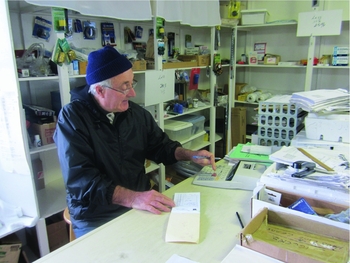
Following preparation for field trips (i.e., topics to explore, questions to ask, notes to record), elementary and junior high school students visited and interviewed Mr Hurley, a fisherman, builder, and organic crop farmer, and Mr and Mrs Bown, who ran a local general store (Figure 1). The students learned from Mr Hurley about the history of gardening, soil preparation, what foods were produced and how they were preserved during the long winter months.
Bown's general store.

From the Bowns, they found out why the store was situated ‘on the water’ (for transportation of the few necessities needed in the past) and how foods were purchased and packaged. Back at school, the principal took part in our history search by telling students how the fishermen identified rocks or points of land that marked their fishing grounds.
In the evenings, and based on suggestions from students and teachers, we interviewed other community members: Mrs Richards, an elder of the community who has given decades of community service through the Red Cross while raising 10 children of her own; Mr Powell, who has spent all of his life on the Island and, as he quietly oversees the day-to-day activities of the school and community, is identified by many to be a community leader; and Mr White, an elderly gentleman, who for years provided for family and friends from his gardens nestled along the rocky coastline.
These residents and others recounted stories of life in their community: how pickle was made to preserve fish and meats, which livestock were raised and harvested, how vegetables were kept over the winter months, how berries were preserved, and some of the practices they maintain today, as well as those that have changed. Mr Bown, for instance, told a story of how his grandfather became a merchant in order to escape the control of an already well-established colonial mercantile system that forced fishers, through a ‘truck system’, to trade their catch for store merchandise in lieu of cash. He also recounted how he grows his vegetables and sells some to the local people, while others are given away.
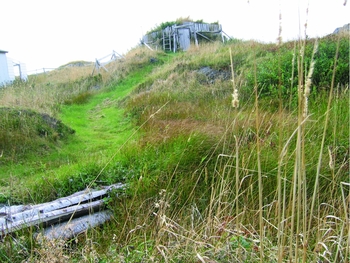
During our school classes, we shared information with students, who informed us of their knowledge about local foods. One grew lettuce that she sold to summer residents. Others told stories about community life or explained food practices that we did not know. For instance, during a class with high school students, we commented that, after all our discussions with community members, we missed asking how root cellars were constructed even though such cellars were quite common around the community (see Figure 2). We assumed that they were dug into the side of an existing mound or small hill to store root vegetables and other produce. The students shrugged as if to indicate they did not know either, except for one who generally remained silent during our sessions. Charlie (a pseudonym) quietly noted that root cellars were handmade from wood frames and grass sods and layered to a desired thickness that would protect their contents from the frost. Eventually the structure would fill in and grow over with grass to give the appearance of a naturally occurring mound. We later learned that Charlie and his pals knew much about local practices that was not academically recognised.
Mr White's root cellar.

Charlie is a reminder of Corbett's (Reference Corbett2007) discussion of schools as ‘community disembedding’, a place where students learn to leave. Those who learn to stay develop skills and intelligences, or ‘consequential learning’ (Corbett, Reference Corbett2009, p. 5), that help them survive despite ‘the odds’ and provide the wisdom needed to be successful in life. The number of times that corporate food producers have threatened the health and financial wellbeing of consumers are also reminders of how people need alternative sources of knowledge that stabilise and enable food sovereignty. Clear examples are XL Foods, in Brooks, Alberta, where tons of beef and beef products had to be destroyed because of e-coli bacteria (CBC News, 2013), the foot-and-mouth disease epidemic in the United Kingdom in 2001 (Hillyard, Reference Hillyard2007) and the results of corporate and government (mis)management of the fisheries (Ommer, Reference Ommer2007).
The sophistication inherent in various forms of traditional knowledge is of value far beyond a life-in-the-community. Indeed, the depth of this knowledge ‘rooted in the long inhabitation of a particular place offers lessons that can benefit everyone, from educator to scientist, as we search for a more satisfying and sustainable way to live on this planet’ (Barnhardt & Kawagley, Reference Barnhardt and Kawagley2005, p. 9). The search for traditional and local meaning marks our second pedagogy of engagement.
Discovery Learning
Learning, with its descriptor ‘discovery’, has a lengthy history under the advocacy of educators who maintain that students are more likely to remember concepts if they discover them on their own, than those who are taught directly (Bruner, Reference Bruner1961; Dewey, Reference Dewey1938; Piaget, Reference Piaget, Ripple and Rockcastle1964). Discovery learning is inquiry-based, founded on constructivism, where facts, relationships, and new perspectives are drawn from the learners’ past and existing experiences. Similar to experiential ways of knowing, those involved in discovery learning actively engage and interact with the world.
Such learning, of necessity, requires a certain readiness for inquiry, risk and surprise in teachers as well as in students and researchers. We followed the lead of Duckworth (Reference Duckworth2006), who hypothesises that the ‘wonderful ideas’ of children become evident when we enable them to feel that their questions about the ordinary world are worth having (p. 12). She repeats the point, recognised by good teachers (and parents) everywhere, that: ‘Thoughts are our ways of connecting things up for ourselves. If others tell us about the connections they have made, we can understand them only to the extent that we do the work of making these connections ourselves’ (Duckworth, Reference Duckworth2006, p. 26).
But at Change Islands, we had to provide students with the learning environment that makes such connections possible. Again, we followed Duckworth's advice in allowing ‘learners to get at their own thoughts’ (Duckworth, Reference Duckworth2006, p. xiii) through local issues. Then we took those ‘thoughts seriously, and set about helping students to pursue them in greater breadth and depth’ (p. xiii). This recipe for respectful teaching is followed by its rationale based in equity, to reach all ‘students, so we do not lose the one-half, three-quarters, nine-tenths that we lose now’ (p. xiii).
Recognising that unstructured learning can lead to aimless endeavour and wasted time, we tried to achieve balance between guidance and freedom by providing the basic preparation, facts and skills needed to be successful in the discovery component (Marzano, Reference Marzano2011). Our objective was to have students take ownership of, and gain confidence in, their own skills and knowledge.
At the beginning of the study, we proposed to the senior high students that they become ‘researchers of food practices’ within their communities. With the teacher and students, we spent several days in preparation, taking part in games of introduction to the local history and knowledge, and discussing experiences with food, as in hunting, fishing, cultivating gardens, preserving, celebrating special holidays and preparing home-cooked meals. On our first day in the school, we informally reviewed material they might have encountered earlier as part of their studies. Because the exercise called for their knowledge and not ours, the conversations again helped established a culture of ‘continuous learning’, whereby students, the classroom teacher and we ‘university’ researchers shared information.
On the second day, we started to prepare students-as-interviewers. We talked about local/traditional knowledge and knowledge as received through texts (e.g., books, films, popular songs, computers). We asked what types of food were grown or harvested in the community and where these foods might be found (e.g., in marshes, woods, the ocean, fish plant, gardens, kitchens, and grocery stores). We asked who among the older citizens would be particularly well versed in the historical record and who might speak knowledgeably about present practices.
As our lessons were part of the students’ regular classes in Healthy Living and Nutrition, it was necessary that their research efforts be assessed. Together, as a group that included the classroom teacher, we decided how assignments would be chosen, conducted and evaluated. Everyone was to interview one elder of the community to trace the history of food practices. For this, students were asked to analyse how participants’ experiences with food differed from their own.
Other assignments were to be completed after we had gone. Students suggested they could examine possible messages behind six food commercials; describe/research teen issues related to food and give some indication how these issues might be reinforced or overcome; explain the different worlds of processed and un-processed foods; and, finally, conduct a census of food labels in the local grocery store, showing places of food origin, ingredients, and health benefits, if any.
On our return to Change Islands in the spring of the year, we learned — as did the students — several important lessons from these assignments. The first was that much more preparation was needed before some students could gain meaningful information from adult participants. What was missing? How could interviews have revealed more helpful information? With these questions, we revisited the interview process by interviewing one another about issues of personal knowledge and importance as identified by each interviewee. In the course of the second interviews and the written reports that emerged from them, the necessity for ethical care became evident. This had not been the case with the first interviews, which tended to scratch the surface of local knowledge and experience. Now we were dealing with personal revelations, passions and dreams.
The six high school students knew one another intimately. We learned, for example, that one student had a reading disability which, when disclosed, raised the question of how he would feel if this information was to be divulged publicly. The question for the class became: ‘Following an interview, how do we treat sensitive information and protect the safety of each interviewee?’ As researchers, we believe students learned far more from this experimentation with ethics than would have been possible by following a rule book.
The discoveries made through students’ chosen projects both surprised and delighted us. We were awed by the depth of research and artistry shown in one young girl's PowerPoint presentation of eating disorders (Figure 3), and by the two students who had prepared elaborate world maps, tracing foods and transportation routes from Asia, Africa and Europe to North America (Figure 4). One young woman assured us that she didn't have far to go to collect this information: ‘It was all there in my Mom's cupboard.’
PowerPoint slide of eating disorders.

Food transportation routes.

These are but glimpses of research activities carried out by the senior students. As well, since our intent was to incorporate local knowledge within the existing curriculum, students searched the internet and found information on such topics as special diets (e.g., vegan, vegetarian, gluten-free, omnivorous), food security and sovereignty, food labelling, transportation routes, organic farming and the slow food movement.
Weaving in Arts-Based Pedagogies
Arts pedagogies, in the context of our concern with equity and place, refer to ‘community’ (Harris & Barter, Reference Harris and Barter2013) or ‘integral’ (Amézcuna Luna, Reference Amézcua Luna, Vilela and Corrigan2007) arts that can be used judiciously by all teachers and accessed by all learners. In appealing to participants’ many skills and talents — that is, their holistic way of Being — we tried to break the stranglehold of entrenched dualisms in a school system that divides so-called core subjects from life skills, cognition from emotion, and serious work from enjoyment. As Shusterman (Reference Shusterman, Gaut and Lopes2001) points out, such dualisms have far too long stifled creative thought and fragmented experience and social life. Moreover, they have tended to elevate the contributions of some students while marginalising those of others.
In this arts-based approach, we sought to extend the experience of teachers and learners, for, as Dewey (Reference Dewey1980, original 1934) claimed, the essence of art lies not only in the ‘technical components of art works’ but also in its ‘experiential capacity’ (pp. 35–57). Shusterman (Reference Shusterman, Gaut and Lopes2001), speaking of Dewey's holistic stance towards art, explains that its purpose, in addition to generating aesthetic experience, is to ‘modify and enhance perception and communication; energize and inspire because aesthetic experience is always spilling over and getting integrated into our other activities, enhancing and deepening them’ (p. 99). Sandri (Reference Sandri2013) points out that the arts can be particularly effective in stimulating children's imaginations about the sustainability of their physical environment. Thus, as the elementary and junior high children took part in developing a rhythm canon, naming coves and lanes of their community, they explored how and why places received their names — for example, Red Rod Cove, Shoreline Trail, Stinkin’ Cove Beach and Seal Harbour — some because of tragedies, others because of some humorous event and still others merely because of location.
The skills they learned in chanting and performing rhythms on percussion instruments about their Islands, they then transferred to short songs about local foods accompanied by ‘composed’ rhythmic patterns. For instance, they adapted the tune of ‘Twinkle Twinkle Little Star’ to songs about whole foods. First, one girl consulted the internet and the class decided on a suitable definition. They appeared to be particularly impressed by the detail that ‘whole foods typically do not contain added ingredients such as sugar, salt, fat, food dyes, artificial ingredients, fillers, etc’. Nevertheless, once started, they had no trouble compiling two lists, each of 34 plant- or animal-based foods. The next morning, we were treated to ‘compositions’ about both categories. One, with slight rhythmic liberties, went like this:
Whole foods are good for you/ animal ones must do/
chicken, moose, capelin, turr/ milk, eggs, lobster, squid/
shrimp and fish every week/ oysters and scallops make you think.
‘Fish’ in NL refers always to cod, the economic and food staple of the province; all other varieties are named.
Another day, the elementary children took one of our games, ‘Oats, Peas, Beans and Barley Grow’ (Choksy & Brummitt, Reference Choksy and Brummitt1987, p. 41), and chanted new words about foods they knew or had learned about in a recent field trip. The 6/8 rhythm of Oats, Peas was made to accommodate these lyrics:
Kale and sprouts and lettuce grow / Pears and plums and apples grow
Blueberries and partidgeberries/ We all know what we can grow.
This was followed by the statement from one boy that ‘we don't grow blueberries and partridgeberries; they’re just there’. His statement, in turn, led to a discussion of the importance of wild berries to everyone on the Islands. In such ways, children were reminded that ‘life goes on . . . not merely in [an environment] but because of it, through interaction with it’ (Dewey, Reference Dewey1980, p. 13).
Another of our purposes in teaching through the arts bears directly on equality of opportunity. The arts, in all forms, are widely embraced by teachers (Greene, Reference Greene1995; Jodson, Reference Jodson2010) and by researchers (Eisner, Reference Eisner2006; Harris, Reference Harris2008; Wright, Reference Wright2003) as educational tools indispensible to holistic expression. Children learn and express themselves differently, and skilled teachers try to discover each child's learning mode or ‘element’ (Robinson, Reference Robinson2009). Some easily follow spoken directions, derive numerical patterns of significance, and write their thoughts clearly and imaginatively. Others, however, respond more immediately and intimately to visual stimulants, music, dance and movement. Yet we recognise from Dewey's observation 70 years ago that traditional school methods and subject-matter fail to take into account the ‘diversity of capacities and needs that exists in different human beings [assuming] for education at least, all human beings are as much alike as peas in a pod’ (Dewey, Reference Dewey1940, p. 290). A uniform curriculum for all is the outcome.
We acknowledge that alternative pedagogies are particularly important today, as school systems fall under the reform imperatives of standardisation and accountability and, from our perspective, a curriculum built around urban priorities. In our 3 weeks at A.R. Scammell Academy, we experimented with music and movement, visual art and poetry, and with games and drama — all with food referents (Harris & Barter, Reference Harris and Barter2013). Our objective, in addition to complementing experiential and discovery pedagogies, was to test individual student success at the various grade levels and pave the way for more critical art forms such as popular theatre (Boal, Reference Boal2002) and critical drama (Doyle, Reference Doyle1993).
Our approach provided a third window on equity. In songs, games and poetry, we borrowed methods of questioning the status quo and thus opened a critical window through which to examine traditional ways of knowing that might provide guidance in the future. An example of purposeful questioning took place with elementary/junior high children after they had played a vigorous singing game, ‘Happy is the Miller’ (Choksy & Brummitt, Reference Choksy and Brummitt1987, p. 83):
Happy is the miller who lives by the mill
As the wheel goes around he works with a will.
One hand in the hopper, and the other in the bag,
As the wheel goes round he cries out ‘Grab!’
We began by singing the song and playing the game as a class warm-up, but focused the actions on the movement of a windmill by first asking about the music: (1) Do you think this song is appropriate for a mill? (2) Does the music suit the song? In what way? Through their responses, we brought the children to understand how melody and rhythm can be used to create an image of a windmill in motion.
We moved from there to discuss traditional and modern ways of preparing flour, and then to the quality and health implications of store-bought bread today. This discussion introduced contradictory themes of greed (the impact of commercialisation) and efficiency (saved time in that women no longer had to bake bread). We recounted a Newfoundland story of price-fixing after a weight had been added to a bag of potatoes. We asked the children to think of ways food has been treated greedily (i.e., to make a profit at any cost), which in turn opened up a discussion about how foods commonly found in their stores were portrayed through media advertising. Our intent, to introduce the concept of industrialised food and begin the process of critical thinking, could only be accomplished as we moved beyond textbook material to connect teachers and students with their historical context and their cultural and present-day experiences.
On our last day with the senior students, we were asked to take an English class. This provided an opportunity to explore the idea of ‘found poetry’ (Glesne, Reference Glesne2010). We asked each student to extract a meaningful phrase from his or her interview with a community elder, and develop the phrase or thought into a short poem. This task was preceded by reading several poems by NL poets, and a discussion of what makes a poem a poem, as distinct from prose. This poem, based on Leah's talk with a community elder, illustrates both the interviewee's feel for place and his concern for the future:
Eighty-two Years
Eighty-two years ago today,
I was born on this rock.
Born and raised at the edge of the water.
Lessons learned by mother and father.
Running and playing as a little boy.
As a man, going to wood camps with
Uncle Roy.
Every so often, I get a flashback of
memories,
Culture slowly fading away.
by Leah Foley
Implications of the Study
The Millenium Ecosystem Assessment (2005) warned that human activity is putting strains on the natural functions of the earth such that the ability of the planet's ecosystems to sustain future generations can no longer be taken for granted. Yet, the very places where one has the potential to retrieve stories of sustainability continue to be largely ignored within policy discourses. Because public school curricula reflect this lack of attention to historical success, we turned to rural areas for traditional, ecological knowledge about subsistence and survival.
A community with a history of self-sufficiency was an obvious place to begin the search for such knowledge, and food sovereignty became our chosen subject matter. As reported above, we worked from a place-based and historical background concerning food practices while testing pedagogical approaches that can be tried in other schools. The pedagogical strategies, while overlapping in objectives and approach, may all be considered philosophically as ‘progressive’ in that they call upon learners to become actively involved in their questioning and learning, and teachers to realise their own potential as researchers.
Our pedagogies call for a reinterpretation of the phrase ‘lifelong learning’, not only in the sense of extending one's education through adulthood (Collins, Reference Collins, Scott, Spencer and Thomas1998), but also as encompassing the youngest members of society as well as the most senior. With a challenge to an education system, which at present tends to prepare children for a future life rather than for living in the present, the three pedagogies of our study point to a radical realignment of educational priorities and practices. The implications are complex, philosophical and technical, although here we can touch only briefly on two areas of potential change: educational leadership and teacher training.
Educational Leadership for Eco-Justice
Issues of equity, as discussed in the paper's framework — recognition of rural spaces, food sovereignty and the authenticity of a balanced curriculum of study — address public education in general and school leadership specifically. We think of educational leadership as involving those who teach and administer in schools, work at school board level, and plan and design curricula. Of course, educational leadership takes place even more broadly in the family and total community.
At A.R. Scammell, as in most rural contexts, the school principal also carried teaching responsibilities and therefore was intimately involved in curriculum and pedagogy. We observed that in this respect he was at an advantage in that his efforts to deliver a relevant curriculum took place in a context where people already valued their natural surroundings. This observation resonates with Reis and Guimaraes-Iosif (Reference Reis and Guimaraes-Iosif2012), who recommend distributed leadership — that is, leadership involving the whole school — if ecological school projects that focus on people's environmental and social wellbeing are to flourish. Our study indicates, as well, that community members beyond the school also contribute important knowledge to successful teaching and learning.
This concern for place-based equity — combining environmental and social justice, and applied to student experience — however, finds little resonance in the academic literature of educational leadership. In fact, as Bates (Reference Bates, Sergiovanni and Corbally1984) observed in the early 1980s and several times since, there exists instead a ‘deafening silence’ surrounding the fundamental message systems of schools: curriculum, pedagogy and assessment. Instead, he contends, we have a latterday ‘cult of efficiency’ (Callahan, Reference Callahan1962) whereby economic objectives trump those of learning for full and rewarding lives. Although the academic discourse of educational leadership has within the last decade swung round to topics of social and ecological justice, practice in the field lags far behind.
Our study supports recent calls to translate words into action (Furman, Reference Furman2012), although we are well aware of powerful forces that oppose this move. Many socio-economic interests are well served by the present corporate/industrial regime, but they are not always those of rural students, schools and communities. Therefore, resistance should be anticipated and prepared for by school leaders (Bosselmann, Brown, & Mackey, Reference Bosselmann, Brown and Mackey2012; Theoharis, Reference Theoharis2007).
Another area of educational leadership implied in our study involves those who develop curriculum with its attendant policy prerogatives of giving voice to, or silencing, the knowledge and skills of place-based populations. The ways in which experiential, discovery and arts-based methods positively affect children's learning and growth became obvious to us during our research. The pedagogies encouraged students to explore connections between their interests, their communities and formal texts. They learned interview techniques and how to document and preserve knowledge that is of value to them and their elders. And they began to develop skills of self-assessment, as exemplified by the senior students as they suggested and experimented with ways to improve their interviewing skills.
This learning, from an educational perspective, entails ‘making room for the local’ (Gruenewald & Smith, Reference Gruenewald, Smith, Gruenewald and Smith2008, p. xiii) within curriculum development and its implementation as a way to ‘reconnect the process of education, enculturation, and human development to the well-being of community life’ (p. xvi). Curricula that embody the philosophy and learning materials supportive of a unified school system, on the other hand, tend to produce generic information and avoid conflicting ideologies. For example, units in Health and Nutrition for NL speak of information about food choices, eating disorders, advertising and marketing tips for consumers, without inviting students to report or question what has been practised in their own communities. Such an approach fails to provide space for local knowledge.
Our work indicates that teachers can devise sound pedagogical approaches that bring children greater opportunities for engagement, expression, and learning about their physical and social history and environment, and that these strategies can be applied to existing documents, if only as an intermediate step before a new and reimagined formal curriculum explores ecological connections. This pedagogical emphasis holds profound implications for teacher education programs.
Teacher Training for Social and Environmental Sensitivity
What teacher education programs should look like, who they should represent and what should count as knowledge are important points of discussion for this study. That there is room for improvement seems obvious. Yavetz, Goldman, and Pe’er (Reference Yavetz, Goldman and Pe’er2014) find, for instance, in an Israeli context, that pre-service teachers have an inadequate understanding of the complex ways in which humans interact with the ‘natural’ environment. (I hasten to emphasise ‘natural’ insofar as this concept often fails to incorporate harmful, as well as beneficial, features of natural change, such as floods, droughts, earthquakes and tsunami.) As in most countries, in Canada university faculty decide on curricula for pre-service and graduate teacher programs. Greenfield, in a critique of university texts, pointed out in 1993 that they are heavy on theory but discuss ‘no substantive issues in the conduct of schools; no words speak of segregation or other common problems arising from culture, language, religion and disagreements over curriculum and evaluation’ (Greenfield & Ribbins, Reference Greenfield and Ribbins1993, p. 43). His words are still timely today, for contemporary texts rarely note whether teachers are working in rural or urban environments, or what the school/community context might be (Barter, Reference Barter2008).
With Greenfield, we realise that a directional change in teacher training must be part of a larger societal swing away from present political and economic imperatives. One helpful framework for considering and acting upon issues of social justice — and, by implication, justice towards all students in the context of where they live — has been suggested by Capper, Theoharis, and Sebastian (Reference Capper, Theoharis and Sebastian2006) who frame the development of teachers’ critical consciousness, knowledge and practical skills within the concerns of our study: curriculum, pedagogy, and assessment. In considering food studies as a ‘curriculum for life’ (Portelli & Vibert, Reference Portelli, Vibert, Portelli and Solomon2002) based on the two interconnected and essential ingredients for sustainability — social justice and environmental integrity — we contend that it is extremely important for those responsible for teacher training programs to begin with an exploration of university students’ actual knowledge base. Kelley (Reference Kelley2010) recommends that pre-service teachers ought to receive a more solid background in science and environmental studies, as well as field trip experience and training in workable pedagogies. We would add to pre-service and graduate programs a thorough reading by students of place-based literature (and its critics, such as Bowers [Reference Bowers2008] and Nakagawa and Payne [Reference Nakagawa and Payne2014]), followed by practice in formulating, applying, and responding to one another's critical questions.
Extending the Landscape
In basing our understanding of place-based, rural food practices, we have purposefully drawn upon our areas of personal expertise (i.e., educational leadership and curriculum development) as well as environmental education. Our motivation is to close gaps among subsets of educational inquiry and action, whose practitioners too rarely speak of or with one another. We think of all education, especially in the present era of climate crisis, as ‘environmental’ (Gruenewald & Manteaw, Reference Gruenewald and Manteaw2007; Orr, Reference Orr1992).
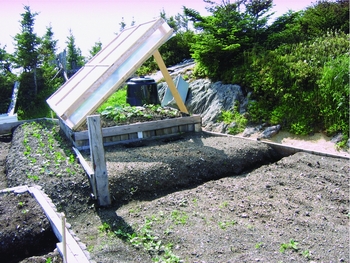
As this is a pilot project, we realise it marks a beginning rather than an ending. We continuously ask ourselves: What can we do to forward the study? How can we further engage the students and community? How can we expand student confidence in their own knowledge and expand it outwards? At this early stage of the study, we have identified several areas that would benefit from an extended pedagogy. The first is to enlist the skills of senior students in constructing raised garden boxes at the school (Figure 5). Various student cohorts can prepare the soil (using traditional, ‘organic’ applications of fish offal, sawdust, capelin and compost), plant seeds and starter plants in the spring, tend the boxes over the summer (with community oversight), and harvest crops in the autumn (Blair, Reference Blair2009; Kozak & McCreight, Reference Kozak and McCreight2013; also www.edibleschoolyard.org).
Raised beds and coldframe.

The second school extension concerns media research and conversations with students in other places. In this, students can expand their knowledge of food issues and share their own experiences on Change Islands. A good launch for this is the TED talk by Ron Finley, who has reclaimed abandoned public spaces to transform neighbourhoods in Los Angeles from ‘Food Deserts’ to ‘Food Forests’ (Finley, Reference Finley2013). Although it is wise to launch teaching and learning from familiar territory, eventually the goal is to also understand and appreciate other situations.
In the NL context, we ask how the political will for advancing students’ place-centred education — conducive to fulfilling everyday needs such as a community's ability to provide for its own nutritional food — can take root and flourish. To this end, we have already begun to call upon school and community members of Change Islands, school board officials, governmental policy makers and the media.
Theobald (Reference Theobald1997) reminds us that ‘we have done more ecological damage to the planet in this century than has been done in all others combined’ (p. 36). At the same time we have a pattern of overproduction and excessive accumulation of resources that creates unstable conditions environmentally (Patel, Reference Patel2007). If we pay attention, we may heed the advice of ecological planners, such as Jane Jacobs or E.F. Schumacher (as cited by Theobald, Reference Theobald1997), who recommend that we not turn to the global economy but, rather, to local rural ones where ‘size and scale are manageable and where health of the environment can receive the attention it deserves’ (p. 107). We see an opportunity to regain a subsistent environment by giving learning — at least some of it — back to the community.
Food sovereignty remains a topic of pressing interest worldwide, and history reveals it as a goal once widely realised — albeit often through harsh necessity — but, somehow, dropped along the consumerist way. We see our educational efforts as an important stepping stone, along with food networks, academic theorising, and local gardening and marketing initiatives, towards implanting this goal in the imaginations of the next generation.
Acknowledgments
The authors gratefully acknowledge funding from the Social Sciences and Humanities Research Council of Canada and the Newfoundland and Labrador Marine Museum Rural Research and Development Fund.
Author Biographies
Carol E. Harris (EdD, OISE/UT), Professor Emerita at the University of Victoria, Canada, writes and researches in the areas of leadership, arts education, social justice and rural resilience, interests interwoven in her historical biography, A Sense of Themselves: Elizabeth Murray's Leadership in School and Community and book chapters on ethical, aesthetic, and political foundations of education. Her articles appear in the Canadian University Music Review; Educational Administration Quarterly; Educational Management, Administration and Leadership; The Alberta Journal of Educational Research; Canadian Journal of Education; and The Journal of Educational Administration and Foundations.
Barbara G. Barter (EdD, OISE/UT) is adjunct professor at Memorial University of Newfoundland and Labrador and Honorary Research Associate at the University of New Brunswick. She teaches educational leadership, curriculum development, sociology, and rural education. Her articles on arts-based pedagogy, women in leadership, technology and school-community relations, research methodology and rural education appear in national and international journals including International Journal of Information and Communication Technology Education, Australia and International Journal of Rural Education, Journal of Workplace Learning, and Journal of Educational Administration and Foundations. Her most recent research focuses on historical and present day food practices in rural communities with an emphasis on the significance of traditional knowledge.