Introduction
The rapid global increase in urban and agricultural areas is contributing to a considerable decline in biodiversity (Vitousek et al. Reference Vitousek, Mooney, Lubchenco and Melillo1997; Tilman et al. Reference Tilman, Fargione, Wolff, D’Antonio, Dobson, Howarth, Schindler, Schlesinger, Simberloff and Swackhamer2001; Foley et al. Reference Foley, DeFries, Asner, Barford, Bonan, Carpenter, Chapin, Coe, Daily and Gibbs2005). Providing food, water, and shelter for the world’s expanding human population is altering forests, grasslands, waterways, and the air. Along with these impacts, cities are growing as more of the global population moves into urban areas. Currently, 54% of the world’s population lives in urban areas and that number is expected to rise to c. 66% by 2050 (United Nations 2014). Within Canada, southern Ontario is one of the regions most affected by urbanization and agricultural development. It is the most populated province in the country with 13792100 people, which is 38% of the national population, the majority of whom live in the southern part of the province (Statistics Canada 2015). In addition, the population is predicted to increase by c. 31% between 2013 and 2041 (Statistics Canada 2012). Similar to the global trend, Ontario’s population is migrating to urban areas; in 1851, c. 13% of Ontarians lived in urban areas compared to the present 80% (Statistics Canada 2011). Urbanization is associated with increased levels of air pollution (Mage et al. Reference Mage, Ozolins, Peterson, Webster, Orthofer, Vandeweerd and Gwynne1996; Fenger Reference Fenger1999). Urban climate is also influenced by ‘the urban heat island effect’, caused by heat-absorbing surfaces, such as concrete, as well as increased energy use, raising temperatures to above those of surrounding rural areas (Landsberg Reference Landsberg1981; Bolund & Hunhammar Reference Bolund and Hunhammar1999). These disturbances, combined with habitat loss and/or fragmentation, have a compounding effect in urban areas that is reducing biodiversity, particularly sensitive species such as lichens (Laurance & Yensen Reference Laurance and Yensen1991; Henderson Reference Henderson2000; Barry et al. Reference Barry, McMullin and Horn2015).
Lichens have been used extensively to monitor air quality (Henderson Reference Henderson2000) and ecological integrity (Selva Reference Selva2003; McMullin & Ure Reference McMullin and Ure2008; Giordani et al. Reference Giordani, Brunialti and Bacaro2012). They are particularly sensitive bioindicators because they obtain nutrients directly from the atmosphere and precipitation that washes over them (Richardson Reference Richardson1975; Henderson Reference Henderson2000). Consequently, pollutants in the air or water are absorbed as well, underlying lichen sensitivity to air pollution (Richardson Reference Richardson1975, Reference Richardson1992; Henderson Reference Henderson2000), acid rain (Richardson & Cameron Reference Richardson and Cameron2004), and other disturbances to their environment (Rose Reference Rose1976; Selva Reference Selva2003). Tolerance levels vary among lichen species, which increases their usefulness as bioindicators because of a negative correlation between the presence of intolerant species and disturbances (McCune Reference McCune2000; Asta et al. Reference Asta, Erhardt, Ferretti, Fornasier, Kirschbaum, Nimis, Purvis, Pirintsos, Scheidegger and Van Haluwyn2002; Cameron et al. Reference Cameron, Neily and Richardson2007). As a result, the effects of urbanization can be assessed with lichens, especially in sensitive ecosystems.
In southern Ontario, the Niagara Escarpment (the escarpment) is an example of a sensitive ecosystem that has been heavily impacted by urbanization and development. This 725 km long forest and calcareous cliff ecosystem was listed as a World Biosphere Reserve in 1990 by the United Nations Educational, Scientific, and Cultural Organization (UNESCO 2012). It contains relatively high biodiversity in an otherwise human-dominated landscape and is home to many rare and endangered species (Riley et al. Reference Riley, Jalava and Varga1996; Lovett-Doust & Kuntz Reference Lovett-Doust and Kuntz2001). Sixty-four percent of Ontario’s native flora occurs along the escarpment (Riley et al. Reference Riley, Jalava and Varga1996). Lichens comprise considerable diversity along the escarpment with over 370 species having been reported, but the majority of these are known only from the Bruce Peninsula (Yarrington & Green Reference Yarrington and Green1966; Matthes et al. Reference Matthes, Ryan and Larson2000; Brodo et al. Reference Brodo, Harris, Buck, Lendemer and Lewis2013). Most areas south of the Bruce Peninsula, where most of the disturbed and urbanized areas are located, have not been surveyed for lichens.
As land is developed and urbanization increases along the escarpment and the surrounding region, it becomes increasingly important to understand how these disturbances are affecting biodiversity (Lovett-Doust & Kuntz Reference Lovett-Doust and Kuntz2001; Fahrig Reference Fahrig2003). Sound conservation measures need to be evidence-based (Sutherland et al. Reference Sutherland, Pullin, Dolman and Knight2004). Therefore, studying the most disturbed (urbanized) areas using one of the most sensitive organisms (lichens) will provide insight that will aid in the development of effective conservation strategies.
The aim of our project was to investigate relationships between lichen diversity and both air pollution and human population along the escarpment. Using multivariate statistics, we compared lichen species richness between urban and rural sites at three locations on the escarpment in southern Ontario: Niagara, Hamilton, and Owen Sound. We also discuss the use of lichens as bioindicators and their value for conservation planning by land managers and conservation groups in the context of the Bruce Trail Conservancy and Niagara Escarpment Commission.
Methods
Site description
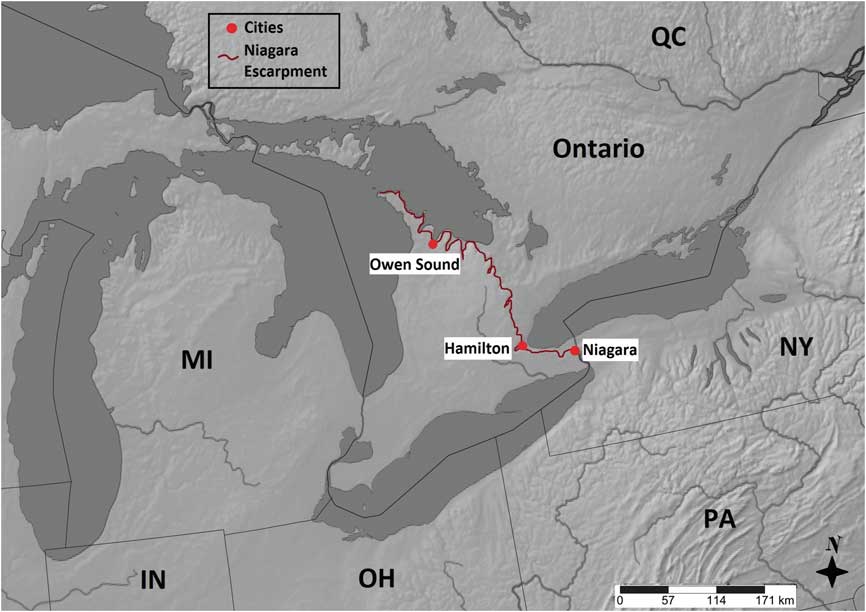
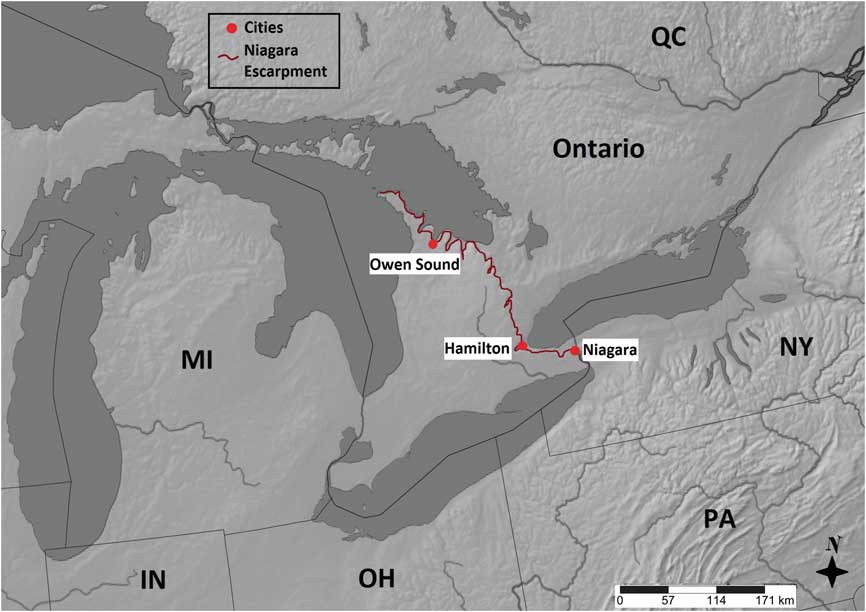
In Ontario, the Niagara Escarpment is 725 km long (Lovett-Doust & Kuntz Reference Lovett-Doust and Kuntz2001) (Fig. 1). Its southern end in the province is at the base of Niagara Falls (43°8'N, 79°5'W) and its northern end is in Tobermory at the tip of the Bruce Peninsula (45°15'N, 81°40'W) (Riley et al. Reference Riley, Jalava and Varga1996; UNESCO 2012). The escarpment is mostly forested land over Paleozoic limestone and dolomite rock and its highest point is 510 m a.s.l. (Larson et al. Reference Larson, Matthes, Gerrath, Larson, Gerrath and Nekola2000; Lovett-Doust & Kuntz Reference Lovett-Doust and Kuntz2001; Niagara Escarpment Commission 2016). Ecosystems along the escarpment include temperate deciduous forests, boreal forests, cliffs, wetlands, and alvars (Riley et al. Reference Riley, Jalava and Varga1996; Matthes et al. Reference Matthes, Ryan and Larson2000; UNESCO 2012). In 1990, the escarpment was classified as a UNESCO World Biosphere Reserve (UNESCO 2012). The reserve is 194555 ha and contains 1177 species of native flora, 150 of which are of conservation concern (Riley et al. Reference Riley, Jalava and Varga1996; UNESCO 2012). The southern portion of the escarpment is considerably more developed than the north as it traverses some of the most densely populated areas of Canada (Lovett-Doust & Kuntz Reference Lovett-Doust and Kuntz2001).
Location of the three study areas (cities) along the Niagara Escarpment, southern Ontario, within which the sample plots were located. In colour online.
Experimental design, plot layout, and data collection
Lichen biodiversity data were collected within three sampling areas on the escarpment: Hamilton, Niagara, and Owen Sound. In each of the three areas, we selected ecologically similar rural and urban sites. Each paired site was 3·3, 6·8, and 7·0 km apart, respectively, for Hamilton, Niagara, and Owen Sound. Rural sites were at least 300 m from a road or housing development and represented landscapes that are dominated by forests or fields, with low population density. Urban sites were at least 160 m from a road or housing development with a higher building and population density (i.e. surrounded by urban development). We recorded the presence of all lichen species within a single 100×200 m plot, which we established in unmanaged mature deciduous-dominated forest stands at all sites. The forest cover in each plot was dominated by Acer saccharum with smaller quantities of Betula papyrifera, Fagus grandifolia, Fraxinus sp., Ostrya virginiana, Populus tremuloides, and Quercus sp. All sites had similar forest physiognomy, community composition, and forest age classes.
Our sampling effort was approximately a half-day per site with six individuals using the ‘intelligent meandering’ floristic habitat sampling method (Selva Reference Selva1999, Reference Selva2003; Newmaster et al. Reference Newmaster, Vitt, Belland, Arsenault and Stephens2005). Sampling was limited to the following microhabitats: all trees, branches, snags, stumps and logs less than 2 m in height. Lichen samples were removed with a knife and the host tree species noted. Lichens were identified using external and internal morphological characteristics and chemical spot tests (Brodo et al. Reference Brodo, Sharnoff and Sharnoff2001). Where necessary, thin-layer chromatography was used to identify lichen secondary products following Culberson & Kristinsson (Reference Culberson and Kristinsson1970) and Orange et al. (Reference Orange, James and White2001) and using solvents A and C. Voucher specimens of all lichen species were deposited at the Canadian Museum of Nature (CANL) and the Biodiversity Institute of Ontario Herbarium (OAC) at the University of Guelph.
Environmental data
Data were obtained for climate and air quality, two environmental variables considered to be the most likely to explain lichen biodiversity patterns. Data for maximum, minimum and annual average annual temperatures, and average annual precipitation were obtained from Government of Canada (2015). Estimates of population density (individuals km−2) were acquired for each of the sample areas from the government data resource for census divisions (counties) and subdivisions (cities) (Statistics Canada Census 2011). For air quality data we used the Air Quality Health Index (AQHI) data, which is positively correlated with air pollution (Environment Canada 2016). Other environmental data were measured directly in the plots, including latitude and longitude (using hand-held GPS units), tree species richness and stand age (using standard silviculture techniques) (West Reference West2009). Finally, data on the woodlot size (in which the 100×200 m sample plot could be nested while avoiding forest edge) and elevation were obtained from Google Earth (Google Inc. 2015).
Statistical analysis
Relationships between lichen species richness and both population density and air pollution at each site were explored using univariate statistics in SPSS (SPSS 2013).
Multivariate analyses were used to examine variation in lichen community composition among urban and rural sites within three areas on the escarpment. Two matrices were constructed for the analyses: 1) Lichen Matrix, constructed using species collected from all of the six sample site plots; 2) Environmental Matrix, constructed using quantitative explanatory variables from the six sample site plots. Nonmetric multidimensional scaling (NMS; Kruskal Reference Kruskal1964) was used to explore the variation in lichen community composition using ‘R’ software (version 2.15.1; R Core Team 2012). CANOCO 4.5 (ter Braak & Smilauer Reference ter Braak and Smilauer2002) was used to explore variation in the lichen communities in an urban and a rural site at three locations (n=6). A correspondence analysis (CA; ter Braak Reference ter Braak1986) was used to determine the length of the ordination axis (the extent of the variation along the axis) in the lichen matrix, and determined the need for either a linear or unimodal ordination model. The community composition in the six sample sites was considered in a canonical correlation analysis (CCA) with the use of Hill’s scaling to analyze variation in community composition among the sampling sites, and to explain the relationship of 12 environmental variables with lichen community composition (ter Braak Reference ter Braak1986). A second analysis with a rigid rotation of 45% clockwise was used to clarify the interpretation of the loads on axes 1 and 2.
Results
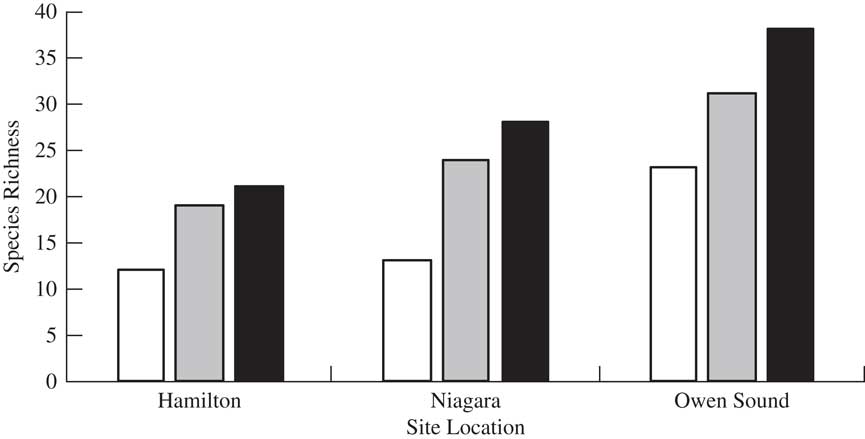
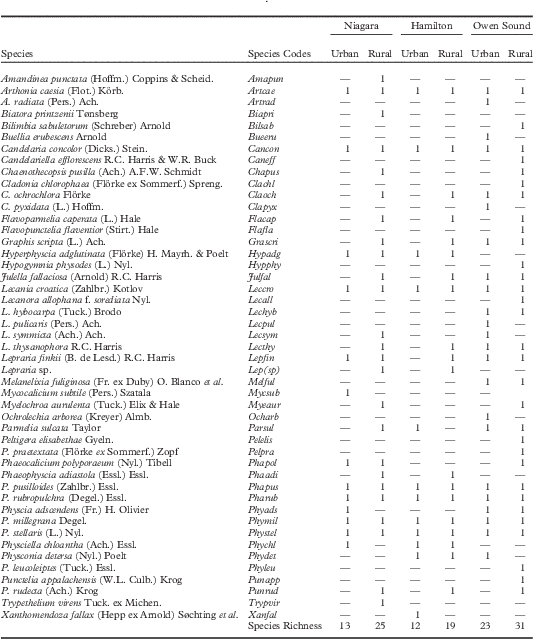
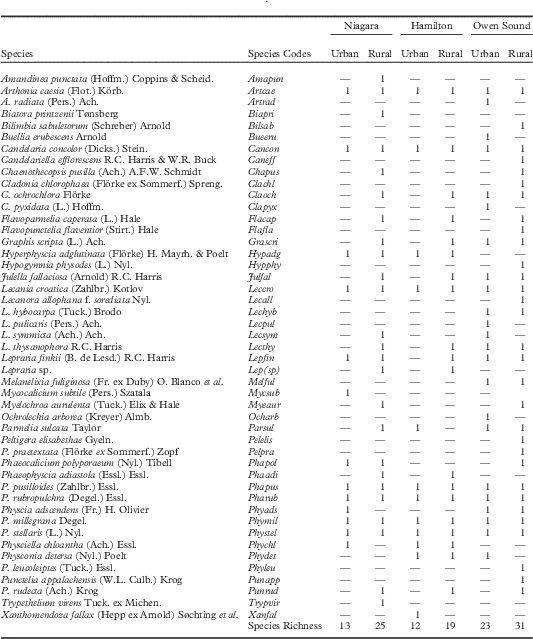
Lichen species richness varied not only between the three locations, but also between the urban and rural sites. Total lichen species richness from all three sampling locations was 47 (Table 1). Richness was highest in Owen Sound, with 38 lichens, followed by the Niagara site with 28 species and finally the Hamilton site with 21 species (Fig. 2). Rural sites consistently showed higher species richness than their urban counterparts (Table 1).
Lichen species richness for urban and rural sites within three different locations along the Niagara Escarpment in southern Ontario. =urban species richness;
 = rural species richness;
 =total species richness.

All lichen and allied fungal species identified in our study and their presence in each site (represented by a ‘1’). Nomenclature follows the 19th edition of the North American Lichen Checklist (Esslinger Reference Esslinger2015). Authorities follow Brummitt & Powell (Reference Brummitt and Powell1996)
The georeference (latitude and longitude, NAD83) for the north-east corner of each plot is: Niagara urban site (43·12844°, −79·23375°), Niagara rural site (43·1143°, −79·3178°), Hamilton urban site (43·24725°, −79·91486°), Hamilton rural site (43·23885°, −79·99782°), Owen Sound urban site (44·55442°, −80·95374°), Owen Sound rural site (44·53106°, −80·93059°). The coordinates of the south-west corner of each plot are: Niagara urban site (43·12709°, −79·23550°), Niagara rural site (43·1126°, −79·3188°), Hamilton urban site (43·24611°, −79·9175°), Hamilton rural site (43·23793°, −80·00044°), Owen Sound urban site (44·55255°, −80·95453°), Owen Sound rural site (44·53019°, −80·93259°).
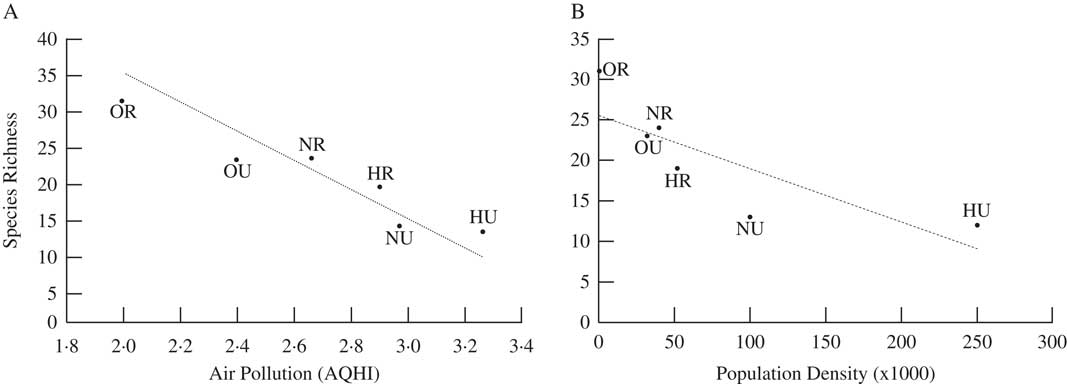
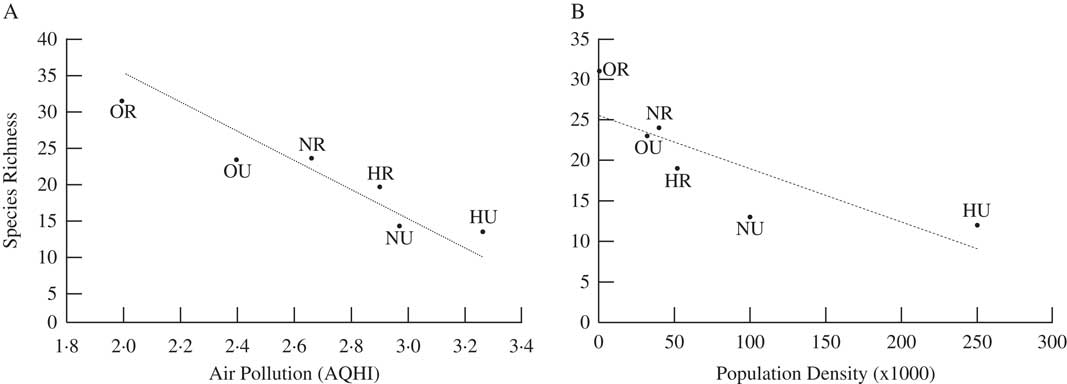
Lichen species richness decreased with increasing human population density and air pollution. Air quality was significantly (P<0·05) correlated with species richness (Fig. 3A). Hamilton had the highest air quality health index (AQHI) and the lowest lichen species richness, followed by Niagara and Owen Sound, respectively; AQHI was always higher and species richness lower, in urban areas than in rural areas (Fig. 3A). Species richness was significantly (P<0·05) correlated with population density (Fig. 3B). Hamilton also had the highest population density and the lowest species richness, followed by the Niagara urban site, and Owen Sound, respectively (Fig. 3B).
Relationship between lichen species richness and A, air pollution (Air Quality Health Index – AQHI) (r 2 =0·69, P<0·05, y=−21·973x+79·94) and B, human population density (persons km−2) (r 2=0·67, P<0·05, y=−0·0657x+25·23) for urban and rural sites within three different locations along the Niagara Escarpment in southern Ontario. OU: Owen Sound urban site; OR: Owen Sound rural site; HU: Hamilton urban site; HR: Hamilton rural site; NU: Niagara urban site; NR: Niagara rural site.
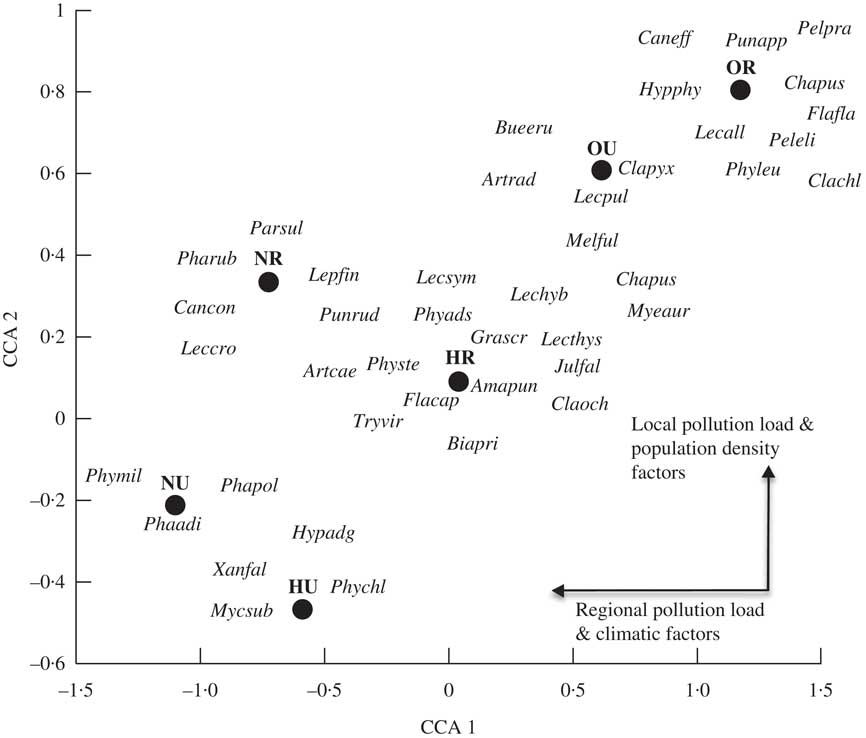
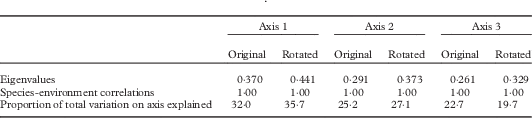
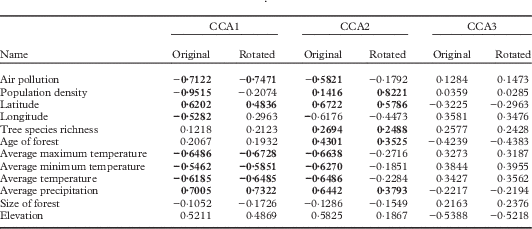
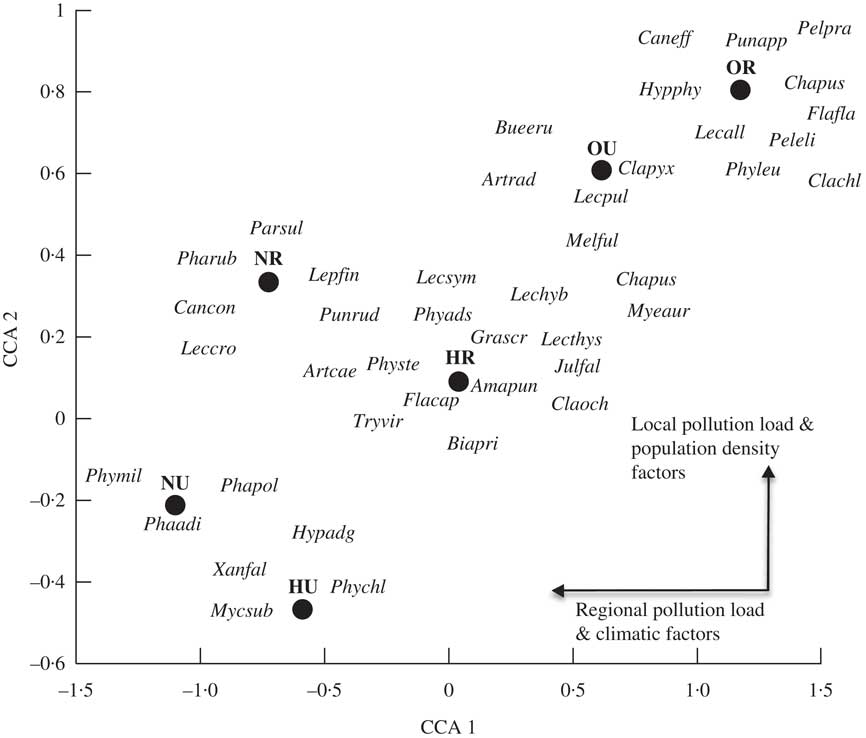
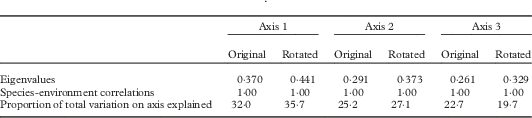
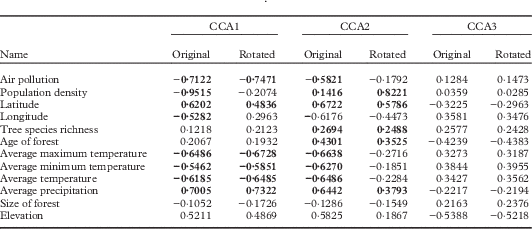
There was considerable variation in lichen community composition among the urban and rural sites along the escarpment. Variance in the lichen species matrix was most suited to a unimodel CA algorithm. The relationship between the community composition along the gradient of environmental variables is interpretable in the canonical correspondence analysis (Table 2). The overall variance is 2·4 SD for CCA1 and 1·3 SD for CCA2 (SD numbers are the relative importance of each axis), indicating considerable dispersion among species data on two axes; the third (Table 2) and fourth (not shown) axes explained little variation; there was little change in the eigenvalues from the second to the third axes (Table 2). NMS accounted for 63% of the variation in lichen community structure on three axes and had similar configuration to CCA, and is therefore not reported further. The resulting CCA ordination displays sites that are spread out along a gradient of environmental variables with clear differentiation in community composition. The first interpretation of the CCA analysis indicated the need for a rigid rotation of 45° clockwise, which clarified the results (Table 2). Community composition along the gradient of environmental variables can be partially explained by variables used to constrain the ordination analysis. Interpretations of variation are only made on axes 1 and 2, as eigenvalues dropped off considerably after the second axis (Table 2). The gradient associated with the CCA1 axis is highly correlated with regional pollution load and interrelated environmental climatic variables (Fig. 4; Table 3). Other variables that display strong positive correlations with CCA1 are latitude and average precipitation; negative correlations with CCA1 are maximum, minimum and average temperature (Table 3). The left side of the ordination is associated with the southerly cities where regional pollution levels are relatively high compared to those more northerly cities on the right side of the ordination (Fig. 4). Local pollution load and population density are strongly correlated with the CCA2 axis (Fig. 4; Table 3). Other variables that display positive correlations on CCA2 are latitude, age of forest, average precipitation and tree species richness. The top of the ordination (Fig. 4) is associated with rural Owen Sound, and each of the rural sites is above the respective urban site for each geographical location, which are located at the bottom of the ordination.
Rotated site and species joint plot ordination (community composition) using canonical correlation analysis of 47 lichen species in 6 study sites along the Niagara Escarpment in southern Ontario constrained by 12 possible explanatory variables; the major gradients (axis loads) are identified with variable correlations in Table 3. Axes represent SD in variance of community composition using Hill’s Scaling. OU: Owen Sound urban site; OR: Owen Sound rural site; HU: Hamilton urban site; HR: Hamilton rural site; NU: Niagara urban site; NR: Niagara rural site. Lichen species codes are given in Table 1.
Eigenvalues and species-environment correlations for each axis in the canonical correlation analysis (CCA) of 47 lichen species in 6 study sites. Original CCA and rotated CCA results are presented
Canonical correlations for 12 possible explanatory variables for the first 3 CCA axes in the canonical correlation analysis of 47 lichen species in 6 study sites in southern Ontario. Original CCA and rotated CCA results are presented along with significant (P<0·05) correlations in bold
Discussion
Our results show variation in lichen species patterns between the six sites sampled, despite the forest plots being selected to be as ecologically similar as possible, and all are broadly within a similar geographical region (the Niagara Escarpment). We show that variation in lichen community composition is correlated with factors acting at both regional and local extents. Regional air pollution load (as measured using the AQHI) had a significant canonical correlation (on axis 1) independent of human population density, which had a significant canonical correlation on axis 2 (Table 3). We did not measure concentrations of specific atmospheric pollutants directly at individual forest plots, but if we use human population density as a proxy for local pollution loads, our results suggest that both regional air quality and local air quality are related to variation in lichen communities in southern Ontario. In addition, climatic factors at regional extents (axis 1) and localized factors such as forest stand characteristics (tree species richness and age of forest; axis 2) also appear to contribute to community variation. Because we used AQHI data instead of detailed pollution data, we were not able to determine whether climate and air quality were correlated. Other studies have shown that air quality and climate interact to affect lichen distribution (e.g. Seed et al. Reference Seed, Wolseley, Gosling, Davies and Power2013; Root et al. Reference Root, Geiser, Jovan and Neitlich2015; Will-Wolf et al. Reference Will-Wolf, Jovan, Neitlich, Peck and Rosentreter2015) and such analyses could be carried out on the Niagara Peninsula in the future with more site-specific data.
The between-area variation in lichen community composition is largest along axis 1 of the CCA (Fig. 4), which is characterized by high canonical correlations to regional pollution loads and climatic factors. Owen Sound and the Hamilton/Niagara area are c. 170/210 km apart and situated on different bodies of water (Hamilton and Niagara are located on Lake Ontario and Owen Sound is on Georgian Bay) so climatic differences between them are not unexpected. Hamilton and Niagara are only c. 65 km apart and experience similar temperature and precipitation, so differences in lichen community composition between these two sites are probably explained more by differences in air pollution. Hamilton is a highly industrial city, which historically supported several steel mills, while Niagara’s economy is dominated by tourism and wine production.
The two Owen Sound sites, which have more lichen species than the other two respective sites, load more positively on axis 2 (Fig. 4) than any of the other sites. Axis 2 has high correlation coefficients for population density factors (a possible proxy for local pollution loads), as well as forest stand characteristics. The pairs of rural-urban sampling sites in each of the three areas can be expected to have similar climate and geographical values, and sampling was also designed to pair woodlots to be as similar as possible. Thus, the variation in lichen community composition is likely driven by air quality, geographical and climate variations between locations, and by effects of human population and tree diversity differences between the paired rural-urban sites. The high loading on axis 2 of the Owen Sound urban site closer to its paired rural counterpart (and further from the other two urban sites which are similar to each other) suggests that this woodlot may not have been as indicative of an ‘urban’ site as the others. However, the Owen Sound urban site was the only woodlot in which Betula papyrifera was observed, and this is likely to have driven some of the clustering pattern around this site on axis 2.
Interestingly, the Hamilton and Niagara rural sites load similarly on axis 2 of the CCA to the Owen Sound urban site. This suggests that the environmental variables characterizing ‘urban’ in this smaller, more northerly population centre are not different from those that characterize rural areas outside larger population centres (but see discussion on lichen species composition below).
The ordination of the 47 lichen species (Fig. 4) fits expected patterns. The cluster of species in the top right includes the only cyanolichens found in our study (Peltigera praetextata and P. elisabethae) as well as a provincially listed S1 (critically imperilled) species (Punctelia appalachensis), which is known only from one other report in Ontario and five reports elsewhere in Canada (McMullin & Lewis Reference McMullin and Lewis2013). The other species listed by the provincial government (Physconia leucoleiptes, S1–S2 (critically imperilled–imperilled)) also occurs on the top right of the CCA plot (Fig. 4), which coincides with the sample site with the lowest atmospheric pollution and the lowest human population density, the Owen Sound rural site. The species that are generally in the centre of the CCA plot (e.g. Candelaria concolor, Parmelia sulcata, Phaeophyscia rubropulchra, Physcia adscendens, P. stellaris) are examples of species that are regionally widespread, including in urban areas, and are thus considered to be pollution tolerant (McMullin & Newmaster Reference McMullin and Newmaster2013; McMullin et al. Reference McMullin, Maloles, Earley and Newmaster2014). Their loading in the centre of the plot is consistent with high air pollution and human population density correlation coefficients for both axes 1 and 2. The lichen species clustering in the bottom left of the CCA plot (e.g. Hyperphyscia adglutinata, Mycocalicium subtile, Physciella chloantha, Xanthomendoza fallax) are also considered pollution tolerant. They occur in the urban sites at locations with the greatest air pollution and human population density, but they are also regionally limited, only occurring in the two southern locations (Hamilton and Niagara). Their loading suggests that regional variables other than air pollution and human population density might be driving their distribution.
The clustering of species in the CCA (Fig. 4) suggests that individual species (or groups of species) might be good bioindicators of high versus low levels of atmospheric pollution and/or other forms of anthropogenic disturbance. However, these results should be interpreted cautiously. For example, the cluster of species from both the Owen Sound sites at the top of the CCA plot might suggest they are indicative of conditions in this smaller urban centre, which is geographically removed from the larger population centres of southern Ontario. However, the Owen Sound urban site was the only site with Betula papyrifera in the woodlot, so an inference might be that the lichens in this cluster are substratum specialists to B. papyrifera. However, all five lichen species in this cluster are abundant and widespread in southern Ontario so they are not suitable indicators of unique substrata or forest conditions (Wong & Brodo Reference Wong and Brodo1992; Brodo et al. Reference Brodo, Harris, Buck, Lendemer and Lewis2013; McMullin & Lendemer Reference McMullin and Lendemer2013).
Lichens have been suggested as effective bioindicators of a variety of anthropogenic disturbances, including climate change, air pollution and forest management practices (Henderson Reference Henderson2000; Aptroot Reference Aptroot2009; McMullin et al. Reference McMullin, Thompson and Newmaster2013). We did not measure forest fragmentation directly, nor did we examine the landscape context in which the forest plots were located. The apparent response to atmospheric pollution is consistent with previous research (Richardson Reference Richardson1992; Henderson Reference Henderson2000; Tarhanen et al. Reference Tarhanen, Poikolainen, Holopainen and Oksanen2000). Elsewhere lichens have been shown to be sensitive to pollution produced by urban areas even without a direct point source of pollution present (Gombert et al. Reference Gombert, Asta and Seaward2004). For example, in Rome, Munzi et al. (Reference Munzi, Ravera and Caneva2007) observed an increase in lichen biodiversity along an urban-rural gradient and linked this to concentrations of CO, NOx and SO2. In the greater Sudbury area, a reduction in SO2 pollution resulted in an increase in the region’s lichen diversity (Schram et al. Reference Schram, Wagner, McMullin and Anand2015). The presence of pollution-sensitive lichens, such as cyanolichens (Richardson & Cameron Reference Richardson and Cameron2004), can indicate better air quality, as evidenced by the occurrence of the only cyanolichens in our study (Peltigera praetextata and P. elisabethae) in the site associated with the lowest population density and lowest level of pollution (Owen Sound rural). However, managers wishing to use lichens as bioindicators should do so with caution and ideally use a suite of species in consultation with lichenologists. As shown in our data from the Owen Sound urban site, patterns can emerge which may have little utility for interpreting environmental or ecological phenomena.
There have been few studies of lichen biodiversity in the more developed southern regions of the escarpment (Yarrington & Green Reference Yarrington and Green1966; Matthes et al. Reference Matthes, Ryan and Larson2000; Kuntz & Larson Reference Kuntz and Larson2006; Brodo et al. Reference Brodo, Harris, Buck, Lendemer and Lewis2013). Expanding our knowledge of lichen biodiversity in this UNESCO Biosphere Reserve, and of factors that might limit lichen distribution, can assist with the monitoring and management of forest ecosystems within the escarpment region. The escarpment’s status as a UNESCO World Biosphere Reserve does not grant official protection to the area. Land-use decisions (e.g. development permits, plan amendments, comments on municipal development proposals) along the escarpment are overseen by the Niagara Escarpment Commission, an agency of the provincial Ministry of Natural Resources, but are influenced by a wide array of governments (provincial, regional, municipal) and stakeholders. The international Biosphere Reserve status might catalyze both government and grass roots movements to influence planning decisions in this rapidly developing region. Biodiversity data of all kinds, including bioindicators such as lichens, can help inform conservation planning. Moreover, given that much of the escarpment is under private ownership, one of the few options for formal protection of biologically significant areas is through land stewardship or conservancies (as an example, the Bruce Trail Conservancy has acquired over 3100 ha on the escarpment). Data on lichen biodiversity, such as those documented here, can help to identify priority areas of biodiversity to set aside as formally or informally protected within larger regional conservation initiatives.
General inferences from our study are limited by the small sample size and the use of proxy data. A direct measure of air quality would be preferable to the use of population density as a proxy, and the air quality index data (AQHI) we used at the regional level only represents air quality on a relative scale based on ground-level ozone (O3), particulates (PM2·5/PM10), and nitrogen dioxide (NO2) (Environment Canada 2016). Other pollutants in the environment not captured by the AQHI might affect lichens, and direct measures of concentrations of pollutants would likely be more informative than a general index. Similarly we did not have data on climate variables such as humidity or at microclimate scales, which might be important for lichens. For example, in a study of lichens in and around an urban area in Portugal, Munzi et al. (Reference Munzi, Correia, Silva, Lopes, Freitas, Branquinho and Pinho2014) showed that urban heat island effects were more strongly correlated with lichen functional groups than air pollution. We attempted to select forest plots that were as similar as possible, but our sites did differ slightly in tree composition and age. Due to time limitations, we were unable to collect data on landscape context, tree parameters (e.g. age, diameter, bark pH), or stand microclimate variables (e.g. humidity, canopy closure) that are also likely to be important (Munzi et al. Reference Munzi, Correia, Silva, Lopes, Freitas, Branquinho and Pinho2014).
Despite limitations in our analysis, our results show that sites in relatively close proximity to each other can differ in lichen community response patterns to both regional and local factors. The relationships that we observed between air quality and human population density confirm that lichens can be suitable bioindicators of air quality and other environmental factors at multiple spatial scales. However, our results also suggest that researchers comparing lichen diversity across large areas (e.g. multiple locations in a larger region) should design sampling to avoid confounding results by local-scale variation in diversity driven by other environmental variables. Future research should examine differences between local- and regional-scale effects by increasing sampling both between and within large biogeographical regions, while also examining other environmental factors that might influence lichen diversity.
We gratefully acknowledge the Hamilton Conservation Authority, Grey Sauble Conservation Authority, and the Niagara Peninsula Conservation Authority for permitting us to conduct our study and make collections on their properties. We also thank Dylan Perera and Felix Zheng for helping to collect field data. Comments from James Lendemer, François Lutzoni, Peter Crittenden, and three anonymous reviewers considerably improved the manuscript. Our study was a 2015 class project developed in IBIO*3100 (Interpreting Biodiversity I) and executed in IBIO*4100 (Interpreting Biodiversity II) at the University of Guelph.