Introduction
The Global Plan for Action for Animal Genetic Resources refers to the importance of animal genetic resources (AnGR) for world food security contributing to the livelihoods of over a billion people. General economic development and population growth and mobility in the world has increased demand for livestock products, but has also introduced pressures on the sustainability of rural environments and animal production systems. It is pointed out that a diverse resource base is critical for human survival and well-being, and a contribution to the eradication of hunger. Furthermore AnGR are crucial in adapting to changing socio-economic and environmental conditions, including climate change. The conservation and sustainable use of AnGR, and the fair and equitable sharing of the benefits from their use, are an international concern and the Global Plan of Action for Animal Genetic Resources provides, for the first time, an agreed international framework for the sector (FAO, Reference Rischkowsky and Pilling2007).
The third Strategic Priority Area of the Global Plan of Action for Animal Genetic Resources refers to the conservation of AnGR. Conservation involves both the in vivo maintenance and management of genetic diversity within the populations of livestock that are actively contributing to the livelihood of their keepers and the nutritional health of the general population, as well as the in vitro storage of genetic material that can be used at a later time to increase or introduce diversity into the live populations.
This review paper deals with the issue of the conservation activities in Europe and includes an overview of the current situation of the relevant policy measures and related activities, the involvement of the public and private sector, funding and estimated benefits of these actions.
The results presented are based in a survey carried out within the European National Coordinators for the Management of Farm Animal Genetic Resources (European Regional Focal Point, ERFP). The National Coordinators (NCs) were requested to fill in a specific questionnaire developed for this purpose in the frame of WP4 of the GLOBALDIV project. A set of questions was included regarding the policy measures, the description of the relevant programmes, the level of support and the calculation of support, the breeds involved, the existence of in vitro conservation programmes, the research initiatives and the recorded or expected benefits from these activities in economic, social and environmental level. In total, 21 responses were received in the survey that took place in the period from July 2009 until the end of October 2009. Furthermore, to present a more complete view of the current status of the conservation activities in Europe, information from all European countries members of the ERFP has been included in the report, based on the countries' Annual Reports submitted in the 16th ERFP Annual Workshop (Crete, August 2010) (www.rfp-europe.org).
Historical overview
The systematic approach to the conservation of AnGR for food and agriculture started in the last decades of the past century. Increasing threats to global biodiversity registered by scientists and researchers – extinction of species, destruction of ecosystems and habitat, the loss of genetic diversity within the species utilized in agriculture – have contributed to the creation of a large social consensus on the need to maintain and protect biodiversity as the basis for the existence of mankind. Biodiversity was also understood as a basis for the present and future food security and sustainable agriculture.
The Food and Agricultural Organization of the United Nations (FAO) has played a crucial role in increasing public awareness of the erosion of farm AnGR. Since the early 1960s FAO provided assistance to countries to characterize their AnGR for food and agriculture and develop conservation strategies. Concerted activities on AnGR in Europe started in 1980, when the European Association for Animal Production established a working group on AnGR. At the global level, the year 1980 is also the starting point, since the first expert consultation on AnGR was held in Rome at FAO headquarters.
Public awareness resulted in commitments of the world community expressed in 1992 at the “Earth Summit” held in Rio de Janeiro and the Convention on Biological Diversity signed by 150 governments and later ratified by 188 states. The Rio Summit adopted also Agenda 21 as a plan of action to be undertaken by all stakeholders at global, national and local levels. Chapter 14 of the Agenda, which deals with the promotion of Sustainable Agriculture and Rural Development, covers issues related to the conservation and development of farm AnGR (United Nations, 1993).
In 1993, FAO launched the Global Strategy for the Management of Farm Animal Genetic Resources to guide national, regional and global efforts to strengthen the contribution of domesticated animals and their products to food security and rural development, and to prevent the erosion of AnGR. FAO published in 1993 the World Watch List for Domestic Animal Diversity, with considerable contribution from European countries. Its third edition issued in 2000 showed that in Europe there were 2 576 breeds of mammalian and avian species, 48 percent of which were at risk of extinction (FAO, Reference Scherf2000). Through its activities and programmes, FAO greatly contributed to the growing involvement of policy-makers in its member nations in placing the issue of AnGR on their respective policy agendas.
In 1999, the Commission on Genetic Resources for Food and Agriculture requested FAO to coordinate a country-driven report on the state of the world's AnGR for food and agriculture. On the basis of 169 country reports and a number of special studies, FAO prepared the report “The State of the World's Animal Genetic Resources for Food and Agriculture”. This Report was approved by the Inter-Governmental Technical Conference on Animal Genetic Resources held in September 2007 in Interlaken, Switzerland. The Conference also approved the Global Plan of Action for Animal Genetic Resources and the Interlaken Declaration (FAO, Reference Rischkowsky and Pilling2007).
Conservation policies in Europe
All countries of the European Region, greatly contributed to the global process of maintaining and protecting biodiversity producing country reports on the state of AnGR. Representatives of governments, academic community, breeders' associations and other NGOs responded to FAO's initiative, participated actively in this process by preparing the country reports that gave also the opportunity to review policies, programmes and institutional capacities in the countries.
European countries have developed national programmes for the conservation of AnGR. At the time of submission of country reports (June 2005), functional conservation programmes existed in 33 out of 39 European countries, which submitted country reports. 27 countries had active in vivo in situ conservation, 7 had ex situ and 19 countries reported on the existence of cryoconservation programmes.
The legal base for the conservation programmes is provided by national governments either under legislation related with the protection of biodiversity or under legislation regulating the management of AnGR, livestock production and animal breeding. National governments are partners in the development of national strategies for the management of AnGR and they also provide funding for implementing institutions (FAO, Reference Rischkowsky and Pilling2007).
In the European Union (EU) specific policy measures have been developed in the frame of the activities and programmes within the Rural Development Policy. Part of the policy stresses that agro-environmental payments should continue to play a prominent role in supporting the sustainable development of rural areas and in responding to society's increasing demand for environmental services. In this context the conservation of genetic resources in agriculture has gained specific attention. This policy also provides financial support to be given to farmers rearing animals of “local breeds indigenous to the area and in danger of being lost to farming”.
In recent years several changes were introduced in the Common Agricultural Policy (CAP), and according to the CAP reform adopted by the Council in June 2003, the vast majority of agricultural measures will be paid in the form of single farm payments, independent of the volume of the production. The new payments are linked to environmental, food safety and animal welfare standards. These changes have significant impact to the utilization of AnGR. The EU Council Regulation No 2078/92 introduces agro-environmental measures and aims to promote environmental protection and the conservation of the countryside. This Regulation opened the possibility of subsidies co-financed by the EU for the conservation of endangered breeds. This Regulation was replaced by the Council Regulation (EC) No. 1257/99, followed by the Council Regulation (EC) No. 1698/2005, which provides the framework for the new European Agricultural Fund for Rural Development since 2007. The objective is to compensate farmers who provide environmental services for the “additional costs and income foregone” (article 39:4). In Article 39:5, it is specified that the payments can be made for the “conservation of genetic resources in agriculture”.
The national Agro-Environmental Programmes have been developed under the above-mentioned Council Regulations for the period 1995–2000 (EC Regulation 2078/92) and 2001–2006 (EC Regulation 1257/99). The current national policies have been developed under the Council Regulation (EC) No 1698/2005 on support for rural development by the European Agricultural Fund for Rural Development (EARFD) and (EC) No 1974/2006.
The following information on policies is based on the responses to the questionnaire received by the countries participating in the survey (15 European member countries, 2 candidate countries, 2 potential candidate and 2 non-EU member countries).
In Austria, after 1995 when the country joined the EU, the conservation of endangered farm animal breeds was tied down to the ÖPUL Programme (Austrian Agro-Environmental Programme) referring to the EC Regulation 2078/92. Since then, three ÖPUL Programmes were realized (Fischerleitner, Baumung and Berger, Reference Fischerleitner, Baumung and Berger2009):
• 1995/2000 ÖPUL – 20 breeds
• 2001/2006 ÖPUL – 30 breeds
• 2007/2013 ÖPUL – 31 breeds.
In the OPUL 2007–2013, 4911 farmers join the action “conservation of rare breeds of farm animals”.
France has established the National Strategy for Biodiversity with five strategic axes aiming at the enhancement of the consideration of biodiversity priorities in agricultural policy (Stratégie National pour la Biodiversité, 2009). A specific axis refers to the protection and enhancement of the diversity of genetic resources for food and agriculture with priority objectives being the sustainable utilization of genetic resources, in situ and ex situ conservation, the promotion of animal breeds of small population and the adaptation of the national regulations according to the international commitments. In 2008, in accordance with the national strategy for the protection of biodiversity, the Bureau de Ressources Génétiques (BRG) together with the French Institute for Biodiversity (Institut Français de la Biodiversité) formed the Foundation for the Research on Biodiversity (Fondation pour la Recherche sur la Biodiversité [FRB]).
The National Rural Development plan of Cyprus supports the conservation of endangered native farm animal breeds of cattle and sheep.
The German Breeding Act (2006) rules the conservation of genetic diversity as a major objective. It includes directions for the establishment of monitoring, subsequent in situ conservation programmes and cryoconservation measures, and thus reflects the major objectives of the “National Programme for Conservation and Sustainable Use of Animal Genetic Resource”. The National Programme was developed because of Germany's commitment to the conservation of its genetic resources. It was agreed between all stakeholders involved and approved by the German Conference of Agricultural Ministers in 2003. Furthermore, surveys, inventories and studies in the area of biological diversity are carried out by the Federal Agency of Agriculture and Food. In 2007, the National Committee on Farm Animal Genetic Resources worked on the amendment of the relevant legislations dealing with the conservation and management of endangered animal breeds. The Committee is responsible for monitoring the status of indigenous breeds under control, and to initiate specific measures when needed.
In Greece and Hungary, conservation of AnGR is carried out in the frame of the countries' respective National Strategic Plans for Rural Development for 2007–2013. Responsible bodies are the Ministry of Rural Development and Food (Greece) and the Ministry of Agriculture and Rural Development (Hungary). In both National Plans, there are two specific measures, dealing with the conservation of autochthonous animal breeds at risk and the conservation of AnGR.
Conservation programmes in Ireland were implemented in the frame of the Rural Environmental Protection Scheme, whereas currently these programmes are included in the new Agro-Environmental Options Scheme. Additional payment is provided to the farmers of the Kerry Cattle Breed to support the conservation and sustainable use of the breed.
In Italy, the Rural Development Plan is managed by each region. During 2009, the Italian Government was working on a new law on biodiversity protection and use.
Slovenia has developed the National Programme for the Conservation of Biodiversity of animal production (2010–2016). The University of Ljubljana is in charge of monitoring, phenotypic and molecular characterization of indigenous breeds and related research.
The Rural Development Plan of Malta deals with the conservation of genetic resources for agriculture. Currently, the only breed supported is the Maltese cattle. In Romania, specific decisions define the eligibility criteria for conservation and utilization programmes of genetic resources.
The Spanish National Program for the Conservation, Improvement and Promotion of Livestock Breeds has been launched in 2009, by the Ministry of Environment and Rural and Marine affairs (MARM), which includes seven strategic priorities aiming at the organization of the Spanish animal genetic heritage, guaranteeing the conservation of breeds at risk of extinction and the improvement of breeds with already established position, in order to use them in the context of the new model of animal production according to EU directives and FAO's Global Strategy.
Sweden has developed the Action Plan for Long-term Sustainable Management of Swedish AnGR 2010–2020. The Action Plan describes the Swedish AnGR, presents how Sweden will conserve and utilize the AnGR in a sustainable manner, describes the actors involved today and suggests which actors may involved in the future and identifies the available resources and the needs (Swedish Board of Agriculture, 2009). The overall responsibility for the implementation of the Plan is of the Swedish Board of Agriculture. The Swedish Biodiversity Centre, in collaboration with the Swedish Board of Agriculture, has the role to coordinate the implementation and follow-up of the action plan. Other countries such as Denmark have developed similar Action Plans following the Global Plan for Action and other countries are on the way to develop their countries' Action Plans.
Conservation activities in the United Kingdom have a long tradition, with the involvement of individual breeders, breed societies, charities and non-governmental organizations. Native breeds at risk have benefited from significant support programmes provided by NGOs. Customized conservation programmes specifically for rare breeds have been designed and implemented by the Rare Breed Survival Trust (RBST) (founded in 1973) and a small number of other NGOs to deliver maximization of the entire breed genetic variability. Programmes such as the Heritage Gene Bank, Traditional Breeds Incentives, scrapie genotyping and breed structure analysis have all had a significant impact on native breeds at risk generally. The Poultry Club of Great Britain and the Rare Poultry Committee of the RBST have undertaken the organization of the 241 pure breeds of poultry, bred mainly for the show-ring. Farm Animal Genetic Resources policy in the United Kingdom has been strengthened by the endorsement of the National Action Plan for FAnGR by each of the four UK Agriculture Ministers. The Plan was produced by the ad-hoc National Steering Committee on FAnGR and published in November 2006. One of the key recommendations of the Plan was the creation of a National Standing Committee on FAnGR, to continue the advisory work of the ad-hoc group and to oversee the implementation of the Plan. The Committee acts as an independent non-departmental advisory public body. The Plan is intended to build on United Kingdom's strong tradition of non-governmental commitment to protecting our FAnGR. But, there are clearly areas where Government input and resources are needed, both to improve outcomes of Government policies and to help coordinate the activities of others.
Iceland has a specific law on agriculture since 1998 that deals with the protection of biodiversity. The responsible body for the management and conservation of AnGR is the established Agricultural Genetic Resources Committee.
Serbia is implementing a system for funding in situ conservation of AnGR since 2003. The government supports farmers raising autochthonous animal breeds that are at risk. Montenegro has developed the National Programme for the conservation and sustainable use of AnGR for the period 2008–2013.
In Turkey, the Regulation on Protection of AnGR established in 2002 sets the procedures and principles regarding all activities related to the protection and registration of FAnGR in the country. A National Committee is established that determines the activities, reviews the past activities, specifies the breeds under threat of extinction, formulates policies and decides on the import and export of AnGR.
Norway and Switzerland have developed their national programmes for the conservation of biological diversity with reference to the UN Convention on Biological Diversity and the Global Plan for Action for Animal Genetic Resources. Since 2006, the programmes for conservation of animal, plant and forest genetic resources are merged in the established Norwegian Genetic Resources Centre organizing all programmes for genetic resources for agriculture. A specific programme (National Strategy) for farm AnGR is implemented for the period 2008–2010. In Switzerland, the official recognized breeding organizations submit programmes for FAnGR conservation to the Federal Office of Agriculture (FOAG). FOAG grants contributions for 3-year programmes to the selected programmes for funding.
Calculation of support
For the EU member countries, the procedure for the calculation of the level of support follows the guidance set out in the EC Rural Development Regulations and primarily considers additional costs and income foregone related to the commitments made by agreement-holders. For the period 2007–2013, the amount is fixed in the beginning of the programme and funds are generally allocated per breeding animal, whereas the level of support may be differentiated per country, and also in some cases within the country according to the degree of endangerment, the sex of the animals or the region. The main substantial change that is common in most of the cases is that the support is calculated using the cost estimated by breeders organizations to carry out their activities.
In Austria the subsidies are differentiated according the status of the breed; endangered and highly endangered breeds and the sex of the animals. Higher subsidies are paid for males, due to the fact that keeping male breeding animals is more demanding and also raising and increasing the use of more potential sires is desirable in conservation breeding (Fischerleitner, Baumung and Berger, Reference Fischerleitner, Baumung and Berger2009).
In Germany, the regions (Länders) are responsible for the implementation of support measures. Under certain provisions of the Act, the Länder must introduce their own regulations alongside those issued by the Federal Government. This results in differences between the regions, both in the level of support and on the number of endangered breeds that are supported. The level of support varies also according to the type of animal (i.e. the support per breeding animal for the production of embryos within a breeding programme is higher than the support of female breeding animal). Similar situation exists in Italy, where the funding is managed by each region.
In the United Kingdom the beneficiaries of the programmes are the holders of appropriate agro-environmental scheme agreements (England, Scotland and Northern Ireland). Specific payments are foreseen in England and Scotland for conservation grazing.
In Northern Ireland a payment of £125 per annum for Irish Moiled Cattle is available on the following conditions:
• The owner must be a participant in Agro-Environmental Scheme.
• Only female animals of at least 12 months of age at application are eligible.
• The business must provide ear tag numbers so that a manual cross-reference with the NI cattle database can be made.
In Wales support is given to native breeds directly and indirectly through other schemes such as
• Farming Connect – breeding work with native breeds.
• Supply Chain Efficiency projects e.g. native breeds – Welsh Pig project.
• Processing and Marketing Grants –support marketing schemes.
In Switzerland, support is paid per animal for accomplished actions (mainly breeding actions, i.e. increase in the number of herdbook animals per herd, increase of number of breeding males, breeding production parameters or decrease of inbreeding coefficient). The level of support per action is defined in the submitted programme. Breeding organizations submit projects with effective costs, FOAG approves and accords grants to a maximum of 80 percent of costs.
The Croatian Agricultural Agency manages in vivo conservation programmes for 23 breeds of farm animals. The 2749 farmers included in programmes have received in 2009 about 33 million HRK (cca 7.7 million EUR). The funds have been ensured in the budget of the Ministry of Agriculture.
The mechanisms in the different countries related to the management and conservation of FAnGR differ both on the establishment of specific bodies that deal with the issue and on the use of the existing infrastructures. However, in all cases the responsible body for the allocation of funds is the National Government (i.e. Ministry of Rural Development and Food, Ministry of Agriculture and Fisheries, Ministry of Agriculture, Forestry, Environment and Water Management, Ministry of Agriculture, Forestry and Food, Board of Agriculture, etc.) and the beneficiaries are the farmers (Breeders' Associations). The Rural Development Plans that support the conservation of genetic resources in agriculture are extended to public entities, research institutions, private bodies, non-governmental organizations, producers' organizations and associations.
In Europe in general, over the last 10 years the policy has changed because of the different system settings. The policies at the EU level were highly influenced by the idea of being able to rectify mistakes of the past. Today, funding procedures depend heavily on the confirmation of the requirements by applicants. At present, the support in most cases is calculated on the basis of the estimated cost by breeders' organizations to carry out each activity. Furthermore, new tools are implemented to support the conservation of AnGR by utilizing new concepts such as the food quality and agro-environmental commitments (RDP).
Aims and activities
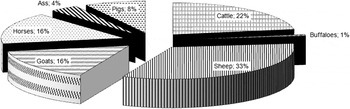
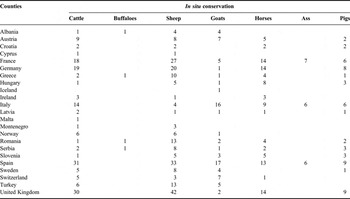
The number of breeds that are included in the in situ conservation programmes in the different countries surveyed is presented in Table 1 and Figure 1. All participated countries reported that their National Programmes (Agro-Environmental Programmes) include specific activities. The Breeders' Associations submit project proposals and request to be funded for these specific actions. The main activity that is funded is the registration in herdbooks. Other activities that are eligible in the national programmes is parentage testing (i.e. in Ireland it is carried out by DNA sampling as part of herdbook registration, in Switzerland it is partly mandatory for breeding males and in Sweden it is done for few breeds).
In situ conservation programmes in the 21 countries participating in the survey.

Current situation of the in situ conservation projects.

Several activities are initiated by breed societies and breeders' organizations regarding breed promotion, including shows, relevant websites development, publications. In Germany, 74 promotion schemes of the Länder are established under the Reg. (EC) No. 1698/2005 for 45 different breeds of horses, bovine, pigs, sheep and goats. However, specific studies to estimate the contribution of the private sector in in-situ conservation programmes do not exist.
Ireland reported that projects for genetic characterization are funded by the National Advisory Committee, carried out by herdbooks, studbooks and flockbooks. Semen from rare cattle breeds is available via national commercial AI network, whereas semen from the Irish Draught is also available. Performance recording is carried out by the Irish Cattle Breeding Federation for cattle, sheep and horses and also by Teagasc for Galway sheep (State Agricultural Advisory Service).
In Spain new instruments are included in the conservation programmes to support concepts as food quality and agro-environmental commitments, the production of quality products through specific legislation particular from autochthonous breeds. The Royal Decree 1615/2007 established aids for support certification schemes in animal origin products production.
The Icelandic Commission on Genetic Resources in Agriculture in May 2009 has completed a strategic plan including an analysis of the current status and proposals of necessary actions regarding the conservation of all genetic resources in Iceland for the period 2009–2013.
Cryoconservation
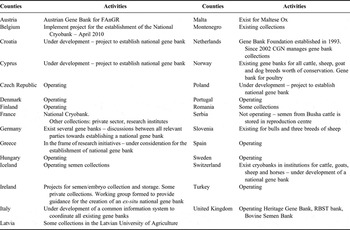
In the years following the preparation of the State of the World Report, significant progress has been made in the development of cryoconservation activities in Europe. As it is shown in Table 2, in almost all countries, even if a national structure (i.e. National Cryobank) is not operating, there are discussions and considerations on establishing one, either by coordinating the actions of the existing gene banks or by creating a new Institution. The necessity of coordinating the ongoing cryoconservation activities is recognized by all NCs that participated in the survey. In addition to the organization at national - or regional - level actions, in all countries relevant initiatives are developed by Research Institutes, University Laboratories, Breeders' Associations or other NGOs. The situation of cryoconservation in Europe is presented as follows.
Current situation of the cryoconservation activities in Europe1

1 The table includes the countries participated in the survey or submitted the relevant information in their Annual Report (2009–2010).
In Belgium a 5-year cryoconservation programme launched in April 2010, coordinated by the University of Louvain aiming to set up the Cryobank of Wallonie. Sheep is the first specimen to be collected for cryoconservation followed by cattle. It is reported that the preliminary studies conducted for 4 years resulted in benefits that go largely beyond the Cryobank itself. An original investigation method was developed that was applied for the in-depth study of four sheep breeds, generating useful results, not only concerning the animals to be collected, but also in terms of inventory, breeding advice, etc. (Annual Report (Belgium), 2010).
Czech Republic reported on the going activities on the collection and cryostorage of semen, somatic cells, ovaries and blood samples. An ex-situ conservation of nucleus of the original Czech Red-pied cattle was established by buying 20 autochthonous cows, production of embryos for cryostorage in genebank (70) and transfer of other 26 embryos to recipients (Annual Report (Czech), 2010).
In France, the National Cryobank was created in 1999, co-funded by 11 different organizations that signed the convention. The main signatory is the French Ministry of Agriculture, which is the major financial source. The other partners represent administration, research and breeders' organizations (Danchin-Burge and Hiemstra, Reference Danchin-Burge and Hiemstra2003).
In Germany, the Breeding Act rules that Ministry of Food, Agriculture and Consumer Protection (BMELV), with agreement of the Federal Government, can develop basic guidelines for a National Cryobank that specify the conditions under which material is regarded as part of the National Cryobank, as well as the conditions that apply for using material thereof. The organization and creation of a structural model for a “National Cryobank” were assigned to Friedrich-Loeffler Institute (FLI) in Mariensee, which will comprise the building of central storage facilities and management of the reserve. Discussions between all relevant parties – BMELV, Länder Ministries, BLE, FLI and the National Committee on AnGR – towards establishing a national gene bank continue (Annual Report (Germany), 2010).
In Hungary, the Ministry of Agriculture and Rural Development and the Ministry of Environment and Water established in 2008 a specific working group (Gene Bank Special Body) for the genetic resources for food and agriculture. This working group works on surveying the needs, and will make proposals for the government in the field of protection of the genetic resources (including legal and financial measures).
In Italy, special attention is given to the establishment of a national system of cryoconservation of genetic resources. The system aims at creating a network among cryobanks that are currently active in the country, developing a common and shared information system to have a more efficient coordination of the different initiatives (Annual Report (Italy), 2010).
In Ireland, projects for semen and embryo collection and storage are funded by the National Advisory Committee. There are also some private collections initiated by breeders. In 2009, a working group was formed to provide guidance regarding the creation of an ex-situ national AnGR Genebank. The holders of existing collections are to be approached seeking expressions of interest in providing material to the national gene bank.
Within the first efforts to develop a national gene bank is the establishment of the Dutch Gene Bank Foundation (SGL) in 1993. By the end of the 1990s, SGL transferred the management of the gene bank to the DLO Foundation (Agricultural Research Service Foundation [Dienst Landbouwkundig Onderzoek]). Since 2002, the Centre for Genetic Resources (CGN) has been managing gene bank collections (Danchin-Burge and Hiemstra, Reference Danchin-Burge and Hiemstra2003).
In Poland during 2009, the plans for the establishment of the National Ex-situ Gene Bank for Animal Genetic Resources in the National Research Institute of Animal Production in Balice were further developed. A routine collection of semen of Polish Red, Polish Red and White, Polish Black and White and Whitebacked bulls identified as sires in the respective conservation programmes (at least 200 portions per sire) has been initiated (Annual Report (Poland), 2010).
In the United Kingdom, the RBST is currently raising funds and collecting semen for national rare breeds ex-situ conservation archives. Although the RBST had for many years collected, stored and distributed rare breed cattle semen, the need to expand the archive to include other farm species became urgent as a result of the 2001 Foot and Mouth Disease epidemic. Programmes to conserve AnGR have been undertaken by commercial companies and marketing organizations (e.g. the Milk Marketing Board Museum Bank of bovine semen established in 1969), as well as NGOs and private individuals (multi-breed collections).
The Swiss Parliament agreed to introduce a new paragraph in the ordinance for animal breeding, which allows co-financing of long-term conservation of cryomaterial together with organizations for artificial insemination. The activities for 2010 focused on ex-situ conservation programmes for goats, as well as on long-term strategies for the management of the cryobank for cattle, horses, goats and sheep. Contracts for long-term conservation of cryomaterial and for the utilization of the cryoweb will be concluded (Annual Report (Switzerland), 2010).
Research initiatives
Several research projects are ongoing in Europe in relation to the conservation and management of Farm Animal Genetic Resources. In the first Community programme for the period 1994–99 (Council Regulation 1467/94) on the conservation, characterization, collection and utilization of genetic resources in agriculture, four projects for AnGR were funded, covering cattle, inventory of farm AnGR, pigs and rabbits.
The EU launched a new Community programme in the frame of the Biodiversity Action Plan for Agriculture (Council Regulation 870/2004) on the conservation, characterization, collection and utilization of genetic resources in agriculture. This programme aimed to promote genetic diversity and the exchange of information including close coordination between Member States and between the Member States and the European Commission for the conservation and sustainable use of genetic resources in agriculture. Furthermore, it aimed to facilitate coordination in the field of international undertakings on genetic resources.
In the two calls of (EC) Regulation 870/2004, five projects related to the conservation of AnGR were selected for funding: 012 – Towards self-sustainable European Regional Cattle breeds; 020 – An integrated network of decentralized country biodiversity and genebank databases; 040 – HeritageSheep; 066 – European Livestock Breeds Ark and Rescue Net; 067 – Global View of Livestock biodiversity and conservation. In total 19 European countries participated in one or more GENRES actions, started in 2007 and having a maximum duration of 4 years. In practice, more countries were involved in these activities, as workshops with wider participation were organized in the frame of the above projects. Furthermore, close cooperation was achieved between research institutions, the private sector and non-governmental organizations, and in some of the projects, from direct interaction with farmers, who ultimately take care of, use and conserve the genetic resources. The results and outcomes of these projects funded had also significant value to inform decision-making on agro-environmental measures within the European Commission (http://ec.europa.eu/agriculture/genetic-resources/actions/index_en.htm).
In all countries several ongoing research projects were reported dealing with the genetic characterization, conservation and management of AnGR, funded either under the European research framework or included in national frameworks. These projects deal with molecular genetics and biotechnology for genetic characterization, sustainable use of local AnGR, cryopreservation, innovations and valorization of products.
The European Regional Focal Point for the management of AnGR (ERFP), in the frame of its Annual Calls for Action has funded since its establishment, in total 24 projects with considerable results. The areas included in these Calls, cover issues related to breed development and conservation, in situ and ex situ monitoring AnGR, development of the Regional Focal Point and support to NCs in policy development and direct assistance to particular country or group of countries in supporting activities of the National Focal Point. Furthermore, specific topics selected by the NCs in the ERFP Annual Workshops were included in the last Calls (Georgoudis and Ligda, Reference Georgoudis and Ligda2010). The ERFP, according to the new Terms of References, will no longer launch a Call for Action but financially support projects as Ad hoc Actions, where appropriate (ERFP, 2010).
Expected benefits
Additional expenditure for keeping endangered breeds because of reduced economic competitiveness is complex to estimate objectively. Furthermore, the expected benefits are difficult to assess. One of the main justifications for social, cultural, economical and environmental protection of biodiversity is that a new vision of the economy is needed that takes into account the utilization of the benefits that nature can give to humanity, whereas at the same time measures are taken to assure that their potential will not be exhausted. In the frame of the survey, an attempt was made to assess these benefits, in economical, social, cultural and environmental levels. Several responses were received, which are summarized as follows.
Economical
For most of the countries the niche markers for distinctive livestock products are recognized as potentially important to the economic viability of many local breeds. EU legislation provides a number of schemes under which distinctive products can be registered (i.e. Protected Destination of Origin (PDO) and Protected Geographical Indication (PGI)).These schemes do not explicitly imply that a product should originate from a specific breed, but even if not, the local breeds are promoted under these schemes, which require traditional production systems in specified locations and in this way the continued utilization of the local breeds is supported (Zjalic et al., Reference Zjalic, Rosati, Dimitriadou and Murelli2010).
A labelled local typical product is an informative example where the use of biodiversity, linked to the diversified resources of a “bioterritory” ‘or “bioregion” is irreplaceable and essential. Data on 332 animal products of protected origin (PDO) form 17 Member States of the EU that apply both the system of registration and protection of geographic origin of animal products (PDO and PGI) and the system of conservation of farm AnGR show that one-third of PDO/PGI cow cheeses, almost all sheep and goat cheeses and all cheeses made of mixture of cow, sheep and goat milk, or sheep and goat milk come from local breeds. The EU system of registration and protection of geographic indication of origin of quality traditional animal products contributes also to the sustainable utilization of 14 percent of cattle breeds, 10 percent of sheep breeds and 11 percent of goat breeds covered by in-situ conservation programmes (Zjalic et al., Reference Zjalic, Rosati, Dimitriadou and Murelli2010).
Special reference is given by Italy on the key role of labelled local products for health sustainability of both human and “bioterritory” or “bioregion” and their positive impact also on the “economical sustainability”. The health aspect of a food product justified by the identification of indicators of “nutritional and extranutritional quality”, specific for each product in a given land context, is currently rising and must be assessed and investigated in all its aspects. The autochthonous germplasm, especially if ancient, in its diversity, could play a unique role to solve problems related to human nutrition, as a source of an “immeasurable wealth” of variable active components, particularly in function of the soil and climate of a given “bioterritory”. The integration between the various branches of the “omic” science is likely to explain the “nutritional”, “extranutritional” and “healthy” quality of local product through the identification and characterization of molecular biomarkers of genetic “uniqueness” (at the level of a single individual) and “specificity” (at the product level), leading also to their proper rescue (Matassino, Reference Matassino2009, personal communication).
It is expected that the volume of domestic products on the field of agriculture will increase. Furthermore, local breeds are able to exploit secondary productions of agriculture and pastures with low value and contribute to sustain the economical activities in rural areas. The net economic benefit from the conservation programmes has not been measured yet. In this context further research is needed to find objective indicators to measure these benefits.
Social and cultural
Biodiversity of farm animals is a part of global biodiversity and represents an integral part of human life and human activities. It is also considered to be an important factor of food security and investment in the well-being of future generations. In social context, the main benefit comes from the contribution of local breeds to maintain activities in rural areas. Keeping livestock farming provide employment and income sources in areas where other economic sectors are not well represented. A number of breeds are only kept for subsistence farming or to maintain our cultural heritage.
Several countries responded that native rare breeds are considered as a tourist attraction in a number of sites, generating a certain income as reported by Austria, Ireland, Sweden and Switzerland. Farm Parks in the United Kingdom carry out important work in the field of conservation and many provide educational resources. Some of them are approved by RBST and are involved in the conservation, breeding and promotion of rare or endangered breeds of farm animals. There are currently 16 Approved Farm Parks around the United Kingdom operated by local authorities, charities and by individuals who have diversified their farming activities (www.rbst.org.uk).
Environmental
Conservation programmes have significant contribution to the International Convention on Biological Diversity obligations and this should be considered as a core component of Biodiversity Plans in all countries.
Specifically, ancient and rare local breeds are used for landscape management and in environmental projects. Grazing animals, particularly well-adapted breeds of sheep, cattle and horses play an important role in nature management. This role offers an excellent opportunity for the conservation of these breeds. As already mentioned above, the changes in the system of funding of AnGR conservation in the recent years include the agro-environmental scheme agreements in the United Kingdom. Several other examples have been reported in the survey; in Austria, the risk of avalanches in high Alps is reduced by keeping grazing steep slopes above the tree limit; in Ireland, native cattle and sheep breeds are being looked at for their role in grazing of specific habitats of environmental interest; in France, local breeds are used for landscape management (mountains, wetlands) for the protection of Mediterranean forests against fire.
Conclusions
In the EU, costs of conservation of endangered breeds represent a marginal fragment of the total financial support to the livestock sector. The financial support for the breeders is secure until 2013 but conservation is an ongoing process and it is necessary to continue such conservation measures and after 2013 and to support the breeders of endangered breeds financially. It could be expected that conservation programmes would be supported by national and Community authorities in various forms including the financial contributions to non-production functions of local breeds and specific policy measures contributing to the sustainable use of underutilized farm AnGR.
The survival of endangered breeds depends on the increase in their productivity and in their competitiveness especially in the niche markets for high-quality products. This could be supported by the revision of the system of protected (PDO and PGI) products of animal origin and the introduction of request for specific declaration of breeds from which animal products originate.
In a number of Member States of the EU as well as in rural development policy in the EU, the non-production role of local breeds has already been recognized, i.e. the use of local breeds for landscape management and the protection of the environment. These cultural functions and values require public attention and support. Furthermore, the potential of local breeds for diversification of sources of income of rural families such as gastro and ethno-tourism should be promoted and valorized. The concept of biodiversity as the public good has already been accepted by European public and by policy-makers. The additional scope of protection of farm animal biodiversity, as an investment in the future food security, needs to be reflected in the future policies.
Several issues are associated with the calculation of the costs of the conservation activities. One aspect is the level of support per head for the in situ programmes and the costs related to the collection, conservation of genetic material, which varies a lot according to the techniques used, the species involved, the objectives and the size of the gene bank, the existing resources, etc. Furthermore, under conservation programmes different activities are carried out depending on the existing National Action Plan for the management and conservation of AnGR and the involvement of the Breeders’ Associations. Such activities include the registration in herdbooks, performance recording, parentage testing, genetic characterization, demographic characterization, ex-situ conservation, artificial insemination, genetic evaluation and improvement, breed promotion and dissemination activities. A part of these activities are covered by the national programmes, whereas others by the farmers themselves or by different research initiatives. A clear partition of the part of the funding to the different contributors was not possible to be achieved in the frame of the present work. A number of research papers are available concerning the costs and benefits of conservation, using different approaches and valuation methodologies (Cicia, D'Ercole and Mario, Reference Cicia, D'Ercole and Mario2003; Scarpa et al., Reference Scarpa, Ruto, Kristjanson, Radeny, Drucker and Rege2003; Signorello and Pappalardo, Reference Signorello and Pappalardo2003). This review paper presents a general view of the evolution of the different conservation activities and the way the countries (of the EU and of the whole region of Europe) perceive the development of these actions in the future by estimating their benefits, in economical, social, cultural and environmental aspects. Among the main outcomes of the survey is the importance to find new opportunities for funding the work on the conservation of AnGR. In this context the conservation work can be incorporated with the issues of food security and sustainability, the protection of the environment and climatic change, concepts on which the interest of society is continuously increasing.
Acknowledgements
We acknowledge the contributions of all ERFP National Coordinators; the following NCs that responded to the questionnaire and participated in the survey:
Beate Berger, Austria; Serge Marsat, Belgium; Christos Papachristoforou, Cyprus; Eléonore Charvolin, France; Hendrik Schneider, Germany; Andreas Georgoudis, Greece; Tamas Szobolevszki, Hungary; Olafur Dyrmundson, Iceland; Mark Maguire, Ireland; Donato Matassino, Italy; Noel Azzopardi, Malta; Bozidarka Markovic, Montenegro; Nina Saether, Norway; Horia Grosu, Romania; Srdjan Stojanovic, Serbia; Drago Kompan, Slovenia; Montserrat Castellanos, Spain; Eva-Marie Stalhammar, Sweden; Catherine Marguerat, Switzerland; Oya Akin, Turkey; Frances Radcliffe, United Kingdom.
Also, we acknowledge the contribution of all NCs that submitted their countries' Annual Reports for the year 2009–2010, which were used for the preparation of this review paper. The reports are available at www.rfp-europe.org.
Action GLOBALDIV AGRI GEN RES 067 received financial support from the European Commission, Directorate-General for Agriculture and Rural Development, under Council Regulation (EC) No 870/2004. The Authors state that there is no conflict of interest regarding the material discussed in the manuscript.