INTRODUCTION
The genus Tursiops (collectively called bottlenose dolphins) is globally distributed throughout oceanic and coastal areas (Wells & Scott, Reference Wells, Scott, Perrin, Würsig and Thewissen2002). While subject to considerable taxonomic controversy, historically two species have been formally recognized: T. truncatus and T. aduncus (Wang et al., Reference Wang, Chou and White2000a, Reference Wang, Chou and Whiteb; Wells & Scott, Reference Wells, Scott, Perrin, Würsig and Thewissen2002). More recently, a third species described as T. australis sp. nov. was listed as endemic to southern Australia (Charlton-Robb et al., Reference Charlton-Robb, Gershwin, Austin, Owen and McKechnie2011).
Tursiops truncatus is the recognized species occurring in the south-western Atlantic Ocean (SWAO) encompassing Brazil (in the north to Amapá state; Siciliano et al., Reference Siciliano, Emim-Lima, Costa, Rodrigues, Magalhães, Tosi, Garri, Silva and Silva2008) to Argentina and adjacent archipelagos (Lodi et al., Reference Lodi, Domit, Laporta, Di Tullio, Martins and Vermeulen2017; Ott et al., Reference Ott, Barreto, Siciliano, Laporta, Domit, Fruet, Dalla Rosa, Santos, Meirelles, Marchesi, Botta, Oliveira, Wickert, Vermeulen, Hoffman, Baracho and Simões-Lopes2017). However, it should be stated that marked intra-specific variability has been noted in the SWAO, including evolutionarily significant and distinct populations (Fruet et al., Reference Fruet, Secchi, Daura-Jorge, Vermeulen, Flores, Simões-Lopes, Genoves, Laporta, Di Tullio, Freitas, Dalla Rosa, Valiati, Beheregaray and Möller2014, Reference Fruet, Secchi, Di Tullio, Simões-Lopes, Daura-Jorge, Costa, Vermeulen, Flores, Genoves, Laporta, Beheregaray and Möller2017; Costa et al., Reference Costa, Fruet, Daura-Jorge, Simões-Lopes, Ott, Valiati and Oliveira2015; Ott et al., Reference Ott, Barreto, Siciliano, Laporta, Domit, Fruet, Dalla Rosa, Santos, Meirelles, Marchesi, Botta, Oliveira, Wickert, Vermeulen, Hoffman, Baracho and Simões-Lopes2017), to the point where a fourth species, T. gephyreus has been proposed (Wickert et al., Reference Wickert, von Eye, Oliveira and Moreno2016).
While taxonomic classification requires ongoing assessment, it is nevertheless evident – based on morphological differences, molecular analysis and other ecological outcomes – that divergent stocks/forms of T. truncatus exist in the SWAO (Ott et al., Reference Ott, Barreto, Siciliano, Laporta, Domit, Fruet, Dalla Rosa, Santos, Meirelles, Marchesi, Botta, Oliveira, Wickert, Vermeulen, Hoffman, Baracho and Simões-Lopes2017). Historically, these separations were proposed to encompass northern and southern forms (to the states of Paraná or Santa Catarina as a northern distribution limit); with the latter suggested to possibly include T. gephyreus, but considerable speculation remains (Costa et al., Reference Costa, Rosel, Daura-Jorge and Simões-Lopes2016; Fruet et al., Reference Fruet, Secchi, Di Tullio, Simões-Lopes, Daura-Jorge, Costa, Vermeulen, Flores, Genoves, Laporta, Beheregaray and Möller2017). Further, irrespective of any latitudinal intra- or inter-specific divergences, there are also differences between nearshore and offshore animals that might represent a parapatric distribution (from São Paulo to Argentina; Toledo, Reference Toledo2013; Costa et al., Reference Costa, Fruet, Daura-Jorge, Simões-Lopes, Ott, Valiati and Oliveira2015, Reference Costa, Rosel, Daura-Jorge and Simões-Lopes2016).
Notwithstanding some ongoing taxonomic uncertainty, here we report on T. truncatus; knowledge about the biology and ecology of which has substantially increased during the last five years in the SWAO. Tursiops truncatus is classified as ‘Least Concern’, but clear overlap between distributions and anthropogenic activities in coastal and oceanic areas (e.g. heavy fishing effort, ports and associated vessel traffic, presence of intense xenobiotic chemicals and pathological agents in run-offs; Rocha-Campos et al., Reference Rocha-Campos, Câmara and Pretto2011; Domiciano et al., Reference Domiciano, Domit, Broadhurst, Koch and Bracarense2016) have raised concerns over population health, including toxic effects and infectious diseases (Hammond et al., Reference Hammond, Bearzi, Bjørge, Forney, Karkzmarski, Kasuya, Perrin, Scott, Wang, Wells and Wilson2012; Van Bressem et al., Reference Van Bressem, Flach, Reyes, Echegaray, Santos, Viddi, Félix, Lodi and Van Waerebeek2015). Key threatening processes result in animals being washed ashore along coastal and estuarine beaches, and/or indirect impacts at a broader population level. These concerns are sufficient to support regional, ecological monitoring studies (Fruet et al., Reference Fruet, Secchi, Daura-Jorge, Vermeulen, Flores, Simões-Lopes, Genoves, Laporta, Di Tullio, Freitas, Dalla Rosa, Valiati, Beheregaray and Möller2014).
The majority of available life-history information for T. truncatus in the SWAO has been collected from populations that use bays and coastal lagoons along southern Brazil (particularly for Santa Catarina and Rio Grande do Sul states), where systematic studies have described several ecological aspects. These studies have estimated population sizes and structures, residence patterns, feeding habitats and individual movements between adjacent or neighbouring areas (Simões-Lopes & Fabián, Reference Simões-Lopes and Fabián1999; Mattos et al., Reference Mattos, Dalla-Rosa and Fruet2007; Daura-Jorge et al., Reference Daura-Jorge, Cantor, Ingram, Lusseau and Simões-Lopes2012; Fruet et al., Reference Fruet, Kinas, da Silva, Di Tullio, Monteiro, Rosa, Estima and Secchi2012, Reference Fruet, Secchi, Daura-Jorge, Vermeulen, Flores, Simões-Lopes, Genoves, Laporta, Di Tullio, Freitas, Dalla Rosa, Valiati, Beheregaray and Möller2014; Costa et al., Reference Costa, Fruet, Daura-Jorge, Simões-Lopes, Ott, Valiati and Oliveira2015, Reference Costa, Rosel, Daura-Jorge and Simões-Lopes2016; Laporta et al., Reference Laporta, Fruet, Siciliano, Flores and Loureiro2017a). By comparison, very little is known about the biology of T. truncatus north of ~27°S (Lodi et al., Reference Lodi, Domit, Laporta, Di Tullio, Martins and Vermeulen2017; Laporta et al., Reference Laporta, Martins, Lodi, Domit, Di Tullio and Vermeulen2017b).
One clearly important, but less studied area for T. truncatus is the Paraná coast (at 25°S) which encompasses a highly diverse range of marine habitats, including the large World Heritage (UNESCO) listed Paranaguá estuarine complex (PEC, which also has one of the largest shipping ports in Brazil). Stranded T. truncatus have been incidentally recorded along beaches in Paraná since the early 1990s (Monteiro-Filho et al., Reference Monteiro-Filho, Bonin and Rautenberg1999; Siciliano et al., Reference Siciliano, Ramos, Di Beneditto, Santos, Fragoso, Brito, Azevedo, Vicente, Zampirolli, Alvarenga, Barbosa and Lima2007), but no comprehensive systematic monitoring studies were initiated until 2007. Such work is a prerequisite to assessing existing or possible threats to populations, and to prioritize conservation actions.
The need for regional studies might be even more apparent if the Paraná coast encompasses the intra- or inter-specific variation implied for Tursiops forms in the SWAO (Wickert et al., Reference Wickert, von Eye, Oliveira and Moreno2016). Given the above, the objectives of this study were to: (i) collate historical T. truncatus strandings along the coast of Paraná and describe any broad-scale temporal variations; and also (ii) compile information about biological, ecological and health parameters of the species to further facilitate insights into relevant population parameters and possible intra- or inter-specific variation.
MATERIALS AND METHODS
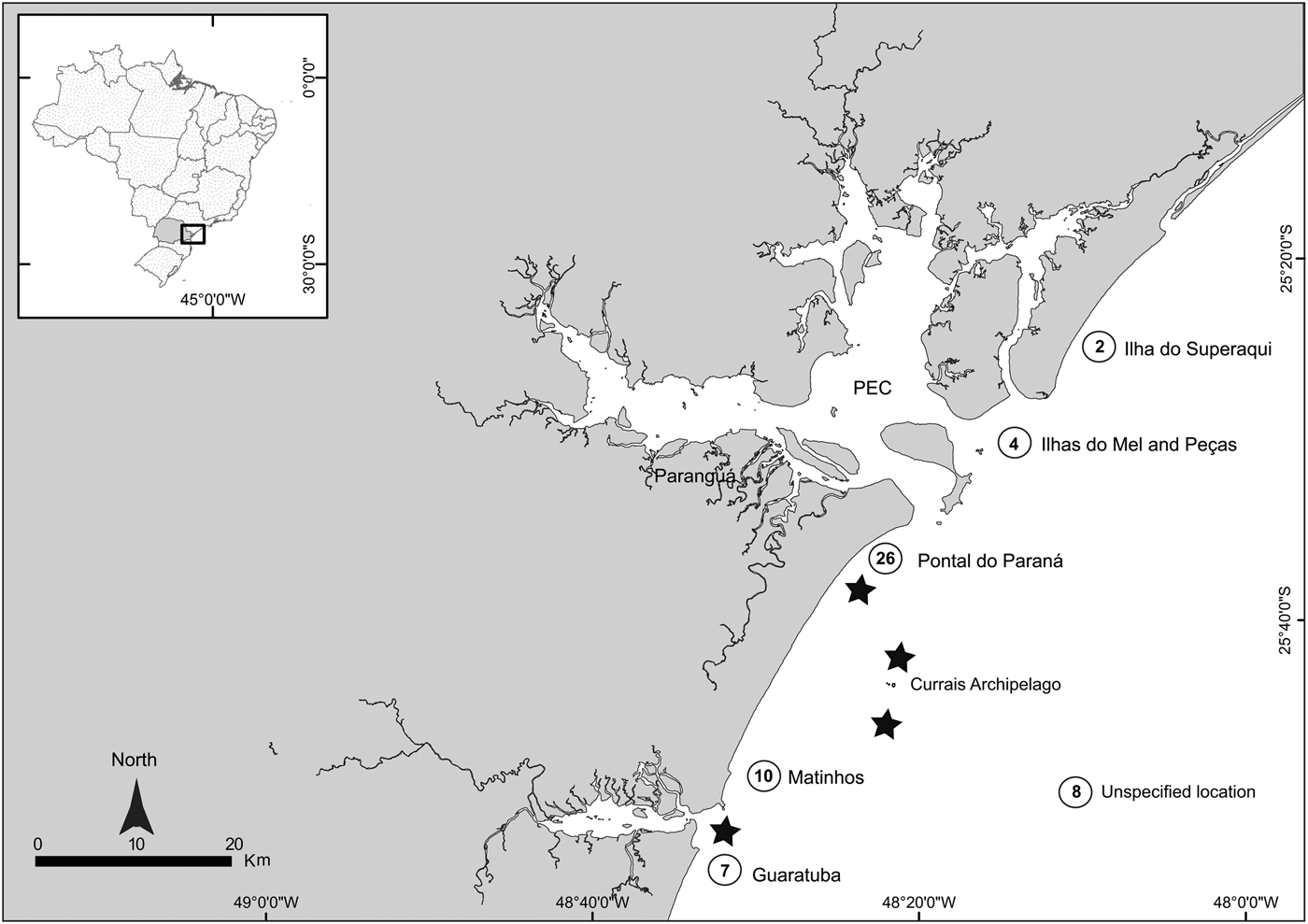
The coastline of Paraná (25°13′S 48°01′W – 25°58′S 48°35′W) comprises only ~100 km of mostly sandy beaches extending from Paranaguá Bay (i.e. the PEC and the associated port complex) in the north to Guaratuba Bay in the south (Figure 1). Between January 1989 and December 2016, both opportunistic and regular, directed sampling was done to recover the carcasses of numerous cetaceans stranded or accidentally caught along the entire coast. In the last decade, efforts at sampling considerably increased. More specifically, prior to 2007 only opportunistic records of strandings were achieved. Between January 2007 and August 2015, weekly beach monitoring was performed between Pontal do Paraná (25°34′23.85″S 48°21′45.15″W) and Matinhos (25°48′47.36″S 48°32′10.96″W) for a total of ~40 km, and monthly beach monitoring at the coastal islands (Mel, Peças and Superagui islands) across ~20 km. More recently, from August 2015 to December 2016, daily monitoring has been done, covering the entire Paraná coast (~50 km of beaches) and islands (~30 km of beaches). Such variable historical sampling effort precludes comparing absolute numbers of stranded T. truncatus among periods, and so survey efforts were standardized to the distance covered in each year, and by monitored days (termed ‘strandings per unit of observation’ or SPUO).
Locations and numbers (circles; where identified) of stranded Tursiops truncatus and opportunistic sightings (black stars) of free-swimming individuals along the coast of Paraná, southern Brazil during 1989–2016. PEC, Paranaguá estuarine complex.

For all stranded T. truncatus, the data collected included geographic coordinates, stage of decomposition, sex and biometry. Sexual maturity was determined based on sex-specific standard species total lengths (TL) and the three classes proposed for the southern form by Fruet et al. (Reference Fruet, Kinas, da Silva, Di Tullio, Monteiro, Rosa, Estima and Secchi2012): calf = TL ≤ 171 cm; juvenile = TL ≤ 277 cm for females, TL ≤ 317 cm for males and TL ≤ 297 cm for undetermined; and adults = TL ≥ 278 cm for females, TL ≥ 318 cm for males and TL ≥ 298 cm for undetermined. The stage of decomposition was classified as fresh, moderate, advanced or mummified (Geraci & Lounsbury, Reference Geraci and Lounsbury2005). Gross exams were performed according to carcass decomposition, and any signs of anthropogenic interactions (e.g. net marks, propeller strikes or deep linear cuts), tooth marks or skin diseases were noted.
Wherever possible, the bones, organs and tissue samples were collected. Bones were macerated and dried outdoors for subsequent analyses and all skulls and teeth collected between 1989 and 2016 were stored at the Instituto de Pesquisas Cananéia (IPeC/FR) and Museu de Ciências Naturais (MCN)/Laboratório de Ecologia e Conservação (UFPR). The skulls from the UFPR collection were photographed and the condyle-basal length (CBL, mm) – from the tip of the rostrum to the hindmost margin of occipital condyles – was measured (Perrin, Reference Perrin1975). Additionally, the skulls and teeth of specimens collected during 2007–2016 were examined for pathological issues. The ventral skull view was subdivided into eight areas which were analysed for lesions suggestive of Crassicauda sp. The presence of suggestive lesions was scored across the afflicted area as being weak, medium or severe. Justification for this approach followed Mead & Potter (Reference Mead, Potter, Leatherwood and Reeves1990) who investigated the possible use of such lesions to assess species in the North Atlantic Ocean. The teeth were assessed and the pathologies recorded and categorized according to Loch et al. (Reference Loch, Grando, Kieser and Simões-Lopes2011). The examinations were performed macroscopically, and classified following key criteria that included differentiated staining, shape, marks in the coronal and/or root region, as well as abrasions on the surface of the teeth. Teeth with a smooth surface and without visible marks were considered healthy.
The digestive tract was excised whole for specimens in appropriate decomposition stages, and all of the stomach contents were removed. All items (including any sagitta otoliths and beaks) were collected and dried for posterior identification by an expert using a stereomicroscope. Moreover, tissue samples (2 cm3) were fixed in 10% buffered formalin, processed routinely, and sections of 5 µm stained with haematoxylin and eosin for histopathological analyses. Samples of different tissues (4 cm2) were selected and kept at −20 °C for future genetic analyses and assays for contaminants and stable isotopes.
Ancillary studies were also done with fisher communities to access their traditional knowledge concerning T. truncatus ecology and to gather information about stranded cetaceans. Moreover, during 2009/10, interviews (free and semi-structured) were conducted with artisanal fishers to describe maps and identification cards with images of T. truncatus and other common cetaceans in the region. The fishers were asked to identify species, and describe their frequencies and locations and timings of occurrences.
Lastly, data were also compiled describing T. truncatus sightings collected by opportunistic observations during five expeditions between 2008 and 2009 along the coastal and continental shelf zone of Paraná and the inner area of Guaratuba Bay. During these observations, the geographic coordinates, sizes of the groups, presence of other cetacean species in the same area, and main behaviours were recorded. Seasonal occurrences were also assessed from videos and images available on websites (social media) recorded by tourists and fishers. Searching was performed using the words Tursiops or ‘golfinho’ associated with different regional locations, including Paranaguá, Currais, Mel and Itacolomi islands and the Paraná coast.
Statistical analyses
The chi-square test was used to test the hypothesis that the frequencies of strandings during systematic surveys were independent of years and seasons. The Student's t-test was applied to compare the average of TL among individuals with/without skull pathologies. Linear regression was used to investigate the relationship between CBL and TL. All analyses were done using BioStat 5.3 (α = 0.05).
RESULTS
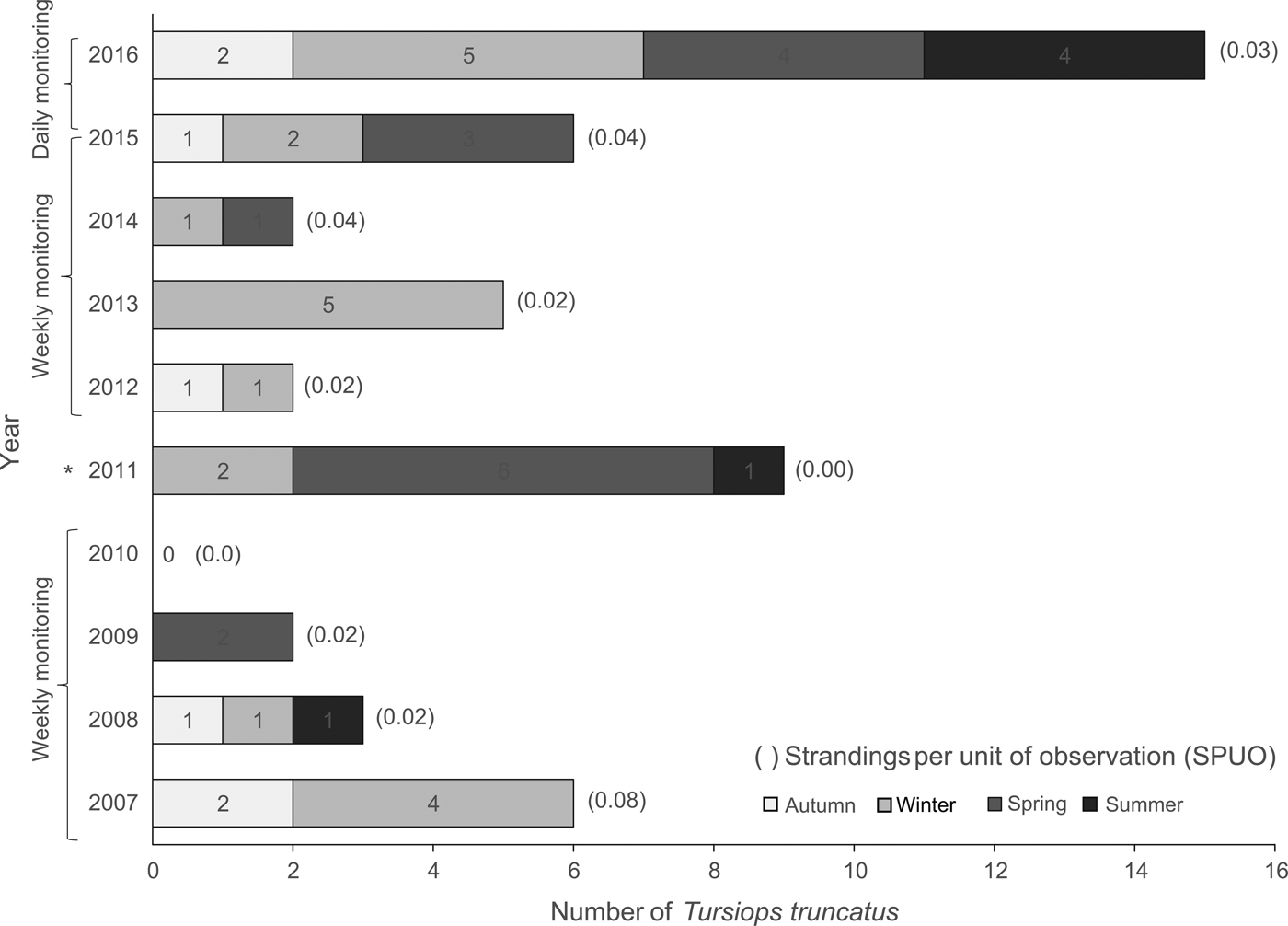
A total of 57 T. truncatus carcasses were recorded stranded along the Paraná coast: seven between 1989 and 2002 (opportunistic sampling); 31 between January 2007 and July 2015 (weekly surveys); and 19 between August 2015 and December 2016 (daily surveys) (Figures 1 and 2; Table 1). The systematic monitoring accounted for 27 records, with the remaining recorded via fishers and regional managers alerting researchers. In 2011, the nine stranded T. truncatus were recorded by communities, but in 2016 all records were made during the formal monitoring. Considering the systematic surveys performed between 2007 and 2016, although 2016 had the most strandings (N = 15), the standardized rates (SPUO) were significantly greater in 2007 (0.083) (Figure 2).
Seasonal distribution of Tursiops truncatus stranded along the coast of Paraná, southern Brazil, between 2007 and 2016 (*2011 data recorded by fisher communities).

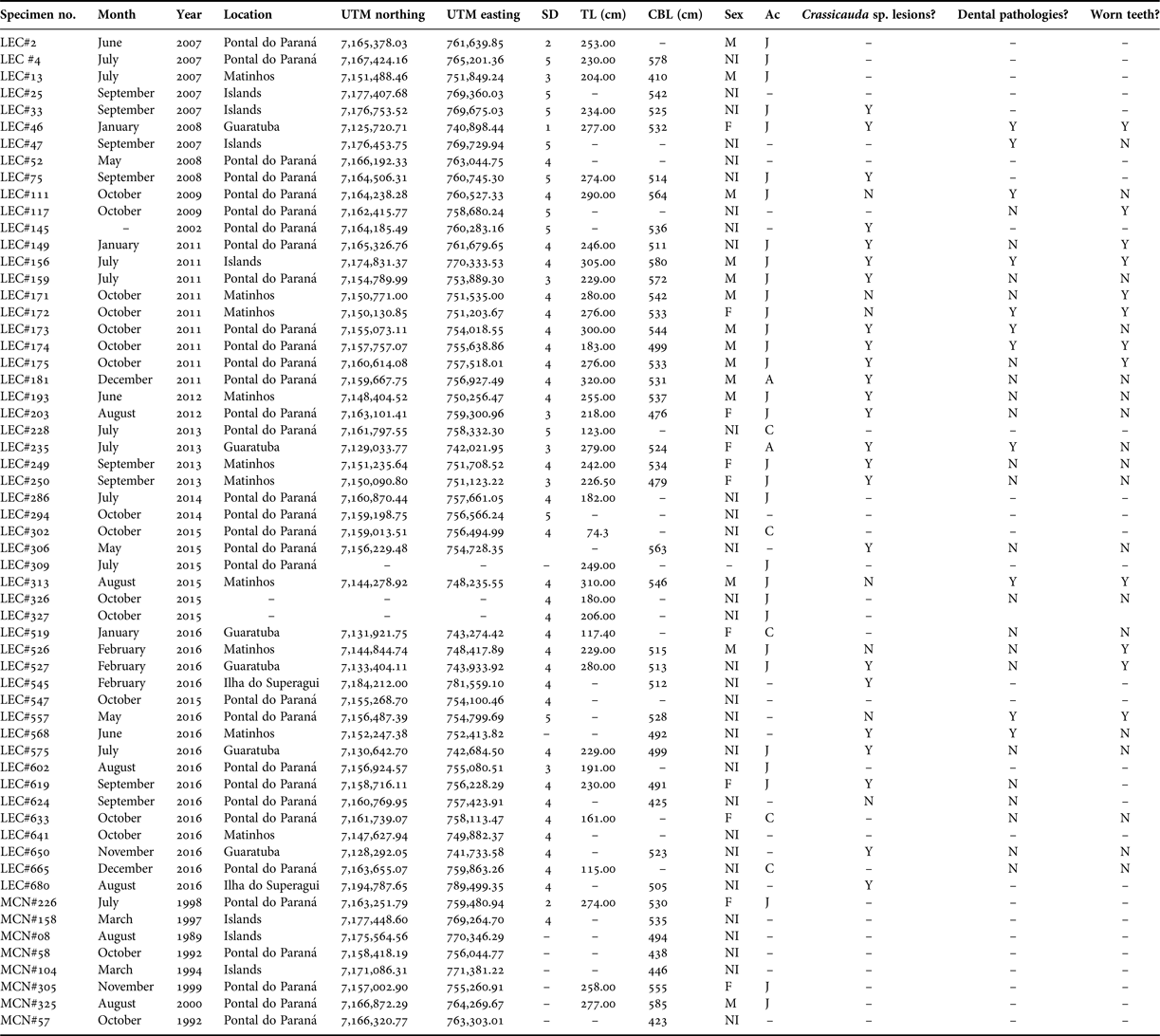
Stranding records of Tursiops truncatus along beaches in Paraná, southern Brazil between 1989 and 2016.

SD, stage of decomposition (1 = alive; 2 = fresh; 3 = decomposed; 4 = advanced decomposition; and 5 = mummified); Ac, age class (A = adult; J = juvenile/subadult; and C = calf); sex (M = male; F = female; NI = not identified); TL, total body length (cm); CBL, condyle-basal length (cm); UTM, universal transverse mercator; –, not available.
Variability among strandings and specimen conditions
Most of the specimens were found at Pontal do Paraná (N = 26), followed by Guaratuba (N = 7), Matinhos (N = 10) and Peças, Mel and Superagui islands (N = 6) (Figure 1). Eight strandings were not classified to an exact location (Figure 1). Strandings followed a seasonal pattern (χ2 = 12.56; P < 0.05) with winter (July to September) and spring (October to December) characterized by the greatest percentages (42 and 32%, respectively); however, strandings were recorded during all seasons (autumn = 14% and summer = 12%) (Figure 2). During 2007, 2013 and 2016 there were more records during winter than spring, but the opposite occurred during 2009, 2011 and 2015. Calves were recorded in July 2013 (N = 2), and also in October (N = 1), December (N = 1) and January (N = 1) 2016.
Of the total carcasses that had their stage of decomposition identified (N = 49), three (6.1%) were classified as fresh, seven (14.3%) were moderately decomposed, 29 (59.2%) had advanced decomposition and 10 (20.4%) were mummified. Eight were not evaluated. The sex was determined in 23 individuals (10 females and 13 males), but advanced stages of decomposition precluded discrimination of the remaining 34 animals (Table 1). Total length (TL) was recorded for 36 individuals and varied between 74.3 and 320.0 cm (mean TL ± SD of 229.84 ± 58.37 cm) (Table 1).
Juveniles (N = 29; 244.29 ± 37.72 cm TL) were more frequent than adults (N = 2; a female TL = 279.0 cm and a male TL = 320.0 cm) and calves (N = 5; TL 118.14 ± 30.79 cm). The smallest stranded animal (74.30 cm TL) was found dead near an adult female and still had the umbilical cord attached, but no lung examination was done to determine if it was a neonate or a foetus.
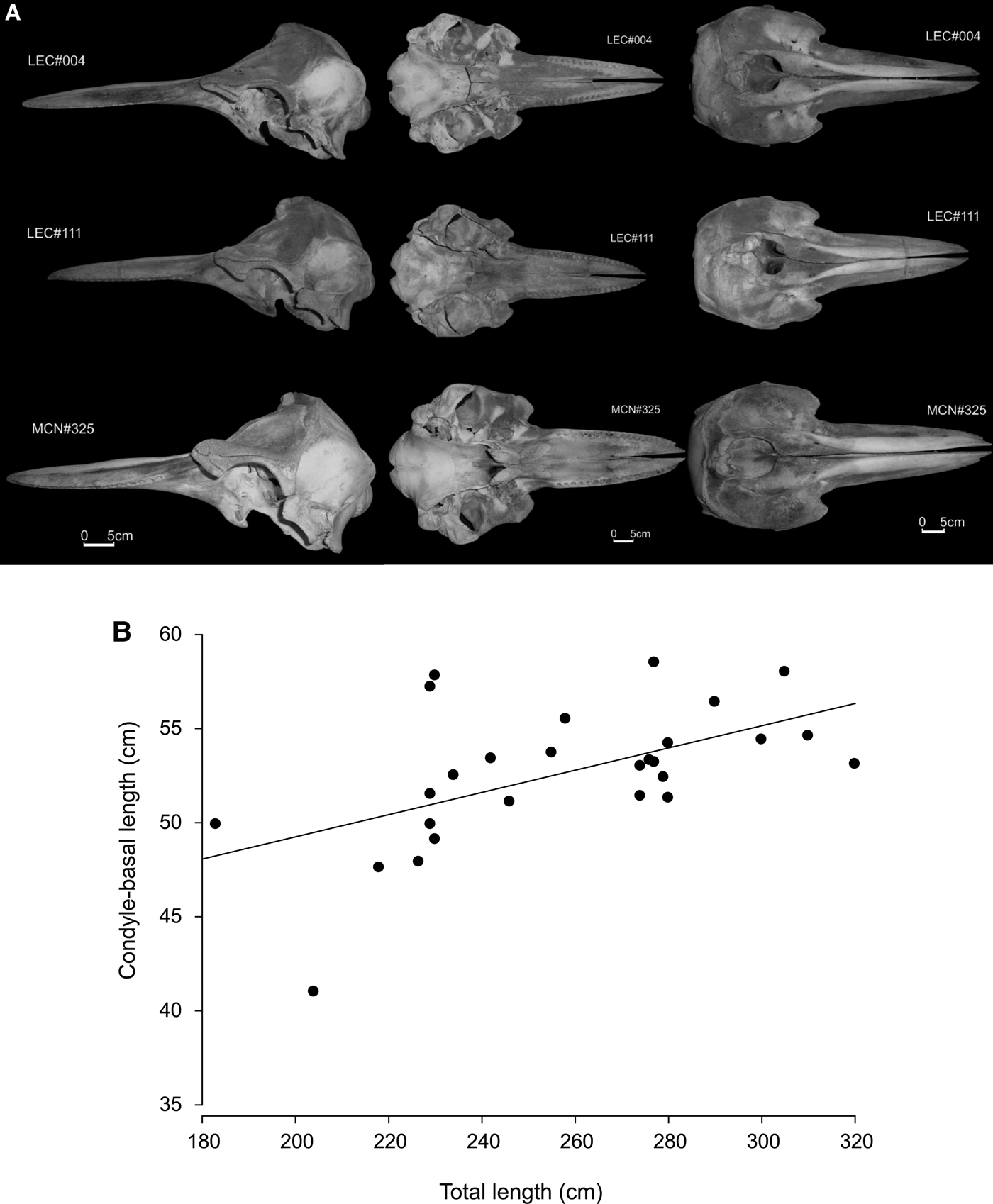
The cranial measurements of 42 specimens are presented in Table 1. The condyle-basal length (CBL) varied between 410.00 and 585.00 mm (mean of 517.00 ± 41.56 mm) (Table 1; Figure 3). The mean condyle-basal length (CBL) of adults varied between 511.00 and 585.00 mm (538.60 ± 19.90 mm) (Table 1). One specimen had a clear southern skull morphotype (Figure 3A) and was included in the group of three individuals with a CBL larger than 575 mm (proposed as cranial maturity for the southern form by Barreto (Reference Barreto2017)). These animals were collected during winter (July and August) and their TL varied between 230.00 and 305.00 cm. There was a significant positive relationship between TL (cm) and CBL (mm) for the specimens sampled, although only ~30% of the variation among CBL was explained by TL (P < 0.01; Figure 3B).
(A) Examples of skulls of Tursiops truncatus collected during the monitoring of beaches in Paraná between 1989 and 2016, including dorsal (left), ventral, and lateral views; and (B) the relationship between total (TL, cm) and condyle-basal lengths (CBL, cm) (CBL = 0.059TL + 37.43; r 2 = 0.30).

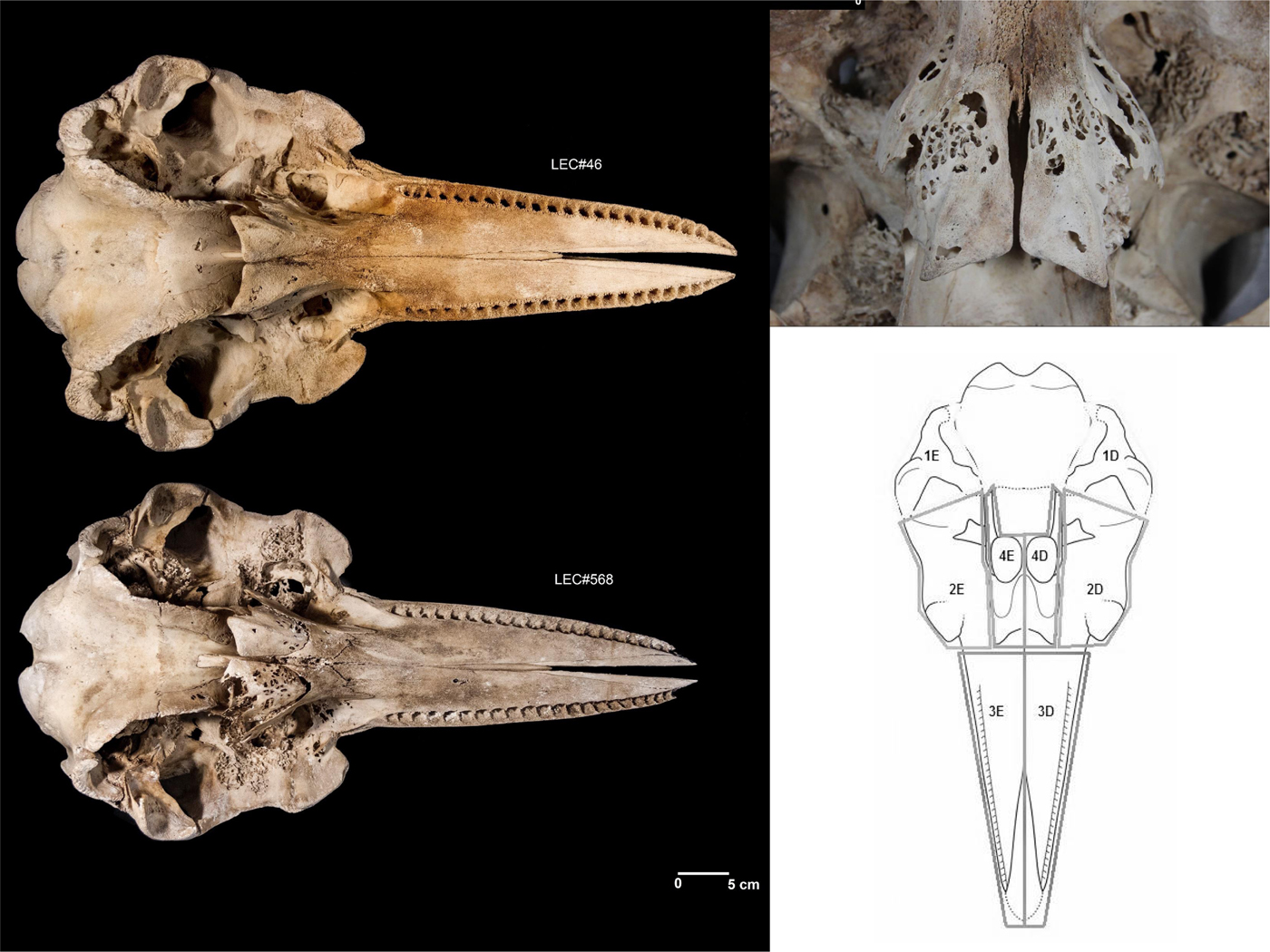
Suggestive lesions of Crassicauda sp. were observed in 77% of the analysed skulls (N = 31) including juveniles and adults (183.00 to 320.00 cm TL). The average TL differed between animals without (277.00 ± 26.73 cm; 229.00 to 310.00 cm TL) and with (255.75 ± 34.37 cm; 183.00 to 320.00 cm TL) lesions (t = 8.63; P < 0.05). Most lesions were recorded at pterygoids and adjacent areas (areas 2 and 4, Figure 4) and scored as weak (40%, covering less than 25% of the ventral skull area). Nevertheless, 28% of lesions were severe (covering ~75% of the ventral skull area), and juveniles and adults were similarly affected (Table 1; Figure 4).
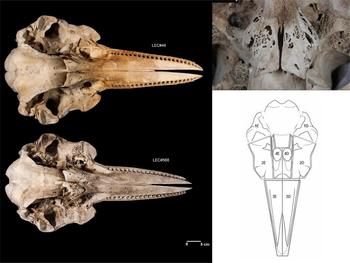
Skull of a Tursiops truncatus collected from Paraná showing Crassicauda sp. lesions and the areas analysed for lesions in the ventral view.
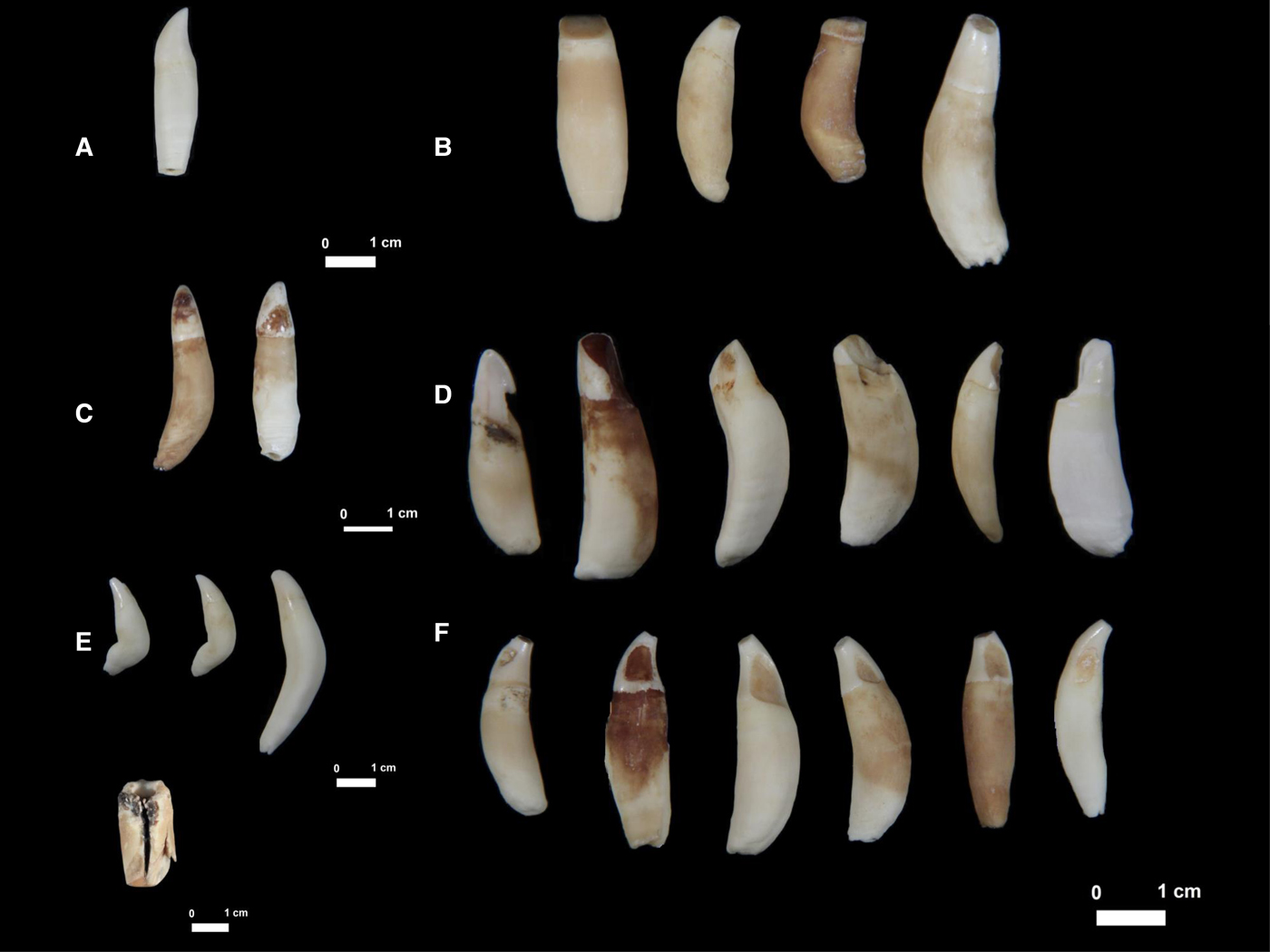
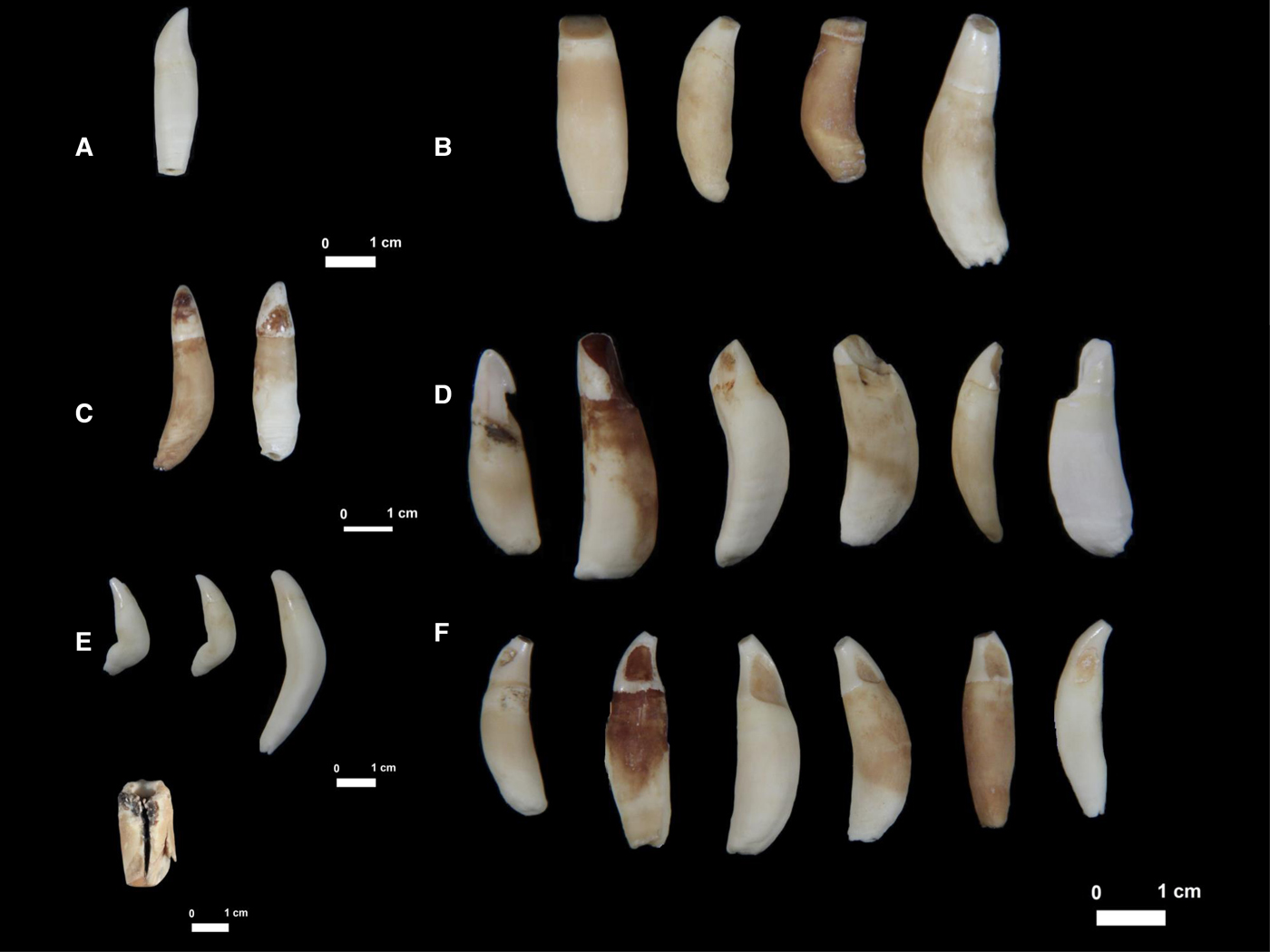
Owing to the loss of many teeth, only qualitative analysis regarding pathologies was considered. Healthy teeth were observed in 68% of the individuals analysed (N = 32; Figure 5A, Table 1). However, abrasions caused by age (N = 13; Figure 5B) and the presence of four dental pathologies were also recorded: (i) teeth with exogenous pigmentation, with brown or black spots on the smooth surface of the crown or its parts (N = 2; Figure 5C); (ii) teeth classified as eroded, with lateral abrasions on the smooth surface of the crown enamel (N = 5; Figure 5D); (iii) abnormalities in tooth root structure (shape, length, width and curvature) (N = 1; Figure 5E); and also (iv) teeth with caries, that had tapered cavities in the coronal region, with yellowish and dark staining (N = 6; Figure 5F).
Dental pathologies of Tursiops truncatus collected from Paraná (adapted from Loch et al., Reference Loch, Grando, Kieser and Simões-Lopes2011), including: (A) healthy teeth; (B) teeth with abrasions caused by age; (C) teeth with exogenous pigmentation; (D) teeth classified as eroded; (E) abnormalities in the roots; and (F) teeth with caries.
Gross and histopathological analyses were performed for nine animals (LEC#2, LEC#46, LEC#111, LEC#149, LEC#171, LEC#172, LEC#193, LEC#203 and LEC#250). Two individuals (LEC#2 and LEC#250) had clear evidence of fishery interactions (net marks and/or knife cuts). Specimen LEC#02 was stranded alive on the beach and had an excessive quantity of greenish-yellow mucus in the blowhole region. This animal was constantly leaning to its left side, showed a low breathing rate (4 per min) and died on the sand after 15 h of monitoring. Upon necropsy examination, a good nutritional state was observed. There were diffuse co-specific tooth marks on the skin, but fibrosis and pulmonary congestion were apparent. Microscopic exam demonstrated multifocal vacuolization of keratinocytes and acantholysis and focal fibrosis in the gastric mucosal layer, but the aetiological agents were not identified.
Specimen LEC#46 was also stranded alive on the beach at Guaratuba Bay (Figure 1), and was returned to the sea, but subsequently found dead the next day. The animal was also in a good nutritional state and demonstrated multifocal tooth marks and microscopic skin lesions similar to animal LEC#2. The stomach was full of fish spines. Despite autolysis of some tissue samples in specimens LEC#111, LEC#193 and LEC#250 (advanced decomposition), microscopic analysis of the lungs revealed oedema accompanied by alveolar fibrosis. The latter specimen (LEC#250) had deep and linear wounds (possible knife cuts) that penetrated the lateral and ventral region, and there was fibrin deposition in the spleen. Specimens LEC#149, LEC#171, LEC#172 and LEC#203 (advanced decomposition) had autolysis in all tissues sampled, precluding any diagnosis.
The stomach contents of only three stranded specimens were examined, but two were empty or just contained spines (no otoliths). The only stomach available for analysis (LEC#111) weighed 4900 g and contained otoliths belonging to teleosts from demersal (Chaetodipterus faber, Cynoscion sp., Menticirrhus sp., Mugil sp., Porichthys porosissimus) and pelagic-demersal (Trichiurus lepturus) habits (Pichler et al., Reference Pichler, Gray, Broadhurst, Spach and Nagelkerken2017). Cephalopod beaks of Doryteuthis plei (Loliginidae) and Octopus vulgaris (Octopodidae) were also recorded.
Opportunistic sightings
During the six expeditions in the study area, nine sightings of T. truncatus were recorded (Figure 1). The observations encompassed: (i) solitary individuals in the surf zone at Pontal do Paraná (January 2008); (ii) groups formed by two and four individuals in the area close to the Currais Archipelago (25°44′S 48°21′W in February 2008); (iii) a mixed group formed by four T. truncatus and two individuals of Stenella frontalis on the shallow shelf across depths of 25–30 m (in June and July 2009); (iv) two pairs and one solitary individual (no calves) feeding at the mouth of Guaratuba Bay (25°52′S 48°34′W during April and July 2008); and (v) a group with ~20 individuals (adults, juveniles and calves) on the shallow shelf (depth of ~20 m) around the Currais Archipelago (March 2012) (Figure 1).
Traditional knowledge and social media
Of 68 interviews carried out with regional artisanal fishers, 59 (86.8%) recognized T. truncatus. The species is popularly known as ‘boto-caldeirão’ (76.5%), ‘boto-cajerão’ (22.1%), ‘boto-preto’ (17.6%), ‘boto-grande’ (7.4%) and ‘golfinho’ (4.4%). All fishers who recognized the species noted groups varying from three to more than 100 individuals along the entire coastal area during all seasons (100%); mainly at between 5 and 20 km offshore (cited by 54.4% of the interviewees and coincident with an area utilized for fishing) and close to, or using, the mouth of Guaratuba Bay (mentioned by 86.7% of the fishers). Negative interactions between T. truncatus and fisheries were cited as sporadic and limited to rare events of lethal incidental catches (two related events).
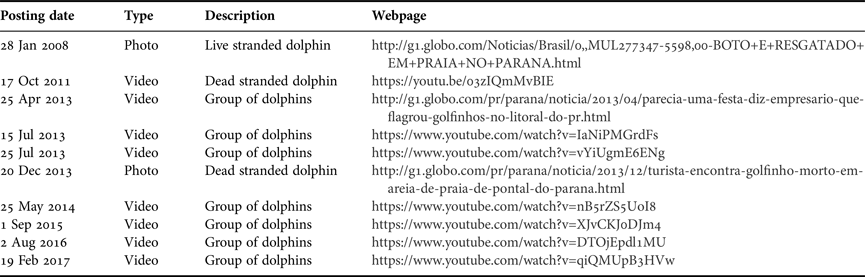
Ten internet reports (videos and photos, Table 2) were recorded between 2008 and 2016. Videos and photos of three stranded animals were posted, including one from January 2008 that was subsequently identified as the previously classified LEC#46. The other two stranded specimens were recorded in October 2011 and December 2013. Videos depicted groups of between five and more than 20 individuals swimming at the surface off the coast between April and September during 2013–2016. The videos showed groups executing behaviour classified as milling, travelling, feeding and bow riding.
Report types (videos and photos) for Tursiops truncatus recorded along the Paraná coast, southern Brazil between 2008 and 2017, including posting date, type and description.

DISCUSSION
The Paraná coast is considered a biosphere reserve by UNESCO and, owing to its unique position, is a biodiversity hotspot – characteristics that strongly support studying the occurrence and population patterns of marine megafauna, and especially cetaceans. Cetaceans are sentinels of marine ecosystems and their distributions, demographics, ecological parameters and health conditions reflect human impacts on environments and ecological structures. Off the Paraná coast, Sotalia guianensis and Pontoporia blainvillei are among the most high-profile cetaceans; known to be residents and with overlapping coastal and estuarine distributions. It is also well-established that both species clearly are affected by synergistic anthropogenic impacts (Domiciano et al., Reference Domiciano, Domit, Broadhurst, Koch and Bracarense2016). The present study extends the existing knowledge base to include T. truncatus which, although noted in the area since the 1990s, has been much less studied (Monteiro-Filho et al., Reference Monteiro-Filho, Bonin and Rautenberg1999).
Stranding and sighting trends
Tursiops truncatus was recorded stranded along the entire coast and observed using Guaratuba Bay and the inner shallow shelf (including areas around the coastal island) during all seasons, but with greater frequencies in winter and spring, which probably reflect regional primary productivity. During these seasons, the Malvinas Current (or Falklands Current) intensifies along the southern Brazilian coast, bringing increased nutrient loads and potentially affecting the migratory patterns of various marine vertebrates (e.g. fish and marine mammals) (Gonçalves-Araujo et al., Reference Gonçalves-Araujo, De Souza, Mendes, Tavano, Pollery and Garcia2013). Concurrently, groups of T. truncatus potentially from various other coastal areas might aggregate at the Paraná shelf to forage for key species (e.g. Mugil spp.). Similar behaviour has been described off the adjacent Santa Catarina state (Simões-Lopes & Fabián, Reference Simões-Lopes and Fabián1999). But it is important to note that concomitant intensive fishing effort during these seasons, along with regular frontal systems (strong winds from the south-west; Pinet, Reference Pinet2003) potentially confound the observed distributional pattern, and caution should be taken when using strandings as an index of relative abundance.
Nevertheless, the ancillary observational studies detailed here provide some support for a seasonal increase in T. truncatus in the region. For example, sightings of T. truncatus groups in Guaratuba Bay and around the Currais Archipelago occurred during winter. Further, the prey ingested by the one studied specimen here, along with other studies (Di Beneditto et al., Reference Di Beneditto, Ramos, Siciliano, Santos, Bastos and Fagundes Netto2001; Gurjão et al., Reference Gurjão, Neto, Santos and Cascon2004) are migratory species that use estuaries, bays and shallow shelf waters (depth less than 100 m) (Corrêa, Reference Corrêa1987). Coincidentally, these are the species also sought by fishers across the same space and time, which would potentially increase T. truncatus interactions and strandings.
While seasonal variation in T. truncatus abundance is clear, inter-annual differences were less so, and some of these differences might reflect the opportunistic protocol employed prior to 2007. However, considering the standardized subsequent abundances, there were few obvious long-term differences, and certainly no clear temporal increase. In fact, the only year with the greatest standardized strandings was at the start of the studied decade (2007). Although speculative, such a result might reflect regional oceanographic changes or, if there are two forms or species in the area, perhaps some intra/inter-specific variation in abundances. But, in the absence of additional data, any attribution is difficult to ascribe. Clearly, ongoing efforts are required to better understand annual occurrences and habitat-use patterns of T. truncatus and especially if there is more than one sympatric population using the area (or lineage as proposed by Wickert et al., Reference Wickert, von Eye, Oliveira and Moreno2016), or at least a resident population, as described for other regions in southern Brazil (Simões-Lopes et al., Reference Simões-Lopes, Fabian and Menegheti1998; Mattos et al., Reference Mattos, Dalla-Rosa and Fruet2007; Lodi et al., Reference Lodi, Wedekin, Rossi-Santos and Marcondes2008, Reference Lodi, Domit, Laporta, Di Tullio, Martins and Vermeulen2017; Fruet et al., Reference Fruet, Kinas, da Silva, Di Tullio, Monteiro, Rosa, Estima and Secchi2012).
Life-history data
Previous studies have shown that collecting basic biometric data (especially body and skull measurements) from incidentally caught and/or stranded cetaceans in a standardized manner can provide important life-history information (Laporta et al., Reference Laporta, Fruet, Siciliano, Flores and Loureiro2017a) and greatly facilitate comparisons between areas and/or populations (e.g. Perrin, Reference Perrin1975; Geraci & Lounsbury, Reference Geraci and Lounsbury2005). The maximum TLs of T. truncatus recorded in this study were 320.00 cm for a male and 279.00 cm for a female, which are similar to those noted off north-eastern Brazil (TL = 321 cm; Meirelles et al., Reference Meirelles, Campos, Marcondes, Groch, Souto, Reis, Normande, Luna, Nascimento, Silva, Vergara-Parente, Borges, Jesus, Attademo and Silva2017) and São Paulo (TL = 315.00 cm) (Siciliano et al., Reference Siciliano, Ramos, Di Beneditto, Santos, Fragoso, Brito, Azevedo, Vicente, Zampirolli, Alvarenga, Barbosa and Lima2007), but smaller than from further south off Rio Grande do Sul (TL = 385.00 cm; Fruet et al., Reference Fruet, Kinas, da Silva, Di Tullio, Monteiro, Rosa, Estima and Secchi2012). Such differences might be due to various effects, including fishing-gear selectivity, population variations among body size and even sexual dimorphism and ages. With respect to the latter, and similar to that described off north-eastern Brazil (Meirelles et al., Reference Meirelles, Campos, Marcondes, Groch, Souto, Reis, Normande, Luna, Nascimento, Silva, Vergara-Parente, Borges, Jesus, Attademo and Silva2017), juveniles/subadults were the most frequent age class in the sample. Nevertheless, because neither the causes of death nor ages could be determined, no hypothesis addressing age-specific health deterioration or overlapping impacts due to habitat segregation can be postulated. Future analytical procedures are necessary to characterize the population stock, the regional sexual maturity and other population biological patterns, to access the real impacts at different ages.
As expected, there was a positive relationship between TL and CBL for T. truncatus observed here, but also substantial variation, with two individuals having the same TL (277.00 cm) but quite different CBLs (532.00 and 585.00 mm, respectively). Notwithstanding the above uncertainty, typically T. truncatus from southern Brazil, Uruguay and Argentina begin their cranial maturity at age two, with stabilization at age five and with a CBL of ~575.00 mm (Barreto, Reference Barreto2017), but only three specimens (TL>230.00 cm) stranded at Paraná had a CBL >575.00 mm. One of these individuals had differences in the inclination and degree of pterygoid separation, cranial width and maxilla length and width, characterized by the southern/coastal morphotype (Costa et al., Reference Costa, Rosel, Daura-Jorge and Simões-Lopes2016; Wickert et al., Reference Wickert, von Eye, Oliveira and Moreno2016). However, no information about the relationship between cranial maturity and age is available for other regions in the SWAO (although the closing of cranial sutures can be used to assess maturity). Further, the recording of an identified animal at Laguna (probably the southern form; Ott et al., Reference Ott, Barreto, Siciliano, Laporta, Domit, Fruet, Dalla Rosa, Santos, Meirelles, Marchesi, Botta, Oliveira, Wickert, Vermeulen, Hoffman, Baracho and Simões-Lopes2017) and re-sighted at Guaratuba Bay (Simões-Lopes & Daura-Jorge, Reference Simoes-Lopes and Daura-Jorge2009) suggests the population units (Wickert et al., Reference Wickert, von Eye, Oliveira and Moreno2016; Ott et al., Reference Ott, Barreto, Siciliano, Laporta, Domit, Fruet, Dalla Rosa, Santos, Meirelles, Marchesi, Botta, Oliveira, Wickert, Vermeulen, Hoffman, Baracho and Simões-Lopes2017) could be sympatric in the area, and that animals make seasonal movements along the coast.
Pathology
The nematode Crassicauda sp. is usually observed in the urogenital system, glands and the cranium pterygoid bone of cetaceans, and has been associated with vascular lesions, reproduction and renal failure and skull erosion (Lambertsen, Reference Lambertsen1985; Dailey, Reference Dailey, Dierauf and Gulland2001; Keenan-Bateman & McLellan, Reference Keenan-Bateman and McLellan2016). The skull erosions observed here in T. truncatus indicate a greater infection of Crassicauda sp. than observed during necropsies of several other species across other areas (Perrin & Powers, Reference Perrin and Powers1980; Carvalho et al., Reference Carvalho, Bevilaqua, Iñiguez, Mathews-Cason, Ribeiro, Pessoa, Meirelles, Borges, Marigo, Soares and Silva2010; Keenan-Bateman & McLellan, Reference Keenan-Bateman and McLellan2016). Further, such infections remained consistent among juveniles, subadults and adults.
Controversially, Keenan-Bateman & McLellan (Reference Keenan-Bateman and McLellan2016) recently noted that Kogia spp. infection was positively related to female TL, and also was greater in females than males. These differences might be associated with the immune susceptibility of females during reproductive stages, which demand large maternal investment, or different feeding habitats (Keenan-Bateman & McLellan, Reference Keenan-Bateman and McLellan2016). Dailey (Reference Dailey, Geraci and St Aubin1979) postulated that Crassicauda sp. infection not only can be used as a biological indicator to identify feeding habitats, but also intraspecific variations within and among populations and migration patterns – observations also suggested by Ott et al. (Reference Ott, Barreto, Siciliano, Laporta, Domit, Fruet, Dalla Rosa, Santos, Meirelles, Marchesi, Botta, Oliveira, Wickert, Vermeulen, Hoffman, Baracho and Simões-Lopes2017) for Tursiops. However, a study encompassing a larger sample size, associated with genetic stocks analyses, is required for a better understanding of all ecological issues associated with Crassicauda sp. infection.
Understanding the extent of various pathogen infections would also inform about habitat use patterns and other impacts. For example, previous studies have shown that tooth pathologies can vary according to environmental conditions because lesions may be associated with different pathogens present in poor water quality (Loch et al., Reference Loch, Grando, Kieser and Simões-Lopes2011). However, surface tooth lesions can also be caused by gastric disorders, acidic dietary items, trauma or nutritional deficiencies (Goldman et al., Reference Goldman, Loureiro, Quse, Corach, Calderon, Caro, Boccio, Heredia, Di Carlo and Zubillaga2002; Cardoso & Grando, Reference Cardoso, Grando and Cardoso2003; Loch et al., Reference Loch, Grando, Kieser and Simões-Lopes2011), while root lesions may be associated with inflammation of periodontal ligament cells owing to trauma or stress (Miles & Grigson, Reference Miles and Grigson1990; Neville et al., Reference Neville, Damm, Allen and Bouquot1996). The lesions observed here included both exposed parts of teeth and roots, but the origin of each was not determined.
The large number of animals in an advanced stage of decomposition precluded both gross and histological exams and consequent evaluation of animal diseases and health status. Nevertheless, it was possible to establish lung fibrosis and vacuolar degeneration of epithelial cells in those few carcasses that could be microscopically evaluated. The observed proliferation of connective tissue might have occurred as a consequence of an initial inflammatory process such as pneumonia (López, Reference López, McGavin and Zachary2007). Lung parasitosis with subsequent bacterial infections have previously been reported in cetaceans found dead off north-eastern and southern Brazil, including in the studied area (Ruoppolo, Reference Ruoppolo2003; Motta, Reference Motta2006; Domiciano et al., Reference Domiciano, Domit, Broadhurst, Koch and Bracarense2016). Such processes could also be the origin of the pneumonia recorded in T. truncatus analysed here.
In support of the above statement, vacuolar degeneration of epithelial cells implies viral infection, but inclusion bodies were not observed here. There are some viruses that cause skin lesions and mucosa in cetaceans, including calicivirus, papillomavirus, herpesvirus and poxvirus (Domiciano et al., Reference Domiciano, Domit, Marconde and Bracarense2012; Mouton & Botha, Reference Mouton, Botha, Romero and Keith2012). Nevertheless, the histological findings here were not sufficient to establish the aetiological diagnosis and it would be necessary to undertake molecular and immunohistochemical assays to identify the different viral types.
Future studies and conclusions
The present work increases the body of knowledge concerning biological, ecological and health parameters of T. truncatus at the tropic-temperate convergence zone, and so contributes to the broader information describing local cetaceans. A solitary stranded animal confirmed to be a southern morphotype might reinforce the occurrence and habitat use of two forms/species of Tursiops off Paraná (Wickert et al., Reference Wickert, von Eye, Oliveira and Moreno2016), but clearly more data are required. While the observed strandings were relatively lower than for other regional cetaceans and fairly stable, their quantification nevertheless remains important for regional conservation.
Tursiops truncatus is included in a ‘small cetacean action plan’ document published by the Brazilian government (Rocha-Campos et al., Reference Rocha-Campos, Câmara and Pretto2011), in which researchers and managers indicated priority research and actions to increase knowledge and promote the species’ conservation. Contributions considered essential include specific morphometric and molecular analyses to recognize and define population units or stocks, understand seasonal movements and habitat requirements, and also to guide conservation policies and monitoring programmes at local levels (Laporta et al., Reference Laporta, Fruet, Siciliano, Flores and Loureiro2017a, Reference Laporta, Martins, Lodi, Domit, Di Tullio and Vermeulenb; Ott et al., Reference Ott, Barreto, Siciliano, Laporta, Domit, Fruet, Dalla Rosa, Santos, Meirelles, Marchesi, Botta, Oliveira, Wickert, Vermeulen, Hoffman, Baracho and Simões-Lopes2017).
The sporadic opportunistic sampling characterizing the first three decades of available data for Paraná certainly provides one source of data to meet the above requirements, although it is important to note this precludes robust ecological analyses including unknown animal geographic origins (and population units). Consequently, future conservation actions should be based on: (i) reinforcing the existing systematic beach-monitoring programme to access stranded animals, including health analyses and actions to maintain communication with stakeholders; (ii) increased independent surveys to collect information about population stocks, habitat use and residence patterns; and (iii) assessing indirect threats, including fisheries interactions, chemical contaminations, habitat degradation and underwater noise. Doing so will facilitate drafting management plans that work towards maintaining the existing status of regional T. truncatus as Least Concern.
ACKNOWLEDGEMENTS
We are grateful to Roberta Santos (CEPSul, IBAMA), Instituto de Pesquisas Cananéia, MSc. Fernando Sedor (curator of the Museu de Ciências Naturais da UFPR), Laboratório de Ecologia e Conservação (UFPR), Maria Camila Rosso Londoño (Fundacíon OMACHA), Fernando Rosas (INPA), Laboratório de Patologia Animal (UEL) and Fundação Grupo O Boticário de Proteção à Natureza for their support, as well as the local community and managers of Paraná who cooperated with the studies in the region. The work encompasses data obtained by the Beach Monitoring Project of the Santos Basin, Paraná, which is a requirement established by the federal environmental licensing division of the Brazilian environmental agency (IBAMA).