
Introduction
Ferromagnetic materials are of great interest not only as bulk materials but also in the format of thin films. As a function of their coercivity and remanence they can be used in magnetic recording systems of high density and in magnetic sensors.[ Reference Li, Wang, Zhao, Wang, Wang and Wang 1 – Reference Katada, Nakamoto, Hoshiya, Hoshino, Yoshida, Shiimoto, Sato, Takazawa, Yasui, Hatatani, Watanabe, Ikeda and Meguro 5 ] Among the different ferromagnetic materials available, cobalt has been intensively investigated due to its interesting magnetic properties,[ Reference De Toro, Marqués, Muñiz, Skumryev, Sort, Givord and Nogués 6 , Reference Liakakos, Blon, Achkar, Vilar, Cormary, Tan, Benamara, Chaboussant, Ott, Warot-Fonrose, Snoeck, Chaudret, Soulantica and Respaud 7 ] being proposed to be used as a contact material,[ Reference Ru, Li, Jiang, Qu, Liu, Van Meirhaeghe and Cardon 8 ] in spintronic applications,[ Reference Haag, Laux, Stöckl, Kollamana, Seide, Großmann, Fetzer, Kelly, Wei, Stadtmüller, Cinchetti and Aeschlimann 9 ] in giant magnetoresistance sensors,[ Reference Vovk and Schmitz 10 ] and in random access magnetic memories.[ Reference Zhang, Bi, Wang, Hu, Li, Ji and Liu 11 ]
Cobalt thin films must be very uniform so they can be used in potential applications. However, it is well known that the synthesis method used influences its structural, electrical and magnetic properties. To date, cobalt thin films have been synthesized by sputtering,[ Reference Jamali, Lv, Zhao and Wanga 12 ] laser pulse deposition,[ Reference Ehsani, Jalali Mehrabad and Kameli 13 ] CVD (chemical vapor deposition)[ Reference Ootera, Shimada, Kado, Quinsat, Morise, Nakamura and Kondo 14 ] and atomic layer deposition (ALD).[ Reference Daub, Knez, Goesele and Nielsch 15 ] It is well known that the latter technique allows precise control of the thickness of films with excellent conformal coverage.[ Reference Leskela and Ritala 16 ]
In addition, the synthesis of cobalt thin films has been reported directly (without an additional thermal reduction process) using plasma-enhanced ALD from different cobalt precursors in the presence of hydrogen, NH3, and H2/N2, among others.[ Reference Parka, Leeb, Kimc, Yoona, Lansalotd, Gatineaud, Chevreld and Kima 17 – Reference Yoon, Lee, Kim, Cheon, Kim and Kim 19 ] One of the major drawbacks of plasma depositions is that it can damage substrates giving a non-uniform coverage in high aspect ratio structures due to the recombination of hydrogen atoms on the substrate surface.[ Reference Profijt, Potts, van de Sanden and Kessels 20 ] In addition, most of these methods obtain carbon-contaminated cobalt films, and the use of additional equipments increases the cost of the synthesis process.[ Reference Shimizu, Sakoda, Momose, Koshi and Shimogaki 21 ] Recently, Kerrigan et al.[ Reference Kerrigan, Klesko, Rupich, Dezelah, Kanjolia, Chabal and Winter 22 ] synthesized metallic cobalt films by ALD at low temperature using bis(1,4-di-tert-butyl-1,3-diazadienyl)cobalt and formic acid as precursors. However, they obtained that the growth on a thermal SiO2 substrate is saturated at ~35 nm thick layers after ≥500 cycles. In addition, they propose that this film is cobalt(II) formate, based upon its water solubility, insulating nature, and infrared spectrum.
On the other hand, the process of dewetting in thin films is a promising way to synthesize nanoparticles or antidots. Bhattacharyya et al.[ Reference Bhattacharyya, Kabiraj, Yusuf and Dev 23 ] investigated the dewetting phenomenon produced by ion beam irradiation of thin Co/CoO films deposited on SiO2(111) substrates by sputtering. They found that the thickness and temperature of the film affect the size and uniformity of cobalt nanoparticles formed from the dewetting process. However, to date there is no systematic study of the dewetting process in cobalt thin films synthesized by ALD with a subsequent thermal reduction treatment.
In this work, we have synthesized thin films of cobalt oxide by ALD using cobaltocene and ozone as precursors. These films are thermally reduced under a hydrogen atmosphere in order to extract the oxygen and obtain thin films of metallic cobalt. The morphology and elemental analysis of cobalt oxide and cobalt thin films were characterized by scanning electron microscopy (SEM) and energy dispersive x-ray microanalysis (EDX). In addition, the crystalline phases were investigated by x-ray diffraction (XRD) and the thickness of the films was obtained before and after the thermal reduction process by ellipsometry. Finally, their magnetic properties were investigated using a NanoMOKE3 as a function of the thickness of the thin films.
Experimental details
Cobalt oxide was deposited at 250 °C in stop/exposure-mode alternating cobaltocene (CoCp2) and ozone (O3) as precursors on Si(100) wafers with 210 nm of thermally grown SiO2 using a Savannah S100 ALD equipment from Ultratech. The cobaltocene was held in a stainless-steel bottle heated to 90 °C to ensure sufficient vapor pressure, while an Ozone Lab generator Ol80W/FM100 V was used to provide ozone with a volume concentration of about 10%. A flow of 20 sccm of nitrogen was maintained throughout the process.
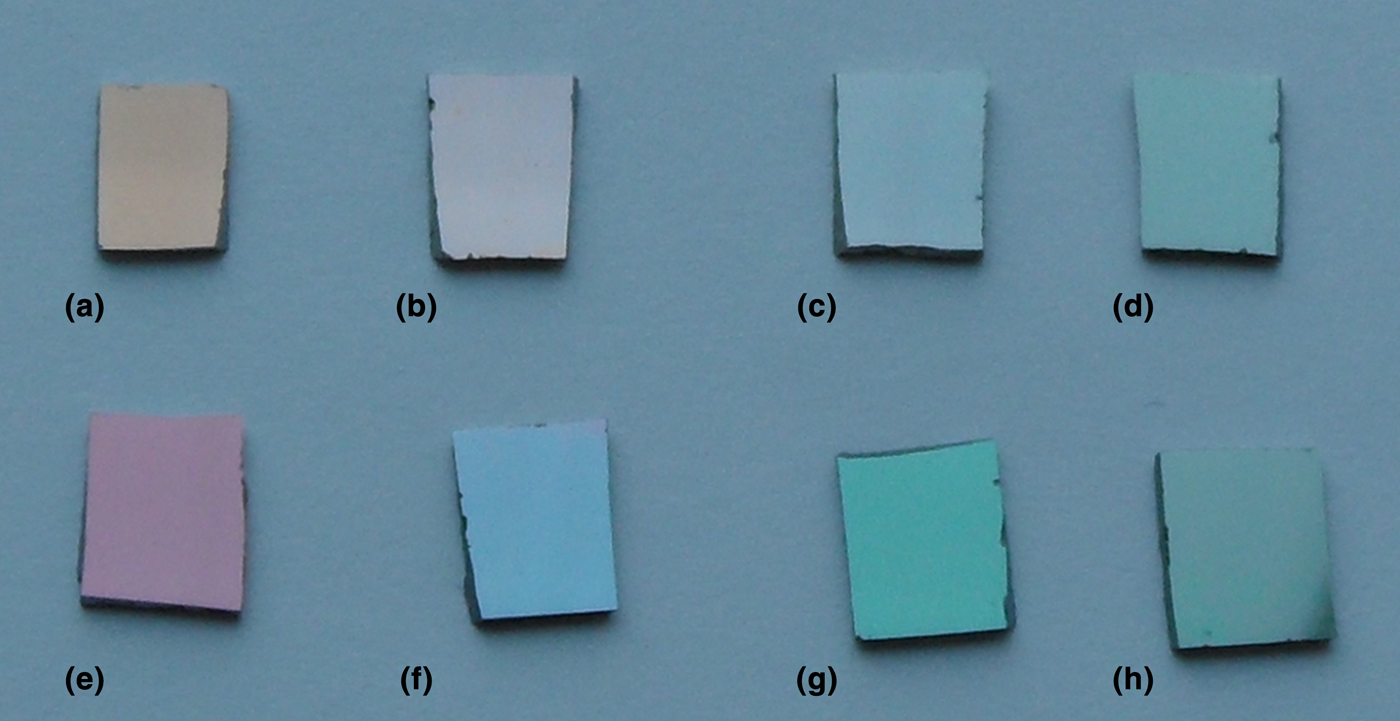
As in this case, we have used the stop/exposure-mode, each ALD cycle considers pulse, exposure, and purge times for each of the precursors. Thus, the pulse times of cobaltocene and ozone in the CoCp2/O3 cycle were 4 and 0.2 s, respectively, while the exposure and purge times were 10 and 30 s, respectively. The different thicknesses of the cobalt oxide thin films were obtained by considering 500, 1000, 1500, and 2000 cycles. It is interesting to note that the samples exhibit a color change as a function of the film thickness, from brown, for 500 cycles, to green, for 2000 cycles [see Figs. 1(a)–(d)].
Photographs of as-deposited cobalt oxide films for (a) 500, (b) 1000, (c) 1500, and (d) 2000 cycles and of the thermally reduced cobalt films for (e) 500, (f) 1000, (g) 1500, and (h) 2000 cycles.

Subsequently, cobalt oxide thin films (antiferromagnetic) were subjected to a thermal reduction process to obtain cobalt films (metallic and ferromagnetic). For this, the samples were placed into a furnace GSL-1100X from MTI Corporation, which has a controlled atmosphere of hydrogen (4%) balanced with argon (96%), which is at an overpressure of 0.04 MPa with a temperature of 430 °C for 4 h.[ Reference Pereira, Palma, Denardin and Escrig 24 ] After the reduction process, we observe that the color of the thin films changes again, as seen in Figs. 1(e)–(h). The change is much more noticeable for films synthesized with a smaller number of cycles (related to a smaller thickness of the samples), which is related to the appearance of magnetic nanoparticles, as we will see later.
The morphology and chemical composition of the cobalt thin films were studied by SEM (EVO MA10 from Zeiss) and EDX, while XRD measurements were performed using a Bruker D8 system with Cu Kα radiation (λ = 0.15406 nm), in a range between 10° and 90° in 2θ, at a step rate of 0.02° s−1. The thickness of the thin films was determined using an alpha-SE ellipsometer from J. A. Wollam, while their magnetic properties were measured with a NanoMOKE3 from Quantum Design with the magnetic field applied parallel to the substrate plane.
Results and discussion
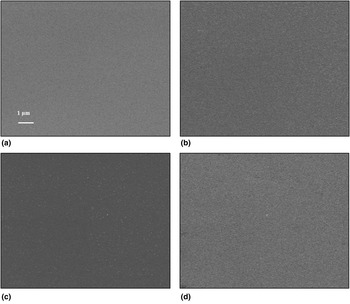
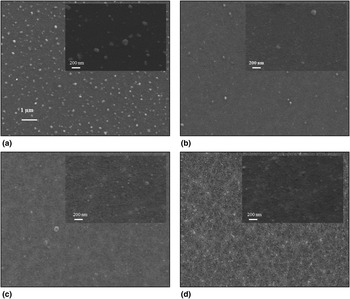
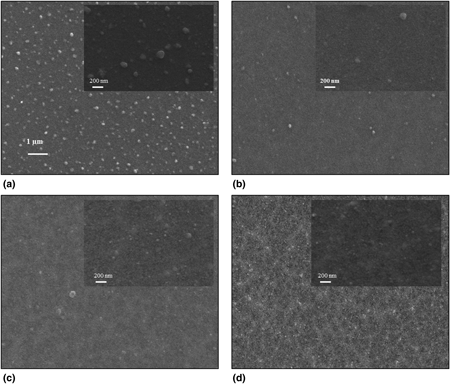
From the SEM images of as-deposited cobalt oxide films [see Figs. 2(a)–(d)] we can observe that, independently of the number of ALD cycles, the films obtained are quite homogeneous. On the other hand, it is interesting to note from the SEM images of the cobalt films [see Figs. 3(a)–(d)] obtained after the thermal reduction process that this process causes the appearance of agglomerates of cobalt nanoparticles of approximately 200 nm in diameter for 500 cycles. As these agglomerates begin to grow and join together, as the film thickness increases (by increasing the number of ALD cycles), more homogeneous films are obtained, in accordance with the results obtained by Guyon et al.[ Reference Guyon, Barkallah, Rousseau, Giffard, Morvan and Tatoulian 25 ] However, as the thickness of the films increases, an array of antidots begins to appear, due to the release of oxygen from the samples (dewetting phenomenon) during the thermal reduction process, producing irregular and variously shaped holes on the samples. Our results are consistent with those previously obtained for thin films of Ni[ Reference Alburquenque, Del Canto, Arenas, Tejo, Pereira and Escrig 26 ] and NiFe,[ Reference Espejo, Zierold, Gooth, Dendooven, Detavernier, Escrig and Nielsch 27 , Reference Alburquenque, Pérez-Erices, Pereira and Escrig 28 ] where similar images were obtained due to the phenomenon of dewetting.
SEM images of as-deposited cobalt oxide films for (a) 500, (b) 1000, (c) 1500, and (d) 2000 cycles. All images are on the same scale.

SEM images of the thermally reduced cobalt films for (a) 500, (b) 1000, (c) 1500, and (d) 2000 cycles. All images are on the same scale.

The temperature at which dewetting occurs decreases with film thickness.[ Reference Thompson 29 ] This means that by keeping the temperature constant and by varying the thickness of films, thicker films begin with the deweting process before thinner films. Besides, it is well known that the dewetting process generally progresses through at least three distinct stages: hole formation, hole growth and impingement, and ligament breakup.[ Reference Lim, Rahtu and Gordon 30 ] In fact, the process of dewetting either occurs at preexisting holes or at film edges or requires the formation of new holes. These holes then grow to form dewetted regions that eventually overlap, so that the entire film is dewetted.
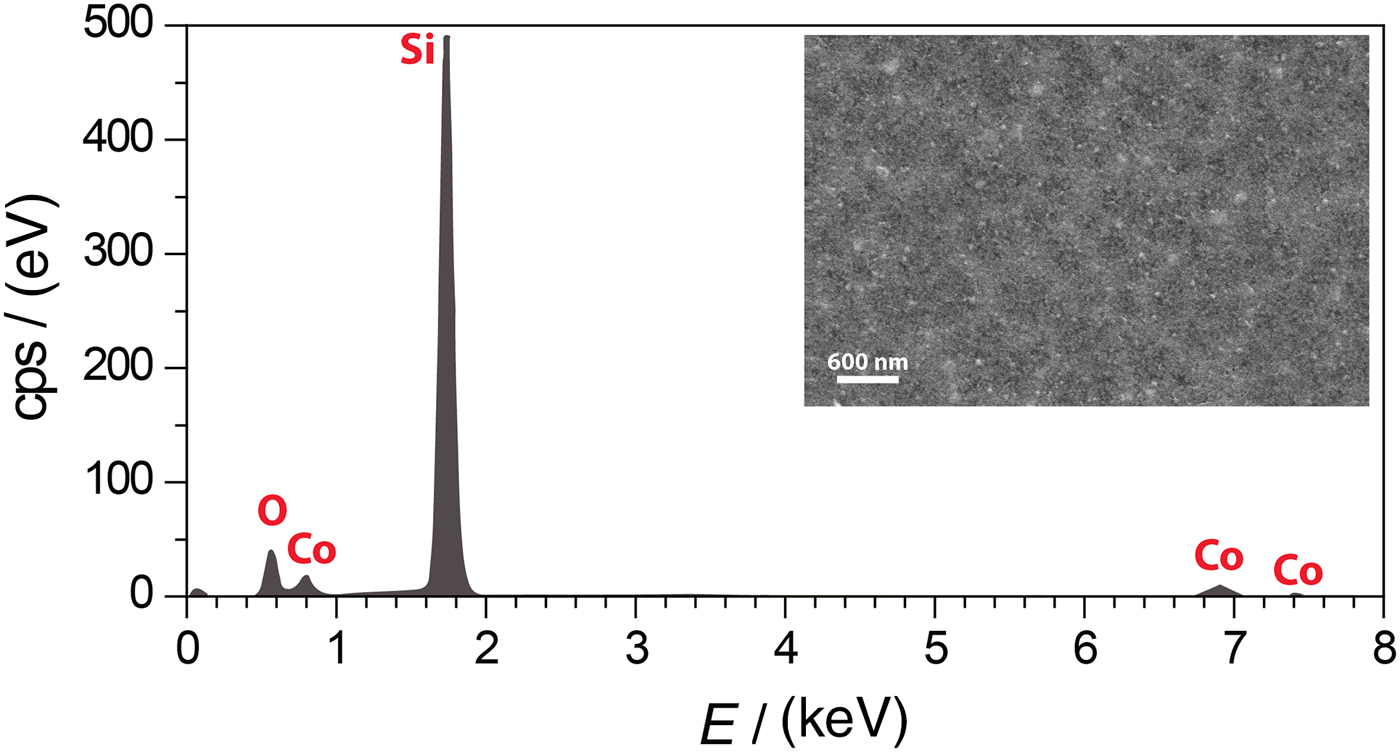
The EDX spectrum of the cobalt film corresponding to 2000 cycles (see Fig. 4) allows us to corroborate the presence of cobalt on the silicon wafers, but which cannot tell us if it is metallic cobalt. The XRDs will provide the necessary evidence to confirm that H2 thermal treatment works for the reduction of cobalt oxide. Considering the change in the magnetic properties exhibited by thin films before and after the thermal reduction process, as well as the fact that the process used in this paper is the same one that was used to reduce much more complex surfaces (nanotubes),[ Reference Pereira, Palma, Denardin and Escrig 24 ] we estimate that almost 100% of the cobalt oxide was reduced to metallic cobalt. In addition, the different spectra obtained (not shown here) show that the composition does not vary with the number of ALD cycles.
EDX spectrum of the cobalt film corresponding to 2000 cycles.

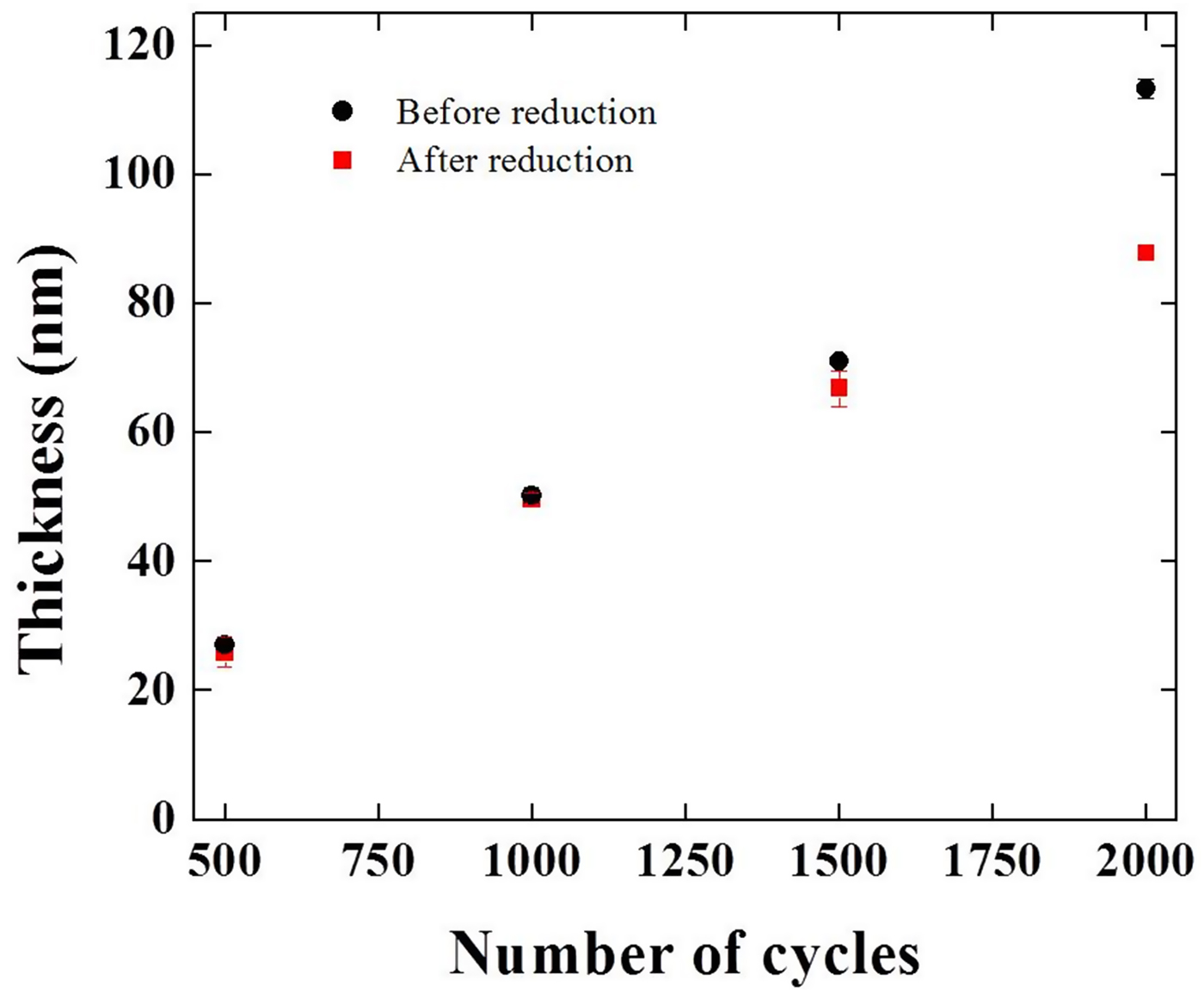
From Fig. 5 we can see a linear growth of the thickness of the films as a function of the number of ALD cycles,[ Reference Grzelczak, Zhang, Pfrommer, Hartmann, Driess, Antonietti and Wang 31 ] with a growth rate for cobalt oxide determined by spectroscopic ellipsometry of around 0.45 Å/cycle, while the growth rate for cobalt, i.e., after the thermal reduction process, is 0.39 Å/cycle. The difference in thickness between cobalt oxide and cobalt is due to the dewetting process, where the release of oxygen produces cracks or holes in the surface, thus reducing the thickness of the homogeneous film. This effect, according to Fig. 3, is more intense for thicker samples.
Film thickness of cobalt oxide (black circles) and cobalt (red squares) as a function of the number of ALD cycles.

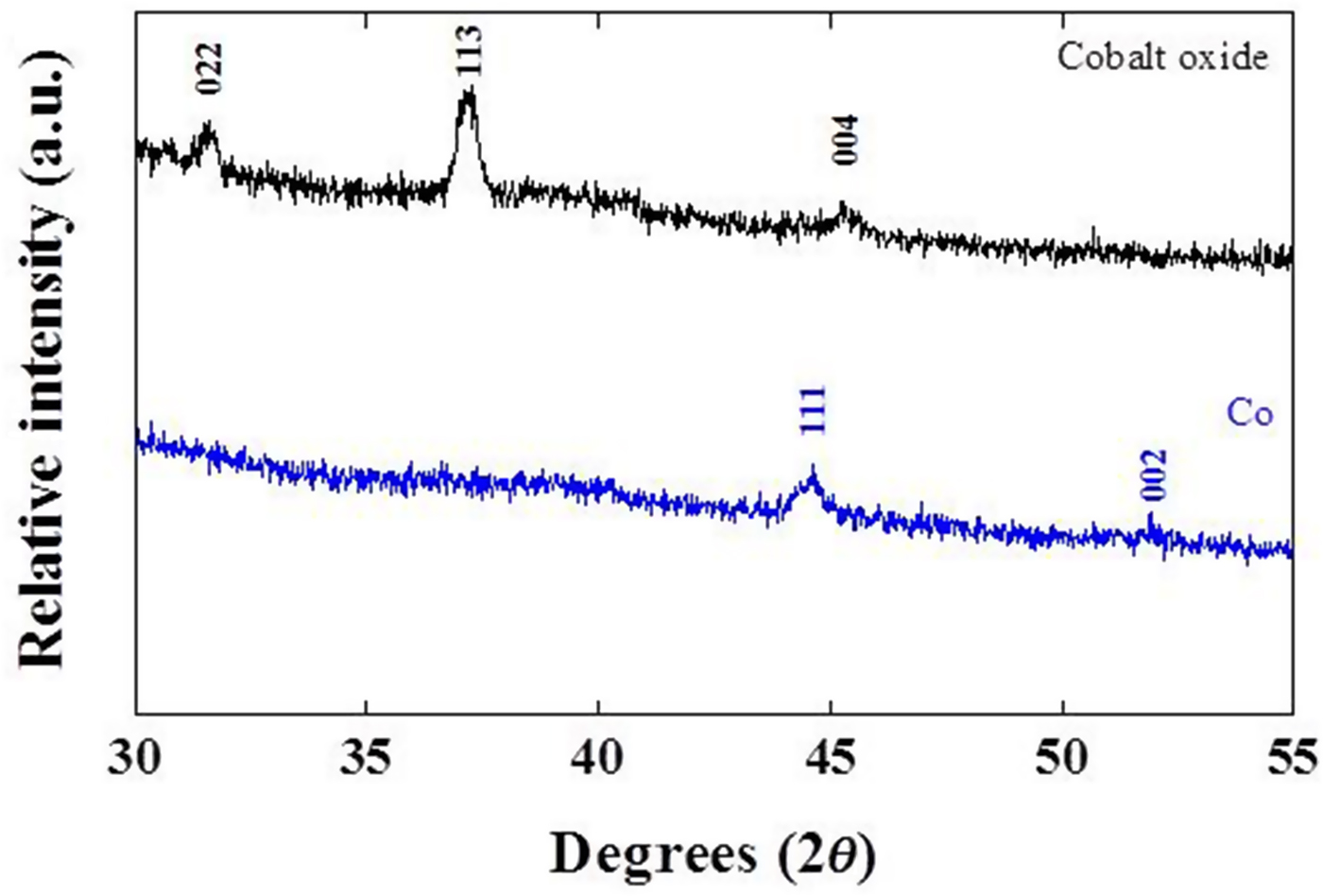
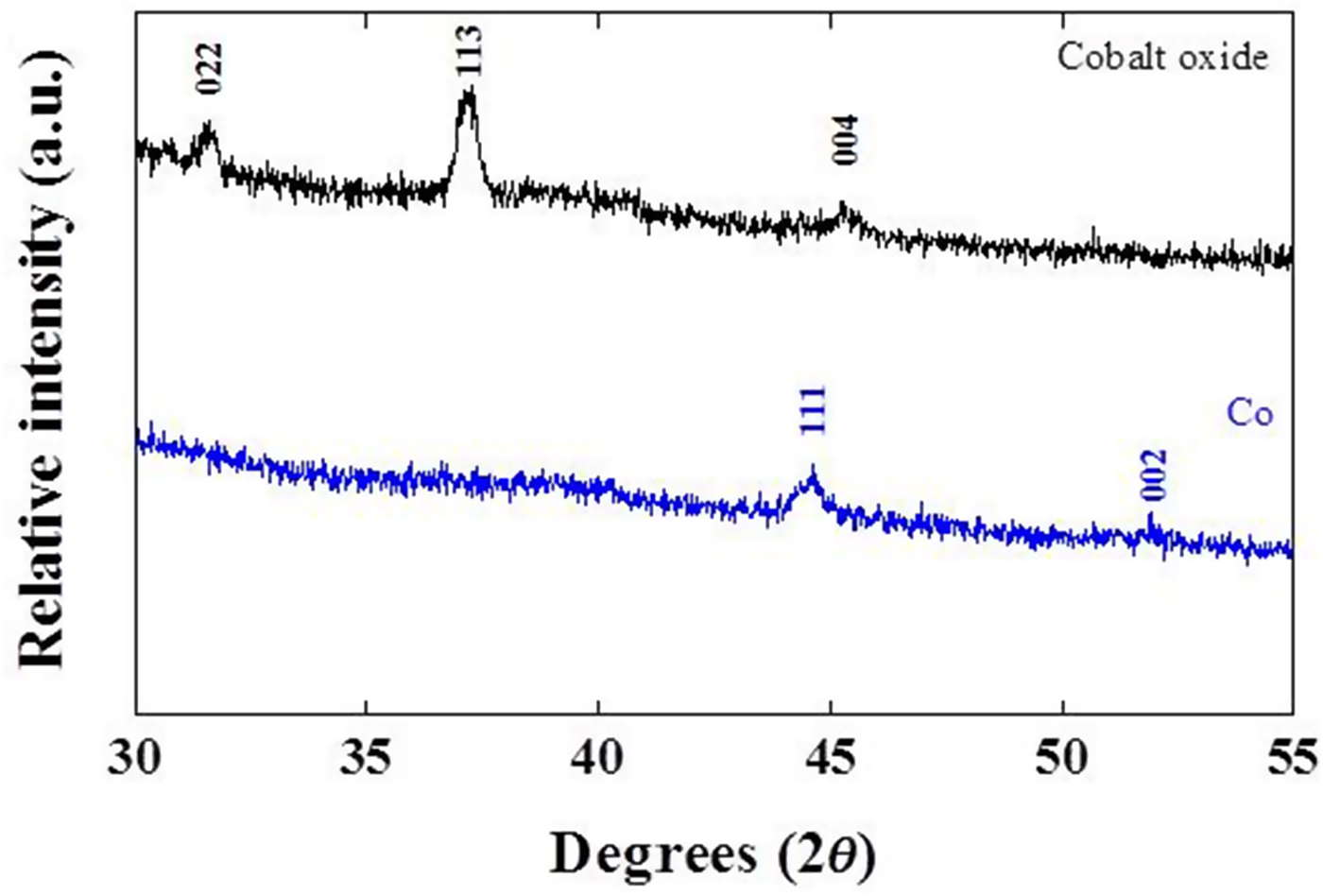
Figure 6 displays the XRD patterns of as-deposited cobalt oxide film (upper curve) and cobalt film (lower curves), after the thermal reduction process, for 2000 ALD cycles. The cobalt oxide film pattern exhibits three peaks corresponding to the planes (022), (113), and (004) which according to card No. 96-900-5888 corresponds to a spinel-like cobalt oxide.[ Reference González Montiel, Santiago-Jacinto, Díaz Góngora, Reguera and Rodríguez-Gattorno 32 ] On the other hand, the cobalt film pattern exhibits two peaks corresponding to the planes (111) and (002), which according to JCPDS Card. No. 15-0806 corresponds to a face-centered cubic (FCC) structure[ Reference Beswicka, Parastaeva, Yuranova, LaGrangeb, Dysona and Kiwi-Minskera 33 ]. The crystallite size was determined by the Debye–Scherrer's relationship[ Reference Langford and Wilson 34 ] using the Highscore Plus software obtaining 42 nm for both phases.
XRD patterns of as-deposited cobalt oxide film (upper curve) and Co film (lower curve), after the thermal reduction process, for 2000 ALD cycles.
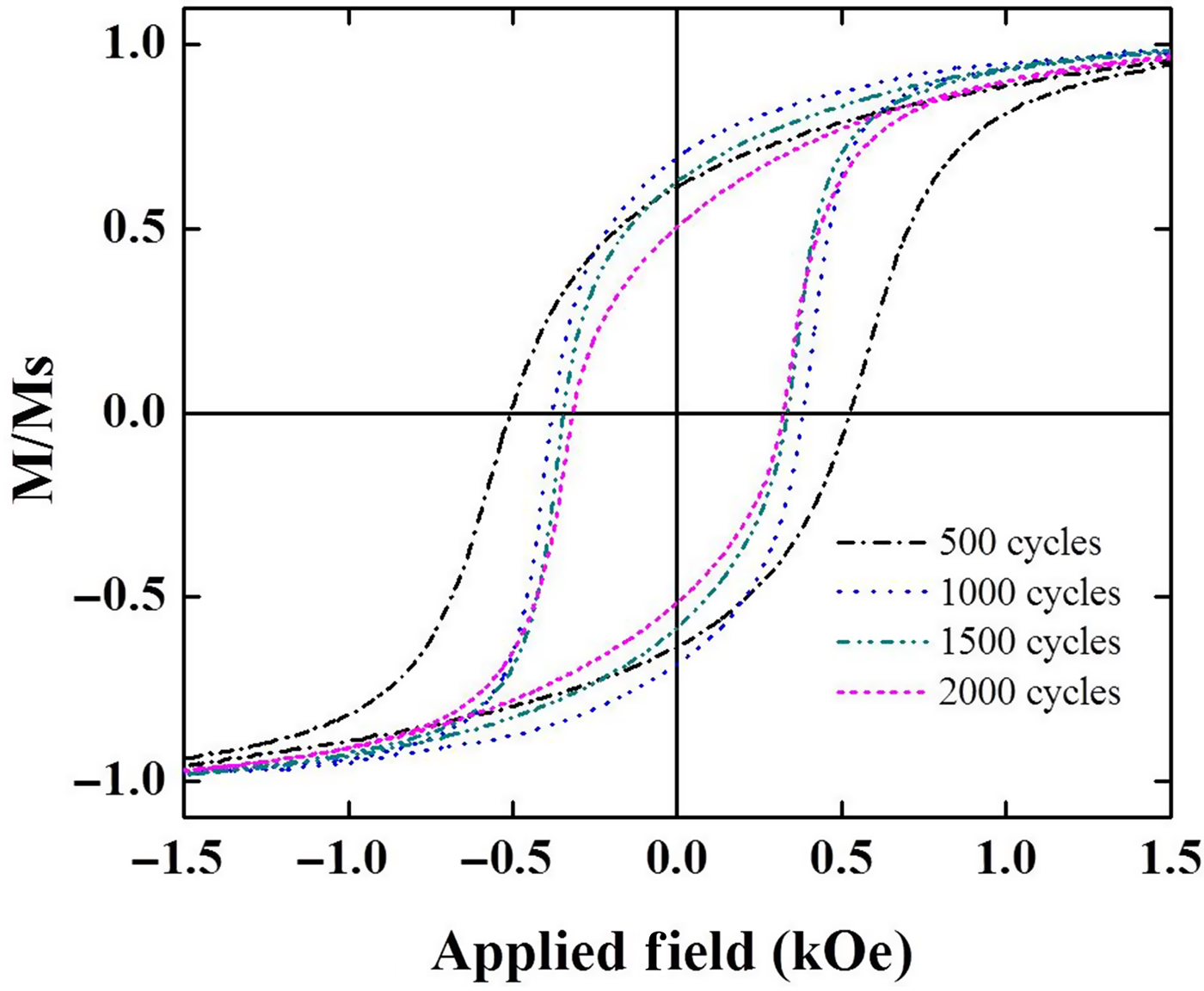
From the hysteresis curves of Co thin films measured longitudinally for different ALD cycles (see Fig. 7), we can observe that the coercivity decreases as we increase the number of cycles, according to the fact that an increase in the thickness of the films will produce a decrease in their coercivity. However, remanence exhibits a non-monotonic behavior with the number of ALD cycles.
Hysteresis curves of the cobalt thin films, after the thermal reduction process, for different ALD cycles.
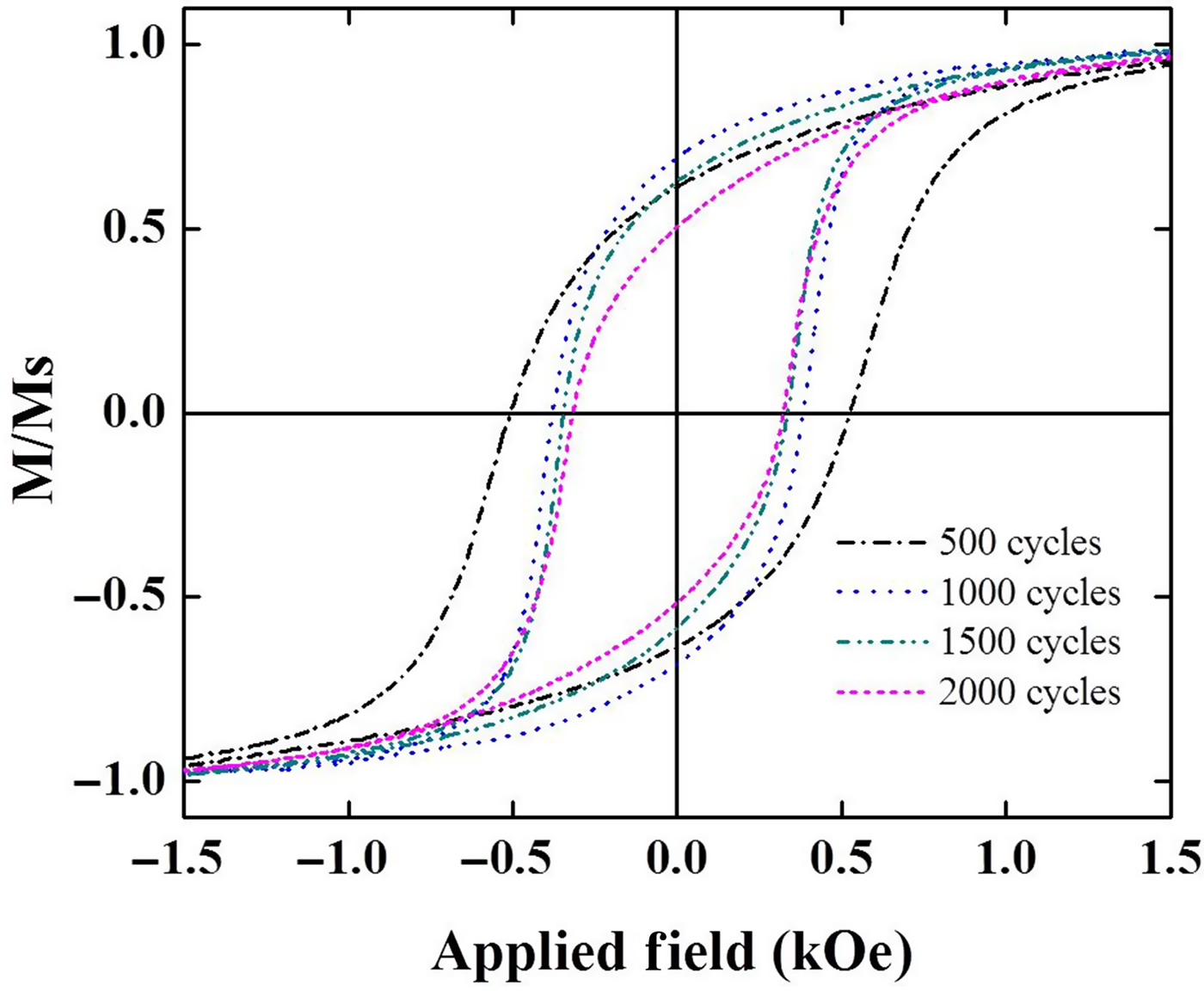
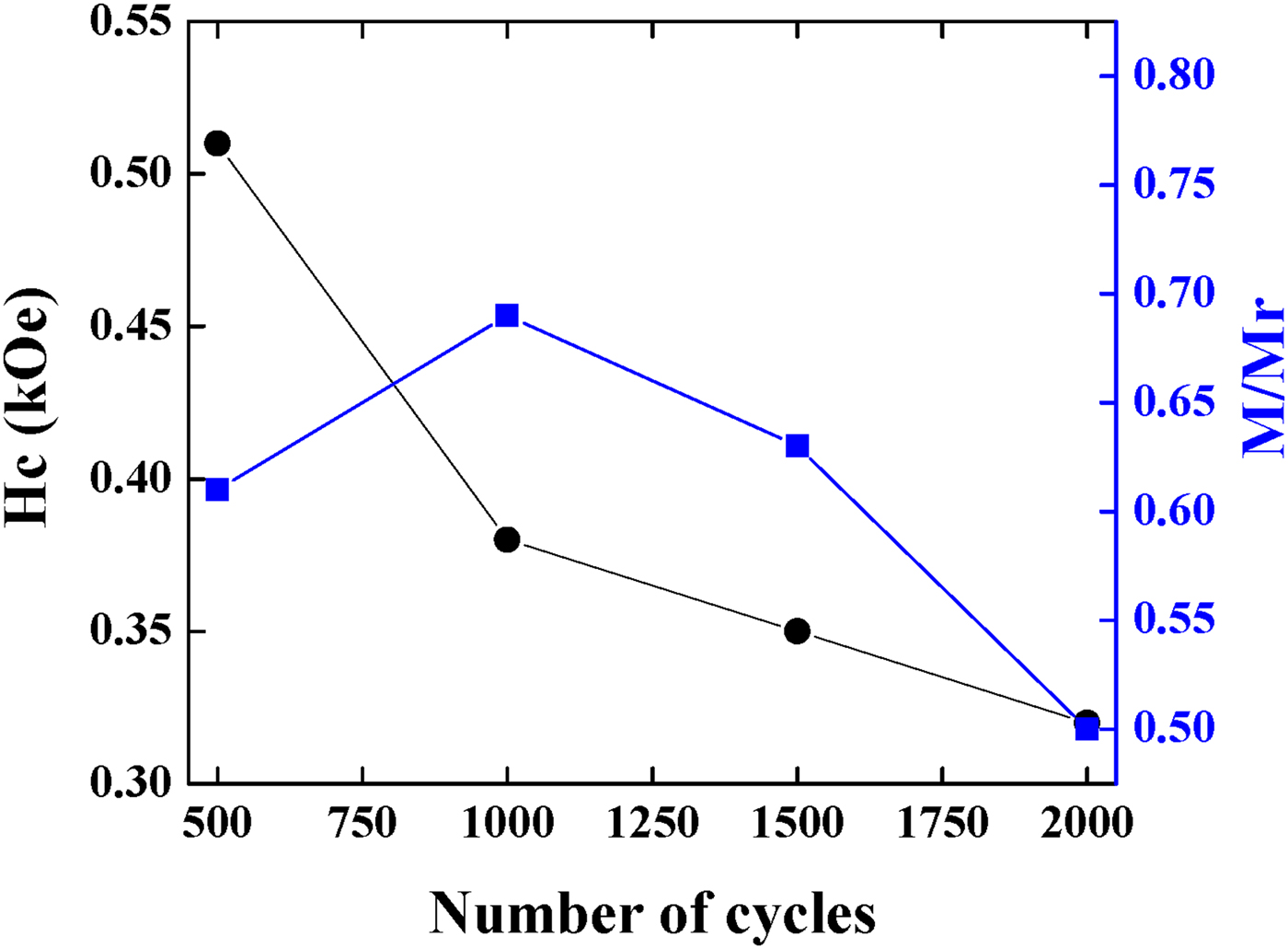
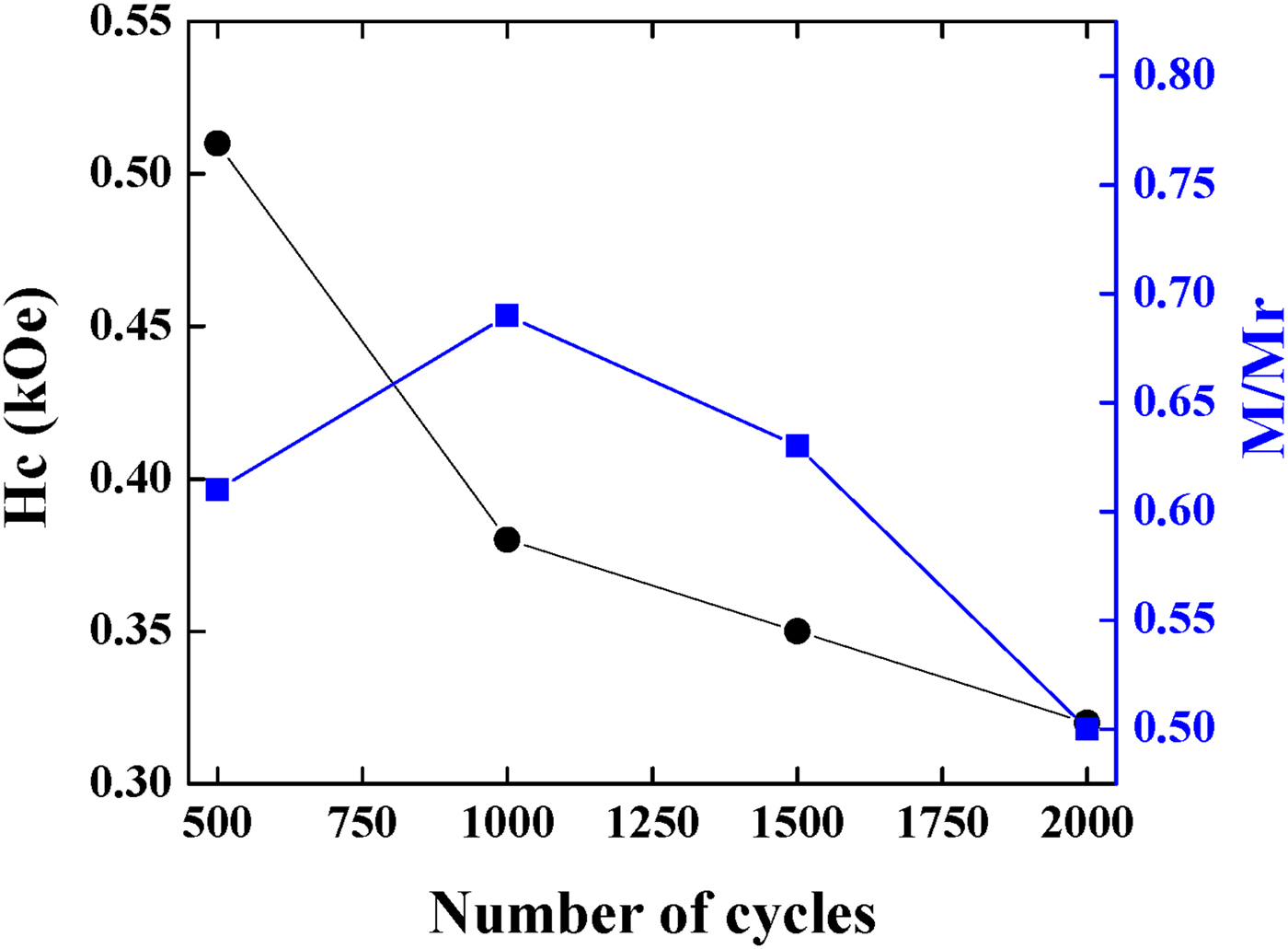
Figure 8 summarizes the coercivity and remanence for the different samples investigated. From this figure, we observe that the reduced remanence exhibits values that vary approximately between 0.5 and 0.7, presenting a maximum for 1000 cycles and a minimum for 2000 cycles. This non-monotonic behavior may be associated with the fact that films heated on substrates will experience a strain due to differential thermal expansion, that in the case of the metals heated on substrates such as Si, the thermal strain and stress are compressive.[ Reference Thompson 29 ] On the other hand, we observe that the coercivity decreases as the number of ALD cycles increases, with a maximum coercivity of 510 Oe, which is related to the fact that Fig. 3(a) shows agglomerates of nanoparticles of approximately 200 nm in diameter and, therefore, the system presents many discontinuities that pinning the movement of the domain walls, exhibiting a reversal process of magnetization different from that exhibited by the homogeneous films, where a coherent rotation is expected. Once the nanoparticles come together to form a homogeneous film, then the coercivity begins to decrease as we increase the thickness of the film. It is important to note that the measured coercivity is much higher than that exhibited by homogeneous films of similar thicknesses.[ Reference Ehsani, Jalali Mehrabad and Kameli 13 ]
Coercivity (black circles) and remanence (blue squares) of the cobalt thin films as a function of the number of ALD cycles.
Conclusions
In conclusion, we have synthesized cobalt oxide thin films with different thicknesses by ALD. These films are homogeneous, regardless of their thickness, exhibit a spinel-like structure and their crystallite size is 42 nm. On the other hand, once the samples undergo a process of thermal reduction they modify their morphology due to the process of dewetting, which favours the appearance of nanoparticles on the films. In addition, the sample passes from a spinel-like structure to a FCC structure. The coercivity decreases with increasing number of cycles, with a maximum value of 510 Oe for 500 cycles. Reduced remanence ranges from 0.5 to 0.7. These results allow us to conclude that the magnetic properties of cobalt thin films can be controlled simply by varying the number of ALD cycles, allowing their use in potential technological applications.
Acknowledgments
We thank to Cedenna's Laboratory of Electronic Microscopy and Magnetism by SEM measurements. This work was supported by the Proyecto Basal (grant number USA 1555), Fondequip (grant numbers EQM120045 and EQM140092), Fondecyt (grant number 1150952), and Basal Project (grant number FB0807).