




No CrossRef data available.
Article contents
- Extract
- Acknowledgements
- The 1929 Korean Exposition
- Spatial Alignment: Constructing the Image of “Co-prosperity”
- Overcoming Modernity
- Historical Reasons
- The 1915 Korean Products Competitive Exposition: The Contrast
- Japan's Experience of World Expositions
- Signs of Reception
- Becoming (Anti-) Colonial and National Subjects
Modeling the West, Returning to Asia: Shifting Politics of Representation in Japanese Colonial Expositions in Korea
Published online by Cambridge University Press: 18 August 2005
Article contents
- Extract
- Acknowledgements
- The 1929 Korean Exposition
- Spatial Alignment: Constructing the Image of “Co-prosperity”
- Overcoming Modernity
- Historical Reasons
- The 1915 Korean Products Competitive Exposition: The Contrast
- Japan's Experience of World Expositions
- Signs of Reception
- Becoming (Anti-) Colonial and National Subjects
Extract
The world exposition stemmed from the specific context of nineteenth-century Europe, but by the end of that century, its practice had already spread to the colonies as the imperial powers organized a number of colonial expositions. The colonial exposition was meant to represent colonialism as fundamental to the progress of both the metropole and the colony. The ideas of “progress” and “modernity” were represented in such a way that colonial subjects would acknowledge the benevolent contribution of imperial rule to the development of the colony. This historical practice attracted not only nations that had already achieved imperial status, but also nations such as Japan that were aspiring to become an imperial power.
Information
- Type
- Research Article
- Information
- Copyright
- © 2005 Society for Comparative Study of Society and History
Acknowledgements
This paper is drawn from my research funded by the Japan Foundation Dissertation Fellowship in 2001–2002, and part of my Ph.D. dissertation “The Presence of the Past: Exhibitions, Memories, and National Identities in Colonial and Postcolonial Korea and Japan” (Binghamton University, State University of New York, 2003). I would like to thank William Haver, Abidin Kusno, Chiho Sawada, Gi-wook Shin, members of the Korean Studies Program at Stanford University, and two anonymous CSSH reviewers for their comments.
Every effort has been made to secure necessary permissions to reproduce copyright material in this work, though in some cases it has proved impossible to trace copyright holders. If any omissions are brought to our notice, we will be happy to include appropriate acknowledgements on reprinting in any subsequent edition.
The world exposition stemmed from the specific context of nineteenth-century Europe, but by the end of that century, its practice had already spread to the colonies as the imperial powers organized a number of colonial expositions. The colonial exposition was meant to represent colonialism as fundamental to the progress of both the metropole and the colony. The ideas of “progress” and “modernity” were represented in such a way that colonial subjects would acknowledge the benevolent contribution of imperial rule to the development of the colony.1
See Robert W. Rydell, “Colonial Moderne,” in World of Fairs: The Century of Progress Expositions (Chicago: The University of Chicago Press, 1993), 61–91.
In Asia, Western imperial powers such as Britain and France organized the 1866 Saigon Cochin China Exhibition, the 1883–1884 Calcutta International Exhibition, and the 1902–1903 Hanoi International Exposition. See John E. Findling, ed., Historical Dictionary of World's Fairs and Expositions, 1851–1988 (New York: Greenwood Press, 1990). To commemorate its colonial rule, Japan organized the 1915 Korean Products Competitive Exposition, the 1929 Korean Exposition, the 1935 Taiwan Exposition, and the 1942 Manchuria Exposition.
In 1915, as Japan entered its fifth year of occupation of Korea (1910–1945), the Japanese colonial government, formally known as Government General of Korea (Chōsen Sōtokufu), decided that the Korean Products Competitive Exposition would be held at the locus of the subjugated Chosŏn dynasty, the Kyŏngbok Palace, in Seoul.3
The Korean title of the exposition was Sijŏng onyŏn kinyŏm Chosŏn mulsan kongjinhoe (the Korean Products Competitive Exposition in Commemoration of the Fifth Anniversary of Colonialism). Throughout this essay, Romanization of Korean and Japanese words follow the McCune-Reischauer system. East Asian names, except for those who are resident outside of East Asia or who have published in English, are written in the East Asian order, with family name first.
Shisei gonen-kinen Chōsen bussankyōshinkai hōkokusho (hereafter Hōkokusho) (A Report on the Korean Industrial Exposition), vol. 1 (Seoul: The Government-General of Korea, 1916), 2–3.
In this paper, “Korea” refers to Chosŭn dynasty (pre-colonial Korea, 1932–1910) or colonial Korea (1910–1945), depending on the context.
Ibid., 3.
Ibid., 54–56.

Figure 1. Postcard of the 1915 Korean Products Competitive Exposition
Fourteen years later, in 1929, a second grand Korean Exposition was held at the same site.8
The Korean title of the exposition was Chosŭn Bangnamhoe.
In this essay the term “co-prosperity” refers to a major rhetoric inscribed in the representations of the 1929 Exposition. I argue that even before Japan proclaimed the “Greater East Asian Co-Prosperity Sphere” as an imperial slogan in the 1940s the political ideology of co-prosperity was already seen in the 1929 Exposition. The expression of “co-prosperity” was associated with a celebration of the “Pan-Asianism,” which was spawned at least by the turn of the century. Yet, unlike earlier idealism in the discourse of Asianism, the “Asian co-prosperity” of the 1929 Exposition showed Japan's more pragmatic and strategic considerations in its preparation for further advancement into Asia in the 1930s and 1940s.
Editorial, “Hakurankai Ihō,” Chōsen (Seoul: Government General of Korea), vol. 173 (1929), 349.
One reader of this paper noted the importance at this time of internal conflicts between the Japanese colonial government and its central government, and that this tension might have been symptomatically expressed in visual representation of the colonial exposition. I do not dismiss this possibility, but the exposition in the colony should also be seen as an arena for conflict resolution, at least at the symbolic level.

Figure 2. Postcard of the 1929 Korean Exposition
This essay explores the roles of the Japanese colonial exposition in Korea in registering changes in the political culture of Japanese colonialism. I examine how the 1929 Korean Exposition sought to restructure the imagery of “Korea,” an effort that was concomitant to the expansion of Japanese imperial power in Asia. I argue that the 1929 Exposition provided Japan with a cultural ground on which to re-configure its identity in relation to Asia as well as to the West, and that it simultaneously anticipated its further expansion to Asia. I also argue that the representation of Japanese and Korean “co-prosperity,” the grounding principle of the 1929 Exposition, was aimed at forming a new colonial subject that would sustain the new imperial politics of Japan toward Asia. I trace the transformation of the colonial mode of representing Korea through a reading of the spatial and architectural order of the preceding 1915 Korean Products Competitive Exposition. I then move further back to the nineteenth century to discuss Japanese participation in the world exposition to show the ways in which Japan's experience in the West structured the politics of expositions in its own colonies. I conclude by considering some of the Korean responses to the exposition and suggest that this modern cultural spectacle, organized by the Japanese colonial government, ironically contributed to shaping the formation of nationalist consciousness among Korean elites. At issues here is thus how the colonial exposition produced not only an arena of colonial dominance but also, more importantly, an agency of the colonized. I attend to the “subterfuges, paradoxes, and distortions” of colonial power, for, as Gyan Prakash has argued, a failure to identify such contradiction will only produce a history of the colony which is “nothing but a record of submission (or opposition) to trajectories charted by this [colonial] mastery.”12
Gyan Prakash, Another Reason: Science and the Imagination of Modern India (Princeton, N.J.: Princeton University Press, 1999), 19.
Over the last two decades a number of works have appeared dealing with the subject of expositions. Central to these studies have been how the world exposition exposes the political cultures of Western imperial power and their impacts on political imaginations in colonial territories. The works of Carol Breckenridge, Zeynep Celik, Annie Coombes, Paul Greenhalgh, and Robert W. Rydell have opened up critical issues regarding the relationship between colonial power and cultural representation in world expositions.13
See, for example, Tony Bennett, The Birth of the Museum: History, Theory, Politics (London and New York: Routledge, 1997); Carol A. Breckenridge, “The Aesthetics and Politics of Colonial Collecting: India at World Fairs,” Comparative Studies in Society and History 31, 2 (1989), 195–216; Zeynep Celik, Displaying the Orient: Architecture of Islam at Nineteenth-Century World's Fairs (Berkeley: University of California Press, 1992); Annie E. Coombes, Reinventing Africa (New Haven: Yale University Press, 1994); Paul Greenhalgh, Ephemeral Vistas: The Expositions Universelles, Great Exhibitions and World's Fairs, 1851–1939 (Manchester: Manchester University Press, 1988); John M. MacKenzie, Propaganda and Empire: The Manipulation of British Public Opinion, 1880–1960 (Manchester and New York: Manchester University Press); Robert W. Rydell, All the World's Fairs, 1851–1939 (Manchester: Manchester University Press, 1988); Robert W. Rydell, World of Fairs: The Century of Progress Expositions (Chicago: University of Chicago Press, 1993).
Furthermore, few studies of colonial expositions have dealt with their effects on the subject formation of the colonized. One exception is Timothy Mitchell's seminal article, “The World as Exhibition,” in which he discusses the significant role played by the exhibitions' visual representations in constituting the subjectivity both of the European and of the Egyptian.14
Timothy Mitchell, “The World as Exhibition,” Comparative Studies in Society and History 31, 2 (1989), 217—36.
Gyan Prakash, “Staging Science,” in Another Reason, 17–48.
With some exceptions, postwar Japanese scholarship has been reluctant and resistant to the inclusion of former territories of the Japanese Empire in the study of modern Japan. Issues surrounding colonial expositions set up in former Japanese territories such as Korea, Manchuria, and Taiwan have largely been excluded from discussion. This colonial blindness in Japanese scholarship has hampered the understanding of the effects Japanese colonial expositions had on the formation of modernity in Japan. In his influential volume Hakurankai no Sejjigaku(The politics of exposition: The modern gaze) Japanese scholar Yoshimi Shunya has written about the effects of Western world expositions on the construction of Japan's modern and imperial identity.16
Yoshimi Shunya, Hakurankai no Sejjigaku: Manazashi no kindai (The politics of exposition: The modern gaze) (Tokyo: Chūokōronsha, 1992); and “Bunmei no me, mikai no me: Chicago bankoku to nihonkan (Eye of the civilized, eye of the un-civilized: Chicago exposition and Japanese pavilion), in, Yoshida Mitsukuni, ed., Bankoku no nihonkan (The Japanese pavilion in the world exposition) (Tokyo: INAX Gallery, 1990), 45–52. For an English work on Japanese expositions, see Angus Lockyer, “Japan at the Exhibitions, 1867–1970” (Ph.D. Dissertation, Stanford University, 2000).
For a study of Korean expositions, see Chŏn Kyŏng-su, “Han'guk Bangmulgwan ŭi singminjuŭi chŏk kyŏnghŏm kwa minjokjuŭi chŏk silchŏn mit segyejuŭi chŏk chŏnmang (Colonial experience, national practice, and global vision of the Korean museum),” in Han'guk ilryuhak ŭi sŏnggwa wa chŏnmang (The outcome and perspective of Korean anthropology) (Seoul: n.p., 1998), 661–716; Mok Su-hyŏn, “Ilche ha bangmulgwan ŭi hyŏngsŏng kwa kŭ ŭimi (The genesis of the museums of Korea during Japanese imperialism)” (MA thesis, Seoul National University, 2000); and Choe Sŏk-yŏng, Han'guk Kŭndae Bangnamhoe wa Bangmulgwan (Korean modern expositions and museums) (Seoul: Sŏgyŏng, 2001).
For a study of interrelationships between colonialism, modernity, and nationalism in Korea, see Gi-wook Shin and Michael Robinson, eds., Colonial Modernity in Korea (Cambridge, Mass.: Harvard University Press, 1999). For a discussion of colonialism and modernity in Korea, see Kim Chin-gyun and Chŏng Kŭn-sik, eds., Kŭndae juche wa singminji kyuyul kwŏlyŏk (Modern subject and colonial disciplinary power) (Seoul: Munhwa kwahaksa, 1997).
In this investigation of colonial discourse and its political effects on the subjectivity of the colonized, I am concerned specifically with the functioning of the spatial and visual grammar encoded in the built forms of the expositions. I consider visual representations to be crucial to the study of Korean society in the early twentieth century. Given that the majority of Koreans possessed a low level of textual literacy and were denied literary culture,19
According to the 1930s official record, the literacy rate in the Korean language (Hangeul) was 15 percent and for Japanese language 0.03 percent. The literacy rate of 1910s and 1920s was lower still. Thus it is has been difficult to discover how Korean non-elites received the exposition, based on their own texts. For a study of Korean literacy rates during colonial period see No Yŏng-taek, “Ilchesigi ŭi munmaengyul chui,” Kuksagwan nonchong 51 (1994).
See Michael Robinson, Cultural Nationalism in Colonial Korea, 1920–25 (Seattle: University of Washington Press, 1988); and “Mass Media and Popular Culture in 1930s Korea: Cultural Control, Identity, and Colonial Hegemony,” in, Suh Dae-sook, ed., Korean Studies (Honolulu: University of Hawai‘i Press, 1994), 59–82.
The visual representations of colonial expositions were instrumental to the formation of knowledge and power. Yet, the study of early twentieth-century Korean society has generally neglected topics of vision and space. Social scientists have remained largely indifferent to questions of visuality, while dominant historians of art and architecture have often limited discussion to their own disciplinary boundaries, even though visual production and consumption do not take place in isolation. Visual culture, as Gillian Rose points out, should be analyzed in a cross-disciplinary fashion.21
Gillian Rose, Visual Methodologies: An Introduction to the Interpretation of Visual Materials (London: Sage Publications, 2001).
See W.J.T. Mitchell, Picture Theory: Essays on Verbal and Visual Representation (Chicago: Chicago University Press, 1994); and “What Do Pictures Really Want?” October 77 (1996), 71–82.
See John Berger, Ways of Seeing (London: British Broadcasting Association and Penguin, 1972).
See Stuart Hall, Representation: Cultural Representations and Signifying Practices (London: Sage, 1997).
The 1929 Korean Exposition
On 1 October 1929, the twentieth anniversary of the Japanese annexation of Korea, the opening ceremony for the Korean Exposition was held at the former palace court, Kŭnjŏngjŏn, attended by Kaninnomiya Kotohito, a relative of the Japanese Emperor. As he appeared on the stage, he was saluted with deep bows from an audience of some two thousand people and greeted by the Japanese naval band playing their national anthem, “Kimigayo.” The ceremony reached its climax as Saitō Makoto, the Governor-General of Korea, opened the event by announcing, “The purpose of the exposition is to show the progress of Korea under Japan.”25
“Hakurankai Ihō,” Chōsen, 346–48.
Ibid., 325–27.
Chōsen hakurankai Keijō-kyōkai hōkokusho (The Korean Exposition Kyŏngsŏng cooperation report) (Seoul: Kyŏngsŏng hyŏphoe, 1930), 98–99.
Ibid., 289–89.
What is remarkable is the idea that the Exposition is an emblem of “Japan-Korea cooperation,” which gathered “the spirit of the Far East” in order to prosper on its own. The collaboration between Asian countries under the leadership of “homeland” Japan was indeed a frequent theme found in many official speeches and reports of the colonial government at that time. Yet, I would argue that the visual and spatial representations of the exposition provided a most powerful means of communicating with the visitors, who numbered over a million, the majority of them illiterate.29
Among the million visitors, about half were admitted free. See Chōsen hakurankai Keijō-kyōkai hōkokusho, 194–97.
Spatial Alignment: Constructing the Image of “Co-prosperity”
The apparatus of 1929 Exposition—exhibits, exhibition spaces, and architectural forms—created both a narrative of display and a cognitive experience of Japan's new politics of the colony. Through the spatial and architectural order of the exposition, Japanese colonial authorities offered to the Korean public a certain aligned way of seeing, the aim of which was to form a popular consciousness of the commonalities and collective identities of Japan and Korea. The 1929 Exposition located in the heart of the Korean palace compound presented the idea of “harmony between Japan and Korea” (naisen yuwa).30
From the beginning of the Japanese annexation of Korea in 1910, the fundamental colonial policy was to assimilate Korea into Japan. The doctrine of “assimilation” lies in the theory of “Japan-Korea identical ancestry (naisen dosoron),” which advocated political unification of Japan and Korea on the basis of their cultural and racial affinity. Based on this theory, Japan's annexation of Korea was seen as a restoration of the “original” relationship that aimed to place Korea on the same platform of civilization as that of Japan. One expression of this colonial ideology of assimilation was the “harmony between Japan and Korea” (naisen yuwa).” Later in 1930s, the ideology was strengthened to the notion of “Japan-Korea, one body” (naisen ittai). However, the assimilation policy was an impossible project for it hinged on the presumed and permanent existence of the “uncivilized” colonial subjects. Indeed, far from its stated rationale, the assimilation policy was never realized in practice. It was a rhetorical device rather than a practical guide to colonial policy. Assimilation of Korea had nothing to do with extending Japanese civil liberties and political rights to Koreans, but was merely an accelerated effort to inculcate Japanese values among the colonial subjects.
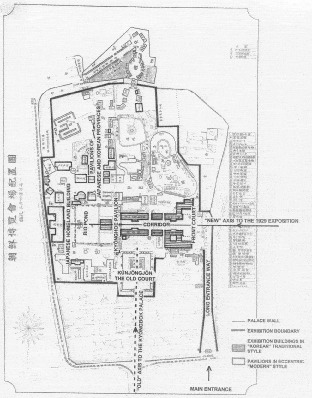
The 1929 Korean Exposition was located inside the palace compound. The entrance to the Exposition was at the east side of the palace. I suspect the reason for putting the entrance at the east side, rather than the center-front, of the Kyŏngbok palace compound) is that the Government-General Headquarters (completed in 1926 and demolished by the South Korean government in 1995) already occupied the center-front. More importantly, the east entrance allowed the formation of east-west axis, which was crucial to the Exposition's spatial politics.
The main exhibition buildings at the corridor were the South and North Industrial Buildings, the Rice Building, the Korean Province Exhibition Building, and the Art, Craft, and Education Building (see “Hakurankai Ihō,” Chōsen, 327).
The original layout of the Gyeongbok Palace was similar to the imperial palace of China, where buildings are symmetrically laid out following the north-south axis. See Hong Sun-min, Uri Kunggwŏl ŭi yŏksa (A history of our palace) (Seoul, Korea: Chŏngnyŏnsa, 1999). For a discussion of the east-west axis in traditional Japanese spatial organization, see Edwina Palmer, “Land of the Rising Sun: The Predominant East-West Axis among the Early Japanese,” Monumenta Nipponica 46, 1 (Spring 1991), 69–90.
The corridor that lined these exhibition buildings thus functioned as a kind of “processional space” (see the small picture in Fig. 2). It generated a field of force that led visitors to a big pond on which stood the Kyŏnghoe pavilion, a landmark building of the Korean royal palace.34
The corridor was 30 meters wide and a 160 long, and the pond was 113 by 128 meters.
The Korean architecture was turned into a “monument” built to establish recognition. Henri Lefebvre argued that monuments have a function to establish membership. See his The Production of Space (New York: Basil Blackwell, 1991), 220.
“Hakurankai Ihō,” Chōsen, 327. The visual focus on Korean culture was replayed inside the exhibition space. The interiors of the exhibition buildings were dominated by Korean decorative patterns. For example, at the entrance of the Rice Building was displayed an electrically operated model of three cheerful Korean farmers dancing in traditional clothes.

Map 1. Analytical site plan of the 1929 Korean Exposition (with author's notations)

Figure 3. Visitors at the Long Entrance Way to the 1929 Korean Exposition
Yet the Kyŏnghoe pavilion, the symbol of “Korea” in the 1929 Exposition, while strategically located at the center of the axis, was perhaps not the most significant building. Across from the pavilion, at the west end of the axis, stood the Japanese Homeland Building (Naichi-kan), monumental in its presence.37
The Japanese Homeland Building refers to Naichi-kan in Japanese. The term naich (inner) made sense only when Japan was overseas, such as in Korea. In a strange way, the name of Naichi-kan suggests a distance from the colony and shows Japan's ambiguous association with Korea.
Access to the Japanese Homeland Building was thus visually mediated by the Kyŏnghoe pavilion, which did not in any way block the Japanese Homeland Building. Instead, this open pavilion on stilts actually opened up a view to the Japanese Homeland Building across the pond. Standing at the Kyŏnghoe pavilion and its temporary bridge over the pond, one could view both the Japanese Homeland Building on the west side and the main exhibition avenue on the east side.
Overcoming Modernity
What we have seen in the 1929 Exposition to this point is a rearrangement of the spatial and architectural order of the Korean palace. The Exposition recreated an organization of space that acknowledged the contribution of “Korea local culture” on the road to modernity. Behind the construction of Korean tradition in the spatial and architectural layout of the Exposition, however, there is another spatial organization that confirms another realm of the political ideology of Japan-Korea collaboration. To grasp this, we need to continue following the route of the 1929 Exposition to the next section, where the formal and spatial organization was significantly different.
After passing the Japanese Homeland Building, visitors were led to an exhibition ground marked by the scattered pavilions of the cities and provinces of Japan and Korea. As can be seen in the section of “Pavilions of Korean and Japanese Provinces” in the site plan (Map 1), here Japanese pavilions were spatially intermingled with those of the Korean provinces. The two countries seemed to cohabit, suggesting a spirit of coexistence. Also significant in this section is the architectural form of the pavilions, which are in stark contrast to the previous section running through in the east-west axis. If axiality, formality, and conservatism prevailed in the spatial and architectural order of the previous section, here architecture was liberated from any strict traditional codes. Indeed, all buildings in this section were fashioned in a playful architectural form with no identification with regional identity (Fig. 4). Many of them were fashioned in Art Deco, considered to be the period's most dynamic architectural style in its artistic expression, and characteristic of the interwar period in Europe and America. According to an architectural historian, Art Deco was the architecture of abstraction, “of ornament, geometry, energy, retrospective, optimism, color, texture, light and at times, even symbolism (of the modern age).” This style embodied the spirit of “something new and different, something exciting and unorthodox, something characterized by a sense of joie de vivre . . . .”39
Patricia Bayer, Art Deco Architecture: Design, Decoration, and Detail from the Twenties and Thirties (New York: Harry N. Abrams, 1992), 88, 12.
See Nezar Al Alsayyad, ed., Forms of Dominance: On the Architecture and Urbanism of the Colonial Enterprise (Aldershot: Avebury, 1992).

Figure 4. A Korean Pavilion in eccentric “art deco” style: Kyŏngsang-bukdo Pavilion
The 1929 Exposition seemed to translate this spirit of Art Deco in the pavilions of the provinces. The expression of architectural forms in the Exposition was perhaps even more playful than the playfulness of Art Deco. In the context of the 1929 Exposition, this sense of liberty and experimentation expressed the capacity of Japan and Korea to engage with modernity on their own terms. The architectural styles developed in the Exposition were so unbound that they seemed to aim at overcoming the West.
Historical Reasons
The emphasis on the restoration of Korean cultural imageries in the 1929 Exposition no doubt reflected general Orientalist attitudes of Japan toward its Korean brother, but the substantial funds invested in the Exposition also suggests Japan's political and economic necessities. We can suggest at least four historical reasons to account for the changes in Japanese modes of representing Korea. In the first place, the “celebration” of Korean culture in the 1929 Exposition was brought about by the further integration of Korea into the capitalist economy of Japan. After World War I, Japan had been transformed into a creditor nation with abundant capital and opportunities for employment. Soon, however, in the 1920s, Japan entered a period of economic stagnation, a crisis that demanded the opening up of Japan's colonies as new markets. The 1929 Exposition could therefore be seen as one Japanese effort to turn Korea into a space of consumption in order to counter its own long economic recession.41
For a study of the colonial history of Korea, see Carter J. Eckert, ed., Korea Old and New: A History (Cambridge, Mass.: Harvard University Press, 1990); and Ramon H. Myers and Mark R. Peattie, eds., The Japanese Colonial Empire, 1895–1945 (Princeton, N.J.: Princeton University Press, 1984).
The second reason was a change in the Japanese colonial mode of governance in Korea. This created the need to produce obedient colonial subjects of Japan by reinventing cultural imageries of the colonized. The revival of Korean tradition was concomitant to the implementation of a new colonial approach known as Cultural Policy, which replaced the policy of coercive assimilation that had operated in the first decade of Japanese colonial rule. The change of policy was partly the result of the first massive anti-Japanese demonstrations in Japanese colonial history, which took place in 1919. The new Governor-General, Saito Makoto, saw the protests as a reaction of Koreans to the military based assimilation policy, and responded by setting up the new Cultural Policy, intended to change the image of the colonial power and to make control of the colony more efficient. The Cultural Policy was a more subtle policy of colonialism that took seriously, or more accurately, sought to revive, Korean culture as the basis of colonial politics of cooperation. With the launching of the new policy, Korean culture was extensively studied by colonial institutions. The 1929 Exposition was thus a spatial representation that made visible the shift in colonial cultural policy from the one based on coercion to the one based on pacification. It was a manifestation of a cultural strategy, represented publicly through exposition to ensure the peace and security of the colony in a more efficient and popular way.
Third, identification with the culture of the colonized came at a time when Japan was preparing its expansion into China. By the 1930s, Japan was persuading the Koreans to assume a major role in its war with China. To insure loyalty and participation in Japanese expansionism, Japan carried out the cultural project of collaboration. Under the slogan of “Japan and Korea, one Body” (naisen ittai) Koreans were mobilized as imperial subjects for the “Greater East Asian War.”42
By 1937, the cultural renaissance of Korea diminished as a result of the outbreak of the war between Japan and China, and the increasing efforts of Japan to coerce Koreans into the war.
The final reason takes us deeper into the geo-culture of the world. Prior to the 1920s, Japan identified itself with the West and conceived “Westernization” quite straightforwardly as a means of conquering Korea. After its victory in the Russo-Japanese war, in 1905, Japan had seen itself as one of the imperialist powers, equal to those of the West. However, Japan's engagement with the “West” was filled with ambivalence, and its desire to be seen as equal to Western powers remained unfulfilled. By 1923, with the Washington Naval Treaty, it had become clear to Japan that no matter how well it emulated the West, it would never be considered its equal. Following the end of the Anglo-Japanese Alliances, there was less and less open celebration of Western cultural forms as a symbol of power, and more and more efforts to create alternative legitimacies. The distancing of Japan by the object of her desire, the West, eventually led Japan to revise its cultural association into one based on “Asia.” By the 1930s, the Japanese state had called for the liberation of Asia from Western powers. To accomplish this task of decolonization, the Japanese colonial state took on the appearance of a benevolent guardian that promoted “Asian” tradition.43
See Yumiko Iida, “Fleeing the West, Making Asia Home: Transpositions of Otherness in Japanese Pan-Asianism, 1905–1930,” Alternatives 22 (1997), 409–32.
The 1915 Korean Products Competitive Exposition: The Contrast
The 1915 Exposition was aimed at rationalizing Japanese colonialism by showing the industrial and cultural progress of Korea under the first five years of colonial rule.44
The 1915 Exposition was the first cultural event organized by the Japanese colonial government on a grand scale. It was also the first grand cultural event open to the public in Korean history that exhibited modern technologies, commodities, and entertainments imported from the modern West. The Exposition received a total of 1,164,085 visitors (727,173 Koreans and 299,591 Japanese). It exhibited products and cultural objects, and offered entertainments such as a water fountain, aquarium, restaurants, shops, a music hall, and a theater. At night light bulbs decorated the exposition boulevard, the entrance gate, and the exhibition buildings (see Hōkokusho, 270–73).
Since the decline of Korea from ancient times, . . . the country's destiny was in danger. Koreans had been suffering, its industry had deteriorated, and its land had been ruined. In 1910, the Japanese Empire set up the Government-General of Korea, and . . . for the first time, the spirit of the country [Korea] was restored. However, it is not easy to awaken people from a hundred years of slumber. Under the blessing of the [Japanese] Emperor, people have now realized the need to cultivate fields, plant trees, open ports, disseminate education, and improve morality. By the order of the Emperor, the Government-General has accomplished its colonial mission for the last five years. . . . It is worthwhile to compare the present achievement with the past for the difference is now self-evident. Therefore, the Government-General has organized the Korean Industrial Exposition.45
Hōkokusho, 2–3 (my emphasis).
The underlying narrative of “Civilization and Enlightenment” was most explicitly inscribed in the Exposition's spatial and architectural organization.46
The Japanese colonial ideology of “Civilization and Enlightenment” echoed the same didactic slogan of the political leaders and intellectuals of early Meiji Japan who sought to build up the modern Japanese nation-state. This idea was also shared by the Korean reformers at the end of the nineteenth century who sought to preserve their country's autonomy. For a discussion of the role and effects of the discourse of civilization and enlightenment in Korea at the end of the nineteenth century, see Andre Schmid, “The Universalizing Winds of Civilization,” in Korea Between Empires, 1895–1919 (New York: Colombia University Press, 2002), 23–54.
The 1915 Exposition, located in the frontcourt of the Kyŏngbok Palace, changed the visual focus of the city as well as the function of the place (Map 2 and Fig. 5). The “sacred” palace compound was turned into a commercialized exhibition ground, symbolically dislodging the authority of the five-hundred-year-old Korean Chosŏn dynasty. Entering the Palace through the central gate, the Kwanghwamun, visitors saw only a series of new monumental buildings in European architectural style. The First Exhibition Building, designed in what has been called a “Renaissance plus Secession style,” stood in front of the Kyŏngbok Palace, blocking the view of what had been the landmark of Seoul and a key symbol of the Korean monarchy.47
Hōkokusho, 54–56.
The Exposition displayed about 40,000 industrial and cultural objects produced by both Korean and Japanese residents in Korea, and exhibited some 8,300 products from Japan and a few from its twenty-year-old colony, Taiwan. The products made by the Koreans and Japanese were displayed side-by-side, thus setting up a visual comparison. For instance, in the First Exhibition Building, the Exposition's largest, products were classified by type and region. They were labeled and aligned in rows to show the difference between products made by Koreans and Japanese.48
The First Exhibition Building displayed agriculture, colonial settlement, mining, and aquatic industry (Hōkokusho, 6–7).

Map 2. Analytical site plan of the 1915 Korean Products Competitive Exposition (with author's notations)

Figure 5. The 1915 Exposition, dominated by a Western-style exhibition building that blocked the view of Kyŏngbok Palace
This developmentalist narrative was most visible in the exhibition technique of the Reference Building and the Machinery Building. The Reference Building was dedicated to the products from Japan and Taiwan, and the Machinery building displayed the most advanced machines made in Japan.49
There were 8,300 exhibits in the Reference Building, largely from Japan. Only 430 items were from Taiwan (Hōkokusho, 156–69).
It is important to note, however, that the hierarchical comparison between Japan and Korea was made possible by the image of the West. The imageries of Renaissance and Baroque architecture pointed to an unproblematic identification with the West. Western imageries were mobilized to indicate the advance of Japan and the developmental trajectory of “backward” Korea. To make sense of why Japan adopted a mode of representation oriented toward a Western facade, we need to look still further back in time to Japan's experience of and participations in previous Western world expositions.
Japan's Experience of World Expositions
Particularly since the Meiji Restoration in 1868, Japan had showed a great enthusiasm for expositions and had participated in almost all the major international ones. The new Meiji government officials sought to consolidate its image as a civilized and modern nation at home and abroad, and they found the European world expositions provided a model for them to represent their proclaimed goal of becoming a “rich nation and strong army.” Considering that their main purpose of participating in expositions was to encourage the modernization of its country, one would expect Japan to display its most current industrial machinery and products. However, curiously, throughout Japan's participations in Western expositions, Japan had focused on a display of its traditional arts and crafts. This self-representation of traditional Japanese identity was also expressed in the style of its pavilions. In all the world expositions in which Japan participated, its pavilions were of “traditional” architectural style.50
Japan displayed the orientalized style of Japanese gardens, buildings, and temples in about forty different world expositions, ranging from the 1867 Paris Exposition Universelle until the 1937 Paris Exposition. See Yoshimi Shunya, “Bunmei no me.”
During this time, when Japan was self-orientalizing abroad, the use of Western style architecture was extensive and consistent in the major Japanese cities. Already in the 1890s, Western imageries marked the landscape of Tokyo. One illustration of this is the 1909 Akasaka Detached Palace, planned in 1896 for the crown prince for the thirtieth year of Meiji Emperor. According to William Coaldrake, “The Palace building itself is unashamedly Neo-Baroque, emulating the decorative exuberance of Versailles while fastidiously observing the axial symmetry of 19th century German palaces . . . it rises two stories in height to a discrete copper-tiled roof. The central structure pays homage to classical Greece. . . . its two wings spread out on each side, reaching forward at the ends in a graceful arc. The granite walls and lines of pedimented windows are a model of order and symmetrical balance. It is this same sense of order and balance which permeates the official architecture of the Meiji period, from its palaces to post office.” See William Coaldrake, Architecture and Authority in Japan (London: Routledge, 1996 [quote from pp. 213, 215). In the domestic expositions in Japan, for example in the 1907 Tokyo Industrial Exposition, the main exhibition buildings were all built in Western architectural style.
Japan's impulse to stage its “others” as a yardstick for Japan's own modernity can be seen in subsequent expositions Japan participated in abroad. At the end of the nineteenth century, after Japan had won its wars with China and Russia, it had gained sufficient self-confidence to represent its imperial power to the West. In the 1893 Chicago World's Columbian Exposition, Japan discarded its previous Oriental themes and instead promoted its image as an emerging imperial power in Asia. The Japanese official report on the Columbian Exposition paid full attention to the location of Japanese exhibits, which were in the same aisle and allotted the same space as Britain, France, Germany, Austria, Belgium, and the United States.52
See Yoshimi, Hakuranaki no Seijigaku, 207–12.
At this time, Korea was already represented as Japan's colony. See, Hotta-Lister, The Japan-British Exhibition of 1910 (Japan Library, 1999), 83–86.
This was not the first time Japan had displayed people from its colonies; Japan brought Ainus from Hokkaido to the 1904 St. Louis Exposition.
Between the 1870s and the 1940s more than a hundred expositions were held in Tokyo, Osaka, and other major cities in Japan.
For instance, in the 1903 Fifth National Industrial Exhibition held in Tokyo, Taiwan was represented in a Pavilion of traditional form in contrast to the Western-style Japanese exhibition buildings. The Taiwanese pavilion displayed two aspects of Taiwan: old Taiwan, represented by indigenous producers, and new Taiwan, as Japan's colony represented by industrial and manufactured products. See Daigokai naikoku kangyōten: Jūyō bussan annai(The Fifth National Industrial Exhibition: Information for major exhibits) (Tokyo: Kokkosha, 1903), 689–90. Since the 1903 Exhibition, the display of objects, people, and pavilions of the colonies had become the most popular attraction in Japanese expositions.
As we have seen, a decade later Japan had dislodged its symbolic identification with the West and associated itself with “Asian civilization,” as displayed in the 1929 Exposition. What I am suggesting is that the 1929 Exposition was more than a mere expression of the changing political interests of the Japanese colonial regime. The new mode of visual and spatial technology, which articulated power relationships between the imperialist metropole and the colony, was inseparable from Japan's experience in Western expositions, which Japan redeemed through controlling its own colonies. The new representation of the 1929 Exposition, a reversal of the mode of the 1915 Exposition, represented a Japanese appropriation of what they had experienced in Western expositions.
However, this transposition also belongs to an alternative form of Japanese imperial life and thought that was emerging by the 1930s. This alternative form was associated with self-conscious national approaches to Asian heritage and was tied up with the Pan-Asian ideology of co-prosperity. It was predicated upon a shift of discourse from one that identified Japan with the West to one that formed an association with Asia. The 1929 Exposition opened a path on which Japan could expand to integrate Asia under the banner of “Asian Co-prosperity.” The 1929 Exposition can thus be seen to have opened the way for the 1940s' cultural narrative of Japan's Pan-Asianism, expressed in the imperial slogan of a “Greater East Asian Co-Prosperity Sphere.”
Signs of Reception
What I have shown so far is that the 1929 Exposition was grounded in the rhetoric of Japanese-Korean cooperation. This discourse was directed at forming a new colonial subject that would sustain a new imperial politics toward Asia. It is important, therefore, to think about how the colonial exposition might have contributed to the formation of colonial elites' consciousness. The exposition might have had unintended effects on how Koreans thought about their social and political identities, or “indigenous agency” in Prakash's term.57
Prakash, Another Reason, 21.
Ibid., 39.
At the end of the nineteenth century, having faced the “great transformation” in which Korea was forcibly incorporated into the global systems of capitalism and nation-states, a group of Korean elites began to challenge traditional Confucian ideas with the new Western knowledge they acquired while studying abroad in Japan or through Western missionaries and printed media from China.59
The new elites were largely educated in Japan (and a few in America). See Pak Chan-sŭng, Han'guk Kŭndae jŏngchi sasangsa yŏngu (A study of political ideas in modern Korea) (Seoul: Yŏksa pip'yŏng, 1995).
As Henry Em has pointed out, in narrating the new concept of the “people” the new Korean intellectuals endeavored to enlighten the masses with a new category based on idea of the “Korean nation.”60
The Korean term analogous to ‘the nation’ is minjok. The discourse of minjok entered the Korean vocabulary in the late 1890s and gained wide use two decades later. The term can be translated as ‘people’ or ‘ethnically defined nation,’ and conveys the idea of common blood ties among people. See Henry Em, “Minjok as a Modern and Democratic Construct: Sin Chaeho's Historiography,” in, Shin and Robinson, eds., Colonial Modernity in Korea, 336–61.
As Korea fell under the Japanese annexation in 1910, however, the intellectuals encountered a serious identity crisis within the new colonial condition. Although their reform movements continued, they were allowed a very limited social role as intellectuals. Some of them called for immediate independence, others for a preparation for more gradual independence or assimilation. Different political ideas emerged in the intellectual environment of the time—those of leftists, socialists, nationalists, culturalists, modernists, and collaborators. Regardless of their different political ideas concerning independence and their position relative to Japan, all shared the same dilemma: where and how to situate themselves within the reality of being colonized. Their perceptions of the colonial expositions tell us much about how Korean intellectuals placed themselves within the colonial society. I turn now to suggesting some ways in which Korean elites received the exposition. These ideas were not necessarily widely held, but they nevertheless represented significant voices, and the public spectacle of the colonial exposition gave them a space for articulation.61
Since textual responses of Koreans to the 1915 Exposition have not been found, I have limited myself here to Korean commentaries on the expositions in 1923 and 1929.
Becoming (Anti-) Colonial and National Subjects
In an essay published in the Korean journal Kaebyŭk, Yu Kwang-yŏl, a Korean writer, describes his experience at the Korean Exposition held in 1923:
The train and street were crowed with people in white [Koreans]. . . . The Kwanghwamun (the entrance gate to the exposition site) of the Kyŏngbok Palace was decorated like a magic show with loud colors, by the colonial government, propagating the new cultural policy. In front of the strangely decorated palace gate, countrymen [Koreans] made a long line like school kids . . . Look at that Korean in Japanese clothes! Probably he has become Japanese! . . . These ignorant countrymen cannot close their mouths at the overwhelming view of the new Japanese government-general building: “Aha! What a huge building!” Poor men! This building is made of your sweat and blood. . . . Here and there was busy with loud noises of Japanese machines. This noise kills Koreans who have no machines. The noise dries up our blood. These countrymen were lost in the noise. Their eyes were empty and ignorant. They did not know what they are looking at. They are just laughable!62
Kwang-yŏl Yu, “Nado kugyŏng ŭi yŏnggwang ŭl ipdŏn iyaegi,” Kaebyŏk 41 (Nov. 1923), 68–69.
Yu was fully aware that the Korean past, symbolized by the palace compound, could no longer contain the present reality of the colonial and modern condition. He acknowledged the importance of industrial progress as expressed in the exhibitions by the colonizers. At the same time he described his frustration over the “ignorance” of his Korean countrymen, the politically unconscious crowds. Out of the bitter recognition of the colonial condition of Koreans who did not own knowledge and capital, Yu distanced himself not only from the past aristocratic class called yangban, but also from the masses whose consciousness remained to be awakened by the elites like himself. Through the exposition, Yu drew a line between the elites and the “ignorant” masses. It was an expression of his position in which he is colonized like the “ignorant countrymen,” but unlike them he is an enlightened subject who understands colonial exploitation. Colonial expositions thus provided a space for these elites to identify themselves with, as well as to distinguish themselves from, the masses. It constituted the nationalist elites as the vanguard of the “ignorant masses.”
Like most Korean intellectuals at the time, Yu was clearly aware of the negative and repressive role of the colonial government in the development of Korea, but he did not in anyway reject the modernity put on display in the exposition. Yu continued, “In the main hall, there are hundreds of fishing nets, but most of them are Japanese products. . . . In the Cotton Hall, I was depressed to know that it is impossible for Korean products to compete with Japanese and other foreign products. . . . Beside luxurious Japanese products, humble looking Korean ones were displayed.”63
Ibid., 70–71.
The world of exposition engenders a moment that stimulates “national” identification and competition as well as a desire for progress that points to neither opposition nor acceptance of Japanese colonialism. Instead, the exposition produced nationalist subjects who acknowledged the virtue of the “modernity” brought by colonialism. The colonized intelligentsia urged their “ignorant” fellows to actively participate in the process of development toward the same goal as that proposed by Japanese colonizers in the Exposition. For instance, a critically minded Korean proclaimed to his fellow Koreans, “passive attitudes such as giving up, escaping, and ignoring are only a mistake of the past . . . we should all wake up and move forward.”64
“Bangnamhoe e tehayŏ,” (On the Korean Exposition) Chosun Ilbo (26 June 1929).
Finally, it is remarkable that the colonized intelligentsia frequently referred to the notion of the “Korean nation,” in opposition to the “Japanese colonial state.” As discussed earlier, the 1929 Exposition worked to convey the message of “harmony,” “collaboration,” and “unity” between Japan and Korea, but Koreans critical of the colonial policy did not welcome the idea of “co-prosperity.” Korean newspapers covering the 1929 Exposition expressed criticisms that “the Exposition cannot hide the increase of the homeless, the criminals, and the decline of living standards.”65
“Bangnamhoe wa kyŏnggye” (The Exposition and caution), Donga Ilbo (21 Aug. 1929).
“Chosŏn ŭi changne ŭi chabonjuŭi,” (The future of capitalism in Korea) Joongang Ilbo (27 June 1929).
From these various articulations (and there were undoubtedly others) we can say that the colonial Exposition functioned simultaneously in two different directions. It was part of an imperial order and ideology of capitalism, yet it also belonged to the modern life and thoughts associated with progress and self-determination for an independent national Korean identity. The Korean receptions of the Exposition were thus filled with ambivalence, caught between aspirations for an independent “Korean nation” and a desire to work with the Japanese to achieve progress, with the hope of achieving equality for Koreans. In this sense, the Exposition affected the subjectivities of both the colonizer and the colonized, regardless of how widespread its impact was. For the Japanese, the Exposition was a space in which to reconfigure Japan's identity as a leader in “Asia” against Western hegemonic powers. For Koreans, it became a place for the elites to construct their identity as the vanguard of the nation, seen as the new site of struggle for the future. The Exposition, far from making resistance impossible, made it tactically effective for the Korean elites to imagine their identities and the shape of their “nation.”
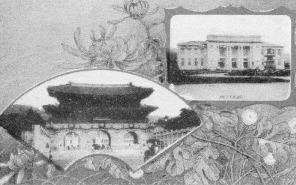
Figure 1. Postcard of the 1915 Korean Products Competitive Exposition
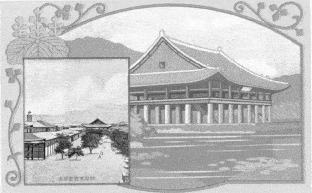
Figure 2. Postcard of the 1929 Korean Exposition
Map 1. Analytical site plan of the 1929 Korean Exposition (with author's notations)
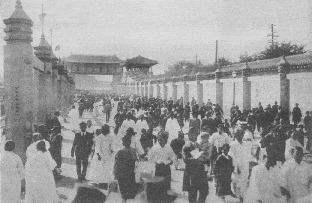
Figure 3. Visitors at the Long Entrance Way to the 1929 Korean Exposition
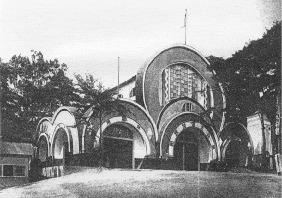
Figure 4. A Korean Pavilion in eccentric “art deco” style: Kyŏngsang-bukdo Pavilion
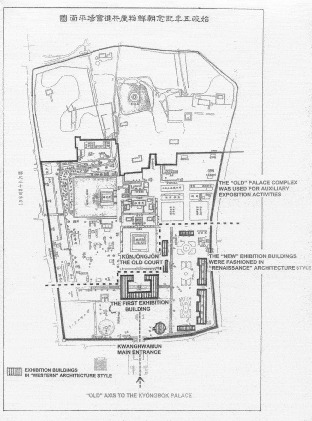
Map 2. Analytical site plan of the 1915 Korean Products Competitive Exposition (with author's notations)
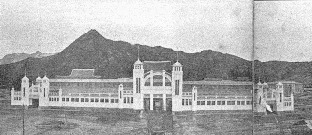
Figure 5. The 1915 Exposition, dominated by a Western-style exhibition building that blocked the view of Kyŏngbok Palace
 You have
Access
- 26
- Cited by