Between December 1951 and February 1952, the German company Siemens-Reiniger-Werke (SRW) signed contracts for the construction of thirteen fully equipped hospitals in Santiago, Chile.Footnote 1 This was not a single event; SRW engaged actively in the construction of turnkey hospitals in Latin America, Africa, and Asia after World War II. SRW, the subsidiary of Siemens & Halske (S&H) for electromedical equipment, was a major manufacturer of X-ray machines during the interwar years. At that time, it exported its products throughout the world and was the largest company in its field among non-Western countries.Footnote 2 However, it limited its actions to sales of instruments and equipment and did not involve itself in building health facilities. Why, then, did SRW engage in the business of hospital construction after 1945? How did it implement this new business model and internalize the necessary skills? One also wonders about the effects of this business in terms of technology and knowledge transfer to developing countries. Did these efforts contribute to the globalization of medicine?
To tackle these issues, this article follows an approach that combines global business history and medical history—two spheres that can shed a complementary light on SRW's new business after World War II. First, literature on international business and global business history helps delineate the new market entry strategy adopted by Siemens. John Dunning's eclectic paradigm, ownership-location-internalization (OLI), provides an approach for examining how multinational enterprises (MNEs) entered various markets.Footnote 3 Focusing on the internationalization of production, the OLI paradigm aims at identifying the factors that lead MNEs to choose specific ways of entering foreign markets (e.g., licensing, export, foreign direct investment [FDI]). Other scholars, emphasizing that MNEs can change their market entry strategy over time, have focused on the coevolution of MNEs and host markets to explain how foreign firms adapt their activities and organizations to changing environments.Footnote 4 In business history, many studies have shown a general model of a gradual foreign expansion, from exports to sales subsidiaries and then to production for the manufacturing industry.Footnote 5 This was, however, not exactly the path that SRW followed with its electromedical appliances, as the company shifted from the export of manufactured goods to the organization of captive markets—turnkey hospitals equipped with SRW goods—and not the localization of production.
The nature of developing countries during the 1950s and the 1960s obviously influenced the ways in which Western MNEs carried out business and organized themselves in these markets. Geoffrey Jones emphasized that in the context of “the end of imperialism, and the adoption of more assertive government policies in many developing markets,” dealing with political risk was a major issue.Footnote 6 For example, in the electrical industry, many power stations and infrastructural components had been expropriated in Latin America and other developing countries.Footnote 7 The attractiveness of developing countries, given the growth opportunities they offered, was thus balanced by uncertainty regarding the possibilities of developing business in the long term. Still, these risks had only a small impact on the civil engineering and construction industry due to its specific business model: construction firms do not build facilities abroad to exploit them on a long-term basis but rather offer a short-term service, which consists of infrastructure construction, without taking on responsibility for management. Soon after World War II, U.S. engineering companies exerted a dominant position on world markets thanks to their technical expertise and massive amounts of capital, but European competitors, especially those in Germany, made a comeback in the 1950s and later in Latin America and the Middle East. Overseas markets became a driving force behind their growth during the 1950s and the 1960s.Footnote 8 Marc Linder did not mention the case of hospitals in his seminal work on the internationalization of the construction industry; hospitals represent a niche market in a business dominated by the construction of infrastructure for resource extraction (mines and oil fields) and transportation (railways, harbors, and airports).Footnote 9 The absence of large American and British companies from the specific business of hospital construction was conducive to SRW's growth in the field.
Second, literature on the globalization of medicine and health-care systems—the sharing of common scientific knowledge and the use of similar health practices around the world—is also relevant to SRW's strategy in developing countries after World War II and informs questioning the results of the German MNE's actions. Of course, the worldwide unification and standardization of medical practice was part of an older trend, with roots in imperialism and colonialism. Thus, despite the persistence of traditional health-care practices, colonial medicine helped lead to standardization, as the spread of vaccination since the late nineteenth century suggests.Footnote 10 In addition, there was often no real break between the colonial period and the postwar era; new, independent states in Asia and Africa, for instance, often maintained and expanded their former health policies.Footnote 11 Research on social history of medicine and global health history, fields that have developed substantially since the 1990s, focuses largely on the actions of organizations and governments to explain the emergence and governance of global medicine. Much of the research has addressed the roles of international organizations such as the League of Nations and the World Health Organization (WHO) and private foundations such as the Rockefeller Foundation, often criticizing their actions as a form of new imperialism, a perspective that was discussed recently by scholars at Hong Kong University.Footnote 12
Although this literature offers a general overview of globalizing medicine and health care, it hardly addresses the role and influence of MNEs in this process. Most global health studies focus on public hygiene and the struggle against epidemics—actions carried out by governments and international organizations. Yet the strong focus on these actors creates a skewed view of the globalization of health because governments and international organizations do not supervise all activities related to health: the diffusion of medical equipment and the construction of hospitals are good examples of activities that lay outside their scope. Even if the WHO appointed architects and doctors as consultants for specific tasks, it was not responsible for the standardization of medical infrastructure.Footnote 13 The diffusion of the Western hospital model throughout developing countries occurred in the 1950s and 1960s, despite the lack of involvement by international organizations. Private enterprises, including SRW, took charge of this activity as a business opportunity. MNEs thus contributed to the globalization of medicine; consequently, the business history approach offered here provides a solid foundation for explicating the role of enterprises in this process. Following the works of Edith Penrose and Raymond Vernon, numerous scholars in management and business history have emphasized the influence of MNEs in technology and knowledge transfer.Footnote 14 These scholars have paid particular attention to explaining the necessity of adapting technology and knowledge to local conditions to achieve a successful transfer and diffusion in the host country.Footnote 15 How this process occurred in the case of medical equipment and infrastructure after World War II thus deserves consideration.
The article comprises four sections. The first introduces the general history of the formation and development of SRW and of the company's efforts to return to non-Western markets after 1945. The second section explains how the company adopted the strategy of engaging in hospital construction and what sort of organizational format that strategy fostered. The third section focuses on the results of this strategy and the diffusion of the German hospital model in developing countries. Finally, the fourth section discusses the company's initiative to reorganize this business in a newly founded company in 1964.
SRW's Difficult Comeback in Non-Western Markets after 1945
Siemens began manufacturing radiological equipment soon after Wilhelm Roentgen discovered X-rays (1895).Footnote 16 Sales at the S&H plant in Berlin amounted to 531 machines in the 1900–1901 fiscal year and grew to 2,626 machines in 1902–1903.Footnote 17 However, S&H made its real impact on the electromedicine business during the interwar years. In 1924, it took over Reiniger, Gebbert & Schall (RGS), an Erlangen-based electromedical instrument company that traced its roots back to 1877 and dominated the world market at the beginning of the twentieth century.Footnote 18 Meanwhile, Siemens purchased Industrie-Unternehmungen AG (Inag), a holding company belonging to RGS that was founded in 1921 and controlled around twenty companies involved in the manufacture of medical equipment. In 1924, S&H also founded a sales company, called Siemens-Reiniger-Veifa (SRV), but the different production units of the group remained largely autonomous.Footnote 19 SRV developed business abroad, especially in non-Western markets. It benefited from integration within the Siemens group, with single subsidiaries often spearheading the sales of various Siemens businesses in many countries. Between 1924 and 1930, SRV exports averaged 51.9 percent of total sales, while the share of non-Western markets (Latin America, Asia, and Africa) in gross sales rose from 11 percent to 20.4 percent.Footnote 20
The consolidation process went further during the crisis of the 1930s. S&H management decided in 1932 to merge RGS, SRV, and Phoenix-Röntgenröhren-Fabriken AG, an X-ray tube maker controlled by Inag, into Siemens-Reiniger-Werke (SRW), a new company based in Erlangen. The company also transferred most of the production of electromedical equipment from S&H's Berlin plant to Erlangen.Footnote 21 As sales climbed from 21.3 million Reichsmark in 1924 to 39.1 million in 1938–1939, SRW became the largest X-ray machine producer of the world, with a 36 percent share of world exports from 1936 through 1938.Footnote 22 Half of SRW's gross sales came from outside Germany in the 1930s, with developing countries commanding a sizable share of sales output before World War II: in 1937–1938, they accounted for 18 percent of gross sales and 33.8 percent of exports. However, most sales outside of Western countries were limited to the big cities in Argentina and Brazil (71.7 percent of emerging markets in 1937–1938).Footnote 23 This global expansion was supported by a strategy of actively securing FDI projects. SRW had offices and sales subsidiaries throughout the world and, before World War II, had production centers in several countries (Argentina, Brazil, Hungary, Italy, Japan, Spain, and Sweden). Most of these subsidiaries were small companies purchased in the early 1920s by Inag.Footnote 24
The events of World War II essentially destroyed the connections between Germany and its foreign outlets, as Harm Schröter has discussed.Footnote 25 SRW lost the property of its foreign subsidiaries and ceased to be a multinational enterprise until it recovered some of its holdings and founded other sales subsidiaries, mostly doing so during the second half of the 1950s. When SRW set up new production facilities in Erlangen in 1947, exports thus comprised the key strategy for regaining footholds in world markets. SRW resumed exports as early as the 1946–1947 fiscal year, while its manufacturing capacity did not recover fully until 1948.Footnote 26 The objective was to find outlets outside the German market where the economic system was still in disarray, but beginning the export initiative was laborious. Theodor Sehmer, director of SRW, wrote in 1947 that “we reestablished relations with some foreign customers and have already received some orders. The foreign gross sales during this fiscal year, however, are not important. The realization of business encountered huge obstacles, especially due to the absence of our own organization abroad.”Footnote 27 In 1949, Germany amounted to a mere 5.3 percent of world exports of electromedical instruments.Footnote 28 In particular, SRW faced daunting difficulties in Latin America, its main non-Western market. In 1953, Sehmer declared that “we have been particularly damaged by the seizure of our companies in Argentina and Brazil and by the loss of Siemens-Chile. This last one has been completely dissolved, and there is nothing left.”Footnote 29
Nevertheless, SRW began a gradual growth process once again after 1945. Gross sales rose from DM 8.4 million in 1946–1947 to DM 25.5 million in 1950 and DM 103.3 million in 1960–1961. The company also became profitable again in 1947–1948. Unfortunately, the SRW archives make it impossible to compare the evolution of gross sales and exports perfectly, as documents related to the former use fiscal years (from March to February) and those dealing with the latter use civil years. However, a rough estimation shows that exports were essential to the reconstruction of the company: they represented about 70 percent of gross sales for the years from 1949 to 1952. In subsequent years, the normalization and eventual growth of the German economy, as well as the reconstruction of hospitals in the country, renewed the significance of the domestic market.Footnote 30 Exports still represented about 48 percent of sales in 1960, but world markets were extremely competitive. SRW's share of the world export of electromedical instruments gained steam at the beginning of the 1950s—growing from 7.9 percent in 1949 to 17.3 percent in 1952—but entered a phase of stagnation afterwards (19.2 percent in 1956 and 18.2 percent in 1961–1962). SRW never again enjoyed the robust export performance of the 1930s.Footnote 31
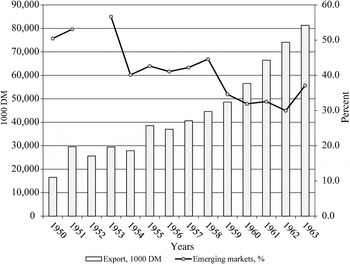
Developing countries played a major role in SRW's comeback in the world markets (see Figure 1). Despite the fact that the relative weight of developing countries was in constant decline beginning in the mid-1950s (more than half of all foreign sales in 1950–1953; 32.9 percent in 1960–1963), their role was far from insignificant. Beginning in 1955, Western Europe became SRW's base for export growth (55.1 percent in 1955 and 62.7 percent in 1962) due to the rapid development of health systems. The United States accounted for a relatively low share; an agreement with Westinghouse prevented SRW from being present in the American market prior to World War II, but the U.S. share began growing quickly (from 0.4 percent in 1950 to 7.3 percent in 1960). Consequently, SRW opened a subsidiary called Siemens Medical Systems in the United States in 1963 to launch U.S. production.Footnote 32
Siemens-Reiniger-Werke exports in thousands of deutsche marks and the share of emerging markets as a percentage of the total, 1950–1963. (Source: “Export Statistik Welt, Teil 1,” 1931–1956 and Siemens annual reports, 7615 4-2-10 SMAZ, Siemens Med Archiv, Erlangen.)

Precipitating the drop in developing countries were the difficulties encountered by the company in developing exports to Latin America, which was the main overseas market. Latin America's share of the total exports decreased steadily (39.2 percent in 1950 and 16.4 percent in 1960), and the rise of other markets was not enough to compensate for the decline: the Asian share was stagnant (8.5 percent in 1950 and 9.3 percent in 1960), while the African share grew only marginally (2.7 percent in 1950 and 6.7 percent in 1960).
Nevertheless, even if developing countries were losing their importance for SRW during the latter half of the 1950s, they had been key markets for the recovery process of the firm from 1947 to 1954. The company's return to these countries had strategic implications. Basically, the company had two options: either relocate production or export German-made equipment. For SRW, setting up a global production network and relocating plants to developing countries was never a serious consideration; it favored producing high-quality equipment at its German plant in Erlangen and exporting it worldwide. However, it needed a new strategy to be able to compete against American and Dutch companies that had captured its markets during the war. Due to these circumstances, SRW adopted a particularly original strategy for increasing business in developing countries in 1949: the supply of turnkey hospitals.
A New Strategy for the Conquest of Developing Countries: Deutsche Hospitalia
On November 10, 1949, SRW gathered representatives from thirty producers of medical instruments and hospital equipment in Frankfurt to launch a new association, called Deutsche Hospitalia Industrie-Arbeitsgemeinschaft für die Planung und Einrichtung von Krankenhäusern, better known as Deutsche Hospitalia (hereafter, DH) or Siemens Hospitalia.Footnote 33 Speaking on the issues of the meeting, Sehmer stated that “since before World War II, Germany began to build fully equipped hospitals through consortiums of various enterprises. Thus, just before the beginning of the war, the construction of the large Hospital Obrero in Lima (about 830 beds), which had been founded by the state-owned health insurance organization, was realized by a consortium of German enterprises, whose direction was entrusted to SRW and Mr. Stübel.”Footnote 34
At the time, this architectural project resulted not from a deliberate strategy but rather from an opportunity for SRW to sell some of its high-tech equipment. Yet, after World War II, the approach to managing such business changed. In 1949, Sehmer explained that due to difficulties encountered in Latin America, the supply of fully equipped hospitals, rather than the supply of medical equipment alone, was a possible strategy for growth. Public authorities in that part of the world had implemented numerous hospital development projects at that time, and the American Hospital Supply Corporation (AHSC) was the only semblance of a possible competitor. However, the AHSC was oriented primarily toward its domestic market and thus was not a major threat to SRW.Footnote 35 SRW also benefited from the excellent reputation of its products in Latin America. Upon returning from a business trip to the region, Sehmer wrote in a 1950 report that “through the sales of hospitals, we shall also develop the opportunities for sales in electromedicine for our agents abroad and consequently we are stronger to face American competition.”Footnote 36
The first contacts established in 1949 made it possible to launch several projects, including the construction of the Hospital Broncopulmonares in La Paz, which SRW considered a “test case.”Footnote 37 It gave SRW the opportunity to learn to manage such projects (e.g., coordinating the sourcing and delivery of equipment, financing). By December 1950, DH, under the control of SRW, had already applied for a total of thirty-nine projects since 1949, of which thirty-two were in Latin America (fourteen in Brazil, four in Bolivia), five in Southern Europe (two in Portugal, two in Spain, one in Greece), one in Egypt, and one in Iran. DH had realized fourteen of these projects, which amounted to a total value of DM 500,000.Footnote 38 Except for Hospital Broncopulmonares in Bolivia, all were relatively small-scale projects.
These first experiences highlighted the necessity of carrying out certain actions to ensure success: structuring the DH consortium, getting access to new social networks, and internalizing know-how in architecture.
Structuring the DH Consortium. DH was an informal association under the leadership and control of SRW. It had no legal grounding and was an Arbeitsgemeinschaft—a trade association or cartel as such organizations existed throughout Germany during the interwar years.Footnote 39 These types of agreements were forbidden after World War II, however, so the association's existence needed to be kept secret.Footnote 40 Consequently, even though SRW exerted de facto leadership and control, DH had no formal structure. Properly coordinating activities among some thirty companies necessitated the sharing of common rules for effectively conducting multiple projects at one time. One issue, for example, was negotiating and satisfying the demands of DH's members regarding the prices of their supplies, as some of them had refused at first to allow discounts for SRW and had even demanded higher prices due to inflation. For SRW, which was present in the markets, and negotiated sales with customers, the most important goal was reducing costs in order to be competitive against American rivals.Footnote 41 Thus, in 1952, SRW decided to develop standard models for hospitals of fifty, one hundred, two hundred, and five hundred beds, which could be detailed in catalogs and offered to customers.Footnote 42 This was also a request from the authorities of several Latin American countries. These catalogs would enable the authorities to draw budgets more easily for large-scale hospital construction.Footnote 43
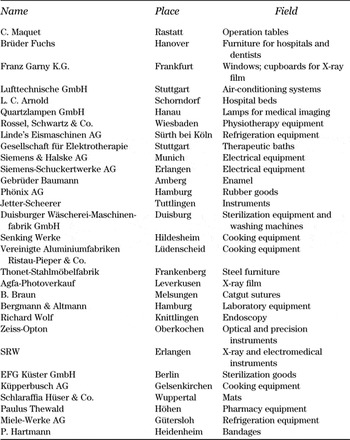
Two years later, in July 1954, DH strengthened its organization with the adoption of guidelines governing its functioning.Footnote 44 This was a major challenge, as it was important both to avoid the condemnation of anticartel laws and to be able to coordinate the activities of some thirty firms. Therefore, DH decided to maintain its informal association of nonconcurrent firms—that is, each active in a distinct special field—that were free to withdraw. Listing all the enterprises that attended the DH founding assembly in 1949 reveals the high degree of specialization among DH member firms and the participation of representatives from all fields of hospital equipment, from high-tech apparatuses like X-ray machines and laboratories to kitchen equipment and sanitary devices (Table 1). Most were small and medium-sized enterprises that obviously lacked the worldwide network of SRW, which is why they chose to be part of an association under SRW control. Becoming a supplier of hospitals for construction abroad also represented an opportunity to expand sales. The overall objective was to build and equip hospitals outside Germany, particularly in emerging countries. DH had three organs: the general assembly of members, a committee elected by the assembly, and the group in charge of operating direction (which was entrusted to SRW). Thus, DH was a kind of permanent, SRW-directed consortium for hospital construction. Finally, the member companies agreed to supply their goods at a discount: either at production cost or at 10 percent off the public price.
Enterprises that Attended the Deutsche Hospitalia Founding Assembly in Frankfurt, November 10, 1949

Source: List of the enterprises that attended the Deutsche Hospitalia founding assembly in Frankfurt, 10 Nov. 1949, 7615 4-2-05, Siemens Med Archiv, Erlangen.
Getting Access to New Social Networks. Theodor Sehmer was an experienced connoisseur of Latin America. He had traveled there many times, beginning in 1924, to organize the network of representatives and distributors of several German medical instrument manufacturers gathered within Inag, a sales company purchased by Siemens in 1924.Footnote 45 However, the implementation of DH's hospital-building strategy exposed the need not merely for knowledge of markets but for the internalization of other resources essential for new SRW business: that is, the ability to interface with public authorities in Latin America. The large-scale hospital development projects desired by SRW depended chiefly on governments and public organizations such as the bodies in charge of health insurance.
The internalization of such capacity was initially realized through cooperation with Karl Panhorst, a bureaucrat with the German Ministry of Economy. Born in 1899 and trained as a historian and specialist of German-Spanish relations, Panhorst worked in the 1930s at the Ibero-Amerikanisches Institut (Ibero-American Institute) in Berlin and was engaged by the Nazi secret services (Abwehr) during World War II because of his knowledge of languages.Footnote 46 After the war, he entered the Ministry of Economy and became chief of the Latin American division. As such, he was in charge of commercial negotiations with the authorities of the Latin American subcontinent, working mainly to improve the conditions for German investors and importers of agricultural products and raw materials.Footnote 47 The balance of trade between Germany and most of these countries was positive and thus favorable for cooperative projects; the foreign currencies gained through exports could be used to finance the hospitals built by German companies. Panhorst knew the political and economic elites in these countries personally and agreed to intervene on behalf of DH. For example, as he explained to DH in February 1953, during the negotiations for a US$20 million concession contract for a copper mine in Chile, “you can imagine that we must also deliver something. . . . We believe and hope that relations with Chile will grow considerably stronger.”Footnote 48
From 1952 to 1955, Panhorst attended many DH meetings in person, during which he gave exhaustive reports on the sociopolitical and economic conditions in Latin America as well as business opportunities for DH. In January 1952, for example, he gave a confidential report on a short trip he had just taken as chief of a delegation to Colombia and on a hospital project he had heard of while in Bogotá. The project entailed “the establishment of a 680-bed hospital for the University of Jesuits, for which a long term credit from Colombia” was expected. Panhorst “promised his special assistance toward the West German authorities to lead this project.”Footnote 49
Panhorst was, of course, not the only one to facilitate relationships with Latin American authorities. Local representatives of SRW were also an effective force in the process of smoothing relations. In Peru, for example, where American influence was strong, SRW agents possessed “permanent contacts with important people” and worked to promote DH's activities.Footnote 50 The ability of local representatives to corrupt elected members and bureaucrats was essential for the development of business. In the case of Peru, SRW managers underlined that the process of selecting partners for hospital construction by the national health insurance Caja Nacional was democratic and involved a large number of people; most of them were “absolutely incorruptible,” while others had to “be worked, especially the first-rank doctor who caused us long difficulties at the beginning, until our representative invited him and his wife for a journey in Europe!!”Footnote 51 This medical doctor later played an important role in securing three contracts and then served as a technical advisor to SRW and DH representatives in Bolivia.Footnote 52
As for Panhorst, his useful network-building efforts for SRW were not limited to Latin America. His dense network of relationships within the ruling and bureaucrat milieu in Germany were essential in establishing DH's financial functioning. Indeed, there was often a delay of several months between the time DH members delivered their materials and the moment when DH was paid by the corresponding foreign partner. Securing enough floating assets to enable business to develop was the key issue, with single hospital projects sometimes amounting to several million U.S. dollars. Sehmer referenced this issue in 1952, saying, “The biggest difficulty lies in financial matters. We noted it each time. . . . We cannot ourselves finance large projects any longer, but only with the Wiederaufbaubank [Kreditanstalt für Wiederaufbau Bank, or KfW].”Footnote 53 In December of the same year, DH obtained a DM 4.7 million credit via Ausfuhrkredit-Aktiengesellschaft (AKA) to finance business in Chile.Footnote 54
Another way to secure project funding was through development aid. SRW began to appeal for such financing at the beginning of the 1960s but lacked the networks enjoyed by foreign competitors that were needed to access these means.Footnote 55 In 1961, SRW argued that development aid in the European Economic Community (EEC) went primarily to former French and Belgian colonies, with most aid distributed essentially to French companies.Footnote 56 Several years later, SRW denounced the U.S. Agency for International Development (USAID) policy in Brazil, which provided very cheap X-ray equipment. SRW also complained to the German embassy in Brazil and to the Brazil-Germany Chamber of Commerce of a “discrimination against German imports.”Footnote 57 In 1962, German development aid was expected to total about DM 4 billion, with around 10 percent going toward health-related projects. SRW admitted, however, that it did not know how these gifts were distributed.Footnote 58 Still, development aid in the broad sense (including credit aid, development aid, and technical aid) covered only a small share of DH activities. For the years 1964 to 1968, it amounted to only DM 9.5 million for gross sales of about DM 90 million, or just around 10 percent.Footnote 59
Internalizing Know-How in Architecture. As none of the thirty founding members of DH possessed knowledge about the actual construction of hospitals, the internalization of such know-how was a key challenge. In 1949, SRW approached Walter Distel, one of the most renowned German architects specializing in hospitals. Born in 1904, Distel was the son of the famous architect Hermann Distel (1875–1945)—past president of the Hospital Building Committee of the International Hospital Federation and the author of an important book on the rationalization of hospital construction—and had carried on the family architecture firm in Hamburg.Footnote 60 When DH was founded, Walter Distel was engaged in a large project in Portugal, where he was completing a project his father had started: Santa-Maria Hospital of Lisbon, “which is one of the most beautiful and most modern hospitals abroad.”Footnote 61 For SRW, the interest in working with Distel came both from his reputation in the realm of hospital architecture and from the experience he had acquired in the management of projects abroad in cooperation with various German firms. Upon signing on with DH, Distel took on the responsibility for operational direction and supervision of DH-built hospitals.
The internalization of hospital architecture know-how was, however, not limited to cooperation with Distel. It was also important to publicize this knowledge and show potential customers how DH was capable of developing the most modern hospitals. This attention to communication was especially evident during the first years. For example, Sehmer declared in December 1950 that “there is not any model hospital in Germany. . . . We must aim at constructing a private or public hospital which can be presented to foreign visitors as a model hospital.”Footnote 62 Even though such a plan was costly, foreign competition pushed DH to accelerate its realization. Foreign medical doctors tended to visit new hospitals in Stockholm (Söder Hospital, 3,000 beds) or Basel (Bürger Hospital, 1,200 beds), as well as some French hospitals, to identify their reference points for modern hospital equipment.Footnote 63 Thus, in 1953, SRW engaged in negotiations with the local authorities of Leverkusen, which envisaged the creation of a new health center, in order to make this project DH's model hospital. The presence in this city of the big pharmaceutical company Bayer helped attract medical doctors from around the world, and DH wanted to lure them to its new model hospital.Footnote 64 After long discussions, the city of Leverkusen accepted DH's collaboration offer. Inaugurated in 1956, the model hospital had a total of 429 beds, distributed among clinics of medicine, surgery, and gynecology-obstetrics, as well as a private section and pediatrics. It may not have been a gigantic hospital, but it was equipped with ultramodern apparatuses and boasted a rationalized internal organization typical of the 1950s, 1960s, and 1970s, relying on the principal of a “block hospital” with dual specialization: vertical (services and medical specialty groups by floor) and horizontal (patient rooms and technical services dispatched by bloc).Footnote 65 This kind of organization was designed to create excellent fluidity in the flow of patients and allow administrators to increase the number of hospitalizations in a smaller hospital setting.
Soon after its opening, the Leverkusen Hospital played host to foreign dignitaries and helped DH secure orders. For example, in November 1956, Sudan's minister of health ordered a plan for a standard hundred-bed hospital for the provincial cities of his country after seeing the model hospital.Footnote 66 Three years later, thanks to a visit from Asfaw Wossen, crown heir and son of emperor Haile Selassie, Ethiopia also became a DH customer.
Finally, in the early 1950s, DH adopted an advertising strategy that focused on its activities and its ability to provide fully equipped hospitals. The company printed a leaflet entitled “The Modern Hospital,” aimed essentially at the Latin American audience, in which it argued that:
It would be a big mistake, when one constructs a hospital, to build buildings first, as it used to happen in the past, and then to plan equipment. On the contrary, the equipment must be planned at the same time as the drawing. . . . A hospital planned by specialists and experts is always the best and the least costly. That is why, in Germany, first-class companies specializing in the production of the various equipment necessary for a hospital grouped together in a free industrial association and engaged in planning and installing fully equipped hospitals throughout the world in cooperation with architects internationally renowned for hospital building.Footnote 67
The Results of DH's Strategy, 1949–1964
DH experienced fifteen years of continuous growth in all emerging markets. However, the informal character of the association left a dearth of aggregate data on gross sales through 1964. Each project was essentially independent, as was the case for classic construction consortiums, and only member firms responsible for the businesses developed could testify to the growth. Yet, in the case of SRW, it is impossible to evaluate the share of sales made through DH within total exports.
Some statistics on particular projects give an idea of the amounts and the rates of profit for such businesses, however. For example, the two contracts signed in November 1951 with the Bolivian organization Caja Nacional des Seguro Social totaled US$1.082 million, with SRW taking home a net profit before taxes (not including the commissions for SRW representatives in the country) estimated at more than US$100,000—a profit rate of about 9.7 percent.Footnote 68 A thirteen-hospital project in Santiago, Chile, realized between December 1951 and February 1952, generated nearly US$2 million in goods exported for all thirty DH member firms.Footnote 69 SRW archives, meanwhile, make it possible to gauge the competitiveness of DH in world markets. Many reports mention competitors in Germany and other Western countries, but most of the consortiums organized by architects and medical equipment manufacturers abroad were one-off projects and did not last. DH's only two rivals were AHSC, which focused its foreign business in the Caribbean and Latin America, and Philips, a Dutch MNE whose hospital construction division was led by its German subsidiary, C. H. F. Müller, and which merged with DH in 1964 (see below). Consequently, for the years between 1949 and 1964, DH was effectively the world leader in this business.
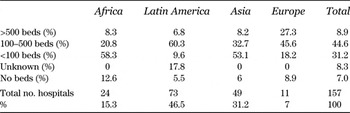
A document from the 1964 merger outlines all the projects completed at that time under the direction of either SRW or C. H. F. Müller, covering a total of 157 hospitals and medical institutes (see Table 2). These figures merit two comments. First, the geographical distribution highlights the essential weight of Latin America, where nearly half of the projects were located (46.5 percent). The German economic and cultural influence in this region obviously played a pivotal role in securing contracts. The other regions where DH and C. H. F. Müller were present include, for the most part, the former Dutch colonies and countries close to Germany. Asia had an important share (31.2 percent), but the region was basically three countries: Indonesia (eleven hospitals), Saudi Arabia (twenty-four hospitals), and Iran (ten hospitals). Finally, the African projects were almost entirely in Nigeria (eleven hospitals).
Hospitals Constructed and/or Equipped by Deutsche Hospitalia and C. H. F. Müller (c. 1964)

Source: Reference list of hospitals, undated document (c. 1964), 7615 4-2-10 SMAZ, Siemens Med Archiv, Erlangen. Note: The figures above do not include thirteen hospitals built in Santiago, Chile, whose sizes are unknown.
The strong presence of DH in Latin America—which Sehmer qualified in 1953 as “young Roentgen countries” (Röntgenländer)—was not a coincidence but rather the result of a perfectly planned strategy.Footnote 70 This region was characterized both by a high potential for health-care system development and by a great sympathy for German goods, particularly those made by SRW. DH took advantage of this opportunity for growth. Distel declared in January 1952, after having signed several big contracts in Bolivia, that “having succeeded in these business deals is a delight, and I hope that all three [projects] will become cornerstones of a series of successes on the South American continent.”Footnote 71
Second, most of the hospitals built were small and medium-sized institutions, except in Europe, where DH and C. H. F. Müller constructed hospitals in Greece, Iceland, and Portugal. The differences between Latin America (where there was a large share of medium-sized hospitals) and Africa and Asia (where the majority of hospitals were small) can be explained mainly by the extent to which their hospital systems had developed. Whereas there was a real political will to modernize hospitals in Latin America, Asian and African countries in business relationships with DH and C. H. F. Müller aimed primarily to equip secondary cities with basic sanitary stations and small hospitals, concentrating on a few urban centers with high-tech medicine.
These statistics, like several reports produced by DH, highlight the difficulties that German companies faced in establishing themselves in developing countries outside of Latin America, the Middle East, and Indonesia. The near absence of former British and French colonies—in sub-Saharan Africa, for example—is important to note.
Although the first SRW employee to go on a commercial mission to Africa after World War II came back enthusiastic about the business opportunities, declaring in 1951 that his company was “at the beginning of a brilliant civilizing development,” the presence of SRW on this continent was nearly nonexistent in the 1950s; the few hospitals in Nigeria were obviously constructed by C. H. F. Müller.Footnote 72 In the spring of 1962, SRW sent a new salesman to Western Africa, but the salesman returned unsuccessful.Footnote 73 After the 1964 merger of DH and C. H. F. Müller into Hospitalia International GmbH (HI), the African strategies of these German hospital suppliers took a new form. The market was dominated largely by French companies, but they were not organized within a stable consortium as the Germans were. The Alliance Française du Matériel Hospitalier (AFMH) and the Compagnie Générale de Radiologie (CGR) both possessed excellent connections “in [the] French government milieu, Foreign Affairs, National Centre of Foreign Trade, Ministry of Cooperation, etc.,” which enabled them to benefit from many contracts linked to French development aid in Africa.Footnote 74 In order to be competitive in the market, HI and the French subsidiary of Philips cofounded a joint venture company in France in 1965, enabling them to intervene in “projects of French aid requiring French supplies, or cases in which, for political reasons, the buying country turns to France and, consequently, HI cannot intervene.”Footnote 75 Three years later in 1968, HI sent an employee to Abidjan, Ivory Coast, and opened a technical agency in Douala, Cameroon, “considering French competition.”Footnote 76 Despite the organization's efforts to strengthen its presence in Africa in the early 1960s, the region failed to become a major market; it represented a mere 11.8 percent of HI gross sales for the period from 1964 to 1973.Footnote 77
Looking beyond the financial results of DH's strategy for SRW, one also wonders what the effects of hospital building were in terms of technology and knowledge transfer. Obviously, SRW and its partners did not adapt their equipment or hospital model to local conditions but instead transferred fully Western medical infrastructure and technology. Although historians of business and technology usually acknowledge that the successful transfer of technology hinges on adaptations to local conditions, this was not the case with turnkey hospitals in Latin America.Footnote 78 The actors involved did not perceive this approach as a problem, as the 1950s and the 1960s were two decades in which development progressed through technical cooperation and technology transfers. The belief in progress, shared by international organizations and postcolonial governments, created an extremely favorable context for the expansion of Western MNEs in developing countries.Footnote 79 Consequently, hospitals became core institutions in the health-care systems and the center of medical practice throughout Latin America after World War II.Footnote 80 However, we still need more monographic research on the history of hospitals in the subcontinent to appreciate fully the impact of DH's business on everyday healing practices.
From the Association to the Firm: The Birth of Hospitalia International GmbH (1964)
The informal and flexible character of DH made it possible for SRW and its partners to benefit from a certain success in developing countries, especially in Latin America, and to make large profits through the supply of turnkey hospitals. However, during the first part of the 1960s, SRW abandoned the informal structure of the trade association to set up an enterprise. The impetus for this major structural change arose from tougher competition, as the worldwide boom of hospital construction attracted new entrants like Amalgamated Developers Ltd. and Vickers Ltd. Medical Division, both British companies. This international pressure initially led SRW and its major German competitor, C. H. F. Müller (a subsidiary of the Dutch MNE Philips), to engage in discussions in the late 1950s and eventually create a joint venture for hospital construction in emerging countries in 1964.
The relations between DH and C. H. F. Müller became extremely tense at the end of the 1950s, especially after SRW asked DH members not to deliver materials to the Müller Group, which was then building a model hospital in Hanover in 1957.Footnote 81 SRW wanted to avoid allegations of having cartel agreements and creating unfair competition. Following the advice of the legal division of Siemens & Halske, DH members decided to maintain the unity of their association and not to answer offers from Müller.Footnote 82 The following year, DH changed its guidelines and introduced measures that would make it possible to expel members that did not follow the policies established by the administrative commission, particularly members engaging in competing projects. Thus, in December 1958, the commission ousted nine enterprises.Footnote 83
However, it was difficult to maintain this type of position, especially as several SRW suppliers and DH members did not want to give up the business opportunities that Müller offered. Consequently, the common supplier network, as well as a market complementarity, led the two German firms to discuss a merger in June 1959. Negotiations lasted several years due to many issues raised by antimonopoly law and competition rules in the EEC and the United States.Footnote 84 The negotiations finally ended in 1964 upon the creation of a joint venture, Hospitalia International GmbH (hereinafter HI), with SRW (INAK GmbH since 1966) and C. H. F. Müller (Philips GmbH since 1974) sharing DM 1 million of capital.Footnote 85
A document dated 1967 outlines the objectives of the merger:
There was naturally no intention to limit somehow the opportunities of the founders’ business with the creation of HI. The founders estimate that the idea of a global business of hospitals [Krankenhaus-Globalgeschäft] throughout the world has enough chance to be feasible and thus to guarantee good business opportunities for HI. Three years after HI's creation, one can admit it is now in a position to diffuse very successfully the idea of a global business with its own technical and financial specificities.Footnote 86
The foundation of the company was accompanied by a framework agreement between Siemens and Philips concerning a share of the market for X-ray equipment. For other equipment, HI maintained the former policy of supplying goods from partner companies that were, however, not shareholders. The former suppliers of SRW and C. H. F. Müller that were also DH members continued to be partners within consortiums created via contracts signed by HI. Finally, the scope of business was the entire world outside the EEC and North America, which were excluded due to the existence of strict antimonopoly laws.
HI set up headquarters in Frankfurt (Main), the city that DH had once called home. HI was a small company at its origin, employing only forty people in 1964.Footnote 87 Its role, like that of DH before it, was essentially to manage a portfolio of contracts (finances, sourcing, delivery of supplies, etc.), the operational direction of each project being carried out by local representatives of SRW or Philips.
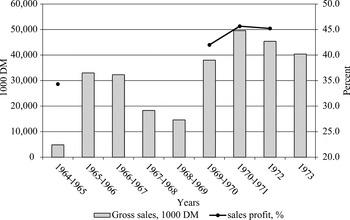
HI experienced general growth during its first ten years, fighting off a slowdown in the fiscal years from 1967 to 1969. Figure 2 reveals the development of gross sales, which grew from DM 4.8 million in the first year to an average of DM 32.7 million in 1965–1967 and DM 45.1 million in 1970–1973. This expansion coincided with the development of the company in Frankfurt. The number of employees reached 161 in 1970 and 182 in 1973.Footnote 88 Profitability was strong and growing, too; the limited data from annual reports show that gross profit increased from 34.3 percent in 1964–1965 to more than 45 percent in 1970–1972.
Gross sales and sales profits of Hospitalia International, 1964–1973. (Source: Reports from the board of directors, 1964–1973, 7615 4-2-10 SMAZ, Siemens Med Archiv, Erlangen.)

Of all of SRW's gross sales, however, HI gross sales were smaller than those of the medical division of Siemens.Footnote 89 For the 1969–1970 fiscal year, the Siemens medical division (formerly SRW, merged in 1966 with S&H and Siemens-Schuckertwerke to give birth to Siemens AG) had DM 885 million in gross sales, 66 percent of which (DM 584 million) came from exports.Footnote 90 The distribution of outlets is unknown, but Europe and the United States likely represented a major share, as the two regions had been the dominant areas since the mid-1950s (see Figure 1). If one were to estimate a 20 percent share for emerging markets in 1969–1970, exports to those markets would come out to roughly DM 116 million. However, for this fiscal year, HI gross sales were only DM 38 million—and that included part of Philips. These figures are very approximate and do not make it possible to measure the importance of HI for SRW's sales in developing countries, but they do make it clear that HI's direct weight was relatively light in financial terms.
However, SRW also drew some indirect benefits from HI activities. First, the large hospital projects developed by HI can also be understood as a communication strategy that reinforced the high-tech image of Siemens and Philips within developing countries. The projects constituted a unique form of advertising that bolstered the reputations of these two MNEs.
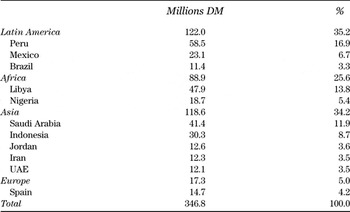
Second, the partnership enabled SRW to operate in markets where it was relatively absent, such as Asia. Table 3, which shows the geographical distribution of orders received by HI from 1964 to 1973, sheds light on the significance of Asia. This region had a share of about one-third of all orders, which was about the same share that Latin America, SRW's traditional outlet, had. The sizable shares of Arab countries and Indonesia are worth special mention. The share of Africa also became more important thanks to successful projects in Libya. Finally, Spain—a country outside the jurisdiction of the EEC's antimonopoly legislation—gave HI the opportunity to develop business in Europe, even if it was a very secondary market.
Orders to Hospitalia International by Region, 1964–1973 (in millions of DM and as a percentage of total)

Source: Annual report of the board of directors, 1973, 7615 4-2-10 SMAZ, Siemens Med Archiv, Erlangen.
HI continued its growth on this model until the 1970s and then experienced major organizational changes during the subsequent decades, with the withdrawal of Philips, the seizure of 100 percent control by Siemens in 1986, and later the sale of HI to Fresenius (1994), a German pharmaceutical company founded in 1912 that decided to invest in the production and management of medical equipment.Footnote 91 HI remains one of the world's major producers of turnkey hospitals.
Conclusion
The market reentry strategy that SRW adopted after World War II in order to regain sales shares in Latin America played a key role in the firm's comeback in world markets. It supported the enterprise's reconstruction and first phase of redevelopment while the German domestic market was in disarray (during the late 1940s) and before Western Europe became the basis of rapid growth (since the mid-1950s).
The organization that SRW established to carry out its new business was particularly original and clearly expresses the company's determination to avoid political risk in transferring manufacturing capabilities in this part of the world. Returning from a business trip to Brazil in 1953, SRW CEO Sehmer confirmed in a report his objective to avoid developing production in the country and to focus on exports.Footnote 92 As the company had lost control of its foreign subsidiaries and sales networks during the war, regaining market shares in Latin America was a demanding challenge. SRW decided in 1949 to change its business model for non-Western markets by supplying turnkey hospitals instead of only electromedical equipment—a move designed to create captive customers for X-ray machines. The strategy also responded to the needs of new, government-initiated social policies in the subcontinent, which aimed precisely at importing and introducing Western medical technology as a symbol of modernity and development.
However, SRW was not able to implement its strategy alone. It worked together with Walter Distel, an architect who specialized in hospital construction, and gathered around thirty German firms in the informal Deutsche Hospitalia (DH) association to secure the equipment supplies necessary for building hospitals. This structure was perennial and made it possible to consider long-term business development, while the main competitors set up case-by-case consortiums. From its implementation in 1949 to the creation of Hospitalia International GmbH in 1964, DH directed the construction of about one hundred hospitals outside Western countries, mainly in Latin America. According to the available statistical data, this business was highly profitable.
The organizational structure that SRW implemented thus appears to be particularly original in terms of what the literature has shown to be the classical pattern of MNE internationalization.Footnote 93 The boundaries of the firm were porous, and it was possible to internalize knowledge without any organizational adaptation (e.g., joint venture or acquisition). Usually, the concept of “flexible boundaries” applies to small firms or firms within global value chains rather than to MNEs.Footnote 94 Due to their small sizes and limited resources, these types of organizations are unable to internalize all the necessary knowledge adequately but can have access to it through various patterns of cooperation with other firms and external bodies. However, SRW did not choose to use a flexible way of internalizing knowledge because of such constraints. Two factors explain this choice. First, the need to avoid anticartel and antimonopoly laws led to the flexible organization manifest in Deutsche Hospitalia, which was not even an official association with statutes but rather simply an informal group of private companies that agreed to work together with SRW. Second, this business was limited to Latin America and a few other countries in Asia and Africa. The weight of these markets was important in the early 1950s but declined after 1960 as the United States and Western Europe became Siemens's bases for growth. In the United States and Western European markets, the business model of the German MNE was different: it sold medical equipment, not turnkey hospitals. Consequently, hospital construction–related knowledge was necessary for only a few specific markets that lay outside the scope of the company's main outlets. Building a particular organization to internalize this knowledge was unnecessary and would have been too costly.
In addition, the organizational structure that SRW adopted to carry out this business had an obvious impact on the transfer of a standardized model of hospitals to South America and later to other non-Western markets. In order to develop its business, SRW worked with Distel in the second half of the 1950s to design several standard hospital models that it could offer to overseas governments and, in 1956, opened a model hospital in Leverkusen for foreign visitors. Consequently, SRW's standardized hospital became a benchmark for authorities of the global South. This fact has considerable implications for a better understanding of the driving forces behind the globalization of medicine: companies, especially MNEs, had a direct impact on the transfer and spread of Western medical technology throughout the world.
Past studies in the history of medicine have usually devoted only limited space to the actions of big business in the construction of global medicine outside the pharmaceutical industry.Footnote 95 Yet, this article argues that these major enterprises played a key role and that the contributions of SRW and DH were essential. The globalization of medicine results not only from institutions and policies but also from market economy. This article examined what SRW did during the 1950s and the 1960s, two decades epitomized by the transfer of Western technology as a means of development for southern countries in terms of both industrialization and the development of health systems. The WHO, which concentrated on battling epidemics, left the field of hospital construction to individual governments and private companies until the mid-1970s.Footnote 96 In the 1950s and 1960s, it appointed independent architects and medical doctors as advisors for hospital construction projects in non-Western countries at the request of local authorities; however, the WHO did not offer any standard for hospitals or hospital equipment. A 1965 memorandum about a request from the Ethiopian government illuminates the organization's reliance on private companies in such matters, noting that “we are from time to time approached by two German firms, Clinica of Landbeigstrasse 79, München, and Siemens Reiniger Werke, Erlangen, who undertake to supply the full range of equipment for hospitals. Both firms control a group of manufacturers and, of course, only recommend their own products.”Footnote 97 The lack of interest that international organizations showed in defining global norms for hospital construction and medical equipment gave way to the growth of private enterprises. Siemens attempted to establish its model hospitals as an international standard and succeeded in Latin America.