Introduction
Commonness and rarity of species have been studied by biologists for decades (e.g. Preston Reference Preston1948; Rabinowitz Reference Rabinowitz1981), so that Kelly et al. (Reference Kelly, Woodward and Crawley1996) have defined ecology as the study of commonness and rarity among and within species (Arellano et al. Reference Arellano, Loza, Tello and Macía2015). Both concepts are intrinsically “fuzzy” since they can be operationally expressed at different scales and along different ecological dimensions (Hanski Reference Hanski1982; Brown Reference Brown1984; Rabinowitz et al. Reference Rabinowitz, Cairns and Dillon1986; Pitman et al. Reference Pitman, Terborgh, Silman, Nuñez, Neill, Cerón, Palacios and Aulestia2001; Murray et al. Reference Murray, Thrall, Gill and Nicotra2002; Kristiansen et al. Reference Kristiansen, Svenning, Grandez, Salo and Balslev2009). For example, the abundance of a species in a sample, its frequency across a given region and the extent of its geographical distribution are three definitions of commonness/rarity at three different spatial scales (Gaston Reference Gaston1994). Species can also be ranked along other ecological dimensions, such as the variety of habitats, to distinguish different classes of commonness and rarity (Rabinowitz Reference Rabinowitz1981; Rabinowitz et al. Reference Rabinowitz, Cairns and Dillon1986).
In plants, commonness and rarity have been frequently related to species traits linked to environmental factors (Webb et al. Reference Webb, Hoeting, Ames, Pyne and Poff2010), providing insights into ecological processes which determine species distribution along environmental gradients (Diaz & Cabido Reference Diaz and Cabido2001). For example, plant size was often correlated with commonness at different scales, from large scales across regions and continents (Ruokolainen & Vormisto Reference Ruokolainen and Vormisto2000; Davidar et al. Reference Davidar, Rajagopal, Arjunan and Puyravaud2008; Kristiansen et al. Reference Kristiansen, Svenning, Grandez, Salo and Balslev2009) to local scales (Nathan & Muller-Landau Reference Nathan and Muller-Landau2000; Moles & Westoby Reference Moles and Westoby2004; Wright et al. Reference Wright, Ackerly, Bongers, Harms, Ibarra-Manriquez, Martinez-Ramos, Mazer, Muller-Landau, Paz and Pitman2007; Kristiansen et al. Reference Kristiansen, Svenning, Grandez, Salo and Balslev2009). The growth form of species could also influence their commonness and rarity patterns, particularly across different environments (e.g. Gentry Reference Gentry1991; Letcher & Chazdon Reference Letcher and Chazdon2012).
A well-known pattern is that most species are naturally rare, with only a few being common (Gaston Reference Gaston2010). However, the role of ecological processes shaping this pattern remains controversial: we still lack a detailed understanding of the mechanisms that produce this phenomenon (Roque et al. Reference Roque, Zampiva, Valente-Neto, Menezes and Hamada2016), an issue that was listed among the 100 fundamental questions of ecology by Sutherland et al. (Reference Sutherland, Freckleton, Godfray, Beissinger, Benton, Cameron, Carmel, Coomes, Coulson and Emmerson2013).
Understanding patterns of commonness and rarity is also important for conservation (Gaston Reference Gaston2010, Reference Gaston2012) because rarity is associated with extinction risk (Rabinowitz et al. Reference Rabinowitz, Cairns and Dillon1986). In view of the dramatic decline of species due to human activities, a better understanding of how ecological traits vary among species in relation to commonness and rarity can provide a scientific basis for conservation strategies (Kunin & Gaston Reference Kunin and Gaston1997; Arellano et al. Reference Arellano, Loza, Tello and Macía2015). Particularly relevant is the analysis of traits that allow species to escape rarity (Aizen & Patterson Reference Aizen and Patterson1990; Murray & Westoby Reference Murray and Westoby2000), or those that are associated with persistence at low abundance (Kunin & Shmida Reference Kunin and Shmida1997; Walck et al. Reference Walck, Baskin and Baskin1999).
In contrast with the large number of studies devoted to the analysis of commonness and rarity in plants and animals, only a small number of papers deal specifically with this topic in lichenized fungi. On the one hand, we have abundant data on the relative occurrences of species in certain areas, such as those derived from mapping projects (e.g. see Seaward Reference Seaward1988, Reference Seaward1995; Wirth & Oberhollenzer Reference Wirth and Oberhollenzer1990; Aptroot et al. Reference Aptroot, van Herk, Sparrius and Spier2004) or from field surveys at different geographical scales (e.g. Dietrich et al. Reference Dietrich, Stofer, Scheidegger, Frei, Groner, Keller, Roth and Steinmeier2000; Bielczyk et al. Reference Bielczyk, Cieslinski and Faltynowicz2002; Edwards et al. Reference Edwards, Cutler, Zimmermann, Geiser and Alegria2005). On the other hand, only a small number of studies have looked for quantitative correlations between commonness/rarity and morpho-ecological traits of lichens, mostly at community level or at relatively small spatial scales (e.g. McCune et al. Reference McCune, Rosentreter and Debolt1997; Ihlen et al. Reference Ihlen, Gjerde and Saetersdal2001; Edwards et al. Reference Edwards, Cutler, Geiser, Alegria and McKenzie2004; Nascimbene et al. Reference Nascimbene, Martellos and Nimis2006, Reference Nascimbene, Nimis and Marini2007, Reference Nascimbene, Nimis and Ravera2013; Allen & Lendemer Reference Allen and Lendemer2016; Keim et al. Reference Keim, Dewitt, Fitzpatrick and Jenni2017). This may create the risk of omitting adequate protection for a diverse and ecologically important group of organisms that contributes to the functioning of terrestrial ecosystems (Elbert et al. Reference Elbert, Weber, Burrows, Steinkamp, Büdel, Andreae and Pöschl2012; Asplund & Wardle Reference Asplund and Wardle2017).
The starting point for the present paper was the publication of the new catalogue of the lichens of Italy by Nimis (Reference Nimis2016), in which estimates of commonness/rarity in nine bioclimatic subdivisions of the country (ecoregions) were proposed for 2704 infrageneric taxa (2565 of which are lichenized), together with several morphological, ecological and distributional traits. The information provided by Nimis (Reference Nimis2016) was swiftly transformed into a database where all of these parameters can be searched online (Martellos Reference Martellos2012; Nimis & Martellos Reference Nimis and Martellos2017). The availability of such a wealth of data led us to carry out a study on the main traits and factors that might be related to the commonness and rarity of lichens at the level of a rich, varied, well-investigated and updated national flora, encompassing several bioclimatic regions.
The main questions we intended to answer were: 1) how consistent are patterns of commonness/rarity across different, biogeographically homogeneous versus heterogeneous regions and 2) are commonness and rarity associated with particular biological or ecological characteristics?
Data Sources and Methods
Data source
Data were retrieved from the latest catalogue of the lichens of Italy by Nimis (Reference Nimis2016), covering the 2565 lichenized taxa which are known to occur in the country.
For each taxon, the following information was considered:
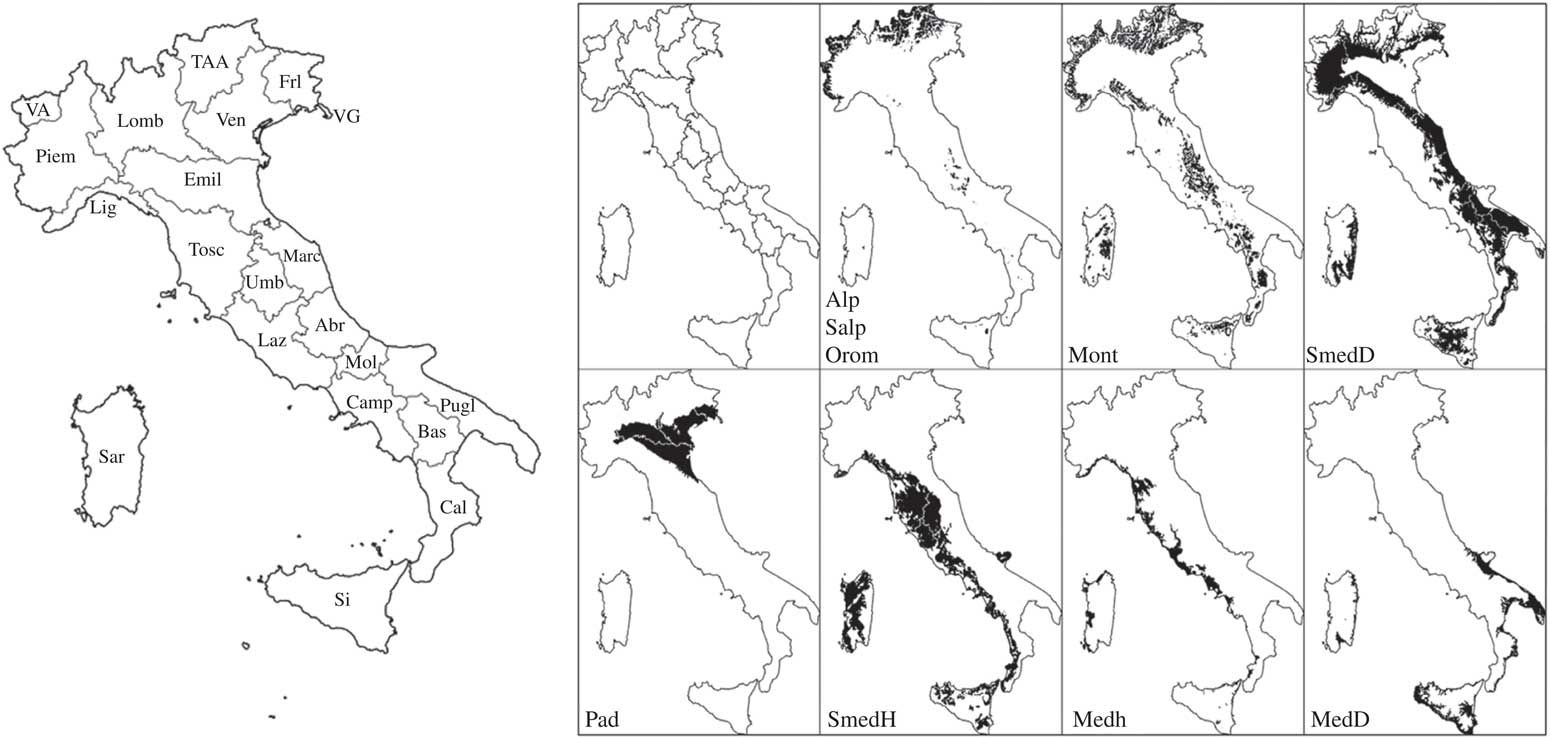
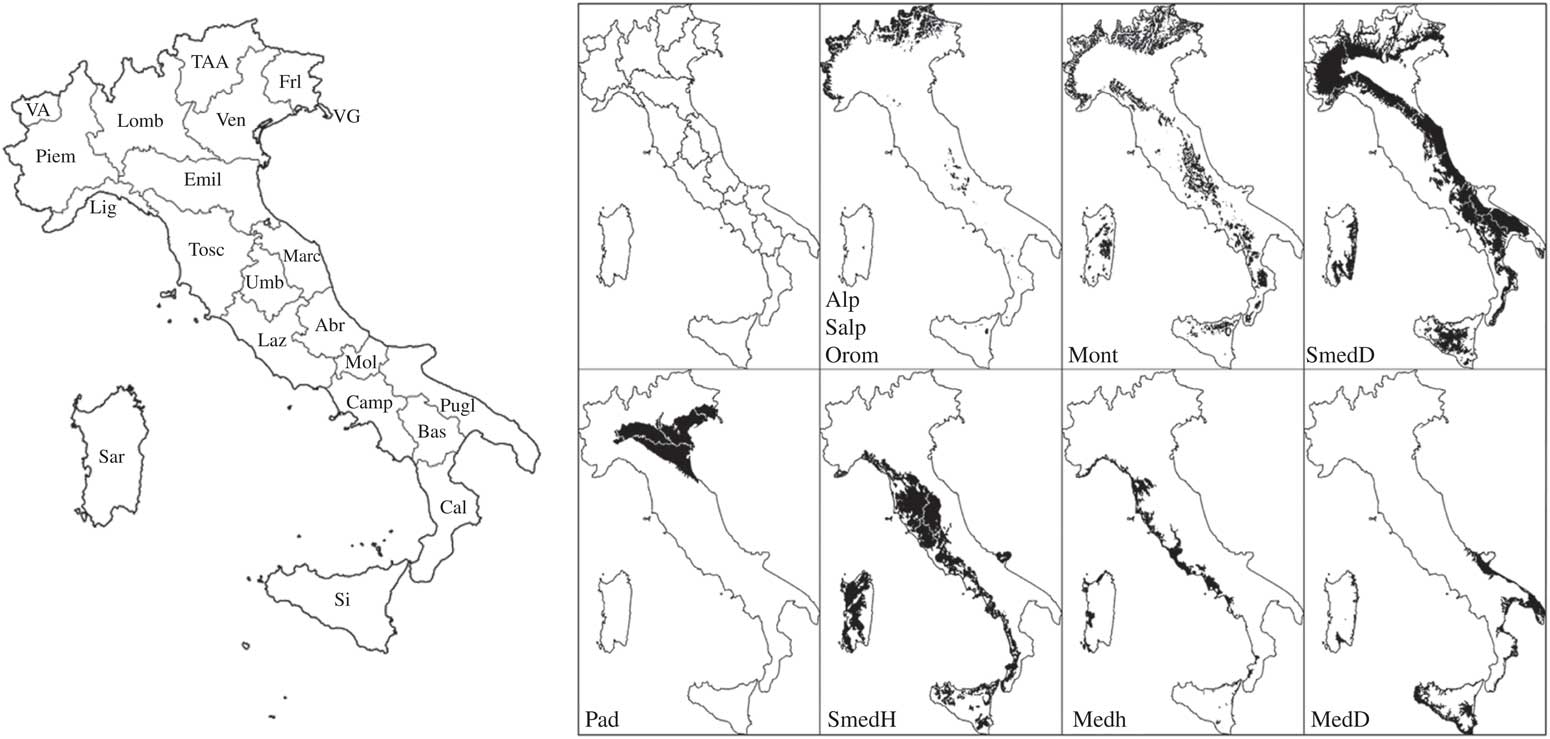
(a) Regional distribution. Presence-absence in 21 administrative regions (Fig. 1): VG, Venezia Giulia; Frl, Friuli; Ven, Veneto; TAA, Trentino-Alto Adige; Lomb, Lombardia; Piem, Piemonte; VA, Valle d’Aosta; Emil, Emilia-Romagna; Lig, Liguria; Tosc, Toscana; Marc, Marche; Umb, Umbria; Laz, Lazio; Abr, Abruzzo; Mol, Molise; Sar, Sardegna; Camp, Campania; Pugl, Puglia; Bas, Basilicata; Cal, Calabria; Si, Sicilia. In addition, the regional distribution was collapsed into 3 broad macroregions: Northern Italy, Adriatic peninsular Italy and Tyrrhenian peninsular Italy plus islands.
(b) Distribution in nine ecoregions. Nine ecoregions were recognized by Nimis (Reference Nimis2016) (Fig. 1) based on several thematic maps (elevation, precipitation, vegetation etc.) and taking into account the bioclimatic difference between the Tyrrhenian (humid) and Adriatic (dry) parts of the Italian Peninsula, which influences lichen distribution in Italy (Nimis & Tretiach Reference Nimis and Tretiach1995, Reference Nimis and Tretiach1999, Reference Nimis and Tretiach2004). The nine ecoregions (Fig. 1) are: Alp, Alpine (above treeline in the Alps and in Abruzzo); Salp, subalpine (near treeline in the Alps, oroboreal belt); Orom, oro-Mediterranean (above treeline outside the Alps except Abruzzo); Mont, montane (beech forest belt); SmedD, dry sub-Mediterranean (deciduous oak belt, excluding SmedH); Pad, padanian (the plains of the North, characterized by high urbanization, air pollution and almost total deforestation); SmedH, humid sub-Mediterranean (as SmedD but restricted to areas with a warm-humid climate, mostly Tyrrhenian); MedH, humid Mediterranean (mostly Tyrrhenian); MedD, dry Mediterranean.
(c) Commonness-rarity in each of the nine ecoregions. This was calculated by Nimis (Reference Nimis2016) on the basis of three main criteria: 1) number of specimens in the TSB lichen herbarium (% of the total for each ecoregion), 2) number of citations in the literature and 3) an expert assessment used in particular cases (e.g. that of recently-described taxa for which few literature records are available or to adjust the over-representation of studies on epiphytic lichens in urban/industrial areas). Commonness-rarity was expressed by Nimis (Reference Nimis2016) on an 8-class scale, as follows: er, extremely rare; vr, very rare; r, rare; rr, rather rare; rc, rather common; c, common; vc, very common; ec, extremely common. The “er” class was adopted for lichens found less than five times and/or not found recently, excluding recently described species and taxonomically very poorly known taxa. Percentiles were used to delimit the other classes; for further details see Nimis & Martellos (Reference Nimis and Martellos2003).
(d) Growth form. Cr, crustose; Fol, foliose and squamulose; Fr, fruticose.
(e) Photobiont. Ch, Trebouxioid algae; Tr, Trentepohlioid algae; Cy, Cyanobacteria.
(f) Reproductive strategy. S, mainly sexual; Veg, mainly asexual, by soredia or isidia.
(g) Substratum. Epiph, bark and lignum; Sax, rocks; Terr, soil, terricolous mosses, and plant debris.
(h) Ecological indicator values. These are “expert assessments” that are qualitative expressions of the ecological range of species with respect to different factors (e.g. Nimis & Martellos Reference Nimis and Martellos2001; Wirth Reference Wirth2001, Reference Wirth2010). A 5-class ordinal scale was proposed by Nimis (Reference Nimis2016) which was specific for each factor and each species. On testing, this scale was found to have high predictability (Nimis & Martellos Reference Nimis and Martellos2001). The following two indicator values were considered in this study. Xerophytism (aridity - X): 1, hydro- and hygrophytic, in aquatic situations or in sites with frequent fog; 2, significantly hygrophytic, intermediate between 1 and 3; 3, mesophytic; 4, xerophytic, but absent from extremely arid stands; 5, very xerophytic. Eutrophication (E - including deposits of dust and nitrogen compounds): 1, not resistant to eutrophication; 2, resistant to very weak eutrophication; 3, resistant to weak eutrophication; 4, occurring in moderately eutrophicated situations; 5, occurring in highly eutrophicated situations.
(i) Bioclimatic range. oc, restricted to humid-warm, oceanic areas; suboc, most common in areas with a humid-warm, suboceanic climate (e.g. most of Western Europe); subc, subcontinental, most common in areas with a dry-subcontinental climate (e.g. the Eurasiatic steppe biome).
(j) Poleotolerance. This value represents the tendency of a lichen to occur in areas with different degrees of human disturbance. It is expressed by the following 4 classes: 3, species also occurring in heavily disturbed situations (e.g. large towns); 2, species also occurring in moderately disturbed situations (rural areas, small settlements etc.); 1, species mostly occurring in natural or semi-natural habitats; 0, species which occur exclusively on old trees in ancient, undisturbed forests. Contrary to the other values, this has been assigned only to epiphytic species, since it is useful to point out indicators of long ecological continuity in old-growth forests.
The 21 administrative regions of Italy (left) and the nine ecoregions used in this study. Regions and ecoregions are abbreviated as in Data Sources and Methods.
The analysis was carried out considering:
1) Commonness/rarity values of all species in each of the nine ecoregions (2565 taxa).
2) Two contrasting groups of lichens: a) “nationally rare” lichens (i.e. those having a value no higher than “er” in any of the nine ecoregions, for a total of 353 infrageneric taxa); b) “nationally common” lichens (i.e. those having a value ranging from “c” to “ec” in at least one ecoregion, for a total of 387 infrageneric taxa).
Statistical analyses
Four datasets were used in the statistical analyses. First, the frequency distribution of the eight classes of commonness-rarity within the ecoregions (% on the total flora of each ecoregion), to explore patterns within bioclimatically homogeneous areas. Second, the incidence of biological traits (growth form, photobiont type, reproductive strategy) and ecological traits (substrata, ecological indicator values for xerophytism and eutrophication, bioclimatic range) among nationally rare and nationally common species was analysed using contingency tables. The relationship between commonness/rarity and traits was tested with the Χ 2 test. When significant differences were found for traits with multiple states, an additional pairwise comparison was carried out and the significance level was determined taking into account the Bonferroni correction. Lastly, presence-absence of nationally rare and nationally common species in the 21 administrative regions was used for datasets 3 and 4 respectively. These two matrices were ordered using Principal Coordinate Analysis (PCoA, also known as metric multidimensional scaling), a technique which maintains the Euclidean representation of the objects (administrative regions). As a distance measure we used Jaccard’s index, which is suited to binary data such as presence-absence species matrices (Legendre & Legendre Reference Legendre and Legendre1998). The importance of three macroregions (Northern, Adriatic and Tyrrhenian peninsular Italy) was tested using Adonis (also known as Permutational Manova; Oksanen et al. Reference Oksanen, Guillaume Blanchet, Friendly, Kindt, Legendre, McGlinn, Minchin, O’Hara, Simpson and Solymos2017), a function which analyses and partitions sums of squares of the distance matrix. To inspect the PCoA ordination, we calculated the overall mean distance in the rare and common species, and the mean distance within and between groups. All statistical analyses were performed using R (R Development Core Team 2017).
Results
Commonness/rarity in the nine ecoregions of Italy
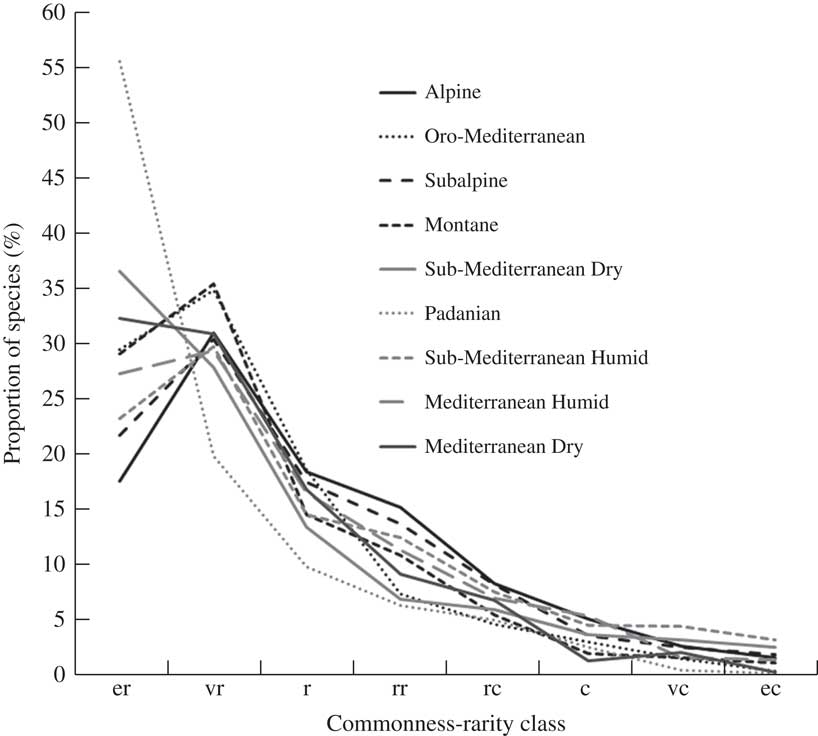
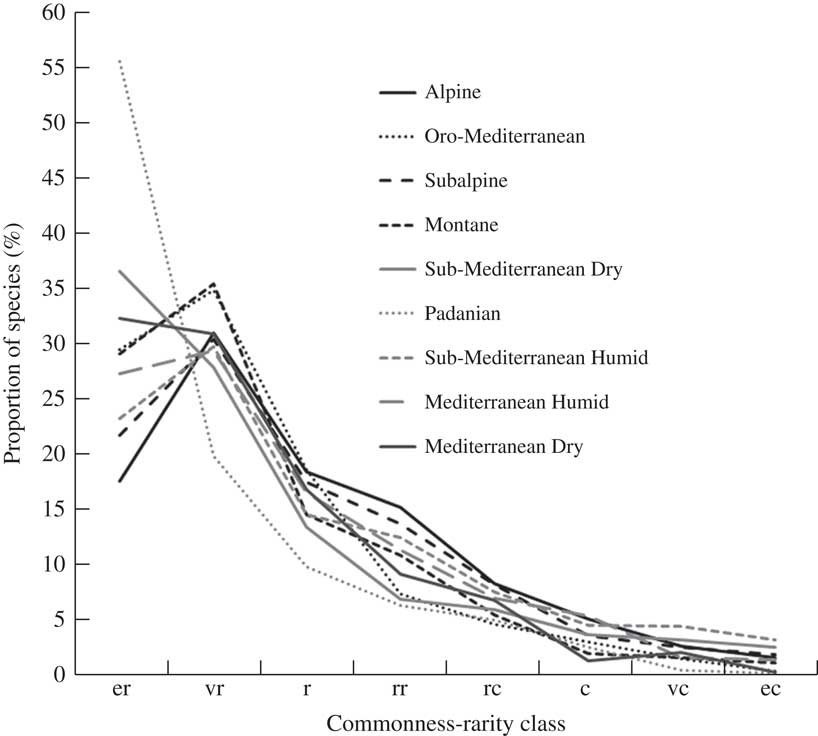
In the nine ecoregions, the frequency distribution of the eight commonness/rarity classes is similar (Fig. 2). Rare species are largely predominant after which there is a progressive, sharp decrease in percentage occurrence, with extremely common species always being in a minority. Among epiphytic species restricted to old-growth forests (poleotolerance 0), the average percentage of those included in the “er” class (calculated excluding the Alpine and oro-Mediterranean ecoregions which do not host forest vegetation) is even higher (69%). In Fig. 2 the entire lichen biota of each ecoregion is considered, resulting in some species which are rare in a given ecoregion being common in another. The average percentage of “rare” species (from “er” to “rr”) in the ecoregions is 85·7% but around one third of these (29·3%) turn out to be “common” (from “rc” to “ec”) in other ecoregions, sometimes situated a few hundred metres downslope in the mountains.
Proportion of species in the 8 commonness-rarity classes in each of the 9 ecoregions expressed as a percentage of all species found in that region. Key to commonness-rarity classes: er, extremely rare; vr, very rare; r, rare; rr, rather rare; rc, rather common; c, common; vc, very common; ec, extremely common.
Comparison between nationally rare versus common species in the ecoregions and in the regional floras
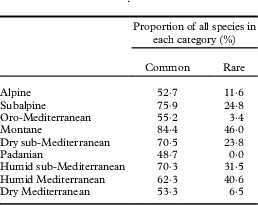
Nationally rare species have the highest frequency in the least anthropized and/or more humid ecoregions (Table 1) (montane, subalpine and humid sub-Mediterranean), and the lowest frequency in areas which are the least favourable for lichens (the heavily polluted Padanian Italy and the dry Mediterranean ecoregion). Low frequencies in the oro-Mediterranean belt are probably due to this ecoregion of Italy being the only one that has been poorly explored by lichenologists.
Proportion of nationally common and nationally rare species in the nine ecoregions. Total for Italy: rare=387, common=353

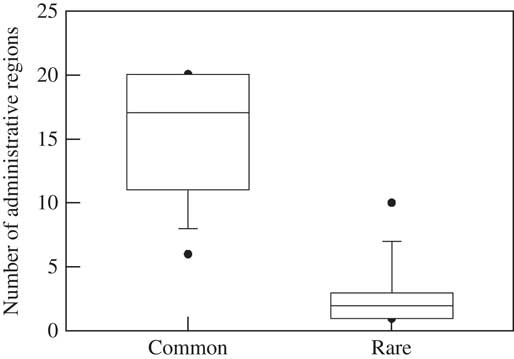
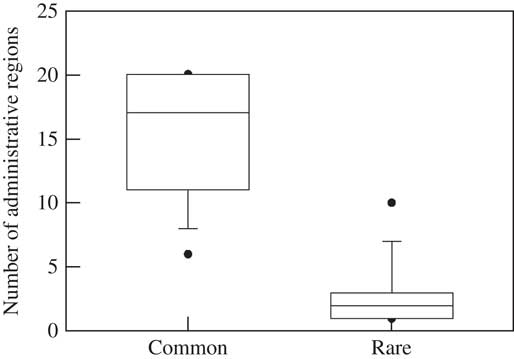
The distribution of nationally rare versus common species in the 21 regional floras is markedly different (Fig. 3). Among common species, c. 60% occur in at least 75% of the regions while only 5% of rare species occur in at least 50% of the regions and c. 45% of them are known from only a single region. This pattern is also reflected in the significant difference in percentages of nationally rare (5·3±1·8; mean±SD) and nationally common species (30±6) in the 21 regional floras (t-test, P<0·001). The lowest percentage of rare species (<10%) is found in regions located along the Adriatic side of the Italian Peninsula.
The distribution of nationally rare versus nationally common species in the 21 regional floras. The bottom and top of the box are the first and third quartiles, while the line within the box is the median. Whiskers (error bars) above and below the box indicate the 90th and 10th percentiles. Outliers (5th and 95th percentiles) are shown as points.
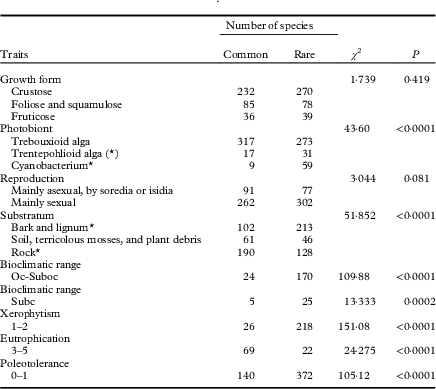
Some biological and ecological traits differ significantly between rare and common species (Table 2). In particular, the type of photobiont is clearly different between these two groups, with a significantly higher frequency of trentepohlioid photobionts among rare species (P<0·001). A similar pattern, even if only marginally significant, occurs for cyanobacterial photobionts (P=0·04 and with the Bonferroni correction P=0·017). Growth forms and reproductive strategies do not differ between rare and common species.
Comparison between nationally common and nationally rare lichen species for a range of morphological and ecological traits using χ2. For abbreviations see Data and Methods section. A significant χ2 result was followed by a post-hoc pairwise test using the Bonferroni procedure. *=significant difference; (*)=marginally significant difference
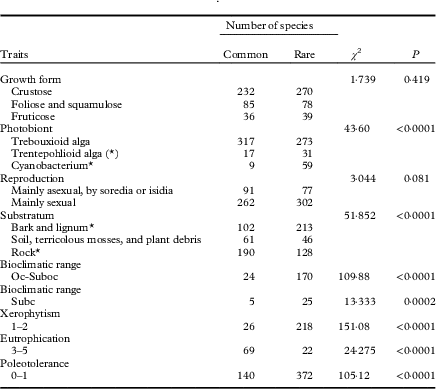
There are also differences in some ecological parameters (Table 2). Epiphytes are more frequent among rare species, and saxicolous lichens among common species. Lichens associated with natural or semi-natural habitats (poleotolerance=0 and 1, respectively) have a higher proportion of the rarer species. Of the 194 rare epiphytic species, 97 (50%) are restricted to old-growth forests (poleotolerance=0) while none are found in disturbed habitats (poleotolerance=2 and 3). Conversely, 62·6% of the common species occur in disturbed habitats. Nitrophytic lichens have greater representation among common species and hygrophytic lichens among rare species, which is also substantiated by the higher frequency of rare species with an oceanic/suboceanic distribution. The small set of species with a subcontinental distribution are also considerably more frequent among rare species.
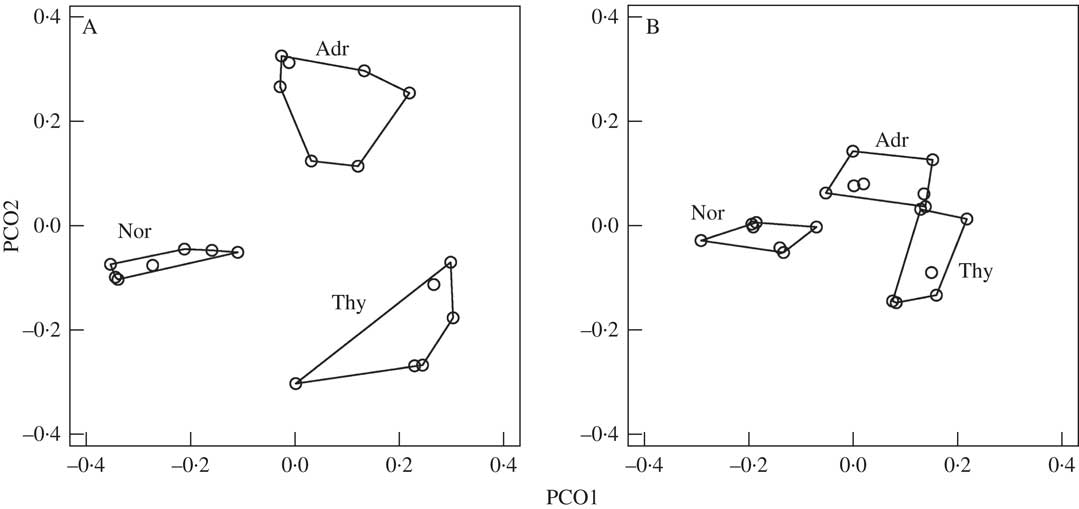
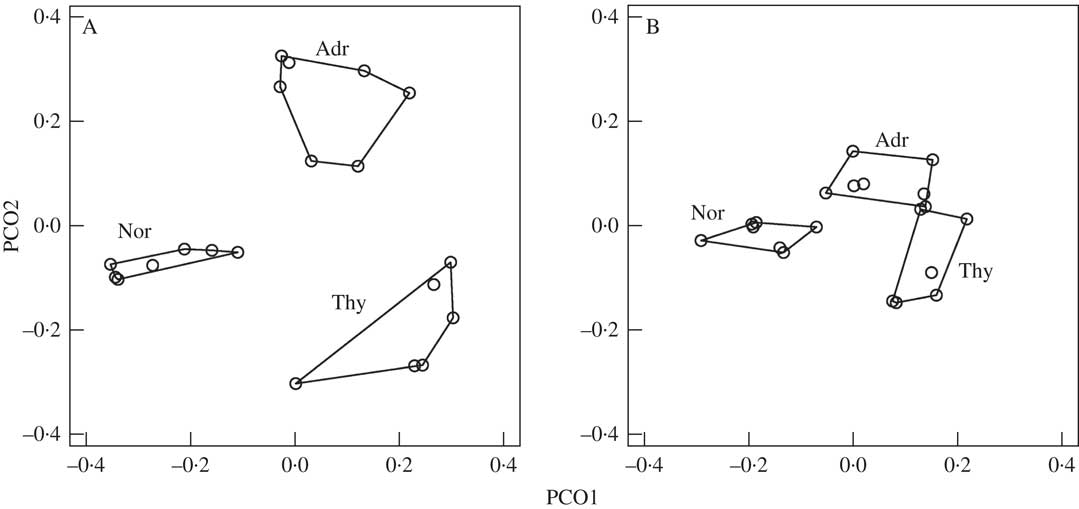
Results of the PCoA analysis confirm the floristic differences among the three macro-regions in which the 21 administrative regions were grouped: a) Northern Italy, b) Adriatic peninsular Italy, c) Tyrrhenian peninsular Italy and islands (Fig. 4). Differences among macro-regions are supported by the Adonis results, both for rare and common species (F=2·522, P<0·001 and F=10·221, P<0·001, respectively). However, the three groups of regions are more scattered in the ordination diagram based on rare species (Fig. 4A; Euclidean distance between groups 0·84) than in that based on common species (Fig. 4B; Euclidean distance between groups 0·27) which indicates, for rare species, a lower number of shared species among macro-regions and a higher turnover in the regional floras.
Ordination diagrams (PCoA analysis) based on the presence/absence of nationally common (A) and rare (B) species in the 21 administrative regions. The regions are grouped in three macro-regions: Northern Italy (Nor), Adriatic peninsular Italy (Adr) and Tyrrhenian peninsular Italy and islands (Thy).
Discussion
Gaston (Reference Gaston2011) described rarity as “the state of having a low abundance and/or a small range size”. The second factor being almost irrelevant for broad-ranging organisms such as lichens, any definition of “rarity” for these organisms must answer the question “abundant where”? The spatial scale can vary from the level of a single biotope to the entire world. In our analysis, we have used two different definitions of “rarity”, reflecting the probability of finding a species a) within bioclimatically homogeneous areas (ecoregions), and b) within bioclimatically heterogeneous administrative regions. Depending on the definition, the results are slightly different. Within a given ecoregion, the observation that most species are naturally rare and only a small number are common (Gaston Reference Gaston2010) proved to apply also to lichens; the number of rare species by far outweighs that of common species (i.e. the state of being common is itself rare). However, when we enlarge the scale to the entire country (i.e. across different ecoregions), it appears that many of the species which are “rare” in a given ecoregion are “common” in another. For this reason, the number of “rare” species is much lower in the national flora than within bioclimatically homogeneous ecoregions. This suggests that one of the main drivers for the rarity of species within bioclimatically homogeneous areas lies in the bioclimate itself, since several species bound to a different ecoregion survive in small populations within narrow microclimatic niches (Rodriguez et al. Reference Rodriguez, Renison, Filippini and Estrabou2017). This might also be because lichens, as compared to vascular plants for example, have much wider geographical distributions and a very low number of narrow-ranging endemic species, rendering bioclimatic factors, especially air humidity, one of the main drivers of species distribution and abundance within a given area (Marini et al. Reference Marini, Nascimbene and Nimis2011).
The analysis of rarity in the regional floras, encompassing several ecoregions, shows that nationally rare species are associated with epiphytic growth in undisturbed, natural or semi-natural forests, and with some morpho-functional traits such as trentepohlioid or cyanobacterial photobionts. Trentepohlioid photobionts occur in c. 10% of the lichens known from Italy, mostly in species growing in shaded and sheltered habitats within old forests (Marini et al. Reference Marini, Nascimbene and Nimis2011) which often have subtropical to tropical affinities (Aptroot & van Herk Reference Aptroot and van Herk2007). Cyanobacterial lichens are an ecologically heterogeneous group comprising c. 10% of the Italian lichen flora. In terricolous lichens, Matos et al. (Reference Matos, Pinho, Aragón, Martínez, Nunes, Soares and Branquinho2015) found that the type of photobiont was particularly responsive to humidity-aridity gradients, with trentepohlioid algae and cyanobacteria clearly responding in contrasting ways to aridity. In our analysis, however, rare species tended to be associated with epiphytic growth, and cyanobacterial epiphytic lichens (with Nostoc) were shown by Marini et al. (Reference Marini, Nascimbene and Nimis2011) to be significantly associated with old-growth forests in rainy areas. Common species, on the contrary, tend to be associated with saxicolous habitats and human disturbance.
There is no difference in reproductive strategy between nationally rare and common species, despite the fact that several extremely common lichens occurring in disturbed habitats reproduce vegetatively. Asexual reproduction is often regarded as a selective advantage as part of the “ruderal” strategy, such as in apomictic higher plants of disturbed habitats (Poelt Reference Poelt1994) where propagation strategy is typical of r-selected species (Rogers Reference Rogers1990). Similarly, some of the lichen flora of urban wastelands can be categorised as stress-tolerant ruderals (Gilbert Reference Gilbert1990; Jahns & Ott Reference Jahns and Ott1997). However, according to Nimis & Martellos (Reference Nimis and Martellos2003), asexual species (c. 17% of the Italian flora), although including a few species which are very common and abundant in disturbed sites, mostly occur under humid, shaded, natural conditions and are relatively rare, which explains why asexual reproduction does not discriminate between rare and common species.
The analyses of regional floras based on nationally rare and common lichens show that both subsets are different among regions, revealing the important distinction between the more humid Tyrrhenian regions and those located along the Adriatic side of the Italian Peninsula (see Nimis & Tretiach Reference Nimis and Tretiach1995). However, the differences in composition are much more pronounced in rare species, indicating a much higher species turnover within the regional floras. Nationally rare species are less numerous in the regions located along the Adriatic side of the Italian Peninsula; these regions, compared to those located along the Tyrrhenian side, have a lower lichen diversity and are characterized by a less humid climate which is not favourable for the persistence of rare species with tropical affinities (see Nimis & Tretiach Reference Nimis and Tretiach1999). The behaviour of these two species pools is analogous to that of endemics with narrow ranges and invasive species in vascular plants (Myers et al. Reference Myers, Mittermeier, Mittermeier, da Fonseca and Kent2000; Qian & Ricklefs Reference Qian and Ricklefs2006). Namely, the pool of nationally rare lichens contributes to the distinctiveness of the regional floras, whilst that of common lichens contributes to a floristic homogeneity across regions that is likely driven by human disturbance, as indicated by the high frequency of nitrogen-tolerant species in this group (Nascimbene et al. Reference Nascimbene, Lazzaro and Benesperi2015).
In summary, the patterns revealed by our analyses reflect the environmental filters together with the morphological and ecological traits which determine rarity and commonness. Among Italian lichens, rarity appears to be related to two main factors. First, bioclimate (many rare species are outside the limit of their optimal bioclimatic conditions) and second, reduced availability of suitable habitats. Conversely, commonness is related mainly to human disturbance (eutrophication, creation of drier habitats). According to Nimis & Tretiach (Reference Nimis and Tretiach1995), the high lichen diversity of Italy reflects clearly the climatic diversity of the country, from cold-alpine to warm suboceanic climates, with a prevalence of mild-temperate, moderately humid climates and an overall scarcity of truly oceanic or arid-continental climate types (Nimis Reference Nimis2016). The same phenomenon observed within homogeneous ecoregions (i.e. the high number of “rare” species being largely due to lichens which are at the margin of their bioclimatic range) seems to apply also at the national level. Most of the nationally “rare” species belong to biogeographical elements which are marginal with respect to Italy: an oceanic-suboceanic element with tropical affinities and a small set of continental species of the dry steppe biome. These survive only in habitats with particular bioclimatic conditions: the few remnants of old-growth forests (especially in Tyrrhenian Italy) and the dry Alpine valleys with a continental climate. Many rare species persist in microrefugia, sites with microclimates that support small populations of species beyond the boundaries of the climatic limits of their main distributions (Rull Reference Rull2009; Dobrowski Reference Dobrowski2010). This suggests that, as already observed by Aptroot & van Herk (Reference Aptroot and van Herk2007) in the Netherlands, climate change is also likely to modify the patterns of rarity among the lichens occurring in Italy.
We are grateful to Chiara Lelli (PhD student, University of Bologna, BiGeA) for her support in preparing figure layouts.