Introduction
From 5000–3000 BC, affluent village systems emerged along the coasts of South China and northern Vietnam. In contrast to prior archaeological evidence of transient and low-intensity lifestyles pre-5000 BC, these village systems comprised settled populations, who inhabited large villages, practised hunting, gathering and fishing, used formal cemeteries and produced refined ceramic traditions. Many of these sites, especially those in Fujian and Guangdong Provinces in China, have been interpreted as the departure points of the earliest dispersals of proto-Austronesian people, who eventually occupied much of the Asia-Pacific region (e.g. Chang Reference Chang and Tang1994; Chang & Goodenough Reference Chang, Goodenough and Goodenough1996; Bellwood Reference Bellwood1997; Tsang Reference Tsang, Blench, Sagart and Sanchez-Mazas2005: 69).
Who were these ancient coastal inhabitants, what were their cultural and biological origins and how did they develop prosperous village systems that persisted for at least two millennia? Although substantive data with which to address these questions have, to date, been limited, the potential significance of the region has attracted several working hypotheses that can be tested as new evidence emerges. Chang (Reference Chang1969) and Yang et al. (Reference Yang, Qiu, Feng and Xiang2015) have described the coastal groups of 5000–3000 BC as engaged primarily in hunting, fishing and foraging, possibly supplemented with some forms of plant cultivation. Meacham (Reference Meacham, Yeung and Li1995: 450) and Bellwood (Reference Bellwood2005: 126–27) argue that these groups were rice farmers, associated with the spread of farming economies across the region. Finally, Higham (Reference Higham1996: 79) regards these types of sites in Guangdong and Hong Kong as those of affluent foragers.
The most recent discoveries in this region suggest that rice farming commenced here c. 3000 BC (Zhang & Hung Reference Zhang and Hung2010; Yang et al. Reference Yang, Wang, Zhuang, Li, Ma, Ma, Cui, Wei and Fuller2017, Reference Yang, Chen, Ma, Li, Hung, Zhang, Jin, Liu, Zhou and Fu2018), and, therefore, the earlier coastal groups were complex hunter-gatherers (Zhang & Hung Reference Zhang and Hung2012). Coastal regions around the world host several of the oldest examples of complex social groups—now recognised as complex hunter-gatherers, rather than crop farmers (Arnold et al. Reference Arnold, Sunell, Nigra, Bishop, Jones and Bongers2016). New discoveries along the South China Coast can potentially clarify these interconnected issues. First, whether or not the coastal communities of 5000–3000 BC, if not earlier, really do represent complex hunter-gatherers; and, second, what happened as a result of the adoption of rice farming c. 3000–2500 BC. The current research investigates the cultural associations and demographic sources of these early communities along the South China Sea coast. This work evaluates the ‘two-layer model’ (Hung et al. Reference Hung, Zhang, Matsumura, Li, Matsumura, Hung, Li and Shinoda2017; Matsumura et al. Reference Matsumura, Hung, Nguyen, Zhao, He, Zhang, Piper, Matsumura and Bulbeck2017a & Reference Matsumura, Nguyen, Li, Hung, Huang, Matsumura, Hung, Li and Shinodab, Reference Matsumura2019) of human populations in prehistoric southern China, comprising early Australo-Melanesian hunter-gatherers and later East Asian farmers.
Complex societies and subsistence systems
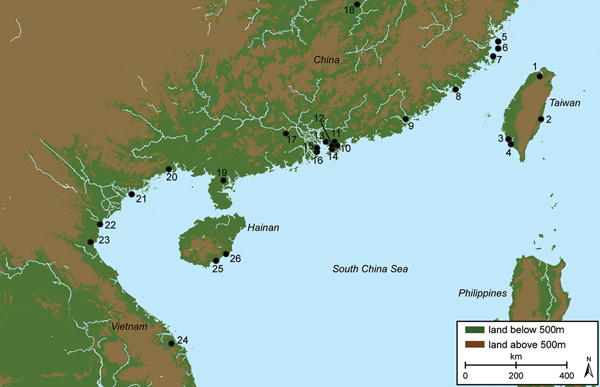
The present study area on the South China Coast extends for approximately 2500km, and includes Fujian, Guangdong and Guangxi in China, plus the island of Hainan, and continues along the north-east coast of Vietnam (e.g. Quang Ninh, Hai Phong, Thanh Hoa, Ninh Binh, Nghe An, Ha Tinh and Quang Nam Provinces) (Figure 1). This region corresponds with the well-known pre-Han Dynasty territory of the Baiyue People (or Hundred Yue). Regardless of modern-day political affiliations, these areas all border the South China Sea, and have revealed archaeological sites associated with prosperous early coastal societies. Sites dating to 5000–3000 BC are among the oldest of all of those found near the present-day coastlines of the study region. Older coastlines have been submerged by rising Postglacial sea levels, most dramatically after 10 000 BC and continuing to at least 6000 BC (Zong Reference Zong2004), resulting in the loss of archaeological evidence. Indeed, modern global coastlines seldom have revealed sites older than 6000 BC, and then only in unusual, localised geological circumstances. By 5000 BC, coastal habitats had become stable, with local, reliable resources concurrent with the development of productive estuaries, new soil development and access to fresh water close to sea level (Zong Reference Zong2004). At this time, the South China Coast in particular began to support large settlements with formalised village structures, dense cemeteries and a number of distinctive cultural groups.
Representative sites along the South China Coast at 5000–3000 BC: 1) Dabenkeng; 2) Changguang; 3) Xinyuan; 4) Fengbitou; 5) Daowei I & Daowei II; 6) Chipinglong; 7) Keqiutou; 8) Jinquishan, Fuguodun; 9) Chenqiaocun, Shiweishan; 10) Xiantouling; 11) Dahuangsha; 12) Dameisha; 13) Haogang; 14) Dawan & Shenwan; 15) Houshawan; 16) Caotangwan; 17) Xiankezhou; 18) Gaomiao (a possible origin for the Xiantouling groups, sites 10–17); 19) Liyudun; 20) Yapeishan, Malanjushan & Beixiaoshan; 21) Cai Beo; 22) Da But, Con Co Ngua & Go Trung; 23) Quynh Van; 24) Bau Du; 25) Yingdun; 26) Lianziwan.

More than 70 coastal sites in south-east China and Vietnam, dating to 5000–3000 BC, reflect a number of distinct cultural communities (Figure 2). These are defined by their different ceramic traditions, chipped or flaked stone artefacts, ground or polished stone tools, village layouts and other traits. Sites have been assigned to the Keqiutou group in Fujian; the Xiantouling (also called Dawan) in Hong Kong and surrounding areas; the Chenqiao group in Chaoan of Guangdong and part of Guangxi; the Cai Beo in Quang Ninh and Hai Phong; the Da But group in Thanh Hoa and Ninh Binh; the Quynh Van group in Nghe An and Ha Tinh; the Bau Du group in Quang Nam; and others in Hainan and the offshore islands. Other affluent coastal hunter-gatherer sites of similar age have been reported beyond the current study area, scattered across Mainland Southeast Asia. Published examples of these sites are at Nong Nor (2450 BC), the earliest archaeological layer of Khok Phanom Di in Thailand (Higham Reference Higham2014), and Guar Kepah (3700 BC) on the Malaysian Peninsula (Saidin Reference Saidin2017) (Figures 1–2). The relationships of these groups with each other and with those of the South China Coast, however, remain unclear.
Representative coastal hunter-gatherer archaeological assemblages along the South China Coast, 5000–3000 BC (note: Nong Nor and Khok Phanom Di are more recent, but still mentioned in the text).

While many of these ancient coastal communities have been categorised as ‘Neolithic’—implying residence in permanent villages—the role of farming, which typically would define Neolithic groups, is uncertain. The contemporaneous diet probably included locally available plant foods, but the role of plant management has yet to be defined archaeologically (e.g. Shenzhen Municipal IA 2013). So far, no evidence for local rice or millet farming has been reported prior to 3000–2500 BC. Although rice farming had been spreading across the middle and lower Yangtze regions from at least 6500 BC (e.g. Zhang & Hung Reference Zhang and Hung2008, Reference Zhang and Hung2010; Fuller Reference Fuller2011; Liu & Chen Reference Liu and Chen2012; Deng et al. Reference Deng, Qin, Gao, Weisskopf, Zhang and Fuller2015), the populations of the South China Coast at 5000–3000 BC practised an alternative, non-rice-based economy that, nonetheless, could support large numbers of dense and formal settlements.
The only known archaeobotanical evidence so far identified along the South China Coast prior to 3000 BC is of non-domesticated roots, tubers, nuts, fruits and other ‘wild’ foods (e.g. Yang et al. Reference Yang, Barton, Wan, Li, Ma, Li, Zhang and Wei2013, Reference Yang, Wang, Zhuang, Li, Ma, Ma, Cui, Wei and Fuller2017; Z. Li Reference Li2016). Xincun in coastal Guangdong, for example, has yielded evidence of sago palm (Corypha umbraculifera), banana (Musa sp.), lotus (cf. Nelumbo nucifera), Chinese arrowhead (Sagittaria sp.), water chestnut (cf. Eleocharis dulcis), fern (Angiopteris sp.), Job's tears (Coix sp.) and acorn (Quercus sp.) dating to 3350–2470 BC (Yang et al. Reference Yang, Barton, Wan, Li, Ma, Li, Zhang and Wei2013). Guye in coastal Guangdong has produced Cordia, acorn, sago palm, Canarium nuts (Canarium album), tubers (Araceae, Taccaceae), water lily (Nymphaea tetragona) and Job's tears dating to 3700–3000 BC (Z. Li Reference Li2016; Yang et al. Reference Yang, Wang, Zhuang, Li, Ma, Ma, Cui, Wei and Fuller2017). Recent unpublished research by Zhenhua Deng and the author confirms that Canarium nuts were abundant at inland shell midden sites in Guangxi c. 7000–2000 BC. These nuts were a consistently reliable food source for many Mainland and Island Southeast Asia hunter-gatherers from at least 10 000 BC onwards (B. Li Reference Li2016).
Besides plant remains, the subsistence economy at these coastal sites has been characterised by animal food remains, which reflect a diet of wild (non-domesticated) mammals, fish and shellfish. In this regard, Keqiutou in Fujian is exemplary. Here, terrestrial faunal remains include those of Sika deer (Cervus nippon), Red deer (Cervus elaphus), Sambar deer (Rusa unicolor) and wild pig. Marine species include wrasses (Labridae family), sea turtle (Chelonioidea), baleen whale (Mysticeti) and assorted fish and shellfish. The latter taxa consist primarily of the common orient clam (Meretrix lusoria), followed by the Chinese domestic oyster (Ostrea plicatula), the blood cockle (Arca granosa) and more than a dozen other taxa in lesser quantities. The importance of seafood in the ancient diet of this region has been confirmed through observation of nitrogen-15 (15N) levels in human bone. At Liyudun in coastal Guangdong, for example, two uncontaminated bone samples were found to have 15N levels of 14.8‰ and 12.8‰—much higher than the 9‰ found in terrestrial omnivores at the same site (Hu et al. Reference Hu, Li, Wang and Richards2010).
Formal rice farming along the South China Coast was apparently not the only pathway to the development of regional social complexity, which instead could be supported by access to the region's diverse terrestrial and marine resources. Long-term food security may have been based on the natural resources available to all members of the coastal communities throughout the region; for example, by relying on fish, shellfish, sago palm, banana, freshwater roots, tubers, fern roots, acorns, Job's tears and Canarium nuts. This region-wide diet could be supplemented with localised distinctions and distributions of ecological niches, seasonally available resources and the skillsets required in hunting, gathering and other local resource management.
Defining diverse cultural groups
In the study region c. 5000–3000 BC, at least eight different cultural groups can be discerned on the basis of material assemblages (Figure 2). In contrast to the sparse and uneven ceramic records of pre-5000 BC hunter-gatherer campsites, pottery traditions after this date were strongly developed, except in areas to the far south.
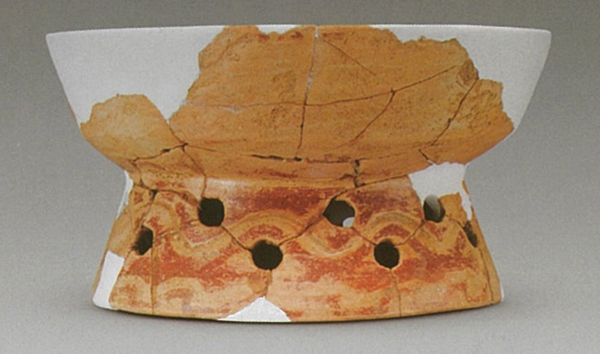
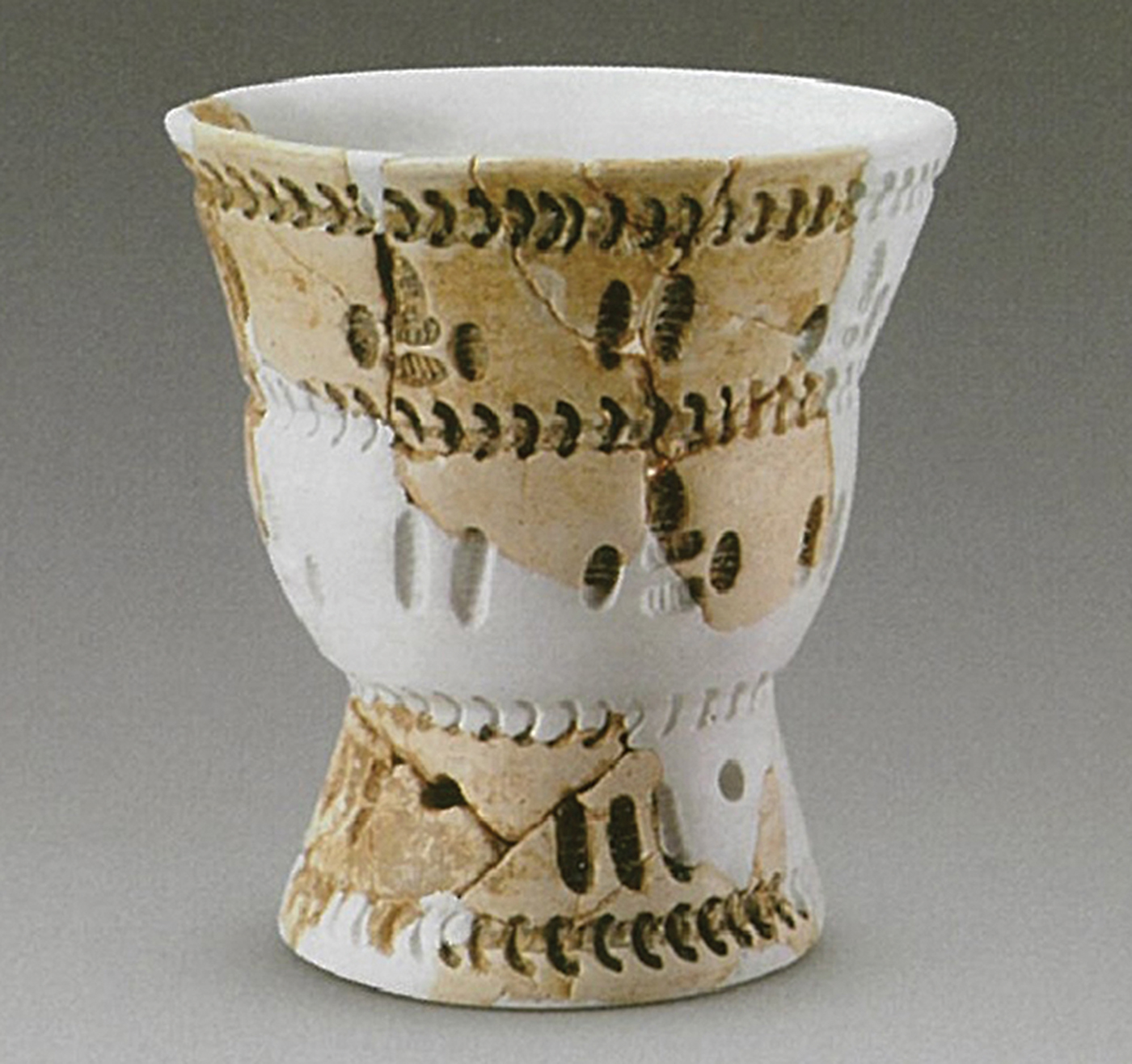
Sites of the Xiangtouling group in Guangdong are generally regarded as the most complex communities in coastal South China c. 5000–3000 BC (e.g. Zhang & Hung Reference Zhang and Hung2012, Reference Zhang and Hung2016). More than 20 sites with Xiantouling-associated pottery and artefacts have been reported on the offshore islands and along the Pearl River Delta (Shenzhen Municipal IA 2013; Yang et al. Reference Yang, Qiu, Feng and Xiang2015). These Xiantouling sites show different scales of residential settlement—some exceeding 50 000m2 in area—and formal cemeteries. Pottery traditions were well established, exhibiting numerous local styles and expressions of cord marking, paddle impression, incision, punctate design, red slip, paint and white ware (Figures 3–4). The white, painted and punctate pottery styles appear to derive from Gaomiao (a possible origin for the Xiantouling group), Tangjiagang and Daxi in Hunan Province, around 800km northward from the Xiantouling cultural group (He Reference He and Tang1994). Among the stone tools are polished axes and adzes—sometimes with stepped or shouldered shapes. These are significantly different from the older toolkits of non-polished chipped pebbles and cobbles. Other notable artefacts include specialised fishing gear, beads and other ornaments, and the world's oldest-known barkcloth beaters (Tang Reference Tang and Tsang2003).
Example of painted pottery from Xiantouling (rim diameter = 154mm, height = 81mm, ring foot diameter = 126mm, thickness = 1–5mm; Shenzhen Municipal IA 2013: pl. 36-4).

Example of punctated pottery from Xiantouling (rim diameter = 140mm, height = 150mm, ring foot diameter = 102mm, thickness = 6mm; Shenzhen Municipal IA 2013: pl. 31-4).

The highly complex Xiantouling group perhaps developed as a result of two main factors. First, it is highly possible that the Xiantouling group migrated from Hunan Province. Earlier sites with diverse and specialised material culture—particularly finely made pottery traditions are known in the group's suggested area of origin in Hunan (He Reference He and Tang1994: 71–78). Second, the Xiantouling communities were able to take advantage of reliable and rich natural resource habitats at the mouth of the Pearl River, around modern Hong Kong and Macau.
The Keqiutou pottery of the Keqiutoi group on Pingtan Island, in the north-east of the study region, was hand-formed and fired at low temperature, resulting in a coarse and friable earthenware. The major vessel forms are jars, plates, bowls and items known in Chinese as ‘kettles’. The most popular decorations are shell-and-dot impression, incision and cord marking. The incised decorations include variants of parallel, crossed or zigzag lines. Some vessels are polished and then red slipped (Lin Reference Lin, Chen and Pan2005: 77).
On the island of Cat Bat, off the north-east coast of Vietnam, the Cai Beo site is especially informative for the period 5000–3000 BC. Here, five different excavations have so far investigated 449m2 of the site's total area, which is estimated at 18 000m2 (K.S. Nguyen Reference Nguyen2005, Reference Nguyen2009). The deepest and oldest layer of the site is estimated to date to c. 5000–3000 BC—based on a single radiocarbon determination of 6475±170 cal BP—and its oldest component has yielded the definitive Cai Beo assemblage in terms of its coarse, thick pottery, as well as stone pebble tools. Different traditions of cord-marked or paddle-impressed pottery, such as represented in the Da But and Quynh Van assemblages, define other coastal Vietnamese groups (K.S. Nguyen et al. Reference Nguyen, Pham, Tong, Glover and Bellwood2004). No pottery at all has been found farther south in the Bau Du assemblage of Quang Nam (Ha Reference Ha1996).
The stone-tool inventories vary greatly among these coastal groups, ranging from simple chipped pebbles and cobbles to formal ground and polished blades. The most elaborate forms of polished axes and adzes are found in the northern areas, such as at the Xiantouling and Keqiutou sites. In contrast, in the southern areas, Cai Beo-type stone implements consist mostly of flaked chopping tools. Stone adzes or axes with partly polished edges appear in Da But, where the stone tools and pottery assemblages resemble those from Dingshishan in inland Guangxi. The stone implements from Quynh Van comprise crudely flaked tools of undefined forms, along with many stone pestles and pounders. Some flakes and thin blades were documented, along with a few edge-ground axes (K.S. Nguyen et al. Reference Nguyen, Pham, Tong, Glover and Bellwood2004: 182). Southward into central Vietnam, the coastal group of Bau Du has produced only flaked tools, non-polished chipped pebbles and cobbles, pestles and pounders (Ha Reference Ha1996).
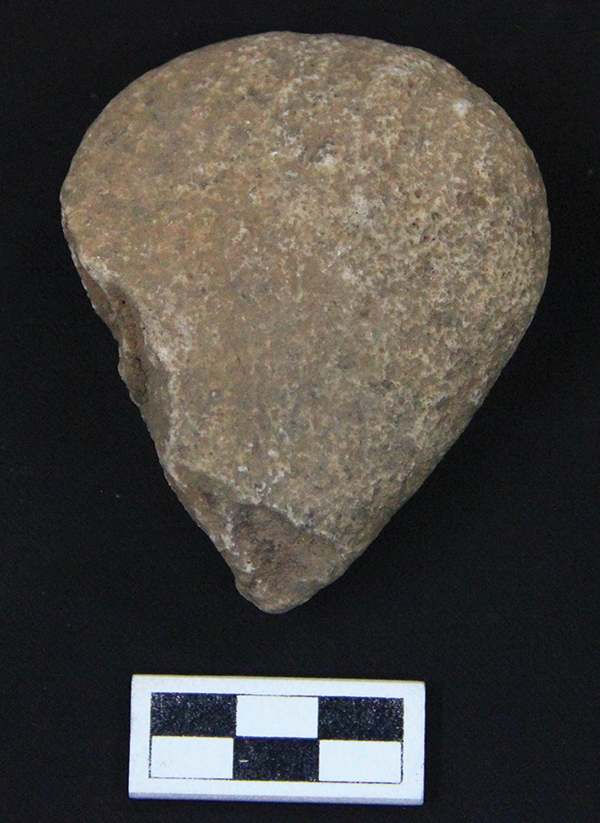
Despite geographic variation in stone artefact production, haolizhuo (oyster picks) are found consistently in great abundance at sites from Fujian in the north through to Quang Nam in central Vietnam in the south. These tools have been reported at many coastal sites, including Keqiutou (Fujian), Daowai I, Daowei II and the lower stratigraphic layer at Chipinglong (Matzu Islands near Fujian); Shenwan, Shaxia and Haoyong (Hong Kong); Baojingwan, Shiweishan and Chenqiaocun (Guangdong); and Yapeishan, Malanjushan, Beixiaoshan, Bajiaodun (Guangxi)—as well as Cai Beo (on the north-eastern coast of Vietnam) and Bau Du (Quang Nam in central Vietnam). The haolizhuo gradually vanish from the archaeological record with the onset of rice and millet farming (Figure 5).
Example of haolizhuo (oyster pick) from Cai Beo, Ha Long Bay on the north-east coast of Vietnam (courtesy of the Institute of Archaeology in Hanoi, Vietnam).

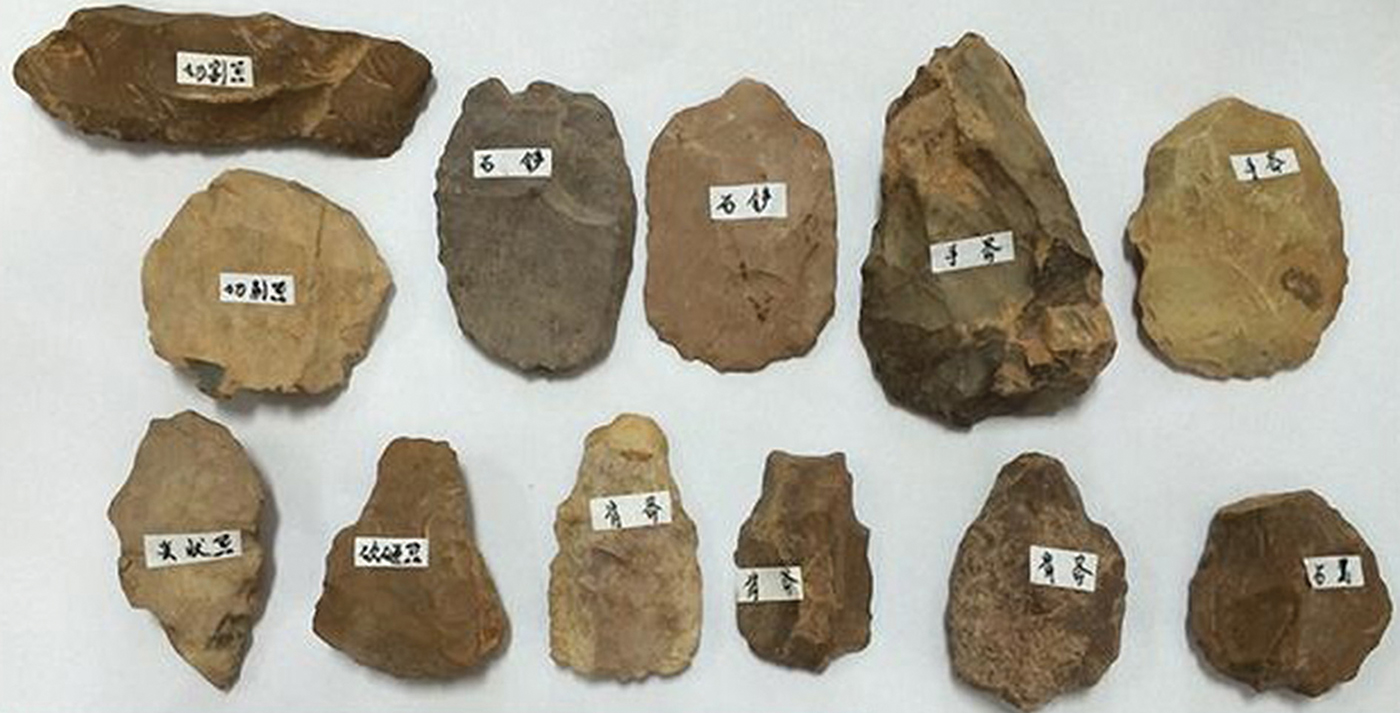
Overall, the artefact assemblages among these coastal groups represent different levels of craft organisation and possible involvement in exchange economies, with the most pronounced expressions at the Xiantouling sites located around the Pearl River Delta. A number of specialised workshops from South China Coast sites, for example, include a cluster of 23 stone-tool workshops at the Xiantouling-associated site in Guangdong, which dates to c. 4000–3000 BC (Figure 6). Some of the stone tools from Xiqiaoshan may have been exported to both coastal and inland sites, more than 700km distant (Yang et al. Reference Yang, Qiu, Feng and Xiang2015: 343). The development of Xiantouling craft specialisation and trade may have been influenced by proximity to the Pearl River Delta, which provided access to land, river and sea routes.
Example of varied pre-forms and stone tools from Xiqiaoshan lithic workshop sites in Guangdong (no scale available in original publications, each around 50–100mm in length; after Kaogu Zhongguo 2018).

Burial practice and population affiliations
The skeletal remains of the ancient populations can address questions concerning their biological origins and possible external contacts during the enigmatic transitional period of regional population history, c. 5000–3000 BC. Recent studies (Hung et al. Reference Hung, Zhang, Matsumura, Li, Matsumura, Hung, Li and Shinoda2017; Matsumura et al. Reference Matsumura, Hung, Nguyen, Zhao, He, Zhang, Piper, Matsumura and Bulbeck2017a & Reference Matsumura, Nguyen, Li, Hung, Huang, Matsumura, Hung, Li and Shinodab, Reference Matsumura2019) of several southern Chinese provinces, including Guangxi, Fujian and Hunan, distinguishes two major population groups over time—consistent with a ‘two-layer model’. The earlier group are generally identified as being of Australo-Melanesian affinity. They were well established in the region long before 5000 BC and included hunter-gatherers who practised flexed, crouched or sitting burials. The latter group, most prominent after 3000 BC and of East Asian affinity, are characterised by evidence of farming, and burial in the extended position.
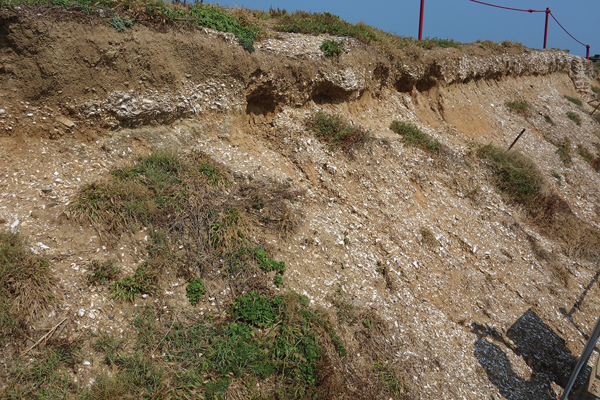
Several sites along the South China Coast have yielded human remains estimated to date to earlier than 3000 BC. These sites include Daowei I on Liangdao Island of Matzu near the Fujian coastline (Figure 7); Xiankezhou, Haogang, Chenqiaocun, Luoshanju and Liyudun in Guangdong; Yingdun in Hainan; Cai Beo and Hang Ang Giua in Quang Ninh; Da But cultural sites in Thanh Hoa and Ninh Binh; Quynh Van sites in Nghe An and Ha Tinh; and Bau Du in Quang Nam. At Xiankezhou in Guangdong Province, 28 individuals were buried in flexed positions (Figure 8), suggestive of Australo-Melanesian traditions. Xiankezhou is considered to reflect the Xiantouling cultural group, and has been dated to 4250–3700 BC. This large site, covering nearly 52 000m2, has revealed a cemetery and artefacts, including painted pottery, polished stone axes, and knives made of stone and shell (Li & Li Reference Li and Li1990).
Daowei 1 shell midden of Liangdao Island (photograph by Hsiao-chun Hung).

Human burials in flexed position, excavated from Xiankezhou in Guangdong (after Guangdong Provincial Museum et al. 1991: 9).

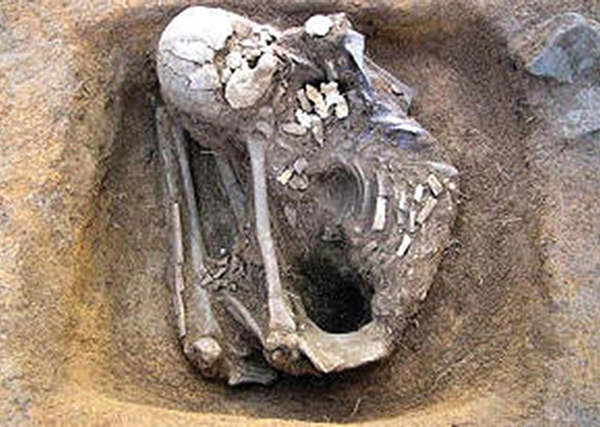
Flexed-position burials are documented at many of the sites in the study region. On the coast of Guangdong Province, the lowest layer (layer V) at Liyudun has revealed eight graves all with individuals placed in flexed positions (Figure 9). Shells recovered from layer IV directly above have been dated to 5050±100 years (uncalibrated) BP (F. Li et al. Reference Li, Wang, Feng, Chen and Zhu2013a & Reference Li, Wang, Zhu, Chen and Chenb). For a distance of over 2000km along the coast, all known graves prior to 3000 BC feature individuals placed in flexed positions. This distribution includes sites attributed to the Cai Beo, Da But, Quynh Van and Bau Du groups in Vietnam and the Yingdun group in Hainan.
Example of human burial in flexed position, excavated at Liyudun in Zhanjiang, on the Guangdong Province coast (photograph by Mengqin Feng, in F. Li et al. Reference Li, Wang, Zhu, Chen and Chen2013b: fig. 2.22).

Flexed burial was the standard tradition among the hunter-gatherers of Southeast Asia from the Late Pleistocene through the Middle Holocene, before the emergence of rice farming (Higham Reference Higham2013; Hung et al. Reference Hung, Zhang, Matsumura, Li, Matsumura, Hung, Li and Shinoda2017). The individual discovered in 1981 at Cai Beo, for example, is considered to be of Australo-Melanesian rather than East Asian affinity (K.S. Nguyen Reference Nguyen2005). At two inland shell middens at Huiyaotian and Liyupo in Guangxi, more than 70 flexed human burials have been confirmed as Australo-Melanesian using craniometric analysis (Matsumura et al. Reference Matsumura, Nguyen, Li, Hung, Huang, Matsumura, Hung, Li and Shinoda2017b) (Figure 10).
Un-rooted tree of neighbour joining analysis applied to the distance of Q-mode correlation coefficients, among the Huiyaotian, Liyupo and comparative samples; based on 16 cranial measurements (males) (after Matsumura et al. Reference Matsumura, Nguyen, Li, Hung, Huang, Matsumura, Hung, Li and Shinoda2017b: 160).

In southern China and Southeast Asia, extended burials appeared alongside the introduction of rice farming (Hung et al. Reference Hung, Zhang, Matsumura, Li, Matsumura, Hung, Li and Shinoda2017). At least two examples of such burials that potentially pre-date rice farming, however, have been documented at Haogang in Guangdong, and at Daowei I on Liangdao Island in Fujian. These two examples could suggest a more complex scenario for the coastal region than attested farther inland. At Haogang, the earliest of three occupation phases has been estimated to date to c. 4000–3500 BC, where two extended burials have been found (but so far not directly dated). On the island of Liangdao, an extended burial has been found in the upper layer, dating to 5512–5374 BC, and a flexed burial in the lower layer, dating to 6380–6204 BC (Chen & Chiu Reference Chen and Chiu2013). Cranial measurements and 21 dental traits, recorded by Matsumura et al. (Reference Matsumura2019), confirm an East Asian affinity for the upper-layer extended individual. This contrasts with the Australo-Melanesian affinity of the lower-layer flexed burial. While the relative chronological order is congruent with the region-wide ‘two-layer model’, the dating of the upper-layer individual is much earlier than expected, and certainly prior to the widespread establishment of rice farming on the South China Coast after 3000 BC. These two examples suggest the possibility of modest human mobility occurring before the large-scale expansion of farming c. 3000 BC.
During later periods in Mainland Southeast Asia, burial sites demonstrate that at least some of the descendants of indigenous Australo-Melanesians continued to live alongside more numerous East Asian peoples. At the Man Bac cemetery in northern Vietnam, for example, extended burials dating to c. 2100–1600 BC contain both Australo-Melanesian and East Asian individuals, with mitochondrial DNA analyses showing an admixture of indigenous foragers and incoming rice farmers from the north (Matsumura Reference Matsumura, Oxenham, Matsumura and Nguyen2011; Shinoda Reference Shinoda, Oxenham, Matsumura and Nguyen2011; Lipson et al. Reference Lipson2018). Farther south, Khok Phanom Di in the Gulf of Siam witnessed a similar early encounter (Higham Reference Higham2014: 81–97).
Discussion
By 5000 BC, complex villages and many of the classic markers of ‘Neolithic’ societies had appeared in multiple areas of southern China. These, however, were not supported by rice farming, but rather by varied combinations of hunting, gathering, fishing and possible plant management. Southern China, in fact, already had been at the forefront of other major technological and economic achievements during earlier periods. The world's oldest pottery, dated to 18 000 BC and found in cave shelters at Xianrendong in Jiangxi, was produced here by forest hunter-gatherers (Wu et al. Reference Wu, Zhang, Goldberg, Cohen, Pan, Arpin and Bar-Yosef2012). Additional pottery dating from 17 000–11 000 BC has been found in caves at Chintan in Guangdong, at Zengpiyan in Guangxi and at Chihedong in Fujian (Institute of Archaeology, Chinese Academy of Social Science et al. 2003; Fan Reference Fan, Chen and Tsang2013; Fujian Museum and BCBTPP of Longyan City 2017; Institute of Archaeology, Chinese Academy of Social Science 2017). Most of these caves were no longer in use after 5000 BC in southern China, signifying a fundamental change in subsistence strategy (e.g. Fu et al. Reference Fu, He, Xiong and Wang2001; Chen Reference Chen2003; Liu & Chen Reference Liu and Chen2012: 162). A similar change in cave-use patterns occurred in Vietnam (e.g. K.S. Nguyen et al. Reference Nguyen, Pham, Tong, Glover and Bellwood2004; V. Nguyen Reference Nguyen2005; K.S. Nguyen Reference Nguyen2009). The appearance of complex village settlements along the South China Coast after 5000 BC suggests a significant change at this time, possibly in environmental conditions or social context.
The centuries leading up to 5000 BC saw rapid and radical transformation of the southern China coastal zones due to Postglacial sea-level rise. By 5000 BC, stability in global sea level probably permitted the development of healthier coastal ecosystems and the long-term, reliable cultural use of these areas. Meanwhile, rice farming and other developments had been gaining in popularity and expanding through inland territories and northward in China (e.g. Fuller Reference Fuller2011; Zhang & Hung Reference Zhang and Hung2013; Deng et al. Reference Deng, Qin, Gao, Weisskopf, Zhang and Fuller2015). This larger context probably influenced social change in parts of South China. In the inland areas of South China, hunter-gatherer groups were responsible for dense cemetery sites as early as 7000 BC—at Huiyaotian in Guangxi, for example (Z. Li et al. Reference Li, Hung, Huang, Matsumura, Matsumura, Hung, Li and Shinoda2017). But these developments began later in coastal areas, after 5000 BC, as outlined here.
The coastal sites of 5000–3000 BC were inhabited by several cultural groups, most of which practised the same flexed burial tradition that had persisted inland for the previous several millennia. Craniometric analysis confirms the Australo-Melanesian affinity for the older flexed burials, which are particularly well documented at inland sites (e.g. Gaomiao, Huiyaotian and Liyupo). East Asian affinities are noted primarily at sites of rice-farming groups, who practised extended-position burial farther north in China. These traits, including physical (craniometric) traits of affinity, the extended burial practice and rice farming, however, were introduced into southern China only after 3000 BC.
People on the South China Coast must have been aware of their rice-farming neighbours from at least 5000 BC. The ancient communities in closest proximity to China's rice-farming centres were probably influenced by exchange or contact with dense residential settlements and increasingly complex societies. Accordingly, the groups in Fujian and Guangdong produced the most elaborate pottery traditions and polished stone tools from at least 5000 BC. At the Pearl River Delta in particular, at least one early exchange network developed in connection with the multiple Xiqiaoshan lithic workshops and residential sites.
Except for the noted absence of rice farming, some of the early coastal sites in Guangdong meet the criteria of ‘Neolithic’ societies, namely the presence of residential villages, dedicated cemeteries, spatial variability of artefact assemblages and craft specialisation. Thus, prior to the dominance of rice-farming systems along the South China Coast, the formal villages may be viewed as the settlements of complex hunter-gatherers. The foregoing observations prompt re-evaluation of how to define ‘Neolithic’ assemblages and how to conceptualise the role of farming in the development of sedentary groups and complex societies.
Conclusion
If rice and millet farming, along with East Asian populations, spread along the South China Coast only after 3000 BC, as outlined here, then existing models of cross-regional Neolithic expansion require re-evaluation in at least two major aspects. First, a farming economy may not have been the sole means of supporting a high population density, or for enabling the development of a complex society. Second, the emergence of land-dependent farming systems may not have been the only factor in encouraging the geographic expansion of populations.
The abrupt appearance of a pottery-bearing horizon prior to 3000 BC in Taiwan suggests early contact and mobility with a source across the Taiwan Strait, in coastal southern China, pre-dating the dominance of rice farming in this region (Hung & Carson Reference Hung and Carson2014). Early population movements may have involved multiple episodes and groups of people, which, accordingly, require different explanatory models. Land-dependent farming, therefore, could not have been the sole motivation for the earliest overseas migrations. Similar re-consideration of the models of population expansions in other areas, such as in coastal Mainland Southeast Asia, may be required.
The forager-fisher communities along the South China Coast must have been involved in the spread of materials, ideas and people throughout adjacent regions of Mainland and Island Southeast Asia. The cross-regional evidence shows geographically expansive ranges of pottery traditions, extended-burial practices and other markers of ‘Neolithic’ societies—coinciding with a ‘second layer’ of intrusive East Asian population. Rice farming eventually became the dominant subsistence strategy for many of these coastal groups, yet it was not necessarily always part of the original package or inventory of the first pottery-bearing horizons. Even after 2000 BC, when rice farming had gained popularity throughout the region, certain groups still maintained their coastal foraging-fishing traditions, such as at Rach Nui in the Dong Nai catchment of southern Vietnam (Oxenham et al. Reference Oxenham, Piper, Bellwood, Bui, Nguyen, Nguyen, Campos, Castillo, Wood, Sarjeant, Amano, Illis and Ceron2015).
In certain coastal areas around the world, people lived in formal settlements, developed increasingly high-density populations and relied on multiple food resources, including fish, shellfish and easily manageable plant foods, such as tree fruits and nuts, among others. While rice and millet farming had dominated in north and central China since at least 6500 BC, complex hunter-gatherers along the South China Coast sustained their non-rice-farming lifestyles until at least 3000–2500 BC. Similar scenarios occurred farther north at the Chulmun sites of Korea and at the Jomon sites of Japan, until at least 1000 BC (Crawford & Lee Reference Crawford and Lee2003; Crawford Reference Crawford2011). Elsewhere, varied complex hunter-gatherers have been described along the Pacific coast of North America, from British Columbia to California (Matson & Coupland Reference Matson and Coupland1994; Arnold Reference Arnold2004), as well as among the Calusa in Florida (Marquardt Reference Marquardt2014). These coastal communities all share the characteristic of congregating around rich and diverse resource zones, where people were able to access a range of terrestrial and marine foods. These resources were sustainable through seasonal and inter-annual variations, and therefore could support long-term population growth and the strengthening of localised cultural traditions.
Instead of considering land-dependent farming as the key factor in the development of social complexity and population dynamics, the specific nature of ancient coastal environments may offer insights into the evident prosperity of their inhabitants. The situation on the South China Coast, c. 5000–3000 BC, adds to an emerging understanding of coastal zones around the world as hotspots of social and political complexity, technological advancement, economic growth and long-distance interactions.
Acknowledgements
I wish to thank Li Yan (Institute of Archaeology in Guangdong, China) for the useful discussion of the Xiankezhou assemblage.