Each year in the United States of America, approximately 1000 babies are diagnosed with Hypoplastic Left Heart Syndrome. 1 A diagnosis of Hypoplastic Left Heart Syndrome, characterised by an under-developed or non-functional left ventricle, challenges new parents to partner with an extensive inter-professional healthcare team for their child’s complex care. Care decisions include perinatal hospice or multiple open-heart surgeries performed during the first few years of life Reference Kon, Prsa and Rohlicek2 often with unclear survival, Reference Kon, Ackerson and Lo3 lifelong medical implications, Reference March4 and increased likelihood of cardiac transplantation. Reference Prsa, Holly and Carnevale5 Families are often overwhelmed and under-educated about this disease and may not understand the severity of the diagnosis. Reference Ellinger and Rempel6
Previous studies focused on the challenges that parents may encounter while parenting a child with Hypoplastic Left Heart Syndrome, as well as potential interventions that may benefit parents in those particular situations. Reference Rempel, Rogers and Ravindran7 In a 2012 study by Rempel et al., the researchers focused on the facets of parenting a child with Hypoplastic Left Heart Syndrome, including survival parenting, “hands-off” parenting, expert parenting, uncertain parenting, and supported parenting. Reference Rempel, Rogers and Ravindran7 With a focus primarily on Hypoplastic Left Heart Syndrome parents who chose surgical interventions for their child, previous studies in this area are critical to inform parental support interventions, but often overlook other Hypoplastic Left Heart Syndrome parent populations who might have selected perinatal hospice rather than surgery. Other studies have focused on the impact that parenting a child with Hypoplastic Left Heart Syndrome has on levels of stress as well as other psychosocial indicators, such as anxiety and depression. Reference Kaugars, Shields and Brosig8,Reference Woolf-King, Anger and Arnold9 While there are several studies that focus on parental coping with a child who is diagnosed with Hypoplastic Left Heart Syndrome, only recently has there been discussion of the benefit of a multidisciplinary team within the single ventricle community. Reference Davis, Miller-Tate and Texter10
The high levels of psychological distress experienced by parents, coupled with the potentially negative outcomes associated with Hypoplastic Left Heart Syndrome for both the infant and parent, suggest that it is important for the care team to proactively prepare parents for psychological reactions associated with trauma. Reference Shaw, Bernard, Deblois, Ikuta, Ginzburg and Koopman11 Parents, especially mothers of children with congenital heart disease, are at a greater risk for developing mental health problems such as anxiety, depression and post-traumatic stress disorder at various periods within their child’s journey. Reference Kaugars, Shields and Brosig8 It is crucial to determine the gaps in parental support for families of children with Hypoplastic Left Heart Syndrome, regardless of which clinical decision they made for their child, in order to inform proactive, inter-professional interventions to reduce parental distress with this diagnosis.
The purpose of this research was to identify gaps in parental support using a mixed-methods approach through the dual lens of the inter-professional care team and parents at different stages in their Hypoplastic Left Heart Syndrome journey. This project was conducted in partnership with the Mayo Clinic Todd and Karen Wanek Family Program for Hypoplastic Left Heart Syndrome and provides a unique focus on the inter-professional care team.
Materials and methods
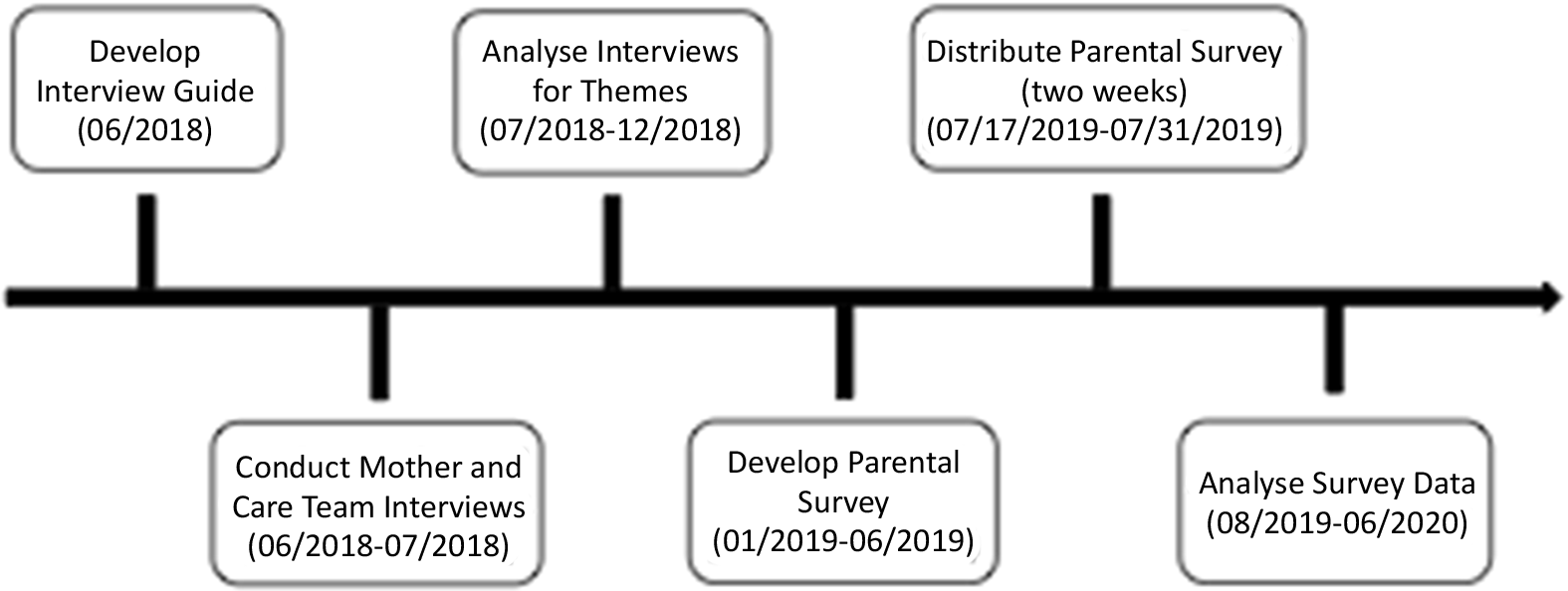
The authors used a mixed-methods study design in which an interview-based quality improvement study informed the creation and implementation of a quantitative survey (Figure 1). Both arms of this study design included Hypoplastic Left Heart Syndrome parents and primary caregivers as participants. The quality improvement portion of the study also included interviews and questionnaires completed by Hypoplastic Left Heart Syndrome clinicians on an inter-professional care team. The initial quality improvement study was deemed exempt from review by the Mayo Clinic Institutional Review Board and the quantitative survey portion of the study received approval from the St. Catherine University Institutional Review Board (#1279).
Represents the progression of the project from qualitative interviews to quantitative survey analysis.

Quality improvement: interviews with HLHS care team and mothers
Prior to conducting qualitative interviews with the care team, a cohesive list of clinical professionals on the Hypoplastic Left Heart Syndrome care team was developed to determine who should be contacted for interviews. This list of the care team was developed through interactive conversations with a paediatric cardiologist who worked closely with the Hypoplastic Left Heart Syndrome population. The research team conducted interviews with 12 clinicians on the Hypoplastic Left Heart Syndrome care team and three mothers of Hypoplastic Left Heart Syndrome children. The care team professions included obstetrician, paediatric cardiologist, cardiovascular surgeon, social worker, medical geneticist, anesthesiologist, respiratory therapist, cardiovascular intensivist, cardiovascular intensive care nurse, paediatric nephrologist, neonatal intensive care nurse, and adult congenital cardiologist. Two paediatric cardiologists were interviewed, and a single clinician represented both the obstetrician and the medical geneticist professions. Signed consent was obtained from all participants and interview audio was recorded and transcribed. Open-ended interview questions for clinicians and parents focused on parental support and identifying gaps in the Hypoplastic Left Heart Syndrome care delivery model. All interviews took place between June 2018 and August 2018. Initial parental interview questions were developed to determine the demographics of the parent, clinical decision made for child with Hypoplastic Left Heart Syndrome (surgical intervention versus palliative care), age of child with Hypoplastic Left Heart Syndrome, if the diagnosis was made pre-natally or post-natally, age of other children (if applicable), and where the child with Hypoplastic Left Heart Syndrome was treated for their diagnosis. Further parental interview questions revolved around perceived trust and support with the Hypoplastic Left Heart Syndrome care team (Supplemental Figure 1). Care team interview questions were developed to determine the demographics of the clinician and their thoughts on current support for families of children with Hypoplastic Left Heart Syndrome (Supplemental Figure 2). A care team questionnaire (Supplemental Figure 3) was also developed to determine how each clinical profession on the care team directly or indirectly interacted with the Hypoplastic Left Heart Syndrome patient and how often they interacted with other members of the Hypoplastic Left Heart Syndrome care team.
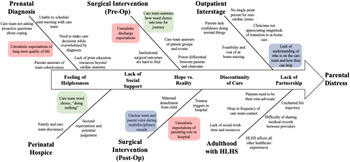
Undergraduate student researchers (ML and EO) and the faculty mentor (KC) divided up the interview transcripts to review independently and then convened as a larger group to discuss key quotations and relevant ideas that were shared among the interviewees. This information was visualised on a Fishbone Diagram (Figure 2), and content that appeared multiple times across multiple interviewees was prioritised. From this qualitative data, the research team identified key themes in parental support gaps to then validate with a quantitative survey instrument.
Parental distress across the HLHS care timeline.
This Fishbone diagram depicts problems identified through all stages of the HLHS journey, with consistent elements of parental distress illustrated on the central backbone. Any gaps in parental support common to one stage throughout the HLHS journey are depicted on individual branches. Prioritized themes are highlighted with colored boxes (Green = open communication, Red = unrealistic parental expectations, Blue = unclear interprofessional team roles.)

Quantitative research: survey instrument design and implementation
A brief nine-question survey was developed to determine if the gaps identified in the quality improvement study were recapitulated in a larger population of Hypoplastic Left Heart Syndrome primary caregivers. Through an iterative process of consultation with researchers and clinicians who work directly with the Hypoplastic Left Heart Syndrome population, the survey questions were revised for readability, interpretability, and inclusivity, and the final electronic instrument was developed (Supplemental Figure 4). The survey was built in Qualtrics to ensure anonymity of the respondents. Data collection with this survey was approved by the St. Catherine University Institutional Review Board (IRB #1279).
The parental support survey was distributed through Facebook posts from Sisters by Heart (a Hypoplastic Left Heart Syndrome support facebook page), Mayo Clinic Hypoplastic Left Heart Syndrome (the social media handle of the Todd and Karen Wanek Family Program for Hypoplastic Left Heart Syndrome at Mayo Clinic, Rochester), and within Perinatal Hospice and Palliative Care (a support Facebook page for parents who chose perinatal hospice for their child). Electronic flyers were created to recruit survey participants from these social media groups (Supplemental Figure 5). In addition, social media posts announcing the survey were posted by members of each social media group rather than a member of the research team. These survey announcement posts can be found in Supplemental Table 1. The survey was opened for two weeks, from 17 July2019 to 31 July 2019. The Chi-square statistical test was used to identify any statistically significant responses among the Hypoplastic Left Heart Syndrome primary caregivers; p-value < 0.05 was considered significant.
Results
Complexity of the inter-professional care team
Supplemental Figure 6 highlights the complexity of the inter-professional care team by mapping the clinician interactions throughout the Hypoplastic Left Heart Syndrome timeline from prenatal diagnosis through adulthood. The order of professions in this figure, following a clockwise orientation, is based on the authors’ best estimate of when parents of an Hypoplastic Left Heart Syndrome child might first interact with members of each profession. The interactions between clinicians are indicated by coloured lines that extend from one profession to another. It is important to note that interaction lines only emanate from professions with whom the authors had conducted an in-person interview (as indicated by asterisks within Supplemental Figure 6). As such, there are some professions that are not indicated with their own colour, but rather are solely the recipients of interactions as identified by other professions. Also annotated in the figure are the described frequencies of interactions between the professions, as indicated by the thickness of the connecting lines (thicker lines represent more frequent interactions).
From this interaction map (Supplemental Figure 6), it appears that there are two hubs of inter-professional interaction within the Hypoplastic Left Heart Syndrome care team. These hubs were identified based on the observation of more interaction lines between certain professions (indicated by purple brackets in Supplemental Figure 6) and may be associated with the in-patient phases of the Hypoplastic Left Heart Syndrome experience (HUB 1 – paediatric cardiologist, paediatric cardiology nurse, and cardiovascular surgeon; HUB 2 – respiratory therapist, cardiovascular intensivist, and cardiovascular intensive care nurse). While these interaction hubs may in fact represent more frequent inter-professional interactions and perhaps more cohesive team-based care, they also might represent greater awareness of the interactions based on which professions were interviewed. Importantly, the cohesiveness and communicative nature of the inter-professional care team are an important element of the Hypoplastic Left Heart Syndrome parental experience that cannot be fully studied using only data provided by clinicians themselves. To determine whether the cohesiveness of the care team was in fact experienced by Hypoplastic Left Heart Syndrome parents, the authors also conducted interviews with Hypoplastic Left Heart Syndrome mothers to better understand their experience with this diagnosis.
Gaps in parental support identified in qualitative interviews
From the interviews with parents and clinicians of children with Hypoplastic Left Heart Syndrome, many gaps in parental support were identified. These gaps were plotted on a fishbone diagram to visualise the themes that were central and recurring to the entire experience, as well as those that were unique to specific phases of the Hypoplastic Left Heart Syndrome journey (Figure 2). The backbone of the fishbone diagram annotates themes leading to parental distress, which include the Feeling of Helplessness, Lack of Social Support, Hope versus Reality, Discontinuity of Care, and Lack of Partnership. On the Perinatal Hospice arm of the fishbone diagram, the phrase “doing nothing” is a specific example of the good intentions but poor language of the clinicians when talking about perinatal hospice. For example, in several interviews, clinicians commented that they often reassured new parents that “doing nothing” and providing perinatal care for their child was a valid option for their consideration. While the intent of this language was to provide support and counseling for Hypoplastic Left Heart Syndrome parents, one of the mothers interviewed cited that specific phrase as one that was unintentionally hurtful when used in reference to palliative care.
The Surgical Intervention (Post-Op) arm of the fishbone diagram discusses the unrealistic expectation of parents in a hospital setting. Parents who chose surgical intervention discussed how uncertain they felt about caring for their child while in the hospital. This parental uncertainty of how to provide care within the hospital setting was also noted by several of the clinicians interviewed. For this particular example, Nemour’s care pyramid Reference Klug, Hall and Delaplane12 in the Cardiovascular ICU was noted by a care team member as effective in clarifying parental roles in the hospital setting in order to ease parental distress and provide a shared framework and understanding for parental care between the Hypoplastic Left Heart Syndrome care team and the parents. Another example from the Surgical Intervention (Post-Op) arm of the fishbone diagram came from parental interviews in which the roles and responsibilities of the different members of the Hypoplastic Left Heart Syndrome care team were not clear or transparent. For example, one mother identified that she did not know that she could work with a nutritionist to develop a strategy for feeding her Hypoplastic Left Heart Syndrome child.
From the fishbone diagram, three main themes emerged as the recurring problems for parents of children with Hypoplastic Left Heart Syndrome. These themes include (1) lack of open communication, (2) unrealistic parental expectations, and (3) unclear inter-professional team roles. Further quantitative analysis of these themes was conducted through the development and distribution of an electronic survey for Hypoplastic Left Heart Syndrome parents and primary caregivers.
International sample of HLHS caregivers
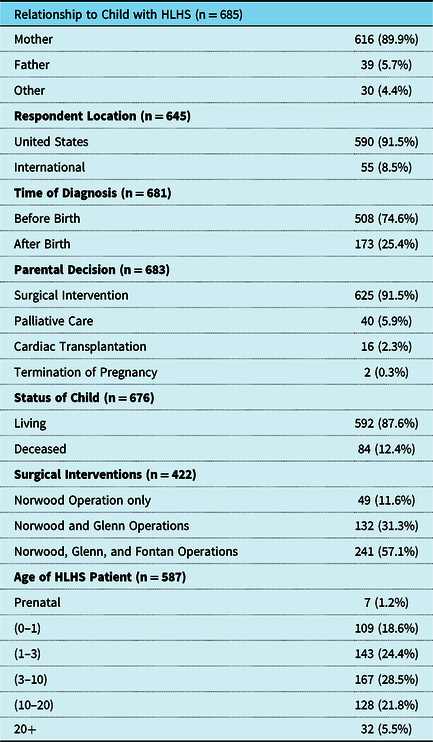
In order to validate the insights from the qualitative study, the authors developed a survey to distribute through social media platforms. With initial hopes to receive responses from up to 200 Hypoplastic Left Heart Syndrome primary caregivers, the authors are pleased to report that 690 responses were gathered from Hypoplastic Left Heart Syndrome primary caregivers around the world (Table 1). This respondent population included 616 (89.9%) mothers, 39 (5.7%) fathers, and 30 (4.4%) caregivers that identified as “other.” While having the option of “other” within the survey was intended to foster inclusivity, it became a limitation in that each respondent may have self-identified with this category for different reasons. In retrospect, the survey should have included a write-in option for those caregivers who identified as “other” to better understand this important population.
Demographics of HLHS primary caregivers from international survey1

1 Survey respondents self-reported their relationship to the child with HLHS, time of diagnosis, parental decision, status of child, surgical intervention, and age of child. Respondent location was determined by IP address of the survey response and was limited to USA or international to protect respondent confidentiality.
The geographic location of survey respondents was determined by IP address and revealed that 590 (91.5%) responses came from the United States of America and 55 (8.5%) responses came from international locations. Importantly, this data does not represent where the respondents’ children received care or were diagnosed with Hypoplastic Left Heart Syndrome, only that the respondents were located globally at the time of taking the survey. As demonstrated, Reference Fruitman13 the data captured a predicted breakdown of before- and after-birth diagnosis rate of Hypoplastic Left Heart Syndrome among the respondent population with 508 (74.6%) respondents indicating that their child was diagnosed before birth and 173 (25.4%) respondents indicating an after-birth diagnosis. Notably, the respondents represented different parental decisions, including 625 (91.5%) caregivers who chose surgical intervention, 40 (5.9%) caregivers who chose palliative care, 16 (2.3%), caregivers who chose cardiac transplantation, and 2 (0.3%) caregivers who chose termination of the pregnancy. The respondents who chose surgical intervention also represented different stages in the surgical timeline with 49 (11.6%) caregivers whose children received only the Norwood operation, 132 (31.3%) caregivers whose children received the Norwood and Glenn operations, and 241 (57.1%) caregivers whose children received the Norwood, Glenn, and Fontan operations.
It is also relevant to note that survey responses were gathered from primary care providers whose children were either living (592, 87.6%) or deceased (84, 12.4%). For the Hypoplastic Left Heart Syndrome patients who are living, respondents indicated a wide range of Hypoplastic Left Heart Syndrome patient age with the majority of patient ages between the age categories of (0–1] (109, 18.6%), (1–3] (143, 24.4%), (3–10] (167, 28.5%), and (10–20] (128, 21.8%). It is also notable that this survey reached primary caregivers of Hypoplastic Left Heart Syndrome patients who were yet to be born, with seven (1.2%) of respondents indicating a prenatal age. On the other end of the timeline, there were also 32 (5.5%) of respondents who indicated a 20+ age of their child. This wide range in age of Hypoplastic Left Heart Syndrome patients provides invaluable insight into the entire Hypoplastic Left Heart Syndrome timeline.
Validating the inter-professional care team for HLHS
To validate the inter-professional care team list that was originally generated in conversations with a paediatric cardiologist, each survey participant was asked to identify professions within the Hypoplastic Left Heart Syndrome care team with whom they interact. The data from this survey question is categorised into four groups based on the respondent’s stage of the Hypoplastic Left Heart Syndrome journey: (1) palliative care, (2) Norwood only, (3) Norwood and Glenn, and (4) Norwood, Glenn, and Fontan (Supplemental Table 2). Within each category, the professions were ranked based on how often the survey participants identified the profession as a member of their Hypoplastic Left Heart Syndrome care team. (Supplemental Table 2). Notably, all four categories of primary caregivers indicated that the paediatric cardiologist was a member of the care team with a cut-off threshold of 60% of respondents. Within the categories of primary caregivers who chose surgical intervention, there were three additional professions that were also consistently indicated (>60% of respondents) as part of the care team, including cardiovascular surgeon, paediatric cardiology nurse, and Cardiovascular Intensive Care Unit (CICU) nurse. Notably, professions such as midwife and doula were noted as members of the care team by <10% of survey respondents in all categories.
Gaps in parental support validated in quantitative survey
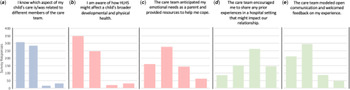
Figure 3 depicts survey data that correspond to the prioritised themes (open communication, unrealistic parental expectations, and unclear inter-professional team roles) as identified from the qualitative arm of this study. Survey participants responded to these questions on a four-point Likert Scale (strongly agree, agree, disagree, strongly disagree). The research team was pleasantly surprised to learn that very few parents (N = 47, 7.36%) indicated disagreement or strong disagreement with the statements “I know which aspect of my child’s care is/was related to different members of the care team” (Figure 3A) and “I am aware of how HLHS might affect a child’s broader developmental and physical health” (N = 51, 7.91%, Figure 3B). In fact, the overwhelming agreement, with combined “agree” and “strongly agree” responses, from Hypoplastic Left Heart Syndrome primary caregivers to these statements (N = 592, 92.80 %, Figure 3A; N = 594, 92.09 % Figure 3B) fails to replicate the qualitative data that parents struggled to understand the various inter-professional team roles of their vast Hypoplastic Left Heart Syndrome care team.
Confirmation of Parental Support Gaps.
Primary caregivers of HLHS patients (n = 687) responded on a Likert Scale of SA-strongly agree, A-agree, D-disagree, SD-strongly disagree. Colors correspond with prioritized themes from qualitative data. (Green = open communication, Red = unrealistic parental expectations, Blue = unclear interprofessional team roles.)

Notably, a larger number of survey respondents indicated disagreement, with combined “disagree” or “strongly disagree” responses, with the statement “The care team anticipated my emotional needs as a parent and provided resources to help me cope” (N = 207, 32.14%, Figure 3C). This substantial disagreement among survey respondents indicates a need for greater proactive communication and support to be provided to primary caregivers of Hypoplastic Left Heart Syndrome patients. Moreover, over half of the survey respondents (N = 408, 63.35%) indicated disagreement, with combined “disagree” or “strongly disagree” responses, with the statement “The care team encouraged me to share any prior experiences in a hospital setting that might impact our relationship” (Figure 3D). This survey item was developed in order to determine the parental experience with trauma-informed care from their child’s Hypoplastic Left Heart Syndrome care team. While the researchers were disappointed to see such strong disagreement with this statement, it is acknowledged that this is one of the more granular survey statements and therefore more likely to be incongruent with the parental experience within a large sample. In addition, while the question was intended to measure the practice of trauma-informed care, there is a possibility that survey respondents did not associate “prior experiences in a hospital setting” with the authors’ intent of measuring communication around parental trauma triggers.
While a majority of parents (N = 506, 78.94%) agreed, with combined “agree” or “strongly agree” responses, with the final survey statement, “The care team modeled open communication and welcomed feedback on my experience,” the number of survey respondents who disagreed, with combined “disagree” or “strongly disagree” responses, with this statement (N = 135, 21.06%) warrants additional consideration and action among members of the care team.
Types of HLHS primary caregivers who perceive the least support
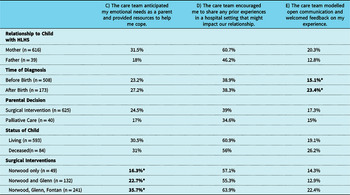
In order to target support interventions to parents perceiving the least support, survey responses from Figure 3 were sorted according to demographic categories (Table 2). A specific focus was given to the survey statements that received the most disagreement among Hypoplastic Left Heart Syndrome primary caregivers, including “The care team anticipated my emotional needs as a parent and provided resources to help me cope,” “The care team encouraged me to share any prior experiences in a hospital setting that might impact our relationship,” and “The care team modeled open communication and welcomed feedback on my experience.” In this way, the research team was able to identify parental sub-populations who indicated disagreement with any of the three statements so that future interventions might be initially targeted to parents who are perceiving the least support.
Parents Perceiving least support1

1 Percentages indicate parents who disagreed with the survey prompts (combining strongly disagree and disagree). * = p<0.05.
From this analysis, the researchers identified two populations of parents perceiving the least support from the Hypoplastic Left Heart Syndrome care team: parents of children who were diagnosed with Hypoplastic Left Heart Syndrome after birth and parents of Hypoplastic Left Heart Syndrome children who had completed the three staged surgeries (Norwood, Glenn and Fontan). Specifically, 35.7% of the 241 parents of children with all three surgeries indicated disagreement with the statement “The care team anticipated my emotional needs as a parent and provided resources to help me cope” (Table 2). This is a significantly higher percentage of parents (p-value = 0.003) than those who disagreed with the same statement from the surgical intervention categories of Norwood only (16.3%) and Norwood and Glenn (22.7%). Additionally, 23.4% of the 173 parents of children diagnosed with Hypoplastic Left Heart Syndrome after birth disagreed with the statement “The care team modeled open communication and welcomed feedback on my experience” (Table 2). This represents a significantly higher percentage of parents (p-value = 0.008) than those who disagreed with the same statement from the population of parents whose children were diagnosed before birth (74.60%). It is notable that these were the only sub-populations of parents who had significantly more disagreement with these survey items. The authors did not find significant differences in perceived lack of support between mothers and fathers, parents who chose surgical intervention versus palliative care, or parents of children who were either living or deceased.
Discussion
Hypoplastic Left Heart Syndrome is a severe congenital heart defect that requires a complex inter-professional care team to provide lifelong care for the patient and the family for whom this diagnosis brings uncertainty, anxiety, and trauma. Reference Walsh, Verghese and Ferguson14 Parents of children with Hypoplastic Left Heart Syndrome cope with these challenges differently, through the facets of parenting, including survival parenting, “hands-off” parenting, expert parenting, uncertain parenting, and supported parenting. Reference Rempel, Rogers and Ravindran7 This study builds upon previous studies of HLHS parental support by including HLHS parents who selected either surgical intervention or perinatal hospice. The inclusion of the perinatal hospice parents was intentional as this Hypoplastic Left Heart Syndrome parental population has often been overlooked in previous studies of parental support. Importantly, this study also utilised both quality improvement and quantitative survey methodologies and had a unique, dual focus on the perspectives of the Hypoplastic Left Heart Syndrome parents as well as the members of the inter-professional care team. These dual perspectives of both parents and the HLHS care team strengthen the authors’ goal of informing proactive and inter-professional interventions that may reduce parental distress with this diagnosis.
Through interviews and questionnaires among the Hypoplastic Left Heart Syndrome care team, the authors identified the complexity of this care team and visualised the team interactions through network mapping (Supplemental Figure 6). This approach of network mapping the inter-professional care team interactions may be interesting for other researchers to use for their studies as it demonstrates the cohesion of care teams and helps identify critical hubs or gaps in interaction. Future research should aim to interview all members of the care team to achieve a more holistic understanding of care team communication. Future investigation and visualisation of parental perceptions of care team interactions would also be an interesting comparison to the care team’s self-perception of communication.
Qualitative data from interviews with the Hypoplastic Left Heart Syndrome care team and Hypoplastic Left Heart Syndrome mothers indicate three main gaps in parental support for parents of children with Hypoplastic Left Heart Syndrome: lack of open communication, unrealistic parental expectations, and unclear inter-professional team roles (Figure 2). These gaps then provided a framework from which the authors developed a survey instrument to reach a larger same of Hypoplastic Left Heart Syndrome primary caregivers. An international sample of 690 Hypoplastic Left Heart Syndrome primary caregivers was achieved through dissemination of this instrument through various social media accounts run through a Hypoplastic Left Heart Syndrome patient advocate group, HLHS clinical programme, and palliative care support group. From this surprisingly large population of Hypoplastic Left Heart Syndrome parents and primary caregivers, the authors were able to identify gaps in parental support based on levels of parental disagreement with specific support statements. Survey responses indicate that many parents disagreed with statements about proactive provision of emotional support resources (Figure 3C), the openness of the care team to discuss prior hospital experiences that might impact the parent and care team relationship (Figure 3D), and whether the care team modelled open communication and encouraged feedback on the parental experience (Figure 3E). These notable areas of parental disagreement call for greater focus among the inter-professional care team to proactively support Hypoplastic Left Heart Syndrome parents with the emotions, anxiety, and trauma that may result from this complex diagnosis. Moreover, interventions should also focus on the training of care team members to encourage open communication and feedback from Hypoplastic Left Heart Syndrome parents, especially around possible trauma triggers in a hospital setting.
As future research moves towards intervention to improve parental support, it will be important to first prioritise parental populations perceiving the least support as well as understand which healthcare professionals parents perceive to be on their Hypoplastic Left Heart Syndrome care team. The authors believe that interventions that target critical gaps in parental support, identified here, should also target parent populations most in need of that support and utilise the role of healthcare professionals already recognised by parents to be part of the care team. The data indicate that parents perceived their child’s healthcare team differently based on the intervention they chose for their child as well as how far along they were in the Hypoplastic Left Heart Syndrome timeline. Notably, the paediatric cardiologist was ranked most frequently as a member of the HLHS care team across all interventions and stages (Table 2). Among parents and primary caregivers who chose surgical intervention for their HLHS child, the cardiovascular surgeon, paediatric cardiology nurse, and CICU nurse were also consistently indicated as part of the care team. Therefore, future parental support interventions may include a primary focus on the role of these medical and nursing professions within the larger Hypoplastic Left Heart Syndrome care team. While parental support interventions should incorporate and build upon the cohesion of the entire care team, the visibility of cardiologists, surgeons, and nurses among Hypoplastic Left Heart Syndrome parents should not be ignored in the design of interventions.
Future interventions should be piloted among Hypoplastic Left Heart Syndrome parent populations who currently perceive the least support. Specifically, parents whose children were diagnosed with Hypoplastic Left Heart Syndrome after birth indicated significant dissatisfaction with the care team’s open communication and welcoming of feedback (p = 0.008, Table 2). As parents progress through the stages of surgical intervention, they also indicate significant dissatisfaction with the care team’s anticipation of parental emotional needs and provision of coping resources (p = 0.003, Table 2). Based on this data, parental support interventions should focus on providing resources to help parents cope, helping the care team model open communication, and welcoming feedback on the parental experience. Interventions should be piloted with parents who are in the later stages of the surgical intervention timeline or whose children were diagnosed after birth as they are the populations who perceive the least support within this data set.
Limitations
Within the quality improvement methodology of this study, the authors conducted transcript analysis as a team to identify and prioritise common themes among the interviewees. One limitation of this methodology is that the interviewees were not re-engaged in the transcript review or data analysis, which would have strengthened the qualitative rigour of this portion of the study. Moreover, the quantitative research portion of this study utilised a novel survey instrument that had been iteratively developed by the research team and members of the Hypoplastic Left Heart Syndrome care team, but had not been validated for interpretability or accessibility among the target population of Hypoplastic Left Heart Syndrome parents and primary caregivers. In addition, the survey was distributed through social media sites, and even though it received 690 responses, it may not accurately represent the population as a whole as it required participants to have a presence on social media and a pre-existing connection to the Hypoplastic Left Heart Syndrome online community. Future studies of this population should include other data collection strategies that do not presume a social media presence within these Hypoplastic Left Heart Syndrome online communities.
Practice implications
This study demonstrated that there are significant gaps in parental support among families of children with Hypoplastic Left Heart Syndrome. The inter-professional care team for this diagnosis is large and complex, and work remains to be done to better understand the cohesion and communication of this care team. Moreover, there is an opportunity for this care team to be better leveraged to more proactively and holistically support parents of Hypoplastic Left Heart Syndrome children. Through open communication, proactive emotional support, and the welcoming of feedback on the parental experience, members of the Hypoplastic Left Heart Syndrome care team may help parents better handle the anxiety and trauma that often accompany this diagnosis. The authors look forward to future interventions that will improve parental support, especially among those parents whose children were diagnosed with Hypoplastic Left Heart Syndrome after birth and those whose children are at the later stages of surgical intervention.
Acknowledgements
This work was supported by St. Catherine University Collaborative Undergraduate Research Summer Scholars Program, a GHR Innovative Scholarship Grant through St. Catherine University, and the Todd and Karen Wanek Family Program for Hypoplastic Left Heart Syndrome at Mayo Clinic. This work was also guided by feedback and support from Angela Majerus, Karen Cavanaugh, and Stephen Rowley. A special thanks to the parents of HLHS children who shared their journeys with us.
Financial support
This study was funded by the St. Catherine University Collaborative Undergraduate Research Summer Scholars Program, a GHR Innovative Scholarship Grant through St. Catherine University, and the Todd and Karen Wanek Family Program for Hypoplastic Left Heart Syndrome at Mayo Clinic. These funding sources had no involvement in the study design, data collection or analysis, manuscript preparation, or decision to submit the article for publication.
Conflict of interest
None of the authors have a conflict of interest. No authors had conflicts based on employment, consultancies, stock ownership, honoraria, paid expert testimony, patent applications/registrations, and grants or other funding.
Ethical standards
The initial quality improvement study was deemed exempt from review by the Mayo Clinic Institutional Review Board and the quantitative survey portion of the study received approval from the St. Catherine University Institutional Review Board (#1279).
Supplementary material
To view supplementary material for this article, please visit https://doi.org/10.1017/S1047951121001736