Introduction
Non-ventilator hospital-acquired pneumonia (NV-HAP) is the most common and morbid hospital-acquired infection. Reference Cassini, Plachouras and Eckmanns1,Reference Magill, O’Leary and Janelle2 The median incidence of NV-HAP in acute care hospitals is approximately 0.6 events per 100 admissions but individual hospitals have reported NV-HAP rates up to three-fold higher. Reference Magill, O’Leary and Janelle2–Reference Giuliano, Baker and Quinn5 Crude mortality rates for NV-HAP range from 15–30%. Reference Jones, Sarvet and Ying3,Reference Carey, Chen and Baker4 Up to 7% of all hospital deaths may be attributable to NV-HAP. Reference Jones, Sarvet and Ying3
Despite the high incidence and morbidity of NV-HAP, an optimal prevention strategy remains undefined. Proposed interventions include regular oral hygiene, elevating the head of the bed, mobilizing patients, dysphagia screening to trigger aspiration precautions, and coughing or deep breathing exercises. Reference Munro, Baker and Giuliano6,Reference Klompas, Branson and Cawcutt7 These interventions are intended to reduce oral bacterial burden, maintain and improve patient conditioning, and decrease aspiration risk. However, data on their effectiveness in preventing NV-HAP remain limited.
Oral care and mobility are the most frequently recommended interventions as they are common, familiar, low cost, and may improve outcomes beyond NV-HAP, including the possibility of lower mortality rates. Reference Brown, Friedkin and Inouye8–Reference Ehrenzeller and Klompas11 Most studies of enhanced oral care and mobility protocols to date, however, have been performed in ventilated patients or nursing home residents rather than in non-ventilated patients in acute care hospitals; the few studies that have focused on this population thus far have generally been small, single-center, and have yielded mixed results. Reference Giuliano, Penoyer, Middleton and Baker12–Reference McNally, Krisciunas, Langmore, Crimlisk, Pisegna and Massaro18
We consequently undertook a comprehensive evaluation of the associations between oral care and mobility on NV-HAP and mortality amongst patients admitted to a large and diverse network of acute care hospitals that share a common electronic health record (EHR) system, documentation templates, and nursing protocols.
Methods
We performed a retrospective analysis among 144 acute care facilities within the HCA Healthcare (HCA) system. Facilities were located in 17 states across the southern United States, concentrated in Florida and Texas. We included all hospitalizations of ≥4 days among adults ages ≥18 years between May 1, 2021 and July 31, 2023, excluding obstetrics and behavioral health admissions. We limited the analysis to admissions of ≥4 days in order to allow time for patients to acquire and manifest NV-HAP as well as time for potential prevention measures started soon after admission to have an effect.
Data
Exposures: mobility and oral care
We extracted daily data on patient oral care and mobility performance from HCA’s electronic health record (EHR) system (Meditech, Canton, MA). Both exposures are documented within nursing notes. We mapped structured and free text entries for oral care and mobility to simplified non-overlapping categories (Supplement Table 1). For oral hygiene, the categories were “performed” versus “not performed.” For mobility, the categories were: (1) bed-bound and supine, (2) upright-in-bed or at the side of the bed, and (3) walking any distance. Persistent exposure was defined as ≥3 consecutive days of oral care performed or walking.
For oral care, we followed standard medical dictum that missing documentation indicates care was not performed. We performed two sensitivity analyses, however, to assess the impact of this assumption on our findings. First, we limited the analysis to facilities with oral care data for at least 70% of patient-days, retaining 60 of the 144 facilities. Second, we used multiple imputation to assign oral care data for patient-days with no documentation, using both fixed (service line, race, gender, ethnicity, baseline age, and baseline comorbidities) and time-varying (intensive care unit (ICU) status, oxygen device use, daily vital signs, daily laboratory values, and daily antibiotic use) variables for imputation.
We addressed missing values for mobility by assuming stable patient mobility levels from day-to-day, using the following hierarchy: (1) exclude all patients with ≥3 consecutive days of missing data or ≥60% overall missingness, (2) for single-day missing values between two days with reported mobility, apply linear interpolation (results rounded to the nearest ordinal value), (3) for missing mobility on the first or last day of hospitalization, apply next observation carried backward or last observation carried forward.
NV-HAP and mortality
We used a validated electronic algorithm to identify NV-HAP using clinical signs drawn from the EHR. Reference Jones, Sarvet and Ying3,Reference Ji, McKenna and Ochoa19 Specifically, NV-HAP was defined as the combination of new and sustained deterioration in oxygenation in a non-ventilated patient with concurrent abnormal temperature (<36 or >38°C) or white blood cell count (<4,000/μL or >12,000 μL), order for chest imaging, and ≥3 days of new antibiotics starting on the first or second day of oxygen deterioration. This definition performs similarly to traditional CDC criteria for nosocomial pneumonia with regard to incidence, mortality, and clinical correlates but is more objective and reproducible compared to manual chart reviews. Reference Jones, Sarvet and Ying3,Reference Ji, McKenna and Ochoa19–Reference Stern, Christensen and Nevers21 Mortality was defined as a hospital discharge status of death.
Comorbidities
We elucidated patients’ comorbidities from ICD-10 codes using the method of Elixhauser et al. Reference Elixhauser, Steiner, Harris and Coffey22,Reference Quan, Sundararajan and Halfon23 applied via software from the Agency for Healthcare Research and Quality. 24 Daily laboratory values (white blood cell count, hematocrit, platelets, sodium, creatinine, glucose, international normalized ratio, total bilirubin, albumin, alanine aminotransferase) and vital signs (temperature, respiratory rate, heart rate, blood pressure) were extracted from the EHR. Missing laboratory values were imputed with the value of the most recent day with non-missing data; laboratory tests with no measured values were imputed as normal. Hospital service line was based on the patient’s Diagnosis Related Group (DRG) or primary procedure and ICU status was based on revenue center codes. We calculated Elixhauser readmission and mortality indices, which are validated scores designed to predict 30-day readmissions and in-hospital mortality, based on patient comorbidities. Reference Moore, White, Washington, Coenen and Elixhauser25
Statistical analysis:
To evaluate the association between oral care and mobility with NV-HAP and in-hospital mortality we used Cox proportional hazards models with time-varying exposure status and covariates, starting follow-up on hospital day 4 and censoring at first NV-HAP, death, or hospital discharge. We evaluated oral care (dichotomous) and mobility (continuous) in a single model, considering that each might confound the other’s association with NV-HAP and mortality. We applied a 1-day lag to mobility, oral care, covariate values, and ICU status to assess the risk of NV-HAP or death associated with exposures, clinical status, and ward type in the days preceding the outcome. We performed analyses overall and stratified by ICU status and assessed the effect of persistent oral care and mobility using the same models and covariates.
This study received an exempt determination from the Harvard Pilgrim Health Care Institutional Review Board.
Results:
Descriptive results
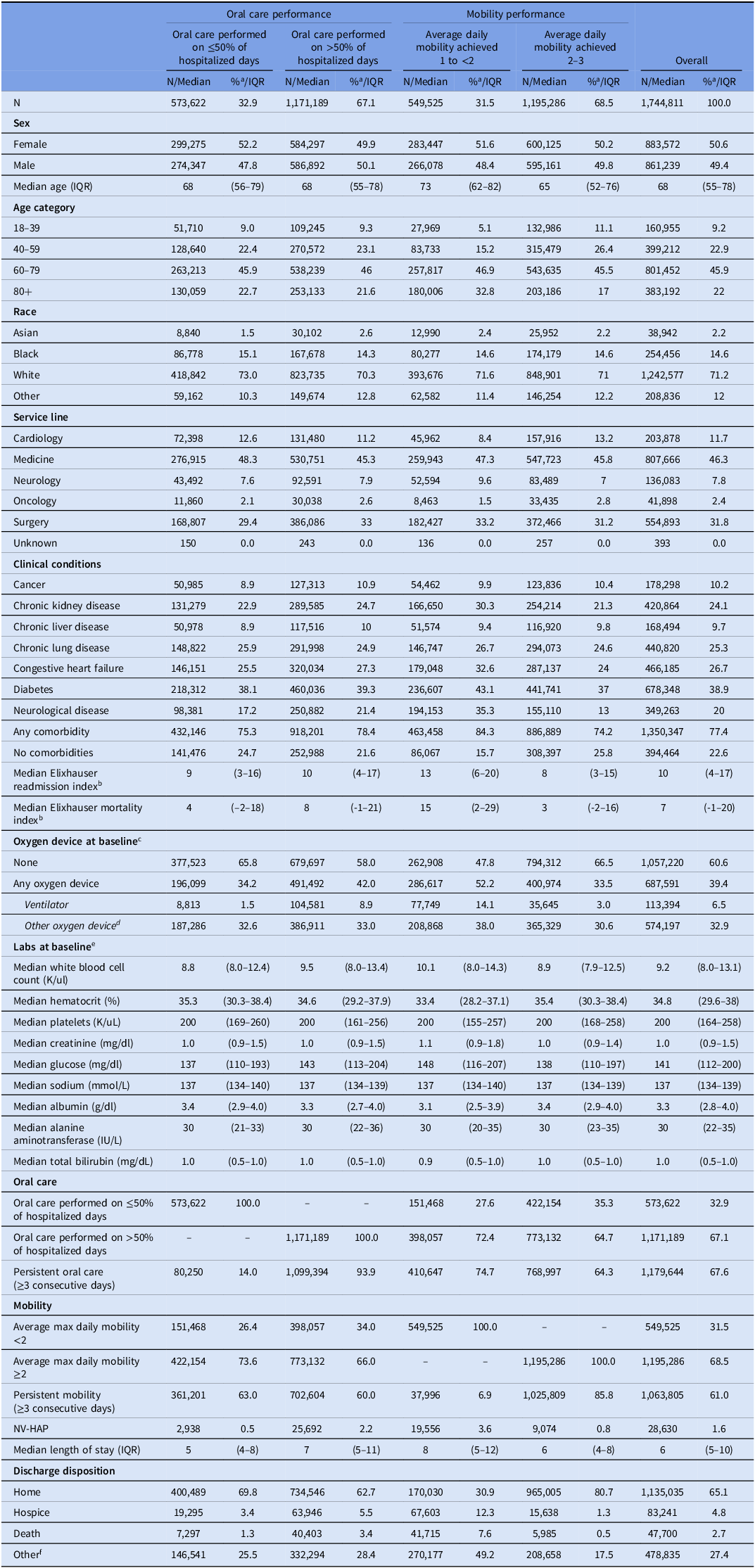
There were 1,744,811 eligible hospitalizations, including >9.6 million hospital-days (counting from hospital day 4). Median age was 68 (IQR 55–78). Half of the population was female (50.6%). The majority of patients identified as white race (71.2%); 14.6% of patients identified as black race. The most common service lines were medicine (46.3%), surgery (31.8%), and cardiology (11.7%). The most prevalent comorbidities were diabetes (38.9%), congestive heart failure (26.7%), chronic lung disease (25.3%), and chronic kidney disease (24.1%). On the first hospital day, 60.6% of patients received no oxygen support while 6.5% were on a ventilator (Table 1).
Descriptive characteristics of patients by oral care and mobility performance among hospitalizations of ≥4 days at 144 HCA Healthcare acute care facilities, between May 1, 2021 – July 31, 2023

a Subgroup percentages (first row) calculated with denominator of overall total (N = 1,744,811). Percentage for all other rows calculated with denominators of subgroup totals.
b Elixhauser readmission and mortality indices are validated scores designed to predict in-hospital mortality and 30-day readmission, based on patient comorbidities. Reference Moore, White, Washington, Coenen and Elixhauser25
c Maximum oxygen support received on days 1–2 of hospitalization (admission and following day).
d Other oxygen devices include: nasal cannula, simple mask, oxygen conserving device, non-rebreather mask, high flow oxygen, and Bilevel Positive Airway Pressure (BIPAP).
e Laboratory results on days 1–2 of hospitalization (admission and following day).
f Other discharge disposition values include: rehabilitation facility, skilled nursing facility, and acute care facility.
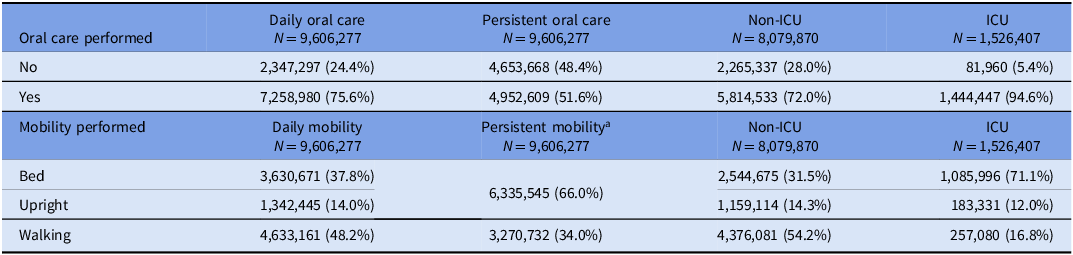
Oral care was documented at least once on 72.6% of patient-days (36.0% once, 36.0% twice, 0.6% oral care not performed, and 27.4% no oral care data) (Supplement Table 2). Missing oral care documentation was most common among healthier patients (fewer comorbidities, lower Elixhauser readmission and mortality scores, lower use of oxygen devices) (Supplement Table 2). For our primary analysis, a total of 75.6% of patient-days were classified as having had oral care performed ≥1 time on the day prior, with the remainder classified as oral care not performed (Table 3). In sensitivity analyses, oral care was performed ≥1 time on the day prior for 86.5% of patient-days among facilities with more complete data (Supplement Table 3), and for 99.1% of patient-days among the full dataset after applying multiple imputation (Supplement Table 4).
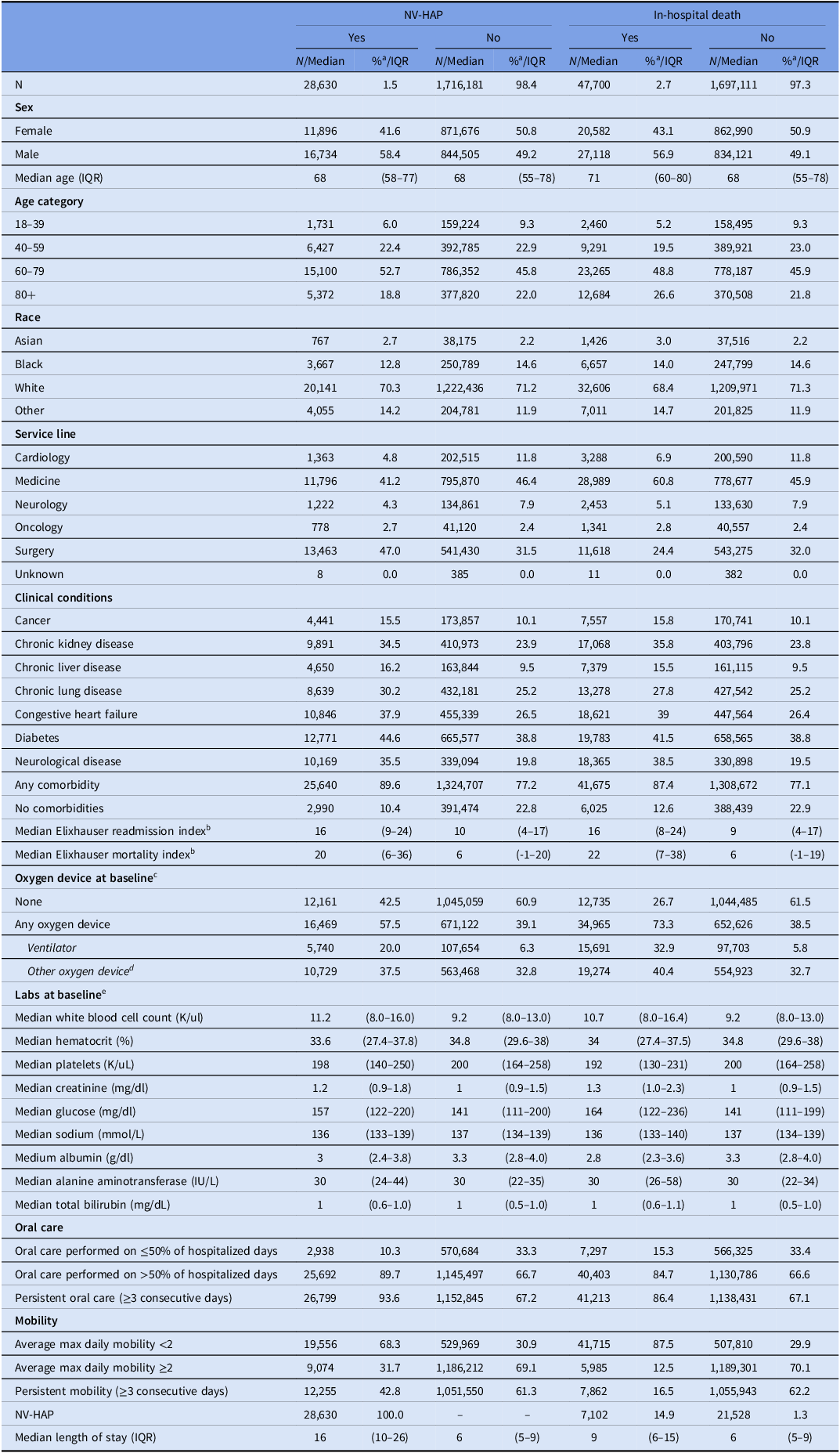
Descriptive characteristics of patients with and without NV-HAP and in-hospital death among hospitalizations of ≥4 days at 144 HCA Healthcare acute care facilities, between May 1, 2021 – July 31, 2023

a Subgroup percentages (first row) calculated with denominator of overall total (N = 1,744,811). Percentage for all other rows calculated with denominators of subgroup totals.
b Elixhauser readmission and mortality indices are validated scores designed to predict in-hospital mortality and 30-day readmission, based on patient comorbidities. Reference Moore, White, Washington, Coenen and Elixhauser25
c Maximum oxygen support received on days 1–2 of hospitalization (admission and following day).
d Other oxygen devices include: nasal cannula, simple mask, oxygen conserving device, non-rebreather mask, high flow oxygen, and Bilevel Positive Airway Pressure (BIPAP).
e Laboratory results on days 1–2 of hospitalization (admission and following day).
Oral care and mobility performance, as defined for analyses of daily oral care, persistent oral care, and stratified by ICU status, among hospitalizations of ≥4 days at 144 HCA Healthcare acute care facilities, between May 1, 2021 – July 31, 2023

a Persistent mobility defined as walking ≥3 consecutive days, recorded in the row with the header “Walking”.
Oral care performance was more frequent among more vulnerable patients (Table 1). Compared to patients with oral care on ≤50% of hospitalized days, those with oral care on >50% of days had more comorbidities (78.4% vs 75.3% with any comorbidity), higher median Elixhauser mortality index (8 vs 4), and more oxygen support at admission (42.0% vs 34.2%). Oral care and mobility had an inverse relationship; patients with oral care recorded on >50% of hospitalized days had more days in bed compared to those with less oral care (34.0% vs 26.4% with an average mobility score <2), and vice versa (Table 1).
Mobility data were missing for 9% of patient-days. After assigning mobility activity for days with missing data, 48.2% of patient-days had a maximum mobility status of 3 (walking) on the day prior, 14.0% had a maximum status of 2 (upright), and 37.8% had a maximum status of 1 (remaining in bed) (Table 3). Patients with more mobility throughout their hospitalization (average ≥2 compared to <2) were younger (median age 65 vs 73), had fewer comorbidities (74.2% vs 84.3% with any comorbidity), lower Elixhauser mortality index (median 3 vs 15), and were less likely to receive oxygen support at admission (33.5% vs 52.2%) (Table 1).
Incident NV-HAP was detected among 28,630 (1.6%) patients. Patients who developed NV-HAP were more often male (58.4% vs 49.2%), admitted for surgery (47.0% vs 31.5%), and more frequently had comorbidities (89.6% vs 77.2%) or abnormal lab values at admission. Patients who developed NV-HAP received more oral care (89.7% vs 66.7% with oral care on >50% of days) and were less mobile (average mobility <2 in 68.3% vs 30.9%), but similar in age compared to those without NV-HAP (median 68 years) (Table 2).
Inpatient mortality was 2.7%. Patients who died were older (median age 71 vs 68), more frequently male (56.9% vs 49.1%), had more comorbidities (87.4% vs 77.1% with any comorbidity), and received oxygen at admission (73.3% vs 38.5%). Among patients who died in the hospital, 87.5% were bedbound for more than half of their hospitalization; 84.7% received oral care on >50% of days (Table 2).
Cox proportional hazards analysis
On unadjusted Cox proportional hazards analyses, oral care performance was associated with a higher risk of NV-HAP and mortality, while greater mobility was associated with lower risks for these outcomes (Supplement Figure 1).
NV-HAP
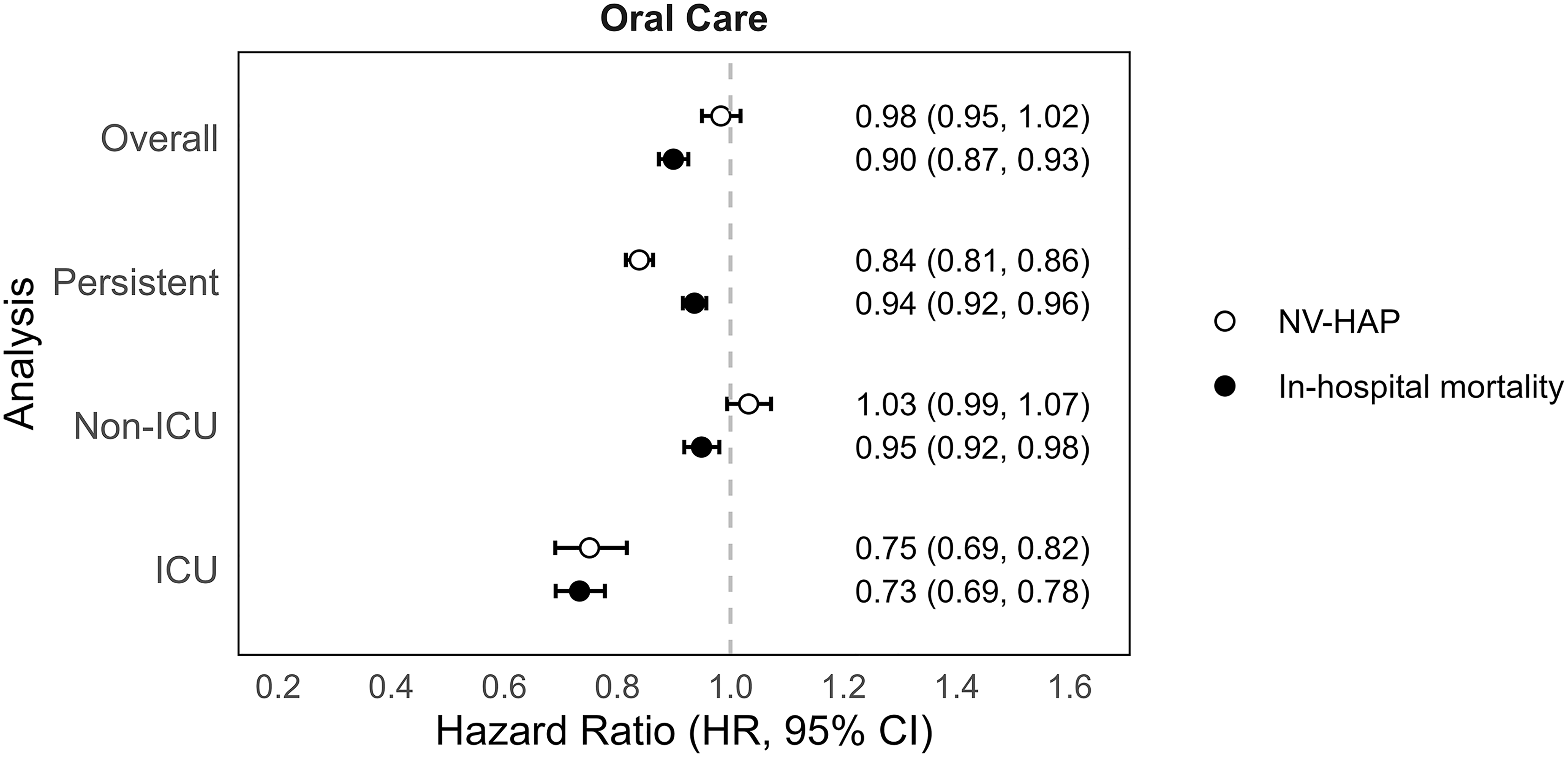
After adjusting for fixed and time-varying covariates, oral care per day was no longer associated with NV-HAP risk (HR 0.98; 95% CI: 0.95–1.02) and persistent oral care for ≥3 consecutive days was associated with lower NV-HAP risk (HR 0.84; 95% CI: 0.82–0.86). Results differed by ICU status: oral care per day was associated with lower risk for NV-HAP in the ICU (HR 0.75; 95% CI: 0.69–0.82) but not outside the ICU (HR 1.03; 95% CI: 0.99, 1.07) (Figure 1). On sensitivity analysis among facilities with ≥70% complete oral care data, results were similar, but in the sensitivity analysis using multiple imputations for missing oral care values, there was no association between oral care and NV-HAP (Supplement Figure 2a).
Association of oral care performance during hospitalization with non-ventilator hospital-acquired pneumonia (NV-HAP) and in-hospital mortality: adjusted hazard ratio (HR) and 95% confidence interval (CI).

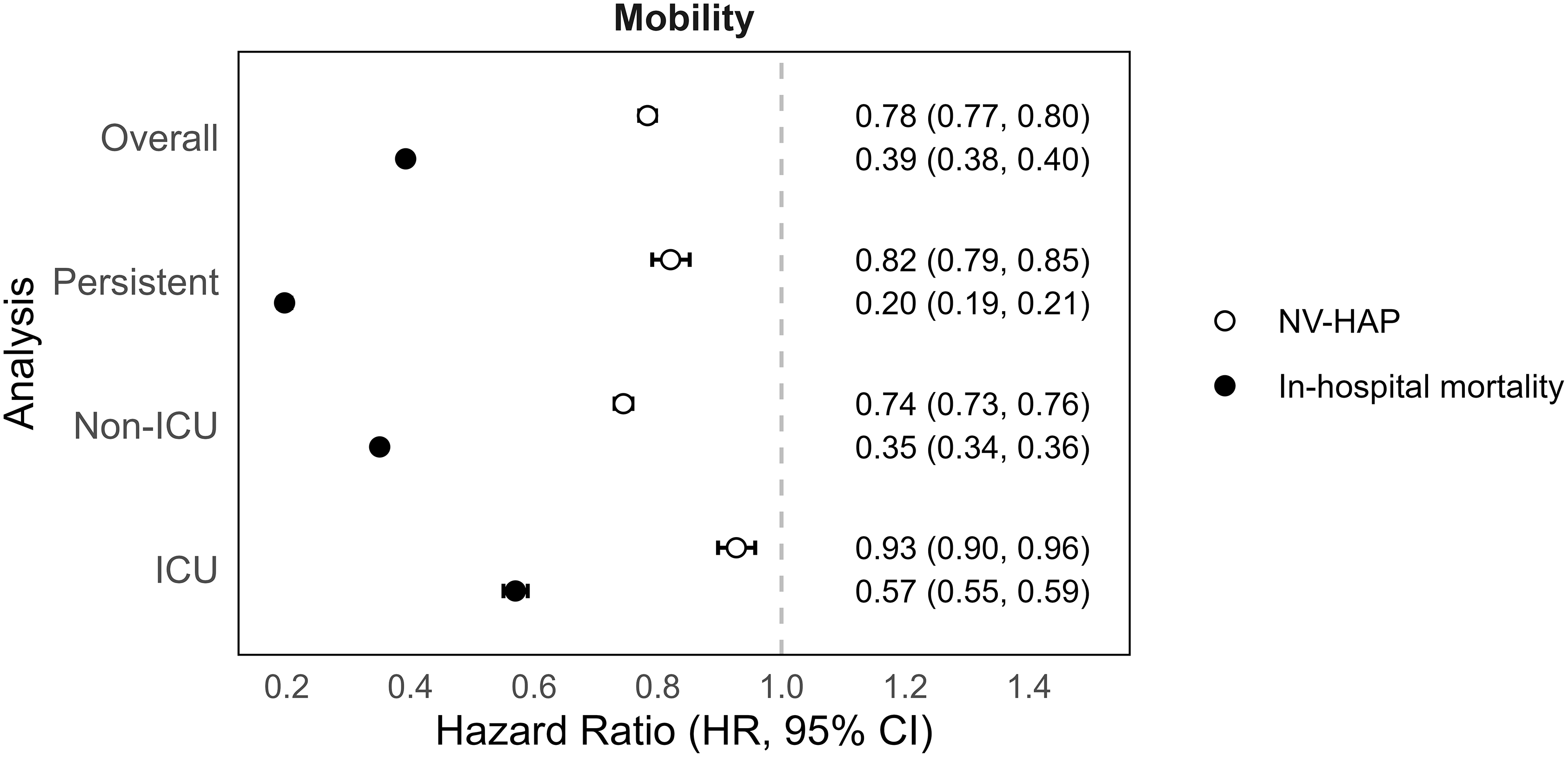
Mobility per day was associated with less risk for NV-HAP (HR 0.78; 95% CI: 0.77–0.80) for each point increase in mobility, from supine-in-bed to upright or from upright to walking. Persistent walking for ≥3 consecutive days was further associated with less NV-HAP (HR 0.82; 95% CI: 0.79–0.85). The effect of mobility per day on NV-HAP was larger outside the ICU (HR 0.74; 95% CI: 0.73–0.76) than in the ICU (HR 0.93; 95% CI: 0.90–0.96) (Figure 2).
Association of mobility during hospitalization with non-ventilator hospital-acquired pneumonia (NV-HAP) and in-hospital mortality: adjusted hazard ratio (HR) and 95% confidence interval (CI).

Mortality
Both oral care and mobility were associated with lower mortality rates. The adjusted HR for mortality for each day with oral care was 0.90 (95% CI: 0.87–0.93) (Figure 1). Effects were similar for persistent oral care over ≥3 consecutive days (HR 0.94; 95% CI: 0.92–0.96). The association between oral care per day and mortality was stronger in the ICU (HR 0.73; 95% CI: 0.69–0.78) than outside the ICU (HR 0.95; 95% CI: 0.92–0.98). Results were consistent among facilities with more complete oral care data. Effect estimates using multiple imputations for missing oral care data were not significant (Supplement Figure 2b).
The adjusted HR for hospital death for every level increase in mobility per day was 0.39 (95% CI: 0.39–0.40); persistent walking for ≥3 consecutive days was associated with a hazard ratio for hospital death of 0.20 (95% CI: 0.19–0.21). Mobility per day was strongly associated with lower mortality rates both inside the ICU (HR 0.57; 95% CI: 0.55–0.59) and outside the ICU (HR 0.35; 95% CI: 0.34–0.36) (Figure 2).
Discussion
In a retrospective analysis of 1,744,811 hospitalizations across 144 hospitals, we found that regular oral care and mobility were associated with lower risk for NV-HAP and higher survival rates. Persistent oral care for ≥3 consecutive days was associated with a 16% reduction in NV-HAP and a 6% reduction in mortality. Persistent mobility was associated with an 18% reduction in NV-HAP and 80% reduction in mortality.
Our findings that oral care and mobility are associated with lower rates of NV-HAP are encouraging given the substantial burden of NV-HAP for hospitalized patients. Despite being the most common and deadly healthcare-associated infection, most hospitals do not have formal programs to systematically prevent NV-HAP. Reference Munro, Baker and Giuliano6 This is partly due to the lack of clear data on how best to prevent NV-HAP. Reference Livesey, Quarton and Pittaway26 Our analysis suggests that basic interventions such as regular oral care and mobilizing patients may help reduce the incidence of NV-HAP.
Our findings are consistent with two small interventional studies of patient mobility and pneumonia. Stolbrink and colleagues assigned patients on a respiratory ward and a geriatric ward to a bundle of extra physiotherapy and collaboration with ward staff to encourage mobility, and compared NV-HAP rates to patients on two matched wards (678 patients on intervention wards, 501 patients in control wards). Reference Stolbrink, McGowan and Saman16 The intervention was associated with higher levels of activity and significantly lower NV-HAP rates that persisted in adjusted analyses (HR for NV-HAP 0.39, 95% CI 0.22–0.68). Similarly, Weber and colleagues reported that 58 transcatheter aortic valve replacement patients randomized to intensified periprocedural physiotherapy (including ≥30 minutes daily walking) were 75% less likely to develop postinterventional pneumonia compared to 50 patients randomized to standard care. Mortality rates were similar for the two cohorts. Reference Weber, Klein and Weigert27
Literature on the association between oral care and NV-HAP is more mixed. Warren and colleagues retrospectively evaluated the impact of an oral care quality improvement project in one hospital. They found that NV-HAP rates were ∼50% lower and mortality rates >5 times lower in the 7 months after roll-out of the initiative compared to the same period in the year prior. Reference Warren, Medei, Wood and Schutte14 McNally and colleagues, by contrast, found similar NV-HAP rates in 4 wards assigned to a structured toothbrushing program compared to 6 wards in a sister hospital with usual care. Reference McNally, Krisciunas, Langmore, Crimlisk, Pisegna and Massaro18 Likewise, Giuliano and colleagues randomized one medical unit and one surgical unit to enhanced oral care and compared their NV-HAP rates to one medical and one surgical unit that received routine care. They reported a significant reduction in NV-HAP rates in the medical unit but not in the surgical unit. Reference Giuliano, Penoyer, Middleton and Baker12 All of these studies used diagnosis codes to screen for NV-HAP, which may have introduced bias since coding for NV-HAP is incomplete, inconsistent, and often inaccurate. Reference Wolfensberger, Clack and von Felten15,Reference van Mourik, van Duijn, Moons, Bonten and Lee28,Reference Wolfensberger, Meier, Kuster, Mehra, Meier and Sax29
Our findings reinforce and expand upon previous research, demonstrating a protective effect of patient oral care and mobility, with varying magnitude depending on the clinical setting. Our study extends these studies by virtue of our large study population, the number and diversity of hospitals, and our use of detailed clinical data for risk adjustment. We also accounted for the temporal relationship between these exposures and NV-HAP using time-varying Cox proportional hazards models, whereas prior analyses used summary or snapshot exposure measurements. Additionally, we utilized an objective, standardized definition for NV-HAP, rather than relying on subjective clinical diagnoses or discharge codes which are prone to bias. Reference van Mourik, van Duijn, Moons, Bonten and Lee28–Reference Baker and Quinn30 These strengths of our study help increase confidence in the potential protective effects of oral care and mobility against NV-HAP.
Our study also has several limitations. This was a retrospective observational study rather than a prospective randomized trial. Our estimates may therefore be biased by residual confounding from factors not captured in structured EHR data. We see signs of possible residual confounding in our results. Mobility levels were highest in younger and healthier patients, populations that are also at lower risk for NV-HAP and death; incomplete adjustment for health status may have exaggerated the protective effect of mobility against these outcomes. Conversely, oral care performance was more consistently documented in frail patients, particularly those in the ICU, possibly because ICU nurses must perform oral care for these patients who cannot do it themselves. This may explain the crude association between oral care and higher mortality. It also allows for the possibility that we have underestimated the true protective effect of oral care due to insufficient risk adjustment. Under-documentation of oral care outside the ICU vs inside the ICU may also explain the observed lack of protective effect of oral care outside the ICU.
Further limitations of our study include the use of simplified metrics for oral care (performed vs not performed) and mobility (supine, upright, walking). More detailed assessment of these parameters (e.g., toothbrushing vs rinsing alone, distance vs time spent walking, etc.) may have provided more clinically meaningful insights. We tabulated mobility levels and oral care from nursing records, but nursing documentation varies in its completeness and its accuracy was not validated. In addition, nursing documentation may not reflect all oral care and mobility independently initiated by patients. Indeed, oral care and mobility data were missing for many patient-days, with missingness likely not at random. We evaluated the impact of missingness through sensitivity analyses focusing on hospitals with more complete data and by imputing missing mobility and oral care values, but high missingness nonetheless diminishes the reliability of our findings. In addition, our imputation models were limited to the structured data routinely found in EHRs (demographics, comorbidities, service, laboratory values, and vital signs) but these are likely only partial proxies for proclivity to walk or perform oral care. Other variables such as patients’ willingness to brush teeth, delirium, provision of supplies, and nursing availability are likely also influential.
This is the largest study to date to evaluate associations between oral care and mobility on the risk of NV-HAP and hospital mortality. We identified protective associations for both oral care and mobility, albeit with differential effects inside and outside of the ICU. Prospective interventional trials of these strategies are warranted to better elucidate their effects.
Supplementary material
To view supplementary material for this article, please visit https://doi.org/10.1017/ice.2025.10245
Acknowledgements
None
Financial support:
Funding for this study was provided by the Centers for Disease Control and Prevention (U54CK000611). Support for HCA Healthcare’s participation in the study was provided in kind by HCA. The views expressed in this publication represent those of the author(s) and do not necessarily represent the official views of the Centers for Disease Control and Prevention, nor HCA, nor any affiliated entities.
Competing interests
D.B. is an educational consultant for Stryker. M.K. has received grant funding from the CDC and AHRQ and royalties from UpToDate. All other authors report no conflicts of interest relevant to this article.