Introduction
Spousal violence (SV) is a serious public health problem experienced by women across the world, either in the form of physical, sexual or emotional violence, regardless of socio-demographic and cultural group (Montalvo-Liendo, Reference Montalvo-Liendo2009). The World Health Organization (WHO & LSHTM, 2010) reported that nearly one in three women experience SV during their lifetime, with immediate and long-term health outcomes including physical injury, gynaecological and pregnancy-related complications, post-traumatic stress disorder and depression. A multi-country study showed a varied range of lifetime prevalence of SV, from 15% in Japan to 71% in Ethiopia (Garcia-Moreno et al., Reference Garcia-Moreno, Jansen, Ellsberg, Heise and Watts2006), while the targets (5.2 and 5.3) of Sustainable Development Goal-5 (SDG-5) have emphasized eliminating all types of violence against women (UN General Assembly, Reference General Assembly2015). Approximately 37% of African ever-married (or partnered) women reported having experienced tormenting SV at some point in their lives (WHO, 2013), and the percentage seems to be consistently higher in provincial and rural settings (Garcia-Moreno et al., Reference Garcia-Moreno, Jansen, Ellsberg, Heise and Watts2006). Studies have revealed that the acceptability of SV, women’s older age, higher number of children, lower age at marriage, history of witnessing violence, limited access to media; and husband’s lower education, polygamy status and heavy alcohol drinking habit, significantly increase a woman’s chances of being abused by their spouses (Uthman et al., Reference Uthman, Lawoko and Moradi2009; Shamu et al., Reference Shamu, Abrahams, Temmerman, Musekiwa and Zarowsky2011; Rahman et al., Reference Rahman, Hoque, Mostofa and Makinoda2014; Oyediran & Feyisetan, Reference Oyediran and Feyisetan2017).
However, SV might be accelerated by unobserved variables, such as gender inequality or women’s empowerment status in society due to social norms related to fertility preferences and patriarchal beliefs (Jewkes et al., Reference Jewkes, Levin and Penn-Kekana2002; Okenwa et al., Reference Okenwa, Lawoko and Jansson2011; Ranganathan et al., Reference Ranganathan, Knight, Abramsky, Muvhango, Polzer Ngwato and Mbobelatsi2019). Gender equality and the empowerment of women is the 5th of the seventeen SDGs highlighted by the UN in the 2030 agenda, and this goal includes one specific target (Target 5.2) to eliminate all types of violence against women (UN General Assembly, Reference General Assembly2015; García-Moreno & Amin, Reference García-Moreno and Amin2016). Studies from low- and middle-income countries (LMICs) have indicated that the relationship between women’s status in households and their risk of violence is too complex to generalize, warranting further region-based exploration (Vyas & Watts, Reference Vyas and Watts2009; Dalal et al., Reference Dalal, Dahlström and Timpka2013). The multi-dimensionality of women’s empowerment status (WES) in itself is problematic as well because it is comprised of different dimensions in different studies (Pratley, Reference Pratley2016). However, the majority of studies have included economic, socio-cultural, educational, legal and health care accessibility dimensions to define WES (Pratley, Reference Pratley2016; Asaolu et al., Reference Asaolu, Alaofè, Gunn, Adu, Monroy and Ehiri2018).
Targets 5.a and 5.6 of SDG-5 stress women’s economic empowerment and universal access to health care services respectively, and Target 4.5 of SDG-4 focuses on women’s educational empowerment for eliminating gender-based violence (UN General Assembly, Reference General Assembly2015; García-Moreno & Amin, Reference García-Moreno and Amin2016; Croft et al., Reference Croft Trevor, Aileen, Marshall and Courtney2018). Although these targets do not significantly reflect women’s agency, this concept is implied in most SDG-5 indicators. The term ‘women’s agency’ refers to a woman’s ability to make decisions despite the existence of power relations (Asaolu et al., Reference Asaolu, Alaofè, Gunn, Adu, Monroy and Ehiri2018) and encompasses: choice in the context of sexual relationships, marriage and childbearing; making household decisions in the family; the justification of wife-beating; and participation in effective leadership opportunities in the political, labour, land and financial spheres (Kabeer, Reference Kabeer2008; Hanmer & Klugman, Reference Hanmer and Klugman2016). Women’s agency leads to socio-cultural empowerment when it is used to question, confront or modify regressive practices and institutions that perpetuate women’s subordination in a patriarchal society (Kabeer, Reference Kabeer2008). At the same time, evidence suggests that comprehensive access to quality health care services, including medical and psychosocial support, contributes to the prevention of violence against women (García-Moreno & Amin, Reference García-Moreno and Amin2016).
In most secondary and open datasets (e.g. the Demographic and Health Survey [DHS]), not all indicators defining women’s empowerment status are available, and the specific design of these datasets is one of the barriers to evaluating women’s cultural perception of empowerment. Nevertheless, using DHS datasets and reflecting the maximum targets of SDGs, a few studies have constructed different indices of women empowerment for the SSA region (Ewerling et al., Reference Ewerling, Lynch, Victora, van Eerdewijk, Tyszler and Barros2017; Asaolu et al., Reference Asaolu, Alaofè, Gunn, Adu, Monroy and Ehiri2018).
Owing to the diverse socioeconomic and cultural norms around the world, the empowerment status of women can have both positive and negative impacts on SV. In a society where most residents are impoverished and have lower access to material resources, women with education or who contribute financially may occupy a higher status in their household, and be less vulnerable to abuse (Vyas & Watts, Reference Vyas and Watts2009). Blumberg (Reference Blumberg1991) and Ranganathan et al. (Reference Ranganathan, Knight, Abramsky, Muvhango, Polzer Ngwato and Mbobelatsi2019) investigated whether having their own source of income improves women’s ability to make a stand over fertility preferences, household decision-making and self-esteem. Financial independence allows women to feel socioeconomically empowered and able to have control over household-level decisions to improve both their own and their children’s well-being. On the other hand, women may face an increased risk of violence within families where gender inequality is high and women’s empowering status remains low (Yodanis, Reference Yodanis2004; Heise & Kotsadam, Reference Heise and Kotsadam2015). However, women’s socioeconomic empowerment may also promote male insecurity and feelings of economic inadequacy, leading to more violence in spousal relationships (Blumberg, Reference Blumberg1991; Kabeer, Reference Kabeer1994).
In terms of women’s justification of violence and seeking health care services, empowering women via intervention programmes has the potential to minimize violence against them (Ranganathan et al., Reference Ranganathan, Knight, Abramsky, Muvhango, Polzer Ngwato and Mbobelatsi2019; Mahenge & Stöckl, Reference Mahenge and Stöckl2020). Yet, studies have reported that acceptance of wife-beating is determined to a large extent by customs that differ by geographical location, race and religious group (Uthman et al., Reference Uthman, Lawoko and Moradi2009; Chikhungu et al., Reference Chikhungu, Bradley, Jamali and Mubaiwa2020). For example, South Asian women are particularly prone to upholding socio-cultural values such as family structure, marriage and religious practice, and as a result, they silently tolerate abusive behaviour inside the family and avoid seeking medical services and legal support (Inman et al., Reference Inman, Ladany, Constantine and Morano2001). These socio-cultural features are also seen among rural African women (Mahenge & Stöckl, Reference Mahenge and Stöckl2020), and in addressing this complex issue, Johnston and Naved (Reference Johnston and Naved2008) developed a more gender-sensitive policy framework bringing together the different socio-political, cultural and economic factors that support women’s rights and access to health care services. To address gender-related issues effectively among rural people, Bishwajit et al. (Reference Bishwajit, Sarker and Yaya2016) suggested that policymakers should introduce more timely choices and creative strategies through strengthening the cooperation with members of civil society, as well as the corporate sector, local and international human rights non-governmental organizations (NGOs) and donor agencies.
The transformation of rural and war-torn SSA regions into SV-free communities requires the implementation of effective, region-specific, evidence-based action plans. To this end, research is required to determine the prevalences of the various forms of SV in each SSA country and their association with different aspects of WES (WHO, 2013; Ranganathan et al., Reference Ranganathan, Knight, Abramsky, Muvhango, Polzer Ngwato and Mbobelatsi2019). Such research needs to contextualize the origins and dynamics of different types of control in spousal relationships to understand the diversity of SV in a culture (Johnson & Ferraro, Reference Johnson and Ferraro2000). Whether WES causes or reduces SV among women in rural SSA is not well established (Ahinkorah et al., Reference Ahinkorah, Dickson and Seidu2018). A few studies have discussed the association of SV with single (Jewkes et al., Reference Jewkes, Levin and Penn-Kekana2002; Ahinkorah et al., Reference Ahinkorah, Dickson and Seidu2018; Ranganathan et al., Reference Ranganathan, Knight, Abramsky, Muvhango, Polzer Ngwato and Mbobelatsi2019) and multidimensional (Rahman et al., Reference Rahman, Hoque and Makinoda2011; Ranganathan et al., Reference Ranganathan, Knight, Abramsky, Muvhango, Polzer Ngwato and Mbobelatsi2019; Rowan et al., Reference Rowan, Mumford and Clark2018) aspects of WES in a particular setting. However, most available measures of WES in SSA have several drawbacks, such as lack of external validity, too few domains of empowerment and/or not being generalizable to SSA (Asaolu et al., Reference Asaolu, Alaofè, Gunn, Adu, Monroy and Ehiri2018). In an attempt to address this, Asaolu et al. (Reference Asaolu, Alaofè, Gunn, Adu, Monroy and Ehiri2018) proposed a validated measure of WES, generalized for SSA regions, which includes individual and collective awareness, behaviour, institutions and outcomes embedded in distinct social and cultural contexts. To the authors’ knowledge, to date no study has used this generalized and validated version of WES to assess its relationship with SV in rural SSA, and only rarely have studies reported the inequalities of experiencing different types of SV in SSA using overall WES. The present study aimed to investigate the variation of different types of SV among rural married women across selected SSA nations. Additionally, the association of all types of SV among rural women with different dimensions of WES (generalized and validated for SSA regions), and their risk of experiencing SV for overall WES inequality, were explored.
Methods
Data
This study used the data for seventeen SSA countries obtained from the most recent DHSs conducted between 2015 and 2019. The selected countries were classified into two regions: 1) East and Southern Africa (ESA): Burundi, Ethiopia, Malawi, Rwanda, Tanzania, Uganda, Zambia and Zimbabwe; and 2) West and Central Africa (WCA): Angola, Benin, Cameroon, Chad, Liberia, Mali, Nigeria, Senegal and Sierra Leone. The DHS has been conducting surveys in LMICs every five years since 1984, with a special focus on maternal and child health by interviewing women of reproductive age, but also including matching questions on women’s status and spousal violence (DHS Program, 2018). The DHS allows cross-country comparison by following the same standard procedures in all countries – sampling, questionnaires, data collection, cleaning, coding and analysis. It employs a stratified two-stage sampling technique. The first stage involves the selection of points or clusters (enumeration areas) and the second stage is the systematic sampling of households in each cluster. All women of reproductive aged (15–49) who were usually at the selected households or visitors who slept in the household on the night before the survey are interviewed. Regarding the power calculation, the design of DHS samples is determined by many factors, including criteria for the standard errors of estimates of the main indicators within the sample strata, which are usually combinations of level 1 administrative units and urban/rural residence. For each survey, the design is described, and standard errors are provided in appendices to the main report of each country. A general description is provided in the DHS Sampling Manual (Page no. 10-12, ICF International, 2012).
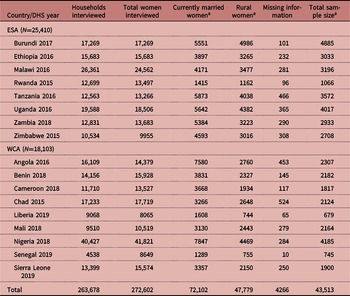
In the present study, data on domestic violence were derived from each country’s DHS optional module of questions. The DHS programme randomly selects one woman from all eligible women in a household for an individual questionnaire on domestic violence (Croft et al., Reference Croft Trevor, Aileen, Marshall and Courtney2018). Of the 272,602 rural married women aged 15–49 years, 43,513 had answered the violence module questions referring to their husband. Those with missing data were excluded from the analysis (Table 1). Details of the administrative procedures, training, methodology and ethical approval of the violence module are described in the DHS interviewer’s manual (ICF International, 2020).
Distribution of respondent married women aged 15–49 years by SSA region and country

ESA: East and Southern Africa; WCA: West and Central Africa.
N, overall sample size with complete information
a numbers are weighted.
Outcome variable
The outcome variable was ‘spousal violence (SV)’, defined as a woman ever experiencing any of the specified acts of physical, sexual or emotional violence committed by her current husband (Croft et al., Reference Croft Trevor, Aileen, Marshall and Courtney2018). The DHS measures spousal violence using a shortened and modified Conflict Tactics Scale (Straus, Reference Straus1979). Women were asked questions about three categories of violence: physical, emotional and sexual. Physical SV included pushing, shaking, throwing objects, slapping, twisting arm or pulling hair, being punched with a fist or with any object, kicking, dragging, beating up, attempting to strangle or burn and threatening or attacking with a weapon. Emotional SV included humiliating in public and threatening verbally, while sexual SV included having sex by force and performing sexual acts with threats. Experiencing physical, emotional or sexual SV was coded 1 if there was at least one positive answer, and 0 otherwise. Finally, a composite variable ‘any type of SV’ was created and dichotomized as 1 (yes) if there was any physical and/or emotional and/or sexual SV ever, and 0 (no) if otherwise.
Independent variables
The independent variables were four dimensions of women’s empowerment status (WES). There is some ambiguity around the definition and measurement of empowerment, with a variety of indicators being used to operationalize this concept (Kabeer, Reference Kabeer1994; Ewerling et al., Reference Ewerling, Lynch, Victora, van Eerdewijk, Tyszler and Barros2017).
Conceptualization and measurement of women’s empowerment
Different studies have used different indicators and developed models to measure women’s empowerment, yet none of these can be considered as a universal model (Tuladhar et al., Reference Tuladhar, Khanal, Lila, Ghimire and Onta2013). Recently, using the DHS datasets, Asaolu et al. (Reference Asaolu, Alaofè, Gunn, Adu, Monroy and Ehiri2018) investigated and identified the significant indicators within each of the four dimensions to define women’s empowerment status (WES), which were validated and generalized for Sub-Saharan African regions. Though household decision-making autonomy has often been used to define empowerment status in different country-specific studies (Pratley, Reference Pratley2016), there is limited evidence to support household decision-making, life course or legal status domains as components of women’s empowerment in SSA (Asaolu et al., Reference Asaolu, Alaofè, Gunn, Adu, Monroy and Ehiri2018). However, based on the findings of Asaolu et al. (Reference Asaolu, Alaofè, Gunn, Adu, Monroy and Ehiri2018), this study considered four relevant domains, i.e. labour force participation (economic dimension), women’s attitude towards violence (as a proxy for socio-cultural status), education and access to health care (health dimension). The scoring process of the indicators was developed using evidence from previous literature (Asaolu et al., Reference Asaolu, Alaofè, Gunn, Adu, Monroy and Ehiri2018; Jennings et al., Reference Jennings, Na, Cherewick, Hindin, Mullany and Ahmed2014), where higher values reflected a greater level of empowerment.
Women’s economic status
This included the domain ‘labour force participation’. The following were used to construct an index of women’s economic empowerment status (low vs high): occupation, type of earnings from work, seasonality of occupation and income ratio. Occupation was coded as: worked for a family member (code 1); worked for someone else (code 2); and self-employed (code 3). Type of earnings was categorized as: paid in-kind only (code 1); paid in cash and in-kind (code 2); and paid in cash only (code 3). Seasonality of occupation was coded: worked occasionally or seasonally (code 1); and worked all year (code 2). When women’s incomes were compared with those of their husbands, the income ratio was assigned as follows: husband did not bring in any income (code 1); women earned less than husband (code 2); women earned about the same as husband (code 3); women earned more than husband (code 4). Unemployed women were coded 0.
Women’s attitude towards violence
‘Attitude towards violence’ was assessed using five variables describing whether women thought wife-beating was justified if a wife goes out without telling her husband; neglects the children; argues with her husband; refuses to have sex with her husband; and burns food. Women’s responses were used to construct an index of ‘attitude towards violence’ (low vs high). ‘Yes’ and ‘don’t know’ answers were coded 0 (i.e. justified violence), while ‘no’ responses were coded 1 (i.e. did not justify violence).
Women’s education
This included women’s literacy and their highest educational level, and an index of women’s educational status (low vs high) was constructed. Women’s literacy was scored as: could not read at all (code 0); able to read part of a sentence (code 1); able to read an entire sentence (code 2); and did not need a reading card to assess their literacy (code 3). Women’s highest educational level was measured as: no education (code 0); primary education (code 1); secondary education (code 2); and higher education (code 3).
Women’s health
Four indicators examined women’s difficulty getting medical help: needing to receive permission before getting medical help; distance to health facility; not wanting to go to health care facility alone; and having money for health care. These were used to develop an index of ‘women’s access to health care’ (low vs high). Respondents were coded as 0 if they reported problems accessing health care and 1 otherwise.
Construction of an overall women’s empowerment index
These four indices were used to construct an overall women’s empowerment index (low vs high). The sole purpose of this index was to examine women’s risk of experiencing SV. The four indices were constructed using Principal Component Analysis (PCA) and index scores were divided into two equal parts (quantiles), i.e. low versus high, where ‘low’ means women have lower empowerment and ‘high’ meant women have higher empowerment. The pooled values of Kaiser-Meyer-Olkin (KMO) Measure of Sampling Adequacy ranged from 0.68 to 0.90 (in ESA), and from 0.73 to 0.92 (in WCA) for the different indicators of each dimension, indicating that the sample sizes were adequate for PCA. The pooled values of the chi-squared statistics using Bartlett’s test of Sphericity were also statistically significant, confirming that the selected variables or questions for each respective domain were inter-correlated. Additionally, reliability coefficient (Cronbach’s alpha) scores of the selected variables varied from 0.61 to 0.87 (in ESA), and from 0.66 to 0.89 (in WCA), indicating acceptable to high levels of correlation among the variables of respective dimensions. Finally, the corresponding questions or variables were combined into one composite domain using PCA, and thus four domains of WES were constructed.
Control variables
The control variables included respondent’s socio-demographic characteristics: age (15–24, 25–34 and 35–49); number of living children (no child, 1–3, 4 or more); age at marriage (15–17 years, and 18 and over); media exposure (watching TV, listening to radio and reading newspapers; yes, no); and ever witnessed mother being beaten in childhood (yes, no). Control variables for husband’s characteristics, as reported by the wife, were: husband’s education level (no education, primary, secondary and higher); whether husband ever drank alcohol (yes, no); and whether husband had more than one wife, i.e. polygamy status (yes, no). Finally, a relative index of household socioeconomic status was created for the selected nations called the ‘household wealth index, which was a composite socioeconomic score that assigned individuals to one of five categories used in the original survey: poorest, poorer, middle, richer or richest.
Statistical analysis
For each region of SSA, chi-squared tests were used to investigate the bivariate association between experiencing different types of SV and respondent socio-demographic variables, and to compare the proportion of predictor variables with SV experience. Two adjusted models of multivariate logistic regression analysis were used, which progressively included variables and generated adjusted odds ratios (AORs) with 95% confidence intervals (CIs) to predict the relationship between different dimensions of WES and different types of SV experience. Finally, to measure the risk of experiencing any type of SV among women according to their overall WES inequality, two regression-based methods were used, i.e. (i) relative index of inequality (RII), and (ii) slope index of inequality (SII), using linear regression and a modified Poisson approach (Zou, Reference Zou2004). These two indices of inequality have been used previously to measure the risks for socioeconomic and educational inequalities in different public health problems (Moreno-Betancur et al., Reference Moreno-Betancur, Latouche, Menvielle, Kunst and Rey2015; Arsenault et al., Reference Arsenault, Jordan, Lee, Dinsa, Manzi, Marchant and Kruk2018). A negative value of SII means a decrease in the risk of experiencing SV (or any public health indicator) with increasing empowerment (or socioeconomic) status (low to high). Again, values of RII <1 indicate that high-empowered women are at less risk of experiencing SV than low-empowered women. For all analyses significance level was set at p<0.05. To control the effect of the complex survey (DHS) design, especially for the domestic violence module, analyses were performed using Stata’s svy command. A variance inflation factor was used to evaluate the possible collinearity, and no multicollinearity problem was found among the study variables. Stata Version 14.2 was used for all analyses.
Results
Characteristics of respondents
The mean ages of the respondent women were 30.72 and 30.82 years, and that of their husbands 36.93 and 40.21 years, respectively, in ESA and WCA regions. Tables 2 and 3 display the percentage distribution of the women’s background characteristics by region. Women from the WCA region had more children (4 and more), married at an earlier age and had lower media exposure, compared with ESA women. The husbands of ESA women did not tend to be polygamous but consumed more alcohol than the husbands of WCA women. Women’s overall empowerment status was slightly (about 2%) higher in the WCA than the ESA region, and women from the ESA lagged behind (about 10%) those of WCA in terms of education. Detailed characteristics of the respondents by ESA and WCA region are available in the online open access repository: https://doi.org/10.6084/m9.figshare.16623103.v1.
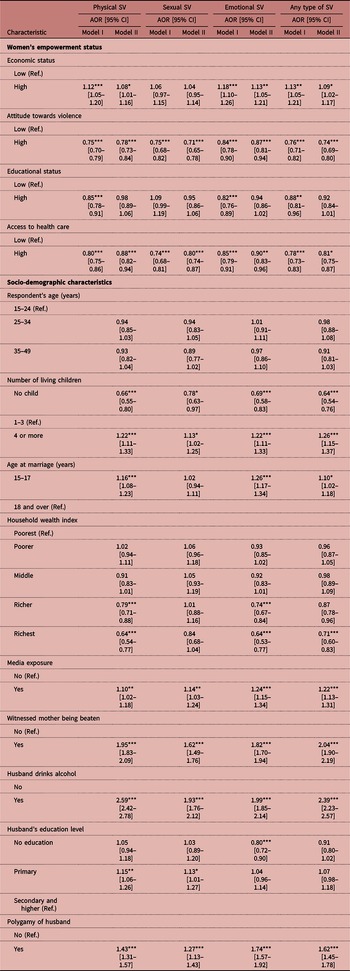
Adjusted associations (adjusted odds ratios, AOR) between women’s empowerment status and different types of spousal violence (SV) experience among the study population of East and Southern Africa (ESA), N=25,410

Model I: adjusted by including all predictor variables; Model II: additionally adjusted by controlling variables.
Ref., reference category.
*p<0.05; **p<0.01; ***p<0.001.
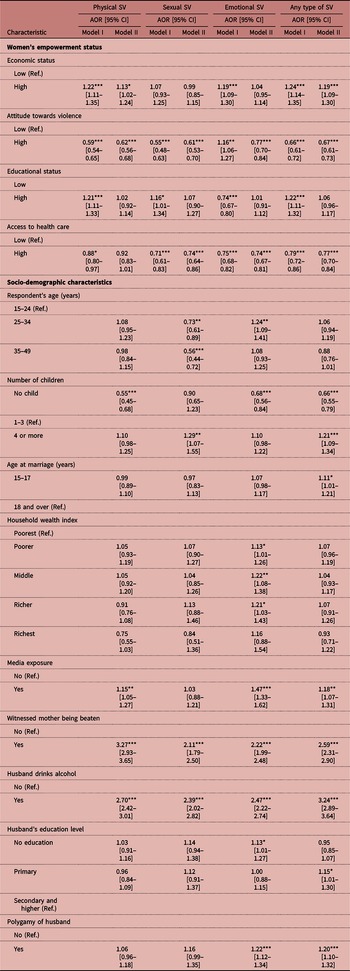
Adjusted associations (odds ratios, AOR) between women’s empowerment status and different types of spousal violence (SV) experience among the study population of West and Central Africa (WCA), N=18,102

Model I: adjusted by including all predictor variables; Model II: additionally adjusted by controlling variables.
Ref., reference category.
*p<0.05; **p<0.01; ***p<0.001.
Prevalence of sexual violence by SSA region
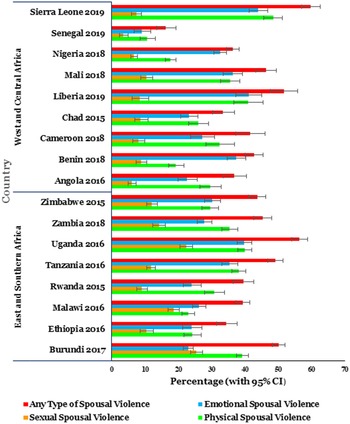
The prevalence of women experiencing SV was higher in the ESA than the WCA region (physical SV: 33.55% vs 27.80%; sexual SV: 16.96% vs 7.63%; any type of SV: 46.14% vs 40.83%, respectively), except for emotional SV (WCA: 31.28% vs ESA: 29.35%). The prevalence of the different types of SV by SSA country are shown in Figure 1. The prevalence of respondent women experiencing any type of SV ranged from 34.50% in Ethiopia to 56.49% in Uganda for ESA, and from 33.46% in Chad to 59.89% in Sierra Leone for WCA. The highest rates of physical and emotional SV were reported in Uganda (40% and 39.71%) and Sierra Leone (48.51% and 44.11%) for ESA and WCA, respectively. Again, sexual SV was more prominent among respondents in ESA than in WCA (Figure 1).
Prevalence of spousal violence in rural sub-Saharan Africa by country. Error bars indicate 95% confidence intervals.

Sexual spousal violence by respondent’s characteristics and empowerment status
In ESA, highly empowered women experienced significantly lower SV of any type, apart from in the economic dimension. ESA women of higher economic status reported significantly more physical (34.76% vs 32.53%; p(χ 2)<0.002), emotional (30.97% vs 27.98%; p(χ 2)<0.001) and any type of SV (47.56% vs 44.97%; p(χ 2)<0.003), than those of lower economic status. Similarly, women’s higher economic position in rural WCA made them more vulnerable to physical (30.15% vs 25.80%; p(χ 2)<0.001), emotional (33.38% vs 29.48%; p(χ 2)<0.001) and any type of SV (43.77% vs 38.33%; p(χ 2)<0.001). However, due to women’s better attitude towards violence (i.e. not justifying violence) and access to health care, WCA women experienced less SV of all types. The corresponding tables showing the proportional comparison of the respondent characteristics with different type of SV experience in ESA and WCA are available in the figshare data repository https://doi.org/10.6084/m9.figshare.16623103.v1.
Association of spousal violence with different dimensions of women’s empowerment status
The adjusted associations (Model I and Model II) between different dimensions of WES and experiencing SV for ESA and WCA are shown in Tables 2 and 3, respectively. Women’s high economic status in ESA showed positive and significant associations with physical (AOR: 1.08; 95% CI: 1.01–1.16), emotional (AOR: 1.13; 95% CI: 1.05–1.21] and any type of SV (AOR: 1.09; 95% CI: 1.02–1.17), after adjusting all other characteristics (Model II, Table 2). In contrast, women who did not justify violence (high ‘attitude towards violence’) and who had higher access to health care reported a negative but significant association with physical, sexual, and any type of SV in the adjusted model (Model II of Table 2).
On the other hand, in WCA, women of high economic status reported 1.13 times and 1.19 times higher odds of experiencing physical SV and any type of SV, respectively, after adjusting for controlling variables (Table 3). Again, women who did not justify violence (higher ‘attitude towards violence’) showed 38%, 39%, 23% and 33% lower likelihoods of experiencing physical, sexual, emotional and any type of SV, respectively, compared with those who justified violence (lower ‘attitude towards violence’) (Model II, Table 3). The educational status of women showed a non-significant relationship with all types of SV in the adjusted model (Model II) for both regions. Therefore, respondent’s socio-demographic characteristics, i.e. lower age at marriage, access to media, having more children, witnessing mothers being beaten in childhood, husband’s habit of alcohol consumption and polygamy status, were found to be positively associated with any type of SV in both ESA and WCA (Tables 2 and 3).
Summary measures of overall WES inequality
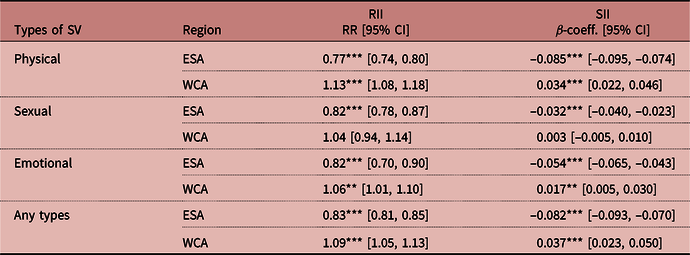
There were significant RII values for respondents in ESA and WCA (0.83 and 1.09 respectively), indicating that a move from a low to high overall WES was associated with a 17% decrease and 9% increase in experiencing any type of SV, respectively (Table 4). The corresponding SII indicated that a one-unit change from low to high overall WES was associated with a 0.082 unit decrease and 0.037 unit increase in any type of SV experience among respondents from ESA and WCA, respectively. Table 4 shows the rest of the summary measures of the relative risk of experiencing physical, sexual and emotional SV among the women for overall WES inequality.
Summary measures of inequality in overall women’s empowerment status for experiencing different types of spousal violence (SV) in sub-Saharan Africa

Total number of observations for East and Southern Africa (ESA) and West and Central Africa (WCA) were 25,410 and 18,103, respectively.
RR: risk ratio; CI: confidence interval.
*p<0.05; **p<0.01; ***p<0.001.
Discussion
This study found that rural married women from East and Southern Africa (ESA) are more exposed to the different types of spousal violence (except emotional violence) than those of West and Central Africa (WCA). Previous studies have shown that all types of SV are more prevalent among married women in ESA than WCA, especially in rural settings in Uganda, Burundi and Tanzania (Kishor & Bradley, Reference Kishor and Bradley2012; Ahinkorah et al., Reference Ahinkorah, Dickson and Seidu2018; Mahenge & Stöckl, Reference Mahenge and Stöckl2020). A recent study in Tanzania revealed that four out of ten women had experienced SV and only half had sought help in the case of severe SV (Mahenge & Stöckl, Reference Mahenge and Stöckl2020).
In most African countries where wife-beating is justified, i.e. where women’s socio-cultural status is low, SV is considered normal and a private matter between a husband and wife. For several reasons, such as stigma, shame, fear, lack of access to material resources and lack of trust in existing response systems in rural settings, culturally marginalized women are reluctant to disclose SV events to society (McCleary-Sills et al., Reference McCleary-Sills, Namy, Nyoni, Rweyemamu, Salvatory and Steven2016; Mahenge & Stöckl, Reference Mahenge and Stöckl2020). In this study, women from the WCA region had comparatively higher empowerment positions in almost all dimensions than women of ESA, and this might be a potential driving factor for ESA women’s higher degree of SV experience. Buller et al. (Reference Buller, Peterman, Ranganathan, Bleile, Hidrobo and Heise2018) developed a programme theory for LMICs hypothesizing that factors like socioeconomic status, intra-household conflict and women’s empowerment can reduce SV and reduce its adverse impact. At the same time, women who have greater access to media, witnessed SV in childhood and whose husband had an alcohol addiction, have been found to be more vulnerable to all types of SV in different studies of Africa (Shamu et al., Reference Shamu, Abrahams, Temmerman, Musekiwa and Zarowsky2011; Ahinkorah et al., Reference Ahinkorah, Dickson and Seidu2018; McClintock et al., Reference McClintock, Trego and Wang2019; Ranganathan et al., Reference Ranganathan, Knight, Abramsky, Muvhango, Polzer Ngwato and Mbobelatsi2019; Chikhungu et al., Reference Chikhungu, Bradley, Jamali and Mubaiwa2020). In the present study, these characteristics were found to be more prevalent in ESA, and all types of SV were more highly reported in ESA than in most of the WCA countries. Then again, women from Sierra Leone and Liberia, who experienced the highest physical and emotional SV in the WCA region, reported a high prevalence of these characteristics. Therefore, along with attitude towards violence and overall empowerment status of women, other important characteristics, such as access to media, witnessing mothers being beaten in childhood and husband’s alcohol consumption, might be plausible explanations for the higher SV experience among rural SSA women, especially in the ESA region (Abramsky et al., Reference Abramsky, Lees, Stöckl, Harvey, Kapinga and Ranganathan2019; Ranganathan et al., Reference Ranganathan, Knight, Abramsky, Muvhango, Polzer Ngwato and Mbobelatsi2019; Chikhungu et al., Reference Chikhungu, Bradley, Jamali and Mubaiwa2020; Mahenge & Stöckl, Reference Mahenge and Stöckl2020).
This study showed a positive association between women’s economic status and their risk of experiencing physical and any type of SV in both ESA and WCA, confirming the findings of previous studies in Bangladesh, Mexico, Brazil and some other LMICs (Buller et al., Reference Buller, Peterman, Ranganathan, Bleile, Hidrobo and Heise2018; Schuler & Nazneen, Reference Schuler and Nazneen2018). A study conducted in eight SSA countries found that employed women (i.e. in clerical, technical, sales or agricultural employment or the self-employed) were at more than 30% greater risk of experiencing any type of violence by their partners than unemployed women (McClintock et al., Reference McClintock, Trego and Wang2019). The economic and social empowerment of women might challenge the status quo and power balance with their husbands and be associated with an increased risk of SV, especially when the gender norms in a setting are unfavourable towards women (Buller et al., Reference Buller, Peterman, Ranganathan, Bleile, Hidrobo and Heise2018; Schuler & Nazneen, Reference Schuler and Nazneen2018; McClintock et al., Reference McClintock, Trego and Wang2019). In rural settings, women rarely work outside the home, and their introduction into the workforce may heighten marital tensions and increase the risk of SV. But as social norms about women’s employment evolve and men recognize the benefits of increased household income, the risk of SV decreases (Vyas & Watts, Reference Vyas and Watts2009). The present study found that rural women who made greater financial contributions to the family than their husbands were at a higher risk of both physical and sexual SV. To addressing this, a microfinance programme was launched in north-western Tanzania that combined village savings and loan schemes with a gender transformational component (training, yard meeting and couples’ discussion groups) (Abramsky et al., Reference Abramsky, Lees, Stöckl, Harvey, Kapinga and Ranganathan2019). This increased the income of both the husband and wife, improved spousal communication, relationship dynamics and confidence, as well as decreasing intra-household conflict by eliminating men’s feeling of failure in fulfilling their role as provider. Eventually, the programme follow-up survey showed that Tanzanian women’s higher economic status then had a negative association with the risk of physical and sexual (Abramsky et al., Reference Abramsky, Lees, Stöckl, Harvey, Kapinga and Ranganathan2019).
Since patriarchal and male dominance norms reflect gender inequities in an underdeveloped and rural society, there is widespread acceptance of wife-beating among both men and women (WHO & LSHTM, 2010). Men from patriarchal societies usually believe that they are superior to women, should control their wives in every aspect of life and should endorse traditional gender roles (Taft et al., Reference Taft, Bryant-Davis, Woodward, Tillman and Torres2009). Again, in a poor society, when husbands are continually unable to meet the financial needs of their families, they can become upset and annoyed at the slightest provocation, often leading them to be violent towards their wives (Gupta & Samuels, Reference Gupta and Samuels2017). Wife’s subordination and submission at home are then considered normal, expected, accepted and, in some cases, attractive to men (Russo & Pirlott, Reference Russo and Pirlott2006), and this can contribute to increased SV against women (Kishor & Subaiya, Reference Kishor and Subaiya2008; Uthman et al., Reference Uthman, Lawoko and Moradi2009). Others studies in SSA and South Asia (Woldemicael & Tenkorang, Reference Woldemicael and Tenkorang2010; Rowan et al., Reference Rowan, Mumford and Clark2018; Mahenge & Stöckl, Reference Mahenge and Stöckl2020) have reported that women who did not justify wife-beating, and who were more highly educated and had higher economic positions in society, were ensured higher access to health care and had increased help-seeking behaviour. Rowan et al. (Reference Rowan, Mumford and Clark2018) suggested that women who are likely to seek help and with unproblematic access to health care hardly ever suffer SV in India. As found in previous studies across the world (Kim et al., 2007; Kishor & Subaiya, Reference Kishor and Subaiya2008; WHO, 2010), the present study confirmed that women’s strong and defensive attitudes toward violence and access to health care were negatively associated with any type of SV in both in ESA and WCA.
The World Health Organization (WHO, 2019) recently proposed a multi-sectoral intervention called ‘RESPECT Women’ aimed at preventing violence against women by changing their attitude towards violence and strengthening their access to health care. This includes psychosocial support and psychological interventions for SV victims; working with couples to improve communication and conjugal relationships; a group-based intervention programme in the community to educate women and men by generating critical reflections on unequal gender power relationships; and modifying school curricula to challenge gender stereotypes and promote equality and consent-based interactions. To increase women’s access to health care, different approaches have been used, such as male and female yard meetings and training sessions to make SV unacceptable; providing comprehensive maternal care services in local health care centres; regular training of health care providers in responding to the needs of SV victims; and providing comprehensive sex education to young males.
The overall empowerment status of ESA women showed an inverse association with all types of SV, but among WCA women it showed a positive and significant association with physical, emotional and any type of SV. Studies in the WCA region have indicated that SV is linked to other difficulties faced by women in these settings, including traditional gender expectations and social changes that took place during and after war, especially in Sierra Leone, Liberia and Cameroon (Horn et al., Reference Horn, Puffer, Roesch and Lehmann2014). Unlike ESA countries, where improved women’s empowerment appears to be protective against physical and sexual SV (Ranganathan et al., Reference Ranganathan, Knight, Abramsky, Muvhango, Polzer Ngwato and Mbobelatsi2019), in post-conflict SSA countries the use of violence and controlling behaviour by men appears to increase with women’s higher empowerment status (Horn et al., Reference Horn, Puffer, Roesch and Lehmann2014; McClintock et al., Reference McClintock, Trego and Wang2019).
According to the UN General Assembly (Reference General Assembly2015), eliminating spousal violence and empowering women are major priorities of SDG-5. This study identified that the prevalence of spousal violence among rural women in SSA is high. Previous interventions incorporating training and discourse on improving socioeconomic empowerment status among women, and the social movement against SV in Africa, have resulted in a significant reduction in the experience of SV by women (Abramsky et al., Reference Abramsky, Devries, Kiss, Nakuti, Kyegombe and Starmann2014). Intervention programmes and policies like ‘RESPECT Women’ (WHO, 2019), ‘MAISHA’ (Mahenge & Stöckl, Reference Mahenge and Stöckl2020) and the WHO GLOBAL ACTION PLAN (WHO, 2016) should be implemented regionally to improve the overall empowerment status of rural women in SSA to reduce spousal violence against women.
This study has its strengths and limitations. Its prime strength was the use of large and recent DHS datasets from seventeen SSA countries. The use of nationwide DHS surveys with their stratified two-stage sampling technique made it possible to obtain samples that were highly representative of the target populations. On the other hand, the study sample was limited to and currently married rural women aged 15–49. The data mainly depended on the verbal reports of women. The lifetime prevalence of SV, rather than that within the last 12 months, was used, which affected the odds of SV among respondents, particularly in terms of age. In addition, the number of respondents from each country varied. The DHS also published most of the WCA country data 2–3 years after that of the ESA countries (except Burundi and Zambia); this may explain the findings in the ESA countries, in that at the time of data collection rural women might not have received the same SV and women empowerment awareness education as their counterparts in WCA. Finally, due to the cross-sectional nature of the study, it was not possible to make any causal inference but rather only associations.
In conclusion, this study found a mixed relationship between the different dimensions of rural SSA women’s empowerment and all types of SV. Women’s defensive attitude towards violence and higher health care access, as well as overall empowerment, significantly reduce their risk of experiencing all types of SV, especially in the ESA region. Other socio-demographic factors, including media exposure, women witnessing violence in childhood, husband’s polygamy status and husband’s alcohol consumption, were found to be prominent among SV victims in SSA. Though women’s economic empowerment was shown to be a risk factor for spousal violence, multi-sectoral microfinance-based programmes such as IMAGE, MAISHA and Intervention with Microfinance for AIDS and Gender Equity could be implemented to improve the financial situation of rural households. Additionally, introducing less-costly and door-to-door community health care support (both medical and psychosocial) could help reduce SV and increase women’s access to health care services. Acknowledging and educating young men and women about basic human rights through yard meetings, couple discussion and frequent advertisements in mass media will change the mentality of rural men and women towards violence, especially in post-conflict regions of SSA. Action plans aimed at preventing spousal violence against rural married women should promote monogamous marriage and discourage men from drinking heavily.
Acknowledgments
The authors are grateful to MEASURE DHS for providing the latest dataset. Special thanks and heartfelt gratitude go to Thomas W. Pullum (Director of Research, Demographic and Health Surveys Program, ICF) and Kerry LD MacQuarrie (Technical Specialist [Demographer], DHS, Washington, DC) for their unconditional help and consultation during conceptualization of the research. The relevant data for corresponding countries were obtained from the DHS Program (https://dhsprogram.com/data/available-datasets.cfm).
Funding
This research received no specific grant from any funding agency in the public, commercial, or not-for-profit sectors.
Conflicts of Interest
The authors declare that no competing interests exist.
Ethical Approval
Ethical approval for each Demographic and Health Surveys is obtained from the ICF Institutional Review Board as well as the respective review boards in the host countries. More detail can be found in the DHS Program website (https://dhsprogram.com/).
Author Contributions
AIA conceptualized and designed the study. MAH supervised the study. AIA curated, analysed and interpreted the data, and wrote the manuscript. AIA revised the manuscript with important intellectual input from all authors. All authors commented on and approved the final manuscript.