Introduction
The aim of this article is to analyse the diffusion of maize, a plant previously only used as fodder for livestock, as human nourishment in the Cantabrian region from the end of the sixteenth century. It explores why Cantabrian peasants and farmers started cultivating maize, and why it became, by the nineteenth century, the most important crop grown in the region, even over wheat. In addition, it will examine some of the economic and demographic consequences of large-scale maize cultivation. While focusing on the experience of Gipuzkoa, which has been subject to less research than other areas, it also attempts to synthesise work already carried out by researchers elsewhere in Cantabria. Gipuzkoa has a number of important sources, including notary deeds and the records of trials relating to the management of farms during the sixteenth and seventeenth centuries.
Native to Central America, maize was introduced to Europe – more probably from North and Central than from South America (Revilla et al., Reference Revilla, Soengas, Cartea, Malvar and Ordas2003: 144) – around the end of the fifteenth century. To begin with it was considered a decorative and medicinal plant, cultivated by physicians and botanists in gardens in Italy, France, Germany and Holland, but it was soon being used as animal feed and cultivated as a field crop in Spain, Portugal, France and Italy. In Spain it was known in Catalonia from 1520, appearing rather later in Valencia and Granada; it was cultivated in Asturias from 1591 and in Galicia and the Basque Country from around 1600. From 1587 it is mentioned in the northwest of Portugal (between the Douro and Minho rivers). It was being grown in some parts of France during the reign of Henry IV, but it was not until the first third of the seventeenth century that it arrived in the Pyrenees and the Atlantic coast, subsequently spreading into the Basque Country and along the Mediterranean coast to Toulouse. Finally, in Italy, it was already a common crop in the Veneto by 1539, and in the later sixteenth century spread all along the Po Valley, from Venice to Lombardy and Piedmont. During the seventeenth and eighteenth centuries it was taken up by cultivators in central Italy (Tuscany and Umbria) and even in the south, in spite of the unpropitious climatic conditions. From these initial areas of cultivation, maize spread to Central Europe, the Balkans, Turkey, Africa and Asia. Recent molecular analyses of genetic diversity have demonstrated that the diffusion of maize throughout Europe should be viewed as the consequence of hybridisation between two germplasms, rather than a simple, gradual migration northwards. Caribbean tropical maize was well adapted to the warm regions of southern Europe, whereas northern maize varieties from the tropical lowlands, coming in a second wave of introduction to Europe, were cultivated in northern Portugal and north European countries, including the Cantabrian region and the Pyrenees (Almeida, Reference Almeida1995: 241–6; Alberola Romá, Reference Alberola Romá, Morilla Critz, Gómez-Pantoja Fernández-Salguero and Cressier1997: 312–16; Bernal Rodríguez, Reference Bernal Rodríguez, Morilla Critz, Gómez- Pantoja Fernández-Salguero and Cressier1997: 274; Dantí I Riu, Reference Dantí i Riu and Martín García and Pérez Álvarez2012: 162–9; Durán, Reference Durán i Caixal, Morilla Critz, Gómez- Pantoja Fernández-Salguero and Cressier1997: 299–302; Eiras Roel, Reference Eiras Roel1998: 40–6; Finzi, Reference Finzi1992: 104–05: Finzi, Reference Finzi2009: 33–41; McCann, Reference McCann2001: 250–2; McCann, Reference McCann2005: 23–38; Mocarelli and Vaquero, Reference Mocarelli and Vaquero2018: 23–4; Moreno Magalhaes, Reference Moreno Magalhaes and Aranda Pérez2004: 2, 1395–1406; Ponsot, Reference Ponsot2005: 123; Rebourg et al., Reference Rebourg, Chastanet, Gouesnard, Welcker, Dubreuil and Charcosset2003: 899–902; Revilla et al., Reference Revilla, Soengas, Cartea, Malvar and Ordas2003: 142; Silva, Reference Silva1998: 13–51; Tenaillon and Charcosset, Reference Tenaillon and Charcosset2011: 223–4).
In general, where the environmental conditions were favourable, the cultivation of maize was successful, displacing other crops such as millet, sorghum and buckwheat, which slowly disappeared. However, its cultivation began slowly, as a result of European weather and temperature conditions, which were less propitious than those of its American homelands. During winter months the cold temperatures and the shortness of days inhibited growth, while during summer the photoperiod was too long, delaying flowering until October and preventing seed setting. During the seventeenth and eighteenth centuries diffusion speeded up, with maize becoming the best way to overcome recurring famine, the consequence of climatic deterioration and war (Brandolini and Brandolini, Reference Brandolini and Brandolini2009: 234–5).
The diffusion of maize through the Cantabrian region
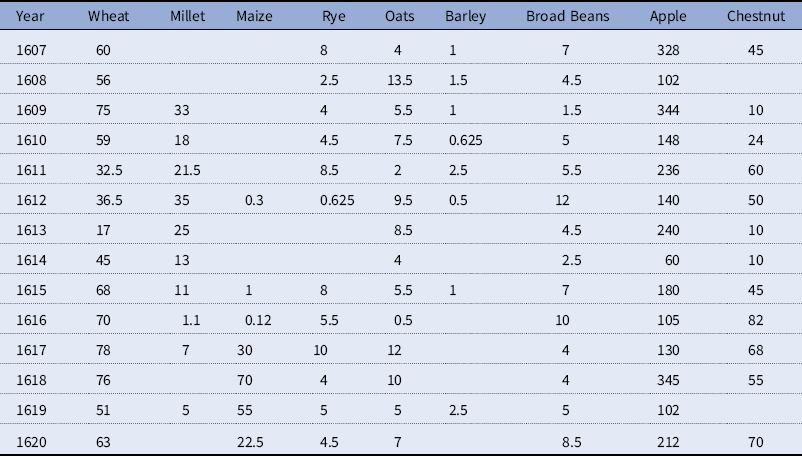
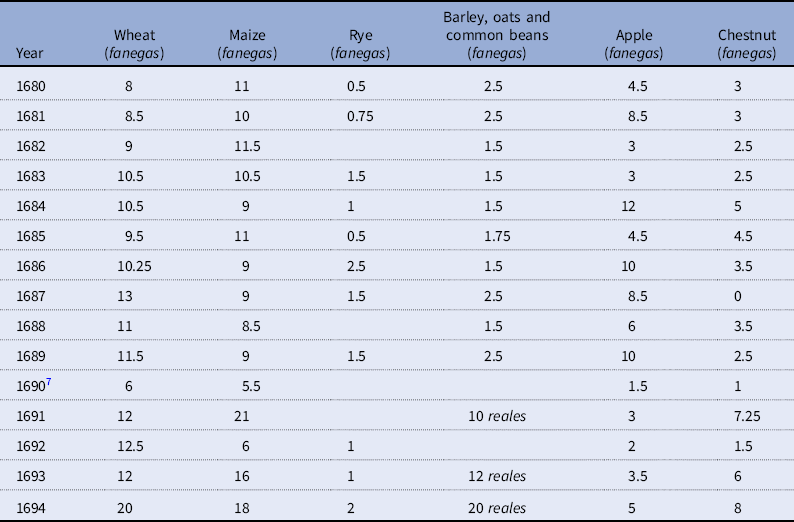
From the end of the sixteenth century maize began to be sown in the Cantabrian region not to provide animal feed, but for human consumption (Figure 1). The earliest reference to this dates from 1576 (Arrasate-Mondragón, Basque Country) and appears in the tithe book of the parish of St John the Baptist; in 1615 the tithe on the harvested crop is quantified for the first time (Table 2). In Biscay, the earliest evidence dates from the second decade of the seventeenth century. In Arrieta, Maruri and Kortezubi in 1616 maize represented 67 per cent of crops cultivated, whereas wheat comprised only 30 per cent. The consumption of maize was so common during the first half of seventeenth-century Gipuzkoa that Lope Martínez de Isasti (Reference Martínez de Isasti1850: 152) asserted in 1625 that ‘for some time, the bread is made of maize’; while from 1630 it became the principal element in the diet of workers in the ironworks of Urumea river (Hernani, Gipuzkoa)Footnote 1. The cultivation of maize was thus well established in the coastal Gipuzkoa, with an importance that was similar to or greater than that of wheat, despite the fact that the harvest of the two crops did not reach parity until the 1680s (Table 3).
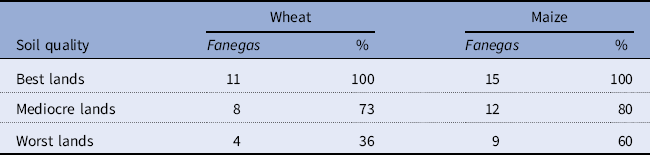
Soil efficiency in the Basque Country depending on the crop (seventeenth to eighteenth centuries)

Source: Fernández de Pinedo, Reference Fernández de Pinedo1974: 215; Lange, Reference Lange1996: 115.
Tithe of Saint John the Baptist’s church’s incumbents (Arrasate-Mondragón) from 1607 to 1620 (fanegas)Footnote 6

Source: Diocesan Historical Archives of Saint Sebastian, Saint John the Baptiser Parish, Arrasate-Mondragón, 06.033, Tithe book, 1572–1651, 4842/001.
Tithe belonging to each whole benefice at Saint John the Baptist’s church (Arrasate-Mondragón) from 1680 to 1694 (fanegas)

Source: Diocesan Historical Archives of Saint Sebastian, Saint John the Baptiser’s Parish, Arrasate-Mondragón, Tithe book, 1572–1651 and 1680–1860, 4842/001 and 4844/001-02.
Together with the Basque Country, the earliest entry points of maize in the North of Spain were Asturias and Cantabria. It seems likely that maize began to be sown in Asturias, albeit in a sporadic way, during the 1580s, although the earliest firm evidence dates from 1599. From the 1610s its cultivation expanded, mainly along the coast and the inner valleys where conditions were favourable. Being a spring-sown cereal, maize could be substituted for the fallow course, allowing a continuous rotation that combined winter cereals (wheat and triticum dicoccoides) and fodder plants (turnips and barley). During the 1630s both maize and wheat were widely cultivated, even though the acts of General Assembly did not mention the former until 1634. As in other cases, the expansion of maize had a significant impact on other crops: millet was soon on the verge of disappearance, and the area sown with triticum and wheat diminished, although rye recovered. At the end of the seventeenth century, maize accounted for 60 per cent of the crops grown along the coast of Asturias, which from the 1620s had become an exporter of the crop.
In Cantabria, the first mention of maize in tithe documents dates from 1607, in Soba, where it was named indiones, though it is likely that the first crops were gathered in coastal areas (Lanza, Reference Lanza García and García Merino1990: 166). In general, the introduction of maize came first in the coastal areas and more slowly inland, the rate of adoption depending on the climatic, orographic and altitude conditions. However, its expansion was so fast that Cantabria also rapidly became an exporting region: during the 1690s, more than the 90 per cent of the bread cereals consisted of maize, which replaced summer crops such as millet, panicium and triticum dicoccoides (Casado Soto, Reference Casado Soto1986: 142–52; Casada Soto, Reference Casado Soto1985, 160–73).
A second wave of maize introduction came through Atlantic Navarre (1615–20) and Galicia (1628–38). In Navarre, where maize was called maiza or maiza-chiriqueta, its cultivation can be traced back to 1615–20: the first reference to the crop in tithe accounts, in 1630, includes the comment: ‘the fruit of maize that it is now harvested in Igantzi, was approximately introduced twenty years ago, and, before, nobody knew or had any notice about it’. Expansion did not occur at a uniform rate in all areas, however. In Baztan and Larraun valleys, where there was a tradition of advanced farming, cultivation did not start until the 1640s and 1650s. Thanks to the new crop, the intensity of cultivation increased and the production of cereals quadrupled from the seventeenth to the eighteenth centuries (Mikelarena, Reference Mikelarena Peña and Nadal Oller1991: 118–19). In Galicia, maize was first grown in the Rías Baixas around 1628, and later, approximately in the period between 1635 and 1638, it appeared in the South of Galicia and Cantabrian Galicia (Fernández Cortizo, Reference Fernández Cortizo2006: 271–4). Expansion occurred from the 1650s.
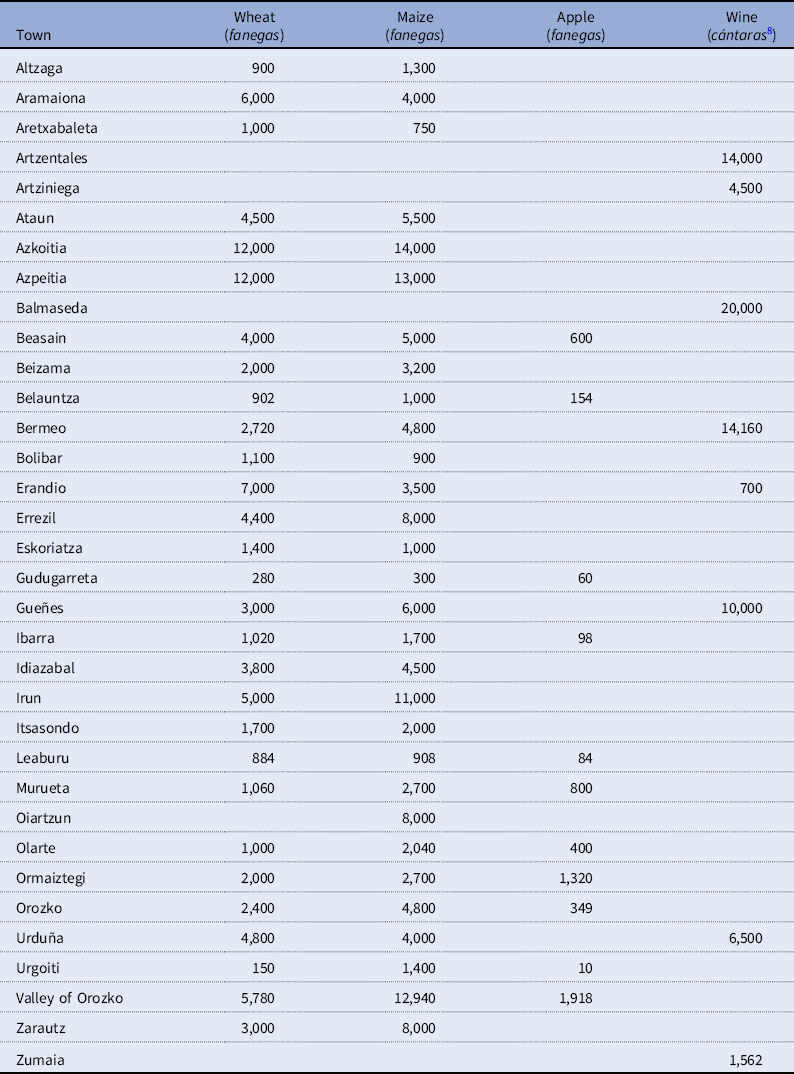
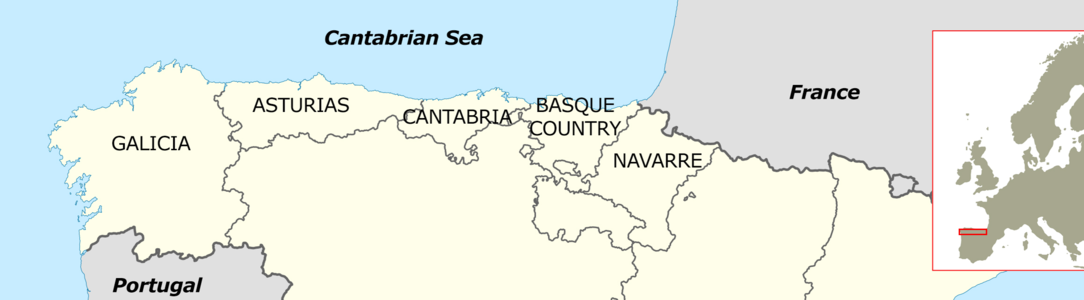
In general terms, maize entered the Cantabrian region from the sea and was first cultivated in coastal districts. It spread later, and more slowly, into inland areas, its diffusion delayed in the mountains by the altitude, and in the inner plains by climatic factors. Nevertheless, it is important to emphasise that speed of adoption does not equate to intensity of cultivation. Although in some coastal areas in Asturias and Cantabria maize farming became in effect a monoculture, in the Basque Country maize did not become predominant until the first middle of the nineteenth century, and even then was equalled in importance by wheat (Table 4).
Agrarian production in the Atlantic Basque Country (1785–1802)

Source: General Archives of Gipuzkoa, JD AIM 486; Anes et al., Reference Anes2005.
The reasons for success and the agricultural consequences
The success of maize and other American crops in Iberia was not always immediate. While peppers, beans, sweet potatoes and chocolate were quickly accepted, the widespread consumption of maize was delayed until the eighteenth century, that of potatoes until the nineteenth century. The reasons behind food choices are varied and complex and often poorly related to nutritional consideration, shaped instead by social and cultural values and archetypes. Spanish people were convinced of wheat’s superiority and expressed surprise at the way indigenous Americans consumed maize. In general, during the early modern period, food systems were conservative, showing strong resistance to changes and to the introduction of new products. Moreover, as Giovanni Levi has demonstrated in the case of Italy, agricultural lease contracts show a hostility to maize on the part of landlords, who considered it a less commercially valuable product than other cereals, and one that diverted land and labour away from their cultivation. Nevertheless, the agrarian circumstances of the period between the 1590s and the 1730s opened the door to its diffusion, confirming the principle that a society suffering from serious difficulties is one ‘more adapted to change, more able to become adapted to new productive conditions’ than one more fortunately placed (Quoting Marc Bloch, Levi, 2004: 108–12; Pérez Samper, Reference Pérez Samper, Aram and Yun Casalilla2014: 19–29).
In the Cantabrian region there is no evidence of any refusal to allow the cultivation of maize, but landowners (both lay and ecclesiastical) adopted a number of strategies to cope with any resulting difficulties. Considering the poor condition of Cantabrian agriculture, they were more concerned with the survival of their properties than with the collection of rents or the type of crops being cultivated by tenants. The clergy do not appear to have offered any opposition, since maize had higher yields than other crops and its adoption also served to improve the yields of the latter (the general cereal ratio increased by a factor of 1.7 and that of maize by 3.8), which meant an overall increase in the value of tithes (see Tables 2 and 3) (Catalán, Reference Catalán Martínez2010: 46). Moreover, landlords were keen to attract tenants back to farms abandoned as a result of economic difficulties and high rents during the 1560s, as demonstrated in the activities of the Lopez de Zarauz family, and began to establish lease contracts lasting for six years, reducing the rent by about 75 per cent; a practice very common in Gipuzkoa when peasants hired an uncultivated farm. As a consequence, those farmers who, during the 1560s and 1570s, had been paying rents in wheat, millet, oats, apples and chestnuts (as is the case of the tenants of the Aurrecoechea family) were, by the 1660s, paying them in money as well as in kind. All this had a significant impact in terms of local markets, the commercialisation of crop production and the progressive monetisation of rural and peasant economies (Aragón-Ruano, Reference Aragón-Ruano2015: 98–101).Footnote 2
Following the widespread adoption of maize, the Cantabrian agrarian model was based on the close integration of crop production and stockbreeding, which resulted in higher stabled livestock densities; and on a balance between the private property and common land. The agricultural system was based on small farms, with an average area of around 1.5 hectares, focused predominantly on the cultivation of maize – which in some areas accounted for 90 per cent of the sown area. This was combined with mixed livestock farming in which cattle generally predominated, although with a degree of geographic variation, and in some areas with a decline in specific weight from the seventeenth century (Pérez Garcia, Reference Pérez García2007: 97).
The expansion of maize cultivation cannot be easily explained in simple Malthusian terms, as a response to demographic pressure, but was rather an acceleration of a gradual maturation during the second half of sixteenth century, in which the possibilities of new crops coming from America, such as corn, tomato, common or green beans, pumpkins, had been explored and realised. However, as in Italy (Alfani, Reference Alfani2010: 39), demographic and subsistence crises accompanied the expansion, making a determining contribution to the process. Maize was the solution to the problems besetting agrarian production in the late sixteenth and early seventeenth centuries, although periods of scarcity also saw some increase in imports of cereals from abroad.
There were several reasons for the success of maize. Firstly, it allowed the adoption of an agrarian model based on the continuous cultivation of the soil, without extended periods of fallow. Secondly, maize displayed two indisputable advantages over traditional crops: higher yields, between 2 and 4 fanegas more than wheat in all kind of soils (Table 1); and a remarkable seed saving, which clearly broadened the obtainable net product.Footnote 3 Thirdly, during winter season, maize liberated the arable fields from use as fallow grazing, allowing livestock to be fed in stalls and at the same time improving their nutrition. Fourthly, it could be alternated with crops such as turnips and rye – and later, with artificial grass leys; or with climbing plants, such as beans, legumes and pumpkins. Some of these were for human consumption, others for animal feed; many were likewise introductions from America and most served to enrich the soil, either directly or through enhanced manure supplies. All this allowed the conspicuous improvement of productivity per unit of exploitation (Pérez Garcia, Reference Pérez García2007: 104).
The introduction of maize, firstly, reduced the importance of winter cereals, such as wheat and rye, and made some summer cereal, such as oats and barley, disappear completely (see Tables 2 and 3). Secondly, marshlands and wetlands were systematically drained and, together with many areas of common pastures and forest land, transformed into arable fields, in a process of privatisation which reduced the supply of the various resources that these had formerly supplied, leading to intense social conflicts. Thirdly, maize allowed a change from biennial rotations to more complex forms of cropping, leading to significant increases in production. Finally, it engendered bitter disputes relating to rivers and waters, caused by the proliferation of water mills throughout the Cantabrian region (Pérez Garcia, Reference Pérez García2007: 104–05).
The diffusion of maize took place as a consequence of the various subsistence and demographic crises of the late sixteenth and early seventeenth centuries: in Galicia, as a result of the crisis between 1631 and 1632 (Pérez García, Reference Pérez García2007: 104–05); in Asturias, due to the demographic and farming crisis between 1572 and 1576, and the subsistence crisis and the plague outbreak that occurred between 1597 and 1599 (Fernández Álvarez, Reference Fernández Álvarez2001: 358–68; López, Reference López-López1989: 508–09); in Cantabria, because of the crisis between 1607 and 1608 (Lanza, Reference Lanza García2010: 44–7, 87–8); and in the Basque Country, as a consequence of the bad harvests which occurred between 1562 and 1572, and the outbreak of plague between 1597 and 1600 (Aragón-Ruano, Reference Aragón-Ruano2017: 32–3; Cruz Mundet: Reference Cruz Mundet2001; Cruz Mundet, Reference Cruz Mundet2003).
As Tables 2 and 3 clearly show, maize gradually took the place of wheat as the most important crop. By the eighteenth century, in many towns in the Basque Country, the harvest of maize was larger, and the grain itself cheaper, than in the case of wheat (see Table 4). This is illustrated by events in Azpeitia (Gipuzkoa) in 1766, during the so-called riot or Matxinada of Grains, which resulted from the dramatic fall in grain production throughout the Iberian Peninsula (Santiago, Reference Santiago Caballero2014: 31–3) following the establishment, by royal decree, of a free market in cereals in the previous year. Here, as in other places, the prices of essential supplies were fixed in order to prevent speculation and inflation: 410 wheat fanegas and 1,294 maize fanegas were to be sold in the local market, the formers at a price of 26 reales and the latter at 16 reales. Maize, being cheaper, was usually employed to meet local demand. Excess wheat, in contrast, was sold in the larger market at Donostia-San Sebastián, the capital of the province of Gipuzkoa, where every fanega brought in 35 reales, 34 per cent above the price in Azpeitia.Footnote 4
As a result of the expansion of maize cultivation, local and regional markets became more flexible and more integrated: the widespread availability of maize, cheaper than wheat, reduced local demand for the latter and allowed its sellers to make better profit margins in regional or external markets, such as Donostia-San Sebastián, Navarre or Biscay. As already noted, something similar took place in Asturias or Cantabria, where surplus maize was exported to the rest of the Cantabrian region. This explains why Cantabrian markets during the seventeenth and eighteenth centuries became better supplied and integrated (Table 5). Something similar happened in Italy, where the diffusion of maize contributed to the formation of a national cereal market during the Early Modern period (Levi, Reference Levi1991: 155–62). Thanks to maize, rural and urban food supplies increased significantly, although in marked contrast to the Basque case, in the North of Italy during the eighteenth century the price of maize generally rivalled that of wheat in local markets. Moreover, the price of maize palpably increased during that century: from 1730 to 1764 prices remained steady and modest, but between 1765 and 1768 they rose, thereafter falling back again but increasing significantly from around 1776 until the end of the century. This upward trend in the second half of the eighteenth century encouraged an increase in agricultural production, as a rise in prices stimulated the abandonment of fallows and a general strengthening of agrarian structures. In Italy during the eighteenth century an integrated and flexible functioning of the commercial circulation of maize and wheat thus took place (Mocarelli and Vaquero, Reference Mocarelli and Vaquero2018: 28–35).
Wheat prices in Vitoria and Tolosa (1813–32)

Source: Fernández de Pinedo and Bilbao, Reference Bilbao and Fernández de Pinedo1984: 173.
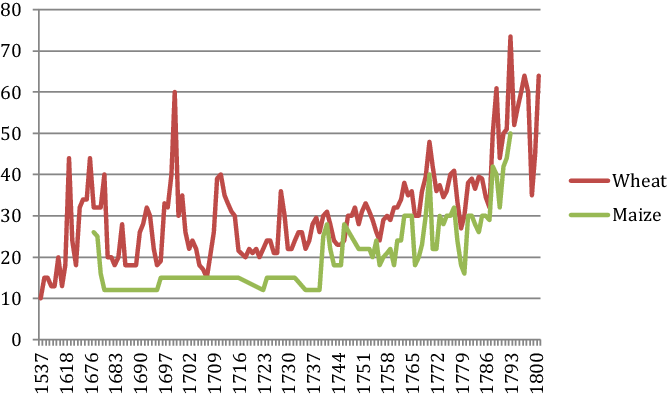
Similarly, in the Basque Country (see Table 5 and Figure 3), while maize prices remained below wheat prices, both rose at an increasing rate from the 1740s, encouraging the expansion of agricultural production. Thereafter, the prices of both rose at roughly the same rate, especially in the last third of the eighteenth century and the first third of the nineteenth century, lagging only a little behind those in Spain and Europe more generally. As Martínez Vara has demonstrated, during the first half of the nineteenth century wheat prices were quite similar in all parts and all markets in the north of Iberian Peninsula, including the Cantabrian area and Northern Castile (Martínez Vera, Reference Martínez Vera1999: 55–64).
Cantabrian area.
Source: Created by the author.

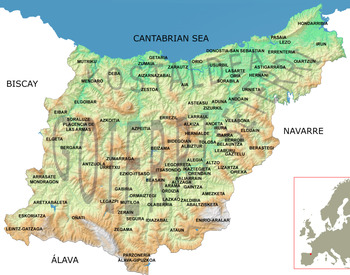
Gipuzkoa, including highlands, lowlands and the coast.
Source: Created by the author.

Wheat and maize prices in Azkoitia from books of the Churruca family and Company of Jesus (1677–1793) (reales/fanega).
Source: Churruca family’s archive, 5 AF 1.

Of equal importance is the way that the introduction of maize drove a process of geographical diversification and specialisation (Figure 2). Manuel de Larramendi has drawn attention to this in the eighteenth century, describing the experience of two areas or regions in Gipuzkoa: Goierri or the highlands, from Tolosa to the province of Alava, where apple groves were converted to arable land, mainly for the cultivation of wheat, although cattle remained important, as the cases of Aretxabaleta, Eskoriatza or Aramaiona perfectly demonstrate; and Beterri, or the lowlands and coastal zone, from Tolosa to Irun, where maize displaced millet (even borrowing its name, artoa), as well as barley or rye, but not apple groves (see Table 4). Indeed, apple trees, vineyards, cider and txakoli had a central position in the economy of eastern Gipuzkoa, associated with the proximity of Pasaia – the most important port in Gipuzkoa, and perhaps the second in the Cantabrian area behind Bilbao – and the market this provided. Even at the end of eighteenth century, apple groves and vineyards retained their importance in the Basque country, both in Biscay and Gipuzkoa – with a distribution very similar to that of vineyards, apple trees, cider and txakoli bars today, centred on the hinterland of Donostia-San Sebastián (Astigarraga, Donostia-San Sebastián, Hondarribia, Hernani, Irun, Oiartzun, Orio, Errenteria Urnieta and Usurbil) and the coast (Getaria, Mutriku and Zumaia) in Gipuzkoa, and in Encantaciones and Urduña in Biscay (see also Table 4).
In fact, from the end of the fifteenth century cider was being produced on an industrial scale on the large farms, scattered across the landscape or grouped together in small hamlets, named Baserri in the Basque language and Caserío in Spanish. Production was geared to the needs of the whaling ships as well as local and regional demand (Aragón-Ruano, Reference Aragón-Ruano2017: 38–9; Escribano-Ruiz, Reference Escribano-Ruiz2019; Susperregi et al., Reference Susperregi, Telleria, Urteaga and Jansma2017).
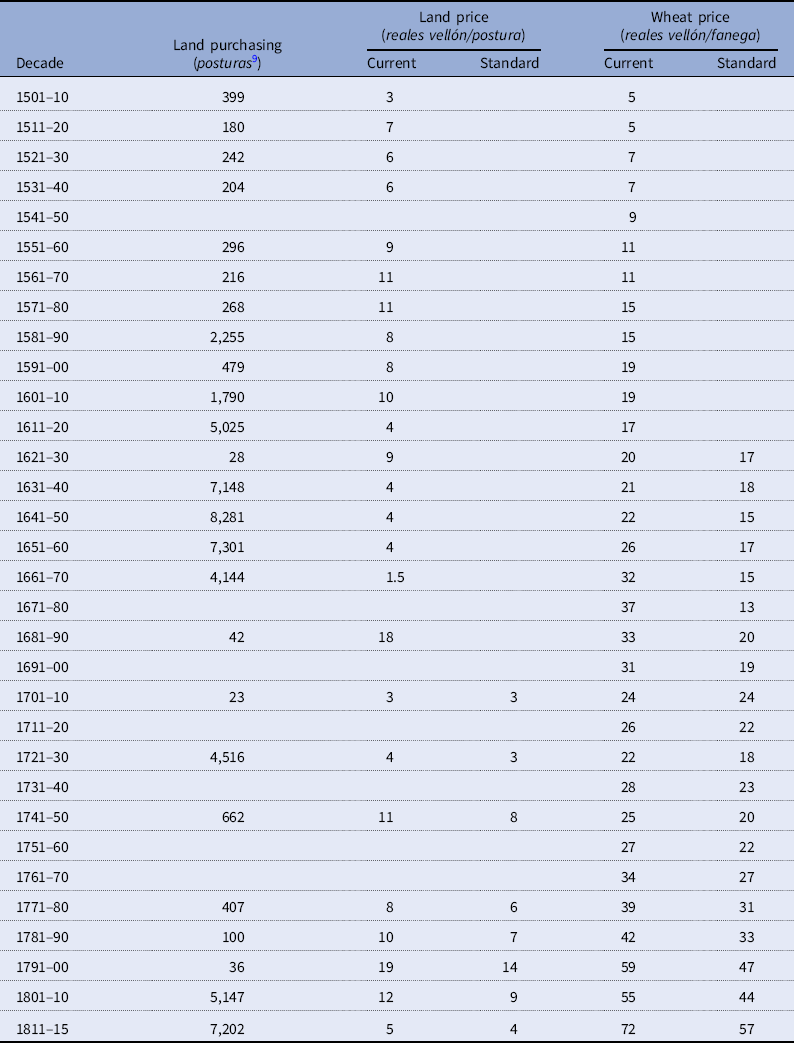
Overall, the price of land rose in the course of the seventeenth century, albeit at a slower rate than either rents or wheat prices. But the upward trend was momentarily halted from 1630 to 1670 by the creation of new areas of arable through the reclamation of wastes and commons, which stimulated the land market: over 26,000 posturas were sold during this period, 75 per cent of the land sales made in the whole of the century (Table 6) (Mugartegui, Reference Mugartegui Eguía and Díaz de Durana2012: 52–3). Much of this new land was used to grow maize. In fact, so great was the increase in cultivation that the General Assembly of Gipuzkoa was forced to pass a decree in 1657 prohibiting the ploughing of new lands without license, due to the damages inflicted on woodland, grassland and other resources.Footnote 5
Land purchasing in Gipuzkoa (1501–1815)

Source: Mugartegui, Reference Mugartegui Eguía2012: 45, 52–3, 69.
Indeed, during the seventeenth and eighteenth centuries, farms, by adopting an integrated and intensive system of arable and livestock husbandry, became market-oriented factories that produced significant surpluses. Even ironworks, thanks to the introduction of maize and associated changes in livestock farming, became integrated operational units which, apart from producing iron, also cultivated wheat, maize, vegetables, both for self-consumption and to be sold in local and regional markets; and raised livestock. As well as having a foundry, most such enterprises also possessed a farmhouse or shelter, granaries, stables, a mill (taking advantage of their surplus of water), gardens, arable lands (the produce of which was ground in the mill), apple groves, woodlands, grasslands and, even, in some cases, vineyards (Aragón-Ruano, Reference Aragón-Ruano2001: 56; Domínguez, Reference Domínguez Martín1996: 15–26).
The impact on livestock husbandry
One of the main economic consequences of the introduction of maize in the Cantabrian region were changes in livestock husbandry. Although in some cases the expansion of maize was associated with a reduction in livestock numbers, in others it facilitated a significant degree of growth. In each of the territories such variations were related to aspects of soils and natural topography, and to economic circumstances. On the Galician coast, where maize was introduced early and adopted rapidly, the reduction in livestock numbers was spectacular, because the best land for growing the new crop was occupied by pastures grazed by cattle. In inland areas the decline was much less. Nevertheless, the percentage of herds stabled in byres rose in coastal areas, in contrast to the situation in areas lying over 300 metres above sea level, where extensive livestock husbandry was practised. As a result of the adoption of maize, sheep and goats became more ‘democratic’ forms of livestock, kept by a wider section of the population (Pérez García, Reference Pérez García1982: 87–177). In Asturias, where the difficulties at the start of the century led to the widespread ploughing and deforestation of wastelands – but not of good quality pastures – the cattle and pigs that had hitherto been managed in a semi-domesticated and extensive manner were now being stabled. Their numbers declined, although those of sheep increased (Barreiro Mallón, Reference Barreiro Mallón1990: 287–318). In Cantabria the fin-de-siècle difficulties caused much indebtedness and loss of property among the peasants, who were forced to sell their livestock. The introduction of maize, however, caused an impressive increase in livestock numbers, especially between 1660 and 1780, and most markedly in the case of sheep (Table 7). Here, too, cattle were stabled, and thanks to this, sheep herds were able to graze the highest grasslands. This also involved a division of labour: inland areas were devoted to animal husbandry while on the coast the emphasis was on draught animals (Corbera Millán, Reference Corbera Millán2008: 293–314 and Lanza, Reference Lanza García2001: 79–118). In Navarre, livestock registered a growth of 50 per cent and owners and livestock holdings of 40 per cent. The numbers of both cattle and, in particular, sheep increased (Mikelarena Peña, Reference Mikelarena Peña and Nadal Oller1991: 120–1).
The evolution of livestock in Cantabria (1597/8–1752)

Source: Lanza García, Reference Lanza García2010, 91.
Eventually, in the Basque Country, as in Asturias, Cantabria and Navarre, the intense periods of cold that occurred between 1562 and 1572 had a serious impact on sheep herds, which were grazed at high altitudes; cattle and pigs in contrast, because they were stabled, were much less badly affected. The bad harvests forced tenants to pay their rents with their livestock, in spite of mounting debt levels. Thanks to the adoption of maize, the livestock sector experienced significant growth, of between 20 and 50 per cent, although with a remarkable degree of geographic variation: sheep and goats experienced an unusual increase in the East of Gipuzkoa (Beterri), precisely where the uptake of maize had been greatest, in contrast to the situation in the West of Gipuzkoa (Goierri), where the cultivation of wheat and cattle husbandry predominated until well into the nineteenth century, although with some exceptions, such as Bergara (Tables 8 and 9) (Aragón Ruano, Reference Aragón-Ruano2017: 50–2; Berriochoa, Reference Berriochoa Azcárate2013: 42; Bilbao and Fernández de Pinedo, Reference Bilbao and Fernández de Pinedo1984: 121; Mugartegui, Reference Mugartegui Eguía and Díaz de Durana1998: 478–80).
Livestock in Bergara, 1627

Source: Municipal Archives of Bergara, 01 MIK/17A20, fols 500 r–528 r.
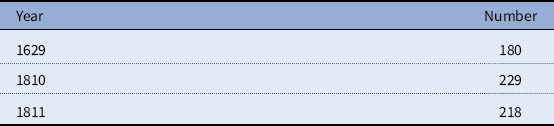
Number of oxen yokes in Bergara (1629–1811)

Source: Aragón-Ruano, Reference Aragón-Ruano2009, 221–9, 234.
The expansion in livestock numbers, and a shift to keeping them in byres rather than in the open, had several consequences. Firstly, it increased the supply of manure, and the provision of traction for both agriculture and transport. Secondly, not only did the consumption of meat, milk and wool by the farming population increase, but also the surplus of products available for sale, providing the peasantry with enhanced purchasing power. In cases such as Asturias, Cantabria and Gipuzkoa, the increasing size of sheep herds came with the expansion of the markets in meat, dairy products, leather and wool. In Gipuzkoa, for example, the latter was consumed by the local textile industry or exported to France, notably to the textile mills at Oloron, especially following the reforms instituted by Colbert. Live animals, meat, butter and cheese from the Pas valley and eastern Asturias were exported to the north of Burgos, upper Ebro, Biscay and Gipuzkoa, while products from Liebana and Campoo went to the markets in northern Leon and Palencia. Certain changes in food habits happened during the seventeenth century in Gipuzkoa: the consumption of milk and cheese (exported to Biscay), lamb meat (local or from Extremadura and France), organ meats, offal and limbs notably increased. During the seventeenth and eighteenth centuries the main local dish was the so-called Olla (or Pot), a kind of boiled soup made of vegetables, beans (broad or green, equally common), meat, bacon and offal. When an anonymous English writer described Donostia-San Sebastián in 1700, he claimed that
The first thing presented at their Tables is a Chocolet [sic] Cup of Soup, or the gravey [sic] of meat boiled and Bread crumbled into it, served upon Earthen platters, then comes the Roast Meat, then the Boiled, and at last the desert. They give this reason of bringing the Roast Meat before the Boiled (which seems plausible enough) the best of the Boiled Meat say they is in the broth, and there is more substance and nourishment in the Roast than in the Boiled, for that reason, this would pass if they did not spoil their Roast Meat and Fowl by over-doing of them, and Roasting them dry as they do their Boiled Meat, by Boiling it to Pieces (An Account, 1700: 11).
In short, sheep displaced cattle and pigs as the most important form of livestock, at least in the east of Gipuzkoa, and occupied the higher grasslands, and forms of management were also modified: short-range transhumance, from valley bottoms to upland pastures, ceased in the case of cattle as the practice of keeping them in byres for all or much of the time was adopted, whereas the seasonal movement of sheep took place over longer and longer distances, from the coast to the inner mountain ranges (Aragón Ruano, Reference Aragón-Ruano2017: 51–2; Corbera Millán, Reference Corbera Millán2006: 316; Fernández Álvarez, Reference Fernández Álvarez, Fernández Pérez and Freira Suárez2005: 400). In addition, as a result of enhanced manure supplies and draught power, agricultural productivity went up (Aragón-Ruano, Reference Aragón-Ruano2009: 297–430; Barreiro Mallón, Reference Barreiro Mallón1984: 287–318; Lanza, Reference Lanza García2001: 79–118).
Demographic aftermaths
The introduction of maize also had demographic consequences: apart from increasing the population, it led to the appearance of an advanced demographic model, characterised by moderate mortality levels. It provided resilience against demographic catastrophes, albeit with some exceptions; the periods of particularly disastrous harvests in 1680–6, 1693–4, 1699–1700, 1710–12 and during the Revolutionary Wars, caused by periods of excessive rain and low temperatures, which afflicted not only the north of the Iberian peninsula, but the whole of western Europe. The inability of agrarian production to feed the population has been a constant in the Cantabrian region: the food produced was sufficient to meet calorific and nutritional needs, but not always in a balanced or steady manner. During the eighteenth century the plague declined in virulence, only to be replaced by cholera and smallpox. Although it is unclear how far improvements in nutrition contributed to the former development, it is evident that agricultural advances and the increased integration of markets ensured more regularity in food supplies and enhanced levels of consumption. The introduction of maize and the expansion of the livestock sector also raised incomes, allowing the population more scope to purchase the products and food they lacked. Nevertheless, while the per capita growth in agrarian production was considerable, the traditional deficit did not disappear, and, in particular, cereal imports continued.
This said, among the peasants the consumption of cereals was more regular, meat became a more important part of the diet, and in Gipuzkoa at least the consumption of wine and cider increased. The diet of the inhabitants of the Basque Country was unquestionably more balanced in nutritional terms than that of those living in Asturias, Cantabria or Galicia, where over-reliance on maize as a food caused ‘Pellagra’, an endemic illness resulting from severe avitaminosis, whose symptoms were identified in Asturias at the beginning of the eighteenth century (Piquero, Reference Piquero2000: 237; Lanza, Reference Lanza García1991: 296; García Guerra and Álvarez Antuña, Reference García Guerra and Álvarez Antuña1991: 204–11; García Guerra and Álvarez Antuña, Reference García Guerra and Álvarez Antuña1992; Sampedro and Barbón, Reference Sampedro and Barbón2010). It was a disease that was also very common in other parts of Europe, such as the Veneto and Milan in Italy (De Bernardi, Reference De Bernardi and Della Peruta1984; Mocarelli, Reference Mocarelli, Ferrari and Vaquero Piñeiro2014: 34–54; Alfani, Reference Alfani2010: 39). In the Cantabrian region, where the risk of undernourishment was addressed by having two cereal harvests each year – spelt and wheat during the winter, millet and later maize during the spring and summer – as well as an autumn harvest of apples, chestnuts, hazelnuts and walnuts, the effects of a bad harvest were lower than in Castile, where most reliance was placed on the winter harvest (Catalán and Lanza, Reference Catalán Martínez and Lanza García2015: 21).
During the eighteenth century the crude death rates fluctuated in the Cantabrian area between twenty-five and thirty per thousand, between five and ten points below the average for Castile; life expectancy rose above thirty years, three more than in Castile. Cantabrian child mortality rates were also significantly better than those in Castile. According to Catalan and Lanza, a demographic crisis occurred, on average, each nine or ten years in the period between 1675 and 1860. The resultant excess in male mortality accounted for 5.41 per cent of total mortality in Cantabria, but 6.73 per cent in Biscay and 5.55 per cent in Gipuzkoa. These crises were not a direct consequence of high cereal prices. While they frequently coincided with or were preceded by grain shortages, some of them sequential, it is difficult to demonstrate a causal relationship since not all periods of scarcity were followed by a mortality crisis (Catalan and Lanza, Reference Catalán Martínez and Lanza García2015: 21–31). The latter were more usually a consequence of a set of fatal circumstances, but evidently not a simple natural adjustment, adjusting population levels to the available resources, in the way that Malthusianism argued (Alfani, Reference Alfani2007 and Reference Alfani2010: 23–53). According to Alfani, the spread of maize allowed an escape from Malthusian constraints (Alfani, Reference Alfani2010; Alfani, Reference Alfani, Malanima and Chiarini2013b), and the evidence examined here would support his arguments. Maize seems to have made a very significant contribution to improvements in food security, not only because it ensured a substantial increase in the calories per hectare, but also because it prospered in meteorological conditions which were adverse to wheat (Finzi, Reference Finzi2009: 33–41). Cantabrian farmers, like those in Italy, started to cultivate it, sometimes in association with other American crops, as a kind of insurance against the possible failure of the wheat harvest. What is more, paraphrasing Alfani, this process, underway by the late sixteenth and early seventeenth century, might better be described as a ‘Boserupian’ process, that is, one in which demographic pressure itself promotes technological micro-innovations to traditional practices and permits a slow increase in total population by starting a chain reaction (Alfani, Reference Alfani2007; Reference Alfani2010: 39–40; Alfani, Reference Alfani2013a; Alfani, Reference Alfani, Malanima and Chiarini2013b).
Conclusions
The Malthusian famine of the 1590s and the recurrent dearths of the early seventeenth century stimulated a search for novel agrarian innovations in Cantabria. There was an increase in the range of crops cultivated, guaranteeing a degree of protection against climatic instability given that each crop reacts differently to specific meteorological conditions. The ordinary rates of mortality in the Cantabrian region were lower than in inner Spain, due in part to the diversification of food resources, although other factors also played a part, including the dispersed character of the population, the abundance of potable waters, the general access to landed property, aspects of family lifestyle, better rents per capita, and particular aspects of personal hygiene, childcare, and medical organisation. The best evidence of this comes from the stronghold of Hondarribia which, from the beginning of the sixteenth century, possessed a reasonable number of physicians, where measures were implemented in order to improve the cleanliness and hygiene, and where rigorous preventive measures were adopted to protect the population from epidemics. As a result, Hondarribia was only marginally affected (compared to nearby towns such as Donostia-San Sebastián or Pasaia) by episodes of plague in the seventeenth century, or by cholera or yellow fever in the eighteenth, a remarkable example of variation at a very local level. Exceptionally, it was severely hit by plague in 1634, when 366 adults and 123 children died, 30 per cent of the population, and this was probably a result of the scarcity of crops over the previous four years, when the inhabitants were obliged to import from Andalusia (Aragón-Ruano, Reference Aragón-Ruano2004: 376–86). This, it should be noted, happened just before the widespread adoption of maize in the area. Afterwards, the cultivation of maize ensured greater resilience in the face of epidemic disease and other ‘crises’ and difficulties.
In spite of the claims of Catalan and Lanza (Reference Catalán Martínez and Lanza García2015: 46), the impact of maize was even felt in Cantabrian cities such as Bilbao and Donostia-San Sebastián. They consider that the demographic recovery of Bilbao had more to do with the commercial expansion of its port, which became the main wool exporter and cod importer on the Cantabrian coast, than with the expansion of maize cultivation. However, Donostia-San Sebastián (and perhaps Santander) demonstrates that local corn production was one of the key factors behind demographic stability during the second half of the seventeenth and throughout the eighteenth centuries. According to the Account of Saint Sebastian:
The Corn of the Country is Indian Corn and no other, with Wheat they are supplied from the Sound and sometimes from Barbary, and often from England; they have been so hard put to it this last Year, that they have been forced to make Bread of Chestnuts, which is the reason they are prohibited to be Exported (An Account of Saint Sebastian, 1700: 12).
In addition to this, and to conclude, the introduction of maize and the consequent changes in livestock husbandry allowed peasants and farm holders to become more involved in local and regional markets. Peasants sold surpluses in local or nearby regional markets, breaking out of self-sufficiency, making significant profits that allowed them to survive. Moreover, the sale of maize in local markets reduced the pressure on wheat, which could now be sold in regional markets, once local demand was satisfied, at better prices, improving incomes and helping to overcome the precarious character of farm and peasant economies, even in their more monetarised form. At the same time, the introduction of maize and the diversification of food supplies made markets more integrated and flexible, brought wheat and maize prices closer, and reduced the regional variability of wheat prices, making them more homogeneous.
Acknowledgements
This study is part of the Basque University System’s Research Group ‘The Basque Country, Europe and America: Atlantic Links and Relationships’ (OTRI EMU: GIU19/028; ref. Basque Government IT1241-19).
Supplementary material
To view supplementary material for this article, please visit https://doi.org/10.1017/S0956793320000102