Introduction
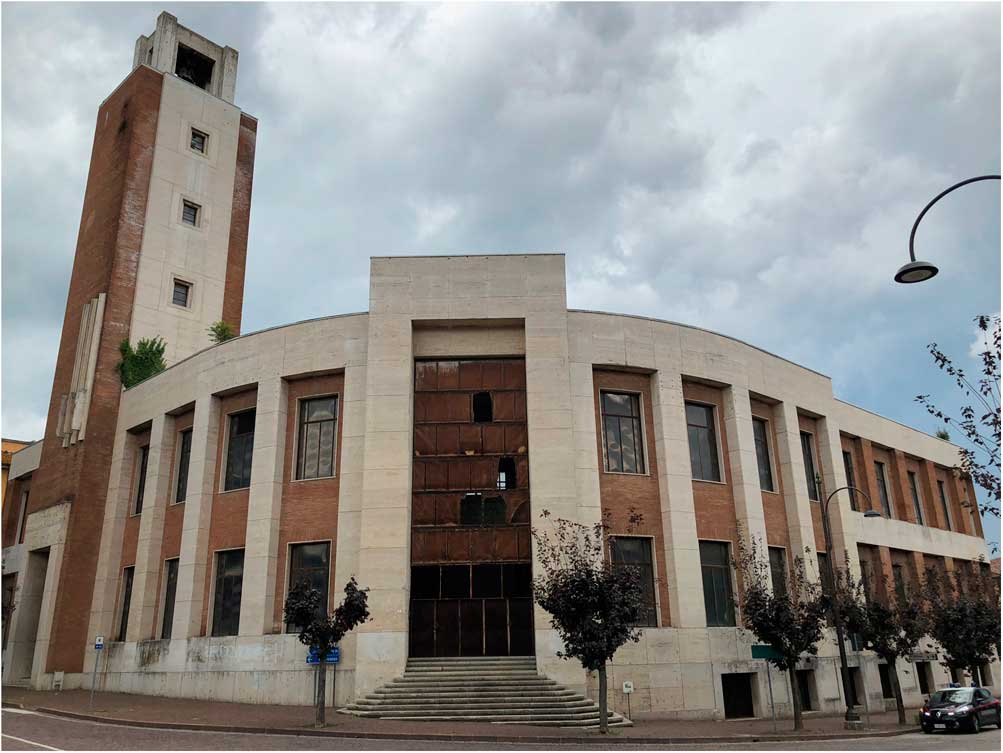
In the past few years the longstanding question of the material legacy of the Fascist regime has been the subject of renewed debate in Italy. One of the most high-profile cases is that of the former Casa del Fascio in Predappio, Mussolini’s home town, which has recently received a lot of media attention (Figure 1). After decades of neglect and disrepair, in 2015 the building was acquired by the town administration from the state and funds were raised to turn it into an international study centre and a permanent exhibition on the Fascist regime. The idea of a museum of Fascism situated in Predappio sparked a heated debate which is still ongoing and has mobilised deep-seated anxieties about national identity and its narratives, as well as a fear that an incorrectly handled museum-based representation of Fascism could lead to a distortion of the historical understanding of the ventennio and to celebratory evocations. This is particularly felt in relation to the town of Predappio, which has been the destination of nostalgic tourism, pilgrimages and marches, ever since Mussolini’s remains were returned to the town in 1957. Predappio is perceived as an emblematic site of the divided memory of Fascism in Italian history and culture (Baioni Reference Baioni1996 and Reference Baioni2017; Foot Reference Foot2009; Serenelli Reference Serenelli2013b).
The ex Casa del Fascio in Predappio (author’s own image)

The former Casa del Fascio of Predappio could be classified as an example of the ‘difficult heritage’ of Fascist Italy, to adopt the phrase used by Sharon Macdonald in her seminal study of the architectural heritage of Nazi Germany. Macdonald defines difficult heritage as ‘a past that is recognised as meaningful in the present, but that is also contested and awkward for public reconciliation with a positive, self-affirming contemporary identity’. It may threaten to ‘break through into the present in disruptive ways, opening up social divisions’ (Macdonald Reference Macdonald2009, 1). What ‘difficult heritage’ means with regard to the material and architectural legacy of Fascist Italy is complex and has not been fully explored. Despite intense scholarly interest in Fascist culture and a vast literature on the architecture of the interwar years,Footnote 1 scant attention has been paid to the destiny of Fascist buildings in the postwar, post-fascist period. Only recently, a number of studies have focused on the postwar legacies of Fascist art (Pieri Reference Pieri2013; Storchi Reference Storchi2013; Giorio Reference Giorio2014; Maulsby Reference Maulsby2014a; Versari Reference Versari2011, Reference Versari2016, and Reference Versari2017; Carter and Martin Reference Carter and Martin2017) and only a small, though significant, number of studies have dealt with the artistic and architectural legacies of the Fascist regime in the context of recent debates on the notions of ‘difficult’ or ‘dissonant’ heritage (Arthurs Reference Arthurs2010; Mitterhofer Reference Mitterhofer2013; Malone Reference Malone2015 and Reference Malone2017; Carter and Martin Reference Carter and Martin2017; Hökerberg Reference Hökerberg2017).Footnote 2
This article aims to address some of the issues pertaining to the architectural heritage of Fascist Italy in relation to the ex-Casa del Fascio of Predappio. Drawing on previously unseen documents, including the minutes of town council meetings and the correspondence of the town’s mayors, it charts the history of the building from the postwar years to the present day, taking into account changes in legislative, political, and cultural contexts. It also analyses the media debates surrounding the current project to turn the building into an international study centre and museum of Fascism. It proposes an approach to the notion of difficult heritage for the legacy of Fascist architecture in Italy which is not solely dependent on the ideological charge of the heritage in question, but that is made more faceted by cultural and political shifts, changes in legislation, and the complex relationships between the different bodies in charge of the preservation and management of public heritage.
The History of a ‘Dead Monument’
Despite the media scrutiny of the past few years, the postwar history of the former Casa del Fascio has been only partially reconstructed (Bazzocchi Reference Bazzocchi1992; Pasini Reference Pasini2012; Tramonti Reference Tramonti2014; Delizia, Di Francesco, Di Resta and Pretelli Reference Delizia, Francesco, Resta and Pretelli2015). A peculiar absence of archival documentation has made it difficult for scholars to attempt a reconstruction of the building’s actual and proposed uses in the postwar decades and has perpetuated the narrative of the damnatio memoriae of Predappio and its architectural patrimony.Footnote 3 Leila Signorelli has recently observed that the ex-Casa del Fascio appears to be the only ‘dead monument’ in the town of Predappio, that is the only building dating back to the Fascist regime that has not had a proper use in the postwar years. She argues that this is due particularly to its ideological significance as a monument and a symbol of Fascism (Signorelli Reference Signorelli2015, 29). She has described the building as poised between ‘memory and oblivion’, ‘the will to remember and the need to forget’, and between ‘ruin and rubble’, and notes that the abandonment and neglect of the ex-Casa del Fascio seem to allude to an unreconciled and unaccepted memory, linked to the ‘rubble of history’ that the town represents (Signorelli Reference Signorelli2015, 30).Footnote 4
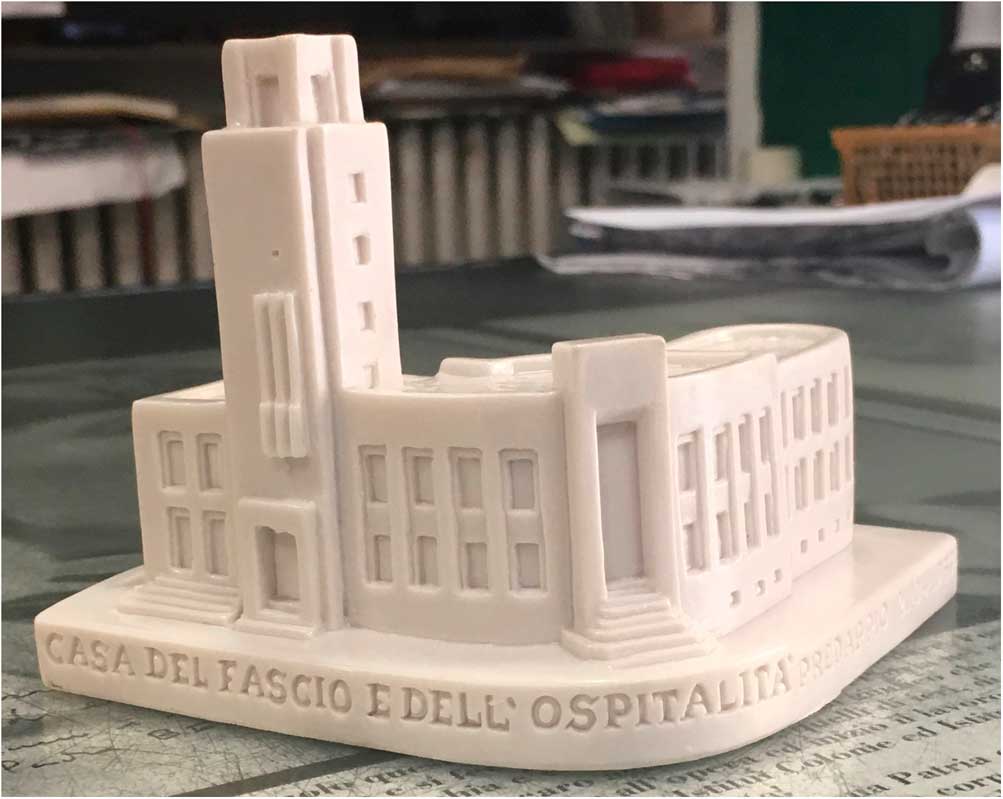
While it is undoubtedly true that Predappio is a symbolic site of the divided memory of the Fascist regime, the reconstruction of the ex-Casa del Fascio’s postwar history, particularly from the point of view of the relationship between the town administration and the state, sheds a different light on the postwar management of some of the architectural heritage of Fascist Italy. From the analysis of the minutes of town council meetings and the correspondence between the mayors of Predappio and the state over more than 50 years, the management of Fascist architectural heritage in Italy emerges as a complex and multi-faceted process, encompassing financial factors, practical arrangements, changes in legislation and the often complicated relationship between the state and local authorities. If, as Hannah Malone argues, the processes through which buildings were preserved, altered or destroyed after the fall of Fascism reflected selections, omissions and revisions in the historical narrative of Fascism (Malone Reference Malone2017, 447), the ex-Casa del Fascio of Predappio is an example of Italy’s uncertain, unsystematic, and often unplanned approach to Fascist architectural heritage. Since the fall of the regime, Predappio has had to deal with an architectural legacy that has been too large, conspicuous, and expensive with respect to the size and financial resources of the town. The difficult relationship with the state resulted, over the decades, in very little acknowledgement of and support for the significance of Predappio’s architectural patrimony and its struggle to maintain it. The town has had to negotiate the preservation of its assets within its unique context as Mussolini’s birthplace and a site of fascist nostalgia. As clearly emerges from the current debates on the planned study centre and museum of Fascism, the difficulty in the case of the ex-Casa del Fascio is amplified by the historical and cultural significance of its location. Predappio is so toxic that its Mayor Giorgio Frassineti, who has been leading the town’s left-wing administration since 2009, has defined it as ‘the Chernobyl of history’.Footnote 5 Ever since the return of Mussolini’s body to Predappio in 1957 (and burial in the local cemetery), the town has been the destination of nostalgic visits and neo-fascist pilgrimages, particularly on the dates of Mussolini’s birth and death (29 July and 28 April) and on the anniversary of the March on Rome (28 October). To add to the town’s ambiguous identity as profiting from nostalgic tourism, since the 1990s, souvenir shops, authorised by the town administration to stop the illegal commerce of fascist memorabilia outside the cemetery, have been selling fascist-inspired objects, including t-shirts, statues, calendars, lighters, wine bottles, and ornaments of various type (see Luzzatto Reference Luzzatto1998; Bosworth Reference Bosworth2002; Serenelli Reference Serenelli2013b; Baioni Reference Baioni2017) (figure 2).
A model of the ex Casa del Fascio for sale in a souvenir shop in Predappio (author’s own image)

As Mussolini’s hometown, and a site of pilgrimage as soon as the early 1920s, Predappio underwent an extensive building programme between the 1920s and the 1930s, as it was redeveloped around the narrative of the ‘luoghi del Duce’. The new town (Predappio Nuova) intended celebrate the Duce, his achievements and his power. It was built around the symbolic buildings of the casa natale and the Varano house, the two buildings where Mussolini was born and had grown up. The cemetery was enlarged, to host the new chapel built for the Mussolini family, and new buildings were erected, initially in eclectic styles, and then, from the early 1930s, following more contemporary modernist styles. These included a new church, council houses, a school, barracks, a GIL building (Gioventù Italiana del Littorio, the Fascist youth movement), and a branch of the Caproni aircraft company, built in 1935 (Tramonti Reference Tramonti1999 and Reference Tramonti2014; Bosworth Reference Bosworth2002; Serenelli Reference Serenelli2013a).
The Casa del Fascio e dell’Ospitalità (so-called because it provided food outlets and public facilities for the many visitors to Mussolini’s hometown), was a flagship project in this building programme. Designed in modernist style by the engineer Arnaldo Fuzzi, it was built between 1934 and 1937, an imposing 2,144 square metre L-shaped building erected over three floors in the centre of the town. It was donated to the town of Predappio by the National Directorate of the Partito Nazionale Fascista (Tramonti Reference Tramonti2014, 23). Built with bricks and reinforced concrete, it featured a torre littoria, had marble decorations and included recreational spaces, a bar, a theatre, a library and sports facilities, as well as offices and warehouses (Bazzocchi Reference Bazzocchi1992; Tramonti Reference Tramonti1999 and Reference Tramonti2014; Serenelli Reference Serenelli2013a; Pozzi Reference Pozzi2015). Following Mussolini’s arrest and the fall of the Fascist regime in July 1943, the building was to all intent and purposes abandoned, although the exterior was left intact, except for some war damage (Tramonti Reference Tramonti2014, 27).
With the legislative decree n. 159 of 27 July 1944, all the properties formerly belonging to the Partito Nazionale Fascista (PNF) were transferred to the state, to be used for public services, welfare associations, sports clubs, and similar activities (Maulsby Reference Maulsby2014a, 26). The management of these buildings prompted some concern in parliament, as evidenced by an article published in the newspaper L’Avvenire d’Italia on 14 May 1950, entitled ‘Braschi interroga su immobili fascisti’. The article reports that Christian Democrat senator Giovanni Braschi from Forlì, who had been undersecretary of the Ministry of Finance with a mandate to oversee war damage in 1947, requested the urgent promulgation of legislation regarding the administration and maintenance of the buildings formerly belonging to the PNF, so that they could be reused as schools, offices, and social housing. As the member of a special committee in charge of overseeing leases, Braschi adopted a pragmatic approach to the reuse of former Fascist buildings, noting that it was not acceptable that hundreds of edifices of considerable value all over Italy were occupied for little or no rent. He lamented the neglect into which some of them had fallen and he specifically mentioned the ex-Casa del Fascio of Predappio’s state of total disrepair (L’Avvenire d’Italia, 14 May 1950; see also Bazzocchi Reference Bazzocchi1992, 536–537; Tramonti Reference Tramonti2014, 29).
From the 1950s onwards, the history of the former Casa del Fascio was marked by a fraught relationship between the state and the town council. The recurring issue at the centre of the dispute was the building’s increasingly poor condition, which was perceived by Predappio’s administration as unsafe, indecorous, and wasteful, particularly given its size, monumentality, and central location. For nearly 60 years, the question of who was responsible for the basic maintenance and repairs of the building was the object of friction and disputes in rental agreements and attempts to buy the building on the part of the town. As had happened with many Fascist buildings across Italy, the initial approach by Predappio to the management of the ex-Casa del Fascio was mostly practical: the building was part of the town’s architectural patrimony and, as such, it was seen as an asset that could be restored and reused. The town’s limited financial resources led the council to rely on public funding available for restoration and urban requalification projects in its repeated attempts to rent or purchase the building from the state. Therefore, financial questions often overrode ideological considerations when planning possible reuses. To an extent, the history of the ex-Casa del Fascio of Predappio was not dissimilar to that of other former Fascist buildings (Pietrogrande Reference Pietrogrande2014; Maulsby Reference Maulsby2014a; Catalani Reference Catalani2015). However, its fate was also interconnected with the postwar history, perception and self-perception of the town of Predappio. Since the end of the war, the town has had a left-wing administration that has had to manage the persistence of Mussolini’s posthumous presence with a postwar identity forged around Socialist and Communist roots and a key role in the Resistance. The insistence on the part of the town to preserve and valorise its architectural heritage is evidence of Predappio’s awareness of its unique history and legacy and of its attempt to redeem it both from oblivion and nostalgic associations.
Despite the neglect in which the town fell after the war, due to the desire to obliterate its embarrassing past from the Italian public sphere (Bosworth Reference Bosworth2002; Serenelli Reference Serenelli2013b; Baioni Reference Baioni2017), as part of its postwar reconstruction, Predappio’s council carried out a programme of restoration and reuse of its buildings, which included the ex-Casa del Fascio. As early as 1952, it applied to the Intendenza di Finanza of Forlì (the provincial branch of the state revenue office, in charge of the administration of state property) to have restoration work carried out in the building, following war damage. The town also asked to rent the premises to house the town council offices.Footnote 6 The request was renewed in 1953, following a verbal agreement between the town administration and the Intendenza, and again in 1954.Footnote 7 In 1955, the Intendenza di Finanza put forward a proposal to sell the building to the town of Predappio for the price of L. 16,250,000, on condition that it would be destined for public use.Footnote 8 This offer was accepted by the town council and forwarded to the Ministry of Finance, which did not approve it.Footnote 9
In the 1960s, further attempts were made by the town council to purchase the ex-Casa del Fascio, to turn it into a junior school (scuola media). In February 1963, the Intendenza di Finanza wrote to Predappio’s town council to renew its offer to sell the building.Footnote 10 A further letter in July stipulated a new price of L. 18,500,000, to be paid in ten instalments, on condition that the building would be used for activities of public interest.Footnote 11 Funds to build the school were eventually acquired, yet mayor Egidio Proli still entertained the idea of purchasing the building from the state, at what was seen as a good price, although a number of councillors were concerned about restoration and maintenance costs.Footnote 12 The decision was postponed, due to differences of opinions within the council. In the second half of the 1960s, the fate of the former Casa del Fascio was still being discussed, particularly as the building required increasingly urgent maintenance work, for safety reasons. A letter of the prefectorial commissioner of Predappio to the Intendenza di Finanza, dated 2 July 1968, expressed concern that, due to lack of maintenance and appropriate surveillance, the building was becoming almost unusable. The commissioner reported that the glass panels in the windows were shattered, the heating system had been removed, most door handles and locks were broken, and the floors needed replacing.Footnote 13 As a partial solution to the problem, in November 1968, the town council agreed to rent the top two floors of the building for two years, to host offices and artisans’ workshops. The town’s responsibilities were to carry out ordinary maintenance and pay an annual rent of L. 100,000. The council also committed to carry out approximately L. 800,000 worth of ad hoc maintenance and repair work.Footnote 14 On expiry of the tenancy agreement, it was allowed to keep renting the building on condition that it carried out further maintenance work.Footnote 15
By the 1960s, nostalgic pilgrimages had turned the town into a ‘source of national embarrassment’ (Serenelli Reference Serenelli2013b, 166). On the dates of the pilgrimages it became the site of clashes between Communist and fascist groups, with the former organising roadblocks to stop the fascists entering the town. As Serenelli notes, while the Communist ‘fathers of the Resistance’ were adamant in their defence of Predappio’s anti-fascist identity, former Fascist militants and those who were nostalgic for the regime saw it as a place for self-identity and recognition (2013b, 166). In those years, the negotiations between the town council and the state with regard to the ex-Casa del Fascio focused mostly on who was responsible for carrying out the urgent maintenance work the building needed, and how it was going to be paid for. The correspondence between the mayor and the Intendenza di Finanza shows an increasingly fraught relationship between the town and the state, with Predappio’s council rebuffing the unsustainable packages of rents and maintenance proposed by the Intendenza, and the latter refusing to carry out any repairs.Footnote 16
In 1975, the Intendenza made Predappio a further offer to sell the building for L. 48,000,000.Footnote 17 This was prompted by the realisation that a number of commercial activities housed in it needed regularising through official rental agreements stipulated by the building’s owner. The documentation on the commercial activities housed in the Casa del Fascio in the 1960s and 1970s is scant. However, it is known that the building hosted workshops for the manufacturing company L’Arte, a Socialist circle, and a garage (Bazzocchi Reference Bazzocchi1992, 538; Tramonti Reference Tramonti2014).Footnote 18 The mayor replied that the town could not afford to buy the building, but could, thanks to a recent lawFootnote 19 apply for regional funds aimed at the purchase and restoration of buildings to be used as schools.Footnote 20 The presence of a Socialist circle within the building was particularly interesting, as it pointed towards an ideological repurposing of the ex-Casa, not dissimilar to that undergone by other former Fascist party headquarters across Italy (see Pietrogrande Reference Pietrogrande2014).
While the negotiations went on, the building was falling into irremediable disrepair; the marble slabs cladding the exterior were beginning to detach, causing potential safety risks. The Ministry for Public Works imposed on the town administration the obligation to implement temporary measures to preserve safety,Footnote 21 but did not intervene to repair the building, despite insistent requests from the mayor.Footnote 22 Indeed, in 1977, the Intendenza declared that, due to financial constraints, it would not be able to carry out any repair work on the ex-Casa del Fascio. The Intendenza added that, given the slim profits the building generated, the huge financial burden entailed by its maintenance, and the difficulties in raising funds to cover those costs, it was considering the sale of the building. This was meant to prevent its complete ruin and would constitute a considerable financial relief, as well as removing any liability for public safety from the state administration.Footnote 23 Therefore, once again, in April 1978, the town of Predappio was invited to buy the building for L. 80,000,000.Footnote 24 The mayor sought financial support from the Emilia Romagna region, highlighting how the building’s central location made it suitable for activities of public benefit. He asked the region to provide financial assistance, in order ‘to find a solution to this longstanding problem, which dates from 1955’.Footnote 25 Not having been able to secure funds to purchase the building, in 1985, Predappio’s council once again agreed to request its lease for ten years. As the Intendenza had stipulated that the building should be used ‘exclusively for artistic and cultural purposes’, the council unanimously agreed that the ex-Casa del Fascio needed to be restored and devoted to activities ‘of general artistic, cultural, educational, and social interest’.Footnote 26
The origins of the proposal for a study centre
The idea of a study centre in Predappio dates back to the late 1980s, in the context of a rethinking of the architectural heritage of Predappio, primarily with a touristic and cultural focus, and with the aim of boosting the economy of the town, through a reconfiguration of its image that attempted to historicise its Fascist associations. The cult of the Duce had entered a new phase in 1983, on occasion of the centenary of Mussolini’s birth. Celebrations were held in Predappio and the town saw an increase in nostalgic tourism. The centenary marked the appearance of the first Mussolini-inspired commercial objects (Franzinelli Reference Franzinelli2009; Serenelli Reference Serenelli2013b).
The council planned a number of interventions, including the restoration of the casa natale, to be used as a historical archive and archaeological museum, and of the former Cinema Italia, to be transformed into a multipurpose building hosting a library, conference facilities, offices and recreational spaces. These would be in addition to a ‘Centro Studi’, a study centre to be housed in the ex-Casa del Fascio and run in collaboration with universities, the Istituti storici della Resistenza, and the regional and provincial administrations. A commission was nominated to carry out the project in collaboration with the already mentioned public institutions as well as ‘trade unions, politicians, historians, sociologists, law experts, humanities scholars, artists, etc.’. The intention was to provide a centre for ‘scholars from every region of Italy, for their research and knowledge of the truth, and with the aim of inserting the town of Predappio into a cultural context of national interest’. Among the activities envisaged as taking place in the building were conferences, meetings and the ‘study of forms of government’.Footnote 27 The plans were approved by the council in May 1989; they included a recreational space, a library, a theatre, and a cultural centre. The project was going to be funded through the sale of town property, a contribution from the AGIS (Associazione Generale Italiana dello Spettacolo), and a loan. This plan was based recent legislation,Footnote 28 which financed the creation or adaptation of cinema and theatre venues.Footnote 29
It is notable that none of the correspondence relating to the ex-Casa del Fascio up to the 1980s made any mention of the building being problematic due to its former identity as a Fascist party headquarters and its subsequent one as a vestige of the Fascist regime. That Predappio’s architectural legacy was unmanageable for the town was obvious, not so much in ideological terms, but in practical and concrete terms; a small town could not afford to look after properties which were disproportionate to its size and financial resources, whatever their aesthetic and economic value. Both the town and the state’s approach to the management of the ex-Casa del Fascio in the decades following the war appeared to be mostly pragmatic and in line with the reuse of Fascist Party heaquarters across the country (Maulsby Reference Maulsby2014a; Pietrogrande Reference Pietrogrande2014; Catalani Reference Catalani2015). The main concern for the town administration was to preserve what was perceived as a substantial and valuable architectural asset and prevent its complete dilapidation. The ex-Casa del Fascio certainly was a problematic building, because of its size, which made it expensive to maintain, and its central location, which made its deterioration painfully visible. However, the edifice did not seem to be invested with any intrinsic ideological value that might prevent it from being restored and repurposed. As long as it was going to be used to house offices or schools, there would not be any political question associated with its original function and significance. As a matter of fact, to an extent, the priorities in the plans for the reuse of the building had been determined by the funds available regionally and nationally for architectural and urban regeneration. It was only when the restoration plans started mentioning the possible creation of a centre for the study of Fascism, in the late 1980s, that some signs of uneasiness began to emerge, evidenced by the language used to describe the project, the appointment of a cross-party commission in charge of realising it, and the desire to be widely inclusive in terms of the centre’s stakeholders.Footnote 30
In the 1990s, the visibility of Predappio increased, due to the changed political landscape and the inclusion of the newly-formed Alleanza Nazionale in the government coalition. The reconfiguration of the far-right led to a fragmentation of approaches to the memory of Fascism, particularly as Alleanza Nazionale was keen to detach itself from overt philo-fascist associations. This resulted in a radicalisation of the nostalgic far-right, which was not prepared to renounce the myth of the Duce (Franzinelli Reference Franzinelli2009). As Baioni reminds us, the rally held in Predappio for the anniversary of the March on Rome on 28 October 1994 was one of the biggest and noisiest, amplified by media resonance. On the same day, a public event was held to commemorate the fiftieth anniversary of the liberation of Predappio. These tensions, as well the awareness of the impossibility of reversing Predappio’s association with Fascism, were at the basis of the attempt on the part of the council to somehow diminish the ideological charge of the town by historicising it, so as to attract a less militant tourism (Baioni Reference Baioni2017).
Within this context, the late 1990s saw further attempts on the part of Predappio’s council to repurpose the ex-Casa del Fascio, as part of a general plan to turn the town into a site of historical study, which, in the wake of a general re-evaluation of interwar architecture, saw the creation of a ‘urban museum’ of Fascist architecture and the reopening of the casa natale as an exhibition space in 1999. In 1997 the town council once again obtained permission from the State Property Department (Demanio) to rent the ex-Casa del Fascio for six years. One of the conditions of the lease was that the town administration would be in charge of all maintenance and repair costs, which could not be discounted from the rent. A further condition was that the building had to be destined ‘exclusively to exhibitions open to the public and organised by Predappio’s town council, with the prohibition on using it for any other purpose, unless authorised by the State Property Department’.Footnote 31
The longstanding plans to purchase the building from the state acquired new momentum, as new laws on urban requalification were passed in 1997 and 1998, which devolved areas of urban management to regional and local authorities, and allowed town councils to apply for regional funds to carry out urban regeneration projects.Footnote 32 Among the eligible interventions were the maintenance and restoration as well as the acquisition of buildings destined for public use. Within this legislative framework, in 1998, Predappio’s council – acknowledging that its previous attempts to rent the ex-Casa del Fascio from the Demanio had been unsuccessful, due in particular to the restrictions imposed on the modification of the building and the financial burden deriving from the ban on subletting the spaces – approved as a matter of priority an application for L. 8,760m of regional funds and funds from the Ministry of Public Works, to support a project of restoration and reuse of the building. This included the creation of office space (some to be occupied by the municipal authority), conference rooms, exhibition spaces, and a permanent exhibition of twentieth-century architecture. The plan submitted with the application included a technical report and a historical survey. For the first time in the town council’s documents, reference was made to Predappio’s ‘problematic legacy’ and to the ‘unresolved aspects’ that had had an impact on the town’s image and identity.Footnote 33 The historical survey also mentioned the perception of Predappio’s historical legacy as being a factor in the neglect of its buildings by the state. It stated:
Mussolini’s political and personal decline dragged down in its ruinous fall the fate of Predappio, leaving it covered in a moral shame which is difficult to erase. The longstanding abandonment of the regime’s buildings, including the Casa del Fascio ... has not interrupted the flow of visitors. For some, this is a cult of [fascist] ideology, for others it’s an architectural survey of a period in our history, which needs systematic study, in order to redeem it from clichés and prejudice. Predappio is still waiting for the right recognition of its cultural role.Footnote 34
This statement is evidence of a longstanding conviction on the part of the town administration that Predappio and its architectural patrimony had been deliberately subjected to a damnatio memoriae, which seemed to be painfully crystallised by the derelict ex-Casa del Fascio (a form of ‘white collar vandalism’ according to one councillor, deliberately carried out for political reasons).Footnote 35 Yet, it also highlights an awareness on the part of Predappio’s council of the significance of the town’s history. The report emphasised that the wealth of its architectural heritage was the material sign of a historical resonance that went beyond its negative association with the Fascist regime, despite being inextricably bound up with it. The plea of the city council to redeem the town’s history and save its architecture was an expression of Predappio’s desire to engage constructively with its heritage, difficult as it was. Such difficulty was compounded by the strained relationships between a town burdened by an architectural legacy which it could not sustain and a state which was often negligent. This was highlighted in the minutes of the town council meeting to approve the plan, in which Mayor Ivo Marcelli deplored the state’s neglect of its properties and warned of the risk that the irremediable decline of the ex-Casa del Fascio might ultimately lead to its demolition. Acquiring the building from the state, restoring and reusing it, therefore, would provide the opportunity for Predappio to come to terms with its history and at the same time safeguard public heritage.
The application was unsuccessful. Among the difficulties encountered by Predappio’s council in the acquisition of the ex-Casa del Fascio over the years, there were frequent changes in the legislation regarding the saleability of state assets, which meant that applications for purchase could at times be impossible or could be solicited and then rejected. In 2000, a new law introduced the concept of public assets of historical, artistic, and cultural value. This stipulated that the buildings falling into those categories could only be sold on condition that their conservation could be guaranteed and that their reuse would not alter their structure and appearance.Footnote 36 With regard to the ex-Casa del Fascio, this meant that the building could only be used as an exhibition space, for cultural activities, or to house offices (Tramonti Reference Tramonti2014, 33).
In July 2003, once again, Predappio’s council approved the request to acquire the ex-Casa del Fascio from the state, together with two other buildings – the Caserma dei Carabinieri and the ex Caproni factory – as part of an architectural regeneration plan. Once again, the request was based on fresh legislation allowing local authorities to obtain to use state-owned properties located in their territories free of charge for a maximum period of 30 years, on condition that they carried out restoration, conservation and maintenance work, and did not use them as dwellings.Footnote 37 Predappio’s town council hoped once more that this new legislation would finally lead to the acquisition, restoration, and utilisation of the ex-Casa del Fascio. The minutes of the council meeting expressed the mayor’s frustration with a process that had been continuing, with no resolution, since the 1950s. There was also a concern that the disrepair of the building was a threat to safety and reflected badly on the public image of the town. Questions of decorum were at the centre of Mayor Marcelli’s presentation to the town council meeting of 18 July 2003: he deplored not only the poor condition of the building, but also the shoddy repairs carried out by the state, which were perceived as a further insult to the town’s image. The mayor’s speech underscored the awareness that Predappio was ‘not just any town’ and expressed a wish to reclaim and take care of its architectural patrimony. In the same meeting, Giorgio Frassineti, in his role as councillor, reiterated the mayor’s message, by stating that while the challenges posed by such a material legacy may have seemed ‘beyond [the town’s] possibilities’, Predappio’s ability to take the lead in the management of its architectural heritage, which was so interconnected with its origin and its history, would also be a measure of its power to take charge of itself, its image, its history, and its future.Footnote 38
In 2010, a regional decree classified the ex-Casa del Fascio as a ‘property of cultural interest’. In the same year, a Legislative Decree allowed the free transfer of state-owned patrimony, including buildings, to local authorities, on condition that they guaranteed the best possible use of it. As a result of the official acknowledgment of the building’s cultural and historical value, in 2011 the town council approved a preliminary project of restoration and reuse,Footnote 39 and in 2014 it approved the creation of a committee for the planning of a museum of the history of Fascism, to be housed in the building. This included historians, journalists, a former member of the Soprintendenza of the Emilia Romagna region (the body in charge of heritage and cultural patrimony), as well as museum and IT experts.Footnote 40
In 2013, Predappio was included in the EU-funded ATRIUM project (Architecture of Totalitarian Regimes in Urban Managements), a consortium of 18 partners from south-east Europe, led by the town of Forlì, the capital of the province in which Predappio is located and a town which has a substantial architectural legacy dating back to the Fascist regime. The stated aim of the project is to ‘focus on the architectural heritage of the different totalitarian regimes’ and ‘to give greater visibility to these examples of rationalist architecture to the extent of linking them together as part of a cultural route which celebrates these specific architectural traces’. The hope is that ‘the cultural route which will emerge will constitute a pathway for Europeans to explore the traumatic twentieth century through the urban landscapes fully visible on the streets of its cities’.Footnote 41 The ATRIUM project produced a framework for the intersection between totalitarian architecture, heritage and tourism, whereby so-called ‘inconvenient’ heritage can be, if ‘wisely’ managed, economically valorised and incorporated into tourist routes (Nauert Reference Nauert2017).
On 29 September 2015, the town council approved the request of acquisition of the ex-Casa del Fascio from the state and a proposal for a project of restoration and re-use of the building.Footnote 42 At the council meeting, an impassioned speech by Mayor Frassineti proclaimed the importance of the moment for the community of Predappio. The project was the opportunity to redeem the town from the negative perception determined by its history and turn it into an important international centre for the study of twentieth-century history. Frassineti touched on the question of the viability of a museum of Fascism in contemporary Italy. He highlighted the difficulty of using the word ‘museum’, because of the celebratory connotations of that type of institution, yet he pointed out the importance of carrying out a reflection on the Fascist ventennio by using symbolic places, such as the ex-Casa del Fascio. He also stressed the need for contemporary Predappio to take possession of its history and distance the town from nostalgic evocations. This was the ‘mission’ of ‘historical responsibility’ that Predappio had to fulfil, both despite and because of its notoriety.Footnote 43
Towards a Museum of Fascism: the project and its reception
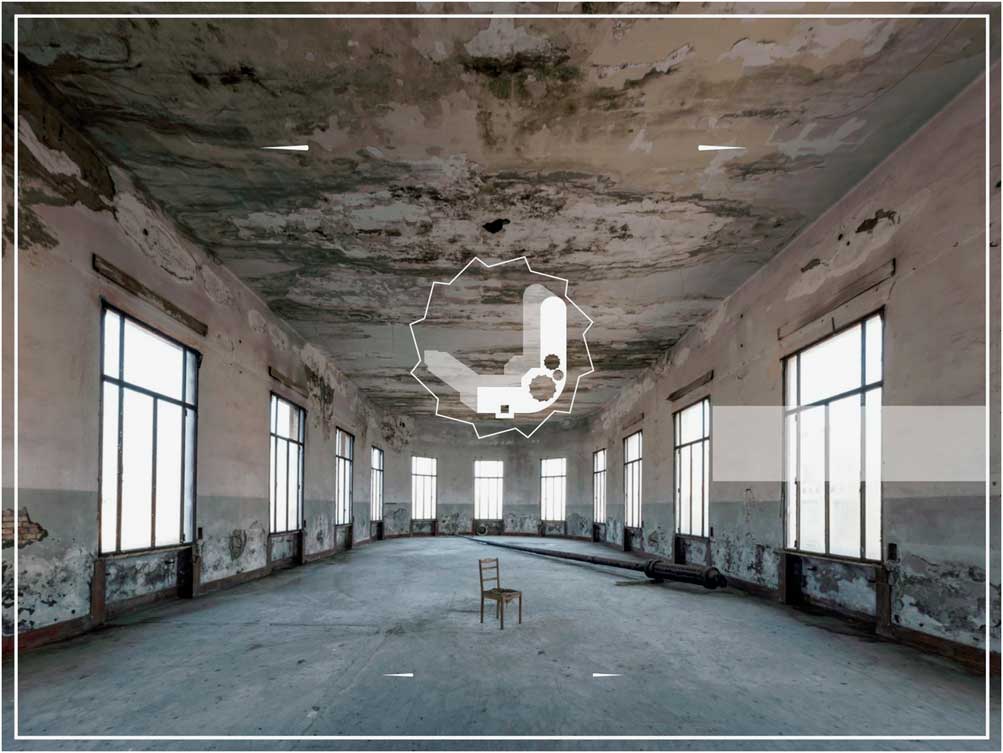
The project of restoration and reuse of the ex Casa del Fascio was approved by Predappio’s town council in a meeting held on 30 November 2015.Footnote 44 It comprises restoration, reuse and financial plans, and includes a plan for a permanent exhibition on the history of Fascism entitled L’Italia totalitaria. Stato e società in epoca fascista (Figure 3). It has a scientific committee led by Marcello Flores, which is composed of national and international experts and historians.Footnote 45 The project situates the restoration and reuse of the ex-Casa del Fascio in the context of the recent acknowledgement of the aesthetic and cultural value of rationalist architecture in Italy. It takes into account the location, size, accessibility and adaptable space of the building, as well as its potential for hosting public events. It also highlights the negative impact on the town’s image of nostalgic tourism, noting that it has resulted in a restriction of the development of tourist activities in the area. It envisages that the ex-Casa del Fascio will be integrated within a broad context of Predappio’s touristic development, encompassing other buildings, such as the Theatre, the casa natale, and the Youth Centre. In this context, and with the declared aim of redeeming the town from a ‘stereotypical image that privileged a superficial reading of Mussolini’s historical role and considered nostalgic pilgrimages as an integral appendix to the cultural life of the town’ (Giunchi Reference Giunchi2015), the proposed functions for the building are an international centre for the study of twentieth-century history, an archive, a library, educational activities, temporary exhibitions, and a museum devoted to the Fascist dictatorship. It is envisaged that the centre will be part of a larger network, involving national and international universities, historical associations, libraries, archives, and local administrations.
Cover image of the museum project (https://progettopredappio.it)

In the current plan for the museum of Fascism, the contents are presented thematically and in chronological order. The first floor is devoted to the war, the rise of Fascism, the 1932 exhibition of the Fascist revolution, society in the 1920s, and the world and Fascism. The ground floor describes the spread of Fascism in the world, repression and the OVRA (Organizzazione per la Vigilanza e la Repressione dell’Antifascismo, the Fascist secret police), the fascistisation of youth, social policies, the empire and race. The basement is dedicated to the Second World War, the theme of the Fascist crowd, massacres, and bombings. A mezzanine is devoted to literature, science, universities, theatre, architecture, painting, and cinema. The museum is centred on a multimedia narrative, rather than on material exhibits, and is aimed at making visitors ‘protagonists of the museal narration’, turning them from spectators to ‘co-actors’, with a strong emphasis on an immersive and evocative experience.
Each event will be narrated through photos, videos, historical documents, presented in a variety of media settings. For each theme, a hologrammatic image of a historian will provide a historiographical perspective. Visitors will have access to artefacts from the interwar years, such as an immersive experience of the 1932 Exhibition of the Fascist revolution, original works of art, projections of white telephone movies, etc. They will also be immersed in the recording of an OVRA interrogation, played in a dark room. Finally, a monumental staircase modelled on that designed by architect Giuseppe Pagano for the VI Triennale in Milan will be used to descend to the basement, where visitors will experience the period of the Second World War, with a sense of oppression created by the low ceilings. The last room will be devoted to the aftermath of the war, with two multimedia walls devoted to ‘the rubble and the destruction of the landscape and of conscience caused by Fascism, and the rebirth towards freedom and democracy’ (L’Italia totalitaria 2016). The museum project is underpinned throughout by an awareness of the difficult legacy of the ex-Casa del Fascio, of Predappio, and of Fascism. From the proposal for the reuse of the building, to its envisaged contents and activities, the plan is centred around the idea of deliberately confronting and exploring this legacy. Any anxiety generated by possible misinterpretations of the materials exhibited is mitigated by the reassuring presence of the hologram of the historian, imparting acceptable and scholarly interpretations of the events.
The public debate on the former Casa del Fascio started on 19 April 2014, when the newspaper Il Giornale published an interview in which Mayor Frassineti announced the intention to turn the building into a museum of Fascism (Mascheroni Reference Mascheroni2014). The news unleashed a barrage of contrasting reactions in the national press and online, eliciting interventions from journalists, historians and scholars of Fascism across the political spectrum.Footnote 46 Amongst the most notable contributions, Francesco Perfetti, Luciano Canfora, Guido Sabbatucci, Carlo Ginzburg, and Mario Isnenghi voiced strong reservations about the project, based mostly on the perception of the museum as a monumental and celebrative institution, which can only provide a selective version of history. Amongst the alternative ideas put forward were that of a museum of national identity (Perfetti Reference Perfetti2014) and a library on the history of Fascism (Canfora Reference Canfora2014). One of the most vocal opposers of the museum of Fascism is the author Wu Ming 1 (pseudonym of Roberto Bui), who, between October and November 2017, published a three-part feature on the website of the Wu Ming writers collective Giap, in which he warns of the risk that a museum of Fascism in Predappio would be subordinated to its toxic environment. Therefore, it would contribute to the consolidation rather than the weakening of Mussolini’s posthumous reputation. The author goes as far as to say that Predappio’s museum, even before opening, is already contributing to the reinforcement of the cult of Mussolini (Wu Ming 1 2017). A number of local associations have also criticised the project for not taking into account the context in which the museum of Fascism will be created and for not including representatives of local associations in the scientific committee and working group of the project. They have lamented the fact that currently only funds for the creation of the museum of Fascism have been raised, while there is no guarantee about the opening of the Documentation Centre envisaged by the restoration plan for the ex-Casa del Fascio. They see this as ‘a clamorous own-goal, served on a silver platter to nostalgic … tourists’ (Istituto Storico di Forlì-Cesena 2017).Footnote 47
Among the supporters, Paolo Mieli backed the project, on condition that it would be carried out by reputable historians (Tiliacos Reference Tiliacos2015). Sergio Luzzatto commented positively on the fact the debate on the ex-Casa del Fascio had engaged historians not only on the pros and cons of the project, but also on the relationship between history and memory (Ginzburg and Luttazzo Reference Ginzburg and Luzzatto2016). David Bidussa noted that turning a site of nostalgic memory such as Predappio into a place of historical reflection is an important cultural and civil challenge, which requires the efforts of the political class, historians, cultural operators, and civil society to ensure that a difficult past is not removed, but understood and studied, starting precisely from its symbolic places (Bidussa Reference Bidussa2016).
In September 2014, Marcello Flores, a leading member of the scientific committee of the permanent exhibition project for the ex-Casa del Fascio, intervened in the debate to challenge the idea that a museum was necessarily a celebration. He highlighted the significance of Fascism both at national and international level and emphasised the importance of knowing and understanding that period of history. Of Predappio, he said that it had to stop being a ‘memory’ of Fascism, subject to the most damaging waves of nostalgia, and instead become a positive force for the diffusion of historical knowledge (Flores Reference Flores2014). On 16 February 2016, Flores circulated an appeal in support of the creation of a museum of Fascism in Predappio, inviting historians and scholars in Italy and abroad to back the initiative. The appeal resulted in a statement signed by 54 Italian and international historians, published on 18 February 2016, which highlighted the significance of Predappio’s project, both towards an open debate on Italy’s past and in terms of innovative ways to represent and understand history (Adorno et al. Reference Adorno, Balzani, Baioni, Bertozzi, Bettini, Bidussa and Brezzi2016).
The issues foregrounded by the debate were captured by journalist Roberto di Caro, who raised some key questions in relation to the museum of Fascism. In what tangle of unresolved issues about its identity and self-perception was Italy still mired? Why was it not possible to create something like the German Nazi Documentation Centre in Munich or the DDR museum in Berlin? According to Di Caro, Predappio is the core of everything that is unresolved about Italy’s national identity (Di Caro Reference Di Caro2015).
The debate on the ex-Casa del Fascio is ongoing and will no doubt reignite when the permanent exhibition will open (the project’s timetable plans the opening for the museum in 2019, although there have been delays in the beginning of the works and and the opening is therefore likely to be in 2020–2021). The question will also be complicated by the end of Giorgio Frassineti’s term as mayor in 2019.
Conclusion
In a recent article, Sharon Macdonald asks if difficult heritage is still ‘difficult’ (2015). The postwar history of the former Casa del Fascio of Predappio and the controversy surrounding the plans to turn it into a museum of Fascism are evidence that the heritage of Italian Fascism still is. The memories and interpretations of Fascism in Italy are still divided, and the toxic legacy and nostalgic resonance of Predappio has made the project particularly controversial. The case of the ex-Casa del Fascio of Predappio is emblematic because it straddles three discourses, which are brought together in the museum project: the issue of the significance, preservation and reuse of Fascist architecture; the question of the appropriateness of a museum of Fascism in contemporary Italy; and the location of such museum in the highly charged context of the town of Predappio. The debates surrounding the building reveal an obvious sense of anxiety regarding the history of Fascism and how it is narrated, and foreground the perception of a weak sense of national identity, which a museum devoted to Fascism would threaten and undermine. They highlight an uncertainty about the very function of the museum, and whether this is interpreted as celebratory rather than informative, with a consequent concern regarding the possible loss of the role of the historian as the gatekeeper of national history, and the threat coming from a popularised and hypertrophic memorial culture crystallised by the museum. Fascism is a blank spot in museal representation in Italy and there seems to be a fear that whoever is going to fill it will have a claim on the representation of that period of history and might disrupt narratives of national identity which have been in place since the end of the Second World War. This concern is legitimate, particularly considering the opacity surrounding the memories and interpretations of Fascism, a persistent construal of Mussolini’s image as somewhat softened (Franzinelli Reference Franzinelli2009; Serenelli Reference Serenelli2013b), and the fact that Fascist nostalgia and revisionist tendencies have been constantly simmering beneath the liberal values of republican Italy (Mammone Reference Mammone2006; Gundle Reference Gundle2013).
The current proposal for the reuse of the former Casa del Fascio ambiguously places the building within the wider and acceptable framework of the re-evaluation of rationalist architecture, yet, as Joshua Arthurs warns, while the possibility of assessing interwar architectural heritage ‘without the burden of ideological judgement’ is encouraging, it is ‘disingenuous to aestheticize or depoliticize what was a profoundly political project’ (Arthurs Reference Arthurs2010, 124). He warns that ‘heritigising’ Fascism’s monumental remains may offer ‘uncritical legitimation and the valorization of a deeply troubling past’, as well as creating a physical and political space for ‘the re-emergence of illiberal, xenophobic and nihilistic currents in Italian society’ (124–125). In his study on the aftermath of the Mussolini cult, Stephen Gundle asks whether the edifices built by the Fascist regime have continued in some form to exercise their intended formative power. He suggests that it would be difficult to argue that they had lost all connection with the regime whose ideology they aimed to symbolise (Gundle Reference Gundle2013, 251). The present article has shown that proposals for the reuse of the ex-Casa del Fascio remained relatively uncontroversial until the idea of a study centre or a museum of Fascism was raised. It was following the proposal to turn architectural legacy into a heritage site, with the legitimating associations that the notion entails, that a local, practical issue became a matter of public concern. But this should not be surprising, as Italy is still struggling with its uncomfortable past. If a museal experience creates a communitas (Macdonald Reference Macdonald2015, 8), to the creation of what kind of community can a museum of Fascism contribute? This is still an unsettling and unanswered question in contemporary Italy.
Acknowledgements
I wish to thank Giorgio Frassineti, Carlo Giunchi, Antonietta Berlati, Elena Mingozzi, and Valeria Racci for their support and assistance in accessing Predappio town council’s papers. I am grateful to Simon Martin and to the anonymous reviewers for their helpful comments and suggestions.
Simona Storchi is Associate Professor of Italian at Leicester University. Her recent publications include The Great War and the Modernist Imagination in Italy, edited with L. Somigli; a themed issue of Annali d’Italianistica, 33 (2015); Visualizzare la Guerra. L’iconografia del conflitto e l’Italia, edited with G. Pieri and M. G. Di Monte (Milan: Mimesis, 2016); Women and the Public Sphere in Modern and Contemporary Italy. Essays for Sharon Wood, edited with M. Spunta and M. Morelli (Leicester: Troubador, 2017). She is the Italian Section editor of the peer-reviewed open access journal Modern Languages Open (Liverpool University Press).