An archetypal depiction of work is that it is a search, ‘for daily meaning as well as daily bread, for recognition as well as cash, for astonishment rather than torpor; in short, for a sort of life rather than a Monday through Friday sort of dying’(Terkel, Reference Terkel1974: xi). Work often is characterized as providing an important source of meaning and identity for individuals (Blustein, Reference Blustein2013; Michaelson, Pratt, Grant, & Dunn, Reference Michaelson, Pratt, Grant and Dunn2014; Pratt & Ashforth, Reference Pratt, Ashforth, Cameron, Dutton and Quinn2003). A contrary perspective is that, whereas work historically offered an inherent source of meaning for some individuals, economic shifts, unstable employment, and trends toward free agency during the last three decades have fundamentally changed the nature of employment such that it no longer provides a meaningful space for identity development for most people (Hall & Mirvis, Reference Hall and Mirvis2013; Sennett, Reference Sennett1998, Reference Sennett2006; Strangleman, Reference Strangleman2012). But the search to find meaning from work remains, as explained by Sennett (Reference Sennett2006), because individuals need ‘a sustaining life narrative, they take pride in being good at something specific, and they value the experiences they've lived through’ (pg. 5).
Companies and consulting firms now make it part of their business to help employees find meaning and purpose in their work, for the benefit of the company and, presumably, its employees (Dik, Byrne, & Steger, Reference Dik, Byrne, Steger, Dik, Byrne, Steger, Dik, Byrne and Steger2013; Pfau, Reference Pfau2015). Although studies show positive organizational outcomes from promoting meaningful work (Arnold, Turner, Barling, Kelloway, & McKee, Reference Arnold, Turner, Barling, Kelloway and McKee2007; Steger, Dik, & Duffy, Reference Steger, Dik and Duffy2012), there is less empirical evidence of direct benefits to individual well-being. Focusing on work as a source of meaning in life may even get in the way of experiencing a ‘good life’ (Michaelson, Reference Michaelson2005a). The purpose of this study is to investigate the relationships between the meaning that people find in work and their experiences of meaningfulness, job involvement, and well-being. This study makes a unique contribution to the literature by examining how individuals make sense of their work narratives – the autobiographical stories about their work lives – and the implications of such meaning making for individual well-being. Understanding how employees make sense of their work is essential to understanding the interrelationships between the work environment, job design, and employee reactions to organizational change.
A mixed methods approach is used to answer three research questions: (1) What is the nature of the narrative themes adults generate about their work – what types of themes emerge, and do they convey sources of meaning? (2) How are individual and contextual factors related to finding meaning in work? (3) Are sources of work meaning associated with job involvement and well-being? This study also provides a unique perspective by focusing on the stories of older workers, individuals in their late 50s-early 60s, whose autobiographical accounts cover a full range of potential employment circumstances across the life span.
Theoretical background and hypotheses
Meaning in narratives
Research on the experience of life meaning finds that, for most people, life is meaningful (Heintzelman & King, Reference Heintzelman and King2014) and it can be associated with a sense of belongingness, religious faith, socioeconomic status, positive mood, self-actualization, and finding coherence in life – all of which are sources of meaning (King, Heintzelman, & Ward, Reference King, Heintzelman and Ward2016; Schnell, Reference Schnell2009). One way individuals find meaning is by constructing stories about their experiences (McAdams, Reference McAdams2001; McAdams & McLean, Reference McAdams and McLean2013). Evidence of meaning can be found by examining how people comment on the descriptions of their life episodes and whether reflections convey significance, unity, purpose, or making connections between the episode and the self (Adler, Lodi-Smith, Philippe, & Houle, Reference Adler, Lodi-Smith, Philippe and Houle2016; McAdams & McLean, Reference McAdams and McLean2013). Elaboration on those reflections is an indication of meaning making, ranging from the absence of meaning making to an insight that extends beyond the specific episode and applies to other areas of life (McLean & Thorne, Reference McLean and Thorne2003). When combined with motivational themes, integrative meaning themes from personal narratives can provide an authentic view of an individual's sense of purpose (Adler et al., Reference Adler, Lodi-Smith, Philippe and Houle2016).
The current study focuses on work narratives, which are used in career counseling but have received less attention in narrative and occupational research (Del Corso & Rehfuss, Reference Del Corso and Rehfuss2011). One objective of this study is to uncover the reasoning and inferences drawn from work narratives, using a question prompt that asks people to identify an overall theme that describes their career stories. Answers to this type of reflective question can provide a snapshot of a person's overall sense of identity, reflecting causal, temporal, and thematic coherence in addition to aspects of the sociocultural context in which the person is immersed (McAdams, Reference McAdams2001; McAdams & Guo, Reference McAdams and Guo2015; Savickas, Reference Savickas, Lent and Brown2013). Just as the content of an individual's goals can reflect important sources of personal meaning, so too may the content of themes that a person chooses to summarize life and work. If meaning and purpose are the core of identity, and identity is expressed as a life story, then we can expect the overall themes for those stories – themes selected by the authors of those stories – to reflect the most salient work meaning or purpose to them at that time. Creating narrative themes is a way of giving meaning to one's life and, reflect what is important (Bauer & McAdams, Reference Bauer and McAdams2004; McLean & Fournier, Reference McLean and Fournier2008).
Because many studies of meaningful work use survey items to measure meaningfulness, research is needed to provide a more in-depth understanding of the types of meaning people find in their work and the implications for their well-being (Michaelson, Reference Michaelson2005a). Counselors and coaches who use narratives can draw from qualitative research to understand the themes that surface when clients reflect on their work, and how those themes signify meaning. The study of work narratives also can strengthen models of job crafting (Wrzesniewski & Dutton, Reference Wrzesniewski and Dutton2001) in management research by examining how employees shape their work stories in response to changes in the environment, or to proactively build their work identities. This study seeks to provide such understanding by exploring the meaning making that individuals convey after reflecting upon their autobiographical accounts of work. One way to find evidence of meaning in narratives is to search for indications of the sources and mechanisms that produce meaning.
The meaning of work and meaningful work
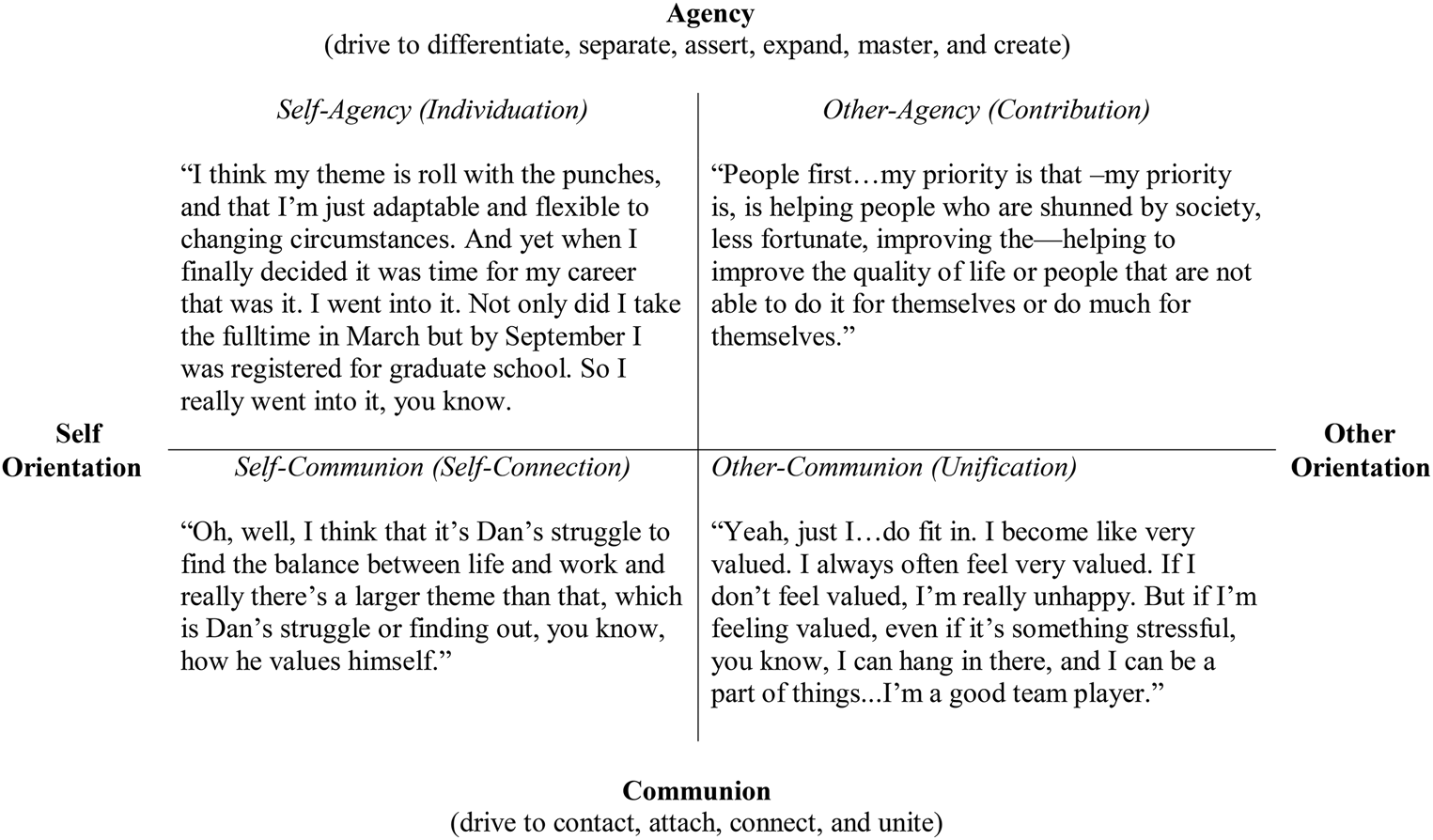
Individuals engage in sensemaking to interpret their workplace interactions and experiences, and to understand or cope with their environments (Asik-Dizdar & Esen, Reference Asik-Dizdar and Esen2016; Pratt & Ashforth, Reference Pratt, Ashforth, Cameron, Dutton and Quinn2003; Wrzesniewski, Dutton, & Debebe, Reference Wrzesniewski, Dutton and Debebe2003). Simply stated, the meaning of work is an appraisal resulting from meaning making about work (Pratt & Ashforth, Reference Pratt, Ashforth, Cameron, Dutton and Quinn2003). Work meaning encompasses employees' understanding of what they do and how significant it is (Wrzesniewski, Dutton, & Debebe, Reference Wrzesniewski, Dutton and Debebe2003). Rosso, Dekas, and Wrzesniewski (Reference Rosso, Dekas and Wrzesniewski2010) proposed a framework to integrate the many ways that meaning may arise from work (i.e., sources of work meaning, such as values, beliefs, relationships with others at work) and the psychological and social processes through which work takes on meaning (i.e., mechanisms, such as self-efficacy, purpose, belongingness, transcendence). Their framework is organized using two dimensions: orientation (self or others) and motive (agency or communion). This two-by-two framework reveals four pathways to meaningful work. The self-agency pathway (individuation) leads to meaning by way of mastery and achieving autonomy through work, establishing oneself as valuable. The other-agency pathway (contribution) leads to meaning by making a difference in the lives of others. The self-communion pathway (self-connection) refers to alignment with one's identity, whereas the other-communion pathway (unification) involves a sense of belonging or harmony in the relationships with others. Rosso, Dekas, and Wrzesniewski (Reference Rosso, Dekas and Wrzesniewski2010) suggest that these pathways, quite diverse in the sources and psychological processes engaged, represent the fundamental ways people approach their work and the most likely ways for them to experience work as meaningful.
Referencing the meaning in life literature, Schnell, Hoge, and Pollet (Reference Schnell, Hoge and Pollet2013) theoretically and empirically arrived at a conceptualization of meaning in work that includes significance, coherence, direction, and belonging. These criteria significantly overlap with Rosso, Dekas, and Wrzesniewski (Reference Rosso, Dekas and Wrzesniewski2010) pathways and similarly result from the individual's appraisal of work experiences that include self-efficacy, task significance, work-role fit, a self-transcendent (prosocial) corporate orientation, and socio-moral (open, appreciative, collaborative) corporate climate. Using survey data to test their framework, Schnell, Hoge, and Pollet (Reference Schnell, Hoge and Pollet2013) found that task significance, work-role fit, and organizational characteristics significantly contributed to experienced meaningfulness. The effects of self-efficacy in their study appeared to be mediated by task significance, leading them to conclude that self-oriented mechanisms may be less important than the impact of other-oriented or community-related factors when it comes to explaining the experience of meaning in work. However, their study used a measure of general self-efficacy rather than a specific measure of competence and mastery through work, so the effects of self-oriented mechanisms on meaningfulness may not have been adequately captured.
Although the use of narratives to study careers is not new, there has been little empirical research to advance narrative methods in this area. The current study uses a quantitative narrative research approach (Adler et al., Reference Adler, Dunlop, Fivush, Lilgendahl, Lodi-Smith, McAdams, Mclean, Pasupathi and Syed2017) by applying Rosso, Dekas, and Wrzesniewski (Reference Rosso, Dekas and Wrzesniewski2010) pathways framework to code the work narrative themes generated by adults. Using narrative themes to deduce meaning avoids the challenges associated with directly asking people to evaluate meaningfulness (e.g., what does meaningful mean, by which standards and values, and to what degree of finality) (Wong, Reference Wong2008). This approach also provides a way for researchers, career counselors, and coaches to assess individuals' perspectives about the meaning of work using a theoretically grounded coding scheme for work narratives. Given that few empirical studies have focused on narrative methods or the pathways to meaningful work, the current study began with an exploration of the work themes that adults generated after reflecting on autobiographical stories of their careers, followed by coding for each narrative variable. Based on the empirical and theoretical research reviewed earlier, two hypotheses were generated.
Hypothesis 1a
Meaning making about work is positively related to pathways to meaningfulness reflected in work narrative themes.
Hypothesis 1b
Pathways to meaningfulness are positively related to overall perceived work meaningfulness.
Job characteristics that promote meaningful work
Over several decades, research has examined work conditions as antecedents of finding meaningful work (Allan, Reference Allan2017; Fairlie, Reference Fairlie2011; Michaelson, Reference Michaelson2005a; Pratt & Ashforth, Reference Pratt, Ashforth, Cameron, Dutton and Quinn2003; Schnell, Hoge, & Pollet, Reference Schnell, Hoge and Pollet2013; Steger, Dik, & Duffy, Reference Steger, Dik and Duffy2012). Studies are grounded in at least two theoretical frameworks: the job characteristics model (Hackman & Oldham, Reference Hackman and Oldham1976) and self-determination theory (Deci & Ryan, Reference Deci, Ryan, Dienstbier and Ryan1991). The job characteristics model suggests that individuals will experience their jobs as meaningful, valuable and worthwhile to the extent that it: (1) requires a variety of activities or skills to complete the work (skill variety), (2) produces an identifiable outcome (task identity), and (3) has a substantial impact on the lives or work of others (task significance). Related to skill variety, opportunities for individual development may be central to meaningful work (Arnoux-Nicolas, Sovet, Lhotellier, Di Fabio, & Bernaud, Reference Arnoux-Nicolas, Sovet, Lhotellier, Di Fabio and Bernaud2016), with development fostering a sense of accomplishment or purpose and thereby promoting self-transcendence (Fairlie, Reference Fairlie2011).
Work conditions that promote autonomy, self-determination, and control over work methods also are associated with meaningful work (Allan, Autin, & Duffy, Reference Allan, Autin and Duffy2016; Blustein, Reference Blustein2006; Fairlie, Reference Fairlie2011; Michaelson, Reference Michaelson2005a, Reference Michaelson2005b; Roessler, Reference Roessler2012) as well as opportunities for people to craft their jobs to change the meaning of their work (Wrzesniewski & Dutton, Reference Wrzesniewski and Dutton2001). In their qualitative study of worker experiences of meaningfulness, Bailey and Madden (Reference Bailey and Madden2017) found that autonomy and control over working time contributed to perceived meaningfulness for all three groups of participants (refuse collectors, stonemasons, and academics). Tims, Derks, and Bakker (Reference Tims, Derks and Bakker2016) found that employees who could craft their jobs to increase resources and make them more challenging, thereby improving job fit, consequently experienced higher levels of meaningfulness. Similarly, research by Allan, Autin, and Duffy (Reference Allan, Autin and Duffy2016) found that internal regulation (i.e., internal motivation plus self-direction) significantly predicted the likelihood of experiencing meaningful work. In a study designed to compare the experiences of workers from different age groups, Anthun and Innstrand (Reference Anthun and Innstrand2016) found that job autonomy was the strongest predictor of experiencing meaningful work for more experienced and older workers in higher education. Autonomous work conditions allow people to satisfy a variety of personal needs for self-expression, independence, achievement, or having an impact on others. Therefore, the theory and research on job characteristics suggest that the skill discretion and autonomy afforded by jobs will be similarly associated with pathways to meaningfulness.
Hypothesis 2a
Skill discretion is positively related to pathways to meaningfulness.
Hypothesis 2b
Job autonomy is positively related to pathways to meaningfulness.
Meaningfulness and job involvement
Theoretical models of motivation and work design include meaningfulness as a psychological state to explain why job enrichment factors, features of the organization, or leadership behaviors impact both behaviors at work and individual well-being (Hackman & Oldham, Reference Hackman and Oldham1976; Pratt & Ashforth, Reference Pratt, Ashforth, Cameron, Dutton and Quinn2003). In their meta-analysis of work design research, Humphrey, Nahrgang, and Morgeson (Reference Humphrey, Nahrgang and Morgeson2007) found that experienced meaningfulness was the best mediator between motivational characteristics (e.g., task variety, autonomy) and work outcomes, including performance, satisfaction, and job involvement. Job involvement typically is defined as an individual's psychological identification with a job (Kanungo, Reference Kanungo1982). Job involvement is considered to be one factor that can increase employee engagement by making work more meaningful and fulfilling (Brown, Reference Brown1996), so the relationship between job involvement and meaningfulness is likely to be bidirectional. As such, a similar relationship is expected with the pathways to meaningfulness.
Hypothesis 3
Job involvement is positively related to pathways to meaningfulness.
Meaningful work and well-being
A substantial body of research supports the social and organizational benefits derived from work that has meaning (for a review, see Rosso, Dekas, & Wrzesniewski, Reference Rosso, Dekas and Wrzesniewski2010), but its relationship with individual well-being is less clear. In their review of the narrative identity literature, Adler et al. (Reference Adler, Lodi-Smith, Philippe and Houle2016) found substantial evidence that motivational themes in narratives (i.e., themes concerned with agency, growth, purposefulness) significantly explain measures of well-being beyond the effects accounted for by other personality and demographic variables. However, they also found that the relationships between well-being and meaning making are complex. As for the specific effects of meaningful work on overall well-being, one premise is that non-meaningful work, which prevents opportunities for growth, autonomy, and identity development, may cause great harm to individuals because it deprives them of their fundamental need for meaningfulness. Such deprivation may negatively impact a person's cognitive and psychological functioning to the point where such harm cannot be remedied outside of work (Schwartz, Reference Schwartz1982; Yeoman, Reference Yeoman2014).
Some research points to significant positive outcomes for individuals who have meaningful work (Fairlie, Reference Fairlie and Burke2013; Michaelson et al., Reference Michaelson, Pratt, Grant and Dunn2014; Rosso, Dekas, & Wrzesniewski, Reference Rosso, Dekas and Wrzesniewski2010). Although studies have used a variety of measures to examine the relationship between work meaningfulness and well-being, results generally suggest that meaningful work is associated with work and life satisfaction (Steger, Dik, & Duffy, Reference Steger, Dik and Duffy2012) as well as psychological health and well-being (Allan, Dexter, Kinsey, & Parker, Reference Allan, Dexter, Kinsey and Parker2016; Arnold et al., Reference Arnold, Turner, Barling, Kelloway and McKee2007; Fairlie, Reference Fairlie and Burke2013). However, Weinstein, Ryan, and Deci (Reference Weinstein, Ryan, Deci and Wong2012) argue that not all meanings are beneficial – only those that satisfy intrinsic needs (e.g., growth, relationships, community contributions), characterized by having autonomy, competence, and relatedness, foster wellness. The current study examines relationships between various types of meaning in work and both eudaimonic well-being and overall life satisfaction. If having a pathway to meaningfulness reflects access to opportunities that promote meaning and finding meaningfulness in one's work, we can expect that people who have these pathways also have higher levels of life satisfaction and psychological well-being.
Hypothesis 4a
Pathways to meaningfulness are positively related to life satisfaction.
Hypothesis 4b
Pathways to meaningfulness are positively related to psychological well-being.
Method
A mixed methods approach was used to examine work narratives and their relationships with survey measures of perceived meaningfulness, job characteristics, job involvement, and well-being. Narrative research methods are well suited for studies that seek to understand how people make sense of their work and its personal meaning to them because these methods ‘allow for the enactment of meaning rather than a report of the perception of meaningfulness’ (Adler et al., Reference Adler, Dunlop, Fivush, Lilgendahl, Lodi-Smith, McAdams, Mclean, Pasupathi and Syed2017: 2). In part, this study examines work narratives to address the criticism that ‘the conversation about meaningful work, such as there is one, is mainly a discussion of the colloquialisms in which the meaning of ‘meaningful’ is rarely if ever examined’ (Michaelson, Reference Michaelson2005a: 12). First, an inductive process was used to examine the content of the work narrative themes. Second, an existing coding system for meaning making was applied, along with a newly developed coding system to investigate themes using Rosso, Dekas, and Wrzesniewski (Reference Rosso, Dekas and Wrzesniewski2010) pathways framework. The resulting codes were then used to test the hypothesized relationships between having a pathway and work meaningfulness, skill discretion, autonomy, job involvement, and well-being.
Participants
The data for this study were drawn from a 7-year longitudinal research initiative that used life story interviews and surveys to examine adult personality development (see Manczak, Zapata-Gietl, & McAdams, Reference Manczak, Zapata-Gietl and McAdams2014; McAdams & Guo, Reference McAdams and Guo2015). Nonclinical adults were recruited by a social-science research firm. The work narratives and survey measures were collected in the fifth year (T5) of the longitudinal study, and some of the demographic measures were collected in year one (T1). The sample for the current study included 119 individuals (40.3% male, 59.7% female) between the ages of 60 and 62 when they were interviewed about their work. The participants, self-identified as African American (39.5%), White (58.8%), or interracial (1.7%), had a median income of $75,000 to $100,000 and were mostly college educated (4.2% only had high school diplomas, 22.7% attended some college, 26.9% graduated college, and 46.2% had some graduate education). The most frequently reported occupation types were education/training/library (13.4%), sales (9.2%), office/administrative support (7.6%), management (6.7%), and healthcare practitioner/technical (5.9%), and with some unemployed (6.7%) and ‘other’ (21.8%) self-identified respondents, which included various types of work described by participants (e.g., consultant, social work, self-employed, homemaker, etc.).
Procedures
Participants completed the online survey approximately 2 weeks prior to being interviewed. The interviews, lasting 2–3 hours, were administered and recorded by trained graduate students or postdoctoral fellows.
Measures
Work narrative theme
Interviews followed a life story protocol (McAdams, Reference McAdams2008) that included a sub-set of questions in T5 designed to capture participants' work narratives. After participants were asked to describe the chapters of their careers and work-related decisions, they were asked what their career decisions say about who they are as a person or about their life, and then asked this question: ‘Is there an overall theme that relates to your career? Please explain.’ The current study used interview responses from this overall theme question.
Job characteristics
Two job characteristics, skill discretion and decision authority, were measured in T5 using survey items from the National Survey of Midlife Development in the United States (MIDUS) job characteristics sub-scales, which employed a five-point frequency scale ranging from all the time to never (Inter-University Consortium for Political & Social Research, 2009). Skill discretion included three items that asked how often: the individual learns new things at work; work demands high levels of skill or expertise; and work provides a variety of things that interest you. Decision authority was measured using six items that asked how often the individual had a choice in deciding what tasks to do and how to do them, a say in decisions about work, planning the work environment, initiating things, and control over the amount of time spent on tasks. Items were reverse coded, making 5 the highest score on either sub-scale and 1 the lowest score.
Work meaningfulness
A single item was included in the T5 survey to measure overall perceived meaningfulness of work: ‘How often do you feel that your work is meaningful or important?’ Responses were recorded on a five-point scale, ranging from 1 (All the time) to 5 (Never), and reverse scored for ease of interpretation. This item was employed as a global measure of perceived work meaningfulness.
Job involvement
Kanungo's (Reference Kanungo1982) 10-item measure of job involvement was included in the T5 survey to capture the level of importance, personal involvement, interest, and attachment participants have with their jobs. Responses were recorded using a scale ranging from 1 (Agree) to 6 (Disagree), then reverse scored to facilitate interpretation.
Well-being
The T5 survey used two measures of well-being. The Psychological Well-Being (PWB) Scale (Ryff & Keyes, Reference Ryff and Keyes1995) consists of 42 items rated from 1 (Strongly Disagree) to 6 (Strongly Agree). The six sub-scales of this measure include autonomy, environmental mastery, personal growth, positive relations with others, purpose in life, and self-acceptance. Items were reverse scored and the subscales were combined to create an overall measure of psychological well-being. The Satisfaction With Life (SWL) Scale (Diener, Emmons, Larsen, & Griffin, Reference Diener, Emmons, Larsen and Griffin1985) was used to measure global life satisfaction. The five-item measure was evaluated on a scale ranging from 1 (Strongly Disagree) to 7 (Strongly Agree), and also reverse scored.
Demographics
Gender, race, and highest level of education, completed on a scale of 1 (high school) to 4 (graduate work, post college), were obtained in the T1 survey. The measure of annual family income, using a scale from 1 (under $25,000) to 13 (over $300,000) in $25k increments, was gathered from the T5 survey. Given past research showing positive relationships between income, education level, work meaning, and psychological well-being (e.g., Allan, Autin, & Duffy, Reference Allan, Autin and Duffy2014; McAdams & Guo, Reference McAdams and Guo2015), these variables were included as control variables in applicable hypothesis testing.
Data analysis
Qualitative analyses, coding for meaning making and meaning
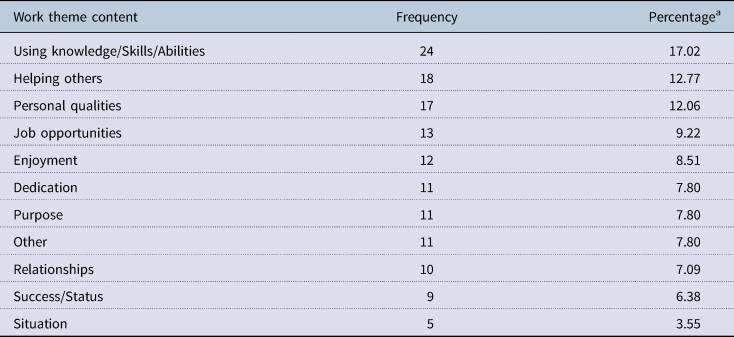
Qualitative analysis software (QSR NVivo 11) was used to code the interview data, analyzed in two stages. First, an inductive content analysis was used to explore the overall work theme responses. Two coders, blind to participant demographic characteristics and survey responses, independently reviewed the transcripts and discussed the response patterns to arrive at initial categories. These categories were refined and used by the two coders to independently classify the work theme content (see Table 1). Several work themes fell into more than one content category, but if there was a central focus of the work theme, a single category was selected when possible.
Overall work theme content categories

N = 119.
a Percentage out of 141 coding instances.
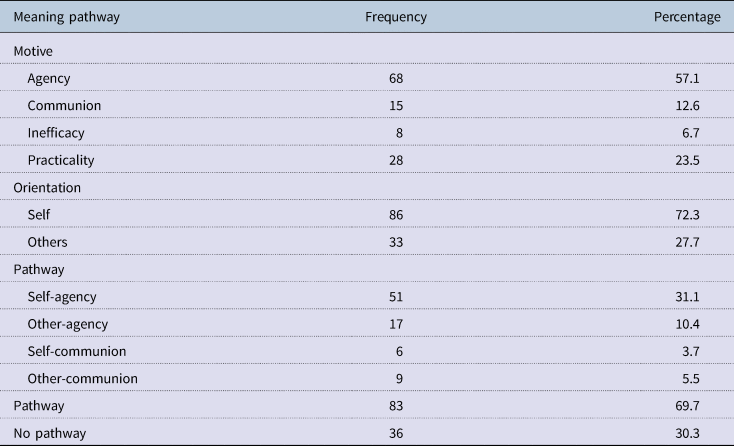
Responses were then coded for meaning making based on the well-validated coding system created by McLean and Pratt (Reference McLean and Pratt2006). The author and a trained coder independently rated each response according to whether there was no apparent meaning making (0), a lesson (1), vague meaning (2), or insight (3) drawn from the work theme. Interrater reliability κ = .83 (ICC = .82), and disagreements in the coding were discussed to reach a consensus rating. Next, using the meaning pathway framework descriptions provided by Rosso, Dekas, and Wrzesniewski (Reference Rosso, Dekas and Wrzesniewski2010), a coding system was created to identify the presence of one of the pathways to meaningfulness using the motive and orientation dimensions of the framework. To categorize participants into one of the four pathways, the coding system used subscales to indicate whether the response focused on agency or communion, and self or others. Initial coding for the motive dimension revealed that some work themes did not reveal either agency or communion, raising the possibility that there were some participants whose responses did not fit the theoretical framework or did not have a pathway to meaningfulness. Two additional subscales were created to represent work themes that did not reflect either agency or communion, specifically identifying those themes that referenced a lack of control over work (Inefficacy) or about the practical nature of work (Practicality). Table 2 summarizes the dimension subscales and provides examples for each. The author and a trained coder independently rated each response with a score of 1 for the presence or 0 for the absence of the corresponding subscale. Interrater reliability was strong for each of the dimensions (motive dimension κ = .80, ICC = .80; orientation dimension κ = .72, ICC = .82). Differences were discussed by the coders to assign an agreed-upon rating.
Meaning pathway dimensions, subscales, and sample excerpts

Statistical analyses
T-tests, χ2 tests, and nonparametric tests were analyzed to look for group differences by education, gender, race, and income, and to explore the narrative indices for meaning and meaning making. Correlation analyses, multinomial logistic regression, regression analyses, and ANOVA were conducted to test hypothesized relationships.
Results
Responses to the work theme question ranged from 8 to 816 words (M = 201, SD = 159), averaging 201 words (SD = 159). Twelve work themes were categorized as having no meaning making (10.1%), 28 were lessons (23.5%), 33 had vague meaning (27.7%), and 46 were categorized as reflecting insight (38.7%). The average meaning making score for this sample was 1.95 (SD = 1.02). Chi-square tests revealed that the coding results for meaning making did not differ significantly by education level, gender, income, or race.
Table 3 reports the results of the work theme coding using the two dimensions for the pathways to meaningfulness. The first dimension, motive, represents the agency-communion distinction for which most of the responses could be coded. Almost one-third of the work themes (no pathway) did not have content that was clearly reflective of agency (i.e., mastery, assertion, separation, differentiation) or communion (i.e., connection, attachment or unification). Instead, some of the themes showed a sense of inefficacy or a practical view about work, void of any particular drive. Coding for the second dimension, orientation, revealed that the majority of themes were focused on aspects of the self rather than being about others. Of the four pathways, the self-agency pathway was most often detected in this sample (Table 3).
Work theme coding by meaning pathway dimension

N = 119.
Chi-square tests did not reveal any significant differences in the motives, orientations, or pathways by gender or race. However, tests of the linear-by-linear association showed significant differences in agency by income (χ2 = 6.79, p ≤ .01), and differences in the presence of a pathway by education (χ2 = 4.22, p ≤ .05) and by income (χ2 = 7.64, p ≤ .01). To illustrate the types of work narrative themes for each pathway, examples are provided in Figure 1.
Examples of work theme narratives by meaning pathway, using Rosso, Dekas, and Wrzesniewski (Reference Rosso, Dekas and Wrzesniewski2010) theoretical framework of the four major pathways to meaningful work

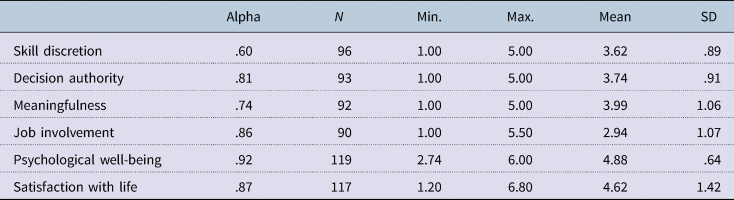
The descriptive statistics for the survey measures are shown in Table 4. Tests for the normality of the dependent variables showed significant negative skewness for psychological well-being (PWB, −.92) and satisfaction with life (SWL, −.49). Data for PWB and SWL were corrected to achieve a normal distribution with a reflected square root transformation. T-test results showed that African Americans scored significantly higher than White participants on the measures for PWB [t(115) = −4.67, p ≤ .05] and SWL [t(113) = −1.82, p ≤ .01].
Descriptive statistics for survey measures

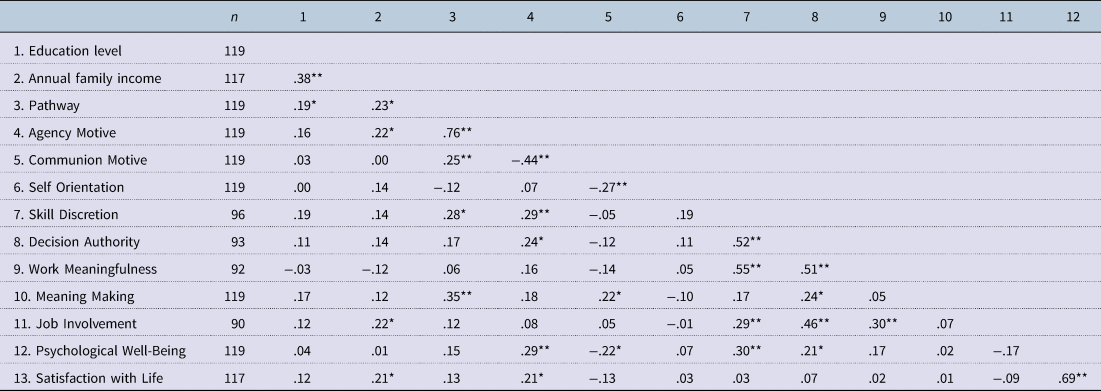
The correlations for the survey measures of meaningfulness, skill discretion, decision authority, and the dichotomous variable for the presence of a pathway (pathway) are presented in Table 5. Correlations represent untransformed scores for ease of interpretation.
Intercorrelations among survey and narrative measures

*p < .05.**p < .01.
Spearman coefficients provided for education, income, work meaningfulness, meaning making, psychological well-being and satisfaction with life.
Hypothesis testing
A Mann–Whitney U test was used to examine hypothesis 1a, whether meaning making is positively associated with having a pathway to meaningfulness. Results showed that meaning making in the pathway group was significantly higher than the group that did not have any pathways (U = 875.50, p ≤ .001). The nonparametric correlation coefficients were used to examine hypothesis 1b, that having a pathway is positively related to perceived work meaningfulness, which was not supported (see Table 5). A χ2 test also was used to compare the four pathway groups and the no pathway group on work meaningfulness. Results showed that there was not a statistically significant difference between these groups, χ2 = 15.00(16), p = .52.
Hypothesis 2a and 2b proposed that pathways to meaningfulness are positively related to skill discretion and autonomy. The coefficients in Table 5 show that having a pathway was positively and significantly associated with skill discretion but not decision authority at work. However, there was a significant, positive relationship between work themes reflecting agency and both skill discretion and decision authority. A logistic regression was performed to examine the effects of education, family income, and skill discretion on the likelihood of having a pathway to meaningfulness. This model was statistically significant, χ2 = 15.26(3), p ≤ .01, explaining approximately 15% to 21% of the variance in meaning pathway and correctly classifying 91.2% of the cases. Both income and skill discretion were significant in this model. The odds ratios of 1.33 (p ≤ .05; CI = 1.01–1.75) for family income and 1.85 (p ≤ .05; CI = 1.06–3.622) for skill discretion show that these variables were significantly associated with an increased likelihood of having a pathway to meaningfulness reflected in the work theme.
Hypothesis 3 proposed that pathways to meaningfulness are positively related to job involvement, but the correlation between these variables was not significant. The agency, communion, and orientation narrative themes also were not significantly correlated. A one-way ANOVA was conducted to compare the four pathway groups plus the no pathway group on job involvement. These results also were not significant [F(4,85) = 1.85, p = .23].
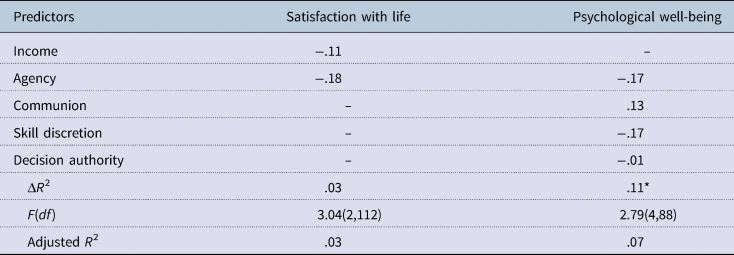
Hypothesis 4a and 4b proposed that pathways to meaningfulness are positively associated with life satisfaction and psychological well-being. Only the agency dimension was significantly correlated with SWL, but the hierarchical regression model was not significant (see Table 6). Results of a one-way ANOVA comparing the four pathway groups plus the no pathway group on SWL also were not significant [F(4,112) = 1.34, p = .26]. Examining hypothesis 4b, the PWB measure was significantly related to themes for agency and communion, as well as skill discretion and decision authority. Hierarchical regression analyses yielded a statistically significant model overall, but none of the predictors were significant. A one-way ANOVA was used to compare the four pathway groups and the no pathway group on PWB. There was a statistically significant difference between the groups [F(4,114) = 2.70, p < .05]. None of the post-hoc tests were significant, though the PWB mean for the other-agency group was the highest (M = 5.12), followed by self-agency (M = 4.99), no pathway (M = 4.75), other-communion (M = 4.56), and self-communion (M = 4.52).
Multiple regression results for models predicting psychological well-being and satisfaction

Note. Hierarchical regression analyses for the SWL model entered income as a control variable first, followed by selected predictors. Numbers for the predictors are standardized beta coefficients. Models used reflected square root transformation for the well-being and satisfaction measures, so predictor coefficients for those models must be reversed for proper interpretation.
*p ≤ .05.
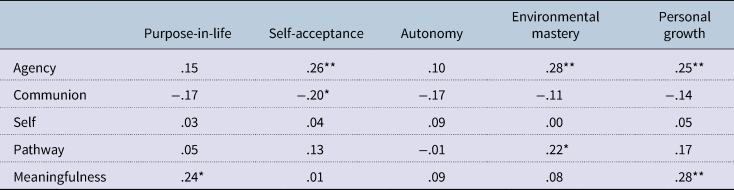
Lastly, correlation analyses were conducted using the narrative variables, the measure of meaningfulness, and the PWB sub-scales: purpose in life, self-acceptance, autonomy, environmental mastery, and personal growth. Results are shown in Table 7. The orientation dimension (self-others) was not correlated with any of the PWB sub-scales, whereas the motive dimension (agency-communion) showed significant relationships with self-acceptance, environmental mastery, and personal growth. However, having a pathway to meaningfulness was only significantly correlated with environmental mastery. The survey measure for work meaningfulness was significantly correlated with purpose in life and personal growth.
Correlation coefficients for narrative variables, meaningfulness and PWB sub-scales

Note. Spearman rho coefficients are reported for all correlations.
*p ≤ .05.**p ≤ .01.
Discussion
This is the first study to examine work narrative themes by applying coding systems for meaning making and pathways to meaningfulness and then testing relationships with job characteristics, job involvement, and well-being. Three overarching research questions framed this study and are discussed here in light of the results.
What themes emerge and do they convey meaning?
There is significant overlap between the overall theme content categories that emerged from these work narratives and factors found in other work meaning empirical studies, particularly around meaning dimensions that have an expressive orientation (satisfying or interesting work, variety, job-abilities match, autonomy) and focus on interpersonal relations (interesting contacts, types of people one works with, good interpersonal relationships) (Harpaz & Fu, Reference Harpaz and Fu2002). The participants in this study made sense of their work lives most often by constructing themes centered around their competence, achievements, or enjoyment of using their knowledge, skills and abilities at work. This finding is consistent with research by Laskawy (Reference Laskawy2004) and LaPointe (Reference LaPointe2010) suggesting that, compared to earlier generations, contemporary employees construct career narratives that reflect a sense of meaning from work authenticity and competence rather than upward mobility.
Helping others and personal qualities such as perseverance also were frequently referenced in these work narratives, but success, status, and money were mentioned infrequently. This suggests that extrinsic factors tend to be less prominent when work narrative themes are constructed. These results fit the self-determination theory hypothesis that satisfying needs for relatedness (relationships, service), autonomy (growth, self-understanding), and competence (self-improvement) is essential to the experience of meaning (Weinstein, Ryan, & Deci, Reference Weinstein, Ryan, Deci and Wong2012). Unlike the research by Sandelands and Boudens (Reference Sandelands, Boudens and Fineman2000), who in their review of the interviews collected by Terkel (Reference Terkel1974) and others found that people primarily talk about other people when discussing their work, this study finds that work narrative themes more often are about the self and agency.
The narrative themes constructed by the adults in this study also reveal high levels of meaning making about work. By contrast, McLean and Pratt (Reference McLean and Pratt2006) found less evidence of meaning making in emerging adults' turning point stories about achievements, which included vocational choices. They attributed this to the likelihood that young adults may not have had much vocational choice, and that achievement-oriented events may not demand much personal meaning making compared to mortality or relationship stories. Although vocational choice was not investigated here, the mature adults in this study were reflecting upon a much longer work history, which is likely to demand more meaning making.
Most of the work themes fit the pathway to meaningfulness framework (Rosso, Dekas, & Wrzesniewski, Reference Rosso, Dekas and Wrzesniewski2010), but nearly one-third of the narratives could not be coded along the agency-communion dimension. Instead, some participants' themes focused on the practical nature of work, employment circumstances, or their failures to have control or success in their careers. This could be interpreted as an indication that these individuals struggle to find meaningfulness in their work, at least via the four pathways examined here. It also is possible that the work domain is a less salient source of meaning for these individuals, or that they hold a job orientation toward their work (Wrzesniewski, McCauley, Rozin, & Schwartz, Reference Wrzesniewski, McCauley, Rozin and Schwartz1997), whereby their views are drawn toward the necessity of work for the material benefits that it provides. People who have a job orientation may not be as motivated to find pathways to meaning in their work, instead finding sources of meaning in other aspects of life.
Most of the narratives fit the self-agency pathway, followed by other-agency. Only one other empirical study that used this framework to understand the sources of work meaning could be found. Allan, Autin, and Duffy (Reference Allan, Autin and Duffy2014) used content analysis to code answers to a question about why work was meaningful, and they found that most people in their sample cited helping others or contributing to the greater good (other-agency), whereas only a few people mentioned mastery or autonomy. They concluded that people derive work meaning primarily from the other-agency pathway. However, they prefaced their open-response question with a statement that ‘some people consider their work to have some degree purpose, significance, or importance above and beyond earning a paycheck’ (pg. 549), which might have primed participants to think about the more prosocial aspects of their jobs when they answered what made their work meaningful. The current study did not use the term meaningfulness or refer to purpose or significance beyond financial benefits when asking about work themes, so it is possible that a wider variety of work meanings could emerge here compared to studies asking directly about meaningfulness.
What factors are related to finding meaning in work?
Meaning making did not differ significantly by education level, gender, income, or race; however, family income was significantly related to themes high in the agency. Education level and income also were positively related to pathways to meaning. These results are consistent with research suggesting that access to economic resources may increase the likelihood of pursuing, finding, and benefitting from meaningful work (Allan, Autin, & Duffy, Reference Allan, Autin and Duffy2014; Blustein, Reference Blustein2006; Duffy, Allan, Autin, & Bott, Reference Duffy, Allan, Autin and Bott2013).
Work conditions also appear to provide opportunities for finding meaning in work. Meaning making was positively associated with decision authority at work, and skill discretion was associated with an increased likelihood of having a pathway reflected in the work theme. These job characteristics may afford individuals more opportunities for identity development, expression, and individuation. This is consistent with the work design literature suggesting that job characteristics provide opportunities for meaning (Humphrey, Nahrgang, & Morgeson, Reference Humphrey, Nahrgang and Morgeson2007), and experiences of competence are important aspects of the meaning people find in their work (Zhou, Leung, & Li, Reference Zhou, Leung and Li2012). These findings also support the model of job crafting (Wrzesniewski & Dutton, Reference Wrzesniewski and Dutton2001), which suggests that motivation and perceived opportunities to craft jobs may come from employees having discretion in how work is done, thereby fostering finding meaning in work.
Is meaning associated with job involvement and well-being?
This study found a significant positive relationship between the survey measure of work meaningfulness and job involvement. This is consistent with empirical research showing that the importance of work in one's life is closely associated with how much a person identifies with work (Harpaz & Fu, Reference Harpaz and Fu2002). Together, these two measures appear to be reflecting the centrality of work. And, both skill discretion and decision authority were positively correlated with these measures. However, neither work meaningfulness or job involvement was significantly correlated with the meaning dimensions or pathways. This suggests that the type of meaning drawn from work experiences is independent of the importance and attachment to work. Adults who interpret work as a way to help others can experience as much job involvement and meaningfulness as those who see relationships, feelings of competence, or authenticity as central to what their careers are about. Furthermore, job involvement was not significantly associated with well-being in this study. Its negative correlation (though not significant) with psychological well-being hints at the contrary hypothesis that a preoccupation with work might get in the way of experiencing the ‘other good things in life’ (Michaelson, Reference Michaelson2005a: 7, Reference Michaelson2005b).
Prior research suggests that the other-agency (contributor) pathway should have a significant relationship with well-being, and other studies have shown positive associations between prosocial goals and behaviors and well-being (McAdams, Reference McAdams2010). The significant ANOVA results testing the relationship between the pathways and well-being were somewhat supportive of this, with the well-being mean for the other-agency group the highest. However, the post-hoc tests were not significant. These results should be interpreted with caution because of the small sample size in this study, particularly with two of the pathway groups having fewer than ten subjects. Results of the correlation analyses showed a significant positive relationship between well-being and the agency motive, but the results of the regression analyses did not find it to be a significant predictor. Neither of the models predicting well-being and satisfaction was a good fit. This suggests that finding meaning in work is not always associated with individual well-being. Although this finding is inconsistent with the work meaningfulness literature, it does align with other empirical studies in psychology suggesting that complex meaning making about life – also referred to as integrative, and consistent with levels of meaning making used in this study – is not necessarily associated with measures of well-being (Bauer & McAdams, Reference Bauer and McAdams2004).
Another explanation is that the agency motive as conceptualized by Rosso, Dekas, and Wrzesniewski (Reference Rosso, Dekas and Wrzesniewski2010) does not provide a key distinction between agency based upon intrinsic versus extrinsic motivation. Themes that reflected self-agency in the form of achieving status and prestige have an extrinsic orientation and therefore may not be associated with well-being in the same way that other intrinsic values or growth-oriented themes are positively correlated with well-being (Bauer & McAdams, Reference Bauer and McAdams2004; Weinstein, Ryan, & Deci, Reference Weinstein, Ryan, Deci and Wong2012). This is one area needing more investigation. Furthermore, humanistic work values (i.e., the belief that work should be meaningful), work orientation, motives, and need satisfaction, which were not measured in this study, may influence the relationship between meaning and well-being (Arnold et al., Reference Arnold, Turner, Barling, Kelloway and McKee2007; Weinstein & Ryan, Reference Weinstein and Ryan2010). Finally, work meaning may only influence well-being to the extent that it impacts life meaning, as suggested by studies that have examined career callings (Duffy et al., Reference Duffy, Allan, Autin and Bott2013).
Lastly, work meaningfulness and the narrative variables mapped differently onto the psychological well-being subscales, suggesting that these variables are capturing different aspects of the meaning of work. Having a pathway to meaningfulness was only significantly correlated with environmental mastery, but work themes high in agency also were associated with self-acceptance and personal growth. Work meaningfulness was significantly correlated with purpose in life and personal growth. Surprisingly, the one dimension of psychological well-being that showed no relationship with any of these measures was autonomy. In other words, when participants perceived that their work was often meaningful or important, they experienced more purpose in life overall and a sense of continued development and realization of their potential, whereas having a source of meaning was only associated with a sense of control and competence in managing life activities, but not autonomy overall. However, those participants whose source of meaning (pathway) reflected agency also experienced more positive attitudes about themselves and felt a sense of realizing their potential, but not necessarily purpose in life. This underscores the importance of using measures that allow for the full range of meaning experiences to emerge in addition to the perceived meaningfulness and importance of work. Research on work meaningfulness has been limited by imposing definitions of meaningfulness that require other-agency sources of meaning, which may be beneficial but not always available or desirable. By listening to the stories that people share about their work and the themes they draw from those stories, researchers can gain a better understanding of what provides meaning, whether it is perceived as meaningful, and how both relate to overall well-being in life. These findings have important implications for practice and future research.
Practical implications
If work is a quest for meaning, this study suggests that people generally are successful at finding it – but meaning can take a variety of forms and may not necessarily be associated with psychological well-being or life satisfaction. Work experiences promoting agency appear to be particularly important, and there are practical implications for managers, career counselors, and coaches. Employers that provide a variety of opportunities for people to learn, exercise mastery, achieve their goals, and use their skills on the job could improve their employees' chances of finding meaning in their work. Concentrating on practices that promote agency and self-determination, rather than targeting the highly individualized and personal experience of meaningfulness, might be a more effective way for employers to pave a pathway to meaningfulness. Job crafting is one such practice that organizations can encourage and individuals can adopt to exercise agency and foster meaning at work (Wrzesniewski & Dutton, Reference Wrzesniewski and Dutton2001). Research on job crafting suggests that the norms and framing of communications created by organizational leaders, in combination with the interpersonal sensemaking that happens between employees, influence how people interpret their work (Wrzesniewski, Dutton, & Debebe, Reference Wrzesniewski, Dutton and Debebe2003). Organizations that seek to support meaning in work might accomplish this by reinforcing norms that encourage individual agency in how work is accomplished and affirm job crafting efforts. Employers might also support meaning making by modeling and rewarding positive interpersonal relationships between managers and employees that reflect mutual support for finding pathways to meaning both within and outside of the organization.
Similarly, career counselors and coaches can support their clients in pursuing meaningfulness by presenting a variety of pathways that may help them find meaning. Counselors who adopt narrative approaches are accustomed to using their clients' stories for assessment and intervention. For example, counselors listen for stories to discern patterns and themes that reflect meaning making and identity, and then help their clients make interpretations that will advance them toward desired ends, including the construction of a cohesive identity (Del Corso & Rehfuss, Reference Del Corso and Rehfuss2011; Savickas, Reference Savickas2011, Reference Savickas, Lent and Brown2013) or crafting alternative stories to increase agency and well-being (Adler, Reference Adler2012). The current study demonstrates how counselors and coaches can apply the pathways to meaning framework to interpret work themes narrated by their clients. Using this approach, they can speak to the motives and orientations underlying the work themes, engaging in discussion about their meaning and potential implications for well-being. Knowing that there are multiple pathways that foster meaningfulness and well-being might put clients at ease, particularly if clients have a limited understanding of the ways that meaningfulness and well-being can be achieved.
At the same time, this study raises questions about the direct benefits for individuals who pursue meaningfulness from work. A just society requires that people have access to educational opportunities, high wages, and working conditions that foster meaningfulness. However, promoting the narrative that work should be a source of meaningfulness – purpose, importance, and self-transcendence – could be setting people up for an unnecessary quest for an idealized work experience that may not be achievable or directly associated with life satisfaction and well-being. Although meaningful work may help individuals find purpose in life, it is not the only pathway to meaningfulness or well-being. This might be particularly true for older adults, who may be less likely to use work as a source of life meaning or receive the same benefits from work meaning as younger adults (Allan, Duffy, & Douglass, Reference Allan, Duffy and Douglass2015).
Limitations and future research directions
This study produced supporting evidence for the use of narrative research methods in examining the meaning adults find in their work. In contrast to the qualitative research by Bailey and Madden (Reference Bailey and Madden2017), who directly asked participants about meaningful and meaningless work experiences, the current study asked people to share stories about their work experiences and then explain the overall theme that describes it. Both of these methods yielded similar results in that participants generally reported a sense of meaningfulness about their work, and stories about mastery, having an impact on others, reaching potential – stories of agency – characterized their responses. However, the current study suggests that it is the experience of agency, whether directed at the self or others, that may be essential for the pursuit of meaning. Using narrative themes revealed different insights about meaning and implications for well-being, building on prior research demonstrating how narratives can uniquely reveal an individual's sense of purpose through themes of agency (Adler, Reference Adler2012). Future research can expand upon this approach by using work narratives to understand how individuals engage in sensemaking and shape their meaning of work through the stories they tell and the themes they draw from those stories. Such themes may be used to understand employee interpretations of work environments, roles, interventions such as job enrichment, or strategic communications about organizational objectives. This offers another lens for understanding job attitudes.
The current study benefits from a rich dataset elicited from life story interviews and an extensive online survey, but there are limitations. First, there are limits to generalizing the results due to the sample's geographic location and generally high socioeconomic status. This sample overall reported high levels of work meaningfulness and had high levels of psychological well-being and life satisfaction, potentially restricting the extent to which significant relationships between variables could be detected. Future studies should seek participants representing a wider range of perceived work meaningfulness. Second, no interview questions directly asked about the meaningfulness of work, so the survey measure of meaningfulness could not be confirmed using individuals' accounts of meaningful experiences. Furthermore, responses to the work theme question may have been influenced by the questions asked immediately before it. Adjusting the work story protocol to cover more aspects of working life (e.g., work high point, low point, turning point) might evoke stories that could be coded to more thoroughly capture work meaning. Third, the work meaningfulness measure included only a single item, with importance as part of the prompt. It is clear from other studies that different operationalizations of meaningfulness influence results, and ideally multiple items should be used to clearly construct scales that adequately capture the various dimensions of meaningfulness.
Although the pathways to meaningfulness coding scheme seemed to adequately represent much of the content found in the narrative themes, future research is needed to make coding refinements that may further inform this theoretical framework. For example, as noted earlier, there may be significant differences between themes of agency that are intrinsically versus extrinsically oriented. This raises the question of whether self-agency pathways that are extrinsic in nature (e.g., status, prestige) reflect sources of meaningfulness for individuals in the same way as those that are intrinsic. And, there are limitations in this study's sample that prevent a full examination of the pathways framework. There were only six participants with a self-communion pathway and nine participants with the other-communion pathway, making it difficult to provide a robust test of the differences between the sources of meaningfulness. Future research should leverage larger sample sizes to determine whether this distribution is representative of working adults, and if so why communion is less evident in narrative themes.
Conclusion
This study contributes to the literature by providing further understanding about what ‘lies in the black box between inputs and outcomes related to work meaning’(Wrzesniewski, Dutton, & Debebe, Reference Wrzesniewski, Dutton and Debebe2003:95). And, it demonstrates the utility of work narratives in revealing the meaning adults draw from work. By employing quantitative narrative methods, this study applies the pathway to meaningfulness framework to understand the range of meanings that individuals might find in their work, particularly those beyond the typically examined other-agency category of meaning. The findings support prior research suggesting that socioeconomic factors, access to resources, and working conditions increase the likelihood of finding and benefitting from meaningful work. And, the results offer insights into the relationship between work meaning and well-being, highlighting the need for finer distinctions in the operationalization of work meaningfulness and how they are differentially associated with purpose, self-acceptance, personal growth, environmental mastery, and autonomy.
Author ORCIDs
Kimberly S. Scott, 0000-0001-6837-4883.
Acknowledgements
This work was supported by a grant to Dan P. McAdams from the Foley Family Foundation.
Kimberly Scott is Assistant Professor and Director of the Master's in Learning & Organizational Change (MSLOC) and Executive Learning and Organizational Change (ELOC) programs at Northwestern University. Her work focuses on improving workplace environments and practices that foster employee wellness, learning, and success.