Introduction
Dermatocarpon is a monophyletic genus in the family Verrucariaceae with a distinctly foliose thallus (Gueidan et al. Reference Gueidan, Savić, Thüs, Roux, Keller, Tibell, Prieto, Heiðmarsson, Breuss and Orange2009). Many Dermatocarpon species are typical elements of lichen communities on either seeping rock or in streams and on lake margins, with thalli sometimes reaching up to several centimetres in diameter (Harada Reference Harada1993; Orange & Coppins Reference Orange and Coppins2009; Heiðmarsson Reference Heiðmarsson2017). Aquatic and subaquatic species of Dermatocarpon have often been used as diagnostic species to define the zones of characteristic lichen vegetation units, defined by the length and frequency of hydration periods (Ried Reference Ried1960a , Reference Ried b ; Rosentreter Reference Rosentreter1984; Gilbert & Giavarini Reference Gilbert and Giavarini1997, Reference Gilbert and Giavarini2000; Krzewicka et al. Reference Krzewicka, Smykla, Galas and Śliwa2017). So far there is no information on the temperature tolerances of freshwater Dermatocarpon species. We postulate that temperature-sensitive freshwater lichens could be useful tools in investigating the biological effects of climatic change. The effect of altitude on freshwater lichens (Nascimbene & Nimis Reference Nascimbene and Nimis2006) and specifically the deleterious effects of elevated temperature on the mass and net photosynthesis of the foliose aquatic North American species Peltigera hydrothyria Miądl. & Lutzoni have been demonstrated (Davis et al. Reference Davis, Gries and Nash2003). Many terrestrial lichens survive large temperature variations as an inactive dry stage (Lange Reference Lange1953). In contrast, aquatic and subaquatic lichens are theoretically more sensitive to temperature extremes owing to physiological activity taking place during most of the day and the reduction in easily accessible carbon sources such as dissolved CO2 with increasing water temperature (Thüs et al. Reference Thüs, Aptroot and Seaward2014).
The presence of mountain ranges that extend into alpine conditions, numerous permanent springs, rivers and glacial lakes, and the location in the extreme south-east of the European continent make Bulgaria an appropriate place for studying the ecological limits of freshwater Dermatocarpon. Until this study, D. rivulorum was the only Dermatocarpon species reported from Bulgaria with a mostly arctic-alpine distribution. It reaches its southerly distribution limit in the highest mountains of southern Europe (Egea et al. Reference Egea, Llimona and Casares1982; Thüs & Schultz Reference Thüs and Schultz2008; Heiðmarsson Reference Heiðmarsson2017). A revision of misidentified herbarium specimens revealed that D. arnoldianum, a species with a similar distribution pattern, is also present in Bulgaria and stimulated a targeted search for this species at its historical sites and similar habitats in the subalpine and alpine zones in the highest mountain ranges of Bulgaria. The taxonomic concept of Dermatocarpon arnoldianum in Central and Eastern Europe seemingly differs from that of the type of D. arnoldianum (see page 686), and is best referred to as “D. arnoldianum auct.”. However, for simplicity the attribute “auct.” is dropped for most of the text. We focused our study on sites where Dermatocarpon species had been reported previously and assessed their presence along a gradient of altitude as part of a project studying the ecology and diversity of freshwater lichens in the catchment areas of the Demyanitsa and Malyovitsa Rivers.
Materials and Methods
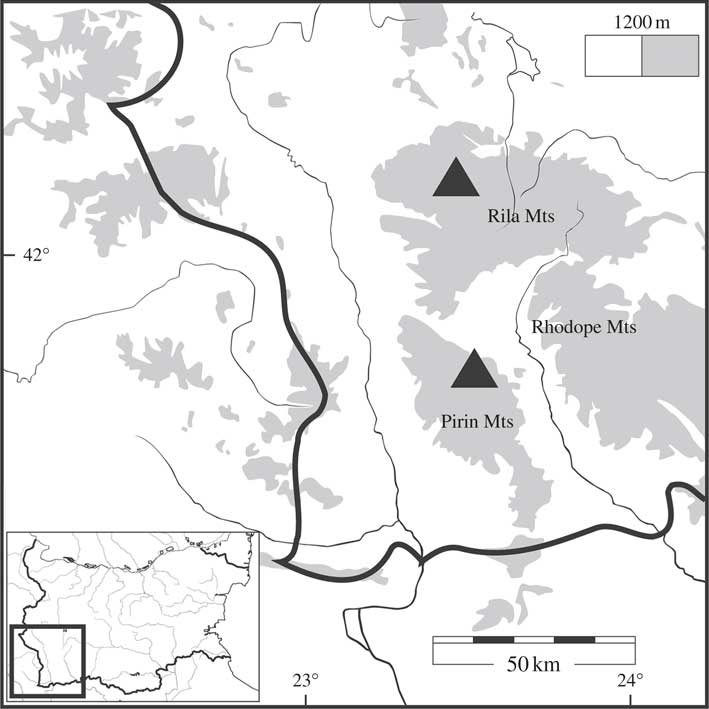
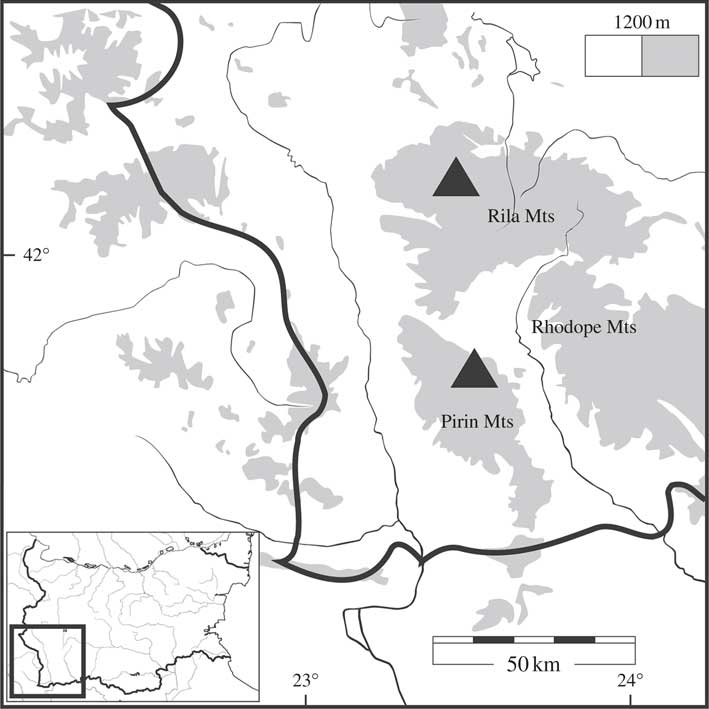
The study sites are within the catchments of the Demyanitsa and Malyovitsa Rivers, located in the Pirin and Rila Mountains respectively, from the coniferous belt to streams and glacial lakes in the alpine belt (Fig. 1). These are the highest Bulgarian mountain ranges, with a well-defined alpine belt usually above 2400 m (Bondev Reference Bondev1991).
Study locations in the Demyanitsa and Malyovitsa river catchment areas within the Pirin and Rila Mountains, Bulgaria.
Initially 27 herbarium specimens of freshwater Dermatocarpon taxa from Bulgaria, collected from both catchment areas by the first author between 2013 and 2016, were studied and deposited in the Mycological Collection of the Institute of Biodiversity and Ecosystem Research, Sofia (SOMF). Duplicates were deposited in the National History Museum, London (BM) and the Stuttgart State Museum of Natural History, Stuttgart (STU). Two voucher specimens of freshwater Dermatocarpon taxa from earlier Bulgarian studies, collected in 1952 (Zhelezova Reference Zhelezova1963) and in 1983 (Pišút Reference Pišút2001), were also revised.
In 2016, species distribution and the pH, conductivity and surface temperature of the water as well as surface temperature of the rock substratum were measured along altitudinal transects in both river systems. Twenty-six sites covering stretches of c. 50 m each were studied ranging from 1091–2420 m (Demyanitsa catchment) and 1328–2464 m (Malyovitsa catchment), with a higher density of sites at higher altitudes (>2000 m) where a network of trails allowed access to the rivers without causing damage to the vegetation in these protected areas. During a first visit after the snowmelt (June–July), measurements were carried out in all sites where Dermatocarpon species had been found in the transect studies and then repeated again before the first snowfall in early October. For the Dermatocarpon arnoldianum and D. rivulorum records in the Malyovitsa River, additional measurements were taken in August of the same year. The precise altitudinal distribution of D. arnoldianum was assessed from all observations, including sites where it was not possible to carry out environmental measurements. Stream beds in the study area consist of siliceous rocks (granite, gneiss, mica-schists) with the exception of two localities below 1500 m in the Demyanitsa River where marble was observed. The composition of the stream bed varies from cobbles to, most commonly, boulders of up to 2·5 m diam. and even bedrock. Conductivity, pH and surface temperature of the water were measured with a Hanna combo meter HI-98129 (Hanna Instruments, USA), calibrated monthly with GIB Pro Solutions (GIB Industries, Germany). The temperature of bare rock substratum which was adjacent to the lichen thalli was measured by an infrared thermometer JT-550C (Shenzhen Jingtengwei Industry Co., China). The accuracy of the infrared thermometer was tested before fieldwork with an alcohol-based thermometer (ISOLAB Laborgeräte GmbH, Germany). All measurements were made between 11:00 and 15:00 on the limited number of days with clear weather. Measurements at the 26 sites were made on two occasions: after snowmelt and before autumn snowfall. Note that not all measurements were made on the same day. Identification of specimens was carried out using a Windaus Labortechnik D-38678 dissecting microscope (Windaus-Labortechnik GmbH & Co., Germany) equipped with a Canon PowerShot A630 digital camera (Canon Inc., Japan). Anatomical characters were observed under a Boeco BM-180/T/SP microscope with a Boeco B-CAM10 digital camera (Boeckel GmbH & Co., Germany). The medulla and photobiont layers of all herbarium specimens were tested with freshly prepared Melzer’s reagent (Kirk et al. Reference Kirk, Cannon, Minter and Stalpers2008) and Lugol’s solution (Orange Reference Orange2013), and the reactions were observed under a compound microscope at ×640 magnification. DNA isolation from the Bulgarian specimens of Dermatocarpon and PCR with primers ITS1F and LR3 were carried out following Thüs & Nascimbene (Reference Thüs and Nascimbene2008).
At sites where D. rivulorum occurred in the Malyovitsa catchment, thallus diameter, total cover of thalli and cover of the largest thallus aggregates (colonies) were measured in addition to the abiotic factors listed above. Wet thalli of different sizes, but always including the largest individual at each site, were photographed with a scale in the field and a selection of them (including the largest thallus) were collected for measuring in the dry state. The total cover of thalli was measured within a 25×25 cm quadrat. Quadrat placement was carried out subjectively using the highest perceived cover at each location. Randomized selection was rejected as this led to only D. rivulorum being captured, in a single site and with negligible cover. The quadrat was photographed and total cover was calculated with ImageJ 1.51j8 (Schneider et al. Reference Schneider, Rasband and Eliceiri2012). The cover of individual colonies (aggregations of thalli without space between them), if present, was also measured in the same quadrat. Care was taken to leave viable colonies after collecting material for herbarium specimens. After air drying for six months, thalli of D. rivulorum were photographed with a Nikon D7200 digital camera (Nikon Inc., Japan) mounted on a tripod and controlled with digiCamControl 2.0.69.0 (http://www.digicamcontrol.com) and measured from these photographs using Carnoy 2.0 (Schols et al. Reference Schols, Dessein, D’hondt, Huysmans and Smets2002).
Results
A total of four taxa of Dermatocarpon were observed: Dermatocarpon arnoldianum, D. luridum, D. miniatum var. complicatum and D. rivulorum in the study areas (Table 1). We obtained full sequences of ITS1, 5.8S rRNA and ITS2 from two Bulgarian specimens of D. arnoldianum (Shivarov 000553724 (BM) and 000553725 (BM), GenBank Acc. nos. MH031273, MH031274) and one sequence from a specimen from Valyavitsa River (Shivarov 29511 (SOMF), GenBank Acc. no. MH027415) which exhibited the morphological and chemical characteristics of D. miniatum var. complicatum. This was the only other representative of the D. miniatum agg. at freshwater sites in the study area.
Number of sites in the Demyanitsa and Malyovitsa catchments with freshwater Dermatocarpon taxa together with the conductivity and pH for these sites. Range of altitude for each taxon based on all observations from 2013 to 2016

Total elevation range studied in Demyanitsa catchment=1091–2420m; total number of sites along the altitudinal transect=16. Total elevation range studied in Malyovitsa catchment=1328–2464 m; total number of sites along the altitudinal transect=10.
Morphological revision of herbarium samples supporting earlier records of D. rivulorum from Bulgaria revealed that these specimens belong to D. arnoldianum. Confirmed D. rivulorum was found only in the Malyovitsa River (Rila Mts) growing together with D. arnoldianum but in places with longer periods of submersion or closer to the water.
Of the 26 sites studied in the Demyanitsa and Malyovitsa River catchments, only eight were occupied by populations of freshwater Dermatocarpon taxa. The lowest occupied location was found at 2082 m in the Malyovitsa River catchment, still in the subalpine belt. No freshwater Dermatocarpon species were found in the coniferous forest zone (1091–1950 m and 1328–1840 m) in either catchment area.
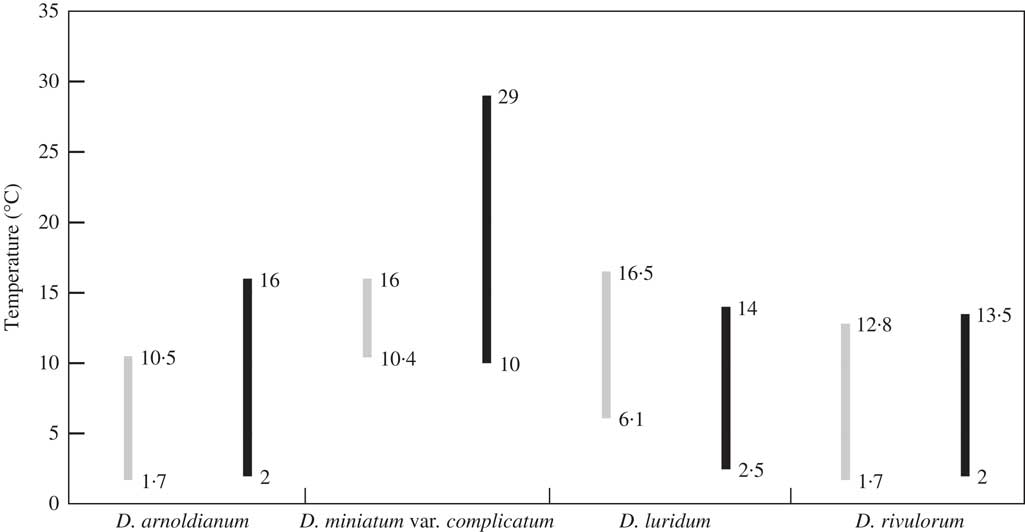
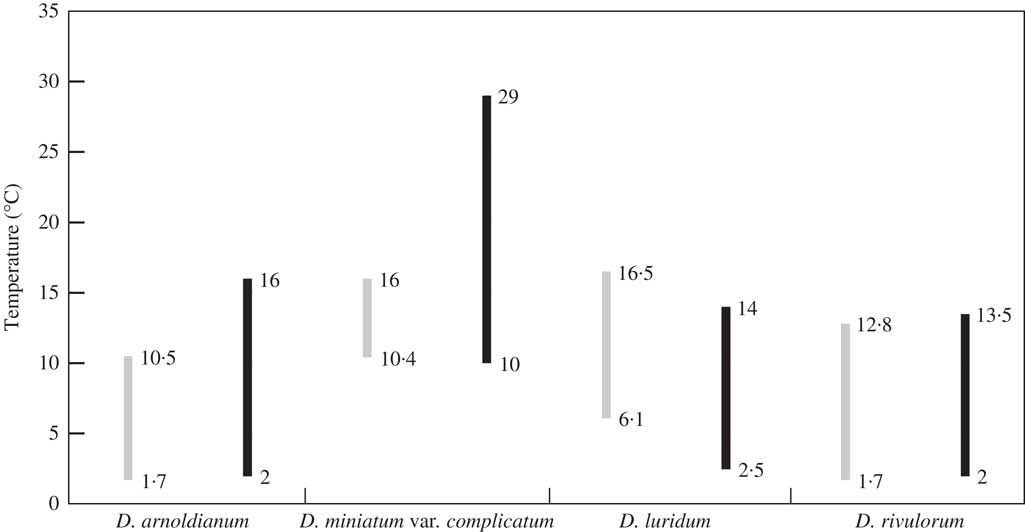
Common to all subaquatic Dermatocarpon was their occurrence at sites with high substratum stability. All thalli were restricted to large boulders in places with a shallow slope. We found a clear pattern of species-specific associations between occurrence and local temperature range (Fig. 2). Dermatocarpon rivulorum and D. arnoldianum were found only in microhabitats with relatively low water and rock surface temperatures. At its lowermost sites in the Malyovitsa River, D. arnoldianum was restricted to shaded microhabitats between rocks and the thalli were smaller than those at higher elevations. In contrast, D. luridum occurred in places with a wider temperature range. Dermatocarpon miniatum var. complicatum was found on the upper surface of a large rock in the water, with inundation for short periods during snowmelt and flooding. These exposed rocks could reach higher temperatures whereas at the same site, D. luridum was found in a shaded place with a rock surface temperature below that of the surface temperature of the water. At the single site in the Demyanitsa River catchment at which D. arnoldianum was found, the stream had a consistantly low water temperature (6·3–8°C); this site was close to one with both D. luridum and D. miniatum var. complicatum with higher water temperature (10·4–16 °C).
Variation of water (grey bars) and rock surface (black bars) temperatures at sites with Dermatocarpon from both the Demyanitsa and Malyovitsa river catchment areas. Number of measurements for both water and rock surface temperatures: Dermatocarpon arnoldianum, n=6; D. miniatum var. complicatum, n=2; D. luridum, n=8; D. rivulorum, n=6. Measurements at each site were made on two occasions during the snow-free season (see Materials and Methods).
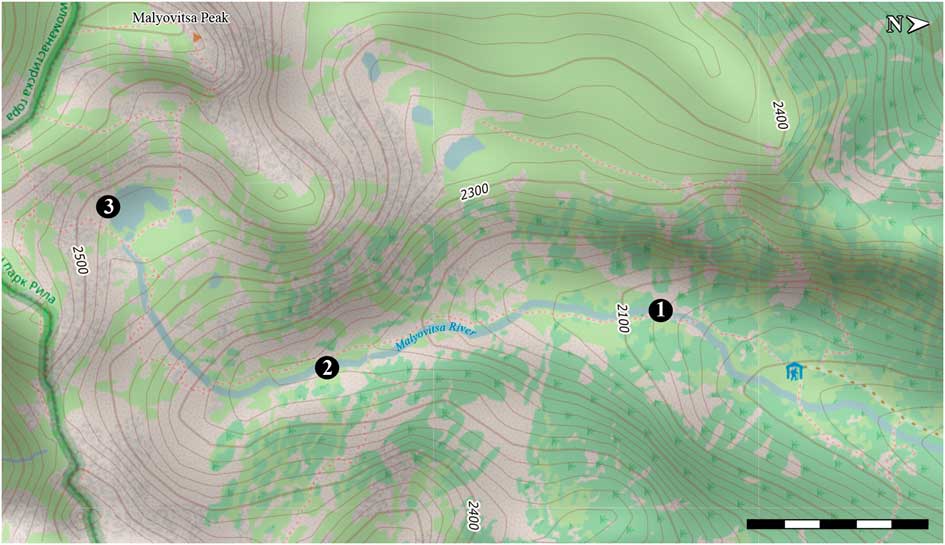
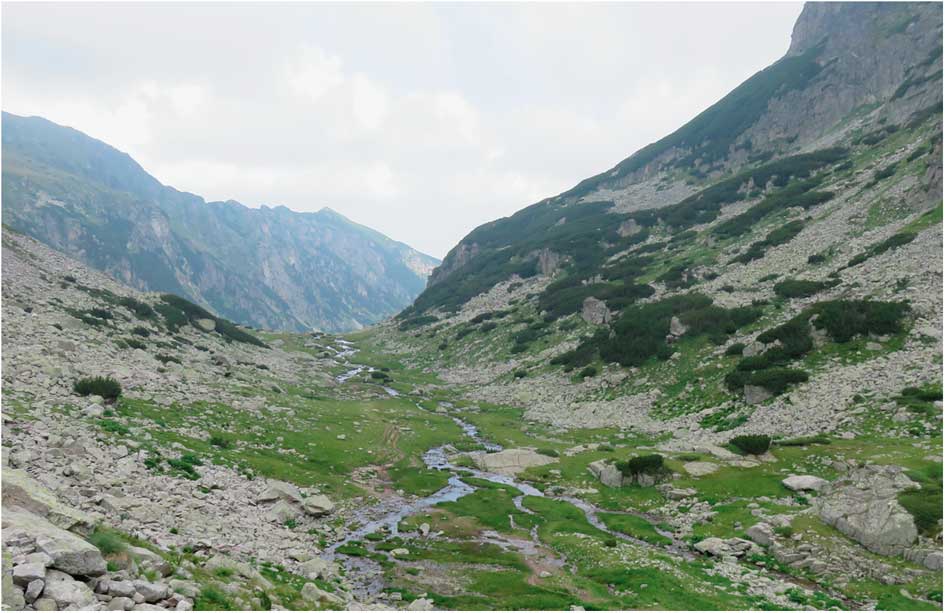
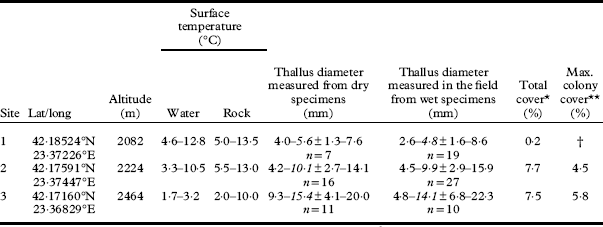
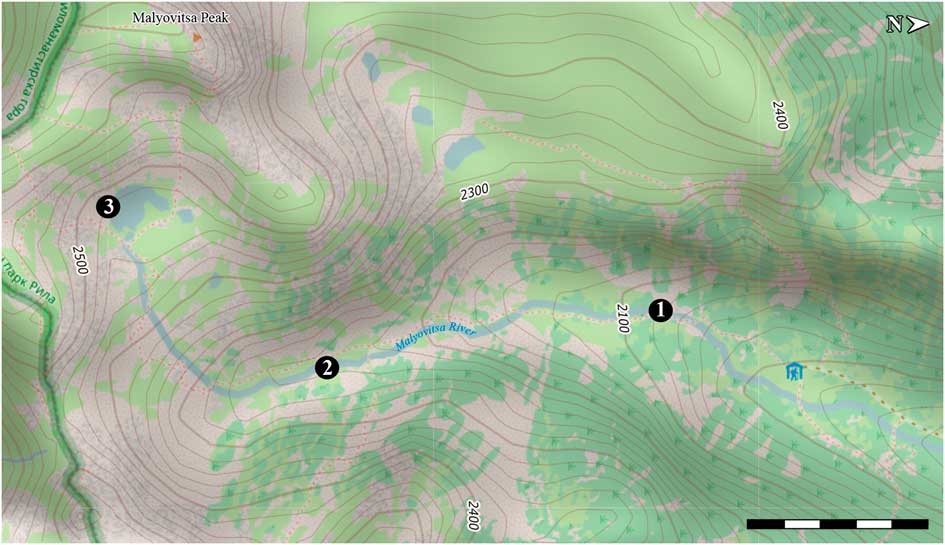
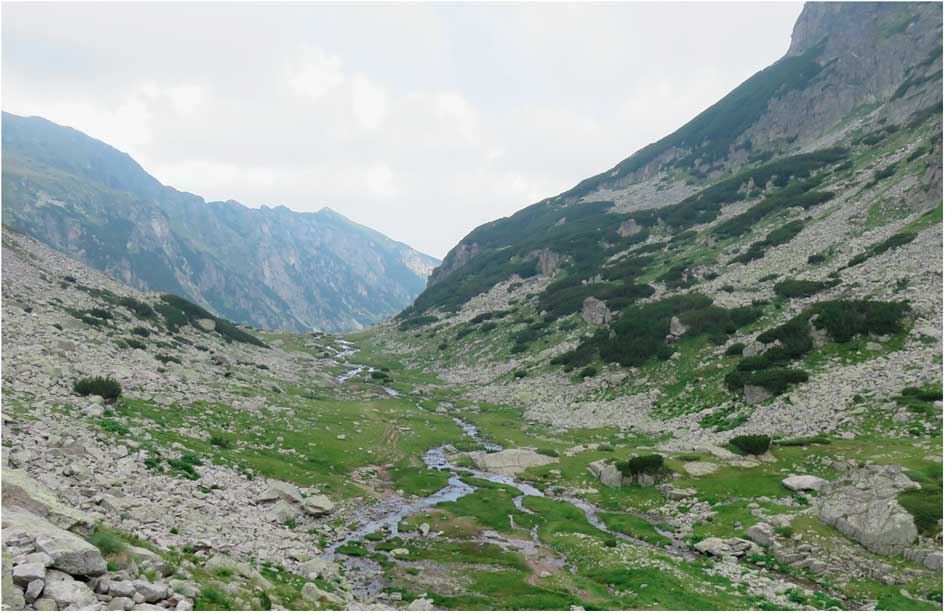
In the Malyovitsa River catchment, there was a trend for increasing D. rivulorum thallus diameter and colony size (aggregates of thalli) with decreasing surface temperature (Table 2). The upper study site of the Malyovitsa River catchment (site 3, Fig. 3) is a small area where a cold spring flows into a glacial lake. The highest temperatures were measured on 16 August 2016 at 12·57 p.m., with water and rock surface temperatures of 3·2°C and 10°C respectively. At the same time, several metres away from the spring area, water temperatures reached 17·7°C and rock surfaces 19°C. Outside of the cold water area, D. rivulorum and D. arnoldianum were absent. Dermatocarpon arnoldianum and D. rivulorum were frequently observed at site 2 which is situated in a narrow glacial valley enclosed by steep slopes which open only to the north, known locally as the ‘Second Ledge’ (Fig. 4). This site has lower temperatures owing to its aspect and geomorphology as well as the snow cover that can last up to eight months. Major differences were observed between the water temperature ranges in similar microhabitats and the occurrence of Dermatocarpon taxa in both catchment areas. In the Demyanitsa River catchment, D. rivulorum was absent and the range in water temperature was 6·1–16·5°C, while D. arnoldianum was found in a single site. In contrast, in the Malyovitsa River catchment, the range was 1·7–12·8°C and both species were locally abundant. There was little difference in the conductivity and pH of those sites where Dermatocarpon taxa were recorded (Table 1). Only D. arnoldianum was found at the site with the highest conductivity but no difference in pH was found between this site and those where D. arnoldianum and D. rivulorum co-occur.
Upper catchment area of the Malyovitsa River with the three sites where Dermatocarpon rivulorum was recorded (corresponding to the sites in Table 2). Map generated using Maperitive 2.4.1 (http://maperitive.net). Scale=500 m. In colour online.
Upper watercourse of the Malyovitsa River, a place locally known as the Second Ledge, where Dermatocarpon arnoldianum and D. rivulorum are abundant (corresponds to site 2 in Table 2). In colour online.
Thallus diameter, temperature range, total thallus cover and cover of the largest colony (aggregate) of Dermatocarpon rivulorum in the Malyovitsa river system. Thallus diameters are given in the form: min–mean±standard deviation–max, n=number of measurements
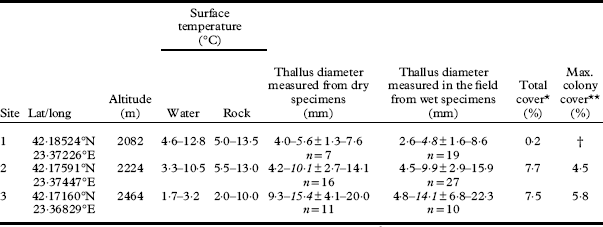
*The largest observed cover within quadrat with sides 25 cm (625 cm2). **Aggregations of thalli without space between them (colonies), if present the largest single colony measured in percentage cover within quadrat with sides 25 cm (625 cm2). † indicates only single dispersed thalli without aggregation.
Discussion
The most southerly European population of Dermatocarpon rivulorum is reported from Spain at an altitude of 3000 m a.s.l., where the species develops thalli with a maximum diameter of 6–15 mm (Egea et al. Reference Egea, Llimona and Casares1982). In the Nordic countries, the thallus size can be twice as large at (10–)13–30(–44)mm (Heiðmarsson Reference Heiðmarsson1998) and in the Scottish Highlands the species reaches 15–35 mm (Orange & Coppins Reference Orange and Coppins2009). In Central Europe, D. rivulorum is usually found only in high mountain ranges (Thüs & Schultz Reference Thüs and Schultz2008), whereas in Iceland it has also been found in the lowlands (Heiðmarsson Reference Heiðmarsson2001). We postulate that these small thalli are either physiologically more capable of surviving near the species limits or their size reflects a shorter lifespan with less time for individual thalli to reach their maximum size compared to those observed in the Nordic countries. Larson (Reference Larson1984) studied five species of Umbilicaria, each with large and small thallus sizes, and the physiological performance in both size classes. In four of the species, the smaller thalli showed a net photosynthesis rate that was several times higher than the one observed in large thalli but this pattern was found only in some of the species, and in Umbilicaria deusta (L.) Baumg. no significant difference was observed between thalli of different sizes. For all Dermatocarpon species, controlled laboratory experiments on the physiological response of differently sized thalli to various temperatures are still lacking, but such data are important for a better understanding of the basis for the observed association between thallus size and temperature in D. rivulorum.
Dermatocarpon arnoldianum was locally abundant in shaded sites where the largest thalli were found. It also occurred in sun-exposed places but with a smaller thallus diameter here. This shift in maximum size from sun-exposed to shaded conditions might reflect a risk of thermal stress in southern European mountain ranges. A comparison between the occurrence and population size of D. arnoldianum in the Malyovitsa River in Zhelezova (Reference Zhelezova1963) with our results indicates a possible upward shift in the lower altitude limit and a decrease in exposure tolerance. Zhelezova reported D. arnoldianum from an elevation of 2100 m (with an error margin of ±50 m) “on granite boulders all over the Malyovitsa River”. In 2016, more than 60 years later, the lowermost occurrence of D. arnoldianum was at 2140 m, with small isolated thalli in shaded microhabitats between rocks. In stretches from 2200–2240 m (site 2, Fig. 3) D. arnoldianum was still locally abundant and only here can Zhelezova’s description “all over the Malyovitsa River” be applied.
Although the description of the lower altitudinal limit and the range of occupied microhabitats in historical sources (1952–1963) is somewhat ambiguous, a comparison with current observations of D. arnoldianum in the Malyovitsa River points to a possible decrease in population size and a shift towards more shaded habitats at the lower edge of its altitudinal range. All localities are above the Malyovitsa Chalet (at 1960 m) and in a protected area without direct anthropogenic impact.
The observed change in the distribution and local ecology of D. arnoldianum since the 1950s is in accordance with the expected altitudinal shift in distribution of arctic-alpine lichens due to global warming (Insarov & Schroeter Reference Insarov and Schroeter2002). There is already evidence of a decline in cold tolerant, boreo-montane lichens and an increase in heat tolerant lichens with a warm-temperate to tropical distribution (Aptroot & van Herk Reference Aptroot and van Herk2007). Our study highlights the need for quantitative and precisely georeferenced baseline data for robust conclusions regarding climate change effects.
All taxa studied seem to have different ecological preferences. Factors such as substratum stability, sun exposure, water level and temperature variation may be important in habitat selection by Dermatocarpon species. Water velocity and turbulence might have a larger mechanical impact on Dermatocarpon compared to crustose lichens. It is difficult to quantify this impact because of the sporadic and seasonal occurrence of extreme weather events and the logistical challenges resulting from the remote and steep terrain which would require the installation and maintenance of permanent observation systems. In general, in our study areas all Dermatocarpon taxa occupied places with mostly low water velocity or they were restricted to places sheltered from high water flow. This might explain why lichens with a foliose thallus and a wide ecological amplitude such as Umbilicaria deusta were rare or completely absent in steep terrains with smooth river stones. The importance of stream bed stability for the composition and species richness of freshwater lichen communities has been demonstrated before (Gilbert & Giavarini Reference Gilbert and Giavarini1997; Thüs Reference Thüs2002). Our observations on inundation tolerance and light requirements for the taxa studied here correspond to the results from earlier reports (Keller & Scheidegger Reference Keller and Scheidegger1994; Orange & Coppins Reference Orange and Coppins2009).
Ecological Remarks and Taxonomic Comments
Dermatocarpon arnoldianum auct.
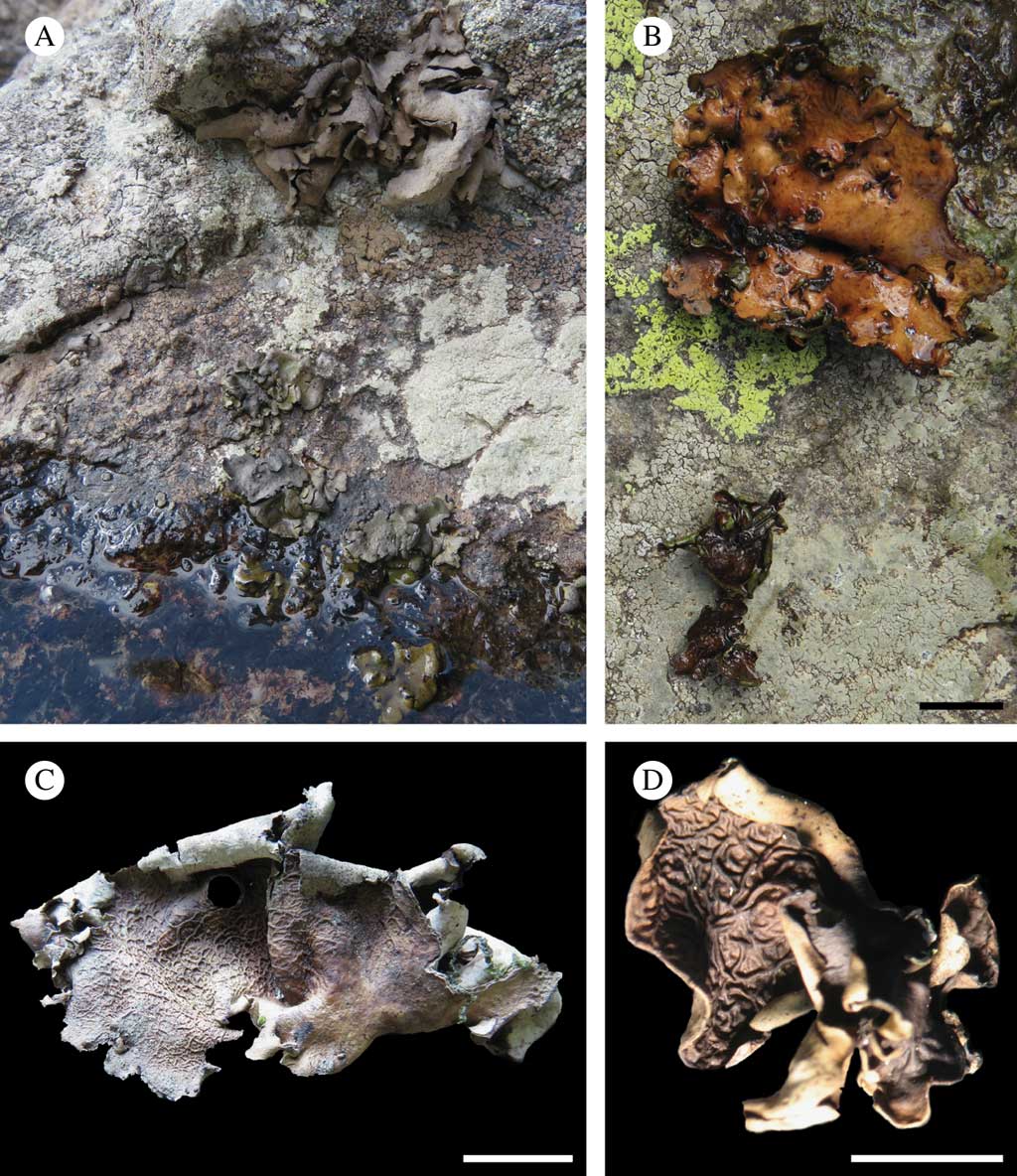
Dermatocarpon arnoldianum and D. rivulorum. A, numerous thalli of D. rivulorum close to the water line or permanently submerged, and a single large thallus of D. arnoldianum above in a rock crevice (photographed at a time of minimum water level); B, lower surfaces of moist thalli, photographed in the field, of D. arnoldianum (above, with large thallus) and D. rivulorum (below, with smaller thalli). C & D, lower surfaces of dried thalli; C, D. arnoldianum (SOMF 29514); D, D. rivulorum (SOMF 29501). Scales: A–C=10 mm; D=5 mm. In colour online.
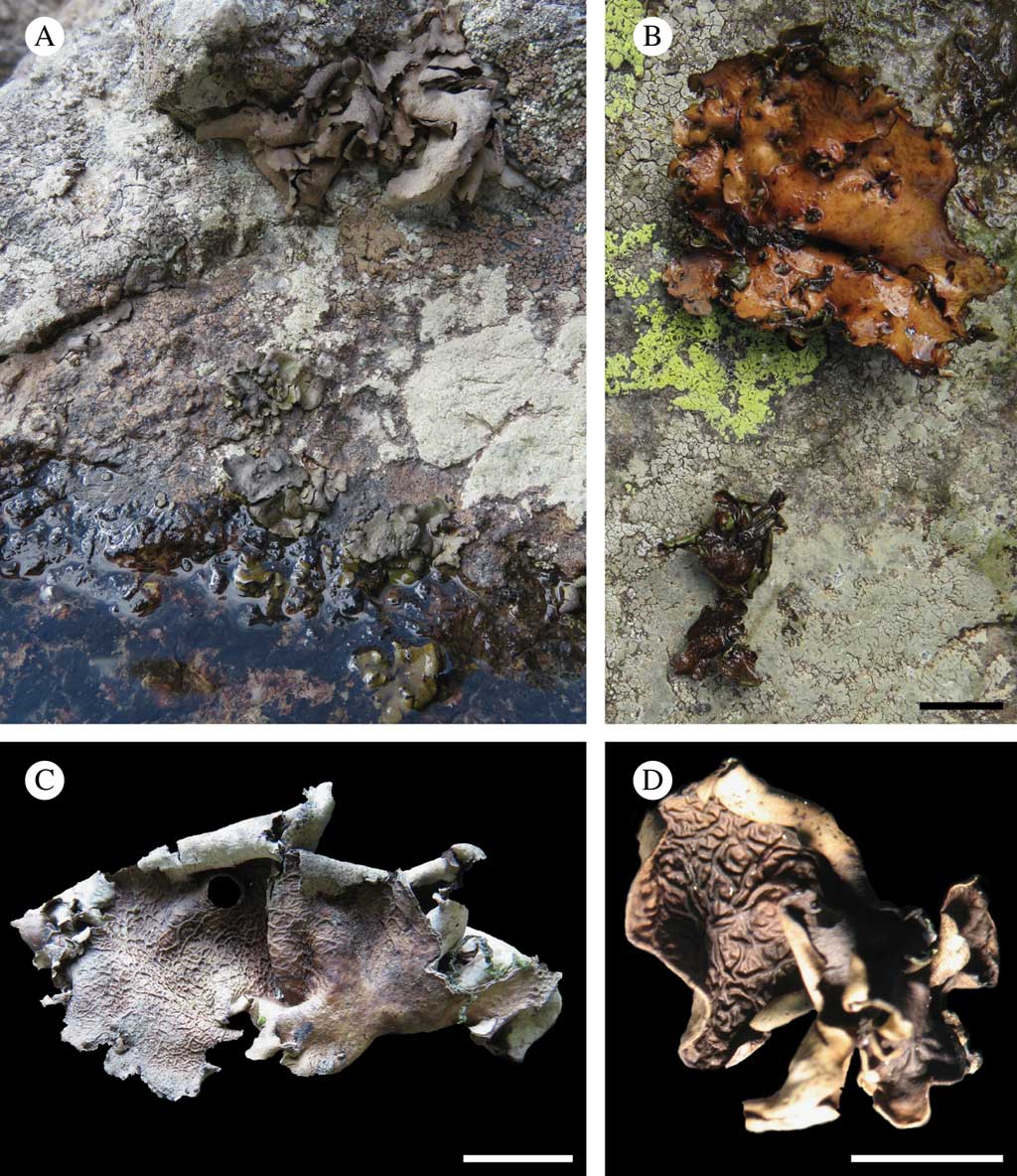
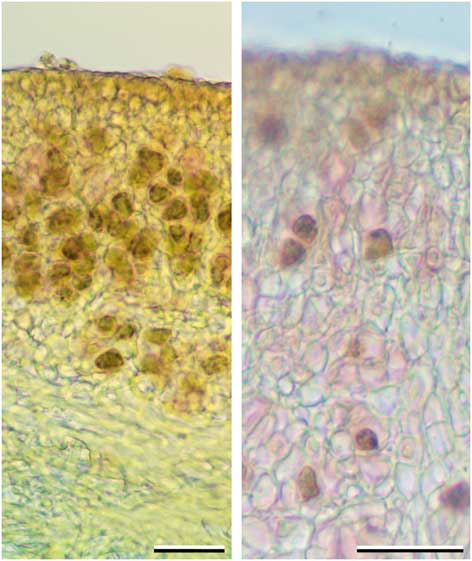
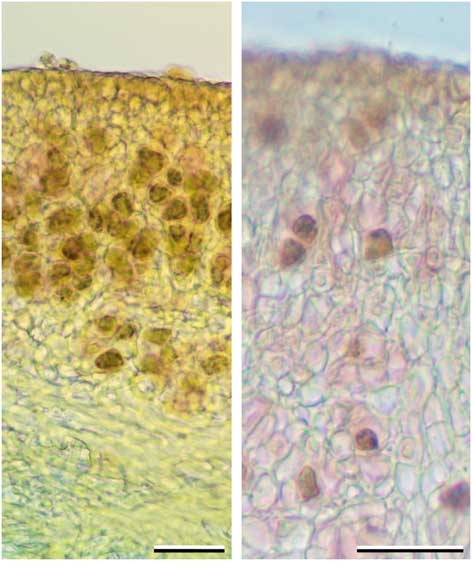
Amphibious species in cold water, rarely submerged. Well-developed thalli occur in shaded localities but the species also tolerates sun-exposed places. Restricted to an alpine environment, growing together with D. rivulorum, but is found more commonly in less frequently inundated sites (Fig. 5A). In Bulgaria D. arnoldianum can be separated in the field from D. rivulorum by the bright red-brown to pale yellowish lower surface and the thicker thalli. In thin section, all Bulgarian specimens gave a positive red-brown or pink reaction with Melzer’s reagent (Fig. 6). The reaction was observed only in the vicinity of algal cells and nearby fungal cells, and is clearest when observed using a microscope. The ITS sequences for Bulgarian specimens of D. arnoldianum are nearly identical to those published by Fontaine et al. (Reference Fontaine, Beck, Stocker-Wörgötter and Piercey-Normore2012) from the Alps and therefore can be seen as representatives of the same well-supported clade nested within the D. miniatum species aggregate.
Positive reaction with Melzer’s reagent (red-brown or pink) in the photobiont layer of Dermatocarpon arnoldianum auct. (SOMF 29497). Scale=25 μm.
Although the results of Fontaine et al. (Reference Fontaine, Beck, Stocker-Wörgötter and Piercey-Normore2012) indicate that D. arnoldianum auct. is part of the D. miniatum species complex, Heiðmarsson (Reference Heiðmarsson2001) points out that it cannot be D. arnoldianum Degel. since that name was introduced based on a Norwegian type that was most probably not genetically identical to the Central European collections of D. arnoldianum auct. The type does not show the specific iodine reaction of the Central European taxon and no sequences of it have ever been generated from Scandinavian representatives of the D. miniatum complex. Dermatocarpon arnoldianum auct. (non Degel.?) has a markedly higher requirement for cold climates compared to most other taxa in the D. miniatum group and is restricted to wet habitats. Due to its narrow ecological niche, combined with its small overall distribution range in the Alps and in the highest Bulgarian mountain ranges, it might be more threatened by climate warming than other varieties or species in the D. miniatum complex. We therefore propose to continue recognizing it as a distinct but informal taxon in Central and SE Europe until a full revision of the D. miniatum complex is accomplished. Apart from its ITS sequence, the iodine reaction appears to be a constant character which helps to separate it from large and thick representatives of other clades in the D. miniatum agg. Several clades in the D. miniatum agg. represent a morphology that corresponds to D. miniatum (L.) W. Mann var. miniatum but they cannot be separated from each other by these characters (Heiðmarsson Reference Heiðmarsson2003, Reference Heiðmarsson2017; Fontaine et al. Reference Fontaine, Beck, Stocker-Wörgötter and Piercey-Normore2012). In Bulgaria such forms are well separated both morphologically (by thinner thalli and a negative iodine reaction in the vicinity of algal cells) as well as ecologically from D. arnoldianum auct. They were found in Bulgaria mostly below 1000 m and some occupy rather dry calcareous rocky slopes (Shivarov Reference Shivarov2015). We compared the ITS sequences of two representative Bulgarian collections of these forms from sites at 403 m and 561 m (Shivarov 20 (SMNS-STU-F-0000278), GenBank Acc. no. MH027417; Shivarov 18 (SMNS-STU-F-0000280), GenBank Acc. no. MH027416) with data obtained from D. arnoldianum from freshwater sites at over 2200 m and found that the lowland collections shared only 95% identical base pairs in their ITS sequences with D. arnoldianum. We conclude that in Bulgaria D. arnoldianum auct. does represent a distinct taxon with specific ecological requirements distinct from other representatives of the D. miniatum group.
Selected specimens examined. Bulgaria: Rila Mts: catchment area of Malyovitsa River, in Malyovitsa River, (approx. 2050–2090 m), 1952, Zhelezova 24622 (SOMF) [sub Dermatocarpon rivulorum]; ibid., between the First and Second Ledge, on large boulder in the water, 42·18434°N, 23·37249°E, 2140 m, 2016, Shivarov 29499 (SOMF); ibid., the Second Ledge, on rocks of the river bank, 42·17591°N, 23·37447°E, 2224 m, 2013, Shivarov 29739 (SOMF); ibid., between rocks in a shaded place, periodically flooded by water, 42·17834°N, 23·37360°E, 2223 m, 2016 (BM000553724) dupl. ex Shivarov 29498 (SOMF); ibid., near the water, 42·17591°N, 23·37447°E, 2224 m, 2016 (BM000553725) dupl. ex Shivarov 29497 (SOMF); ibid., Elenino Lake, 42·17160°N, 23·36829°E, 2464 m, 2016, Shivarov 29751 (SOMF). Pirin Mts: catchment area of Demyanitsa River, in cold stream, 41·71244°N, 23·47013°E, 2197 m, 2016, Shivarov 29500 (SOMF); ibid., below Mt. Kamenitsa, on the bank of the stream Tretata Reka, 2000 m, 1983, Pišút 80119 (BRA) [sub Dermatocarpon rivulorum].
Dermatocarpon luridum (With.) J. R. Laundon
Subaquatic species characterized by its multi-lobed thallus with several holdfasts, epruinose upper surface and medulla turning red with Melzer’s reagent. Tolerant to a wide range of water temperatures and fluctuation in water level. Interestingly, this species was found at sites together with cyanobacteria and filamentous green algae, suggesting a higher tolerance of moderate eutrophication compared to most other freshwater lichens which was also found by Thüs (Reference Thüs2002). In the study area it occurs mostly on shaded surfaces. The restriction of this species to high altitudes in the study area is an exception compared to the overall distribution in Europe, where it occupies a wide altitudinal range and often occurs down to sea level. Dermatocarpon luridum is confirmed only from the Pirin Mts. In Bulgaria this species was formerly often confused with D. miniatum var. complicatum (Shivarov Reference Shivarov2015).
Selected specimens examined. Bulgaria: Pirin Mts: catchment area of Demyanitsa River, in Valyavitsa River, on large boulder, 41·71262°N, 23·46946°E, 2192 m, 2016, Shivarov 29509 (SOMF); ibid., in stream above Upper Valyavishko Lake, 41·70802°N, 23·49139°E, alt. 2420 m, 2016, Shivarov 29507 (SOMF).
Dermatocarpon miniatum var. complicatum (Lightf.) Th. Fr.
In its traditional circumscription by morphological and chemical characters this is a polyphyletic entity (Heiðmarsson Reference Heiðmarsson2003; Fontaine et al. Reference Fontaine, Beck, Stocker-Wörgötter and Piercey-Normore2012). Specimens which correspond to this taxon based on morphological and chemical characters occur across a wide variety of habitats in Bulgaria but they are more frequent in the higher mountains on wet boulders near water sources. They differ from D. luridum by a negative reaction to Melzer’s reagent, the presence of pruina and their slightly smaller ascospores. Dermatocarpon miniatum var. complicatum was found on a large, sun-exposed boulder in the Valyavitsa River, inundated only during snowmelt and flooding for short periods of time. It was found at a single locality during this study but the taxon is generally common above 2000 m in the Pirin and Rila Mountains (Shivarov Reference Shivarov2015). The ITS sequence which was obtained from one of the collected specimens (Shivarov 29511 (SOMF), GenBank Acc. no. MH027415) is similar to both sequences from vouchers named as D. luridum var. decipiens (Fontaine S11, Fontaine Pr39, GenBank Acc. nos. JX645041, JX645040) as well as a specimen identified as D. miniatum var. complicatum (Heiðmarsson SH50, GenBank Acc. no. AF333150). This result indicates that the morphological variation within this group is greater than the traditional range allowed for each of the two taxa, and further studies on the ecological and genetic basis for the development of morphologies similar to these two varieties within the D. miniatum group still need to be undertaken.
Selected specimen examined. Bulgaria: Pirin Mts: catchment area of Demyanitsa River, in Valyavitsa River, on large boulder, 41·71262°N, 23·46946°E, 2192 m, 2016, (SMNS-STU-F-0000279) dupl. ex Shivarov 29511 (SOMF).
Dermatocarpon rivulorum (Arnold) Dalla Torre & Sarnth.
A species restricted to sites with long periods of inundation and small fluctuations in water level, usually found in sun-exposed places. The thalli grow just above the water or completely submerged, even during the lowest water levels. Characterized by a thin thallus, long ascospores, occasionally with a single transverse septum, epruinose upper surface, epinecral layer of compressed type in the sense of Heiðmarsson (Reference Heiðmarsson1996), and a reticulate, brown to dark brown lower surface. The number of veins and their thickness can increase after long periods in the herbarium. Owing to the thin thallus, the perithecia and pycnidia are seen on the upper and lower surface as warts.
Selected specimens examined. Bulgaria: Rila Mts: catchment area of Malyovitsa River, in Malyovitsa River, 42·18524°N, 23·37226°E, 2082 m, 2013, Shivarov 28144 (SOMF); ibid., the Second Ledge, on rocks in the water, 42·17591°N, 23·37447°E, 2224 m, 2016, Shivarov 29512 (SOMF); ibid., Elenino Lake, 42·17160°N, 23·36829°E, 2464 m, 2016, Shivarov 29501 (SOMF).
Conclusions
We propose to include freshwater Dermatocarpon species in climate change monitoring programmes because these lichens are comparatively large, easy to observe in the field and reference sequences for all known taxa in Europe are available. The occurrence of D. rivulorum and D. arnoldianum auct., two extremely rare subalpine-alpine elements in the freshwater lichen communities of Bulgaria, was associated with lower temperatures than those of the other Dermatocarpon species studied. Also, our observations indicate that the maximum thallus size and the size of colonies (thallus aggregates) might represent useful features when assessing the viability of freshwater lichen populations, particularly when monitoring species in this genus. Further research is needed on the physiology of differently sized thalli of Dermatocarpon species and the population dynamics in permanently monitored sites in order to understand the mechanisms that link temperature and thallus size in freshwater Dermatocarpon.
Dermatocarpon rivulorum is widespread and locally common in the Nordic countries and in the Alps. It is also known from the Tatra Mountains, North America and Russia, and might be widespread in the cold uplands of the Northern Hemisphere. In Bulgaria, however, it is of conservation concern, known only from the upper part of the Malyovitsa catchment area. For D. arnoldianum auct., the new Bulgarian sites are the furthest occurrences to the south-east in Europe, the first occurrences outside of the Alps confirmed by DNA barcoding and they may represent the edge of the distribution range to the south. We expect these populations to be particularly vulnerable to environmental change, such as in climate or land use. Long-term monitoring of the southern populations of D. arnoldianum auct. and D. rivulorum is needed and thallus size should be included as a criterion for the health of the population.
VVS is grateful to Ms Adriana Atanassova (Karl-Franzens-University, Graz) and Dr Desislava Sopotlieva (Institute of Biodiversity and Ecosystem Research, Sofia) for providing literature. Mr Boyan Talev (Sofia) is acknowledged for assistance during post-editing of the maps. Parts of the molecular work on the Dermatocarpon specimens were carried out by HT during his employment at the Natural History Museum, London (NHM) and financial support for this study is acknowledged. This collaboration was initiated by a visit of VVS to the NHM on a SYNTHESYS-access grant by the European Commission. The fieldwork was financially supported by the Program for Career Development of Young Scientists, BAS. We are grateful to two anonymous referees for their helpful comments.