INTRODUCTION
Parasitic worms can cause severe harm and death of humans and animals. Helminths are arguably the most important parasites affecting livestock production throughout the world causing a range of disorders. Chemotherapy or chemoprophylaxis still remains the mainstay for control of worm parasites (Kaminsky et al. Reference Kaminsky, Rufener, Bouvier, Lizundia, Weber and Sager2013). However, the increased ability of worms to survive treatment presents a serious threat. Anthelmintic resistance has become a global phenomenon especially in gastrointestinal nematodes of farm animals (Kaminsky et al. Reference Kaminsky, Ducray, Jung, Clover, Rufener, Bouvier, Weber, Wenger, Wieland-Berghausen, Goebel, Gauvry, Pautrat, Skripsky, Froelich, Komoin-Oka, Westlund, Sluder and Mäser2008). In nematodes of small ruminants, e.g. in Haemonchus contortus, resistance to all classes of broad-spectrum anthelmintics has reached serious levels in many parts of the world, and reports of multiple-resistance to all major classes of anthelmintics are still increasing (Kaplan, Reference Kaplan2004).
Researchers have been focused for many years on understanding of parasitic diseases along with the mechanisms of resistance and the way in which resistance develops. Improved means of diagnosis and development of the effective management strategies can be used to conserve the efficacy of current anthelmintic classes. Until recently, anthelmintic chemotherapy was limited to three major chemical classes: the benzimidazoles, macrocyclic lactones and imidazothiazoles (Kaminsky et al. Reference Kaminsky, Ducray, Jung, Clover, Rufener, Bouvier, Weber, Wenger, Wieland-Berghausen, Goebel, Gauvry, Pautrat, Skripsky, Froelich, Komoin-Oka, Westlund, Sluder and Mäser2008). The emergence of parasites that are resistant to some or all of these compounds, however, suggests that the intensive use of these anthelmintics was not a sustainable approach. Anthelmintic resistance has been documented to all classes of anthelmintics and multi-class resistance exists in many sheep flocks (Besier and Love, Reference Besier and Love2003; Wrigley et al. Reference Wrigley, McArthur, McKenna and Mariadass2006; Kaminsky et al. Reference Kaminsky, Bapst, Stein, Strehlau, Allan, Hosking, Rolfe and Sager2011; Geudern et al. Reference Geudern, Hoste, Jacquiet, Traversa, Sotikari, Frangipane di Regalbono, Tzanidakis, Kostopoulou, Gaillac, Privat, Giangaspero, Zanardello, Noé, Vanimisetti and Bartram2014). The problem of anthelmintic resistance in gastrointestinal nematodes of small ruminants is worldwide (Fleming et al. Reference Fleming, Craig, Kaplan, Miller, Navarre and Rings2006). Haemonchus contortus, which infects ruminants and can cause anaemia and diarrhoea, and consequently loss of weight gain, wool growth, milk production and even death of animals, is nematode with observed resistance to different anthelmintics. There is substantial evidence that a parasite with resistance to one anthelmintic from a certain group is usually resistant also to other products from the same group (Waller, Reference Waller1997; Sangster and Gill, Reference Sangster and Gill1999; Wolstenholme et al. Reference Wolstenholme, Fairweather, Prichard, Samson-Himmelstjerna and Sangster2004). Moreover, multi-drug resistance to several anthelmintics from different classes has been developed and it has now become a major problem for small ruminant producers throughout the world. For this reason, there was an urgent need for new anthelmintic with a new mode of action which was able to overcome the resistance to the other available drugs.
DEVELOPMENT OF MOP
The increased drug-resistance, especially characteristic for nematodes, has contributed to the development of new anthelmintic class: amino-acetonitrile derivatives (AADs). It is a class of low molecular mass compounds bearing different aryloxy and aroyl moieties on an amino-acetonitrile core (Ducray et al. Reference Ducray, Gauvry, Pautrat, Goebel, Fruechtel, Desaules, Schorderet Weber, Bouvier, Wagner, Froelich and Kaminsky2008).
The first active compounds from AADs were detected in high-throughput screening programme, using a larval development assay (LDA) for H. contortus and Trichostrongylus colubriformis, and then tested in vivo in rodent model. Based on the initial results obtained with the lead molecule AAD-450, more than 700 different AAD molecules were generated and their potential anthelmintic activity was assessed. Out of this screening, the best molecules were selected for further testing in sheep and cattle. After of full battery of tests, AAD-1566 was selected for entering the industrial development phase (Kaminsky and Rufener, Reference Kaminsky, Rufener and Caffrey2012).
In 2009, the launch of this new class of anthelmintic to the market was a welcome development (Good, Reference Good, Diskin and McHugh2012). AAD-1566 was given the name monepantel (MOP; N-[(1S)-1-cyano-2-(5-cyano-2-trifluoromethyl-phenoxy)-1-methyl-ethyl]-4-trifluoromethylsulfanyl-benzoamide) by World Health Organization and it was introduced as an anthelmintic for sheep (Zolvix™, Novartis Animal Health) against the drug-resistant nematodes.
MODE OF ACTION
Over the past decades, through a better understanding of disease processes, the mechanism-based drug design has evolved with aim to produce drugs that interrupt the specific biochemical pathways by targeting certain enzymes or receptors (Lin and Lu, Reference Lin and Lu1997). There are two main types of anthelmintics: those that act more rapidly on membrane ion channels and those that act more slowly on intracellular biochemical processes (Robertson et al. Reference Robertson, Buxton, Puttachary, Williamson, Wolstenhome, Neveu, Cabaret, Chavret, Martin and Caffrey2012). Cholinergic agonists, cholinergic antagonists, allosteric modulators of GluCl channels, γ-aminobutyric acid agonists and SLO-1 potassium channel activators produce a rapid effect (about 3 h) and the remaining ß-tubulin ligands, chitinase inhibitors/ionophores, lipoxygenase inhibitors, SH ligands, pyruvate: ferredoxin oxidoreductase inhibitors and isothiocyanate-ATP/cholinesterase inhibitors kill the parasite more slowly (1–4 days) (Robertson et al. Reference Robertson, Buxton, Puttachary, Williamson, Wolstenhome, Neveu, Cabaret, Chavret, Martin and Caffrey2012). The modes of action of various anthelmintic are summarized in Table 1.
Modes of action of various anthelmintics

Nicotinic agonists represent the class of anthelmintics, which include tetrahydropyrimidines, imidazothiazoles as well as AADs.
The tetrahydropyrimidines mimic the activity of acetylcholine, a naturally occurring neurotransmitter that initiates muscular contraction. The worm is unable to feed and quickly starves. Tetrahydropyrimidines (e.g. morantel, pyrantel) can be used to treat gastro-intestinal nematodes, but they are not effective against the immature forms. They are ineffective against cestodes (tapeworms) and trematodes (liver flukes). Morantel is also ineffective against mucosal or arrested stages (Andrews et al. Reference Andrews, Blowey and Boyd2008).
Imidazothiazoles have a similar mode of action as pyrantel and morantel, causing spastic paralysis of the worms. The group currently includes only one drug – levamisole, discovered in 1966. Its precise mode of action has been carefully studied using body wall muscle preparation of Ascaris suum (Martin et al. Reference Martin, Verma, Levandoski, Clark, Qian, Stewart and Robertson2005). Levamisole works well against a broad spectrum of adult worms, and it is particularly effective against lungworm. However, it is less effective against the immature stages (e.g. L4 larvae). Signs of levamisole toxicity in animals, including salivation, hypermotility of the alimentary tract, frequent urination and defecation, broncho constriction, bradycardia, slow heart rate and muscle tremors with occasional death were reported (Hsu, Reference Hsu1980; Abdelsalam, Reference Abdelsalam1986; Lanusse et al. Reference Lanusse, Alvarez, Sallovitz, Mottier, Sanchez Bruni, Riviere and Papich2009).
AADs have a novel mode of action involving a unique, nematode-specific clade of nicotinic acetylcholine receptor (nAChR) subunits. This mode of MOP action was firstly described by Kaminsky et al. (Reference Kaminsky, Ducray, Jung, Clover, Rufener, Bouvier, Weber, Wenger, Wieland-Berghausen, Goebel, Gauvry, Pautrat, Skripsky, Froelich, Komoin-Oka, Westlund, Sluder and Mäser2008) in Caenorhabditis elegans and H. contortus. AADs cause hypercontraction of the body wall muscles leading to paralysis, spasmodic contractions of the anterior portion of the pharynx and ultimately death of adult nematodes. AAD-exposed C. elegans also exhibited moulting defects and large vacuoles, characteristic for necrosis, are developed (Kaminsky et al. Reference Kaminsky, Ducray, Jung, Clover, Rufener, Bouvier, Weber, Wenger, Wieland-Berghausen, Goebel, Gauvry, Pautrat, Skripsky, Froelich, Komoin-Oka, Westlund, Sluder and Mäser2008). The genetic screening performed with C. elegans allowed the identification of the molecular target for MOP action – the nAChR subunit ACR-23 (Kaminsky and Rufener, Reference Kaminsky, Rufener and Caffrey2012). The discovery of ACR-23 in C. elegans subsequently allowed a search for homologous proteins in H. contortus. A further study identified several independent mutations in monepantel-1 gene (Hco-mptl-1) from H. contortus mutants with reduced sensitivity for MOP, implicating MPTL-1 protein as a major target candidate for AADs action in this species (Rufener et al. Reference Rufener, Mäser, Roditi and Kaminsky2009). To better understand the mode of action of the AADs, Rufener et al. (Reference Rufener, Keiser, Kaminsky, Mäser and Nilsson2010a ) performed comparative genomics of all ligand-gated ion channel genes from a range of organisms, including members from all nematode clades. They confirmed that Hco-mptl-1 orthologue detection predicts MOP sensitivity, and ACR-23/MPTL-1 orthologue is the primary target and belongs to a unique, nematode-specific DEG-3 sub-family of nAChR subunits. MOP acts as a positive allosteric modulator of this receptor subunit, which is forced to open on stimulus but cannot close again, resulting in a constant uncontrolled flux of ions and finally in a depolarization of muscle cells leading to paralysis (Rufener et al. in Epe and Kaminsky, Reference Epe and Kaminsky2013). Rufener et al. (Reference Rufener, Keiser, Kaminsky, Mäser and Nilsson2010a ) also found that some nematode species lack ACR-23/MPTL-1 and predicted them to be MOP insensitive. Caenorhabditis nematodes equipped with ACR-23/MPTL-1 receptor subunits were found susceptible to MOP, whereas Pristionchus pacificus, closely related to these worms but lacking an ACR-23/MPTL-1 homologue, was tolerant. The parasitic nematode Strongyloides ratti, which has only a remote homologue of DES-2 and ACR-23/MPTL-1, was also tolerant to MOP. Pristionchus pacificus is rather insensitive to MOP with an EC50 of 43 μ m. Furthermore, in vitro test with S. ratti, bearing an early branching relative of ACR-20/ACR-23/MPTL-1, showed that MOP lacks activity against S. ratti. A survival rate of 69% was observed after 72 h even with the highest tested concentration (250 μ m) (Rufener et al. Reference Rufener, Keiser, Kaminsky, Mäser and Nilsson2010a ). MOP shows an excellent tolerability in mammals and it is also active against multidrug-resistant parasites, indicating that its molecular target is absent or inaccessible in the host and is different from those of the classic anthelmintics (Rufener et al. Reference Rufener, Baur, Kaminsky, Mäser and Sigel2010b ).
MOP TOXICITY AND PHARMACOKINETICS IN MAMMALS
Acute toxicity studies demonstrated that MOP has low acute oral and dermal toxicity in rats (LD50s both >2000 mg kg−1 body weight (bw)). Other safety pharmacological studies in rats indicate that MOP does not exert negative effects at a dose of 2000 mg kg−1 bw (APVMA, 2010). The recommended dose of MOP is 2·5 mg kg−1 bw in sheep and 3·75 mg kg−1 bw in goats. This dose is effective against all major gastrointestinal nematodes, including those that are resistant to benzimidazoles, imidazothiazole and macrocyclic lactones, and a recent commercialized combination of derquantel and abamectin (Kaminsky et al. Reference Kaminsky, Bapst, Stein, Strehlau, Allan, Hosking, Rolfe and Sager2011).
Pharmacokinetic studies of MOP and its main metabolite MOP sulfone (MOP.SO2) were performed in three studies using 20, 32 and 36 helminth-naive lambs (4–8 months of age, mixed-sex and weighing 30–50 kg). The animals were allocated to several different groups based on sex, breed, dose and administration of MOP (Karadzovska et al. Reference Karadzovska, Seewald, Browning, Smal, Bouvier and Giraudel2009; Hosking et al. Reference Hosking, Kaminsky, Sager, Karadzovska, Seewald, Giraudel and Vercruysse2010b , Reference Hosking, Stein, Karadzovska, House, Seewald and Giraudel c ). In the first study, sheep (mixed-sex) were divided into three groups based on route of administration (per oral by a conventional drenching technique, intra-ruminal and intra-abomasal injection, in the same dose 0·8 mg kg−1) (Hosking et al. Reference Hosking, Stein, Karadzovska, House, Seewald and Giraudel2010c ). In the second study, MOP was administered intravenously to sheep of both sex and different breed (Merino lambs and Dorset (1/2)×Border Leicester (1/4)×Merino (1/4) cross lambs) (Hosking et al. Reference Hosking, Kaminsky, Sager, Karadzovska, Seewald, Giraudel and Vercruysse2010b ). In the third study, MOP and its main metabolite MOP.SO2 were administered to sheep (cross-bred and mixed-sex) in different doses (1 mg kg−1 of 0·5% (w/v) MOP and MOP.SO2 by intravenous injection and 1, 3 or 10 mg kg−1 of a 2·5% (w/v) solution of MOP oral administration) (Kinsella et al. Reference Kinsella, Byrne, Cantwell, McCormack, Furey and Danaher2011).
Blood samples (all three studies) and fecal samples (only third study) were collected in various times. Blood samples were collected by jugular venepuncture from each animal into tubes containing the anticoagulant ethylenediaminetetraacetic acid (EDTA). Sampling times varied among the studies (Karadzovska et al. Reference Karadzovska, Seewald, Browning, Smal, Bouvier and Giraudel2009; Hosking et al. Reference Hosking, Kaminsky, Sager, Karadzovska, Seewald, Giraudel and Vercruysse2010b , Reference Hosking, Stein, Karadzovska, House, Seewald and Giraudel c ; Kinsella et al. Reference Kinsella, Byrne, Cantwell, McCormack, Furey and Danaher2011). Fecal samples were collected using bag attached over the anus of the animal. Analytical procedures and chromatographic conditions of blood and feces samples are described in detail by Karadzovska et al. (Reference Karadzovska, Seewald, Browning, Smal, Bouvier and Giraudel2009).
Total blood clearance (1·49 Lkg−1 h) of MOP was relatively high after intravenous administration and it was not possible to determine the terminal half-life of parent drug. The bioavailability of MOP after its oral administration (1 mg kg−1 of animal mass) was approximately 31%. The presence of drug in blood after oral administration of MOP to sheep at doses of 1, 3 and 10 mg kg−1 was more prolonged than after intravenous administration. MOP.SO2 was detected at 1 h after administration and at 4 h, its concentration was greater than that of the parent compound, with maximal concentrations being observed at 24 h. When MOP was administered orally at the dose 10 mg kg−1, observed T max of parent drug was shorter than T max of MOP in animals with lower MOP doses. C max and area under the curve (AUC) of parent drug increased depending on increasing doses (Karadzovska et al. Reference Karadzovska, Seewald, Browning, Smal, Bouvier and Giraudel2009).
In the orally treated sheep, MOP exhibited a higher C max and greater AUC than in the sheep with intra-ruminal and intra-abomasal way of MOP administration. Similar results were observed for the MOP.SO2: sheep treated orally had greater values of all pharmacokinetic parameters. The higher plasma concentrations of MOP and MOP.SO2 observed in the orally treated lambs compared with the lambs treated by intra-ruminal or intra-abomasal administration may be the basis for the better efficacy of oral-administered MOP, and hence a reason why oral treatment with a suitable drenching technique is recommended (Hosking et al. Reference Hosking, Stein, Karadzovska, House, Seewald and Giraudel2010c ).
When pharmacokinetics of MOP was compared in male and female lambs, only AUC of MOP.SO2 significantly differed between genders (males had a greater value than females) and no other significant differences in pharmacokinetic parameters were found.
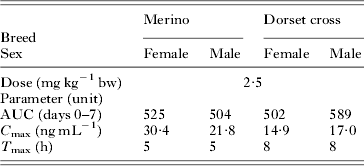
In terms of the effect of breed on pharmacokinetics of MOP, Merino sheep had a significantly higher C max and lower T max compared with the Dorset cross lambs. There were no significant differences in the AUC (Hosking et al. Reference Hosking, Kaminsky, Sager, Karadzovska, Seewald, Giraudel and Vercruysse2010b ). The MOP and MOP.SO2 pharmacokinetic parameters are summarized in Tables 2 and 3.
Pharmacokinetic parameters after different routes and doses of administration of MOP and MOP.SO2

Pharmacokinetic parameters of MOP between different breed and sex of sheep

Concerning MOP elimination, a rather small fraction of the parent drug (3·7%) is excreted via feces and the remaining drug is mainly converted to the sulfone metabolite. Besides sulfoxidation to MOP.SO2, parent drug is also metabolized via other pathways and eliminated as other MOP metabolites (Karadzovska et al. Reference Karadzovska, Seewald, Browning, Smal, Bouvier and Giraudel2009, Stuchlíková et al. Reference Stuchlíková, Jirásko, Vokřál, Valát, Lamka, Szotáková, Holčapek and Skálová2014).
MOP METABOLISM
Safe and effective therapy and limitation of drug–drug interactions require detailed knowledge of drug metabolism in target species. Biotransformation of MOP was studied in small ruminants in vivo (in feces, urine, muscle, milk and blood) and in vitro in primary culture of ovine hepatocytes using liquid chromatography/mass spectrometry method (LC/MS) (Karadzovska et al. Reference Karadzovska, Seewald, Browning, Smal, Bouvier and Giraudel2009; Kinsella et al. Reference Kinsella, Byrne, Cantwell, McCormack, Furey and Danaher2011; Stuchlíková et al. Reference Stuchlíková, Jirásko, Vokřál, Lamka, Špulák, Holčapek, Szotáková, Bártíková, Pour and Skálová2013, Reference Stuchlíková, Jirásko, Vokřál, Valát, Lamka, Szotáková, Holčapek and Skálová2014).
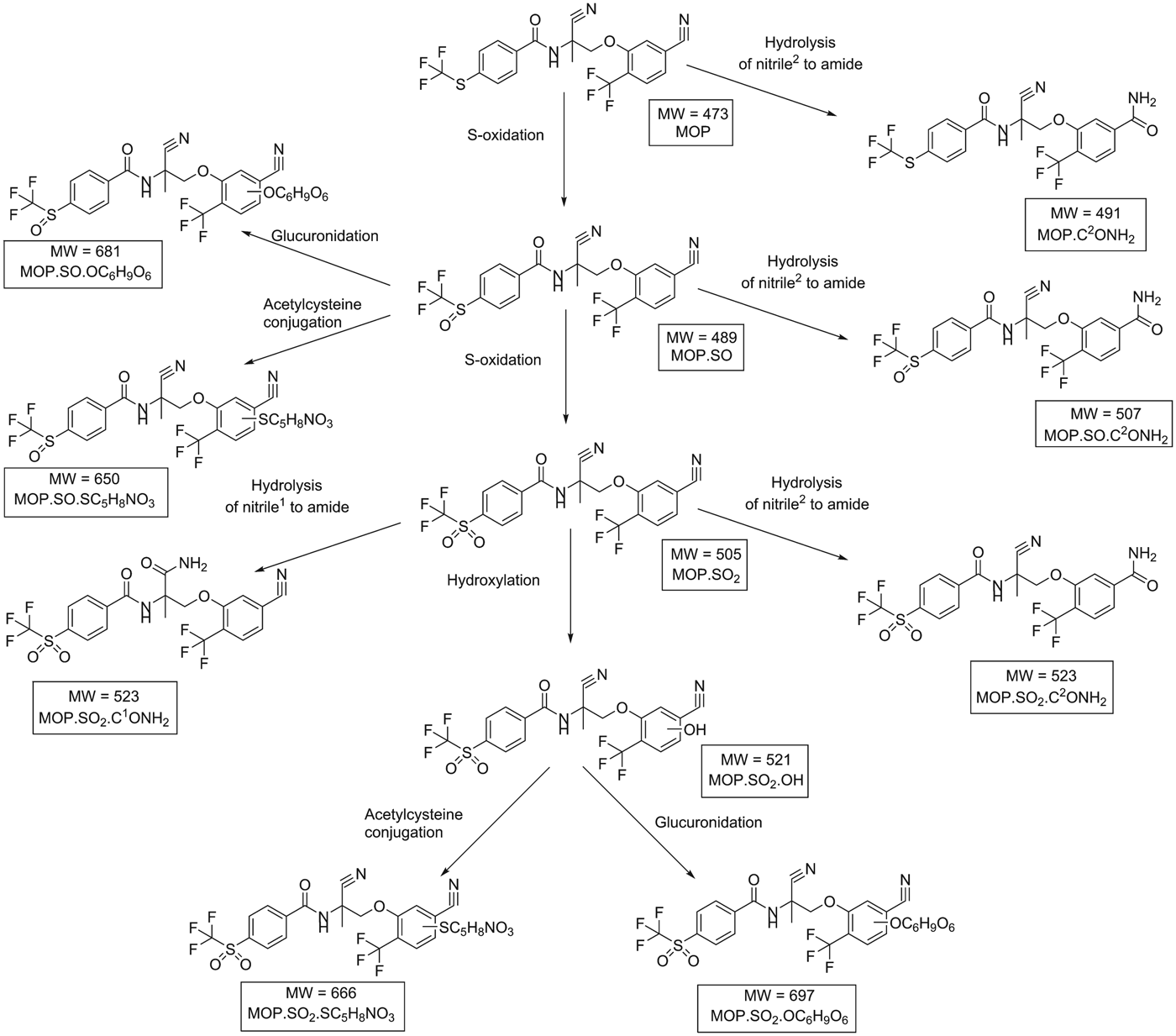
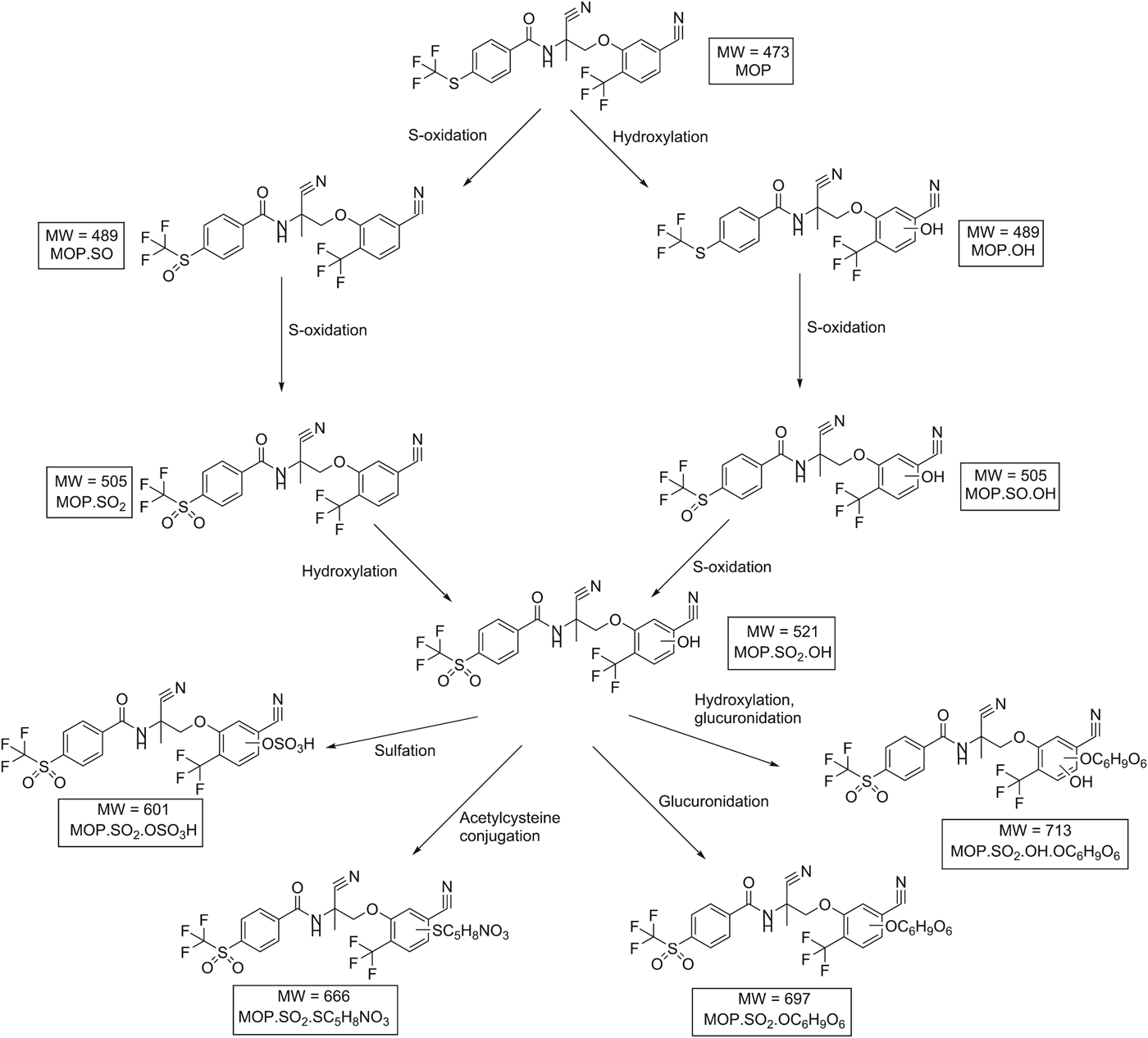
MOP.SO2 represents the main MOP metabolite in small ruminants. Kinsella et al. (Reference Kinsella, Byrne, Cantwell, McCormack, Furey and Danaher2011) described conditions of high-performance liquid chromatography (HPLC)/MS methods for measurement of MOP and MOP.SO2 in biological samples. HPLC/MS is usually a method of choice for the metabolic studies due to high sensitivity and structural information even for trace metabolites in highly complex matrices (Holčapek et al. Reference Holčapek, Kolářová and Nobilis2008). The on-going development of LC/MS/MS techniques including ultra-HPLC (UHPLC) has opened up new strategies for veterinary drug residue methods (Kinsella et al. Reference Kinsella, Byrne, Cantwell, McCormack, Furey and Danaher2011; Vokřál et al. Reference Vokřál, Jirásko, Jedličková, Bártíková, Skálová, Lamka, Holčapek and Szotáková2012a , Reference Vokřál, Jedličková, Jirásko, Stuchlíková, Bártíková, Skálová, Lamka, Holčapek and Szotáková2013a ; Holčapek et al. Reference Holčapek, Jirásko and Lísa2012). This technique allowed the identification of several other MOP metabolites in sheep in vitro as well as in vivo (Stuchlíková et al. Reference Stuchlíková, Jirásko, Vokřál, Lamka, Špulák, Holčapek, Szotáková, Bártíková, Pour and Skálová2013, Reference Stuchlíková, Jirásko, Vokřál, Valát, Lamka, Szotáková, Holčapek and Skálová2014). The proposed scheme of MOP metabolic pathway in sheep in vivo and in vitro is demonstrated in Figs 1 and 2, respectively. Described data showed that MOP can be metabolized via two-step S-oxidation, hydroxylation, hydrolysis, sulfation, glucuronidation and conjugation with glutathione. MOP conjugates with glutathione are rapidly hydrolysed leading to detection of MOP-acetylcysteine conjugates (Stuchlíková et al. Reference Stuchlíková, Jirásko, Vokřál, Lamka, Špulák, Holčapek, Szotáková, Bártíková, Pour and Skálová2013).
Scheme of metabolic pathways of MOP in sheep in vivo.

Scheme of metabolic pathways of MOP in sheep in vitro.

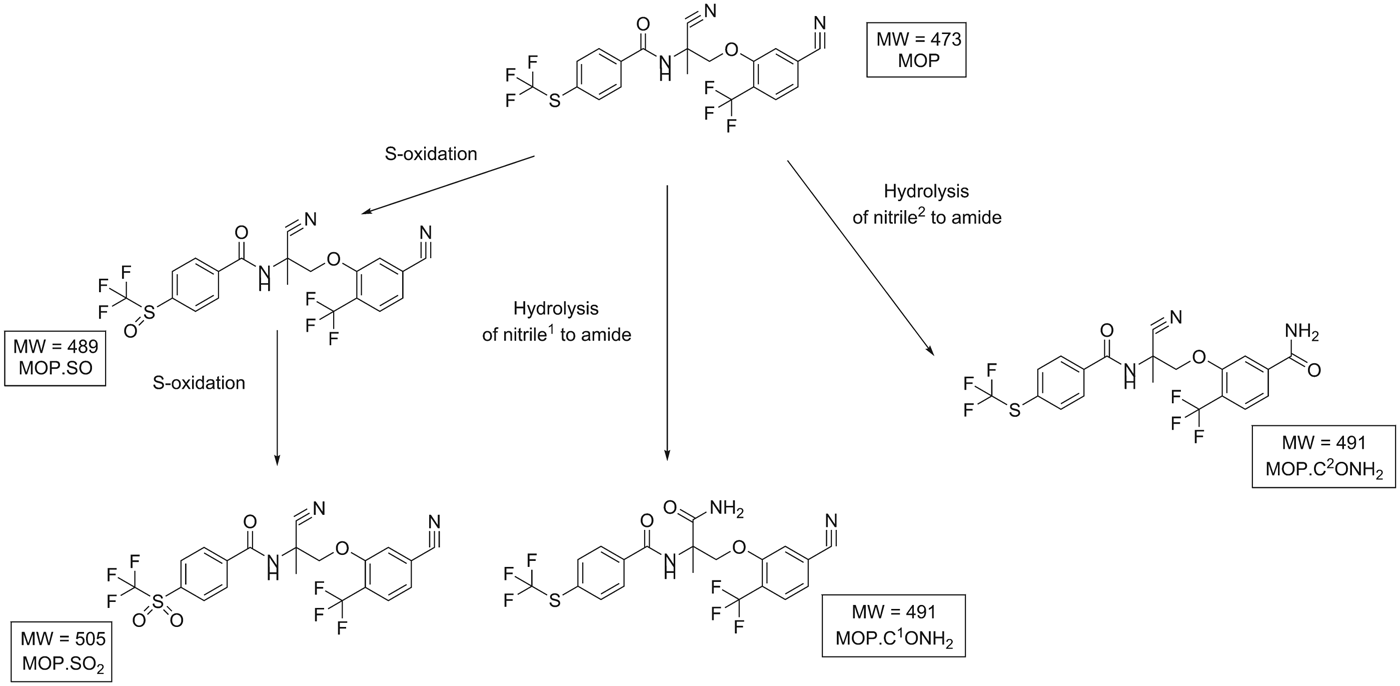
MOP metabolism was also studied in helminths ex vivo (Stuchlíková et al. Reference Stuchlíková, Jirásko, Vokřál, Valát, Lamka, Szotáková, Holčapek and Skálová2014). The susceptible strain Inbreed Susceptible Edinburgh (ISE) and resistant strain White River (WR) of H. contortus were used. Obtained results (see Fig. 3) demonstrate the ability of parasite to metabolize MOP using Phase I biotransformation enzymes. Four metabolites were found in the homogenate of WR strain nematodes, but only three metabolites were detected in the ISE strain. Similarly, two MOP metabolites were observed in the medium from the incubation of WR strain nematodes, but no metabolite was detected in the medium of ISE strain. This finding indicates that resistant nematodes have more types and/or more active MOP biotransformation enzymes than the susceptible ones. Similar results were obtained for albendazole and flubendazole. These results too showed that the resistant strains possessed a higher ability to deactivate toxic xenobiotics than the susceptible strain (Vokřál et al. Reference Vokřál, Bartíková, Prchal, Stuchlíková, Skálová, Szotáková, Lamka, Várady and Kubíček2012b , Reference Vokřál, Jirásko, Stuchlíková, Bártíková, Szotáková, Lamka, Várady and Skálová2013b ). Comparing Figs 1–3, the marked differences in MOP metabolism in parasites and their host are evident. Although helminths are able to metabolize drugs including MOP, their options for biotransformation are probably limited in comparison to mammals (Cvilink et al. Reference Cvilink, Lamka and Skálová2009).
Scheme of metabolic pathways of MOP in H. contortus ex vivo.

All metabolites of MOP, its elemental composition, molecular weights, description of metabolite formation and presence in individual samples are summarized in Table 4.
List of metabolites of MOP biotransformation samples detected by UHPLC/MS/MS with their molecular weights, elemental composition, description of metabolite formation and presence in individual samples

MOP EFFICACY STUDIES
Model organism
As the first multi-cellular organism whose genome was completely assembled, C. elegans is fundamental in medical research especially within the fields of cancer, ageing, neurobiology and parasitology (Parkinson et al. Reference Parkinson, Mitreva, Whitton, Thomson, Daub, Martin, Schmid, Hall, Barrell, Waterston, McCarter and Blaxter2004). As outlined earlier, this non-parasitic model organism was used for investigating of MOP mode of action using a forward genetics approach. The resistance-breaking activities of the AADs in C. elegans confirmed that these compounds act by a novel mode of action, different from those of the currently used anthelmintics (see in previous section ‘Mode of action’).
Ruminant parasites
The evaluation of AADs has been based on many in vitro assays and efficacy and tolerability studies in rodents, sheep and cattle (Kaminsky et al. Reference Kaminsky, Ducray, Jung, Clover, Rufener, Bouvier, Weber, Wenger, Wieland-Berghausen, Goebel, Gauvry, Pautrat, Skripsky, Froelich, Komoin-Oka, Westlund, Sluder and Mäser2008). In general, rodent models are employed during the lead optimization phase, and have the advantages, in most cases, of reduced compound requirements, shorter study duration and lower costs when compared with studies in the target species (Fankhauser et al. Reference Fankhauser, Cozzie, Nare, Powell, Sluder, Hammerland and Caffrey2012). Optimization of AADs molecules was pursued using a rodent model (Meriones unguiculatus) infected by H. contortus and T. colubriformis. Out of this screening, the better molecules were selected for further testing in sheep and cattle (Kaminsky and Rufener, Reference Kaminsky, Rufener and Caffrey2012).
From various suitable compounds of this anthelmintic group, the MOP was able to eliminate many tested pathogenic nematode species, both at fourth larval and adult stages. Australian Pesticides and Veterinary Medicines Authority (APVMA) in ‘Public Release Summary on the Evaluation of the New Active Monepantel in the Product Zolvix Monepantel Broad Spectrum Oral Anthelmintic for Sheep’ (2010) listed species of parasites susceptible to MOP: barber's pole worm H. contortus, small brown stomach worms Teladorsagia (Ostertagia) circumcincta, Teladorsagia (Ostertagia) trifurcata, Teladorsagia (Ostertagia) davtiani, black scour worms T. colubriformis, Trichostrongylus vitrinus, Trichostrongylus rugatus, Trichostrongylus axei, thin-necked intestinal worms Nematodirus filicollis, Nematodirus spathiger, small intestinal worms Cooperia curticei, Cooperia oncophora, large-mouthed bowel worm Chabertia ovina and large bowel worm Oesophagostomum venulosum.
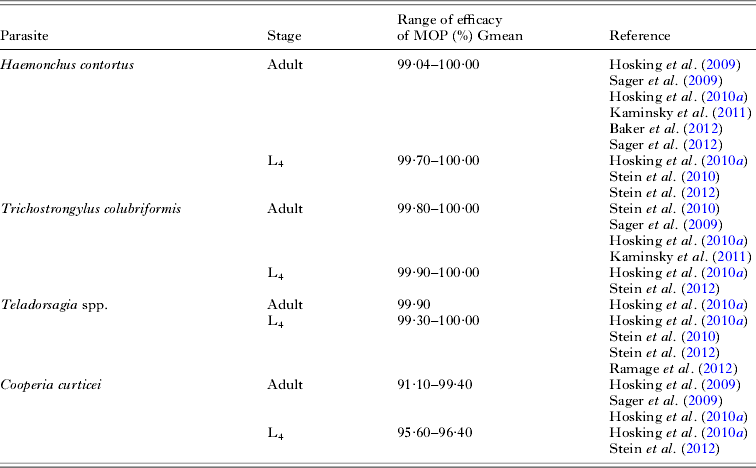
In general, H. contortus is the most tested parasite. To a lesser extent, T. colubriformis, Teladorsagia spp. or Cooperia spp. are used. Many authors reported the efficacy of MOP (see Table 5) against adult and the fourth larval stages of these parasites (e.g. Hosking et al. Reference Hosking, Kaminsky, Sager, Rolfe and Seewald2010a ; Kaminsky et al. Reference Kaminsky, Bapst, Stein, Strehlau, Allan, Hosking, Rolfe and Sager2011; Baker et al. Reference Baker, George, Stein, Seewald, Rolfe and Hosking2012; Ramage et al. Reference Ramage, Bartley, Jackson, Cody and Hosking2012; Sager et al. Reference Sager, Bapst, Strehlau and Kaminsky2012; Stein et al. Reference Stein, George, Rolfe and Hosking2012 etc.). These studies were based on the most widely used method for detecting and monitoring the presence of anthelmintic resistance in nematodes – the fecal egg count reduction test. This in vivo test provides an estimation of anthelmintic efficacy by comparing fecal egg counts of animals before and after treatment (Taylor et al. Reference Taylor, Hunt and Goodyear2002).
Percentage efficiencies of MOP (dosed at 2·5 mg kg−1 bw) against adult and fourth larval stages of some gastrointestinal nematodes in sheep from various authors

The efficacy of MOP against lower developmental stages (eggs and L1–L3 larvae) of H. contortus isolates was studied by Lecová et al. (Reference Lecová, Stuchlíková, Lamka, Špulák, Várady and Skálová2013). In this study, two in vitro methods were used. The egg hatch test, which is based on the ovicidal properties of the anthelmintic drugs and the ability of eggs to hatch in different concentrations of the anthelmintics, and the micro-agar larval development test – an alternative of classical larval development test. Both larval tests rely on the development of eggs to L3 larvae (Coles et al. Reference Coles, Jackson, Pomroy, Prichard, Von Samson-Himmelstjerna, Silvestre, Taylor and Vercruysse2006). The study of Lecová et al. (Reference Lecová, Stuchlíková, Lamka, Špulák, Várady and Skálová2013) showed that MOP had no significant ovicidal effect, which means that the MOP do not affect the eggs and therefore they have the potential to develop to infective larvae. On the other hand, MOP exhibited significant larvicidal effect, what conversely means that the parasites will not be able to develop to infective larvae. Moreover, the in vitro susceptibility of L1–L3 larvae to MOP was similar in susceptible strain and multi-resistant strain of H. contortus. This observed efficacy of MOP against the resistant strains larvae may at least partially limit the development of larvae to infective stages and their survival on pasture. However, the amount of MOP in dung can be partially lowered due to certain conditions on the pasture and in these cases the exposure of larvae to sub-lethal doses of MOP may support the resistance development. Because of these contradictory options, further studies are needed.
Other parasites
In 2011, Reference Olliaro, Seiler, Kuesel, Horton, Clark, Don and KeiserOlliaro et al. stated MOP as one of the few drug candidates eligible for rapid transitioning into development for human soil-transmitted helminthiases infections. Tritten et al. (Reference Tritten, Silbereisen and Keiser2011) tested the efficacy MOP against intestinal nematodes: the hookworm species Ancylostoma ceylanicum and Necator americanus, the whipworm Trichuris muris, the threadworm S. ratti and the roundworm A. suum, five parasite–rodent models of relevance to human soil-transmitted helminthiases. MOP showed excellent activity against A. ceylanicum adults (IC50 = 1·7 μg mL−1), a moderate effect on T. muris L3 larvae (IC50 = 78·7 μg mL−1), whereas no effect was observed against A. ceylanicum L3 larvae, T. muris adults and both stages of N. americanus. Complete elimination of worms was observed with MOP (10 mg kg−1) in A. ceylanicum-infected hamsters. In the N. americanus hamster model, single 10 mg kg−1 oral doses of MOP resulted in worm burden reductions of 58·3%. Trichuris muris, S. ratti and A. suum were not affected by treatment with MOP in vivo (following doses of 600, 32 and 600 mg kg−1, respectively). Based on these low or no activities against N. americanus, T. muris, S. ratti and A. suum in vivo, MOP is not recommended as drug development candidate for human soil-transmitted helminthiases.
Cancer cell lines
In addition to helminthoses, MOP was also tested in terms of cancer. One of the greatest challenges in medicine during that past 50 years has been the identification of drugs that can effectively kill tumour cells without harming normal tissues. Although anthelmintic drugs such as benzimidazoles have been known to be effective in controlling the growth and development of cancerous cells, the surprising anti-cancer activity and low toxicity of compounds, such as MOP, allows more flexible dosing regimens for cancer therapy with limited side effects (Morris, Reference Morris2013). It has been found that compounds, such as MOP or MOP.SO2, have anti-cancer activity. More specifically, these compounds have been shown to inhibit cell proliferation and colony formation of cancer cell lines. For example, ovarian cancer cell lines (OVCAR-3, A2780 and SKOV-3) have shown to be very sensitive to MOP, and it is evident that other cell lines are also highly sensitive. These include breast cancer, mesothelioma, prostate cancer and glioblastoma cell lines. MOP is very effective against chemo-resistant, androgen-insensitive PC-3 and DU-145 prostate cancer cells. Similarly, replication of PET and YOU cells (mesothelioma) and U87 cells (glioblastoma), which are also highly resistant to chemotherapy, are profoundly suppressed by MOP (Morris, Reference Morris2013). Also Bahrami et al. (Reference Bahrami, Morris and Pourgholami2013) evaluated the effect of MOP on viability and proliferation of ovarian cancer cell lines (OVCAR-3 and A2780) and normal ovarian epithelial cells (HOSE and CHO). MOP caused G0–G1 cell cycle arrest through downregulation of cycline D1 and CDK 4, followed by inhibition of extracellular signal-regulated kinase and p70S6 kinase. Furthermore, their findings showed extensive induction of cell death by MOP in these cells thus warranting further studies in this field.
ENVIRONMENTAL STUDIES OF MOP
The impact of sheep anthelmintics on the environment is still largely unknown. Despite a large body of work with cattle dung, it is not possible to compare that directly to sheep dung, as pharmcokinetics and ecotoxicity of drugs have marked differences in these two species (Beynon, Reference Beynon2012). The review of available data published in the scientific literature shows that residues of many antiparasitics for the control of internal and external parasites are fairly or highly toxic to egg-laying adults or to developing larvae of many non-target dung-breeding invertebrates (Lumaret and Errouissi, Reference Lumaret and Errouissi2002). The timely removal of dung from pastures by insect activity and weathering is both functionally and economically important (Wall and Beynon, Reference Wall and Beynon2012). In an attempt to put an economic value on ecosystem services provided by insects, Losey and Vaughan (Reference Losey and Vaughan2006) concluded that dung invertebrates save the US cattle industry US$380 million each year. It would appear that the greatest ecotoxicological risks are associated with the avermectins and milbemycins (Herd et al. Reference Herd, Sams and Ashcraft1996; McKellar, Reference McKellar1997; Suarez et al. Reference Suarez, Lifschitz, Sallovitz and Lanusse2003; Sutton et al. Reference Sutton, Bennett and Bateman2014). Avermectin toxicity is also problem in recent commercialized combination of derquantel and abamectin which is toxic to aquatic organisms and terrestrial invertebrates, and is harmful to the soil environment. On the other hand, the benzimidazoles and imidazothiazoles have received some coverage in the literature, showing little ecotoxic impact to dung or soil fauna. Similarly, literature on the ecotoxic impact of hexahydropyrazines and tetrahydropyrimidines is limited to one or two studies for each group (Beynon, Reference Beynon2012). APVMA in ‘Public Release Summary on the Evaluation of the New Active Monepantel in the Product Zolvix Monepantel Broad Spectrum Oral Anthelmintic for Sheep’ (2010) stated that MOP has no effect on hatching rate of flies and development time at 1000 mg active constituent (ac) per kg dry dung. The no-observed effect concentration (NOEC) for development of the fly Scathophaga stercoraria from eggs to adults is 1000 mg ac kg−1 dung, indicative of a non-toxic effect. APVMA also stated that concentration of up to 640 mg ac L−1 had no activity against any of the arthropods such as cat flea, chicken red mite, adult dog tick and domestic fly. Moreover, the main MOP metabolites, sulfoxide and sulfone, found in treated animals were determined to be completely inactive against these arthropods.
Skripsky and Hoffmann (Reference Skripsky and Hoffmann2010) in their study assessed the potential effects of MOP and its sulfone metabolite on the development of two highly relevant dung organisms: a dung fly S. stercoraria (Diptera: Scathophagidae) and a dung beetle Aphodius (Agrilinus) constans (Coleoptera: Aphodiidae). The NOECs for MOP and MOP.SO, respectively, were >1000 and 500 mg kg−1 substrate for S. stercoraria and 250 and 125 mg kg−1, respectively, for Ap. constans. When sheep were treated with a MOP dose about 42% higher than the recommended dose, respective fecal concentrations of the drug and its sulfone metabolite were 15 and 4·5 mg kg−1 (at 24 h after treatment) and 6·4 and 4 mg kg−1 (at 48 h after treatment). This finding suggests that fecal concentrations were not high enough to affect these non-target dung fauna. The study is important because representatives of both genera develop in bovine or ovine dung.
On the other hand, the nematode-specific action of MOP requires further research on a possible impact on soil nematodes, a functionally very important group of organisms, but still understudied in this context. Higher-tier tests on community interactions are also necessary to validate that MOP has no impact on dung fauna, underlying soil communities or on dung decomposition (Beynon, Reference Beynon2012).
MOP is also considered to be non-toxic to aquatic organisms (fish, aquatic invertebrates and algae). MOP did not have an impact on soil microflora, and it did not show any effects on seedling emergence and seedling growth for oilseed rape, soyabean and oat. The germination rate was not statistically significantly reduced by MOP for all species tested. Neither mortality nor phytotoxic effects were observed for all plants species tested. It is concluded that MOP has no significant adverse effect on germination and growth of non-target plants at a concentration of 100 mg ac kg−1 dry soil (APVMA, 2010).
MOP RESISTANCE
Unfortunately, recent studies from New Zealand and Australia have reported that the efficacy of this new anthelmintic has declined markedly (Scott et al. Reference Scott, Pomroy, Kenyon, Smith, Adlington and Moss2013; Love, Reference Love2014). So far, researchers talk about three confirmed cases of resistance to MOP. Resistance to MOP has occurred in the field in at least two nematode species within less than 4 years of the product first being used. Lack of efficacy of MOP was confirmed in the slaughtered sheep in which burdens of T. circumcincta and T. colubriformis showed no significant reductions. Whilst these two parasites now appear solidly resistant, the status of O. venulosum remains less clear (Scott et al. Reference Scott, Pomroy, Kenyon, Smith, Adlington and Moss2013). Scott et al. (Reference Scott, Pomroy, Kenyon, Smith, Adlington and Moss2013) confirmed this resistance also in goats that had recently been treated with MOP. In both egg count reduction tests, egg output was little affected by treatment, with evidence that both Teladorsagia spp. and Trichostrongylus spp. were resistant, and with the later surviving even when goats were given more than 3× the sheep dose rate (Scott et al. Reference Scott, Pomroy, Kenyon, Smith, Adlington and Moss2013). Also in Australian case severe resistance in Teladorsagia spp. and emerging resistance in T. colubriformis have been confirmed in goats on a central west New South Wales farm (Love, Reference Love2014).
Understanding the factors that led to this resistance may be very important to prolonging the applicability of this anthelmintic. Many years of research into understanding the development and management of anthelmintic resistance in nematodes of small ruminants has resulted in an array of strategies for minimizing selection for resistance and for dealing with it once it has developed. However, in general, most strategies can be categorised as either; identify and mitigate high risk management practices, maintain an anthelmintic-susceptible population in refugia, choose the optimal anthelmintic (combinations and formulations) or prevent the introduction of resistant nematodes (Leathwick and Besier, Reference Leathwick and Besier2014).
The issue of right drug-use strategy has risen in importance with the recent release of two new anthelmintic compounds (MOP and derquantel). The results of the latest studies indicate that the optimum approach to using any new actives sustainably is to formulate them as a combination with other anthelmintics. Not only are combinations likely to minimize the survival of resistant genotypes thereby slowing the development of resistance but, based on the current analysis, the use of combinations will also maximize the benefit of any fitness disadvantage associated with resistance (Leathwick, Reference Leathwick2013). Dobson et al. (Reference Dobson, Hosking, Besier, Love, Larsen, Rolfeb and Bailey2011) studied the use of MOP in combination with existing drugs with a relatively high level of resistance (i.e. benzimidazole and levamisole) or moderate level of resistance (i.e. abamectin), and the rotation of the new drug with other anthelmintics. There was used a computer simulation model, which predicted populations of T. colubriformis, H. contortus or T. circumcincta, and the frequency of anthelmintic resistance genes. The best option was combining MOP with triple combination of benzimidazole, levamisole and abamectin (COM). The next best options were: rotation at each treatment between MOP, moxidectin and COM, then rotation at each treatment between MOP and COM, rotation at each treatment between MOP (used in winter) and COM or moxidectin (used in summer–autumn). Because of cost constraints, it may not be feasible or profitable for producers to always use the combination of all drugs. However, the second- and third-best options still considerably slowed the development of anthelmintic resistance (Dobson et al. Reference Dobson, Hosking, Besier, Love, Larsen, Rolfeb and Bailey2011).
On the other hand, resistance development also increases the ongoing interest to identify and develop further classes of anthelmintic agents. Gordon et al. (Reference Gordon, Hizartzidis, Tarleton, Sakoff, Gilbert, Campbell, Gasser and McCluskey2014) have turned an attention to a series of pyrrolacrylonitriles, which potentially represent privileged anthelmintic molecular scaffolds. In addition, they have investigated the acrylonitrile scaffold to determine the crucial features required for anthelmintic activity and establish an expanded pharmacophore that is lethal to H. contortus. They have identified two additional scaffolds, the cyanoamides and the α-amino amides as potential leads for next generation compounds active against H. contortus.
Prevention or reduction of anthelmintic resistance is difficult and it is not based only on a new effective drugs development. Farmers need to use the whole range of control methods available to them in an integrated control programme against internal parasites to manage anthelmintic resistance. One of the key concepts in slowing down the development of resistance is the maintenance of refugia. The term ‘refugia’ was coined to define the proportion of the parasite population that is not exposed to a particular given control measure, thus escaping selection for resistance. In the case of the gastrointestinal nematodes, this comprises primarily the portion of a worm population that is free-living on pasture. After an ‘effective’ drench the progeny of the worms that survive the treatment develop among the free-living worms in refugia. Thus, the size of the population in refugia has a direct bearing on the degree of selection for resistance with a particular remedy (Van Wyk, Reference Van Wyk2001). Adoption of strict quarantine measures and a combination drug strategy are two important methods of preventing of anthelmintic resistance. Additionally, experience from the development of anthelmintic resistance suggests that modern control schemes should not rely on sole use of anthelmintics, but employ other, more complex and sustainable recipes, including parasite resistant breeds, nutrition, pasture management, nematode – trapping fungi, antiparasitic vaccines and botanical dewormers (Shalaby, Reference Shalaby2013).
Concluding remarks
The remarkable ability of parasites to develop resistance against used drugs requires the changes in helminthoses therapy. In general, resistance develops most rapidly and profoundly when the number of drugs is limited, frequency of dosing is high, and underdosing commonly practiced. These conditions characterized chemotherapy of diseases caused by parasitic helminths in the second half of the 20th century. Against this backdrop, many pharmaceutical companies established a discovery programmes to identify compounds with novel modes of action and effective against several important nematode species, including strains resistant to the major classes of anthelmintics. One of these testing led to the discovery of MOP – the first of the AADs class of anthelmintics. Most of cited studies, and a number of others, highlight the benefits of this new discovered veterinary antiparasitic drug. Studies were conducted on different species and stages of parasites. Various aspects such as mode of action, pharmacokinetics, metabolism and residues, resistance as well as the impact on the environment were examined. Nevertheless, there is certainly a number of possibilities and requirements for further study.
ACKNOWLEDGEMENTS
We thank our colleagues for helpful discussions and two anonymous reviewers for their valuable comments which improved the manuscript.
FINANCIAL SUPPORT
This study was supported by the operational programme ECOP – Increasing of the R&D capacity at Charles University through new positions for graduates of doctoral studies, Czech Republic (Reg. no. CZ.1.07/2.3.00/30.0061), by Czech Science Foundation (grant no. P502/10/0217), by Grant Agency of Charles University (grant no. 673612/B-CH/2012) and by the Charles University in Prague (research projects SVV 260 065).