1. INTRODUCTION
The tendency to anthropomorphise music technologies and musical instruments in the late twentieth and early twenty-first centuries is widely recognised. Physical computing has brought disembodied musical technologies including electronic and computer-based music into the tangible realm, and the development and increased availability of microcontrollers, sensors, motors and fabrication facilities has enabled artists to create interfaces between computer-based music and physical systems. Harnessing these technologies, artists and researchers have developed new systems that propose a link between the human body and the musical machine, exploring what we call the ‘anthropomorphic analogy’. This anthropomorphism has manifested itself in two primary ways: first, in humanoid robotic instruments, in which the audience anthropomorphises autonomous machines that possess the physical qualities of human performers; and second, in cyborg performance systems, in which sensors augment the body to produce a hybrid musical system that blurs the line between body and machine. Underlying these robotic and cyborg systems is a distinctive aesthetic approach that draws attention to the line between the human artificer and the technology that enacts the musical artifice.
While the anthropomorphic analogy in contemporary music technology is pervasive, its aesthetic motivations have been little understood or explored. We argue that historical contextualisation of this phenomenon will shed new light on its meanings today. While anthropomorphism is a latent feature of much of Western musical history, we propose that a juxtaposition of contemporary anthropomorphic musical technologies with instrumental culture in the early seventeenth century – a historical moment that witnessed a revolution in thinking about and with instruments – is especially fruitful. During the first decades of the seventeenth century, a new understanding emerged of instruments of all sorts – musical, artistic, scientific – as vehicles of discovery. Artisans joined philosophers in exploring the potential of musical instruments to mediate between nature and artifice, considering what they were for and what effect they could have on players and listeners. They likened musical instruments to the physical and sonic model of human beings, and this anthropomorphosis made musical instruments at once more familiar and more wondrous. In sources as diverse as poetry, pedagogical treatises on musical performance, published engravings and works of natural philosophy, writers and artists compared musical instruments to the human body and mind. In proposing this anthropomorphic analogy, these thinkers explored the complex liminal space between human and machine.
A juxtaposition of early seventeenth-century manifestations of the anthropomorphic analogy and those in the contemporary age leads to new understandings of the aesthetic motivations that lie beneath them. In both cases, the anthropomorphic analogy emerged as a response to the proliferation of technologies – one that allows for the contemplation of the relationship of those new technologies to the human beings who create and employ them. Whatever the approach in each artwork or performance – playful, wondrous, contemplative, fearful – and whatever the aesthetic means by which it is realised – whether cyborg technology, robotic instruments in the form of a human body, or a literary work that likens the two – the anthropomorphic analogy helps the beholder to problematise, contemplate and understand the introduction of new technologies into the human situation.
2. THE ANTHROPOMORPHIC ANALOGY IN THE EARLY SEVENTEENTH CENTURY
The emergence of a new experimental approach to natural philosophy in the early seventeenth century is widely acknowledged. Even as older traditions of occult magic and Platonic thought persisted, writers such as Francis Bacon, René Descartes and Galileo Galilei – each situated within the distinctive scientific cultures of their academies and intellectual networks – advocated an approach to the study of the natural world rooted in both sensory observation and reasoned thought. A vital component of the new methodology that they pursued was the use of instruments – tools of all sorts, including scales, clocks, mirrors and lenses, barometers, implements of writing and drawing and many others – in novel ways. In the past, instruments had been understood as devices for remaking an object or repeating a process already known; the classic example is that of a blacksmith using his tools to recreate an object with a predetermined form and purpose. Within the new contexts of seventeenth-century thought, instruments as a whole came to be understood as vehicles of discovery. To hold an instrument was to grasp the potential for open-ended inquiry, the object and end goal of which was yet unknown (Malet Reference Malet2005; Gauvin Reference Gauvin2006, Reference Gauvin2011).
Recent musicological work has situated musical instruments within this broader context. Jean-François Gauvin and Thomas Christensen have argued that the musical thought of the French theorist and humanist scholar Marin Mersenne was heavily influenced by his exploration of the sounds and natures of musical instruments (Gauvin Reference Gauvin2008; Christensen Reference Christensen2013). Studies of the writings of Vincenzo Galilei have long recognised the importance of his instrumental expertise for his musical theories (Moyer Reference Moyer1992), and Rebecca Cypess has recently called attention to the ways in which Italian composers from the generation of his son Galileo Galilei self-consciously inscribed the processes of invention and discovery in their highly idiomatic compositions (Cypess Reference Cypess2016). The room left to performers for additional improvisation, ornamentation and other types of individualised execution underscores the role of instrumental habitus in the creation of this repertoire (Bourdieu Reference Bourdieu1980; Gauvin Reference Gauvin2006). Just as Galileo trained his high-powered telescope on the heavens, not knowing what he might find, musical instrumentalists approached their work with a new sense of exploration and discovery. Theorists and artists began to reconsider the very nature and purpose of instruments.
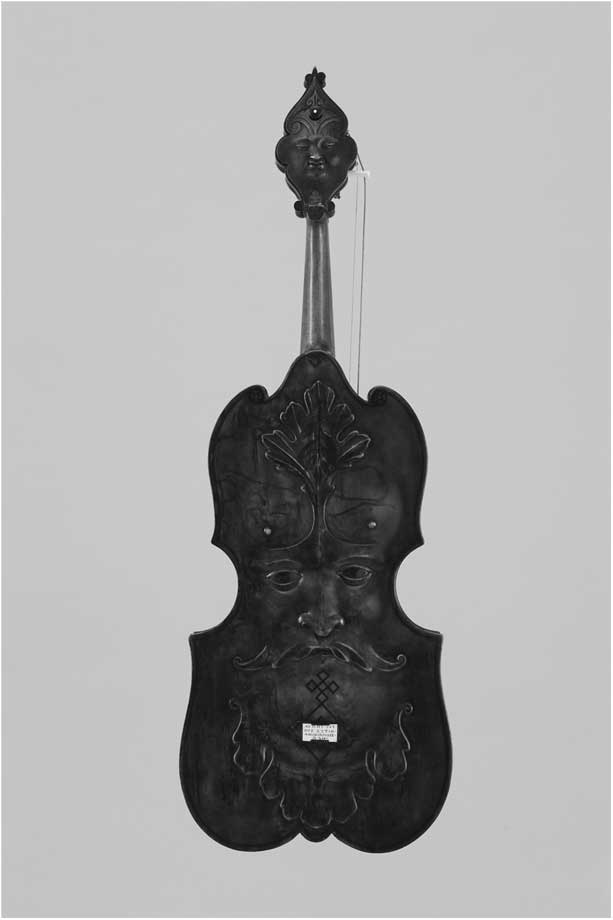
Perhaps in response to this new conceptualisation of instruments, numerous theorists of this age attempted to understand instruments in relation to the human body. They juxtaposed musical instruments with representations of the human form and biological processes, considering them both as extensions of one another and probing the blurry line that separates the two. The tendency to understand anatomy in terms of musical instruments has been widely recognised (e.g. in the writings of Descartes, as discussed below), but the opposite approach – one that seeks to theorise musical instruments through their ‘dissection’ and comparison to the human anatomy – has not yet been observed. These two strains of thought are related, as they both manifest the potentials and tensions in the anthropomorphic analogy. Some of the descriptions of musical instruments as analogous to human bodies predate Descartes’s writings on the subject, suggesting that this strain of thought developed both across the practical world of music making and within the Republic of Letters, and that it was disseminated through publications and communications of various sorts. Harbingers of this idea may be seen in the handful of curious musical instruments built in the early sixteenth century that were meant to look like human figures. The lira da braccio shown in Figure 1, for example, displays both a male face and a nude female figure as part of its body (Zecher Reference Zecher2007: 20–3). Rare examples such as this one prefigure the wider conceptualisation of musical instruments as analogous to the human anatomy in the early seventeenth century.
Lira da braccio by Giovanni d’Andrea, Verona, 1511. SAM Inventory No. 89, Kunsthistorisches Museum Wien.

A locus classicus of the study of human anatomy and its relationship to the nascent Mechanical Philosophy of the seventeenth century is Descartes’s Traité de l’homme (1632, published 1662), which advanced an understanding of the human body as analogous to a machine. The treatise imagines a fictional human-like species that would simulate all aspects of actual human life, and which may therefore be understood as reflections of human beings in the real world. Descartes uses the opportunity to describe the human body through reference to mechanisation and machinery:
I suppose the body to be nothing but a statue or machine made of earth, which God forms with the explicit intention of making it as much as possible like us … We see clocks, artificial fountains, mills, and other such machines which, although only man-made, have the power to move of their own accord in many different ways. But I am supposing this machine to be made by the hands of God, and so I think you may reasonably think it capable of a greater variety of movements than I could possible imagine in it, and of exhibiting more artistry than I could possibly ascribe to it. (Descartes Reference Descartes1985: I, 99)
As Daniel Garber notes, it is possible that Descartes proposed this analogy between the human body and a machine in order to bring the human anatomy within reach of human understanding: “To say that a natural object is like a machine is to say that we can consider it as, or as if it had been made by someone for a purpose, God, perhaps, and explain it as such” (Garber Reference Garber2002: 196). Paradoxically, then, by placing the study of human anatomy within the field of mechanics, and explaining its operations in terms of machinery, Descartes was in some ways rendering the wonder that it inspired even greater than it might otherwise be. After all, the inner workings of the human body are hidden from view and, in some ways, beyond human understanding. In comparing it to machines that are more easily dissectible and understandable, Descartes offered a glimpse of the wondrous nature of the machinery of the human body. He contrasts machines made by human inventors and the machinery of the human body made by God, and in doing so, he throws into relief the vastly superior inventions of the Divine Creator.
In this respect, Descartes’s understanding of the human body as a machine has both an aesthetic underpinning and an aesthetic goal – to inspire wonder, or that sense of meraviglia so much prized by early modern artists, inventors, writers and patrons. Descartes’s approach places the human body in the foreground; his purpose is to make its workings known through analogy to complex machinery. It is significant, therefore, that one type of machinery that he chose as a point of reference for understanding the human anatomy was the category of musical instruments. While Descartes was not the first to apply this analogy (Gouk Reference Gouk2006: 239), his fusion of it with his Mechanistic Philosophy was novel. Among the musical instruments to which he compared the human body was the pneumatic organ, which he associated with the church:
If you have ever had the curiosity to examine the organs in our churches, you know how the bellows push the air into certain receptacles (which are called, presumably for this reason, wind-chests). And you know how the air passes from there into one or other of the pipes, depending on the different ways in which the organist moves his fingers on the keyboard. You can think of our machine’s heart and arteries, which push the animal spirits into the cavities of its brain, as being like the bellows of an organ, which push air into the wind-chests; and you can think of external objects, which stimulate certain nerves and cause spirits contained in the cavities to pass into some of the pores, and being like the fingers of the organist, which press certain keys and cause the air to pass from the wind-chests into certain pipes. (Descartes Reference Descartes1985: I, 104; see also Kassler Reference Kassler1995)
Whether Descartes was aware of it or not, he was picking up on a motif that had already become common among artists, poets and musicians in Italy, including in the revolutionary description of the organ that opens Girolamo Diruta’s treatise Il Transilvano, a pedagogical work on organ playing published in two parts in 1593 and 1612. Diruta’s letter to his readers equates the organ with the human anatomy:
The organ … is called the King of Instruments, justifiably kept in the churches sacred to God for rendering praise and honor to His Majesty … Because it is so much more excellent and noble than the others, it better represents the human voice by combining the functions of breath and hand. The pipes, of whatever material they be, correspond to the throat through which breath passes to form the sound and voice. One can almost surely say that the organ is a mechanical animal that speaks, plays, and sings through the hands and skill of man. (‘L’auttore dell’opera al prudente lettore’, in Diruta Reference Diruta1593: n.p., trans. in Soehnlein Reference Soehnlein1975: 92).
Diruta continues with even more specific analogies between the instrument and the human body:
Its sound, which reaches the ears like words reflecting the affects of the heart, stands for the interior disposition of the person who plays it. The bellows correspond to the lungs, the pipes to the throat, and the keys to the teeth. Instead of a tongue, the player with light movements of the hand, makes it sound smoothly and almost converse in a good-natured way. (Ibid.)
The similarities between Diruta’s analogy and the one that Descartes would use some decades later are striking. But in contrast to Descartes, whose principal aim was to understand human anatomy, and who (as Garber notes) used the instrumental metaphor as a means to achieve that end, Diruta addressed his analogy to practising musicians – the organists who would be reading his treatise. Moreover, just as Descartes’s conception of the body as machine contained a spiritual component, valorising the work of the Divine Artisan, a similar spiritual tendency manifests itself in Diruta’s treatise: the wondrous organ, with its nearly incredible artifice, is ‘justifiably kept in the churches sacred to God for rendering praise and honor to His Majesty’. As in Descartes, then, the mechanical is elevated to the level of the sacred.
Diruta’s analogy spread widely; it was quoted, for example, in German translation in De organographia, the second volume of Michael Praetorius’s monumental Syntagma musicum (1619) (Praetorius Reference Praetorius1619: 86–7). Praetorius was primarily concerned with instrument construction and sound, rather than instruction in keyboard playing, yet Diruta’s description of the anthropomorphic and spiritual potential of the organ must have impressed him. More surprising is that Diruta’s anthropomorphic analogy lies at the heart of a passage from Giambattista Marino’s Dicerie sacre (Sacred Dialogues, 1614). Seeking to call attention to the marvellous machinery embedded in the human body, Marino echoes and expands upon Diruta’s description of the organ, which he claims
is found in the mouth of man. The voice stands in place of the sound. The lungs sustain the air of the bellows … the wind-pipe is like the pipes that are used for discussions of the spirit. The unequal ordering of the pipes corresponds to the various dispositions of the teeth, which serve to articulate and shape the voice, and divide the syllables of the song. Do you desire [an analogy for] the artificer, or the player? That is the intellect. (Marino Reference Marino1614: 128r–129r, trans. Rebecca Cypess)
Building on Diruta’s example, Marino renders both the voice and the organ unfamiliar, and he evokes a sense of meraviglia through the poetic conceit. The purpose of this exercise within the Dicerie sacre is to create that sense of wonder at the musicality and ingenious instrumentality of Divine Creation. Instruments serve as both a medium and an object of that creation.
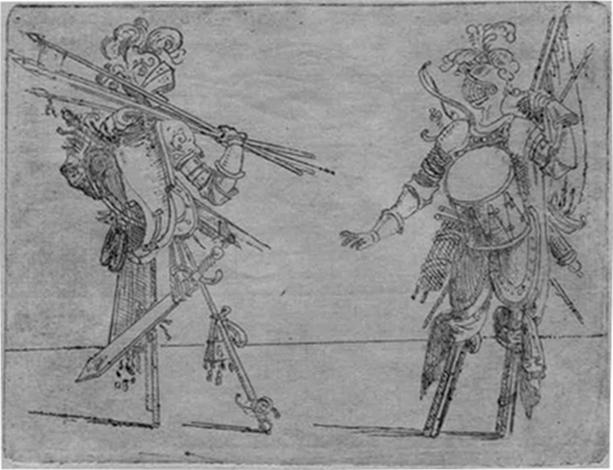
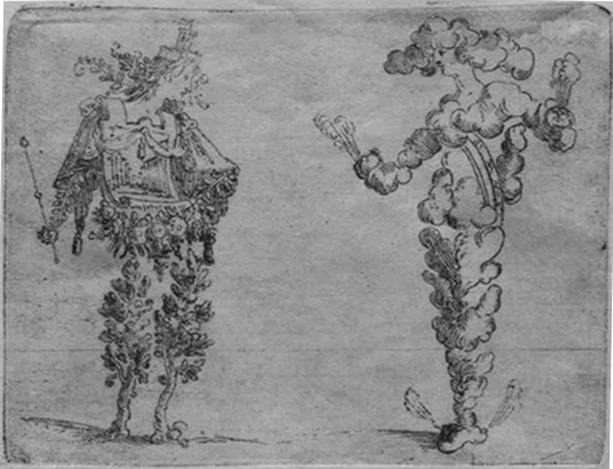
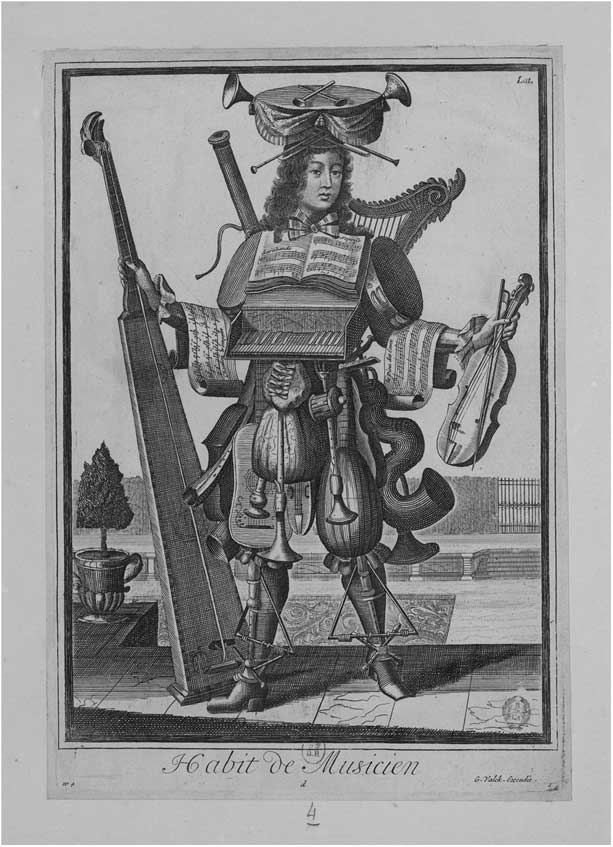
This sense of meraviglia manifests itself most clearly in two sets of engraved images produced and disseminated during the seventeenth century. The Bizzarie di varie figure of Giovanni Battista Braccelli (Reference Braccelli1624), dedicated to Don Pietro Medici, consists of a series of images of human figures composed of instruments or geometric designs of various sorts. These include a man and a woman composed entirely of kitchen utensils, another pair made of tennis rackets, and another made of armour and weapons (Figure 2). Musical instruments figure in some of these images; one of the military pair shown in Figure 2, for example, carries a field drum. In the depiction of earth and air (Figure 3), it appears that the lungs of the person representing earth are composed of organ pipes. A keyboard analogy of another sort appears in Figure 4, ‘L’habit du musicien’, an engraving by the French artist Nicolas de Larmessin (n.d., c.Reference Larmessin1700?). Part of his series of costumes related to all sorts of professions, Larmessin’s musician is outfitted with a keyboard and an open score on his chest. The image thus equates the essential functions of the heart and lungs with the keyboard player, who controls and manipulates all the hidden machinery concealed within the ‘body’ of the instrument.
Depiction of two military figures in Giovanni Battista Braccelli, Bizzarie di varie figure (1624). Lessing J. Rosenwald Collection, Library of Congress.

Depiction of earth and air in Giovanni Battista Braccelli, Bizzarie di varie figure (1624). Lessing J. Rosenwald Collection, Library of Congress.

Nicolas de Larmessin, ‘L’habit du musicien’ (c.1700?). Bibliothèque Nationale de France.

Like Descartes, the creators of these images understand the fundamental instrumentality of the human body – its mechanical functions, which, as Descartes would explain in his valedictory treatise Les passions de l’âme, prompt emotional responses. These images not only highlight the instrumentality of the human anatomy, but also imagine ways of augmenting it through fusion with technology. The result may be conceived as part of the category of early modern cyborgs, which, as Bonnie Gordon has explained, constitute ‘an ontological merging of cultural and natural artifacts’ (Gordon Reference Gordon2011: 114). This is not to say that Braccelli and Larmessin were proposing the creation of automatons or robots that would fuse the human body with self-regulating technology. Rather, they were highlighting the role of musical-instrument technology in enhancing the potential of the human body and mind. The complexity of the machinery that they depict – as well as the anthropomorphic analogy manifested in the work of Descartes, Diruta and Marino – shows their creators grappling with the complex relationship between artificial machinery and the human form.
The fusion of instrument and human body imagined by Braccelli and Larmessin was rooted in an understanding that technologies had the potential to discipline the human body. Thomas Hobbes recognised this point and made use of it for logical argumentation in his discussion of free will and determinism. He explained that the practice of a musical instrument ‘maketh the motion of his hand more ready and quick; but it proveth not that it maketh it more voluntary, but rather less; because the rest of the motions follow the first by an easiness acquired from long custom; in which motion the will doth not accompany all the strokes of the hand, but gives a beginning to them only in the first’ (Hobbes Reference Hobbes1841: V, 354, quoted in Gauvin Reference Gauvin2011: 332). The more musical instrumentalists developed a habitus at their instruments, the less they needed to contemplate every action. While not literally fused to the human body, an instrument could come to form an extension of the human body in such a way that its operation became second nature.
Very early in his career, Descartes had recognised a similar function of music writ large in its operations on human perception: musical sounds, he explained, had the potential to discipline listeners, producing in them the involuntary bodily responses that characterised automatons. His Compendium musicae (written 1619, published 1650), a slight treatise from the philosopher’s youth dedicated to his mentor, Isaac Beeckman, was revolutionary in its own way. As in the Harmonie universelle of Descartes’s later correspondent Marin Mersenne (Christensen Reference Christensen2013), Descartes’s musical world was a practical and noisy one – not one that celebrated the mathematically perfect but inaudible harmony of the spheres. As Kate van Orden has shown, Descartes’s theories of mechanical cause and effect had already taken root at this early stage. He enumerated the various physical reactions that ensue when music sounds: rhythm in particular has the capacity to cause people to move, dance and march. As van Orden writes, ‘What dance and drill do so well is to train the body to react automatically to regular stimuli. The mechanism for these reflexes may be hard-wired into the body, but it is training that turns animals and men into automata’ (van Orden Reference van Orden2002: 31).
This survey of seventeenth-century manifestations of the anthropomorphic analogy reveals a wide range of methodologies and understandings. Philosophers, poets, visual artists, and pedagogues sought to understand the relationship of musical technologies with their human operators, listeners and beholders. In some cases they viewed the human body in terms of musical instruments; in others, conversely, they understood musical instruments as analogous to the human body; in still others, they saw instruments as extensions of the human form, with the capacity to affect human motions and emotions. These various ideas and approaches were intimately bound up with the revolutionary new ways of thinking about instruments more broadly. They represent an aesthetic and conceptual foundation for and response to the new experimental science of the early modern age.
3. CONTEMPORARY INSTANCES OF THE ANTHROPOMORPHIC ANALOGY
The anthropomorphic analogy emerged as a prominent theme in musical technologies and theoretical writings in the seventeenth century as part of new understandings of instruments of all sorts as vehicles of discovery and the creation of knowledge. As we have argued, the tendency to view instruments as analogous to or extensions of the human body may be understood as a response to the proliferation of new approaches to the technologies themselves. Similarly, contemporary instances of the anthropomorphic analogy that we will describe below have emerged from the development of cybernetics and physical computing, which established new relationships between sound-producing actions and their sources in electronic and computer-based music.
Prior to this development, the dominant forms of music made with contemporary technology, including musique concrète, elektronische Musik and acousmatic music, were based on recorded and electronically generated sounds, and played back from fixed media. As Simon Emmerson describes, the technologies that underlie these forms of music ‘dislocated’ the relationship between the physical body and sound production (Emmerson Reference Emmerson2000: 98). Anthropomorphic analogies can occur when there is a dislocation between the body and sound production, however, this anthropomorphism becomes abstract. For example, Trevor Wishart describes the anthropomorphic metaphor in his acousmatic piece Red Bird as follows: ‘the sound-image “bellows/water pump” may be interpreted as the functioning of a machine or the functioning of a human body, and when our perception of it changes from one to the other a metaphor is implied’ (Wishart Reference Wishart1986: 55).
While it is possible to anthropomorphise the types of ‘gestural-sonorous objects’ that Wishart describes (Godøy Reference Godøy2006: 150), clearer manifestations of the anthropomorphic analogy emerge in artworks that offer a visible connection between physical action and sound. As noted above, the development of physical computing in recent decades has enabled artists and researchers to create interfaces between physical action and computer-controlled sound production. These approaches, which include anthropomorphic robotic instruments and cyborg human–machine hybrid interfaces, integrate live mechanical and human performance with cybernetic models of computer-based control, communication and feedback. As in the cases from the seventeenth century explored above, these projects present anthropomorphic understandings of contemporary musical technologies that work in multiple directions: they understand humans as machines; they suggest the human anatomy as a basis for conceptualising instruments; and they build mechanical models of human systems. On a broad level, they blur the boundaries between human beings and machines. In the pages that follow, we address a series of recent projects that tease out these various strains of the anthropomorphic analogy.
3.1. Anthropomorphic robotic instruments
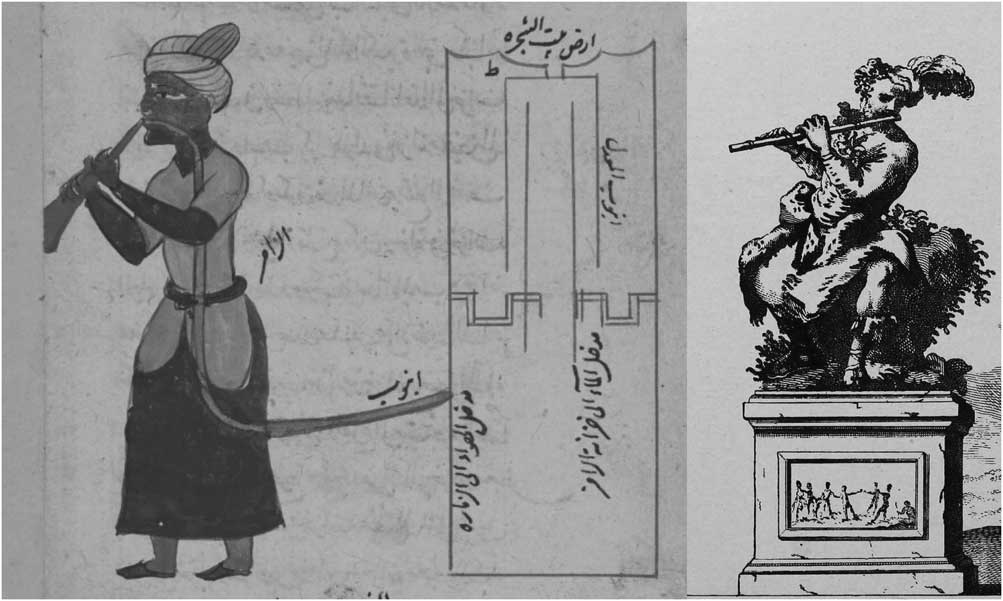
Gil Weinberg and Scott Driscoll have explored the category of ‘anthropomorphic musical robots’ – humanoid robots designed to imitate the action of human musicians (Weinberg and Driscoll Reference Weinberg and Driscoll2006: 29). These inventions trace their roots back to designs of ancient Greek water-clocks and organs. One example is the Archimedes ‘Automatic Wind Instrumentalist’, which served as the model for the ninth-century Banū Mūsā flute automaton, the ‘instrument which plays by itself’ (Farmer Reference Farmer1931: 85). Jacques Vaucanson’s 1737 ‘Flute Player’, perhaps the most famous and complex musical automaton of its age, was modelled after a human performer; Vaucanson developed it to imitate the actual physical processes undertaken by human flautists (in Ord-Hume Reference Ord-Hume1973: 33; see also Cypess Reference Cypess2017; Kemper and Cypess forthcoming; Riskin Reference Riskin2003; Voskuhl Reference Voskuhl2013) (Figure 5). Though the notion of self-regulating systems at the centre of cybernetics was present in these early automata (Bedini Reference Bedini1964: 41), contemporary anthropomorphic musical robots move beyond modelling the mechanics of human motion, to include the control, communication and feedback systems of human performance. Two anthropomorphic musical robots in particular deserve attention in this context: the Waseda Flutist Robot, developed at Waseda University, which models human anatomy, and Shimon, developed at the Georgia Institute of Technology (Georgia Tech), which models human performance gestures.
Archimedes Automatic Wind Instrumentalist and Vaucanson’s Flute Player.

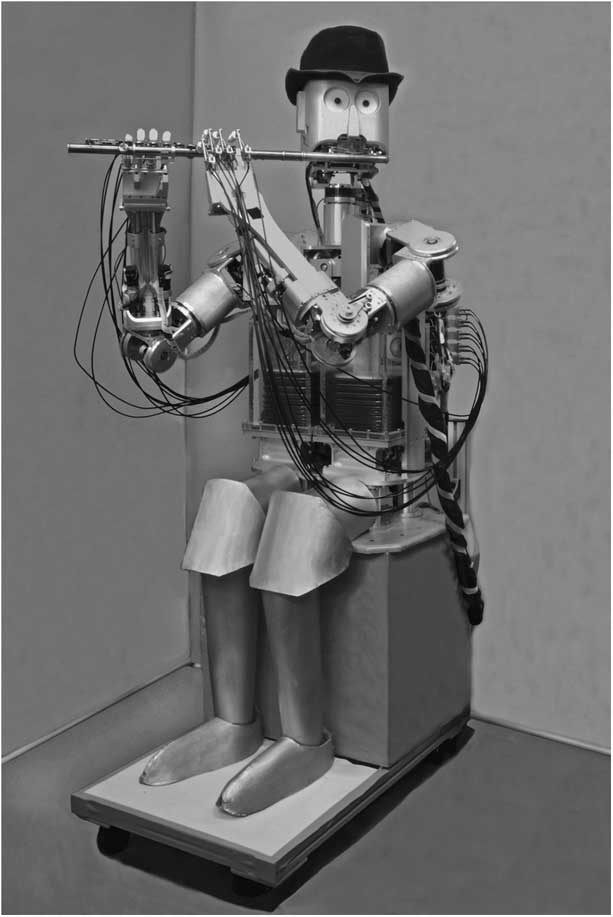
The anthropomorphic Waseda Flutist Robot, originally created in 1990 (WF-1), was developed to model human motor control by ‘mechanically emulating the anatomy and physiology of the organs involved during the flute playing [sic]’ (Solis and Takanishi Reference Solis and Takanishi2011: 198–9); this, indeed, was the same objective as that claimed by Vaucanson in his flute-player of 1737 (Riskin Reference Riskin2003). The current version, WF-4RVI, built in 2009, is composed of simulated body parts: lungs, lips, eyes, arms, fingers and neck (Anthropomorphic Flutist Robot n.d.; Figure 6). The goal of this instrument is to mimic human performance as accurately as possible, extracting musical features from the recording of a professional flautist (Solis et al. Reference Solis, Chida, Taniguchi, Hashimoto, Suefuji and Takanishi2006: 19–20). Though recent work with this instrument has been focused on interactive performances involving both the robot and human performers, the majority of WF-4RVI’s repertoire has consisted of reconstructions of human performances on acoustic flute, including Rimsky-Korsakov’s ‘Flight of the Bumblebee’ and an arrangement of Mozart’s Flute Quartet in A major (KV 298).
Waseda Anthropomorphic Flutist Robot, Atsuo Takanishi Lab., Waseda University, Tokyo, Japan.

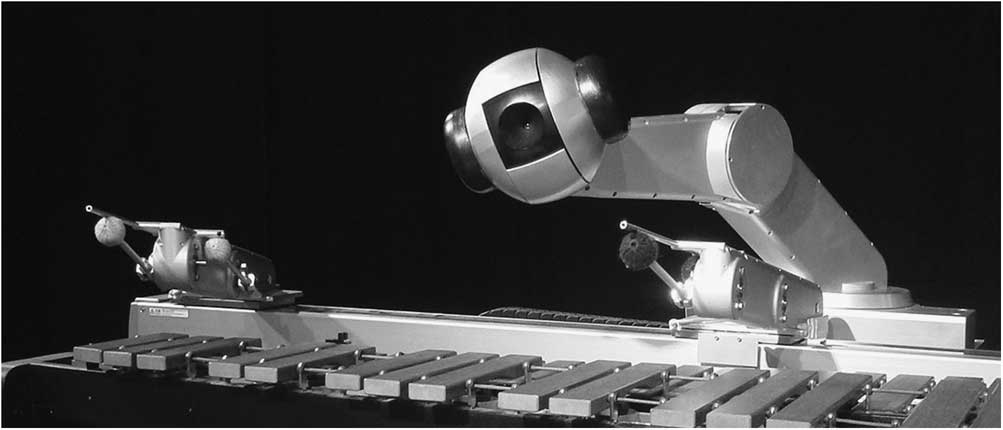
Unlike the Waseda Flutist Robot, which models human physical anatomy, Georgia Tech’s marimba-playing robot Shimon is only loosely anthropomorphic; it consists of arms that can hold up to two mallets (Figure 7). Additionally, Shimon possesses a non-humanoid head that ‘distill[s] the essential movements used in [collaborative] musical performance’ (Hoffman and Weinberg Reference Hoffman and Weinberg2010: 3099). The rationale for designing a loosely anthropomorphic robot relates to the concept of the ‘uncanny valley’, a theoretical space between abstraction and clear representation. Theories of the uncanny valley hold that affinity for a robot (or other representation) decreases as it more closely replicates human appearance and movement (Mori Reference Mori2012: 98–9). In addition to its improvisatory listening algorithms, such as the ‘Rhythmic Phrase-Matching Improvisation’ module (Hoffman and Weinberg Reference Hoffman and Weinberg2010: 3101), Shimon participates in the physical gestures of music making, including nodding to the beat, ‘looking’ at its marimba while improvising and ‘looking’ at other musicians while ‘listening’. These types of gestures, which were likewise present in eighteenth-century android automata (see Cypess Reference Cypess2017: 16–18), help to reinforce the tempo and groove of the music (Breton and Weinberg Reference Bretan and Weinberg2016: 108). Shimon is designed to perform with human musicians through the use of gesture-based, real-time machine improvisation modules, and in this context, its abstracted anthropomorphic form is more relatable than a robot that appears more human.
Shimon, Robotic Musicianship Group, Georgia Institute of Technology.

3.2. Cyborgs: human–machine hybrids
In the last decade, musical artists have developed a large number of bodily controlled, sensor-based musical instruments. The purpose of these projects varies, from developing new means of control for digital instruments, to researching human movements, to providing ways for untrained musicians to use their bodies to make music. This technology has also prompted artists to use technology to augment, amplify and hybridise the human body, with the goal of creating a human–machine cybernetic system of control and feedback for musical production.
These artists have often self-identified or been labelled as ‘cyborgs’, a term invented by Clynes and Kline in 1960 to describe the incorporation of ‘exogenous components extending the self-regulatory control function of the organism’ (Clynes and Kline Reference Clynes and Kline1960: 27); the usage cited above with respect to seventeenth-century instruments and machines is thus anachronistic but apt. Though the original term stems from the phrase ‘cybernetic organism’ and was developed to refer to self-regulating technological augmentations that would prepare the human body for space travel, cyborgs as humans or animals augmented with mechanical systems have become common tropes in science fiction. These depictions often reflect contemporary understandings and anxieties surrounding the human–machine relationship. Donna Haraway’s A Cyborg Manifesto argues that, ‘By the late twentieth century … we are all chimeras, theorised and fabricated hybrids of machine and organism. In short, we are all cyborgs’ (Haraway Reference Haraway1991: 292).Footnote 1
While Haraway proposes a distinction between anthropomorphosis in the early modern era as a process of animating technology, and the contemporary incorporation of technology within the human body (ibid.: 314–15), her formulation neglects important historical resonances. Bonnie Gordon has argued that organic/human-made hybrids existed in the seventeenth century; she points in particular to the phenomenon of the castrato singer. Because they were human beings whose voices were altered by extra-natural intervention, she writes, they embodied ‘a long-standing tension between the organic and the human made … [one that audiences] experienced as a kind of human machine’ (Gordon Reference Gordon2011: 94). She explains further that ‘Castrati were “mechanized” to produce sounds in ways that “unmechanized” bodies could not” (ibid.: 95).
The mechanical alteration of the castrato resonates with Haraway’s definition of cyborg as a chimera, though both authors gloss over the original definition of a cybernetic organism as one that possesses autonomous control systems. Within Gordon and Haraway’s definitions, arguably any performer whose body has been altered by technology may be considered a ‘cyborg’; nevertheless, we consider, as a special case, artists that embrace the aesthetic of a bio-mechanical cybernetic system. Two approaches will be explored here – sensor-based augmentation of hands as approached by Imogen Heap and Onyx Ashanti, and music made through the amplification and processing of biological signals as approached by Marco Donnarumma and Michaela Davies.
3.3. Augmented hands: Imogen Heap and Onyx Ashanti
Performers Imogen Heap and Onyx Ashanti embrace the idea of the cyborg through the augmentation of their bodies to produce music, though Ashanti has rejected the term ‘cyborg’ as a descriptor, favouring the term ‘sonocyberneticist’ (Ashanti Reference Ashanti2016a). Additionally, both artists consciously reflect on themes of machines and cybernetic systems in their work. Both work with sensors attached to the hands as a mediating technology, so that their hand gestures control sonic output.
Apart from the keyboard and mouse, the use of sensors to track hand movements represents one of the earliest and most common human–computer interfaces. Devices such as the VPL Data Glove from the 1980s were developed to allow computers to understand hand movements for the purposes of early virtual-reality systems (Takahashi and Kishino Reference Takahashi and Kishino1991: 67). In 1984 Michael Waisvaisz at STEIM invented The Hands, which consisted of sensor-equipped plates strapped to performers’ hands and output MIDI data (Bongers Reference Bongers2008: 11). Following The Hands, STEIM created the Lady’s Glove in 1994 for Laetitia Sonami based on her prototypes. This design codified many of the elements that would be incorporated in future hand-based musical interfaces.
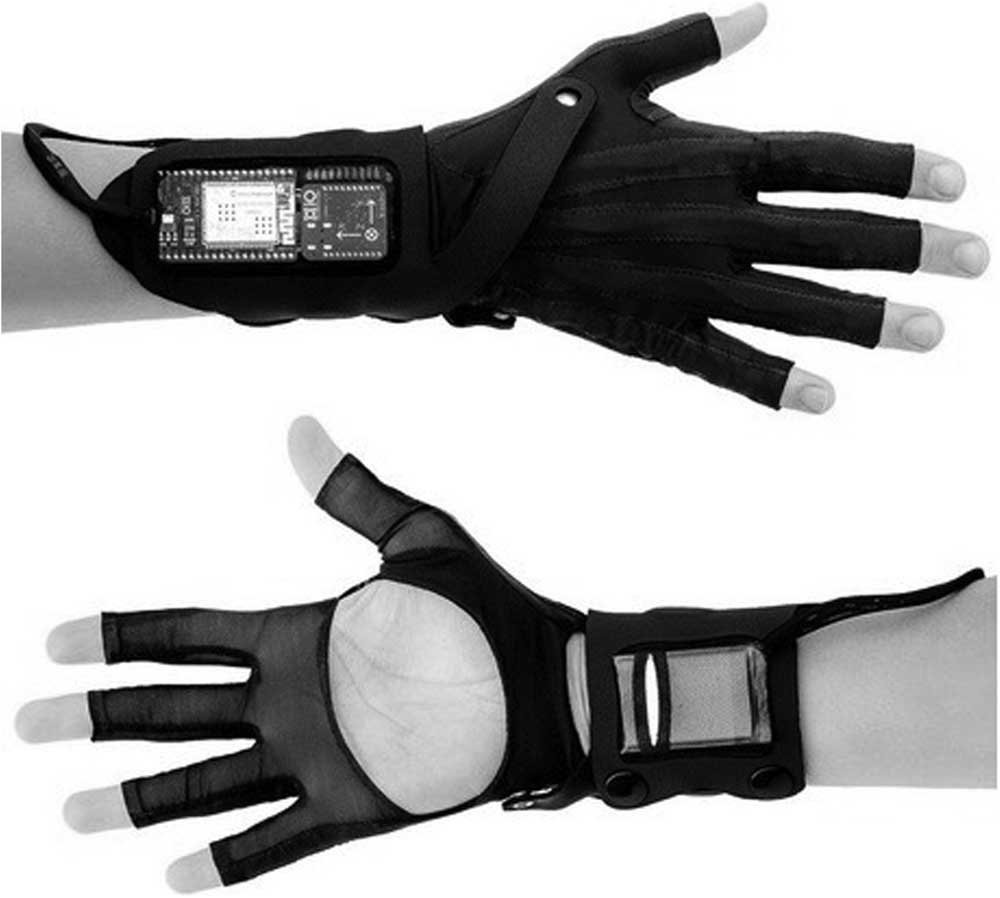
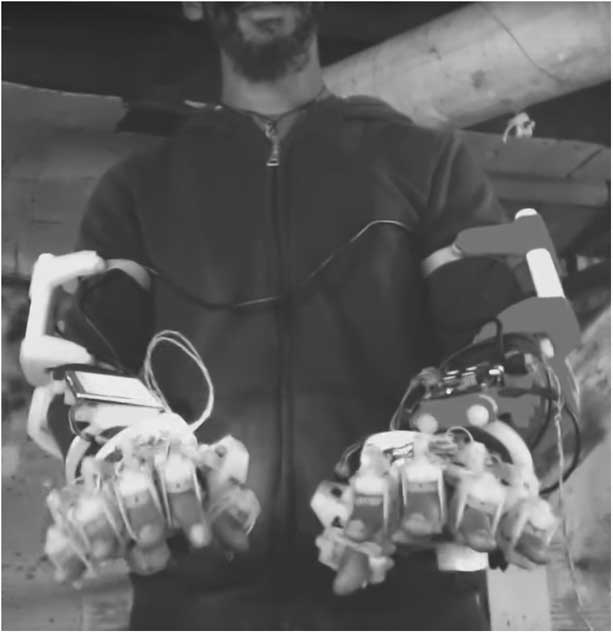
Both Heap’s and Ashanti’s approaches to tracking hand movement and translating it into musical output are based on these earlier models. Heap’s mi.mu gloves contain bend sensors, an inertial measurement unit (IMU) and haptic feedback, with the goal of ‘enabling a performer to manipulate digital musical processes without having to defer audience engagement to undertake subtle interactions with machinery’ (Mitchell and Heap Reference Mitchell and Heap2011: 465; Figure 8). Onyx Ashanti’s Sonocybernetic (Sonocyb) system developed out of his earlier BeatJazz interface, and includes two 3D printed ‘Exo-Hands’, containing knuckle sensors on the fingers and accelerometers (Figure 9). Raspberry Pi computers and batteries are attached to each arm with a 3D printed frame that fits around the arms. The result is an exoskeleton – a highly visible mechanical body augmentation, or, in Ashanti’s words, a ‘digital bio-mechanical hybrid’ (Ashanti Reference Ashanti2014).
mi.mu gloves, mi.mu limited company.

Exo-hands interface, Onyx Ashanti.

As previously stated, both Heap and Ashanti embrace cyborg/sonocyberneticist identities, and this feature of their approach is reflected in the aesthetics of their respective interfaces. Heap and her technical crew embraced the visual elements of the technological augmentation of the glove. According to Bongers, there had been an original plan to cover the electronic components with an outer glove: ‘However, the uncovered glove, with its colored wires and shrink-wrap of the several sensors, had such an interesting “cyber” look that the covering gloves were never used’ (Bongers Reference Bongers2008: 13). Heap herself anthropomorphises the appearance of the glove’s wires, stating, ‘I love the way that these red wires, when you flex … they look like veins or tendons or something’ (Heap Reference Heap2017: 11:33).
Ashanti coined the term ‘sonocybernetics’ to refer to the network of ‘sound, binary logic, computers, 3D printing and basic electronics’ that he uses in his work (Ashanti Reference Ashanti2016a). Feedback is important not only musically, within the system, but also in the system’s design. Ashanti states, ‘My 3D printed designs have a direct impact on their playability which influences how they sound, which influences how I move which influences the expression of the data they generate which influences the machines I have connected to those data streams … and so on’ (ibid.). The Exo-Hands’ 3D printed exoskeletal structure produces a much more imposing augmentation than Heap’s form-fitting mi.mu gloves, with the mechanical construction of the Exo-Hands amplifying the movement of Ashanti’s fingers and merging his body with a mechanical system.
Both Heap’s and Ashanti’s music assists in establishing their cyborg/sonocyberneticist performing personae. Heap’s music has often been described by reviewers as having a cybernetic quality (Woloshyn Reference Woloshyn2009: 2). Though this may be a gendered reaction to the combination of female voice and technology, it points to a fascination that audiences have with technical augmentation to the human process of singing; this, too, finds resonance with Gordon’s descriptions of castrati in the seventeenth century. Heap’s song ‘Me the Machine’, from the 2014 album Sparks, was released as a video featuring Heap performing live and using the mi.mu gloves. The song is self-reflexive, and it considers the human–machine relationship. Aside from the title, the lyrics explore romantic love from a computer’s perspective. Heap and her team describe her cyborg persona in a making of video for ‘Me the Machine’, noting that ‘Thomas [Mitchell] had a really interesting idea, he liked this idea that I become my tech, that I become a cyborg, that my gloves kind of take me over’ (Heap Reference Heap2017: 18:05). In addition to the lyrics, the musical accompaniment to ‘Me the Machine’ evokes a sense of the mechanical. Sequenced bells and kalimba-like sounds are reminiscent of mechanical music boxes. The mappings for Heap’s gloves shift throughout the performance. At times, they directly control the pitch of a portamento-enabled synthesiser patch and trigger percussive samples that generate rhythmic loops.
Ashanti’s music combines elements of jazz, techno and electroacoustic music. In the 2016 piece ‘Wreck Now’, electronically generated and processed sounds are directly controlled by his hand movements. Long moments of languid, arrhythmic, noisy sound are filtered based on changing hand position, and punctuated rhythms are triggered by the Exo-Hands’ accelerometers (Ashanti Reference Ashanti2016b). The effect of the exoskeleton and the sonic palette, which references mechanical and industrial noise, exemplifies the concept of a digital bio-mechanical hybrid.
3.4. Biophysical music: Marco Donnarumma and Michaela Davies
Beyond augmenting the body with sensor-based interfaces, some artists have embraced cyborg identities through the amplification and control of their own biophysical signals. Rather than using prosthetic augmentations to the body, as in the cases described in the previous section, practitioners of biophysical music explore amplification and processing of biological signals to create musical sound. Marco Donnarumma describes biophysical music as ‘a kind of electronic music performance based on a combination of physiological technology and markedly physical, gestural performance … Musical expression thus arises from an intimate and, often, not fully predictable negotiation of human bodies, interfaces and programmatic musical ideas’ (Donnarumma Reference Donnarumma2017: 64). Since the 1960s, several projects have incorporated biosignals into the production of electronic music. Pauline Oliveros’s Valentine (1968) and Merce Cunningham’s Loops (1971) create music out of the sounds of amplified heartbeat (Pressing Reference Pressing1990: 13). Alvin Lucier (Music for Solo Performer) and David Rosenboom (Brainwaves Music) used EEG data for musical performance. The BioMuse system by Benjamin Knapp and Hugh Lusted used EEG as well as EMG data from muscle movements for musical purposes (Tanaka Reference Tanaka2011: 247–8).
Both Donnarumma and Michaela Davies employ technologies to convert low-level muscular movements into musical output. Donnarumma has developed the Xth Sense system, which uses mechanomyogram (MMG) signals from microphones attached to the body. In performance, the sound of this signal is directly amplified and processed. Additionally, the system applies feature extraction, enabling the MMG signal to control other aspects of processing (Donnarumma Reference Donnarumma2012: 2–3). While Donnarumma’s work generates music from the sound of muscle movements, Davies’s work employs electric muscle stimulation (EMS) to send electrical impulses to performers’ muscles. These impulses produce specific involuntary movements that are used to actuate acoustic instruments (Davies Reference Daviesn.d.). By using MIDI-generated electrical impulses to control muscle movement, Davies’s approach turns the human body into an electromechanically driven instrument. In this sense, Davies’s work realises aspects of the seventeenth-century theories described above – especially Descartes’s notion of human responses to music as related to the mechanical responses of automata.
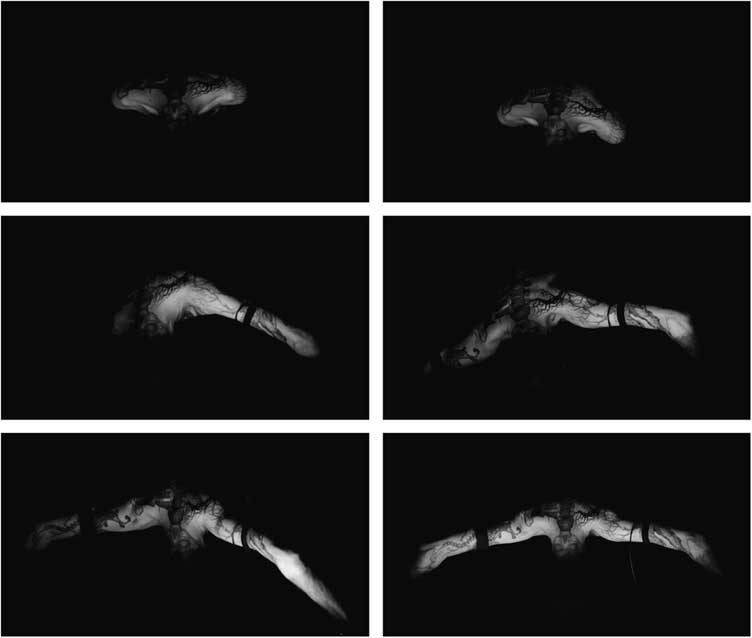
As noted above, Donnarumma explains that performances of biophysical music focus on the body’s gestures, and typically sonify bodily movements. The body is both an instrument and an autonomous being – human and machine. Both Donnarumma and Davies’s musical performances consciously reflect the blurred lines between these categories. Donnarumma describes the piece Corpus Nil as follows: ‘A naked body, partly human and partly machine, lies on stage. It is an amorphous cluster of skin, muscles, hardware and software’ (Donnarumma Reference Donnarumman.d.; Figure 10). Donnarumma also invokes the idea of the cyborg in this piece: ‘In an unstable feedback loop, the body and the machine pollute each other. The amorphous being on stage slowly evolves into an unfamiliar creature’ (ibid.).
Xth Sense in performance of Corpus Nil, Marco Donnarumma.

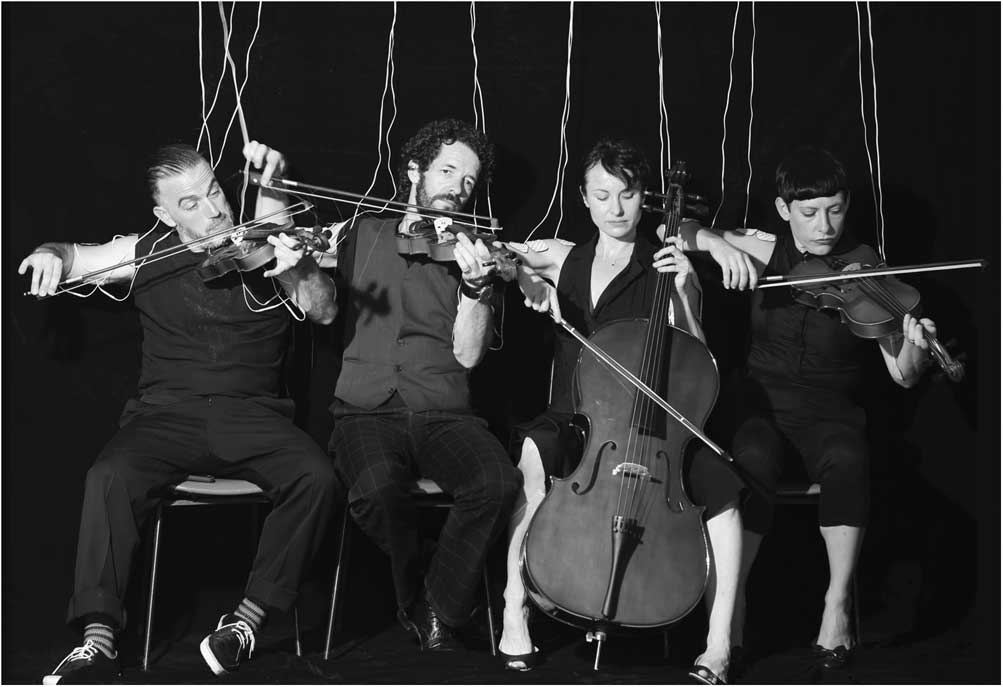
Davies has created several projects that incorporate EMS technology to produce musical sounds. Compositions for Involuntary Strings pairs string players who are augmented with EMS technology with performers on acoustic instruments (Figure 11). This series of pieces plays with the notion of human and mechanical performance, reflecting Haraway’s idea that we are all cyborgs mediated by technology. As Davies writes in the programme notes for Untitled, written for Cyborg String Quartet, ‘Inserting robotic elements into this continuing emblem of Western classical tradition, this 18th-century-meets-cyborg string quartet provides a stark example of the man/machine interfacing that is central to most contemporary music creation, production and performance, and points to our growing reliance upon machines to perform repetitive or difficult tasks we used to do ourselves’ (Davies Reference Daviesn.d.). EMS is used to produce tremolo and other complex rhythmic effects through rapid muscle stimulation. These actions are replicated by the non-augmented performers. As in Corpus Nil, the performance of this piece features a human body moving in a mechanical way.
Compositions for Involuntary Strings, Michaela Davies.

4. CONCLUSION
Manifestations of the anthropomorphic analogy in both the seventeenth century and the present day may be understood as a response to contemporaneous technologies, reflecting a desire to humanise those technologies and render them more familiar. At the same time, in both eras, the anthropomorphic analogy forces the audience to problematise the relationship between human beings and technology, and even to reconsider the nature of the human body itself. Forced out of a comfortable, familiar context, technologies that are subjected to the anthropomorphic analogy become foreign and wondrous. In the seventeenth century, writers such as Descartes and Marino, instrumentalists including Diruta and Praetorius, and artists such as Larmessin and Braccelli considered the shifting relationship between the human body and instrumental technologies, reflecting developments in conceptions of instrumentality and a new scientific worldview.
These cases from the early modern era shed light on the aesthetic and theoretical motivations that drive the anthropomorphic analogy in contemporary music technology, performance and composition. Artists and researchers explore manifestations of the anthropomorphic analogy through the development of humanoid musical robots and cyborg performers, creating autonomous instruments in human form and blurring the boundaries between body and instrument. These projects are based on technologies developed in the second half of the twentieth century – cybernetics and physical computing – which have enabled creative reconnections between physical actions and sound production in electronic and computer-based music. In connecting early modern ideas of the anthropomorphic analogy with its contemporary realisations, we propose that the cases discussed here shed light on one another. A historical view of the anthropomorphic analogy helps to clarify the relationship between human beings and the instruments they use, as well as the tensions that emerge from that complex relationship.