Introduction
The domestic dog was domesticated 12–15,000 years ago and has since become one of the most popular pet animals (Morey, Reference Morey1994). During the long association of human–dog relationships, the role of dogs has changed from hunting and guarding companions to family members. Increasing numbers of dog ownership in the world (FEDIAF, 2018) indicate that dogs are beloved pets, despite rapid urbanization and modern lifestyles. Several studies have proven the benefits of dog ownership – for example, offering companionship, decreasing stress levels and increasing physical health (Paul et al., Reference Paul, King and Carlin2010; Curl et al., Reference Curl, Bibbo and Johnson2016; Dall et al., Reference Dall, Ellis, Ellis, Grant, Colyer, Gee, Granat and Mills2017). However, besides the benefits, dogs may carry several parasite species that can affect the health of dog owners.
Zoonotic parasites like Toxocara canis, Taenia sp., Echinococcus granulosus, E. multilocularis and Giardia sp. carried and transmitted by dogs have a wide geographic distribution (Bugg et al., Reference Bugg, Robertson, Elliot and Thompson1999; Dyachenko et al., Reference Dyachenko, Pantchev, Gawlowska, Vrhovec and Bauer2008; Barutzki & Schaper, Reference Barutzki and Schaper2011). Infections with these parasites may cause serious health problems for humans, especially for small children, elderly and immunocompromised people. Due to the close contact with humans, dogs have a high potential to act as vectors in human infections. More importantly, dogs share the same parasite species with their wild relatives, some of them – for example, the red fox (Vulpes vulpes) and raccoon dog (Nyctereutes procyonoides) – with high and increasing population numbers in Europe (Contesse et al., Reference Contesse, Hegglin, Gloor, Bontadina and Deplazes2004; Kauhala & Kowalczyk, Reference Kauhala and Kowalczyk2011; Vuorisalo et al., Reference Vuorisalo, Talvitie, Kauhala, Bläuer and Lahtinen2014). Although direct contact between pet dogs and wild canids is probably not common, sharing the same living space may favour parasite transmission in the environment. It is suspected that parasite spillover occurs and is very likely in urban green areas as these places attract wildlife by providing opportunities for both foraging and hiding (Deplazes et al., Reference Deplazes, Hegglin, Gloor and Romig2004; Eckert & Deplazes, Reference Eckert and Deplazes2004; Bateman & Fleming, Reference Bateman and Fleming2012). Dog owners, spending time in parks, recreational areas and in children's playgrounds, tend to take their pets with them (Traversa et al., Reference Traversa, Frangipane di Regalbono, Di Cesare, La Torre, Drake and Pietrobelli2014), and a scarcity of suitable dog walking sites in towns also forces owners to walk their dogs in green areas.
Previous studies indicate infection gradients from heavily infected hosts in rural areas towards decreased infection intensity in the urban environment for several parasite species (Fischer et al., Reference Fischer, Reperant, Weber, Hegglin and Deplazes2005; Studzińska et al., Reference Studzińska, Demkowska-Kutrzepa, Borecka, Meisner, Tomczuk, Roczeń-Karczmarz, Kłapeć, Abbass and Cholewa2017). However, high human and dog population densities in urban areas is a serious risk factor (Otranto et al., Reference Otranto, Cantacessi, Pfeffer, Dantas-Torres, Brianti, Deplazes, Genchi, Guberti and Capelli2015). Parasitic contamination of the urban environment with dog intestinal parasites is well documented in several studies (Mizgajska, Reference Mizgajska2001; Talvik et al., Reference Talvik, Moks, Mägi, Järvis and Miller2006; Dado et al., Reference Dado, Izquierdo and Vera2012; Blaszkowska et al., Reference Blaszkowska, Wojcik, Kurnatowski and Szwabe2013; Ferreira et al., Reference Ferreira, Alho, Otero, Gomes, Nijsse, Overgaauw and Madeira de Carvalho2017; Otero et al., Reference Otero, Alho, Nijsse, Roelfsema, Overgaauw and Madeira de Carvalho2018) and the role of pet dogs as the main distributers of common canine parasites – Toxocara spp. – to the city environment has also been demonstrated (Nijsse et al., Reference Nijsse, Mughini-Gras, Wagenaar, Franssen and Ploeger2015). However, urban areas include several zones, some of them more suitable for host–parasite contact. So far, there is little knowledge about factors influencing parasitic infections inside towns.
Estonia is located in the temperate continental climate zone in north-eastern Europe. The climate is influenced by the Atlantic Ocean and Baltic Sea; while continental climate is prevalent in most of the country, the western part of Estonia is characterized by milder, maritime climate elements. Average air temperatures range from 18°C in July to −6°C in February. Based on the World Bank, Estonia is a post-soviet country with a high-income economy. According to Statistics Estonia, the current population number is 1.3 million, of which 63% live in urban areas (Statistics Estonia, 2012).
Dogs are common pets in Estonia, with an estimated dog population of 210,000 (FEDIAF, 2018), of which 10,000 are supposed to be abandoned or stray (ESDAW, 2017). Generally, stray dogs do not pose a threat in larger towns where animal shelters have been established. Also, larger municipalities provide advantages – for example, free waste bags for pets and dog-walking zones, which are not usually available in smaller towns.
There is also little information about dog-transmitted parasites in Estonia. Talvik et al. (Reference Talvik, Moks, Mägi, Järvis and Miller2006) reported T. canis infection in 2.7% of investigated dog excrement collected in Tartu. Comparing dog infection in the areas of low and high human population density, they revealed higher infection in private-housing areas, despite the fact that the number of dogs was higher in apartment-house regions (Talvik et al., Reference Talvik, Moks, Mägi, Järvis and Miller2006). Serological analyses concerning human population groups more often exposed to parasites – for example, medical and veterinary students, veterinarians and hunters – have also revealed higher prevalence with zoonotic dog parasites, like Toxocara and Echinococcus (Remm and Remm, Reference Remm and Remm2014; Lassen et al., Reference Lassen, Janson, Viltrop, Neare, Hütt, Golovljova, Tummeleht and Jokelainen2016). The aims of this investigation were to (i) determine the factors influencing parasite contamination in urban areas and (ii) identify dog-transmitted endoparasites in Estonian urban dogs.
Materials and methods
In total, 657 samples of dog excrement was collected over one year (2013–2014) of investigation. Our investigation involved five Estonian towns located in several parts of Estonia. Of these five towns, three towns (Tartu, Elva and Kunda) were visited regularly and two towns (Pärnu and Rakvere) were visited unregularly by the authors. Sample collection was conducted in three small towns (less than 20,000 inhabitants) and in two larger towns (more than 40,000 inhabitants in the study period). The small towns comprised Rakvere, with 29 samples collected, Kunda, with 89 samples, and Elva, with 102 sample. The larger towns were Tartu and Pärnu, with 400 and 37 samples collected, respectively. The sampling sites inside towns were selected on the map depending on the housing type. In every town, sample collection was performed in detached house and densely populated apartment-house regions. In total, 17 sampling sites were selected. In both housing types, excrement was collected from sidewalks (maximum 0.5 m of road verge) and green areas (lawns, parks and playgrounds). As green areas are limited in towns and are often used by dog walkers, we documented all fitness trails and public playgrounds in sample collection sites. People, especially children, have a possibility to acquire infection with endoparasites when spending time in these areas. In later data analyses, recreational zones, as well as sampling sites in open school parks and sidewalks in the immediate vicinity of nurseries, were treated as potential hazard zones.
The sampling season (spring, summer, autumn, winter) was fixed according to meteorological seasons. In sampling sites, all fresh-appearing excrement was collected from the ground into separate plastic bags. We estimated dog size by modifying the method widely used for identifying wild mammal species. According to this, the size and shape of faeces is host-specific – even with similar diet, smaller animals generally produce smaller excrement. However, it is important to note that the current method for differentiating dog sizes by excrement may not be applicable for dog populations on a larger scale because of the vast variation between dog breeds and sizes. The diameters of the excrement samples were measured and divided as follows: excrement with a diameter <15 mm was determined as ‘small’; excrement with a diameter of 15–20 mm was classed as ‘medium’; and excrement with a diameter >20 mm was classed as ‘large’. According to this, 173 samples of excrement were identified as small, 132 samples as medium and 144 samples as large. For 208 samples, excrement diameter could not be measured and for statistical analyses an additional group for unmeasured samples was created.
The collected excrement was deep frozen at −80°C for a minimum of seven days in order to inactivate highly pathogenic Echinococcus eggs, as both E. granulosus and E. multilocularis are present in Estonia (Laurimaa et al., Reference Laurimaa, Davison and Süld2015a, Reference Laurimaa, Davison and Plumerb). Thawed samples were analysed using the concentration flotation technique (Roepstorff & Nansen, Reference Roepstorff and Nansen1998) and identification of parasites was based on morphological characteristics. Infection prevalence was defined as the presence of parasitic oocysts/eggs in excrement, and infection intensity was determined as the number of oocysts/eggs per sample.
Statistical analyses were performed by R (R Core Team, 2018). For evaluating the infection risk with endoparasites, generalized linear mixed models (package glmmTMB) were used with binomial distribution (Brooks et al., Reference Brooks, Kristensen, Benthem, Magnusson, Berg, Nielsen, Skaug, Maechler and Bolker2017). Negative binomial distribution was used to identify factors affecting infection intensity with endoparasites and roundworms (as the most prevalent parasite group).
Models contained infection risk (0 = uninfected, 1 = infected) or intensity of the infection (detected parasitic oocyst and egg count) and at least one of the following independent variables: ‘excrement size’, ‘town size’, ‘housing type’, ‘season’ and ‘potential hazard zone’. The random variable included location (town). Models were compared using Akaikes' information criterion corrected for small samples (Burnham & Anderson, Reference Burnham and Anderson2004). Furthermore, we summed the weights (w) of the same factors presented in one model set calculating the relative variable importance (RVI). Subsequently, the package DHARMa (Hartig, Reference Hartig2018) enabled us to control the distribution of the residuals and to estimate dispersion for the best models.
Results
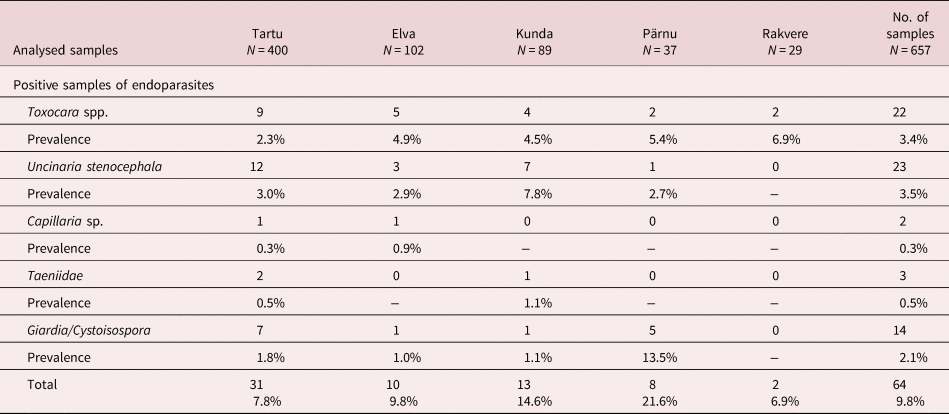
Coprological examination revealed the presence of five parasite species or genera from the analysed dog excrement (table 1). The overall prevalence of dog endoparasites in the investigated towns was 9.8%, and the most prevalent parasites in our sample were nematodes Uncinaria stenocephala and Toxocara spp.
The prevalence of dog endoparasites in Estonian towns.

Modelling infection prevalence and intensity in dogs yielded with several good models in one model set. As all investigated factors were present in the best models with similar effects (supplementary table S1), only the statistics of the first model is explained in the text. The random factor ‘town’ had none or minor variance inside the investigated towns, indicating little infection variance between towns. When estimating the precision of the best models (ΔAICc < 2) via DHARMa, uniform distribution appeared and overdispersion was not detected.
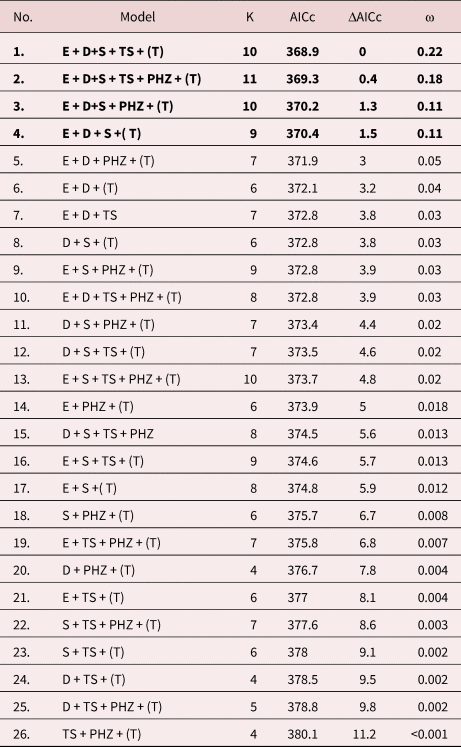
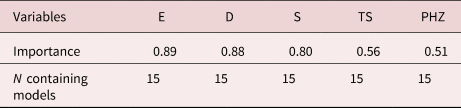
When modelling dog infection prevalence with endoparasites, four equally good models with low model weights appeared (table 2). Comparing small excrement with other size classes and assuming that excrement size correlates with dog size, the models predicted lower infection prevalence for larger (β Large = −1.0, standard error (SE) = 0.4) and medium-sized (β Medium = −1.2, SE = 0.5) dogs. Similarly, infection prevalence was lower for unmeasured (β Unmeasured = −1.0, SE = 0.4) excrement. In two analysed housing types, models predicted higher endoparasite prevalence in apartment-house districts (β ApartmentHouse = 0.9, SE = 0.3) than in detached-house regions. In comparison with winter, dog infection prevalence increases in spring (β Spring = 0.7, SE = 0.5) and in autumn (βAutumn = 0.6, SE = 0.4) but decreases in summer (β Summer = −0.7, SE = 0.6). Comparing with large towns, infection prevalence was higher in smaller towns (β SmallTown = 0.8, SE = 0.3). All good models contain the factors ‘excrement size’, ‘housing type’ and ‘season’, which had a moderate effect on infection prevalence according to the RVI test (table 3).
Generalized linear mixed models (GLMM) of dog infection risk with endoparasites.

The best models are in bold. K, number of estimated parameters for given model; ΔAICc, AICc−minAICc; ω, AICc weights; D, district; S, season; E, excrement size; TS, town size; (T), town; PHZ, potential hazard zone.
Results of the relative variable importance test for infection risk with endoparasites.

D, district; S, season; E, excrement size; TS, town size; PHZ, potential hazard zone.
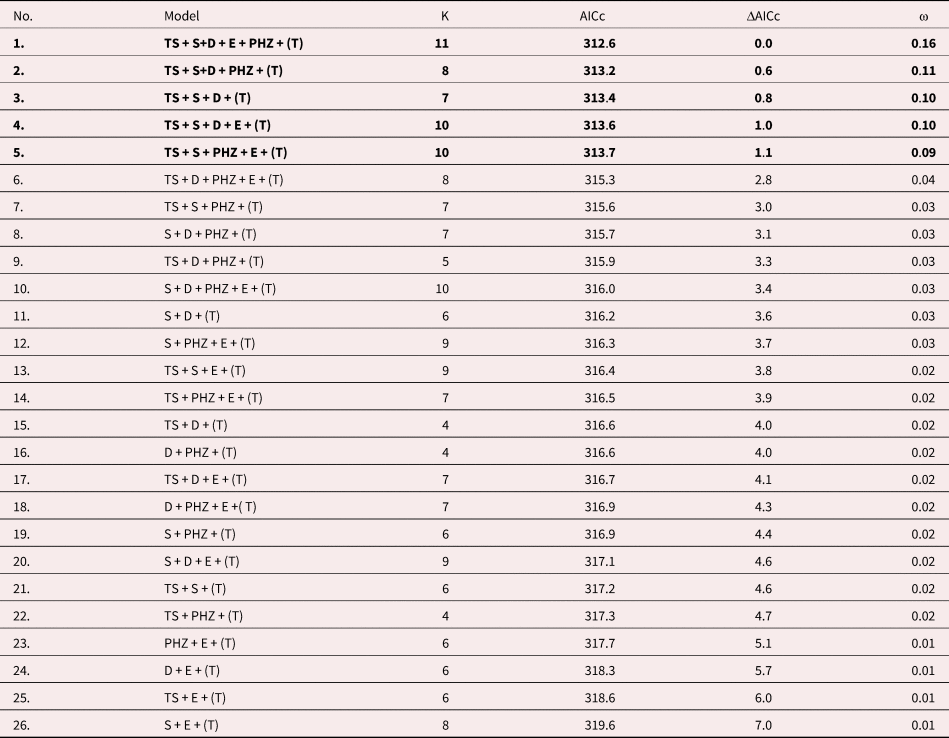
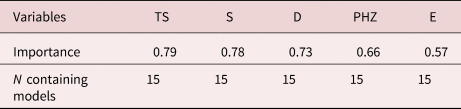
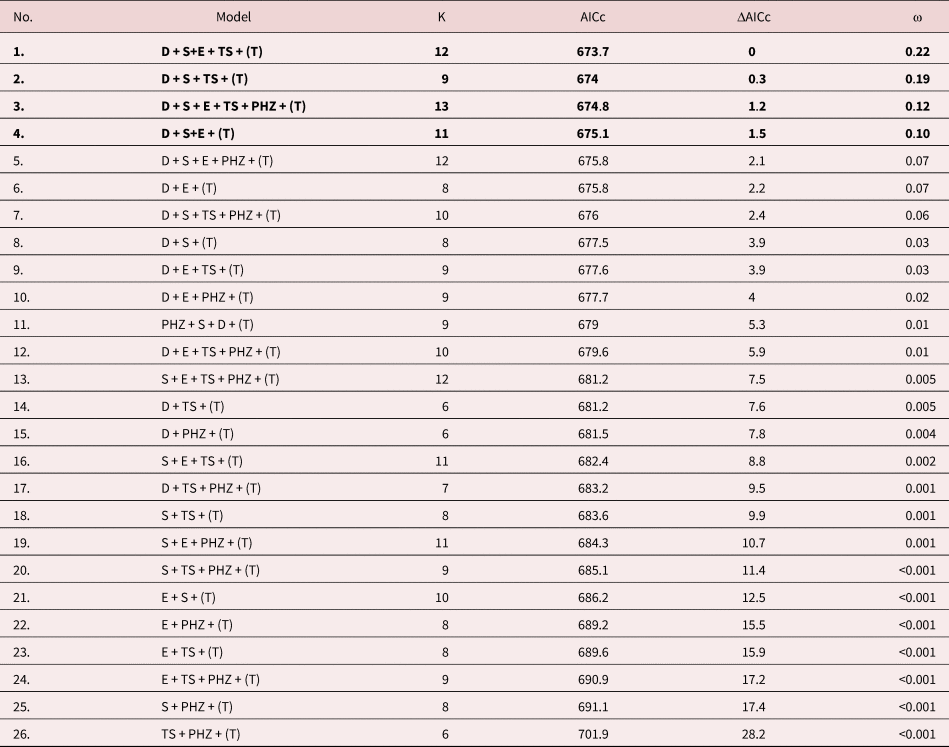
Dogs' infection prevalence with roundworms was predicted by five equally good models (table 4). According to the first model, nematodes had higher infection prevalence in small towns (β SmallTown = 1.0, SE = 0.4) instead of large ones. According to the housing type, dogs in apartment-house regions have higher infection prevalence with nematodes (β ApartmentHouse = 0.7, SE = 0.4) than in detached-house regions. In comparison with winter, the infection prevalence was higher in spring (β Spring = 1.3, SE = 0.6) and autumn (β Autumn = 0.4, SE = 0.4) and decreases in summer (β summer = −0.4, SE = 0.7). Dogs have higher infection prevalence with nematodes in potential hazard zones (β PotentialHazardZone = 0.6, SE = 0.3) than on the streets. Compared with small dogs, infection prevalence with nematodes was lower among large (β Large = −1.2, SE = 0.6) and medium-sized dogs (β Medium = −0.9, SE = 0.5). Similarly, the infection prevalence was lower for unmeasured (β Unmeasured = −0.3, SE = 0.5) samples. Considering the results of the RVI test (table 5), the factors ‘town size’, ‘season’, ‘district’ and ‘potential hazard zone’ have moderate effects on infection prevalence, while the effect of ‘excrement size’ was rather weak.
Generalized linear mixed models (GLMM) selection of dog infection risk with roundworms.

The best models are in bold. K, number of estimated parameters for given model; ΔAICc, AICc−minAICc; ω, AICc weights; D, district; S, season; E, excrement size; TS, town size; (T), town; PHZ, potential hazard zone.
Results of the relative variable importance test for infection risk with roundworms.

D, district; S, season; E, excrement size; TS, town size; PHZ, potential hazard zone.
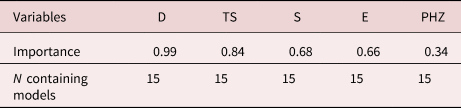
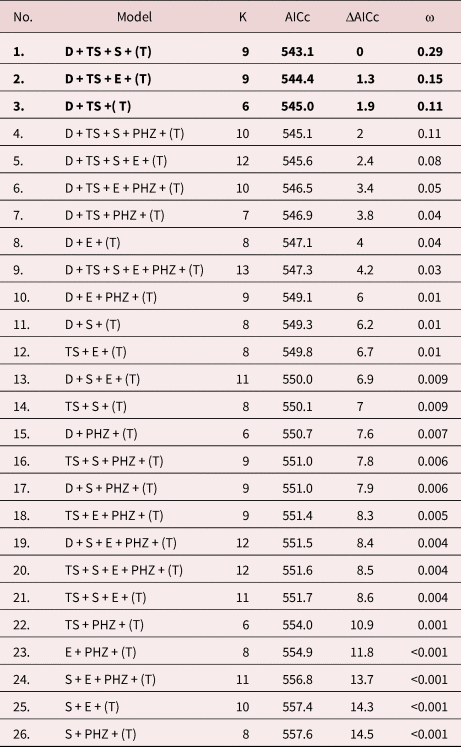
The infection intensity with endoparasites was explained by four equally good models (table 6). According to the first model, infection intensity was higher in apartment-house districts (β ApartmentHouse = 2.3, SE = 0.7) than near detached houses. Infection intensity depended on the season: compared with winter, infection increased in spring (β Spring = 1.1, SE = 1.0) and autumn (β Autumn = 2.2, SE = 0.8) but decreased in summer (β Summer = −0.7, SE = 1.1). The model also indicated intensive infection for excrement with small diameter size compared with large (β Large = −1.5, SE = 0.8), medium (β Medium = −1.7, SE = 1.0) or unmeasured (β Unmeasured = −1.4, SE = 0.8) excrement. Comparing infection prevalence in small and larger towns, the best model predicts higher infection intensity in small towns (β SmallTown = 1.5, SE = 0.8). The RVI indicates strong effect for the factors ‘housing type’ and ‘town size’, while the other three investigated factors had rather weak effect toward infection intensity (table 7).
Generalized linear mixed models (GLMM) selection of infection intensity in dogs.

The best models are in bold. K, number of estimated parameters for given model; ΔAICc, AICc−minAICc; ω, AICc weights; D, district; S, season; E, excrement size; TS, town size; (T), town; PHZ, potential hazard zone.
Results of the relative variable importance test for infection intensity in dogs.

D, district; S, season; E, excrement size; TS, town size; PHZ, potential hazard zone.
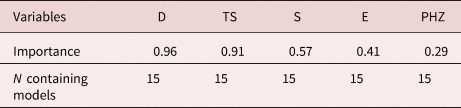
Three equally good models determined the factors influencing infection intensity with roundworms (table 8). Again, roundworm intensity was significantly higher in apartment-house regions (β ApartmentHouse = 2.1, SE = 0.6) than in detached-house areas. In the two investigated town types, dogs had higher infection intensities with roundworms in small towns (β SmallTown = 2.4, SE = 0.7) than in large ones. Compared with winter, the infection intensity decreased in summer (β Summer = −1.7, SE = 0.8) but increased in spring (β Spring = 1.3, SE = 0.9) and autumn (βAutumn = 0.6, SE = 0.8). According to the RVI test, only ‘housing type’ and ‘town size’ had strong effect toward roundworm intensity, while the factors ‘season’ and ‘excrement size’ indicated moderate effects (table 9).
Generalized linear mixed models (GLMM) selection of infection intensity with roundworms.

The best models are in bold. K, number of estimated parameters for given model; ΔAICc, AICc−minAICc; ω, AICc weights; D, district; S, season; E, excrement size; TS, town size; (T), town; PHZ, potential hazard zone.
Results of the relative variable importance test for infection intensity with roundworms.

D, district; S, season; E, excrement size; TS, town size; PHZ, potential hazard zone.
Discussion
Dogs are among the commonest pet animals worldwide, and they can host a number of important zoonotic parasites. Understanding the factors influencing the spread of parasitic diseases may help to reduce infections in pet animals and humans. Here, we used dog excrement, collected from the streets and green areas of Estonian towns, to identify environmental contamination with zoonotic parasites. While the effect of the season has been described earlier (Shimizu, Reference Shimizu1993; Avcioglu & Burgu, Reference Avcioglu and Burgu2008; Blaszkowska et al., Reference Blaszkowska, Wojcik, Kurnatowski and Szwabe2013), we demonstrated that infection prevalence also depends on town size and identified infection hotspots in towns. In Estonia, parasitic contamination is concentrated in areas of high human density, in areas dominated by multi-stored apartment blocks and in potentially hazardous zones, including playgrounds, recreational areas and near schools/nurseries. This study also suggests that endoparasite infection in Estonian urban dogs depends on dog size.
In Estonia, stray dogs are uncommon, especially in larger towns, and dog owners are obliged to remove pet excrement from public areas. We assume that excrement contamination in towns is caused by irresponsible dog owners who do not remove pet faeces and fail to perform regular antiparasitic treatment. Excrement collected in public areas is, thus, a useful tool for determining environmental contamination with endoparasites. However, scats collected during field work provide little background information about the investigated hosts. Previously, only excrement location has been used to identify risk factors for parasite transmission in different areas (Antolová et al., Reference Antolová, Reiterová, Miterpáková, Stanko and Dubinský2004; Dubná et al., Reference Dubná, Langrová, Nápravník, Jankovská, Vadlejch, Pekár and Fechtner2007; Dado et al., Reference Dado, Izquierdo and Vera2012).
We expected to find higher infection prevalence in large dogs that are taken for longer walks, probably outside of towns, or kept outside as guard dogs in areas of detached housing. Instead, our investigation revealed that smaller excrement is more frequently infected and contains significantly higher parasite burdens than large excrement. Our results are in accordance with previous studies, where endoparasite transmission by puppies is well described (Fontanarrosa et al, Reference Fontanarrosa, Vezzani, Basabe and Eiras2006; Barutzki & Schaper, Reference Barutzki and Schaper2011). However, small-sized dogs may also pose a threat in towns by contaminating the environment with endoparasites. In the last decade, small dogs have become increasingly popular pets in the US and elsewhere (Ferdman, Reference Ferdman2015; Teng et al., Reference Teng, McGreevy, Toribio and Dhand2016), and the situation appears similar in Estonia. Although we could not differentiate between puppies and small dogs, our result is alarming, as both puppies and small dogs are highly attractive to children and probably have a higher degree of physical contact with humans (e.g. being carried, petted, etc.) than larger dogs. Equally, elderly people may prefer small dogs, as they are more affordable and easier to handle than medium or large dogs. Thus, it is likely that people underestimate the risk of disease transmission and infection associated with small dogs.
The lower infection prevalence and intensity in larger dogs may reflect owner awareness. Pullola et al. (Reference Pullola, Vierimaa, Saari, Virtala, Nikander and Sukura2006) demonstrated that veterinarians are the main source of information about dog parasites. Although similar analysis has not been conducted in Estonia, it is likely that the same applies. Antiparasitic treatment of dogs twice or four times a year depending on the dog's lifestyle is recommended by veterinary practices in Estonia. It is possible that larger dogs are perceived to be at a higher risk of lifestyle-related health problems, including parasite infection, since they generally engage in more frequent off-lead outdoor activities, and, as a consequence, receive more frequent anti-parasitic treatment.
The current study reveals that parasite infection prevalence is higher in smaller than in larger towns. Previous studies have demonstrated higher endoparasite infection prevalence among rural dogs than urban dogs (Habluetzel et al., Reference Habluetzel, Traldi, Ruggieri, Attili, Scuppa, Marchetti, Menghini and Esposito2003; Soriano et al., Reference Soriano, Pierangeli and Roccia2010; Bwalya et al., Reference Bwalya, Nalubamba, Hankanga and Namangala2011). Thus, parasite prevalence appears to decline along a gradient from rural areas towards city centres (Fischer et al., Reference Fischer, Reperant, Weber, Hegglin and Deplazes2005; Studzińska et al., Reference Studzińska, Demkowska-Kutrzepa, Borecka, Meisner, Tomczuk, Roczeń-Karczmarz, Kłapeć, Abbass and Cholewa2017). In smaller towns, there may be restricted availability of areas suitable for dog walking, and, conversely, easier access to rural trails. In addition, opportunistic mesocarnivores, like the red fox, raccoon dog and badger (Meles meles), may occur more frequently in and around smaller towns, presenting a potential source of infection with zoonotic parasites (Deplazes et al., Reference Deplazes, Hegglin, Gloor and Romig2004; Bateman & Fleming, Reference Bateman and Fleming2012).
As both human and dog activity are heterogeneously distributed in space, we expected to find infection hotspots inside towns. Based on the results of an earlier study by Talvik et al. (Reference Talvik, Moks, Mägi, Järvis and Miller2006), we expected to find higher infection prevalence in regions dominated by detached housing, as these often contain few walking areas for dogs, while gardens are attractive to urban foxes, which probably contribute to environmental spillover (Contesse et al., Reference Contesse, Hegglin, Gloor, Bontadina and Deplazes2004; König, Reference König2008). In fact, we recorded higher endoparasite prevalence and intensity in regions dominated by apartment blocks. It is possible that dogs living in detached houses are kept in yards, with less access to streets, compared with dogs from apartments that are walked more widely by their owners at least once a day. As the density of humans and pets is probably highest in areas dominated by apartment blocks, it is also likely that endoparasites are also concentrated in the green areas surrounding apartment blocks.
In the current study, potential hazard zones consisting of recreational sites and green areas near schools and nurseries function as infection hotspots. These are mainly areas where people tend to walk their dogs daily, resulting in higher environmental contamination and an increased amount of contact between dogs. Thus, the infection cycle may be ‘closed’ in the apartment-house region (Azam et al., Reference Azam, Ukpai, Said, Abd-Allah and Morgan2012). Poor excrement-removal practice also supports higher endoparasite prevalence in soil. Similarly, Dubná et al. (Reference Dubná, Langrová, Nápravník, Jankovská, Vadlejch, Pekár and Fechtner2007) suggested that the occurrence of Toxocara eggs was high in public parks of urban areas because of the growing dog population and due to the relatively small dog walking areas. Our finding is important from an epidemiological perspective and is consistent with theoretical models linking host density to the opportunity of a parasite to invade a population of hosts (Morand & Poulin, Reference Morand and Poulin1998).
Various studies have demonstrated significant seasonal variation in endoparasite infection prevalence and the viability of parasite eggs in soil/excrement (Shimizu, Reference Shimizu1993; Avcioglu & Burgu, Reference Avcioglu and Burgu2008; Blaszkowska et al., Reference Blaszkowska, Wojcik, Kurnatowski and Szwabe2013). Our study revealed highest endoparasite prevalence and intensity in dogs in spring and in autumn and lowest in summer, which is in accordance with previous investigations (Shimizu, Reference Shimizu1993; Avcioglu & Burgu, Reference Avcioglu and Burgu2008). Helminth eggs in the environment are damaged by heat and ultraviolet (UV) radiation (Chernicharo et al., Reference Chernicharo, Silva, Zerbini and Godinho2003), which are highest in summer in temperate regions. Thus, egg survival is probably facilitated by a long-lasting autumn because of the decreased heat and UV radiation. It has been shown that helminth eggs and larvae can survive the winter in soil under thick snow cover (Ghadirian et al., Reference Ghadirian, Viens, Strykowski and Dubreuil1976). On the other hand, some authors have explained increased infection risk in spring and in autumn in relation to a higher birth rate of puppies in these seasons (Shimizu, Reference Shimizu1993; Avcioglu & Burgu, Reference Avcioglu and Burgu2008). However, modern dog breeding, especially in urban regions, is unaffected by seasons (Engle, Reference Engle1946) and puppies are born more continuously, resulting in constant helminth egg spillover throughout the year.
Data on parasitic infection in Estonian urban dogs is restricted to one study carried out more than a decade ago (Talvik et al., Reference Talvik, Moks, Mägi, Järvis and Miller2006). According to that investigation, the prevalence of infection with geohelminths among Estonian dogs was rather low (2.7%), compared with the corresponding figure from the present study (7.2%). It is possible that the difference is affected by relatively small sample size of the previous study by Talvik et al. (Reference Talvik, Moks, Mägi, Järvis and Miller2006). Ten years ago, owners more often allowed their dogs to roam out of sight. People also had less knowledge about dog hygiene, which resulted in lower deworming rates and infrequent excrement removal. It is important to note that according to the current study there has been a shift of endoparasite prevalence from regions dominated by detached housing to those dominated by apartment blocks. It is likely that ten years ago more dogs were freely roaming in regions of detached housing, leading to high endoparasite prevalence in such areas. Both Talvik et al. (Reference Talvik, Moks, Mägi, Järvis and Miller2006) and our study suggest that the main helminths in Estonia are geohelminths U. stenocephala and Toxocara spp. Previously, Fahrion et al. (Reference Fahrion, Schnyder, Wichert and Deplazes2011) showed that most of the excreted Toxocara spp. eggs in the environment belong to T. canis. Although the prevalence of Giardia and Cystoisspora was not high, these parasites can rapidly spread among dogs inhabiting the same areas, as shown by Bugg et al. (Reference Bugg, Robertson, Elliot and Thompson1999) in Australia, where dogs only treated with anthelmintics targeting roundworms were infected by Giardia sp. On the other hand, protozoans like Giardia, Cryptosporidium and Cystoisospora are often overlooked by common microscopy, as shown by McGlade et al. (Reference McGlade, Robertson, Elliot, Read and Thompson2003).
Given the rapid urbanization of Estonian red fox populations (Plumer et al., Reference Plumer, Davison and Saarma2014), more attention should be paid to the single findings of Taeniidae eggs. Morphologically, eggs from genera Taenia and Echinococcus are indistinguishable. In recent studies, the eggs of E. granulosus from dog excrement and E. multilocularis from urban fox excrement were found in Tartu (Laurimaa et al., Reference Laurimaa, Davison and Süld2015a, Reference Laurimaa, Davison and Plumerb) and cosmopolitan parasites including Toxocara sp. and Taeniidae have been shown to be common in Estonia (Talvik et al., Reference Talvik, Moks, Mägi, Järvis and Miller2006; Laurimaa et al., Reference Laurimaa, Davison and Süld2015a). Thus, human contact with zoonotic dog parasites are very likely to occur in Estonia (Remm and Remm, Reference Remm and Remm2014; Lassen et al., Reference Lassen, Janson, Viltrop, Neare, Hütt, Golovljova, Tummeleht and Jokelainen2016).
Summary
The current study revealed the presence of infection hotspots in Estonian towns. According to our investigation, dogs in small towns harbour more gastrointestinal parasites than in larger towns, while infective stages of parasites are concentrated in potential hazard zones (playgrounds, recreational areas) and areas surrounded by apartment blocks. It is likely that infection hotspots are formed in areas where both dog and human numbers are high and a limited number of green areas are extensively used for dog walking. In addition, we wish to emphasize the role of small dogs as potential vectors for endoparasite transmission.
Thus, preventive measures (scat removal and pet deworming) should target dog owners in small towns and around apartment-house regions. However, the role of small dogs as parasitic disease transmitters is alarming because humans may underestimate them as disease vectors. Therefore, it is essential to inform the public of exposure to zoonotic parasites, especially via small dogs.
Supplementary material
To view supplementary material for this article, please visit https://doi.org/10.1017/S0022149X19000920.
Acknowledgements
We gladly thank Ragne Oja and Egle Tammeleht for their generous advice in statistical analysis. We are also very grateful to John Davison for language revision.
Financial support
This study was supported by the Estonian Ministry of Education and Research (institutional research funding grant IUT20-32).
Conflicts of interest
None.