


1. Introduction
The maritime industry has been regarded as a reactive rather than a proactive industry when developing legislation or amendments to regulations (Soltani, Reference Soltani2009), and so is the case with regards to safety. The International Convention for the Safety of Life at Sea (SOLAS, 1974) was rectified in response to the events on the HMS Titanic (Sutton, Reference Sutton2014), and the 1980s saw a series of accident in commercial shipping, most notably with the capsizing of the MS Herald of Free Enterprise, which gave rise to the International Safety Management (ISM) Code (Praetorius and Lützhöft, Reference Praetorius and Lützhöft2011). Since their introduction, the conventions have been regulating safety in shipping. Moreover, the last few decades have seen the maritime industry's effort to modernise the safety culture and overcome the ‘dated’ safety framework. However, the focus remains largely on the merchant aspect of shipping, leaving industries such as the superyacht sector in the shadows.
The superyacht sector is rarely considered in the same discussion as merchant ships, and rightly so. Yachts practice in completely different markets, under different constraints and in opposite methods of service. Nevertheless, that is not to say yachting should operate to different standards as merchant ships or different conventions. The whole maritime industry should be united and face equal scrutiny from regulatory bodies. The dangers presented in commercial shipping are without question more perilous than those presented in yachting but that should not hide the fact that yachts still pose their dangers to the crew, and recent fatalities have shown this.
The fatalities in the yachting world over the last few years have occurred due to improper use of equipment, disregard for safe operating procedures, fatigue and lack of awareness. For example, Michael Hanlon fell from the mast on M/Y Faith while trying to access a door to gain entrance to the sundeck lobby; Jacob Nichol (M/Y Kibo) secured his body weight to an unsecured point on the outboard of the vessel to clean the side of the yacht (Neate, Reference Neate2018), Will Black disappeared after a tender accident and Bethany Smith fell while cleaning the mast of a 60-m schooner.
The lack of focus on the yachting industry and upholding of regulations has to some degree allowed substandard practice to be set in motion. This paper proceeds with the presumption that the superyacht sector has allowed safety to be prioritised second to guest demands, allowing the crew to take risks to meet vessel requirements and overall lacking the ‘safety culture’ that should be present on any working vessel.
This study used a combination of qualitative and quantitative methods to verify issues related to crew members through questionnaires and semi-structured interviews, including crew members' lack of awareness of the dangers in daily work, believing that donning personal protective equipment (PPE) is time consuming and ignoring it, in order to satisfy guests, risking one's life due to the demand, failing to meet the rest time requirements detailed in MLC (2006), etc. This paper main aims to provide a critical examination of safety culture in the superyacht industry in order to evaluate the appropriateness for further measures to ensure safe working practices. For this aim, the following objectives will be achieved:
• Identify the key issues relating to safety culture in the superyacht industry.
• Identify and describe the current regulatory framework addressing safety on superyachts, with particular regards to ISM, Maritime Labour Convention 2006 (MLC, 2006) and Large Yacht Code (LY3).
• Review the current level of involvement of Port State Control (PSC) in maintaining safe standards in the superyacht sector.
2. Literature review
2.1 The concept of safety culture
Industries around the world have already demonstrated their concern for ‘safety culture’ and demonstrated the necessity for it. The demand to limit and significantly reduce catastrophic or life-consuming disasters at the hand of what should be systematic, fluid and routine tasks is a hypothesis adopted by most industries (Cooper, Reference Cooper2000). A recognition of a worldwide homogeneous safety culture has already been exercised in varying industries, from nuclear (Rosen, Reference Rosen1997) to shipping (Haralambides, Reference Haralambides and Haralambides1998).
The use of ‘safety culture’ first came to the light as a result of the Chernobyl nuclear disaster in 1986, with the term being coined by the 1987 OECD Nuclear Agency report (INSAG, 1988). Since the disaster, ‘safety culture’ has become the atmosphere of safety-based understanding (Cullen, Reference Cullen1990).
Academic literature has promoted varying examples of ‘safety culture’ definitions but has had difficulty finding a globally accepted singular term. The following authors have taken on the responsibility for providing such definitions of ‘safety culture’:
• Workplace Health and Safety Queensland (WHSQ, 2013): ‘A safety culture is an organisational culture that places a high level of importance on safety beliefs, values and attitudes – and these are shared by the majority of people within the company or workplace. It can be characterised as “the way we do things around here”. A positive safety culture can result in improved workplace health and safety (WHS) and organisational performance.’
• The UK Health and Safety Commission (HSC, 1993): … ‘the product of individual and group values, attitudes, competencies, and patterns of behaviour that determine the commitment to, and the style and proficiency of, an organisation's health & safety programmes’.
• The International Atomic Energy Authority (IAEA, 1991): ‘that assembly of characteristics and attitudes in organisations and individuals which establishes that, as an overriding priority, nuclear plant safety issues receive the attention warranted by their significance’.
• Turner et al. (Reference Turner, Pidgeon, Blockley and Toft1989): ‘the set of beliefs, norms, attitudes, roles, and social and technical practices that are concerned with minimising the exposure of employees, managers, customers and members of the public to conditions considered dangerous or injurious’.
• Schein (Reference Schein1990): ‘Organisational culture is the pattern of basic assumptions that a given group has invented, discovered or developed in learning to cope with its problems of external adaptation and internal integration, and that has worked well enough to be considered valid, and, therefore, to be taught to new members as the correct way to perceive, think and feel concerning these problems’ (Schein, Reference Schein1990).
Schein (Reference Schein1990) can have his view simplified into the consideration of ‘the way things are done here’ and this appears to be the view that has been subsequently adopted by the yachting industry.
The maritime sector is understood to be an industry of high risk in terms of fatal accidents and serious injuries (Hansen et al., Reference Hansen, Nielsen and Frydenberg2002, p. 88). The UK Marine Accident Investigation Branch (MAIB) highlighted that 2018 saw 1,227 accidents to UK vessels or accidents in UK coastal waters (MAIB, 2018). The increase in navigational technology has seen a gradual decline over the last decade in accidents concerning collisions, allisions and groundings (Zhang et al., Reference Zhang, Zou and Lin2022). However, not so much with regards to the human element. The United States Coast Guard (USGC, 2004) introduced a safety fund for maritime operations in 2004 which concluded a total sum of $330 ⋅ 4 million, highlighting an active effort to drive humanistic safety performance. However, despite funding for improvements the human element remains an overriding factor in the causation of most maritime accidents (MAIB, 2000). For example, a report produced by Esbensen et al. (Reference Esbensen, Johnson and Kayten1985) emphasised that 43% of marine accidents were caused by human error and these figures are appear to be rising, as the Maritime Journal reports that between 75% to 95% of marine accidents can be attributed to human error (Fan et al., Reference Fan, Blanco-Davis, Yang, Zhang and Yan2020).
The creation of ‘safety culture’ is something recognised as not being easily engineered (Schein, Reference Schein1990, p. 113) but the manipulation of current culture is something considered as somewhat achievable. The success is achieved via the adjustment of goals (Ryan, Reference Ryan1970), and the goals are what constitute action and change. Various organisations and governments have detailed what is prescribed to achieve an effective culture, with the Workplace Health and Safety Queensland (WHSQ, 2013) identifying nine key behaviours:
1. Communicate company values
2. Demonstrate leadership
3. Clarify required and expected behaviour
4. Personalise safety outcomes
5. Develop positive safety attitudes
6. Engage and own safety responsibilities and accountabilities
7. Increase hazard/risk awareness and preventive behaviours
8. Improve understanding and effective implementation of safety management systems
9. Monitor, review and reflect on personal effectiveness.
2.2 International Safety Management (ISM) code
Superyacht crews are constantly exposed to degrees of both mental and physical stress, through long-term separation from loved ones, long work hours, intensive workloads, decreasing crew numbers, inconsistent or reduced shore leave, fatigue, exposure to noises, and vibrations, hazardous materials, accidents and catastrophic disasters, all of which may affect the well-being and performance of a seafarer (Slišković and Penezić, Reference Slišković and Penezić2015). Simultaneously, crew activities on board ships can also have harmful effects on the marine environment (Ryburn, Reference Ryburn, Gladkikh, Séraphin, Gladkikh and Vo-Thanh2022). Unfortunately, research into maritime safety and the human/social aspects have all fallen consistently second to the focus of technical and mechanical developments to the shipping industry (Hetherington et al., Reference Hetherington, Flin and Mearns2006a, Reference Hetherington, Flin and Mearns2006b), even though most maritime disasters have been attributed to the human element (Fan et al., Reference Fan, Blanco-Davis, Yang, Zhang and Yan2020). According to the United Kingdom's MAIB (MAIB, 2004), fatigue plays a major role in the causation of collisions, groundings and injuries, further suggesting that factors leading to fatigue are caused by inter alia sleep problems and working hours.
The ISM Code was established to ‘ensure safety at sea, prevention of human injury or loss of life, and avoidance of damage to the environment, in particular the marine environment, and to property’ (IMO, 2002). The studies conducted by Batalden and Sydnes (Reference Batalden and Sydnes2014) make links between the ISM Code and maritime safety. The authors make repeated reference to the presence of the human element in the build-up to an incident.
The search for cheaper running costs occurs in all industries, and ships achieve this by recruiting less-qualified crew, reducing crew numbers and operating under flags of convenience (Council, Reference Council1984), which most superyachts are registered under. The sole purpose of the ISM Code is to delegate responsibility to ship owners to conduct their ship's business in the confines of Safe Management Systems (SMS) with the aim to reduced accidents afflicted by human error (Rodriguez and Hubbard, Reference Rodriguez and Hubbard1999; Kristiansen, Reference Kristiansen2005). Therefore, PSC inspections work to ensure ships are maintaining effective safety management systems that incorporate operations under the appropriate laws and legislation (Baldwin et al., Reference Baldwin, Cave and Lodge2010). The cost factors of self-regulation will immediately appear to a shipowner as an inconvenience (Baldwin et al., Reference Baldwin, Cave and Lodge2010). It is perceived that the flexibility of the ISM Code makes it difficult for administrative bodies to regulate compliance due to individual vessel designs of their SMS (Batalden and Sydnes, Reference Batalden and Sydnes2014).
The investigation into marine casualties and incidents conducted by Batalden and Sydnes (Reference Batalden and Sydnes2014) noted that, of the accidents they investigated there was a regular occurrence of crew members meeting the requirements of regulations by maintaining the appropriate qualifications required for their line of work. However, the alarming results found that despite certification, crew members lacked the knowledge and skills required to operate the machinery and safely carry out the tasks required. The ships failed to guarantee the competence of the crew members to carry out the operational tasks (Batalden and Sydnes, Reference Batalden and Sydnes2014). These results have proven significantly prominent in recent superyacht fatalities, most notably the M/Y Kibo. The Cayman Island incident report notes the ‘primary cause of this accident was poor working practices on board and a failure to follow the yacht's documented safety management system (SMS) regulations (Cayman Registry, 2019). Injuries and deaths of seafarers in the superyacht industry have been concerningly prominent over the past five years. The Kibo incident occurred as a result of an engineer performing work over the side and not being fixed to a strong point. The individual fell and was struck on the head by the harness being worn. It has been documented that the correct procedures were followed in the lead-up to the accident; permits to work were signed and lookouts were assigned. However, even though the crew members involved were trained deck-rated officers, they still failed to approach the work with the required mindset to ensure safe operation. The crew failed to wear life jackets and rig safety lines for the performing party, despite being advised by the ship's SMS, and failed to attach harness lines to a load-tested strong point (Cayman Registry, 2019).
There has been extensive research on the impact of hours of rest and effective capacity of seafarers. While sharing her experience of a ship voyage on TED Talks, Rose George made a notable statement referring to the maritime industry (George, Reference George2013),‘the average seafarer you're going to find on a container ship is either tired or exhausted, because the pace of modern shipping is quite punishing for what the shipping calls its human element […].’
The reports available on the physical recording of hours of rest all similarly state that seafarers in all divisions of the maritime sector tend to forge or under-report their true working hours on reports (Bhatia, Reference Bhatia2019). In support of this, extensive research by scholars, such as Smith et al. (Reference Smith, Allen and Wadsworth2006), Smith (Reference Smith2007), Allen et al. (Reference Allen, Wardsworth and Smith2008), Jepsen et al. (Reference Jepsen, Zhao and van Leeuwen2015, Reference Jepsen, Zhao, Pekcan, Barnett, van Leeuwen and MacLachlan2017), suggest that a trend has initiated among seafarers where records will be miscounted due to a fear of being made redundant. It has been insinuated that with the introduction of hours of rest requirements via ISM, the lack of adjustment to workloads and deadlines has made record manipulation almost inevitable (Anderson, Reference Anderson2007). However, others have concluded that falsifying of records can be attributed to the strains brought forward by the reduction of crew sizes as well as increased pressure applied by the master (Hjorth, Reference Hjorth2008). Superyachting is an industry that is growing exponentially, with the 2019 global order book suggesting that 830 superyachts over the size of 24 m are currently under construction (BOAT, 2019). With such vast amounts of money invested into building the yachts, management teams look to save costs elsewhere, which typically means the human element suffers. There is an increasing tendency of management companies to reduce the size of the crew by as much as is legally possible (Smith, Reference Smith2007).
The evidence of false documenting of records has been provided in an ATSB (2010) investigation report on Shen Neng 1, which revealed the chief officer had contradictory work records; meaning the hours recorded did not truly reflect those worked. The motivation for such findings has been argued as a link to an increasing demand for satisfying a ship's programme and operational commitments (Pirsch et al., Reference Pirsch, Gupta and Grau2007). The increasing pressure applied on ships, particularly on superyachts, to avoid receiving any nonconformities, notably with regards to PSC, undoubtedly provides a further justification for why work records may be forged (Praetorius and Lützhöft, Reference Praetorius and Lützhöft2011). It is a concept of no surprise to anyone who has worked in the marine industry, and those who have will qualify that nothing stops in the track of the shipowner or management demands.
2.3 Superyacht regulations
The Large Yacht Code (LY3) was jointly developed by the Maritime and Coastguard Agency (MCA) to prevent vessels falling out of the standards required under the merchant shipping regulations of the administration which are guided by the class of vessel they belong to (MCA, 2014). Large yachts do not naturally fall into a specific class and are therefore subject to merchant ship safety standards which layout the requirements of a commercial vessel, from fire systems, to manning requirements, to weathertight doors (Cayman Registry, 2012). The code is recognised to have made significant developments in raising the standards of the superyacht industry and has contributed to the superyacht industry being recognised as a professional sector in the shipping industry. The code is confined to commercial vessels used in sport or pleasure (‘engaged in trade’). Article 5 of the International Convention on Load Lines, 1966 (ICLL) states a vessel which is 24 m or longer in load line length or built before 21 July 1968, and 150 gross tons and over (Cayman Registry, 2012). The code is designed to be enforced by the flag state and maintained by foreign regulatory forces.
Traditional views of crewing in the superyacht industry have often taken the stance that in order to receive high salaries and low living costs, a compromise has to be made in the form of freedom and downtime. Pre-2011, working in the industry required very little in the form of qualifications, with anyone being able to turn up from the land and accept a job onboard. However, the implementation of the MLC, (2006) has led to greater emphasis on an increase in professional standards and better working conditions for the crew (Pelling, Reference Pelling2014). The MLC (2006) brought with it the introduction of Seafaring Employment Agreement (SEA) to provide guidelines for crew living conditions by setting the bare minimum requirements to be available to all crew who fall under the convention. The standard was set with detailing the necessity for repatriation arrangements for crew who have fallen ill or lost their jobs. It also covers the crew members’ basic rights of health protections, medical care, welfare and social security protection (Christensen and Lodge, Reference Christensen and Lodge2016). However, despite the implementation of such labour regulations, reports and surveys still indicate crew persecution and overworking, as seen in a study conducted by seafarers’ welfare, ‘75% of respondents “often” or “always” worked more than contracted hours and this seems to have been more of an issue for the smaller the yacht/crew. Only 5% of respondents received overtime pay’.
The survey additionally concluded that despite the protection of crew rights by MLC (2006), some vessels still breach the terms laid out by MLC (2006), with one individual noting: ‘All yachts have their ups and downs as with any job but my previous boat … fired me for being sick and refused to clarify in writing what was owed to me and what position I was in’ (ISWAN, 2015). Although organisations such as Nautilus International (trade union), Professional Yachting Association (not-for-profit association) and the ISWAN (international maritime charity) are actively helping the yacht service industry to ensure that crew members enjoy the benefits they are entitled to (Beck, Reference Beck2021), it is clear that there are still issues and challenges in the industry that seriously affect crew welfare and well-being (Wyatt, Reference Wyatt2023).
2.4 Port State Control (PSC)
The system of Port State Control (PSC) works fundamentally to ensure that the key conventions for the international regulatory framework for maritime safety are adequately adopted on seagoing vessels. The conventions, to name a few, are: Safety of Life at Sea (SOLAS), International Convention for the Prevention of Pollution from Ships (MARPOL), International Convention on Standards of Training, Certification and Watchkeeping (STCW).
The PSC annual report includes inter alia the deficiencies found, the date of inspection, vessel build year, flag registry and IMO vessel number (Cariou et al., Reference Cariou, Mejia Maximo and Wolff2008, p. 492). The literature produced by the IMO fundamentally bases itself on legislation and its application in the marine industry. The majority of opinions held by the IMO are absolute; maintaining the firm belief that all ships are inspected equally, with the same intensity from each Port State Control Officer (PSCO). The publications provided by the various memoranda of understanding (MoU) (particularly the Paris MoU) adopt a similar view in the full effectiveness of the PSC regime, highlighting PSC functions as a key IMO instrument to implementing the code (III Code) (resolution A.1070(28)) and successfully maintains the standards required of working vessels to prevent increased pollution and safety risks when in operation. The Paris MoU documents ‘consistent compliance’ in the executive summary with statements of: ‘The number of detainable deficiencies has decreased as well to 3,171 (from 3,883 in 2017). The number of inspections carried out was 17,952; this is slightly higher than in 2017 (17,923)’ (Paris MoU, 2018).
The period between 2017 and 2019 saw 17,952 vessels inspected, with only 393 of these being commercial yachts, indicating that 2 ⋅ 2% of the total marine fleet inspected by Paris MoU were commercial yachts.
The publications consequently emphasise that of the 5,000-strong superyacht fleet, only 7 ⋅ 86% have been inspected, therefore potentially allowing substandard vessels to operate throughout coastal waters and potentially conduct substandard practices.
The inspection criteria for the Paris MoU contains the following characteristics:
• Vessel type (six types), age (more or less than 12 years old),
• Flag performance (appearance on black/grey/white lists),
• Recognised organisation (RO),
• ISM company performance,
• Inspection or non-inspection within the last 36 months,
• Number of deficiencies detected (higher or lower than five), and
• Number of past detentions.
The nature in which superyachts operate allows them to experience reduced levels of inspections due to all of these cited criteria (Barry et al., Reference Barry, Kamen and Hugenot2008). The flags in which yachts are registered allow degrees of freedom from inspection due to the flag coding system. Furthermore, the private practice of yachts allows avoidance of inspection.
Numerous authors have commented on the impact of PSC inspections and have regularly concluded that PSC has raised the general operating conditions of vessels, with particular focus on bulk carriers and merchant ships. Yet, in terms of the impact on seafarers, it has led ships to complying administratively but not practically. Recommendations have been made by Bijwaard and Knapp (Reference Bijwaard and Knapp2009), who suggested developing a Global Integrated Ship Information System (GISIS) where all PSC inspectors are trained to a set standard with a view of using an integrated system, a principle that would function effectively in the detection of substandard operating superyachts. It would reduce the size of loopholes in which ships can escape persecution and still practice sub-standardly, with notable regard to treatment of seafarers.
It is perceived that yachts escape detention due to the nature and point of view they are being inspected from. A superyacht in comparison to a bulk carrier will appear adequately maintained due to the constant upkeep of the vessel and will frequently receive a favourable inspection report. The development of Bijwaard and Knapp's (Reference Bijwaard and Knapp2009) proposed inspection training across all PSCOs will enable maintenance of standardised inspections across all ships, and reduce a potential bias towards superyachts. On the contrary, research by Ravira and Piniella (Reference Ravira and Piniella2016) on the role of PSCO officers established that there is not a distinction in the difference between inspection officer profiles and the number of deficiencies raised. The research was conducted based on different seafaring backgrounds amongst PSCOs, allowing scope for varying disciplines of strategy between ex-master mariners and former chief engineers. The results equally highlighted that mixed teams of PSCO inspectors would increase the accuracy via a variation of opinions provided during an inspection. Their research further found that if an inspection team fails to apply a stringent inspection where the deficiencies are detected, the possibility arises for a vessel in poor condition to receive a favourable inspection. Therefore, granting a vessel a longer period between inspections and allowing an increased chance for ship/ programme deterioration, and, in the worst-case scenario, an incident impacting the safety of personnel or environment. Cariou and Wolff (Reference Cariou and Wolff2015) used the data available at the Swedish Maritime Administration to investigate whether ship characteristics, such as age, type and flag, contribute to the time difference between inspections. The results identified that listed characteristics acted as significant predictors for the likeliness of the next inspection.
3. Methodology
This research uses a combination of qualitative and quantitative methods, divided into two stages: The first stage is a comprehensive literature review of existing scholarship and other relevant knowledge available in the public domain. The second stage is a questionnaire aimed at current crew members in the superyacht industry. In the meantime, semi-structured interviews were conducted with some seafarers who responded to the questionnaire. The second stage is making sense of the data through explanatory accounts which give purpose to the data acquired. The qualitative analytical methodological framework used in this paper was developed by the National Centre for Social Research in the 1980s and has been widely used (Ritchie et al., Reference Ritchie, Lewis, McNaughton Nicholls and Ormston2003).
To achieve the best response rates of the questionnaire, special attention was paid to the question sequence and to the length of the questionnaires. However, initially, there were only 17 respondents taking part in the questionnaire. The authors had to mobilise their social networks to despatch the questionnaires again. Finally, a total of 72 copies of questionnaires were collected, and 68 valid ones among them were used for this study. The results provide a fair range of representation of the industry in terms of identifying themes on chartered and private yachts.
There is a clear indication that large yachts are required to meet the standard expected of varying maritime conventions. However, indication of whether these conventions are practised in full or are just present on paper is scarce, therefore requiring research that exercises primary data, which in this case is a questionnaire. The questionnaire was submitted with the desire for anonymous responses from upper-junior- to mid-senior-level participants (average five years of service).
The data was received through a combination of open-ended, multiple-choice and singular-choice questions. Upon receipt of an adequate number of responses, the data was separated following pre-determined themes. The themes consisted of the vessel particulars (mode of practice, size of vessel and flag of registry), PSC inspections, vessel/crew certification and the onboard safety culture.
The combination of open- and closed-ended questions gives participants the freedom to expand when a further depth of answer is required. The open-ended questions require a hermeneutic analysis to gauge whether a consideration made by a participant validates this paper's hypothesis. The closed-ended questions gather simple statistics which provide an effort-free visual of the current situation.
The dual-axis questionnaire offers a variety of pros and cons, advances and limitations. First and foremost, the compiling of such primary data is relatively easy, for the composition of such requires little perseverance. Furthermore, it is both cost and time effective. However, the development of a questionnaire that will yield quality data is difficult, to say the least (Gillham, Reference Gillham2008). If time money and literature were of an abundance, then a more accurate and detailed representation might have been achieved.
Yacht crew are often required to sign nondisclosure agreements to protect the vessel and the vessel owner. With this in mind, it was determined to ask a select set of yacht crew to voluntarily partake in the survey. Participants were assured that all information conducted would remain anonymous and in no way would the answers link directly back to the participant.
To provide validity and context to the research, the analysis of the results were triangulated between the previous theories, the surveys conducted in this research and the hypothesis adopted by this study. There is an understanding that those involved in the research may not necessarily provide the same answers as junior-level crew or upper-senior crew members. However, to gain the best representation, the survey was submitted to an online multiple yacht group chat where participants sustain five years of experience. They are new or to be newly qualified officers and were expected to be concerned with the safety teachings addressed during their training. The anonymity enabled the crew members to address their concerns with operating practices that are out of their hands.
4. Discussion
4.1 Key findings
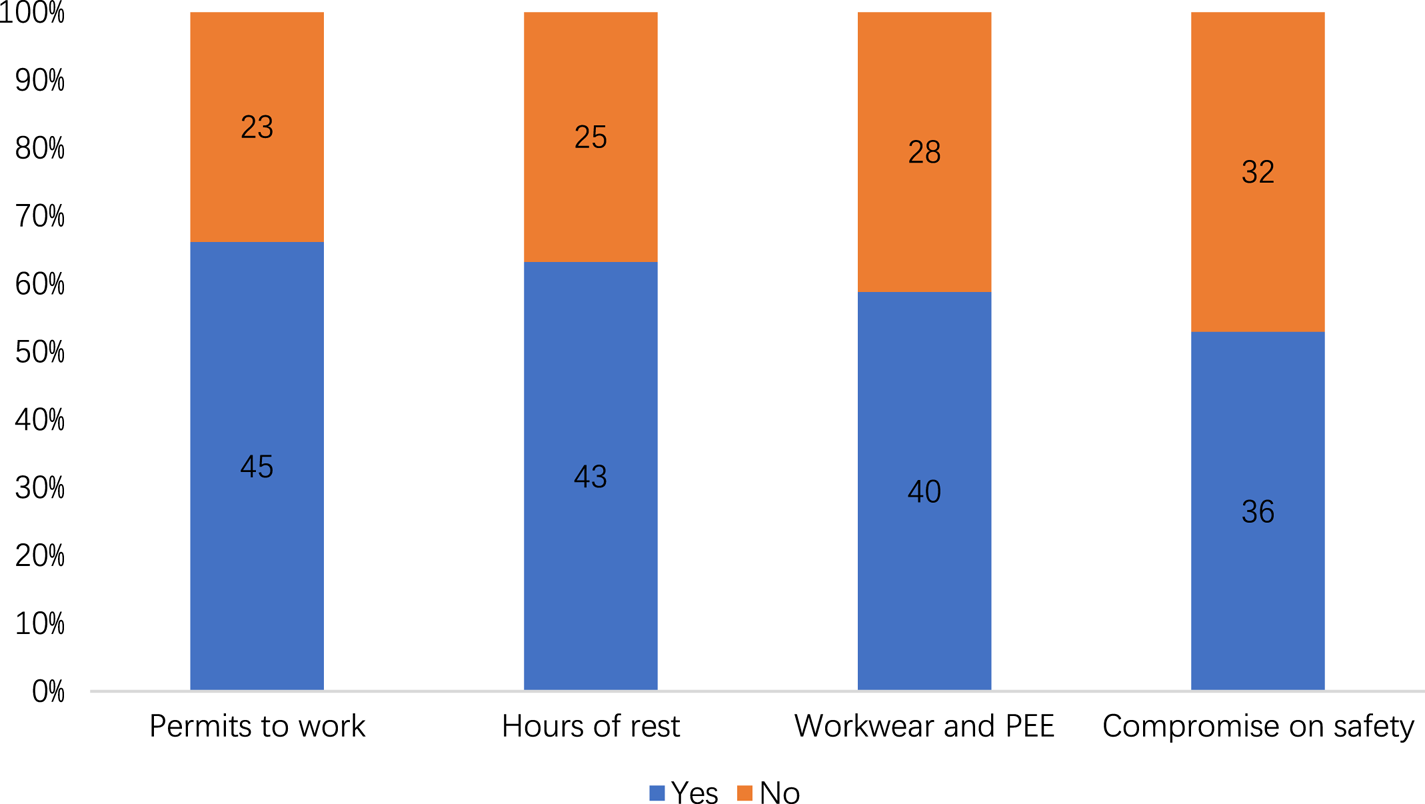
Most participants work on yachts which adhere to permit to work requirements. It is seen that in conjunction with permits to work, the vessels are carrying out ‘tool box’ talks, indicating a good understanding of the equipment in use and the dangers involved with the task. One question in the questionnaire is whether permits to work, risk assessment and ‘tool box talks’ are completed with the required due diligence to ensure safe and sure understanding of the task at hand. Figure 1 shows the comparison of answers received from the respondents regarding permits to work.
Questionnaire survey results
However, some participants provided interesting remarks to the question. The answers offer similar distinctions to either yes, carrying out permits to work, but not holding ‘tool box’ talks, while others highlight they have ‘tool box’ talks but no permits to work. While one participant had noted that yes, the formalities were conducted but, due to the pressures of work and time constraints, the duty and responsibility of opening the permit to work and hosting the ‘tool box’ talks was passed down to junior crew with less experience.
According to Regulation 2 ⋅ 3 of the MLC (2006), a seafarer has the right to regulated hours of work and hours of rest. Hours of work are stated as either maximum hours of work or minimum hours of rest. The maximum hours of work must not exceed 14 h in any 24 h period, and 72 h in any seven-day period; or the minimum hours of rest must not be less than 10 h in any 24 h period, and 77 h in any 7 day period. Hours of rest may be divided into two periods, one of which must be at least 6 h. The interval between periods of rest must not be longer than 14 h.
The questionnaire asked the respondents whether their current vessels meet the MLC (2006) requirements for hours of rest during guest-on season. As shown in Figure 1, more than half the participants receive their legally obliged rest allowance per day. However, the data also shows that 35% participants do not, demonstrating longer working hours and increased chance of fatigue. In addition, 53% of participants reported that they falsify produced records to avoid nonconformities under the ISM inspections.
According to Code of Safe Working Practices for Merchant Seafarers (COSWOP), crew onboard are entitled to the supply of uniform, workwear and PPE, such as gloves, facemasks, earmuffs, safety glasses and seat covers. PPE is particularly important when seafarers using hazardous chemicals or during pandemic, such as the COVID-19 pandemic. The questionnaire asked the respondents whether their current vessels meet the requirements of COSWOP for workwear and PPE. As shown in Figure 1, more than 41% of respondents reported that their vessels could not fully comply with the requirements. They provided reasons for noncompliance, including no provision, poor quality, lack of training and lack of safety awareness.
Safety awareness is a constant realisation that all seafarers must have at all times when they are working on board. It goes beyond what they learn in the safety training programmes or at morning safety meetings. Being constantly aware of how they are operating at work and being able to recognise hazards are crucial in mitigating safety-related risks. The questionnaire asked whether the respondents often compromise on safety in order to meet guests demands. As shown in Figure 1, nearly 53% of the respondents reported yes. For example, some respondents reported that they would step foot outside the capping rail (without a safety harness) to remove dirt during morning set up. While safety should be at the forefront of every crew member's mind, fewer than 10% of the respondents were able to regard safety as a key factor of their daily work duties. Furthermore, the data indicates that more than half of the participants would take a potentially life-threatening risk. Complacency, deficiency in ‘safety culture’ and the lack of awareness for dangers involved are the common reasons leading to the risk.
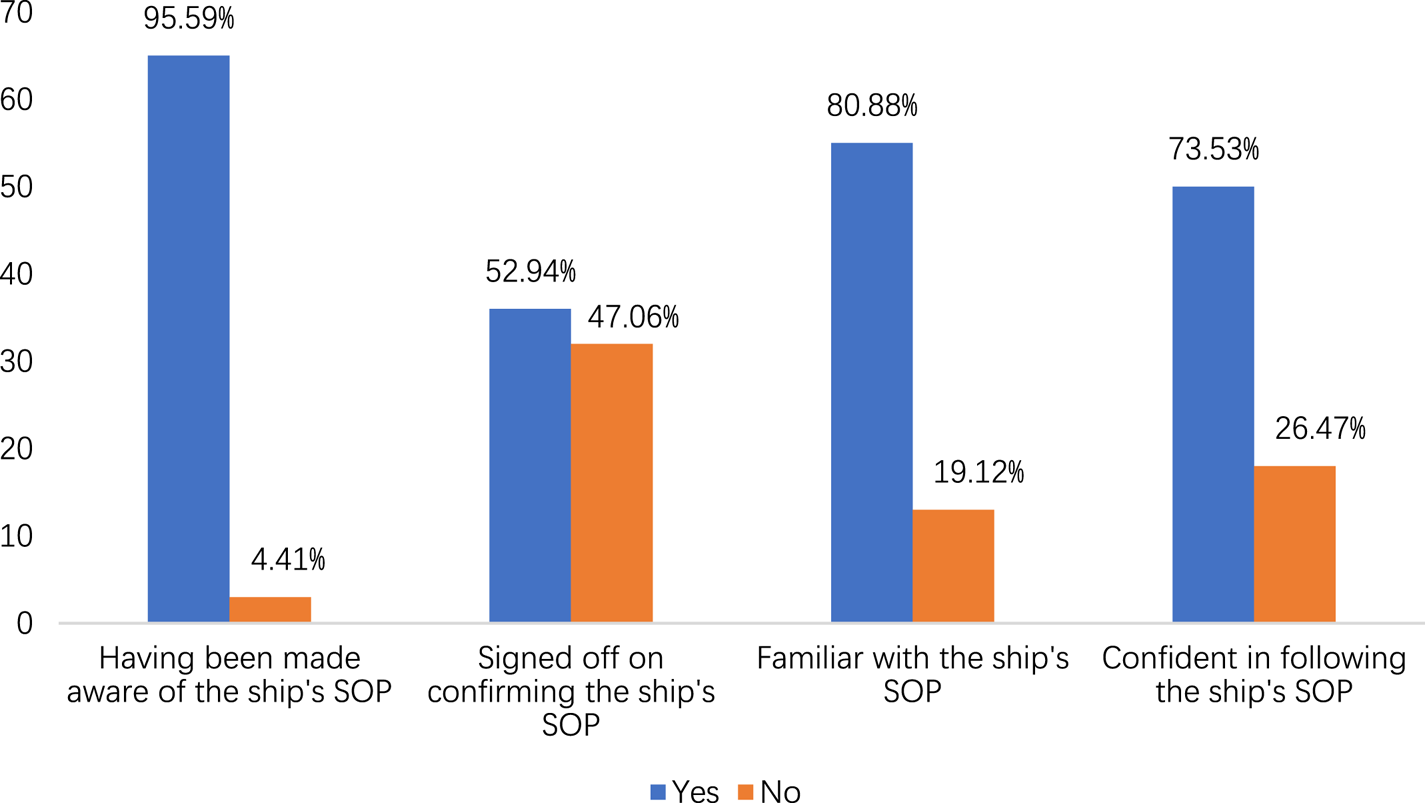
Standard Operating Procedure (SOP) plays a crucial role in the safety administration of superyacht. It prescribes methods to be followed routinely for the performance of designated operations or in designated situations. All seafarers are required to familiarise themselves with their vessels’ SOPs and sign off to record their confidence in following the procedures. As shown in Figure 2, the questionnaire survey reveals that almost all participants can confirm having been made aware of their ship's SOP. However, the results do show that nearly half of the participants had failed to sign off on confirming the introduction of the ship's SOP, and almost 20% of them were not familiar with their ship's SOP. In the meantime, more than 26% of the respondents admitted that they had no confidence in following the procedures, even though some of them had signed off on the documents as required.
Standard operating procedure
Accidents occur regularly; it is an unavoidable factor of working in an environment susceptible to the elements. The documenting of ‘near misses’ is a regulatory requirement under the ‘Hazardous Occurrences’ section of the ISM Code. Its purpose is to keep crew safe, while suggesting improvements to be made to vessels to avoid serious accidents occurring. Safety culture in the workplace can be improved by various actionable ideas and measures. The logging of ‘near misses’ is an integral component of continuous improvement to safety management systems. The questionnaire asked the respondents about how often their vessels log near-misses. It was shown that only two of the vessels represented can indicate documenting all ‘near-misses’, with five vessels admitting almost never documenting ‘near-misses’, although they did occur. The majority of the respondents suggested that while their vessels did not mind recording minor accidents, they tended to be reluctant to log near-misses. In contrast, there was an almost united belief that safety needed to improve in yachting, with many participants commenting on the need for further safety education for officers.
4.2 Analysis of results
An ideal world would provide results based on a wide audience giving a greater representation and accountability to the data found, yet it found confidence was often found in the results drawn from small samples, as they provide lower scope for error than from large quantities of data (Slovic, Reference Slovic2000, p. 10).
Anderson (Reference Anderson2007) made the comment that manipulation of hours of rest records were inevitable, and such claims were confirmed by Praetorius and Lützhöft (Reference Praetorius and Lützhöft2011), who concluded that ships masters/ officers and their overriding fear of nonconformities will encourage crew to make adjustments to their records to comply with the guidelines set out by MLC (2006) (4.2. Regulation 5). The participants were asked a series of questions regarding hours of rest, which included questions probing for findings of exceeding hours of rest, forging records or compliance of rest hours repaid under the MLC (2006). MGN 448(M) explains the limits on exceptions to hours of rest laid down by the STCW Convention as amended in 2010 (‘the Manila amendments’; Code A/VIII.1/9). The answers submitted by participants in relation to hours of rest and breaching the limits have been attributed to lacking crew personnel to make up the man-hours. The correlation between exceeding hours of rest limits and reduced crew sizes has been documented in previous research conducted in commercial shipping, with results presented by Hjorth (Reference Hjorth2008). The research has discovered that when superyacht crew members do exceed their hours of rest requirements, then as little as 6% of those individuals are repaid their time. Long working hours and intensified work cultures have historically attributed to fatigue, and Slišković and Penezić (Reference Slišković and Penezić2015) reports it also leads to poor decision-making on behalf of the affected crew member.
Exposure to loud noises and vibrations were further suggested by Slišković and Penezić (Reference Slišković and Penezić2015) to cause increased stress for crew members and notably lead to fatigue, which has just been mentioned to result in poor and potentially life-threatening decision-making. The MLC (2006) Regulation 3.1.4 (c), clearly specifies the sound requirements and limits to crew exposure to sound and vibration pollution, particularly throughout crew accommodation. The questionnaire concluded that at least 52% of participants worked on a vessel where crew cabins were affected by sound and vibration from machinery. Superyacht crew accommodation is regularly situated in the forward waterline section of the vessel, typically positioned around the bow thruster. Since yachting is a 24 h industry, the vessel will be relocating at various hours of the day, either entering or leaving port, anchoring or lifting anchor. Therefore, for a crew member who works the night shift and clocks off at 6 a.m. for their 8 h rest is likely to be disturbed during the rest hours, leaving them unable to achieve the 8 h of rest they are supposed to be allocated.
4.3 International Safety Management (ISM)
The detriment to personal rest and the ability to achieve a healthy requirement of downtime has various psychological impacts on seafarers, leading them to potentially take risks based on poor self-calculations. A question was submitted to the participants in the aim of discovering whether they would take a safety risk to meet the demands and pressures of the yachts work expectations. Some 53% of the respondents stated that they would have to take a risk to perform work, in particular upon the request of a guest. For example, the risk even included stepping outside the capping rail to remove dirt. By stepping outside of the capping rail, the crew member greatly increases risk and likelihood of significant injury.
According to Batalden and Sydnes (Reference Batalden and Sydnes2014), even though seafarers are qualified, in many cases they still perform dangerous tasks without taking the necessary precautions to ensure safety. It does suggest, however, that a significant proportion of superyacht crews do not understand the risks in their day-to-day operation of machinery and basic functional tasks, and perhaps require an effort to educate crew about the danger factors they are continuously exposed to. The confirmation of crew members willing to take life-threatening risk shows demand for a review of the superyacht safety culture. It must be indicated that the guest requests do not take precedent over a crew member's safety.
The questionnaire prompted comment from participants under COSWOP and PPE in operational tasks. The question received what could be observed as concerning responses. When asked whether they wear PPE during the working day, the responses were:
• ‘No: Anchoring no protection, especially as we manually flake the anchor chain. Rarely wear masks, only for painting in the yard’;
• ‘Steel caps or earmuffs for anchoring is over the top, in my opinion’;
• ‘No, sometimes rules get bent, depending on conditions’;
• ‘No, if it's a 2 min job it'll take longer to get the equipment than doing the job’; and
• ‘No earmuffs, No footwear at all times, but always correct PPE when painting’.
The results indicate that many vessels are not expressing the necessity for proper use of safety equipment. Furthermore, the disregarding personal safety occurs because of the belief it will take too long is an attitude that should be abolished from the industry. It shows that there is demand for additional education for superyacht crew to highlight the importance of taking the necessary steps to ensure the safety of those involved in the task. However, it is important to note that 64% of respondents could confirm that their vessel adheres to COSWOP guidelines at all times, thus highlighting that conformity does occur on more than half of the operational fleet accounted for.
Accidents undoubtedly occur during the working life of superyacht crews, some more serious than others. Many participants have referred to injuries such as cuts, bruises and head knocks. Some have mentioned more serious injuries requiring stitches, with one entrant detailing a crew member losing a thumb. Logically, the question then followed onto one of logging ‘near-misses’. It shows that only two vessels can confirm documenting every ‘near-miss’ occurring onboard. Why a vessel may not document every near-miss requires further question but could be concerning different interpretations of a ‘near-miss’ or the lack of reporting from those who have been involved in the ‘near-miss’ situation.
It was interesting to see that so many participants failed to detail safety as one of their ‘main work duties’, showing that safety is not necessarily at the forefront of the crew members’ mind; instead other tasks take priority. The report presented by Fan et al. (Reference Fan, Blanco-Davis, Yang, Zhang and Yan2020) highlights the high number of accidents attributed to human error, and the results shown in this question indicate potentially why. If the crew members are failing to consider safety before each action they take as a default mechanism, it is unsurprising that accident levels are so high.
4.4 Port State Control
The study has exposed a surplus in the presence of PSC in the superyacht sector, which as a result paves a pathway for yachts to operate with limited regard to safety, and in some cases complete disregard. Participants of the research have noted that mast strong points are not load-tested, nor are tender-lifting points which are used in man-riding operations. Why PSC has allowed vessels to continue with such practice is due to the nature in which the vessel selection criteria is managed. As mentioned in the literature review section, the Paris MoU uses a risk criteria selection system that factors in the flag of registry, age of vessel and nature of practice. The nature of yachting enables the industry to experience fewer inspections than found in commercial shipping. The system can also enable private vessels to avoid inspection altogether, which is an element documented in this research.
There is demand for a revised inspection system where there are no privileges assigned to any type of yacht operation, and the selection criteria are assigned on a random basis to all vessels. There also appears to be demand for yacht-specific inspection officers who maintain industry practical knowledge of superyacht operation.
4.5 Improvements to safety
The study has presented an overriding need for a reviewal of the superyacht safety culture, a view adopted by the majority of participants represented in this research. It is widely accepted that their must be an active approach to safety in the industry, with some suggesting a requirement for further education of the crew.
The final part of the questionnaire encouraged participants to provide their comments on how to improve safety in the industry. Most participants were confident there is scope for improvement in terms of safety standards, while some took the time to denote hours of rest as playing the largest factor in devolving safety standards. As with the hypothesis applied from the outset of this research, there has been mention by participants for a demand of further safety awareness training for crews. There is a view that current training for superyacht crews is not focused enough on the promotion of safety, something which should be at the forefront of every seafarer's mind.
The superyacht industry as it stands is too fragmented, split between private and charter, operating under different standards. The participants have expressed that there must be standardisation, that all vessels should be working to and operating at the same standards. The private sector may have lighter schedules but have the flexibility to opt-out of some safety/maintenance procedures if those procedures are perceived as too time consuming. There is the risk they may have a visit from the PSC, but the likelihood of this as low as they are typically more concerned with commercially operating vessels and even more in regard to commercial trade.
5. Conclusion
The review of safety culture on superyachts throughout this research has indicated that there is, in fact, scope for review or at least a revision of the safety systems implemented in the industry. The reason behind the view is validated by the following reasons:
• Lack of awareness for the dangers involved with day-to-day tasks,
• Disregard for PPE in the view of it being time consuming,
• Taking life-threatening risks to meet guest demands,
• Failure to meet the hours of rest requirements detailed by MLC (2006).
The presence of PSC in the superyacht sector has appeared to play a role of little significance, predominantly due to the truncated quantity of inspections carried out each year. Current literature has consistently commented on the lack of inspection officers employed by the varying MoUs and has shown to make a positive effect on the number of vessels able to avoid an inspection. Furthermore, the regressive use of a criteria-based selection platform for choosing vessels predicted on their likely outcome of showing detainable deficiencies continuously provides superyachts with a green card to avoid regular inspection. The primary data sourced for this research formally concluded that a large majority of superyachts have experienced fewer than two inspections over the past five years, with some experiencing zero due to the ‘private’ practice of their vessel.
The presence of complacency in the superyacht industry conforms in the perspective of both risk-taking and failure to use PPE. The primary data presented by this research concluded that some vessels are guilty of completing permits to work once the work has been concluded, while some vessels have also noted that the responsibility of conducting risk assessments and recognition of dangers is allocated to junior crew who lack the experience to validate such information.
Research has shown an overbearing occurrence of crew members taking life-threatening risks to satisfy guest demands, with some such risks involving stepping outside the capping rail without a harness to remove dirt. This highlights two scenarios in need of correction. The first being a deficiency in awareness among the crew for the dangers involved in tasks, and the second that the crew members recognise the risk but are too complacent to take the time to get the relevant PPE to conduct the work safely. The latter seems likely, as one respondent noted that acquiring PPE takes more time than it is worth. Such beliefs among superyacht crews must be eradicated, but this can only be achieved via an active and positive attempt to raise awareness from both senior crew and management.
Working at sea has historically involved enduring long work hours and gruelling conditions. However, with the modernisation of the industry is has become evident that such conditions are not necessary, especially in the superyacht industry.
The literature relied upon and the primary data acquired for this study have shown that distortion of hours of rest are a regular occurrence due to fear of being fired, or to conform with MLC (2006) requirements.
Data in this research have pointed out that failing to meet rest requirements is due to extensive workloads and lack of human power to fulfil the duty.
For superyacht crew to be exceeding their work hours appears somewhat bizarre, particularly as the vessel maintains the financial backing to support acquiring extra crew to meet the demands of the work.
Throughout the survey, roughly 50% of answers concluded a presence of safety but, regrettably, 50% of safe vessels do not provide sufficient argument for the presence of a ‘safety culture’ in the superyacht industry. The study has shown a demand for refreshing the understanding of safety throughout the sector and to make formal attempts to introduce a new era of safe practice in the superyacht sector. However, the reactive nature of the industry may require further disasters before we witness any driven action for a safety movement.
While this study will contribute to existing knowledge, there are several limitations to this study, and future work will need to improve in these areas. First, the author had very limited time and financial resources at the beginning of the study, and the epidemic brought more challenges to data collection, resulting in relatively few questionnaires. Secondly, the control group of this study did not include superyachts cruising region, age, position, ship type, etc. In subsequent research, we will focus on solving these issues.
6. Recommendations
The reduced presence ‘safety culture’ and safety understanding amongst crew members is problematic but can be corrected by utilising the current safety framework.
Legislative bodies are advised to introduce additional safety-based training for all crew. Most likely as an addendum to the current STCW course, requiring ‘refreshing’ every five years. The training would assist in maintaining an appropriate level of safety awareness throughout the industry. However, successful introduction would require research on how to successfully create a course of education. Plus, this would require investigating how current seafaring courses were created and what impact they have made since their introduction.
To limit the fatigue factor in superyachting, a compulsory divide of the charter season calendar allowing minimum breaks of two days between trips could prove successful. The proposal would provide the crew the ability to recuperate and refresh during the season and potentially reduce fatigue. A case study is fundamental to gaining an indication as to whether a structured work calendar limits fatigue. A vessel over two seasons could be monitored; the first season logging fatigue during normal operation and the second season logging fatigue during a structured season with the proposed ‘minimum gap’ between charters. Then, a conclusion could be drawn on the differences and whether crew would favour the changes.
Finally, it is recommended that the MoUs develop a superyacht-specific department, overseen by PSCOs who have practical experience of the superyacht sector. This consequently would enable PSC to experience success in yacht inspections and assign deficiencies to vessels that typically might avoid scrutiny from a PSCO. The PSC capture range requires updating to include private vessels. Research could be conducted on what benefits would be received by inspecting private vessels in relation with the chances attaining more vessel detentions.
Funding statement
This work is supported by a project granted by National Social Science Fund of China (22AZD108).



