INTRODUCTION
The reproductive cycle of commercially-bred species such as Mytilus sp. comprises a single or several periods of gonad development with spawning, followed by sexual rests during which energy necessary for a new gametogenesis is accumulated. In bivalves, the storage of reserves is greatly dependent on reproduction stages. Glycogen plays a central role in supplying energy and metabolites for gametogenesis (Gabbott, Reference Gabbott and Barnes1975; Bayne et al., Reference Bayne, Bubel, Gabbott, Livinstone, Lowe and Moore1982; Mathieu & Lubet, Reference Mathieu and Lubet1993). Glycogen metabolism is dependent on the concentration of circulating glucose, whatever the month of the year, while the regulation of its mobilization by neuroendocrine factors is correlated with the reproductive activity of the bivalve species (Robbins et al., Reference Robbins, Lenoir and Mathieu1990). However, lipids and proteins also play a role as reserves in the life cycle of bivalves (Lowe et al., Reference Lowe, Moore and Bayne1982; Pipe, Reference Pipe1987). According to Berthelin et al. (Reference Berthelin, Kellner and Mathieu2000a, Reference Berthelin, Kellner and Mathieub), the concentrations of lipid and proteins in Crassostrea gigas increased in spring and summer at the expense of glycogen reserves, thus indicating the use of the glycogen stock before and during the spawning of C. gigas. The vesiculous cells of this species would be used for the storage of glycogen before their transformation into adipogranular cells during the critical period in summer (when oyster mortalities possibly occur). Owing to the importance of reserves in the reproductive cycle of bivalves (Bayne et al., Reference Bayne, Bubel, Gabbott, Livinstone, Lowe and Moore1982), the study of annual variations for these three biochemical components allows to determine the strategy used by each species to assure the continuity of gametogenesis over time.
As the mussel Perna perna had been selected for the development of a mussel breeding programme along the Atlantic coats of Morocco including the region of Agadir (Berraho, Reference Berraho1998), some studies were already conducted on the reproductive cycle of this mussel (Id Halla et al., Reference Id Halla, Bouhaimi, Zekhnini, Narbonne, Mathieu and Moukrim1997; Benomar et al., Reference Benomar, Bouhaimi, El Hamidi, Mathieu, Ouichou and Moukrim2006; Moukrim et al., Reference Moukrim, Id Halla, Kaaya, Bouhaimi, Benomar and Mathieu2008). Seasonal variations of glycogen, lipids, and proteins in relation to the sexual cycle of P. perna were observed in Brazilian (Tavares et al., Reference Tavares, do Amaral Mello, Campos, de Morais and Ostini1998) as well as in Moroccan (Moukrim et al., Reference Moukrim, Id Halla, Kaaya, Bouhaimi, Benomar and Mathieu2008) populations of this species. A similar study was carried out by Shafee (Reference Shafee1989) on a population of Perna picta located on the Atlantic coast near Rabat (Morocco); this species previously considered as a distinct species from P. perna is now considered as similar to it (Wood et al., Reference Wood, Apte, MacAvoy and Gardner2007). However, the studies reported by the above authors did not take into account the sex of P. perna. For this reason, it was interesting to specify the influence of mussel sex on the body reserves and the strategy used for the management of these reserves. To answer this question, investigations on glycogen, lipids, and proteins were thus carried out on the whole soft masses of P. perna as well as on their gonads to determine the role of gonad and that of extragonadic tissues in the accumulation and the utilization of these biochemical components. Samples were made in the two mussel beds chosen by Moukrim et al. (Reference Moukrim, Id Halla, Kaaya, Bouhaimi, Benomar and Mathieu2008) for their study in the Agadir Bay (south-western Morocco), i.e. the first living in an unpolluted site (Cap Ghir) and the other in a station polluted by domestic and industrial waste water (Anza). This study was performed in the framework of a mussel breeding project in the Bay of Agadir.
MATERIALS AND METHODS
Studied sites
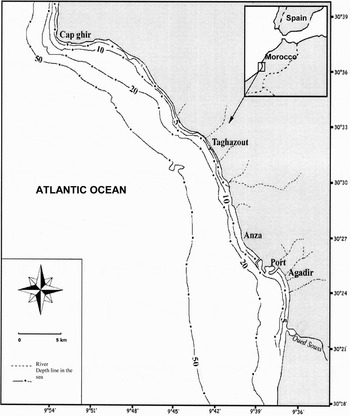
The first station: Cap Ghir (Figure 1), is located 50 km north of Agadir (30°38′N 9°53′W) and consists of a rocky platform with a low slope (6%). This site is subjected to an intense hydrodynamism, as it is located at the southern limit of the upwelling. Another current coming from the Canary Islands also runs along this station. The natural mussed bed is located in the lower section of the mediolittoral zone, at the limit of the daily retreat of the tide. The temperature of seawater in the upper layer ranged from 16°C–24°C, and salinity fluctuated from 35.3–37.5‰. As this site was far from any human activity, it could be considered as a control site. The second station (Anza) is located 10 km north of Agadir (30°26′N 9°38′W). The temperature of seawater was always greater (1°C) than that measured in Cap Ghir and this was probably due to the current coming from the Canary Islands. Waste waters of domestic and industrial origin were directly discharged without previous treatment in this station. Compared to Cap Ghir, the concentrations of dissolved oxygen in the seawater of Anza were low in spite of the high phytoplanktonic production. In contrast, the burden of nutritive salts and the organic matter were clearly increased so that this station was highly polluted (Kaaya et al., Reference Kaaya, Najimi, Ribera, Narbonne and Moukrim1999; El Hamidi et al., Reference El Hamidi, Banaoui, Azdi, Kaaya, Zekhnini and Moukrim2003).
Geographical localization of the two mussel beds studied along the coasts of the Agadir Bay (south-western Morocco): Cap Ghir (unpolluted site) and Anza (site polluted by waste water).

Samples and parameters monitored
A monthly sample of two groups of individuals was collected (valve length: 4–6 cm): 30 for histological and stereological analysis and 72 for biochemical analysis.
The collected mussels were immediately placed in Bouin's solution for 24 hours, and the mantle-gonad pieces were then fixed with the same solution for a period of 24–48 hours. These were routinely processed for histology and 7-µm paraffin-imbedded sections were stained according to the trichrome protocol of Prenant–Gabe (Gabe, Reference Gabe1968). The mussels were classified into distinct phases of gonadal maturation based on microscopic analysis and according to Lubet's (Reference Lubet1959) classification. Briefly, stages 0 and I correspond to, respectively, resting stage and gonial multiplication in tubules (which are poorly developed). During stage II gonadal tubules highly develop, whereas vitellogenesis occurs in females and various kinds of sexual cells can be observed in males. Stage III includes 4 substages: IIIA is associated with maximum gonad size and ripe gametes; IIIB corresponds to (partial or total) spawning stage; IIIC is characterized by a restart of gametogenesis (ending in spawning); and IIID is the post-spawning and resorption stage. For each mussel sample, a gonadal index was calculated using the method proposed by Seed (Reference Seed1975) and based on the proportions of individuals belonging to the various maturation stages. This index ranges from 1 (all the individuals are reproductively inactive) to 3 (all the individuals are ripe). Finally, stereological analysis was performed using Weibel et al.'s (Reference Weibel, Kistler and Scherle1966) method in order to determine the proportion of soft tissues occupied by both gonad and storage tissues.
Every month the 72 mussels collected from both sites were immediately transported to the laboratory under isothermal conditions (16°C) and frozen at –30°C. Every sample was subdivided into 12 groups of six P. perna each. Four groups, i.e. 2 constituted with male P. perna and 2 with female mussels, were used to determine the contents of glycogen in the whole soft masses of mussels (1 male group and 1 female group) and in the gonads only (1 male group and 1 female group) (Table 1). A similar protocol was also used to analyse the percentages of lipids (4 mussel groups) and proteins (the 4 other groups). Each sample consisted of a pool of total tissues from six animals and each data point was the mean of six replicates.
Sampling design for the study of annual dynamics of 3 biochemical components in Perna perna.

After defrosting of every mussel, the valves were removed, and the soft masses were weighed to the nearest of 0.01 g and cut into 2-mm-thick sections before being freeze-dried for at least 12 hours. The same operation was also made for gonads after mussel dissection. The whole soft masses of every mussel group or their gonads were then crushed using an Ultra-Turrax (Janke and Kunkel®) system and 10 mg were collected to determine the contents of glycogen, lipids and proteins. These contents were expressed in percentages in relation to the dry weight of the entire mussels or gonads.
Data of two mussel samples, i.e. Cap Ghir (September 1999) and Anza (October 1999) were eliminated from this study in reason of an abnormal defrosting of mollusc samples. In the same way, six groups of mussels (out of 12) collected from Cap Ghir in August and used for studying biochemical components in entire mussels were only composed of males so that no data are available for females during this month.
Biochemical analyses
The extraction of glycogen was made using the method described by Pinheiro & Gomes (Reference Pinheiro and Gomes1994). Proteins were eliminated using 15% trichloracetic acid and the glycogen was precipitated with absolute ethanol before being centrifuged at 2000 g for 30 minutes. The residue was dissolved into bidistilled water and was quantified using Dubois et al.'s method (Reference Dubois, Gilles, Hamilton, Rebers and Smith1956). The addition of 5% phenol and H2SO4 to the dissolved residue gave an orangey yellow complex which was measured with a spectrophotometer (490 nm). The standard curve was constructed using a solution of purified glycogen (Sigma®).
Lipids were extracted and purified using Bligh & Dyer's method (Reference Bligh and Dyer1959). A reaction between chloroform and methanol (1:2 v/v) allows the formation of a residue which was then dissolved with hot sulphuric acid to give a brown complex (Marsh & Weinstein, Reference Marsh and Weinstein1966). The lipid content was measured using a spectrophotometer (360 nm) with glyceryl tripalmitate (Sigma®) as a standard.
The method described by Bradford (Reference Bradford1976) was used for the extraction of proteins. They were hydrolysed using 1 M NaOH before being centrifuged at 3000 g for 10 minutes. The Bradford's reagent (Sigma®) gave a blue coloration with the proteins present in the supernatant and their concentration was then quantified using a spectrophotometer at 595 nm. The standard curve was constructed using bovine serum albumin (Sigma®).
Statistical analyses
The values recorded for glycogen were analysed using the Kruskal–Wallis test. The other data found for lipids or proteins were subjected to a logarithmic transformation to obtain a normal distribution, and were then compared using a two- or three-way analysis of variance. In all cases, a Student–Newman–Keuls test was performed to study the homogeneity of groups.
RESULTS
Environmental parameters
At Cap Ghir, water temperature steadily increased from 15.8°C (December) to 20.5°C (August) and decreased afterwards. Constant values of pH (at 8.3–8.4) in seawater were noted from December to May, followed by a decrease up to August (at 7.5), an increase in September and October (at 8.7), and a return to normal values in November (data not shown). At Anza, the temperature of seawater increased up to May (at 22°C) and showed high values up to August before a subsequent decrease until January. From November to April, pH ranged from 8.2–8.4. It decreased afterwards up to July at 6.4 and rose again from August to November at pH 8 (data not shown).
Variations in the reproductive activity
GONADAL INDEX (GI)
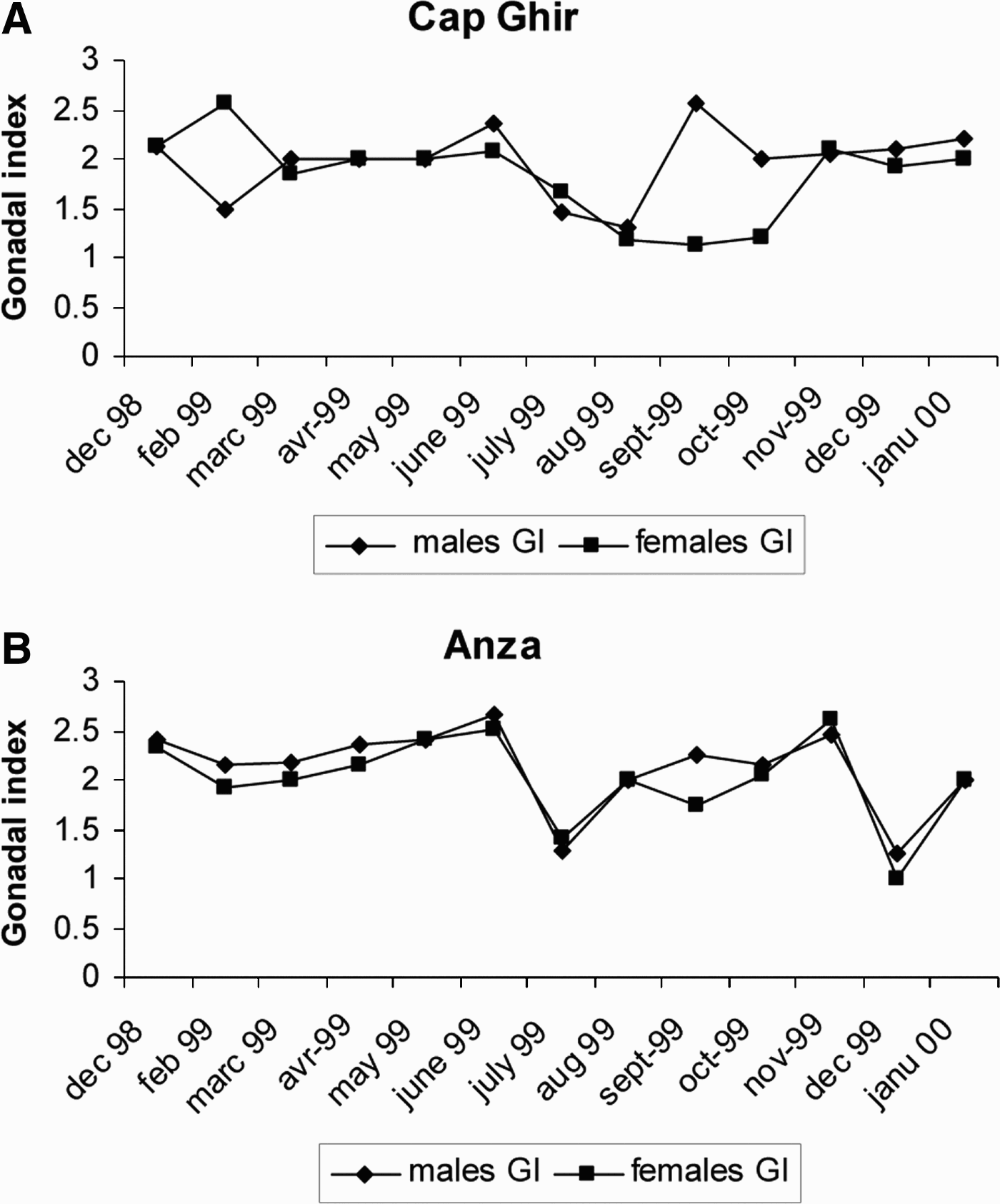
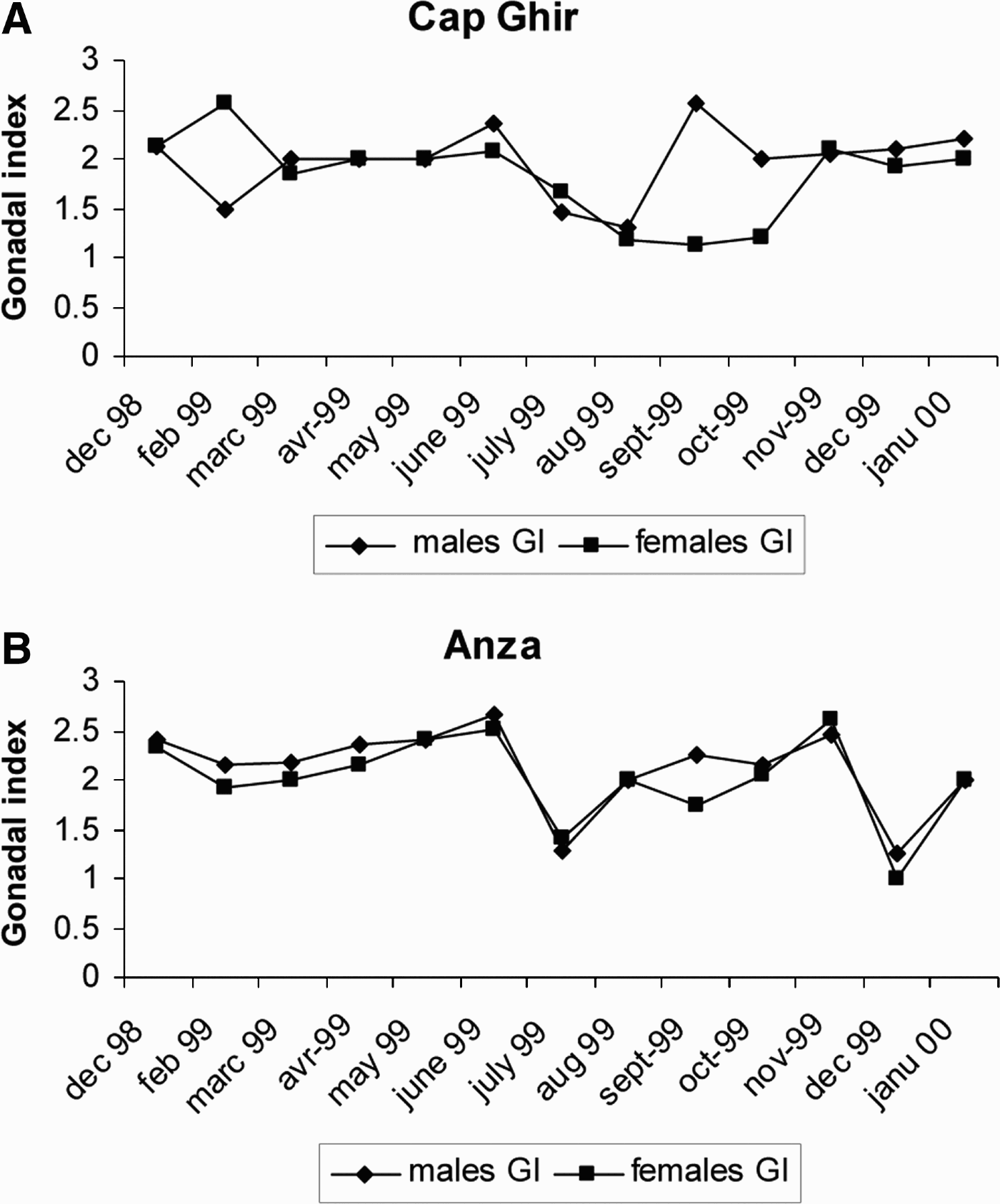
The monthly variations in the gonadal index calculated for the mussels of Cap Ghir showed differences between sexes (Figure 2A). From January to February, females were mature with a maximal GI of 2.57 (stage IIIA) while this index was maximal for males only in September and October (GI = 2.57) when females were at rest (stage 0) or in atresic degeneration (stage IIID, GI = 1.14). Except for these months and July and August (corresponding to the lowest value of GI for both sexes), the population of Cap Ghir showed relatively steady values around 2, which reflected the importance of the gametogenetic activity over the year. At Anza, only slightly differences between sexes were observed and, two resting periods were recorded, in summer (July–August) and winter (December–January) (Figure 2B).
Annual cycle of the gonadal index in male and female mussels from Cap Ghir (A) and Anza (B).
Stereological analysis
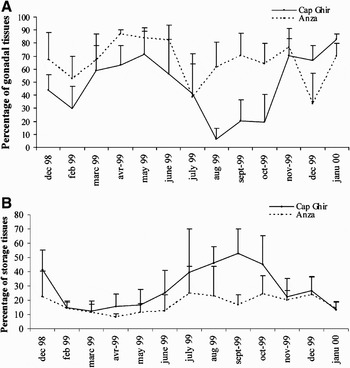
This study did not take into consideration sex because overall gametogenesis presented a similar evolution within the male and the female individuals. Moreover, every month stereological analysis was only applied to the dominant maturation stage. At Anza compared to Cap Ghir, the volume of the gonadal tissues was greater from March to June and August to November, suggesting a higher investment in reproduction at these periods (Figure 3A). However, the curves for both sites showed similar trends: a spring period of gametogenesis (from March to February–March), a period of sexual maturity (until June) followed by a period of spawning (longer and more pronounced at Cap Ghir) and, then a second period of gametogenesis occurring in autumn with spawning and/or resorption in December at Anza. The dynamics of storage tissues were similar for the individuals from both stations even though there were clear differences between the volumes in December 1998, and from June to October 1999 (Figure 3B).
Dynamics of the volume of the gonadal tissue, that of reserves in the male and female gonads of mussels from Cap Ghir (the unpolluted site) and from Anza (the polluted site) determined by stereology analysis.

Dry weight of mussels
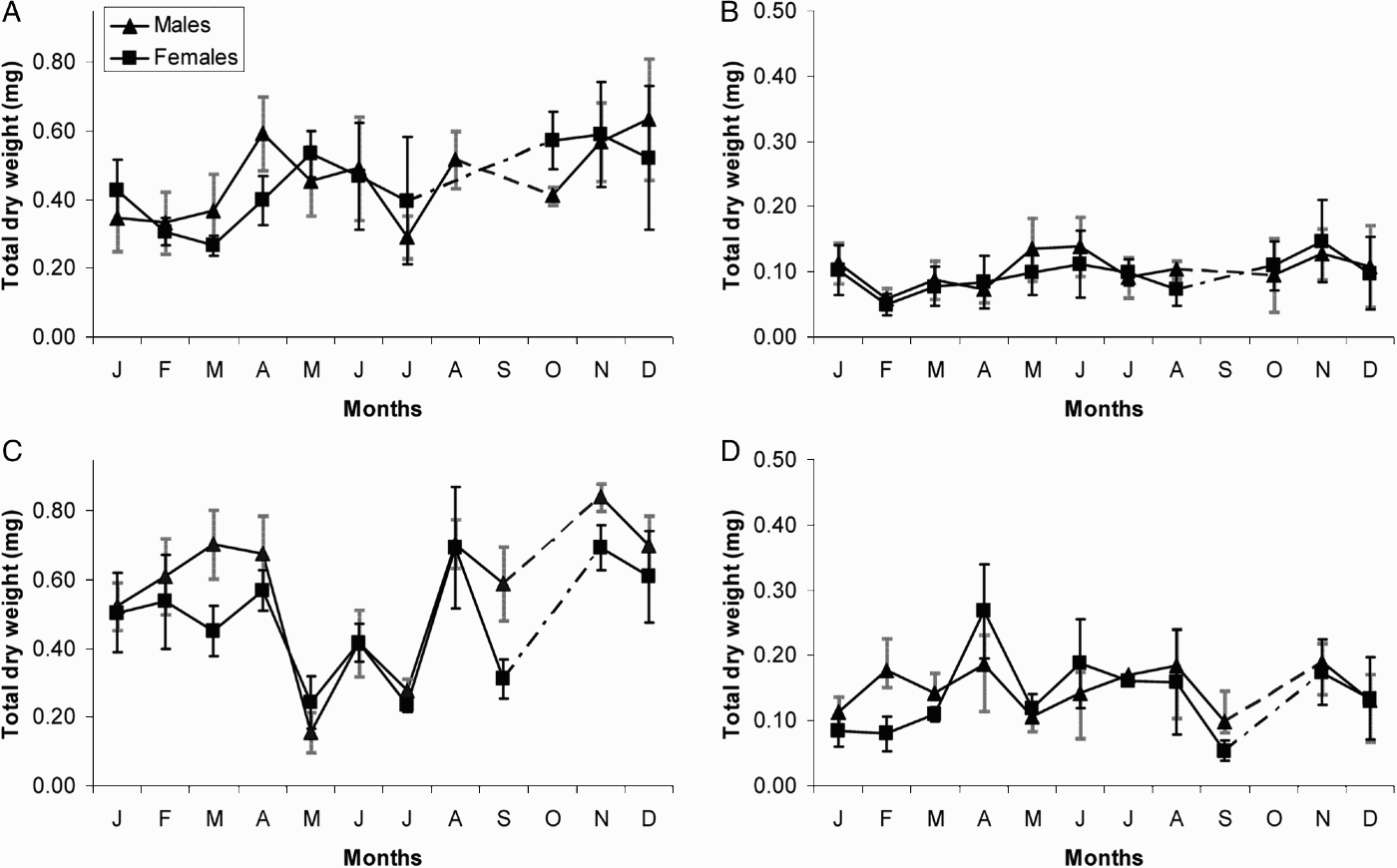
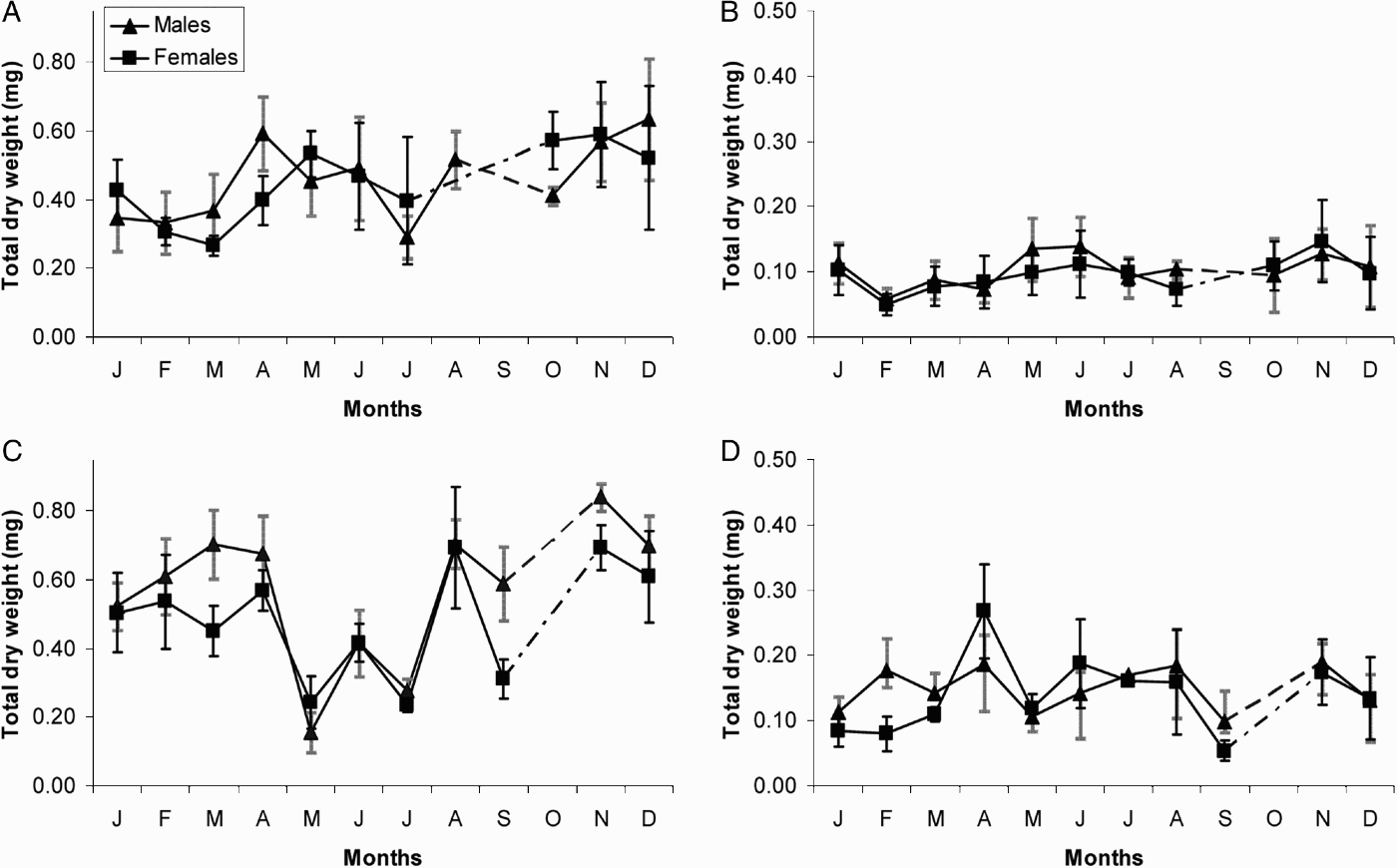
At Cap Ghir, the total dry weight of entire males (Figure 4A) rose from January to April, decreased up to July, and again increased up to the end of the year. In the case of females, this weight fell from January to March, increased until May, and diminished afterwards up to July just before a new rise until November. Gonad weight from both sexes showed the same variations (Figure 4B). After a slight decrease from January to February, this dry weight rose up to June, diminished thereafter up to August, and again increased up to November. Compared to females, the summer decrease lasted for a shorter time in males (June–July instead of June–August). At Anza, several differences in the total dry weight of the entire mussels (Figure 4C) and that of gonads (Figure 4D) were found. After an increase from January to April, the dry weight fell dramatically in May and then rose up to August. Another decrease in September, followed by a new rise up to November, was also noted. These values were compared using a three-way analysis of variance. In the case of whole soft masses, the sampling site (ANOVA, F = 18.89, P < 0.001), mussel sex (ANOVA, F = 9.28, P < 0.01), and the date of mussel collection (ANOVA, F = 27.19, P < 0.001) had significant effects on the total dry weights. For gonad weights, significant effects were only observed for the sampling site (ANOVA, F = 65.15, P < 0.001) and the date of collection (ANOVA, F = 6.94, P < 0.001).
Mean values (SD) of the total dry weight (mg) for males and females of Perna perna throughout the year: (A) entire mussels from Cap Ghir; (B) gonads only from Cap Ghir mussels; (C) entire mussels from Anza; (D) gonads only from Anza mussels.
Glycogen
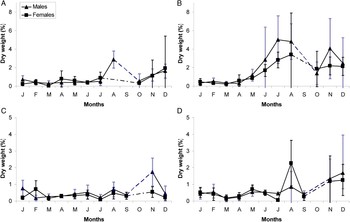
In entire mussels and gonads, glycogen percentages ranged from 0.03% to 5.02% whatever site or sex and, this component thus appeared poorly represented in Perna perna. In entire animals from Cap Ghir (Figure 5A), low dry weights of glycogen were noted from January to July in both sexes. After an increase in August (up to 2.5–2.8%), the rate of glycogen fell in October and again rose until December. The same variations were also noted in mussel gonads (Figure 5B) but the increase of glycogen was progressive from May to August. At Anza, the dry weights of glycogen in the entire animals of both sexes were steady and low except in male samples in November (Figure 5C). In the gonads from Anza (Figure 5D), steady rates of glycogen were noted from January to June. In August, a peak, much more pronounced in females than in males, was recorded. After a subsequent decrease of glycogen in September, the percentages increased in November and December. Significant effects were noted for the sampling site (Kruskal–Wallis test; H = 23.92, P < 0.001), mussel sex (H = 34.70, P < 0.001), and the date of collection (Kruskal–Wallis test; H = 115.94, P < 0.001). In both sites, percentages of glycogen measured in gonads were significantly higher than those recorded for entire animals and, males revealed richer in glycogen than females. In both sites, the highest rates of glycogen in mussels were found in August, November and December and, glycogen was significantly well represented in mussels sampled in July at Cap Ghir.
Mean values (SD) of the dry weight of glycogen (%) for males and females of Perna perna throughout the year: (A) entire mussels from Cap Ghir; (B) gonads only from Cap Ghir mussels; (C) entire mussels from Anza; (D) gonads only from Anza mussels.

Lipids
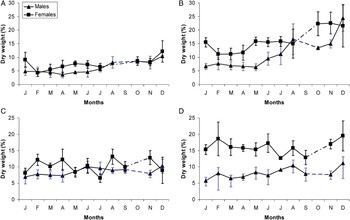
Whatever mussel sex, percentages of lipids (ranging from 3.62–22.61%) were higher than those recorded for glycogen. At Cap Ghir, in spite of higher rates noted for females in January and during spring the values found in the entire males and females showed the same variations over time, with an increase of lipids in December (Figure 6A). In the gonads, the lipid contents were higher in females than in males (Figure 6B). Two successive increases, the first in May and the second in October were noted in females, whereas in males, a progressive increase occurred from May to August, followed by another rise in December. At the polluted site Anza, the rates of lipids in entire males (Figure 6C) were steady from January to April and, slightly increased up to June before a decrease until November and another rise in December. In entire females, values were around 8–12%, except in July when the percentage of lipids dropped to 6.5%. In the gonads (Figures 6D), higher rates were also found in females than in males, whatever the sampling date and the station. A progressive increase of lipids from May to August, followed by a slight decrease from September to November and another rise in December were observed in males. In females, the two highest percentages of lipids (>17%) were observed in February and December. Significant effects of the sampling site (ANOVA; F = 26.25, P < 0.001), mussel sex (ANOVA; F = 156.38, P < 0.001), and sampling date (ANOVA; F = 15.37, P < 0.001) were noted on the dry weight of lipids (expressed as percentages). Female gonads significantly contained more lipids than male ones, whereas the lowest rates were found in entire males. In August and autumn, lipid concentrations were significantly higher than those recorded during the other months of the year.
Mean values (SD) of the dry weight of lipids (%) for males and females of Perna perna throughout the year: (A) entire mussels from Cap Ghir; (B) gonads only from Cap Ghir mussels; (C) entire mussels from Anza; (D) gonads only from Anza mussels.

Proteins
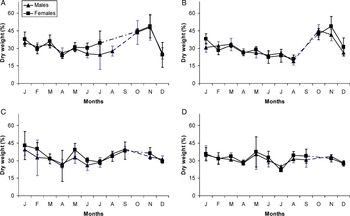
With a range from 21.07–48.79%, proteins corresponded to the main biochemical component of P. perna. In the entire mussels from Cap Ghir, the dry weights of proteins showed the same variations over time, whatever sex (Figure 7A). After a slight diminution of percentages from January to June, the values increased up from August to November and then abruptly decreased in December. The corresponding gonads of both sexes also showed the same variations over time (Figure 7B). At Anza, the protein concentrations of entire mussels from both sexes decreased from January to April and peaked in May; another peak was also observed in September (Figure 7C). Similar variations were also recorded in the gonads of these animals (Figure 7D). The sampling site (ANOVA; F = 17.19, P < 0.001) and date (ANOVA; F = 30.14, P < 0.001) had significant effects on the dry weights of proteins. In contrast, a significant effect of mussel sex was only noted for P. perna sampled at Anza (ANOVA; F = 6.26, P < 0.01). At this polluted site, protein concentrations were significantly higher in the entire mussels than in gonads and in females than in males. Significant higher proportions of proteins were recorded in January and May at Anza whereas the significant highest values were observed in October and November at Cap Ghir.
Mean values (SD) of the dry weight of proteins (%) for males and females of Perna perna throughout the year: (A) entire mussels from Cap Ghir; (B) gonads only from Cap Ghir mussels; (C) entire mussels from Anza; (D) gonads only from Anza mussels.

Synthesis of the annual pattern of reproductive activity and biochemical components at Cap Ghir
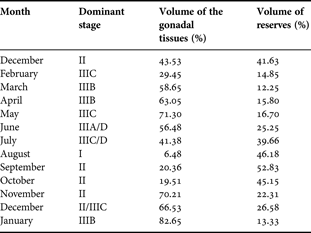
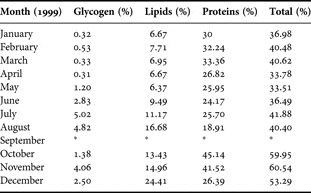
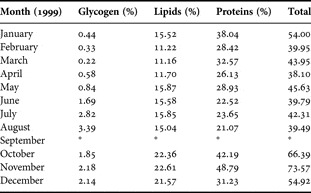
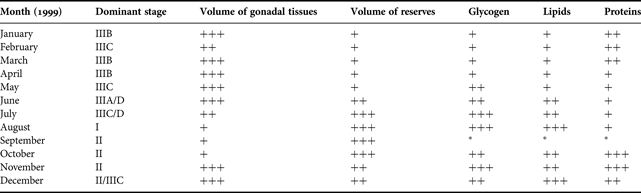
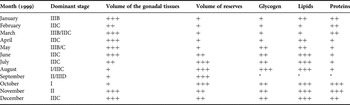
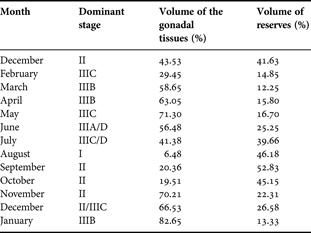
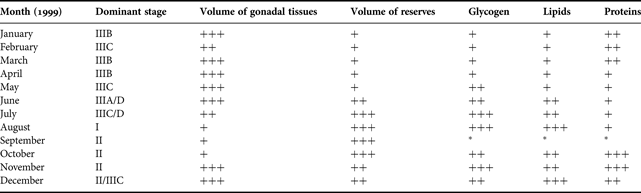
At Cap Ghir, the unpolluted site (potentially interesting for mussel breeding), the three biochemical components measured showed great annual variations in the whole soft masses of P. perna as well as in their gonads whatever mussel sex. As these fluctuations depended on the reproductive cycle of this species (Benomar et al., Reference Benomar, Bouhaimi, El Hamidi, Mathieu, Ouichou and Moukrim2006), the volume of the gonadal tissues in the mussels from Cap Ghir, that of reserves, and the annual variations of the three biochemical components are summarized in Tables 3 & 5 (males) and Tables 4 & 6 (females) using a scale ranging from + (low level) to +++ (high level) for Tables 5 & 6. In both sexes (considered together), the volume of the gonadal tissues increased from December to June in relation to the first gametogenetic period (Table 2). Data also showed the spawning period from February to May and, then gonadal resorption in July when the volume of gonadal tissues decreased up to a minimum in August. A second gametogenesis was reinitiated from August, and the first ripe animals were observed in November. The volume of reserves showed steady low values from February to May 1999 and, the minimal value was recorded in January 2000. The volume of storage tissues thus appeared inversely proportional to the gonadal volume. In both sexes, the maximum (>50%) of the three biochemical components in the mussels from Cap Ghir occurred from October to December and the mean values for males and females were 43.5% and 49.0%, respectively.
Dominant stage (according to Lubet's (Reference Lubet1959) classification; see Materials and Methods) and volume of both gonadal tissues and reserves in male and female mussels sampled at Cap Ghir (the unpolluted site) from December 1998 to January 2000.
Annual variations in the amounts of three biochemical components in the male gonad of mussels from Cap Ghir (the unpolluted site).

* no data in reason of an abnormal defrosting of mussel samples.
Annual variations in the amounts of three biochemical components in the female gonad of mussels from Cap Ghir (the unpolluted site).

* no data in reason of an abnormal defrosting of mussel samples.
Synthesis of the annual variations in: (1) dominant sexual stage (in males at Cap Ghir); (2) volume of both gonadal tissues and reserves (in male and female mussels considered together); and (3) 3 biochemical components (in the male gonad of mussels from Cap Ghir). The parameters are expressed using a scale ranging from+(low level) to +++ (high level).
* no data in reason of an abnormal defrosting of mussel samples.
Synthesis of the annual variations in: (1) dominant sexual stage (in females at Cap Ghir); (2) volume of both gonadal tissues and reserves (in male and female mussels considered together); and (3) 3 biochemical components (in the female gonad of mussels from Cap Ghir). The parameters are expressed using a scale ranging from+(low level) to +++ (high level).

* no data in reason of an abnormal defrosting of mussel samples.
As the glycogen concentration in P. perna from Anza was clearly lower, the strategy used by these mussels for the utilization of their reserves would be different from that adopted in the mussels living at Cap Ghir. In females, the fraction of glycogen intended fot energy reserves appeared to be quickly exhausted by the gonad (Figure 5D) so that lipids might constitute the main part of energetic reserves for the development of oocytes.
DISCUSSION
During the study period, the sexual activity in P. perna of the south of Morocco showed similar trends in males and females (Figure 2). At Cap Ghir, a period of gonad inactivity (stages IIID and I–II and low GI especially in females) was observed in summer–autumn (July–October in females and July–August in males; temperature: 17.5–20.5°C) when the volume of reserves increased and, the contents in glycogen and lipid were high. At this period, glycogen rates were especially high in males while females revealed particularly rich in lipids (Figures 5 & 6; Tables 3, 4, 5 & 6). In addition, proteins seemed to accumulate in gonadal and reserve tissues in October and November for both sexes (Figure 7). A second period of the reproductive cycle was observed in winter (December–February) when gonad developed and mussels reached stage III and showed high values of gonadal index. At this period, glycogen and lipids were low (especially in males), while proteins were comparatively in average content. In spring (considered here as the third period of the reproductive cycle), gametes were released and, females showed a rise in lipid content (during April 1999) followed by an increase in glycogen (during May) while proteins were at their minimal level. In males, it was glycogen that increased first from May. The dynamics of biochemical component storage in relation with the reproductive cycle was similar to that noted by Shafee (Reference Shafee1989) in the same species living on the Atlantic coast of Morocco but at Temara (close to Rabat). In this site (Shafee, Reference Shafee1989) and Agadir (present work), temperature conditions are similar (14–23°C at Temara; 15–22°C at Agadir), which can explain that gametogenesis was not inhibited in both sites (Velez & Epifanio, Reference Velez and Epifanio1981). However, these temperatures induced more periods of spawning (Benomar et al., Reference Benomar, Bouhaimi, El Hamidi, Mathieu, Ouichou and Moukrim2006) than that observed at Temara (Shafee, Reference Shafee1989) but, in both sites, asynchronous spawning (between males and females) was observed.
Males of the clam Ruditapes philippinarum also showed significant high contents of glycogen when they were exposed to high temperature (18°C) whereas females exhibited high levels of lipids (Fernàndez-Reiriz et al., Reference Fernàndez-Reiriz, Pérez-Camacho, Delgado and Labarta2007); in the present study, such a difference between sexes was observed in summer–autumn when water temperature ranged from 17.5 to 20.5°C. However, it is noticeable that in R. philippinarum, protein storage occurred at a temperature of 18°C (Fernàndez-Reiriz et al., Reference Fernàndez-Reiriz, Pérez-Camacho, Delgado and Labarta2007), whereas in P. Perna, this occurred during October and November when temperature did not exceed 17°C. The influence of sex on the energetic reserves observed in P. perna in the present study was also reported in another bivalve species, Scrobicularia plana studied at different sites (Mouneyrac et al., Reference Mouneyrac, Linot, Amiard, Amiard-Triquet, Métais, Durou, Minier and Pellerin2008). In this species, females showed high glycogen contents, but no significant differences between sexes appeared for the lipids of the gonad in the three studied sites (Mouneyrac et al., Reference Mouneyrac, Linot, Amiard, Amiard-Triquet, Métais, Durou, Minier and Pellerin2008).
The maximal values of the three biochemical components (i.e. glycogen and lipids) in the mussels from Cap Ghir were observed not during the spring, simultaneously to the phytoplanktonic bloom, but after this period (for example, from June in males). During spring, additional food intake could provide energy to support the high gonadal development (stages IIIB and IIIC) and the high rate of metabolism associated with the gonad ripeness (Soletchnik et al., Reference Soletchnik, Geairon, Razet and Goulletquer1996). According to Bayne (Reference Bayne1976), two kinds of marine bivalves can be distinguished: ‘opportunistic species’ use the energy obtained from food directly for gonad development, and reserve storage and gamete production cycles may overlap temporarily, whereas ‘conservative species’ use previously stored energy reserves. In P. perna, different authors (Shafee, Reference Shafee1989; Velez & Epifanio, Reference Velez and Epifanio1981) reported that during spring, temperature and additional food (induced by phytoplankton bloom) allowed mussels to store reserves (glycogen and lipids) exploited in winter during the gonadic activity. Such behaviour could be described as conservative but it appeared that it could not be applied to mussels from Cap Ghir. Indeed, the storage of energetic components in summer and autumn (Figures 5A & 6C) occurred just before or simultaneously to gonad development and maturation in October–November; nevertheless, these reserves might also support the gametogenesis observed from February. At Cap Ghir, P. Perna might be thus described as an intermediate species between opportunistic and conservative ones. In comparison with glycogen and lipids, protein storage began later (from October) and, this might be favourable for the final phase of gametogenesis. According to Rodriguez-Astudillo et al. (Reference Rodríguez-Astudillo, Villalejo-Fuerte, García-Domínguez and Guerrero-Caballero2002) in Spondylus leucacanthus and Shafee (Reference Shafee1989) in P. perna, proteins were used at the end of gametogenesis, probably during the final development stages of gametes. Rodriguez-Astudillo et al. (Reference Rodríguez-Astudillo, Villalejo-Fuerte, García-Domínguez and Guerrero-Caballero2002) specified that in females, the production of mature oocytes needed a first storage of lipids to produce yolk and, this lipid accumulation lasted from May to December. This first storage was followed by an accumulation of glycogen of which content was maximal only in August. Proteins, which partly contributed to the yolk formation, were stored only in October–November and then used in the following months, during the development of the main wave of gametogenesis. At the both sites of the present study, the lipid content of gametes was higher in oocytes in comparison to spermatozoa. According to Soudant et al. (Reference Soudant, Marty, Moal, Robert, Quéré, Le Coz and Samain1996), spermatozoa did not store lipids which could be found mainly in the membranes. Such a difference between sexes in the energetic needs for the formation of gametes has to be underlined.
Compared to values found in P. perna originating from the same site (Cap Ghir) (Moukrim et al., Reference Moukrim, Id Halla, Kaaya, Bouhaimi, Benomar and Mathieu2008) and from Temara (Shafee, Reference Shafee1989), the amounts of glycogen, lipids, and proteins recorded in the present study were clearly lower: for example in August, 225 mg/g (converted to 22.5%) of glycogen for Moukrim et al. (Reference Moukrim, Id Halla, Kaaya, Bouhaimi, Benomar and Mathieu2008), 23.11% of total carbohydrates for Shafee (Reference Shafee1989), instead of 4.8% in males for the same month. For lipids, the percentages noted in December were 24.41% in the present study whereas Shafee (Reference Shafee1989) noted only 7.58% and Moukrim et al. (Reference Moukrim, Id Halla, Kaaya, Bouhaimi, Benomar and Mathieu2008) 375 mg/g (or 37.5%). Values of proteins recorded in October were 45.14% (present data), 58.14% (Shafee, Reference Shafee1989) and 300 mg/g (or 30%) (Moukrim et al., Reference Moukrim, Id Halla, Kaaya, Bouhaimi, Benomar and Mathieu2008). The total of the 3 biochemical components showed low values ranging from 33.51% (May) to 60.54% (November) and, from 38.10% (April) to 73.57% (November) in males and females from Cap Ghir, respectively (Tables 3 & 4). Such low values were also found in the Pacific oyster Crassostrea gigas analysed with the same protocol (Costil et al., Reference Costil, Royer, Ropert, Soletchnik and Mathieu2005). These authors pointed out that the low total percentages (lipids, proteins and glycogen) were probably due to low contents in proteins (which never exceeded 40%) and, the explanation might be the use of a potentially inappropriate standard (bovine albumin). The differences might also be explained by the method used to measure biochemical components, as Moukrim et al. (Reference Moukrim, Id Halla, Kaaya, Bouhaimi, Benomar and Mathieu2008) analysed fresh soft masses of P. perna instead of dry weight tissues as used in the present study. In contrast, Tavares et al. (Reference Tavares, do Amaral Mello, Campos, de Morais and Ostini1998) analysed dry tissues of Brazilian P. perna and, they found values of biochemical components of which ranges were similar to those we recorded at Cap Ghir. In this site, it is interesting to note that P. perna and another co-existing mussel, Mytilus galloprovincialis, showed the same seasonal variations in glycogen, lipids and proteins throughout the year (Moukrim et al., Reference Moukrim, Id Halla, Kaaya, Bouhaimi, Benomar and Mathieu2008).
High amounts of lipids generally found in the entire mussels from Anza (as well as in their gonads) (Figure 6C, D) might be explained by the usefulness of these reserves mainly to fight against contamination present in the site, thus demonstrating a mechanism of mussel adaptation at a polluted site (Lowe & Pipe, Reference Lowe and Pipe1987; Deslous-Paoli et al., Reference Deslous-Paoli, Wolowicz and Boromthanarat1991). However, another assumption concerning the remobilization of these lipids from degenerated spermatozoa in gonadic acini cannot be excluded, as the gametes in lysis were more numerous in the mussels from Anza than in those from the unpolluted site (Benomar et al., Reference Benomar, Bouhaimi, El Hamidi, Mathieu, Ouichou and Moukrim2006). Under these conditions, the proteins would be used as energy reserves to ensure the continuity of gametogenesis and to reconstitute basal energy which is necessary for mussel survival, as demonstrated in Mytilus edulis by Bayne (Reference Bayne1976) and Bayne et al. (Reference Bayne, Bubel, Gabbott, Livinstone, Lowe and Moore1982). An argument supporting this latter hypothesis was the slower growth of P. perna in the Hong Kong Bay than in the other sites where this species was living (Lee, Reference Lee1986). Indeed, the marine environment was highly polluted in this Asiatic bay so that the main fraction of these proteins was mainly used for gametogenesis and a little part for mussel growth. As already demonstrated by Deslous-Paoli et al. (Reference Deslous-Paoli, Wolowicz and Boromthanarat1991) in M. edulis from Gdansk (Poland) versus Marennes-Oléron (France), there was probably an inversion of the strategic situation in the mussels from Anza: they were of lipid type (when glycogen was exhausted) and might be replaced by proteins to sustain the course of gametogenesis over time. Steroid hormones might induce such an inversion between the reserves of the mussels living at the polluted site (compared to those of the reference site); for example, high contents of 17β-oestradiol were found in Scrobicularia plana of the highly polluted estuary of the Seine (Mouneyrac et al., Reference Mouneyrac, Linot, Amiard, Amiard-Triquet, Métais, Durou, Minier and Pellerin2008) with endocrine disturbances, like intersex in gastropods (Ketata et al., Reference Ketata, Denier, Hamza-Chaffai and Minier2008) not noted in the mussels of the polluted site Anza. Storage strategy and reproductive activity are linked and both impacted by environmental conditions including pollutants. McDowell et al. (Reference McDowell, Lancaster, Leavitt and Rantamaki1999) reported that bioenergetic disruption, occurring in marine bivalves exposed to chemical contaminants in harbours, could result in loss of reproductive output (and increased susceptibility to disease).
In conclusion, this study is the first to show the influence of both sex and site on the storage strategy in P. perna. In comparison to males, these reserves (which fluctuate according to the reproductive activity and the environmental conditions) showed higher levels in females, particularly in their gonads with respect to lipids. They were glycogen and lipids which were used in the course of gametogenesis, proteins probably taking over during the final phase of gametogenesis, especially for the gamete formation. Pollution appeared to act on storage strategy because reserves became mainly lipidic then proteinic whereas they were constituted by glycogen and lipids in the unpolluted individuals.