


The role of the state in financialization is a central issue in contemporary political economy.Footnote 1 China exemplifies a state-led financialization in which the state, rather than market forces, engineers the process.Footnote 2 This process is not solely driven by the central or local government but also by the dynamic and even conflictual interplay between them. Propelled by diminishing fiscal autonomy and strong bureaucratic incentives for economic growth, local governments have embraced state entrepreneurialism, incorporating financial logic into governance.Footnote 3 Together, these dynamics have shaped the unique landscape of the (de-)financialization of governance in China.Footnote 4
Despite extensive research on what local governments do in financialization, how the bureaucratic structure adapts has been largely overlooked. Prevailing narratives have skilfully documented the financialized instruments for governance: the creation of quasi-governmental organizations, like local government financing vehicles (LGFVs),Footnote 5 and the deployment of financial tools, such as government-guided investment funds (GGIFs).Footnote 6 However, this focus on the financialized tools obscures the transformation of the government bureaucracy.
This study addresses this gap by tracing the two-decade evolution of China’s local financial agencies. This trajectory unfolds in four distinct stages, mirroring the dynamics of central–local relations. It begins with the bottom-up establishment of the local financial office (jinrongban 金融办), an agency designed to connect with capital markets and support the listing of local enterprises, marking the onset of local state-led financialization. These agencies were subsequently formalized by the central government as financial bureaus (jinrongju 金融局), with expanded mandates that enhanced state-led financialization. Later, the central government systematically devolved regulatory responsibilities to these agencies and renamed them financial regulatory bureaus (jinrong jianguanju 金融监管局). By making supervision, rather than development, the core mandate, this strategic prioritization marked a phase of selective financialization. Ultimately, the central government reorganized provincial agencies into financial commissions (jinrongwei 金融委), stripping them of developmental functions while largely disbanding city-level counterparts, signifying a decisive turn towards central state-led de-financialization. Accordingly, this study addresses two core questions: what is the complete trajectory of the emergence and transformation of local financial agencies in China? How have shifting central–local dynamics shaped this process of (de-)financialization?
This study traces this trajectory through a comprehensive analysis of government documents. First, using the official Chinese government website, https://www.gov.cn/, we scrutinized the central government documents that outline the framework for local governments’ involvement in financial affairs. Second, we sourced local-level documents and information from official government websites and media platforms (such as government WeChat accounts). These provided key details on the establishment, functions and structural adjustments of local financial agencies. Lastly, we used media reports for supplementary information and cross-verification.
This study contributes to the existing literature in two key ways. First, it provides the first systematic investigation of financialization of local governance from the perspective of bureaucratic restructuring, revealing the underlying logic of this process. Second, it examines how the complex interactions between central and local governments shaped the (de-)financialization of local governance. By uncovering the bureaucratic structure and behavioural logic within this central–local dynamic, this study offers new insights into the mechanisms driving the emergence and transformation of state-led (de-)financialization in China.
The remainder of this paper is organized as follows. The following section situates our research within debates on the state–financialization symbiosis and develops a theoretical framework centred on central–local dynamics. We then present our core empirical analysis, examining the evolution of local financial agencies through four distinct stages. Finally, the concluding section summarizes our findings and their broader implications for understanding state-led (de-)financialization and the dynamics of state centralization in China’s political economy.
Literature Review
The state–financialization symbiosis
For a long time, the state and financialization were viewed as opposing forces, with financial expansion seemingly diminishing the state’s role. Initially, financialization was understood as the replacement of industrial economic dominance by the financial sector.Footnote 7 Within the neoliberal framework, it has been described as a result of capital-driven expansion.Footnote 8 According to this view, the state gradually retreated from core economic governance to become a passive regulator, seemingly unable to resist this economic shift.Footnote 9 From this process emerged new accumulation models,Footnote 10 corporate strategiesFootnote 11 and transformations in everyday life.Footnote 12
Recent studies, however, have demonstrated that the state is not a passive casualty but an active architect. The UK government promoted financialization by strengthening the power and influence of the Treasury.Footnote 13 Even in a quintessential liberal economy like the US, the government integrated capital markets into social services and facilitated financial expansion.Footnote 14 This dynamic became even more pronounced following the global financial crisis. Advanced and developing countries turned to financialization for crisis management.Footnote 15 These studies suggest that the state engages in financialization in increasingly complex ways.Footnote 16
The state facilitates the circulation of capital by packaging public assets into investment portfolios.Footnote 17 It then offers these assets to investors.Footnote 18 These assets extend beyond housing and land.Footnote 19 Public services and infrastructure, including parking fees,Footnote 20 water utilitiesFootnote 21 and airport facilities, have been transformed into tradable assets.Footnote 22 Such mechanisms have not only contributed to the expansion of capital markets but have also served as vital tools to alleviate fiscal crises.Footnote 23
Conversely, the state also retains its capacity to discipline and constrain financial processes. The government and central bank in the Netherlands attempted to reform regulatory policies to mitigate housing-related financial risks.Footnote 24 This pushed against the country’s earlier trajectory of housing financialization.Footnote 25 In Hungary and Romania, governments imposed strong financial repression by restricting the activities of foreign banks.Footnote 26 This counter-movement can lead to de-financialization, understood not just as a reduction in financial scale or the simplification of financial institutionsFootnote 27 but also as “the re-embedding of finance in a more regulated form.”Footnote 28
Taken together, these perspectives reveal a symbiotic relationship between the state and financialization.Footnote 29 This relationship is not a simplistic narrative of state retreat. It is a dynamic interplay where the state turns to capital markets to address fiscal pressures.Footnote 30 The state is an embedded and strategic actor whose actions co-evolve with financial processes.Footnote 31 Understanding this symbiosis requires asking how the state engages with finance. In contexts where state-controlled entities command key financial resources, the proliferation of financial logic is not primarily driven by private investors seeking capital gains. Instead, it is driven by the state mobilizing financial resources in new forms to serve its governance imperatives.Footnote 32 China provides a salient example of financialization as a tool of statecraft, as it both shapes and is shaped by the logic of governance itself.
State-led financialization of local governance in China
The Chinese context illustrates state-led financialization in local governance, a dynamic characterized not by the intervention of external financial interests but by the proactive use of financial instruments by local governments.Footnote 33 The local governments use these instruments to pursue regional development goals and guide resources into designated industries.Footnote 34 What we observe is not the state being captured by financial interests, but rather the strategic integration of financial logic and instruments into the state’s methods for achieving developmental and political objectives, thereby helping to ensure its political legitimacy.Footnote 35
A foundational dimension of governance is the state’s strategic use of land. The pivotal 1994 tax-sharing reform significantly recentralized fiscal revenues while leaving substantial expenditure responsibilities with local governments.Footnote 36 This created a structural fiscal gap, compelling local governments to strategically extract financial value from urban land. For decades, land finance has served as the primary engine of local economic growth and a major component of local government revenues.Footnote 37 Local governments systematically transformed land into a financial asset to fund rapid urbanization, skilfully utilizing land sales and mortgage-backed financing to secure vast off-budget funding and resolve critical funding shortages.Footnote 38 This governance approach proved effective in driving local development and became a widely replicated strategy across different levels of government.Footnote 39
The financialization of local governance has expanded through sophisticated financial instruments beyond land. LGFVs were created as quasi-government organizations to establish access to capital markets, allowing municipalities to bypass central fiscal controls and raise substantial funds for infrastructure.Footnote 40 Local governments have further employed creative mechanisms like GGIFs and public-private partnerships (PPPs).Footnote 41 These tools are designed to attract private capital into strategic areas such as industrial parks and urban renewal, facilitating economic restructuring and regional upgrading.Footnote 42 Through these diverse financial instruments, local governments have actively embedded financial logic into their core governance processes.
This state-led financialization relies on distinct institutional arrangements. Local governments primarily execute financial strategies through quasi-government organizations and state-owned enterprises (SOEs),Footnote 43 leveraging predominantly state-owned capital to achieve development mandates.Footnote 44 This process is not static but involves a continuous interplay between local creation and central regulation. When existing financing models generate risks that threaten systemic stability, the central government intervenes to impose restrictions and selectively guide financialization towards new channels.Footnote 45 This dynamic adjustment, ultimately guided by the state’s evolving strategic objectives and executed through its dominance over capital and public entities, highlights a governance model where financial mechanisms are constantly managed and redirected by the state apparatus.Footnote 46
However, existing research predominantly focuses on the financialized instruments utilized by the state, overlooking the corresponding adjustments in the state’s internal bureaucratic structure. Financialization has fundamentally transformed not just what local governments do but also how they are organized to do it.Footnote 47 Research at the central level has illuminated how the state has adapted into a “shareholding state” to manage vast public assets.Footnote 48 Yet a corresponding understanding of bureaucratic adaptation at the local level remains a critical gap. This paper addresses this gap by arguing that the institutional trajectory from jinrongban to jinrongwei provides a direct window into the financialization of local governance, revealing how the bureaucratic structure co-evolves with the dynamics of central and local priorities.
The central–local dynamic in China’s local governance
The central government serves as the primary architect and controller of the local governance landscape. It establishes an institutional basis and operational boundaries through policy, regulation and financial tools, setting rules for financial policies and risk mitigation.Footnote 49 For example, by adjusting land reserve rules and local debt controls, the central government both constrained local spending and moved local governments towards standard financing methods.Footnote 50 Furthermore, central directives on industrial upgrading and regional development profoundly influence the strategic deployment of local financial resources.Footnote 51
Local governments act as both implementers and innovators in financialized governance, driven by a strong development orientation and fiscal pressures. They are famously development-focused, responsible for regional economic growth and well-being.Footnote 52 The 1994 tax-sharing reform deeply reinforced this orientation: while centralizing revenues, it maintained or increased local expenditure responsibilities, creating a structural fiscal gap.Footnote 53 Faced with such pressure, local governments are granted significant autonomy when designing local plans to secure revenue and fulfil development mandates.Footnote 54 Consequently, local governments often engage in selective implementation, adapting central policies to meet local needs and opportunities and finding creative ways to achieve objectives.Footnote 55
A key tension in China’s local governance is that central and local government objectives are not always aligned.Footnote 56 The central government prioritizes national stability, financial security and long-term sustainable development, often by reducing debt and controlling risks.Footnote 57 In contrast, local governments focus on their immediate needs, such as rapid economic growth, short-term fiscal revenue generation and the delivery of visible development projects.Footnote 58 This misalignment is exacerbated by the cadre promotion system, which rewards officials for economic successes achieved under their tenureFootnote 59 and fosters a constant drive for growth and revenue at the local level.Footnote 60
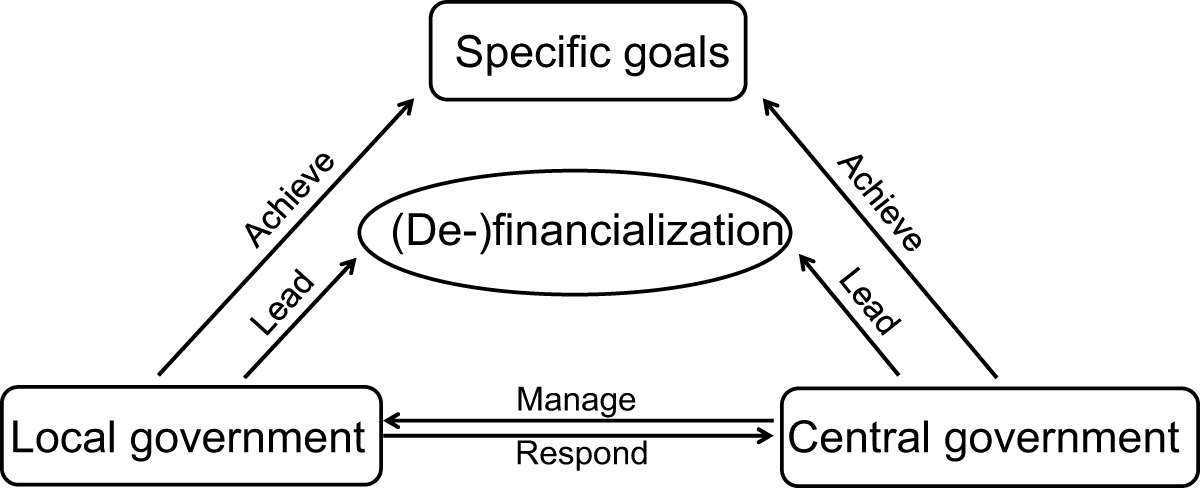
This interplay between central regulation and local initiative fundamentally shapes the financialization of local governance (see Figure 1). The central government seeks national economic security and mitigates systemic financial risks by regulating financialization and preventing local debt crises.Footnote 61 Conversely, local governments, driven by fiscal pressures and career incentives, devise strategies that aggressively pursue financialization to boost economic development and secure vital resources.Footnote 62 This dynamic produces a continuous cycle of strategic negotiation and mutual adaptation that shapes the financialization of local governance in China.
Research Framework

Figure 1 Long description
A diagram illustrating the interaction between local and central government in the context of (de-)financialization. The central government and local government are connected by a two-way arrow labeled 'Manage' and 'Respond'. Both entities lead towards '(De-)financialization', which is linked to 'Specific goals' by arrows labeled 'Achieve'. The diagram emphasizes the dynamic roles of leading and achieving between the governments and their financial objectives.
Institutional Trajectory of Local Financial Agency in China
Since 2002, the bureaucratic architecture of local finance in China has undergone a significant institutional transformation. This shift, from the initial jinrongban to the latest jinrongwei, reflects the state’s strategic efforts to apply and institutionalize financial logic within local governance and is framed by a complex central–local dynamic.
Decentralized creation: local state-led financialization (jinrongban, 2002–2008)
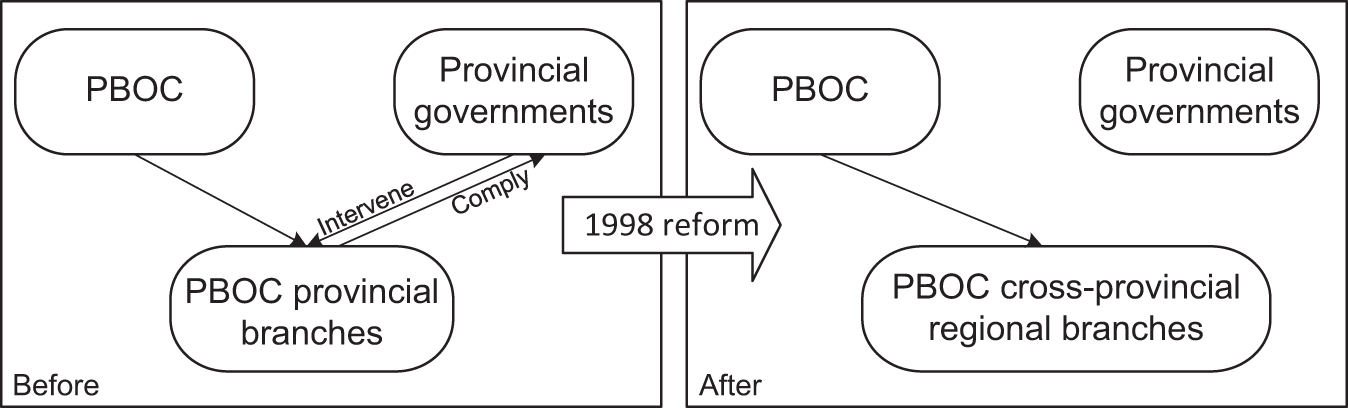
A series of financial centralization reforms around the turn of the century created a serious governance dilemma for local governments. Previously, local governments used their influence over local branches of the People’s Bank of China (PBOC) to direct lending for fiscal purposes, resulting in a large volume of non-performing loans.Footnote 63 Consequently, the central government sought to strengthen the PBOC’s independence from local government.Footnote 64 A plan to restructure the PBOC was initially proposed in 1993 and culminated in the 1998 reform.Footnote 65 This initiative replaced provincial branches with cross-provincial regional branches under direct central command, establishing a vertical chain of authority (see Figure 2).Footnote 66 The reform was widely regarded as effective at curtailing local government interference in the PBOC, an outcome affirmed by national leaders.Footnote 67 The centralization was cemented in 2003 by the “One bank, three commissions” regulatory system, which stripped local authorities of their control over credit management and securities regulation.Footnote 68 While these top-down reforms successfully prevented local governments from interfering with the PBOC and restricted their traditional access to financial resources, they did not remove the intense development pressures brought by the cadre evaluation system.Footnote 69 This acute dilemma compelled local governments to forge new pathways to acquire resources for development.
State Council’s 1998 Reform of PBOC Branches

Figure 2 Long description
The diagram consists of two sections labeled 'Before' and 'After', depicting the structure of the People's Bank of China (PBC) before and after the 1998 reform. In the 'Before' section, three entities are shown: PBC, Provincial governments and PBC provincial branches. Arrows indicate the interaction between these entities, with 'Intervene' pointing from Provincial governments to PBC provincial branches and 'Comply' pointing from PBC provincial branches to Provincial governments. In the 'After' section, the structure changes to PBC, Provincial governments and PBC cross-provincial regional branches. An arrow labeled '1998 reform' points from the 'Before' section to the 'After' section, indicating the transition. The interaction between Provincial governments and PBC cross-provincial regional branches is shown with a single arrow, suggesting a change in governance dynamics.
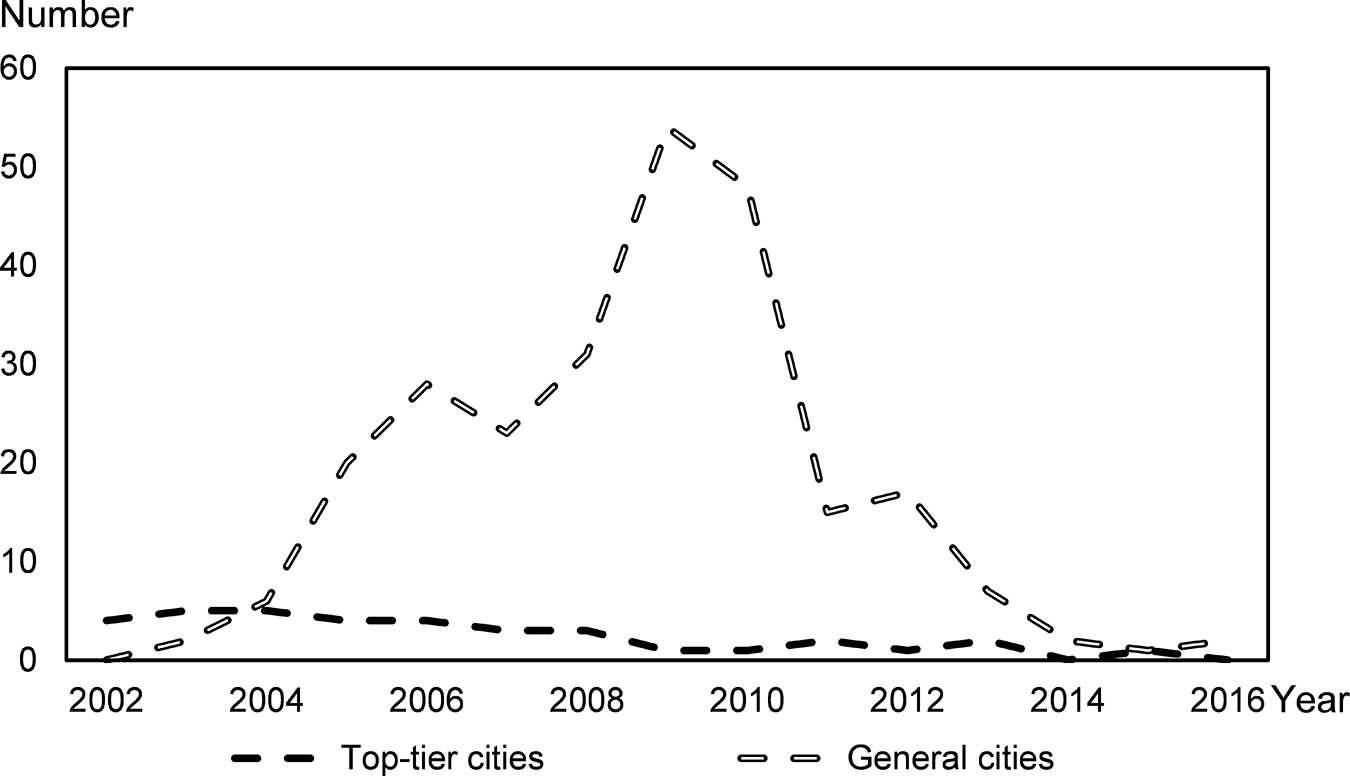
In response to this dilemma, local governments began establishing their own financial departments, the jinrongban.Footnote 70 Pioneered by the larger municipalities like Beijing and Shanghai in 2002, the bottom-up, unauthorized nature of the jinrongban was signalled by its very name: jinrongban instead of jinrongju. In the Chinese bureaucratic hierarchy, an office (ban 办) signifies a coordinating or ad-hoc body with less formal authority than a fully fledged bureau (ju 局). Lacking explicit central authorization, the establishment of the jinrongban was limited before 2009 and the offices were concentrated in top-tier cities with greater administrative and economic capacity (see Figure 3).Footnote 71 Yet this ambiguous status was precisely its strength, as it provided local actors with the flexibility to experiment at the margins of the centrally mandated administrative structure and create a new model of financial resource mobilization beyond the formal banking system.Footnote 72
Newly Established Jinrongban in Top-tier Cities and General Cities, 2002–2016

Figure 3 Long description
The x-axis is labeled 'Year' with values from 2002 to 2016. The y-axis is labeled 'Number' with values from 0 to 60. The graph includes two lines: one for top-tier cities and one for general cities. The line for top-tier cities shows a peak around 2008, reaching approximately 55 and then declining sharply by 2012. The line for general cities remains relatively flat throughout the period, with values mostly below 10.
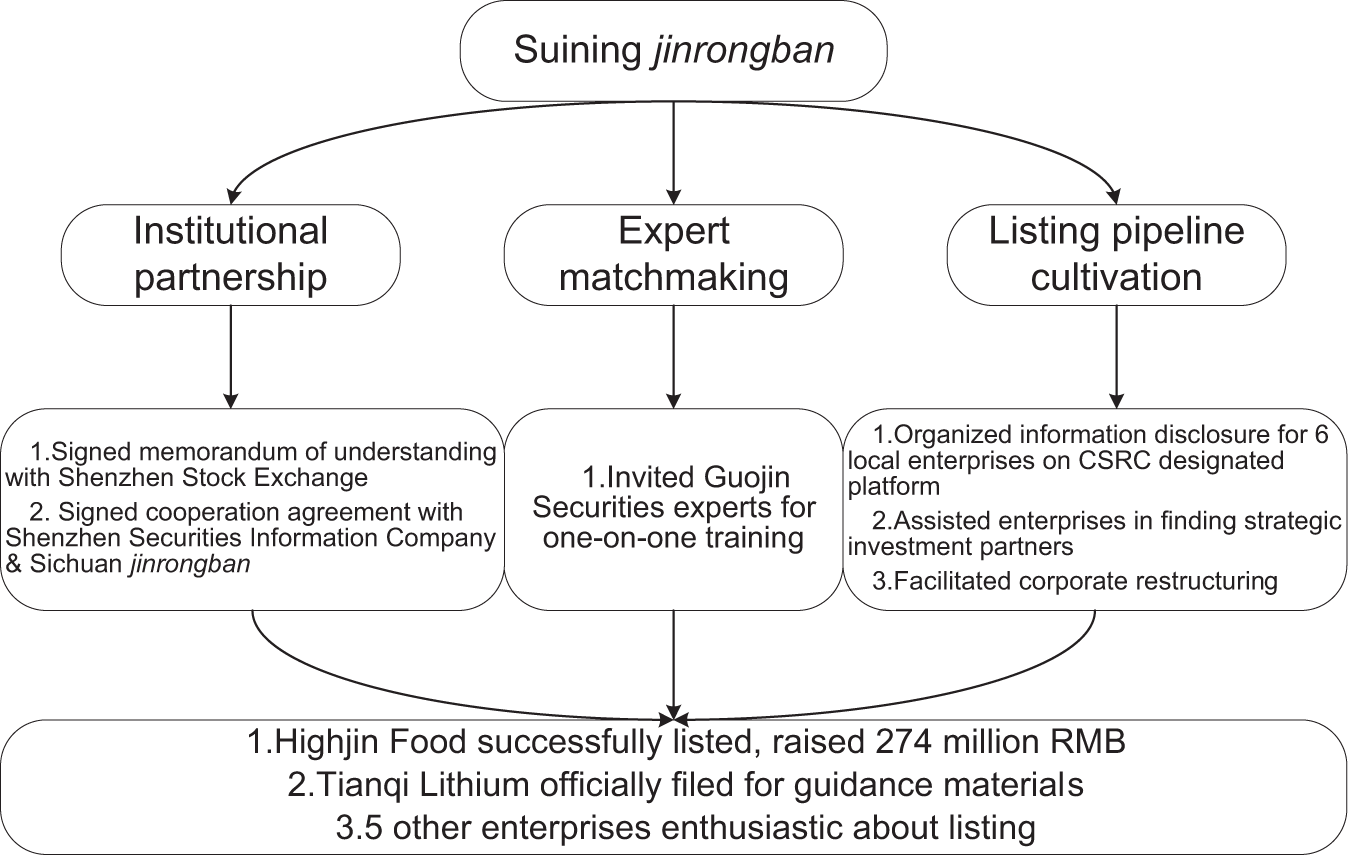
The primary function of the jinrongban was to guide local firms through the complex IPO process, marking a strategic pivot in local financial governance. With the removal of the traditional resource allocation channels, local governments used the jinrongban to become facilitators of corporate financing. The Meizhou 梅州市 jinrongban, for instance, was explicitly defined as being “primarily responsible for listing work,” for which it even compiled a dedicated Handbook for SME Listing Services (zhongxiao qiye shangshi fuwu shouce 中小企业上市服务手册).Footnote 73 In Tianjin, the jinrongban was designated as the first-ranked drafting unit for the city’s policy on promoting corporate listings, placing it above powerful ju like the fiscal bureau (caizhengju 财政局).Footnote 74 In Suining, the local jinrongban systematically orchestrated the entire listing pipeline (see Figure 4).Footnote 75 In essence, local governments used the jinrongban to become proactive players in the capital market, seeking new opportunities for growth.Footnote 76
Suining Jinrongban’s Efforts in Promoting Local Enterprise Listings, 2007

Figure 4 Long description
A flowchart detailing Suining jinrongban's initiatives. It includes three main areas: Institutional partnership, Expert matchmaking and Listing pipeline cultivation. Under Institutional partnership, it mentions signing a memorandum with Shenzhen Stock Exchange and a cooperation agreement with Shenzhen Securities Information Company and Sichuan jinrongban. Expert matchmaking involved inviting Guojin Securities experts for one-on-one training. Listing pipeline cultivation included organizing information disclosure for six local enterprises on a CSRC platform, assisting in finding strategic investment partners and facilitating corporate restructuring. Outcomes include Highjin Food's successful listing raising 274 million RMB, Tianqi Lithium filing for guidance materials and five other enterprises showing interest in listing.
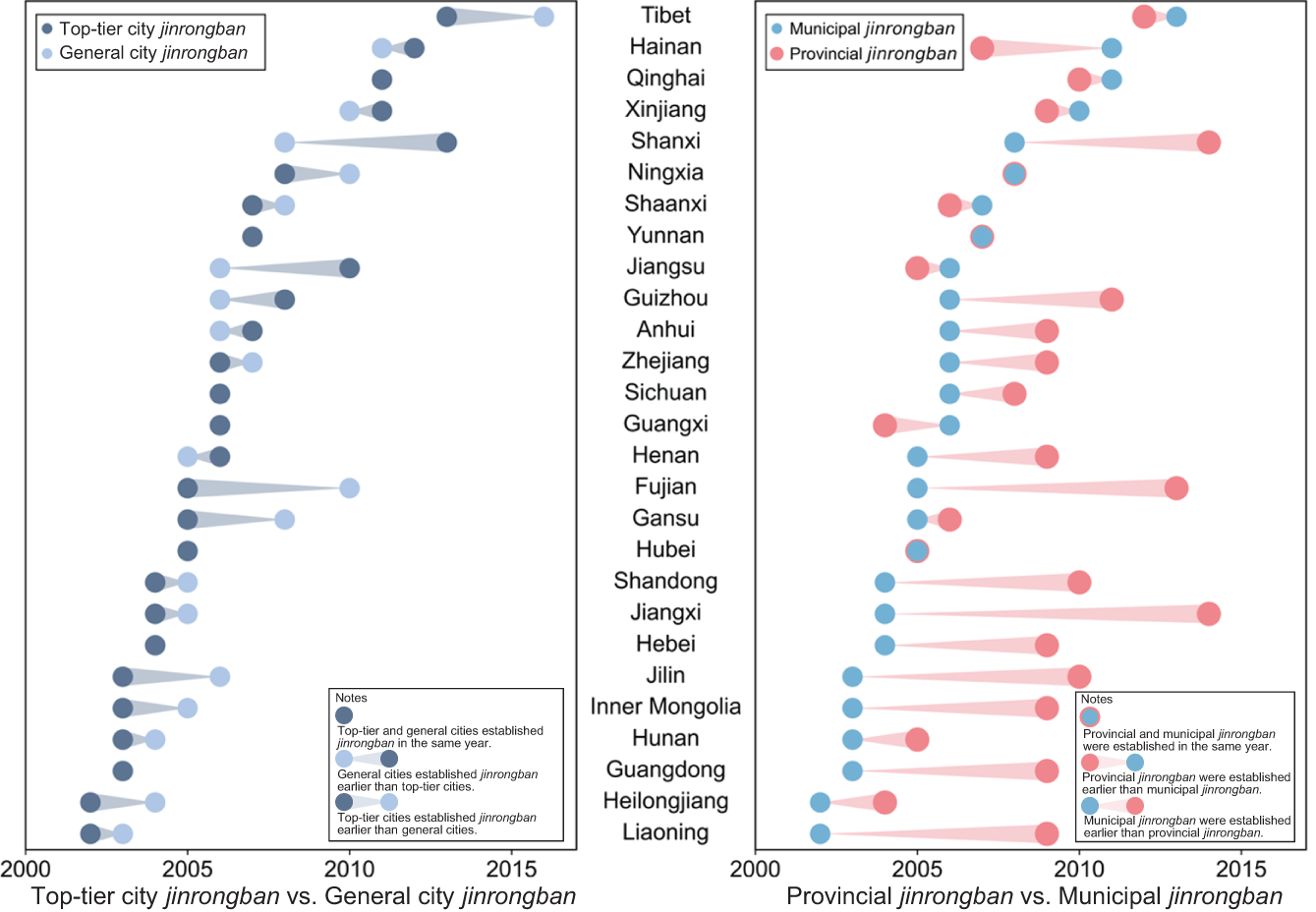
These jinrongban were not isolated cases. Indeed, their diffusion pattern provides compelling evidence of their decentralized nature. Emerging first in top-tier cities, they then spread horizontally to other cities (see Figure 5). In over two-thirds of provinces, top-tier cities were the first to establish a jinrongban. This adoption created a demonstration effect and spurred a subsequent wave of institutional mimicry among other cities. Figure 3 confirms this trend, as the number of jinrongban established by general cities rises sharply after 2004.
Establishment of Jinrongban Across Administrative Levels Within Provinces

Figure 5 Long description
The image contains two graphs. The left graph compares the establishment of jinrongban in top-tier cities versus general cities from 2000 to 2015. It shows data points for each city type, with lines indicating whether top-tier cities established jinrongban earlier, later, or in the same year as general cities. The right graph compares provincial jinrongban versus municipal jinrongban over the same period. It displays data points for each level, with lines showing whether provincial jinrongban were established earlier, later, or in the same year as municipal jinrongban. Both graphs include notes explaining the meaning of the lines and data points, with provinces listed alongside the graphs for reference.
The bottom-up dynamic of the jinrongban is further revealed in its vertical diffusion from the municipal to the provincial level. Not only did all provinces establish provincial jinrongban, but the majority did so after a city within their jurisdiction had already established a municipal one (see Figure 5). Notable examples include the seven-year gap in adoption between Shenyang (2002) and Liaoning province (2009), and the decade-long gap between Nanchang (2004) and Jiangxi province (2014).
In sum, the jinrongban was a bottom-up institutional creation driven by local governments, which was eventually adopted nationwide.Footnote 77 Faced with the challenges presented by central financial reforms, local governments neither passively accepted the imposed constraints nor directly confronted the central authority. Instead, they devised a new strategy to engage with the capital markets, integrating financial logic into their governance to serve developmental imperatives, signifying local state-led financialization. This incorporation of financial logic to mobilize resources for local development mirrors other financialized instruments, like the GGIFs and LGFVs.Footnote 78 However, unlike these external tools, the jinrongban represented a fundamental alteration of the government’s own bureaucratic apparatus.
Formalization and mandate expansion: deepening state-led financialization (jinrongban and jinrongju, 2009–2016)
The central government could not ignore the rise and diffusion of the jinrongban, but rather than suppress this bottom-up institutional creation, it changed tact, moving towards co-optation by formally integrating them into the national bureaucratic system and expanding their mandates. This strategic realignment gave the jinrongban legitimacy and empowered them with broader functions, further deepening the state-led financialization.
The first step in this process was formalization. The 2008 administrative reforms opened a critical policy window that allowed local governments to establish agencies based on local needs (yindizhiyi 因地制宜).Footnote 79 This policy triggered a rapid rollout as previously hesitant governments rushed to create their own jinrongban, with new establishments peaking in 2009. By 2015, more than 93 per cent of all prefecture-level cities had established a jingrongban (Figure 3). Early adopters upgraded their jinrongban into permanent fixtures of the bureaucracy, with some renaming the office a jinrongju.Footnote 80 Provincial governments acted swiftly. Shandong upgraded its jinrongban to an independent agency, freeing it from its previous subordinate position within the government’s general office.Footnote 81 Similarly, Zhejiang elevated its agency to a public institution directly under the provincial government.Footnote 82 This trend cascaded down to the municipal level, with cities like Shenyang, Taiyuan 太原市 and Wenzhou 温州市 following suit.Footnote 83 This transformation had two effects: it legitimized a locally driven, bottom-up initiative while simultaneously incorporating it into the national bureaucratic system, thereby creating a formal channel for top-down state directives
This new formal status came with centrally delegated responsibilities. In response to the growing complexity and potential risks within local financial markets, particularly in sectors of the shadow economy that were challenging for central supervision, the central government began strategically delegating regulatory functions to these newly formalized local financial agencies. For instance, in 2008, the central government launched a pilot programme that tasked local governments with licensing and regulating microloan companies.Footnote 84 Consequently, when Beijing’s jinrongban was upgraded to a jinrongju that same year, it immediately assumed supervisory responsibility for such companies.Footnote 85 In subsequent years, the central government continued to transfer oversight of local pawnbroking (2012), financial leasing (2013) and factoring sectors (2014) to the jinrongban and jinrongju.Footnote 86 In a few cities, regulatory mandates even took precedence over service functions. Linyi 临沂市 offers a prime example. Its jinrongban was renowned for its early success in promoting overseas corporate listings,Footnote 87 yet the agency later explicitly prioritized regulatory supervision over development.Footnote 88
Under central arrangements, the jinrongban and jinrongju secured formal administrative status and expanded their functional powers. This development signified the deepening of state-led financialization. Concurrently, local financial agencies were positioned at the intersection of two distinct governance logics. They navigated a logic of growth driven by local development targets under a system of misaligned fiscal resources and expenditure responsibilities,Footnote 89 while simultaneously facing a logic of risk control imposed by the central government.Footnote 90
Systematic regulatory devolution: selective financialization (jinrong jianguanju, 2017–2022)
After 2017, the central state’s growing emphasis on national financial security triggered a fundamental reorientation in the mission of local financial agencies. As systemic risks accumulated across the financial system, financial security became a major concern. The Fifth National Financial Work Conference (5th NFWC), held that year, marked a fundamental shift in the central government’s priorities, from emphasizing economic growth to ensuring financial security. This was reflected in a broader reassertion of state power aimed at containing the growing financial risks of the preceding period. The logic of risk control, previously one of two distinct missions, was now elevated to the primary political priority.
This new imperative was driven by a top-down mandate that fundamentally reshaped the priorities of local financial governance. At the central level, the government signalled this change in tack by establishing the Financial Stability and Development Committee (FSDC) to impose unified, high-level coordination. The urgency was underscored by Xi Jinping’s declaration that preventing systemic risk was the “eternal theme” of financial work and must be given “a more important position.”Footnote 91 At the local level, the mandate went beyond simply strengthening supervision. To ensure implementation, the central government reinforced the principle of “territorial responsibility” (shudi zeren 属地责任) for risk disposal, backed by a strict accountability system. Barely a month after the 5th NFWC, the Ministry of Finance (MOF) made this directive concrete by publicly disciplining officials in Jiangsu and Guizhou provinces for illicit financing practices, holding 57 and 14 individuals accountable, respectively.Footnote 92 This direct accountability tied financial stability to the career prospects of local officials, subordinating regional growth ambitions to the paramount national goal of de-risking the economy.
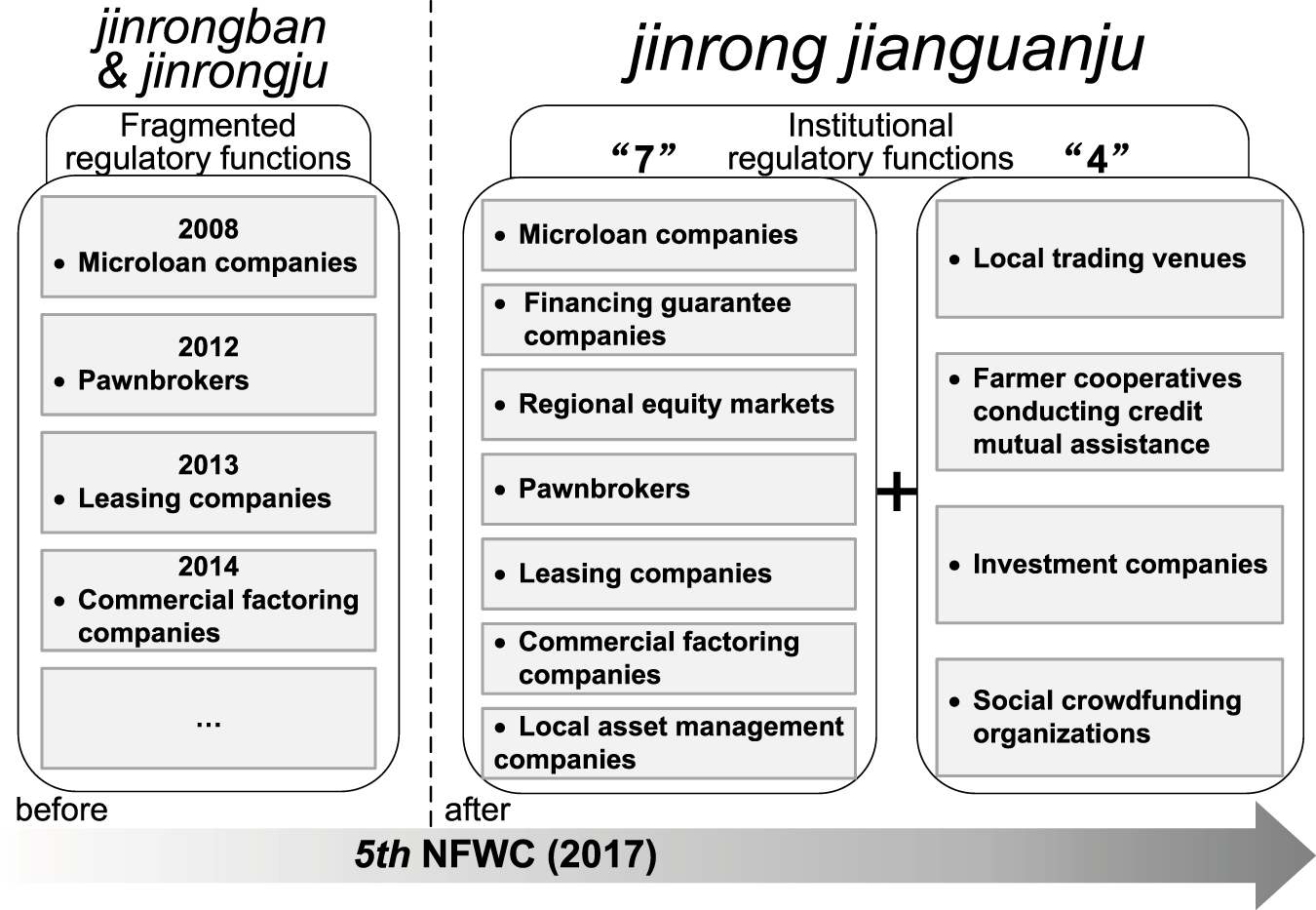
This new mandate was institutionalized through a departmental reform that renamed the agency itself, from jinrongban (or jinrongju) to jinrong jianguanju. Following the pattern of policy experimentation,Footnote 93 this reform was first piloted in Shandong in 2013 by its new governor, a former chairman of the CSRC. Following the 5th NFWC, this reform was implemented nationwide. The name change was more than semantic, with the addition of jianguan indicating a new core mission. In contrast to the fragmented duties of its previous incarnations, the jinrong jianguanju was tasked by the central government with systematically regulating the “7+4” categories of local financial institutions (see Figure 6).Footnote 94 The very agency created to facilitate local growth, often by circumventing central rules, had its purpose reversed. It was now an instrument for enforcing the central government’s risk-control agenda. In an example of this pivot, the Chongqing jinrong jianguanju made regulatory enforcement its top responsibility post-reform.Footnote 95
Designated Functions of Local Financial Agencies Before and After the 5th NFWC

Figure 6 Long description
The diagram compares the regulatory functions of jinrongban and jinrongju before the 5th NFWC in 2017 with jinrong jianguanju after. Before, functions were fragmented, covering microloan companies (2008), pawnbrokers (2012), leasing companies (2013) and commercial factoring companies (2014). After, institutional functions include '7' categories: microloan companies, financing guarantee companies, regional equity markets, pawnbrokers, leasing companies, commercial factoring companies and local asset management companies. Additionally, '4' categories include local trading venues, farmer cooperatives conducting credit mutual assistance, investment companies and social crowdfunding organizations.
This institutional restructuring reoriented the priorities of local financial agencies. Although developmental tasks remained, they were subordinated to the urgent duty of regulation. This shift marked a turn towards state-led selective financialization, in which the central state selectively supported the financial tools that aligned with its governance objectives. Financial logic was incorporated into governance only insofar as it served a broader political logic.Footnote 96 Consequently, this change was less about eliminating local financial capacity and more about directing it to serve the state’s urgent risk-control agenda.Footnote 97
Strategic recentralization: central state-led de-financialization (jinrongwei, 2023–present)
In 2023, a central government reform placed local financial governance under direct Party oversight. To achieve a centralized and unified financial leadership, the CCP Central Committee established a new body directly under its authority, the Central Financial Commission (Central jinrongwei).Footnote 98 Local governments have been required to mirror this structure by reorganizing their jinrong jianguanju into provincial jinrongwei. This reform has fundamentally shifted the locus of power. Unlike the jinrong jianguanju, which operated within the government hierarchy, the new jinrongwei is a Party organ under the direct authority of the provincial Party committee, making Party leadership not just a guiding principle but an operational reality. Positioning top provincial leaders (such as the Party secretary or governor) at the head of the jinrongwei has reaffirmed the importance of financial governance, elevated the principle of territorial responsibility (shudi zeren) to a higher political priority and ensured financial logic remains centred on a political logic.Footnote 99
This top-down reform has narrowed the functions of local financial agencies by eliminating their developmental mandate. The new plan explicitly requires them to “exclusively perform regulatory functions.”Footnote 100 This reversal is a direct response to serious and complex financial security challenges. Previously, local governments widely supported corporate listings and used various financialized instruments to drive development, which inevitably generated risks.Footnote 101 A prominent case was the downfall of Hangzhou’s Party secretary, who was publicly removed for “collusion with capital and facilitating the unchecked expansion of private enterprises.”Footnote 102 During his tenure, he oversaw the rise of Alibaba, the tech giant that was ranked 55th on the Fortune Global 500 in 2022.Footnote 103 Widespread financial fraud, exemplified by the state’s complete shutdown of P2P lending platforms, increased the urgency.Footnote 104 Against the backdrop of a cooling IPO market, marked by three consecutive years of slowing growth in listings and capital,Footnote 105 addressing mounting financial risks became the central government’s paramount concern.
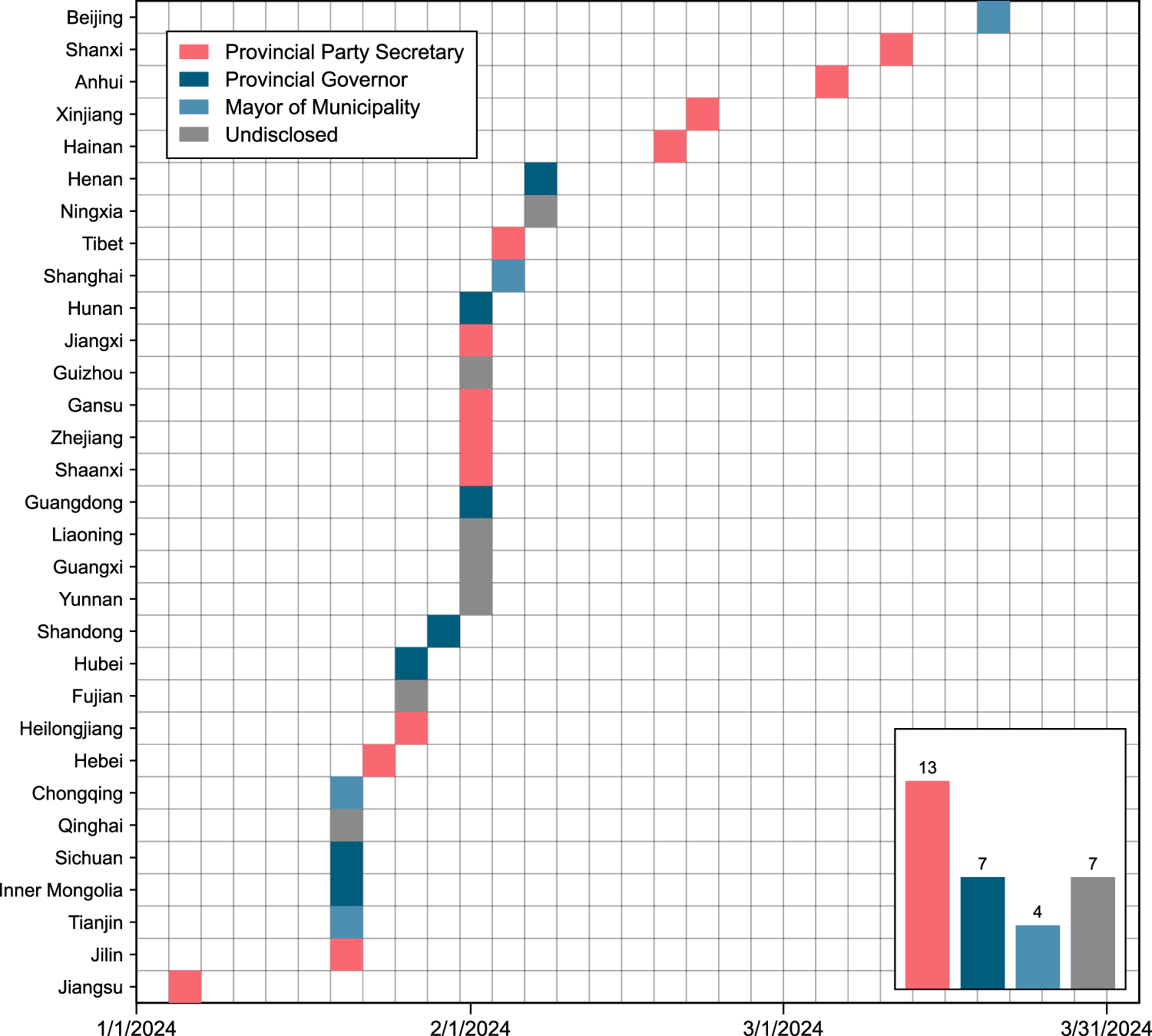
The reform has not only redefined functions but has also dramatically consolidated power spatially. Provincial governments are required to establish jinrongwei and dissolve most municipal local financial agencies, transferring their functions to the provincial level.Footnote 106 Only a few major cities have retained their own agencies.Footnote 107 This top-down restructuring has unfolded with remarkable speed. Following Jiangsu’s early adoption in January 2024, all 31 provincial-level regions had established their jinrongwei within three months. Reinforcing central control, all 24 publicly disclosed jinrongwei leaders hold top provincial positions, serving either as the Party secretary, governor or mayor of a municipality (see Figure 7). This swift, uniform execution has systematically brought an end to the bottom-up, decentralized institutional experimentation that had characterized local financial agencies.
Establishment Dates and Leaders of Provincial Jinrongwei

Figure 7 Long description
A timeline chart displays the establishment of provincial leadership roles from January 1, 2024, to March 31, 2024, across various regions such as Beijing, Shanxi, Anhui and others. The roles include Provincial Part y Secretary, Provincial Governor, Mayor of Municipality and Undisclosed, each represented by different colors. A bar chart inset shows the count of each role: 13 for Provincial Part y Secretary, 7 for Provincial Governor, 4 for Mayor of Municipality and 7 for Undisclosed.
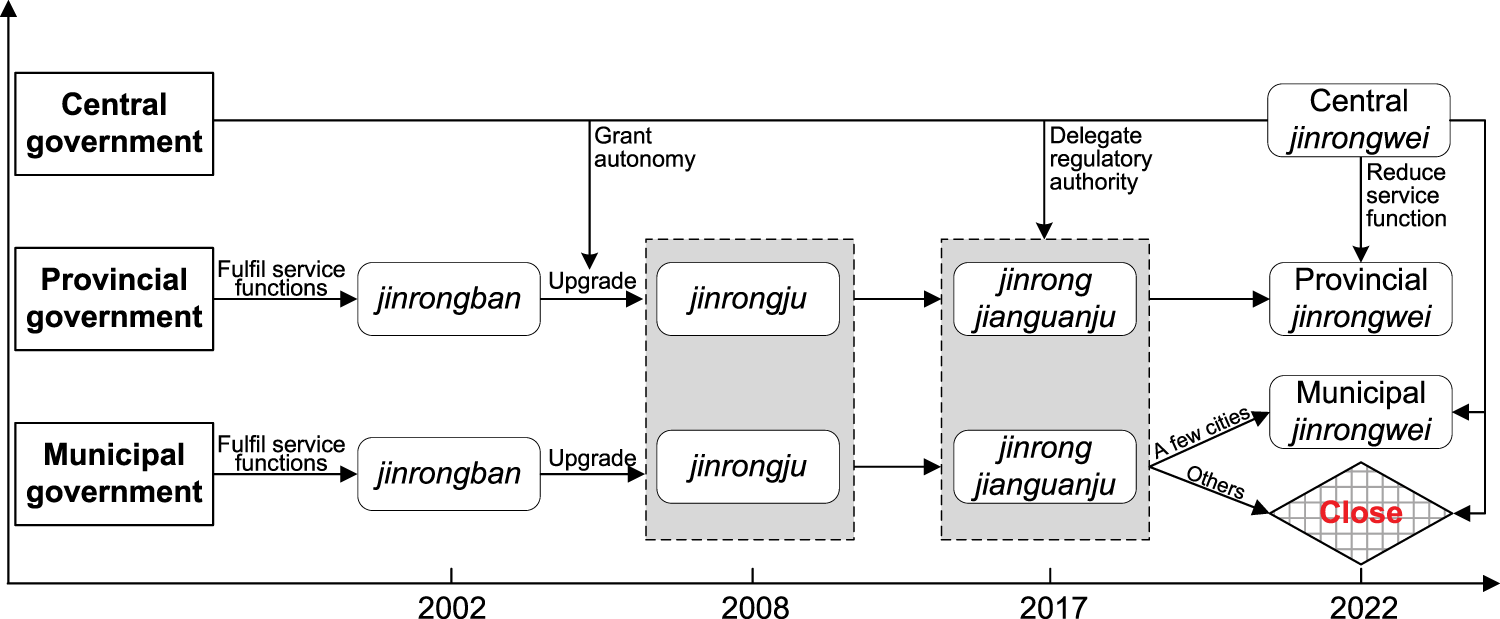
Ultimately, this restructuring signals a calculated state-led de-financialization of local governance.Footnote 108 This is not an abandonment of finance but a deliberate central recalibration of local institutional experimentation that moves away from its original design for regional growth. The central state has systematically dismantled or repurposed locally created financial agencies, first by co-opting them for risk control and then by fully absorbing them into the Party structure, thereby centralizing authority and stripping them of their original purpose. This institutional transformation is now complete (see Figure 8). From the jinrongban, which focused on regional development, it has evolved through the jinrongju and jinrong jianguanju, which balanced development and risk, to the current jinrongwei, which has largely shed its service functions and become significantly centralized. The institutional space carved out by local governments has been reclaimed and re-engineered into an instrument of central policy where financial logic reinforces planning centrality.Footnote 109 This state-led de-financialization represents a fundamental redefinition of the relationship between state, market and Party, far exceeding a mere policy adjustment.
Institutional Trajectory of Local Financial Agencies in China

Figure 8 Long description
A flowchart illustrates the evolution of local financial agencies in China from 2002 to 2022. It begins with the provincial and municipal governments fulfilling service functions through 'jinrongban' in 2002. By 2008, these are upgraded to 'jinrongju' with granted autonomy. In 2017, 'jinrongju' evolves into 'jinrong jianguanju' with delegated regulatory authority. By 2022, the central 'jinrongwei' reduces service functions, leading to the establishment of provincial and municipal 'jinrongwei'. A few cities maintain 'jinrongwei', while others close. The timeline is marked at 2002, 2008, 2017 and 2022, showing the progression and changes in structure and authority at each stage.
Conclusion and Discussion
This paper reveals the dynamics of state-led (de)financialization by tracing the bureaucratic restructuring of local financial agencies from jinrongban to jinrongwei. Driven by shifting central–local dominance, these agencies began as pilots in a few cities, expanded nationwide and were later contracted and recentralized at the provincial level. Concurrently, the functional focus shifted from serving regional development to parallel mandates and eventually to the absolute priority of regulatory supervision. Collectively, these transformations embody the distinct phases of state-led financialization and de-financialization. This entire trajectory demonstrates how the Chinese state reconfigures its bureaucratic structure in response to the shifting central–local priorities in financial governance, fundamentally moving from a logic of growth to one of risk control.
This paper contributes to the existing research by exploring the (de-)financialization of local governance through the perspective of bureaucratic restructuring in China. While the diverse financialized instruments developed in response to fiscal constraints and political pressures have been well-documented,Footnote 110 the corresponding transformation of the state’s internal bureaucracy has been largely underexamined since Yingyao Wang’s central-level analysis.Footnote 111 Our study fills this gap by comprehensively tracing the jinrongban trajectory at the local level. This reveals how both central and local governments deployed financial logic for distinct governance goals, and how an initially locally driven financialization was reversed through central intervention. Ultimately, the rise, formalization and transformation of these agencies demonstrate that the (de-)financialization of local governance involves not just the creation of new financialized tools but also a fundamental, and often contested, reorganization of internal state power and functions.
Furthermore, this paper provides new evidence for a deeper understanding of state-led financialization in China. Unlike in many Western economies, where such state–financialization symbiosis involves the state negotiating with powerful private financial actors,Footnote 112 China’s experience has largely been an intra-state process, driven by the state’s political logic and imperatives of authoritarian control. The trajectory from jinrongban to jinrongwei illustrates that (de-)financialization is not an external force capturing the state, but rather a tool of statecraft that is strategically deployed, redirected and even retracted to serve shifting national imperatives.Footnote 113 The ultimate subordination of these agencies to direct Party oversight emphasizes that financial logic is consistently disciplined by a political logic, ensuring that financial activities reinforce, rather than undermine, the state’s governance objectives.Footnote 114
This bureaucratic restructuring shines a spotlight on the dynamic interplay between central and local governments. The jinrongban emerged as a local strategic adaptation to constraints imposed by the central government, representing a bottom-up institutional creation. However, these local initiatives were ultimately absorbed and transformed by central intervention, leading them to diverge radically from their original purpose. This trajectory aligns with a broader systemic reassertion of central Party leadership observed recently across diverse administrative domains, such as SOE governance,Footnote 115 the judiciary,Footnote 116 and other key fields.Footnote 117 Given this wider political context, it is essential to view the state-led (de-)financialization of local governance in China through the lens of bureaucratic restructuring.
AI statement
During the preparation of this work, the authors used GPT-5 in order to improve the language. The authors confirm that no data, empirical evidence or intellectual arguments were generated by this tool. After using this tool, the authors reviewed and edited the content and take full responsibility for all errors.
Funding
This work was funded by the National Natural Science Foundation of China (NSFC) (No. 42471195, 42022006).
Competing interests
None.
Xuchen ZHANG is a PhD candidate at the Faculty of Geographical Science, Beijing Normal University. His research focuses on the financialization of local governance in China and financialized policy instruments, with a particular interest in the underlying central–local relations and market actors.
Fenghua PAN is a professor at the Faculty of Geographical Science, Beijing Normal University. His research interests primarily lie in financial geography, urban and regional development, and urban networks. His work has appeared in Economic Geography, The China Quarterly, Political Geography and Regional Studies, among others.