Introduction
The apple leaf midge, Dasineura mali (Kieffer) (Diptera: Cecidomyiidae), is an invasive pest in North America. Originally from Europe, it was reported in Massachusetts, United States of America in 1928 and subsequently throughout adjacent states in the 1930s (MacPhee and Finnamore Reference MacPhee and Finnamore1978; Eaton and Bent Reference Eaton and Bent1997). The first record of D. mali in Canada was in Charlotte County, New Brunswick in 1964 (MacPhee and Finnamore Reference MacPhee and Finnamore1978). In 1990, the midge was found in Aylesford, Nova Scotia (Eaton and Bent Reference Eaton and Bent1997) and in Ontario and Québec in the early 2000s (Fraser and Appleby Reference Fraser and Appleby2001; Vanoosthuyse and Cormier Reference Vanoosthuyse and Cormier2016). In British Columbia, D. mali was identified in Abbotsford in the Fraser Valley of British Columbia in 1993 (Eaton and Bent Reference Eaton and Bent1997) and in the commercial apple (Malus domestica Borkhausen; Rosaceae) producing Okanagan and Similkameen valleys in 2003 (verified in 2004 by D. Parker, Canadian Food Inspection Agency, and the same specimens identified by R. Gagné, United States Department of Agriculture-Agricultural Research Service, Systematic Entomology Laboratory, Washington, District of Columbia, United States of America).
Dasineura mali overwinter as pupae and the adults emerge to mate and reproduce in the spring (Helson Reference Helson1972). Oviposition occurs solely on new developing terminal leaves of apple. The subsequent larval feeding causes the apple leaves to curl and form thick, tight, distinctive red galls. Galled leaves are unable to unfold and photosynthesise. The larvae feed within the galls and develop through three instars, protected from foliar spray applications of insecticides (Smith Reference Smith2000). Although some mature larvae pupate within the galls, most drop to the ground where they spin a cocoon and pupate in the soil, among fallen leaves or in sheltered sites on the bark (Barnes Reference Barnes1948; Smith Reference Smith2000; Sandanayaka and Charles Reference Sandanayaka and Charles2006). Occupied and spent galls accumulate on infested trees as the insects cycle through multiple generations during the growing season. Differences in plant growth rates and shoot lengths are suggested explanations for a recognised difference in D. mali infestation rates among apple varieties (Smith Reference Smith2000). Although the galled leaves can stunt the growth of terminal shoots and cause premature leaf drop, the midge has little impact on older trees except when the D. mali densities are exceptionally high. Such infestations do not reduce the photosynthetic rate of the tree unless over 60% of the leaf area is damaged but can reduce the total carbon acquisition of the tree (Allison et al. Reference Allison, Meekings, Tomkins and Wilson1995). Gall damage, however, does interfere with the normal growth and development of young trees and can result in stunting and impede tree training (Eaton and Bent Reference Eaton and Bent1997). The midge can also potentially contaminate fresh fruit as the larvae exit the gall, which can impact export potential (Mannering Reference Mannering2000; Sandanayaka and Charles Reference Sandanayaka and Charles2006).
Parasitoids that are important natural enemies of apple leaf midge in Europe include Platygaster demades Walker, Inostemma contariniae Szelényi, and Platygaster marchali Kieffer (Hymenoptera: Platygastridae); Gastrancistrus Westwood (Hymenoptera: Pteromalidae) species; and Torymus chloromerus (Walker) (Hymenoptera: Torymidae) (Carl Reference Carl1980; Trapman Reference Trapman1988; Cross et al. Reference Cross, Solomon, Babendreier, Blommers, Easterbrook and Jay1999). Several classical biological control introductions of D. mali parasitoids have been made in eastern Canada. Adults of both I. contariniae (730 adults) and P. marchali (7472 adults) from Austria and Italy were introduced into New Brunswick orchards from 1981 through 1985 and a small number of adult P. demades from the Netherlands were released in a cage over infested apple trees near Berwick, Nova Scotia in 1993, with the cage removed in 1994 (Carl and Affolter Reference Carl and Affolter1982, Reference Carl and Affolter1983; Hardman Reference Hardman1993; Eaton and Bent Reference Eaton and Bent1997). Platygaster marchali were later reported to have been recovered in New Brunswick (Affolter and Carl Reference Affolter and Carl1985), and P. demades were documented as parasitising D. mali larvae after the Nova Scotia release in the fall of 1994 and 1995 (Eaton and Bent Reference Eaton and Bent1997). Unfortunately, there are no subsequent assessments known of the establishment, spread, and impact of these parasitoids.
The only recorded incidences of D. mali parasitism by indigenous species in Canada have been Eulophus nebulosus Provancher (Hymenoptera: Eulophidae) and a Platygaster Latreille (Hymenoptera: Platygastridae) species reared from D. mali in New Brunswick in 1978 (MacPhee and Finnamore Reference MacPhee and Finnamore1978) and Lyrcus nigroaeneus (Ashmead) (Hymenoptera: Pteromalidae), reared from D. mali in Nova Scotia in 2008 (identified by G.A.P. Gibson, Canadian National Collection of Insects, Arachnids, and Nematodes, Ottawa, Ontario, Canada).
The objectives of this study were to determine the phenology of D. mali populations and assess the parasitoid community and levels of parasitism of D. mali in Nova Scotia, Ontario, and British Columbia apple orchards.
Materials and methods
Dasineura mali identification
Adult D. mali from British Columbia were identified using morphological characters, in 2004 by R. Gagné (United States Department of Agriculture-Agricultural Research Service), and adults from Nova Scotia and Ontario were identified by Brad Sinclair (Canadian National Collection of Insects, Arachnids, and Nematodes and Canadian Food Inspection Agency, Ottawa, Ontario, Canada). Deoxyribonucleic acid (DNA) barcoding of D. mali collected during each generation from multiple orchards in each province was done to generate a database of sequences for the different populations. Genomic DNA was extracted, amplified, and sequenced as described by Gariepy et al. (Reference Gariepy, Haye, Fraser and Zhang2014). Specimen information, sequences, and tracefiles were uploaded to the Barcode of Life Data System (BOLD) under the project ALCM (apple leaf midge). Sequence divergence at the species level was analysed with a Kimura-2-parameter model of nucleotide substitution using the “distance summary” analytical tool on BOLD version 4.0 (www.boldsystems.org). Further, sequence divergence between barcode clusters (operational taxonomic units) was estimated with a pairwise distance model using the “cluster sequences” analytical tool in BOLD version 4 to generate mean and maximum sequence divergence within an operational taxonomic unit and the distance to the nearest neighbour.
Dasineura mali phenology – adults
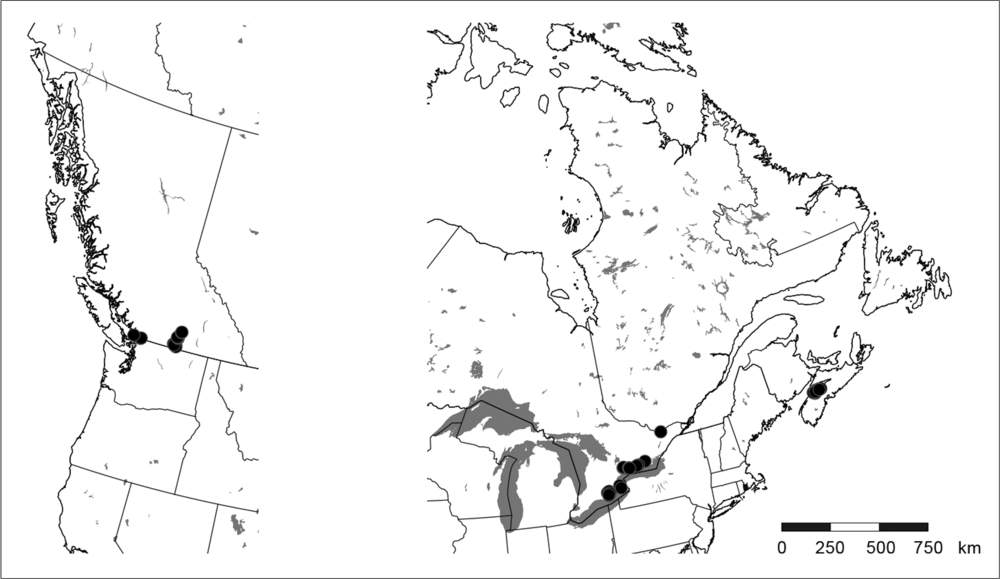
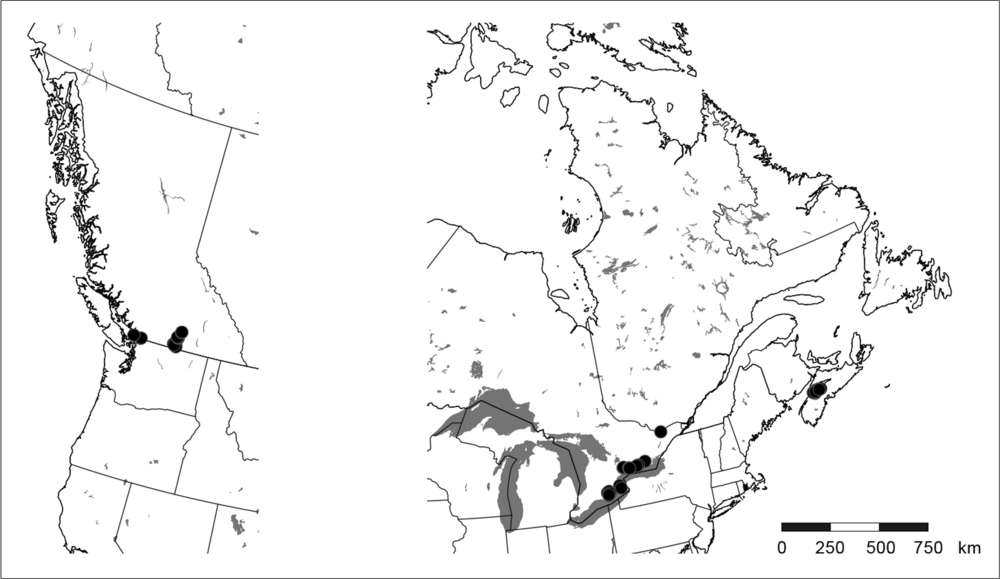
Standard plastic Delta pheromone traps (Cooper Mills, Madoc, Ontario, Canada and Alpha Scents, West Linn, Oregon, United States of America) baited with the D. mali pheromone in a rubber septum lure loaded initially with 3 mg of racemic (Z)-13-acetoxy-8-hepta-decen-2-one (Solida, Saint-Ferréol-les-Neiges, Québec, Canada) were hung within the apple tree canopy approximately 1.8 m from the ground in orchards at four locations in Nova Scotia, eight in Ontario, and one in Summerland, British Columbia where adult phenology was not a focus of study (Fig. 1). Total weekly captures of D. mali were recorded at each site.
Apple orchards sampled in 2014–2016 for apple leaf midge, Dasineura mali, and associated parasitoids in Nova Scotia, Ontario, and British Columbia (see Supplementary Table 1 for geographic co-ordinates of specific locations).
Dasineura mali phenology – eggs
The incidence of eggs on growing apple tree terminals has been used to determine the timing and number of D. mali generations (Smith Reference Smith2000; He and Wang Reference He and Wang2011). In this study, representative D. mali-infested orchards in each of the three provinces were visited weekly throughout each growing season (2014–2016). Dasineura mali have been found to oviposit more frequently on vertical growing tips versus horizontal tips (Smith Reference Smith2000). One hundred growing tips that were within 30° of vertical (0°) were randomly collected in each orchard. The production of growing tips can be influenced by the variety of the tree, climatic conditions, and orchard management practices such as irrigation and fertilisation (Eaton and Bent Reference Eaton and Bent1997), and consequently, fewer than 100 growing tips (6–100) were sometimes collected when terminal growth was minimal in Nova Scotia and Ontario. The tips were examined using a dissecting microscope, and the percentage infested with D. mali eggs was determined. Dasineura mali eggs generally hatch within three to five days; therefore, weekly counts theoretically assessed only new infestations over time (He and Wang Reference He and Wang2011). When the incidence of eggs peaked in the representative orchards, 100 (or as many as were available) growing tips were similarly collected in up to 10 orchards that received no or minimal pesticide treatments in each apple-growing region, and the mean peak per cent of infested growing tips for each generation was determined.
Dasineura mali phenology – larvae
Samples of D. mali galls were collected weekly in 2015 and 2016 in a Summerland, British Columbia orchard and in 2015 in a southwestern Ontario orchard as part of the parasitism assessment described below. All larvae within the galls were measured using an ocular micrometer, and the percentage of third instars determined once the larvae turned orange.
Accumulated degree days
A threshold development temperature for D. mali has not been published. Smith (Reference Smith2000) used 10 °C in his D. mali degree-day model, although degree-day development models for related midges including the wheat midge, Sitodiplosis mosellana (Géhin) (Elliott et al. Reference Elliott, Olfert and Hartley2011), the pod gall midge, Dasineura brassicae (Winnertz) (Axelsen Reference Axelsen1992), and the black currant leaf midge, D. tetensi (Rübsaamen) (Diptera: Cecidomyiidae) (Cross and Crook Reference Cross and Crook1999), have development thresholds of 5 °C, 6.7 °C, and 7 °C, respectively. A degree-day development model to predict the emergence of terminal apple leaves uses a base temperature of 5 °C (Carisse et al. Reference Carisse, Jobin and Bourgeois2008). Synchrony of insect and host phenologies is a widespread phenomenon (Satchell Reference Satchell1962; Dixon Reference Dixon1976; Turgeon Reference Turgeon1986; Quiring Reference Quiring1994; Pureswaran et al. Reference Pureswaran, Neau, Marchand, De Grandpré and Kneeshaw2018). Dasineura mali oviposition, and the resulting infested leaf tips, in the field should coincide with the formation of new apple terminal growth in the spring, and therefore, infested leaf tips based on a development threshold of 5 °C were computed. The purpose of displaying the infested leaf tips over degree days was to standardise the data across the three provinces. Weather data were obtained from data loggers placed in each orchard or from Environment Canada weather stations located near the orchards in all provinces.
Parasitism
In each province, 10–100 randomly selected active galls in which D. mali larvae were developing (i.e., not new growth that may support D. mali eggs) were collected weekly through each season in representative D. mali-infested orchards. When the majority of the larvae within the sample were in the third instar (i.e., at the end of each of the three generations), 100 (or as many as could be found in Nova Scotia) mature galls were collected in as many as 10 orchards in British Columbia and Ontario and 3–6 orchards in Nova Scotia. Orchards were selected based on their management regime, e.g., they were either organic (and used no pesticides), or the grower used pesticides (for other pests), which had little to no impact on D. mali. Due to desiccation, it is difficult to keep D. mali larvae alive in harvested galls, therefore parasitism of earlier instars was not specifically assessed except in Ontario in 2015. However, it is thought that in New Zealand most Platygastridae parasitoids of D. mali complete development in the third instar and emerge when the host is pupating (He et al. Reference He, Wang, Walker, Rogers and Lo2010).
The majority of D. mali larvae exit the galls when the leaves become moist (Barnes Reference Barnes1948), and in 2014, galls were held in water-misted paper bags within sealed containers and the emerged larvae transferred to sand and/or vermiculite in 100 × 15 mm2 petri dishes. Rearing methods were adjusted slightly as greater larval recovery was achieved in 2015 and 2016 in Ontario and British Columbia and in 2016 in Nova Scotia. The collected galls were placed over a screen in a large funnel or modified dish, misted, and covered with damp paper towels. The top of the holding container was covered with plastic wrap. The bottom of the funnel rested in a collecting dish from which individual larvae were counted and moved to a petri dish containing moist sand, sand-peat, and/or vermiculite. The dishes were labelled and sealed. The total numbers of emerged midges and parasitoids were recorded. In 2015, immature and mature D. mali larvae dropping from the galls in Ontario orchards were separated to compare parasitism within developmental stages.
Emerged parasitoids that were intact were identified using morphological features by taxonomic experts (P.N. Buhl, Ølsted, Denmark; G.A.P. Gibson, Canadian National Collection of Insects, Arachnids, and Nematodes). Voucher specimens of each parasitoid species are deposited in the Canadian National Collection of Insects, Arachnids, and Nematodes. Not all larvae that egressed from the collected galls yielded adult D. mali or parasitoids, and therefore, per cent parasitism was calculated as emerged parasitoids divided by the total of all emerged D. mali adults and parasitoids. Per cent recovery was calculated as the number of emerged parasitoids plus emerged D. mali adults divided by the number of dropped larvae plus the number of emerged L. nigroaeneus that are ectoparasitoids that pupate and emerge from the gall itself (A.M.B., personal observation).
Results and discussion
Dasineura mali identification
Dasineura mali specimens from Ontario, British Columbia, and Nova Scotia were identified using morphological features by a taxonomic expert (B. Sinclair, Canadian National Collection of Insects, Arachnids, and Nematodes) and matched the concept of D. mali described by Gagné; no morphological differences between the populations were found. Molecular analysis of D. mali specimens from Ontario (n = 182) and British Columbia (n = 710) showed very little genetic variation across the Cytochrome Oxidase Subunit 1 (COI) barcode region, ranging from 0% to 1.6% nucleotide variation (average p-distance = 0.54%) and were assigned the same barcode index number (AAL1254), indicating that they represent a single operational taxonomic unit or species. Deoxyribonucleic acid barcodes generated from D. mali specimens collected in Nova Scotia (n = 352) also showed low intraspecific variation in the COI barcode region, ranging from 0% to 1.4% (average p-distance = 0.02%). However, specimens from Nova Scotia represent a separate operational taxonomic unit and generated a different barcode index number (ACV3346) than those from Ontario and British Columbia, suggesting evidence of a cryptic species. The two barcode index numbers (AAL1254 and ACV3346) are the most closely related operational taxonomic units in BOLD (nearest neighbours) with a mean distance (K2P) of 3.7%, which is higher than the maximum intraspecific distances within each barcode index number (1.61% in AAL1254 and 0.71% in ACV3346). This may indicate separate species; however, a thorough analysis of D. mali populations from across Europe (the area of origin) may help clarify the level of intraspecific genetic variation within what is currently considered as D. mali and may shed light on whether or not these two barcode index numbers represent cryptic species.
Dasineura mali phenology
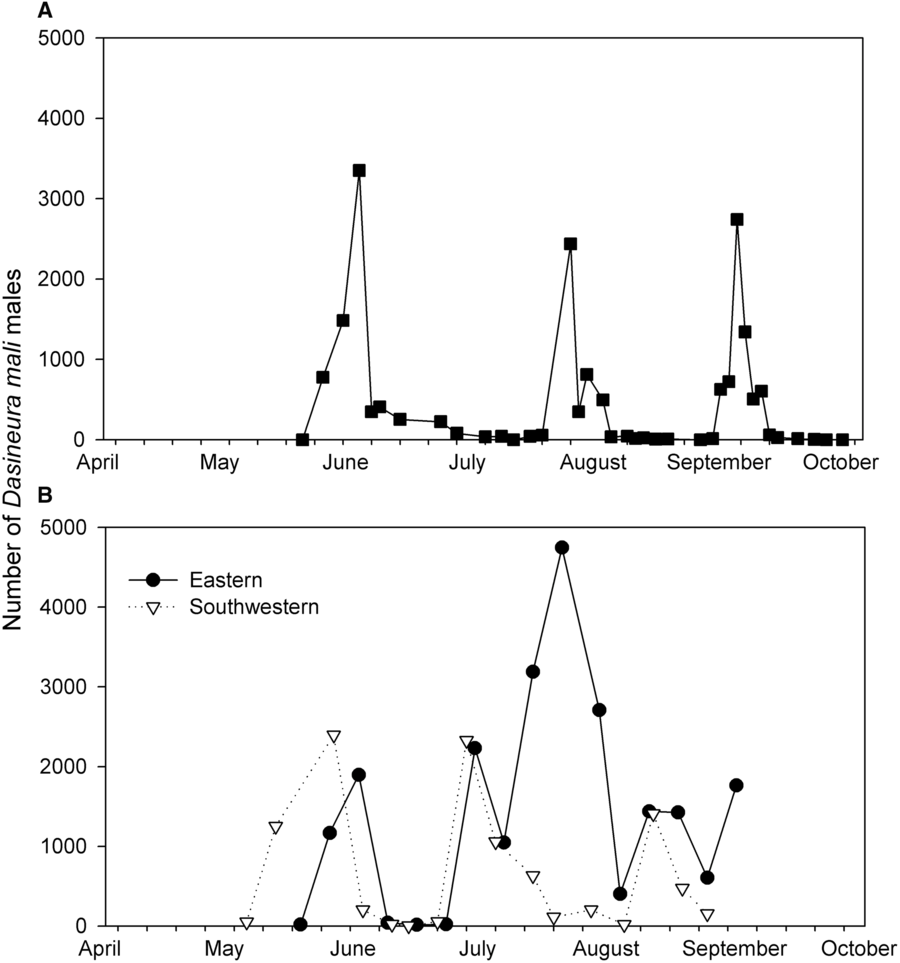
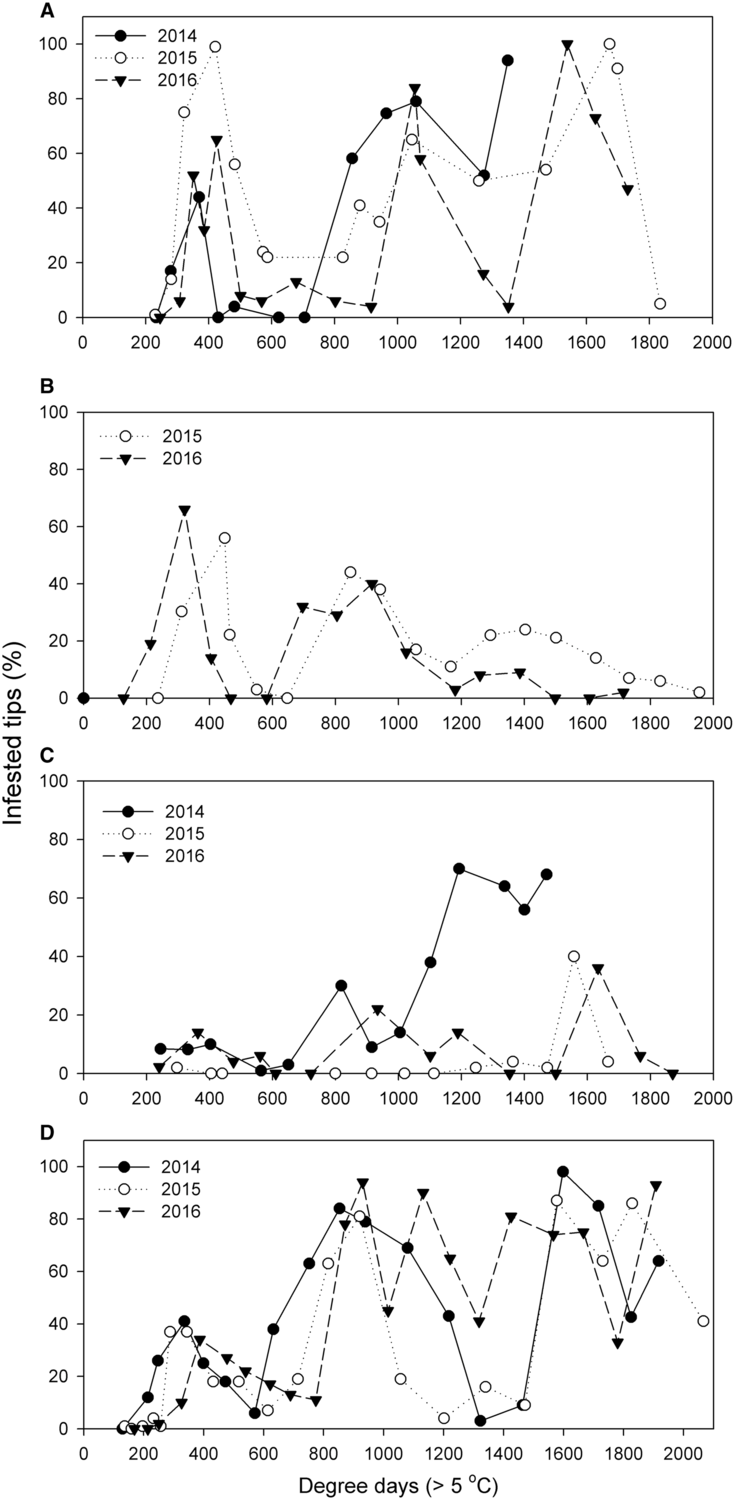
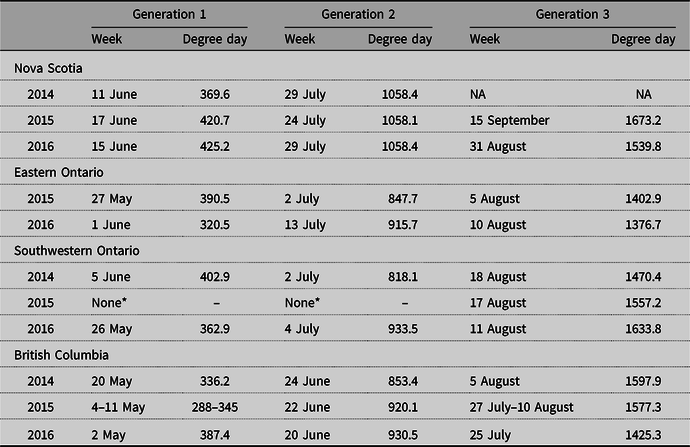
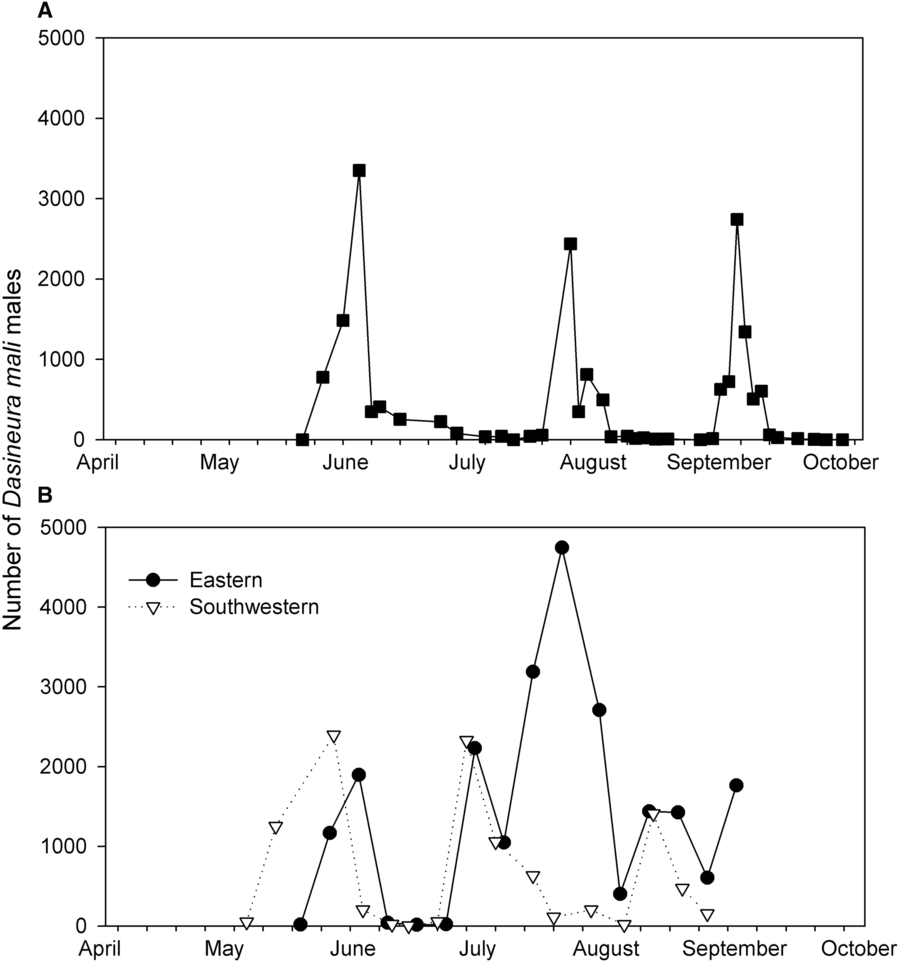
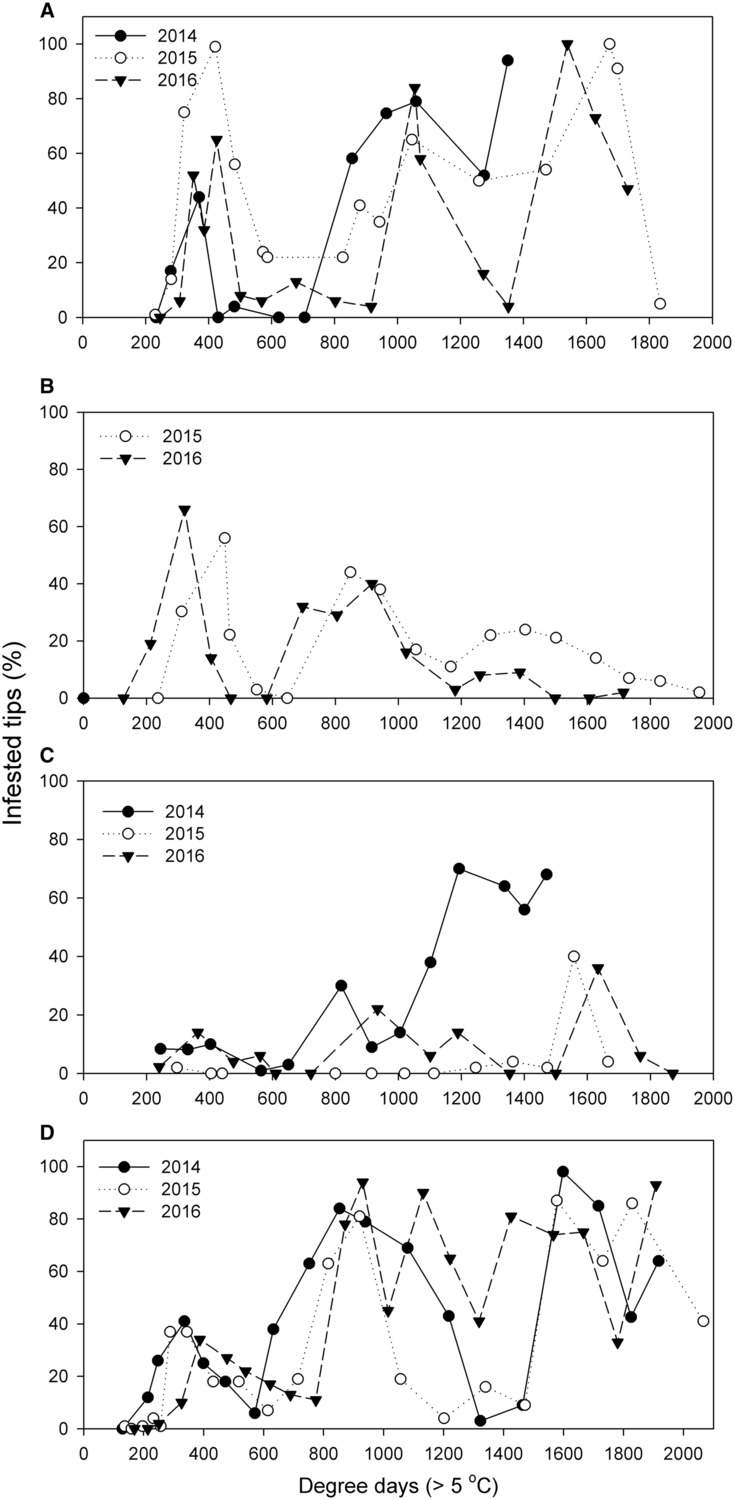
In the spring, emerging D. mali adults form mating swarms prior to ovipositing and they die three to five days later (Barnes Reference Barnes1948; Todd Reference Todd1959; Helson Reference Helson1972). In each year, D. mali appeared in pheromone traps beginning in April or May and were present until late September or early October, depending on location and year. For example, in 2016, first catches were recorded in April in Summerland, British Columbia, early May in Beamsville, southwestern Ontario, mid-May in Ottawa, eastern Ontario, and late May near Kentville, Nova Scotia (Fig. 2). The first egg-infested apple terminals were recorded the week of 18 April 2016 (232 degree days), in Summerland, British Columbia, 12 May 2016 (240 degree days) at Mountain View, southwestern Ontario, 25 May 2016 (260 degree days) in Ottawa, eastern Ontario, and 1 June 2016 (308 degree days) near Kentville, Nova Scotia (Fig. 3). From 2014 through 2016, oviposition of the first generation of D. mali eggs peaked in May (288–387 degree days) at Summerland, British Columbia, in late May and early June (321–391 degree days) in eastern Ontario (2015 and 2016 only) and the Niagara region of southwestern Ontario (363–403 degree days), and in mid-June (370–425 degree days near Kentville, Nova Scotia (Table 1, Fig. 3). MacPhee and Finnamore (Reference MacPhee and Finnamore1978) recorded spring emergence of D. mali adults during the second week of June in New Brunswick, consistent with our findings in Nova Scotia.
Pheromone trap captures of Dasineura mali males in 2016. A, Nova Scotia orchards; B, Ontario orchards.
Percentage of terminal apple-growing shoots infested with Dasineura mali eggs in 2014–2016 over accumulated degree days based on a threshold of 5 °C. A, Nova Scotia sentinel orchards; B, eastern Ontario sentinel orchards; C, southwestern Ontario sentinel orchards; D, British Columbia sentinel orchards.
Calendar dates and degree days (base 5 °C) to Dasineura mali oviposition peaks in single orchards in Nova Scotia, Ontario, and British Columbia 2014–2016.
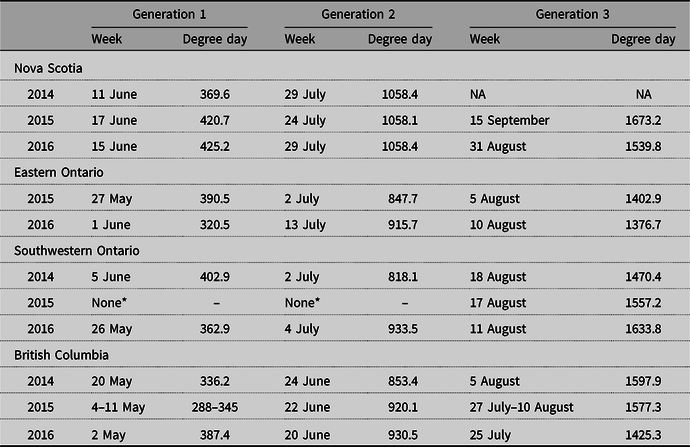
* None – 50 random shoots were collected but no eggs were recovered.
NA, data not available.
Traps were hung too late in the spring in British Columbia to record the first emergence of adults. Low numbers of adults were caught (< 100) in the first two generations in British Columbia, this was deemed unrealistic based on the high egg and gall counts in the orchard, and therefore trap counts were not used to determine generational peaks in that province. The second-generation D. mali adult flight began in late June in Ontario (eastern and southwestern) and late July in Nova Scotia (Fig. 2). MacPhee and Finnamore (Reference MacPhee and Finnamore1978) recorded second-generation adults emerging in the last half of July in New Brunswick, again, similar to our findings in Nova Scotia. Second D. mali generation oviposition peaked from early to mid-July in Ontario (818 degree days to 934 degree days) and in late June in British Columbia (853 degree days to 931 degree days) (Fig. 3). Again, this second-generation ovipositional peak occurred later in Nova Scotia in late July (1058 degree days) (Table 1, Fig. 3).
The 2016 third-generation adults began to emerge in Ontario from mid-August (1126 degree days) through mid-September, whereas they did not begin to fly in Nova Scotia until early September (1546 degree days) (Fig. 2). Third-generation ovipositional peaks occurred in British Columbia in late July–August (1425–1598 degree days) and in Ontario in August (1377–1634 degree days) (Table 1, Fig. 2). Third-generation ovipositional peaks occurred in Nova Scotia from late August–September in the three years (1539–1673 degree days) (Table 1, Fig. 3). MacPhee and Finnamore (Reference MacPhee and Finnamore1978) did not describe a third generation in New Brunswick. They may have discontinued their observations before the egg numbers increased because Eaton and Bent (Reference Eaton and Bent1997) later recorded two to three generations in Nova Scotia. The authors recognise that because the incidence of eggs infesting the growing terminals and pheromone trap captures in this study were recorded only weekly or biweekly, the accumulated degree days can only be used to approximately time the D. mali phenological stages. Overall, there are differences among the provinces in the D. mali adult flight and the degree-day units for each ovipositional peak, and this variability may generally be explained by within-week variability of temperatures (i.e., a few days of high temperatures between sampling times in one region but not the others) at monitored locations.
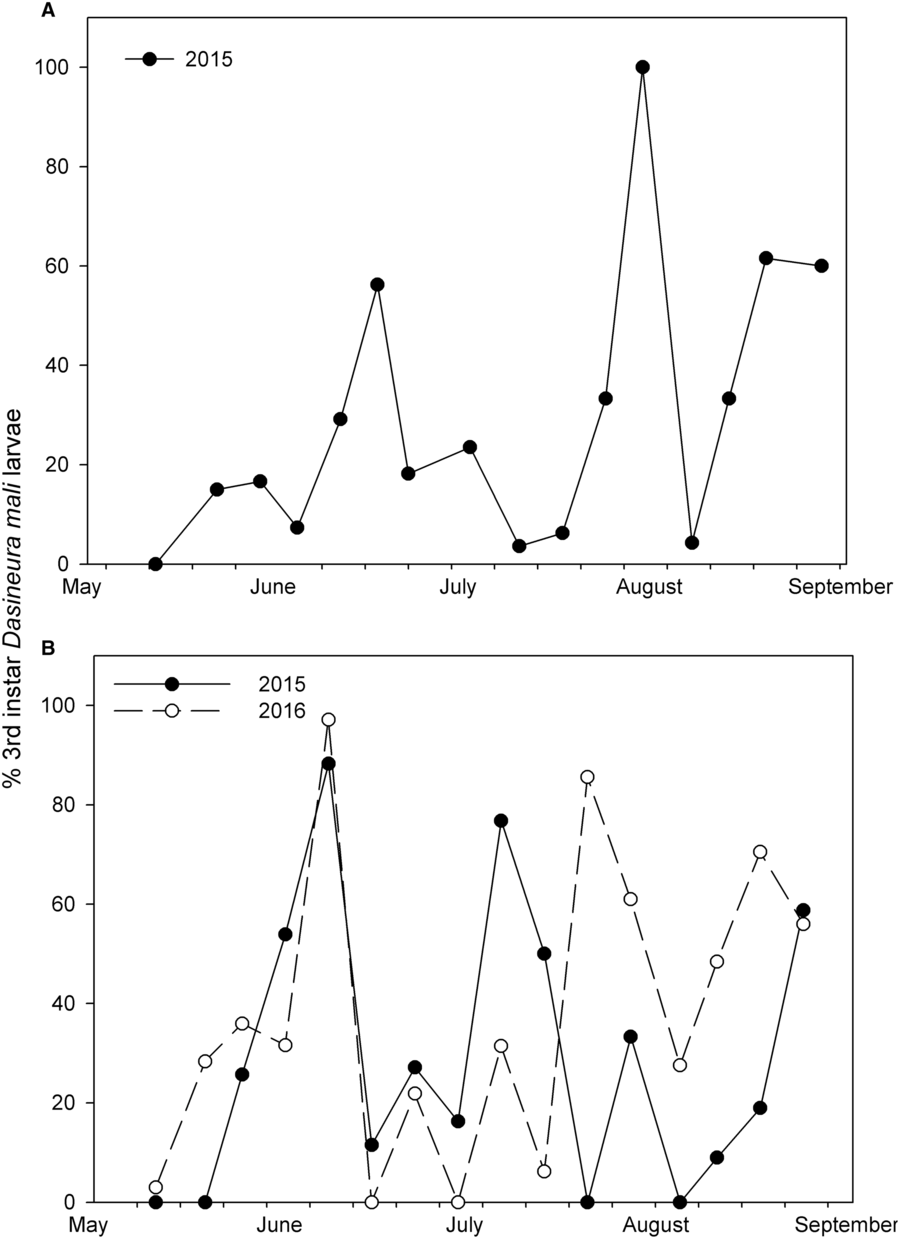
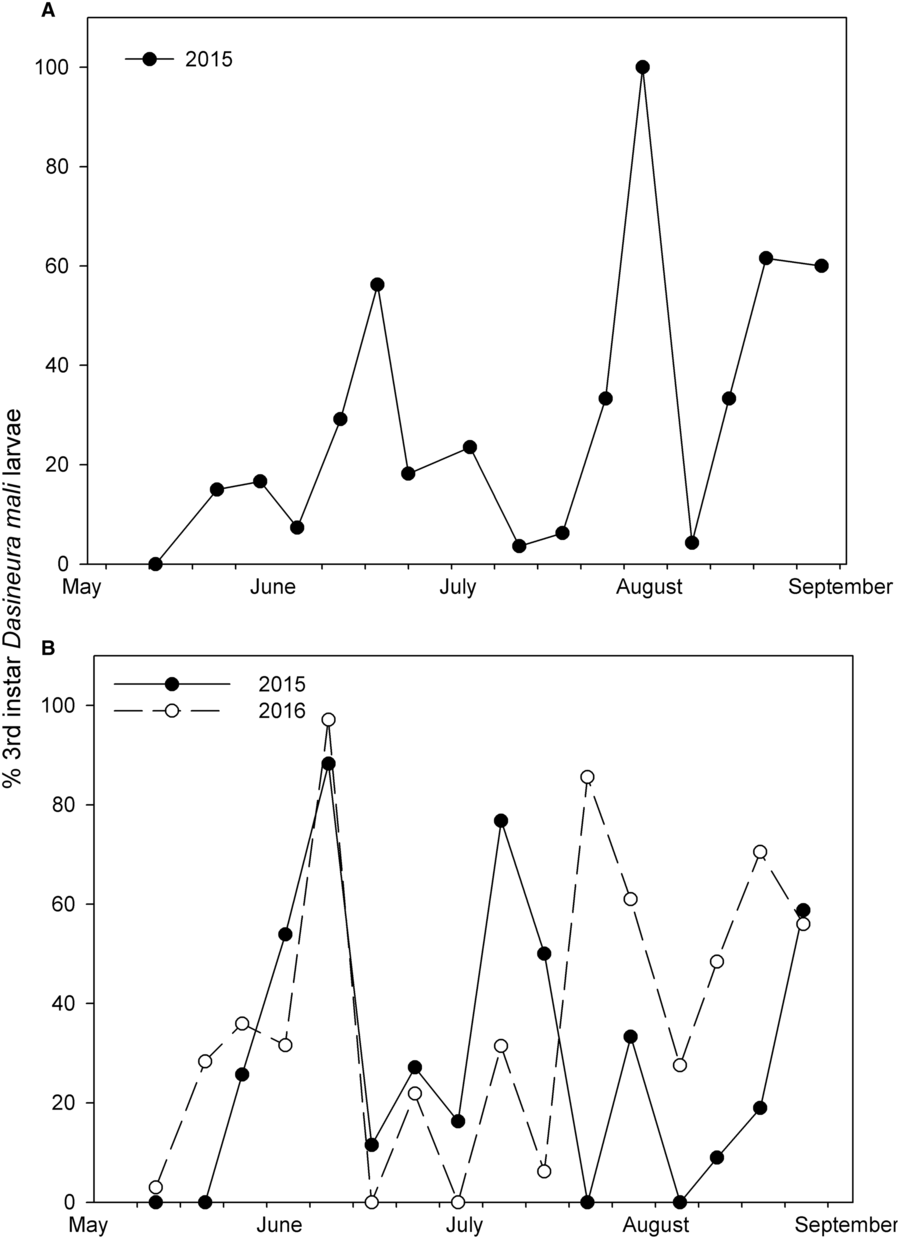
Larvae collected from galls in British Columbia ranged from 0.3 mm to 3.3 mm in length. Larvae measuring over 2.0 mm that were orange in colour were considered to be third instars (Smith Reference Smith2000). The proportion of this developmental stage consistently increased three times in the weekly samples from 2015 and 2016 in British Columbia and in 2015 in southwestern Ontario, supporting the hypothesis of three generations (Fig. 4). Dasineura mali have been reported to develop through three to six generations per year in northern and southern areas of Europe, respectively (Cross et al. Reference Cross, Solomon, Babendreier, Blommers, Easterbrook and Jay1999), and up to five generations in New Zealand (Smith Reference Smith2000; Shaw et al. Reference Shaw, Wallis, Alspach and Sandanayaka2005).
Percentage of third instar Dasineura mali within weekly gall samples. A, southwestern Ontario in 2015; B, Summerland, British Columbia in 2015 and 2016.
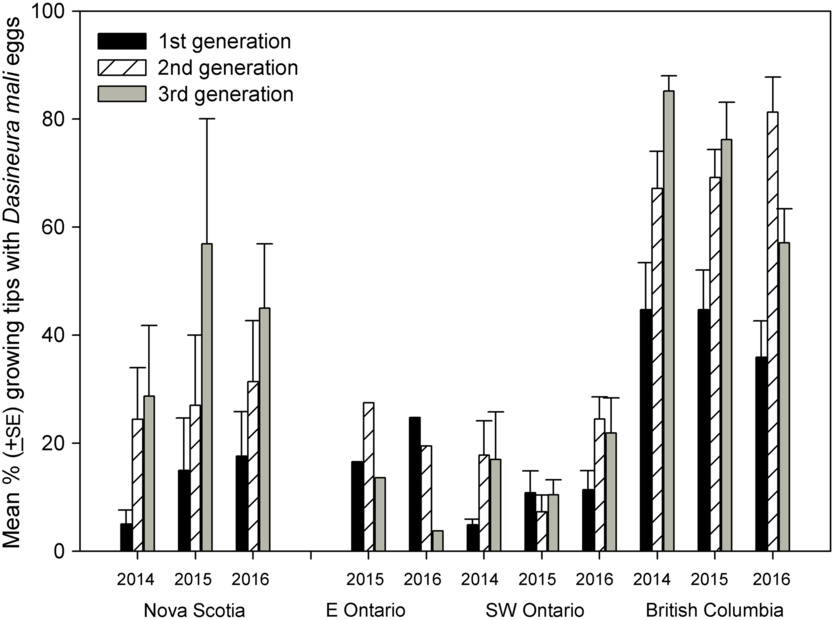
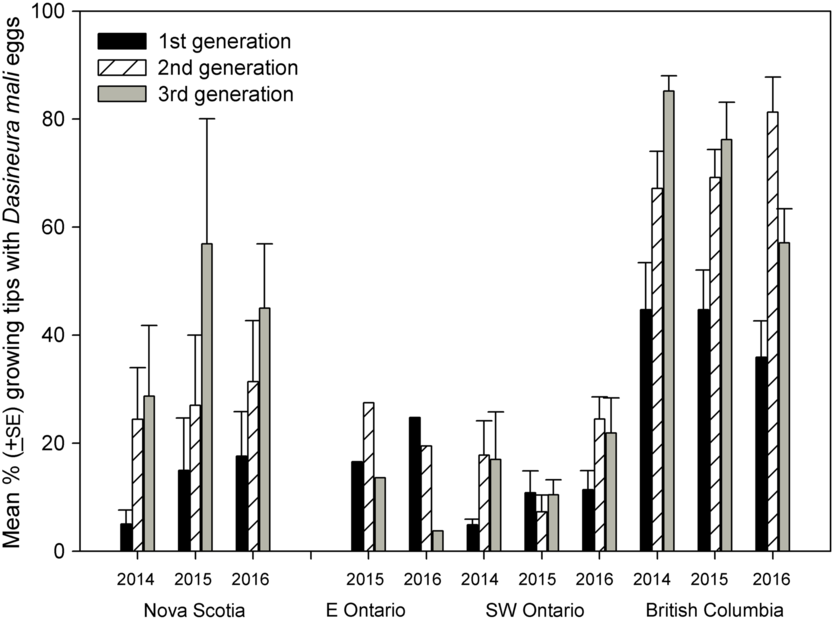
The mean number of infested growing tips in the first D. mali generation in each province was smaller than that in the following two generations, except in eastern Ontario (Fig. 5). This is also characteristic of D. mali populations in New Zealand and has been attributed to the relatively smaller number of vulnerable apple-growing tips in the spring versus later during the second D. mali generation which coincides with an abundance of actively growing terminals (Todd Reference Todd1959; Shaw et al. Reference Shaw, Wallis, Alspach and Sandanayaka2005) and the high fecundity of D. mali females (156 eggs per female) (Whitcomb Reference Whitcomb1941). Infestation levels in the third generation were higher than the previous generations in Nova Scotia and British Columbia (except 2016) but lower in both Ontario locations. Samples were less than 100 terminals when D. mali infestations were difficult to find (Nova Scotia) and where there was seasonal limited new terminal growth (Ontario). Smith (Reference Smith2000) found that a sample size of 50 shoots gave low precision at hypothetical infestation rates of 60% or below. Mean infestation levels were below 60% in all three generations each year from 2014 to 2016 in Nova Scotia and below 30% in eastern and southwestern Ontario during the same period.
Dasineura mali infestation rate expressed as the mean per cent terminal apple-growing shoots infested with D. mali eggs in each of three generations in orchards in Nova Scotia, eastern Ontario (E Ontario), southwestern Ontario (SW Ontario), and the Okanagan and Similkameen valleys of British Columbia in the growing seasons of 2014 through 2016. 2014: n = 10 (Nova Scotia and British Columbia), 4 (SW Ontario); 2015: n = 4–10 (Nova Scotia), 1 (E Ontario), 9–10 (SW Ontario), 10 (British Columbia); 2016: n = 6–8 (Nova Scotia), 1 (E Ontario), 10 (SW Ontario and British Columbia). ± SE, ± standard error.
Parasitism
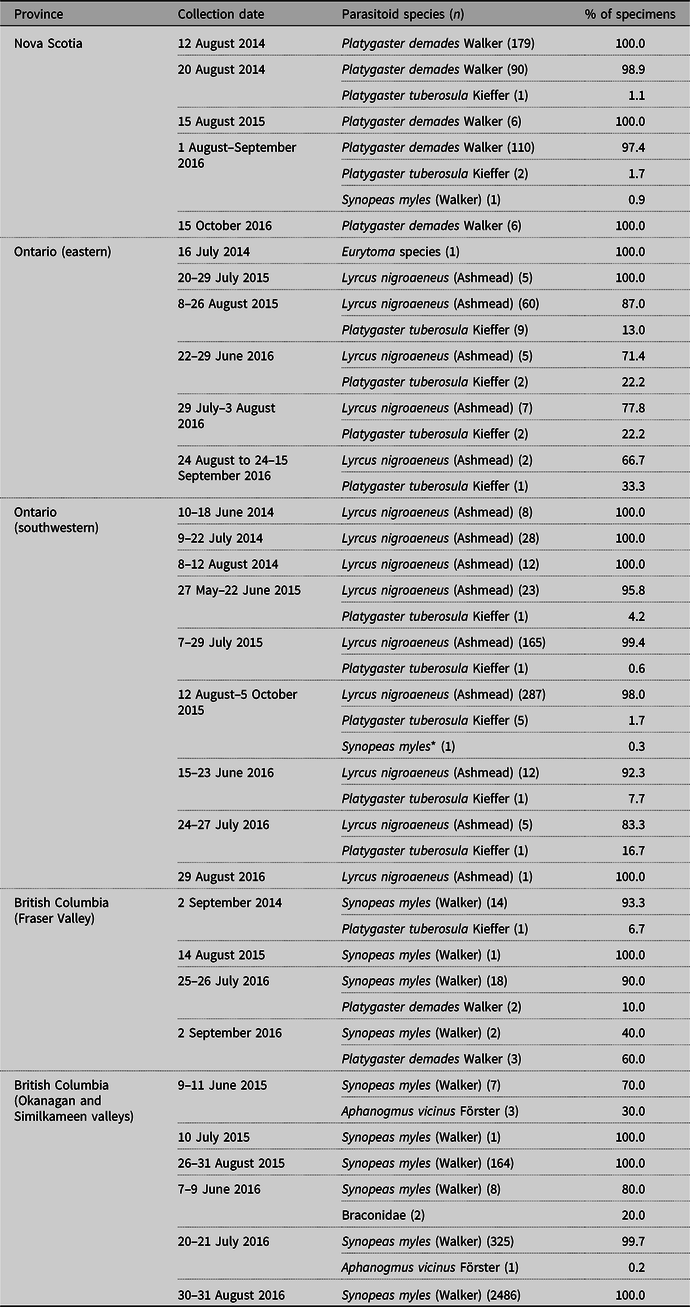
Parasitoids collected included Platygaster demades, P. tuberosula Kieffer, Synopeas myles (Walker) (Hymenoptera: Platygastridae), L. nigroaeneus, Aphanogmus vicinus Förster (Hymenoptera: Ceraphronidae), Eurytoma Illiger (Hymenoptera: Eurytomidae) species, and an unidentified Braconidae (Hymenoptera) (Table 2). The parasitoid species complex differed among regions, with P. demades being most abundant in Nova Scotia, L. nigroaeneus in Ontario, and S. myles dominating in British Columbia. Among these, the Platygastridae are endoparasitoids that oviposit in host eggs and/or larvae (He and Wang Reference He and Wang2015) then develop and emerge when the host is pupating (He et al. Reference He, Wang, Walker, Rogers and Lo2010). Aphanogmus Thomson species are either endoparasitoids of larvae (Parnell Reference Parnell1963) or ectoparasitoids of pupae (Luhman et al. Reference Luhman, Holzenthal and Kjaerandsen1999; Evans et al. Reference Evans, Dessart and Glenn2005; Matsuo et al. Reference Matsuo, Ganaha-Kikumura, Ohno and Yukawa2016), and Pteromalidae associated with galls develop as ectoparasitoids that feed externally on larvae, pupae, or even adults of the gall former or as inquilines that feed on the gall tissue (Askew Reference Askew1961).
Parasitoid species associated with Dasineura mali-infested orchards in Nova Scotia, Ontario, and British Columbia 2014–2016.
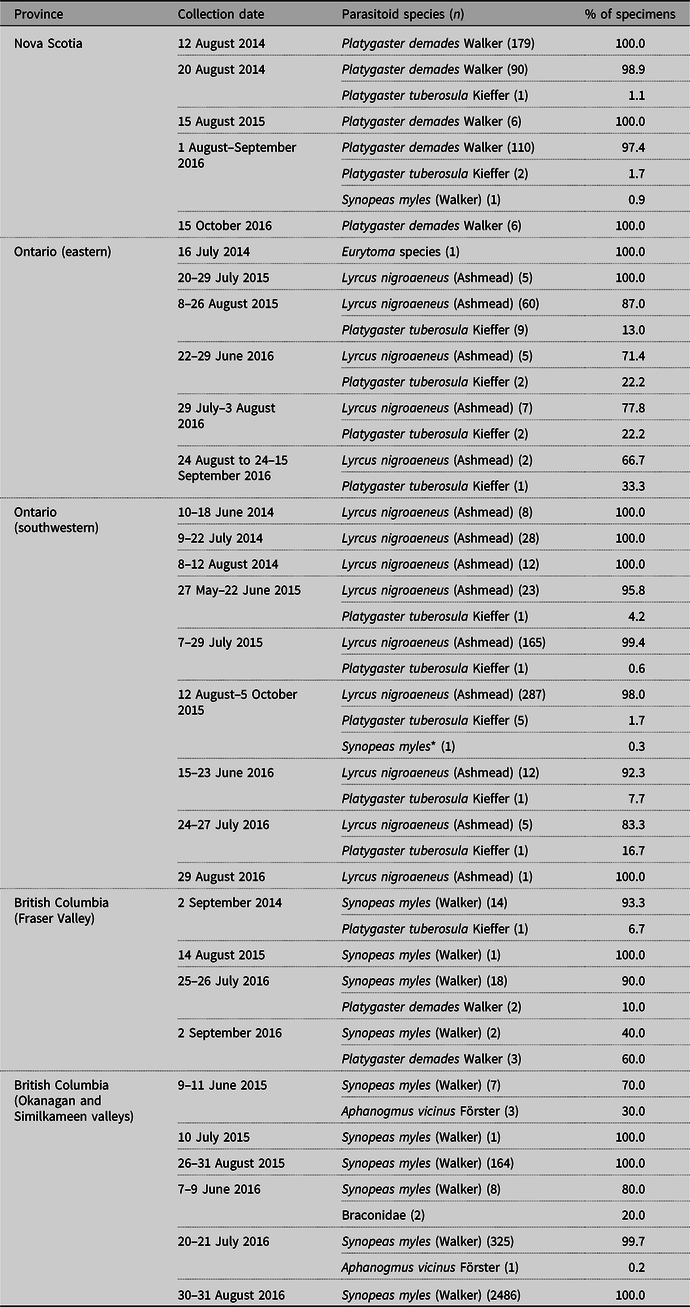
* Identified as most likely due to poor condition of specimens.
Platygaster demades is a solitary koinobiont endoparasitoid of D. mali that oviposits in eggs and young larvae. It was reared from all three D. mali generations in Nova Scotia and found in most of the Nova Scotia orchards surveyed, indicating that P. demades established and dispersed at least 7 km after its release in 1993 (Table 2). Dasineura mali larvae were difficult to find in Nova Scotia and were only sampled in a small number of the orchards (3–6) that received no or minimal pesticide treatments and therefore would be expected to support parasitoid populations.
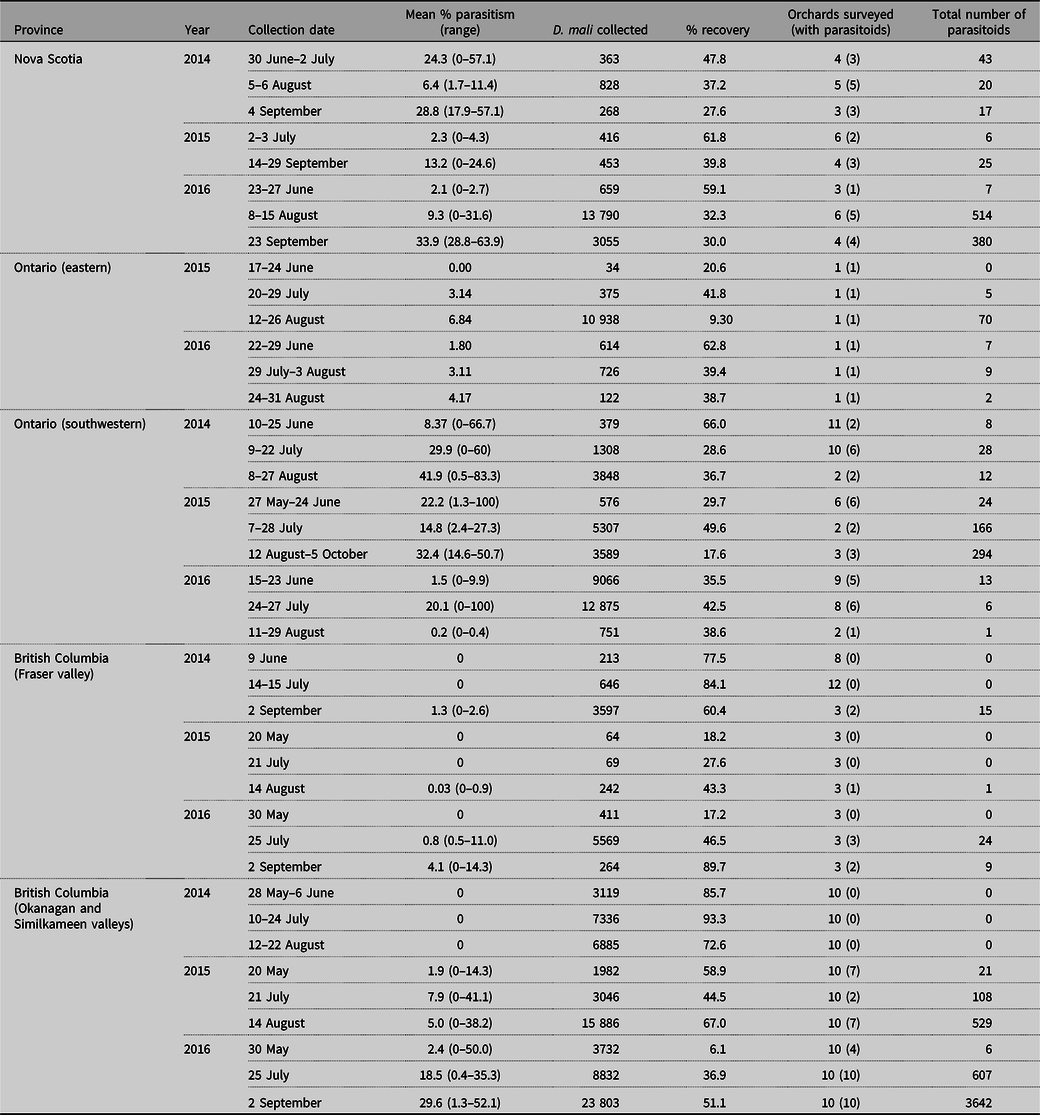
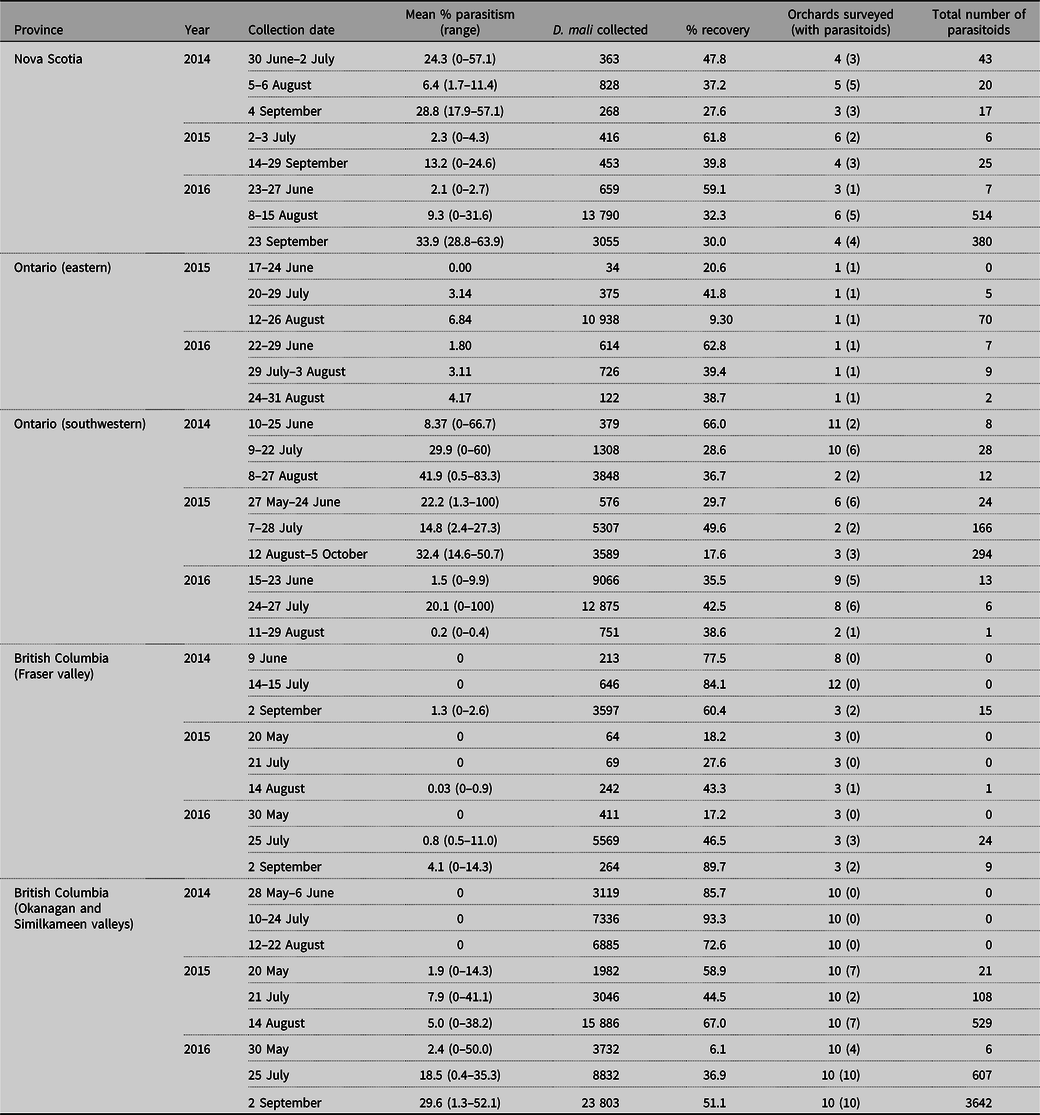
Per cent parasitism of third-generation D. mali in Nova Scotia averaged 29% and 34% in 2014 and 2016, respectively (Table 3), and may be responsible for the low incidence of the midge in this province. Platygaster demades plays a significant role in suppressing D. mali populations in both New Zealand and Europe (Cross et al. Reference Cross, Solomon, Babendreier, Blommers, Easterbrook and Jay1999; Tomkins et al. Reference Tomkins, Wilson, Thomson, Bradley, Cole and Shaw2000). The ecology of P. demades has been extensively studied in New Zealand where the parasitoid was successfully introduced in 1925 and established to control the pear leaf-curling midge Dasineura pyri (Bouché) (Diptera: Cecidomyiidae). In the 1950s, P. demades was found to also parasitise D. mali in New Zealand (Todd Reference Todd1959). Upon emergence, P. demades females have a mean preovipositional load of more than 1300 eggs and live for up to 35 days at temperatures of 13–20 °C (Sandanayaka and Ramankutty Reference Sandanayaka and Ramankutty2007). Platygaster demades eggs hatch, and the larvae feed and complete development after the mature D. mali larval hosts begin to form cocoons. Parasitism can be determined by dissecting the host larvae and counting the number of P. demades eggs (He et al. Reference He, Wang, Walker, Rogers and Lo2010). In New Zealand, D. mali parasitism levels based on larval dissections vary between 83% in the first D. mali generation to between 50% and 60% in the third and fourth generations (Shaw et al. Reference Shaw, Wallis, Alspach and Sandanayaka2005). Seasonal highs of over 80% P. demades parasitism are common in New Zealand (Todd Reference Todd1959; He and Wang Reference He and Wang2011). Per cent parasitism determined by dissection can be significantly higher than that recorded from emergence, which relies heavily on successful rearing, and it is possible that the P. demades parasitism rates recorded in Nova Scotia are lower than the actual levels of parasitism as the hosts were not dissected.
Mean per cent total Dasineura mali parasitism recorded from infested gall samples in Nova Scotia, Ontario, and British Columbia from 2014–2016.
Variation in parasitism between the generations appears to depend upon the synchrony of the parasitoid with the host. Peak P. demades adult emergence coincided with D. mali oviposition peaks in generations one, three, and four in New Zealand (Shaw et al. Reference Shaw, Wallis, Alspach and Sandanayaka2005), although P. demades parasitism of the second D. mali generation is generally low (Todd Reference Todd1959; Shaw et al. Reference Shaw, Wallis, Alspach and Sandanayaka2005; Sandanayaka and Ramankutty Reference Sandanayaka and Ramankutty2007). He et al. (Reference He, Wang, Walker, Rogers and Lo2010) and He and Wang (Reference He and Wang2011, Reference He and Wang2014) found that P. demades parasitism levels in the field demonstrated a strong density-dependent type III functional response. Platygaster demades can also produce both aestivating and nonaestivating embryonic phenotypes over the season and in this way is able to manipulate the number of generations per season to maximise survival (He and Wang Reference He and Wang2012). Aestivation of P. demades eggs increased from late spring to mid-summer and decreased in late summer and early fall in New Zealand (He and Wang Reference He and Wang2011). Should a similar phenomenon occur in the Nova Scotia population, it could explain the observed higher percentage of parasitism recorded in the third generation in Nova Scotia. He and Wang (Reference He and Wang2012) recorded P. demades aestivation induction to begin when the photoperiod reached 13 hours of light to 11 hours of dark and 22.8 °C in New Zealand. Examination of data from Nova Scotia in 2016 found these conditions to occur shortly after the first peak of D. mali-infested tips. Aestivation termination in New Zealand occurred at 12:12 hour (light:dark) and 15 °C (He and Wang Reference He and Wang2012) conditions, which typically occur in September in Nova Scotia orchards.
No P. demades were recovered from Ontario D. mali collections. In British Columbia, five specimens of P. demades were found for the first time in 2016 from second-generation and third-generation D. mali larvae from two different apple orchards in the Fraser Valley of British Columbia (one in Abbotsford and the other in Delta; Table 2). There is no record of P. demades introductions into British Columbia or the western United States of America. Although parasitism surveys in the previous two years in the same orchards did not yield P. demades, the host collections from these orchards were not always conducted at optimal developmental periods and sample sizes were often low which may have compromised the accuracy of the assessments.
Lyrcus nigroaeneus is a solitary koinobiont ectoparasitoid that consumes several, at least two to three already partly mature D. mali larvae, during its development (A.M.B., personal observation). It is native to the Nearctic region and was the most abundant parasitoid emerging from D. mali collected in Ontario orchards, making up 67–100% and 83–100% of the parasitoids collected in eastern and southwestern Ontario, in 2015 and 2016, respectively (Table 2). Overall parasitism levels in Ontario were low (Table 3), with only 0–6.8% in each generation in eastern Ontario, and 1.5–22.2%, 14.8–29.9%, and 0.2–41.9% in first, second, and third generations, respectively, in southwestern Ontario. Parasitism in southwestern Ontario dropped in the first and third D. mali generations in 2016, despite a general increase in the number of larvae reared (Table 3). Rearing methods were improved from 2015 to 2016; however, the extremely hot dry summer of 2016 may have been a factor in the lower D. mali parasitism.
In 2015, 99.1% (n = 545) of the L. nigroaeneus in Ontario emerged from the galls prior to D. mali larvae dropping into the petri dishes, indicating that the parasitoid pupates in the gall after consuming larvae (Table 4). In Ontario, the number of apple-growing tips infested with D. mali was low in all years, compared to infestations in Nova Scotia and British Columbia suggesting that L. nigroaeneus may be an important mortality factor (Fig. 5). Lyrcus nigroaeneus was occasionally found in Nova Scotia outside of the 2014–2016 survey (identified by G.A.P. Gibson, 2008, 2015, 2017).
Parasitoid emergence from Dasineura mali larvae and galls in Ontario orchards in 2015.

Synopeas myles (Walker) (Hymenoptera: Platygastridae), a solitary koinbiont endoparasitoid, was the most abundant species reared from D. mali in the Fraser Valley (Abbotsford), British Columbia in each of 2014–2016 (Table 2). In the interior of British Columbia (Okanagan and Similkameen valleys), no parasitoids were found in 2014 (n = 17 340 D. mali sampled); however, a total of 172 and 2819 S. myles emerged from D. mali hosts from Okanagan and Similkameen orchards in 2015 and 2016, respectively (Table 2).
Mean parasitism (primarily S. myles) in interior British Columbia orchards was nil in 2014 (0%), low in 2015 (1.9–7.9%), but increased dramatically in each generation in 2016, reaching 29.6% by the third generation (Table 3). This increase may be responsible for the first observed decrease in the per cent of apple-growing tips infested by D. mali during the third generation of that year (Fig. 4). In 2016, a single female S. myles specimen emerged from D. mali in Nova Scotia and a specimen of poor quality identified as a questionable S. myles male emerged in Ontario in 2015 (Table 2). Synopeas myles is known to parasitise seven gall midge species in the genera Contarinia Róndani (Diptera: Cecidomyiidae) and Dasineura Róndani in Europe, including the swede midge, Contarinia nasturtii Kieffer (Diptera: Cecidomyiidae) (Abram et al. Reference Abram, Haye, Mason, Cappuccino, Boivin and Kuhlmann2012). Contarinia nasturtii is a recent invader in the eastern Canadian provinces, including Nova Scotia and Ontario; however, it is not yet known to occur in British Columbia (Hallett and Heal Reference Hallett and Heal2001; Anonymous 2017). The findings of this study are the first known global records of S. myles parasitising D. mali.
Platygaster tuberosula was recorded for the first time in 2014 from D. mali hosts in Nova Scotia and British Columbia and in 2015 from Ontario hosts (Table 2), although it appears to be of minor importance in Nova Scotia, southwestern Ontario, and British Columbia. It was more prevalent in eastern Ontario, although L. nigroaeneus was much more abundant. Seventy-five per cent of P. tuberosula from Ontario were found to emerge after development in younger than third instar D. mali (Table 4). Due to the D. mali collection protocol used in this study, fewer immature larvae were evaluated for parasitism, however, from 14 112 immature D. mali larvae that dropped from galls collected across three generations in eight Ontario orchards in 2015, 11.7% were found to successfully pupate and emerge as adults, which indicates that associated parasitoids may also survive. Overall adult emergence in this laboratory assessment was generally low, with only 37.6% of the mature third instar D. mali larvae successfully emerging as adults (n = 6689).
Platygaster tuberosula was introduced into Saskatchewan in 1993 and 1994 for classical biological control of wheat midge, Sitodiplosis mosellana (Géhin) (Diptera: Cecidomyiidae) (Olfert et al. Reference Olfert, Doane and Braun2003). The wheat midge is the primary host of P. tuberosula and is present across Canada, including British Columbia, Ontario, and Nova Scotia. Platygaster tuberosula has also been previously recorded to parasitise D. mali (Elliott et al. Reference Elliott, Olfert and Hartley2011; Chavalle et al. Reference Chavalle, Buhl, Censier and De Proft2015). Several Aphanogmus vicinus Förster (Hymenoptera: Ceraphronidae) were only recovered from D. mali collected in British Columbia in the first and second generations of 2015 and 2016.
In summary, the recent invasion of D. mali into the interior of British Columbia stimulated a survey of parasitism of this pest in apple-growing regions of British Columbia, Ontario, and Nova Scotia. Molecular analyses indicated that the Nova Scotia D. mali population is different than populations in British Columbia and Ontario suggesting that at least two invasions of this species occurred, or the occurrence of cryptic species within D. mali. Additional sampling and a thorough population genetic analysis of D. mali across its geographic range in Europe may help clarify the origin of the invasive populations in Canada. Three generations of D. mali occur annually in each province, and population levels vary among years and regions. The parasitoid communities associated with D. mali differ among provinces. Platygaster demades, introduced into Nova Scotia in the early 1990s as a biological control agent, appears to be an important mortality factor in Nova Scotia and was discovered during this study to be present in British Columbia but not Ontario. Additional population genetic studies on P. demades in Canada and Europe may also help clarify the origin of the established populations, particularly in British Columbia where no known introductions have been made. The native L. nigroaeneus is the most abundant parasitoid of D. mali in Ontario. Two other exotic species, P. tuberosula introduced for biological control of wheat midge, and S. myles, a known parasitoid of the invasive swede midge, were associated with apple leaf midge, the latter species for the first time. Synopeas myles is the most abundant parasitoid of D. mali populations in the interior of British Columbia. The parasitoid communities associated with D. mali appear to be dynamic in each province, with new species exploiting this host as time moves forward. Further research is needed to understand the impact of each parasitoid community on D. mali populations, as well as their potential impact on nontarget gall midges.
Acknowledgements
Funding was provided by Agriculture and Agri-Food Canada. The authors are grateful for the excellent technical assistance of T. Maier, L. Godard, S. O’Brien, B. Timmerman, S. Freeman (Summerland Research and Development Centre), C. Kealey, N. Marion, and S. Coghlan (Ottawa Research and Development Centre), E. Pate (Ontario Ministry of Agriculture, Food and Rural Affairs), and S. Veinot and G. Girard (Kentville Research and Development Centre).
Supplementary material
To view supplementary material for this article, please visit https://doi.org/10.4039/tce.2020.15.