Introduction
Chickpea is the third most important food legume in Asia and North Africa, grown in 10.2 million ha with an annual production of 7.9 million tons and an average productivity of 770 kg/ha (FAO, 2005). It is cultivated in over 45 countries on four continents, i.e. Asia, North and Eastern Africa, Australia and North America. More than 80% of the world's chickpea production area is in India, where it ranks first among the food legumes (10.6 million ha; Chabhra et al., Reference Chabhra, Kooner, Sharma and Saxena1990). It is a source of high-quality protein for poor people in many developing countries, including India. Chickpea yields are quite low and have remained almost stagnant for the past two to three decades. Chickpea is damaged by over 50 insect species in different parts of the world, of which the pod borer Helicoverpa armigera (Hubner) (Lepidoptera: Noctuidae) is the most injurious (Sharma, Reference Sharma2005; Chen et al., Reference Chen, Sharma and Muehlbauer2011). It causes an estimated loss of US $328 million in chickpea in the semi-arid tropics. Its control is largely based on insecticides. However, with the development of resistance to insecticides in H. armigera populations (Kranthi et al., Reference Kranthi, Jadhav, Kranthi, Wanjari, Ali and Russell2002), there has been a renewed interest in developing alternative methods of pest control, of which plant resistance to H. armigera is an important component (Sharma et al., Reference Sharma, Ahmad, Ujagir, Yadav, Singh, Ridsdill-Smith and Sharma2005a).
Low to moderate levels of resistance to H. armigera have been identified in the chickpea germplasm (Dias et al., 1983; Lateef, Reference Lateef1985; Lateef and Sachan, 1990). Acidic exudates produced by the trichomes on the surface of chickpea plants, of which malic acid and oxalic acid are the principal components, result in oviposition non-preference and antifeedant effects on H. armigera (Rembold et al., 1990; Yoshida et al., Reference Yoshida, Cowgill and Wightman1995). The present study focused on the estimation of acid exudates in leaf samples of a diverse array of chickpea genotypes to assess the possibility of using high-performance liquid chromatography (HPLC) fingerprints of organic acids as markers to breed for resistance to H. armigera.
Materials and methods
Evaluation of chickpea genotypes for resistance to H. armigera
A total of nine chickpea genotypes (eight desi and one kabuli type) were selected (based on earlier evaluation for resistance to H. armigera; Lateef and Sachan, 1990; Sharma et al., Reference Sharma, Ahmad, Ujagir, Yadav, Singh, Ridsdill-Smith and Sharma2005a) to study the biochemical mechanisms of resistance to the pod borer. Among these, ICC_12 475 (ICC_506EB), ICC_12 476, ICC_12 477, ICC_12 478, ICC_12 479 and ICCV_2 (ICC_12 968) were moderately resistant (Lateef, Reference Lateef1985; Sharma et al., Reference Sharma, Ahmad, Ujagir, Yadav, Singh, Ridsdill-Smith and Sharma2005a), while ICCC_37 (ICC_12 426), ICC_3137 and ICC_4918 were susceptible. The chickpea genotypes were raised on a sterilized mixture of black soil (Vertisols), sand and farmyard manure (2:1:1). The soil was transferred into medium-sized pots (30 cm diameter and 30 cm depth). The seeds were sown 5 cm below the soil surface and watered as required. Ten seeds were sown in each pot and five plants with uniform growth were retained in each pot at 10 days after seedling emergence. The plants were fertilized with diammonium phosphate at 20 g per pot at 15 days after seedling emergence. There were five pots for each genotype. The plants were raised in a greenhouse, which was cooled by desert coolers (27 ± 5 °C and 65–90% relative humidity). There was no pesticide application. The test material was also evaluated for resistance to H. armigera using the detached leaf assay (Sharma et al., Reference Sharma, Pampapathy, Dhillon and Ridsdill-Smith2005b) under laboratory conditions (Narayanamma et al., Reference Narayanamma, Sharma, Gowda and Sriramulu2007), and also under natural infestation in the field (Narayanamma et al., Reference Narayanamma, Sharma, Gowda and Sriramulu2007, Reference Narayanamma, Gowda, Sriramulu, Ghaffar and Sharma2013).
Sample collection and estimation of organic acids
Chickpea plants grown in the greenhouse were used for collection of acid exudates. Glass vials of 15 ml capacity were used for collecting the acid exudates. Ten fully expanded leaflets were collected from each genotype at the flowering stage and placed in the vials. The vials were vortexed for 1 min, and the leaves taken out from the vials and placed on a filter paper. The leaf samples were dried at 55 °C for 3 days, after which their dry weight was recorded. The water-extracted chemicals were filtered through a 0.45 μ Millipore filter, and 2 ml of the extract were taken into a screw-top vial (12 × 32 mm) with an injection needle. The contents were sonicated for 10 min for dissolving and degassing of the solvents, and then used for HPLC analysis.
The HPLC fingerprinting of the organic acids was carried out by using the Waters 2695 Separations Module HPLC with the Waters 596 photodiode array detector and Atlantis™ dC18 column (4.6 × 250 mm, 5 μm; Waters Corporation, Milford, MA, USA). The mobile phase consisted of 25 mm KH2PO4 (pH 2.5), flow rate 0.8 ml/min and run time 20 min per sample. The injected sample volume was 20 μl. Three samples of each test genotype were run through the HPLC to obtain an estimate of the organic acids present in the water-soluble leaf exudates of different chickpea genotypes. Standard samples of known organic acids (oxalic, malic, citric, fumaric and acetic acids) were used to spike the HPLC peaks to identify the different acids. After the identification of peaks corresponding to the different organic acids, a range of concentrations for each organic acid was run through the HPLC to obtain a normal curve. The amounts of different organic acids present in the leaves of different chickpea genotypes were estimated from the normal curves based on peak areas.
Statistical analysis
Data were subjected to ANOVA. The significance of differences between the genotypes was tested by the F-test, and the differences between the treatment means were judged by Duncan's multiple range test. The amounts of different organic acids were also correlated with the survival and weights of the H. armigera larvae in the detached leaf assay (Narayanamma et al., Reference Narayanamma, Sharma, Gowda and Sriramulu2007), and the pod borer at the flowering and podding stages of the crop in the field (Narayanamma et al., Reference Narayanamma, Gowda, Sriramulu, Ghaffar and Sharma2013) was assessed through Pearson's correlations. The unweighted pair group method with arithmetic averages (UPGMA; Garcia-Vallve et al., Reference Garcia-Vallve, Palau and Romeu1999) was used to assess the diversity (dendrogram) among the chickpea genotypes based on the amounts of the organic acids and the survival and weights of H. armigera larvae in the detached leaf assay, and plant damage rating at the flowering and podding stages of the crop in the field.
Results
HPLC fingerprints of different chickpea genotypes
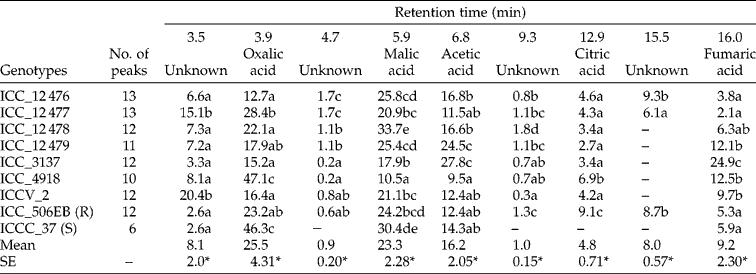
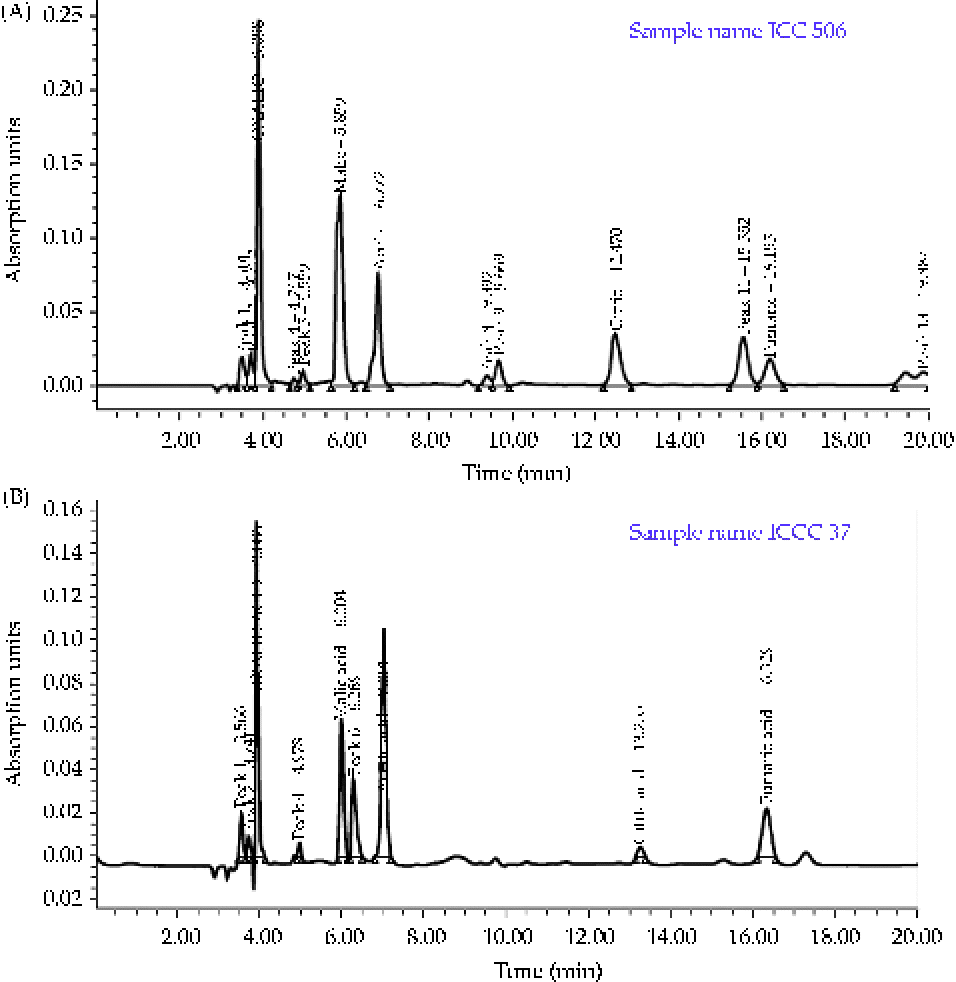
Maximum numbers of HPLC peaks were recorded in the leaf exudates of the ICC_12 476 and ICC_12 477 (13 peaks) genotypes, followed by the ICC_506EB, ICC_12 478, ICC_3137 and ICCV_2 (12 peaks) genotypes (Table 1). The lowest number of peaks (six) was recorded in the susceptible check, ICCC_37 (Fig. 1). The peak at retention time (RT) 4.7 min was observed in all the genotypes, except in ICC_12 478 and ICCC_37, while the peak at RT 4.9 min was observed in all the genotypes, except in ICC 4918 and ICCC_37. Peak 8 at RT 9.4 min was observed in the genotypes ICC_12 476 and ICC_12 479, while the peak at RT 12.8 min was observed in all the genotypes, except ICCC_37. The resistant check ICC_506EB had an additional peak at RT 15.5 min. The genotypes ICC_506EB, ICC_12 476, ICC_12 478, ICC_12 479 and ICCC_37 had three major peaks for oxalic acid, malic acid and acetic acid. The genotypes ICC_12 477 and ICCV_2 had an additional peak at RT 3.5 min, while the genotype ICC_3137 had a peak for fumaric acid. The ICC_4918 genotype had major peaks for oxalic acid, malic acid and fumaric acid. There were significant differences in the percentage peak areas for the different organic acids on the surface of chickpea leaves. The percentage peak areas were greater for oxalic acid, malic acid and acetic acid than for the compounds at other peaks. The peak at RT 3.5 min had significantly greater areas for the genotypes ICC_12 477 and ICCV_2 than for the genotype ICC_3137. Peaks for oxalic acid were significantly greater in the genotypes ICC_12 477, ICC_12 479, ICC_4918 and ICC_506EB, while those for malic acid were greater in the genotypes ICC_12 476, ICC_12 478, ICC_12 479 and ICC_506EB than in the susceptible check ICC_3137. Peaks for acetic acid were greater in the genotypes ICC_12 476, ICC_12 478 and ICC_3137, while those of fumaric acid were greater in the genotypes ICC_12 479, ICC_3137, ICC_4918 and ICCV_2.
Relative amounts (peak area %) of different compounds in the water-soluble leaf exudates of the nine chickpea genotypes (ICRISAT, Patancheru, India)
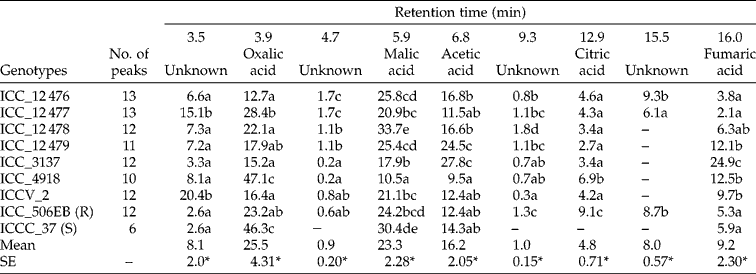
R, resistant check; S, susceptible check.
* F-test significant at P< 0.05. Values followed by the different letters within a column are significantly different by Duncan's multiple range test at P< 0.05.
(colour online) HPLC fingerprints of the water-soluble leaf exudates of (A) ICC_506EB (resistant) and (B) ICCC_37 (susceptible) chickpea genotypes.

Organic acids in chickpea genotypes in relation to the expression of resistance to H. armigera
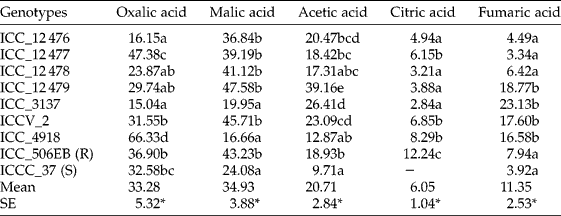
Significantly higher amounts of oxalic acid were present in the genotype ICC_4918 (66.33 μg/g), followed by the genotypes ICC_12 477 (47.38 μg/g) and ICC_506EB (36.90 μg/g) on a wet-weight basis (Table 2). The amounts of malic acid were significantly greater in the genotypes ICC_12 476, ICC_12 477, ICC_12 478, ICC_12 479, ICCV_2 and ICC_506EB than in the susceptible check, ICCC_37; while the amounts of acetic acid were greater (>18.9 μg/g) in the leaf exudates of the genotypes ICC_12 476, ICC_12 479, ICC_3137, ICC_506EB and ICCV_2 than in the susceptible check, ICCC_37 (9.71 μg/g). The amounts of citric acid were high in the genotypes ICC_506EB, ICC_12 477, ICC_4918 and ICCV_2, while the amounts of fumaric acid were high in the genotypes ICC_12 479, ICC_3137, ICC_4918 and ICCV_2.
Amounts (μg/g) of organic acids in the water-soluble leaf exudates of the nine chickpea genotypes (fresh-weight basis) (ICRISAT, Patancheru, India)
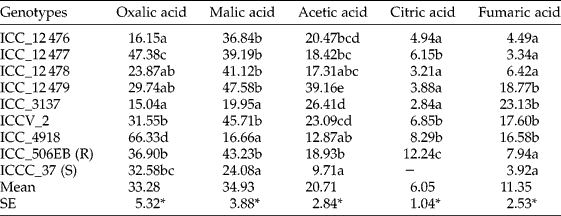
R, resistant check; S, susceptible check.
* F-test significant at P< 0.05. Values followed by the different letters within a column are significantly different by Duncan's multiple range test at P< 0.05.
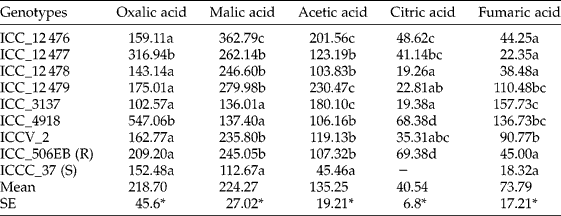
Significantly higher amounts of oxalic acid were recorded in the genotypes ICC_4918 (547.06 μg/g) and ICC_12 477 (316.9 μg/g) than in the susceptible check, ICCC_37 (152.48 μg/g) on a dry-weight basis (Table 3). Significantly higher amounts of malic and acetic acids were recorded in the genotypes ICC_12 476, ICC_12 477, ICC_12 478, ICC_12 479, ICCV 2 and ICC_506EB than in the susceptible check, ICCC_37. The amounts of fumaric acid were higher in the genotypes ICC_12 479, ICC_3137, ICC_4918 and ICCV_2 than in the other genotypes tested.
Amounts (μg/g) of organic acids in the water-soluble leaf exudates of the nine chickpea genotypes (dry-weight basis) (ICRISAT, Patancheru, India)
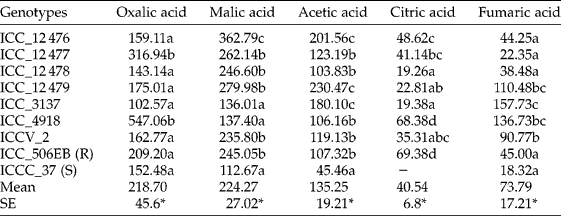
R, resistant check; S, susceptible check.
* F-test significant at P< 0.05. Values followed by the different letters within a column are significantly different by Duncan's multiple range test at P< 0.05.
Association of organic acids with the expression of resistance to H. armigera
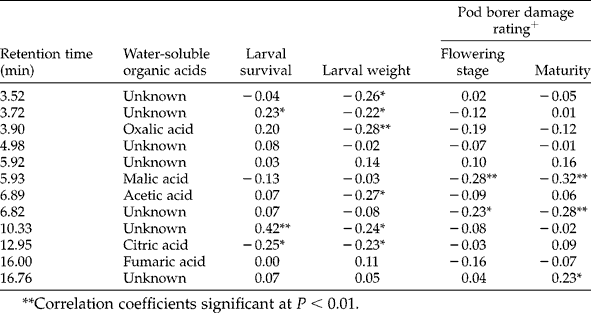
The peaks at RT 3.52 and 3.90 min showed a negative and significant association with larval weights (r= − 0.26, P< 0.05 and − 0.28, P< 0.01), while the peak at RT 3.72 min showed a negative and significant correlation with larval survival (r= − 0.23, P< 0.05) (Table 4). The oxalic and acetic acid levels were negatively associated with larval weights (r= − 0.28, P< 0.01 and − 0.27, P< 0.05, respectively). The malic acid level showed a negative and significant correlation with damage caused by H. armigera at the flowering (r= − 0.28, P< 0.01) and maturity (r= − 0.32, P< 0.01) stages, and pod damage (r= − 0.22, P< 0.05) under field conditions.
Association of the peak area with larval survival, larval weights and plant damage in nine chickpea genotypes (ICRISAT, Patancheru, India)
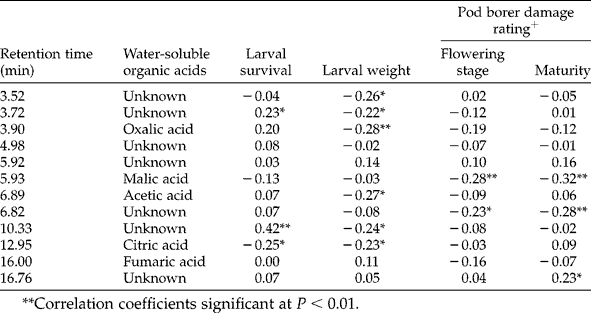
*Correlation coefficients significant at P< 0.05.
**Correlation coefficients significant at P< 0.01.
+ Pod borer damage rating (1, < 10% leaf area and/or pods damaged and 9, >80% leaf area and/or pods damaged).
Diversity among the chickpea genotypes based on HPLC fingerprints
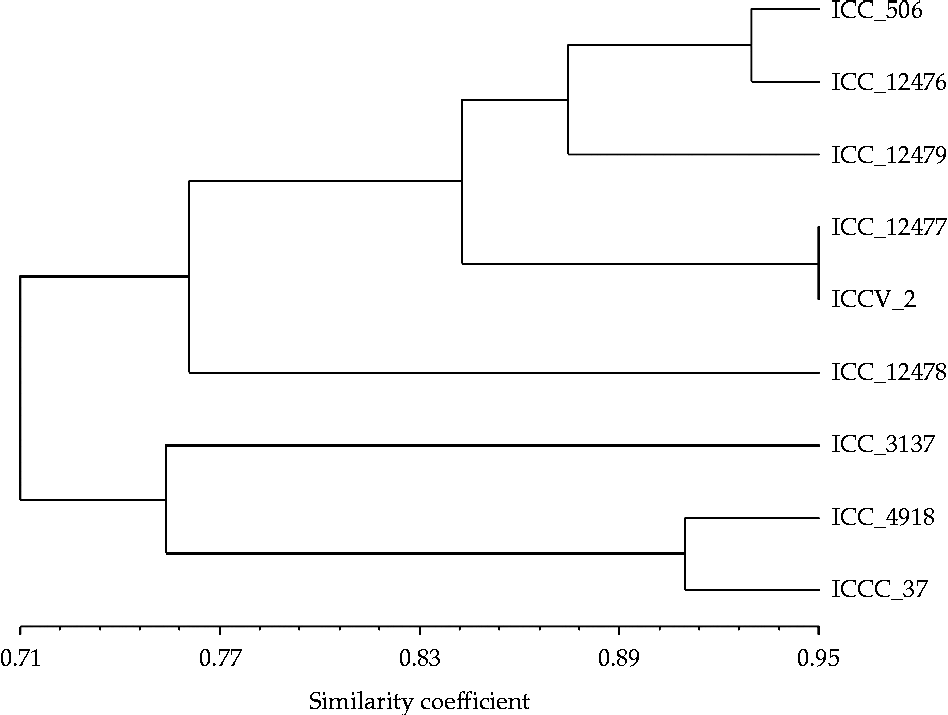
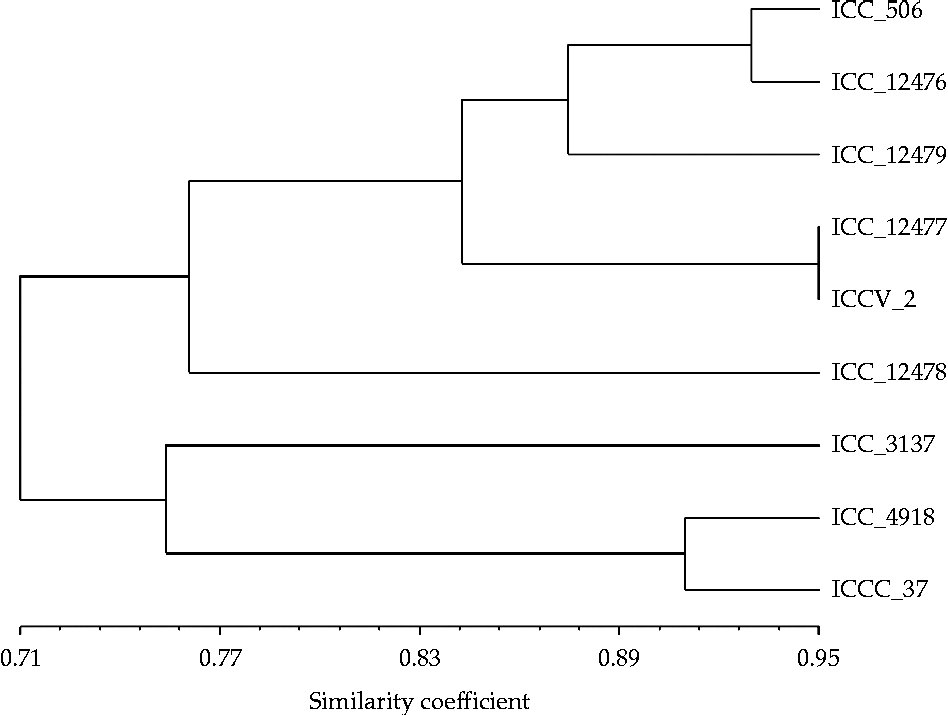
The UPGMA dendrogram based on the peak areas of the compounds at different RTs placed the test genotypes into five groups at 85% similarity (Fig. 2). Among these, the first group comprised the genotypes ICC_506EB, ICC_12 476 and ICC_12 479. All these genotypes were resistant to H. armigera. The second group consisted of the genotypes ICC_12 477 (moderately resistant) and ICCV_2 (moderately susceptible), while another moderately resistant line, ICC_12 478, was placed independently in the third group. The susceptible check ICC_3137 was placed independently in the fourth group, while the genotypes ICCC_37 and ICC_4918 were placed in the fifth group. The HPLC fingerprinting of the water-soluble leaf surface exudates differentiated between the resistant and susceptible genotypes, and these were placed in separate groups. Some of the resistance lines were also placed in separate groups, indicating the presence of diversity in the sources of resistance to H. armigera.
Dendrogram (based on the UPGMA) depicting the similarity between the nine chickpea genotypes, based on the HPLC fingerprints of the water-soluble leaf exudates.
Discussion
Host plant resistance to H. armigera in chickpea has largely been attributed to antixenosis for oviposition, antibiosis and recovery resistance (Narayanamma et al., Reference Narayanamma, Sharma, Gowda and Sriramulu2007, Reference Narayanamma, Sharma, Gowda and Sriramulu2008), and is influenced by the organic acids in the leaf exudates (Rembold, Reference Rembold1981; Bhagwat et al., Reference Bhagwat, Aherkar, Satpute and Thakare1995; Srivastava and Srivastava, Reference Srivastava and Srivastava1989; Rembold et al., 1990). However, resistance expressed by the genotypes PDE 2-3, PDE 7-3 and ICC_506 has been attributed to factors other than acidity, while that of PDE 7-2 is due to high acidity. Malic and oxalic acids in the acid exudates are known to play a considerable role in genotypic susceptibility to H. armigera. The genotypes ICC_506EB, ICC_12 476, ICC_12 478, ICC_12 479 and ICCC_37 had three major peaks, while the kabuli genotype ICCV_2 had four major peaks. The malic acid content was found to be significantly and negatively associated with damage caused by H. armigera at the flowering and maturity stages, while the oxalic acid content was negatively associated with leaf damage rating in the detached leaf assay. Malic acid acts as a deterrent to the H. armigera larvae, and the pod borer-resistant lines have higher amounts of malic acid than the susceptible lines (Bhagwat et al., Reference Bhagwat, Aherkar, Satpute and Thakare1995). Oxalic acid has been shown to inhibit the growth of H. armigera larvae when incorporated in an artificial diet, while no such effects have been shown by malic acid (Yoshida et al., Reference Yoshida, Cowgill and Wightman1995, Reference Yoshida, Cowgill and Wightman1997). Acetic acid showed a negative association with larval weight gain and H. armigera damage rating at the flowering and maturity stages, while citric acid showed a negative and significant association with leaf damage at the flowering stage. Leaves at the flowering and early podding stages would be the most appropriate for chemical analysis, as the differences in organic acid levels between the resistant and susceptible genotypes were most marked at this growth stage. Antifeedant and/or antibiotic properties of organic acids may influence the host selection and feeding behaviour, and thus influence the growth and development of H. armigera larvae and determine the extent of damage on a particular genotype (Rembold and Winter, 1982; Rembold et al., 1990). The present study indicated that in addition to oxalic and malic acids, citric acid, acetic acid and fumaric acid also play an important role in genotypic resistance to H. armigera. Monitoring the amounts of organic acids through HPLC can be used to select chickpea genotypes for resistance to H. armigera. The HPLC fingerprinting placed the resistant and susceptible lines in different groups, while some of the lines showing resistant reactions were placed in different groups, indicating that these lines have different profiles of leaf surface exudates that contribute to resistance/susceptibility to H. armigera. The lines showing resistance to H. armigera, but placed in different groups, can be used to increase the levels of resistance to this pest.
Acknowledgements
The authors thank the entomology staff for their help and Dr Rajiv Varshney for reviewing the manuscript. They also thank Mr Suraj P. Sharma for revising the manuscript.