

Introduction
Latin America has historically been one of the most unequal regions in the world in terms of both income and wealth. The tax system, which usually plays a key role in reducing inequality in developed countries, does very little to change this situation in most countries in the region (Causa et al., Reference Causa, Browne and Vindics2019; Hanni et al., Reference Hanni, Martner Fanta and Podestá2015). To address this issue, many experts have advocated tax reforms aimed at increasing revenue collection and enhancing the progressivity of the tax system (Piketty & Saez, Reference Piketty and Saez2013). In this paper, we explore the determinants of support for the reintroduction of an inheritance tax in Mexico, which existed from the 1920s until its abolition in the 1960sFootnote 1 after prolonged ideological debates (Linartas, Reference Linartas2023).Footnote 2
The role of inheritance in shaping wealth inequality is increasingly recognised in academic research.Footnote 3 For example, in Sweden, half of the wealth correlation between parents and children can be explained by inheritance (Elinder et al., Reference Elinder, Erixson, Waldenström, Piketty, Elinder, Erixson and Waldenström2018). While some studies in developed countries have found that inheritance taxes are among the least popular forms of taxation (Organisation for Economic Co-operation and Development [OECD], 2021), limited evidence exists for middle-income countries such as Mexico. This study seeks to address this gap by examining public attitudes towards two proposed inheritance tax scenarios: a universal tax and a progressive tax that applies only to inheritances exceeding USD $1 million (PPP).Footnote 4 Our findings suggest significant variation in support between the two, with clear preferences for progressivity, and cultural factors that differ from high-income contexts.
Using an original survey of 3,179 respondents representative of residents in Mexican metropolitan areas aged 25–69 years, we identify key factors driving support for inheritance taxation in a middle-income setting. The age window follows the standard practice in social-mobility surveys (typically 25–64 years) to ensure respondents have completed their education, are attached to the labour market and can reliably recall parental background, with a modest extension to include near-retirement cohorts. Consistent with studies in high-income countries, our results show that trust in government plays a critical role in shaping attitudes towards the universal tax. However, we also found that perceptions of tax evasion among the wealthy are the strongest predictors of support for the progressive tax, a finding that has not been previously documented in the context of developing countries. Furthermore, while fairness concerns are typically emphasised in studies of advanced economies (e.g. Bastani & Waldenström, Reference Bastani and Waldenström2021), these factors play a more limited role in Mexico, where peer effects, trust in government and concerns about inequality significantly shape attitudes.
Our analysis also engages with broader literature on tax morale and compliance. Studies such as Frey and Torgler (Reference Frey and Torgler2007) and Luttmer and Singhal (Reference Luttmer and Singhal2014) highlight the role of tax morale – the intrinsic motivation to pay taxes – in fostering compliance, particularly in contexts where institutional trust may be weak. These works underscore the importance of conditional cooperation and reciprocity, which we found reflected in the salience of trust in government to support inheritance taxation. Similarly, Traxler (Reference Traxler2010) argues that social norms around compliance, shaped by the behaviour of key reference groups, significantly influence tax morale. Our findings align with this perspective, as perceptions of tax evasion among the wealthy emerge as a critical determinant of support for the progressive tax.
Additionally, we build on the work of Bergolo et al. (Reference Bergolo, Leites, Perez-Truglia and Strehl2021), who demonstrate that perceptions of peer behaviour play a significant role in shaping attitudes towards tax compliance. In our context, the perception of evasion by specific social groups – particularly the wealthy – drives public support for progressive inheritance taxation. These findings extend the understanding of how peer effects interact with distributive preferences and institutional trust in a developing-country context.
To better understand these dynamics, we employ linear probability models and lasso regressions, which allow us to evaluate the relative importance of different determinants, including self-interest, fairness, distributive preferences, ideological factors and perceptions of compliance. Our analysis reveals a nuanced picture: While trust in government and perceptions of tax evasion emerge as pivotal drivers, the amount people consider appropriate to inherit appears to be positively associated with support for inheritance taxation. These findings highlight the importance of addressing perceptions of compliance and enforcement when designing tax policy in highly unequal societies.
This paper contributes to the literature in several ways. First, it extends existing research on the legitimacy and acceptance of inheritance taxation by focusing on a middle-income-country context. Second, it contributes novel insights into the role of perceptions of tax evasion and cultural norms in shaping tax attitudes, factors that are often overlooked in studies of high-income countries. Finally, our use of survey data from a developing country allows for a deeper exploration of how inequality and weak institutional trust interact to influence public attitudes towards redistributive policies.
The paper proceeds as follows. The second section reviews the theoretical framework, focusing on mechanisms influencing preferences for redistribution and taxation.Footnote 5 The third section describes the data and methodology used in this study. The fourth section presents the empirical results, emphasising the level of support for inheritance taxation and the factors driving these preferences. Finally, the fifth section discusses the implications of our findings and potential avenues for future research.
Theoretical framework
Efficiency, broadly defined as the way taxation affects economic decisions and outcomes, has traditionally caught the attention of economists. Some evidence points to its importance in shaping the preferences of elites: In an experimental study using participants from the American Life Panel and Yale Law School students, Fisman et al. (Reference Fisman, Jakiela, Kariv and Markovits2015) found that the students are substantially more efficiency-driven. Furthermore, Atria (Reference Atria2022) points out that one of the reasons why economic elites in Chile do not support inheritance tax is due to efficiency concerns. However, recent studies show that efficiency tends to be less important for taxation preferences than justice and distributive considerations among the general population (Almås et al., Reference Almås, Cappelen and Tungodden2020; Stantcheva, Reference Stantcheva2021).
Thus, exploring the most common mechanisms proposed to explain attitudes towards redistributive policies, particularly taxation, which relate to social justice and distributive concerns, can help us understand support for inheritance taxation in Mexico. Not many theories have been proposed specifically to explain popular support for taxes. For our purposes, we rely on the literature on tax morale on the one hand and preferences for redistribution on the other. The link between preferences for redistribution and taxation is perhaps the clearest, with taxation discussed as a policy issue in most papers on the subject (Alesina & Giuliano, Reference Alesina, Giuliano, Benhabib, Bisin and Matthew2011).Footnote 6 The connection may be less straightforward for tax morale, a theoretical concept used mostly to explain compliance. We argue that many of the mechanisms encompassed under the umbrella of tax morale are useful in understanding popular support for taxation. Questions of the legitimacy of state institutions, corruption and the provision of public goods are central in shaping the perception of taxes as an effective policy instrument. This could be even more important in the developing world, where state institutions are often weak.
The broadly defined concept of tax morale has been used to explain why people comply much more with taxes than the classical expected utility framework would predict (Luttmer & Singhal, Reference Luttmer and Singhal2014). To explain this divergence, researchers have proposed many supplementary mechanisms over the years. The concept is nevertheless ill-defined and sometimes includes all non-monetary incentives for tax compliance. We focus on two mechanisms of tax morale: reciprocity and peer effects (Luttmer & Singhal, Reference Luttmer and Singhal2014).
Luttmer and Singhal (Reference Luttmer and Singhal2014) define reciprocity as ‘situations in which willingness to pay taxes depends on the individual’s relationship with the state other than direct tax-benefit linkages’. This would include factors such as the perceived legitimacy of and trust in the state, perceptions of fairness of the tax schedule and quality of public services provided by the government. There is evidence supporting many of these factors. A study using the World Values Survey observes a positive correlation between trust in government and tax morale (Daude et al., Reference Daude, Gutiérrez and Melguizo2012). The relationship between the provision of public services and greater disposition to pay taxes has been documented using both observational and experimental data (Bott et al. Reference Bott, Cappelen, Sørensen and Tungodden2019; Castañeda et al., Reference Castañeda, Doyle and Schwartz2020; Flores-Macías & Sánchez-Talanquer, Reference Flores-Macías and Sánchez-Talanquer2020; Hallsworth et al., Reference Hallsworth, List, Metcalfe and Vlaev2017).
Peer effects are defined as the effects of the behaviour of others on an individual’s own compliance decisions. As Luttmer and Singhal (Reference Luttmer and Singhal2014) note, those effects have often been conceptualised with a signalling model, where compliance is understood as a way to convey civic responsibility and moral character. Others, such as Frey and Torgler (Reference Frey and Torgler2007), have argued for conditional cooperation as a potential underlying mechanism. Traxler (Reference Traxler2010) has proposed that the effect may vary according to social group. The compliance of certain groups may also have a disproportionate effect, acting as a reference group for the rest of society. As in the case of reciprocity, some observational and experimental studies have found significant peer effects on compliance (Bergolo et al., Reference Bergolo, Leites, Perez-Truglia and Strehl2021; Dwenger et al., Reference Dwenger, Kleven, Rasul and Rincke2016; Frey & Torgler, Reference Frey and Torgler2007; Hallsworth et al., Reference Hallsworth, List, Metcalfe and Vlaev2017).
The second set of theoretical approximations explaining support for taxation concerns distributive preferences. In the most abstract and general formulation of this framework, support for taxation depends on the difference between current and desired income or wealth distributions. Taxes are therefore understood as policy instruments of redistribution to achieve the goal of bringing these two closer together. In an analysis of people’s reasons for supporting taxation, using both observational and experimental methods, Stantcheva (Reference Stantcheva2021) found distributive factors to be the most important. Moreover, in the specific case of an inheritance tax, Fisman et al. (Reference Fisman, Gladstone, Kuziemko and Naidu2020) found that people prefer to tax inherited wealth more heavily than wealth accumulated through savings. Similarly, Bischoff and Kusa (Reference Bischoff and Kusa2019) show that individuals who expect inheritances to be concentrated among high-income households and/or support government efforts to reduce inequality are less likely to oppose such a tax.
Other normative concerns that have been identified to shape these preferences are perceptions about fairness and the origins of social inequality. Alesina and Angeletos (Reference Alesina and Angeletos2005) hypothesise that societies where people believe that differences in wealth are mostly explained by differences in individual effort are less supportive of taxation than societies where people think that luck, birth and corruption play a greater role. Another relevant factor is the aggregate importance of inherited wealth, as this may be indicative of a lack of equality of opportunities in particular societies.Footnote 7 In an experimental study conducted in Sweden, Bastani and Waldenström (Reference Bastani and Waldenström2021) found that informing people of the aggregate importance of inherited wealth in the economy has a significant and positive effect on support for the tax. The authors speculate that a greater prevalence of inherited over ‘self-made’ wealth is interpreted by respondents as evidence of a lack of equality of opportunity, which increases support for redistributive measures.
Besides tax morale and distributive concerns, a number of factors relating to respondents’ actual socio-economic position within society have been shown to affect taxation preferences. As such, social mobility has also been shown to shape preferences for distribution. For instance, Piketty (Reference Piketty1995) hypothesises that individuals with similar income levels may have different distributive preferences because of their experiences of intergenerational social mobility. There is empirical evidence showing the importance of this factor, both in Latin America and in other parts of the world (Alesina et al., Reference Alesina, Stantcheva and Teso2018; Gaviria, Reference Gaviria2007; Silva & Figueiredo, Reference Silva and Figueiredo2013). Using survey data from Latinobarómetro, Silva and Figueiredo (Reference Silva and Figueiredo2013) found that the perception that one’s living standard is inferior to that of one’s parents increases support for distributive policies.
Relatedly, the cultural notion that the property of the testator is not individual but held communally by a family seems to affect support for inheritance taxes. Beckert (Reference Beckert2008) calls this idea the ‘family principle’. In an experimental study, Gross et al. (Reference Gross, Lorek and Richter2017) found that most people do want some level of inheritance taxation, albeit at a low rate. The preferred rate decreases when the family relationship with the testator is closer and for certain assets such as family homes and businesses. They conclude that the ‘family principle’ plays an important moderating role in the desire to tax inheritance. In this regard, Atria (Reference Atria2022) found that one of the key reasons behind the elites’ negative perception of inheritance taxes is the belief that they destroy family businesses, as well as their interest in preserving family wealth across generations.
Differences in wealth and income are also factors classically used to explain preferences for redistribution. In Meltzer and Richard’s (Reference Meltzer and Richard1981) influential formulation, people with below-median income would be supportive of redistribution, whereas people with incomes over the median would not. However, this relationship does not seem straightforward, either in Latin America or the rest of the world. Using data from the Latinobarómetro surveys of 1997, 2001 and 2002, Cramer and Kaufman (Reference Cramer and Kaufman2011) show that the effect of personal wealth is non-linear, with the middle classes, and not the poor, being the most dissatisfied with income inequality.
Finally, self-interest factors are relevant to explain support for taxes, specifically for inheritance taxes. Bischoff and Kusa (Reference Bischoff and Kusa2019) found that the opposition to inheritance taxation is higher among people more likely to be directly affected by the tax. In this regard, Atria (Reference Atria2022) found that Chile’s economic elites oppose this tax, primarily due to their preference for the principle of individual freedom over redistributive preferences, as well as concerns related to inefficiency, inconvenience and lack of foundation. Additionally, Elkjaer et al. (Reference Elkjaer, Ansell, Bokobza, Cansunar, Haslberger and Nyrup2024) found that low-wealth individuals, who would benefit the most from inheritance taxation, are the least likely to hold a clear opinion on the issue. In contrast, homeowners and their children – who would be more negatively affected – tend to have strong and opposing views. Although it is not within the scope of an exploratory study to rigorously test these hypotheses, it is in any case worth analysing the results considering the latest theoretical and empirical findings in the field to better point to future research questions.
Data and methodology
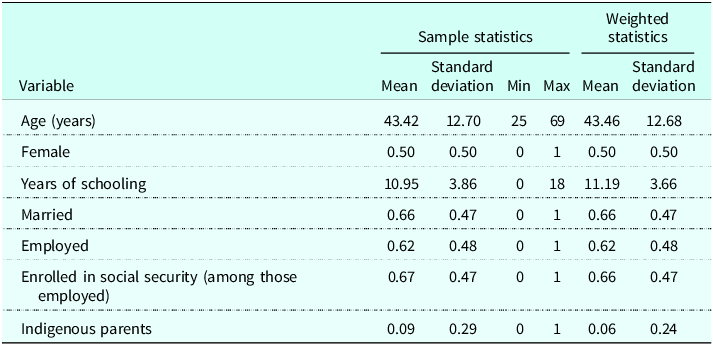
We designed an original survey representative of the inhabitants of metropolitan areas in Mexico aged 25–69 years. The sample was probabilistic and comprised 3,179 individuals: 800 in the Mexico City metropolitan area, 422 in Guadalajara, 409 in Monterrey, 321 in San Luis Potosí, 321 in Mérida, 318 in Ciudad Juárez, 304 in León and 265 in Oaxaca, representing the five main geographical regions of the country (north, northwest, centre-north, centre and south). Fieldwork was conducted face to face in May–June 2021 with personal protective equipment (PPE) and safety protocols. Consistent with national trends, mobility rose steadily during the first half of 2021 and plateaued around July (Fontanelli et al. Reference Fontanelli, Guzmán and Meneses-Viveros2023). The questionnaire lasted 25–30 minutes and included questions on demographic characteristics, perceptions of inequality and poverty, fairness, taxation and evasion and income distribution. All results were weighted according to the survey design (see Supplementary S0 for comparison with the National Survey of Occupation and Employment [ENOE] 2021 Second Quarter [Q2]). The target sample comprised 3,060 interviews; 3,181 were completed (104 percent of target), including 19 Basic Geostatistical Areas (AGEB) substitutions in access-restricted areas. Interviewers obtained verbal informed consent using a standardised introduction script emphasising voluntary participation and confidentiality, consistent with social-science survey practice in Mexico. Table 1 includes some descriptive statistics of the demographic composition of the sample. Results, therefore, generalise to metropolitan residents aged 25–69 years who represent 89.8 per cent of the population.
Descriptive statistics

Table 1 Long description
A table with descriptive statistics of demographic composition. The table has 8 rows and 6 columns. The columns are labeled as Variable, Sample statistics Mean, Sample statistics Standard deviation, Sample statistics Min, Sample statistics Max, Weighted statistics Mean, and Weighted statistics Standard deviation. The rows are labeled as Age (years), Female, Years of schooling, Married, Employed, Enrolled in social security (among those employed), and Indigenous parents. The values in the table are as follows: Row 1: Age (years), 43.42, 12.70, 25, 69, 43.46, 12.68. Row 2: Female, 0.50, 0.50, 0, 1, 0.50, 0.50. Row 3: Years of schooling, 10.95, 3.86, 0, 18, 11.19, 3.66. Row 4: Married, 0.66, 0.47, 0, 1, 0.66, 0.47. Row 5: Employed, 0.62, 0.48, 0, 1, 0.62, 0.48. Row 6: Enrolled in social security (among those employed), 0.67, 0.47, 0, 1, 0.66, 0.47. Row 7: Indigenous parents, 0.09, 0.29, 0, 1, 0.06, 0.24.
Source: Authors’ own calculations based on original data compiled for this paper. Notes: Sample statistics are unweighted. Weighted statistics use survey weights.
Respondents’ wealth was measured as an index using the standardisation of the first component of a principal component analysis (Torche Reference Torche2014; Reference Torche2015) of the questions relative to observed characteristics of respondents’ neighbourhood and residence and self-reported information about the possession of bank accounts, sewer connection, automobile, potable water, employment of domestic workers, years of schooling of the individual and their parents and whether their parents spoke an Indigenous language.
We used a similar method to measure political orientation, the perception of poverty as caused by a lack of personal effort, concern about inequality, trust in government and reciprocity and belief in efficiency effects. We measured political orientation along two dimensions: social and economic progressivism. The index for social progressivism includes questions about support for abortion, adoption by same-sex couples and drug legalisation. A higher score on the index means greater support for these policies. The index of economic progressivism measures agreement with the following: ‘increasing debt’, ‘government intervention’, the idea that ‘the main responsibility of a company is not to maximise profits’ and the belief that ‘unemployment is more important than inflation’.
The index of perception of poverty as caused by a lack of personal effort is measured through agreement (on a scale from 1 to 5) with the following statements: ‘We all have the same opportunities’, ‘A person is poor mainly due to lack of effort’, ‘A person is poor primarily because of circumstances beyond their control’, ‘A person is rich mainly because they work harder than others’ and ‘A person is rich mainly because they had more advantages than others’. A higher score on the index indicates greater agreement with the idea that poverty is primarily the responsibility of the individual. All variables were rescaled on the basis of this definition (see Campos-Vazquez et al., Reference Campos-Vazquez, Krozer, Ramírez-Álvarez, de la Torre and Velez-Grajales2022; Roth & Wohlfart, Reference Roth and Wohlfart2018).
The concern about inequality is measured through agreement (on a scale from 1 to 5) with the following statements: ‘Inequality is one of the main problems of the country’, ‘It is the government’s responsibility to reduce the gap between rich and poor’, ‘The wealth of the country should be distributed more equitably’ and ‘It is not fair that the children of a wealthy family have access to more goods and services’. A higher score on the index means greater concern about inequality (see Gründler & Köllner, Reference Gründler and Köllner2017; Weinzierl, Reference Weinzierl2017).
The index of trust in government and reciprocity is measured by the level of agreement (on a scale from 1 to 5) with statements regarding trust ‘in government’ and ‘in the bureaucracy’, as well as satisfaction with the way the government carries out various activities, including: ‘tax collection’, ‘provision of education’, ‘payment of taxes owed’, ‘provision of health care’ and ‘provision of public safety’. A higher score on this index means greater trust in state institutions and satisfaction with the provision of public goods (see Torgler, Reference Torgler2011).
Finally, the index of belief in the efficiency effects of taxation is measured through agreement (on a scale from 1 to 5) with the statement ‘If the rich pay more taxes, that will negatively affect the economy’, and with statements that higher taxes make people ‘work less’, ‘work more’, ‘evade more taxes’, or ‘save less’ and that taxes could ‘increase labor market informality’. A higher score means a greater belief that taxes affect behaviour (variables were changed to have the same direction). See Stantcheva (Reference Stantcheva2021) for a similar index.
Social mobility is measured using the difference between the respondent’s perception of their current decile and their perception of their decile when they were 14 years old, measured by asking them to classify their household income on a scale from 1 to 10 (International Social Survey Programme [ISSP] Research Group, 2019; Silva & Figueiredo, Reference Silva and Figueiredo2013). It is thus a measure of perceived social mobility.
We analysed support for inheritance tax using a linear probability model. To make the dependent variable binary, we recoded the answer to the question ‘How much would you agree with the implementation of an inheritance tax?’ The answers were originally on a 1–5 Likert scale. Values of 3–5 (moderate, very much, or complete support for the tax) were recoded to 1 and answers of 1–2 were recoded to 0.Footnote 8
To analyse and compare the relative importance of the different independent variables, we ranked them according to their standardised coefficients (which control for their different measurement scales by standardising them) and lasso,Footnote 9 a form of penalised regression that is consistent for model selection under reasonable assumptions (Zhao & Yu, Reference Zhao and Yu2006). Lasso allowed us to remove non-important variables from the model. Finally, to correct for the multiple hypothesis tests, we grouped variables associated with each of the factors discussed in the second section into the same composite hypothesis and then correct the respective p-values using the Romano–Wolf correction (Clarke et al., Reference Clarke, Romano and Wolf2020; Romano & Wolf, Reference Romano and Wolf2016). Based on our methodological setup, results should be interpreted as correlational and do not necessarily imply causality.
Results
In this section, we present the results of the regression analysis and some descriptive statistics relative to the determinants of support for the tax. We first present the levels of support and the answers to the questionnaire relative to the legitimacy of inheritance. We then present the results of our regression and machine learning analysis.
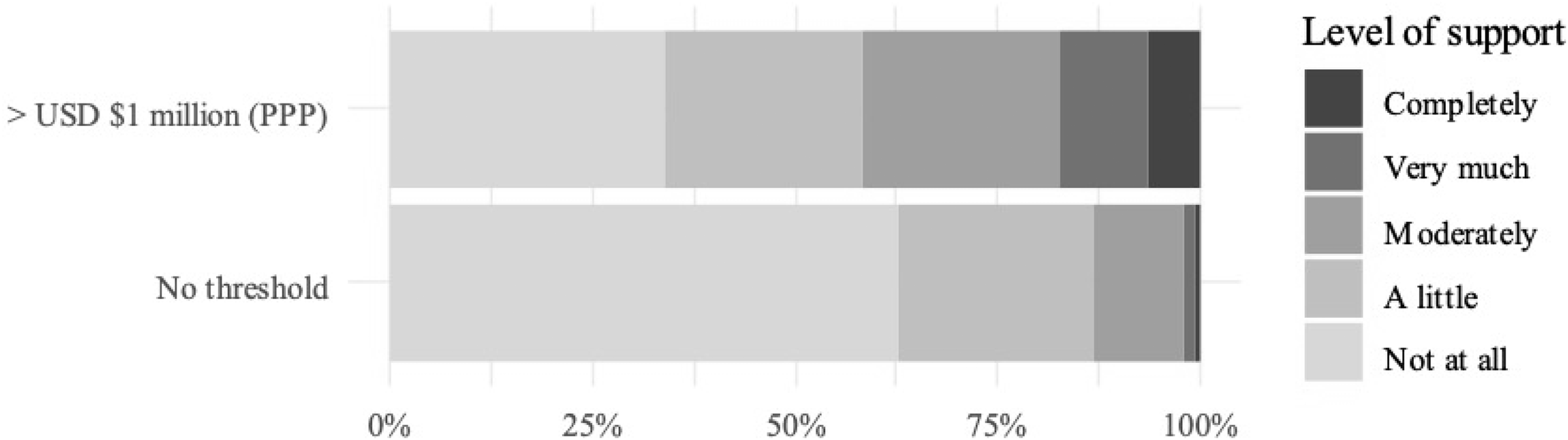
Figure 1 clearly shows that the inheritance tax without a threshold is unpopular. Only 13.3 percent of respondents agreed moderately, very much, or completely with an inheritance tax without a threshold. Support was much higher for the tax on inheritance with the threshold, with 41.8 percent of respondents agreeing moderately, very much, or completely.Footnote 10 This preference for progressivity is in line with what has been observed in other studies (Gross et al., Reference Gross, Lorek and Richter2017). For instance, in a YouGov poll conducted in the UK in 2015 (OECD, 2021), only 22 percent of the respondents found the tax, which has a £325,000 threshold, to be ‘fair’.Footnote 11
How much would you agree with the implementation of an inheritance tax?
Source: Authors’ own calculations based on original data compiled for this paper. Notes: The figure shows the level of support for each type of inheritance tax. Responses measure respondents’ agreement with each tax on a 1–5 Likert scale.

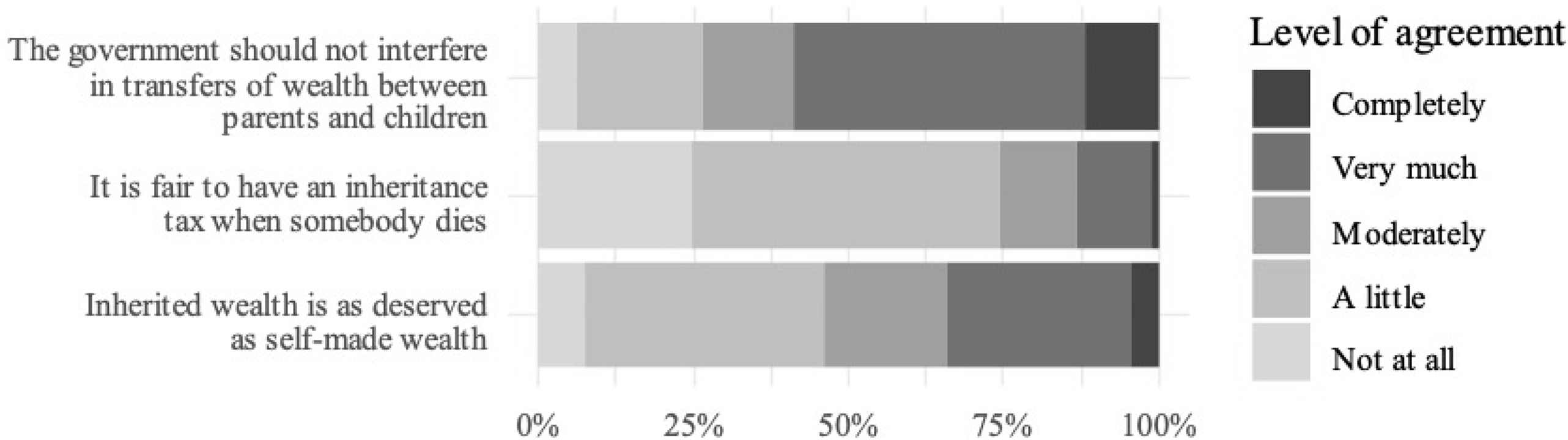
Figure 2 plots the perceptions of the legitimacy of inherited wealth, the role the government should play in intergenerational transfers of wealth and whether it is fair to tax inheritance. Respondents seemed to regard inherited wealth as just as deserved as self-made wealth (54.1 percent agreed moderately, very much, or completely with this statement). An even greater majority did not believe the state should interfere with wealth transfers between parents and their children (73.4 percent agreed moderately, very much, or completely with this statement). Accordingly, most people did not believe an inheritance tax would be just: Only 25.5 percent agreed moderately, very much, or completely with the idea. These results are inconsistent with the ‘equality of opportunities’ value orientation regarding inheritance that was described by Beckert (Reference Beckert2008). Most respondents perceived inheritance as fair and were not convinced that the government should intervene.
Items relative to the legitimacy of inheritance.
Source: Authors’ own calculations based on original data compiled for this paper. Notes: The figure shows the responses to three survey items. The responses express respondents’ level of agreement with the statement, on a Likert scale of 1–5.

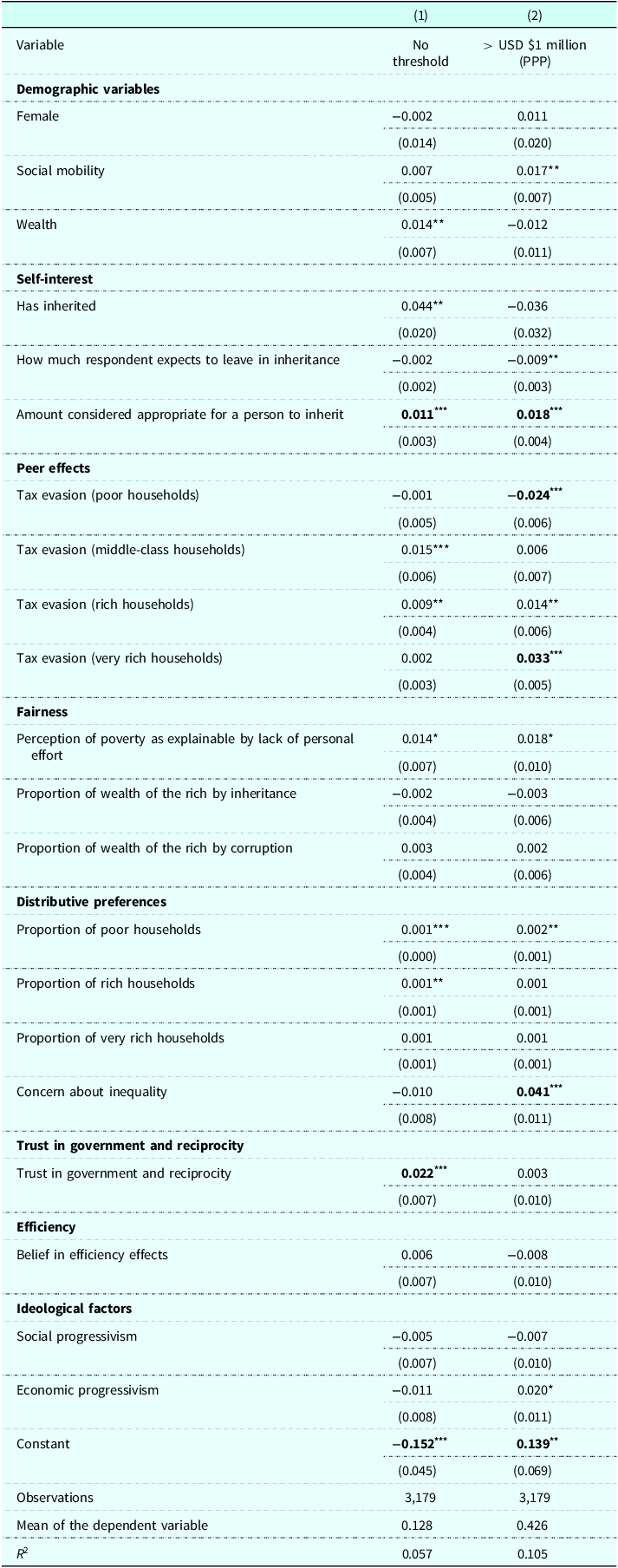
Table 2 presents the main results of the study: support for taxation of all inheritance (column 1) and for that of more than USD $1 million (PPP; column 2).Footnote 12 The covariates are categorised according to the main factors discussed above (peer effects, fairness considerations, distributive preferences, trust in government, belief in efficiency effects, ideological factors and self-interest factors), plus demographics. All the variables measured with synthetic indices are standardised (wealth, perception of poverty as explainable by lack of personal effort, concern about inequality, trust in government and reciprocity, belief in efficiency effects and social and economic progressivism). Coefficients are presented in bold if they withstand correction for multiple hypothesis testing at a significance level of 0.05. Our primary emphasis is on coefficients that retain statistical significance after applying this test.
Linear probability model regression coefficients for support for each type of inheritance tax

Table 2 Long description
A table with 30 rows and 4 columns. The columns are labeled Variable, No threshold, and > USD $1 million (PPP). The rows are grouped under headings: Demographic variables, Self-interest, Peer effects, Fairness, Distributive preferences, Trust in government and reciprocity, Efficiency, Ideological factors, and a Constant row. Each row lists a variable and its corresponding regression coefficients for two different thresholds of inheritance tax support. Notable variables include Female, Social mobility, Wealth, Has inherited, Tax evasion (poor, middle-class, rich, very rich households), Perception of poverty as explainable by lack of personal effort, Proportion of wealth of the rich by inheritance, Proportion of wealth of the rich by corruption, Proportion of poor households, Proportion of rich households, Proportion of very rich households, Concern about inequality, Trust in government and reciprocity, Belief in efficiency effects, Social progressivism, Economic progressivism, and Constant. Coefficients are presented in bold if they withstand correction for multiple hypothesis testing at a significance level of 0.05.
Notes: Author’s calculations based on original data compiled for this paper. Robust standard errors in parenthesis. Coefficients are in bold if they are robust to multiple hypothesis testing correction at a significance level of 0.05. *p < 0.1, **p < 0.05, ***p < 0.01.
Our results included several interesting findings. First, in the case of self-interest factors, there is an important link between the amount considered appropriate for a person to inherit and high support for the tax with and without a threshold. Second, trust in government and reciprocity were significantly and positively correlated with support for the tax without a threshold but were not significant in the case of the tax with a threshold.
Third, peer effects and distributive preferences had a significant relationship with support only in the case of the tax with a threshold. Evasion was an important and class-specific factor: Every 10 percentage points of perceived evasion by very rich households increased support for the tax by 3.3 percentage points. In contrast, the same amount of perceived evasion by poor households decreased support for the tax by 2.4 percentage points. The general concern for inequality seems to be the main distributional factor driving support for the tax with the threshold, increasing it by 4.1 percentage points for every standard deviation of the index. Finally, results related to fairness, efficiency and ideology do not have a statistically significant relationship with support for either kind of tax.
Figure 3 presents the standardised regression coefficients ordered according to their absolute value to highlight the relative importance of the variables. Triple asterisks (***) on the vertical axis indicate variables that maintain significance after correction for multiple hypothesis testing. The only variable that turned out to be relevant for explaining support for the tax with and without the threshold is the amount considered appropriate for a person to inherit. This finding aligns with previous studies suggesting that unexpected income increases tax compliance (Carrillo et al., Reference Carrillo, Castro and Scartascini2021). In particular, Fonseca and Rahimi (Reference Fonseca and Rahimi2022) found that, when windfall income is taxable, there is a positive relationship between windfall size and compliance. Thus, recipients suddenly finding themselves to be richer than expected appear more generous. While this might point to a recurring altruistic motive, where individuals may be more inclined to endorse an inheritance tax if they believe they deserve a larger share of inherited wealth, further research is needed to better understand the mechanisms underlying this relationship. Trust in government and reciprocity also play a role in support for the tax without a threshold, suggesting that distrust in the government diminishes support. In the case of support for the tax with a threshold, the most influential standardised coefficient was associated with tax evasion among the very rich. Greater evasion by this group seems to foster perceptions of unfairness, leading to increased support. Concerns about inequality and tax evasion by the poor showed similar coefficients but with opposite signs. In sum, support for each type of tax is distinct: Self-interest factors, such as the amount considered appropriate for a person to inherit, and trust in government drove support for a tax without a threshold, while peer effects, concerns about inequality and self-interest factors shaped support for a tax with a threshold.
Variable importance for each type of inheritance tax. (a) Inheritance tax without threshold. (b) Tax on inheritances over USD $1 million (PPP).
Source: Authors’ own calculations based on original data compiled for this paper. Notes: Standardised regression coefficients ordered by absolute value. ***Coefficients are robust to multiple hypothesis testing correction at a significance level of 0.05.

Some of our findings are consistent with those previously documented in the literature, for instance, by Bischoff and Kusa (Reference Bischoff and Kusa2019). Specifically, our results on the inheritance tax without a threshold align with Bischoff and Kusa regarding the positive relationship between support for the tax and trust in government. Furthermore, for the inheritance tax with a threshold, we found a negative relationship with concerns about inequality. Bischoff and Kusa (Reference Bischoff and Kusa2019) had found that individuals who believed that wealth transfers disproportionately benefited higher-income individuals were more likely to support such a tax, as were those who favoured government efforts to reduce inequality. In their case, they referred to a general tax. Our study, however, highlights the significant role of perceived evasion, which is particularly important in the case of the threshold tax.
To assess the robustness of our findings, we employed a lasso model with varying degrees of penalisation. As penalisation increased, more variables were constrained to be zero or closer to zero; those with higher penalisations were the most critical to explaining support for the tax. The results, depicted in Figure 4 with penalisation (lambda) on the horizontal axis, generally affirmed the significance observed in the previous analysis. In the case of the tax without a threshold, the most important factors were peer effects, particularly tax evasion among the middle class and the wealthy. Additionally, self-interest and trust in government remained significant. In addition, for the tax with a threshold, the relevance of peer effects was also confirmed – especially evasion among the very rich and the rich – as well as perceptions of fairness (particularly concerns about inequality) and self-interest (such as the amount considered appropriate for a person to inherit).
Lasso results.
Source: Authors’ own calculations based on original data compiled for this paper. Notes: Non-zero coefficients in lasso regression for different values of the lambda parameter. If a variable is significant at higher levels of the log lambda, that is a sign of its greater importance. In the case of the tax without a threshold, the most important variables were (8) tax evasion (middle-class households), (9) tax evasion (rich households), (6) amount considered appropriate for a person to inherit and (18) trust in government and reciprocity. In the case of the tax with a threshold, the most important variables were (10) tax evasion (very rich households), (17) concern with inequality, (9) tax evasion (rich households), (6) amount considered appropriate for a person to inherit and (7) tax evasion (poor households).

Conclusions
In this paper, we study the determinants of support for two kinds of inheritance taxation, one which taxes all inheritances and another which taxes only those over USD $1 million (PPP MXN $10 million). We found that, while the tax without a threshold was unpopular (with support from only 13.3 percent of respondents), the one with the threshold had considerable support (41.8 percent), suggesting that there is a preference for progressivity. However, we found that most respondents did not regard inherited wealth as less legitimate than self-made wealth (54.1 percent regarded it as equally legitimate) and that most people did not think the state should interfere in wealth transfers between parents and children (73.4 percent). Most people did not subscribe to the principle of ‘equality of opportunity’ regarding inherited wealth. None of the variables traditionally associated with fairness concerns were significant, a finding that runs counter to what has been observed in developed countries (Bastani & Waldenström, Reference Bastani and Waldenström2021), and that could suggest that other value orientations, such as the ‘family principle’ (Beckert, Reference Beckert2008), may play an important role in determining support for the tax. Family plays an especially important role in Latin American cultures, not only in social life but also in social security. Due to the high prevalence of labour market informality, many people do not have access to pensions and other forms of welfare through public or private institutions, a deficit which is commonly remedied through care work and ‘social security’ (i.e. economic transfers) within the family (Martínez Franzoni, Reference Martínez Franzoni2005; Valle, Reference Valle2010). Some of our results point in this direction. For example, people who scored higher on our trust index, which measures greater trust in the government and satisfaction with public services,Footnote 13 increased their level of support for the tax without a threshold by 2.2 percentage points for every standard deviation of the trust index. Testing this hypothesis could be an interesting avenue for further research.
We also found that perceptions about tax evasion were an important factor in determining support for inheritance taxes with a threshold and that the effect was class-specific. The perception that one group is not fulfilling its fiscal responsibilities increased support for taxes targeting that group and decreased it for others. For the tax on inheritance of USD $1 million (PPP) or more, every 10 percentage points of perceived evasion by very rich households increased support by 3.3 percentage points, whereas the same increase in the perceived evasion by poor households decreased it by 2.4 percentage points. This effect is very similar to Traxler’s (Reference Traxler2010) proposal that the effect of non-compliance on tax morale varies according to social group and that this effect may be greater for reference groups such as those with high income. To the best of our knowledge, our study is the first to provide empirical evidence of this effect. In highly unequal societies such as those in Latin America, conditional cooperation may be mediated by considerations of social class and could be an important factor in explaining support for taxation. This also points to a promising avenue for future research.
The perception that a tax is fair is an important precondition for its legitimacy and willingness to comply with it. Our results show that acceptance of the legitimacy of a reintroduced inheritance tax in Mexico would depend on it being progressive. Evidence from Germany (Gross et al., Reference Gross, Lorek and Richter2017) also suggests that it should discriminate between close kin and more distant inheritors and make special provisions for certain kinds of emotionally charged assets, such as the family home. Such provisions could increase its legitimacy given the importance of family in Latin America.
In sum, Latin American societies are highly unequal, and inheritance plays an important role in the intergenerational reproduction of inequality, an effect also documented across six high-income countries (Morelli et al., Reference Morelli, Nolan, Palomino and Van Kerm2025). A progressive inheritance tax could help reduce inequality and wealth concentration, especially regarding dynastic wealth. To ensure an equal starting point for everyone, it is necessary to understand which variables are related to a higher degree of acceptance of such a tax. Our study contributes to this agenda. However, it is important to note that the results should be interpreted as correlational rather than causal. Future studies could use our results in randomised interventions to provide further information about the causality of the variables.
Supplementary material
The supplementary material for this article can be found at https://doi.org/10.1017/S0047279426101317.
Acknowledgement
We especially thank two anonymous reviewers and the editor for their insightful comments and suggestions. All remaining errors and omissions are the sole responsibility of the authors. The authors acknowledge the use of artificial intelligence tools to assist with language editing and grammar correction. The use of such tools was limited to improving clarity and readability. The authors reviewed and approved all content and bear full responsibility for the ideas, analyses and conclusions presented in this manuscript.
Funding statement
This article has been prepared with financial support from the Open Society Foundation (Grant No. OR2021-81428). It is part of the project ‘Redistributive Tools, Inequality, and Preferences for Redistribution’ (Project No. 6082720001) at El Colegio de México.
Competing interests
The authors declare none.