




No CrossRef data available.
Article contents
- Extract
- Acknowledgements
- THE NATURE AND SIGNIFICANCE OF CONTRIBUTORY FINANCE
- CONSTRUCTION OF AN ELITE CONSENSUS: 1935–1974
- THE BREAKDOWN OF THE CONSENSUS: 1975 TO THE PRESENT
- The Shifting Economic and Political Context for Social Policy
- The Debates over Payroll Taxes, 1970–1983
- The Politics of Contributory Finance since 1983
- The Elite-Mass Gap on Entitlement Finance
- Consequences for Social Policy
- CONCLUSION: IMPLICATIONS FOR AMERICAN SOCIAL POLITICS
- APPENDIX
Financing the Welfare State: Elite Politics and the Decline of the Social Insurance Model in America
Published online by Cambridge University Press: 15 December 2005
Article contents
- Extract
- Acknowledgements
- THE NATURE AND SIGNIFICANCE OF CONTRIBUTORY FINANCE
- CONSTRUCTION OF AN ELITE CONSENSUS: 1935–1974
- THE BREAKDOWN OF THE CONSENSUS: 1975 TO THE PRESENT
- The Shifting Economic and Political Context for Social Policy
- The Debates over Payroll Taxes, 1970–1983
- The Politics of Contributory Finance since 1983
- The Elite-Mass Gap on Entitlement Finance
- Consequences for Social Policy
- CONCLUSION: IMPLICATIONS FOR AMERICAN SOCIAL POLITICS
- APPENDIX
Extract
While there is a vast and rich literature on the benefits and services provided by the welfare state, few scholars have investigated how these programs are financed. The tax side of the budget equation is crucial for the ability of welfare states to exist and expand; without a stable and growing source of revenues, the welfare state can neither meet its existing obligations nor increase its responsibilities. The mode of finance can be particularly important, as some taxes are more visible or contested, and thus more difficult to raise. For example, because there are limits to how much revenue can be raised with progressive income taxes, many industrialized countries finance large social programs through contributory finance, that is, payroll taxes. Levied over a broad swath of the population, these taxes generate a large amount of revenue, yet are politically acceptable because people see them as payments that entitle them to benefits in return.
Information
- Type
- Research Article
- Information
- Copyright
- © 2005 Cambridge University Press
Acknowledgements
We thank John C. Campbell, Eric Patashnik, Eric Schickler, Theda Skocpol, Rick Valelly, Julian Zelizer, the anonymous reviewers, and seminar participants at Harvard University for their comments on an earlier draft. Previous versions were presented at the 2003 American Political Science Association annual meeting and the 2004 Polity History Conference. The early stages of this research were supported by the Robert Wood Johnson Foundation Scholars in Health Policy Research program.
While there is a vast and rich literature on the benefits and services provided by the welfare state, few scholars have investigated how these programs are financed. The tax side of the budget equation is crucial for the ability of welfare states to exist and expand; without a stable and growing source of revenues, the welfare state can neither meet its existing obligations nor increase its responsibilities. The mode of finance can be particularly important, as some taxes are more visible or contested, and thus more difficult to raise. For example, because there are limits to how much revenue can be raised with progressive income taxes, many industrialized countries finance large social programs through contributory finance, that is, payroll taxes. Levied over a broad swath of the population, these taxes generate a large amount of revenue, yet are politically acceptable because people see them as payments that entitle them to benefits in return.
Payroll taxes are central to the American social insurance model, financing two of the most significant government programs in American history: Social Security and Medicare. Since its passage in 1935, Social Security has alleviated much senior poverty, while Medicare provides access to healthcare for a population often lacking insurance. As universal entitlements, both programs are enormously popular with the public, and have enjoyed support even through times of fiscal difficulty and rising antitax sentiment. Despite the economic and political success of these programs, policy-makers have turned away from the social insurance model in recent decades, arguing that a limit has been reached in the public's willingness to pay these taxes. As a result, the existing programs have not been put on stable long-term footing. Moreover, proposed expansions of the welfare state, including improvements in Medicare, long-term care coverage, and access to health insurance for the uninsured, have foundered, in large measure owing to their lack of financing.1
In the following paragraphs we discuss the role of financing in the addition of a prescription drug benefit to Medicare in 2003.
Why have elites rejected this highly successful mode of financing social policy? Why have they turned their backs on payroll tax funding, especially when the average citizen appears willing to pay higher payroll taxes, when American tax rates are still quite modest compared to those in other western industrialized nations, and when program expansions or the long-term stability of Social Security could have been achieved with relatively modest increases in payroll contributions?
We find that political elites, who initially formed a broad consensus around this system of financing, abandoned the payroll tax model after the mid-1970s despite continued public support for it. Moreover, the new consensus against payroll tax finance encompasses both liberals and conservatives. We explain this by a series of political changes that altered both who was involved in debates over social insurance and the political landscape around them. First was the breakdown of a relatively autonomous, insulated policy-making community around social insurance in the 1970s. This opened the stage to a wide range of voices, many of them critical of payroll tax finance, at a time when the major social insurance programs faced growing financial difficulties. While social insurance programs had hitherto been shielded from this kind of scrutiny, contributory finance came under particular criticism in the new debates for its avowed regressivity and negative effects on economic growth.
As the chorus of negative voices grew, there was a second major change in American politics, one that would move politicians further from median opinion and turn their attention toward the affluent. While the average American remained supportive of the contributory finance model throughout this period, wealthier citizens became less favorable toward social insurance. Efforts to trim program growth in the late 1970s and early 1980s diminished the expected lifetime returns from Social Security and Medicare for the affluent, and they increasingly turned against the programs even as the average citizen remained favorable. This divergence in public opinion emerged at precisely the time when political changes increased the incentives for politicians to follow their own policy preferences and those of the affluent – now opposed to payroll taxation – rather than those of the average citizen. The incentives for lawmakers to pursue their own policy goals and those of the privileged rather than hew to median public opinion were intensified by a number of factors: increased incumbency advantage; candidate-centered elections; and the importance of the wealthy and the interest groups into which they are organized for campaign finance. The politics of welfare state finance offers a case study of this process, revealing the stability of mass preferences on the major social insurance programs, yet a growing elite-mass gap on how to pay for them.
The rejection of payroll tax finance by elites – both political elites such as politicians, policy analysts and advocates, interest group leaders, business leaders, and academics, and economic elites within the mass public (the affluent) – has been crucial in shaping the politics of the welfare state. We argue that a number of program expansions would have been popular among the mass public, but were blocked from consideration by the anti–payroll-tax preferences of po- litical elites. In rejecting expansions of contributory finance, policy-makers have foreclosed possible improvements in the American safety net that would prove popular with average citizens. At a minimum, existing programs could have been shored up, ensuring their long-term fiscal stability.
THE NATURE AND SIGNIFICANCE OF CONTRIBUTORY FINANCE
Why study payroll taxes? Thus far, few people have; while there is an enormous literature about the welfare state's many spending and service programs only a handful of scholars have examined the various methods for financing.2
Notable exceptions are Junko Kato, Regressive Taxation and the Welfare State: Path Dependence and Policy Diffusion (Cambridge: Cambridge University Press, 2003); Julian E. Zelizer, Taxing America: Wilbur D. Mills, Congress, and the State, 1945–75 (Cambridge: Cambridge University Press, 1998); and Sven Steinmo, Taxation and Democracy: Swedish, British, and American Approaches to Financing the Modern State (New Haven, CT: Yale University Press, 1993).
In many countries, payroll taxes finance health insurance, pensions, disability, and unemployment com-pensation. Payroll taxes differ from income taxes in that they entitle the payee to a benefit in return. Often, payroll taxes are paid by both an employee and employer as a percentage of wages, although in some countries, and for some programs, the burden lies entirely with either the worker or employer. By contrast, income taxes are part of “general revenues” in that they do not have an earmarked purpose, but are available for general spending. Although they might be used to cover the cost of social insurance, general revenues can also be rerouted to other priorities.
Not all social insurance programs are financed entirely by contributions; in fact, most European countries use a mix of payroll taxes and general revenues to finance social insurance. However, contributions are still an essential part of these programs for the sense of entitlement they create in the payee, making him or her more willing to pay these taxes. It is for this reason that social insurance programs have proven so popular throughout advanced industrial states as a means of offering social protection. Using the language of “insurance” conveys the sense that the government is insuring the public against the risks of a loss of income. Whereas the “premiums” paid by employers and/or employees to these social insurance programs create a link between individual contributions and individual entitlement, the larger effect is to create collective protection against risk.

Fig. 1. Income versus Payroll Taxation in OECD Countries (percent of all revenues, 1998)
Source: OECD
Although countries vary markedly in the degree to which they rely on this mode of finance, there appears to be a direct trade-off between reliance on payroll taxes and use of income taxes. Figure 1 shows the percentage of revenues garnered through payroll and income taxes in OECD countries. Countries such as Australia and Denmark have very low payroll taxes and rely heavily on income taxes, while France, the Netherlands, and Germany gather a high percentage of their revenues through social security contributions, and a lower percentage through income taxation. Among the “liberal” welfare state countries, the United States is notable for leaning more heavily on payroll tax finance.3
The term “liberal” refers to the European sense of the word – the strength of market ideologies in politics and the welfare state. The notion of the United States as a liberal welfare state comes from Gøsta Esping-Andersen, The Three Worlds of Welfare Capitalism (Princeton, NJ: Princeton University Press, 1990).
The extent to which countries depend on income or payroll taxation has ramifications for the politics of the welfare state. Tax expert Eugene Steuerle has argued that progressive income taxes, with high marginal rates, are highly visible to the public and often stimulate political opposition. The basic dilemma facing liberals, he argues, is that there is a fundamental incompatibility between progressive financing and a large, generous welfare state.4
Eugene Steuerle, The Tax Decade: How Taxes Came to Dominate the Public Agenda (Washington, DC: Urban Institute, 1992), 5–10.
Esping-Andersen, Three Worlds.
The power of payroll taxes as an expansive mode of finance lies in two features: the lower visibility of these taxes; and their appeal to individual self-interest.6
A third factor in some European countries is that contributions are paid to autonomous social insurance funds that are independent of the central state budget and thus hold a great deal of legitimacy, even when trust in the central government is low. These funds also are managed by the social partners – usually, representatives of labor and business – and labor unions have fiercely protected the payroll taxes that nourish these funds. On the financing of the French social insurance system, see Bruno Palier, Gouverner la Securité Sociale (Paris: Presses Universitaires de France, 2002); on the German social insurance model, see Philip Manow, “Social Insurance and the German Political Economy,” Discussion Paper 97/2 (Köln, Germany: Max Planck Institute for Social Research, 1997).
Advisory Commission on Intergovernmental Relations, Changing Public Attitudes on Government and Taxes (Washington, DC: ACIR, 1994), 4; see appendix table A3. State income taxes largely escape citizen ire because voters have greater trust in state and local government than in federal government, and state tax rates are relatively low and typically are flat.
Despite public support for the contributory taxes funding social programs such as Medicare and Social Security, elite support for this mode of finance eroded in the 1970s, following a long period of consensus around the merits of payroll tax finance. Where did this consensus come from, and why did it fall apart in the 1970s? By tracing the political evolution of the payroll tax model since the 1930s, we can identify why elites repudiated it in recent decades, despite continued public support.
CONSTRUCTION OF AN ELITE CONSENSUS: 1935–1974
In some ways, it is surprising that the United States has relied on contributory finance for its major welfare state programs. When Congress created the first national payroll tax in 1935 to pay for old-age pensions, there was strong opposition on both the left and the right to this mode of finance. Yet, by the 1950s, an elite consensus had formed in favor of payroll taxes, nurtured by a small and relatively autonomous policy-making community around the Social Security program. This not only enabled Social Security to expand in succeeding decades, but also offered a politically attractive system of finance for other social spending. As popular opinion favored both social insurance programs and payroll contributions to fund them, elite and mass policy preferences were seemingly congruent in this period.
There was no initial agreement about how to finance Social Security when it was created in 1935, as powerful voices across the political spectrum opposed contributory finance. On the left, many viewed payroll taxes as an unjust burden on low-income workers. Both the CIO and a number of Democrats in Congress advocated Townsend-style pensions, which would be paid for through general revenues rather than payroll taxes.8
Arthur J. Altmeyer, The Formative Years of Social Security (Madison: University of Wisconsin Press, 1966), 296; Mark H. Leff, “Taxing the ‘Forgotten Man': The Politics of Social Security Finance in the New Deal,” Journal of American History 70 (1983): 364–65.
Leff, “Taxing the ‘Forgotten Man,'” 371.
Despite these criticisms, Franklin Roosevelt was determined to create a social insurance program funded entirely through the contributions of workers and their employers, reflecting his own conservatism on matters of welfare and public finance. In FDR's view, universal, noncontributory pensions smacked of the dole and would demean the dignity of workers.10
Ibid., 366.
Ibid., 376–78; Julian E. Zelizer, “The Forgotten Legacy of the New Deal: Fiscal Conservatism and the Roosevelt Administration, 1933–1938,” Presidential Studies Quarterly 30 (2000): 331–58. Much also has been made of the quote by FDR that payroll taxes would make sure “no damn politicians can ever scrap my social security program.” However, he made this statement six years after the passage of the legislation, making it hard to tell whether this was part of his original thinking. See Leff, “Historical Perspectives on Old-Age Insurance: The State of the Art on the Art of the State,” in Social Security after Fifty: Successes and Failures, ed. Edward D. Berkowitz (New York: Greenwood Press, 1987), 33.
Edwin E. Witte, The Development of the Social Security Act (Madison: University of Wisconsin Press, 1963), 7.
While some in the CES had reservations about the use of payroll tax finance, they were faced with the simple fact that progressive income taxes would provide insufficient revenue to finance a program the size of Social Security. In the mid-1930s, most people were exempt from these taxes, and CES staffers agreed it would be politically difficult to raise them.13
Leff, “Taxing the ‘Forgotten Man,'” 379.
Statement by Robert Ball, U.S. House Committee on Ways and Means, Medical Care for the Aged: Executive Hearings before the House Ways and Means Committee, 89th Cong. 1st Sess., 27 Jan. 1965, 824.
Instead of producing a consensus on Social Security finance, debates continued on the subject for the next fifteen years. Liberals continued to assail the regressive financing, while conservatives worried that these taxes would bankroll an unchecked expansion of government. Reflecting these concerns, a series of successful congressional maneuvers froze the scheduled payroll tax rate increases in the 1940s and thus barred the accumulation of a large Social Security reserve fund.15
James S. Parker, “Financial Policy in Old-Age and Survivors Insurance, 1935–50,” Social Security Bulletin 14 (1951): 3–10.
Altmeyer, Formative Years, 122–26. This was due to the fact that only those having contributed to Social Security would be eligible for benefits. Those already retired would continue to receive OAA.
The political consensus around the Social Security program and its system of finance dates from the 1950 amendments to the Social Security Act that expanded the generosity and coverage of Social Security – thereby reducing reliance on the means-tested OAA program – and reaffirmed that payroll taxes alone would pay for the program.17
Leff, “Taxing the ‘Forgotten Man'”; Edward D. Berkowitz, America's Welfare State: From Roosevelt to Reagan (Baltimore, MD: Johns Hopkins University Press, 1991), 55–64.
Zelizer, Taxing America. In fact, there is no one-to-one relationship between contributions and benefits, as the benefits formula is skewed to give higher returns on low-income earners' contributions, and lower returns on the taxes paid by higher earners. Thus, while the program clearly violates the insurance principle on the benefits side, policy-makers have been determined to maintain this principle in the system of finance. See Jacob Perlman, “Changing Trends under Old-Age and Survivors' Insurance, 1935–1950,” Industrial and Labor Relations Review 4 (1951): 173–86.
Zelizer, Taxing America, 237–38.
Leff, “Speculating in Social Security Futures: The Perils of Payroll Tax Financing, 1939–1950,” in Social Security: The First Half Century, ed. Gerald D. Nash, Noel H. Pugach, and Richard F. Tomasson (Albuquerque: University of New Mexico Press, 1988), 267–68.
Despite the conservative financing structure, liberals also came to embrace contributory finance as a means to attain their social policy goals. Liberal advocates pragmatically saw the importance of payroll tax finance for winning over the conservative southern Democrats in Congress who dominated the revenue-raising committees. In addition, given the institutional fragmentation of the American political system, in which revenue gathering is separate from appropriations, liberals came to see the value of a self-financed program.21
Sven Steinmo, “Political Institutions and Tax Policy in the United States, Sweden, and Britain” World Politics 41 (1989): 500–535.
Leff, “Speculating in Social Security,” 264; Berkowitz, “Social Security and the Financing of the American State,” in Funding the Modern American State, 1941–1995: The Rise and Fall of the Era of Easy Finance, ed. W. Elliot Brownlee (Cambridge: Cambridge University Press, 1996), 154.
Martha Derthick, Policymaking for Social Security (Washington, DC: Brookings Institution Press, 1979), 243–44, Leff, “Speculating in Social Security,” 270.
Agreement on the financing of social insurance contained some latent tensions. After all, fiscal conservatives were convinced that payroll taxes were a way to restrain the expansion of Social Security whereas liberals believed they would enable the program to grow. In addition, many liberal advocates envisioned using contributory social insurance to meet a wide range of social needs, believing that Social Security and the payroll tax system were a first step down the road of continuing extension of the welfare state.24
Altmeyer, “The Need for Social Security in the Postwar World,” Social Security Bulletin 9 (1946): 3–7; Derthick, Policymaking, 25.
Advisory Council on Social Security, “Proposed Changes in the Old-Age and Survivors Insurance: Report of the Advisory Council on Social Security to the Senate Finance Committee,” Social Security Bulletin 11 (1948): 3–5; Altmeyer, “Old-Age, Survivors, and Disability Insurance,” Statement to the Ways and Means Committee, 28 Feb. 1949, repr. in the Social Security Bulletin 12 (1949): 13; Robert M. Ball, “What Contribution Rate for Old-Age and Survivors Insurance?” Social Security Bulletin 12 (1949): 3–9.
While these tensions could have undermined support for the program, they were managed by a small group of policy-makers who formed a policy community around Social Security and other social insurance programs.26
Derthick, Policymaking; Zelizer, Taxing America, 8–10, 12–14.
Authors such as Derthick and Zelizer underline the role of key SSA administrators, such as Alfred Altmeyer, Robert Ball, Robert Myers; Wilbur Cohen of both the SSA and the Department of Health, Education and Welfare; Nelson Cruickshank of the AFL-CIO; and Wilbur Mills of the House Ways and Means Committee.
Derthick, Policymaking, 25.
David W. Rohde, Parties and Leaders in the Postreform House (Chicago: University of Chicago Press, 1991), 12.
John Manley, The Politics of Finance: The House Committee on Ways and Means (Boston: Little, Brown, 1970).
Zelizer, Taxing America, 127–29, 357; Rohde, Parties and Leaders.
This policy community played a critical role in consolidating the contributory finance model in the early 1950s and protecting it over the years.32
Zelizer, Taxing America, 13, 70–74.
Leff, “Speculating in Social Security,” 266.
See Edward R. Tufte, Political Control of the Economy (Princeton, NJ: Princeton University Press, 1978).
Zelizer, Taxing America, 128–29; Derthick, Policymaking, 239, 244–46.
U.S. House Committee on Ways and Means, Green Book: Overview of Entitlement Programs (Washington, DC: U.S. Government Printing Office, 1998), 59; for a similar analysis see R. Douglas Arnold, “The Political Feasibility of Social Security Reform,” in Framing the Social Security Debate: Values, Politics, and Economics, ed. Arnold, Michael J. Graetz, and Alicia H. Munnell (Washington, DC: National Academy of Social Insurance, 1998), 402.
A favorable economic and demographic climate also enhanced the ability of this small group of policy-makers to dominate this area. High growth rates, rising wages, low inflation, and high birth rates all helped generate more revenues than could be spent on existing beneficiaries, thereby enabling continuous program expansions without major payroll tax increases.37
Berkowitz, America's Welfare State. In addition, the SSA used a “level-wage assumption” in projecting revenues at a time when wages were constantly rising, which meant “unanticipated” surpluses in the trust fund could pay for expanded benefits. See Derthick, Policymaking, 350–55, 385.
Paul Pierson, “From Expansion to Austerity: The New Politics of Taxing and Spending,” in Seeking the Center: Politics and Policymaking at the New Century, ed. Martin A. Levin, Marc K. Landy, and Martin Shapiro (Washington, DC: Georgetown University Press, 2001), 54–80.
The elite policy community also played a vital role in the development of subsequent social insurance programs, such as disability and health insurance. The SSA hatched the idea of adding disability insurance (DI) to the Social Security program, but faced strong opposition from Republicans, the American Medical Association (AMA), and the Chamber of Commerce. After Democrats gained power in both the House and Senate in 1954, they used the proposed disability program to compete with a Republican president. The measure was passed in 1956, creating a new payroll tax levied on employers and employees to finance the new program. Much like Old Age and Survivors Insurance (OASI), the DI program followed an expansionary trajectory. Benefits were liberalized in 1958, 1960, 1965, 1967, and 1972, and the payroll tax paid by employers and employees increased from 0.25 percent of payroll in 1960, to 0.94 percent in 1995.39
Derthick, Policymaking, 309; U.S. House Committee on Ways and Means, Green Book: Overview of Entitlement Programs (Washington, DC: US Government Printing Office, 2000), 42.
Derthick, Policymaking, 312–13.
When elites within this policy community opposed an initiative, however, they could stymie change. For example, Mills's opposition to using payroll tax financing for the Medicare program posed a major obstacle to the passage of this legislation in the first half of the 1960s. Concerned over the impossibility of maintaining a close link between contributions and benefits in a health insurance program, and the potentially high costs of medical care, both of which could threaten the actuarial stability of the Social Security trust fund,41
Eric Patashnik and Julian Zelizer, “Paying for Medicare: Benefits, Budgets, and Wilbur Mill's Policy Legacy,” Journal of Health Politics, Policy and Law 26 (2001): 13–15.
Theodore R. Marmor, The Politics of Medicare, 2nd ed. (New York: Aldine de Gruyter, 2000), 32–33.
Ibid., 45; Zelizer Taxing America, 230–31.
Financing was central to the debates over the Medicare legislation. Although conservative critics and the AMA strongly opposed the measure for a host of reasons, they also charged that the payroll tax was regressive and would hurt job creation.44
U.S. Committee on Ways and Means, Medical Care for the Aged, 743–44.
Zelizer, Taxing America, 235–36.
U.S. Committee on Ways and Means, Medical Care for the Aged, 1965, 802–5.
On the logic behind this financing structure, see the analysis of Patashnik and Zelizer, “Paying for Medicare.”
In sum, throughout this period, the policy community forged a consensus around payroll tax financing of Social Security and other social insurance programs, and the tax faced relatively little scrutiny from either the left or the right. As long as this policy community could deliver social benefits to the general public, and do so through a mode of finance that generated little public ire, their efforts aroused few criticisms from either end of the political spectrum. There were attempts by conservative Republicans to hold the line on program expansions, and some grumbling about the insurance analogy drawn by administrators, but essentially they stopped challenging the concept of social insurance and contributory finance.48
Derthick, Policymaking.
While good opinion data are not always available for this period, it appears that the expansion of social insurance programs was very much in line with public preferences. In Social Security's first decade, public support for government pensions ranged as high as 96 percent.49
Michael E. Schiltz, Public Attitudes toward Social Security: 1935–1965 (Washington, DC: Government Printing Office, 1970), 36.
Schiltz, Public Attitudes toward Social Security, 90; see also Leff, “Taxing the ‘Forgotten Man,'” 361.
Although support for Social Security was high from the outset, much of the public in those early years failed to understand the connection between the taxes they paid and entitlement to benefits, and in the first decades after the creation of the program there was continued citizen support for a noncontributory, universal pension.51
Derthick, Policymaking.
Altmeyer, “The Need for Social Security,” 7.
Social Security's emphasis on workers' required contributions to the government's social insurance system gave the public an easy way to understand the program, since it fit in well with American values concerning the work ethic, capitalism and democracy.53
Robert Y. Shapiro and Tom W. Smith, “The Polls: Social Security,” Public Opinion Quarterly 49 (1985): 562.
The success of the SSA's efforts in framing Social Security, as well as the political consensus that developed around the program in its first four decades, is evident in public opinion in two regards: the program was so uncontroversial that few surveys included questions about Social Security between the 1950s and the mid-1970s, but those survey questions that were asked show a great deal of public support.54
Ibid. Irving Crespi, “Social Security and the Polls: No Ado about Something,” Public Opinion (1982): 19.
Shapiro and Smith, “The Polls: Social Security,” 566.
Ibid. 568; Jennifer Baggette, Robert Y. Shapiro, and Lawrence R. Jacobs, “Poll Trends: Social Security – An Update,” Public Opinion Quarterly 59 (1995): 428–30; Greg M. Shaw and Sarah E. Mysiewicz, “Poll Trends: Social Security and Medicare,” Public Opinion Quarterly 68 (2004): 406–7.
Shapiro and Smith, “The Polls: Social Security,” 572.
Thus, in the first four decades of American social insurance programs, there developed an elite consensus around social insurance and the contributory system of finance that resonated with the preferences of the American public. This consensus helped promote the expansion of the initial Social Security program, and the extension of social insurance into other areas. By the early 1970s, however, cracks began to appear in the edifice of support for social insurance, setting in motion a growing critique of payroll tax finance, and social insurance, which would accelerate through the 1980s and 1990s. While the views of the mass public did not change, elites would begin to repudiate the programs and their financing, setting in motion a new politics around social insurance.
THE BREAKDOWN OF THE CONSENSUS: 1975 TO THE PRESENT
A number of factors came together in the 1970s to undermine the consensus around contributory finance. Economic difficulties and the resulting crisis in social insurance programs highlighted the fact that there would be no more “easy votes” around programs like Social Security. At the same time, the insulated community that had hitherto dominated social insurance policy-making also broke down. As this community lost its monopoly on intellectual and policy expertise, a raft of new critical voices flowed in from both the left and the right, raising many of the criticisms of payroll tax finance that had not been heard since the 1930s and 1940s. Affluent voters, attuned to the new critiques and subject to social insurance program changes that reduced their net benefits, lost their enthusiasm for the payroll-tax financed programs. This occurred just as policymaking was opened to the wider Congress, which had increasing incentives to hew to the preferences of affluent voters and narrow interest groups. Ironically, the old closed community produced outcomes closer to the preferences of the median citizen, whereas opening up the process resulted in policy oriented toward wealthier and more organized groups. As a consequence, the American welfare state lost a major source of financing, stymieing redistributive initiatives for decades to come.
The Shifting Economic and Political Context for Social Policy
By the mid-1970s, the American economy was in crisis, facing recession, rising unemployment, and high levels of inflation. This had immediate implications for the fiscal solvency of the social insurance trust funds. The disability program began to run trust fund deficits, while the cost of the Medicare program immediately outstripped initial projections. Major cost increases from the kidney dialysis benefit added in 1972 reinforced the view of Medicare as a “runaway program.”58
Jonathan Oberlander, The Political Life of Medicare (Chicago: University of Chicago Press, 2003), 47.
This account draws from Derthick, Policymaking, and Berkowitz America's Welfare State, chap. 4.
The replacement rate for a married man at average wages increased from 50 percent before 1965 to 67 percent in 1975; the increase for a married man at the federal minimum wage was from 67 percent to 92 percent (Derthick, Policymaking, 363).
Paying for these new benefits quickly became problematic. The adverse economic conditions of the 1970s posed multiple threats to the Social Security system, threats made all the worse by the recent decision to change two conservative actuarial practices that had cushioned the system. First, the level-wage assumption, an accounting fiction in which SSA actuaries assumed that wage growth was flat rather than dynamic, was dropped. Second, “current-cost” financing was adopted, in which the program would keep only a small surplus – approximately one year's expenditures – and spend most of the money coming in, in order to diminish the negative effect on the economy.61
Zelizer, Taxing America, 328.
The long-term projections deteriorated so quickly also because SSA actuaries finally started using new, lower fertility rate assumptions that better reflected the fact that birthrates had been declining for some time (Derthick, Policymaking).
As the Chairman of the House Ways and Means Committee, Al Ullman, predicted in 1977, there would be no more easy votes on Social Security.63
Derthick, “How Easy Votes on Social Security Came to an End,” Public Interest 54 (1979): 94.
Ibid.
Steuerle, Tax Decade; Brownlee, Funding the Modern American State, 1941–1995: The Rise and Fall of the Era of Easy Finance (Cambridge: Cambridge University Press, 1996).
In the same period that economic shocks were destabilizing the major social insurance programs, larger institutional and ideological shifts in American politics helped erode the consensual decision-making processes around Social Security and Medicare. One significant change was the decline of the insulated, autonomous policymaking community around social insurance. Its demise came in part simply because the original architects and advocates left office: Between 1970 and 1975, SSA chief actuary Robert Myers, Commissioner Robert Ball, Ways and Means Chairman Wilbur Mills, and ranking Republican John Byrnes all stepped down. After the long tenures of its early occupants, the office of the Social Security commissioner became a “revolving door,” with nine commissioners between 1973 and 1983.66
Paul Light, Artful Work: The Politics of Social Security Reform (New York: Random House, 1985), 43.
Derthick, Agency under Stress: The Social Security Administration in American Government (Washington, DC: Brookings Institution, 1990).
At the same time, institutional reforms in Congress diminished the power of the House Ways and Means Committee over tax and entitlement policy, undercutting one of the most significant actors in the policy-making community. By the early 1970s, there were moves to decentralize decision-making power in Congress in an effort to increase transparency, and the tax-writing committees were a particular target. A group of mostly northern, liberal House Democrats, many of whom were elected in the 1960s, were frustrated by the coalition of conservative southern Democrats and Republicans that held power through the seniority system and thwarted (in the reformers' eyes) liberal legislation. These junior Democrats forced a series of reforms that reduced the power of committee chairs in general and the Ways and Means committee in particular.68
Rohde, Parties and Leaders.
Derthick, Policymaking, 387–91; Light, Artful Work, 19; see also Eric Schickler, Disjointed Pluralism: Institutional Innovation and the Development of the U.S. Congress (Princeton, NJ: Princeton University Press, 2001), chap. 5.
Zelizer, Taxing America, 357–58; R. Douglas Arnold, The Logic of Congressional Action (New Haven, CT: Yale University Press, 1990); Edward V. Schneier and Bertram Gross, Congress Today (New York: St. Martin's Press, 1993).
While the movement to democratize congressional decision-making might have led to greater attention to the median citizen, other forces in American politics were reducing the responsiveness of political elites to the typical member of the public. First, the incumbency advantage in congressional elections grew from 1 to 3 points in the 1940s and 1950s to 10 points in the 1970s, with the greatest surge in the late 1960s and early 1970s.71
Michael Krashinsky and William J. Milne, “The Effects of Incumbency in U.S. Congressional Elections, 1950–1988,” Legislative Studies Quarterly 18 (1993): 321–44; Robert S. Erikson, “The Advantage of Incumbency in Congressional Elections,” Polity 3 (1971): 395–405; David R. Mayhew, “Congressional Elections: The Case of the Vanishing Marginals,” Polity 6 (1974): 295–317; John R. Alford and David W. Brady, “Personal and Partisan Advantage in U.S. Congressional Elections, 1846–1986,” in Congress Reconsidered, 4th ed., ed. Lawrence D. Dodd and Bruce I. Oppenheimer (Washington, DC: CQ Press, 1989), 153–69.
Lawrence R. Jacobs and Robert Y. Shapiro, Politicians Don't Pander: Political Manipulation and the Loss of Democratic Responsiveness (Chicago: University of Chicago Press, 2000).
Stephen Ansolabehere, James M. Snyder, Jr., and Charles Stewart, III, “Candidate Positioning in U.S. House Elections,” American Journal of Political Science (2001) 45: 136–59.
Second, with the decrease in voter turnout, especially within low-income groups, there were more incentives for elected politicians to attend to the preferences of the affluent, who comprise an increasing share of the electorate over time.74
Richard B. Freeman, “What, Me Vote?” in Social Inequality, ed. Kathryn M. Neckerman (New York: Russell Sage Foundation, 2004); Steve J. Rosenstone and John Mark Hansen, Mobilization, Participation, and Democracy in America (New York: MacMillan, 1993).
Thomas Byrne Edsall, The New Politics of Inequality (New York: W.W. Norton, 1984); Steven E. Schier, By Invitation Only: The Rise of Exclusive Politics in the United States (Pittsburgh: University of Pittsburgh Press, 2000); Theda Skocpol, The Missing Middle: Working Families and the Future of American Social Policy (New York: W.W. Norton, 2000).
Larry M. Bartels, “Economic Inequality and Political Representation,” unpublished mss. Princeton University, 2002; Martin Gilens, “Public Opinion and Democratic Responsiveness: Who Gets What They Want from Government?” paper presented at the Annual Meeting of the American Political Science Association, 2004.
We can see the effects of these developments in the debates over payroll taxes, as elites came to renounce this mode of finance despite continuing support for it among the general public.
The Debates over Payroll Taxes, 1970–1983
The first strong criticism of contributory finance came not from the right, but from the left. Starting in the late 1960s, economists from the major universities and think tanks criticized Social Security's design and weighed in with plans of their own. Arguing that Social Security was not a real insurance program, but merely a tax and transfer system, these economists asserted that the taxes were regressive and should therefore be supplemented or replaced by an alternative mode of finance.77
Berkowitz, “Social Security and the Financing of the American State,” 189.
Jerry R. Cates, Insuring Inequality: Administrative Leadership in Social Security, 1935–54 (Ann Arbor: University of Michigan Press, 1983), 5.
Some of the toughest critiques of the program came out of the Brookings Institution, as economists there condemned the payroll tax as a regressive burden on the poor and, to some extent, the middle class.79
John A. Brittain,”The Incidence of Social Security Payroll Taxes,” American Economic Review 61 (1971): 110–25; John A. Brittain, The Payroll Tax for Social Security (Washington, DC: Brookings, 1972); Benjaming A. Okner, “The Social Security Payroll Tax: Some Alternatives for Reform,” Journal of Finance 30 (1975): 567–78; Joseph Pechman, Henry J. Aaron, and Michael K. Taussig, Social Security: Perspectives for Reform (Washington, DC: Brookings, 1968); Nancy N. Teeters, “The Payroll Tax and Social Security Finance,” in Broad-Based Taxes: New Options and Sources, ed. Richard A. Musgrave (Baltimore, MD: Johns Hopkins University Press, 1973), 87–112.
Brittain, The Payroll Tax for Social Security, 7. A decade later, Jerry Cates leveled a similar criticism, portraying SSA propagandizing as designed to obscure the regressive effects of the program through a false analogy to private insurance (Cates, Insuring Inequality).
Brittain, The Payroll Tax for Social Security, 16.
Teeters, “The Payroll Tax and Social Security Finance.”
Some of the more important interest groups on the Democratic side also began to question payroll tax finance. By the 1970s, unions were voicing concerns about the regressivity of the Social Security tax that had not been heard since the 1930s and 1940s. In 1969, the AFL-CIO proposed relying on general revenues for one-third of program costs, which had been the original preference of SSA officials before the 1950 Amendments foreclosed that possibility.83
Derthick, Policymaking, 250.
Spencer Rich, “Labor Urges Curbing Future Social Security Bite,” Washington Post, 5 Jan. 1979, A14; “Income Tax Bill Criticized at Hearing,” Washington Post, 24 Mar. 1981, D15.
“Retired People's Group Rejects Moynihan Plea,” New York Times, 18 Feb. 1983, A19.
The growing chorus against payroll taxes led some Democrats to oppose increases in these taxes to deal with the threat of trust fund insolvency. During the 1976 presidential campaign, all of the Democratic candidates came out against raising the Social Security payroll tax rate to solve the current financing crisis. Some Democrats repudiated the payroll tax altogether, whereas others favored increasing the proportion of wages covered by these taxes – thereby increasing the burden on the rich – but keeping rates at their current level. At this point, many Republicans and conservative Democrats opposed raising the ceiling on covered wages, but endorsed higher payroll tax rates as a way to assure solvency.
The Republican stance began to shift by the late 1970s, however, reflecting a growing conservative movement against all forms of taxation. Business, once a relatively liberal backer of social insurance, increasingly became an organized conservative voice in American politics.86
See Kay L. Schlozman, Benjamin I. Page, Sidney Verba, and Morris Fiorina, “Inequalities of Political Voice,” Task Force on Inequality and American Democracy, American Political Science Association, www.apsanet.org/imgtest/voicememo.pdf, 49; Edsall New Politics of Inequality; David Vogel, Fluctuating Fortunes: The Political Power of Business in America (New York: Basic Books, 1989).
Jonathan J. Bean, Big Government and Affirmative Action: The Scandalous History of the Small Business Administration (Lexington: University Press of Kentucky, 2001), 105–7.
Mary Russell and William Chapman, “Carter's Bailout Plan for Social Security is Opposed on Hill,” Washington Post, 10 May 1977, A2; Rich, “Labor Urges Curbing Future Social Security Bite,” A 14; Robert Pear, “Government Finds Payroll Taxes Make Up Rising Share of Revenue,” New York Times, 6 Mar. 1983, A1.
Edward Cowan, “Tax Cuts: First, Business Wants Fast Depreciation,” New York Times, 1 Feb. 1981, 3.4.
One means for spreading the pro-business message was through the efforts of various think tanks. Conservative think tanks such as the Heritage Foundation, Cato Institute, and American Enterprise Institute (AEI) receive much of their funding from businesses, and they became increasingly vocal and influential opponents of social insurance programs and payroll taxation.90
Edsall, New Politics of Inequality; Vogel, Fluctuating Fortunes, chap. 8.
J.W. Van Gorkom, Social Security: The Long-Term Deficit (Washington, DC: American Enterprise Institute, 1976); Rudolf G. Penner, Social Security Financing Proposals (Washington, DC: American Enterprise Institute, 1977); Michael R. Darby, The Effects of Social Security on Income and the Capital Stock (Washington, DC: American Enterprise Institute, 1979).
William C. Mitchell, The Popularity of Social Security: A Paradox in Public Choice (Washington, DC: American Enterprise Institute, 1977).
Carolyn L. Weaver, The Crisis in Social Security: Economic and Political Origins (Durham, NC: Duke University Press, 1982), chap. 9; Martin Feldstein, “Social Security, Induced Retirement, and Aggregate Capital Accumulation:” Journal of Political Economy 82 (1974): 905–26.
Milton Friedman, “Payroll Taxes, No; General Revenues, Yes,” in The Crisis in Social Security: Problems and Prospects, 2nd ed. rev., ed. Michael J. Boskin (San Francisco, CA: Institute for Contemporary Studies, 1978), 25–30.
By the late 1970s, a growing tax revolt at the grass-roots provided the mass support for what had hitherto been an elite-level drive against taxation.95
John W. Burns and Andrew J. Taylor, “The Mythical Causes of the Republican Supply-Side Economics Revolution,” Party Politics 6 (2000): 419–40.
While one could argue that it was the mass tax revolt that led policy-makers to renounce the payroll tax, the move against contributory finance instead reflects the growing disjuncture between elites and mass opinion on taxing and spending. After all, the tax revolt began not as an attack on payroll taxes, or even on all taxes, but was specifically about the property tax. What sparked the California property tax revolt was a state supreme court ruling that removed earmarks on property taxes. Affluent homeowners were no longer willing to pay high property taxes if they were not kept in their local district,96
William Fischel, “Did Serrano Cause Proposition 13?” National Tax Journal 42 (1989): 465–74.
David O. Sears and Jack Citrin, Tax Revolt: Something for Nothing in California (Cambridge, MA: Harvard University Press, 1982).
Thus, public support for payroll taxation was extremely strong through the 1960s, and slipped just slightly in the 1970s and early 1980s.98
To examine these trends, we collected from the archive of the Roper Center for Public Opinion Research all survey items from the 1930s on which a pro- or anti payroll tax view could be discerned.
See also Baggette, Shapiro, and Jacobs, “Social Security – An Update.”

Fig. 2. Survey Responses in Support of Payroll Taxation, 1930–Present>

Fig. 3. Social Security versus Other Taxes, 1930–Present
Despite this stability in public preferences, many policy-makers decided that payroll tax increases had to be stopped. While the 1977 financing crisis had been met with higher payroll contributions, there was, by 1979, a drive by Democratic lawmakers to block the scheduled tax increases.100
Mary Russell, “Democrats to Seek Trim in Scheduled Payroll Tax Rise,” Washington Post, 25 Jan. 1979, A3.
Light, Artful Work, 92.

Fig. 4. Cut Social Security Taxes or Cut Federal Income Taxes, 1978–1998
The fierce debates that ensued over the future of the Social Security program revealed a great deal about the new policy-making climate around social insurance programs. Labor unions, the AARP, former SSA administrators, and some Democrats argued in favor of infusing the Social Security program with general revenues to mitigate the regressive effects of the payroll tax.102
Edward Cowan, “Plan to Raise Social Security Tax Called Possibility,” New York Times, 25 Oct. 1982, A13; “Income Tax Bill Criticized,” 1981.
Edward Cowan, “Leaders of Both Parties Facing Tough Choices on Social Security Problems,” New York Times, 6 Nov. 1982, A28.
Small business groups vocally opposed any tax increases, but particularly a payroll tax hike. Ultimately, they had to swallow their objections to the small increase that finally was agreed on, but this stiffened their opposition to any future increases in payroll contributions.
The severity of the financial crisis forced a compromise whereby policy-makers adopted a 50–50 decision rule on the mix of tax increases and benefit cuts.105
Light, Artful Work.
It is notable that, even at the height of the antitax movement, the Social Security crisis of 1983 was addressed in part with an increase in payroll taxes. The electoral repercussions for lawmakers were minimal.106
Reagan was elected by even larger margins among seniors in 1984 than in 1980 (thanks to Robert Binstock for that observation). There was no electoral retaliation at the congressional level either. Some observers like Light, Artful Work, attribute 1982 GOP congressional losses to the administration's 1981 threat to cut Social Security, but the incumbent's party usually loses seats at the midterm, so it is difficult to attribute the loss to that cause.
Light, Artful Work, 69–70.
The Politics of Contributory Finance since 1983
Since the 1980s, the elite-mass gap on entitlement spending and funding has widened. Many policy-makers became determined to block payroll tax increases to fund existing or new entitlement programs, yet they did so despite continuing support among a large swath of the public for these programs, and a professed willingness to pay higher payroll taxes for them. The lack of a funding source had undermined existing social programs and led several new social policy initiatives to founder, including the drive to cover catastrophic and long-term care costs under Medicare, broad-based health care reform, and efforts to shore up the Social Security trust fund. Indeed, undermining the American welfare state by cutting off sources of funding has become a key strategy of the newly ascendant conservative movement within the Republican Party.
The Elite-Mass Gap on Entitlement Finance
Median public opinion has remained very supportive of Social Security and Medicare spending over time, and largely in favor of payroll taxation. Even as confidence in these programs has waxed and waned with fiscal crises in the last three decades, overall support has remained very strong.108
Lawrence R. Jacobs and Robert Y. Shapiro, “Myths and Misunderstandings about Public Opinion toward Social Security,” in Framing the Social Security Debate: Values, Politics, and Economics, ed. R. Douglas Arnold, Michael J. Graetz, and Alicia H. Munnell (Washington, DC: National Academy of Social Insurance, 1998), 355–88.
Baggette, Shapiro, and Jacobs, “Social Security – An Update;” Shapiro and Smith, “The Polls: Social Security.”
Benjamin I. Page and Jason Barabas, “Foreign Policy Gaps between Citizens and Leaders,” International Studies Quarterly 44 (2000), 348; see also Fay Lomax Cook and Edith J. Barrett, Support for the American Welfare State: The Views of Congress and the Public (New York: Columbia University Press, 1992).
See Harris Survey: Jan. 1984, Dec. 1984, June 1985, Aug. 1989, Apr. 1990; Cambridge Reports Survey: Oct. 1984; Times Mirror Survey: May 1988, Feb. 1995; Associated Press Survey: Nov. 1988; Gallup Poll: Oct. 1990, May 1995, July 1995; Time, CNN, Yankelovich Partners Survey: Aug. 1995, Feb. 1997; and Fox News, Opinion Dynamics Poll: July 1997, available from the archive of the Roper Center for Public Opinion Research on Lexis-Nexis.
Despite this public support, Republican opposition to entitlement programs and payroll taxation has hardened since the 1980s. Mounting federal deficits in the early 1980s made cutting or limiting the growth of Social Security, the largest component of the federal budget, attractive, at least until Republicans met with both senior citizens' political fury and Democrats' political haymaking. This strong political opposition led to a widely held view among politicians that Social Security was a “third rail” of American politics.112
In 1981, the Reagan administration, seeking to rein in Social Security spending, proposed the first cuts to current clients' benefits in the program's history: immediate reductions in benefits for the two-thirds of retirees who take their benefits “early,” before age 65; a delay in the annual cost-of-living adjustment; and tightening of disability requirements for the DI program. Senior citizens responded with surges of letter-writing to Congress, and both the House and Senate rebuked the administration. The proposal was soon withdrawn. See Andrea Louise Campbell, How Policies Make Citizens: Senior Citizen Activism and the American Welfare State (Princeton, NJ: Princeton University Press, 2003), chap. 5; and “Participatory Reactions to Policy Threats: Senior Citizens and the Defense of Social Security and Medicare,” Political Behavior 25 (2003): 29–49.

Fig. 5. Elite-Mass Gap on Domestic and Foreign Priorities, 1998
In this political strategy, we can see influence of affluent, who clearly have become less favorable to Social Security and its system of finance. Since the inception of the Social Security program in the 1930s, the rich never favored it or payroll taxes to the same extent as middle- and lower-income people (Table 1a and 1b).113
In these early polls, income classifications were determined by interviewers. There is undoubtedly some error, but the patterns of survey responses by estimated income are quite consistent.
For example, with 401(k) plans, eligibility, participation, and contributions all rise monotonically with income. In 2001, only one-quarter of workers earning $20,000 or less were eligible to participate in a 401(k) plan compared to one-half of those who earn between $20,000 and $40,000 and three-quarters of those who earned $40,000 or more. Only 14 percent of all workers earning less than $20,000 participated in a 401(k) plan in 2001, compared to 55 percent of those earning $40,000 to $60,000 and 67 percent of those earning over $100,000. The percentage of 401(k) participants making the maximum employee contribution is 0.1 percent among those earning $20,000 or less, 2.5 percent for those earning $40,000 to $60,000, 17 percent of those making between $80,000 to $100,000, and 53 percent among those making $100,000 or more. The complete statistics by income are available in Alicia H. Munnell and Annika Sunden, Coming Up Short: The Challenge of 401(k) Plans (Washington, DC: Brookings, 2004), 56, 62. In 2001, household incomes by quintile were: up to $18,000 (lowest quintile); $18,000 to $33,000 (second quintile); and $33,000 to $53,000 (third quintile); $53,000 to $83,000 (fourth quintile). The top five percent of household incomes started at $150,000. Hence, only the top quintile begins to have high 401(k) participation and contribution rates (and an even smaller slice of individuals do, since “households” include multiple earners). See U.S. Census Bureau, “Income Limits for Each Fifth and Top 5 Percent of Households, All Races: 1967 to 2003,” tab. H-1, http://www.census.gov/hhes/www/income/histinc/h01ar.html.
Table 1. Percent Supporting Old-Age Pensions by Income, 1936–1944

Furthermore, in the late 1970s and early 1980s, the expected lifetime value of Social Security for the affluent declined, as they faced both higher taxes and lower future benefits. The reforms implemented to address the trust fund crises of that period affected all future beneficiaries, but hit maximum wage earners the hardest. The top wage to which the Social Security payroll tax was applied rose only gradually at first, from $4,200 in the late 1950s to $7,800 by 1971. But, by 1977, it had doubled to $16,500, and, by 1982, had doubled again, to $32,400.115
U.S. House Committee on Ways and Means, Green Book, 1998 24.

Fig. 6. Annual Social Security Tax Paid by Average and Maximum Earnings Workers (in nominal dollars)
Indeed, although opinion data by income from the 1970s and 1980s are not readily available, survey data from the 1990s – after these changes were fully apparent – reveal a continuing and growing divergence in opinion by income. The ten-point gaps of the 1930s are now twenty-point differences. When asked in January 1998 which approach to Social Security's problems they would most prefer, only 13 percent of respondents making over $75,000 per year chose “increasing payroll taxes” compared to 32 percent of those making less than $10,000 per year (Table 2). Even greater divergences by income are revealed in data in which a narrower slice of the affluent can be identified. Between 1984 and 1996, the National Election Study asked whether respondents wanted spending on Social Security increased, decreased, or kept the same. The top income group (top 5 percent) is about 30 percent less likely than the poorest one-third of the sample to want Social Security spending increased; it is even about 15 percent less likely to prefer increased spending than the next highest income group, the 68th to 95th percentile (Figure 8). In sum, public support for Social Security spending and taxation varies by income, with upper income respondents less supportive of the program and its financing.

Fig. 7. Payback Times for Workers' OASI Taxes
Table 2. Percent Supporting Social Security Taxation by Income, 1998

With Republicans increasingly attuned to the preferences of these wealthy voters, it is hardly surprising that they have called for cuts in payroll taxes while encouraging private market approaches to both Social Security and Medicare.116
Nolan M. McCarty, Keith T. Poole, and Howard Rosenthal, Income Redistribution and the Realignment of American Politics (Washington, DC: AEI Press, 1997).
See, for example, Daniel J. Mitchell, “Cut the Social Security Payroll Tax,” Policy Analysis 129 (Washington, DC: Cato Institute, 1990); Rea S. Hederman, Jr., William W. Beach, and Andrew Grossman, “The Unacceptable Costs of Raising Payroll Taxes to ‘Save' Social Security,” WebMemo 639, Heritage Foundation, 13 Jan. 2005.
Peter J. Ferrara, Social Security: The Inherent Contradiction (Washington, DC: Cato Institute, 1980); Ferrara and Michael Tanner, A New Deal for Social Security (Washington, DC: Cato Institute, 1998).
Stuart Butler, “Privatization: A Strategy for Cutting Federal Spending,” Heritage Foundation Report 310, 7 Dec. 1983.
The response of Democrats to the antitax fervor on the right has been to compete with Republicans on the theme of “tax fairness.” Throughout the 1980s, Democrats emphasized that the Reagan tax cuts went to benefit the rich, precisely because at the same time that income tax rates were reduced, the 1983 Social Security bailout increased payroll taxes. Given the ceiling on wages covered by payroll taxes, this meant that tax burdens shifted onto lower- and middle-income groups. This fact was highlighted by liberal think tanks such as the Center on Budget and Policy Priorities, which showed that working poor families were paying more in taxes since the Reagan tax cuts, in part because of higher payroll taxes.120
Spencer Rich, “Tax Burden Sharply Higher at Poverty Level, Study Says,” Washington Post, 14 Apr. 1984, A2.
The main emphasis of Steuerle's research was to show how the erosion in the value of the standard deduction and personal exemption had increased the tax burden on families with children. Steuerle, Tax Decade, 87–89.
Christopher Howard, “Protean Lure for the Working Poor: Party Competition and the Earned Income Tax Credit,” Studies in American Political Development 9 (1995): 404–36.
Competition over the issue of tax fairness could create strange bedfellows around the idea of reducing payroll taxes. In the early 1990s, Daniel Patrick Moynihan called for a cut in payroll taxes to eliminate the surplus that was building up in the Social Security trust fund. In Moynihan's view, this “surplus” was the product of regressive taxes levied on working people that were used to mask large budget deficits and finance current government spending. Thus, when President George H.W. Bush considered pushing a tax cut that would have benefited the wealthy, Moynihan proposed blocking a scheduled payroll tax increase in order to eliminate these surplus revenues and expose the true size of the deficit.123
Berkowitz, America's Welfare State; Eric M. Patashnik, Putting Trust in the U.S. Budget: Federal Trust Funds and the Politics of Commitment (Cambridge: Cambridge University Press, 2000), 88–90.
Spencer Rich, “Plan to Cut Payroll Tax Gains Support,” Washington Post, 15 Mar. 1991, A10; David S. Cloud, “Social Security Tax Cut: A Fatal Attraction?” Congressional Quarterly Weekly Report, 16 Mar. 1991.

Fig. 8. Respondents Wishing to Increase Federal Spending on Social Security, by Income Percentile
While Moynihan's proposal did not come to pass, it broke the taboo on payroll tax cuts in ways Moynihan probably did not intend. On the left, efforts to make tax cuts more progressive came to focus on the payroll tax. For example, during the recent debates over President George W. Bush's tax cut, many liberals argued that what was most needed was a “payroll tax holiday” rather than more tax cuts for the rich.125
Robert B. Reich, “Whose Tax Cuts?” American Prospect, 16 Dec. 2002, 2–3; Max B. Sawicky and Robert Denk, “How Do You Spell Relief?” American Prospect 12 (2001); Joshua Micah Marshall “A Liberal Tax Revolt,” American Prospect 9 (1998): 66–71; Jonathan Rowe and Clifford Cobb, “The Worst Tax: How Payroll Taxes Have Hurt America's Working Class,” Washington Monthly 29 (1997): 17–20.
See, for example, Norman J. Ornstein, “The Payroll Tax is Getting Out of Hand,” New York Times, 8 Nov. 1992, F13; “Why Not a Payroll Tax Cut?” Business Week, 12 Feb. 2001, 28. In the aftermath of the 11 September 2001 terrorism attacks, Bush economic advisor Lawrence Lindsey proposed a payroll tax holiday to stimulate the economy, which was included in a Senate Republican economic stimulus plan. See Shailagh Murray, “Payroll-Tax break Gains Support on Capitol Hill,” Wall Street Journal, 16 Nov. 2001, A2; and “Plan for Payroll-Tax Holiday Gains Steam,” Wall Street Journal, 28 Nov. 2001, A3.
Helen Dewar, “Payroll Tax Caught in Senate Cross-Fife; Plans From Left and Right Show Issue May Catch on as Campaigns Near,” Washington Post, 24 Dec. 1997, A4. In 1998, a bipartisan commission to study the future of Medicare ruled out payroll tax increases as Republican Newt Gingrich secured “no new payroll tax” pledges from his four appointees, and President Clinton also said that he believed increased payroll taxes might not be necessary to address Medicare's future solvency (“Keep Options Open on Medicare,” St. Petersburg Times, 31 Jan. 1998, A12.
Given this growing chorus of opposition to contributory finance, why have there been no legislated reductions in payroll taxes? Actual cuts to payroll taxes would threaten popular social programs such as Social Security and Medicare, opening up a political can of worms that few policy-makers have wanted to face. Cutting payroll taxes would ultimately mean raising other forms of taxes and/or cutting benefits, and while Republicans most fear the former, Democrats worry about the latter. These concerns usually have driven Republicans and Democrats apart whenever the idea of cutting payroll taxes is proposed.128
Andrew Biggs, “Dems' Risky Tax Scheme,” Cato Institute Website, 13 Jan. 2003, http://www.cato.org/pub_display.php?pub_id=2951.
Jacob S. Hacker, “Privatizing Risk without Privatizing the Welfare State: The Hidden Politics of Social Policy Retrenchment in the United States,” American Political Science Review 98 (2004): 248.
Consequences for Social Policy
The bipartisan consensus against payroll taxes has had consequences for social policy, as taking payroll tax increases off the table deprived policy-makers of a key source of revenue for new spending initiatives. One example of this was the 1988 Medicare Catastrophic Coverage Act (MCCA) which expanded Medicare for the first time in the program's history to cover the catastrophic medical costs of the elderly.130
Richard Himelfarb, Catastrophic Politics: The Rise and Fall of the Medicare Catastrophic Coverage Act of 1988 (University Park: Pennsylvania State University Press, 1995); Jonathan Oberlander, The Political Life of Medicare (Chicago: University of Chicago Press, 2003).
Oberlander, Political Life of Medicare, 60–61.
Ibid., 61.
When the measure came before the House and Senate, Democrats went along with the self-financing arrangement even as they added more benefits, like prescription drug coverage, that made more funding necessary. Moreover, in addition to the increase in Part B premiums, Democrats decided to levy an income-related surtax on elders' income as a way to raise revenue without burdening poor seniors. Because income taxation of high-income seniors' Social Security benefits had been introduced in 1983 without furor, a similar progressive financing mechanism was seen as politically feasible for Medicare Catastrophic. At the same time, conservatives liked the income-related premiums because they believed that Medicare coverage of high-income seniors was an inefficient use of government resources.133
Ibid.
Yet, it was precisely this financing mechanism that fueled mass opposition to the MCCA, leading to its repeal by late 1989. Although only 36 percent of seniors would have had to pay any surtax at all, and a mere 5 percent would have paid the maximum surtax of $800 a year ($1,600 for a couple), many seniors were convinced that they would be liable for $800 in taxes.134
Himelfarb, Catastrophic Politics.
These lessons then stymied efforts to expand federal coverage of long-term care costs beyond the coverage offered to indigent seniors through Medicaid. Medicare originally excluded long-term care, other than brief coverage after hospital stays, because the program's architects feared that it was a “bottomless budgetary pit that would destroy the politically delicate budget for health insurance.”135
Bruce C. Vladeck, Unloving Care: The Nursing Home Tragedy (New York: Basic Books, 1980), 49.
Julie Rovner, “‘Pepper Bill' Pits Politics against Progress,” Congressional Quarterly Weekly Report, 4 June 1988; Kaiser Family Foundation, “Kaiser, Harvard Health Policy Survey,” June 1996, Princeton Survey Research Associates [producer] (Storrs, CT: Roper Center for Public Opinion Research [distributor], 1966).
However, when the Pepper Commission met in 1990 to discuss ways to reform both long-term care provision and access of the general public to health insurance, it deadlocked over the problem of financing. First, many feared that long-term care costs would spiral out of control, much as Medicare costs were perceived to have done. Furthermore, Republicans adamantly opposed tax increases to pay for expansions of health insurance coverage. In an example of the broad antitax brush lawmakers use when invoking mass opinion, Commission member Bill Gradison argued that the problem lay in public unwillingness to pay new taxes: “the real question is whether a large new non-means tested social insurance program can be adopted in the face of strong public opposition to higher taxes and major competing demands for existing revenues.”137
Call to Action: The Final Report of the Pepper Commission (Washington, DC: U.S. Government Printing Office, 1990), 198.
Daniel S. Greenberg, “Washington Perspective: Pepper Rebuffed,” Lancet 335 (1990): 649; see also Julie Rovner, “After the Pepper Commission: Now the Real Work Begins,” Congressional Quarterly Weekly Report, 10 Mar. 1990.
One area in which there was Democratic support for a new payroll tax was for health care reform. Many saw a largely employer-paid payroll tax as a way to replace the existing contributions of employers to health insurance plans. Thus, by the early 1990s, there were numerous reform proposals that included payroll tax increases. For example, during Senator Bob Kerrey's bid for the 1992 Democratic nomination, he proposed a 5 percent payroll tax to fund universal coverage. John Dingell and Daniel Patrick Moynihan also put forth alternatives that employed one or two percent payroll taxes to make up for gaps in coverage.139
Haynes Johnson and David S. Broder, The System: The American Way of Politics at the Breaking Point (Boston: Little, Brown, 1996), 72, 332, 377.
Ultimately, however, the administration jettisoned the idea. One campaign advisor, Atul Gawande, told Clinton, “We must not embrace a payroll tax. Although it is a guaranteed ceiling on the costs of coverage for businesses, they find this concept anathema.”140
Johnson and Broder, The System, 88.
Ibid., 409.
In addition, Clinton was so concerned about taxes that, in his September 1993 speech unveiling the reform plan, he barely spoke about financing. He stressed there would be no new taxes except on tobacco, but declined to mention the regional health alliances, which were the key to lowering costs and enabling broadened coverage.142
Theda Skocpol, Boomerang: Health Care Reform and the Turn against Government (New York: W.W. Norton, 1996), 110.
Robert J. Blendon, Mollyann Brodie, and John Benson, “What Happened to Americans' Support for the Clinton Health Plan?” Health Affairs 14 (1995): 16.
Blendon, Brodie, and Benson, “What Happened to Americans' Support,” 16.
Finally, the debates over the future of Social Security have been marked by continuing unwillingness to increase the payroll tax to cover future liabilities. Currently the Social Security trust fund is in long-term actuarial imbalance, meaning that within the 75-year period for which SSA actuaries make projections, the trust fund plus current contributions will be unable to cover full benefits (the Medicare trust fund is also scheduled to face a fiscal crisis in the future of greater magnitude, although it is inherently less predictable). Estimates show that the payroll tax would only have to be raised 0.8 to 1.3 percent each on employers and employees to retain the current system's structure far into the future.145
See, for example, Robert Ball's “maintain benefits” proposal in the 1994–1996 Advisory Council on Social Security report; also see R. Douglas Arnold “The Political Feasibility of Social Security Reform,” in Framing the Social Security Debate: Values, Politics, and Economics, ed. R. Douglas Arnold, Michael J. Graetz, and Alicia H. Munnell (Washington, DC: National Academy of Social Insurance, 1998), 389–417. An increase of .8 to 1.3 percent each on employers and employees would be smaller than the 1.8 percent increase between 1960 and 1970, the 1.33 percent increase between 1970 and 1980, and the 1.52 percent increase after 1980 (see 1998 Green Book, 58). The current 15.3 percent combined payroll tax is of course not insignificant, but still far below payroll taxes in other advanced industrialized nations.
Peter A. Diamond and Peter R. Orszag, Saving Social Security: A Balanced Approach (Washington, DC: Brookings, 2003); “Where AARP Stands,” AARP Bulletin, April 2005, 26.
Conservatives staunchly opposed to a payroll tax increase have instead turned the debate toward Social Security “privatization.” Influential studies from conservative think tanks, like a 1998 report from the Heritage Foundation, argued that the “rate of return” provided by traditional Social Security, invested in Treasury securities, was lower than “even the most conservative private investments” would yield.147
Heritage Foundation study qtd. in Richard W. Stevenson, “To Social Security Critics, the Argument is Simple,” New York Times, 2 Mar. 1998, A1.
Because today's payroll contributions fund today's benefits, additional money would be needed to fund the transition to private accounts.
One approach to paying for the transition costs would be to increase payroll taxes, as Republican Senator Lindsey Graham proposed in 2004.149
Edmund L. Andrews, “Bush Says He Won't Raise Taxes for Social Security Overhaul,” New York Times, 10 Dec. 2004, A30.
Ibid.
It is true that, despite the repudiation of the payroll tax model to finance new social programs, there have been no successful efforts to actually cut these taxes or to fundamentally alter Social Security. However, doing nothing is just as significant – letting a policy “drift,” by failing to increase funding for a program as demand grows, is as consequential as cutting funding.151
Hacker, “Privatizing Risk.”
CONCLUSION: IMPLICATIONS FOR AMERICAN SOCIAL POLITICS
In this article, we have traced the rise and fall of the political consensus around contributory financing – a mode of taxation that has played an essential role in expanding the welfare state in both the United States and other OECD countries. We have shown that the politics of payroll tax finance are largely shaped by elite beliefs and behavior, rather than by mass public opinion. Public views about contributory finance have been fairly constant across the history of American social insurance programs, with some fluctuations in recent years reflecting the declining support of the affluent. Yet, elite views on both the left and the right of the political spectrum have shifted markedly. In the very early years of the Social Security program, there were strong criticisms of payroll taxation from both ends of the political spectrum. In the period from about 1950 until the mid-1970s, however, an insulated policy community helped forge a consensus around the major social insurance programs and the contributory taxes that sustained them. This consensus then broke down in the late 1970s, owing to the decline of this policy community at a time of rising fiscal difficulties in the programs and ideological change among elites. The latter was fueled by shifting electoral incentives for lawmakers, who have moved away from the median voter toward the more affluent voter and the preferences of organized interests. Since the 1970s, it has been the opponents rather than the supporters of payroll tax financing who have been the more organized and vocal actors in this issue area.
This study has a number of implications for our understanding of the politics of American social policy. One is the growing influence of elite interests in American politics and the concomitant questions this raises about the nature of representation.152
Bartels, “Economic Inequality and Political Representation” and “Partisan Politics and the U.S. Income Distribution,” unpublished mss., Princeton University; Jacob S. Hacker and Paul Pierson, “Abandoning the Middle: The Bush Tax Cuts and the Limits of Democratic Control,” Perspectives on Politics 3 (2005): 33–53; Schier, By Invitation Only.
Arnold, The Logic of Congressional Action; John W. Kingdon, Congressmen's Voting Decisions, 3rd ed. (Ann Arbor: University of Michigan Press, 1989).
A second, larger point is that the disputes and debates around taxation are essential for understanding the politics of the welfare state. Without a workable mode of finance, lawmakers cannot expand social programs. The creation of Social Security not only resulted in a broadly-available and highly-popular set of benefits, but also signified a new mode of finance that could overcome the objections of fiscal conservatives and shelter the new social insurance programs from constant congressional scrutiny. The result was a set of social programs widely supported by the general public. Despite this fact, lawmakers have turned against this mode of finance, leaving them without the means to finance new initiatives. Thus, policy-makers have arrived at a dilemma of their own creation – many government programs are popular with the public, but having vilified income taxes, property taxes, and now payroll taxes, how are lawmakers to fund them?
One answer is deficit spending, the technique proposed for Bush's individual Social Security accounts and adopted in the 2003 Medicare reform adding a prescription drug benefit. With previous efforts to expand the welfare state, including Medicare Catastrophic and Clinton's Health Security Act, defeated because of their tortured funding mechanisms, lawmakers seeking to expand Medicare in 2003 sidestepped the question of financing. Other than a modest premium on seniors, which covers only a fraction of the legislation's cost, the program is funded by general revenues, which into the foreseeable fiscal future means deficit financing (i.e., future generations will pay).
In sum, the politics of the welfare state is about more than the benefits programs that have received so much scholarly attention. Financing plays a critical role in both what is possible and in the shape of social programs. In the United States, devising a workable financing mechanism was critical to the development of social insurance; now that this mode of finance is off the table, future expansions of the welfare state will be difficult and constrained by the fiscal health of the federal government.
APPENDIX
Table A1. Attitudes toward Payroll Taxes versus Social Security and Medicare Benefit Levels, 1978–2000

Table A1. Continued

Table A2. What kind of taxes are most in need of being lowered?

Table A3. What do you think is the worst tax—that is, the least fair?

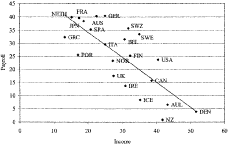
Fig. 1. Income versus Payroll Taxation in OECD Countries (percent of all revenues, 1998)Source: OECD
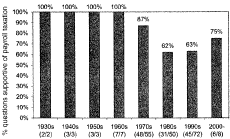
Fig. 2. Survey Responses in Support of Payroll Taxation, 1930–Present>
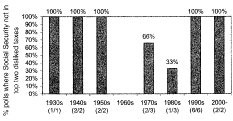
Fig. 3. Social Security versus Other Taxes, 1930–Present
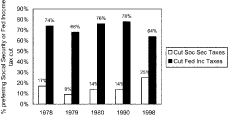
Fig. 4. Cut Social Security Taxes or Cut Federal Income Taxes, 1978–1998
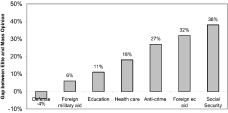
Fig. 5. Elite-Mass Gap on Domestic and Foreign Priorities, 1998
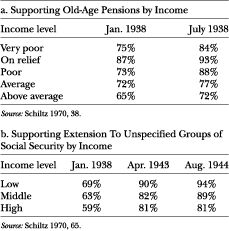
Table 1. Percent Supporting Old-Age Pensions by Income, 1936–1944
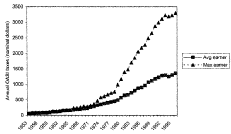
Fig. 6. Annual Social Security Tax Paid by Average and Maximum Earnings Workers (in nominal dollars)
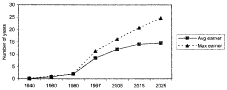
Fig. 7. Payback Times for Workers' OASI Taxes
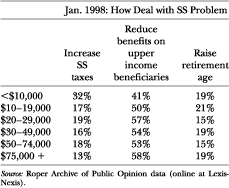
Table 2. Percent Supporting Social Security Taxation by Income, 1998
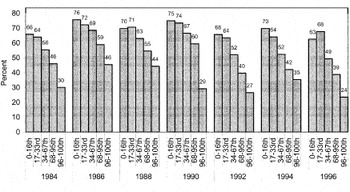
Fig. 8. Respondents Wishing to Increase Federal Spending on Social Security, by Income Percentile
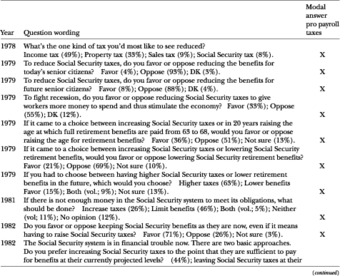
Table A1. Attitudes toward Payroll Taxes versus Social Security and Medicare Benefit Levels, 1978–2000
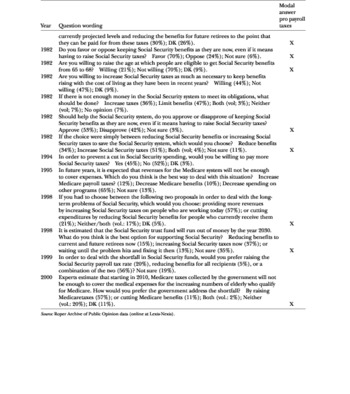
Table A1. Continued
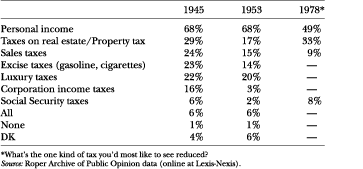
Table A2. What kind of taxes are most in need of being lowered?
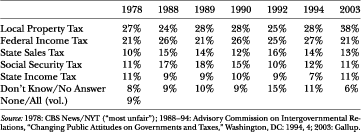
Table A3. What do you think is the worst tax—that is, the least fair?
 You have
Access
- 50
- Cited by