INTRODUCTION
Demand for food is predicted to increase substantially as the world's population continues to rise to an estimated nine billion by 2050 (Anon 2010; Godfray et al. Reference Godfray, Beddington, Crute, Haddad, Lawrence, Muir, Pretty, Robinson, Thomas and Toulmin2010). The increase in demand will be driven not only by changes in population but also by changes in food consumption by more affluent societies. It is thought that this demand can only be satisfied by a substantial increase in the production (50–100%) of all major food crops over present day levels of production. Oats rank sixth in world cereal production statistics following maize, wheat, rice, barley and sorghum but oat production has always been an important component of livestock feed, providing an important source of protein, fibre and minerals (Stephens et al. Reference Stephens, Armstrong, Bezar, Griffin, Hampton, Suttie and Reynolds2004; Anon 2013). Oats are described as a low input cereal (Marshall et al. Reference Marshall, Cowan, Edwards, Griffiths, Howarth, Langdon and White2013) which is adapted to a wide range of soil types but which are generally grown in cool moist climates as a result of their sensitivity to hot and dry conditions (Stephens et al. Reference Stephens, Armstrong, Bezar, Griffin, Hampton, Suttie and Reynolds2004). Oat grains contain high levels of B-glucan, oil and certain antioxidants (Marshall et al. Reference Marshall, Cowan, Edwards, Griffiths, Howarth, Langdon and White2013). Additionally, oats differ from other cereal grains as they are rich in dietary fibre and have higher levels of linoleic acid (Young Reference Young and Webster1986) and protein (Peterson Reference Peterson and Barr1992). Present global production of oats is 21·2 million tonnes, and oat supply and demand are projected to expand modestly over the medium term at a projected rate of 2% per annum (Anon 2013).
The substantial increases in global food production need to be achieved in an environment of growing scarcity of water and land. Increases in food production will depend on novel technological approaches which will deliver higher yields through both genetic improvement and better management of both crop and soil (Anon 2009). Inherent in good cereal crop management is a thorough understanding of the contribution of the different components of yield (ears/m2, grains/ear and grain size) to yield formation (Hay & Walker Reference Hay, Walker, Hay and Walker1989). Gales (Reference Gales1983) found that the highest correlation between grain yield and its components was obtained when the first two components of grain yield, ears/m2 and grains/ear, were combined into a single component, grains/m2. Hence, grain yield can be expressed as the product of two components, grains/m2 and grain weight.
According to Slafer (Reference Slafer2003), grain number in wheat is determined in the period from sowing until the beginning of grain filling while Fischer (Reference Fischer1985) observed that the number of grains per unit area was linearly related to the amount of solar radiation intercepted before anthesis. Total assimilate accumulation in growing spikes at the time of anthesis has been identified as a major component in grain number determination (Savin & Slafer Reference Savin and Slafer1991; Fischer Reference Fischer2007). Fischer & Stockman (Reference Fischer and Stockman1980) found that the most sensitive period for grain number determination were the 20 days prior to anthesis while Savin & Slafer (Reference Savin and Slafer1991) found a linear relationship between photothermal quotient (mean daily radiation/mean daily temperature) and grains/m2. Although there is some uncertainty about the beginning and end of the period of grain number determination, it is generally accepted that it incorporates the period from late stem elongation to early post-flowering in wheat and from early stem elongation to anthesis in barley (Fischer Reference Fischer1985; Bingham et al. Reference Bingham, Blake, Foulkes and Spink2007a ; Foulkes et al. Reference Foulkes, Reynolds, Sylvester-Bradley, Sadras and Calderini2009).
The factors which control potential grain size are poorly understood. Scott et al. (Reference Scott, Appleyard, Fellowes and Kirby1983) found that the initial size of the carpel is an important factor in determining growth rate and potential grain weight while Cochrane & Duffus (Reference Cochrane and Duffus1983) reported a positive correlation between endosperm cell number 30 days after anthesis and 1000 grain weight. However, these relationships have been established from a comparison of genotypes with different average grain weights, not from experimental manipulation. The response of carpel weight to experimental intervention or crop management is not well-known. Source/sink manipulation studies for wheat have reported that seed dry weight was only marginally responsive to changes in current photosynthesis during grain filling (Savin & Slafer Reference Savin and Slafer1991; Borras et al. Reference Borras, Slafer and Otegui2004). Recent work has suggested that assimilate supply around the time of flowering has a greater influence on grain weight than was previously thought (Fischer Reference Fischer2007). Thus conditions around flowering appear important for grain number as well as grain weight. Reserves of stored carbohydrate play an important role in grain filling over both diurnal and longer time-scales and act as a buffer during times of reduced photosynthate production such as night-time or during periods of environmental stress (Schnyder Reference Schnyder1993). Cooler temperatures during booting and radiation interception after anthesis but before rapid grain growth have been shown to be the most influential factors governing mean grain weight in barley crops grown in the UK (Bingham et al. Reference Bingham, Blake, Foulkes and Spink2007b ); however, neither of these factors accounted for the variation in the mean grain weight of barley found across 17 site/year combinations in that study (Bingham et al. Reference Bingham, Blake, Foulkes and Spink2007b ), a combination of both pre- and early post-anthesis factors was necessary to explain most of the variation in mean grain weight. Mean grain weight variation in barley is generally less than in wheat (Bingham et al. Reference Bingham, Walters, Foulkes and Paveley2009; Serrago et al. Reference Serrago, Alzueta, Savin and Slafer2013). For example, wheat grown in certain environments exhibits higher variation in mean grain weight compared with barley either due to variation in light availability (Beed et al. Reference Beed, Paveley and Sylvester-Bradley2007) or foliar disease incidence (Serrago et al. Reference Serrago, Carretero, Bancal and Miralles2011).
Strong positive linear relationships between grain yield and grain number, combined with other evidence, have led many authors to conclude that spring wheat yields are primarily limited by grain number (Savin & Slafer Reference Savin and Slafer1991; Borras et al. Reference Borras, Slafer and Otegui2004; Reynolds et al. Reference Reynolds, Pellegrineschi and Skovmand2005; Miralles & Slafer Reference Miralles and Slafer2007). It is important to remember, however, that the strong relationship between yield and grain number has been described as primarily an empirical relationship rather than a causal relationship by Sinclair & Jamieson (Reference Sinclair and Jamieson2006, Reference Sinclair and Jamieson2008) who suggest that final yield is primarily determined by the accumulation of carbon and particularly nitrogen. Reynolds et al. (Reference Reynolds, Pellegrineschi and Skovmand2005) demonstrated that the determination of grain number is the yield-limiting step in spring wheat yield formation by showing that greater number of grains per spike can stimulate photosynthetic rates and radiation use efficiency in the post-anthesis period. More recent evidence has suggested, however, that post-anthesis assimilate availability may play a role in yield determination of wheat grown in Europe, particularly when crops are grown under light-limited conditions or when disease pressure is high (Beed et al. Reference Beed, Paveley and Sylvester-Bradley2007; Bingham et al. Reference Bingham, Walters, Foulkes and Paveley2009; Serrago et al. Reference Serrago, Alzueta, Savin and Slafer2013).
The magnitude of the two components of grain yield (grains/m2 and grain size) is determined at different phenological stages in the growth cycle of a crop. For example, the period before the start of grain filling is critical for the determination of grain number in wheat and barley (Fischer Reference Fischer1985; Bingham et al. Reference Bingham, Blake, Foulkes and Spink2007a ; Foulkes et al. Reference Foulkes, Reynolds, Sylvester-Bradley, Sadras and Calderini2009), whereas grain size may or may not be primarily influenced by post-anthesis processes depending on the crop and its environment (Beed et al. Reference Beed, Paveley and Sylvester-Bradley2007; Bingham et al. Reference Bingham, Walters, Foulkes and Paveley2009). The identification of the relative importance of such phenological phases has enormous practical significance, as the timing of management inputs such as fertilizer and disease control can be adjusted to favour the crop phenophases when grain numbers are determined or when the production of assimilate for grain filling is important. For example, crops where yield is limited by the production of grain numbers may be more tolerant to post-anthesis foliar disease than those in which yield is limited by the production of assimilate in the post-anthesis period (Bingham et al. Reference Bingham, Blake, Foulkes and Spink2007a ), as grain number is largely determined before anthesis. During their growing cycle, crops experience ‘critical periods’ when their yield is limited either by photosynthate availability or by the ability of sink organs to absorb available photosynthate (Borras et al. Reference Borras, Slafer and Otegui2004). For many crops, the critical period has been identified as the phenological phase when final seed number is determined (Early et al. Reference Early, McIlrath, Seif and Hageman1967; Fischer Reference Fischer1975). The yield-limiting step in spring wheat production has been identified by Reynolds et al. (Reference Reynolds, Pellegrineschi and Skovmand2005) to be grain number. Bingham et al. (Reference Bingham, Blake, Foulkes and Spink2007a ) demonstrated that yields of barley in the UK were primarily limited by the number of grains/m2. Consequently, crop management inputs such as disease control are required early in the growing season in order to protect potential grain sites (Bingham et al. Reference Bingham, Walters, Foulkes and Paveley2009). Additionally, Serrago et al. (Reference Serrago, Alzueta, Savin and Slafer2013) reported that yields of barley and wheat crops grown in Spain were primarily limited by grain number and that grain weight was only reduced under conditions of extreme stress. In contrast, the yield of winter wheat grown in the UK has been found to be limited by restrictions in the availability of photosynthate in the post-anthesis period (Beed et al. Reference Beed, Paveley and Sylvester-Bradley2007). Crop management in winter wheat crops grown in the UK is primarily designed to prolong the duration of green area during the grain filling period, because yield is primarily reduced through reductions in green leaf area (Bingham et al. Reference Bingham, Walters, Foulkes and Paveley2009). Final yield determination has often been considered in terms of the supply of photosynthate (source limitation) or by the capacity of the grains to accumulate available carbohydrate (sink limitation) (Bingham et al. Reference Bingham, Blake, Foulkes and Spink2007a ). Grain yield can be limited by the size of the sink, by source availability or by both sink size and source availability at different times in the crop growth cycle (Miralles & Slafer Reference Miralles and Slafer2007). The determination of whether yield is limited by sink size or source availability has proved to be an important concept in the identification of crop phenological phases at which agronomic inputs should be concentrated, since crops which are sink-limited benefit from inputs in the pre-anthesis period whereas crops which are source-limited benefit from inputs in the post-anthesis period (Bingham et al. Reference Bingham, Walters, Foulkes and Paveley2009).
While considerable research has been carried out on the source-sink relationships and the critical periods for yield determination in important cereals such as wheat and barley (Gales Reference Gales1983; Schnyder Reference Schnyder1993; Borras et al. Reference Borras, Slafer and Otegui2004; Sinclair & Jamieson Reference Sinclair and Jamieson2006; Beed et al. Reference Beed, Paveley and Sylvester-Bradley2007; Bingham et al. Reference Bingham, Blake, Foulkes and Spink2007a , Reference Bingham, Blake, Foulkes and Spink b ; Serrago et al. Reference Serrago, Alzueta, Savin and Slafer2013), relatively little research has been carried out on the critical periods of yield determination in oat crops. Moreover, most such studies on other cereal crops have either been conducted from a theoretical point of view (Borras et al. Reference Borras, Slafer and Otegui2004; Acreche & Slafer Reference Acreche and Slafer2006) or to increase breeding efficiency (Reynolds et al. Reference Reynolds, Calderini, Condon and Vargas2007) and have not produced practical recommendations of how crop management can be improved. However, an understanding of critical periods can be used to optimize crop management (Andrade et al. Reference Andrade, Sadras, Vega and Echarte2005; Bingham et al. Reference Bingham, Blake, Foulkes and Spink2007b ). Such an understanding is necessary to develop improved crop management practices which will be required to improve yield if the production of oats is to increase in order to supply increasing global food needs. The objective of the present study was to conduct a comprehensive review of available data to identify the yield-limiting phenological phases at which management inputs should be concentrated in order to develop optimal management practises for the crop. The methodology was based on the identification of characteristics associated with those phenological phases which are yield-limiting.
METHODOLOGY
The methodology employed was to identify the critical phenophases during which yield is determined by identifying characteristics associated with those phenophases in the published literature on oats. On the basis of previous work on wheat and barley, two potentially critical phenophases were identified:
-
(i) Pre-Anthesis Phenophase during which the number of grains/m2 is established;
-
(ii) Post-Anthesis Phenophase during which grain filling occurs.
The characteristics which were chosen were those for which information was available in the literature rather than all of the characteristics that could possibly be associated with these phenophases.
The following characteristics were associated with the pre-anthesis phenophase
-
1. Positive relationship between yield and grains/m 2 (Reynolds et al. Reference Reynolds, Pellegrineschi and Skovmand2005; Miralles & Slafer Reference Miralles and Slafer2007). This characteristic was interpreted as evidence that yield is primarily determined before anthesis when grain numbers are determined.
-
2. Grain weight stability. This characteristic was interpreted as evidence that pre-anthesis rather than post-anthesis processes predominate in yield formation.
-
3. Insensitivity of grain number and grain weight to changes in post-anthesis assimilate supply. This characteristic was interpreted as evidence that these parameters are insensitive to post-anthesis processes, having been determined in the pre-anthesis period.
The following characteristics were associated with the post-anthesis phenophase
-
1. Absence of a relationship between yield and grains/m2 (sink limitation) or a curvilinear relationship (co-limitation of yield between the pre-anthesis and post-anthesis phenophases) (Miralles & Slafer Reference Miralles and Slafer2007). Such relationships would suggest the importance of the post-anthesis phenophase in yield determination.
-
2. Negative relationship between grain number and grain weight. This relationship has been interpreted as evidence of competition for photosynthate (Slafer et al. Reference Slafer, Calderini, Miralles, Reynolds, Rajaram and McNab1996) although the reduction in grain weight has also been attributed to the production of an increased proportion of grains of lower potential size (Miralles & Slafer Reference Miralles and Slafer1995). Although there are a number of possible explanations, this characteristic is included here as possible evidence of the importance of photosynthate availability in the post-anthesis period.
-
3. Changes in grain weight as a result of artificial changes in assimilate supply. Increases in the weight of remaining grains following grain removal or decreases in grain weight following leaf removal have both been interpreted as evidence of the importance of post-anthesis assimilate supply (Borras et al. Reference Borras, Slafer and Otegui2004), although the effect could depend on the timing of the treatment. Manipulation shortly after anthesis and during early grain development could conceivably influence endosperm development and hence grain storage capacity rather than grain filling per se.
-
4. Grain abortion with decreasing source supply after anthesis (Wardlaw Reference Wardlaw1990). The existence of a mechanism to abort grains as a result of post-anthesis stress reduces the significance of grain number determination in the pre-anthesis period.
-
5. Relationship between yield and leaf area duration. Yield declines with reductions in green leaf area duration in crops where post-anthesis management is critical such as winter wheat grown in the UK (Parker et al. Reference Parker, Welham, Paveley, Foulkes and Scott2004; Robert et al. Reference Robert, Bancal, Nicolas, Lannou and Ney2004; Bingham et al. Reference Bingham, Walters, Foulkes and Paveley2009).
A comprehensive review of worldwide publications on oats was conducted in order to collect as much data as possible on these characteristics. Data was collected from any publication on oats which presented numeric data from replicated field trials.
Characteristics based on components of grain yield
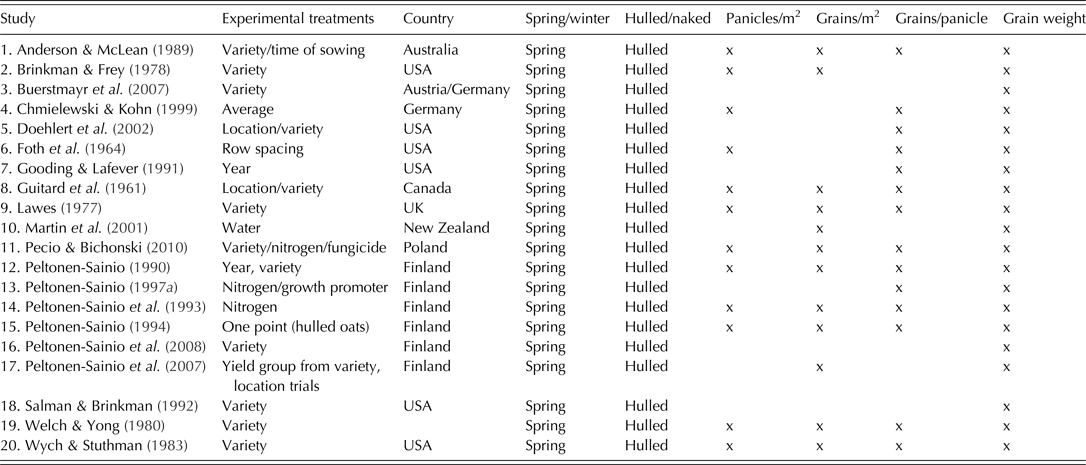
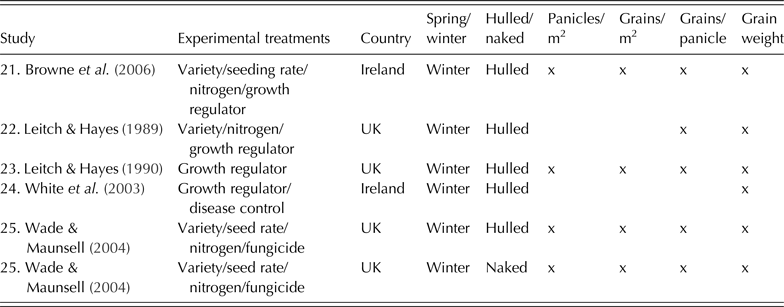
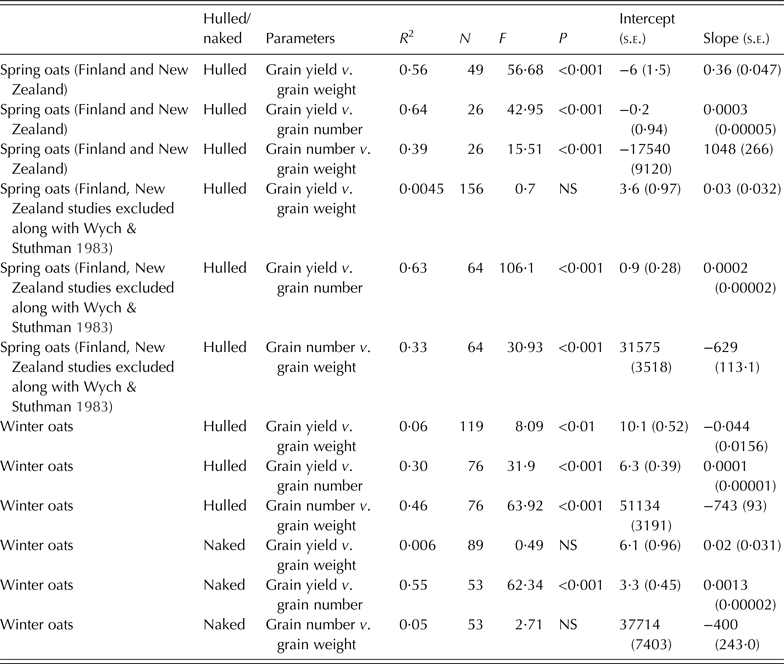
Grain yield and grain yield component data were collected from relevant published papers and reports. The publications used in the present study are listed in Tables 1 and 2 along with the countries in which the research was done, the experimental manipulations used and other details. Each data point represents the mean value of a treatment. It was not easy to discern clear trends from an initial analysis of all the data gathered, as a number of individual trends were evident which depended on the type of oats and where they were grown. It was subsequently decided to divide the available information into three independent databases for naked oats, spring husked oats and winter husked oats. For each database, scatterplots of the following relationships were constructed and the statistical significance of the relationship quantified by regression.
-
• Grain Yield v. Grains/m2
-
• Grain Yield v. Individual Grain Weight
-
• Grains/m2 v. Individual Grain Weight
Spring oat studies included in an analysis of the relationship between grain yield and its components

x indicates the presence of data on this parameter.
Winter oat studies included in an analysis of the relationship between grain yield and its components

x indicates the presence of data on this parameter.
Data sets, criteria for selection
Spring oats
The data set for spring oats was obtained from 19 studies conducted in Europe (UK, Germany, Finland, Austria), Australia, New Zealand and North America (USA, Canada) (Table 1).
Winter oats
Oats are sown in autumn as well as in spring within the British Isles. The data set for winter oats was obtained from five studies conducted in both the UK (including Northern Ireland) and the Republic of Ireland (Table 2).
Naked oats
Almost all of the yield component data for naked winter oats came from one study conducted in the UK (Wade & Maunsell Reference Wade and Maunsell2004) (Table 2). No data for spring naked oats were included in the present study, as only one data point for spring naked oats was found in the literature for a study conducted in Finland (Peltonen-Sainio Reference Peltonen-Sainio1994).
RESULTS
Relationships between grain yield and its components
Spring oats
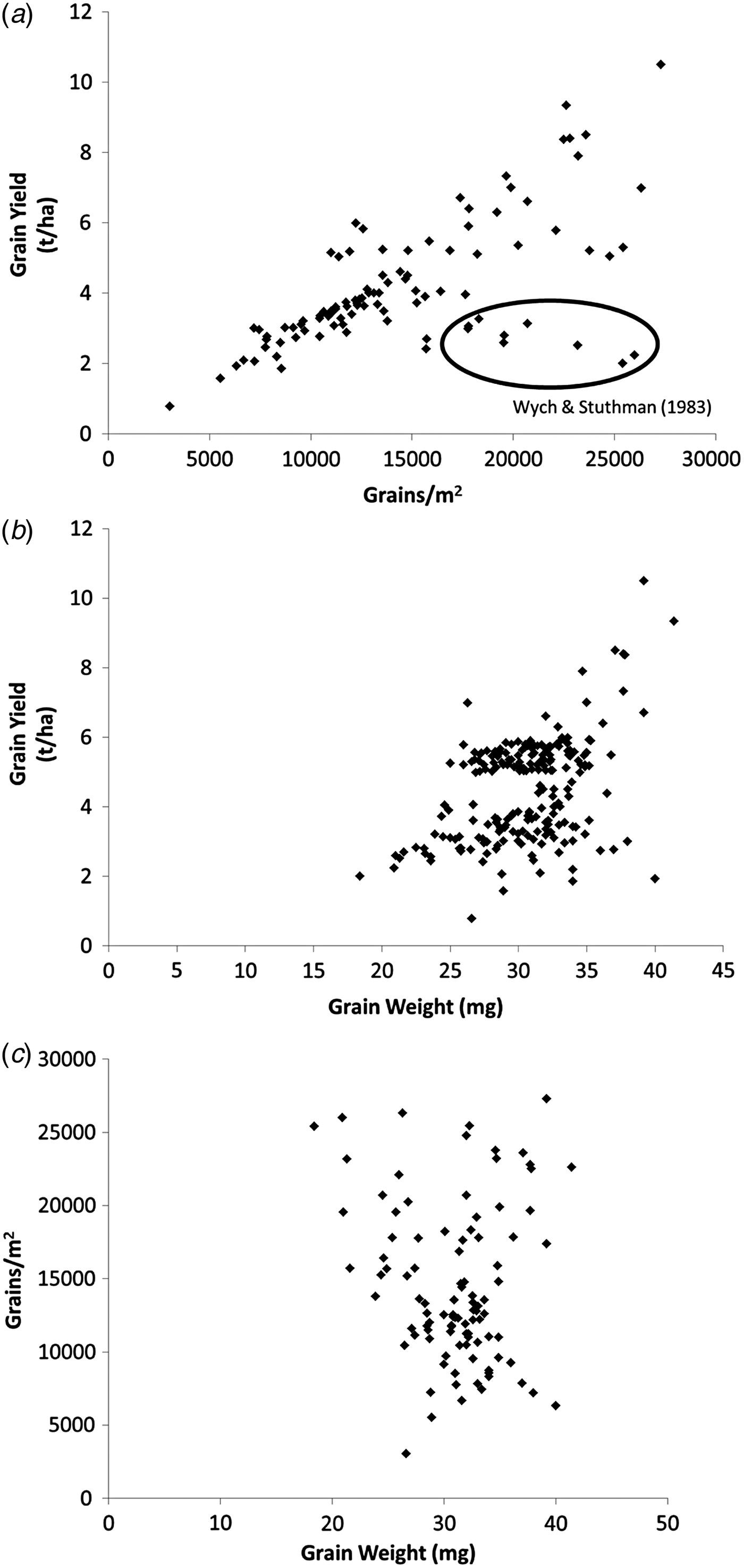
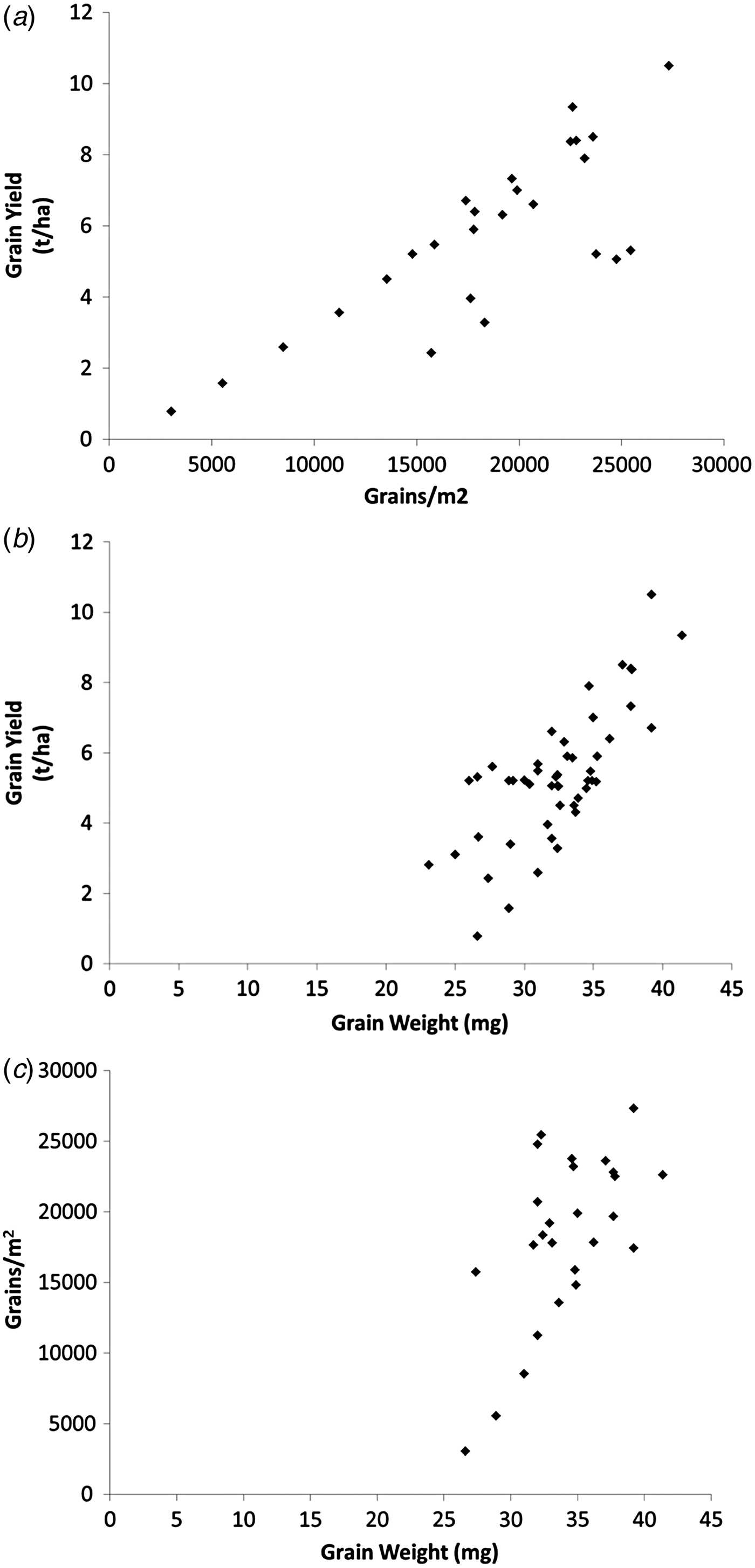
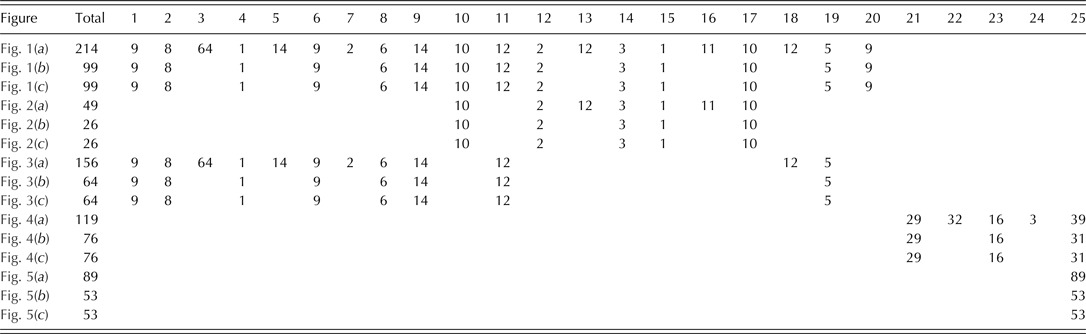
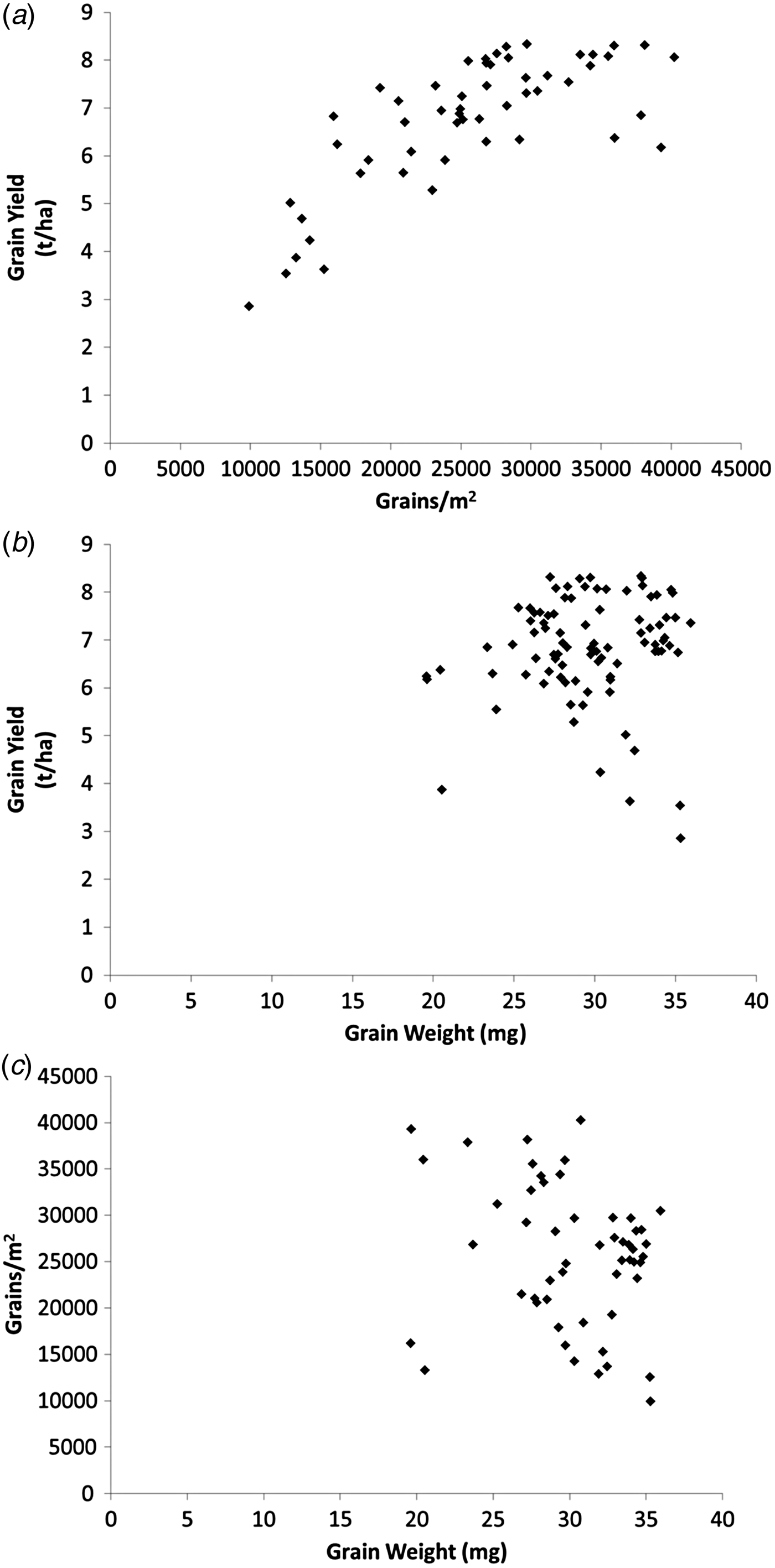
A positive relationship was found between grain yield and grain number (R 2 = 0·41). It was evident, however, that not all studies featured an increase in grain number with yield: a collection of data points showed a reduction in grain yield with increasing grain number (Fig. 1). A closer examination of the data set showed that this latter phenomenon came primarily from one particular study (Wych & Stuthman Reference Wych and Stuthman1983), which showed that improvements over time in oat grain yields in Minnesota were associated with a reduction in grain number. Additionally, the relationship between grain yield and grain weight proved complex. Grain weight increased with yield in some studies but this trend was not evident in most of the studies included in the data set. Closer examination of the data set revealed that studies which featured an increase in grain weight with yield included a drought response study conducted in New Zealand (Martin et al. Reference Martin, Jamieson, Gillespie, Maley, Rowe, Donaghy and Mendham2001) and a series of studies conducted in Finland (Peltonen-Sainio Reference Peltonen-Sainio1990, Reference Peltonen-Sainio1994, Reference Peltonen-Sainio1997b ; Peltonen-Sainio et al. Reference Peltonen-Sainio, Granqvist and Saynajarvi1993, Reference Peltonen-Sainio, Kangas, Salo and Jauhiainen2007, Reference Peltonen-Sainio, Muurinen, Rajala and Jauhiainen2008). These studies were consequently separated from the spring oats data set and treated as a separate data set (Fig. 2). Within this data set grain yield increased with both grain number (R 2 = 0·64, P < 0·001) and grain weight (R 2 = 0·56, P < 0·001) (Table 3). Additionally, grain weight also increased with grain number (R 2 = 0·39, P < 0·001). The number of data points from each study which were included in each of these relationships is shown in Table 4.
Relationship between grain yield and grain number per unit area (a), grain yield and grain weight (b) and grain number per unit area and grain weight (c) for all spring oats. The number of data points from each study used in this analysis can be found in Table 4.

Relationship between grain yield and grain number per unit area (a), grain yield and grain weight (b) and grain number per unit area and grain weight (c) for spring oats studies in Finland and New Zealand. The number of data points from each study used in this analysis can be found in Table 4.

Relationship between grain yield, grain number and grain weight


As the studies conducted in Minnesota (Wych & Stuthman Reference Wych and Stuthman1983), New Zealand (Martin et al. Reference Martin, Jamieson, Gillespie, Maley, Rowe, Donaghy and Mendham2001) and Finland appeared to show different behaviour from the other studies, they were subsequently excluded from the original spring oat data set. The relationship between grain yield and its components for the ‘new’ spring oat data set are shown in Fig. 3. There was a strong linear relationship between grain yield and grain number (R 2 = 0·63, P < 0·001) but the relationship between grain yield and grain weight was poor and not statistically significant (R 2 = 0·0045). Grain weight decreased with increasing grain number and this negative relationship was statistically significant (R 2 = 0·33, P < 0·001) (Table 3).
Relationship between grain yield and grain number per unit area (a), grain yield and grain weight (b) and grain number per unit area and grain weight (c) for spring oats studies with the exception of Wych & Stuthman (Reference Wych and Stuthman1983) and those conducted in Finland and New Zealand. The number of data points from each study used in this analysis can be found in Table 4.

Winter oats
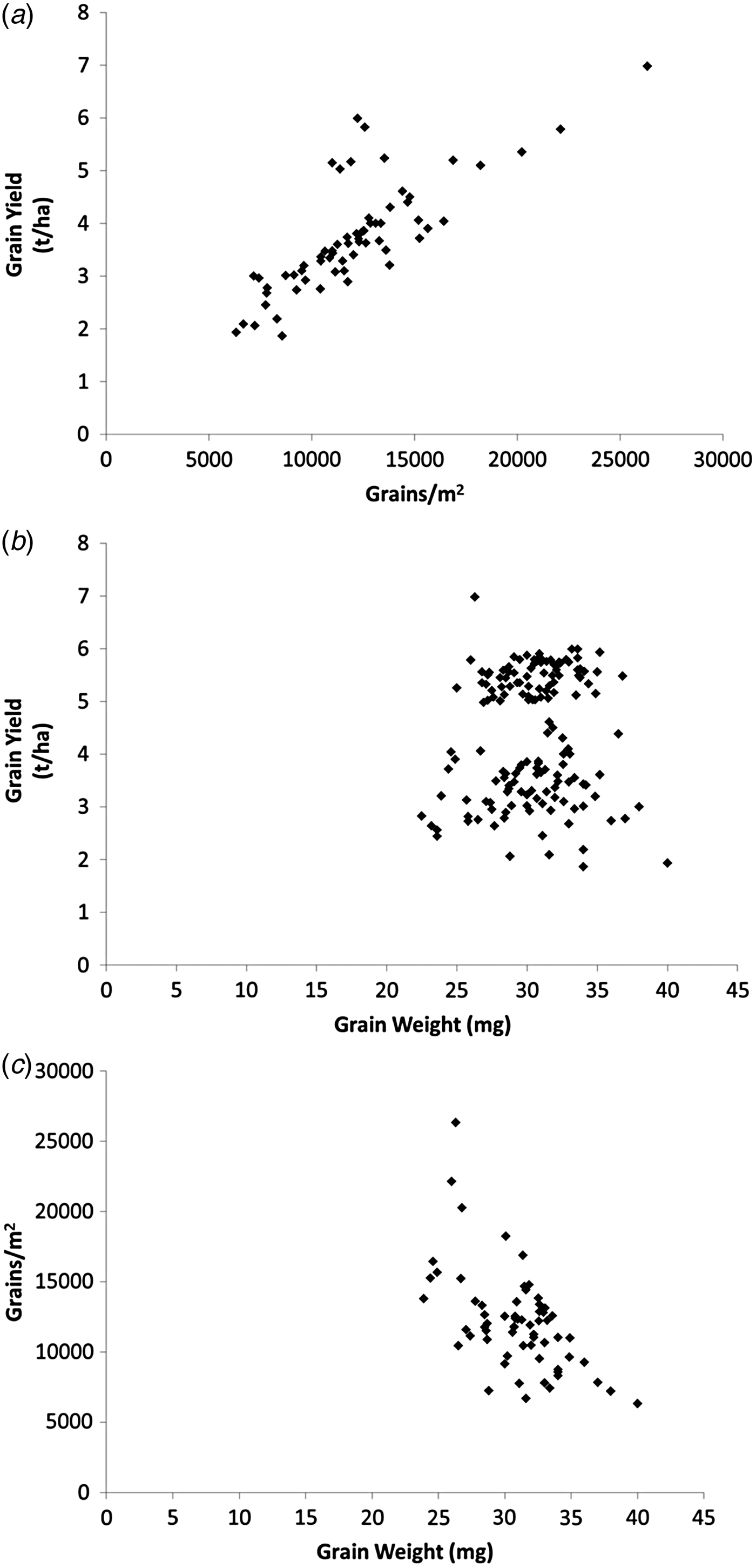
Grain yield increased with grain number/m2 (R 2 = 0·30) and this positive relationship was statistically significant (P < 0·001) (Table 3; Fig. 4). In contrast, the relationship between grain yield and individual grain weight was poor (R 2 = 0·06) and negative although the relationship was statistically significant (P < 0·01). There was a significant decrease in individual grain weight with increasing grain number (R 2 = 0·46, P < 0·001).
Relationship between grain yield and grain number per unit area (a), grain yield and grain weight (b) and grain number per unit area and grain weight (c) for winter oats. The number of data points from each study used in this analysis can be found in Table 4.

Naked oats
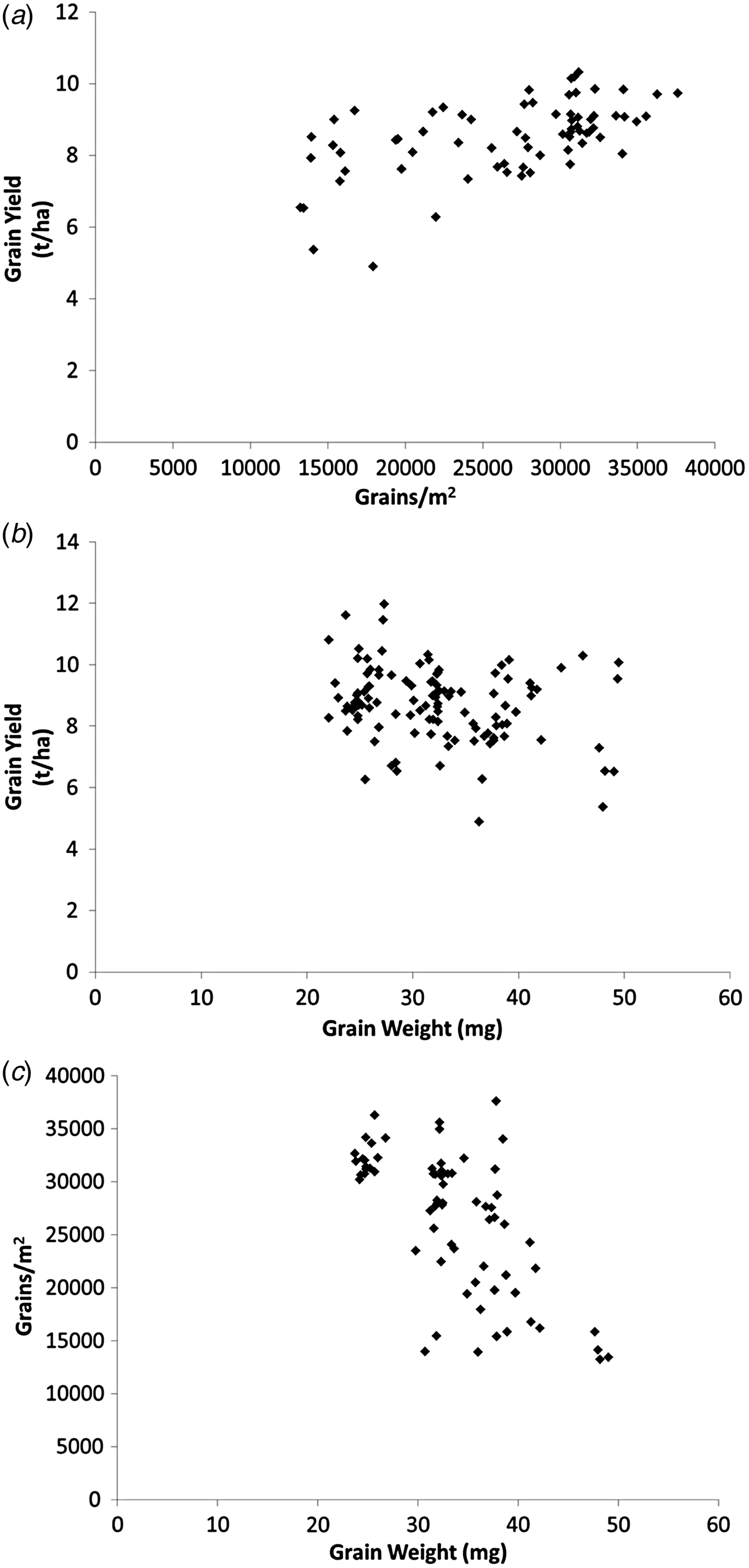
Grain yield increased with grain number (Table 3, Fig. 5). However, while a statistically significant linear relationship was found between yield and grain number (R 2 = 0·55, P < 0·001), the slope of this line was very shallow (Table 3) and the yield response to increasing grain number quickly reached a plateau after an initial increase with grain number (Fig. 5(a)). However, the variance accounted for was increased by the use of a quadratic model to 72 (yield = −1·65 + 5·7 × 10−4(Grain number) – 9·0 × 10−9(Grain number)2. The relationship between naked oat grain yield and individual grain weight was not statistically significant (Table 3). Similarly, the relationship between grain number and grain weight was not statistically significant.
Relationship between grain yield and grain number per unit area (a), grain yield and grain weight (b) and grain number per unit area and grain weight (c) for naked oats. The number of data points from each study used in this analysis can be found in Table 4.

Relationship between yield and leaf area duration
A number of studies conducted on spring oats have demonstrated that grain yield increases with leaf area duration. Helsel & Frey (Reference Helsel and Frey1978) investigated the relationship between leaf area duration and grain yield among several oat lines and found that early development of greater leaf area resulted in larger numbers of spikelets per panicle while the maintenance of a larger leaf system longer after flowering resulted in the development of larger grains. Grain yield was positively related to post-anthesis leaf area duration. A positive relationship between leaf area duration and grain yield was also reported by Brinkman & Frey (Reference Brinkman and Frey1978). Ehlers (Reference Ehlers1991) found that leaf area duration between anthesis and maturity was strongly related to oat grain yield, an effect that he attributed to the dependency of crop water relationships and crop growth rate on leaf area index (LAI) at lower values of LAI. Hisir et al. (Reference Hisir, Kara and Dokuyucu2012) found statistically significant relationships between grain yield in oat genotypes and chlorophyll content at anthesis, LAI at anthesis as well as leaf area duration between anthesis and maturity.
In contrast, Peltonen-Sainio (Reference Peltonen-Sainio1997b ) postulated that the relationship between leaf area duration and grain yield may not hold in high latitude regions with a shorter growing season where late maturity is associated with unfavourable conditions for grain filling and final harvest (Peltonen Reference Peltonen1990; Peltonen-Sainio et al. Reference Peltonen-Sainio, Forsman and Poutala1997). However, there is further evidence of the importance of post-anthesis photosynthesis for grain yield from Doehlert et al. (Reference Doehlert, McMullen and Riveland2002) who reported that crown rust infection reduced grain filling in susceptible varieties, while Soovali & Koppel (Reference Soovali and Koppel2011) reported that post-anthesis fungicide application could increase yield in spring oats.
Change in grain weight as a result of artificial changes in assimilate supply
A number of source/sink manipulation studies have shown that grain weight can increase or decrease in response to changes in assimilate supply or sink size. Early experiments, which investigated the effect of leaf and spikelet removal on seed weight, were conducted by Frey (Reference Frey1962) who found that seed weight was reduced after removal of the flag leaf and the penultimate leaf. Seed weight was increased by 20% when half of the spikelets were removed after the panicles had completely emerged. Criswell & Shibles (Reference Criswell and Shibles1972) also reported a significant increase in spikelet weight following spikelet removal while Moot et al. (Reference Moot, Crampton, Martin, Michalk and Pratley1998) reported a 15% increase in grain weight following floret and spikelet removal at anthesis. Spikelet removal treatments, however, also have the effect of reducing both photosynthetic capacity and shading which further complicates interpretation of the results although Criswell & Shibles (Reference Criswell and Shibles1972) reported that oat spikelet removal did not alter photosynthetic rate. Klinck & Sim (Reference Klinck and Sim1976), in contrast, used floret emasculation to study the effect of grain removal on subsequent seed weight. They reported increases in individual grain weight when grain numbers per panicle were reduced by 40% or more by emasculation and suggested that, the storage capacity of grains was not fully exploited under normal field conditions. They also reported that the removal of the flag leaf and the penultimate leaf at panicle emergence reduced grain yield by 40%, primarily by reducing grain number, whereas the removal of these two leaves at anthesis only reduced grain yield by 20% even though these events were separated by just 5 days Klinck & Sim (Reference Klinck and Sim1976). Their study also showed that the penultimate leaf was at least as important as the flag leaf in yield formation. Tibelius & Klinck (Reference Tibelius and Klinck1987) showed that, secondary seed weight increased when spikelets were removed/emasculated at anthesis. Peterson (Reference Peterson1983) also reported an increase in grain weight after spikelet removal which increased to a maximum after 0·40–0·80 of spikelets had been removed. Stand thinning also increased grain weight but by a far lesser extent than spikelet removal. Peterson suggested that grain filling in oats is essentially source-limited and influenced by intra-panicle competition for assimilate.
Grain abortion with decreasing assimilate supply
Browne et al. (Reference Browne, White and Burke2006) suggested that oat crops possess two unique features, tertiary grains and grain abortion, which enable the sink size to be altered when imbalances between the supply and demand for assimilate occur. Oat spikelets may contain one, two or three kernels (White Reference White and Welch1995). Tertiary grains may be aborted to result in spikelets with two grains and tertiary and secondary grains can be aborted to leave single-grained spikelets. Doehlert et al. (Reference Doehlert, McMullen and Riveland2002) reported that up to 0·30 of spikelets had only one grain in some oat varieties, the other two grains having aborted. Browne et al. (Reference Browne, White and Burke2006) reported that up to 0·10 of spikelets had aborted grains.
Takeda & Frey (Reference Takeda and Frey1980) suggested the use of tertiary seeds to be a mechanism for increasing sink size in oat crops. The ability of a crop to fill tertiary seeds is plastic and dependent on grain filling conditions. Tertiary seed filling may be initiated if assimilate supply is sufficient to fill kernels beyond a certain mass (Doehlert et al. Reference Doehlert, McMullen and Riveland2002). In contrast, grain abortion results from competition between grains for a limited supply of assimilate (Browne et al. Reference Browne, White and Burke2006). Doehlert et al. (Reference Doehlert, McMullen and Riveland2002) reported that up to 0·095 of spikelets can contain triple grains although Young & Shands (Reference Young and Shands1974) reported that tertiary grains accounted for just 0·064 of all kernels present in their study. Browne et al. (Reference Browne, White and Burke2006) also reported low frequencies of tertiary kernels which never exceeded 0·05.
The ability to either abort grains or to fill tertiary grains allows the oat crop to either compensate for under-supply of photosynthate in the case of aborted grains or oversupply in the case of tertiary grains (Browne et al. Reference Browne, White and Burke2006). These two mechanisms may allow the availability of assimilate to influence sink size, which facilitates the maximization of yield and the stabilization of quality.
DISCUSSION
Grain yield in conventional, hulled winter and spring oats was highly associated with grain number per unit area. This relationship has been reported for a wide range of crops (Foulkes et al. Reference Foulkes, Reynolds, Sylvester-Bradley, Sadras and Calderini2009) and for spring oats (Takeda et al. Reference Takeda, Frey and Bailey1987; Peltonen-Sainio et al. Reference Peltonen-Sainio, Kangas, Salo and Jauhiainen2007). In the case of wheat, some authors have interpreted this relationship as evidence that grain yield is primarily limited by grain number (Fischer Reference Fischer1985, Reference Fischer2008; Slafer & Savin Reference Slafer and Savin1994; Borras et al. Reference Borras, Slafer and Otegui2004; Miralles & Slafer Reference Miralles and Slafer2007), although more recent evidence suggests that post-anthesis assimilate availability may play a role in certain environments (Beed et al. Reference Beed, Paveley and Sylvester-Bradley2007; Serrago et al. Reference Serrago, Alzueta, Savin and Slafer2013). It has also been suggested that this relationship is primarily empirical rather than causal as both grain number and yield are essentially determined by a crop's ability to gather resources (Sinclair & Jamieson Reference Sinclair and Jamieson2006, Reference Sinclair and Jamieson2008). Irrespective of the reason for the relationship, it would appear that oats are similar to barley and wheat, in that the formation of high grain number per unit area is critical for achievement of high grain yield. The period before the start of grain filling is critical for the determination of grain number in wheat and barley (Fischer Reference Fischer1985; Bingham et al. Reference Bingham, Blake, Foulkes and Spink2007a ; Foulkes et al. Reference Foulkes, Reynolds, Sylvester-Bradley, Sadras and Calderini2009). Given the similarities between oats and other cereals, it should follow that the pre-anthesis period is also critical for grain number determination in oats.
In contrast to conventional hulled oats, the relationship between grain yield and its components is quite different for naked oats. Yield increased with grain number up to approximately 25 000 grains/m2 before reaching a plateau. Such a relationship has been described previously by Miralles & Slafer (Reference Miralles and Slafer2007), who attributed the linear part of the relationship on the left-hand side of the graph to sink limitation, the curvilinear part of the relationship to co-limitation and the plateau on the right-hand side of the graph to source limitation. It is important to note that the point of inflection may change with genotype or with environment. For any environment, however, the optimal management strategy for naked oats would appear to be one in which inputs are first applied in order to increase grain number up to the point of inflection. Once grain number has been increased to the point of inflection, the crop should be managed in such a way as to maximize grain filling through an enhancement in assimilatory capacity which could either be through greater storage reserve deposition and remobilization or through current photosynthesis.
Finland is at the extreme Northern limit for cereal production. Its climate features harsh winters, short growing seasons and, typically, early summer drought (Peltonen-Sainio et al. Reference Peltonen-Sainio, Rajala, Kankanen, Hakala, Sadras and Calderini2009). An analysis conducted over a recent 30-year period found that only 0·30–0·60 of the rainfall needed for undisturbed growth fell in Finland during the early summer period; the resultant water deficit reduced potential yields by 7–17% during the three decades (Peltonen-Sainio et al. Reference Peltonen-Sainio, Jauhiainen and Hakala2011). Grain weight increased with grain number in the data set from Finland, a trend often reported in drought-response experiments (Fischer & Maurer Reference Fischer and Maurer1978; Martin et al. Reference Martin, Jamieson, Gillespie, Maley, Rowe, Donaghy and Mendham2001). Early summer drought during the important pre-anthesis period results in a significant reduction in grain number and is the most critical stress in terms of reducing the grain yield potential of cereals (Rajala et al. Reference Rajala, Hakala, Makela, Muurinen and Peltonen-Sainio2009). Drought has also been found to reduce the number of cells and starch granules in the endosperm and consequently the storage capacity of the grain (Nicolas et al. Reference Nicolas, Gleadow and Dalling1984). Thus, the Finish studies and the drought response study from New Zealand exhibited similar behaviour and formed a natural grouping, as drought was a common factor in these studies. The simultaneous reductions in grain number and grain weight in these studies is, most likely, the consequence of a drought-induced lowering of total sink capacity. Precipitation during grain filling does not fully compensate for pre-anthesis drought since grain number and potential grain weight have already been set (Peltonen-Sainio et al. Reference Peltonen-Sainio, Rajala, Kankanen, Hakala, Sadras and Calderini2009).
The decline in grain weight with increasing grain number per unit area found in the present study for both winter and spring hulled oats (excepting studies where water availability was limited) has been found previously in many studies on wheat (Miralles & Slafer Reference Miralles and Slafer1995, Reference Miralles and Slafer2007; Slafer et al. Reference Slafer, Calderini, Miralles, Reynolds, Rajaram and McNab1996; Acreche & Slafer Reference Acreche and Slafer2006). This relationship has also been reported previously for oats (Takeda et al. Reference Takeda, Frey and Bailey1987). Two explanations have been put forward to explain this relationship (Slafer et al. Reference Slafer, Calderini, Miralles, Reynolds, Rajaram and McNab1996; Miralles & Slafer Reference Miralles and Slafer2007). The first is that grain growth during the post-anthesis period is limited by source or co-limited by both sink (potential grain size) and source, which results in less assimilate per grain at high grain numbers. The second explanation is that the reduction in grain weight can be attributed to an increased proportion of grains of lower potential size placed at more distal positions as grain number increases (Miralles & Slafer Reference Miralles and Slafer1995; Acreche & Slafer Reference Acreche and Slafer2006). The latter explanation could possibly explain the negative relationship between grain number and grain weight which was found for oats if the increase in grain number was associated with the filling of secondary and tertiary grains in each spikelet. However, increases in grain number have been reported to be associated with increases in the numbers of spikelets per panicle, with inconsistent effects on the number of primary grains per panicle (Browne et al. Reference Browne, White and Burke2003, Reference Browne, White and Burke2006). This suggests that, increases in grain number per unit area are not necessarily the consequence of increases in the proportions of the smaller secondary and tertiary grains. Grains in spikelets at the top of larger panicles would be more distant from sources of assimilate during grain filling and could be expected to be smaller on account of their more position. However, Doehlert et al. (Reference Doehlert, McMullen and Riveland2002) reported that the largest grains are typically found at the top of the panicle and attributed the effect to the fact that the assimilate stream is divided among fewer grains in the upper whorls of the panicle. Young & Shands (Reference Young and Shands1974) attributed larger grain size in upper whorls to the fact that the upper grains enter anthesis first and thus have a longer grain filling period compared with grains at the bottom of the panicle. Neither of these two explanations for the decrease in grain weight with increasing grain number can be discounted at present, although it does seem possible from the foregoing discussion that source limitation or co-limitation may offer an explanation. Irrespective of the reason for the decrease in grain weight, it represents an undesirable feature of high yielding crops if grown for ‘quality’ markets such as breakfast cereals and horse feed. Oat crops grown for such markets may be rejected because of poor quality (small grains and low specific weight) if such crops are managed to maximize yield purely by aiming for high grain numbers.
The contribution of non-structural carbohydrates to yield determination in oats has been demonstrated by Peterson et al. (Reference Peterson, Schrader, Cataldo, Youngs and Smith1975) and by Griffiths (Reference Griffiths2010). In wheat and barley, the process of grain filling is buffered from post-anthesis stress by the use of pre-anthesis assimilate stored primarily in the stem (Austin et al. Reference Austin, Morgan, Ford and Blackwell1980; Schnyder Reference Schnyder1993; Blum Reference Blum1998). This mechanism minimizes the impact of any source limitation after anthesis. However, decreases in grain weight after the removal of photosynthesizing organs have demonstrated the importance of post-anthesis assimilate to grain filling (Frey Reference Frey1962; Klinck & Sim Reference Klinck and Sim1976), while increases in grain weight following spikelet removal have been interpreted as evidence that grain filling in oats is limited by assimilate (source) availability (Frey Reference Frey1962; Criswell & Shibles Reference Criswell and Shibles1972; Klinck & Sim Reference Klinck and Sim1976; Peterson Reference Peterson1983). The importance of assimilate production after anthesis is also demonstrated by those studies in which grain yield increases with leaf area duration (Brinkman & Frey Reference Brinkman and Frey1978; Helsel & Frey Reference Helsel and Frey1978; Ehlers Reference Ehlers1991; Hisir et al. Reference Hisir, Kara and Dokuyucu2012). Helsel & Frey (Reference Helsel and Frey1978) found that a ‘stay-green’ character in oats results in 12% larger seeds. Furthermore, the ability of an oat crop to either abort grains or to fill additional grains depending on assimilate availability suggests that assimilate availability (source) can influence the sink size in oats, at least to some extent. The presence of many of these features has also been reported in wheat and barley. On their own, the presence of any of these features does not necessarily indicate that post-anthesis assimilate production may have an important role in yield determination in conventional, hulled oat crops. Taken together, however, the presence of all of these features along with possible evidence of inadequate assimilate supply from the relationship between grain number and grain weight does point to the possibility that activities during the post-anthesis phenophase may play a role in yield determination in oats. In addition, Griffiths (Reference Griffiths2010) found that grain yield in winter oats was positively correlated with both grain number/m2 and thousand grain weight (TGW) and that TGW, in 1 year, had a stronger influence on yield than grain number. Crop management practices, as a consequence, need to consider that grain yield in oats may be influenced by assimilate availability in the post-anthesis phenophase and should aim to delay senescence for as long as possible.
In addition to the contribution of post-anthesis assimilate, conventional hulled oats also show strong evidence that yield is limited by grain number. Like wheat and barley, grain yield can be increased by increasing the number of grains per unit area. The period before the start of grain filling is considered to be the critical period for the determination of grain number although there is some uncertainty about the beginning and end of this period for the other cereals (Foulkes et al. Reference Foulkes, Reynolds, Sylvester-Bradley, Sadras and Calderini2009). This period is also likely to be the critical period for grain number determination in oats, so it is important that the crop is kept well-resourced and disease free during the pre-anthesis phenophase. However, over-reliance on grain formation for yield determination would appear to be a sub-optimal crop management strategy for oats growers. Such a policy ignores the possibility that assimilate production in the post-anthesis phenophase contributes to grain yield, of which some evidence has been gathered in the present paper. Moreover, such a policy would lead to the production of smaller grains which may well exclude a grower's crop from higher-value premium markets. The present authors’ recommendation is that, crop management strategies for oats should aim both to increase grain number in the pre-anthesis period but also delay senescence and avoid disease in the post-anthesis period in order to prolong grain filling. The incorporation of such a post-anthesis strategy should both reduce the possibility of source limitation and compensate for the production of smaller grains at higher grain number. These conclusions have been based on a rather limited data set which reflects the amount of research conducted on oats in comparison with other cereals. Thus, there is a need for further research to determine whether grain yield in oats is limited by source availability during the grain filling period. Such research needs to be conducted on oats if the potential of this well-established crop is to be realized.
A comprehensive review was carried out of available data from experiments conducted in different environments and this indicated the likely yield limiting phenological stages for oat crops. This methodology could also be used on other crops. However, the limitations of this approach also need to be considered. The relative importance of different phenophases and yield components are likely to be the results of genotype × environment interactions and their relative importance is therefore likely to change with environment and will need to be verified by field experiments in the region for which the work is being conducted. Field trials in specific locations will always be necessary to optimize crop management to maximize growth during the yield-limiting phases. However, conducting a comprehensive review of available data in order to understand possible constraints to yield can identify a theoretical framework on which to base this work.