Greater China comprises four more or less distinct polities with a population of about 1.33 billion: mainland China (1.3 billion), Taiwan (23 million), Hong Kong (6.8 million), and Macao (0.42 million). Around 92 percent of the total population belongs to the Han ethnic group with a (Han) Chinese variety as their mother tongue; the indigenous non-Han ethnic groups are generally referred to as shăoshů mínzú (

, “minority nationalities”) in the mainland, and yuánzhùmín (

, “aborigines”; the earlier term shāndìrén,

, “mountain tribes,” is seldom used after the 1990s) in Taiwan. Regarding language use, by default “Chinese” refers to the language varieties of the Han people. This chapter focuses on the use of Chinese as a lingua franca among the Han population.
The language situation of Greater China is complex and may be broadly characterized as diglossia with increasing (dialect) bilingualism (Li & Lee, 2004; cf. Luke, 2005 with regard to Hong Kong SAR). In addition to the national language, which is known as pŭtōnghuą (

, literally, “common speech”) in the mainland and guóyŭ (

, “Mandarin,” literally “national language”) in Taiwan, it has been estimated that over 2,000 more or less distinct dialects and subdialects are spoken in different regions at the county and municipal levels. Being special administrative regions (SAR) of the People's Republic of China, both Hong Kong and Macao recognize the important, if symbolic, role and status of pŭtōnghuą, but several years after the handover, there are as yet few high (H) functions assigned to it (Luke, 2005). As part of the unprecedented “one country, two systems” sociopolitical arrangement, biāozhŭn zhōngwén (

, “Standard Chinese”) is generally understood as referring, in speech, to the dominant vernacular and regional lingua franca Cantonese, whereas written norms will be based on Modern Written Chinese, as is the case of the grammar and lexis of pŭtōnghuą or Mandarin. In addition, unlike in the mainland, written Chinese in the public media of the two SARs continues to be printed in traditional instead of simplified characters.
In both mainland China and Taiwan, since the 1950s considerable efforts have been made by the central government to promote pŭtōnghuą/guóyŭ/Mandarin as the national lingua franca. The measures were generally more stringent in Taiwan than on the mainland. This helps explain why, as a result of the National Language Movement, a greater percentage of people in Taiwan than on the mainland, especially the younger generations, are able to speak Mandarin. The two former colonies, Hong Kong and Macao, were not affected by the National Language Movement in China. At the same time, the colonial governments adopted largely a laissez-faire attitude toward the preferred pedagogic model of Chinese for speaking and writing, which was largely left to market forces at work in the local speech community. This is one significant reason why, during the colonial period, Cantonese was able to thrive and expand its domains of language use, including in the informal written genres of print media (Snow, 2004).
Mainland China
Language (yŭyán) and Dialect (fāngyįn)—Traditional Han Chinese Perspective
China is a vast, multilingual nation that is well-known for its linguistic diversity. There is general consensus among Chinese scholars that since antiquity, different regional dialects have always coexisted with a national lingua franca mínzú gòngtóngyŭ (

, literally, “nationality-common-language”). This term usually referred to the language variety of the most dominant group who resided in the capital of the Middle Kingdom, and whose power was typically derived from their political clout and socioeconomic influence. Because access to officialdom was selected through the centuries-old imperial examination system known as kējŭ (

) with knowledge of the classic literary works as the target of learning, the politically powerful group also tended to be the highly literate and educated elite. Knowledge of the national lingua franca was a sine qua non for dialect speakers who aspired to join the ranks and files. Anecdotal evidence shows that the learning of the national lingua franca by dialect speakers was far from satisfactory. For example, it has been observed that in 1728, the Qing emperor Yongzheng issued a decree requiring that all government officials should speak guānhuą (

, “the vernacular of Mandarins”). The decree was issued in response to serious verbal communication problems among government officials from different Mandarin- and dialect-speaking areas. Such problems were particularly acute among dialect speakers in the southern part of the empire, which corresponded with today's (Cantonese-dominant) Guangdong and (Min-dominant) Fujian provinces.
The national lingua franca in China goes by different names depending on the historical period. According to Lùnyŭ (

, the Confucian Analects), the classic literary works such as Shū jīng (

, the Book of History) and Shī jīng (

, the Book of Odes) were written in yăyán (

, “elegant speech”), a common language which was widely used for educational, cultural and diplomatic purposes during the Western Zhou period (ca. 1100–771 BC). There is general agreement among scholars that the term referred to the language spoken in today's Henan province—the Zhongzhou dialect (

, Chen, 1999, pp. 7–8). The first documented reference devoted to the study of the national lingua franca was Yang Xiong's work Fāngyįn (<

>
3The complete title of the volume is <

> “Yóuxuān shìzhĕ juédài y

shí biéguó fāngyán” (generally abbreviated as <

>, Fāngyįn, “Dialect”).

, “general speech”) was first mentioned (L. Wang 1959/2000 571). From the Wei-Jin period (AD 220–420) onwards, several massive migrations triggered by nomadic invasions from the north helped spread the Zhongzhou dialect to the south of the Yangtze River. In the next millennium down to the Southern Song dynasty (AD 1127–1279), the vernacular that constituted the basis of the national lingua franca vacillated between the political centers of the empire, but by and large it was based on the dialect of Jinling (

, today's Nanjing,

; Chen, 1999, p. 9), which was distinct from Northern Mandarin. After Dadu (

, today's Beijing,

) was designated as the capital by the Yuan emperor, the national lingua franca gradually shifted to Northern Mandarin. It was called tiānxią tōngyŭ (

, “universal general speech”) during the Yuan dynasty (1271–1368)
4There is some disagreement regarding the year at which the Yuan dynasty began; the periodization adopted here follows the website

(Yuán cháo, “Yuan dynasty”): http://cn.netor.com/know/hist/hist20.htm, accessed on December 31, 2005.

, “the vernacular of Mandarins”) in the Ming (1368–1644) and Qing (1616–1911) dynasties
5The Mandarin spoken in and around Peking toward the end of Qing dynasty is generally referred to as Lánqing guānhuà (

, literally “blue-green Mandarin”), on account of its being a mixture of several more or less discrete varieties of Mandarin spoken by people from different dialect backgrounds.

, “national language”) during the Republican period (1911–1949), and pŭtōnghuą (

, “common speech”) in the People's Republic. Today, as a national lingua franca, pŭtōnghuą has the highest number of speakers in the world; it is also one of the six working languages of the United Nations.
From time immemorial, there is a widely shared perception among Han Chinese that they make up a unified ethnic group despite linguistic diversity in their vernaculars. This point has been emphasized in school textbooks and taught to Chinese pupils of all generations. An important basis of this ideology is the use of a logographic script for writing Chinese, which is generally known as Chinese characters. For more than two millennia, traditional Han Chinese culture has been well preserved and documented in a unified writing system, a centripetal force or ideology, which gives all Han Chinese a strong sense of unity and ethnolinguistic identity that transcends communication and intelligibility problems between dialect speakers. One consequence of this ideology is that few Han Chinese speakers would doubt that their vernacular is a dialect with roots in “Middle Chinese” that can be traced back to the Sui-Tang period (AD 581–907), and ultimately to the same proto-Chinese language gŭ Hànyŭ (

, “Archaic Chinese,” ca. 1700 BC–AD 25) (R. Li, 2001, p. 3). Such a common ancestral relationship between otherwise discrete dialects is sometimes characterized as tóng zōng tóng zŭ (

, “same forefather same ancestor”), or tóng yuán yì liú (

, “same source different streams”) (Zhan, 1997, p. 35). As R. Li puts it, traditionally the distinction between dialects and the Chinese language is not so much grounded in the extent of linguistic similarities and differences between them; rather, it is based on historical, sociopolitical, and ethnocultural factors. This widely shared perception is what motivates the Chinese dialectologists' use of such metaphors as “living fossils” in reference to specific linguistic features that are still found in contemporary dialects and that are widely held to be an integral part of Archaic Chinese (e.g., syllable-final plosives, a marker of the entering tone, in Cantonese and Min) (see, e.g., Di, 2003). One often cited type of evidence is that even today, lexico-grammatical correspondences or cognates can usually be identified across different dialects, despite divergence in their contemporary pronunciation.
Thanks to the use of a logographic, nonalphabetic script, there is much truth in the belief that, where Chinese speakers from different dialect backgrounds fail to communicate in speech, they may resort to writing down what they want to say, with a good chance of making themselves understood that way. This is so because the same characters are given different pronunciations depending on the specific dialect background of the speaker in question. It is in this way that written Chinese is said to transcend dialectal differences in accent, lexis, and even minor differences in grammar. Having and sharing a unified written language is thus a very important cornerstone of the general perception of common ancestry and ethnicity among Han Chinese. As Kwan-Terry and Luke (1997) have observed, such a strong sense of ethnolinguistic cohesion would have been impossible if somewhere in the linguistic history of China, written Chinese had gone down the road of alphabetization. The fact that some 30 percent of Han Chinese residing roughly south of the Yangtze River do not have a Mandarin variety as their mother tongue would have made it very difficult for them to learn to speak Mandarin. This in turn would have made it impossible for them to see themselves as having the same ethnolinguistic heritage as their brethren in the Mandarin-speaking areas.
This unique Chinese “linguistic cosmology” is reflected in the complexity of its linguistic terminologies in Chinese and English. As noted by Norman (1988), newcomers to the study of the Chinese language are often baffled by a large number of terms whose denotations overlap and are rather fuzzy. For our purpose, it is useful to delimit the designations of the terms Hànyŭ (

), Modern Chinese, Modern Standard Chinese, Modern Written Chinese, pŭtōnghuą (

), Mandarin, guóyŭ (

), and of course yŭyán (

, “language”) and fāngyįn (

, “dialect”).
The term xiàndài Hànyŭ (

, “Modern Chinese,” literally “modern language of the Han people”) has all Han Chinese varieties, spoken and written, within its denotatum, be they standard or nonstandard. When reference is made specifically to the standard variety, spoken or written, the term Modern Standard Chinese is used. The spoken and written standards are further specified as pŭtōnghuą and Modern Written Chinese, respectively. There is general consensus among Chinese linguists that, broadly speaking, Chinese varieties fall into seven main dialect groups, each with its own subdialects:
- Mandarin (, běifāng fāngyįn; spoken in northern, northwestern and southwestern parts of China),

- Wu (, Wúyŭ, spoken mainly in Shanghai and the provinces Jiangsu and Zhejiang),
- Min (, Mínyŭ, spoken mainly in Fujian province),
- Yue (, Yuèyŭ, spoken mainly in the provinces Guangdong and Guangxi),
- Xiang (, Xiāngyŭ, spoken in Hunan province),
- Gan (, Gànyŭ, spoken in Jiangxi province), and
- Kejia [Hakka] (, Kèjiāhuà, mainly found in small enclaves in different provinces in southern China, notably Guangdong, Guangxi, Fujian and Sichuan)


These dialect groups are distributed very unevenly, with speakers of the Mandarin subgroups making up the majority of the total Han population (about 70 percent). Four main subgroups of Mandarin have been identified: Northern Mandarin, Northwestern Mandarin, Southwestern Mandarin, and Jiang-Huai (Eastern) Mandarin. The dialect of Beijing, with its own unique linguistic features, may be seen as a subdialect of Northern Mandarin. The six other main dialect groups are collectively referred to as “Southern dialects” because their speakers, about 30 percent of the Han population, inhabit the stretch of land roughly south of the Yangtze River (except the southwest). Cantonese, the best-known of Yue dialects spoken in the provinces Guangdong and Guangxi, notably Guangzhou (the provincial capital of Guangdong), Shenzhen (a special economic zone), and the two special administrative regions Hong Kong and Macao, is the strongest Chinese dialect in terms of prestige and the number of mainland Chinese attracted to learn it. Where a high-prestige dialect prevails, dialect writing in its speakers' actual language use is very common and arguably unavoidable (Chen, 1999, Chapter 7; cf. Snow, 2004).
Pŭtōnghuą is the official designation of the spoken standard in the People's Republic. According to Chen (1999, p. 25), the term first came into use toward the end of the Qing dynasty in the late nineteenth century meaning “general language,” but colored with negative connotations of being an adulterated form of the standard. During the Republican era in the 1930s, it was invoked to refer to a language in contrast to the official standard guóyŭ, “National language.” It was under the government of New China that the term pŭtōnghuą was redesignated with a new, literal meaning “common speech” as one of the resolutions of a series of conferences and symposia on language reforms in the mid-1950s (L. Wang, 1959/2000). The term guóyŭ was dispreferred apparently out of concern for its Han-chauvinistic association in view of the conspicuous presence of non-Han minority nationalities (Chen, 1999, p. 25) who, today, account for about 8 percent of the total population in China. It should be noted that pŭtōnghuą does not correspond entirely with any geographically based Chinese dialect, for it was developed from select linguistic features of various Mandarin subdialects, and as such is probably best regarded as a product of careful national language planning (for linguistic features of pŭtōnghuą, see below).
Likewise, the terms yŭyán (language) and fāngyįn (dialect) are not related in the same way as are their English counterparts. In the western linguistic tradition, intelligibility between discrete varieties is one important criterion for determining any possible dialectal relationship between them. This is not the case in Chinese; quite the contrary, as many western scholars have observed, to the extent that cross-dialectal communication in China is often seriously hampered by intelligibility problems—sometimes within the same dialect group, as in the case of speakers of subdialects of Min in Fujian province—Chinese varieties are really more like discrete languages than dialects of the same language (Bruche-Schultz, 1997, p. 303). Zhou (2001) makes this point using the Xiang dialect as an example:
Xiang, a variety of Chinese spoken in Hunan Province in southern China, is so different from Mandarin that it has grammaticalized several aspect markers that do not even exist as lexical items in Mandarin… Communication among the various Chinese variety communities is a problem when people speak their own varieties of Chinese. Even within Xiang variety communities, for instance, there is a huge difference between Old Xiang and New Xiang so that people in Xiangtan City (New Xiang speakers) have difficulty in understanding people in neighboring Xiangxiang City (Old Xiang speakers), which is fewer than 50 kilometers away. (Zhou, 2001, p. 232)
Erbaugh (2001, p. 121) also notes that “[s]poken Chinese dialects, from Cantonese through Hakka [Kejia] to Mandarin, vary as much as do the Germanic languages English, German and Swedish.” One instructive example of intelligibility problems is that back in the late 1970s in Guangdong province, formal meetings at the provincial or county level were frequently inconvenienced by the representatives' inability to communicate in pŭtōnghuą, making it necessary for translation between the three main dialects: Cantonese (

, Guăngdōnghuà), Chaozhou (

, Cháozhōuhuà, a subdialect of Southern Min), and Kejia [Hakka] (L. Wang, 1980/2000, p. 596). All this helps explain why Western linguists who are unaccustomed to the Chinese “linguistic cosmology” tend to find the term “dialect” (usual translation of fāngyįn) objectionable when analyzing the language situation in China. For example, given what we know about tremendous linguistic diversity in China, they may find it puzzling how the term Zhōngguóhuą (

, literally “Chinese speech”) can be used in reference to the vernaculars of all Chinese dialects, as Y. R. Chao (1968) does in the title of his now classic Chinese reference grammar Zhōngguóhuąde wénfă (

, A grammar of spoken Chinese). As Chao explains, “what is true of that [Beijing] dialect, especially in matters of grammar, is usually true of all the northern dialects, and very often true of all the dialects” (p. 12). Even though such a claim about cross-dialectal grammatical convergence has recently been called into question (Chen, 1999), few Chinese linguists would doubt that all Han Chinese varieties, standard or nonstandard, can be traced back to the same proto-Chinese language—Archaic Chinese—dated some 3,000 years ago. Such a “linguistic cosmology” holding that despite intelligibility problems, all Han Chinese fāngyįn (“dialects”) are believed to be manifestations of the same yŭyán (“language”) because they descended from the same proto-language, should be borne in mind as we try to make sense of the complex relationship between the national and regional lingua francas in contemporary China.
Language Policy and Planning in New China: National Language Plus Regional fāngyįn (Bidialectalism/Dialect Bilingualism)
Immediately after the founding of the People's Republic of China in 1949, the central government faced a herculean task of rebuilding a unified nation from ruins. On matters related to language and communication, however, tremendous linguistic diversity across the country and a largely illiterate citizenry were two main hurdles that had to be overcome toward the goal of nation-building. That was the background to a series of conferences and symposia that took place in Beijing in the mid-1950s. A number of resolutions were reached, charting language reforms in three main areas, all with great urgency: (a) the codification and standardization of Modern Standard Chinese, spoken and written; (b) the promotion of pŭtōnghuą as a lingua franca across the country; and (c) the reform of Chinese characters in the direction of simplification and standardization. These tasks were of paramount significance and primary concern to the government of New China because, apart from being an important symbol of national unity, a standardized national language is not only indispensable for effective governance and socioeconomic development, it is also crucial for the national aspiration of progress through education, and the cultivation of shared cultural values (L. Wang, 1954/2000, 1959/2000). All this is inconceivable without a populace literate and conversant in a standardized national language (affluent multilingual Switzerland is a rare exception rather than the rule).
The national language was officially designated as pŭtōnghuą, which is largely based on the Beijing dialect. Beijing itself is part of the Mandarin-speaking areas. Southern dialects are generally not intelligible to speakers of a Mandarin variety and among themselves. One perennial reality is that in the dialect areas, pŭtōnghuą has to compete with local dialects and often subdialects as well. Cross-dialectal intelligibility problems were so acute that the promotion of pŭtōnghuą nationwide was considered a task of top priority in language reforms. From the outset, however, the language experts and planners had no intention to replace local dialects with the standard language. In other words, dialects and pŭtōnghuą should not be seen as being in conflict with each other (L. Wang 1954/2000, 1959/2000). This point was made as early as 1955 in Renmin Ribao (

, People's Daily), in which the complementary role of local dialects vis-à-vis the national language was clearly spelled out (cited in Chen, 1999, p. 58). The affective function of local dialects as a symbol of common ancestry, clan identity and shared linguacultural heritage among their speakers from the same “hometown” is fully recognized by the central government. Such a language policy and goal is generally referred to in the literature as “bidialectalism” (Norman, 1988) or “dialect bilingualism” (Erbaugh, 1995; Chen, 1999). Thus in broadcast media, every day there are television and radio programs in the local dialects (e.g., local opera), catering for the needs of audiences who may have difficulty understanding pŭtōnghuą. The number of hours of such dialect programs per day varies depending on the region. In the TV channels Shenzhen and Zhujiang, for example, relatively more dialect programs (Cantonese) are broadcast, compared with television broadcast in other dialect areas such as the southwestern part of China. To assist dialect speakers in their comprehension of pŭtōnghuą programs, such as newsworthy discussion panels and interviews which are invariably in pŭtōnghuą, CCTV, the central television network, usually provides subtitles in Modern Written Chinese. Further, there is evidence suggesting that in the production of drama series on TV, linguistic realism is a relatively low-level concern compared with a higher priority of promoting pŭtōnghuą through broadcast media. This explains why, regardless of setting, locality and the actors' dialect background, drama series in pŭtōnghuą tend to be broadcast in abstraction of any multilingual interactions, even though the locality and context may suggest that varieties other than pŭtōnghuą are normally used.
Pŭtōnghuą as National Lingua Franca in China
The choice of the Beijing dialect as the basis for the phonology in pŭtōnghuą was largely based on the fact that Beijing has been the capital of successive political regimes since the Yuan dynasty (1271 – 1368).4 For more than 700 years, Beijing has been the political, economic and cultural center of China. During this period, twice the sovereignty of the Middle Kingdom fell to the hands of a non-Han ethnic group from the north (Mongolians and Manchus). However, instead of the rulers imposing their languages and cultures on the numerically superior Han people, it turned out that they were gradually assimilated to the more refined and sophisticated Han language and culture. In the case of the Manchus, the former masters of the Qing dynasty (1616–1911), the degree of assimilation is much more pronounced; today, only a handful of old Manchu speakers are still alive, and the number is not significant enough for effective language maintenance or revitalization. Consequently, language death appears to be an irreversible fact of life. From the point of view of language contact, the demise of the Manchus' ethnic language may be seen as a result of the centuries-old presence of a strong regional lingua franca—Northern Mandarin. When deliberating norms of reference for the standard national language, therefore, language experts, planners and policy makers naturally looked to the Beijing dialect and the vernaculars of the numerically superior Mandarin dialect groups for inspiration.
Cross-dialectal and Intradialectal Variation
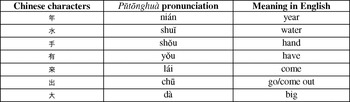
Variations within and across dialect groups are tremendous. Although intelligibility problems between speakers of Mandarin varieties are not as serious as in the southern dialect areas, research has revealed considerable dialectal variation across Mandarin dialects and subdialects from the southwest to the northeast. For example, according to one pŭtōnghuą–based Mandarin word list published in 1996, many lexical variants have been found with regard to the following basic vocabulary items (cited in R. Li, 2001, pp. 95–96):

Similar intradialectal lexical variation has been observed, for example, in the Min dialect group (R. Li, 2001, pp. 105–106). Lau (2001, pp. 174–187) also provides ample evidence showing that three main dialects are used in Guangdong province: Cantonese, Chaozhou (a subdialect of Min), and Kejia (Hakka). Where these dialects are in contact (in any combination), linguistic convergence is commonly observed as in lexical items found (a) in all three dialects, (b) in Cantonese and Chaozhou dialect, and (c) in Chaozhou and Kejia.
As can be expected, however, the extent of cross-dialectal variation is much more pronounced. In one study of cross-dialectal lexical variation based on 100 high-frequency words in pŭtōnghuą, only 7 monosyllabic words do not show any lexical variation (R. Li, 2001, p. 97):

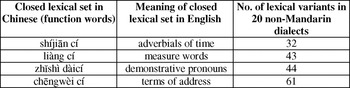
In contrast, according to a dialect word list compiled by the Department of Chinese at Peking University published in 1995, of the closed lexical sets—all function words—listed, more than 30 lexical variants are found in 20 dialects and sub-dialects (R. Li, 2001, p. 98). For example:

Cross-dialectal lexical variation is thus highly marked. Compared with phonological and lexical variation, however, grammatical or syntactic variation between and within dialect groups is much less marked. Among the most often mentioned examples of syntactic variation is word order, especially the order between the direct and indirect objects. Thus although SVOiOd is preferred in pŭtōnghuą (e.g.,

, wŏ gĕi tā yī běn shū, “I give him a book”), southern dialects like Cantonese and Min generally prefer the SVOdOi order (e.g., Cantonese:

, ngo23 bei35 jat55 bun35 syu55 keoi23, “I give a book to him”). Faced with considerable dialectal variation in phonology, lexis and grammar, language experts with entrusted the task of standardizing the national language sometimes had to make difficult choices, often after heated debates. This is understandable because the task of determining which variant(s) should be accepted as the norm is not always an easy and impartial one. Of the three linguistic levels—phonological, lexical, and grammatical—much progress has been made in the first two areas, but not the third.
Linguistic Features of Pŭtōnghuą
The standard national language, pŭtōnghuą, was officially promulgated after the Symposium on the Standardization of Modern Chinese in 1956 and is defined as:
The standard form of Modern Chinese with the Beijing phonological system as its norm of pronunciation, and Northern dialects as its base dialect, and looking to exemplary modern works in báihuà [

] ‘vernacular literary language’ for its grammatical norms. (Chen, 1999, p. 24)
This definition makes specific reference to three linguistic levels: phonology, lexicon, and grammar. Phonologically pŭtōnghuą is essentially but selectively based on the pronunciation of the Beijing dialect; in other words, the two are far from being identical, for quite a number of phonological features of the latter are not incorporated into the standard. Those Beijing dialect features that were excluded include: (a) some peculiar syllables such as dēi, “catch”; (b) variations in the phonetic values of initial consonants such as the rendering of /w/ as /v/; (c) stylistically motivated and semantically nondistinctive rhotacized words such as the replacement of a whole syllable by /r/, as in bùr dào (standard:

, bù zhī dào, “do not know”); and (d) most bisyllabic words containing a syllable pronounced with weak stress or neutral tone, such as kēxue (

, “science”; standard: kēxué) (see Chen, 1999, pp. 37–41).
Significant progress has been made in the compilation of the lexicon of Modern Standard Chinese, culminating in the publication of an authoritative dictionary Xiàndài Hàny
cídiăn, (

, “Modern Chinese Dictionary”) in 1978. Several guiding principles were followed in the process (Chen, 1999, p. 111):
- Lexical items which were idiosyncratic to the Beijing dialect but which had little currency in other Mandarin-speaking areas were dispreferred; preference was given to their equivalents which had wider circulation in Northern Mandarin areas;
- Words which were peculiar to non-Northern Mandarin dialects areas were dispreferred; preference was given to their Northern Mandarin counterparts;
- With regard to translations and borrowings, the method of semantic translation was preferred to that of transliteration; and
- Where possible the characters used in the transliteration of proper names such as persons and countries should be free from negative connotations.
As for the compilation of a standard reference grammar, for various reasons work has not yet started (Chen, 1999, p. 111). Some part of the difficulties lie in a lack of consensus regarding the “standard” status of a given grammatical feature, especially if that feature originated from a dialect (p. 112). (For more details of systematic grammatical differences between dialects and Modern Chinese, see Chen, 1999, Chapter 6; R. Li, 2001, Chapter 8.)
Fifty Years of Efforts Promoting Pŭtōnghuą: Achievements, Problems, and Prospects
Considerable efforts have been made to promote pŭtōnghuą as a national lingua franca and some progress has been made. It is believed that the development and use of the standard notation/romanization system pìnyīn (

) since the late 1950s has helped facilitate the acquisition of pŭtōnghuą to a large extent (Q. Zhou, 2003, p. 255). The results of one survey conducted in the 1980s (Wu & Yin, 1984; cited in Chen, 1999, pp. 27–28) assessing the achievements of the pŭtōnghuą promotion campaign show that nationwide, the number of people who could understand pŭtōnghuą increased from 41 percent in the early 1950s to 90 percent in 1984, while the number of people who could speak pŭtōnghuą in 1984 was estimated to be about 50 percent (no statistics were available in the 1950s). The 1984 figures show that speakers in the Mandarin-speaking areas clearly outnumbered those in other dialect areas, both in comprehension (91 percent vs. 77 percent in 1984) and speaking (54 percent vs. 40 percent). There is some indication that the pŭtōnghuą promotion campaign appears to be more effective in the education domain, but there is considerable variation and so the picture is inconclusive owing to a lack of reliable statistics. Chen (1999, pp. 28–30) goes on to discuss four main factors which have an impact on the effectiveness of the promotion of pŭtōnghuą. In general, the campaign is more effective if:
- There is no strong, high-prestige dialect competing with pŭtōnghuą (e.g. Cantonese in Guangzhou, Hong Kong SAR, and Macao SAR; Suzhou dialect or Shanghainese in the Wu-speaking areas);
- The dialect of the local community is linguistically heterogeneous (e.g. Fujian province, which is well-known for many mutually unintelligible dialects; Shiyan city of Hubei province, a recently developed city where the local residents originated from different dialect areas);
- The mobility of the people is high, as in the case of more than 50 million workers (Zhang, 1998, p. 91) from economically less developed inland provinces looking for employment opportunities along the economically more developed coastal provinces (e.g. in Fujian province, it was reported that more pŭtōnghuą speakers are found in places along the railway lines); and
- The percentage of local people receiving formal education is high.
On this last factor, Chen (1999, p. 30) further observes that “competence in pŭtōnghuą in addition to one's local dialect is generally taken as an indicator, albeit not a reliable one, of the amount of schooling that one has achieved. Illiterates in non-Mandarin areas are less likely to speak pŭtōnghuą than school graduates.”
In addition to these sociolinguistic factors, there are also a psychological and an acquisitional dimension to the effectiveness of the pŭtōnghuą promotion campaign. For example, Zhan (1995, 1997) and Zhang (1998) point out that the attraction of a Chinese variety is partly determined by its perceived social prestige. To account for the reason why more and more people across dialect groups in China were willing to invest their precious time and resources to learn Cantonese, the lingua franca in Hong Kong and the dominant vernacular in Guangzhou (the provincial capital of Guangdong), Zhan (1995, 1997) notes that this trend cannot be separated from the economic boom and success of the Pearl River Delta region in the decade up to the return of Hong Kong's sovereignty to China. During the 1990s, in Guangdong province many dialect speakers, including government officials reportedly felt so superior that they had little incentive to learn and speak pŭtōnghuą. For more than six years since the end of 1997, however, the Pearl River Delta region was among the hardest hit areas, first by the global economic downturn, then the pandemic, SARS. As a result, the “demand” for Cantonese appears to have subsided recently. Looking back the past two decades, the prestige of Cantonese is like a barometer reflecting the material well-being of its speakers as well as the market success of linguacultural products such as movie DVDs and pocket books, as well as CDs and karaoke video disks featuring Canto-pop songs in that popular regional vernacular.
According to Zhang (1998), a very similar prestige factor helps account for the increasing number of dialect speakers being attracted to learn pŭtōnghuą. Thanks to tremendous technological progress made in broadcast media, television sets and radios are becoming more and more affordable and thus easily accessible to an ever-increasing number of people in China. One consequence of this development is that target consumers are frequently bombarded by images and sounds of self-proclaimed high quality products and services—the meta-message of commercials—in the national language, thereby subconsciously creating and reinforcing an association between sophisticated tastes and pŭtōnghuą speakers. Further, since pŭtōnghuą follows the lexico-grammatical norms of Modern Written Chinese, advances in and the popularization of electronic communication technologies such as email and fax also did much to enhance the prestige of pŭtōnghuà among dialect speakers.
The success of the pŭtōnghuą promotion campaign also hinges on what Zhan (1995, 1997) calls an acquisitional factor, that is, linguistically how far the dialect is from pŭtōnghuą. Accordingly, part of the relative lack of success in the learning of pŭtōnghuą by Cantonese speakers may be explained by linguistic differences between the two varieties, especially at the phonological level. For example, Cantonese consists of six distinctive lexical tones, compared with only four in pŭtōnghuą; and, unlike pŭtōnghuą, Cantonese has retained entering tones. Such contrastive differences represent real acquisitional hurdles that make it difficult for speakers of Cantonese, especially adults, to develop target-like pronunciation in pŭtōnghuà. To a lesser extent, contrastive differences also exist at the lexico-grammatical level. To facilitate dialect speakers' pŭtōnghuą learning task, Zhan proposes three measures: (a) researching the learning difficulties and making pedagogically sound suggestions to help dialect speakers master pŭtōnghuą systematically; (b) creating a pŭtōnghuą-speaking environment with the help of broadcast media; (c) setting up competitions periodically, with a view to raising dialect speakers' awareness of various linguistic features of pŭtōnghuą. Provided the linguistic correspondences between pŭtōnghuą and the dialects are well researched systematically, Zhan believes that the above measures, if properly implemented, should go some way to help dialect speakers overcome learning difficulties.
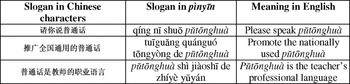
These measures have been put into practice to different extents. Since the late 1950s, based on contrastive work between various local dialects and pŭtōnghuą, several dozen pedagogic booklets that highlight systematic phonological and syntactic differences or listing high-frequency words have been published (see, e.g., Di, 2003, pp. 16–18). The purpose is to facilitate the learning of pŭtōnghuą by speakers of specific dialects. Regarding the creation of a pŭtōnghuą-speaking environment, the policy of the central government is very clear. While television and radio programs in the local dialect are allowed (e.g., many Cantonese-speaking programs broadcast on the Shenzhen and Zhujiang channels in Guangdong province are accessible via cable television in Hong Kong SAR), the level of tolerance varies, subject to higher order concerns of the central government. All government officials are constantly reminded that pŭtōnghuą should be used for all high-profile public events, although there is anecdotal evidence suggesting that this reminder is not always heeded. In accordance with the central government's tacit approval of bidialectalism or dialect bilingualism, carrots rather than sticks are used to bolster the status and acceptance of pŭtōnghuą (L. Wang 1980/2000, p. 599). For example, in 1995 the former mayor of Guangzhou, Mr. Li Ziliu, was officially commended for his exemplary efforts and insistence to use pŭtōnghuà in all public events (Zhan, 1997, p. 37). Other sectors in which the pŭtōnghuą-preferred policy is more strictly enforced in the dialect areas include education, civil service and various service industries. For example, in teachers' offices and classrooms and on the bulletin boards within school premises, one finds slogans such as the following, reminding teachers and students of the importance of using pŭtōnghuą (Q. Wang, 2000, p. 74):

According to Chen (1999, p. 29), the sector in which the promotion of pŭtōnghuą has been most successful to date is the army.
Zhan's (1997) third suggestion—to raise dialect speakers' awareness of the importance of pŭtōnghuą by organizing activities such as competitions—has also been implemented to a large extent. Every year, pŭtōnghuą public speaking contests are held nation-wide as well as locally. Similar awareness-raising events include an annual event since 1998—the “National pŭtōnghuą Promotion Week,” which falls on the third week of September across the country, including the two SARs Hong Kong and Macao. During that week, a series of activities are held to promote the status and encourage the use of pŭtōnghuą among dialect speakers (Q. Zhou, 2003, p. 258).
Given that the contrastive differences between the dialects and pŭtōnghuą are so marked at practically all linguistic levels, deviations from the target pronunciation, lexical choice and grammatical requirements in the learning process are understandable. As Chen (1999, pp. 43–46) observes, until recently such “adulterated forms of Modern Standard Chinese” (p. 44) were generally regarded as undesirable interference rather than language contact phenomena in their own right. There are signs however that more and more mainland researchers consider varieties of “local pŭtōnghuą” as legitimate terminal goals of the learning process. One correlate of such a change in attitude toward deviations from the standard is increasing recognition of different levels of pŭtōnghuą: level 1 is closest to the standard; level 2 is characterized by some deviations from it; and level 3 exhibits considerable influence from the local dialect. It has been proposed that the three-tiered standards may be regarded as distinct levels of achievement for speakers of different professions. Accordingly, level 1 should be the threshold prescribed for professionals in communication such as journalists, broadcasters, performers, and artists; level 2 should be the threshold for language teachers of primary and secondary schools; all others who attained level 3 and use it in their everyday life deserved to be commended (J. Wang, 1995, cited in Chen, 1999, p. 45; Q. Zhou, 2003, p. 257f). While more work is needed toward a clearer demarcation of the three levels of pŭtōnghuą from a linguistic point of view, what seems certain is that being a lingua franca between speakers of different dialects in the region, a local variety of pŭtōnghuą functions just as effectively, and so such regional varieties of pŭtōnghuą are often looked upon as on par with the (level 1) standard by local non-Mandarin speakers.
In sum, although considerable progress has been made to promote pŭtōnghuą as a national lingua franca, much remains to be done. In December 1997, a national symposium on language and script was convened, among other objectives, to review progress and set realistic goals for the promotion of pŭtōnghuą. It was resolved that by 2050, there should be no more “blind spots” within the borders of the People's Republic where pŭtōnghuą cannot be understood, and that communication problems caused by mutually unintelligible dialects should cease to exist (Q. Zhou, 2003, p. 258).
Regional Lingua Francas in Mainland China
The promotion of pŭtōnghuą was laid down in the constitution in 1982 as an important objective of national language policy and planning (Q. Zhou, 2003, p. 256). With all the efforts invested into the promotion of pŭtōnghuą, what the central government envisages is its use as a national lingua franca for formal, official or H functions, to be complemented by the local dialect (or a subdialect of a dialect) for informal, intimate or low (L) functions. The respective status of both has been made very clear. The elimination of non-Mandarin dialects has never been a stated goal on the language planning agenda; on the contrary, time and again the central government reassures dialect speakers through the mass media that the value of the local vernacular as a marker of solidarity and linguacultural identity when communicating with fellow members of the same county, village, clan and (extended) family is fully recognized (Q. Zhou, 2003, p. 253). Any violation of the pŭtōnghuą-only rule of speaking may be frowned upon, but it has never been enforced with harsh punitive measures. In the long run, the central government's language policy aims to make dialect speakers understand, and put in practice, the division of labor between the H functions of pŭtōnghuą and the L functions of their dialects, by gradually expanding pŭtōnghuą's formal domains of use, while progressively narrowing the use of dialects to local, informal communicative functions.
Although pŭtōnghuą is gradually penetrating into the southern dialect areas and increasingly used as a lingua franca among speakers from different dialect backgrounds, there continues to be resistance to learn and use it. This is so because, to the extent that pŭtōnghuą has to compete with local dialects for ascendancy, the success of the pŭtōnghuą promotion campaign hinges in part on the vitality of the dialects. In this regard, the prospects of the campaign in dialect areas are clouded with uncertainty. During the tumultuous years from the late 19th to the middle of the 20th century, proximity to the ocean allowed many dialect speakers of the coastal provinces to emigrate overseas in search of politically more stable and better living conditions. This is the origin of most of the Chinese diasporic communities, such as those in North America. These early migrants braved the odds and gradually overcame hardship and often discrimination through engaging in small businesses, especially restaurants and laundry services. Over time, many of them accumulated wealth and entrepreneurial expertise. Taking advantage of their motherland's open door policy, many descendants of these business-minded diasporic groups poured in huge amounts of investment in their hometown villages or counties, resulting in economic prosperity of these areas. Few of these disaporic investors are able to communicate in pŭtōnghuą; their preferred Chinese variety is the vernacular they acquired from their parents and other dialect-speaking members from the same or neighboring clan, village or county when they were children. Over time, the stark contrast in a widening wealth gap between the more prosperous dialect-speaking areas along the coastal provinces Guangdong, Fujian, Jiangsu, and Zhejiang and the economically less developed provinces inland has continued to this day. One consequence of this differential economic development is the relative vitality and prestige of the dialects in these regions: In general, the Yue, Wu and Min dialects are perceived as having greater prestige than the dialects Gan, Kejia (Hakka) and Xiang. Each major dialect has developed its own prestige variety. For example, in Guangdong province, Kejia (Hakka) speakers would look to the variety spoken in Meixian as the norm, while the variety of Chaozhou dialect spoken in Shantou is generally regarded as the H form (Lau, 2001, p. 174). Of all the strong dialects, Cantonese stands out as the most prestigious, as is evidenced in the increasing number of mainlanders who are eager to learn it as an additional dialect or language.
Further, partly as a result of the central government's benign policy of bidialectalism or dialect bilingualism, speakers of strong dialects are under no great pressure to give up using their vernacular in those contexts where H language functions are called for. It was against this background that the regional norms of some high-prestige local dialects are learned or imitated by speakers of other dialects. For example, many Kejia (Hakka) speakers living in the mountainous regions in the northern part of Guangdong province reportedly find it practical and useful to learn some Cantonese when traveling in Guangzhou, whereas for similar reasons speakers of different varieties of Min in Fujian province are inclined to pick up some useful expressions of the more prestigious variety of Min spoken in Xiamen. Such developments, if proved to be widespread, suggest that something close to what Fasold (1984) calls “double-nested diglossia” may prevail in dialect areas. What happens is that depending on the context, the prestigious variety of the local dialect may function as an L variety vis-à-vis pŭtōnghuą, but as an H variety vis-à-vis other dialects or subdialects. A similar pattern of sociolinguistic variation is also conceivable in many enclaves of non-Han minority populations who are surrounded by a sea of Han Chinese speakers. At the moment, there is not enough empirical evidence to ascertain this logically sound but somewhat speculative sociolinguistic analysis, and so more research is needed.
Taiwan
Sociohistorical Background
Taiwan is essentially a Chinese community with Mandarin as the dominant lingua franca, especially in the northern parts of the island. However, the further south one travels, the more Mandarin gives way to Mĭnnánhuà (

, Southern Min) as an effective vernacular for communication with the local inhabitants. Most of the Chinese population in Taiwan are descendants of successive waves of immigrants from the mainland since the seventeenth century, with the majority from the Fujian province, notably the two cities Zhangzhou and Quanzhou. The earlier immigrants brought with them their Southern Min subdialects, which gradually took root on the island. Those who arrived later, in the eighteenth century, were speakers of Kejia (Hakka), who originated from today's Fujian and Guangdong provinces, which explains the presence of a minority of Kejia speakers in Taiwan today. According to census figures of the early 1990s, more than 73 percent of the population could speak Southern Min, whereas the percentage of Kejia speakers was only 12 (Huang, 1993; Li & Lee, 2004; Tsao, 1999). From 1895 to 1945, Taiwan came under the sovereignty of the Japanese. Fifty years of colonial rule resulted in a few generations of speakers who were literate and, to a lesser extent, conversant in Japanese. Prior to the arrival of the Guomindang or Nationalist army and government under Chiang Kai-shek in 1945, the dominant vernacular of the Taiwanese people in the home was Southern Min; few could speak any Mandarin, let alone standard Mandarin. The Nationalist government found the postwar language situation in Taiwan unacceptable, and decided to make Mandarin the lingua franca on the island on a par with similar measures in the mainland. Those who arrived after the Second World War are generally referred to by the earlier settlers as wàishěngrén (

, “Mainlanders,” literally “people outside of the province”), reflecting a popular perception among the “Taiwanese” that the wàishěngrén were aliens, imposing among other things their Mandarin on the local people.
Mandarin as a Lingua Franca, “Taiwanese Mandarin,” and Taiwanese Identity
In the four decades from 1946 to 1987, the Nationalist government ruled the island with an iron fist. On matters related to language and communication, the public use of Japanese was immediately banned as part of the National Language Movement promoting Mandarin across the island. Mandarin became the mandatory language of instruction in schools. The Chinese dialects Southern Min and Kejia (Hakka) and indigenous languages alike were discouraged in all public domains such as government, education, law, and the media. Dialect radio and television programs in Kejia and Aboriginal Austronesian languages were virtually nonexistent. Although radio programs in Southern Min continued to be broadcast nationally and locally, national television in Southern Min was under much more stringent regulation and control (Tsao Feng-fu, personal communication). In school, pupils were encouraged to report any violations of the Mandarin-only rule of speaking to their teachers; once discovered, dialect speakers had to put up with corporal punishment and/or public humiliation, which was widespread and is still vivid in the collective memory of older groups of Taiwanese at the age of 50 or above. For example, in an interview with the press, the former President Lee Teng-hui was quoted as saying:
I am more than seventy years old. Having lived under different regimes, from Japanese colonialism to Taiwan's recovery, I have considerable experience of the miseries of the Taiwanese people. In the period of Japanese colonialism, a Taiwanese would be punished by being made to kneel out in the sun for speaking tai-wan-hua [“Taiwanese,” i.e., Southern Min]. The situation was the same when Taiwan had been recovered: my son, Hsien-wen, and my daughter-in-law, Yüeh-yün, often wore a dunce board around their necks in school as punishment for speaking tai-wan-hua. I am very aware of the situation because I often go to the countryside to talk with people. Their lives are influenced by history. I think the most miserable people are Taiwanese, who have always tried in vain to get their heads above the water. This was the Taiwanese situation during the period of Japanese colonialism; it changed little after Taiwan's recovery. I have deep feelings about this. (Central Daily News, International Edition, April 16, 1994; cited in Hsiau, 2000, p. 124)
As a result of harsh punitive measures such as the preceding, language use in public domains shifted to Mandarin within about a generation's time. By the time the Mandarin-only rule of speaking was abolished along with the lifting of the martial law in 1987, most of the youngsters who were brought up and educated in Taiwan could understand and speak Mandarin, often at the expense of their home dialect Southern Min or Kejia. Today, it has been estimated that close to 90 percent of the Taiwanese population can speak Mandarin (Huang, 2000). According to some surveys, Mandarin tends to be used as the lingua franca between members of different ethnolinguistic groups.
Owing to political separation from the mainland, Standard Mandarin in Taiwan has evolved its own phonological and lexico-grammatical norms which are distinct from those of pŭtōnghuą. This is generally referred to as “Standard Mandarin.” However, as a correlate of political liberalization and democratization in the 1990s, an increasingly assertive group of dialect speakers deliberately use Mandarin as a weapon of subversion by coloring it with Southern Min-accented pronunciation, resulting in what came to be called “Taiwanese Mandarin” (Teng, 2002; Tse, 2000). Not surprisingly, one of the most prominent speakers of Taiwanese Mandarin is the current pro-independence President, Chen Shui-bian, whose public speeches tend to be an admixture of Southern Min and Taiwanese Mandarin. At the same time, there is some indication that Taiwanese Mandarin is sometimes imitated by speakers of Standard Mandarin, either to show solidarity with the pro-independence dialect speakers, or to mock their “peculiar” Mandarin accent and way of speaking (Chen Su-chiao, personal communication).
Language Policy and Planning in Taiwan: From (Mandarin-only) Monolingualism to Multilingualism
Already in the 1990s, in part as a by-product of a heated debate regarding the linguacultural identity of the Taiwanese people, a large number of books were published, and academic articles written, focusing on the relationship between various Taiwanese languages and linguacultural groups, including those of the indigenous peoples. An old debate was rekindled, namely, to what extent it is feasible, and desirable, to devise separate (especially alphabetic) writing systems for distinct Chinese dialects and indigenous languages. As of the time of writing, the debate is still going on among linguistically conscious intellectuals, with no signs of any agreement in sight. On the whole, therefore, there was clearly a sense of linguistic reawakening among the sons and daughters of dialect speakers on the island.
After the peaceful transfer of political power from the Nationalist to the Democratic Progressive Party (DPP) in the year 2000, the language policy of Taiwan underwent drastic changes. The hegemonic monolingual Mandarin-only policy gave way to the overt goal of fostering multilingual competencies. Accordingly, although Mandarin continues to be used as the main medium of instruction from primary to tertiary education, all primary school pupils are entitled the right to learn their own home dialect or language. Primary schools are given funding to develop the syllabuses, and the pupils from dialect-speaking and indigenous language families are encouraged to learn their home language for several hours a week, either as part of the school curriculum or as an extracurricular activity (e.g., Saturday language school). All this, however, does little to change the status of Mandarin—be it Standard Mandarin or Taiwanese Mandarin—as the principal lingua franca for people from different dialect or language backgrounds.
Hong Kong Special Administrative Region (Hong Kong SAR) and Macao Special Administrative Region (Macao SAR)
Cantonese as Regional Lingua Franca among Chinese in Hong Kong SAR
Hong Kong has been a special administrative region (SAR) of China since July 1, 1997. Being an international metropolis with just over 1,000 square kilometers and a population of around 6.8 million, Hong Kong is one of the most densely populated areas in Asia. Despite being a British colony for more than 150 years until 1997, the expatriate or non-Chinese population has never exceeded 6 percent. About 95 percent of the population is ethnic Chinese with a majority of them using Cantonese as their most often used vernacular. Most Chinese Hongkongers are descendants of immigrants who originated from the neighboring province Guangdong. A majority of these early immigrants spoke the dominant Yue dialect, Cantonese; the rest were speakers of other Yue varieties (e.g.,

, Seiyap) or other Southern dialects (e.g. Kejia [Hakka], Chaozhou, and Hoklo, the latter being subdialects of Southern Min). These demographic details help explain why Cantonese has always served as the lingua franca among Hong Kong Chinese.
For nearly three decades until the end of the 1970s, Hong Kong used to be China's window to the outside world. The sociopolitical isolation of China and the permissiveness and indifference of the colonial government under the British toward the choice of model for speaking and writing Chinese together created a uniquely favourable environment for the development of written Cantonese (Snow, 2004). These two factors help explain why for a long time, Hong Kong was virtually free from any influence of pŭtōnghuą or Mandarin, the national language in China and Taiwan, in such important domains of government, education, and public media. As a result, Cantonese was, and continues to be, the dominant vernacular for such H functions as the Chief Executive's policy address, legislative councilors' debates and court trials. For example, in December 2005, at the closing ceremony of the Sixth Ministerial Conference of the WTO conference in Hong Kong, John Tsang, the Secretary for Commerce, Industry and Technology and Chair of the conference, thanked all Hong Kong citizens for their understanding, tolerance and support in Cantonese first, before delivering his formal closing speech in English. In the education sector, Cantonese is used when reference is made to Chinese medium of instruction, be it Chinese-medium schools or Chinese subjects (Chinese Language and Literature, and Chinese History) taught in English-medium schools. What this means is that students are taught to read and pronounce Chinese texts in the dialect, Cantonese, a practice which is officially discouraged in mainland China. This practice has significant implications for the spread of written Cantonese across a wide range of informal genres in print media. Thus, while the norms of correctness in writing have always been Modern Written Chinese, it has been observed that with few exceptions (e.g., formal genres such as official documents and “hard news” stories), written Chinese texts in Hong Kong, including creative writing and advertising, are characterized above all by the presence of at least some Cantonese elements. Further, as part of the ‘one country, two systems’ sociopolitical arrangement for Hong Kong SAR, written Chinese texts in Hong Kong continue to be printed in traditional, non-simplified characters. The ubiquity of Cantonese elements in Hong Kong print media may be regarded as a natural result of two related factors: on one hand a tendency for speakers to model their writing on the way they speak; on the other hand the difficulty of learning to write a language variety that one does not speak (Li, 2000; Snow, 2004; cf. Bruche-Schultz, 1997).
Language Policy and Planning: Biliteracy and Trilingualism
As Hong Kong has undergone significant changes from being a manufacturing to a “knowledge-based” economy, with international trade and finance, tourism, logistics, and service industries being the principal sources of revenue, there is an increasing demand for a bilingual and multilingual workforce with a high level of language abilities in English and pŭtōnghuą in addition to Cantonese. Hong Kong used to be known to the outside world as the “Pearl of the Orient,” an attribute which seems to have faded into oblivion. Shortly after the handover in 1997, the Hong Kong SAR government took pride in repositioning Hong Kong as “Asia's World City.” To live up to the projected image of cosmopolitan lifestyles, however, a workforce capable of conversing in two of the world's most widely used languages is indispensable. This is why the official language goals in regard to man- and woman-power development is known as “biliteracy and trilingualism,” that is, an ability to read and write Chinese and English, as well as an ability to speak and understand Cantonese, English, and pŭtōnghuą.
There are however a number of obstacles which make these goals somewhat unrealistic. First, the typological distance between English and Chinese on the one hand, and between Cantonese and pŭtōnghuą, on the other, are considerable from virtually every linguistic point of view (for salient lexico-grammatical differences between Cantonese and Modern Standard Chinese, see Bruche-Schultz, 1997). This makes the learning of English and pŭtōnghuą very difficult tasks for Hong Kong Chinese pupils. Second, as is well-known, Chinese Hongkongers seldom if ever use English entirely among themselves for intraethnic communication—unlike Singaporean Chinese in this regard. The language environment is thus not at all conducive to the natural acquisition of these two prestige languages. These two hurdles help explain why, despite tremendous government funding invested in teacher education and training programs with a view to boosting the level of English and Chinese, there has been relatively little improvement in Chinese and English language proficiency, both on the part of students and teachers. Indeed, given the characteristics of the language learning environment outlined above, it is not obvious how the high-sounding goal of biliteracy and trilingualism could be realistically achieved in the long run.
Threat Against Cantonese as Regional Lingua Franca: The “Onslaught” of Pŭtōnghuą
The success of Cantonese as a vibrant dialect in China and overseas cannot be separated from the economic prosperity and linguacultural vitality of its speakers, including those in the diasporas. Apart from its presence in many popular art forms ranging from Canto-pop songs and films (marketed as CDs, VCDs for karaoke, and DVDs) to pocket book literature and advertising slogans, Cantonese is also widely used in broadcast media in the Pearl River Delta and Chinese diasporic communities worldwide. Chen (1999, p. 51) notes that Cantonese is “the only dialect that can compete with Northern Mandarin in terms of strength” and is the only Southern dialect with a highly developed written language (p. 52). It is by far the most prestigious Chinese dialect; many mainland Chinese find it useful to learn some Cantonese, either for practical reasons to communicate with speakers of Cantonese in the workplace, or out of a desire to appreciate various linguacultural products in this vibrant vernacular. The market success of Cantonese through mass consumption of its multifarious linguacultural products in a politically permissive environment, both before and after the handover, constitutes one important factor behind the gradual emergence and development of a distinct and widely shared Hong Kong (Chinese) identity (Snow, 2004).
Before the handover, some scholars made predictions about the language situation in postcolonial Hong Kong (see, e.g., Pierson, 1998). It was predicted that at least some of the H functions previously assigned to Cantonese would be taken over by pŭtōnghuą, and that over time the glamor of English, which dominated a number of key domains in colonial Hong Kong would be gradually eclipsed by the national language of China after the handover. Bauer (2000) points to the relative decline of Cantonese in Guangzhou, the provincial capital of Guangdong, and suggests that the apparent robustness of Cantonese in postcolonial Hong Kong may be deceptively fragile. The key lies in the medium of instruction in primary and secondary schools. He argues that once Cantonese has given way to pŭtōnghuą as the medium of teaching and learning in school, many of the functions now assigned to Cantonese would be lost (cf. Bruche-Schultz, 1997). If students are no longer taught to read and pronounce Chinese texts in Cantonese, the community's gradual shift to pŭtōnghuą would be unstoppable.
Eight years after the sovereignty of Hong Kong was returned to China, however, none of these projections have come to pass. Instead, Cantonese is penetrating into the H functions formerly fulfilled by English, as shown in the use of Cantonese by senior civil servants and politicians at such high-profile media events as public policy debates and local (as opposed to national) official ceremonies. During election campaigns, Cantonese is the preferred language choice of most candidates because it is the usual language of the absolute majority of the target constituencies. One correlate of this trend is the gradual expansion of Cantonese vocabulary for H functions, which has been relatively successful for, being a Chinese dialect, Cantonese can always turn to pŭtōnghuą for lexical resources or equivalents (Luke, 2005). This development is part of what Whelpton (1999, p. 48) calls “the Putonghuaization of educated speech” in Hong Kong SAR. The former colonial language, English, may have ceded some of its H functions to Cantonese, but its status as a prestigious written language in such key domains as government, business, education and law remains unchanged. And, largely as a result of English-medium education, code-switching at the intra-sentential level (i.e., code-mixing) continues to be the unmarked language choice in informal conversations between educated Cantonese-English bilinguals (Li & Tse, 2002). As for Pŭtōnghuą, it is taught as a school subject in school and promoted in broadcast media using a “soft” approach, for example, by dramatizing problems of miscommunication caused by Cantonese speakers mispronouncing words in pŭtōnghuą, sometimes leading to great embarrassment. At the same time, more and more Honkongers find it useful to learn at least some pŭtōnghuą, either for work- or travel-related purposes. There is some discussion of the merits and demerits of using pŭtōnghuą as the medium of teaching and learning in school. For example, in 1998, Ruth Hayhoe, former Director of the Hong Kong Institute of Education, reportedly appealed for teaching local Chinese children to read and write Chinese using pŭtōnghuą (cited in Whelpton, 1999, p. 46), but no concrete plan has yet been formulated largely because of a shortage of qualified teachers of pŭtōnghuą. As things stand at the moment, therefore, the burden of proof is with those who see in pŭtōnghuą a threat to the sustained vitality of Cantonese in Hong Kong SAR (Li, 2000; cf. Whelpton, 1999, p. 55).
Cantonese as Regional Lingua Franca Among Chinese in Macao SAR
Situated on the western shore of the Pearl River, Macao (also spelled as Macau) is the second special administrative region (Macao SAR) of China. It is located some 40 nautical miles to the west of Hong Kong, with a population of about 424,000 (1998), in a territory of around 24 square kilometers. Macao SAR consists of Macao Peninsula and two islands, Taipa and Coloane, the latter being gradually linked together by reclamation. From 1557 to 1999, Macao was a colonial enclave of the Portuguese. Gambling and tourism have long been the twin pillars of the local economy. To international travelers and tourists, Macao is probably best known for its casinos and gambling activities, which have earned it the title of “The Monte Carlo of the Orient.” Several new casinos and hotels were opened after the handover, and more are being planned. According to the Basic Law, all this will remain unchanged for at least 50 years thanks to the “one country, two systems” sociopolitical arrangement.
In terms of ethnic composition and the language situation, Macao is similar to Hong Kong in many ways. With more than 95 percent of its population being ethnic Chinese, Macao is essentially a Chinese community. Cantonese is the mother tongue of the overwhelming majority—around 87 percent. Some 30 percent of the Chinese inhabitants were immigrants from the mainland, who came to settle down in Macao 10 to 15 years before the handover. Like Hong Kong, Cantonese is the lingua franca for local Chinese from different dialect backgrounds. Structurally and grammatically, there is hardly any difference between the Cantonese spoken in Macao and Hong Kong (Ching, 1997a). Frequent visits of Hong Kong residents to Macao no doubt contribute to the homogenization of Cantonese in the two special administrative regions. A more important factor, however, may have to do with easy access of Hong Kong broadcast media in Macao, with the consequence that any novelties and innovations in language use originating from Hong Kong are instantly transmitted to residents of Macao.
During the colonial period, the Portuguese government did not seem to be very keen on promoting the Portuguese language to the local Chinese population. Apart from the fact that knowledge of Portuguese was a sine qua non for access to senior positions in the colonial civil service, there was no attempt to impose Portuguese in the education system. As a colony, therefore, Macao was untypical as far as the spread of the colonizer's language is concerned. The language policy of the colonial government, if there was one, was probably best characterized as laissez-faire. The learning of Portuguese was thus entirely up to the individual's initiative. Unlike English, however, Portuguese was not looked upon as a prestigious language. Since knowledge of Portuguese had little utilitarian value, until the 1970s few Chinese people in Macao felt motivated to learn it (Ching, 1997a; Li, 2005).
Very few Portuguese nationals stayed behind after the handover. There is however a sizeable group—around 10,000 or two percent of the total population—of mixed Portuguese and Asian descent, who came to be known as the Macanese. Born in Macao, the Macanese are mostly highly educated professionals bilingual in Portuguese and Cantonese, some trilingual with English as their third language. Given that neither the Portuguese colonial officials nor the local Chinese had any initiative to learn each other's language, the language abilities of the Macanese made them ideal middle-persons between the colonial government and local Chinese during the colonial period (Ching, 1997a, p. 52).
There has been relatively little change in the language situation after the handover, with a few exceptions. First, the Basic Law stipulates that knowledge of Modern Standard Chinese (i.e., Modern Written Chinese and spoken Cantonese) is required for employment in the civil service. Second, pŭtōnghuą is taught as a school subject and is increasingly learned by adults for practical, vocational purposes (especially tourism), but there are as yet no H functions assigned to it. Third, there is some indication that Portuguese was gradually becoming more popular among young people shortly before the handover. Because all citizens of Macao are entitled the right of abode in Portugal, it is possible that young people are attracted by prospects of emigration, with the Portuguese language being looked upon instrumentally as a springboard for reaching out to other parts of the European Union. In sum, although pŭtōnghuą is expected to become more and more influential, especially in the domains of government and education, Cantonese will remain the lingua franca of Macao SAR for a long time to come (Ching, 1997a; Li, 2005).
Further Research in Chinese as a Lingua Franca in Greater China
In mainland China, it is obviously in the interest of the Chinese government and people to continue their efforts in promoting pŭtōnghuą as a national lingua franca. More research in dialectology is therefore needed with a view to better understanding how this can be done more effectively. Three research areas are particularly helpful in this regard: (a) dialect speakers' systematic deviations from the norms of pŭtōnghuą as a result of influence from their dominant local dialect(s), and the extent to which such systematic deviations—notably those which do not impinge on intelligibility—may be regarded as acceptable and legitimate goals of a lower level of pŭtōnghuą-learning achievement (cf. the three levels of pŭtōnghuą attainment discussed above); (b) salient and systematic linguistic differences between pŭtōnghuą and various subdialects, including the compilation of dialect word lists, with a view to facilitating the effective learning of pŭtōnghuą by local dialect-speakers; and (c) the attitudes of speakers in both the Mandarin- and dialect-speaking areas toward the use of pŭtōnghuą vis-à-vis the regional vernacular in context-specific situation types, and how language attitudes impinge on the acquisition of pŭtōnghuą (cf. Zhou, 2001). In Taiwan, Hong Kong SAR and Macao SAR, much remains to be done regarding the dynamic relationship between the changing roles of the regional lingua franca vis-à-vis the national language, and concomitant changes in ethnolinguistic identities. Applied linguists possessed of the requisite linguistic proficiency, research skills, and sensitivity to social contexts of language use throughout greater China have much to contribute to these efforts.