Implications
Strongyle nematodes constitute an important challenge to horses’ health and performances. The usual mode of control of these parasites based on the repeated use of synthetic anthelmintics is now strongly questioned because of the increasing development of resistance to these molecules. Here, we give the first evidence that sainfoin (Onobrychis viciifolia), a tannin-rich plant, reduces horse strongyle egg hatching and larval development in vitro. In horses fed with a sainfoin-rich diet for 18 days, the rate of strongyle larval development also seems to be reduced but more data are needed to confirm this result.
Introduction
Infections with gastrointestinal nematodes are a major threat for herbivore production, health and welfare in both intensive and extensive agricultural systems. In horses, strongyle nematodes (mostly cyathostomins) are the most problematic parasites that are associated with enteropathy leading to protein losses (Love et al., Reference Love, Murphy and Mellor1999) and potentially horse death when large numbers of encysted larvae are released from the mucosa of the large intestine (so-called ‘larval cyathostomosis’).
Strongyle control in horses and ruminants has long been reliant on frequent use of synthetic anthelmintics. However, the expanding occurrence of anthelmintic resistance among strongyles and the dumping of residues into the environment have accelerated the need to explore alternative solutions for a sustainable control of these parasites (Molento, Reference Molento2009).
Knowledge on pathophysiological processes associated with nematode infections in ruminants points to the hypothesis that the host’s ability to respond to strongyles could be improved by feed complementation, particularly with nutrients that are the limiting factors of the diet (Coop and Kyriazakis, Reference Coop and Kyriazakis1999). Energy supplementation with barley accounting for 60% of energy requirements for lactation did not improve the ability of mares to regulate their faecal egg excretion at pasture (Collas et al., Reference Collas, Fleurance, Cabaret, Martin-Rosset, Wimel, Cortet and Dumont2014). As proteins are more likely to be a limiting factor in horses too, it is worth testing the benefits of extra protein supplementation in parasitised horses; in small ruminants feeding protein-rich diets to parturient females has been shown to partly alleviate the periparturient rise in egg excretion (Donaldson et al., Reference Donaldson, van Houtert and Sykes2001; Houdijk et al., Reference Houdijk, Kyriazakis, Jackson, Huntley and Coop2003). Another alternative is the control of strongyles via bioactive forages like sainfoin (Onobrychis viciifolia) that contain plant secondary metabolites responsible for anthelmintic effects demonstrated in several in vitro and in vivo studies on ruminant parasites (Paolini et al., Reference Paolini, Fouraste and Hoste2004; Heckendorn et al., Reference Heckendorn, Häring, Maurer, Zinsstag, Langhans and Hertzberg2006). To our knowledge putative sainfoin anthelmintic properties on horse strongyles remain uncharacterized. In equids, only two in vitro studies have analysed the influence of different plant extracts and both reported an anthelmintic activity against strongyle for a number of them (Payne et al., Reference Payne, Kotze, Durmic and Vercoe2013; Peachey et al., Reference Peachey, Pinchbeck, Matthews, Burden, Mulugeta, Scantlebury and Hodgkinson2015). However, in a preliminary study conducted on donkeys grazing a natural pasture, faecal egg excretion was not related to the proportion of tannin-rich shrubs in the diet (Couto et al., Reference Couto, Santos, Laborda, Nóvoa, Ferreira and Madeira de Carvalho2016).
Therefore, the current study aims to (i) evaluate the in vivo efficacy of a short-term consumption of either extra proteins or sainfoin to reduce faecal egg excretion in naturally infected horses, and (ii) analyse the in vitro influence of secondary metabolites of sainfoin on strongyle egg hatching and larval development.
Material and methods
In vivo experiments
This study received ethical approval from the local ethics committee (Comité Régional d’Ethique pour l’Expérimentation Animale du Limousin) under protocol number 11-2013-11. The in vivo experiment was conducted from 29 November to 16 December 2013 at the experimental farm of the French Horse and Riding Institute (IFCE) in Chamberet, France. A total of 30 horses naturally infected with nematodes were allocated into three groups of 10 individuals to receive either: (i) a tannin-rich diet consisting of 70% DM sainfoin pellets (Sd), (ii) a protein-rich diet (Pd), or (iii) a control diet (Cd) during an 18-day trial following a 1-week adaptation period. This duration is in agreement with other successful experiments in ruminants (Houdijk et al., Reference Houdijk, Kyriazakis, Jackson, Huntley and Coop2003; Paolini et al., Reference Paolini, De La Farge, Prevot, Dorchies and Hoste2005; Heckendorn et al., Reference Heckendorn, Häring, Maurer, Zinsstag, Langhans and Hertzberg2006) and is certainly consistent with future practical implementation in the field.
Animals and pre-experimental housing conditions
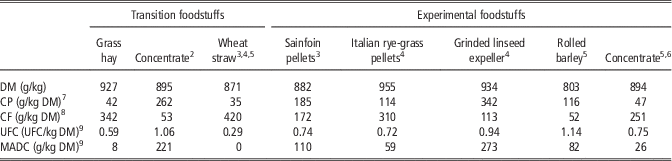
Horses (Anglo-Arab and French Saddle breeds; 1.5 to 3.5 years old) which had not been treated with anthelmintics since the end of March (200 µg ivermectin/kg BW; Eqvalan®, Merial, France) were measured individually for strongyle faecal egg count (FEC) before being housed on 5 November. They were mostly infected by small strongyles (>95%), as revealed by larval cultures, and no Strongylus sp. were found. Horses were subsequently allocated into three groups of 10 individuals by stratified sampling in order to balance groups for average FEC (Sd=1175±291 eggs per gram (epg) of faeces; Pd=1175±247 epg; Cd=1144±260 epg, mean±SEM), age (Sd=2.3±0.2 years old; Pd=2.4±0.2 years old; Cd=2.5±0 years old), BW (Sd=435.9±16.9 kg; Pd=429.9±17.9 kg; Cd=438.4±6.9 kg), breed (Sd=five Anglo-Arab, five French Saddle; Pd=five Anglo-Arab, five French Saddle; Cd=six Anglo-Arab, four French Saddle) and sex (Sd=eight females, two males; Pd=five females, five males; Cd=five females, five males). From 5 to 21 November, each group was collectively fed to mean INRA requirements (5.8 UFC/day, 309 g MADC/day, where UFC is horse feed unit, MADC is horse digestible CP) (INRA, 2015) with a transition diet composed of 60% grass hay, 10% wheat straw, 30% concentrate (made of 61.5% barley, 35% soybean meal, 3.5% minerals and vitamins; Table 1). During the adaptation period (22 to 28 November), horses in each group were individually fed with decreasing proportions of grass hay and increasing proportions of the foods composing their experimental diet.
Chemical composition and nutritive value of foodstuffs offered to the three groups (sainfoin diet, protein diet, control diet) of 10 horses during transition and experimental periodsFootnote 1

CF=crude fibre; UFC=horse feed unit; MADC=horse digestible CP.
1 Analyses were performed by InVivo Labs, Château-Thierry, France.
2 Concentrate made of 61.5% barley, 35% soybean meal, 3.5% minerals and vitamins.
3 In sainfoin diet.
4 In protein diet.
5 In control diet.
6 Concentrate made of 55.3% wheat straw, 28.7% maize, 6% soybean oil, 5% cane molasses, 5% calcium carbonate.
7 Dumas method.
8 Weende method.
9 From INRA (French National Institute for Agricultural Research) equations.
Experimental diets
From 29 November to 16 December 2013, horses were individually fed with their experimental diet. The Sd diet (3.6% DM condensed tannins (CTs); acetone-butanol-HCl assay, Grabber et al., Reference Grabber, Zeller and Mueller-Harvey2013) consisted of 70% DM sainfoin pellets (Onobrychis viciifolia; sainfoin plants provided by Multifolia, Viapres-le-Petit, France; pellets manufactured by Mg2Mix animal nutrition firm, Châteaubourg, France) (5.2% DM CT; 2012 to 2013 season; 3rd cutting) and 30% wheat straw (Table 1). Based on literature review of in vivo studies in ruminants, Hoste et al. (Reference Hoste, Jackson, Athanasiadou, Thamsborg and Hoskin2006) suggested a minimal threshold of 3% to 4% DM in plant material is needed to observe anthelmintic effects. The Pd diet consisted of 52% Italian rye-grass pellets, 18% grinded linseed expeller and 30% wheat straw (Table 1). Cd diet was 45% rolled barley, 30% wheat straw, and 25% pellets (made of 55% wheat straw, 29% maize, 6% soybean oil, 5% cane molasses, 5% calcium carbonate) (Table 1).
Proportions of the diet components were chosen to ensure each diet covered animal energy requirements. Both Sd and Pd were assumed to cover 230% of protein requirements v. 100% for Cd. Individual requirements were estimated based on INRA (2015) tables for UFC and MADC in 18 to 36-month-old saddle horses:
UFC requirements (per kg BW0.75)=0.0594+0.0252×BW gain1.4 (with BW gain between 0.1 and 0.25 kg/day according to age),
 $$\eqalignno{ \rm MADC & \ {\rm requirements}\ (\rm in\ g/day)\, {\equals }\, 2.8 \times BW^{0.75}\cr &\plus 270\times \rm BW\ gain} $$
Animals received half of their diet in the morning (0800 h) and half in the afternoon (1600 h). Quantities were adjusted weekly based on BW change. In addition, refusals were collected every morning. Each time an animal made refusals higher than 5% of feed offered on 3 consecutive days, quantities of pellets and wheat straw offered were reduced by 5%. In this case, we reduced not only the quantities offered to this animal but also the quantities offered to one animal in each of the other two groups. This enabled the diets offered in the three groups to remain isoenergetic, and the Sd and Pd diets to remain isoproteic and 2.3-fold higher than Cd. Thus Pd and Cd were compared to test for the benefits of receiving extra proteins; Sd and Pd were compared to account for the effect of sainfoin secondary metabolites. Once feed refused from each of the three paired animals amounted to less than 5% on 3 consecutive days, the initial levels of quantities offered were restored.
Faecal egg counts
Faecal egg count was individually measured 24 days before the start of the experiment (denoted FEC-24) to determine infection level and balance individual FEC across experimental groups. FEC was then measured in the adaptation period (day −4, denoted FEC-4), and at the start (day 4, denoted FEC4) and the end (day 18, denoted FEC18) of the experimental period. For these counts, faecal samples were directly collected from the rectum of each horse and the McMaster technique was applied with a minimal detection level of 15 strongyle eggs per gram of faeces. The flotation liquid was NaCl (320 g/l) with 1.18 to 1.20 specific gravity.
Coprocultures
Faecal samples collected on FEC-4 and FEC18 were incubated for 14 days in a chamber maintained at 25°C and at 80% relative humidity. Vermiculite, a phyllosilicate mineral valued for its high absorbency, was added to faeces (30% of the faeces weight) to improve the yield of infective larvae (L3). The faeces were then processed in a Baermann apparatus for 12 h to extract L3. Single treatment group coprocultures were performed at FEC-4 and FEC18 on 100 g of faeces collected from each of the 10 horses within each group.
Worm expulsion
At the end of the experimental period, we tested for diet-associated variations in worm burden: horses were drenched with 200 µg/kg BW ivermectin (Eqvalan®) and faecal samples (200 g each) were subsequently collected in horses’ individual boxes 18, 21 and 24 h post-drenching as the largest proportion of strongylids is usually recovered in faeces 24 h after a macrocyclic lactone anthelmintic treatment (Lind et al., Reference Lind, Eysker, Nilsson, Uggla and Höglund2003; Kuzmina et al., Reference Kuzmina, Kharchenko, Starovir and Dvojnos2005). Each sample was diluted in 1600 ml tap water, and four 40 ml aliquots were prepared to determine number of larval (L4 stage) and adult strongyles, differentiated by the respective absence or presence of a reproduction apparatus detected after visual inspection under light microscopy (40× magnification). Worm counts were subsequently multiplied by 10 to obtain the worm burden for 200 g of faecal material. The average level of female strongyle fecundity within each horse was computed as FEC18 divided by the number of female strongyles recovered.
In vitro experiments
Two in vitro experiments were run in order to complete the results of in vivo parasitology measurements. For this purpose, a larval development assay (LDA) and an egg hatch assay (EHA) were performed using faecal samples from naturally infected horses.
Larval development assay
A LDA was performed to determine the effect of sainfoin in faeces on larval development as implemented by others (Nogueira et al., Reference Nogueira, Fonseca, da Silva, de Paiva Ferreira, Nery, Geraseev and Duarte2012; Payne et al., Reference Payne, Kotze, Durmic and Vercoe2013; Morais-Costa et al., Reference Morais-Costa, Bastos, Soares, Costa, Vasconcelos, Oliveira, Braga, Duarte and Lima2016) and following recommendations by Hubert and Kerboeuf (Reference Hubert and Kerboeuf1992). Sainfoin pellets (700 g sampled from those given for the in vivo experiment), were added to 422 ml tap water to reach the same water content as faecal samples (i.e. 60%). Faecal samples were obtained from 24 horses bred at the experimental farm of IFCE in Chamberet and naturally infected between 350 and 1130 epg. Different amounts of this rehydrated sainfoin were then mixed with 130 g of faeces to bring sainfoin content up to 0 (control group), 6%, 12% or 29% of the global mixture. Six replicates were done for each of the four proportions. Each sample was incubated at 25°C during 14 days, and L3 larvae were extracted overnight by means of a Baermann apparatus. Number of infective larvae was determined in repeated 10 µl droplets representing 0.1% of total recovered larval volume (10 or 25 replicates accordingly). This number was then multiplied by 1000 to obtain the total number of L3 in each faecal sample. The development ratio was calculated as: (L3 per gram/epg of faeces)×100.
Egg hatch assay
We also performed an EHA to assess the effect of sainfoin on strongyle hatching. Our test was performed according to the World Association for the Advancement of Veterinary Parasitology recommendations (Coles et al., Reference Coles, Bauer, Borgsteede, Geerts, Klei, Taylor and Waller1992) and as applied by others (Nogueira et al., Reference Nogueira, Fonseca, da Silva, de Paiva Ferreira, Nery, Geraseev and Duarte2012; Kanojiva et al., Reference Kanojiva, Shanker, Sudan, Jaiswal and Parashar2015). Strongyle eggs were extracted from faeces by passing through a series of fine-mesh sieves (from 125 µm to a final 20 µm mesh size in which they were collected) then re-suspended in a solution of distilled water at a concentration of 10 eggs/10 µl (strongyle egg solution). Sainfoin solution was prepared from 42 g of sainfoin pellets crushed and diluted into 420 ml of a 0.5% dimethyl sulfoxide (DMSO) solution overnight. Dimethyl sulfoxide has been chosen to dissolve both polar and nonpolar compounds as putative active compounds were not known before the in vitro tests. This sainfoin solution (100 mg sainfoin pellets/ml) was then centrifuged at 5000×g for 30 min at 4°C. The supernatant was recovered and diluted into a 0.5% DMSO solution to obtain four concentrations (30 mg of sainfoin pellets/ml, 15, 7.5, 3.6 mg/ml) which were tested in triplicates against the control 0.5% DMSO solution (five replicates). Next, 50 µl of each concentration was added to 100 µl of the strongyle eggs solution (containing roughly 100 eggs) in 5 ml borex tubes incubated for 48 h at 20°C. Following incubation, the number of second-stage larvae (L2) was determined in the total mix volume (150 µl). Percentage of egg hatch at each concentration was calculated as follows: (L2/(L2+eggs))×100. The 20°C incubation temperature resulted in almost 100% hatching in controls (91% to 98%).
Statistical analyses
Data analyses were performed using R software (3.0.2). Satisfaction of energy and protein requirements data were arcsin square-root transformed then analysed with two linear mixed models including diet as fixed effect and horse as random effect. Strongyle faecal egg excretion data were also analysed with a linear mixed model including diet, sampling date (FEC-24, FEC-4, FEC4, FEC18) and diet×sampling date interaction as fixed effects and horse as random effect. Individual was the experimental unit. Linear mixed models were performed using the lme function of the nlme package. We tested for differences between sampling dates using the glht function of multcomp package (Tukey’s correction). We also tested for between-diet differences in estimated worm count, juvenile-to-adult strongyle ratio, and estimated female fecundity (i.e. FEC-to-female strongyle count ratio) using the Kruskal–Wallis non-parametric test (kruskal.test function of the R software). No statistical analyses were performed on coproculture data as only one group coproculture was performed within each treatment group. Percentage of eggs developed into L3 larvae and percentage of eggs hatched to L2 larvae during in vitro experiments were arcsin square-root transformed for statistical analyses. These data were analysed in a GLM including the main effect of sainfoin concentration. Differences between treatment concentrations were tested using Tukey’s HSD function.
Results
In vivo experiments
Intake measurements confirmed that planned nutritional requirement goals were satisfied: horses almost met their energy requirements in all three groups (Sd=96±0.4%, Pd=94±0.3%, Cd=92±0.6%, mean±SEM; P=0.180) (INRA, 2015) while the Sd and Pd diets provided extra protein (230% and 224% of protein requirements, P=0.699) compared with Cd (93%) (P<0.001) (INRA, 2015). As expected, all diets offered were isoenergetic while Sd and Pd diets remained isoproteic with a much higher protein concentration than Cd.
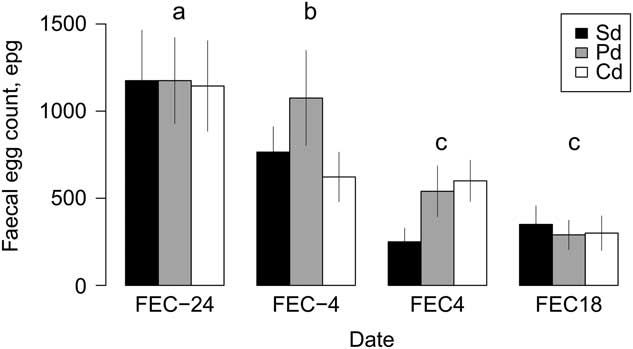
Overall, FEC decreased from an average 1165 to 313 epg between FEC-24 and the end of the experiment (P<0.001; Figure 1), but without significant effects of the diet (Sd=635.0±205.5 epg, Pd=770.0±227.4 epg, Cd=666.7±190.3 epg, mean±SEM; P=0.722) or diet×sampling date interaction (P=0.463), that is rate of FEC decrease was unaffected by treatments (Figure 1). In this analysis, 28% of the variation in the relationship between diet and FEC was due to inter-individual differences between horses.
Variations in faecal egg count, expressed in eggs per gram (epg), between the four dates of measurement (before the start of the experiment: day −24 denoted FEC-24; during adaptation period: day −4 denoted FEC-4; at the start and the end of the experimental period: day 4 denoted FEC4 and day 18 denoted FEC18, respectively) for the 10 horses per group. Means with different letters (a, b, c) are significantly different at P<0.05 (mean±SEM). Sd=sainfoin diet; Pd=protein diet; Cd=control diet.

Worm counts in 200 g of fresh faeces were not significantly different between-diets (Sd=1897.1±425.4 worms, Pd=2188.7±752.0 worms, Cd=750.0±242.1 worms; mean±SEM; P=0.271). Furthermore, neither development rate, that is juvenile-to-adult strongyle count ratio (Sd=0.92±0.19, Pd=1.34±0.48, Cd=1.93±1.00, mean±SEM; P=0.810), nor estimated average female strongyle fecundity (Sd=234.5±100.6, Pd=233.4±53.3, Cd=611.1±447.0, mean±SEM; P=0.715) differed between experimental diets. Interestingly, routine coprocultures performed from faeces collected in each group revealed a lower rate of development of strongyle eggs to L3 larvae in the Sd group (Sd=8.1%, Pd=30.5%, Cd=22.6% at FEC18) that was not observed at FEC-4 (Sd=25.2%, Pd=23.7%, Cd=26.7%). We cannot test whether this difference is significant as no replicates were done.
In vitro experiments
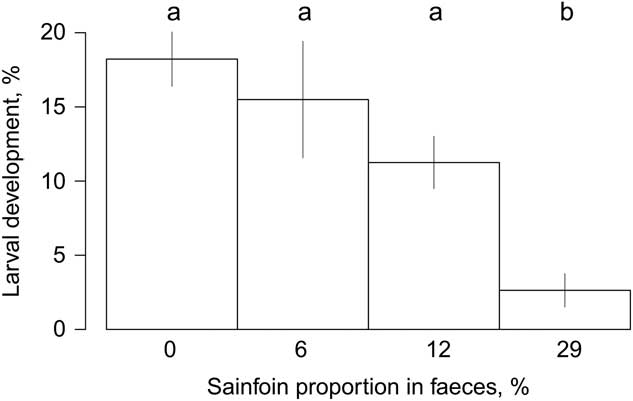
To analyse this likely effect of sainfoin pellets on strongyle egg development, we then ran in vitro tests, that is a larval development assay and an egg hatch assay in presence of sainfoin, with appropriate number of replicates. Rate of strongyle eggs to L3 larvae development was lower than what is generally observed at the INRA–Nouzilly station, that is 18% v. 30% over the past 5 years (Sallé, personal communication). Sainfoin added to the faecal material further reduced the rate of strongyle eggs to L3 larvae development: no significant differences were found between 0%, 6% and 12% added sainfoin in faeces, but 29% added sainfoin reduced larval development by 82% (P<0.001; Figure 2).
Percentage of equine strongyle eggs developed into infective larvae (L3) following 15-day in vitro incubation, according to sainfoin proportion in faeces (0%, 6%, 12% or 29% of the global mixture of sainfoin and faeces from naturally infected horses) during larval development assay. Means with different letters (a, b) are significantly different at P<0.05 (mean±SEM).

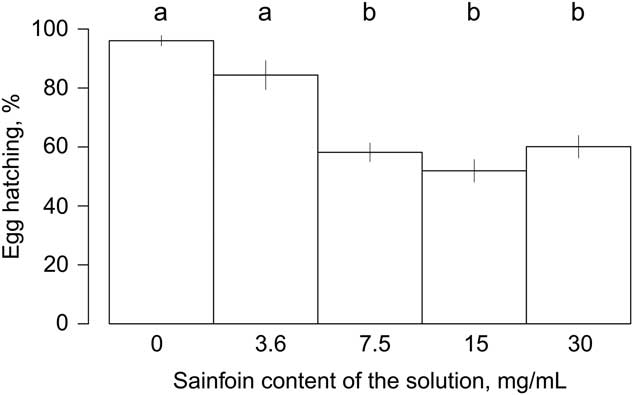
The 0.5% DMSO solution had no effect on rate of eggs hatching, which averaged 91% of strongyle eggs hatching. Conversely, there was a significant 37% reduction in egg hatching for sainfoin concentrations higher than 7.5 mg/ml (P<0.05). Overall, sainfoin concentration in the solution had a negative effect on proportion of eggs hatching (P<0.001; Figure 3).
Percentage of equine strongyle eggs hatched into second-stage larvae (L2) following 48 h in vitro incubation, according to sainfoin content of the solution (30 mg of sainfoin pellets/ml, 15, 7.5 or 3.6 mg/ml) during egg hatch assay. Means with different letters (a, b) are significantly different at P<0.05 (mean±SEM).

Discussion
The in vitro tests demonstrated the efficacy of sainfoin to reduce both larval development and egg hatching. This effect seems to occur at a minimum sainfoin content of 29% in the faecal material, while a minimum concentration of 7.5 mg/ml of sainfoin solution inhibited egg hatching. To our knowledge, this is the first evidence of sainfoin anthelmintic properties on strongyle eggs in horses. So far, only two in vitro studies had revealed benefits of plant extracts as an alternative way to control equine strongyle (Payne et al., Reference Payne, Kotze, Durmic and Vercoe2013; Peachey et al., Reference Peachey, Pinchbeck, Matthews, Burden, Mulugeta, Scantlebury and Hodgkinson2015). Significant effects on strongyle development rate were observed for seven out of 14 Australian plant extracts used at 1.4 mg/ml concentrations, but after chemical binding of tannins with polyvinylpolypyrrolidone, only two tested extracts still showed anthelmintic activity (Payne et al., Reference Payne, Kotze, Durmic and Vercoe2013). Of the five Ethiopian and four UK plant extracts tested by Peachey et al. (Reference Peachey, Pinchbeck, Matthews, Burden, Mulugeta, Scantlebury and Hodgkinson2015), seven showed inhibitory effect on egg hatching or larval migration. However, the authors only hypothesised on the secondary metabolites involved, and pointed out the lack of in vivo confirmation of these results (Payne et al., Reference Payne, Kotze, Durmic and Vercoe2013; Peachey et al., Reference Peachey, Pinchbeck, Matthews, Burden, Mulugeta, Scantlebury and Hodgkinson2015).
In our study, routine coprocultures performed during the in vivo experiment suggested an adverse effect of sainfoin diet on larval development. This result is consistent with those from the in vitro trials but it needs to be confirmed by further in vivo experiments using appropriate number of replicates. The use of sainfoin in horse diets could thus be recommended to reduce pasture contamination with strongyle infective larvae through the reduction of larval development rate. It is noteworthy that very few in vivo studies have shown such benefits of bioactive plant consumption to reduce larval development in herbivores (but see Min et al., Reference Min, Pomroy, Hart and Sahlu2004).
Sainfoin has already been identified as an anthelmintic plant in ruminants, although there is broad variability in the data recorded. Many in vitro studies report anthelmintic effects of sainfoin extracts on first-stage larvae feeding ability (Novobilský et al., Reference Novobilský, Stringano, Hayot Carbonero, Smith, Enemark, Mueller-Harvey and Thamsborg2013), L3 migration (Paolini et al., Reference Paolini, Fouraste and Hoste2004), larval exsheathment and penetration into the digestive mucosae (Brunet et al., Reference Brunet, Jackson and Hoste2008). The overall conclusion of these studies is that some sainfoin secondary metabolites, particularly CT, have direct mechanisms of action against larval development. This has been demonstrated for various plant–parasite species association, like Molan et al. (Reference Molan, Waghorn and McNabb2002) for sainfoin and Trichostrongylus colubriformis, a sheep strongyle, Nogueira et al. (Reference Nogueira, Fonseca, da Silva, de Paiva Ferreira, Nery, Geraseev and Duarte2012) who applied extracts of Caryocar brasiliense to inhibit hatching of H. contortus eggs at similar concentrations as ours, or Kanojiva et al. (Reference Kanojiva, Shanker, Sudan, Jaiswal and Parashar2015) and Feboli et al. (Reference Feboli, Laurentiz, Soares, Augusto, Anjos, Magalhães, Filardi and Laurentiz2016) who studied the effects of Eucalyptus globulus and Opuntia ficus extracts respectively on sheep nematodes. In vitro results evidence the direct anthelmintic property of some bioactive plants containing plant secondary metabolites as CT, which highlights a promising way to reduce contamination of grazing animals to confirm by in vivo experiments.
Results are less consistent in vivo, though the consumption of sainfoin has been associated with a decrease in nematode fertility or counts in sheep (Heckendorn et al., Reference Heckendorn, Häring, Maurer, Zinsstag, Langhans and Hertzberg2006; Valderrábano et al., Reference Valderrábano, Calvete and Uriarte2010) and goat (Paolini et al., Reference Paolini, De La Farge, Prevot, Dorchies and Hoste2005). Our data in horses do not support any effect of sainfoin on strongyle worm counts or FEC. However, the reported worm count was only a proxy of the true total worm burden, as horses could not be necropsied. Moreover, different life stages are considered in the in vitro and in vivo experiments and a differential behaviour of these stages cannot be ruled out. In addition, suboptimal efficacies of sainfoin have been reported in other host-intestinal nematode systems, like Legendre et al. (Reference Legendre, Hoste and Gidenne2017) and Desrues et al. (Reference Desrues, Peña-Espinoza, Hansen, Enemark and Thamsborg2016) who did not find any effect of sainfoin against T. colubriformis in rabbits or C. oncophora in cattle, respectively. On the contrary, sainfoin pellets were associated to significant reduction in the abomasal O. ostertagi nematode in Desrues et al.’s study (Reference Desrues, Peña-Espinoza, Hansen, Enemark and Thamsborg2016). This may suggest differential bioavailability of CT according to the environmental pH (Mueller-Harvey, 2006 for a review) or indicative of microbiota-mediated degradation in the gut or colon of equids.
We also investigated the effect of the short-term consumption of extra proteins as a means to regulate strongyle worm burden in growing horses, as these worms are usually associated with weight loss and hypoalbuminemia (Love et al., Reference Love, Murphy and Mellor1999). Our results do not support any positive influence of a protein-rich diet on host resistance to strongyle. As such, it also rules out the putative beneficial effect of an extra protein provided by the Sd diet. Though, these findings contrast with positive effect of added dietary protein usually reported when metabolisable protein is a limiting factor in feed, as for pigs put under low-protein diet (Pedersen et al., Reference Pedersen, Saeed, Michaelsen, Friis and Murrell2002), periparturient ewes (Donaldson et al., Reference Donaldson, van Houtert and Sykes2001; Houdijk et al., Reference Houdijk, Kyriazakis, Jackson, Huntley and Coop2003) or high-producing lactating goats (Etter et al., Reference Etter, Hoste, Chartier, Pors, Koch, Broqua and Coutineau2000). Different findings may have been found with more protein-limiting diets, or after an initial period of under-nourishment at 0.65, 0.8 or 0.95 times protein requirements as reported in sheep (Houdijk et al., Reference Houdijk, Kyriazakis, Jackson, Huntley and Coop2003) or with higher levels of nematode infection or any combination of these factors. Protein source and/or quality is another source of variation, since a study with bearing ewes highlighted significant differences in nematode infection outcome according to the extra protein supplied (Sakkas et al., Reference Sakkas, Houdijk, Athanasiadou and Kyriazakis2012).
Our in vitro study brings the first evidence that sainfoin affects the development of equine strongyles. Further work is needed to confirm the adverse effect of sainfoin against strongyles that was also suggested in vivo and to determine the underlying mode of action against different parasitic stages, including the role of CT and the potential effect of other flavonoids, as observed in some pioneer studies with small ruminants (Brunet et al., Reference Brunet, Jackson and Hoste2008; Ojeda-Robertos et al., Reference Ojeda-Robertos, Manolaraki, Theodoridou, Aufrere, Halbwirth, Stich, Regos, Treutter, Mueller-Harvey and Hoste2010).
Acknowledgements
The PhD thesis of Claire Collas was funded by IFCE and the Animal Physiology and Livestock System (PHASE) division of INRA. The experiment was funded by IFCE and by the Integrated Management of Animal Health meta-programme (GISA-Strep). The authors thank Multifolia and Mg2Mix for providing them with sainfoin pellets. They also thank the staff of the IFCE experimental farm – Patrice Dupuy, Cédric Dubois, Jacques Boulanger, Claude Larry, Joseph Bellonie and Patrick Paucard – for their technical assistance, Aline Le Morvan and Angélique Quereuil from INRA UMR1213, and Hélène Macé, student at Angers Agriculture School (ESA).