Introduction
The tsetse and trypanosomosis problem
Tsetse-transmitted trypanosomosis, caused by several Trypanosoma species of blood parasites, is a severe disease affecting both people (causing human African trypanosomosis [HAT] or sleeping sickness) and animals (causing animal African trypanosomosis [AAT] or nagana). Apart from Yemen, tsetse flies (Glossina Wiedemann, 1830) are restricted to 38 sub-Saharan countries in which the disease threatens 55 million people and 45–50 million head of cattle in an area of approximately 9–10 million km², one-third of the total land area of Africa (DfID, 2001).
The World Health Organization (WHO) estimated in 1998 that 300,000–500,000 cases of HAT remained undiagnosed and untreated. Until 2000 some 45,000 new cases were reported annually. In economic terms, the burden of HAT was estimated at 1.26 million Disability Adjusted Life Years (DALYs) in a 1997 report (UNDP, World Bank, WHO, 1997). More recent estimates give a similar figure, while describing the difficulties of using DALYs to estimate disease burdens (Fevre et al., Reference Fevre, Wissmann, Welburn and Lutumba2008). During epidemic periods in several villages in the Democratic Republic of Congo, Angola, and Southern Sudan, the disease prevalence reached up to 50% (WHO, 2015). However, since then, a concerted effort by African Governments, WHO, NGOs and the private sector has intensified and expanded surveillance and treatment of HAT, and the number of new cases recorded annually (3796 in 2015) is now at the lowest level for 75 years (WHO, 2015).
Every year, AAT causes about three million deaths in cattle while approximately 35 million doses of trypanocidal drugs are administered (Sones, Reference Sones2001). Nagana has a severe impact on agriculture in sub-Saharan Africa. The annual economic value of lost production of milk and meat alone is estimated at US$ 2.75 b illion. A weighted evaluation, extrapolated for all tsetse-infested areas, estimated the annual total losses, in terms of agricultural Gross Domestic Product, at US$ 4.5 billion (Budd, Reference Budd1999).
Tsetse and trypanosomosis (T&T) influence where people decide to live, how they manage their livestock and how they can practice intensive and productive crop agriculture (Alsan, Reference Alsan2015). The combined effects of the disease, therefore, result in changes in land use and to the environment. In tsetse-infested areas, half of the population suffers from food insecurity. Approximately 85% of the poor are located in rural areas and more than 80% of the population depends on agricultural production for their livelihood. Thus T&T significantly affect human welfare and increase the vulnerability of agricultural activity in sub-Saharan Africa, as summarized by FAO/IAEA (Feldmann et al., Reference Feldmann, Dyck, Mattioli, Jannin, Dyck, Hendrichs and Robinson2005).
The Pan-African Tsetse and Trypanosomosis Eradication Campaign (PATTEC)
In 2000 the African Heads of State and Government passed a decision to initiate a ‘campaign for the eradication of tsetse flies in Africa’ (AU, 2000). Subsequently, the African Union (AU) launched the Pan-African Tsetse and Trypanosomosis Eradication Campaign (PATTEC). In its Plan of Action, PATTEC highlights as its ultimate objective the ‘elimination of trypanosomosis through tsetse eradication’. . .‘within the shortest possible time’. This would be achieved through applying a ‘phased, area-wide removal of tsetse populations’ from confined areas, ‘systematically undertaken, one by one, and always ensuring that areas rendered tsetse-free are not re-infested’. The term ‘eradication’ is used in the title of PATTEC; however, the term ‘elimination’ is used elsewhere in this paper, following definitions given by WHO, though the ultimate objective of PATTEC would be eradication (WHO: http://vaccine-safety-training.org/elements/articles/eradication-difference.html). Three specialized UN Agencies (FAO, IAEA and WHO) support the AU-PATTEC initiative in line with their respective mandates and coordinate their T&T-related activities through PATTEC. Most stakeholders concur with and welcome this ultimate objective and their prioritized approach initially focuses on selecting priority areas for intervention and targeting the economically important tsetse fly species (including Glossina morsitans Westwood 1850, Glossina pallidipes Austen 1903, Glossina austeni Newstead 1912, Glossina fuscipes Newstead 1911, Glossina tachinoides Westwood 1850 and Glossina palpalis Robineau-Desvoidy 1830).
As stated by Shaw et al. (Reference Shaw, Torr, Waiswa, Cecchi, Wint, Mattioli and Robinson2013), an initial step must be to assess whether setting elimination as a goal is appropriate or whether—especially in areas with a strong risk of reinvasion—control operations should be a starting point. Situations are complex and vary in different countries, and decision makers face the problems of when and where to start and how to assess the technical feasibility of creating and expanding a zone that will remain free of the T&T problem. This paper and the flowcharts (Figs. 1–4 and 7–9) aim at guiding this decision-making process and contributing to an assessment of whether the creation of a T&T-free zone is socioeconomically appropriate and desirable, and whether the sterile insect technique (SIT) has a role to play.
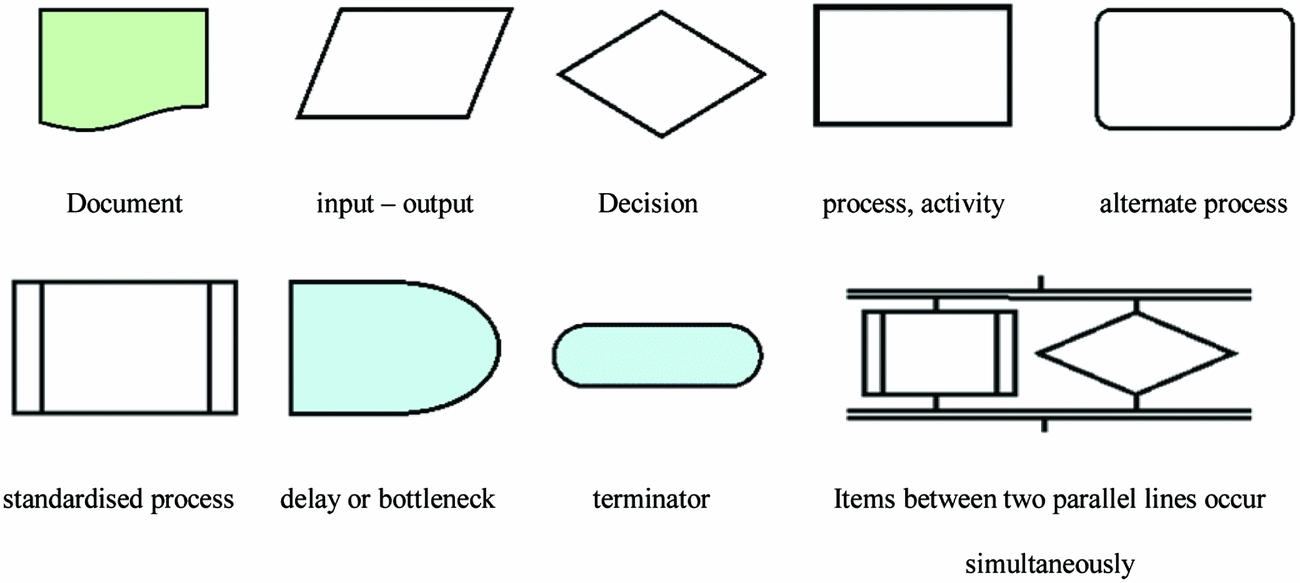
Flow chart symbols used (following ISO 5807).

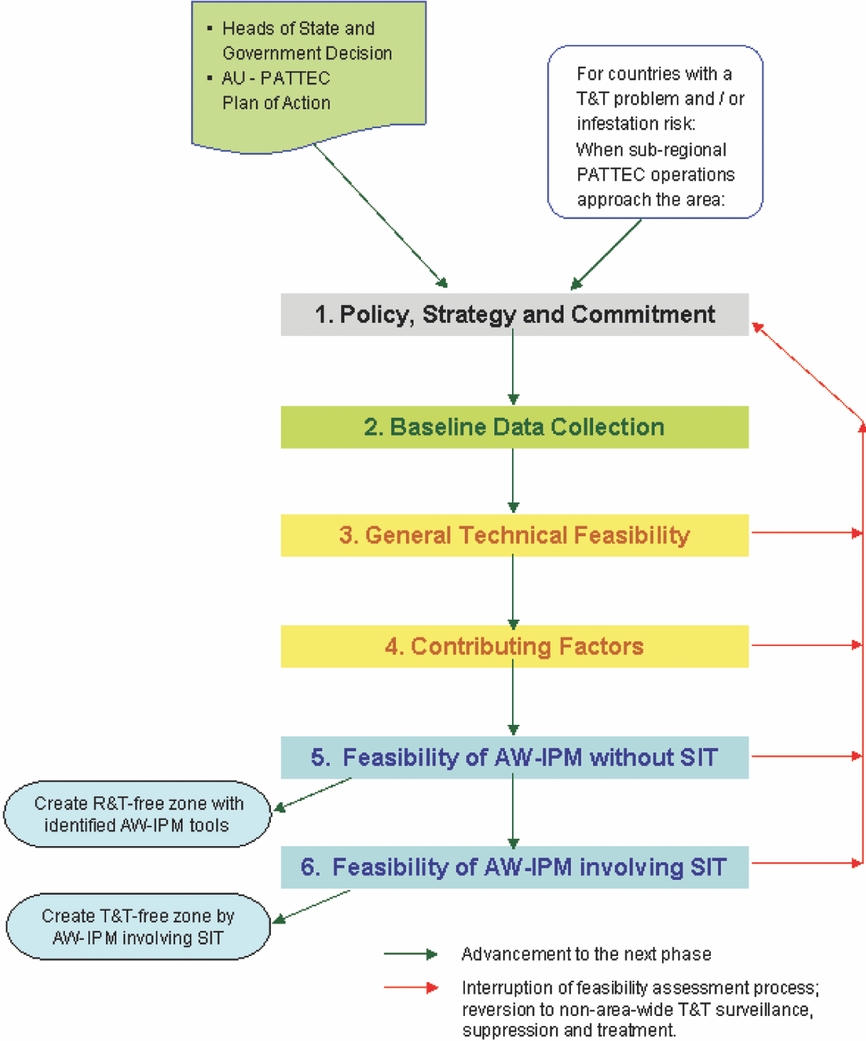
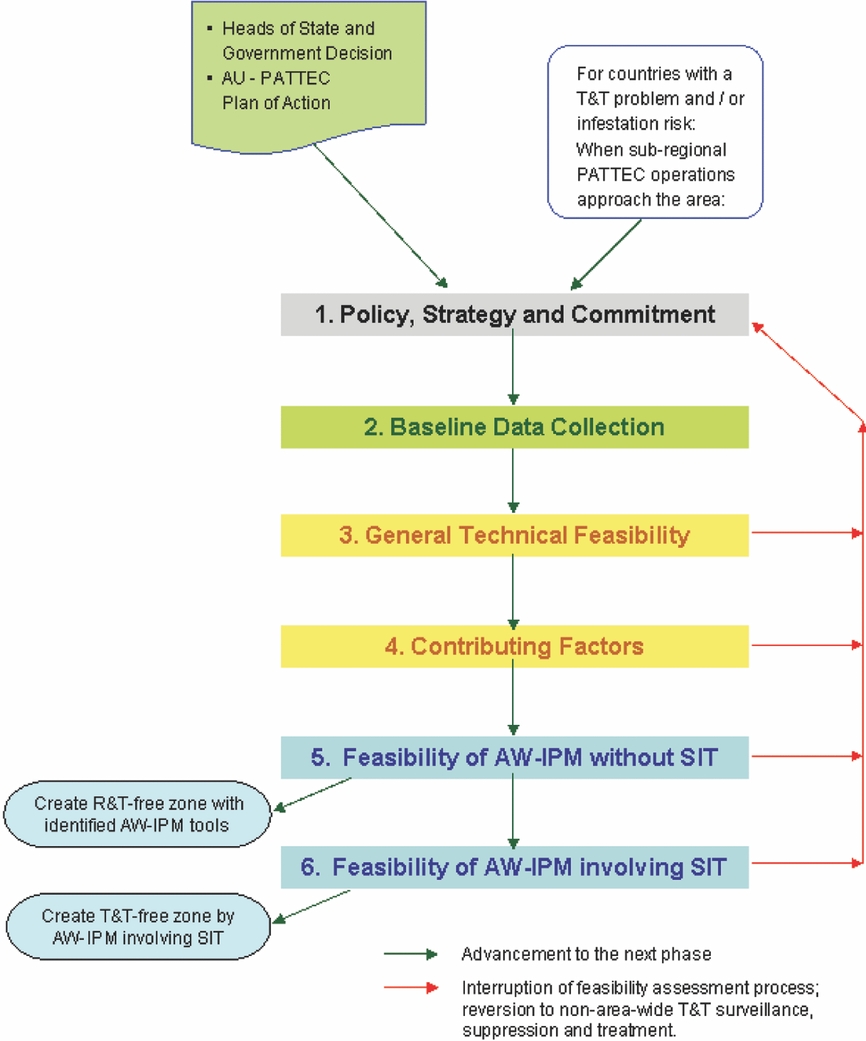
Phases of the feasibility assessment process.
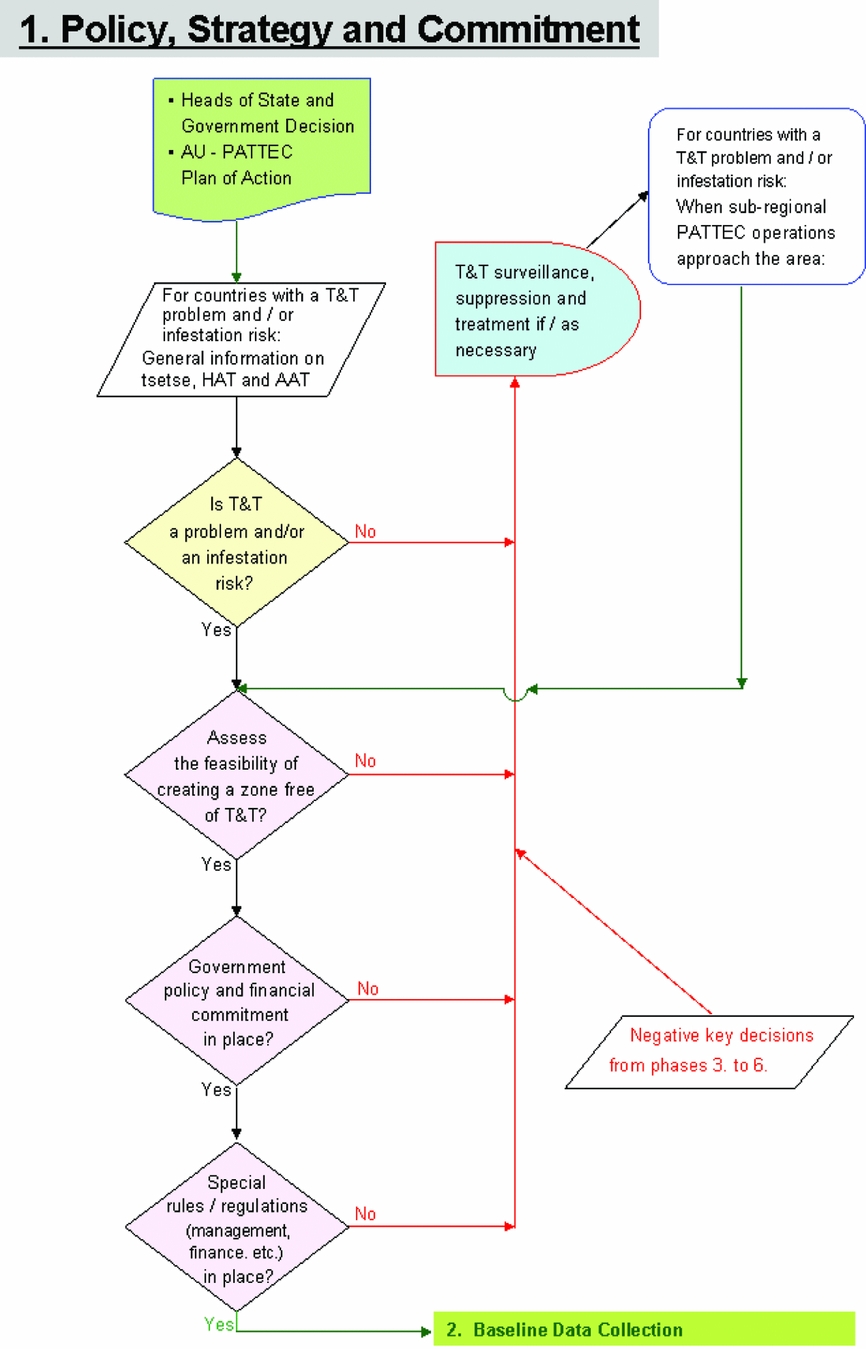
Policy, strategy and commitment.

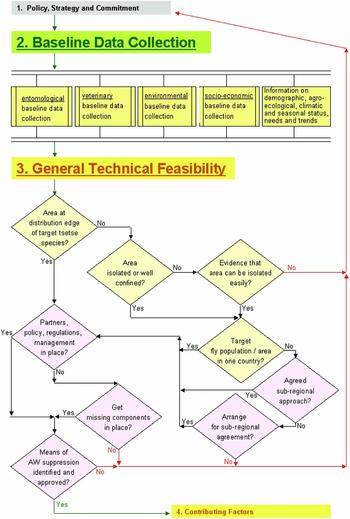
Baseline data collection and general technical feasibility assessment.

Feasibility of creating tsetse and trypanosomosis-free zones
Phased and conditional approach
Each country affected by T&T will have to follow its own procedures for determining whether or not T&T control is a priority, based on the prevalence of the disease and demands from farmers, and others. The procedures described here are those recommended when T&T has been designated a priority area for intervention and where funds are available (or are being sought) for its control:
-
• A geographical step-by-step approach is used to establish sustainable-free zones:
-
• Each campaign proceeds in a conditional approach in which subsequent phases are to be initiated provided only that those preceding them were successful.
This approach was broadly endorsed at the international level (AU/DREA, 2006), and specifically recommended ‘the adoption of a phased, conditional planning and implementation approach, in which National PATTEC projects should only enter the operational intervention phase only after having appropriately addressed the key components in earlier phases (i.e. feasibility assessment, capacity building, efficient management structures)’.
It had been agreed that the principles of area-wide integrated pest management (AW-IPM) should guide the planning and implementation of T&T intervention measures (FAO, 2002). In contrast to a ‘field-by-field’ approach, whereby several―but usually not all―farmers of a community implement a limited degree of control measures, the AW-IPM concept targets entire insect pest populations. In any situation the most appropriate intervention measures are selected for application as part of the campaign in a phased manner. The sequence of essential actions can be outlined as follows:
-
1) Policy and strategy development, long-term commitment, management structures:
-
a) Developing a general policy and national strategy on T&T if these are absent, and ensuring efforts to create tsetse-free zones are included in national strategy documents, such as the poverty reduction strategy papers;
-
b) Putting in place all necessary rules and regulations, tailored to the special needs of an operational AW-IPM programme;
-
c) Ensuring the existence of suitable management structures, communication, and so on;
-
d) Generating long-term commitment (funding and other resources) among responsible authorities and required partners and stakeholders.
-
-
2) Baseline data collection:
-
a) Entomological;
-
b) Veterinary parasitological/serological;
-
c) Socioeconomical;
-
d) Environmental.
-
-
3) General technical feasibility assessment: If T&T is a problem, or there is a risk of infestation, the assessment of the technical feasibility of applying the AW-IPM concept to create a T&T-free zone in a sustainable manner assumes one of the following approaches:
-
a) Starting at the edge of the distribution of a target tsetse fly population and following a ‘rolling carpet’ approach (Hendrichs et al., Reference Hendrichs, Vreysen, Enkerlin, Cayol, Dyck, Hendrichs and Robinson2005); or
-
b) Targeting a confirmed isolated tsetse fly population, where no risk exists of re-infestation;
-
-
4) Factors such as changing land-use practices, advances or retreats of tsetse populations, or other developments that could either increase or reduce feasibility should be taken into account, before assessing:
-
5) Feasibility of AW-IPM without a SIT component; and, possibly
-
6) Feasibility of AW-IPM with a SIT component.
When the assessment concludes it appears feasible, a T&T-free zone can be created and sustained, the subsequent phases will be:
-
1) Capacity building and pre-operational work;
-
2) Operational implementation of AW-IPM programme to create a T&T-free zone;
-
3) ‘Declaration of Assumption of Freedom’ of T&T and, eventually, ‘Declaration of elimination’ following a phased process of standardized entomological and veterinary monitoring.
Process of assessing the feasibility of creating a T&T-free zone
Flow chart illustrating the decision flow
Fig. 1 shows the flow chart symbols used in the flow charts in this paper (Figs. 2–3 and 4–7), which illustrate the approach of information gathering and decision making during the process of assessing whether the sustainable creation of a T&T-free zone appears feasible.
Factors contributing to the decision process.

Feasibility of AW-IPM without a SIT component.

Feasibility of AW-IPM involving SIT.

The phased decision flow explained
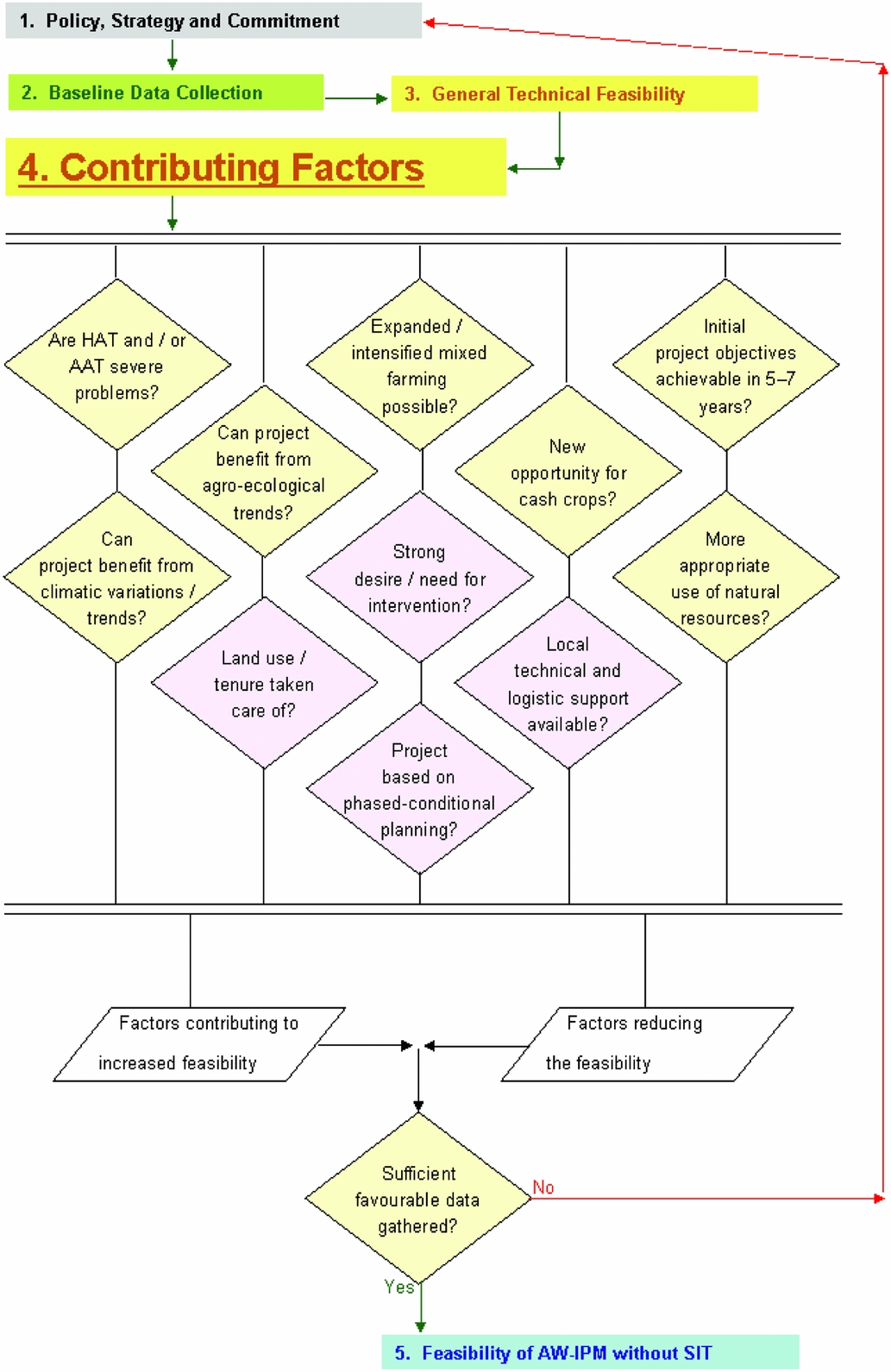
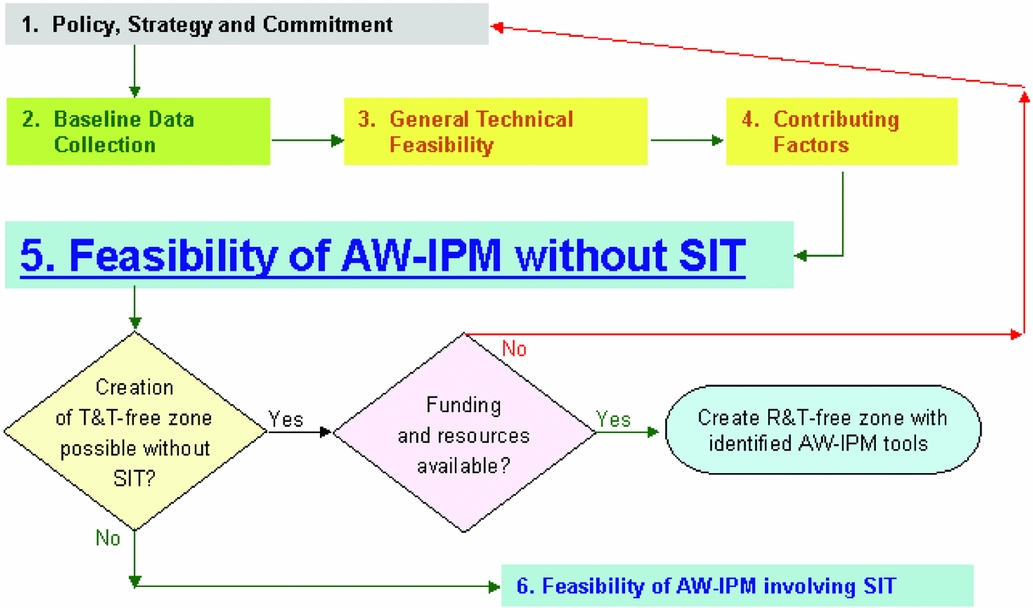
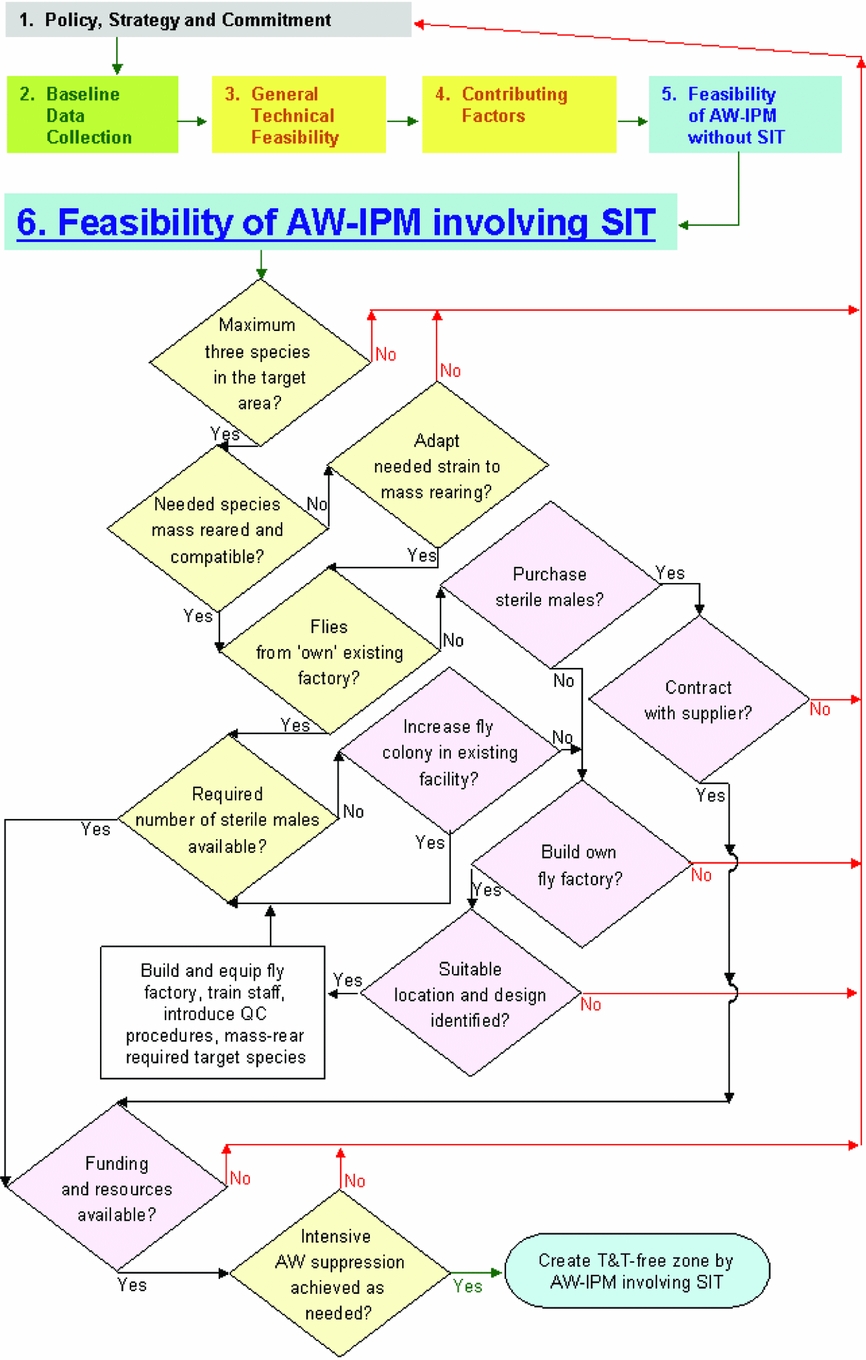
Although this paper focuses on technical feasibility, it is important to be aware the process is complex, because of various interdependencies with technical and non-technical aspects. Several discriminating factors need to be taken into account, for example, whether T&T are considered a problem or infestation risk in/for the area concerned and whether the investment of resources into removing them is socio-economically desirable and justifiable. The term ‘feasibility’ is, therefore, used in this paper in the broad sense, including for the technical feasibility and non-technical discriminating factors. This complexity is reflected in the flow charts (Figs. 2–4 and 5–7). Where the feasibility assessment process needs to be interrupted (red-marked ‘No’ and red lines in the flowcharts), reverting to non-area-wide surveillance, suppression, and treatment of T&T is recommended. Eleven out of these 19 ‘Back-to-Phase 1’ instructions in the flowcharts are due to non-technical reasons. Fig. 2 gives an overview of the phases of the feasibility assessment process.
Policy, strategy and commitment
This phase (Fig. 3) starts with the question: ‘Is T&T a problem and/or an infestation risk?’ It is assumed WHO will be involved in determining the degree of the problem in relation to HAT, and FAO and IAEA for nagana.
Although this phase is external to the technical feasibility assessment, to proceed to the technical phase, several actions need to be taken and decisions made. If any of the following points do not apply or respective action cannot be taken, the feasibility assessment stops and activities, if needed, revert to non-area-wide surveillance, suppression and treatment.
-
• T&T constitutes a problem and/or is an infestation risk.
-
• A political decision is made to invest into and assess the feasibility of creating a T&T-free zone.
-
• An agreed relevant national policy and the strategy are in place and there is awareness and concurrence on the need for long-term commitment by the authorities involved and essential stakeholders.
-
• There is confirmed political willingness to generate the special rules and regulations and establish a management structure compatible with operational AW-IPM programmes.
In the event of T&T management reverting to surveillance and localized reactive tsetse suppression and disease treatment, this will be reviewed if or when the situation changes.
Baseline data collection
Accurate baseline data are needed for appropriate decision-making during the feasibility assessment process and for the planning of T&T interventions. Insufficient resources for the collection of baseline data will impede appropriate planning and waste time and funds during the capacity building, pre-operational, and operational phases. This will most likely result in investing more funds and time at a later stage than may have been ‘saved’ earlier, because mistakes need to be corrected or time lost may need to be recovered. Depending on the amount and quality of information available, the collection of appropriate baseline data in an area of 10,000–15,000 km² will require between US$ 400,000 and US$ 1 million. These approximate estimates will depend on the nature of the terrain and accessibility of the area; more detailed cost estimates for T&T control, including monitoring, are given by Shaw et al. (Reference Shaw, Torr, Waiswa, Cecchi, Wint, Mattioli and Robinson2013). Fig. 4 illustrates the components of baseline data collection and the process of general technical feasibility assessment.
The following types of baseline data need to be collected.
-
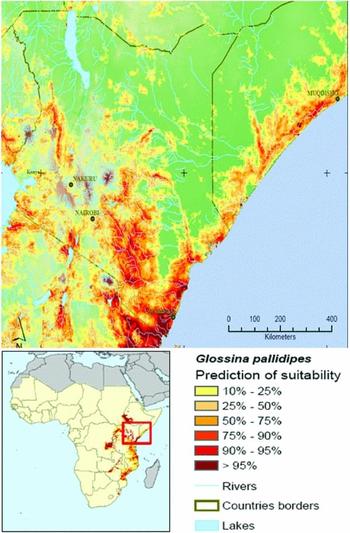
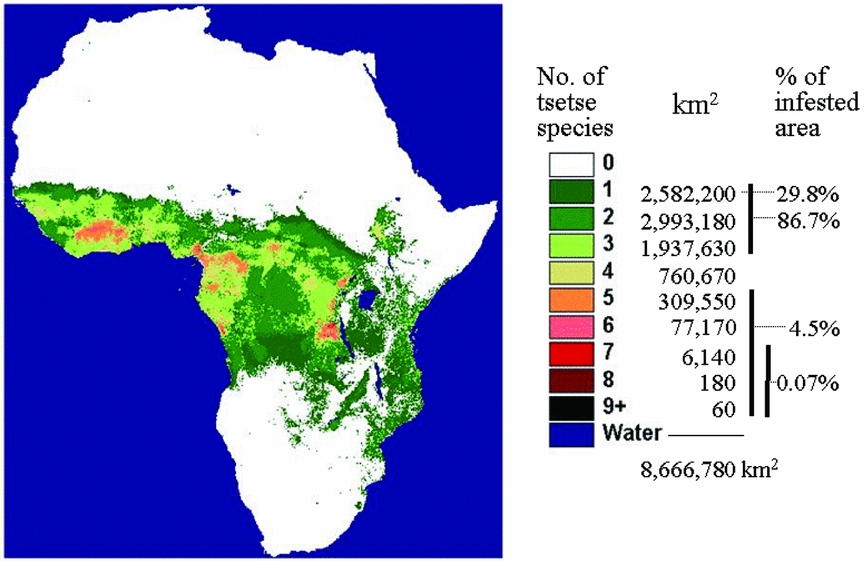
1. Entomological. Satellite imagery and distribution maps: Tsetse presence/absence risk prediction maps (Wint, Reference Wint2001) illustrate the distribution of target fly species. These often occur as geographically fragmented populations, as shown in Fig. 8 for G. pallidipes in East Africa. Such fragmentation is an advantage for planning the creation of T&T-free zones. Recent developments in predictive modelling of the potential distribution of species, for example, using Maxent software, have made the production of maps of predicted suitability for tsetse much more accessible for projects lacking the option to engage experts with capacity for more demanding modelling techniques (Bouyer et al., Reference Bouyer, Dicko, Cecchi, Ravel, Guerrini, Solano, Vreysen, De Meeûs and Lancelot2015; Dicko et al., Reference Dicko, Percoma, Sow, Adam, Mahama, Sidibé, Dayo, Thévenon, Fonta, Sanfo, Djiteye, Salou, Djohan, Cecchi and Bouyer2015). Thirty-one (31) different tsetse species and sub-species occur, and more than one may be found in a proposed project area. Planning and implementation of baseline data collection for T&T intervention programmes should make use of standardized land cover mapping and GIS (Cechi et al., Reference Cechi, Mattioli, Slingenbergh, De La Rocque and Feldmann2008). Fig. 9 illustrates that in 30% of the infested area there is only a single species, and no more than three species in more than 85% of the infested area. The largest number of tsetse species is found in the fusca group (forest flies) and although these can be important vectors of trypanosomosis when they come into contact with cattle (Leak et al., Reference Leak, Colardelle, D'Ieteren, Dumont, Feron, Jeannin, Minengu, Mulungo, Ngamuna, Ordner, Sauveroche, Trail and Yangari1991), they are mostly absent in cattle rearing areas. If and when the forest habitat is removed, they tend to decrease in abundance. SIT is impractical in situations where several species of the fusca group occur (such as the forest area of the Congo basin). Moreover, only 8–10 species are considered of economic importance or of significance to human health. Tsetse flies have a limited flight range so many of these fragmented populations are biologically isolated from each other. Maps showing the probability of the presence and absence of many species can be downloaded from the PAAT Information System (PAAT-IS: http://www.fao.org/ag/againfo/programmes/en/paat/maps.html). The existence of such ‘islands’ of infestation involving one or just a few species is of critical importance in eliminating and preventing re-infestation.
-
2. Tsetse population genetic and morphometric data: Gene frequencies of flies sampled from various populations allow an assessment of the level of gene flow (i.e. isolation) between different populations (Krafsur et al., Reference Krafsur, Marquez and Ouma2016). A key requirement for SIT to be feasible is to isolate a tsetse population, and genetic studies can therefore be an important component when assessing feasibility. This can be done by analysing the spatio-temporal variation of genetic markers; for example, microsatellite loci. Such studies have been carried out on populations of G. palpalis gambiensis Vanderplank, 1911 in and around the Niayes area of western Senegal where a successful elimination programme is taking place using the SIT (De Meeus et al., Reference De Meeus, Ravel, Rayaissé, Kaba, Courtin, Bouyer, Dayo, Camara and Solano2014). As molecular genetic studies require considerable expertise and specialized laboratories, an alternative method for genetic studies has been developed based on wing morphometrics. Software developed specifically for this purpose (see: http://mome-clic.com/) can be used to process morphometric characters (Dujardin, Reference Dujardin2008), e.g. coordinates or ‘landmarks’ on tsetse fly wings, and distinguish among species, subpopulations and ecotypes, and sometimes even between successive generations (Getahun et al., Reference Getahun, Cecchi and Seyoum2014). This provides a cost-efficient method to assess the dispersal potential and obtain information on the level of isolation.
Predicted occurrence of Glossina pallidipes (Austen, 1903) in East Africa, showing fragmentation of tsetse populations (Source: PAAT-IS).

Quantification of areas with one or more tsetse fly species.

Manuals and data bases: Guidelines for the collection of baseline data for AW-IPM programmes have been developed and published (Leak et al., Reference Leak, Ejigu and Vreysen2008) and consist of three parts: (1) Basic Biology and Anatomy of the Tsetse Fly; (2) Planning and Preparing for Baseline Data Surveys; and (3) Implementation of Baseline Tsetse Surveys. In addition, databases based on MS-Access have been designed for recording entomological survey data for SIT projects. It is desirable to use a standardized format whilst retaining flexibility for specific situations and requirements. It is important to design databases before project implementation takes place in the field and ensure this design takes into account all the required aspects of the data.
-
3. Veterinary, Parasitological and Serological: No specific manuals/guidelines have been developed on standardized veterinary and parasitological/serological baseline data collection for AW-IPM programmes. However, the principles for representative prevalence surveys have been specified (FAO/IAEA, 2003) and diagnostic techniques described in some detail in an FAO publication: A Field Guide for the Diagnosis, Treatment and Prevention of African Animal Trypanosomosis (Uilenberg and Boyt, Reference Uilenberg and Boyt1988).
-
4. Environmental: The International Livestock Research Institute (ILRI) developed procedures for assessing the environmental impact of a T&T intervention project in southern Ethiopia (Wilson et al., Reference Wilson, McDermott, Reid, Zerihun, Sebesse and Tesfaye2002). Subsequently, the United States Agency for International Development contracted ILRI to further develop these procedures for a standardized environmental baseline data collection (Maitima et al., Reference Maitima, Rodriguez, Kshatriya and Mugatha2007).
-
5. Socioeconomic: No specific manuals/guidelines have been developed on standardized socio-economic baseline data collection for AW-IPM programmes, but a standardized socio-economic data collection effort was made for a T&T intervention project in southern Ethiopia (Rutebuka, Reference Rutebuka2006).
Collection of all the technical baseline data should be well coordinated. Often the target area is too large to cover with the required intensity; and thus, there is need to identify representative smaller areas/transects so one can assess the information from all four technical fields listed above, for interdependencies and respective causal interpretation of developments and trends. In addition to these four major technical fields, further relevant information will need to be gathered on demographic, agroecological, and climatic needs, trends and seasonal variations. All information will be stored in databases and will be available for the subsequent feasibility assessment and later interpretations.
Technical feasibility assessment
In principle, two different approaches can be used to develop T&T-free zones:
Approach 1: A ‘rolling carpet’ strategy is an approach whereby the intervention area is progressively shifted by expanding the elimination area. Ideally this approach is initiated from the edge of natural barriers or distribution limits of the population and is pursued until the tsetse-free area reaches the opposite distribution limit or another natural barrier. Its essential artificial barriers (such as traps and targets) are created and maintained in the absence of natural barriers.
Approach 2: This approach targets isolated populations of the pest that one can remove one-by-one. This approach requires determining the best sequence, to eliminate the isolated populations and minimize any risk of re-infestation (Feldmann, Reference Feldmann, Maudlin, Holmes and Miles2004). The choice of which species is to be removed first would be based on entomological assessments of distribution and abundance and of vectorial capacity, assessed predominantly from infection rates and host-feeding patterns. This would include published information, for example, showing palpalis group are poor vectors of T. congolense infections.
Only trapping and suppression efforts, and treatment of infected hosts (instead of AW-IPM operations) is advised in the centre of major fly belts, until a sub-regional AW-IPM operation started at the edge of the fly belt—possibly in another country—has expanded the fly-free area and shifted the distribution edge of the fly population towards the proposed candidate intervention area.
As illustrated (Fig. 4), the feasibility assessment would proceed only when confirmations of all the following points are in place.
-
• The proposed target intervention area or the target fly population is at the edge of the distribution of the species.
-
• If this is not the case:
-
• The target area or target fly population is isolated or well confined or evidence of the possible routes of re-infestation can be isolated in a sustainable manner.
-
• For most populations not located at the periphery of the distribution area the process of feasibility assessment would stop.
-
• If the target area or target tsetse fly population extends across national border(s), a sub-regional approach has been agreed.
-
• For this, the necessary national (and/or sub-regional) policies, strategies, regulations, stakeholder agreements, long-term commitments, and management set-ups, and so on, are in place.
-
• A combination of techniques for area-wide tsetse suppression has been identified and approved for application by the national authorities responsible for T&T control.
If any of the above points cannot be confirmed, the feasibility assessment process stops and action against the problem will revert to ‘Phase-1’, and remain restricted to non-area-wide surveillance, suppression and treatment.
Localized community-based control tactics are usually unsuitable or inadequate for area-wide tsetse suppression. Communities participating in the control efforts usually fail to maintain the initial enthusiasm once institutional support has ended (Jordan, Reference Jordan1995). Reliance on community participation is unsuitable as a general strategy under all scenarios (Barrett and Okali, 1998). Ground-based controls conducted by tsetse control staff are also difficult to implement over larger areas, as they are logistically demanding (requiring the creation of access roads) and expensive (Shaw, Reference Shaw2003). For such situations other methods of area-wide tsetse suppression will be needed, either to directly create a tsetse-free zone or to achieve a significant reduction of the population to enable efficient implementation of the SIT.
In recent years the sequential aerosol technique (SAT) using repeated aerial spraying of ultra-low volume formulations of non-persistent insecticides, has been significantly improved in terms of effectiveness and environmental friendliness (Kgori et al., Reference Kgori, Modo and Torr2006), and SAT operations in 2001–02 apparently removed G. morsitans centralis Machado from the Okavango delta of Botswana (Allsopp and Philemon-Motsu, Reference Allsopp and Philemon-Motsu2002). In 2006, SAT operations in the sub-region were expanded to the remaining tsetse-infested areas in Botswana and to the infested areas in Namibia, southeastern Angola and southwestern Zambia (Schofield and Kabayo, Reference Schofield and Kabayo2008). Thorough environmental investigations (HOORC, Reference Babayani, Bonyongo, Modo, Motshegwa, Otlaadisa and Mazvimavi2006), which included pre-spraying monitoring and recovery surveys, concluded (based on the 2001–2003 and the 2006 experiences in Botswana and neighbouring countries) ‘no evidence of unacceptable environmental effects of the use of deltamethrin for tsetse control could be detected’. Nevertheless, often insufficiently informed government authorities, donors, and other stakeholders continue to resist to incorporate SAT as part of AW-IPM operations.
The SAT operations in 2001/2002 and 2006 in Botswana and neighbouring countries were simple, because of the suitable flat terrain and relatively sparse vegetation. However, other tsetse-infested areas have dense vegetation and elevated land and are difficult to access. Feasibility studies for the use of SAT have now been carried out in Uganda, Ethiopia and Kwazulu-Natal (IAEA unpublished reports) and can be used as examples or models.
Factors contributing to the general feasibility assessment
The T&T problem is complex and shows interdependencies with various other factors, trends, and developments. Any intervention measures will have direct or indirect implications, and a feasibility assessment should take the following into account (FAO, 2002):
-
• The severity of the impact of the T&T problem, as suggested by a high demand for trypanocidal drugs (If, for example, in the candidate area more than 25% of the expenditure for veterinary drugs should be for trypanocides);
-
• Local communities and national government display the desire and need for intervention. This should be reflected in funding and the resources made available for intervention and in the preparedness to establish long-term funding and investment scenarios;
-
• The opportunity to support poverty reduction, increase food security, and maximize socio-economic returns through enhanced sustainable agricultural rural development, such as:
-
○ Expansion and intensification of mixed farming,
-
○ Improved subsistence farming and/or production of cash crops,
-
○ Land use and tenure as components of sustainability,
-
○ Sustainable and environmentally appropriate utilization of natural resources.
Regional or national maps can be used to show the predicted potential of cropping and livestock production in the absence of the T&T problem.
The following factors contribute to increased feasibility and a probability of successful and sustainable outcomes:
-
1. The existence is confirmed of natural barriers and/or the possibility of artificial confinement by the creation of barriers using insecticide-impregnated traps or targets, for example;
-
2. Operations are conducted as part of a longer-term ‘rolling carpet’ AW-IPM operation at the edge of the distribution of the target population;
-
3. Activities can be phased and initial objectives are achievable within 5–7 years of a programme/project cycle;
-
4. Agroecological production trends favour the removal of the T&T problem;
-
5. Favourable climatic variations and trends to enhance T&T intervention measures;
-
6. Communities and local and national authorities are committed to/involved in removing the T&T problem;
-
7. Local supply, repair, and maintenance services are in close proximity and available in a consistent manner;
-
8. Ongoing agricultural development projects are in place for which T&T has been identified as a major development constraint.
In addition, one should assess the factors shown in Fig. 5 that could increase or decrease the feasibility of creating a T&T-free zone. We recommend that the feasibility assessment process is continued only if sufficient favourable factors/data have been gathered (i.e. at least five, preferably all, of the above factors).
Feasibility of area-wide integrated pest management efforts for creating a T&T-free zone without a SIT component
Provided all components in earlier phases of the feasibility process have been addressed in a satisfactory manner, it can now be assessed whether the AW-IPM campaign to create a T&T-free zone appears feasible and may be planned and implemented without or with an SIT component. The decision flow—after having addressed all components in earlier phases—is as follows:
-
• If earlier campaigns or test operations against the target species in the same or a similar habitat provide sufficient technically feasible and economically and environmentally justifiable evidence for creating a T&T-free zone by area-wide suppression efforts (without a SIT component), preparations for respective operations should be initiated (Fig. 6).
-
• If all funding and resources, as well as technical and non-technical components earlier mentioned are in place, the AW-IPM campaign should be implemented without an SIT component.
SIT should not be considered in the following situations:
-
a) The area-wide suppression tactic itself is likely to lead easily to elimination in a cost-effective manner;
-
b) There is no technically feasible area-wide suppression technique available and/or approved for application.
Feasibility of area-wide integrated pest management efforts for creating a T&T-free zone involving a SIT component
Decision-makers will arrive at this point in the feasibility assessment process (Fig. 7), only if all components in earlier phases have been addressed in a satisfactory manner, except—in this case—it was impractical to create a zone free of the problem by area-wide tsetse suppression alone, without SIT.
The technical components involved in the incorporation of the SIT as part of an AW-IPM programme are summarized in a publication on the creation of a T&T-free zone on Unguja Island of Zanzibar (Vreysen et al., Reference Vreysen, Saleh, Ali, Abdulla, Zhu, Juma, Dyck, Msangi, Mkonyi and Udo Feldmann2000). Technically, the tsetse ‘SIT package’ needs:
-
a) Sufficient numbers of good quality, genetically compatible and competitive sterile males; and
-
b) Weekly aerial release capacity over a minimum period of 18 months.
The initiation of tsetse mass-production for SIT will normally be based on the availability of a mass-rearing adapted ‘seed’ colony of about 100,000 female flies. Standardized mating compatibility field cage tests (Mutika et al., Reference Mutika, Opiyo and Robinson2001) need to be conducted to ascertain the behavioural and mating compatibility of the mass-reared tsetse fly strain with the target population.
Tsetse production capacity will necessitate, in the foreseeable future, the construction of sub-regional fly factories in Africa for more than 50 million mass-reared colony females, and in addition, several back-up or ‘seed’ colonies at different locations each with at least 100,000 tsetse colony females. FAO/IAEA (2004) listed criteria for an optimal location/site selection of tsetse fly factories and provides generic plans describing the relative space needed for holding, feeding and processing of identified colony sizes, to facilitate the planning work and provide a better basis for respective decision-making and budgeting.
Suitable procedures for the efficient transport of sterile males from sub-regional fly factories to release projects need to be in place. During the programme on Unguja Island, sterile males were released by air in cartons and boxes (Vreysen et al., Reference Vreysen, Saleh, Ali, Abdulla, Zhu, Juma, Dyck, Msangi, Mkonyi and Udo Feldmann2000), but future systems are being developed for the automated release of unboxed adults and, if necessary, simultaneous release of more than one tsetse fly species at the required release rate.
During the phase of pre-release population suppression and based on the findings of the entomological baseline data collection (see ‘Technical Feasibility Assessment’) structured entomological monitoring and reporting systems need to be introduced (FAO/IAEA, 2004; Vreysen, Reference Vreysen, Dyck, Hendrichs and Robinson2005), to assess progress in population suppression and enable decision-makers to determine when sterile fly releases can be initiated.
With reference to the flowcharts in Figs. 2–4 and 5–7, the decision flow would advance only if confirmation on the points below is obtained. If one or more of these points are unconfirmed, the feasibility assessment process stops and action against the T&T problem will remain restricted to non-area-wide surveillance, suppression and treatment.
-
• Although SIT was—as part of an integrated campaign—successfully used to remove populations of three fly species from 3500 km² of agricultural land in Burkina Faso (Cuisance et al., Reference Cuisance, Politzar, Merot, Tamboura, Bauer, Kaboré and Filledier1985), preferably only one or two, maximum three, target tsetse species should exist in the project area.
-
• Mass-reared and compatible strains of the target species need to be available; otherwise, appropriate wild fly material would need to be collected and strains colonized, adapted to mass-rearing procedures, and have their ability confirmed to compete with wild males for mating with females (this process will likely take several years).
-
• If adapted and compatible flies for mass rearing need to be obtained from an external supplier, specific contractual arrangements must be put in place.
-
• If the required sterile males will be produced locally and the capacity of existing rearing facilities is insufficient, new fly production facilities need to be constructed.
-
• Once the number of required high quality sterile males is guaranteed—either through purchase contracts or from existing or newly constructed production facilities—all required funding and resources need to be confirmed and the technical and non-technical components have to be in place.
-
• When test releases and other entomological monitoring activities confirm the required level of area-wide pre-release suppression of the tsetse population, operational releases of sterile males should begin as part of an AW-IPM programme to create a T&T-free zone.
Activities following confirmed feasibility
Provided the described process has ascertained the feasibility of creating a T&T-free zone in the candidate area, the phased and conditional planning and implementation approach can enter the subsequent phases of capacity building, pre-operational activities and, eventually, the operational phase. Considering the complexity of the problem, the need to implement all measures against T&T, in the broader context of human well-being, poverty reduction and food security—with improved public health, enhanced livestock–agricultural development, and the sustainable and appropriate utilization of available natural resources guiding the process of strategy development, planning, and implementation—is obvious.