Introduction
The past decade has witnessed an upsurge in the knowledge of genomic and transcriptomic resources. Biologists are now utilizing next generation sequencing (NGS) technologies for generation and analysis of vast amounts of data of considerable importance. Among these the de novo transcriptome sequencing has become one of the most sought after tool for an easy resource to gain information (Oksman-Caldentey et al., Reference Oksman-Caldentey, Inze and Orešič2004; Sangwan et al., Reference Sangwan, Tripathi, Singh, Narnoliya and Sangwan2013, Reference Sangwan, Mishra, Tripathi, Kushwaha and Sangwan2014). Steady decline in the cost of sequencing has facilitated a cost and labour effective data flow through this technology (Egan et al., Reference Egan, Schlueter and Spooner2012, Xiao et al., Reference Xiao, Zhang, Chen, Lee, Barber, Chakrabarty, Desgagné-Penix, Haslam, Kim, Liu and MacNevin2013). Transcriptome sequencing is preferred as it provides vital information by being influenced by different developmental stages and several physiological factors like environmental changes, etc. unlike that in genome. Therefore, the technology is supporting the possibility of generation of comprehensive view of various pathways involved in the secondary metabolism of medicinal and aromatic plants. (Gupta et al., Reference Gupta, Goel, Pathak, Srivastava, Singh, Sangwan and Trivedi2013; Sangwan et al., Reference Sangwan, Tripathi, Singh, Narnoliya and Sangwan2013).
Medicinal plants transcriptomes: an emerging concept
Plants are able to produce an array of organic molecules. Based on their utility for plant survival; these compounds can be categorized into two classes viz primary and secondary metabolites (Singh-Sangwan et al., Reference Singh Sangwan, Abad Farooqi and Sangwan1994). Secondary metabolites comprise enormously distributed group of chemicals synthesized in various kingdoms of life like plants more often and additonally fungi, algae, bacteria and animals. Previously, these compounds were called as secondary because their absence or any alteration in their level in plants does not lead to lethal effects unlike primary metabolites, which are essential for growth and development. Recently, this old concept about the secondary metabolites has been revised and it is largely believed and proven in increasing cases that secondary metabolites play a very important role in plant development, adaptation and defence (Bose et al., Reference Bose, Yadav, Mishra, Sangwan, Singh, Mishra, Srivastava and Sangwan2013; Yadav et al., Reference Yadav, Sangwan, Sabir, Srivastava and Sangwan2014; Nick, Reference Nick2015). A lot of studies have been conducted to reveal the functional significance of secondary metabolites in medicinal plants, the information available in this respect is however available in scattered manner (Chowhan et al., Reference Chowhan, Singh, Batish, Kaur, Ahuja and Kohli2013; Lee et al., Reference Lee, Lee, Chung, Jeong and Chung2015; Sunohara et al., Reference Sunohara, Baba, Matsuyama, Fujimura and Matsumoto2015).
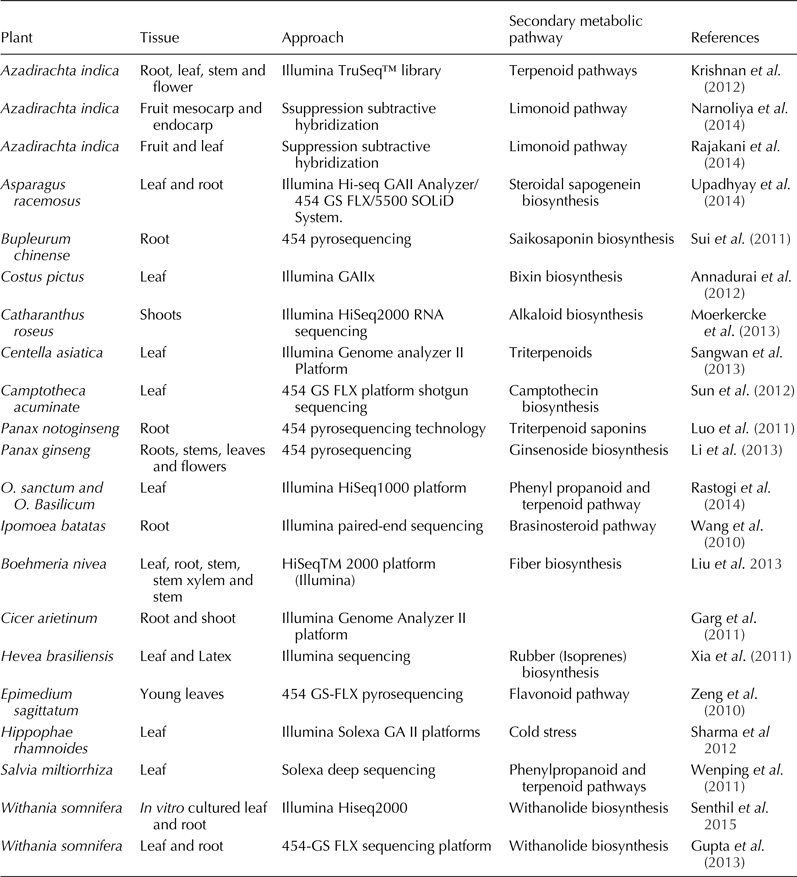
Medicinal plants were being used traditionally since time immemorial throughout the world including India and China, being the major producers. These plants form the basis of origin and development of herbal formulations (Sangwan et al., Reference Sangwan, Yadav and Sangwan2003). In some plants like Withania somnifera, Azadirachita indica, Mentha species, all parts have the medicinal properties, but in others these properties are tissues specific and even cell specific like production of vincristine and vinblastine is reported only in leaves (Kushwaha et al., Reference Kushwaha, Sangwan, Tripathi and Sangwan2013; Narnoliya et al., Reference Narnoliya, Rajakani, Sangwan, Gupta and Sangwan2014; Sangwan et al., Reference Sangwan, Mishra, Tripathi, Kushwaha and Sangwan2014; Pan et al., Reference Pan, Saiman, Mustafa, Verpoorte and Tang2016). Fragrances of oils extracted from aromatic plants such as Geranium, Cymopogan, Ocimum species and Eucalyptus have medicinal properties. This is the reason why these are used in aromatherapy. The therapy was previously used in some countries of the world but recently it has evolved as a modern therapy to relieve the tension and depression resulting in mental relaxation (Cooke and Ernst, Reference Cooke and Ernst2000; Fakari et al., Reference Fakari, Tabatabaeichehr, Kamali, Fakari and Naseri2015). These essential oils are also used as a constituent in formulations of many cosmetic products (Sangwan et al., 2003; Wang et al., Reference Wang, Lin and Lin2016). Resurgence in plant-based herbal medicine is due to their fewer or none side effects unlike the allopathic and synthetic medicines. These compounds are synthesized via various complex and interconnected metabolic processes and limited information is available about their biosynthetic pathways. So studies on biosynthetic pathways related to genetic mechanism for the synthesis of these compounds are in demand (Kushwaha et al., Reference Kushwaha, Sangwan, Tripathi and Sangwan2013; Srivastava et al., Reference Srivastava, Sangwan, Tripathi, Mishra, Narnoliya, Misra and Sangwan2015; Mishra et al., Reference Mishra, Bansal, Mishra, Sangwan, Asha, Jadaun and Sangwan2016). Secondary metabolites such as withanolides, artemisinin, terpenes, vincristine and vinblastine are synthesized by different plants through different pathways such as alkaloid, phenlpropanoid, terpenoid pathway, etc. (Sangwan et al., Reference Sangwan, Yadav and Sangwan2003, Reference Sangwan, Tiwari, Mishra, Yadav, Tripathi, Kushwaha and Sangwan2015; Sangwan and Sangwan, Reference Sangwan and Sangwan2014; Jadaun et al., Reference Jadaun, Sangwan, Narnoliya, Tripathi and Sangwan2016; Mishra et al., Reference Mishra, Bansal, Mishra, Sangwan, Asha, Jadaun and Sangwan2016). The transcriptomes of many important medicinal plants and their different parts as well such as leaf, root and stem, etc. have been reported so far (Gupta et al., Reference Gupta, Goel, Pathak, Srivastava, Singh, Sangwan and Trivedi2013; Narnoliya et al., Reference Narnoliya, Rajakani, Sangwan, Gupta and Sangwan2014; Rajakani et al., Reference Rajakani, Narnoliya, Sangwan, Sangwan and Gupta2014; Rastogi et al., Reference Rastogi, Meena, Bhattacharya, Ghosh, Shukla, Sangwan, Lal, Gupta, Lavania, Gupta, Nagegowda and Shasany2014). Elucidation of pathway for the biosynthesis of secondary metabolites via different genes through transcriptomic approaches have been attempted in several cases. This will open up the possibility to uncover novel gene families with discrete functions using newer set of plant specific transcripts (Kumar et al., Reference Kumar, Sangwan, Mishra, Sabir and Sangwan2012; Yamazaki et al., Reference Yamazaki, Mochida, Asano, Nakabayashi, Chiba, Udomson, Yamazaki, Goodenowe, Sankawa, Yoshida and Toyoda2013; Rastogi et al., Reference Rastogi, Meena, Bhattacharya, Ghosh, Shukla, Sangwan, Lal, Gupta, Lavania, Gupta, Nagegowda and Shasany2014). An account of the medicinal plant transcriptomes published till date with the details such as species and the strategies used to sequence the particular tissue of the plant shows a sharp trend of the development in the area (Table 1).
Transcriptomic resources from medicinal plants

Transcriptomes of some of the most important plants such as Salvia miltiorrhiza, Artemisia annua, Withania somnifera, Centella asiatica, Catharanthus roseus and Ocimum species, etc. are presently available (Wenping et al., Reference Wenping, Yuan, Jie, Lijun and Zhezhi2011; Sangwan et al., Reference Sangwan, Tripathi, Singh, Narnoliya and Sangwan2013; Soetaert et al., Reference Soetaert, Van Neste, Vandewoestyne, Head, Goossens, Van Nieuwerburgh and Deforce2013; De Bernonville et al., Reference De Bernonville, Foureau, Parage, Lanoue, Clastre, Londono, Oudin, Houillé, Papon, Besseau and Glévarec2015; Rastogi et al., Reference Rastogi, Meena, Bhattacharya, Ghosh, Shukla, Sangwan, Lal, Gupta, Lavania, Gupta, Nagegowda and Shasany2014; Gupta et al., Reference Gupta, Goel, Agarwal, Asif, Sangwan, Sangwan and Trivedi2015). Recently, our group had reported the de novo sequencing of the leaf transcriptome of Centella asiatica, which was one of earliest such attempt for medicinal plants in Apiaceae family (Sangwan et al., Reference Sangwan, Tripathi, Singh, Narnoliya and Sangwan2013). Another major leap of progress in de novo transcriptomes from medicinal plant is generation of transcriptome data for Indian medicinal plant neem (Krishnan et al., Reference Krishnan, Pattnaik, Jain, Gaur, Choudhary, Vaidyanathan, Deepak, Hariharan, Krishna, Nair, Varghese, Valivarthi, Dhas, Ramaswamy and Panda2012). Combined report of comparative account of genome and four transcriptomes for neem (Azadiracta indica) reveals many key steps involved in neem secondary metabolic pathway (Krishnan et al., Reference Krishnan, Pattnaik, Jain, Gaur, Choudhary, Vaidyanathan, Deepak, Hariharan, Krishna, Nair, Varghese, Valivarthi, Dhas, Ramaswamy and Panda2012). Neem is the first member of Meliaceae family to be sequenced, analysed for phylogentic study and compared with other higher order plants in terms of sequence similarity. Our group at CSIR-CIMAP, Lucknow further analysed the tissue specific expressed sequenced tags (ESTs) generated in suppression subtractive hybridization approaches to further add to the knowledge of important pathway transcripts (Narnoliya et al., Reference Narnoliya, Rajakani, Sangwan, Gupta and Sangwan2014). The approach not only gave highly tissue specific transcripts but also helped us to report first full length gene from neem, which is hydroxyl methyl glutaryl CoA enzyme A reductase (HMGR) a key regulatory gene in the biosynthesis of several isoprenoids including limonoids in neem (Rajakani et al., Reference Rajakani, Narnoliya, Sangwan, Sangwan and Gupta2014; Narnoliya et al., Reference Narnoliya, Rajakani, Sangwan, Gupta and Sangwan2014). Also various lipids and storage protein specific transcripts were located and assigned to mesocarp, endocarop, leaf and whole fruit (Narnoliya et al., Reference Narnoliya, Rajakani, Sangwan, Gupta and Sangwan2014). Further, specific gene families such as glucosyltransferase and cytochrome P450 plays a major role in isoprenoid diversification attributing specificities to the chemical moieties as well as to the native producer system. The information gained from the transcriptomic data could be retrieved and further validated using wet laboratory experiments, as in case of Neem deeper insights into the molecular biology in a much shorter time span have been achieved, which was difficult using traditional approaches. In case of Azadirichta indica, attempts have located specific cytochrome P450, which are putative candidates involved in neem isoprenoid pathway (Rajakani et al., Reference Rajakani, Narnoliya, Sangwan, Sangwan and Gupta2014). Despite the presence of enormous information on chemical aspects in Neem, no omic studies have been reported so far and it constitutes the first ever reports on in silico studies in Neem secondary metabolism. The in depth studies related to transcriptome in terms of its assembly, annotation and profiling of transcripts for pathway genes for secondary metabolism with their expression analysis would establish a milestone to improve the plants in study and related members using genetic engineering and molecular marker studies. (Sangwan et al., Reference Sangwan, Tripathi, Singh, Narnoliya and Sangwan2013; Mishra et al., Reference Mishra, Bansal, Sangwan and Sangwan2015; Mishra et al., Reference Mishra, Bansal, Mishra, Sangwan, Asha, Jadaun and Sangwan2016; Jadaun et al., Reference Jadaun, Sangwan, Narnoliya, Tripathi and Sangwan2016).
It is believed that the plants are being protected from insect predation by the natural plant products; many of which are synthesized and accumulated in the glandular trichomes (Wagner et al., Reference Wagner, Wang and Shepherd2004; Sangwan et al., Reference Sangwan, Mishra, Tripathi, Kushwaha and Sangwan2014). Studies have shown that localized secondary metabolites such as essential oil is being stored in capitate and peltate trichomes (Sharma et al., Reference Sharma, Sangwan and Sangwan2003; Bose et al., Reference Bose, Yadav, Mishra, Sangwan, Singh, Mishra, Srivastava and Sangwan2013; Odigmegwu, 2013; Yadav et al., Reference Yadav, Sangwan, Sabir, Srivastava and Sangwan2014). A. annua is an important medicinal and aromatic plant synthesizing monoterpene oil and several non-volatile sesquiterpenes including anti-malarial artemisinin, which was recognized for awarding the 2015 Nobel Prize in Physiology or Medicine (McKerrow, Reference McKerrow2015). The availability of contigs related to biosynthesis of terpenoids and flavonoids predicts their important role in metabolism of glandular trichomes. A detailed study in relation to genes of trichome would help in discovery of novel genes in addition to illuminating the mechanism of secondary metabolism regulation and functioning of trichomes (Bose et al., Reference Bose, Yadav, Mishra, Sangwan, Singh, Mishra, Srivastava and Sangwan2013; Yadav et al., Reference Yadav, Sangwan, Sabir, Srivastava and Sangwan2014).
Regardless of huge importance of secondary metabolites in human and plant life, the availability of genomic information in terms of plant secondary metabolism is still limited especially in case of medicinal plants, where no model plant have been characterized yet. Transcript profiling of jasmonate elicited tobacco based on cDNA-amplified fragment length polymorphism was carried out in combination with the functional genomics-based approach, provided a repertoire of novel genes for plant secondary metabolite analysis. The results presented a remarkable reprogramming at genetic level affecting the metabolism in response to jasmonic acid and were well in confirmation to the shifts observed in the biosynthesis of the investigated metabolites. The gene tags and the transcriptomic data obtained as above will serve as the basis for detailed metabolic engineering of medicinal plants in particular through creation of novel tools. Moreover, the comparative studies in this respect complement the specificity along with the significant features of cDNA-AFLP transcript profiling for unravelling plant secondary metabolism in the absence of model system.
The issues pertaining to the biosynthesis and chemotypic diversity related to the existence of commercially important secondary metabolites such as withanolides have been the subject of study in recent past (Chaurasiya et al., Reference Chaurasiya, Sangwan, Misra, Tuli and Sangwan2009). Comparison of both root and leaf leads to the identification of many unigenes involved in the secondary metabolism pathways; all these studies are being done by the homology. The informative knowledgebase is thus established for Withania and it will unravel tissue specific pathway mechanisms in addition to the development of advanced strategies to increase the withanolide biosynthesis using modern approaches of biotechnology (Sangwan et al., Reference Sangwan, Mishra, Tripathi, Kushwaha and Sangwan2014, Reference Sangwan, Tiwari, Mishra, Yadav, Tripathi, Kushwaha and Sangwan2015). The linking of gene expression data to genetic information is also of great importance to understand the interplay among genome, transcriptome and phenotypic expression. The current trend and tool development in the area of biological sciences therefore necessitate the demand of high throughput transcriptome sequencing for generation of large-scale transcriptomic resources important for discovery of novel genes and development of molecular markers (Sangwan et al., Reference Sangwan, Mishra, Tripathi, Kushwaha and Sangwan2014).
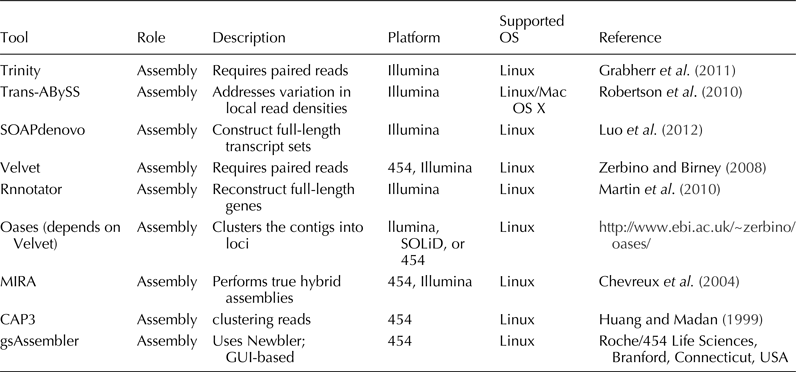
The present scenario of maturation and development of new sequencing technologies day by day had set the requirement of revision in the improvement of existing computational tools (Table 2). Allelic variation and RNA processing events are the other factors, which should be taken into consideration while development of newer reconstruction methods for utilizing the information retained by the expressed transcript sequences generated through RNA-Seq (Garber et al., Reference Garber, Grabherr, Guttman and Trapnell2011). Moreover, metatranscriptomics is also an emerging area as a consequence of advancements in de novo transcriptome assembly. In this discipline, simultaneous investigation of thousands of transcriptome from the whole microbial community is performed. Constant improvement in RNA-Seq experiments and related protocols will provide regular solutions to the informatics challenges.
Description of various tools and platforms for NGS analysis

NGS approaches to study transcriptomes
Study of transcriptome through de novo sequencing and further assembly is significantly accelerated since it was published first by generation of pass reads of cDNA clones as ESTs in 1993 (Adams et al., Reference Adams, Soares, Kerlavage, Fields and Venter1993). The study of transcriptomes has been tremendously advanced by the development of NGS technologies along with the novel complementary tools at a common platform. This in turn facilitates the inexpensive generation of billions of parallel reads ranging from 50 to 800 bp based on features characteristic to different technologies. These majorly include technologies like Roche/454 (Margulies et al., Reference Margulies, Egholm, Altman, Attiya, Bader, Bemben and Volkmer2005), Illumina (Bentley et al., Reference Bentley, Balasubramanian, Swerdlow, Smith, Milton, Brown, Hall, Evers, Barnes, Bignell and Anastasi2008) and AB SOLiD (McKernan et al., Reference McKernan, Peckham, Costa, McLaughlin, Fu, Tsung and Blanchard2009). However, the recent upsurge of a new era of next i.e. third-generation sequencing has helped the production of sequences with greater read lengths as compared with previous ones having lower per run cost and in a much less time. Further, the decreasing cost of sequencing and rise in data output in addition to the sample throughput for the second- and third-generation sequencing technologies have opened up plant transcriptomics, genomics and breeding community, to gather novel information in turn. RNA sequencing is therefore, replacing other methods for gene expression related studies like serial analysis of gene expression and microarrays. It provides information about expressed sequences present at a specific point of time in a particular tissue due to its feature of sequencing to a greater depth to mine out the rare transcripts otherwise not detectable. Thus, it provides a clearer picture of events occurring in a tissue transcriptome for example information linked with novel transcripts (Denoeud et al., Reference Denoeud, Aury, Da Silva, Noel, Rogier, Delledonne and Artiguenave2008), gene expression (Sangwan et al., Reference Sangwan, Tripathi, Singh, Narnoliya and Sangwan2013), single nucleotide polymorphisms (SNPs) (Alagna et al., Reference Alagna, D'Agostino, Torchia, Servili, Rao, Pietrella and Perrotta2009), alternative splicing (Wang et al., Reference Wang, Sandberg, Luo, Khrebtukova, Zhang, Mayr and Burge2008), structure variation (Maher et al., Reference Maher, Kumar-Sinha, Cao, Kalyana-Sundaram, Han, Jing and Chinnaiyan2009) and more importantly gene characterization (Alagna et al., Reference Alagna, D'Agostino, Torchia, Servili, Rao, Pietrella and Perrotta2009; Wang et al., Reference Wang, Wang, Zhang, Qi and Guo2009; Brautigam et al., Reference Brautigam, Mullick, Schliesky and Weber2011).
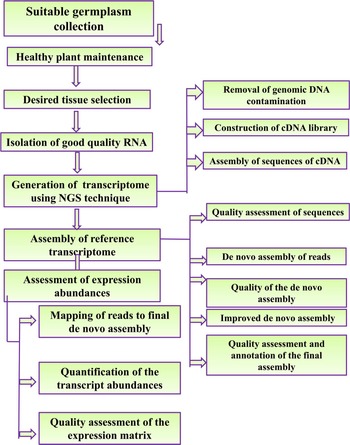
Since now no model species in case of medicinal plants have been defined and thus the next generation sequencing more commonly called as RNA-Seq is playing even greater role in unravelling the transcriptomic events occurring in a specific tissue at a specific situation (Fig. 1). However, for medicinal plants limited information is available with respect to the genome in terms of ploidy, size, heterozygosity and content of repetitive sequences. Additionally, research in medicinal plants is still restricted to biochemical pathways and downstream pharmacological properties in animal and human systems. Therefore, RNA seq is proved to be a practical tool for studying non-model species, in which very little or no genetic information is available as it focuses on sequencing of the coding regions instead of the whole genome. Many medicinal and aromatic plants have recently being sequenced by these approaches such as Eleutherococcus senticosus (Hwang et al., Reference Hwang, Lee and Choi2015) Bupleurum sp (Sui et al., Reference Sui, Chen, Xu, Wei, Jin, Xu, Sun, Gao, Yang, Zhang, Chen and Luo2015), Uncaria rhynchophylla (Guo et al., Reference Guo, Ma, Wei, Qiu, Wilson, Wu, Tang, Liu, Dong and Zu2014) Stevia rebaudiana (Chen et al., Reference Chen, Hou, Qin, Liu, Yi, Yang and Wu2014) Rhazya stricta (Park et al., Reference Park, Ruhlman, Sabir, Mutwakil, Baeshen, Sabir, Baeshen and Jansen2014) C. asiatica (Sangwan et al., Reference Sangwan, Tripathi, Singh, Narnoliya and Sangwan2013), Azadirachta indica (Krishnan et al., Reference Krishnan, Pattnaik, Jain, Gaur, Choudhary, Vaidyanathan, Deepak, Hariharan, Krishna, Nair, Varghese, Valivarthi, Dhas, Ramaswamy and Panda2012), W. somnifera (Gupta et al., Reference Gupta, Goel, Pathak, Srivastava, Singh, Sangwan and Trivedi2013), Aquilaria sinensis (Wu et al., Reference Wu, Wang, Guo, Gao, Bai and Zhang2013), Panax quinquefolius (Sun et al., Reference Sun, Li, Wu, Luo and Sun2010), Euphorbia fischeriana (Barrero et al., Reference Barrero, Chapman, Yang, Moolhuijzen, Keeble-Gagnère, Zhang and Qiu2011; Luo et al., Reference Luo, Sun, Sun, Wu, Li, Song, Niu, Cheng, Xu, Li, Liu, Steinmetz and Chen2011), Panax ginseng C. A. Meyer (Li et al., Reference Li, Zhu, Guo, Sun, Luo, Song, Li, Wang, Qian and Chen2013) A. annua (Wang et al., Reference Wang, Wang, Zhang, Qi and Guo2009) and olive (Alagna et al., Reference Alagna, D'Agostino, Torchia, Servili, Rao, Pietrella and Perrotta2009), etc.
Transcriptomic workflow overview.

Experimental design for NGS sequencing
The basic planning and methodology for RNA – Seq experimental design involves, sample selection initially, in which information about the species to be sequenced is taken into consideration in addition to the information related with tissue developmental stages, treatment type, etc. For optimized assembly and data interpretation, single established chemotype/genotype must be the source of RNA isolation (Fig. 1). Further, the background information of the plant species is also important in terms of its homozygous and heterozygous nature. Duplication events resulting in divergence of a species from other closely related species must be considered.
The major prerequisite for RNA sequencing is the selection of a suitable platform. Currently two important NGS technologies are used successfully for studying non-model plants, Roche/454 (Margulies et al., Reference Margulies, Egholm, Altman, Attiya, Bader, Bemben and Volkmer2005) and Solexa/Illumina (San Diego, California, USA). Some new technologies such as Ion torrent (Life Technologies, Carlsbad, CA, USA), Pac Bio (Pacific Biosciences, Menlo Park, CA, USA) and Helicos (Helicos Biosciences, Cambridge, MA, USA) are also emerging, which promise long-read length and high-quality data eliminating the difficulty to assemble the data. After sequencing the raw reads, the reads must be checked for quality, contamination and curation. Assembly process based on mapping to a reference sequence or de novo method is then performed on cleaned and filtered reads. Several assemblers are presently available, which assemble short reads generated by NGS technologies based on different alogorithms and different parameters. The most popular assemblers for the assembly of short reads generated through NGS includes gsAssembler (454 Life Sciences), Mira (Chevreux et al., Reference Chevreux, Pfisterer, Drescher, Driesel, Müller, Wetter and Suhai2004), Velvet (Collins et al., Reference Collins, Biggs, Voelckel and Joly2008), Trinity (Grabherr et al., Reference Grabherr, Haas, Yassour, Levin, Thompson, Amit and Regev2011), etc.
The ultimate step involves the characterization and functional annotation of the transcriptome, which involves depiction of gene repertoire in the organism by comparative analysis. Annotation is generally done using BLAST, which retrieves significant hits with previously annotated genes in the non-redundant database. Combined annotations for this purpose could be best provided by available tools like Blast2GO (Conesa et al., Reference Conesa, Götz, García-Gómez, Terol, Talón and Robles2005; Conesa and Götz, Reference Conesa and Götz2008; Götz et al., Reference Götz, García-Gómez, Terol, Williams, Nagaraj, Nueda and Conesa2008), etc. The information thus obtained combined with more information related to metabolic pathways retrieved from Kyoto Encyclopedia of Genes and Genomes (KEGG) or similar databases could be of great importance in understanding the underlying mechanism at genetic or molecular level (Götz et al., Reference Götz, García-Gómez, Terol, Williams, Nagaraj, Nueda and Conesa2008). Further downstream analysis may also include SNP analysis, in which single base pair variation is detected having its application in generation of genetic and molecular markers, which greatly focus on expressed regions having higher likelihood of phenotypic effect. The detection involves the usage of different techniques for reference – guided assembly or de novo assembly.
Moreover, expression analysis may also be performed by monitoring the changes in gene expression in different tissues, spatial or temporal, or in response to different treatments to understand the pattern of genes critical in respective conditions. The tools may vary based on availability of genome reference sequence (Li and Durbin, Reference Li and Durbin2009).
Transcriptomics in relation to secondary metabolic pathway
Medicinal plants are rich in metabolites and some are considerably recalcitrant to handle for molecular analysis. This type of analysis could be implemented through whole genome sequencing or through transcriptomics approach (Sangwan et al., Reference Sangwan, Tripathi, Singh, Narnoliya and Sangwan2013, Reference Sangwan, Mishra, Tripathi, Kushwaha and Sangwan2014). Presently, transcriptomics approach through RNA-seq technique has received more attention rather than whole genome sequencing due to its rapid data outputs, less complexity, less time consumption in assembly and cost effectiveness. Another reason for shifting towards RNA-seq technique could be the huge genome size, various ploidy levels. Plants have approximately 20,000–60,000 genes and only 15–25% of these genes contributed towards the pathways leading to secondary metabolites production (Góngora-Castillo et al., Reference Góngora-Castillo, Fedewa, Yeo, Chappell, DellaPenna and Buell2012). Previously, microarray was used to detect the expression pattern of genes in two types of organism, tissue or in same organism at different time period but now RNA-seq has overcome microarray technique. In RNA-seq expression of thousands genes can be monitored simultaneously and there is no need of previous information about the genome to make probes as in microarray. Day by day enrichment is taking place in sequencing technology such as recent advancement from Sanger's method to high throughput sequencing platforms like Roche pyrosequencing 454 (Margulies et al., Reference Margulies, Egholm, Altman, Attiya, Bader, Bemben and Volkmer2005), Illumina (Bentley et al., Reference Bentley, Balasubramanian, Swerdlow, Smith, Milton, Brown, Hall, Evers, Barnes, Bignell and Anastasi2008) and SoLiD™ (McKernan et al., Reference McKernan, Peckham, Costa, McLaughlin, Fu, Tsung and Blanchard2009) and data analysis tools enables us to decode the metabolic complexity of medicinal plant at genetic level to some extent. In case of medicinal plants Roche pyrosequencing and IIIumina high throughput sequencing are most commonly used platforms for generation of transcriptomic data of several important medicinal plants (Hao et al., Reference Hao, Ma, Mu, Chen, Xiao, Peng and Sun2012; Sangwan et al., Reference Sangwan, Tripathi, Singh, Narnoliya and Sangwan2013, Yang et al., Reference Yang, Ding, Lin, Cheng and Kong2013; Bose and Chattopadhyay, Reference Bose Mazumdar and Chattopadhyay2016; Deng et al., Reference Deng, Chang, Li, Ji, Yao, Bartish, Liu, Ma, Chen, Jiang and Shi2016; Jain et al., Reference Jain, Srivastava, Verma, Ghangal and Garg2016). Medicinal plants have a very huge resource for bioactive molecules, which can act as a template molecule for drug designing and model development against many incurable diseases. There is a huge potential of discovering more new drugs from plant-based sources (Mondal et al., Reference Mondal, Bandyopadhyay, Ghosh, Mukhopadhyay, Roy and Mandal2012). So, it is of prime requirement for researchers to have a system comprising the information about all the medicinal plants in an organized manner, which can be further used for benefits of human beings. Major part of bioactive molecules derived from plants is under the category of secondary metabolites. So secondary metabolites consist of a plethora of compounds having diversity in their synthesis as well as in chemical skeleton, so for convenience to understand their origin, biosynthesis and functional aspects, these compounds are broadly classified in three groups namely terpenoid, alkaloid and phenyl-propanoids.
Elucidation of terpenoid pathway through transcriptomic approach
Terpenes constitute the largest group of plant natural products and building block of terpene is the five carbon compound, isoprene, so these are also called isoprenoids. Number of monomers vary from 5 (hemiterpene) to 1000 (rubber) and in structure it may be linear or polycyclic. On the basis of carbon number present in molecule these can be classified in many classes such as hemiterpene containing 5 carbon atoms (C5), monoterpene containing 10 carbon atoms (C10), sesquiterpene containing 15 carbon atoms (C15), diterpene containing 20 carbon atoms (C20), triterpne containing 30 carbon atoms (C30), tetraterpene containing 40 carbon atoms (C40, eight isoprene unit), polyterpene (more than eight isoprene unit). Terpenes assist in defence mechanism of plant through emission of volatiles. These also constitute a large group of pharmaceutically important chemicals, which are used by humans since ancient time for example artemisinin from A. annua was used as an antimalarial drug, use of Mentha species for menthol production, withanolides from W. somnifera, asiaticosides from C. asiatica (Sangwan et al., Reference Sangwan, Kumar, Srivastava, Kumar, Gupta and Sangwan2010; Chaurasiya et al., Reference Chaurasiya, Sangwan, Misra, Tuli and Sangwan2009; Singh et al., Reference Singh, Farzana, Sangwan, Narnoliya and Sangwan2014). There are many evidences for the occurrences of two pathways for terpene biosynthesis; one is cytosolic mevalonate (MVA) and another is plastidial non-mevalonate or methyl erythritol phosphate (MEP) pathway (Sangwan et al., Reference Sangwan, Chaurasiya, Lal, Misra, Tuli and Sangwan2008). But very scanty literature is available about the biosynthesis mechanism and also for genetic regulation of terpenoid biosynthesis. So there is a great necessity to generate more knowledge about the biosynthetic pathways and this problem has been solved up to a large extent through outbreak of NGS approaches. There are several examples of medicinal plants, in which transcriptomics approach is followed to elucidate the terpenoids metabolism such as Ilex asprella (Zheng et al., Reference Zheng, Xu, Ma, Zhan and Chen2014) C. asiatica (Sangwan et al., Reference Sangwan, Tripathi, Singh, Narnoliya and Sangwan2013), W. somnifera (Gupta et al., Reference Gupta, Goel, Pathak, Srivastava, Singh, Sangwan and Trivedi2013), Panax notoginseng (Luo et al., Reference Luo, Liu, Xie, Li, Huang, Yuan and Wang2012), S. miltiorrhiza (Yang et al., Reference Yang, Ding, Lin, Cheng and Kong2013), Costus pictus (Annadurai et al., Reference Annadurai, Jayakumar, Mugasimangalam, Katta, Anand, Gopinathan, Sarma, Fernandes, Mullapudi, Murugesan and Rao2012). In case of C. asiatica transcriptome, Sangwan et al. (Reference Sangwan, Tripathi, Singh, Narnoliya and Sangwan2013) reported that KEGG analysis reveals the presence of enzymes related to both biosynthetic pathways (MVA and MEP) of terpenes and key genes of terpenoid metabolism such as limonene synthase, of monoterpenoids, farnesyl diphosphate synthase (FPPS) for sesquiterpenoids and, β-amyrin synthases (BAS), cycloartenol synthases (CAS), squalene epoxidase (SQE), squalene synthases (SS), etc. associated with triterpenoid/steroids were present in abundance. Similarly in W. somnifera GO and KEGG analysis results showed the full mapping of genes encoding enzymes involved in withanolide biosynthesis (Gupta et al., Reference Gupta, Goel, Pathak, Srivastava, Singh, Sangwan and Trivedi2013). Other examples of usage of transcriptome analysis for identification of gene related terpenoid pathways like saikosaponins biosynthesis in Bupleurum chinense (Sui et al., Reference Sui, Zhang, Wei, Chen, Li, Xu, Jin, Xie, Gao, Chen, Yang, Zhang and Xu2011) tanshinone biosynthesis in S. miltiorrhiza (Yang et al., Reference Yang, Ding, Lin, Cheng and Kong2013), ginkosides biosynthesis in P. ginsing (Chen et al., Reference Chen, Luo, Li, Sun, Wu, Niu, Song, Lv, Zhu and Sun2011), taxol, a most potent anticancer drug, biosynthesis in Taxsus capsidata (Wu et al., Reference Wu, Sun, Luo, Li, Niu, Sun, Lu and Chen2011). Artemisinin, the extensively studied potent antimalarial drug from A. annua is sesquiterpene lactone produced in the glandular trichomes of the plant. Transcriptome of glandular trichome of A. annua was reported using 454 pyrosequencing. Several relevant genes and transcripts related with secondary metabolic pathway specially artemisnin were annotated and their association with the biosynthesis and regulation of artemisnin was revealed (Wang et al., Reference Wang, Wang, Zhang, Qi and Guo2009). Comparison of described pathway genes with trichome ESTs collections from other plants have shown that a common pattern of genes were expressed, which were assigned to similar functional categories in different plant species. This was also confirmed by quantitative polymerase chain reaction analysis using selected unigenes and novel transcripts in the plant. Saponins possess biological activities also aid in human health, de novo assembly of leaf and root tissues provides a close view of triterpene related pathway genes in Asparagus racemosus (Upadhyay et al., Reference Upadhyay, Phukan, Mishra and Shukla2014).
Elucidation of alkaloid pathway through transcriptomics approach
Alkaloids are a group of heterocyclic nitrogen containing compounds, which are bitter in taste. Approximately 10,000 alkaloids are reported from different sources, alkaloids are not only restricted to plant kingdom but its occurrence have been reported in animals also. Alkaloids protect the plants against herbivore and pathogen attack. The molecular weight of alkaloid varies from simple amino to complex isoquinoline compounds. According to their structure, precursor molecules and biosynthetic pathway, these compounds can be classified in several types such as protoalkaloid, purine alkaloid, pyridine alkaloid, pseudo alkaloid, quinoline, indole alkaloid, isoquinoline alkaloids, tropine and psedotropine alkaloids (Guo et al., Reference Guo, Li, Li, Luo, Wang, Qian, Luo, Xiang, Song, Sun, Xu, Yao and Chen2013). Alkaloids have a great impact on human health related issues due to their direct activity on nervous system for example caffeine in Tea and coffee. Some alkaloids have been reported having psycotropic effect such as cannabin from Cannabis sativa function as hallucinogen. Very few of them, only 1%, were used as medicine, may be due to lack of significant research for their extraction and isolation procedure as these are synthesized in a very limited amount. So there should be an alternative method to produce these molecules in another system and this can be done with the aid of comprehensive understanding of biochemical process related to their synthesis. Very limited data are available for the genome sequences of medicinal plants, so next generation sequencing is extensively used to construct the metabolic pathway database of medicinally important non-model plants (Wang et al., Reference Wang, Wang, Zhang, Qi and Guo2009). C. roseus is considered as a model plant for alkaloid production, it is only source of anticancer drugs vincristine and vinblastine (Jacobs et al., Reference Jacobs, Gaspari, van der Greef, van der Heijden and Verpoorte2005). Using RNA-seq data, reference transcriptome for C. roseus, Cathcyc version 1.0, was generated, which is easily accessible online database (www.cathacyc.org) consisting information about the metabolites and gene expression data. This database is focused on specific secondary metabolites (TIAs) of C. roseus. Almost all steps of the pathway involved in synthesis of TIAs were illustrated by annotation of sequences. Hypericum perforatum L. (St. John's wort) is another important medicinal plant having indole alkaloids (serotonin and melatonin) along with hypericin and hyperforin as active ingredients. De novo transcriptome analysis of H. perforatum showed that out of 40,813 annotated unigenes (68.86%), 2359 were assigned for secondary metabolism (He et al., Reference He, Wang, Hua, Zhang and Wang2012). Genes involved in camptothecin, a terpenoid indole alkaloid, and biosynthesis was identified through pyrosequencing of Camptotheca acuminata (Sun et al., Reference Sun, Luo, Li, Sun, Song, Niu, Zhu, Dong, Lv, Tramontano and Chen2011).
Elucidation of phenylpropanoid pathway through transcriptomics approach
Phenyl propanoids also constitute a large group of secondary metabolites and these help as a structural component, in protection against biotic and abiotic stress through antioxidative properties (Korkina et al., Reference Korkina, Kostyuk, De Luca and Pastore2011). These are synthesized via a very complex branching pathway, basically start with phenyl alanine and leads to coumaryl CoA. First step of this pathway is catalyzed by phenyl alanine ammonia lyase (PAL), designated as a rate limiting enzyme of this pathway (Zhao et al., Reference Zhao, Tuan, Li, Kim, Kim, Park, Yang, Li and Park2013). Several derivatives of phenyl propanoid are reported such as flavanoids, isoflavonoids, coumarins and lignins. Ocimum species is considered as a rich source of phenyl propanoids on the basis of phytochemical analysis and recently de novo transcriptome sequencing of Ocimum basilicum confirmed it at genetic level (Rastogi et al., Reference Rastogi, Meena, Bhattacharya, Ghosh, Shukla, Sangwan, Lal, Gupta, Lavania, Gupta, Nagegowda and Shasany2014). Genes involved in phenyl propanoid pathway were elucidated using KEGG analysis. It is expected that with the availability of transcriptomic data sets for more of Ocimum species, more aspects related with the diversity, origin and evolution of biosynthetic pathway will be explored in near future.
Some other modifying enzymes involved in secondary metabolism:
Besides the genes involved directly in biosynthesis pathway of secondary metabolites , there is another group of enzymes collectively known as modifying enzymes and examples of these include Cyp P450 gene family, GTs (glucosyl transferase), etc. (Tiwari et al., Reference Tiwari, Sangwan, Asha, Mishra, Sabir and Sangwan2014; Srivastava et al., Reference Srivastava, Sangwan, Tripathi, Mishra, Narnoliya, Misra and Sangwan2015). The metabolome diversity is regulated by a diverse group of enzymes, which mediate terminal transformations. These are also extracted from transcriptome assembly and categorized on the basis of their substrate specificity. In case of A. indica attempts have located specific cytochrome P450, which are putative candidates involved in neem isoprenoid pathway (Rajakani et al., Reference Rajakani, Narnoliya, Sangwan, Sangwan and Gupta2014).
Molecular markers
An important contribution of next generation sequencing is the identification of molecular markers in non-model organisms (Marshall et al., Reference Marshall, Vincent, Fink, Cook, Rubenfeld, Foster, Fisher, Faist and Reinhart2003; Parchman et al., Reference Parchman, Geist, Grahnen, Benkman and Buerkle2010). Identification of molecular markers using transcriptome approach is very cost effective method in comparison with conventional plant breeding methods. Molecular markers such as Single sequence repeat (SSR) and SNP can be identified using transcriptome data and these can be further used for genetic diversity analysis, quantitative trait loci (QTL), marker assisted selection, gene flow, parental analysis and in evolutionary studies (Thiel et al., Reference Thiel, Michalek, Varshney and Graner2003; Egan et al., Reference Egan, Schlueter and Spooner2012; Liu et al., Reference Liu, Zhu, Tang, Chen, Yu and Tang2013; Zheng et al., Reference Zheng, Pan, Diao, You, Yang and Hu2013). This was followed in transcriptome analysis of many medicinal plants for example in C. asiatica (Sangwan et al., Reference Sangwan, Tripathi, Singh, Narnoliya and Sangwan2013), W. somnifera (Gupta et al., Reference Gupta, Goel, Pathak, Srivastava, Singh, Sangwan and Trivedi2013). In W. somnifera di-nucleotide SSRs are highest in number (2489) followed by trinucleotide (1681), tetra (92) and then penta (20)-nucleotide.
Identification of transcription factors (TFs):
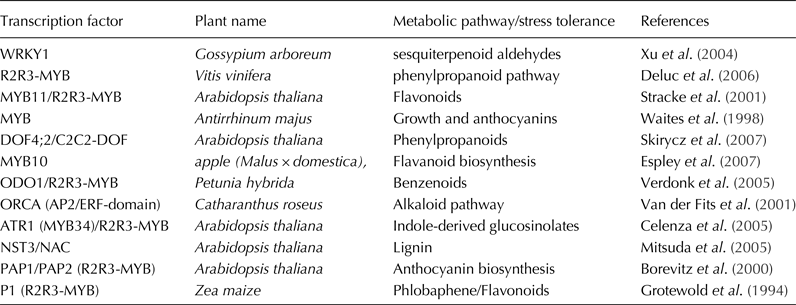
TFs are cis regulatory elements and these are generally DNA binding protein in nature. Basic feature of TF(s) is the presence of DNA binding domain that provides access to bind up with the trans regulatory region on DNA. TF(s) can regulate the expression of gene i.e. which gene will be switch on or off in a particular condition enabling complex eukaryotic genome of plant to operate in a well-defined and controlled manner for the expression of genes. TF(s) play a diverse role in plant immunity as these helps in signalling in different environmental conditions, at different developmental stages, during stress condition and in defence responses through interaction towards plant pathogen (VomEndt et al., Reference VomEndt, Kijne and Memelink2002). These TF(s) have a critical role in manipulation of secondary metabolic pathways because single TF may be able to modulate the whole metabolic pathway by switching on and off of genes. Thus, identification and isolation of TF(s) controlling metabolic pathways through transcriptome analysis is more dynamic approach (Table 3). Most commonly identified classes of TFs are WRKY, MYB, Zinc finger family, F-Box Homeobox, WD40 repeat family, bHLH, pathogenesis-related/ERF and AP2, etc (Xie et al., Reference Xie, Wang, Huang, Wang, Kang and Guo2014). While analysing transcriptome of C. asiatica, TFs belonging to 71 different families were identified and among them major part was covered by Zinc finger family (Sangwan et al., Reference Sangwan, Tripathi, Singh, Narnoliya and Sangwan2013). Besides, Zinc finger other important classes were also reported such as F-box Homeobox, bHLH, AP2, GRAS, GATA, MYB, WD40, etc. TFs are involved in many developmental processes including growth, development and adaptation therefore their sequence information can be applied to significantly utilize their function for revealing their interaction with the pathway genes. RNA sequencing i.e. transcriptome study was also done in case of Solanum lycopersicum and a pool of TFs involved in terpene synthesis was created, also a quantitative expression database was obtained for jasmonic acid-treated trichomes (Spyropoulou et al., Reference Spyropoulou, Haring and Schuurink2014).
List of transcription factors commonly involved in secondary metabolism

Comparative profiling of gene expression
Secondary metabolites are synthesized in particular plant species as well as in specific tissue, so there may be a regulatory mechanism to control the biosynthesis of these metabolites. Comparative transcript analysis through transcriptomics data reveals that abundance of transcripts is directly correlated with quantity of metabolites. For example in W. somnifera leaf and root both differ in their metabolites, these are further established with transcriptomic data of W. somnifera leaf and root (Gupta et al., Reference Gupta, Goel, Pathak, Srivastava, Singh, Sangwan and Trivedi2013, Reference Gupta, Goel, Agarwal, Asif, Sangwan, Sangwan and Trivedi2015; Sabir et al., Reference Sabir, Mishra, Sangwan, Jadaun and Sangwan2013). Transcriptomic approaches can be utilized in comparative profiling of gene expression either in different tissue of same plant or between two different species (Narnoliya et al., Reference Narnoliya, Rajakani, Sangwan, Gupta and Sangwan2014; Garg et al., Reference Garg, Agrawal, Misra, Sharma and Ghosh2015). Similarly in other plants such as A. annua, Mentha arvensis, etc. gene expression profiling has provided highly useful information and could provide clues for future research (Bose et al., Reference Bose, Yadav, Mishra, Sangwan, Singh, Mishra, Srivastava and Sangwan2013; Soetaert et al., Reference Soetaert, Van Neste, Vandewoestyne, Head, Goossens, Van Nieuwerburgh and Deforce2013; Yadav et al., Reference Yadav, Sangwan, Srivastava, Maurya and Sangwan2013, Reference Yadav, Sangwan, Sabir, Srivastava and Sangwan2014). In case study of different species of Panax it was revealed that 19,226 unique sequences of P. notoginseng have similarity with P. quinquefolius but 11,626 transcripts were specific to P. notogingseng. In comparison with P. ginseng, in P. notoginseng 19,479 sequences were similar and 11,373 unisequences were restricted to P. gingseng.
Identification of miRNA(s)
Furthermore miRNA may also be identified in transcriptome data pool (Wu et al., Reference Wu, Wang, Ma, Yuan and Lu2012; Galla et al., Reference Galla, Volpato, Sharbel and Barcaccia2013; Fan et al., Reference Fan, Li, Li and Zhang2015; Prakash et al., Reference Prakash, Rajakani and Gupta2016). In W. somnifera total 911 miRNA were identified by Das et al. (2014) in transcriptome of salicylic acid treated leaf. Li et al. reported 14 miRNA from Panax gingseng. Recently high throughput gene sequencing is being used to study the host–pathogen interaction at genetic level. Dasgupta et al., Reference Dasgupta, George, Bhatia and Sidhu2014.
Conclusions and future prospects
The de novo assembly, annotation and analysis/investigation of transcriptome are one of the most prominent areas of biological research going on worldwide. The simplicity of tools and instrumentation along with cost affordability has taken this technology to the doorstep of many labs dealing with the biological researches. Thus, the area has huge prospects in coming years in exploring and unravelling the mysteries and intricacies of secondary metabolism. Both the scientific aspects of investigations complement each other very well and transcriptome assembly and analysis will tremendously assist in defining complex secondary metabolic pathways as well as in defining individual steps. Currently, this is one of the most rapidly growing areas and will continue to be so in near future until many of the complex secondary metabolic pathways and their regulation will be established and could be available to be utilized in heterologous manner in synthetic biology mode.
Acknowledgements
Authors are thankful to Network projects BSC203 and BSC 107 grants (Chembio and Plagen of CSIR), NMITLI (New Millennium Indian Technology Leadership Initiative), and DBT (Department of Biotechnology) projects for supporting various studies in the author's laboratory, which has generated knowledge and cited in the article. S. T. is thankful to DST (Department of Science and Technology), New Delhi for research support.