Introduction
Schistosomiasis mansoni is a tropical neglected disease caused by the trematode parasite Schistosoma mansoni (Gryseels, Reference Gryseels2012; Colley et al. Reference Colley, Bustinduy, Secor and King2014). Schistosomiasis has high incidence and prevalence in tropical and subtropical areas, mainly in African, Middle Eastern, Caribbean, South and Central American countries (WHO, 2017). In these endemic areas, schistosomiasis is a public health problem, especially due to its close correlation with low socioeconomic development, poor sanitation and restricted access to formal health services (Balen et al. Reference Balen, Liu, McManus, Raso, Utzinger, Xiao, Yu, Zhao and Li2013). About 249 million people are infected worldwide, and 780 million are at risk of infection by parasites of the genus Schistosoma (Pinto-Almeida et al. Reference Pinto-Almeida, Mendes, de Oliveira, Corrêa, Allegretti, Belo, Tomás, Anibal, Carrilho and Afonso2016; WHO, 2017). Estimates show that at least 218 million people required treatment for schistosomiasis in 2015, and at least 90% of those live in Africa (WHO, 2017).
People become infected by S. mansoni when larval forms of the parasite released by freshwater snails (intermediary host) penetrate the skin of the definitive host (humans) during contact with contaminated water (WHO, 2017). Transmission occurs when people with schistosomiasis excrete feces containing parasite eggs in water, which hatch and release new larval forms. In the definitive host, the larvae migrate to the mesenteric blood vessels and develop into adult male and female worms, releasing eggs (Gryseels, Reference Gryseels2012; Adenowo et al. Reference Adenowo, Oyinloye, Ogunyinka and Kappo2015). As a consequence of egg-induced pathology, schistosomules and also S. mansoni eggs can spread throughout the host organism through porta-caval shunts, inducing immune-mediated progressive damage in multiple organs, especially lungs (Wilson, Reference Wilson1990, Reference Wilson2009).
Schistosomiasis mansoni presents a long-term evolution, being usually asymptomatic or having mild clinical manifestations in the initial phases. However, throughout disease progression and chronification, infected individuals can develop multiple organ injuries, especially in the spleen, lungs, intestine and liver (Alencar et al. Reference Alencar, Neves, De Oliveira and Machado-Silva2012; Goes et al. Reference Goes, Neves, Alencar, Oliveira, Gomes and Machado-Silva2012). Hepatic damage is the most serious pathological event triggered by S. mansoni, which is characterized by intense granulomatous inflammation in response to parasite eggs, periportal fibrosis, portal hypertension, gastrointestinal bleeding and frequently death (Negrão-Corrêa et al. Reference Negrão-Corrêa, Fittipaldi, Lambertucci, Teixeira, De Figueiredo Antunes and Carneiro2014). Hepatosplenomegaly is common in advanced cases and is frequently associated with hypertension of abdominal blood vessels and ascites (Colley et al. Reference Colley, Bustinduy, Secor and King2014; Inobaya et al. Reference Inobaya, Olveda, Chau, Olveda and Ross2014; WHO, 2017). The disease is responsible by high rates of morbidity and mortality, causing the death of about 10 100 people in the year 2016 (GBD 2016 Causes of Death Collaborators, 2017).
Due to precarious basic sanitation, schistosomiasis affects mostly poor and rural communities (Pinto-Almeida et al. Reference Pinto-Almeida, Mendes, de Oliveira, Corrêa, Allegretti, Belo, Tomás, Anibal, Carrilho and Afonso2016). In most cases, people are infected during agricultural, domestic and recreational activities, which expose them to water containing parasite larvae. Communities become even more vulnerable due to lack of information on disease transmission and inadequate hygiene habits (WHO, 2017). This vulnerability seems to be reinforced by nutritional status, especially considering that people living in several poor endemic areas for schistosomiasis are also often exposed to inadequate alimentary habits or even food shortages (Adenowo et al. Reference Adenowo, Oyinloye, Ogunyinka and Kappo2015). This condition is particularly dangerous for children, since the impact of both schistosomiasis and malnutrition is additive and/or synergistic, causing marked weight loss, severe anaemia, reduced ability to learn and delayed cognitive development (Mekonnen et al. Reference Mekonnen, Meka, Zeynudin and Suleman2014).
The impact of the association between diet composition and schistosomiasis on disease physiopathology and progression is systematically neglected and poorly understood. Although underestimated, there is evidence that in economically disadvantaged populations, reduced food availability and/or multi-deficient diets (i.e. protein-energy malnutrition and micronutrient deficiencies) are more a rule than an exception (Katona and Katona-Apte, Reference Katona and Katona-Apte2008; Mekonnen et al. Reference Mekonnen, Meka, Zeynudin and Suleman2014). Nutritionally adjusted dietary intake is a basic requirement for the maintenance of a balanced general health status, with pivotal impact on immunological system function (Coutinho et al. Reference Coutinho, de Oliveira, de Barros, Silva and Ramos2010; Zapatera et al. Reference Zapatera, Prados, Gómez-Martínez and Marcos2015). There is evidence that macronutrient (especially proteins) and micronutrient (i.e. vitamins A, C and E; minerals zinc, iron and iodine) deficiencies are closely correlated to poor growth, impaired intellectual development, increased susceptibility to diseases and risk of death (Calder, Reference Calder2013; Czerwonogrodzka-Senczyna et al. Reference Czerwonogrodzka-Senczyna, Janusz, Jeznach-Steinhagen, Demkow and Pyrzak2016). Considering that adequate macronutrient and micronutrient availability is essential to immune cells’ development (proliferation and differentiation), antigen recognition, activation and expression of cellular and humoral effector phenotypes, deficient diets represent a potential environmental risk for infectious diseases (Krawinkel, Reference Krawinkel2012; Calder, Reference Calder2013). Reciprocally, these diseases have also proved to be important risk factors for malnutrition development and progression, aggravating organic deterioration associated with the infection (Katona and Katona-Apte, Reference Katona and Katona-Apte2008; Coutinho et al. Reference Coutinho, de Oliveira, de Barros, Silva and Ramos2010; Da Silva et al. Reference Da Silva, Corrêa, Neves and Machado-Silva2012).
Faced with the devastating impact of schistosomiasis worldwide and the frequent overlap of malnutrition in endemic areas, there is a limited number of initiatives investigating the impact of malnutrition and diet composition on schistosomiasis evolution and severity. Due to ethical implications, the scarce evidence on the relationship between schistosomiasis and dietary composition in humans is based mainly on observational clinical–epidemiological studies (Mekonnen et al. Reference Mekonnen, Meka, Zeynudin and Suleman2014; Munisi et al. Reference Munisi, Buza, Mpolya and Kinung'hi2016), in which the nature of the methodological design (i.e. limited internal and external control) impairs understanding of the pathophysiological mechanisms underlying this interaction. Furthermore, the external validity (generalizability) of these studies is an additional limiting factor determined mainly by the dynamic behaviour of dietary habits, which presents a highly variable spectrum in different populations (Corbett et al. Reference Corbett, Butterworth, Fulford, Ouma and Sturrock1992; Ferreira and Coutinho, Reference Ferreira and Coutinho1999). Conversely, due to the rigorous control of dietary strategy (i.e. centesimal composition and availability), experimental models [animals (susceptibility vs resistance to infection) and parasite strain (virulence vs pathogenicity)], in vivo preclinical models have provided a valuable contribution to broadening the understanding of how diet composition and malnutrition interfere in the time course for the development of infectious diseases (Oliveira et al. Reference Oliveira, Silva, Barbosa, Ribeiro-dos-Santos, Coutinho, Andrade and Soares2004; Barros et al. Reference Barros, Oliveira, Carvalho, Silva, de Souza, da Silva, de Araujo, Souza, Soares, Costa and de Coutinho2014).
Although there are studies relating diet composition and schistosomiasis (Goes et al. Reference Goes, Neves, Alencar, Oliveira, Gomes and Machado-Silva2012; Barros et al. Reference Barros, Oliveira, Carvalho, Silva, de Souza, da Silva, de Araujo, Souza, Soares, Costa and de Coutinho2014), fragmented data hinder clear definition of the evidence accumulated, the main research barriers in the area and what strategies should be considered to advance the understanding of this interaction. Thus, this study was designed to systematically review the in vivo preclinical evidence on diet composition and schistosomiasis mansoni. Beyond delimiting the experimental models of schistosomiasis, dietary strategies and their relevance (internal consistency), as well as the main pathological processes of schistosomiasis modulated by dietary macro- and micronutrients, this review also evaluated the methodological quality of current evidence, pointing out the main sources of bias.
Methods
Retrieval of research records
The systematic review was carried out according to the guideline PRISMA (Preferred Reporting Items for Systematic Reviews and Meta-analyses) (Moher et al. Reference Moher, Liberati, Tetzlaff and Altman2009). The PubMed-MEDLINE, Web of Science and Scopus databases were used to search for original research articles that investigated the effect of diets on the development of schistosomiasis mansoni in experimental animal models. We outlined a comprehensive search strategy for the retrieval of all relevant studies based on two integrated steps: (i) primary search from electronic databases, and (ii) secondary search for additional studies in the reference lists of all relevant studies identified in the primary search. For all databases, the search filters were constructed in three complementary levels: (i) animals, (ii) disease (schistosomiasis) and (iii) dietary strategy. Search filters were initially developed for PubMed by combining standardized descriptors and MeSH (Medical Subject Headings, www.ncbi.nlm.nih.gov/mesh) command to retrieve indexed studies. The command TIAB (title and abstract) was also applied to identify recently published records still in the indexing process. To detect in vivo preclinical studies in PubMed, a standardized animal filter was applied (Hooijmans et al. Reference Hooijmans, Tillema, Leenaars and Ritskes-Hoitinga2010). The same search filters used for disease and diet were adapted for Scopus and Web of Science. Another animal filter was created for the Web of Science research, and the own Scopus animal filter [keyword – animals (limit to)] was used in this database.
Specific pathological outcomes were intentionally omitted from our search filters to enhance the search sensitivity [designed to find as many relevant papers as possible, often at the cost of much ‘noise’ (much time consumed by screening numerous irrelevant studies)] rather than specificity (designed to find a small set of highly relevant papers, with the risk of omitting numerous relevant papers) (Jenkins, Reference Jenkins2004). The complete search strategy is described in online Supplementary Table S1. No chronological or language limits were applied in the search strategy. All studies identified and published until March 31, 2017 (research date) were included in the systematic review.
Screening for relevant records
Records retrieved in all databases were overlaid and sorted for duplicate removal by comparing the authors, title, year and journal of publication. After the initial screening, all potentially relevant studies were evaluated in full text for eligibility according to well-defined inclusion and exclusion criteria. Only original studies investigating the effect of dietary interventions on the development of schistosomiasis in animal models were included. Studies exclusively investigating in vitro systems, dietary effects on the parasite only, studies analysing multiple infections or testing parameters that do not involve parasitological outcomes, studies without full text available, and secondary studies (i.e. literature reviews, letters to the editor, commentaries and editorials) were excluded. Eligibility was independently analysed by the researchers, and disagreements were resolved by consensus. The lists of references of each relevant study identified from all databases were manually screened for additional papers (Pereira et al. Reference Pereira, Greco, Moreira, Chagas, Caldas, Gonçalves and Novaes2017).
Studies characteristics and data extraction
Considering comprehensive descriptions of the research models, data extraction was based on important methodological requirements for preclinical studies described previously (Pereira et al. Reference Pereira, Greco, Moreira, Chagas, Caldas, Gonçalves and Novaes2017). Thus, we constructed synthesis admitting different descriptive levels as follows: (i) publication characteristics: authors and publication year; (ii) characteristics of the animal models: species, lineage, sex, age and weight; (iii) model of schistosomiasis: disease induction (i.e. parasite strain, inoculum); (iv) diet model: diet composition (i.e. nutrients and energy content), duration, frequency and administration form; and (v) main measure outcomes (i.e. parasitic load, immunological markers, histopathological findings and mortality).
Bias analysis
Analysis of the reporting quality was performed considering methodological items reported in Animal Research: Reporting of In Vivo Experiments guidelines (Kilkenny et al. Reference Kilkenny, Browne, Cuthill, Emerson and Altman2010). Reporting quality was evaluated by complete screening of all manuscript sections (abstract to acknowledgements and funding) to evaluate the completeness of the scientific report (Pereira et al. Reference Pereira, Greco, Moreira, Chagas, Caldas, Gonçalves and Novaes2017). Bias criteria were based on short descriptions of essential study characteristics such as experimental procedures, ethical statement, sample size, animal allocation, randomization, experimental concealment, statistical methods, baseline data and generalizability. Adherence to the individual quality criteria and overall mean adherence were expressed as absolute and relative values (Pereira et al. Reference Pereira, Greco, Moreira, Chagas, Caldas, Gonçalves and Novaes2017).
Results
Characteristics of publications
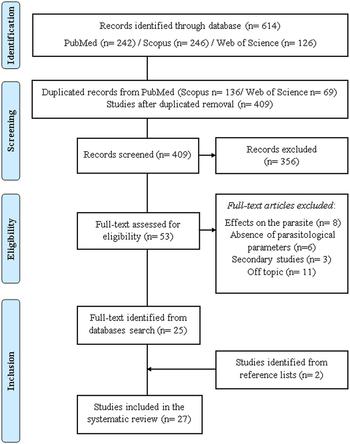
From 614 records identified in all electronic databases, 27 relevant studies were recovered in full text (primary search: 25; secondary search: two) and included in the systematic review (File S1). The filters applied in each database and the flowchart indicating the search structure are shown in online Supplementary Table S1 and Fig. 1, respectively. Most studies identified (74.08%, n = 20) originated from South America (all from Brazil), followed by four studies (14.82%) from North America (United States), two studies (7.4%) from Asia (India and Saudi Arabia) and one study (3.7%) from Africa (Egypt).
Flow diagram the systematic review literature search results. Based on PRISMA statement ‘Preferred Reporting Items for Systematic Reviews and Meta-Analyses’ (www.prisma-statement.org).

Characteristics of experimental animals
As shown in online Supplementary Table S2, all studies used mice (100.00%, n = 27) as the animal model. Rats or guinea pigs were additionally used in two studies (3.70%, n = 1 each). Swiss mice (92.6%, n = 25) was the main lineage used, and only one paper (1.35%) omitted this information. The proportion of animal sex was 44.45% female (n = 12), 29.63% male (n = 8) and 14.81% both (n = 4). Only three studies omitted the animals’ sex (11.11%). The animals’ age ranged from 5 to 56 days, but this variable was neglected in nine studies (33.33%). The animals’ weight ranged from 8 to 20 g in mice, 50 to 70 g in rats and 200 g in guinea pigs. This parameter was not reported in 13 (48.15%) studies (online Supplementary Table S2).
Characteristics of dietary strategies
As indicated in online Supplementary Table S2, hypoproteic diets (70.37%, n = 19), followed by hyperlipidic diets (22.22%, n = 6) and vitamin-deficient diets (7.41%, n = 2), were the main dietary models used. High-carbohydrate diet, zinc supplementation and diets containing camel milk were investigated at a reduced frequency (3.70%, n = 1 each). Moderated protein restriction (5–10% protein) was most frequent (63.16%, n = 12), followed by severe (below 5%) protein restriction (21.05%, n = 4) or a combination of both dietary strategies (15.79%, n = 3). Twenty-nine per cent lipids were used in all hyperlipidic diets. The nutritional composition of the control diet was reported in only 24 studies (88.88%), of which 14 (58.3%) chose balanced commercial diets for rodents with 20–28% protein, 50–60% carbohydrate and 12–14% lipid. Dietary strategy was administered between 2 and 41 weeks. Ad libitum dietary intake was more frequent (77.78%, n = 21) and only studies on protein restriction controlled dietary intake. In these studies, dietary intake was similar in infected and uninfected groups, but protein restriction determined loss of body mass or reduction of body mass gain.
Characteristics of S. mansoni infection
As shown in online Supplementary Table S2, BH (51.85%, n = 14), followed by SLM (11.11%, n = 3), Egyptian or Puerto Rican (7.40%, n = 2 each), Paulista-PE, L and SL Brazilian (3.70%, n = 1 each) were the S. mansoni isolates used. Only four studies did not report the parasite isolates. Most of the studies (92.59%, n = 25) used 22–450 cercariae in the models of schistosomiasis. S chistosomia mansoni eggs (1000–10 000) inoculated intravenously or intraperitoneally were reported in only two studies (7.41%). Percutaneous (68%, n = 12) and subcutaneous (24%, n = 6) were the main inoculation routes. Seven studies (28%) did not report this information, and the period of infection ranged from 5 to 36 weeks (online Supplementary Table S2).
Main outcomes
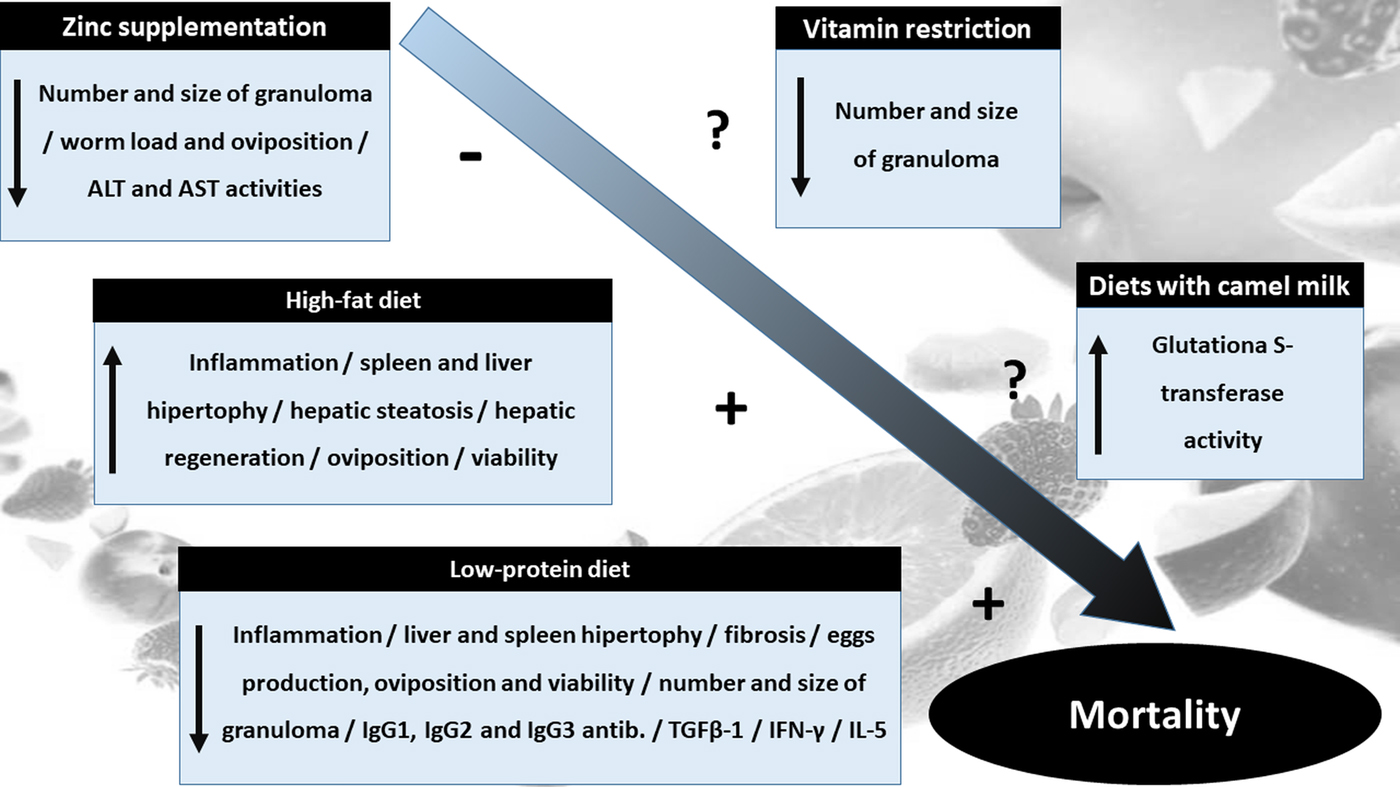
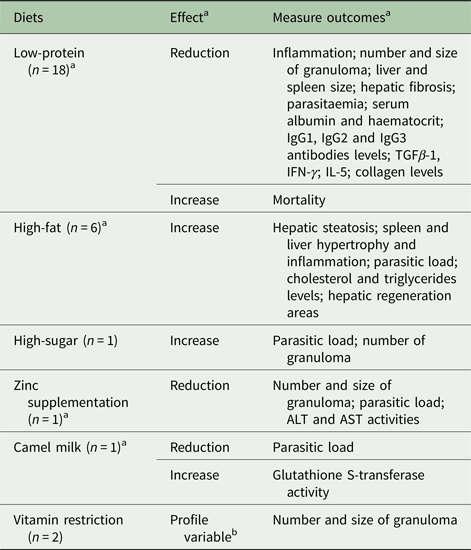
Detailed quantitative and qualitative parasitological, immunological and histopathological parameters and mortality rates extracted from each study reviewed are described in online Supplementary Tables S3 and S4. Table 1 and Fig. 2 summarize the data considering the sets of studies investigated. Histopathological data were consistently described (85.2%, n = 23), whereas parasitological parameters were poorly analysed (44.4%, n = 12). Immunological and/or biochemical data were evaluated in 17 studies (63%).
In vivo preclinical evidence of the impact of different dietary strategies on parasitological, immunological, biochemical and histopathological parameters in animals infected by Schistosoma mansoni. The main diagonal arrow indicated the primary measure outcome. Black arrows in each box indicates the effect direction for each accessory outcome. (−) Mitigates and (+) stimulates mortality. (?) Uncertain impact on parasitemia and mortality (insufficient data).

Summary of the impact of different dietary strategies on the development of parasitological, immunological, biochemical and histopathological parameters in animal models of schistosomiasis mansoni. Data stratified by study are detailed in online Supplementary Table S2

AST, aspartate aminotransferase; ALT, alanine aminotransferase.
a The effects associated to each measure outcome were reported in the original papers as statistically different compared with schistosomotic animals receiving control diets.
b Variable profile: indicated an erratic behaviour of each measure outcome. Similar outcomes in groups receiving modified diet and those treated with standard diet (control) were suppressed.
In general, hypoproteic diets increased mortality and reduced parameters such as anti-S. mansoni antibodies (i.e. IgG subclasses) and cytokine levels (i.e. transforming growth factor (TGF)β-1, interferon (IFN)-γ; interleukin (IL)-5); oviposition and egg viability; number of worms and eggs in the tissues (parasitic load); size and numerical and volumetric density of granulomas; liver and spleen hypertrophy, fibrosis and inflammatory infiltrate, and haematocrit and albumin serum levels. Conversely, granuloma formation (i.e. size and number of granulomas) was not influenced by hyperlipidic and vitamin-deficient diets. Oviposition, egg viability and accumulation in hepatic tissue, liver and spleen inflammatory infiltrate, hepatosplenomegaly, hepatic steatosis, serum cholesterol, and their fractions were increased by hyperlipidic diets. A high-sugar diet increased the parasitic load and the number of granulomas. Zinc supplementation reduced the number and size of granulomas, parasitic load, aspartate aminotransferase (AST), and alanine aminotransferase (ALT) activities in serum. Diets containing camel milk caused reduction in parasitic load and increased glutathione S-transferase activity (Table 1, and online Supplementary Tables S3 and S4).
The animals’ mortality was reported in only six studies (21.4%). Severe (<5% protein) and moderated (5–10% protein) protein-restricted diets determined 31–45.2% and 35–48.07% mortality, respectively, whereas control diets (20–25% protein) were associated with 29–45% mortality. Only one study reported 30% mortality in animals receiving a hyperlipidic diet (29% lipids), compared with 10% mortality in groups treated with a standard diet (12% lipids) (Table 1, and online Supplementary Tables S3 and S4). Considering all evidence available, Fig. 2 shows an integrated model that relates the impact of dietary strategies on primary (parasitic load and mortality) and secondary measure outcomes (immunological, biochemical and histopathological) in schistosomiasis.
Methodological bias
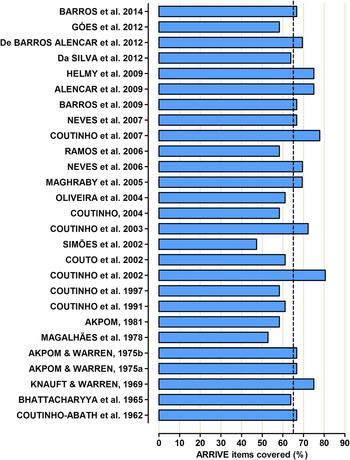
The reporting bias stratified domains are detailed in online Supplementary Table S5 and summarized in Fig. 3. None of the studies fulfilled all methodological criteria, and the mean quality score of all studies reviewed was 65.43 ± 7.76%. Twelve studies (44.44%) did not reach the mean score (Fig. 3). Considering individually each criterion analysed, none of the studies reported information such as experimental blindness, a rational basis for the number of animals and details of the sample size calculation. Criteria such as control of dietary availability during the experiment, use of standardized diet guidelines, husbandry conditions, details of animals’ allocation to experimental groups, records of food intake, number of animals in each group included in each analysis, information regarding mortality, comments on the study limitations and comments on how the findings are likely to translate to other species or relevance to human biology were addressed in <50% of all studies. Six or fewer studies reported the control of dietary availability at baseline or during the experimental period (21.4%, n = 6), use of standardized diet guidelines (14.3%, n = 4), details on animals’ allocation (i.e. randomization) (n = 3, 10.7%) and information regarding animals’ mortality (21.4%, n = 6) (online Supplementary Table S5).
Analysis of methodological bias (reporting quality) stratified by domains for each study included in the review. The dotted line indicated the mean quality score (%). The complete bias analysis stratified by domains and items evaluated is presented in online Supplementary Table S5.

Discussion
Our findings indicate that the studies investigating the impacts of dietary strategies on schistosomiasis mansoni were concentrated in endemic areas, especially in South American and African countries. The marked concentration of studies in developing areas was expected and coherent with the epidemiological profile of schistosomiasis and malnutrition (Munisi et al. Reference Munisi, Buza, Mpolya and Kinung'hi2016). In endemic countries, schistosomiasis and malnutrition are closed correlated to high morbidity and mortality rates (Corbett et al. Reference Corbett, Butterworth, Fulford, Ouma and Sturrock1992; Adenowo et al. Reference Adenowo, Oyinloye, Ogunyinka and Kappo2015). Furthermore, the overlapping of Schistosoma infections and malnutrition is an objective reality in these areas (Ferreira and Coutinho, Reference Ferreira and Coutinho1999; Coutinho et al. Reference Coutinho, de Oliveira, de Barros, Silva and Ramos2010). Thus, investigations on the impact of the interaction between infection and malnutrition have major relevance, which is reinforced by the current national and international initiatives to control schistosomiasis transmission and malnutrition persistence in Latin-American (Weisstaub et al. Reference Weisstaub, Aguilar and Uauy2014; Zoni et al. Reference Zoni, Catalá and Ault2016) and African countries (Munisi et al. Reference Munisi, Buza, Mpolya and Kinung'hi2016; Mitra and Mawson, Reference Mitra and Mawson2017; WHO, 2017).
Although the studies included in this review show wide methodological variability, some points of convergence were observed. Mice were the main animal model used for the study of schistosomiasis. Mice are highly susceptible to S. mansoni and develop similar pathophysiological characteristics to human infection, including systemic immunological response, granulomatous inflammation and portal hypertension (Abdul-Ghani and Hassan, Reference Abdul-ghani and Hassan2010; Machado-Silva et al. Reference Machado-silva, Neves and Cerqueira2010; Alves et al. Reference Alves, Araujo, Cassali and Fonseca2016). These animals present low cost, fast reproduction cycles, and easy maintenance and handling in the laboratory (Moran et al. Reference Moran, Ramesh, Brama, Byrne, Brien and Levingstone2016). For similar reasons, mice are organisms systematically applied in studies involving dietary interventions (Coutinho, Reference Coutinho2004; Oliveira et al. Reference Oliveira, Silva, Barbosa, Ribeiro-dos-Santos, Coutinho, Andrade and Soares2004). In addition to reducing costs by preparing reduced volumes of experimental diets compared with studies with larger animals (e.g. rats, rabbits and dogs), the effect of experimental diets usually manifests faster in relation to the human condition, allowing more controlled and careful analysis of the outcome measures, including alimentary safety (Vandamme, Reference Vandamme2015; Chalvon-Demersay et al. Reference Chalvon-demersay, Blachier, Tomé and Blais2017).
Despite the advantages of mice models, the host's genetic background should be considered to interpret the preclinical findings (Festing, Reference Festing2016). In most studies included in the review, outbred mice (Swiss lineage) were used. There is evidence that the broad genetic variability of different mice species and lineages is closely correlated to host susceptibility and/or resistance to infection (Dajem et al. Reference Dajem, Mostafa and El-said2008; Alves et al. Reference Alves, Araujo, Cassali and Fonseca2016). Genetic background is equally relevant in animal models exposed to dietary interventions, especially considering the heterogeneity in metabolic phenotypes (Machado-Silva et al. Reference Machado-silva, Heisler, Ormond, Maria, De Oliveira and Carlos2005; Van de Vijver et al. Reference Van de Vijver, Colpaert, Jacobs, Kuypers, Hokke, Deelder and Van Marck2006). Due to genotype homogeneity and similar phenotypic characteristics, inbred mice present advantages over outbred animals, such as better experimental control and reproducibility of pathological manifestations, especially the immunological responses that mediate host–pathogen interactions (Pérez et al. Reference Pérez, Vicente, Blanco-gómez, Castellanos, Pérez-losada and Muro2014; Pereira et al. Reference Pereira, Greco, Moreira, Chagas, Caldas, Gonçalves and Novaes2017). However, outbred mice strains remain highly relevant to investigate human infections, especially considering the genetic variability of humans and the broad spectrum of pathological manifestations observed in clinical settings (Coutinho et al. Reference Coutinho, Barros, Barbosa, Oliveira, Silva, Araújo and Andrade2003; Goes et al. Reference Goes, Neves, Alencar, Oliveira, Gomes and Machado-Silva2012).
In this review, while female animals were often used in models testing hyperlipidic diets (Alencar et al. Reference Alencar, Neves, Águila, Mandarim-de-Lacerda, Gomes and Machado-Silva2009, Reference Alencar, Neves, De Oliveira and Machado-Silva2012; Da Silva et al. Reference Da Silva, Corrêa, Neves and Machado-Silva2012), males were used mainly to investigate dietary strategies based on protein manipulation (Couto et al. Reference Couto, Ferreira, da Rocha, Duarte, Assuncao and Coutinho2002; Ramos et al. Reference Ramos, Costa, Melo, Souza, Malagueño, Coutinho, Abath and Montenegro2006; Coutinho et al. Reference Coutinho, Silva, Barros, Araújo, Oliveira, Luna, Barbosa and Andrade2007). Female mice have been used since they exhibit a more resistant phenotype against metabolic changes induced by the lipid-rich diet compared with males (Pettersson et al. Reference Pettersson, Waldén, Carlsson, Jansson and Phillipson2012). Under hyperlipidic diet exposition, female mice expanded Treg cell population and develop an anti-inflammatory environment in the intra-abdominal adipose tissue, whereas males manifest early adipose tissue inflammation, glucose intolerance, pancreatic islet hypertrophy and peripheral insulin resistance (Pettersson et al. Reference Pettersson, Waldén, Carlsson, Jansson and Phillipson2012). In murine S. mansoni infections, it appears that female mice develop a higher burden of worms and present higher mortality than male mice (Eloi-Santos et al. Reference Eloi-santos, Olsen, Correa-oliveira and Colleypw1992). Apparently, this reduced susceptibility to infection in males is related to high testosterone levels, which attenuates the development of immature schistosomules (Nakazawa et al. Reference Nakazawa, Fantappie, Freeman, Eloi-Santos, Olsen, Kovacs, Secor and Colley1997). However, the relationship between sex hormones and S. mansoni infection is poorly understood, requiring further investigations. As observed in this review, use of a standardized animal sex is a valuable methodological strategy to reduce the variability in outcome measures, with direct impact on the internal (cause–effect relationship) and external (generalizability) validity of preclinical research (Coutinho et al. Reference Coutinho, Barros, Barbosa, Oliveira, Silva, Araújo and Andrade2003).
Animals of various ages and weights were used in the experimental models. However, this information was often under-reported, hindering the studies’ reproducibility. Most studies used young animals (about 21 days and 15 g). Animals’ age exerts important influence on host metabolism (Korou et al. Reference Korou, Doulamis, Tzanetakou, Mikhailidis and Perrea2013) and response to infectious diseases (Colditz et al. Reference Colditz, Watson, Gray and Eady1996; Yole et al. Reference Yole, Gikuru, Wango, Kithome and Kiarie2006). There is evidence of an age-dependent susceptibility to metabolic diseases induced by environmental factors, including diet composition (Korou et al. Reference Korou, Doulamis, Tzanetakou, Mikhailidis and Perrea2013). Considering that very young animals do not achieve complete metabolic development (Jackson et al. Reference Jackson, Andrews, Ball, Bellantuono, Gray, Hachoumi, Holmes, Latcham, Petrie, Potter, Rice, Ritchie, Stewart, Strepka, Yeoman and Chapman2017) and that very old animals exhibit accumulation of metabolic disturbances (Goldsworthy and Potter, Reference Goldsworthy and Potter2014), animals of extreme ages should be used with caution, especially in cases in which the impact of age is objectively analysed (Korou et al. Reference Korou, Doulamis, Tzanetakou, Mikhailidis and Perrea2013). In young animals, incomplete immunological development hinders pathogen control, favouring pathogen replication, parasitism, organ damage and host mortality (Colditz et al. Reference Colditz, Watson, Gray and Eady1996). Conversely, with increasing age the immunological defences become more efficient to resist infection, especially due to the increased population, phenotypical diversity and activity of immune cells (Speziali et al. Reference Speziali, Aranha, Santiago and Oliveira2010). Thus, it was clearly reported that younger mice in the pre-pubertal period (24–25 days of age) are more susceptible to S. mansoni than those in the post-puberty phase (9–15 weeks of age) (Yole et al. Reference Yole, Gikuru, Wango, Kithome and Kiarie2006). In preclinical models of schistosomiasis, use of young animals is not unrealistic, especially considering that the chronic phase of infection develops over 12–18 weeks after parasite inoculation in mice, a period necessary for granuloma organization and development of liver pathology (Alencar et al. Reference Alencar, Neves, Águila, Mandarim-de-Lacerda, Gomes and Machado-Silva2009). As dietary intervention is also a primary target of analysis, use of younger animals can be more realistic, since the effects of dietary composition can be analysed from well-stabilized schistosomiasis models with minor interference of an intense host response against S. mansoni infection, as observed in older animals (Burns, Reference Burns2004; Speziali et al. Reference Speziali, Aranha, Santiago and Oliveira2010).
The parasite inoculum and biological characteristics, such as species and isolates, are also related to the severity of infectious diseases, especially due to divergent profiles of infectivity, virulence and pathogenicity (Davies et al. Reference Davies, Fairbrother and Webster2002). The studies analysed presented a great variability in inoculum size and time of infection, representing an important indicator of heterogeneity among the preclinical models. Clear examples are the studies developed by Bhattacharyya (Reference Bhattacharyya1965) and Akpom and Warren (Reference Akpom and Warren1975), in which infections induced by 22 and 450 cercariae were accompanied for 28 and 36 weeks, respectively. Although this variability in dataset determines a negative impact on external validity of the current evidence, the internal validity of the individual studies was preserved, since parasitological and histopathological changes of schistosomiasis was clearly demonstrated in all experimental models reported.
As expected, the studies analysed used heterogeneous S. mansoni isolates in the models of schistosomiasis, an aspect related to the wide variability of geographical origins in which these isolates were obtained. There is evidence that S. mansoni isolates from the same or different geographic areas may show differences in egg production, immunogenicity and pathogenicity (Saoud, Reference Saoud1966; Shalaby et al. Reference Shalaby, Gherbawy and Banaja2011). These manifestations are also associated with the genetic variability of each S. mansoni isolate, which regulates several factors that determine parasite resistance to host-defence mechanisms (e.g. antioxidant enzymes, heat shock proteins, complement inhibitory proteins) (Incani and Cesari, Reference Incani and Cesari2001; Theron et al. Reference Theron, Rognon, Gourbal and Mitta2014). Considering the parasite origin, the Brazilian BH isolate was mainly used, a characteristic aligned with the geographic regions in which the studies were developed (Coutinho et al. Reference Coutinho, Barros, Barbosa, Oliveira, Silva, Araújo and Andrade2003, Reference Coutinho, Silva, Barros, Araújo, Oliveira, Luna, Barbosa and Andrade2007; Barros et al. Reference Barros, Biolchini and Neves2009, Reference Barros, Oliveira, Carvalho, Silva, de Souza, da Silva, de Araujo, Souza, Soares, Costa and de Coutinho2014). However, the selection of S. mansoni isolates was not restricted to geographic origin, but also coherent with the construction of consistent schistosomiasis models, especially based on classic organ damages such as granulomatous inflammations (Coutinho, Reference Coutinho2004; Neves et al. Reference Neves, Alencar, Costa-Silva, Águila, Mandarim-de-Lacerda, Machado-Silva and Gomes2007).
The preclinical relevance of the BH isolate was reported by Incani and Cesari (Reference Incani and Cesari2001), who indicated that this isolate is associated with higher infection rates in mice, effective induction of granulomas, intense S. mansoni egg production and elimination through feces (YT and SM isolates). Another study showed that mice infected with the Puerto Rico isolate showed a higher distribution of eggs in the liver than different parasite isolates (BH, SL, Ba and Mw) (Anderson and Cheever, Reference Anderson and Cheever1972). On the other hand, in a comparative study with the Feira de Santana-BA isolate, the Puerto Rico lineage was also highly relevant to induce schistosomiasis, demonstrating similar results in the number of pulmonary schistosomules, recovery of worms from the portal system, number of eggs per gram of liver and intestine, histopathological lesions and mortality (Andrade and Sadigursky, Reference Andrade and Sadigursky1985). Although different S. mansoni isolates behave differently in preclinical models, it remains unclear to what extent these patterns are similar in human infections (Cheever et al. Reference Cheever, Lenzi, Lenzi and Andrade2002). Human infections often occur from heterogeneous parasites, inoculum and time of evolution; aspects linked to variable profiles of morbidity and mortality (Abdul-Ghani and Hassan, Reference Abdul-ghani and Hassan2010). Since these aspects are difficult to control in human contexts, preclinical models remain highly relevant to improve understanding of host–pathogen interaction, as well as the impact of environmental factors on schistosomiasis evolution (Lopes et al. Reference Lopes, Santos, Souza and Rodrigues2006).
Considering the dietary strategies investigated, most studies used commercial diets, an aspect potentially related to the high palatability and low cost compared with purified diets (Svendsen et al. Reference Svendsen, Alexander, Paulsen, Knutsen, Hjertholm, Brantsæter and Husøy2012). However, purified diets are more likely to ensure adequate study reproducibility and macro- and micronutrient control (Barnard et al. Reference Barnard, Lewis, Teter and Thigpen2009). Thus, diets based on recommendations of the American Institute of Nutrition (AIN-93) would be the best choice (Reeves et al. Reference Reeves, Nielsen and Fahey1993). Additionally, most studies included in the review applied ad libitum dietary intake, which was accompanied by under-reported or questionable monitoring methods. Food intake exerts a relevant impact on outcome measures, since it is directly related to the metabolic load imposed on the animal model (Moraal et al. Reference Moraal, Leenaars, Arnts, Smeets, Savenije and Curfs2012). Thus, more rigorous control of food intake is a relevant strategy to minimize potential experimental bias related to physiological and behavioural factors (Leidy and Campbell, Reference Leidy and Campbell2011). Adequate dietary intake (quantity and quality) is an important factor in susceptibility to infections (Corbett et al. Reference Corbett, Butterworth, Fulford, Ouma and Sturrock1992; Calder, Reference Calder2013; Mekonnen et al. Reference Mekonnen, Meka, Zeynudin and Suleman2014; Zapatera et al. Reference Zapatera, Prados, Gómez-Martínez and Marcos2015). Thus, both S. mansoni and malnutrition modulate the host's immune system, with direct effect on parasite development and disease progression (Oliveira et al. Reference Oliveira, Silva, Barbosa, Ribeiro-dos-Santos, Coutinho, Andrade and Soares2004; Neves et al. Reference Neves, Alencar, Aguila, Mandarim-de-Lacerda, Machado-Silva and Gomes2006).
Despite the dietary strategy, the studies evaluated mainly the granuloma formation, hepatic fibrosis, parasitic load and mortality. Furthermore, more than half of the studies analysed the impact of protein-restricted diets (5 and 10% of protein) on schistosomiasis. From these protein levels, the research initiatives coherently attempt to simulate the most common dietary deficiencies identified in human populations in endemic areas (Coutinho et al. Reference Coutinho, Abath, de Freitas, Salzano, Lapa, Campos and Melo1991, Reference Coutinho, Silva, Barros, Araújo, Oliveira, Luna, Barbosa and Andrade2007; Oliveira et al. Reference Oliveira, Silva, Barbosa, Ribeiro-dos-Santos, Coutinho, Andrade and Soares2004; Ramos et al. Reference Ramos, Costa, Melo, Souza, Malagueño, Coutinho, Abath and Montenegro2006). In general, the hypoproteic diets investigated attenuated organ damage induced by S. mansoni infection, reducing oviposition and egg viability (Akpom and Warren, Reference Akpom and Warren1975; Barros et al. Reference Barros, Oliveira, Carvalho, Silva, de Souza, da Silva, de Araujo, Souza, Soares, Costa and de Coutinho2014); parasitic load (Knauft and Warren, Reference Knauft and Warren1969; Coutinho et al. Reference Coutinho, de Souza, Silva, Cavalcanti, de Araújo, Barbosa Júnior, Cheever and Andrade1997); size, number and volumetric density of granulomas (Coutinho, Reference Coutinho2004; Coutinho et al. Reference Coutinho, Silva, Barros, Araújo, Oliveira, Luna, Barbosa and Andrade2007; Barros et al. Reference Barros, Biolchini and Neves2009); liver and spleen hypertrophy, fibrosis and inflammatory infiltrate (Coutinho-Abath et al. Reference Coutinho-Abath, Magalhães Filho and Barbosa1962; Barros et al. Reference Barros, Biolchini and Neves2009, Reference Barros, Oliveira, Carvalho, Silva, de Souza, da Silva, de Araujo, Souza, Soares, Costa and de Coutinho2014). As dietary intake was similar in infected and uninfected groups, the hosts’ appetite was not affected by diet manipulation of infection. Thus, protein restriction, but not differences in food intake was potentially related to the pathological findings identified. Interestingly, we clearly identified that despite attenuation in organ damage, infected animals exposed to protein restriction also exhibited higher mortality rates than control animals. As previously suggested (Ferreira and Coutinho, Reference Ferreira and Coutinho1999; Coutinho et al. Reference Coutinho, Ferreira, Assunção, Carvalho, Oliveira and Francelino2002; Barros et al. Reference Barros, Oliveira, Carvalho, Silva, de Souza, da Silva, de Araujo, Souza, Soares, Costa and de Coutinho2014), this finding indicated that both infection development and host defences are equally and adversely affected by malnutrition. As infection and malnutrition determine marked organic debility, it is evident that both conditions interact to determine more severe clinical outcomes, especially disproportionately high morbidity and mortality rates (Ferreira and Coutinho, Reference Ferreira and Coutinho1999; Barros et al. Reference Barros, Oliveira, Carvalho, Silva, de Souza, da Silva, de Araujo, Souza, Soares, Costa and de Coutinho2014).
Additionally, S. mansoni-infected animals treated with hyperlipidic diets (29% lipids) were the second experimental models most investigated. From these models, oviposition, egg viability and accumulation in hepatic tissue (Alencar et al. Reference Alencar, Neves, Águila, Mandarim-de-Lacerda, Gomes and Machado-Silva2009), liver and spleen inflammatory infiltrate (Da Silva et al. Reference Da Silva, Corrêa, Neves and Machado-Silva2012), hepatosplenomegaly (Alencar et al. Reference Alencar, Neves, Águila, Mandarim-de-Lacerda, Gomes and Machado-Silva2009; Da Silva et al. Reference Da Silva, Corrêa, Neves and Machado-Silva2012), hepatic steatosis (Neves et al. Reference Neves, Alencar, Aguila, Mandarim-de-Lacerda, Machado-Silva and Gomes2006, Reference Neves, Alencar, Costa-Silva, Águila, Mandarim-de-Lacerda, Machado-Silva and Gomes2007), serum cholesterol and their fractions (Neves et al. Reference Neves, Alencar, Aguila, Mandarim-de-Lacerda, Machado-Silva and Gomes2006, Reference Neves, Alencar, Costa-Silva, Águila, Mandarim-de-Lacerda, Machado-Silva and Gomes2007; Alencar et al. Reference Alencar, Neves, Águila, Mandarim-de-Lacerda, Gomes and Machado-Silva2009, Reference Alencar, Neves, De Oliveira and Machado-Silva2012) were consistently increased by hyperlipidic diets. Long-term, high-fat diets are associated with negative repercussions on hepatic function, especially due to the development of liver steatosis, steatohepatitis and fibrosis (Neves et al. Reference Neves, Alencar, Aguila, Mandarim-de-Lacerda, Machado-Silva and Gomes2006, Reference Neves, Alencar, Costa-Silva, Águila, Mandarim-de-Lacerda, Machado-Silva and Gomes2007; Picchi et al. Reference Picchi, Mattos, Barbosa, Duarte, Gandini, Portari and Jordão2011). Previous studies indicate that high-fat diets reduced immunocompetence by impairing lymphocytes’ responsivity against microbial antigens (Crevel et al. Reference Crevel, Friend, Goodwin and Parish1992; Strandberg et al. Reference Strandberg, Verdrengh, Enge, Andersson, Amu, Onnheim, Benrick, Brisslert, Bylund, Bokarewa, Nilsson and Jansson2009). Impairment of innate immune functions in mice fed a high-fat diet was also reported as an important cause of increased mortality during sepsis. In these animals, aside from exacerbated production of the pro-inflammatory cytokine IL-1 and increased levels of macrophages in adipose tissue, the proportion and function of granulocytes and production of reactive oxygen species were reduced (Strandberg et al. Reference Strandberg, Verdrengh, Enge, Andersson, Amu, Onnheim, Benrick, Brisslert, Bylund, Bokarewa, Nilsson and Jansson2009). Although disturbances in innate and acquired immunological mechanisms are potentially related to increased tissue damage and mortality rates in schistosomiasis, the extent to which high-fat diets modulate the immune response and reduce host resistance to S. mansoni infection is still unclear, requiring further investigations.
Additional diet models based on carbohydrate, zinc and milk supplementation as well as vitamin restriction were also investigated. From a single study, the animals submitted to a high-sugar diet showed an increased parasitic load and number of granulomas (Magalhães et al. Reference Magalhães, Guaraldo, de Carvalho Bastos, Boschero, Piedrabuena and Dottaviano1978). Conversely, zinc supplementation reduced the number and size of granulomas, parasitic load, and AST and ALT activities in serum, indicating lower severity of liver damage (Helmy et al. Reference Helmy, Mahmoud and Fahmy2009). Similarly, diets containing camel milk caused reduction in parasitic load and increased glutathione S-transferase activity (Maghraby et al. Reference Maghraby, Mohamed and Abdel-Salam2005). Due to the restricted number of studies, the high variability of experimental designs, and the important sources of methodological bias identified (e.g. absence of experimental blindness, randomization, standardized diet guidelines and control of diet intake), the preclinical evidence for these diets is still fragile and inconclusive. As these studies investigated a limited number of measure outcomes, such as parasitic load, mortality and histopathological damage, the mechanistic basis relating diet and schistosomiasis was not addressed. Thus, more comprehensive and controlled studies are required to elucidate the real impact of carbohydrates, minerals and vitamins on S. mansoni infection.
In clinical and preclinical studies, methodological consistency should be considered to properly interpret the evidence available (Landis et al. Reference Landis, Amara, Asadullah, Austin, Bradley, Crystal, Darnell and Robert2013; Bara and Joffe, Reference Bara and Joffe2014). Surprisingly, none of the studies analysed fulfilled all methodological criteria, presenting variable methodological scores without a temporal influence (year of publication). This finding indicated that reporting bias has been systematically reproduced through the research process, despite advances in regulatory strategies to stimulate accurate preclinical research (Sena et al. Reference Sena, Bart van der Worp, Howells and Macleod2007; Landis et al. Reference Landis, Amara, Asadullah, Austin, Bradley, Crystal, Darnell and Robert2013). The main neglected aspects were experimental blindness, control of dietary availability and food intake, use of standardized diet guidelines, animals’ allocation, number of animals included in each analysis, mortality rates, comments on the study limitations and on generalizability to human biology. All these methodological constructs are essential in preclinical studies, and when under-reported they are important sources of bias that impair the studies’ reproducibility and the quality of evidence (Kilkenny et al. Reference Kilkenny, Parsons, Kadyszewski, Festing, Cuthill, Fry, Hutton and Altman2009; Lapchak et al. Reference Lapchak, Zhang and Noble-haeusslein2013). As these methodological constructs are easily adjustable, designing more consistent and reproducible protocols aligned with acceptable internal validity is a feasible task in future research initiatives. For this purpose, there are several guidelines on the experimental design and the main aspects that should be reported when animal research data are publicly disclosed, such as the Approach Collaborative for Meta-Analysis and Review of Animal Data from Experimental Studies (CAMARADES; www.camarades.info) and the Systematic Review Center for Laboratory Animal Experimentation (SYRCLE; www.SYRCLE.nl).
Our findings indicate that the research initiatives relating dietary composition and schistosomiasis were originated mainly from poor endemic counties, in which S. mansoni infection and malnutrition are objective realities with broad socioeconomic impact. In general, although hypoproteic diets attenuate parasitic load and granulomatous inflammation, low protein content was also associated to higher mortality rates. Conversely, hyperlipidic diets and S. mansoni infection exhibit a synergistic interaction, potentiating organ damage and mortality rates, which are closely correlated with intense steatohepatitis, parasitic load and granulomatous inflammation. Although high-sugar diets and vitamin restriction potentiate and zinc supplementation attenuates S. mansoni infection, the current evidence for these diets is inconclusive, since it is based on just a few studies with limited methodological adequacy. Although the studies adopt consistent infection models in mice to report results from dietary strategies, report quality analysis has suggested that current evidence is at high risk of bias. The incomplete characterization of animal models, experimental groups, diet composition and treatment protocols, outcome measures, and mechanistic approaches were the main sources of bias. Together with these limitations, the methodological heterogeneity in studies on the same dietary strategy compromises the external validity of the evidence, making it difficult to translate animal data into human context. We hope that our critical analysis can help expedite preclinical research and reduce methodological bias, thereby improving the reliability and generalizability of further research initiatives in this neglected area.
Supplementary material
The supplementary material for this article can be found at https://doi.org/10.1017/S0031182018000057.
Financial support
This work was supported by the Brazilian agencies ‘Fundação de Amparo à Pesquisa do Estado de Minas Gerais (FAPEMIG)’ and ‘Conselho Nacional de Desenvolvimento Científico e Tecnológico (CNPq)’ and Programa de Pós-Graduação em Biociências Aplicadas à Saúde - Universidade Federal de Alfenas.