INTRODUCTION
Tomato (Solanum lycopersicum L., 2n=2x=24), a member of the night shade family Solanaceae, is grown throughout the world including tropical, sub-tropical and temperate regions (Peralta et al. Reference Peralta, Knapp and Spooner2005). This crop is damaged by attack from a number of pathogens including viruses, fungi, bacteria and nematodes which cause severe losses in tomato-producing regions (Banerjee & Kalloo Reference Banerjee and Kalloo1987a, Reference Banerjee and Kalloob; Kirthi et al. Reference Kirthi, Maiya, Murthy and Savithri2002). Among the viruses, tomato leaf curl virus (ToLCV) has the most important economic impact, worldwide (Czosnek Reference Czosnek2007). It is a geminivirus transmitted by whitefly (Bemisia tabaci) and belongs to the begomovirus genus of the family Geminiviridae, which is a great threat and can reduce tomato production by up to 99% (Kalloo & Banerjee Reference Kalloo and Banerjee1990; Vidavsky et al. Reference Vidavsky, Leviatov, Milo, Rabinowitch, Kedar and Czosnek1998; Singh et al. Reference Singh, Rai and Singh2010). Plants infected by ToLCV have a stunted growth habit, and shoots and leaves are smaller than normal with an erect position. Such leaves are usually rolled upward and inward, becoming deformed and severally chlorotic. The yellowish colour of the tomato leaf due to tomato yellow leaf curl virus (TYLCV) is found in most of the European countries but this yellowish colour is absent and not seen as a symptom of ToLCV disease in India (Kalloo & Banerjee Reference Kalloo and Banerjee2000; Singh et al. Reference Singh, Rai and Singh2010).
Since chemical control measures for ToLCV are ineffective and hazardous to both humans and the environment, identification of resistant sources, their introgression with susceptible sources and development of lines/varieties resistant/tolerant to ToLCV is the safest and most long-term alternative for solving this challenge. To date, limited resistance sources have been reported in Solanum lycopersicum (Banerjee & Kalloo Reference Banerjee and Kalloo1987a; Muniyappa et al. Reference Muniyappa, Padmaja, Venkatesh, Sharma, Chandrasekhar, Kulkarni, Hanson, Chen, Green and Colvin2002; Singh et al. 2014) despite a huge number of resistance sources available in wild species of tomato viz., Solanum pimpinellifolium, Solanum chilense, Solanum chmielewskii, Solanum pennellii, Solanum arcanum and Solanum habrochaites (Kalloo & Banerjee Reference Kalloo and Banerjee1990; Shankarappa et al. Reference Shankarappa, Sriharsha, Rangaswamy, Aswathanarayana, Prameela, Kulkarni, Muniyappa, Mohan Rao and Maruthi2008; Chen et al. Reference Chen, Fu and Li2011; Moshe et al. Reference Moshe, Pfannstiel, Yariv, Kolot, Sobol, Czosnek and Gorovits2012; Singh et al. Reference Singh, Rai, Singh, Saha and Singh2014). Field or artificial screening is a better technique for identification of ToLCV-resistant sources than the various earlier whitefly inoculation techniques followed by Banerjee & Kalloo (Reference Banerjee and Kalloo1987a, Reference Banerjee and Kalloob, Reference Banerjee and Kalloo1989a), Picó et al. (Reference Picó, José Díez and Nuez1998) and Singh et al. (Reference Singh, Rai and Singh2010). Breeding resistant cultivars consists of the introgression of resistance genes from wild species into the domesticated tomato. The measurement of phenol, sugar and chlorophyll concentrations in leaves is used for confirmation of resistant and susceptible lines from a germplasm pool (Banerjee & Kalloo Reference Banerjee and Kalloo1989a, Reference Banerjee and Kalloob, Reference Banerjee and Kallooc). Total phenol has a positive relationship with ToLCV, it has been shown that levels are higher in resistant than susceptible lines (Singh et al. Reference Singh, Rai and Singh2010). Various approaches have been adopted in the past to control the ToLCV disease through whitefly inoculation and traditional breeding for choosing resistant parents (Shankarappa et al. Reference Shankarappa, Sriharsha, Rangaswamy, Aswathanarayana, Prameela, Kulkarni, Muniyappa, Mohan Rao and Maruthi2008; Pasumarthy et al. Reference Pasumarthy, Choudhury and Mukherjee2010). The objective of the present study was to identify genotypes resistant to ToLCV disease using various approaches.
MATERIALS AND METHODS
Plant materials and hybridization
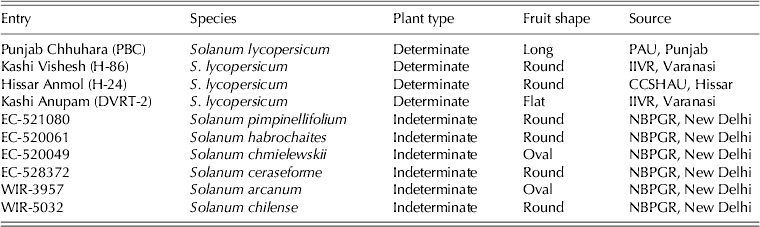
Ten tomato genotypes from different centres of origin (Table 1) were used, comprising four cultivars of S. lycopersicum [Punjab Chhuhara (PBC), Kashi Vishesh (H-86), Hissar Anmol (H-24) and Kashi Anupam (DVRT-2)] as female parents and six accessions of different wild species [S. pimpinellifolium (EC-521080), S. habrochaites syn. L. hirsutum (EC-520061), S. chmielewskii (EC-520049), S. cerasiforme var. S. lycopersicum (EC-528372), S. chilense (WIR-5032) and S. arcanum (WIR-3957)] as male parents. They were crossed in a ‘Line×tester’ mating design during October–February 2006 and produced 24 F1 crosses. Emasculation was carried out a day prior to flower opening. Pollen grains were collected from male parents between 07.00 and 10.00 h and the pollination was done immediately by smearing pollen grains onto the stigma of the flower. The pollinated flowers were then covered with a paper bag. The F1 fruits were picked at full physiological maturity and cured for 2–3 days before seed extraction. Seeds were extracted from fully ripe fruits for raising progenies of F1 hybrids. These 24 F1 crosses and their parents were sent for screening in both natural (field) and artificial (mass and cage inoculations) conditions at the Indian Institute of Vegetable Research (IIVR), Varanasi, Uttar Pradesh during October–February 2007.
Descriptions of the ten parental lines of tomato used in the present study

PAU, Punjab University, Ludhiana, Punjab India; CCSHAU, Chaudhary Charan Singh Hissar Agriculture University, Hissar, India; IIVR, Indian Institute of Vegetable Research, Varanasi, UP, India; and NBPGR, National Bureau of Plant Genetic Resources, New Delhi, India.
Virus culture maintenance and vector population
Isolates [DNA A (AY190290), DNA B (AY190291)] of ToLCV belonging to the ToLCGV-Guj. Vns. group were obtained from tomato plants from Gujarat, India (tomato-growing region) and maintained in the tomato plants, renewing the virus stock every month. The infected culture of B. tabaci adults maintained and used for the transmission experiments were derived from a colony established on aubergine in the glasshouse of IIVR, Varanasi, India (Singh et al. Reference Singh, Rai and Singh2010).
Nursery technique
A nursery of 24 F1 and ten parents was raised in sterilized soil medium in plastic plug-trays and kept in an insect-proof net chamber in the glasshouse, to prevent other biotic infections. Whiteflies were transferred in batches into this net chamber to create a disease pressure. Finally, based on visual observations, healthy 10-day-old seedlings were transferred from the plastic plug-trays to plastic pots for the mass and cage inoculation procedure. Healthy 21-day-old seedlings were transferred to the field for the October–February trial, when temperature and humidity were favourable for the occurrence of maximum whitefly populations and highest spread of disease in the Varanasi region of India.
Whitefly inoculation procedure
Field screening of 34 tomato genotypes (24 F1+10 parents) was performed during the winter season (October–February) of 2007, when the temperature and humidity ranged from 10·1 to 25·2 °C and 41·0 to 81·4%, respectively. Healthy 21-day-old seedlings were transplanted into a friable field in a randomized complete block design (RCBD) with three replications consisting of 30 plants in each replication and spacing of 45×60 cm (plant to plant×row to row). The crop was raised with standard agronomic techniques and without application of any insecticides or fungicides. To increase inoculum pressure, two rows of ToLCV-susceptible cv. Punjab Chhuhara were planted along the borders of the experimental plots. The plants were examined for symptom appearance at 30, 60 and 90 days after transplanting and symptom severity was recorded on a 0–5 scale as described by Singh et al. (Reference Singh, Rai, Singh, Saha and Singh2014), where 0=highly resistant (HR), no symptoms; 1=resistant (R), initiation of curling in leaves; 2=moderately resistant (MR), slight curling in leaves; 3=moderately susceptible (MS), curling, flower dropping and stunting of plants; 4=susceptible (S), stunting of plant growth and severe flower dropping; and 5=highly susceptible (HS), very severe curling of leaves, stunting of plants and significant yield loss.
The same 34 genotypes (24 F1+10 parents) were screened during the same period, October–February 2007, with both mass and cage inoculation techniques as proposed by Banerjee & Kalloo (Reference Banerjee and Kalloo1987a), Picó et al. (Reference Picó, José Díez and Nuez1998) and Singh et al. (Reference Singh, Rai and Singh2010, Reference Singh, Rai, Singh, Saha and Singh2014).
For mass inoculation, 10-day-old seedlings were transplanted into plastic pots filled with soil and compost and kept in a 1·8×1·2×1·5 m (length×breadth×height) insect-proof net chamber (made of silk net). Twenty tomato seedlings from each genotype were inoculated at 2-week intervals, using a high pressure of whiteflies collected from the culture maintained in the glasshouse. The plants were examined at weekly intervals for expression of ToLCV symptoms and disease incidence was observed at 15-day intervals and continued up to 60 days after transplanting.
For cage inoculation, ten seedlings of each of the 34 genotypes were planted in small plastic pots and kept in the glasshouse. Each pot was exposed separately to 15–20 viruliferous whiteflies for 48 h in insect-proof cages covered with insect-proof cotton cloths, with the help of whitefly collectors and transferring tubes. The plants were examined at weekly intervals for expression of ToLCV symptoms and disease incidence for a maximum of 12 weeks. Thereafter the inoculated plants were maintained in an insect-proof glasshouse at 28±2 °C for symptom development.
Resistance assessment: symptom expression
Disease incidence (proportion of diseased plants), disease spread and symptom severity were recorded and monitored according to the previously mentioned disease severity scale described by Singh et al. (Reference Singh, Rai, Singh, Saha and Singh2014).
Biochemical and physiological markers
Total phenol and total sugar content (mg/100 g)
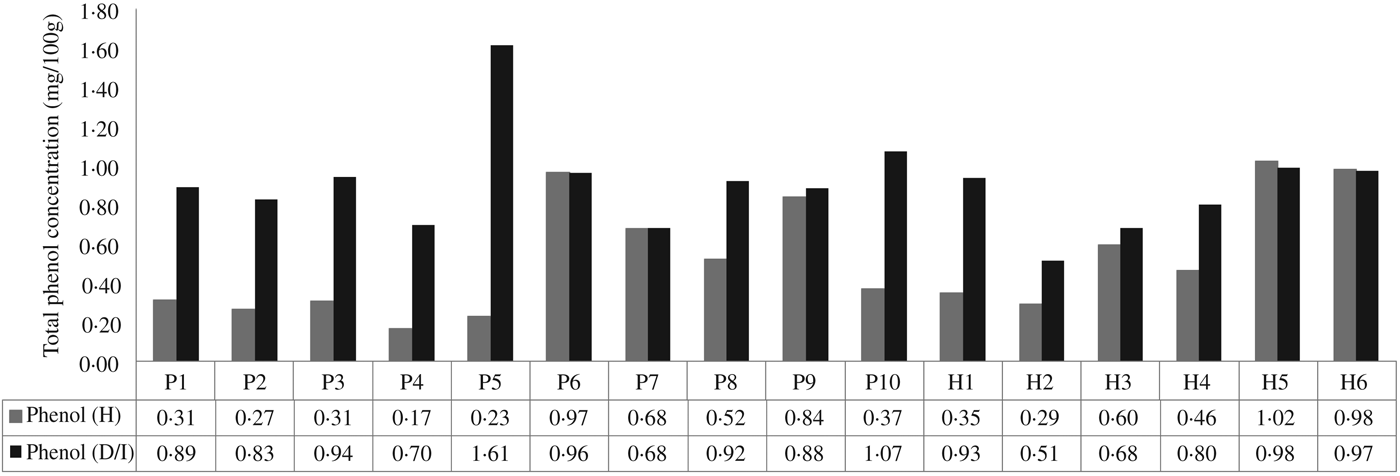
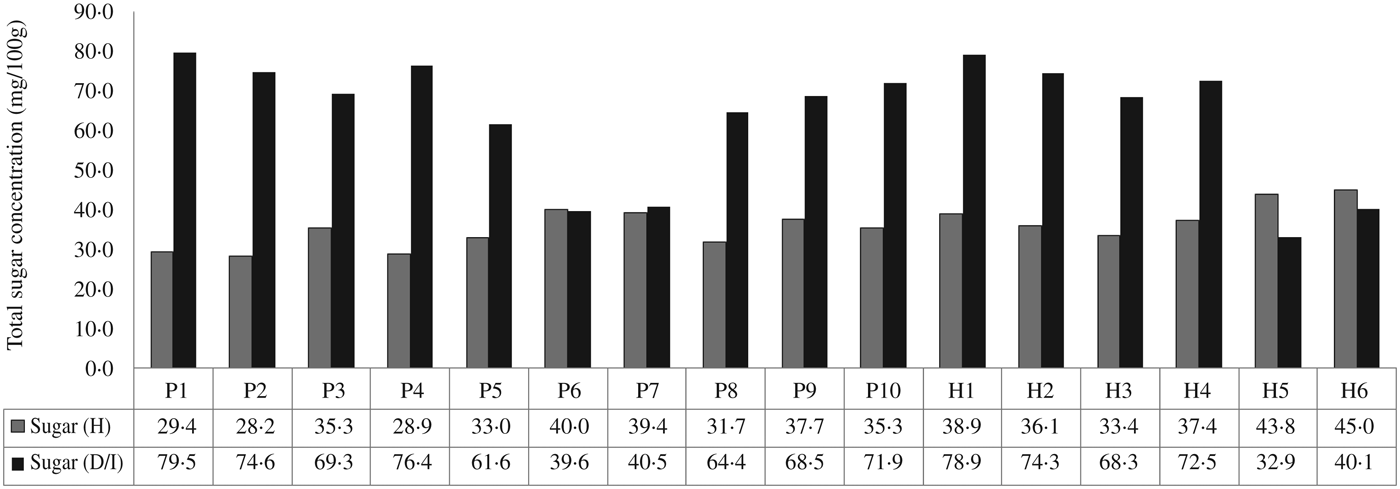
Biochemical and physiological analysis was achieved by including ten plants from each of the ten tomato parents (P1=PBC; P2=H-86; P3=H-24; P4=DVRT-2; P5=EC-521080; P6=EC-520061; P7=EC-520049; P8=EC-520072; P9=WIR-5032 and P10=WIR-3957) and six F1 of different categories on the basis of screening, viz. highly susceptible (H1=PBC×EC-521080; H2=DVRT-2×EC-521080), moderately resistant (H3=H-86×EC-520049; H4=H-24×WIR-5032) and highly resistant (H5=PBC×EC-520061; H6=H-86×EC-520061). These were subjected to analysis of total phenol and total sugar concentrations for confirmation of ToLCV resistant and susceptible genotypes on a biochemical basis (Figs 1 and 2). Total phenol and total sugar concentrations were estimated from leaves of healthy plants (before infection) and diseased-inoculated plants (after infection) and calculated in mg/100 g.
Response of total phenol concentration in healthy and disease-inoculated tomato leaves of ten parents and six F1 crosses. H=healthy; D/I=disease inoculated; P1=PBC; P2=H-86; P3=H-24; P4=DVRT-2; P5=EC-521080; P6=EC-520061; P7=EC-520049; P8=EC-520072; P9=WIR-5032 and P10=WIR-3957; H1=PBC×EC-521080; H2=DVRT-2×EC-521080; H3=H-86×EC-520049; H4=H-24×WIR-5032; H5=PBC×EC-520061; H6=H-86×EC-520061.
Response of total sugar concentration in healthy and disease-inoculated tomato leaves of ten parents and six F1 crosses. H, healthy; D/I, disease inoculated; P1, PBC; P2, H-86; P3, H-24; P4, DVRT-2; P5, EC-521080; P6, EC-520061; P7, EC-520049; P8, EC-520072; P9, WIR-5032 and P10, WIR-3957; H1, PBC×EC-521080; H2, DVRT-2×EC-521080; H3, H-86×EC-520049; H4, H-24×WIR-5032; H5, PBC×EC-520061; H6, H-86×EC-520061.
Total phenol concentrations were estimated using the methods of Ranganna (Reference Ranganna1986) with some modifications of Swain & Hills’ (Reference Swain and Hillis1959) protocol. Briefly, 5 ml 80% ethanol was added to a 0·5 g leaf sample and crushed using a pestle and mortar. Finally, 5 ml 80% ethanol was added and the sample centrifuged at 1000 rpm for 20 min. at 4 °C. The resulting mixture was filtered with Whatman No. 1 filter paper and the test tube containing the filtrate was placed in a water bath at 70–80 °C, until the ethanol evaporated. A 0·5 ml sample of the filtrate was mixed with 9·5 ml distilled water, 5 ml Folin–Ciocalteu reagent (FCR) and 10 ml of 20% sodium carbonate. The optical density (O.D.) of the sample was taken at 650 nm using a spectrophotometer. The process was repeated three times and the mean of all values was calculated in mg/100 g.
Total sugar concentrations were estimated using the method suggested by Dubois et al. (Reference Dubois, Gilles, Hamilton, Rebers and Smith1956), with minor modifications. A dry powdered sample of leaf (0·2 g) was dissolved in 10 ml 80% ethanol and centrifuged at 1000 rpm for 20 min at 40 °C. Thereafter, 4 ml concentrated sulphuric acid was added to the test tube and cooled at room temperature (20 °C). The sugars present in the supernatant were evaporated in a water bath at 60 °C after complete removal of ethanol. The intensity of colour was recorded at 490 nm on a spectrophotometer (Spectronomic-20). Calculations were performed using standard curves and results expressed as mg/100 g.
Chlorophyll concentration and leaf area index
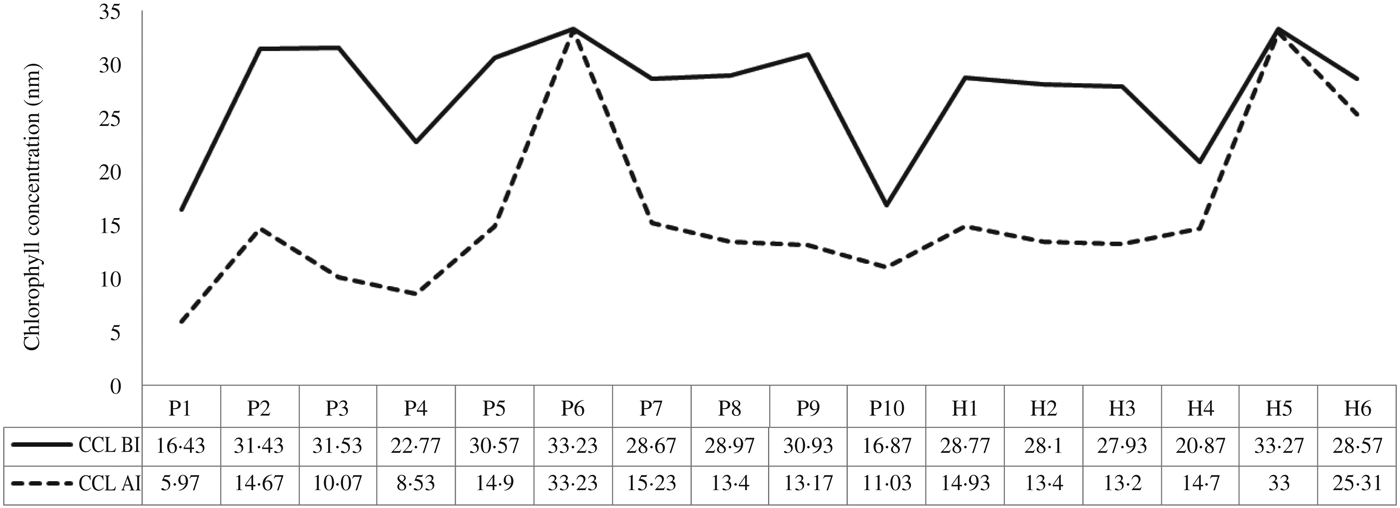
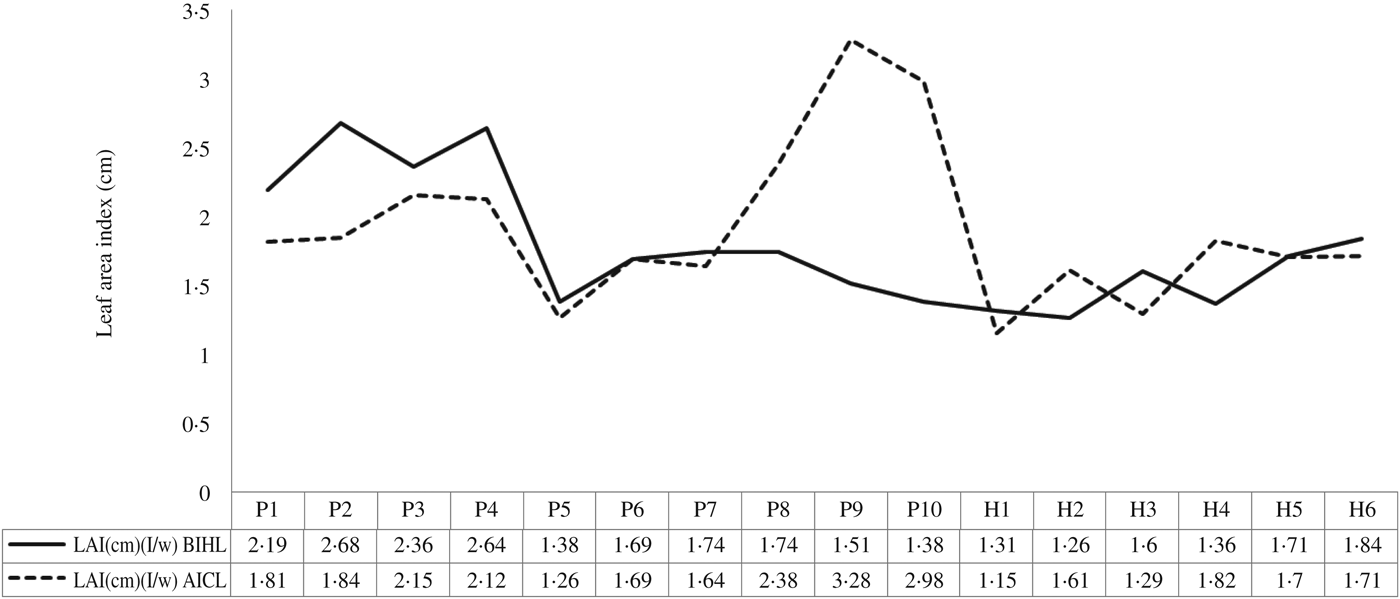
Ten plants of each genotype (10 parents+6 F1), as used for biochemical analysis, were tagged and chlorophyll concentration and leaf area index were measured at two stages, i.e. before infection (healthy leaves) and after infection in diseased inoculated (curled) leaves (Figs 3 and 4). The chlorophyll concentration (nm) was measured by the Opti-Sciences CCM-200 chlorophyll meter (Opti-Sciences, Inc., USA) and leaf area index (cm) was measured by a scale and calculated by dividing the length by the width of leaves.
Response of chlorophyll concentration, before infection and after infection of ToLCV disease in tomato leaves of ten parents and six F1 crosses. CCLBI, chlorophyll concentration in leaves before infection; CCLAI, chlorophyll concentration in leaves after infection; P1, PBC; P2, H-86; P3, H-24; P4, DVRT-2; P5, EC-521080; P6, EC-520061; P7, EC-520049; P8, EC-520072; P9, WIR-5032 and P10, WIR-3957; H1, PBC×EC-521080; H2, DVRT-2×EC-521080; H3, H-86×EC-520049; H4, H-24×WIR-5032; H5, PBC×EC-520061; H6, H-86×EC-520061.
Response of leaf area index (LAI) in healthy and curled leaves of tomato of ten parents and six F1 crosses. BIHL, before infection in healthy leaves; AICL, after infection in curled leaves; P1, PBC; P2, H-86; P3, H-24; P4, DVRT-2; P5, EC-521080; P6, EC-520061; P7, EC-520049; P8, EC-520072; P9, WIR-5032 and P10, WIR-3957; H1, PBC×EC-521080; H2, DVRT-2×EC-521080; H3, H-86×EC-520049; H4, H-24×WIR-5032; H5, PBC×EC-520061; H6, H-86×EC-520061.
RESULTS
Screening of genotypes and F1 crosses
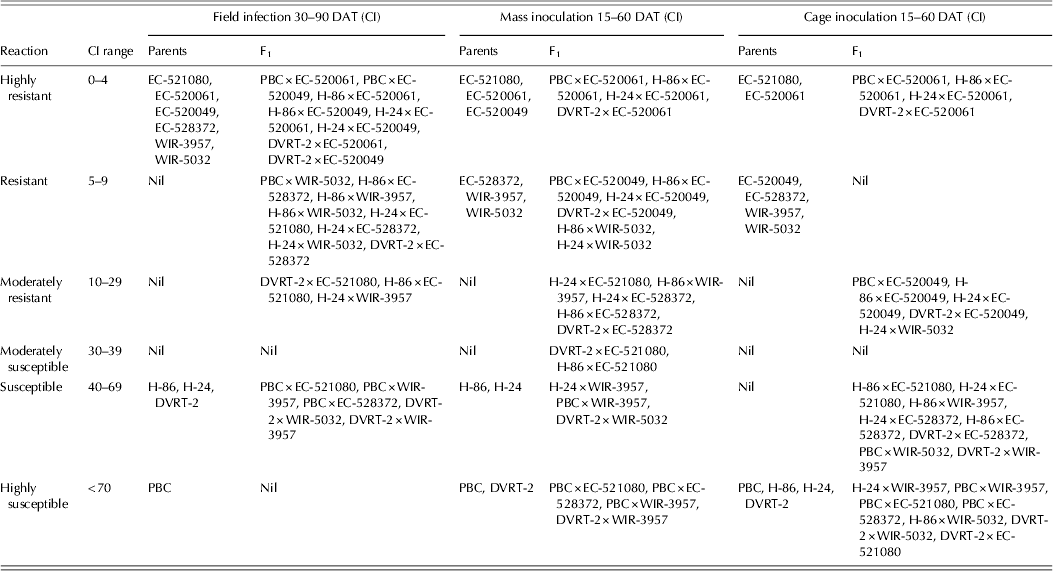
Ten parental lines and 24 F1 crosses were screened for ToLCV by natural and artificial inoculation methods in two environments, field and glasshouse (mass and cage), during 2007 (Table 2). Among the parental lines six, namely EC-520061, EC-521080, EC-520049, EC-528372, WIR-5032 and WIR-3957, were highly resistant in field conditions. In the artificial screening (and particularly in mass inoculation), three of the ten parents (EC-520061, EC-520049 and EC-521080) were highly resistant and another three (EC-528372, WIR-5032 and WIR-3957) were resistant for ToLCV disease. However, in cage inoculation only two (EC-520061 and EC-521080) and four (EC-520049, EC-528372, WIR-3957 and WIR-5032) parents expressed highly resistant and resistant disease reactions, respectively. Four of the parents were susceptible in both field and glasshouse conditions (Table 2).
Reaction and coefficient of infection (CI) range for ToLCV disease of ten parents and 24 F1 after field, mass and cage inoculation
DAT, days after transplanting; CI, coefficient of infection; PBC, Punjab Chhuhara; H-24, Hissar Anmol; H-86, Kashi Vishesh; and DVRT-2, Kashi Anupam.
Among the 24 F1 crosses, eight crosses were highly resistant (PBC×EC-520061, PBC×EC-520049, H-86×EC-520061, H-86×EC-520049, H-24×EC-520061, H-24×EC-520049, DVRT-2×EC-520061 and DVRT-2×EC-520049), eight were resistant, three were moderately resistant and five were susceptible under field conditions. The disease symptoms increased under mass inoculation; four were highly resistant (PBC×EC-520061, H-86×EC-520061, H-24×EC-520061 and DVRT-2×EC-520061), six were resistant, five were moderately resistant and the remaining nine were susceptible to highly susceptible. In cage inoculation, only four crosses (PBC×EC-520061, H-86×EC-520061, H-24×EC-520061 and DVRT-2×EC-520061) were highly resistant, five (PBC×EC-520049, H-86×EC-520049, H-24×EC-520049, DVRT-2×EC-520049 and H-24×WIR-5032) were moderately resistant and the remaining 15 crosses were moderately to highly susceptible (Table 2).
Biochemical and physiological analysis
The disease-inoculated leaves had higher total phenol concentrations than healthy leaves in each genotype except EC-520061 and its hybrids, PBC×EC-520061 and H-86×EC-520061. The total phenol concentration was highest in the resistant and lowest in the susceptible genotypes. In the present study, EC-520061 recorded the highest (0·97 mg/100 g) and DVRT-2 the lowest (0·17 mg/100 g) total phenol concentration in healthy leaves (Fig. 1). However, total phenol was stable or showed less difference in the resistant genotypes of EC-520061, EC-520049 and H-86×EC-520061. In contrast, an increasing trend of total phenol was noted in EC-521080 (1·61 mg/100 g), which showed a rapid accumulation of phenols in its disease-inoculated leaves at the end of the cropping season in comparison with the other genotypes.
Total sugar among the genotypes varied widely. Figure 2 shows that the total sugar concentrations were higher in disease-inoculated leaves than in healthy leaves for each genotype except EC-520061 and its hybrids, PBC×EC-520061 and H-86×EC-520061. It was also observed that the incremental rate in sugar level was higher in the susceptible genotypes than in the resistant ones. The highest value of total sugar concentration was observed in disease-inoculated leaves of susceptible genotypes PBC (79·5 mg/100 g), PBC×EC-521080 (78·9 mg/100 g) and DVRT-2 (76·46 mg/100 g). The disease-inoculated leaves of EC-520061 (39·6 mg/100 g) and EC-520049 (40·5 mg/100 g), however, showed the lowest total sugar concentrations, which also remained constant or showed only minor differences.
Chlorophyll concentration was higher in the leaves of each genotype before infection compared with after infection (Fig. 3). It was stable or least variable in EC-520061, PBC×EC-520061 and H-86×EC-520061 genotypes both before and after disease infection. However, chlorophyll concentration in S. lycopersicum cultivars (PBC, H-86, H-24 and DVRT-2) was higher than wild accessions before infection with ToLCV, but after infection it was either slightly increased or decreased in each genotype.
Leaf area index was higher in the healthy leaves (before infection) of cultivars than the wild parents and F1 hybrids (Fig 4). The leaf area index in healthy leaves was higher than in curled leaves of most genotypes except EC-528372, WIR-5032, WIR-3957, DVRT-2×EC-521080 and H-24×WIR-5032. Genotypes EC-520061 and PBC×EC-520061 were consistent and EC-521080 and H-86×EC-521080 were slightly curled after infection.
DISCUSSION
In the present investigation, the cage inoculation technique was found to be better than field and mass inoculation techniques for ToLCV screening. This was in agreement with the findings of Singh et al. (Reference Singh, Rai and Singh2010), who reported that among the three whitefly-mediated inoculation techniques (field, mass and cage) for ToLCV disease, the cage inoculation gave more authentic results. Among the ten parents screened by different whitefly-mediated inoculation techniques, the accessions EC-520061 (S. habrochaites) and EC-521080 (S. pimpinellifolium) were shown to be highly resistant against ToLCV disease. It has previously been reported that the mostly wild species viz., S. pimpinellifolium, S. habrochaites and S. chilense, etc. were resistant to ToLCV disease (Banerjee & Kalloo Reference Banerjee and Kalloo1987a, Reference Banerjee and Kalloob; Moshe et al. Reference Moshe, Pfannstiel, Yariv, Kolot, Sobol, Czosnek and Gorovits2012). In contrast, the parents belonging to S. lycopersicum (PBC, H-86, H-24 and DVRT-2) were highly susceptible to the disease in all screening techniques. Banerjee & Kalloo (Reference Banerjee and Kalloo1989a, Reference Banerjee and Kalloob) and Singh et al. (Reference Singh, Rai and Singh2010) also reported that there are limited S. lycopersicum cultivars available with ToLCV resistance. The cross H-24 (derived from Hissar Arun×L. hirsutum f. glabaratum) was reported as being resistant/moderately resistant by Kalloo & Banerjee (Reference Kalloo and Banerjee1990, Reference Kalloo and Banerjee2000), whereas in the current and several other works it was found to be susceptible to ToLCV disease (Tripathi & Varma Reference Tripathi and Varma2002; Singh et al. Reference Singh, Rai and Singh2010, Reference Singh, Rai, Singh, Saha and Singh2014). This may be due to the divergence of viral strains or races throughout the world causing inconsistent performance.
Out of 24 F1 hybrids, four (PBC×EC-520061, H-86×EC-520061, H-24×EC-520061 and DVRT-2×EC-520061) were found to be highly resistant to ToLCV disease. This may be due to the dominance of the male parents, as S. habrochaites has been documented for resistance to ToLCV (Banerjee & Kalloo Reference Banerjee and Kalloo1987a, Reference Banerjee and Kalloob). In the present study, it was observed that for accessions belonging to S. pimpinellifolium, S. chmielewskii, S. chilense and S. arcanum wild species, crossed with S. lycopersicum as a male parent, the F1 exhibited moderate resistance to high susceptibility for ToLCV (Kalloo & Banerjee Reference Kalloo and Banerjee1990) disease.
Total phenol and total sugar concentrations in the plant is one method of identifying resistant and susceptible tomato genotypes against ToLCV disease. In the present investigation, total phenol was higher in disease-inoculated leaves than healthy leaves, indicating that phenol synthesis was induced due to infection by the pathogen. In the present investigation, the total phenol concentration was relatively constant in healthy leaves of EC-520061 (S. habrochaites) and EC-520049 (S. chmielewskii) but high in PBC×EC-520061 and H-86×EC-520061, while increased accumulation of phenol was seen in EC-521080 accessions of S. pimpinellifolium. Similarly, Banerjee & Kalloo (Reference Banerjee and Kalloo1989b) found that phenol concentrations remained relatively constant in S. hirsutum f. glabratum ‘B 6013’ (0·767 in healthy vs. 0·763 in disease-inoculated leaves) while S. pimpinellifolium ‘A 1921’ showed greater accumulation of phenol in disease-inoculated leaves (1·060) than healthy leaves (0·203), which is consistent with the results of the present study. Banerjee & Kalloo (Reference Banerjee and Kalloo1989c) also reported that the S. hirsutum f. glabratum ‘B 6013’, a resistant wild species, has high (134·22 μg per g) total phenol compared to the susceptible commercial varieties (24·42 μg per g in Red Cherry to 31·46 μg per g in Pusa Ruby). Hence, it is concluded that healthy leaves of ToLCV-resistant lines/varieties/hybrids have higher amounts of total phenol than disease-inoculated plants (Singh et al. Reference Singh, Rai and Singh2010).
In the case of total sugar concentration, it was higher in disease-inoculated leaves than in healthy leaves of each genotype except PBC×EC-520061 and H-86×EC-520061. In another study, Banerjee & Kalloo (Reference Banerjee and Kalloo1989b) also found higher sugar concentrations in diseased than healthy leaves. However, EC-520061 (S. habrochaites) and EC-520049 (S. chmielewskii) showed low and consistent sugar concentrations throughout the cropping period. The susceptible genotypes Punjab Chhuhara (79·46 mg/100 g) and DVRT-2 (76·36) had maximum sugar concentrations in disease-inoculated leaves while in case of hybrids, sugar concentrations were high in disease-inoculated leaves of PBC×EC-521080, DVRT-2×EC-521080 and H-24×EC-5032. However, sugar concentrations were significantly higher in healthy leaves of PBC×EC-520061 and H-86×EC-520061 than the other F1. In the present investigation, it was observed that all the ToLCV-susceptible genotypes exhibited increased total sugar concentrations after disease inoculation: these findings support the observations of Banerjee & Kalloo (Reference Banerjee and Kalloo1989b). Gevorkyan et al. (Reference Gevorkyan, Adhzhemyan and Gasparyan1976) previously found increased total sugar concentrations in tomato leaves after infection of ToLCV disease and suggested it may be due to accumulations of hexose and sucrose.
In the physiological study, chlorophyll concentration and leaf area index were correlated with ToLCV disease. The chlorophyll concentration is the most important factor for photosynthetic rate in most plants including tomato. It has been observed that ToLCV incidence has a significant effect on chlorophyll concentration, expressing a close relationship to susceptible and resistant genotypes. In the current findings, it was observed that the chlorophyll concentration was more stable in EC-520061 (S. habrochaites) and its hybrids PBC×EC-520061 and H-86×EC-520061 than other genotypes, resulting from low populations of whitefly insect vector (visual observation) due to the presence of a special type of aroma and hairs on plant leaves and fruits of EC-520061. On the other hand, it was also observed that the lowest chlorophyll concentration found in infected plants was due to chlorosis in the leaves. This finding is in agreement with a study by Marco (Reference Marco1975), who also stated that one symptom of infection in susceptible plants consists of interveinal chlorosis. The reduction in leaf area index is considered to be a symptom of ToLCV due to the curling of lamina and margin of leaves, while no effect was observed on the leaf area index of healthy leaves. The leaf area index was constant in EC-520061 (S. habrochaites) and PBC×EC-520061 because they do not exhibit symptoms of ToLCV disease (Banerjee & Kalloo (Reference Banerjee and Kalloo1987a). In the present investigation, the leaf area index of healthy leaves from wild accessions was less than that of current commercial cultivars, but that of infected leaves from wild accessions was hardly affected. This may be because wild accessions have smaller, narrower leaves than cultivars, which possess large, broad leaves that are subsequently reduced after infection, by curling and rolling.
CONCLUSIONS
In the present study, it was concluded that the accession of S. habrochaites (EC-520061) and S. pimpinellifolium (EC-521080) and four F1, PBC×EC-520061, H-86×EC-520061, H-24×EC-520061 and DVRT-2×EC-520061 were proved to be highly resistant genotypes for ToLCV disease through various whitefly inoculation techniques. Total sugar and total phenol concentrations were stable or showed only slight differences in healthy and disease-inoculated leaves of EC-520061, EC-520049, PBC×EC-520061 and H-86×EC-520061. Chlorophyll concentration was consistent in EC-520061, PBC×EC-520061 and H-86×EC-520061 and leaf area index was stable or only slightly affected by leaf curling in leaves of EC-520061 and PBC×EC-520061. These wild accessions of S. habrochaites, S. pimpinellifolium and S. chmielewskii and hybrids PBC×EC-520061 and H-86×EC-520061 can be used as parents in resistance breeding programmes for enhancing ToLCV resistance tomato varieties.