Introduction
The COVID-19 pandemic, caused by the novel coronavirus SARS-CoV-2, originated in Wuhan, China, in late December 2019 with an initial cluster of unexplained pneumonia cases.Reference Tang, Tambyah and Hui 1 The virus, which can cause a spectrum of respiratory tract infections ranging from the common cold to life-threatening syndromes such as acute respiratory distress syndrome,Reference Umakanthan, Sahu and Ranade 2 , Reference Heymann and Shindo 3 demonstrated rapid global transmissibility. Following its emergence, the disease swiftly spread to several countries, including Thailand, Japan, South Korea, Singapore, and Iran.Reference Satapathy, Pattnaik and Sahoo 4 -Reference Sahu 7 Subsequent significant waves of transmission were observed in the United States, the United Kingdom, the United Arab Emirates, Spain, and Italy. In response to the escalating global spread, the World Health Organization (WHO) declared the outbreak a pandemic in early 2020. The profound impact of the virus was underscored by the staggering global case count, which had already reached 373,204 confirmed cases and 261,517 fatalities by May 6, 2020.Reference Maleelai, Phudket and Rittiron 8
Crowded environments,Reference Mohapatra, Mishra and Kandi 9 such as prisons, have been identified as significant amplifiers for the transmission of COVID-19. Globally, prisons are often characterized by overcrowding and poor hygiene, creating ideal conditions for the rapid spread of the disease. This is evidenced by the fact that a majority of countries (59%) incarcerate populations that exceed their official capacity, a key driver of infection risk and adverse health outcomes.Reference Irshaidat and Borgebund 10 The pandemic has underscored the critical imperative to recognize prisons and their populations as essential components of public health strategy. This view is supported by The Lancet Public Health, which asserts that prison health is inextricably linked to public health.Reference Iglesias-Osores 11 , Reference Kinner, Young and Snow 12 However, implementing essential public health measures in carceral settings, including physical distancing and equitable health care access, faces profound structural challenges. These challenges are compounded by systemic issues such as inadequate sanitation and ventilation within prison facilities, which significantly exacerbate health crises.Reference Aon, Oberconz and Brasholt 13 Moreover, the effective implementation of communicable disease prevention programs in these settings is known to depend on strong managerial commitment, robust monitoring and review systems, and collaborative, multi-stakeholder engagement.Reference Ghayen, Faghihi and Farshad 14
Prisons and jails have been epicenters of significant COVID-19 outbreaks across diverse global regions, including Africa,15Asia,Reference Rapisarda and Byrne 16 North America, Central America, the Caribbean,Reference Rapisarda, Byrne and Marmolejo 17 South America,Reference Rapisarda, Byrne and Marmolejo 18 and Europe.Reference Rapisarda and Byrne 19
The inherently hazardous conditions within these facilities substantially elevate the risk of viral exposure for both incarcerated individuals and correctional staff.Reference Hewson, O’Neill and Heathcote 20 , Reference Williams, Spinks and Williams 21 In a meta-analysis, the prevalence of COVID-19 among prisoners was found to be 20% [95%CI: 0.13, 0.26] and 24% [95%CI: 0.07, 0.41] in studies utilizing PCR and antibody tests, respectively. Additionally, cross-sectional and cohort studies within the same meta-analysis reported the prevalence of COVID-19 in prisoners to be 20% [95%CI: 0.11, 0.29] and 25% [95%CI: 0.13, 0.38], respectively.Reference SeyedAlinaghi, Yarmohammadi and Farahani Rad 22
Empirical evidence has identified a multitude of factors that facilitate disease transmission within correctional facilities. Key determinants include dormitory-style housing, ethnicity, age, pre-existing clinical comorbidities, prison type (particularly provincial institutions), duration of incarceration, frequency of meals, employment status within the prison, and educational attainment.Reference Kronfli, Dussault and Maheu-Giroux 23 Supporting these findings, a study by Kronfli et al. identified specific variables associated with higher SARS-CoV-2 seroprevalence, such as Black or other visible minority status, unstable housing, presentation of COVID-19 symptoms, incarceration at specific facilities (e.g., EDM), longer time spent in prison, employment during incarceration, and incarceration following the initial outbreak.Reference Kronfli, Dussault and Maheu-Giroux 23 Similarly, Esposito et al. highlighted that structural and individual-level factors, including overcrowding, lower educational levels, and poor medical and environmental conditions, significantly elevated infection risk in prisons during the pandemic.Reference Esposito, Salerno and Di Nunno 24 Further corroborating this, Dutheil et al. delineated that prison disease epicenters are primarily driven by environmental and systemic failures, notably inadequate ventilation, unhygienic conditions, limited access to health care, and severe overcrowding, which collectively exacerbate health risks for the incarcerated population. Moreover, the inherent proximity of individuals in these settings creates a persistent reservoir for infectious diseases, facilitating transmission both within the facility and to the broader community.Reference Dutheil, Bouillon-Minois and Clinchamps 25
Recognizing that the prison environment and the psychological impact of incarceration can lead to distinct emotional responses to the pandemic compared to the general population, the WHO issued specific guidance in 2021 for the prevention and treatment of COVID-19 in custodial settings. The reports emphasize that individuals in detention may be disproportionately affected by measures like physical separation due to their unique circumstances. Consequently, the WHO recommendations highlight the critical need for enhanced psychological and emotional support, transparent risk communication and information-sharing about the disease, and firm assurances that contact with family and relatives will be maintained.Reference Byrne, Rapisarda and Hummer 26 , Reference Braithwaite, Edge and Lewer 27
This systematic review and meta-analysis aim to comprehensively identify and synthesize the evidence on risk factors associated with COVID-19 transmission in incarcerated populations. Given the high vulnerability of these populations and the critical role of correctional facilities in public health dynamics, a precise understanding of these determinants is crucial. A rigorous synthesis of the existing literature is imperative to inform targeted interventions for outbreak containment within prisons and to mitigate the broader community spread. By elucidating key risk factors, this study will provide critical evidence for health care practitioners, policymakers, and public health officials, thereby strengthening disease prevention and control strategies in carceral settings.
Methods
This systematic review and meta-analysis aim to investigate the risk factors for COVID-19 among incarcerated individuals. To ensure the methodological rigor and transparency of our findings, this study was conducted in accordance with the Preferred Reporting Items for Systematic Reviews and Meta-Analyses (PRISMA) guidelines, as outlined in the flow diagram (Figure 1).
PRISMA 2020 flow diagram of the study retrieval process.

Figure 1. Long description
The flowchart is organized into four vertical phases labeled on the left: Identification, Screening, Eligibility, and Included.
1. Identification phase: At the top, a box shows 1151 records identified through database searching, broken down into Scopus (n = 188), Google Scholar (n = 667), and Pub Med (n = 296). An arrow points down to the next box.
2. Screening phase: The first box indicates Duplicated articles removed (n = 30). An arrow points down to Records screened (n = 1121). From this box, an arrow points right to Records excluded: By title screening (n = 262) and By abstract screening (n = 825). A downward arrow from the screened box leads to the next phase.
3. Eligibility phase: A box shows Full-text articles assessed for eligibility (n = 34) based on full-text access, English language, and specific topic criteria. An arrow points right to Full-text articles excluded, with reasons: No access to the full-text document (n = 1), Non-English languages (N = 1), Conference Papers (N = 2), Letters to the editors (N = 0), and Other Study types (N = 18). A downward arrow leads to the final phase.
4. Included phase: The final box at the bottom indicates Final included studies (n = 12).
Data Sources and Search Strategy
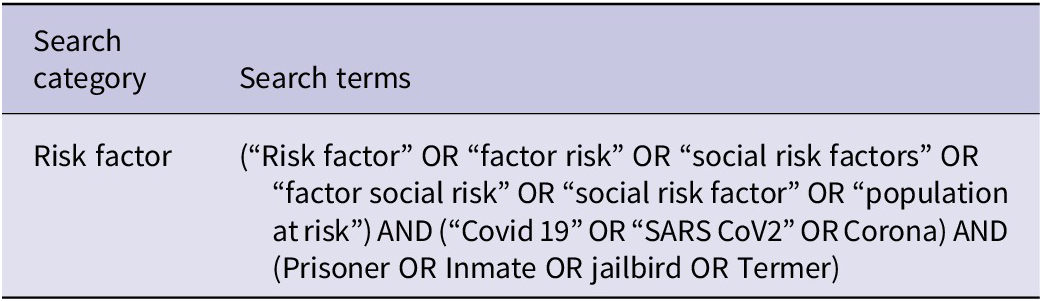
A comprehensive systematic search of the English-language literature was performed up to October 2025 across three electronic databases: PubMed, Scopus, and Google Scholar. The search strategy employed predetermined keywords and their combinations, as detailed in Table 1.
Search strategy in PubMed to October, 2025

Table 1. Long description
The table consists of two columns titled Search category and Search terms.
Row 1:
- Search category: Risk factor.
- Search terms: (quote Risk factor quote O R quote factor risk quote O R quote social risk factors quote O R quote factor social risk quote O R quote social risk factor quote O R quote population at risk quote) A N D (quote Covid 19 quote O R quote S A R S C o V 2 quote O R Corona) A N D (Prisoner O R Inmate O R jailbird O R Termer).
Selection of the Studies
The literature selection process comprised two sequential phases. First, 2 investigators independently screened records based on the relevance of their titles and abstracts. Subsequently, the full texts of potentially eligible studies were retrieved and subjected to a meticulous eligibility assessment by two independent reviewers.Reference Brignardello-Petersen, Santesso and Guyatt 28 Studies that fulfilled the predetermined inclusion criteria were then included in the qualitative synthesis and, where applicable, the quantitative meta-analysis.
Inclusion/Exclusion Criteria
Studies were excluded according to the following pre-defined criteria: (1) Ongoing investigations without available published data; (2) Conference abstracts or any publications for which the full text was inaccessible; and (3) Non-original research publications, including editorials, commentaries, duplicate publications, case series, and case reports.
Data Extraction
Following the final selection of studies, two investigators independently extracted key data, including study objective and primary findings, which are systematically presented in Table 2. To ensure the accuracy and eliminate potential duplications in the extracted data, a cross-verification was subsequently performed by an independent team of researchers.
Description of the findings reported in the eligible studies

Table 2. Long description
The table contains 10 columns: I D, Year of publication, Geographical area (Country), Type of study, Age, Sample size (n) subdivided into Combined, Male, and Female, Findings, and Name of the risk factor.
* Study 1 (2021, Massachusetts): Sample size 6876 males. Findings show prison crowding and lack of single-cell units increased incidence rates.
* Study 2 (2021, California): Sample size 119,401. Dormitory residents (3 or more occupants) had double the infection rates of cell residents.
* Study 3 (2022, Peru): Sample size 37,103. Most frequent symptoms were headache (55.6 percent) and malaise (49.7 percent). Risk factors included age over 60, high blood pressure, and diabetes.
* Study 4 (2023, Spain): Sample size 8,500. Cumulative incidence was 2054.18 per 10,000 inmates; 64.1 percent were asymptomatic.
* Study 5 (2021, Switzerland): Sample size 557 males. Classified 9.9 percent of detained people as high risk based on C I R A scores.
* Study 6 (2021, Michigan): Sample size 706. Prisoner status was associated with more severe clinical presentation and higher I C U admission rates.
* Study 7 (2021, Brazil): Sample size 778. No significant difference in cases between those with or without visits. 32.5 percent tested positive.
* Study 8 (2022, Italy): Sample size 595. Unvaccinated inmates had significantly higher positive rates (P less than 0.001).
* Study 9 (2022, Uganda): Sample size 486. Facemask use over 50 percent of the time was protective (a R R 0.26).
* Study 10 (2023, Nigeria): Sample size 200. C O V I D 19 prevalence was 12.5 percent. Associated factors included duration of incarceration and vaccination status.
* Study 11 (2021, New York City): Sample size 978. 568 symptomatic people tested positive. Risk factors included age over 55 and B M I over 25.
* Study 12 (2023, Italy): Sample size 587. Positivity rates were 49.1 percent in L'Aquila and 28.3 percent in Sulmona. Advanced age and comorbidities increased disease severity.
Quality Assessment and Bias Risk Evaluation
Methodological quality was assessed using the Newcastle-Ottawa Scale (NOS) to evaluate the risk of bias. The NOS assigns stars across three domains: selection (up to 4 stars), comparability (up to 2 stars), and exposure/outcome (up to 3 stars). Consistent with standard NOS interpretation protocols, we defined low risk of bias as scores of 7-9, moderate risk as 4-6, and high risk as scores of 3 or lower. The total score for each study, along with the domain-specific ratings, is summarized in Table 3.
Newcastle-Ottawa Scale (NOS) quality assessment of the studies

Table 3. Long description
The table contains 12 rows of data with the following columns: I D, Author (year of publication), Type of study, S 1, S 2, S 3, S 4, C, Q 1, Q 2, Q 3, and Total score.
* Row 1: Abigail I. Leibowitz (2021), Longitudinal Ecological Study, scores 1, 1, 1, 0, 1, 2, 1, dash, Total 7.
* Row 2: Elizabeth T. Chin (2021), Observational Study (Cross-Sectional), scores 1, 1, 1, 0, 1, 2, 1, dash, Total 7.
* Row 3: Sindeev A (2022), Descriptive, Cross-Sectional, Retrospective Study, scores 1, 1, 1, 1, 0, 2, 1, dash, Total 7.
* Row 4: Victoria Hernando (2023), Retrospective Observational Study, scores 1, 1, 1, 0, 0, 2, 1, dash, Total 6.
* Row 5: Gonçalves Leonel C (2021), Cross-Sectional Study, scores 1, 1, 1, 0, 0, 2, 1, dash, Total 6.
* Row 6: Ahmed M. Altibi (2021), Retrospective Cohort Study, scores 1, 1, 1, 1, 1, 1, 1, 1, Total 8.
* Row 7: Lysandro Pinto Borges (2021), Prospective Cohort Study/Pre-Post Design, scores 1, 1, 1, 1, 2, 1, 1, 1, Total 9.
* Row 8: Angela Stufano (2022), Cross-Sectional Study, scores 1, 1, 1, 2, 1, 2, 1, dash, Total 9.
* Row 9: Migisha et al. (2022), Retrospective Cohort Study, scores 1, 1, 1, 1, 1, 1, 1, 1, Total 8.
* Row 10: Mike-Ogburia et al. (2023), Cross-Sectional Study, scores 1, 1, 1, 2, 2, 2, 1, dash, Total 10.
* Row 11: Justin Chan (2021), A Retrospective Observational Cohort Study, scores 1, 1, 1, 1, 2, 2, 1, 1, Total 10.
* Row 12: Emma Altobelli (2023), Cross-Sectional Study, scores 1, 1, 1, 2, 0, 2, 1, dash, Total 8.
Footnotes indicate S stands for selection, C for comparability, and Q for outcome. A modified N O S scale was used for cross-sectional studies.
S: selection, C: comparability, O: outcome (assessed by Q1, Q2, Q3).
Note: *A modified version of the Newcastle-Ottawa scale was used in the cross-sectional studies.
Statistical Analysis
The meta-analysis of risk factors for COVID-19 among incarcerated individuals was performed using STATA version 17 (Stata Corp, College Station, TX). Data were synthesized from studies that reported relevant effect measures, including odds ratios (ORs), hazard ratios (HRs), risk ratios (RRs), or risk differences. The odds ratio was selected as the common effect size for pooling; consequently, other reported measures were statistically converted to ORs prior to analysis. A random-effects model was employed to account for anticipated between-study heterogeneity, which was quantitatively assessed using the I2 statistic. Across all analyses, a p-value of less than 0.05 was deemed statistically significant.
Results
A total of 1151 studies were initially identified; however, after screening and eligibility assessment for a systematic review, only 12 studies were ultimately included. The geographical distribution of these studies is varied, encompassing North and South Americas (Massachusetts, California state, Michigan, Peru, Brazil, and New York City), Europe (Spain, Switzerland, and Italy), and Africa (Uganda, Nigeria). Of the 12 studies included in this systematic review, the majority employed observational designs. Specifically, five studies utilized a cross-sectional design, while four studies were conducted using a retrospective cohort approach. The remaining three studies employed other methodological designs, including longitudinal ecological, descriptive cross-sectional retrospective, and prospective cohort/pre-post designs. In most studies, the average age was reported to be around 40 years. Two studies did not report age, and one study categorized age into groups (21-30 and 31-40 years). The total sample size was 176169, comprising 169,117 males and 7,726 females. As per the question, certain risk factors were evaluated in this study. One study reported that the incidence rate of COVID-19 was significantly higher in crowded prisons than in those penitentiaries that housed higher proportions of incarcerated people in single–cell units.Reference Leibowitz, Siedner and Tsai 29 Similarly, an observational study reported that rates of COVID-19 infection were more than double in residents of dormitories as compared to those staying in cells. Those who participated in out-of-room labor reported higher rates of infection as compared to those who did not.Reference Chin, Ryckman and Prince 30 Vaccination was also found to be related to the incidence of COVID-19 among prisoners. A cross-sectional study reported a significantly higher percentage of COVID-19-positive subjects among unvaccinated prisoners as compared to other groups.Reference Stufano, Buonvino and Trombetta 36 One study reported 8500 COVID-19 cases in which 94% were vaccinated and 64.1% were asymptomatic.Reference Hernando, Vázquez and Díaz 32 Similarly, another cross-sectional study found that vaccination and other risk factors such as duration of incarceration, face mask use, and frequent visitations were significantly associated with the prevalence of COVID-19 (12.5%) among the studied population.Reference Mike-Ogburia, Dio and Nwogu 38 According to another prospective cohort study, there was no significant difference in positive cases/results between inmates who had and had not received visits.Reference Borges, Martins and de Souza 35 A retrospective cohort study reported that prisoners who were recently transferred to prison had a 50% increased risk of contracting COVID-19 (aRR = 1.50). Similarly using a face mask >50% of the time (adjusted risk ratio [aRR] = 0.26; 95%CI: 0.13-0.54) along with handwashing after touching surfaces (aRR = 0.25; 95%CI: 0.14-0.46) were reported as protective factors.Reference Migisha, Morukileng and Biribawa 37 A descriptive study reported that 8.4 % of the total 445 infected COVID-19 patients were >60 years of age.Reference Leibowitz, Siedner and Tsai 29 Similarly, age >50 years was found to be significantly associated with the presence of severe symptoms and an increase in the percentage of hospitalized patients.Reference Hernando, Vázquez and Díaz 32 , Reference Altobelli, Galassi and Mastrodomenico 40 Prisoner’s status was associated with more severe clinical presentation and higher rates of ICU admissions, vasopressors requirement, intubation, in-hospital mortality, and 30-day mortality.
The findings of the current study indicate that the presence of underlying diseases in prisoners, including high blood pressure, diabetes mellitus,Reference Sindeev and Martínez-Álvarez 31 , Reference Chan, Burke and Bedard 39 , Reference Altobelli, Galassi and Mastrodomenico 40 pulmonary diseases, and cardiovascular diseases,Reference Chan, Burke and Bedard 39 , Reference Altobelli, Galassi and Mastrodomenico 40 significantly increases the susceptibility of prisoners to contracting COVID-19. Two studies have revealed that a substantial proportion of incarcerated individualsReference Leibowitz, Siedner and Tsai 29 and face-to-face interactionsReference Borges, Martins and de Souza 35 are recognized as risk factors for acquiring COVID-19. Moreover, having a body mass index exceeding 25Reference Chan, Burke and Bedard 39 has been identified as an additional risk factor for COVID-19 infection.
Meta-Analysis of the Risk Factors
For the meta-analysis assessing COVID-19 risk factors in prisoners, 12 potential studies were examined.Reference Leibowitz, Siedner and Tsai 29 -Reference Chan, Burke and Bedard 39 These studies investigated 15 Risk factors, including respiratory, cardiovascular, kidney diseases, hypertension, diabetes mellitus, sex, age, smoking, obesity, HIV infection, vaccination status, cancer, population density inside the prison, history of recent hospitalization, hepatitis, etc. After screening, 7 studiesReference Leibowitz, Siedner and Tsai 29 -Reference Borges, Martins and de Souza 35 were excluded because they had not reported the exact number of affected and unaffected prisoners by COVID-19. We also sent 2 emails at 2-week intervals and requested the required information for meta-analysis, but received no reply. Upon examining commonly reported risk factors, it was determined that meta-analyses could be conducted based on sex (male vs. female), age (more vs. less than 50 years), and vaccination condition (fully vaccinated vs. non-vaccinated).
Sex
Three studies were included in the meta-analysis examining the relationship between sex and COVID-19 among prisoners.Reference Migisha, Morukileng and Biribawa 37 -Reference Chan, Burke and Bedard 39 The results showed that there was a small degree of variance among study effect sizes (Q = .61; p-value = .74). A minor, however insignificant, association was observed between sex and COVID-19 (OR: 1.14; 95%CI: [.77, 1.68]; P-value = 0.53, Figure 2).
Forest plot of studies examining the association between sex and incidence of COVID-19 among prisoners.

Figure 2. Long description
The forest plot contains a table with columns for Study, exp E S with 95% C I, and Weight %. The x-axis at the bottom is a logarithmic scale with markers at 1/2, 1, 2, and 4.
* Mike-Ogburia et al. 2023: Small blue square at 1.49 with a wide horizontal error bar from 0.50 to 4.47. Weight is 12.78%.
* Migisha et al. 2022: Small blue square at 1.58 with a wide horizontal error bar from 0.43 to 5.75. Weight is 9.21%.
* Justin Chan et al. 2021: Large blue square at 1.04 with a narrow horizontal error bar from 0.67 to 1.63. Weight is 78.01%.
* Overall: A green diamond centered at 1.14, spanning from 0.77 to 1.68.
Below the data rows, heterogeneity statistics are listed: tau-squared = 0.00, I-squared = 0.00%, H-squared = 1.00. Test of theta sub i = theta sub j: Q 2 = 0.61, p = 0.74. Test of theta = 0: z = 0.63, p = 0.53.
Age
For the meta-analysis of the age factor, 4 studies were included.Reference Migisha, Morukileng and Biribawa 37 -Reference Chan, Burke and Bedard 39 The results of the meta-analysis presented a large degree of variance among reported effect sizes (Q = 22.8; P-value = 0.00). Pooled data results showed that there is a higher likelihood, however insignificant, of COVID-19 infection between prisoners aged more than 50 as compared to those aged less than 50 years old (OR: 1.3; 95%CI: [.66, 2.55]; P-value = 0.45, Figure 3).
Forest plot of studies examining the association between age and incidence of COVID-19 among prisoners.

Figure 3. Long description
The forest plot is organized into columns: Study, a visual scale, exp(E S) with 95 percent C I, and Weight (%).
* Emma Altobelli. 2023: Square marker at 2.53 [1.73, 3.70], Weight 31.19%.
* Mike-Ogburia et al. 2023: Square marker at 2.25 [0.44, 11.51], Weight 11.48%.
* Migisha et al. 2022: Square marker at 0.84 [0.42, 1.69], Weight 25.34%.
* Justin Chan (2021): Square marker at 0.78 [0.56, 1.08], Weight 32.00%.
* Overall: A green diamond centered at 1.30 [0.66, 2.55].
The x-axis at the bottom uses a logarithmic scale with markers at 1/2, 1, 2, 4, and 8.
Below the data rows, statistical heterogeneity is listed as: tau-squared = 0.34, I-squared = 83.11%, H-squared = 5.92.
Test of theta sub i = theta sub j: Q(3) = 22.88, p = 0.00.
Test of theta = 0: z = 0.75, p = 0.45.
Vaccination
Vaccination status had been reported in two studies as fully vaccinated versus non-vaccinated prisoners.Reference Stufano, Buonvino and Trombetta 36 , Reference Mike-Ogburia, Dio and Nwogu 38 The results of the meta-analysis presented a small degree of variance among reported effect sizes (Q = .49; P-value = 0.48). The likelihood of COVID-19 infection was significantly lower among vaccinated prisoners as compared to unvaccinated prisoners (OR: .38; 95%CI: [.22, .67]; P-value = 0.001, Figure 4).
Forest plot of studies examining the association between vaccination status and incidence of COVID-19 among prisoners.

Figure 4. Long description
A forest plot with a horizontal axis at the bottom scaled in fractions: 1/16, 1/8, 1/4, 1/2, and 1. The columns from left to right are Study, a visual plot area, exp(E S) with 95% C I, and Weight (%).
* Mike-Ogburia et al. 2023: A small blue square with a wide horizontal error bar. Numerical values are 0.24 [0.05, 1.03] with a weight of 14.17%.
* Angela Stufano. 2022: A larger blue square with a narrower horizontal error bar. Numerical values are 0.42 [0.23, 0.76] with a weight of 85.83%.
* Overall: Represented by a green diamond centered at 0.38 [0.22, 0.67].
Below the data rows, statistical heterogeneity is listed as tau-squared = 0.00, I-squared = 0.00%, H-squared = 1.00. The test of theta sub i = theta sub j is Q(1) = 0.49, p = 0.49. The test of theta = 0 is z = -3.37, p = 0.00.
Discussion
This systematic review and meta-analysis investigated the risk factors that caused prisoners to contract COVID-19. The findings indicated that incarcerated individuals are highly susceptible to the disease. Furthermore, the COVID-19 pandemic increased the vulnerability of prisoners significantly.Reference Kinner, Young and Snow 12 , Reference Esposito, Salerno and Di Nunno 24 , Reference Muntingh 41 , Reference Dallaire, Shlafer and Goshin 42 Similarly, prison staff, including cleaners and police officers, could also contribute to the spread of infections. Initially, prison employees exhibited a higher rate of COVID-19 infection compared to inmates. However, the situation reversed, with prisoner outbreaks becoming almost unmanageable, necessitating the adoption of stringent infection control measures.Reference Ward, Parish and DiLaura 43 In the general population, the COVID-19 death rate was 29 per 100,000 individuals, while in prisons; it was higher at 39 deaths per 100,000 inmates. Prisons experienced a COVID-19 rate that was 5.5 times greater than that of the general population. In some facilities, swab tests for SARS-CoV-2 showed a 65% overall positivity rate.Reference Schneider 44 The present study identified vaccination status, age, and sex as potential risk factors for COVID-19 infection among prisoners.
Sex
The impact of gender on COVID-19 mortality and incidence rates has been the subject of several studies. While some research found a minor, statistically insignificant correlation between gender and COVID-19, other studies reported significant differences. A paper published in 2020 by Gebhard et al. highlighted the importance of understanding the impact of gender on COVID-19 mortality and incidence rates to facilitate the development of effective treatments.Reference Gebhard, Regitz-Zagrosek and Neuhauser 45 Our research, however, found a minor, statistically insignificant correlation between gender and COVID-19. Similarly, Migisha et al.Reference Migisha, Morukileng and Biribawa 37 reported no significant association between gender, disease severity, and the likelihood of contracting SARS-CoV-2. Further research by Mike-Ogburia et al., involving 200 prison inmates, also found that gender did not significantly correlate with COVID-19 infection.Reference Mike-Ogburia, Dio and Nwogu 38 Additionally, Peckham et al., in an extensive systematic review of 71 verified reports, corroborated our conclusion, showing no significant difference in infection rates between males and females.Reference Peckham, de Gruijter and Raine 46 A study by Ahrenfeldt et al., encompassing various European countries and spanning different periods, also revealed no significant disparity in mortality rates between male and female subjects.Reference Ahrenfeldt, Otavova and Christensen 47 Despite these findings among the prison population, previous studies indicated higher mortality of COVID-19 among males as compared to females, which may have clinical implications for the prison population as well.Reference Ramírez-Soto, Ortega-Cáceres and Arroyo-Hernández 48
Age
In our meta-analysis, the effect size for age varied slightly. Similarly, the study by Migisha et al.Reference Migisha, Morukileng and Biribawa 37 found a weak, non-significant correlation between COVID-19 and sex. Likewise, another meta-analysis study in 2022 conducted by Mike-Ogburia et al. did not find a substantial correlation between age and COVID-19 infection.Reference Mike-Ogburia, Dio and Nwogu 38 However, a study involving 6,111,583 subjects, of whom 141,754 were aged 80 years or older, showed that individuals aged 50-59 had the lowest increase in mortality risk (odds ratio 3.13, 95% confidence interval 2.61-3.76). In contrast, those aged 60-69 exhibited the highest increase in mortality risk.Reference Altobelli, Galassi and Mastrodomenico 40 , Reference Bonanad, García-Blas and Tarazona-Santabalbina 49 Further research is needed to understand the implications of the findings for inmates in prisons, given the young population of the prisons.
Vaccination
Vaccination remains highly effective in preventing severe illness and continues to be the most crucial tool in combating the COVID-19 pandemic.Reference Mohapatra, Mishra and Kandi 50 Our comprehensive analysis indicates that vaccinated inmates experience a markedly lower rate of COVID-19 infection compared to those who are unvaccinated. Stufano et al. suggest that, as part of a range of preventive measures, vaccination should be prioritized in correctional facilities. This approach is vital for enhancing the protection against COVID-19 for prisoners, staff, and the broader community.Reference Stufano, Buonvino and Trombetta 36 In another study conducted by Mike-Ogburia et al.Reference Mike-Ogburia, Dio and Nwogu 38 illustrates a noteworthy correlation between COVID-19 vaccination and the prevalence of COVID-19 infection. Similar findings from a systematic study by Esposito et al. indicate that the vaccine was a very successful method of preventing COVID-19 in prisons.Reference Esposito, Salerno and Di Nunno 24 It is, therefore, important to offer free COVID-19 vaccination to all inmates in prison settings.
Handwashing
Handwashing after touching surfaces is recommended as a preventative risk factor in a study by Migisha et al., aligned with our findings (aRR = 0.25).Reference Migisha, Morukileng and Biribawa 37 A systematic review and meta-analysis of 26 studies conducted by Ross et al. in 2023 further supported our findings. It revealed that interventions encouraging handwashing with soap decreased any ARI when compared to no-handwashing interventions.Reference Ross, Bick and Ayieko 51 Additionally, Xun et al.’s comprehensive review revealed that hand washing 5-10 times per day had a beneficial effect, while hand washing >10 times per day can be protective against infection.Reference Xun, Shi and Yang 52 Thus, handwashing should be considered and recommended to all inmates to prevent the spread of the virus.
Using Face Mask
According to Migisha et al., the use of face masks over 50% of the time can be a preventive measure against respiratory viruses.Reference Migisha, Morukileng and Biribawa 37 Additionally, a meta-analysis corroborates these findings, drawing from 12 major studies. It emphasizes the effectiveness of medical face masks in curbing the spread of SARS-CoV, influenza, and influenza-like illnesses. This analysis indicates that wearing face masks significantly reduces the risk of transmitting these respiratory diseases,Reference Chaabna, Doraiswamy and Mamtani 53 particularly in prisons where social distancing and other preventive measures may not be feasible.
Isolation
The risk of COVID-19 infection is significantly higher in crowded prison settings. Research by Chin et al. found that infection rates were more than double among dormitory residents with three or more occupants compared to single-cell inmates.Reference Chin, Ryckman and Prince 30 Similarly, Leibowitz et al.’s study revealed a link between high COVID-19 rates and prison overcrowding, with prisons having a higher proportion of inmates in single cells showing significantly lower infection rates.Reference Leibowitz, Siedner and Tsai 29 Other research also highlights the significance of social distance as a key factor in controlling infectious diseases. For example, a meta-analysis by Rizvi et al.Reference Rizvi, Craig and Hekmat 54 demonstrated that the strategic use of non-pharmaceutical interventions related to social distancing decreased incidence, transmission, and/or mortality across all interventions examined. Matrajt et al.Reference Matrajt and Leung 55 also found that most new cases, hospitalizations, and deaths were avoided while social distancing interventions were in place.
BMI
The relationship between body mass index (BMI) and the severity of COVID-19 outcomes has been extensively studied. Chan et al. found a significant correlation between higher BMI and increased risk of hospitalization,Reference Chan, Burke and Bedard 39 which was further supported by Hamer et al.’s study, indicating a direct relationship between escalating BMI and the likelihood of COVID-19 hospitalization.Reference Hamer, Gale and Kivimäki 56 Soeroto et al.’s meta-analysis revealed that COVID-19 patients with higher BMIs often had worse outcomes, with an odds ratio of 1.78 indicating a significant association between obesity and adverse COVID-19 outcomes.Reference Soeroto, Soetedjo and Purwiga 57 Studies have shown that COVID-19 mortality rates are higher in countries with a higher percentage of obese adults, and obesity is associated with an increased risk of hospitalization, intensive care unit admission, invasive mechanical ventilation, and death, particularly in those under the age of 65.Reference Javanmardi, Keshavarzi and Akbari 58 Thus, it is important to be considered among inmates with morbid obesity to prevent further morbidity and mortality due to respiratory infections, particularly COVID-19, among this vulnerable population.
Underlying Diseases
After conducting a comprehensive investigation, it was found that the presence of underlying diseases such as diabetes mellitus, hypertension, lung diseases, and cardiovascular disease greatly raises the risk of COVID-19 infection in prisoners.Reference Sindeev and Martínez-Álvarez 31 , Reference Chan, Burke and Bedard 39 , Reference Muntingh 41 Various studies have identified these conditions as risk factors for COVID-19. A 2020 meta-analysis by Javanmardi et al. identified the most prevalent comorbidities as asthma, COPD, diabetes, liver disease, lung disease, cancer, cerebrovascular disease, and hypertension, with hypertension being the most common at an estimated prevalence of 46% (37%-55%). Furthermore, 21% (16%-27%) of fatal COVID-19 cases had a history of cardiovascular disease, and COPD prevalence in these fatal cases was around 8% (4%-13%). Diabetic comorbidities were present in approximately 26% (21%-31%) of fatal COVID-19 cases.Reference Javanmardi, Keshavarzi and Akbari 58 Emami et al. conducted a meta-analysis involving 76,993 patients across 10 articles. They found that the pooled prevalence of hypertension, cardiovascular disease, smoking history, and diabetes was 16.37%, 12.11%, 7.63%, and 7.87%, respectively, among individuals infected with SARS-CoV-2.Reference Emami, Javanmardi and Pirbonyeh 59 These conditions, common among prisoners, exacerbate the risk and severity of COVID-19 and underscore the need for targeted health interventions and improved medical care within prison populations to manage these risk factors effectively and mitigate the spread and impact of COVID-19 in these settings.
Beyond individual-level risk factors, our analysis reveals that structural and environmental conditions played a pivotal role in driving COVID-19 transmission within correctional facilities. Prison overcrowding emerged as a critical external determinant, with facilities operating above capacity demonstrating significantly higher infection rates.Reference Leibowitz, Siedner and Tsai 29 , Reference Chin, Ryckman and Prince 30 The physical architecture of prisons substantially influenced disease dynamics; residents of dormitory-style accommodations (≥3 occupants) experienced infection rates more than double those housed in single-cell units.Reference Chin, Ryckman and Prince 30
Operational factors further compounded transmission risks. Frequent transfers of inmates between facilities were associated with an increased infection risk,Reference Migisha, Morukileng and Biribawa 37 highlighting how prisoner mobility facilitated viral spread across the penal system. Additionally, participation in out-of-room labor programs created additional exposure opportunities,Reference Chin, Ryckman and Prince 30 while staff-prisoner interactions and visitation policies introduced potential transmission pathways from the community.Reference Borges, Martins and de Souza 35
The implementation challenges of non-pharmaceutical interventions in carceral settings were particularly pronounced. While mask usage >50% of the time demonstrated protective effects (aRR = 0.26),Reference Migisha, Morukileng and Biribawa 37 consistent adherence was likely hampered by structural limitations. Similarly, environmental constraints such as inadequate ventilation systems, limited sanitation facilities, and shared common areas created ideal conditions for airborne transmission, making recommended preventive measures like physical distancing largely impractical in many facilities.
These systemic factors interacted synergistically with individual risk profiles, creating compounded vulnerabilities that extended beyond personal characteristics. The significantly higher COVID-19 rates in prisons underscore that institutional and environmental determinants, rather than individual factors alone, drove the disproportionate burden of infection in these settings.
Limitations
This systematic review and meta-analysis faced certain limitations. The number of studies included in the meta-analysis was relatively small, particularly those assessing specific risk factors such as sex, age, and vaccination status, which may limit the generalizability of findings across diverse prison populations globally. Additionally, heterogeneity in study designs, sample sizes, and diagnostic methods (PCR vs. antibody testing) could influence pooled estimates. Lastly, rapidly evolving variants and changing public health policies during the pandemic may affect the applicability of some results to future contexts, underscoring the need for ongoing surveillance and research.
Recommendations
Given the significant risk factors identified for COVID-19 spread in prison settings, it is strongly recommended to prioritize full vaccination coverage among incarcerated individuals as a critical preventive measure. Furthermore, prison administrations should enhance infection control protocols, including improved sanitation and ventilation systems, enforcement of physical distancing where possible, and regular health monitoring. Implementing educational programs focused on hygiene practices, such as consistent handwashing and mask use, can further reduce transmission rates. Collaboration among public health officials, prison staff, and policymakers is essential to develop tailored intervention strategies that address unique prison challenges and improve overall detainee health outcomes.
Conclusion
This systematic review and meta-analysis identified and synthesized key risk factors associated with the transmission of COVID-19 within prison populations, including overcrowding, vaccination status, age, and pre-existing medical conditions. The findings highlight the disproportionate vulnerability of incarcerated individuals to COVID-19 infection, exacerbated by challenging environmental and health care constraints typical of correctional facilities worldwide. This underscores the critical need for targeted public health strategies, prioritizing vaccination campaigns, improved infection control measures, and enhanced health care access in prisons to mitigate disease spread. Overall, this review reinforces the integral link between prison health and broader public health and advocates for coordinated efforts among health care providers, policymakers, and prison authorities to protect this high-risk population and reduce COVID-19 transmission both within carceral settings and in the general community.
Acknowledgements
The authors acknowledge the use of artificial intelligence (AI) tool for editing language and facilitating readability.
Data availability statement
The authors stated that all information provided in this article could be shared.
Author contribution
SeyedAhmad SeyedAlinaghi and Soudabeh Yarmohammadi: Conception and design of the study; AmirBehzad Bagheri: Acquisition of data; Mohammad Javaherian, Esmaeil Mehraeen, Farid Farahani Rad, Ali Zand, Kavian Rostami, and Elham Emamgholizadeh Baboli: Analysis and interpretation of data; Soudabeh Yarmohammadi, Muhammad Ali Rasheed, and Haleh Siami: Drafting the article; SeyedAhmad SeyedAlinaghi and Soudabeh Yarmohammadi: Revising it critically for important intellectual content; Soudabeh Yarmohammadi and Esmaeil Mehraeen: Final approval of the version to be submitted; All authors contributed to the article and approved the submitted version.
Funding
This research did not receive any specific grant from funding agencies in the public, commercial, or not-for-profit sectors.
Competing interests
None.
Ethics approval and consent to participate
Not applicable.
Consent to publication
Not applicable.