





Excess consumption of red and processed meat has been linked to various non-communicable diseases, including heart disease, diabetes and certain cancers(Reference Tilman and Clark1,Reference Willett, Rockström and Loken2) . In most high-income countries, consumption lies well above levels recommended by evidence-based dietary guidelines(Reference Liu, Shi and Cheng3,Reference Afshin, Sur and Fay4) . Moreover, the livestock sector alone is responsible for around 14·5 % of anthropogenic greenhouse gas emissions and more than half of all food-related emissions, despite animal-based foods providing only 18 % of calories consumed worldwide(Reference Gerber, Steinfeld and Henderson5–Reference Poore and Nemecek7). Further, animal husbandry and feed production account for around 80 % of the world’s agricultural land use and are important drivers of deforestation and biodiversity loss(Reference Benton, Bieg and Harwatt8,Reference Crippa, Solazzo and Guizzardi9) . Reducing the consumption of red and processed meat in high-income countries to levels recommended by dietary guidelines is therefore an important public and planetary health objective(Reference Willett, Rockström and Loken2). However, past efforts have failed to bring consumption in high-income countries close to recommended levels, highlighting the need for supportive policy interventions to meet global sustainability goals(Reference Crippa, Solazzo and Guizzardi9–Reference Rockström, Thilsted and Willett11).
Policy proposals aimed at curbing consumption of meat have proven contentious. Meat taxes in particular have provoked controversy(Reference Fesenfeld12,Reference Perino and Schwickert13) . While higher taxes on meat or all animal-based foods for health, environmental and/or animal welfare reasons have been proposed in several countries – including Denmark, Germany, the Netherlands, New Zealand, Sweden and the UK(Reference Perino and Schwickert13–17) – no country has yet successfully implemented such a tax. In Denmark, parliament reached a political agreement on a national tax on greenhouse gas emissions from livestock in October 2025, but implementation has been delayed to 2030(Reference Straarup Jensen18).
In debates around meat taxation, values, tradition and ideology often take centre stage, resulting in considerable polarisation(Reference Michielsen and van der Horst19–Reference Leroy and Praet22). In such debates, framing can shape public perceptions, influencing the level of support or resistance(Reference Perino and Schwickert13,Reference Sievert, Lawrence and Parker21,Reference Entman23–Reference Fesenfeld, Sun, Resnick and Swinnen28) . Framing is understood in this context as the process of selecting and emphasising specific aspects of an issue, thereby shaping how it is perceived and interpreted(Reference Rein and Schön29). It often includes diagnostic elements that identify problems and prescriptive elements that suggest solutions(Reference Rein and Schön29). Research shows that the framing of health taxes can significantly impact public support, with frames emphasising revenue earmarking for popular purposes and health benefits tending to increase support, and frames suggesting regressive effects, ineffectiveness of the tax, threats to jobs and industry in general, and paternalism tending to decrease it(Reference Koon and Marten24). Beyond framing, the adoption of contested policies often depends on policy windows, described by Kingdon as limited time frames when problems, policy proposals and political conditions align to create an opening for change(Reference Kingdon30).
In Germany, where meat consumption is more than twice as high as recommended by national dietary guidelines(Reference Schäfer, Boeing and Conrad31), higher taxes on meat and other animal-based foods were recommended in 2020 in a high-profile report by a government-appointed expert committee on livestock farming (hereafter: the ECLF report)(16,32) . An intensive public debate followed (a detailed timeline of events related to the debate is included in supplementary file 1, section 5.1). To date, framing analyses of meat tax debates in Sweden and the UK have found high polarisation, with anti-tax actors prominently deploying ‘nanny state’ arguments(Reference Simmonds and Vallgårda14,Reference Blidnert15,Reference Mosca33) . However, experimental studies suggest that the framing and – often connected to this – the design, such as specific earmarking, of a meat tax significantly affects public support(Reference Perino and Schwickert13,Reference Fesenfeld, Sun, Resnick and Swinnen28) . Whether framing also shapes the structure and polarisation of real-world policy debates can only be examined through analysis of actual media discourse, which captures the most salient frames, which actors deploy them and how they evolve over time. Newspapers remain an important arena where policy debates are shaped and contested, as newspaper coverage and the communication of political actors influence and reinforce one another, making newspaper analysis a valuable lens on policy debates(Reference Saldivia Gonzatti and Völker34,Reference Wlezien35) . Our study adds to the insights gained from the UK and Sweden by analysing the German debate, a case that is distinctive because its most prominent proposal mentioned above – an animal welfare levy (Tierwohlabgabe) designed to fund higher animal welfare standards by taxing all animal-based foods – differed markedly in framing and design from the proposals studied elsewhere.
Hence, in the present paper, we examine this debate through a framing analysis of newspaper articles published between 2019 and 2023. Specifically, we examine which frames dominated the debate, which policy actors used these frames and how their usage evolved over time. This allows for a discussion of how various framing and policy design characteristics may have influenced the debate, public perceptions and the feasibility of policy adoption.
Methods
Overview
This article presents an exploratory framing analysis of articles focused on taxing meat and other animal-based foods published in German-language newspapers between 2019 and 2023. An a priori protocol was registered with the Open Science Framework before data analysis(Reference Moerschel, Leibinger and Hagge36), and reporting follows the Consolidated Criteria for Reporting Qualitative Research (COREQ) guideline(Reference Tong, Sainsbury and Craig37). We draw on Rein and Schön’s frame-critical policy analysis(Reference Rein and Schön29). This approach involves an interpretative analysis of narrative frames, which are understood as the ‘diagnostic/prescriptive stories’ policy actors construct around an issue, through which they define problems and propose remedies(Reference Rein and Schön29). We operationalised this through Braun and Clarke’s reflexive thematic analysis(Reference Braun and Clarke38). A detailed description, including deviations from the protocol, is provided in supplementary file 1 (sections 2 and 4).
Data sources
We included general press outlets for general readership and trade press outlets focused on the agricultural and food sector. We focused on general press outlets, as they are considered central arenas for policy debates, connecting advocacy groups, policymakers and the public and are thus considered a valuable source for analysing how policy issues are framed(Reference Kingdon30). For the general press, we purposively selected ten national newspapers and magazines with the highest circulation and varied political orientations (Bild, Die Zeit, Focus, Frankfurter Allgemeine Zeitung, Handelsblatt, Spiegel, Sueddeutsche Zeitung, Tagesspiegel, taz die tageszeitung and Welt). For the trade press, we selected eight outlets based on how extensively they covered price-based policies on animal-based foods (e.g. taxes and subsidies) and expert opinions on their relevance (agrarheute, Agra-Europe, agrarzeitung, allgemeine fleischer zeitung, Fleischwirtschaft, Lebensmittel Praxis, Lebensmittel Zeitung and top agrar). We included print, online articles and Sunday editions. Further details (including circulation numbers) on the selection process and included news outlets are provided in section 2.1.1 of supplementary file 1.
Data collection
To identify relevant articles in the selected newspapers, we used the search function of five media databases and newspaper archives (see section 2.1.2 of supplementary file 1 for full details of this process). Our search strategy included terms related to taxes on animal-based foods. We included articles published between 01/02/2019 and 18/07/2023, covering the time span from a year before the publication of the ECLF report until data collection began (the debate also became less prevalent in the media towards the end of this period, with only one article published in the final month of analysis). AL, KSM, AH and PvP then screened the articles identified through the search and excluded duplicates as well as articles that clearly did not provide any substance for analysis (i.e. articles that mentioned taxes on animal-based foods without providing any further information or discussion of them), which was our sole exclusion criterion. Uncertainties were resolved through discussion in the author team. We carefully documented the selection process, including the full search strategy and all exclusion decisions (see sections 2.1.3 for search strategies and section 2.1.4 for full methodology on the screening process of supplementary file 1).
Analysis
We followed Braun and Clarke’s six-phase process for reflexive thematic analysis(Reference Braun and Clarke38), adapting it for framing analysis. These phases comprise familiarisation with the data, initial code generation, theme generation, reviewing and refinement and report writing.(Reference Braun and Clarke38) In the familiarisation phase, AL, KSM and AH read all included articles, and PvP read approximately 20 % of all included articles. Our analysis was guided by four questions, derived from established framing literature(Reference Entman23,Reference Chong and Druckman25,Reference Schön and Rein39) : (1) Which problems were identified as motivating political action on animal-based foods? (2) How was the proposed tax framed as a solution (e.g. effective/ineffective, fair/unfair) and how was this linked to the problem definitions? (3) Who or what was identified as responsible for the underlying problems? (4) Which actors deployed which frames, and how did frame use differ over time? For initial code generation, AL inductively coded a random set of 80 articles, starting with highly granular, specific codes, which were subsequently consolidated into high-level codes representing overarching frames. These frames were then grouped into broader themes. In addition, AL coded for any policy actor or policy actor group that was quoted directly or indirectly in the articles (see supplementary file 1, section 2.2 for details). Text segments could be assigned multiple codes where they articulated more than one frame or policy actor.
The resulting coding framework and uncertainties in applying codes were reviewed and discussed extensively in the author team, leading to further refinement. AL then coded all remaining articles with the final coding framework, and PvP checked approximately 30 % of all coded text segments. Differences in understanding were discussed between AL and PvP, consulting the whole co-author team when necessary. Adjustments to the coding tree, the codebook and the codings were made accordingly. Coding was conducted in MAXQDA 2024. Frequencies and proportions were calculated in Excel, and figures were created in PowerPoint and RStudio, with the underlying calculations also conducted in the latter. Full details of this process are described in section 2.2 of supplementary file 1, while quotes and the codebook are provided in supplementary file 2.
Results
Overview
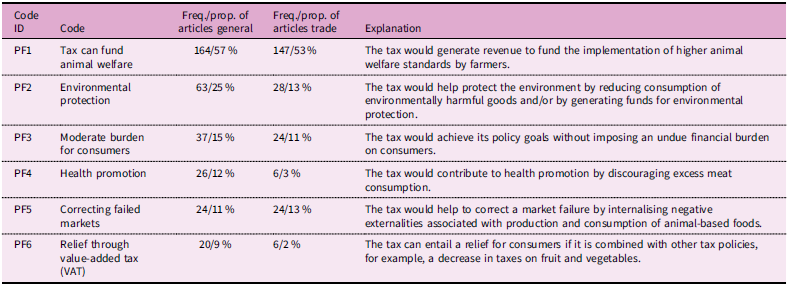
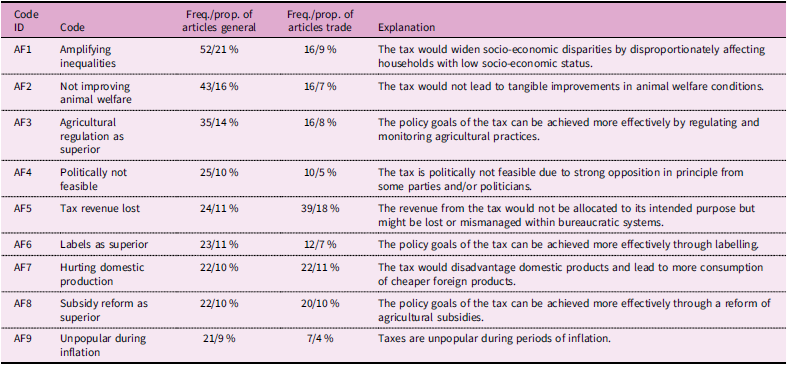
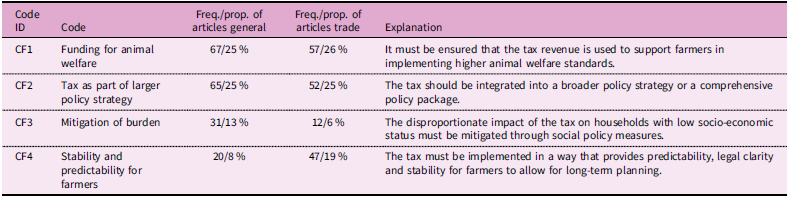
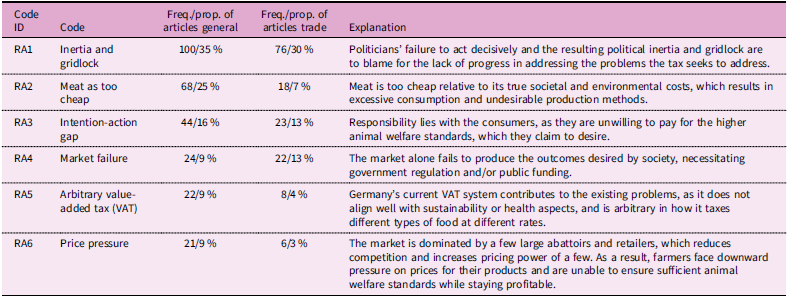
Through our search, we identified 858 potentially relevant articles, of which we excluded 477 (88 duplicates; 65 not mentioning taxes on animal-based foods; 324 mentioning relevant taxes without further discussion). Of the remaining 381 included articles, 207 were from the general press and 174 from the trade press. Within these, we identified 93 distinct frames: 14 pro-tax, 19 conditional (i.e. expressing support contingent on specific conditions, e.g. policy design), 54 anti-tax and 6 attributing responsibility (i.e. identifying what or who is responsible for the problems the tax is meant to address). We present the most common frames by category (Tables 1–4: frames with n ≥ 20 in the general press), followed by differences across actors and outlets and changes over time. Specific frames are shown with their Code ID, label and general-press count (e.g. PF1, ‘tax can fund animal welfare’, n 164). Broader themes appear in italics (e.g. animal welfare). We organise our findings by theme. Each theme groups frames linking a common problem definition (diagnosis) to a proposed treatment (prescription). For readability, frames are labelled by their prescriptive element, with the underlying diagnostic assumption described in the text. A complete list of all 93 frames with descriptions, comments and exemplary quotes is provided in the supplementary file 2 (codebook).
Most common pro-tax frames in the German media debate on taxing animal-based food products, 2019–2023

Table 1. Long description
A table with six rows and five columns. The columns are labeled Code ID, Code, Freq./prop. of articles general, Freq./prop. of articles trade, and Explanation. The rows detail different pro-tax frames with their respective frequencies and explanations. Row 1: Code ID PF1, Code Tax can fund animal welfare, Freq./prop. of articles general 164/57 percent, Freq./prop. of articles trade 147/53 percent, Explanation The tax would generate revenue to fund the implementation of higher animal welfare standards by farmers. Row 2: Code ID PF2, Code Environmental protection, Freq./prop. of articles general 63/25 percent, Freq./prop. of articles trade 28/13 percent, Explanation The tax would help protect the environment by reducing consumption of environmentally harmful goods and/or by generating funds for environmental protection. Row 3: Code ID PF3, Code Moderate burden for consumers, Freq./prop. of articles general 37/15 percent, Freq./prop. of articles trade 24/11 percent, Explanation The tax would achieve its policy goals without imposing an undue financial burden on consumers. Row 4: Code ID PF4, Code Health promotion, Freq./prop. of articles general 26/12 percent, Freq./prop. of articles trade 6/3 percent, Explanation The tax would contribute to health promotion by discouraging excess meat consumption. Row 5: Code ID PF5, Code Correcting failed markets, Freq./prop. of articles general 24/11 percent, Freq./prop. of articles trade 24/13 percent, Explanation The tax would help to correct a market failure by internalising negative externalities associated with production and consumption of animal-based foods. Row 6: Code ID PF6, Code Relief through value-added tax (VAT), Freq./prop. of articles general 20/9 percent, Freq./prop. of articles trade 6/2 percent, Explanation The tax can entail a relief for consumers if it is combined with other tax policies, for example, a decrease in taxes on fruit and vegetables.
Notes: In total, 361 text segments were coded with pro-tax frames in the general press and 274 in the trade press. Freq. denotes the absolute number (frequency) of text segments coded with the respective frame across all articles within the general press or the trade press. Prop. denotes the proportion of articles within each press category in which the respective frame was coded at least once.
Most common anti-tax frames in the German media debate on taxing animal-based food products, 2019–2023

Table 2. Long description
A table comparing anti-tax frames in German media debate on taxing animal-based food products. The table has 9 rows and 5 columns. Column headers are Code ID, Code, Freq./prop. of articles general, Freq./prop. of articles trade, and Explanation. Row 1: Code ID, AF1; Code, Amplifying inequalities; Freq./prop. of articles general, 52/21 percent; Freq./prop. of articles trade, 16/9 percent; Explanation, The tax would widen socio-economic disparities by disproportionately affecting households with low socio-economic status. Row 2: Code ID, AF2; Code, Not improving animal welfare; Freq./prop. of articles general, 43/16 percent; Freq./prop. of articles trade, 16/7 percent; Explanation, The tax would not lead to tangible improvements in animal welfare conditions. Row 3: Code ID, AF3; Code, Agricultural regulation as superior; Freq./prop. of articles general, 35/14 percent; Freq./prop. of articles trade, 16/8 percent; Explanation, The policy goals of the tax can be achieved more effectively by regulating and monitoring agricultural practices. Row 4: Code ID, AF4; Code, Politically not feasible; Freq./prop. of articles general, 25/10 percent; Freq./prop. of articles trade, 10/5 percent; Explanation, The tax is politically not feasible due to strong opposition in principle from some parties and/or politicians. Row 5: Code ID, AF5; Code, Tax revenue lost; Freq./prop. of articles general, 24/11 percent; Freq./prop. of articles trade, 39/18 percent; Explanation, The revenue from the tax would not be allocated to its intended purpose but might be lost or mismanaged within bureaucratic systems. Row 6: Code ID, AF6; Code, Labels as superior; Freq./prop. of articles general, 23/11 percent; Freq./prop. of articles trade, 12/7 percent; Explanation, The policy goals of the tax can be achieved more effectively through labelling. Row 7: Code ID, AF7; Code, Hurting domestic production; Freq./prop. of articles general, 22/10 percent; Freq./prop. of articles trade, 22/11 percent; Explanation, The tax would disadvantage domestic products and lead to more consumption of cheaper foreign products. Row 8: Code ID, AF8; Code, Subsidy reform as superior; Freq./prop. of articles general, 22/10 percent; Freq./prop. of articles trade, 20/10 percent; Explanation, The policy goals of the tax can be achieved more effectively through a reform of agricultural subsidies. Row 9: Code ID, AF9; Code, Unpopular during inflation; Freq./prop. of articles general, 21/9 percent; Freq./prop. of articles trade, 7/4 percent; Explanation, Taxes are unpopular during periods of inflation.
Notes: In total, 509 text segments were coded with anti-tax frames in the general press and 492 in the trade press. Freq. denotes the absolute number (frequency) of text segments coded with the respective frame across all articles within the general press or the trade press. Prop. denotes the proportion of articles within each press category in which the respective frame was coded at least once.
Most common conditional frames in the German media debate on taxing animal-based food products, 2019–2023

Table 3. Long description
A table with five rows and five columns comparing the frequency and proportion of articles mentioning different conditional frames in the German media debate on taxing animal-based food products. The columns are labeled Code ID, Code, Freq./prop. of articles general, Freq./prop. of articles trade, and Explanation. The rows are labeled CF1, CF2, CF3, and CF4. Row 1: Code ID, CF1; Code, Funding for animal welfare; Freq./prop. of articles general, 67/25 percent; Freq./prop. of articles trade, 57/26 percent; Explanation, It must be ensured that the tax revenue is used to support farmers in implementing higher animal welfare standards. Row 2: Code ID, CF2; Code, Tax as part of larger policy strategy; Freq./prop. of articles general, 65/25 percent; Freq./prop. of articles trade, 52/25 percent; Explanation, The tax should be integrated into a broader policy strategy or a comprehensive policy package. Row 3: Code ID, CF3; Code, Mitigation of burden; Freq./prop. of articles general, 31/13 percent; Freq./prop. of articles trade, 12/6 percent; Explanation, The disproportionate impact of the tax on households with low socio-economic status must be mitigated through social policy measures. Row 4: Code ID, CF4; Code, Stability and predictability for farmers; Freq./prop. of articles general, 20/8 percent; Freq./prop. of articles trade, 47/19 percent; Explanation, The tax must be implemented in a way that provides predictability, legal clarity and stability for farmers to allow for long-term planning.
Notes: In total, 275 text segments were coded with conditional frames in the general press and 281 in the trade press. Freq. denotes the absolute number (frequency) of text segments coded with the respective frame across all articles within the general press or the trade press. Prop. denotes the proportion of articles within each press category in which the respective frame was coded at least once.
Most common responsibility attribution frames in the German media debate on taxing animal-based food products, 2019–2023

Table 4. Long description
A table comparing responsibility attribution frames in German media on taxing animal-based foods. The table has six rows and five columns. Column headers are Code ID, Code, Freq./prop. of articles general, Freq./prop. of articles trade, and Explanation. Row 1: Code ID: RA1, Code: Inertia and gridlock, Freq./prop. of articles general: 100/35 percent, Freq./prop. of articles trade: 76/30 percent, Explanation: Politiciansʼ failure to act decisively and the resulting political inertia and gridlock are to blame for the lack of progress in addressing the problems the tax seeks to address. Row 2: Code ID: RA2, Code: Meat as too cheap, Freq./prop. of articles general: 68/25 percent, Freq./prop. of articles trade: 18/7 percent, Explanation: Meat is too cheap relative to its true societal and environmental costs, which results in excessive consumption and undesirable production methods. Row 3: Code ID: RA3, Code: Intention-action gap, Freq./prop. of articles general: 44/16 percent, Freq./prop. of articles trade: 23/13 percent, Explanation: Responsibility lies with the consumers, as they are unwilling to pay for the higher animal welfare standards, which they claim to desire. Row 4: Code ID: RA4, Code: Market failure, Freq./prop. of articles general: 24/9 percent, Freq./prop. of articles trade: 22/13 percent, Explanation: The market alone fails to produce the outcomes desired by society, necessitating government regulation and/or public funding. Row 5: Code ID: RA5, Code: Arbitrary value-added tax (VAT), Freq./prop. of articles general: 22/9 percent, Freq./prop. of articles trade: 8/4 percent, Explanation: Germanyʼs current VAT system contributes to the existing problems, as it does not align well with sustainability or health aspects, and is arbitrary in how it taxes different types of food at different rates. Row 6: Code ID: RA6, Code: Price pressure, Freq./prop. of articles general: 21/9 percent, Freq./prop. of articles trade: 6/3 percent, Explanation: The market is dominated by a few large abattoirs and retailers, which reduces competition and increases pricing power of a few. As a result, farmers face downward pressure on prices for their products and are unable to ensure sufficient animal welfare standards while staying profitable.
Notes: In total, 279 text segments were coded with responsibility attribution frames in the general press and 153 in the trade press. Freq. denotes the absolute number (frequency) of text segments coded with the respective frame across all articles within the general press or the trade press. Prop. denotes the proportion of articles within each press category in which the respective frame was coded at least once.
Pro-tax frames
Pro-tax frames typically articulated both a diagnosis and a prescription, linking a specific problem definition to the tax as its solution. The most common theme was animal welfare: frames within this theme diagnosed inadequate animal welfare standards in German livestock farming as the core problem and framed the tax as a way to generate funds to subsidise the implementation of higher standards (PF1, ‘tax can fund animal welfare’, n 164) (see Table 1). A further theme, the environment, grouped frames diagnosing the production and consumption of animal-based foods as environmentally harmful, with the tax positioned as a corrective instrument or a source of funds for environmental protection (PF2, ‘environmental protection’, n 63). A third theme, health, identified excess meat consumption as a health problem and the tax as a means to incentivise healthier choices (PF4, ‘health promotion’, n 26). Cutting across these themes, some frames diagnosed a broader market failure – markets not accounting for the true costs of animal-based food – with the tax framed as a corrective measure (PF5, ‘correcting failed markets’, n 24). Beyond these framings that included a diagnostic and prescriptive step, a further theme, fair burden, grouped frames that pre-emptively addressed concerns around policy implementation, arguing that the tax rates needed to achieve these aims would be manageable for most consumers (PF3, ‘moderate burden’, n 37) and that a simultaneous value-added tax (VAT) reduction on plant-based foods could even lower the overall cost of living (PF6, ‘relief through VAT’, n 20).
Anti-tax frames
Anti-tax frames often bypassed the diagnostic step (or implicitly or explicitly agreed with the description of the problems outlined by pro-tax advocates) and focused instead directly on various arguments against the tax. One prominent theme, centred around inequality, grouped frames arguing that a tax would disproportionately affect households on low income, as these typically spend a larger share of their disposable income on food (AF1, ‘amplifying inequalities’, n 52) (see Table 2). Another recurring theme was the alleged ineffectiveness of the tax, for example, in achieving better animal welfare outcomes (e.g. AF2, ‘not improving animal welfare’, n 43), partially driven by doubts about the tax revenue being spent as promised (e.g. AF5, ‘tax revenue lost’, n 24). Critics also highlighted the potential for legal hurdles, mostly around earmarking (e.g. AF13, ‘Earmarking not possible’, n 15; and AF17, ‘Earmarking against EU law’, n 11). Hence, critics suggested that alternative policies may be better suited to achieve the policy objectives of a higher tax on meat. For instance, critics presented ‘agricultural regulation as superior’ (AF3, n 35), such as setting binding higher animal welfare standards, ‘labels as superior’ (AF6, n 23) or ‘subsidy reform as superior’ (AF8, n 22). Concerns about economic harm were also a prominent theme, most commonly with the frame that a tax would disadvantage domestic producers (AF7, ‘hurting domestic production,’ n 22). Finally, a tax was framed as being unpopular and thus ‘politically not feasible’ (AF4, n 25), especially during times of inflation (AF9, ‘unpopular during inflation’, n 21).
Conditional frames
Conditional frames accepted the diagnosis offered by pro-tax advocates and agreed in principle that a tax could be an appropriate solution but made this support contingent on specific design features. Most conditional frames centred around the theme policy design and packaging, demanding, for example, that the tax is embedded in a comprehensive strategy (CF2, ‘tax as part of larger policy strategy’, n 65) (see Table 3). Another common frame under this theme was the need to ensure ‘stability and predictability for farmers’ (CF4, n 20) through an appropriate policy design. Another prominent theme concerned the need for a system that ensures that the tax would lead to an increase in animal welfare (e.g. CF1, ‘funding for animal welfare’, n 67). In addition, ideas of fairness played an important role, with frames that emphasised that the burden imposed by the tax on low-income households should be mitigated through appropriate measures (CF3, ‘Mitigation of burden’, n 31), that the tax rate should reflect the harm caused by various types of animal-based foods (CF6, ‘align tax with externalities’, n 16) and that clear and transparent rules for the distribution of the tax revenue are needed (CF7, ‘distribution rules needed’, n 11).
Responsibility attribution
In our sample of articles, the discussions around the potential introduction of a tax on meat and other animal-based products often included frames focusing primarily on the diagnostic step, identifying actors, systemic factors or institutional shortcomings as responsible for the problems the tax was meant to address. They typically seek to explain how the problems to be addressed by the tax emerged and why effective solutions have not yet been adopted. Notably, farmers were not framed as responsible for animal welfare problems in the debate, despite operating the systems under critique. Instead, a recurring theme was industry and market structures’ responsibility: meat prices were said to be too low considering the costs of acceptable animal welfare standards and the negative environmental and health externalities of meat consumption (RA2, ‘meat as too cheap’, n 68) (see Table 4). This was linked to the high level of concentration in the meat sector, with a few large abattoirs and retailers competing primarily on price (RA6, ‘price pressure’, n 21). As a result, a market failure occurs, where consumers and farmers desire change, but market mechanisms fail to deliver this outcome without policy intervention (RA4, ‘market failure’, n 24). A second theme was state and political actors’ responsibility, with framing ‘inertia and gridlock’ (RA1, n 100) as the reason effective policy solutions had not been adopted, and arguing that existing policies actively contributed to the problem, for example, through the German VAT system with its seemingly arbitrarily varying rates that are not aligned with health and environmental goals (RA5, ‘arbitrary VAT’, n 22). A third theme was consumers’ responsibility, pointing to the gap between their stated intentions and their actual purchasing behaviour (RA3, ‘intention-action gap’, n 44).
Key policy actors and their use of frames
We identified nine main actor groups, as well as a number of smaller ones. The main actor groups included four political parties and their representatives, namely Germany’s main political parties of the centre-right and centre-left (the CDU/CSU and the SPD, respectively), as well as the main pro-environment and economic-liberal parties (the Greens and the FDP, respectively). It also included researchers (mostly agricultural economists), producers (farmers, abattoirs and retailers) and three groups of non-profit non-governmental organisations, namely environmental, animal protection and social and consumer associations. The media’s selection of who is represented in a debate constitutes a form of framing in itself. Notably, public health researchers and advocacy groups were largely absent from the debate, contributing to keeping health framings peripheral relative to animal welfare and environmental concerns.
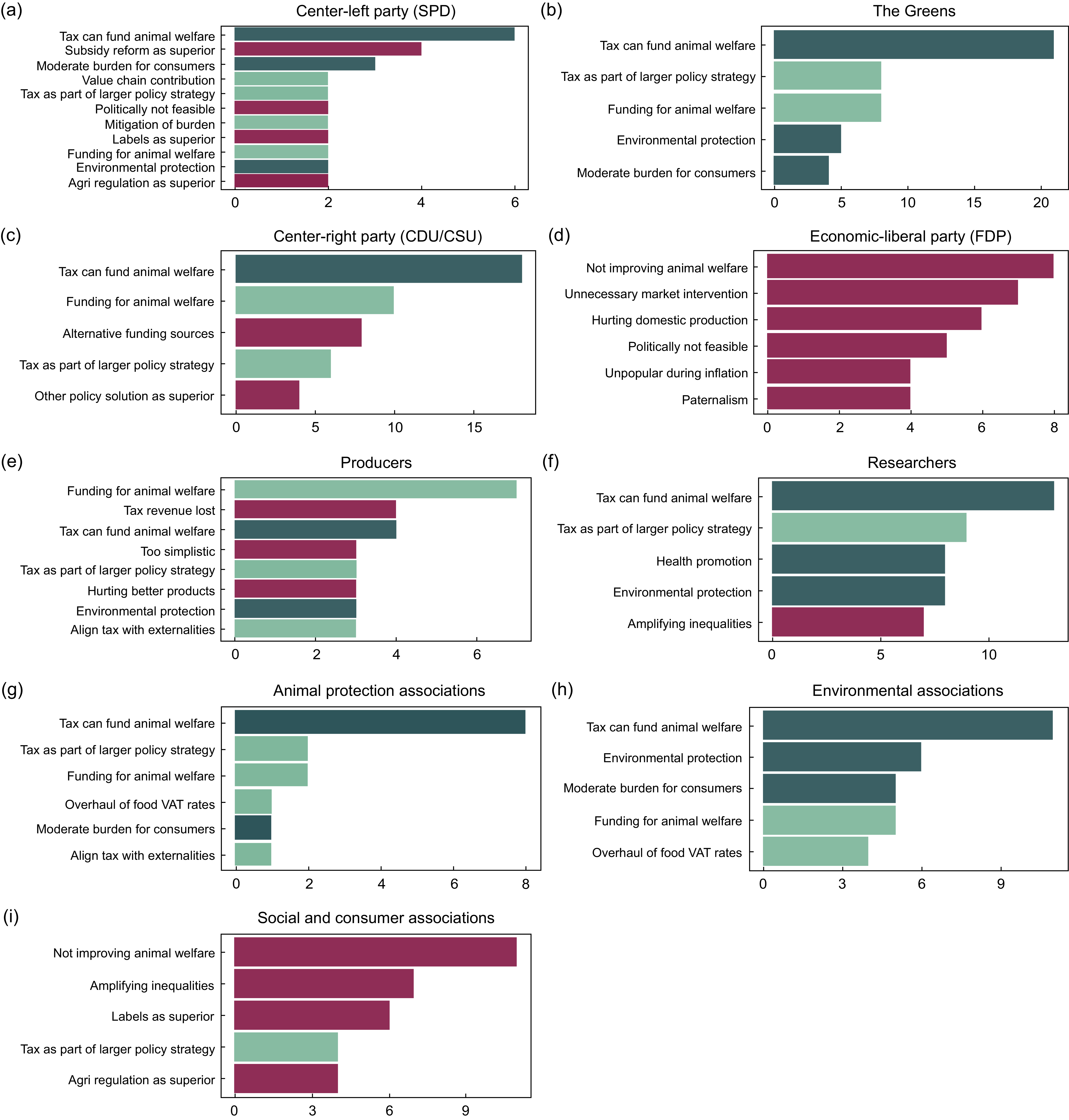
Figure 1 shows, for each of the main actor groups, the five frames most commonly used by this group. The pro-tax frame PF1 (‘tax can fund animal welfare’) was the most commonly used frame for six of the actors, including all four political parties except for the economic-liberal FDP. The frame most commonly used by producers was the conditional frame CF1 (‘funding for animal welfare’), expressing support for a tax on the condition that the revenue is used to support farmers in improving animal welfare standards. For social and consumer associations and the economic-liberal FDP, the most common frame was the anti-tax frame AF2 (‘not improving animal welfare’), expressing doubts that the tax would be effective in achieving this goal.
The five frames most commonly used by different policy actor groups in the German media debate on taxing animal-based food products, 2019–2023. Notes: Pro-tax frames are displayed in dark green, conditional frames in light green and anti-tax frames in red. In the case of ties in the fifth place, all frames of that tie are displayed. The x-axis denotes the number of times text segments were coded with the respective frame in the general press. VAT, value-added tax.

Figure 1. Long description
The image contains nine bar graphs, each representing the perspectives of different policy actor groups on taxing animal-based food products. Panel A: Center-left party (SPD) shows the frequency of various frames, with ʼTax can fund animal welfareʼ being the most common. Panel B: The Greens highlights ʼTax can fund animal welfareʼ and ʼEnvironmental protectionʼ as prominent frames. Panel C: Center-right party (CDU/CSU) emphasizes ʼTax can fund animal welfareʼ and ʼFunding for animal welfareʼ. Panel D: Economic-liberal party (FDP) shows ʼNot improving animal welfareʼ and ʼUnnecessary market interventionʼ as dominant frames. Panel E: Producers focus on ʼFunding for animal welfareʼ and ʼTax revenue lostʼ. Panel F: Researchers highlight ʼTax can fund animal welfareʼ and ʼTax as part of larger policy strategyʼ. Panel G: Animal protection associations emphasize ʼTax can fund animal welfareʼ. Panel H: Environmental associations focus on ʼTax can fund animal welfareʼ and ʼEnvironmental protectionʼ. Panel I: Social and consumer associations highlight ʼNot improving animal welfareʼ and ʼAmplifying inequalitiesʼ. Each bar graph has the x-axis denoting the number of times text segments were coded with the respective frame in the general press.
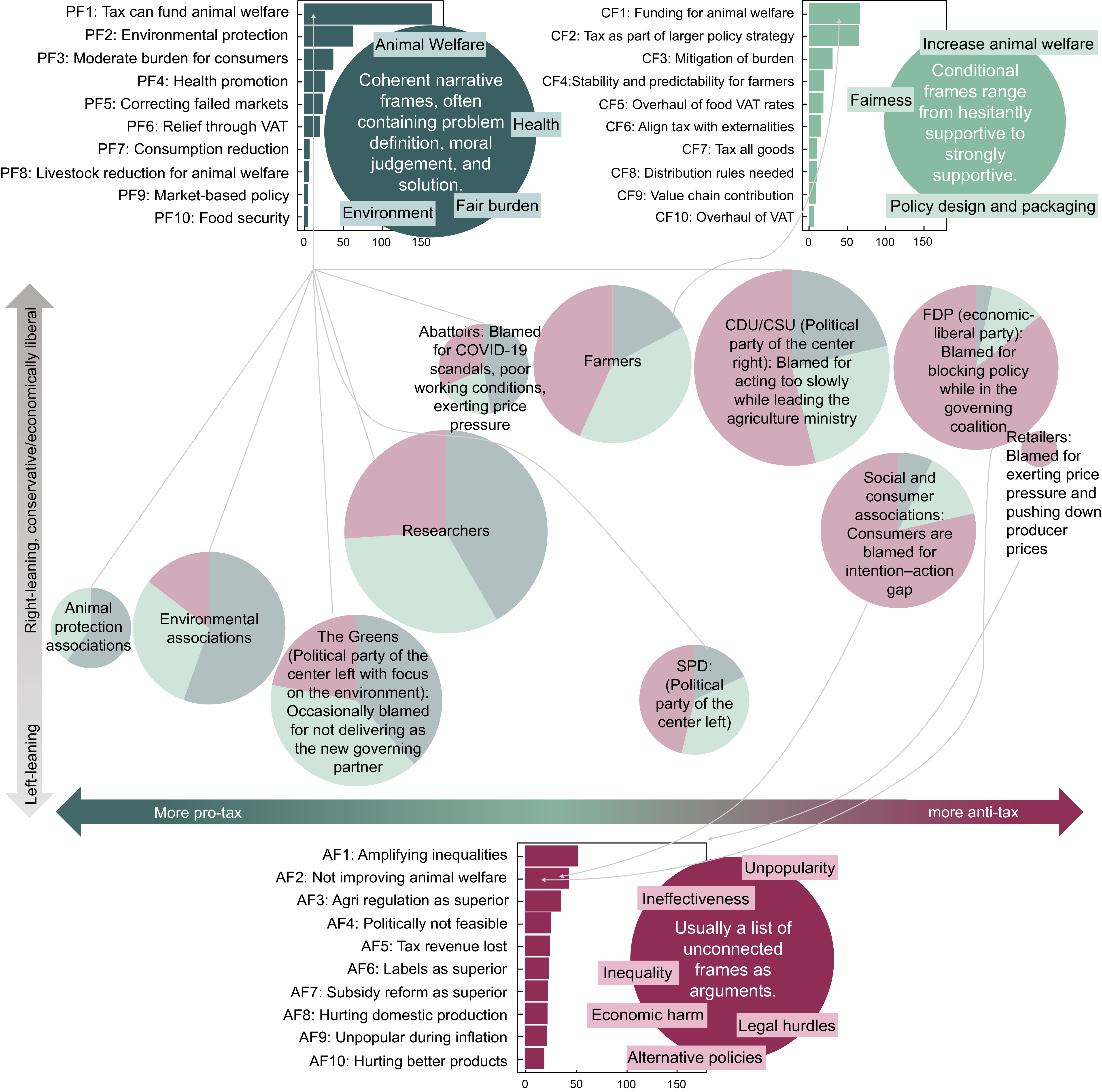
Figure 2 maps the main policy actor groups (with producers split up into farmers, abattoirs and retailers) by their position on the political spectrum (vertical axis) and their stance towards the tax (horizontal axis), alongside the most common frames in each category. Three patterns stand out: (1) for most actor groups – including the centre-right CDU/CSU – the most commonly used frame was that the tax could fund animal welfare improvements; (2) polarisation was moderate, with most actors using a mix of pro-tax, conditional and anti-tax frames rather than clustering at the extremes; and (3) anti-tax framing was fragmented across many distinct arguments rather than organised around a coherent counter-frame.
Overview of the debate on taxing animal-based food products in the German general press, 2019–2023. Notes: The bar charts show the 10 most often coded frames in each category (anti-tax, pro-tax and conditional, in red, dark green, and light green, respectively). Overarching themes of these frames are depicted around the red, light green and dark green circles. The grey lines point to the frames that the respective policy actor group most often used (retailers used several anti-tax frames once, but none more than once, which is why the arrow does not point to a single one). The size of the circles corresponds to the number of frames identified in the articles of the respective frame category and policy actor group. The pie charts for each policy actor group show how often they employed pro-tax (dark green), conditional (light green) and anti-tax frames (red). Text within pie charts indicates the most prominent responsibility attributions made about the respective actor group in the general press. VAT, value-added tax.

Comparison of left-leaning v. right-leaning actors and newspapers
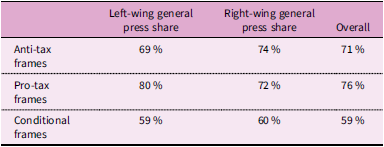
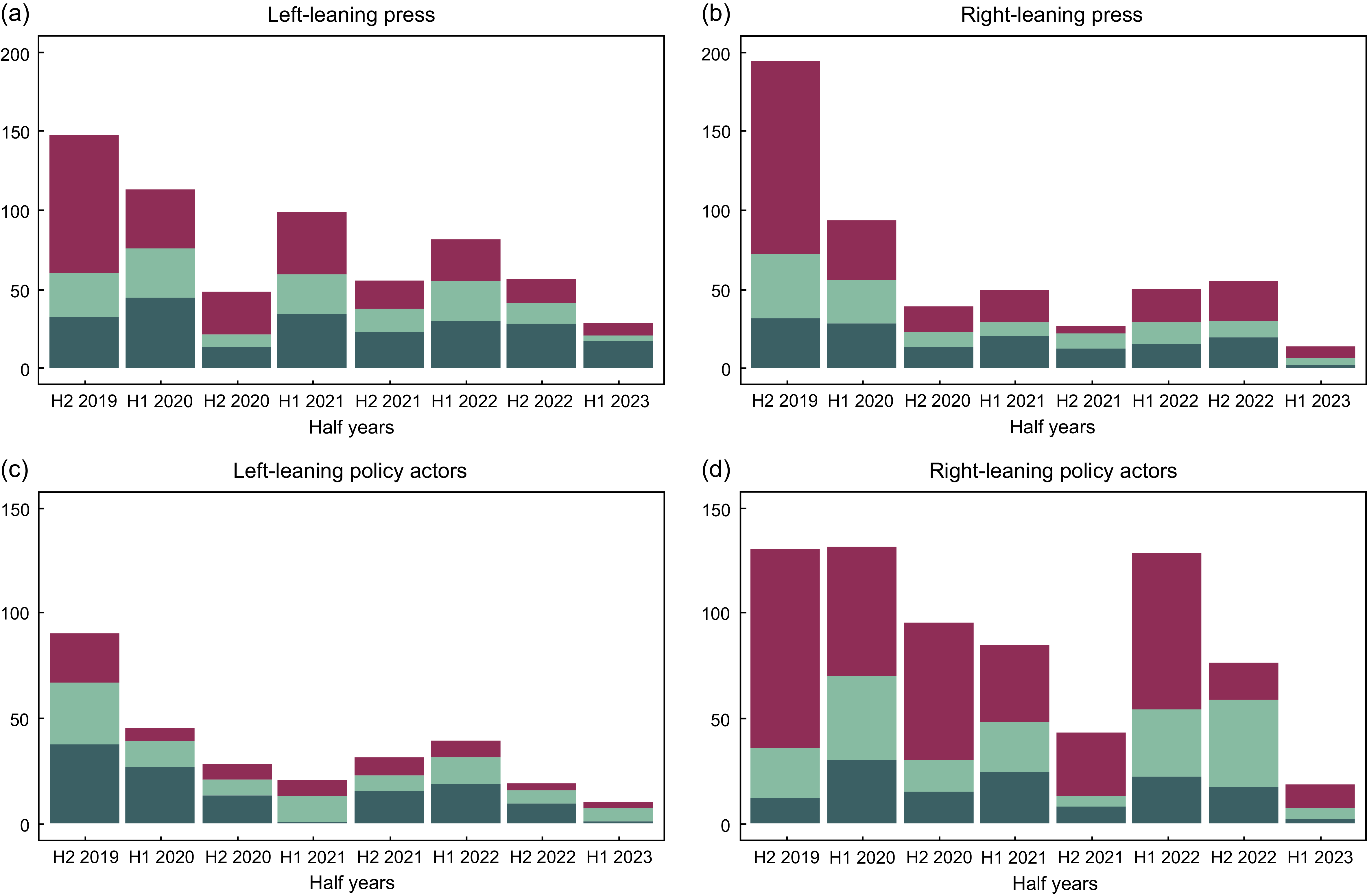
Where possible, we classified the actor groups and the newspapers in our sample as either mostly left-leaning or mostly right-leaning (or conservative and/or economically liberal). We classified five actor groups and five newspapers as mostly left-leaning, and four actor groups and five newspapers as mostly right-leaning (conservative/economically liberal) (see section 2.2 of supplementary file 1). As shown in Table 5, anti-tax frames appeared in a slightly higher share of articles in right-leaning than in left-leaning newspapers (74 % right v. 69 % left), while pro-tax frames appeared in a higher share of articles in left-leaning newspapers (80 % left v. 72 % right). Conditional frames appeared at similar rates in both (60 % right v. 59 % left). In left-leaning newspapers, the share of anti-tax frames declined over time, while the share of pro-tax frames increased (see Figure 3a). In right-leaning newspapers, the share of anti-tax frames initially declined but rose again in 2022 and 2023, mostly due to concerns about inflation and the tax therefore being unpopular (see Figure 3b and eFigure 5 in section 3.5 of supplementary file 1). There were no substantial differences in prominence of specific frames between left- and right-leaning newspapers (see eFigure 7 in section 3.5 of supplementary file 1). Right-leaning (or conservative/economically liberal) actors were generally more active in the debate than left-leaning actors, and used more anti-tax frames, but also a substantial number of pro-tax and conditional frames (see Figure 3c and d).
Share of left-leaning, right-leaning, and overall general press articles that contain anti-tax, pro-tax, and conditional frames in the German media debate on taxing animal-based food products, 2019–2023

Table 5. Long description
A table comparing the share of left-leaning, right-leaning, and overall general press articles containing anti-tax, pro-tax, and conditional frames in the German media debate on taxing animal-based food products. The table has three columns: Left-wing general press share, Right-wing general press share, and Overall. It has three rows for each frame type: Anti-tax frames, Pro-tax frames, and Conditional frames. Row 1: Anti-tax frames, Left-wing general press share, 69 percent; Right-wing general press share, 74 percent; Overall, 71 percent. Row 2: Pro-tax frames, Left-wing general press share, 80 percent; Right-wing general press share, 72 percent; Overall, 76 percent. Row 3: Conditional frames, Left-wing general press share, 59 percent; Right-wing general press share, 60 percent; Overall, 59 percent.
Usage of pro-tax frames (green), conditional frames (light green) and anti-tax frames (red) in the German media debate on taxing animal-based food products, 2019–2023. Notes: H1 includes the months of January through June, and H2 includes July through December. 2019 and 2023 were not complete years, as we collected data for the time frame between February 2019 and July 2023. There was only one article in H1 2019, which we included in H2 2019. There was only one article in H2 2023, which we included in H1 2023. Left-leaning policy actors include The Greens, the SPD, The Pirates Party, environmental associations and animal protection associations. Right-leaning (or conservative/economically liberal) policy actors include Free Voters, FDP, CDU/CSU and producers (farmers, abattoirs and retailers). Left-leaning papers include Sueddeutsche Zeitung, Die Zeit, Spiegel, Tagesspiegel and taz, die tageszeitung; right-leaning papers include Bild, Welt, Frankfurter Allgemeine Zeitung, Focus and Handelsblatt. The y-axis denotes the number of segments coded.

Comparison of the general and trade press
There were few but notable differences between the general and trade press. Responsibility attribution frames appeared less frequently in the trade press overall, but among those articles that did attribute responsibility, ‘inertia and gridlock’ (RA1, 30 % of trade press articles) clearly dominated, while ‘meat as too cheap’ (RA2) was mentioned in only 7 % of trade press articles, compared to 25 % in the general press (see Table 4). Regarding the pro-tax frames, trade as well as general press commonly pointed out that a ‘tax can fund animal welfare’ (PF1, 53 % of trade press v. 57 % of general press articles), whereas trade press mentioned ‘environmental protection’ (PF2, 13 % v. 25 %), ‘health promotion’ (PF4, 3 % v. 12 %) and social aspects (PF3, 11 % v. 15 %; PF6, 2 % v. 9 %) relatively less often. Although the trade press used anti-tax frames in a similar proportion of articles (73 % and 71 %, respectively), it focused less on the prominent anti-tax frames seen in the general press, instead presenting an even more diverse range of arguments, which made the fragmentation of anti-tax frames more pronounced in the trade press (see eFigure 3, in section 3.5 of supplementary file 1 for comparison). Regarding the conditional frames, the trade press relatively more often called for ‘stability and predictability for farmers’ than the general press (CF4, 19 % v. 8 %).
Discussion
Summary of main findings and interpretation
We analysed 381 newspaper articles discussing taxes on meat and other animal-based foods published in the German press between 2019 and 2023. We identified 93 distinct frames, including 14 pro-tax frames, 19 conditional frames, 54 anti-tax frames, and 6 frames attributing responsibility. On the pro-tax side, frames around animal welfare featured more prominently than frames around the environment and health. Conditional frames often demanded that tax revenue be used to support farmers in the implementation of higher animal welfare standards and commonly emphasised the need for a comprehensive strategy as well as for predictability and stability for farmers. The most common anti-tax frames emphasised potential negative effects on social equity, the alleged inefficacy of the tax in achieving its intended goals, the superiority of alternative policies, such as regulation, labelling and a reform of agricultural subsidies, and potential harms to domestic producers. The most common frames attributing responsibility focused on political inertia and gridlock, the low price of meat in Germany and the intention-action gap of consumers. Key actors involved in the debate were Germany’s main political parties, researchers, producers, as well as environmental, animal welfare and social and consumer organisations. Health actors (e.g. public health researchers and advocacy groups) were mostly absent. For six of the nine main actor groups, including the main centre-right party and producers, the most commonly used frame was the pro-tax frame that the tax could fund animal welfare improvements, while the main economic-liberal party and social and consumer organisations most often used the anti-tax frame that claimed that a tax would not be effective in improving animal welfare.
Pro-tax frames often presented a coherent, unified narrative connecting diagnostic with prescriptive elements and focused on a limited number of core themes. Anti-tax frames typically did not fundamentally contest the need for change but focused on perceived disadvantages of a tax as policy response. Several of these anti-tax themes have also been found in analyses of other public health debates (including in the fields of tobacco, alcohol and sugar-sweetened beverages): adverse economic effects; exacerbation of socio-economic inequalities; the potential ineffectiveness of the tax; administrative and legal hurdles, such as difficulties in earmarking tax revenues; and suggesting that alternative (possibly voluntary) solutions are better(Reference Koon and Marten24,Reference Babor, Collin, Monteiro, Lauer, Sassi, Soucat and Vigo40,Reference Mialon, Swinburn and Sacks41) . By contrast, the ‘nanny state’ or paternalism frame – an argument often used against public health measures(Reference Simmonds and Vallgårda14,Reference Blidnert15,Reference Koon and Marten24,Reference Mosca33,Reference Mialon, Swinburn and Sacks41,Reference Moerschel, von Philipsborn and Hawkins42) – was mostly absent in the present debate. Rather than refuting the diagnosis offered by pro-tax advocates, anti-tax actors mostly accepted the underlying problem but reframed the debate around the tax itself as impractical, ineffective or economically harmful, drawing on a wide range of distinct objections rather than a unified counter-narrative. This shift from contesting the problem to contesting the solution is often employed by commercial actors and can be effective in stalling debates and policy processes by steering attention towards implementation concerns(Reference Koon and Marten24,Reference Savell, Gilmore and Fooks43) . Another characteristic of the debate analysed in our study is the relatively moderate degree of polarisation between right- and left-leaning policy actors and newspapers, as well as between producers and non-profit advocacy groups. While anti-tax frames were used more often by right-leaning (or conservative/economically liberal) actors, including producers, both conditional and pro-tax frames were commonly used by actors across the political spectrum and from all stakeholder groups. This contrasts with other studies of debates on meat taxes, which typically found a high degree of polarisation(Reference Michielsen and van der Horst19–Reference Sievert, Lawrence and Parker21).
A number of factors may have contributed to the relatively moderate degree of polarisation and the focus on technical, non-ideological arguments in the German debate on taxing meat and other animal-based foods. The most high-profile proposal for a tax came from the ECLF report, commissioned by a conservative-led government and authored by a committee headed by a former conservative Federal Minister of Food and Agriculture, considered to be respected and well-regarded across the political spectrum and stakeholder groups, including farmers. The ECLF report focused on a specific framing and policy design, namely a so-called animal welfare levy explicitly aimed at raising funds to be used to support farmers in implementing higher animal welfare standards(16,32) . The wider debate reflected this approach, as both pro-tax and anti-tax actors largely shared the same diagnostic framing: that the current system of animal farming is inadequate and that animal welfare standards need to improve. Disagreement centred not on the diagnosis but on the prescription, that is, whether a levy was the appropriate policy instrument. Drawing on Schön and Rein’s(Reference Schön and Rein39) distinction between ‘policy disagreements’ that occur within a shared frame and ‘policy controversies’ that are conflicts between fundamentally different frames, this shared diagnostic foundation may have kept the debate at the level of a tractable policy disagreement about instruments and technical details, rather than allowing it to escalate into an intractable policy controversy rooted in competing values. The very label Tierwohlabgabe (‘animal welfare levy’) rather than Fleischsteuer (‘meat tax’) may have been consequential to that end. As Entman argues, framing operates through selection and salience: by foregrounding certain aspects of a perceived reality while directing attention away from others(Reference Entman23). The label selected the policy’s purpose (improving animal welfare) as the salient feature, while directing attention away from its mechanism (taxing consumption). Chong and Druckman show that even small changes in the labelling of equivalent policies can produce large shifts in public attitudes, as they describe the dramatically different levels of support for ‘welfare’ v. ‘assistance to the poor’ in the USA(Reference Chong and Druckman25). They further argue that a typical strategy for building support is to connect a policy proposal to a positive idea or value that is widely shared in the population(Reference Chong and Druckman25). The choice of the term ‘animal welfare levy’ appears to have followed this logic, anchoring the proposal in values – namely animal welfare and support for local farmers – that are shared widely in Germany(Reference Glenk, Liebe and Burns44,45) . The ECLF report’s deliberate design of the proposal around this framing can be understood as a form of what Schön and Rein call ‘frame reflection’: a conscious effort to anticipate how different framings would be received across stakeholder groups and to select one that would pre-empt ideological polarisation(Reference Schön and Rein39). This framing and policy design may therefore have been less susceptible to nanny state criticism than framings that focus on the health and environmental risks of excess meat consumption. (Of note, while the proposed animal welfare levy took a central role in the debate, many articles discussed taxes on meat and other animal-based foods in general without explicitly referring to a specific type of tax or policy proposal.)
The initial ECLF report was followed by feasibility and impact assessment studies that confirmed that the proposed levy was viable in principle but also highlighted complexities and legal barriers around earmarking(46,47) . This may have further contributed to focusing the debate on technical, rather than fundamental ideological issues. Other events further shaped the debate’s trajectory. In the summer of 2020, COVID-19 outbreaks in several large abattoirs in Germany drew attention to the meat industry, highlighting public health risks and exposing poor working conditions(Reference Ban, Bohle and Naczyk48). These events weakened the industry’s position and intensified public scrutiny(Reference Ban, Bohle and Naczyk48), while the pandemic also raised concerns about links between farming practices and zoonotic diseases(Reference Eßlinger49). Research indicates that once moral delegitimisation of an industry or a product is an established narrative, it can be difficult for the industry to refute it(Reference Koon and Marten24). During this period, criticism of the meat industry often blurred the lines between worker exploitation and animal suffering – two issues connected to separate but interrelated systems: meat processing and factory farming. Both sectors are characterised by industrialised production prioritising scale and efficiency. This may help explain why the two concerns were connected in public debate, jointly underscoring the ethical problems of industrial meat production (see, e.g. Welt Online(50)). The framing of the tax around animal welfare may have been particularly effective during this period, aligning the tax’s aims with public priorities. However, by 2022, the political climate shifted. Rising inflation rates made the prospect of new taxes politically difficult to communicate, with anti-tax frames emphasising the tax’s potential unpopularity and infeasibility gaining traction. The inclusion of the economic-liberal FDP in the new governing coalition, with its firm opposition to new taxes, further constrained the policy space. The German case thus shows the limits of framing that have been pointed out elsewhere: strategic framing alone may not shift support for costly demand-side policies sufficiently to achieve policy adoption, and its effects interact with policy design and macroeconomic, legal and institutional context(Reference Fesenfeld12,Reference Fesenfeld, Sun and Wicki27) . Although the debate centred on a unifying framing that aligned stakeholders, it did not lead to policy change once macroeconomic, legal and political barriers arose, effectively closing the policy window that had briefly opened.
Strengths and limitations
This study has a number of strengths. Our study is based on a pre-registered, a priori protocol(Reference Moerschel, Leibinger and Hagge36). We adhered to established methodological standards for qualitative research, as recommended by the COREQ reporting guideline. The large size of our dataset, comprising 381 articles spanning a four-year period, allowed for a comprehensive analysis of frame use across actors, outlets and time. In line with Open Science principles, we provide comprehensive supplementary materials to ensure transparency and replicability. Despite these strengths, our analysis also has several limitations. We focus on national general press and trade press outlets, excluding other media, as well as local newspapers. In particular, articles published on the websites of public broadcasting stations were not included, despite their potentially wide reach in Germany. Our research also faces the inherent constraints of media analysis. Our data may not accurately reflect the original positions of policy actors, but it captures a mediated version shaped by the interaction between stakeholders and the media, where journalists and editors interpret and contextualise policy positions. However, media representations typically both influence and reflect public perceptions and opinions, meaning they can be seen as a proxy for the structure and content of policy debates and reception(Reference Wlezien35).
Policy implications and conclusions
Meat consumption is increasing globally and exceeds recommended levels in most high-income countries, contributing to a considerable burden of non-communicable disease and to unsustainable levels of global environmental change(Reference Tilman and Clark1,Reference Willett, Rockström and Loken2,Reference Benton, Bieg and Harwatt8,Reference Crippa, Solazzo and Guizzardi9) . A growing body of evidence suggests that limiting meat consumption to moderate amounts in line with evidence-based dietary guidelines is essential for meeting global sustainability goals, including the Paris climate targets(Reference Crippa, Solazzo and Guizzardi9–Reference Rockström, Thilsted and Willett11). Building consensus around effective policy responses that limit excess consumption of meat – red and processed meat in particular – is therefore crucial. In this context, the German debate on taxes on meat and other animal-based foods provides several relevant insights. Specifically, our analysis suggests that framings and policy designs that appeal to broadly shared values and goals may help to reduce polarisation and to build consensus. Depending on the local context, this may include values and goals other than health and environmental sustainability. In the German context, a framing around animal welfare and support for farmers, along with earmarking of tax revenue to fund the implementation of higher animal welfare standards, may have had this effect. Ensuring early backing from policy champions from across the political spectrum, including conservative actors with links to and credibility among farmers and rural constituencies, may also help. Anticipating and addressing concerns around the equity and effectiveness of taxes on animal-based foods through appropriate policy design (including policy packaging), communication and robust research seems important, given the prominence of frames around equity and effectiveness among critics of the tax in the German debate. Our analysis also suggests that unresolved technical and legal issues – in the German case around the feasibility of earmarking – may pose relevant hurdles and need to be addressed. Finally, the German case underlines the importance of policy windows: although a viable policy proposal and a recognised problem existed, the macroeconomic and political conditions needed for policy adoption did not persist during the observed period.
Supplementary material
To view supplementary material for this article, please visit https://doi.org/10.1017/S1368980026103346
Authorship
AL: Conceptualisation, Methodology, Formal Analysis, Investigation, Data Curation, Visualisation, Writing – Original Draft, Writing – Review and Editing; KSM: Conceptualisation, Methodology, Investigation, Data Curation, Writing – Review and Editing; AH: Investigation, Writing – Review and Editing; LF: Conceptualisation, Writing – Review and Editing; BH: Conceptualisation, Methodology, Writing – Review and Editing, Supervision; PvP: Conceptualisation, Methodology, Validation, Writing – Review and Editing, Supervision, Funding acquisition.
Financial support
This work is supported by a grant from Germany’s Federal Ministry for Education and Research (BMBF) based on a decision of the Parliament of the Federal Republic of Germany (grant number 01EA2210A) as part of the project Food Environments for Planetary Health (Food-PlanetH).
Competing interests
The authors state that they have no competing interests to declare.
Ethics of human subject participation
No ethical review was necessary for this study, as there were no human subjects involved.


 Open access

