Introduction
Personality disorder is a common mental health diagnosis estimated to affect 7.8% of the general population globally and 40–70% of psychiatric patients (Newton-Howes et al. Reference Newton-Howes, Tyrer, Anagnostakis, Cooper, Bowden-Jones and Weaver2010; Winsper et al. Reference Winsper, Bilgin, Thompson, Marwaha, Chanen, Singh, Wang and Furtado2020; Zimmerman et al. Reference Zimmerman, Chelminski and Young2008). Despite having a significant impact on the presentation and clinical course of other psychiatric disorders such as depression and having high morbidity and mortality in and of itself, personality disorder is widely underdiagnosed (Tedesco et al. Reference Tedesco, Day, Lucas and Grenyer2024; Zimmerman and Becker Reference Zimmerman and Becker2023). The condition has been incorrectly viewed as untreatable and services are underdeveloped and inconsistent in Ireland (Connolly et al. Reference Connolly, Ibrahim, Matthews, Lee, McManus and Rush2025; Gunderson Reference Gunderson2011; Zanarini et al. Reference Zanarini, Frankenburg, Reich and Fitzmaurice2012). Qualitative research of those with lived experience of borderline personality disorder (BPD) has described a delay between subjective experiences of the symptoms of the disorder and the eventual diagnosis (Lester et al. Reference Lester, Prescott, McCormack and Sampson2020; Ng et al. Reference Ng, Townsend, Miller, Jewell and Grenyer2019; Tedesco et al. Reference Tedesco, Day, Lucas and Grenyer2024). One study found an average delay of eighteen years and 85% of those interviewed felt they would have benefited from receiving a diagnosis of personality in adolescence, even when the challenges of receiving a diagnosis such as access to treatment and stigma were taken into account (Ng et al. Reference Ng, Townsend, Miller, Jewell and Grenyer2019; Tedesco et al. Reference Tedesco, Day, Lucas and Grenyer2024). Many factors have been identified that contribute to the delay in diagnosis and misdiagnosis including difficulty deciphering the disorder from other primary or comorbid disorders, pessimism about the treatability of personality disorder (generally, but also if there is a lack of evidence-based treatments locally) and a hesitation to make a diagnosis associated with such significant stigma (Sisti et al. Reference Sisti, Segal, Siegel, Johnson and Gunderson2016; Tedesco et al. Reference Tedesco, Day, Lucas and Grenyer2024). Given this last factor, it is important to understand the experience and perspectives of those receiving the diagnosis regarding the process of diagnosis, their experience of stigma and their views about the diagnosis itself.
The term ‘personality disorder’ itself is controversial and there has been widespread discussion in recent years about eradicating the diagnostic label (Harding Reference Harding2020; Mulder and Tyrer Reference Mulder and Tyrer2023). A consensus statement from a group of UK-based people with lived experience recognises the usefulness of the term when used appropriately as a shorthand expression to refer to this pattern of difficulties but note that it is too frequently used as a pejorative term. They argue that the diagnosis hampers the professional’s ability to understand the person’s experience and life stressors, instead seeing things only through the lens of personality disorder (Lamb et al. Reference Lamb, Sibbald and Stirzaker2018). It has been suggested that pejorative connotations will be associated with new terminology unless attitudes change and that the core difficulty in professionals working with this group may relate to an impatience with patients who get better slowly or not at all or indeed to the professional’s compulsion to prevent suicide which may hamper the development of true therapeutic relationships (Poole Reference Poole2025).
Authors of a 2020 systematic review which focused on the perspectives of service users who received a personality disorder diagnosis found both positive and negative experiences of the diagnosis (Lester et al. Reference Lester, Prescott, McCormack and Sampson2020). Negative experiences were often linked to the way in which the diagnosis of personality disorder was delivered which can have a significant impact on the way that the diagnosis is perceived by the patient and future engagement with services (Lester et al. Reference Lester, Prescott, McCormack and Sampson2020). Ng et al. (Reference Ng, Townsend, Miller, Jewell and Grenyer2019) interviewed fourteen people diagnosed with BPD and found that the diagnosis was a crucial turning point for most and that disinterest or non-acceptance of the diagnosis may be related to a lack of explanation or understanding of the diagnosis. Tedesco et al. (Reference Tedesco, Day, Lucas and Grenyer2024) recommend a four-step diagnosis procedure based on recommendations from participants with a lived experience: (1) explain the process, (2) assess thoroughly, (3) explore how the features are active in everyday life and (4) link diagnosis to evidence-based treatment planning.
There is little research looking at the views and experiences of those diagnosed with personality disorder in the Irish context. Internationally much of this research focuses on those with a diagnosis of BPD rather than personality disorder more broadly. The aim of this study was to explore subjective experiences of service users in an Irish setting being assessed for and receiving a diagnosis of personality disorder and to examine the impact of the diagnosis and the disorder on their life.
Methods
An earlier service review identified a population of patients who had received a diagnosis of personality disorder using the SCID-5-PD in the period January 2019–December 2020 (Bredin et al. Reference Bredin, McManus and Rush2025) in St Patrick’s University Hospital. St Patrick’s University Hospital is Ireland’s largest independent not for profit mental health hospital. It provides a range of mental health services including inpatient care, day patient programmes and outpatient community clinics.
One hundred and ninety seven people had received a diagnosis of at least one personality disorder using the Structured Clinical Interview for DSM-5 Personality Disorders (SCID-5-PD) during their inpatient stay. The SCID-5-PD is a semi-structured interview designed to assess the ten DSM-5 personality disorder diagnoses. Diagnosis was established through clinical assessment, including detailed personal and developmental history, observation and collateral information alongside structured assessment using the SCID-5-PD. Although the clinical teams primarily worked within ICD diagnostic frameworks, the SCID-5-PD was utilised due to its structured and relatively efficient approach to personality disorder assessment. Most patients first completed the Structured Clinical Interview for DSM-5 Screening Personality Questionnaire (SCID-5-SPQ), a brief self-report screening measure that reduced the length of the subsequent interview, which was typically conducted by a trainee psychiatrist or team nurse.
Email addresses were known for 109 of the patients who had received a personality disorder diagnosis using the SCID-5-PD and the list of patients were screened by the relevant treating consultant psychiatrist to identify any patients for whom the receipt of the invitation to take part in the survey would be inappropriate or potentially harmful. Of these, one patient had died, seven were excluded as their diagnosis had since been revised to Complex Post Traumatic Stress Disorder and one to Dissociative Identity Disorder and authors were concerned that receiving the invitation to take part in the survey could cause them confusion or distress. Four people were excluded as they had strongly expressed negative experiences and a wish not to be involved with the service any longer or had made complaints and it was considered that inclusion in the survey and receipt of an email relating to their experiences might cause undue distress or harm. The remainder were then invited by email to complete an anonymous survey on Survey Monkey. A follow up reminder email was sent two weeks later. Ethical approval for the study was granted by the St Patrick’s University Hospital Ethics Committee on January 14th 2022.
Qualitative survey is a relatively new method of qualitative research which allows for the efficient collection of detailed and nuanced opinions similar to that collected by interview, but to which participants can respond anonymously and in their own time (Braun et al. Reference Braun, Clarke, Boulton, Davey and McEvoy2021). The survey contained some questions to establish demographics and details such as the diagnosis received and time since discharge from hospital. The remainder of the questions had open ended responses and asked participants about their experiences of undergoing assessment, receiving the diagnosis and their experiences of sharing the diagnosis (See full survey in Appendix A).
Thirty one people responded to the survey, a response rate of 32%. Of the 31, all responded to the quantitative part of the survey (see Appendix A) but only 25 responded to the remainder of the survey and were thus included in qualitative analysis.
Survey responses were analysed using Thematic Analysis (Braun and Clarke Reference Braun and Clarke2013). Braun and Clarke describe six recursive phases of thematic analysis: (1) familiarisation with the data through repeated reading; (2) systematic coding of features relevant to the research question; (3) generating initial themes by collating related codes; (4) reviewing themes in relation to both coded extracts and the full dataset; (5) defining and naming themes to clarify their scope and focus; and (6) producing the final analytic narrative (Braun and Clarke Reference Braun and Clarke2006). Braun and Clarke emphasise that themes do not simply “emerge” from data but are actively generated through the researcher’s interpretative engagement, shaped by their theoretical position, experiences, and analytic focus. Transparency and reflexivity, rather than neutrality, are therefore central to rigour (Braun & Clarke, Reference Braun and Clarke2019). The first author has a clinical background in psychiatry and in psychoanalytic psychotherapy and is particularly interested in the unconscious processes at play in our systemic approach to the diagnosis and treatment of personality disorder, in particular the meaning and function of diagnosis for both clinicians and service users. The survey responses were analysed within a context that acknowledges the complexity of the subject and is aware of the risk of idealising particular interventions or services in order to defend against the anxiety created in working with a group with complex emotional needs. All authors are coming from a psychiatry background which shaped sensitivity to diagnostic language, power dynamics and service contexts within the data.
The first author, a psychiatry trainee at the time of the research conducted thematic analysis of the survey responses using NVivo Qualitative Data Analysis Software (Version 15). The survey responses were read in full on a number of occasions and codes were assigned to fragments of the responses using NVIVO eg ‘Didn’t agree with diagnosis’ ‘limited sharing of diagnosis’ ‘Relief’. Codes were then reviewed with research questions in mind and were collated into initial themes. Themes were then reviewed by all three authors in relation to the coded survey extracts and the full survey responses, producing clear themes that were then named and defined by the first author. Quotes that were particularly illustrative of the themes were collated throughout analysis.
Results
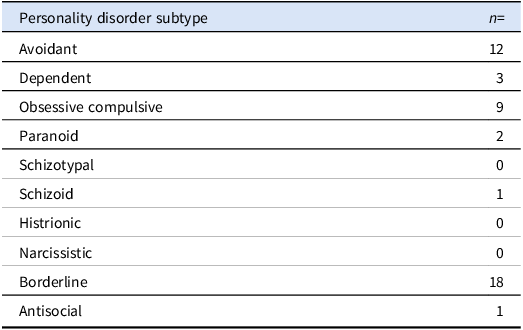
The most common age category represented in the participants was 41–50 years of age (29%, n = 9) followed by 31–40 and 51–60 (19% each, n = 6). 23% (n = 7) were below 30 years of age at the time of the survey. 68% (n = 21) of the respondents were female. The majority of participants had been discharged from hospital at least three years previously (71%, n = 22) with only one individual having had an admission in the last six months. 81% (n = 25) remembered undergoing diagnostic assessment for personality disorder but 19% (n = 6) said that they didn’t understand the purpose of the assessment at the time. 6% (n = 2) of respondents said they did not remember receiving a diagnosis of personality disorder during their period in hospital. The most common disorder reported by the respondents was BPD (58%, n = 18) followed by Avoidant Personality Disorder (39%, n = 12) (See Table 1). Participants felt that the diagnosis was explained to them in 74% (n = 23) of cases while 16% (n = 5) said it was not, with the remaining 10% (n = 3) saying they could not remember if it was.
Personality disorder subtypes represented in survey respondents

Analysis of participants’ responses displayed a wide variety of experiences and perspectives. Three themes were constructed using thematic analysis.
Theme 1 – ‘Understanding and being understood’
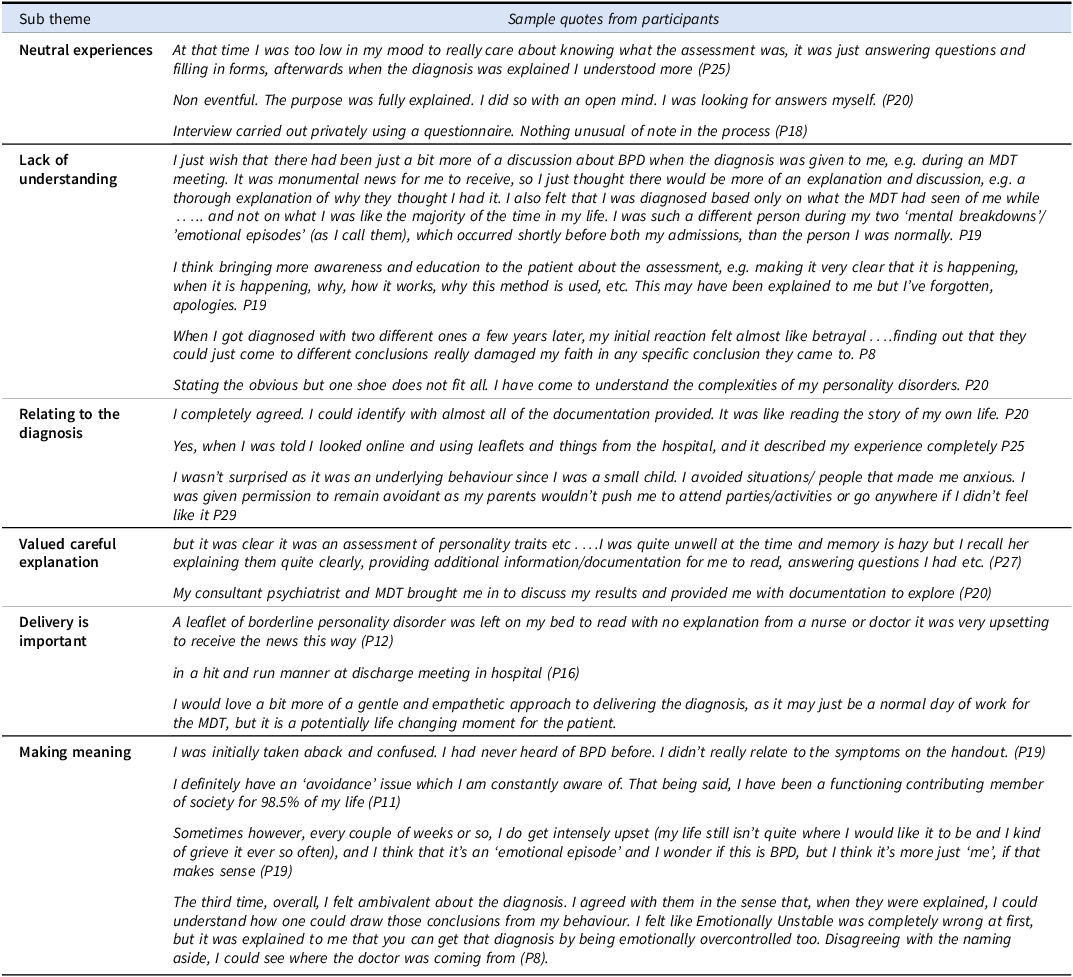
Most found the experience of the assessment neutral or positive and many did not remember the assessment itself, referencing the passage of time since the assessment and their frame of mind at the time as relevant factors (See participants’ quotes in Table 2). Services users’ experiences of receiving the diagnosis largely fell into two groups according to their understanding of the diagnosis and its relevance to them – those that felt confused and were left with a deep sense of needing more explanation and those with whom the diagnosis ‘clicked’ and fit with their self-view. Many felt that they underwent personality disorder assessment without fully understanding its purpose and what the diagnosis meant and sought more explanation for them and their families. Some referenced the timing of the assessment – often being admitted during a period of crisis – which limited their capacity to absorb the information they were being given. Others felt that the information and explanation offered was insufficient or that the opportunity for discussion and exploration ended too soon.
Theme 1 – ‘Understanding and being understood’

Participants asked what information had been used to make the diagnosis and questioned whether the assessment for personality disorder was overly simple and lacked nuance. Some participants spoke about not understanding what the diagnosis meant, how the assessment had led to that diagnosis and how it actually mapped on to their self-view. A desire for more explanation and information was prominent in the survey responses.
For many others, there was an immediate understanding, as if the diagnosis helped them make sense of themselves for the first time. Participants frequently highlighted the value of careful explanation and time to ask questions. Many recalled being given their diagnosis in a meeting and also receiving written information which allowed better absorption and understanding. Some were critical of the delivery of the diagnosis without adequate time to explore how it is relevant to the person and in particular mentioned negative experiences around being given written information in a manner that felt rushed.
Following the receipt of the diagnosis, there followed for the participants a phase of making meaning of this diagnosis and exploring whether they could see themselves in the patterns described. A variety of perspectives were demonstrated by the participants from those who disagreed with the diagnosis entirely, to those who felt the diagnosis captured their difficulties accurately and those who could resonate with some but not all of the features of the disorder. Others wondered if the features of their personality which had been identified were part of who they are without necessarily being a ‘disorder.’
Theme 2 – ‘A turning point’
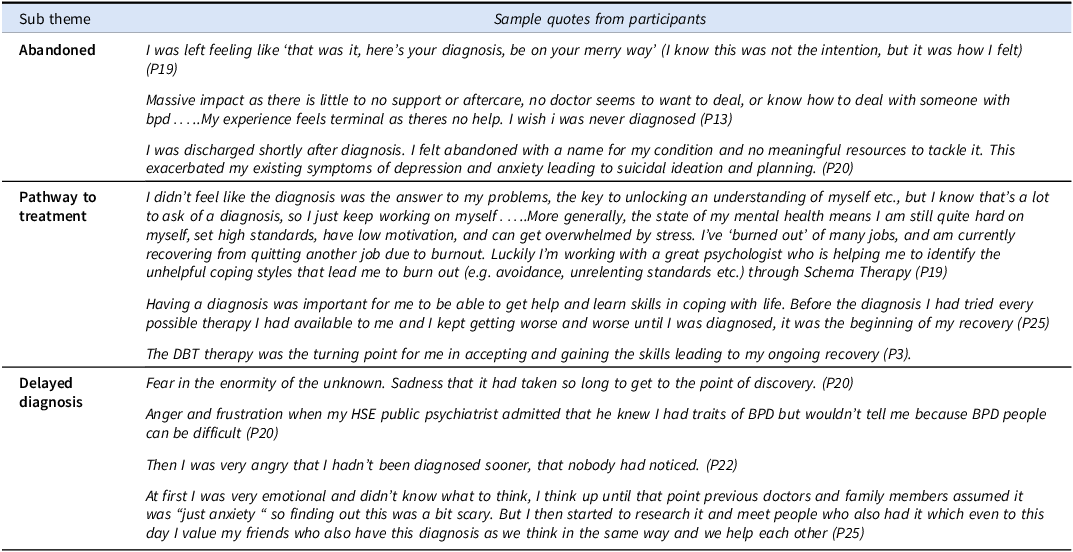
Some participants felt that the diagnosis without a clear pathway to subsequent treatment and support left them feeling confused and abandoned (See able 3). Many described a negative response to the diagnosis and for some of the participants this related to their feelings that little treatment was available. It was clear that access to effective treatments following diagnosis was a key factor in determining how the diagnosis was perceived in terms of hope and moving towards recovery.
Theme 2 ‘A turning point’

For others, the receipt of the diagnosis and diagnostic formulation was not in itself transformative but led them down a path where they could develop insight into themselves. For some participants, the diagnosis allowed them to seek specific treatments tailored to their needs which had not been possible before and some were critical of the time it had taken to receive the diagnosis and the unhelpful interventions that had been tried in the past.
Theme 3 – ‘Restriction’
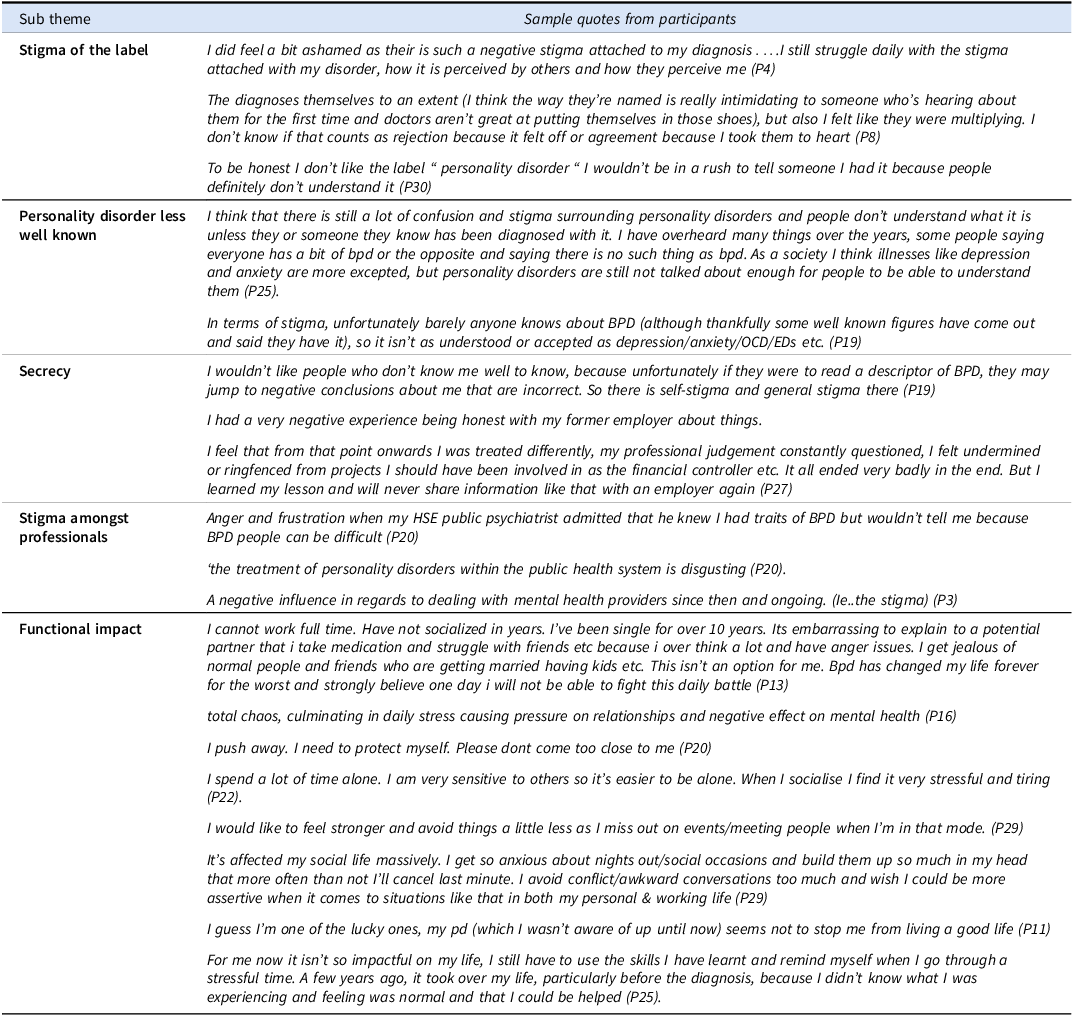
The survey asked participants about whether they had shared their diagnosis with anyone and explored their views and experiences around that (See Table 4). It also asked participants to speak about the effects (if any) of the disorder on their lives in terms of work, relationships, family etc The theme of Restriction emerged, a sense that the diagnosis and the disorder itself imposed a restriction or a limitation on their lives. Participants spoke frequently on the topic of stigma and in particular the stigmatising nature of the ‘personality disorder’ label.
Theme 3 ‘Restriction’

Participants shared experiences of being treated differently by those to whom they had disclosed the diagnosis and worried about how others’ perceptions of them would change. Many of those surveyed spoke about the complexity of their difficulties and how challenging it is to explain this to others. Some felt that this stigma was different to that associated with other psychiatric diagnoses such as depression. This stigma was associated with a secrecy around the diagnosis and a tendency not to share this information with others, for some even with close friends and family.
Many participants described feeling stigmatised by professionals they had encountered or a sense that carrying a ‘personality disorder’ diagnosis impacted on their care negatively.
Some participants spoke about the impact that the disorder has on their lives, in particular interpersonally. Others didn’t feel their disorder had much impact on their lives which may underline the value of clinicians describing the severity of the disorder, looking at impact on different domains or may point to the fluctuation over time.
Discussion
Unsurprisingly, respondents describe a wide variety of experiences. The receipt of a personality disorder diagnosis was associated with powerful emotional responses, both positive and negative. How the diagnosis was experienced was related to the understanding and perceived explanation around the diagnostic formulation and to the treatment available for the disorder.
In terms of limitations, significant time had elapsed between the receipt of diagnosis and completion of the survey which could contribute to recall bias. As a result, participants’ reports may reflect what they now believe happened or now feel, rather than what they actually felt closer to the time. This lag may affect the accuracy of the results however it also reveals perspectives of service users who have had some time to reflect on and process their experiences. The research was conducted using an online survey which may exclude those with poor literacy or those who are less comfortable with technology however the age mix represented in the participants would suggest that older people were not excluded by using an electronic method of data collection. Anonymous online survey may improve truthfulness in responses compared to qualitative interviews due to less Social Desirability Bias, where respondents may adapt their answers to portray themselves in a positive light.
Self selection and non response bias are likely to be significant in this study, and it has been suggested that those with more interest and strongly held views are more likely to choose to participate in web surveys (Couper Reference Couper2000). Those whose diagnosis had since been changed to Complex Post Traumatic Disorder (cPTSD) were not included in the study due to concerns that invitation to a study regarding personality disorder might cause confusion or distress however it would be valuable to explore the experiences of those initially given the diagnosis of personality disorder which was later reformulated to cPTSD to add to the ever growing literature around the overlapping and distinct features of BPD and cPTSD (Cloitre et al. Reference Cloitre, Garvert, Weiss, Carlson and Bryant2014; Ford and Courtois Reference Ford and Courtois2021; Powers et al. Reference Powers, Petri, Sleep, Mekawi, Lathan, Shebuski, Bradley and Fani2022).
St Patrick’s University Hospital provides day and outpatient programmes, but its care model is more inpatient-focused than publicly funded community mental health teams. Therefore the experiences of the participants of being assessed and diagnosed as inpatients is not generalisable to the public mental health services where most diagnoses of personality disorder would be made in the community setting. NPIRS 2019 data showed lower rates of schizophrenia in independent/private and charitable centres compared with public psychiatric units (7% vs 25–29%), but higher rates of depressive disorders (36% vs 15–22%) (Health Research Board 2023). It is therefore important to consider the characteristics of the group studied when interpreting the research findings in the context of public mental health services.
Existing research and the findings of this survey underline the importance of a diagnostic process that involves adequate explanation and exploration. Unlike other mental health diagnoses, often members of the public have little pre-existing knowledge of personality disorder and may require more psychoeducation than is required for other diagnoses. All of the participants in this study received their diagnosis in the course of an inpatient admission ranging from weeks to months in duration with regular interactions with healthcare professionals and weekly multidisciplinary meetings and yet despite that some were left with the feeling of having further questions about their diagnosis. This highlights the complexity of achieving a diagnostic process which feels adequate to service users and this may not be specific to personality disorder diagnosis. Written information such as patient information leaflets are useful and allow for information to be digested over time but are not sufficient on their own and clinicians should be aware of the use of information leaflets as a way of avoiding complex conversations. It may be useful for clinicians working in community settings to revisit the discussion around diagnosis and formulation on a number of occasions over a period of time to facilitate better collaborative understanding. As all patients attending a community mental health team will attend psychiatry appointments periodically and only a proportion will see a psychologist, it is imperative that psychiatrists are confident in personality disorder diagnosis and psychological formulation and this should be reflected in specialist psychiatry training.
As with any diagnosis, receiving a diagnosis of personality disorder may evoke powerful emotional responses including negative reactions and this does not automatically indicate any inherent error in the method of delivery of diagnosis however it’s important that clinicians consider the factors that are likely to result in diagnostic formulation being a therapeutic and useful intervention. Best practice guidance suggests an approach that links the person’s life experiences, relational patterns and symptoms in a way that makes conceptual sense to them and highlights the importance of exploring the person’s strengths and resilience following the delivery of diagnosis in order to support empowerment, instil hope and optimise engagement (Grenyer et al. Reference Grenyer, Jenner, Jarman, Carter, Bailey and Lewis2015). Those that have had been through treatment for personality disorder are likely to have an enhanced understanding of their diagnosis which is difficult to arrive at with a brief clinical interaction or short series of sessions. It is important to respect a patient’s right to disagree with the diagnostic formulation arrived at, something which is a familiar scenario for psychiatrists treating those with psychotic disorders. However it can be helpful to approach negative reactions in a relational way, with curiosity about whether the person’s relational patterns such as experiences of rejection may be repeated in the relationship with the professional and whether the diagnosis may be perceived as a way of rejecting or criticising the patient. Acknowledging this and exploring this might help move toward a shared understanding of the formulation.
Some respondents spoke of their mental state at the time of their diagnosis and how they didn’t feel that this was necessarily a true reflection of their personality. Revisiting the formulation over time, outside of periods of crisis and highlighting how life stressors and crises are linked to patterns of relating and behaving may yield better understanding and acceptance for both patients and clinicians. The ICD-11 approach to personality disorder diagnosis is more conducive to formulation in that it maps on to evidence-based ways of conceptualising personality, allowing for more nuance than the old purely categorical approach and reflects severity rather than a binary ‘disorder vs no disorder’ (WHO 2019).
For many in the survey, undergoing a diagnostic formulation which included a diagnosis of personality disorder was associated with feeling understood and the experience of their lifelong struggles being reflected to them in a way that could be digested and this is consistent with previous research findings (Ng et al. Reference Ng, Townsend, Miller, Jewell and Grenyer2019; Tedesco et al. Reference Tedesco, Day, Lucas and Grenyer2024). Some argue that psychological formulation can be a powerful intervention in itself (Thew and Krohnert Reference Thew and Krohnert2015) and it is important that psychological formulation is recognised as a core skill of the psychiatrist.
Participants who had been diagnosed with and treated for other conditions for many years felt relieved by the diagnosis but frustrated with the length of time it had taken to arrive at clarity. A related study by this author (Bredin et al, Reference Bredin, McManus and Rush2025) identified possible delayed diagnosis by an average of fifteen years in this group, underlining the need to address the factors contributing to delayed diagnosis, previously identified in research (Sisti et al. Reference Sisti, Segal, Siegel, Johnson and Gunderson2016; Tedesco et al. Reference Tedesco, Day, Lucas and Grenyer2024).
However it is also clear from the findings that diagnosis and careful formulation is not sufficient for many and that – similarly to the findings of existing research – the experience of receiving a formulation without a clear next step in terms of treatment can be negative (Lamb et al. Reference Lamb, Sibbald and Stirzaker2018). Respondents in the survey who could access effective treatment in the aftermath of their diagnosis often had positive reflections on the diagnosis and felt relieved that the diagnosis could point them toward the correct treatment. This finding supports the ongoing push to improve access to treatments for personality disorder (Connolly et al. Reference Connolly, Ibrahim, Matthews, Lee, McManus and Rush2025). Much like with any diagnosis, when delivering a diagnosis of personality disorder, it is helpful to advise the patient of effective treatments available to them.
The findings indicate that individuals diagnosed with personality disorder report a wide range of both positive and negative experiences, with the quality of these experiences shaped by factors including how diagnostic assessments and formulations are communicated, opportunities to discuss and understand the diagnosis, and access to appropriate treatment and support. Since undertaking this research, the clinical team involved have developed an educational group for those undergoing personality disorder assessment and a process of written formulation (co-signed with the patient) incorporating the outcome of SCID-5-PD assessment and screening tests for ADHD, complex PTSD and autism. This research contributes important perspectives from those with lived experience to the discussion around what developments are needed in the provision of services for those with personality disorder in Ireland.
Supplementary material
The supplementary material for this article can be found at https://doi.org/10.1017/ipm.2026.10208.
Funding statement
This research received no specific grant from any funding agency, commercial or not-for-profit sectors.
Competing interests
The authors declare none
Ethical standards
The authors assert that all procedures contributing to this work comply with the ethical standards of the relevant national and institutional committee on human experimentation and with the Helsinki Declaration of 1975, as revised in 2008.
The study protocol was approved by the ethics committee of St Patrick’s University Hospital.