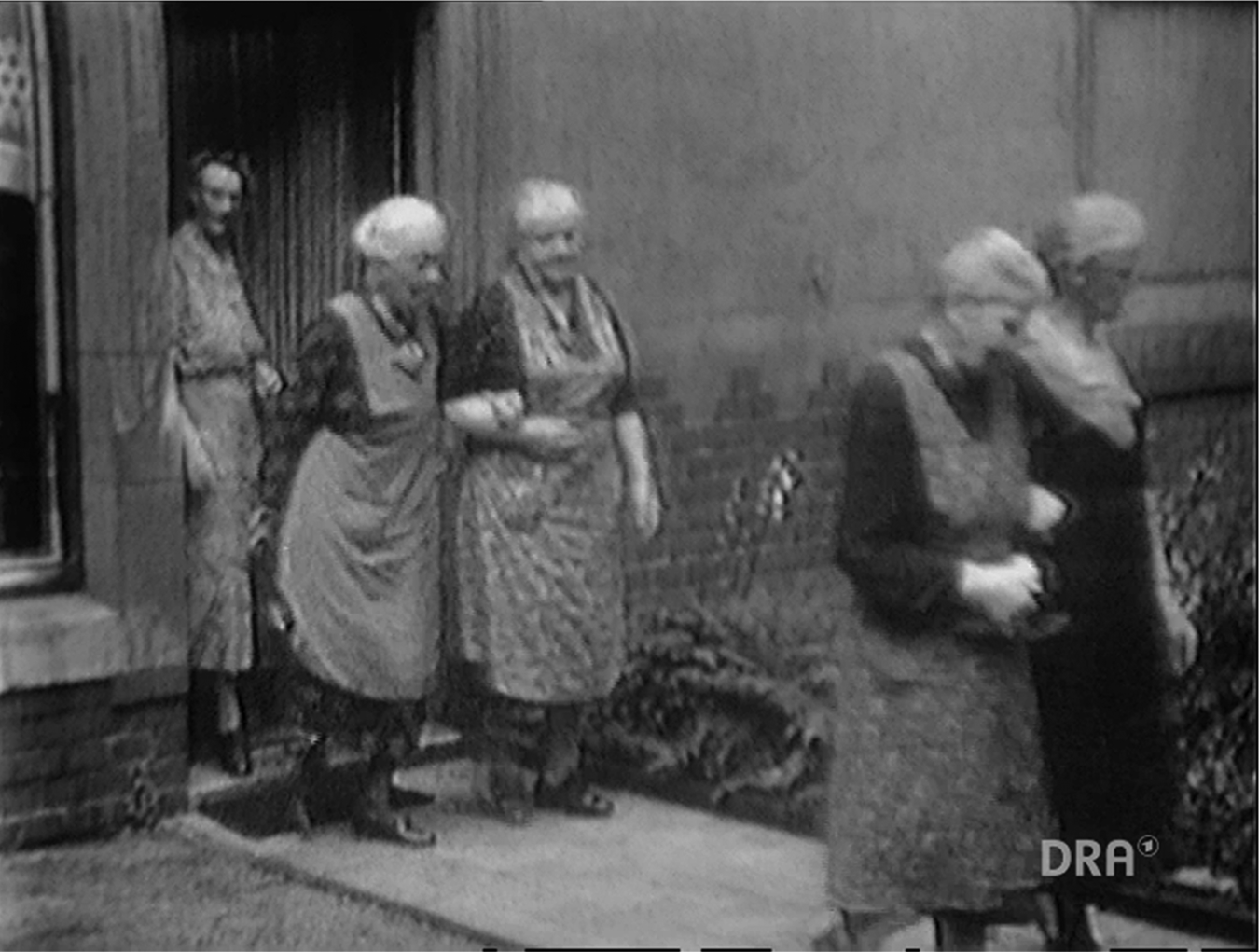
In the summer of 1959, East Germans tuned into a program called On the Border of Old Age (An der Grenze des Alters). For the first twenty minutes, a reporter patiently explained the horrors of aging in neighboring West Germany. Drawing on kindred efforts by West German television producers, the program presented a colorful portrait of miserable old age on the other side of the Iron Curtain. Western factories, viewers were told, employed only the young, while close-ups of want ads proved that many employers explicitly barred the elderly from applying. Where, then, were the elderly? “We found them,” the host explained, “on the street,” “killing time,” with no purpose, as “time stands still for them.” Inhospitable workplaces and insufficient pensions forced them to improvise. Some begged on the streets, others lived in scandalously insufficient nursing homes, while yet others lived poor and alone in basement rooms. The show followed one old woman in Cologne as she gathered firewood from yards and was accosted by young rowdies in convertibles. The segment ended with a depiction of a group of elderly women slowly and mournfully marching across a courtyard (see Figure 1). It featured an ironic soundtrack. The viewer could hear the peals of the “Freedom Bell,” a replica of the Liberty Bell that rang daily from West Berlin's city hall throughout the Cold War, while a somber voice intoned its inscription, describing a commitment to individual dignity. The bell sounds in context like a church bell, and the overall effect is to reinterpret the sound, which was beamed into East Germany from the West every week: not a celebration of freedom, but a funeral dirge. A consideration of the elderly, it seemed, showed how hollow the promises of the West German regime—and its Atlantic ideology—truly were.Footnote 1
The elderly in West Germany, as portrayed on An der Grenze des Alters (On the Border of Old Age), an East German television program from August 19, 1959.

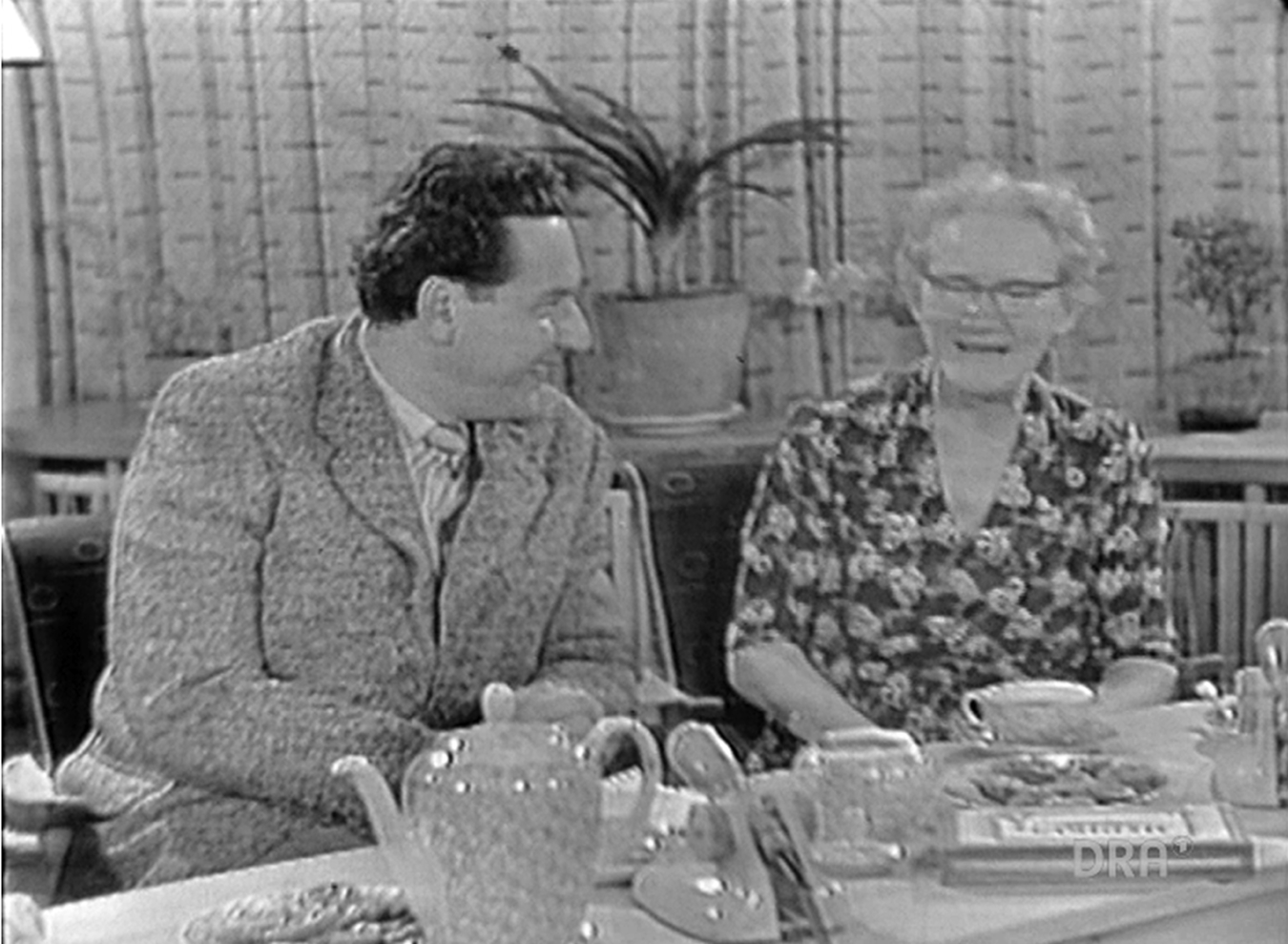
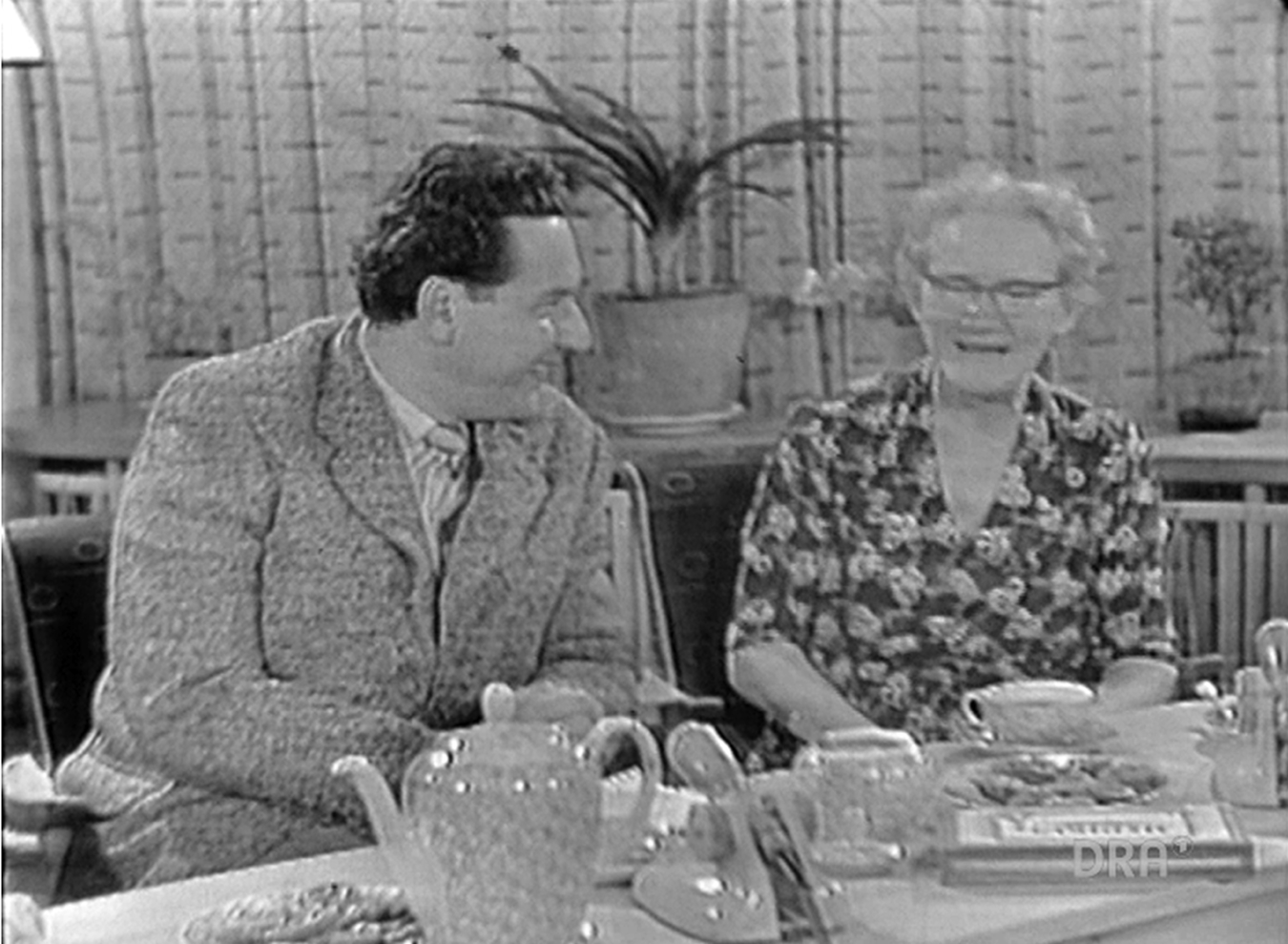
The program then cut to a sort of talk show set at a retirement home (Feierabendheim) in East Berlin, where viewers were instructed about the wonders of old age in communist East Germany. The host had a relaxed and unedited conversation with four residents, between sixty-eight and eighty-two years old, and as the set-up was supposed to show, the interview was a cheerful affair (see Figure 2). The guests emphasized the advantages of East German social policy, which allowed them to afford the residence with money to spare. Unlike in the West, their well-being was not tied to their previous class standing nor to individual entrepreneurship, but was a well-deserved thank-you from the socialist nation after a lifetime of labor. They emphasized the “joy” they had taken in labor and their gratitude that they had been able to work for so long. One of them explained that it would have been “very hard” for him to be kicked out of the labor force at sixty-five, given the great satisfaction he had taken in working to the age of seventy-three. The four residents expressed sorrow and sympathy for their age cohort in the West. They were being treated so poorly, one of them theorized, because the West Germans knew full well that veterans of two world wars would not be willing to fight in a third—and that, after all, was in their view the true aim of the Federal Republic of Germany (FRG).Footnote 2
The elderly in West Germany, as portrayed on An der Grenze des Alters (On the Border of Old Age), an East German television program from August 19, 1959.
The East German TV program—its title and its content—reminds us that the border between youth and old age was just as politicized as the one between the two Germanys. This essay walks that border, exploring the history of East German eldercare in the 1950s and 1960s from a transnational and entangled perspective. The goal here is not to describe or investigate eldercare in the German Democratic Republic (GDR) in its totality.Footnote 3 The more modest aim is to show that East Germans very much had West Germans on their mind when crafting their response to their aging citizenry: they observed the West, they were happy to repeat and absorb the critiques of West German aging policy made by Western critics, and they were committed to crafting a form of socialist aging that would correct the perceived pathologies of its capitalist variant. To show how, the essay will draw on popular media, social-scientific literature, and above all the archives and publications of People's Solidarity (Volkssolidarität, hereafter VS), the premier eldercare organization in East Germany. These sources will be explored to make two basic arguments, one in each of the essay's major sections: first, that an entangled perspective helps us to explain the very existence of the VS, and its focus on eldercare; second, that the specific shape of communist eldercare can best be understood as a direct response to the perceived pathologies of capitalist aging. Specifically, East Germans were unimpressed with what they called, with some justice, the “reactionary pension reform” that West Germany passed in 1957, so they sought alternative imaginaries of care.Footnote 4
Eldercare is not often historicized, but it represents a massive component of state budgets and individual experiences. It provides, therefore, a fresh vantage point on some familiar questions, most importantly that of the nature of the East German regime. For years, the reigning interpretation of East Germany as a whole was the “welfare dictatorship” model provided by Konrad H. Jarausch, according to which the regime relied on (unsustainable) welfare programs to ensure the support of an oppressed, but quiescent, citizenry. Recent scholars have nuanced this view, suggesting that East Germany became a welfare dictatorship in the Honecker era of the 1970s–1980s, but that the term does not adequately describe the more austere and ideological era of the 1950s–1960s.Footnote 5 This should lead scholars to rethink the Ulbricht era, when the East regime was pioneering kinds of social policy that do not recognizably fit into the framework of “welfare.”Footnote 6 East Germans in the Ulbricht era actually viewed West Germany as the welfare dictatorship—as the regime, in other words, that perpetuated traditional styles of Bismarckean welfare alongside fascist and militarist politics. An entangled exploration of eldercare in the Ulbricht era allows us to see the limitations of the welfare dictatorship model for this period and allows us to see how East Germans were seeking to think and organize beyond the “welfare state” model altogether.
Toward a Transnational History of Care
We live on a graying globe, and global aging is one of the most pressing challenges to be faced in the twenty-first century. Although this has not yet translated into much interest from historians, history, and especially German history, can play an important role in the burgeoning interdisciplinary conversation on these themes. After all, many of the concepts and categories we use to think about old age—from Alzheimer's disease to state-delivered pensions—have their origins in Germany, one of the first places to experience and conceptualize the new age pyramid that is now becoming global. This potential has not yet been realized. In recent decades, the study of modern German history has opened up to include new voices and themes: the Germany of the contemporary imagination is global, gendered, pious, and queer. These new approaches have enriched the field's traditional strength in social and political history, rendering Germany a major site through which the historical discipline hones its methodology. The search for new subjects of German history has not led, however, to a systematic exploration of the history of aging and old age. With a handful of exceptions, the theme has been neglected in the past two decades. This is especially true of Anglophone scholars, who have scarcely written a word on the topic.Footnote 7 Ironically, perhaps, this particular marginalized group was better served by more traditional methodological approaches, notably social history and the history of social policy, and their further development into the history of everyday life. A number of German historians, especially in the 1980s and 1990s, contributed groundbreaking works on aging along these lines, culminating in a rich special issue of the Archiv für Sozialgeschichte on provisioning for old age in 1990. Christoph Conrad's 1994 study Vom Greis zum Rentner, in particular, is perhaps the most distinguished historical work on the scientific and political construction of old age in any country.Footnote 8
The neglect of the elderly in the historical research of the last two decades is surprising because it ties so directly to an emergent, interdisciplinary investigation of biopolitics, the family, and the welfare state. Theorists such as Nancy Fraser and Melinda Cooper—joined by historians such as Donna Harsch, Dagmar Herzog, Elizabeth Heinemann, Robert Moeller, Till van Rahden, Camille Robcis, and Robert Self—have shown that modern forms of political economy are indissolubly tied to a particular familial order.Footnote 9 Much of this scholarship has emphasized how the elaboration of the nuclear family as a unit of social science, culture, and public policy was central to economic modernization after World War II.Footnote 10 And yet, as Nancy Fraser in particular has pointed out, capitalist consolidation persistently creates crises around care labor, notably of the sick and elderly—a fact that is sidestepped by the historians’ obsessive focus on the nuclear family, which reproduces the biopolitical dreams of state-builders in our own scholarship. To be sure, since the 1990s there has been a good deal of work on the theme of gender, welfare, and care labor.Footnote 11 Nonetheless, it remains the case that the mechanics of care, and especially eldercare, have more frequently been the province of other disciplines, notably sociology and anthropology. With only rare participation from historians, those disciplines and others are beginning to organize into a new framework of “aging studies,” promising interdisciplinary investigations of the culture and political economy of a rapidly expanding demographic.Footnote 12
This article will use the tools of history to address a lacuna in the contemporary discourse on old age: its almost invariable parochialism. Gerontologists long dominated discussion on age by medicalizing it, focusing on either the individual body or the immediate lived surroundings of the patient. Scholars have expanded this to the state level, asking about the social forces that created certain forms of social policy, without extending their gaze beyond state borders. Insofar as eldercare is discussed in an international context at all, the focus is usually comparative—as has been the case in almost all studies of welfare since sociologist Gøsta Esping-Andersen's field-defining 1990 book, The Three Worlds of Welfare Capitalism.Footnote 13 Even those scholars who have criticized Esping-Andersen remain committed to a comparative, country-by-country analysis.Footnote 14 Comparative approaches to the study of welfare eldercare can be illuminating, to be sure.Footnote 15 In more recent years, however, historians have begun to offer more transnational, imperial, and entangled histories of welfare and care, which provide different and equally illuminating perspectives. Care for bodies, it transpires, was conditioned by migratory flows, international emulation, and international competition just as much as other intimate spheres such as consumption and sexuality.Footnote 16 More, perhaps, than any other discipline in the academy, historians in the wake of the transnational turn have been alert to these phenomena. Even the intimate care of the aging body is embedded in transnational and global networks (given that this sort of care is so frequently performed by migrant populations). This is true in contemporary Germany, to be sure, but it was equally true in the German past, when geopolitical conflict and transnational mimicry made a mark on communist eldercare.
An Entangled History of Volkssolidarität and Its Turn to Eldercare
From the 1950s onward, the green and red emblem of the Volkssolidarität was a familiar neighborhood sight in East Germany, especially for the millions of elderly Germans who took part in VS activities, from Christmas celebrations to the construction of clubhouses for the aged. The organization was a unique one in German history; never before had a state-sponsored organization engaged so energetically and directly with the elderly population, and there was no West German equivalent. Although the VS did have predecessors in German history, its specific shape can only be explained by viewing the VS as a response to contemporary events in West Germany. This story takes place during the Ulbricht era of the GDR, spanning the years from 1950 to 1971, when Walter Ulbricht was First Secretary of the Central Committee (Zentralkommitee, ZK) of the Socialist Unity Party (Sozialistische Einheitspartei Deutschlands, SED). During these years, East Germans experimented with socialist responses to social problems. And during these years, the VS made its turn toward eldercare.
In West Germany, aging policy and care delivery basically followed the broad pathway laid out by Bismarckean Sozialpolitik introduced in the 1880s. According to that model, the state would primarily be involved with the elderly through the provision of small pensions for people older than seventy who had done years of full-time paid work. It was meant as a subsidy, not as an income replacement, and it was funded jointly by employees, employers, and the state.Footnote 17 The dramatic West German Pension Reform of 1957 elevated pension levels and universalized the system, but in essence little about it was novel. In this model, the state would have little concern for the actual delivery of care, which would be provided by families or by subsidiary organizations, most notably the Protestant Innere Mission, founded in 1848, the Catholic Caritas, founded in 1897, and the German Red Cross, founded in 1864.
West German eldercare in the 1950s followed the model of subsidiarity that had long been the basis of the German welfare and care system. This principle determined that the state would step in only when no private welfare organization was able to take care of the groups in need of support. Certain private organizations, in turn, would receive generous state support to perform care labor. The principle had always been contested and resulted primarily from a political compromise between social democrats and Catholics in the Weimar Republic. This compromise, incidentally, delivered immense influence into the hands of the two large Christian welfare organizations, especially when it came to care for children and the elderly—influence that continued in West Germany.Footnote 18
This was the dominant German tradition, but never the only one. The Volkssolidarität built specifically on the legacy of a number of previous welfare organizations that had attempted to curb the influence of the Christian welfare organizations and politicized the delivery of care: the social democratic organization Workers’ Welfare (Arbeiterwohlfahrt, AWO), founded in 1919, the communist Red Aid (Rote Hilfe, RH), founded in 1924, and the National Socialist People's Welfare (Nationalsozialistische Volkswohlfahrt, NSV), founded by the Nazi Party in 1933 as a successor to major previous welfare organizations that were banned once the Nazis came to power (including the RH and the AWO). Innere Mission, Caritas, and the German Red Cross continued to exist in the Nazi period, but the NSV attempted to reduce their influence and control their work.Footnote 19
The East German regime of social policy drew on this alternative tradition—one that rejected subsidiarity out of hand as a handmaiden to liberal capitalism. The clearest connection was doubtless with Rote Hilfe, which was celebrated in the journals of the Volkssolidarität and which provided a leadership cadre to the VS and SED alike. In the Weimar period, the organization had been, essentially, the welfare arm of the Communist Party (Kommunistische Partei Deutschlands, KPD), offering services to struggling or imprisoned communists and their families. It was, at the same time, a self-help organization of communist women, who dominated in the active membership.Footnote 20
Ideologically, Rote Hilfe contributed to the development of the Volkssolidarität in two key ways. First, both linked welfare delivery with antifascism. As early as 1926, RH was positioning itself against “fascism,” viewing German police forces as local versions of Mussolini's blackshirts.Footnote 21 Unsurprisingly, given the centrality of antifascism to SED ideology, the VS did the same. Secondly, and relatedly, RH ideology mandated that their care labor was only necessary because of the inequalities introduced by capitalism. In a developed socialist society, according to this ideology, the bourgeois need for subsidiary welfare would vanish altogether. In the early years after the Second World War, VS propagandists made the same claim. As its leader explained in 1950, if the Volkssolidarität were a “petit-bourgeois welfare organization trying to alleviate the worst outgrowths of the capitalist social order,” it would have no place in a socialist society.Footnote 22
Rote Hilfe was the VS's preferred genealogy, but West German social democrats were keen to point out another one: the discredited NSV.Footnote 23 They were not wholly wrong. After all, the NSV was the only welfare organization in German history that had, like the VS, explicitly linked care with the political aims of the state apparatus while receiving preferential treatment from that state.Footnote 24 In both cases, the state-backed organizations labored to supplant their “independent” competitors.Footnote 25 In both cases, too, care was tied to propaganda: both the NSV and the VS distributed radios to their clientele, linking social integration with the provision of the means for an effective propaganda delivery.Footnote 26 And in both cases, the organizations tried to dispel the paternalist air of traditional Christian welfare by enlisting male and female neighborhood watchmen to keep a personal eye on their charges (the NSV called them Blockwalter, the VS Volkshelfer). Welfare, these organizations insisted, was not a form of well-meaning charity, but a politicized means through which the nation cared for its own.Footnote 27
The Volkssolidarität, however, cannot be understood solely with reference to those two predecessors. In fact, the RH legacy nearly led to its undoing. For what role would a welfare organization have in a properly socialist society? Once the SED was firmly ensconced in power, therefore, the VS predictably suffered a crisis of legitimacy, and some socialist leaders saw it as a “fifth wheel.”Footnote 28 The VS leadership scrambled to respond. Internal documents from 1953 and 1954 show that the VS still did not conceive of itself as an eldercare organization (between 1950 and 1953, the VS journal published only one article, out of hundreds, on elder issues). This started to change in the spring of 1954, but the text of the fundraising letters sent out by the VS's leader to the top brass of the SED in March of that year indicates how cautious they were about the shift. The text defined the VS as “an organization for humanitarian aid, which collects funds for Korea, takes care of incarcerated West German freedom fighters and their families, and through the open promotion of members in nearly all households helps to rally the nation in the struggle for peace and freedom.” Although the text did mention care for the elderly in passing later in the letter, it was clear that its author, Helmut Lehmann, a former social democrat active in Weimar welfare policy who had joined the SED in 1946 and became a member of its party executive and president of Volkssolidarität, did not believe that care for aged bodies, in itself, would pique the interest of GDR notables.Footnote 29
The crisis of the mid-1950s was, however, overcome. The VS transitioned into an eldercare organization, first and foremost, and was celebrated by the SED as such. In a set of “recommendations from the Central Committee of the SED” that was circulated among VS leadership in the spring of 1955, the party declared that “the cultural and social care of the elderly and invalids” must become a “chief task” of the VS, so long as they focused on political education as much as corporeal care. And a few months after that, on the tenth anniversary of the VS, the SED made a show of its commitment by giving a gift of 100 million DM to organize a drive of clothing and shoes for the needy—especially the elderly.Footnote 30
This was something new. Neither RH nor the NSV were concerned with the elderly as such.Footnote 31 Even though the Weimar era saw the emergence of the elderly as an object of concern, investigation, and care, this did not translate into the universe of RH.Footnote 32 The NSV, meanwhile, focused above all on “mothers and children,” even as the social-scientific and medical figuration of the “elderly” as a specific social block continued apace.Footnote 33 Neither the NSV pamphlets nor their journal Ewiges Deutschland (Eternal Germany) featured discussion of the elderly, and NSV experts were at pains to argue that they focused not on the corporeally unsound, but only on the “healthy parts of the German nation”: those that could be rehabilitated and labor once again for the good of the homeland.Footnote 34
Why did the Volkssolidarität shift its activities toward eldercare? No answer that focuses on East Germany alone makes sense. Ideologically, the Marxist tradition was silent on the question of old age, so that explanation does not help. An institutional explanation might explain why the VS made the move toward eldercare (as other duties were siphoned into the Ministry for Health and others), but not why the regime celebrated this move or allowed it to continue by funding the VS. What of the demographic explanation? East Germany, this argument would run, had an old population, especially after so many young people fled to the West, and it is therefore no surprise that the regime would focus on old age. There is certainly something to this argument. The East Germans were demographically and economically bound to address the issue of old age at some point, and they needed to find ways to convince the elderly to perform more labor. And yet demography is not destiny. The question is not whether developed societies grapple with the question of age (they all must), but when and how they do so. In East Germany, for instance, the rise of concern for elder issues tracks demographic realities in only the most general way, and cannot explain the new interest in aging precisely in the mid-1950s (Nazi Germany faced an aging population, too). Moreover, it cannot explain the shape of that concern, especially given the lack of Marxist thought or example on the issue.
Functionalist explanations for the VS's survival, and its turn to eldercare, are important but insufficient. An entangled, transnational perspective is necessary to access the whole story. But which one? Although scholars have been exploring East Germany's imbrication in the socialist world, East Germans did not look to the socialist bloc for guidance on this question. VS journals were essentially silent on the matter, and VS archives indicate that serious international socialist collaboration on this issue did not get off the ground until the 1970s.Footnote 35 The Soviets themselves expanded and improved their pension system in 1956, but neither the VS nor, so far as I can tell, the East German press had much to say about it. There was some interest in Romania, where a physician named Ana Aslan was hawking supposedly youth-enhancing miracle drugs, but this interest was minimal and shared with the capitalist West, too (notably Hollywood).Footnote 36 The reason that East Germans learned little about old age from the socialist bloc can be found in Gerohygiene (1966), the first serious scientific monograph on elder issues to appear in East Germany. Its author, Siegfried Eitner, seemed dismayed that the socialist experience provided so little guidance. His explanation was simply that socialist nations had such young populations that they had not dealt with these issues in ways that made sense for a comparatively old and industrial society like East Germany (he also criticized Aslan as unscientific).Footnote 37
East Germans like Eitner who dealt with the issue of aging looked, instead, to the West. He wrote at great length about West Germany, viewing the ideological foe as the primary foil to his own ideas.Footnote 38 This was far from isolated. East German experts and policymakers in general kept close tabs on the activities of their western neighbor in matters of armament and security, of course, but of public health and welfare, too. And when those experts looked to West Germany in the mid-1950s, they saw an unprecedented public conversation about old age. In just those years, the West German state turned care for the elderly into an important index of social care and political legitimacy—indeed, between 1953, when West German chancellor Konrad Adenauer announced the pension reform, and 1957, when it was enacted, pensions and the elderly were the most-debated topic in West German Sozialpolitik and social science alike. The intensity of this discussion had no precedent in German history, as observers at the time were well aware and as later historians have seconded.Footnote 39
It is well known that West Germans in the mid-1950s were discussing old age and renovating pension policy and that the SED policy elite was paying close attention to those reforms.Footnote 40 It is well known, too, that the VS made an important transition to eldercare in just those years, becoming in the process the first state-backed eldercare organization in German history. Because of the blinkered ways in which East German social policy has been studied, however, these two facts have not been related before now. And yet, when juxtaposed, it seems clear that the East Germans made eldercare a priority when and how they did because they were responding to scientific and policy innovations in the West. This might seem circumstantial, but in the next section we will see just how invested the East Germans, and the VS in particular, were in West German aging policy.
East German Eldercare in Transnational Perspective
In 1965, a woman named Frau Honschau wrote to her local East German newspaper to complain about her low pension and about the poor conditions in nursing homes. The reality, she lamented, did not match the propaganda of the Volkssolidarität. The newspaper editors, unsure how to respond, reached out to the local chapter of the VS, which in turn provided the paper with a sheaf of documentation, some of it offered by the VS and some of it directly from the West German press, on the fact that it was even worse in the West.Footnote 41 This story captures in miniature a great deal about the East German state. Though it was long pilloried as a repressive or totalitarian dictatorship, more recent research, above all by Mary Fulbrook and Andrew I. Port, has emphasized the widespread culture of consensus cultivated by the regime and its many acolytes. In this story, we see a woman who believes her grievances would be taken seriously, and we see a press organ and a state-backed mass organization laboring to convince her of the virtues of the regime. We also see the central role played by critique of the West German system—much of it supplied by West Germans themselves, many of whom had their own grievances against a Christian democratic–designed pension system that supplanted the more egalitarian social democratic plans.Footnote 42
The response to Frau Honschau—mobilizing multiple agencies and invoking an entangled East/West history—encapsulates the shape of East German aging in the Ulbricht era. If the last section suggested that the SED's interest in elder issues makes sense only in an entangled context, this one will argue that this is equally true of the shape of that concern. The archives and literature of the VS, alongside other social-scientific sources, suggest three major criticisms the Easterners had of West German eldercare—namely, that it was fascist, capitalist, and misogynist. These critiques generated specific responses from the SED and the VS. Given that communists were operating in a vacuum of expertise and knowledge, the foil of the West was extremely important.
The first critique of West German eldercare, and one voiced on the aforementioned TV program, is that it was in league with fascism, which in the East German view counseled neglect and disdain for bodies that could neither fight nor bear children. Recall that the elderly interview subjects had mused that the West Germans were treating the elderly with disdain because they cared only about the younger generation, who were being groomed to invade the East once again. However implausible the pensioners’ conspiracy theories might have been, it seemed natural to them because they were immersed in a world in which such a claim was commonplace. In March 1956, for instance, an article appeared in the VS journal Solidarität (Solidarity) that stated, “Adenauer's ‘Social Reform’ is a Robbery of Pensioners,” arguing that the much-vaunted pension increase of 1957 was a fiction, as Adenauer was only genuinely willing to spend state funds on rearmament.Footnote 43 The reform of the West German health-care system was presented in Solidarität as necessary because of rising spending on armaments: “West German Atomic Armament Brings Social Cutbacks.”Footnote 44 Another article in the VS magazine Volkshelfer (People's Helper ) for VS functionaries on “Euthanasia in West Berlin” from July 1966 interpreted elder abuse as a return of “decidedly concentration camp-like methods.”Footnote 45 Most persistently, East German experts argued that the 1957 pension reform, by claiming to be apolitical, ended up granting large pensions to ex-Nazis while antifascist resistance fighters were shortchanged.Footnote 46 There was something to this critique, which was made by some West Germans, too (here, as elsewhere, the East Germans could simply reproduce critical cartoons or editorials from the Western press).Footnote 47
In response, the SED and VS imagined an antifascist and socialist form of eldercare—one in which, that is, the elderly could aid the global antifascist struggle, lending meaning and dignity to their last years. The VS, true to its RH heritage, continued to send funds to the North Koreans and the South Vietnamese, for instance, as well as aid packets to comrades in the West being imprisoned for their communist beliefs after the KPD was banned in 1956.Footnote 48 One VS office proudly displayed a banner sent as a token of appreciation by the North Korean ambassador, and a small group of North Vietnamese exchange students were invited to celebrate Christmas Eve with a group of pensioners in Brandenburg.Footnote 49 In a focus group, whose results were unpublished, a pensioner from Dessau gushed that “even we old men can participate [in the building of socialism], if we simply explain to our children the differences between the two German states.”Footnote 50
The second major critique of West German eldercare is, rather predictably, that it was capitalist, in that it was dictated by the ruthless logic of class domination rather than of humanitarian concern. This critique took three forms. First, when it came to individual firms, pensioners themselves and East German policy experts claimed that no room could be made for the elderly because capitalist dynamism presumed healthy bodies operating at maximum capacity.Footnote 51 West Germany, they believed, was littered with able-bodied old men and women, thrust out of the labor market and thus denied the potential to exercise their labor power—from the Marxist perspective, the most valuable thing they could do. Second, when it came to social policy, the SED argued, with some justice, that the West German social state (Sozialstaat) was basically in continuity with its conservative, Bismarckean predecessor.Footnote 52 The pension reform of 1957, as with American social security, linked pension levels to past earnings. As one trade union leader and Politburo member complained, this “capitalist principle of security” simply ensured that inequality and poverty would persist into old age.Footnote 53 The chairman of the VS, Helmut Lehmann, speaking to the Volkskammer in 1957, insisted that the very notion of “benefits” (Rente) was a “capitalist concept.” As one of his successors argued a few years later, the much-vaunted tradition of German “subsidiarity” was no more than an attempt to force the poor and elderly to fend for themselves (a sense that was dramatized in the TV program).Footnote 54 And lastly, when it came to daily life, the East German media presented the West German elderly as suffering from terrible loneliness and deprivation, as we have already seen in the TV program that opened this article. The VS journal Volkshelfer reported, for instance, in 1966 on elderly women who fell and died of frostbite because nobody was concerned about them. It was no wonder, another article concluded, that they were so frequently tempted to commit suicide.Footnote 55 Here, too, the VS could rely directly on critiques generated by West Germans themselves, such as when Solidarität reproduced in 1955 a cartoon from the West German press depicting the isolation of the elderly and relating it directly to social insurance policies.Footnote 56
The SED, with the VS at the helm, argued that a socialist society would generate flourishing for the elderly, just as much as it did for younger generations. From the socialist perspective, as one East German physician argued, the isolation and deprivation of the elderly was not a problem generated by “modern society,” but by “capitalist society.”Footnote 57 Although previous accounts of East German Sozialpolitik have justifiably criticized the SED for its low pensions, they have overlooked the fact that, unlike in the West, pensions were not the regime's preferred or only form of eldercare.Footnote 58 For one thing, unlike in the West, prices for consumer goods, housing, and health care alike were kept artificially low. Just as importantly, the SED relied on the VS to spearhead innovative forms of eldercare that would not overburden state finances. “Our notion of optimal eldercare,” a VS organ proclaimed, makes the elderly “feel like useful members of society.”Footnote 59
Slogans like these indicate that the VS sought to provide social and psychological well-being rather than monetary remuneration. To be sure, private welfare organizations in the West had a similar goal, but that sense of well-being was expressed in terms of Christian spirituality, developmental psychology, and medical care rather than through labor or social utility.Footnote 60 The VS had innumerable mechanisms to incentivize successful aging in a socialist key, notably through labor. Labor was the grammar of citizenship in East Germany, and the constitutional “right to work” knew no age boundaries (hence the emphasis on the age discrimination in the labor market on the TV program). The VS as a whole might be described as an attempt to enlist the elderly into the all-important projects of labor, and East German towns and firms were peppered with so-called “brigades” of pensioners performing all kinds of labors for cities and firms. These opportunities to labor were meant to both aid East German productivity and solve the problem of functionless old age that was supposedly rampant in the West. “Nobody is too old to fight for peace, construct socialism, and beautify our city,” one old man reported.Footnote 61
Consider the activities of the VS in the small town of Wolmirstedt, which exemplify the socialist attempt to craft a meaningful form of aging. The town had about 1,300 inhabitants, of whom 250 were members of Volkssolidarität. The VS provided a clubhouse for the elderly, which they maintained themselves (including the erection of a chicken coop). In addition to hosting social events, it was used in the mornings as a sewing room in which four old women, armed with two sewing machines, would do repairs for fellow citizens. A brigade of fifteen pensioners assisted from time to time with agricultural labor. Another, made up of just three (including a plumber), was deployed to do “1,000 small things,” including minor repairs. The town was too small to have a shoemaker of its own, so a pensioner took it upon himself to collect shoes in need of repair and take them to nearby Magdeburg.Footnote 62 This might seem like simple exploitation, but it was not understood as such at the time. From the socialist perspective, the elderly were being given the great opportunity to feel useful and to remain embedded in the great experiment of building socialism.
The third fundamental axis of the East German critique of West German eldercare is that it was misogynist. More than their Western counterparts, East Germans were perfectly clear that the issue of aging was primarily one that affected women—as caregivers, on the one hand, and as a majority of the elderly, on the other.Footnote 63 The 1959 TV program On the Border of Old Age, for example, paid close attention to the experience of women, ensuring gender equity on their own panel and dwelling specifically on the suffering of women in the West (two of the three individualized stories focused on women). Moreover, the last shot focused on women, too, showing just how central gender was to the producers’ understanding of the issue. This is no surprise given that this element had been played up by other Eastern experts, who explained that the West German system disadvantaged women by linking rates with past employment. They were right to point out that the pension system in the West was based upon the hegemonic ideal of the male-breadwinner family. Although many women of course worked, for many reasons their “salaries” were depressed compared to that of their male counterparts. Much of their labor was unpaid (in the home) or was paid at a depressed rate (because it was seasonal or because of ubiquitous gender gaps). Poverty in old age was, as a result, a gendered issue. “The great sociological group of the isolated old woman in the modern West German industrial society,” Siegfried Eitner argued accordingly in his book Gerogyiene, was a creation of capitalism and of capitalist social policy, which either deprived them of pensions or delivered them only meager ones.Footnote 64
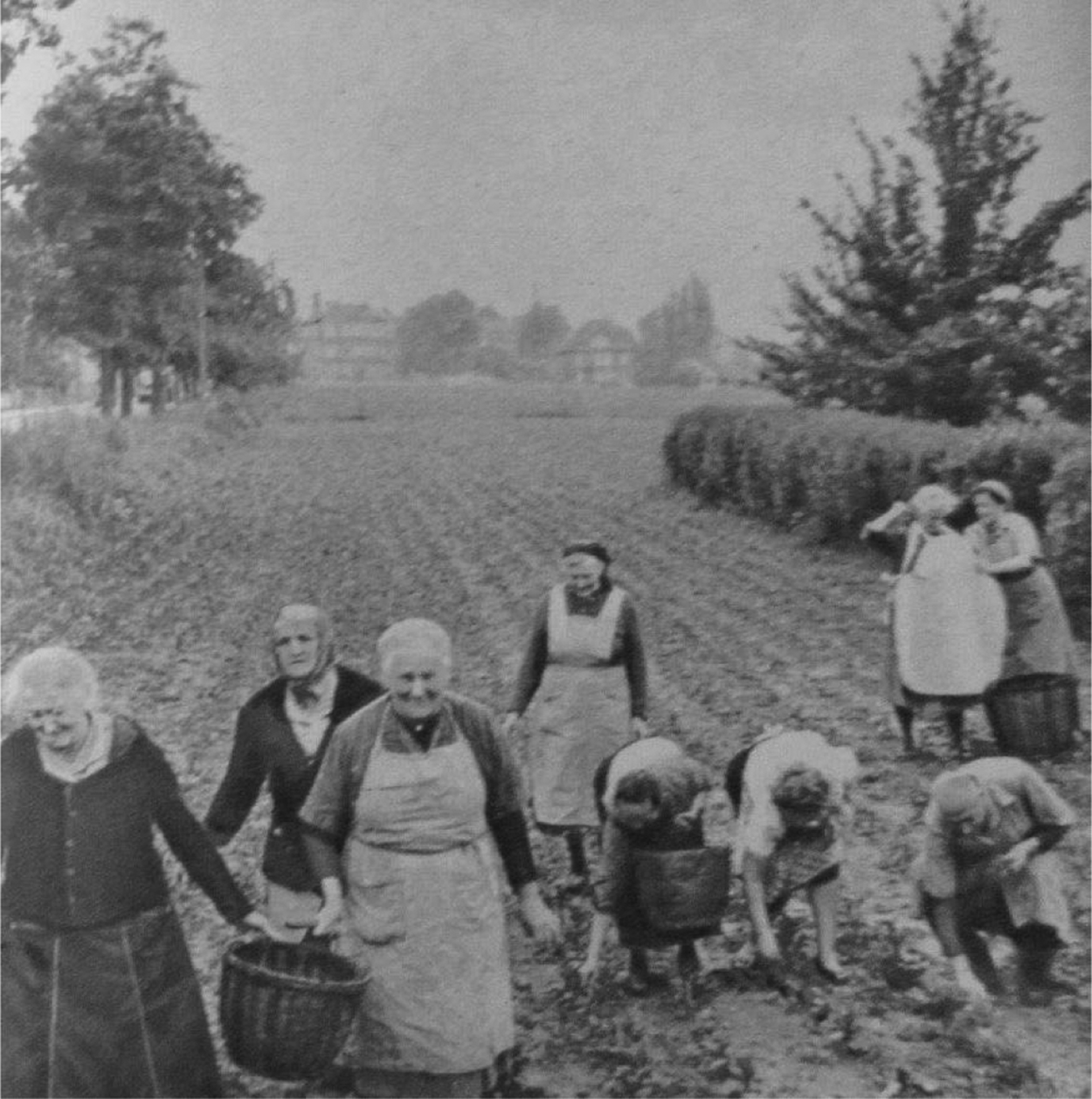
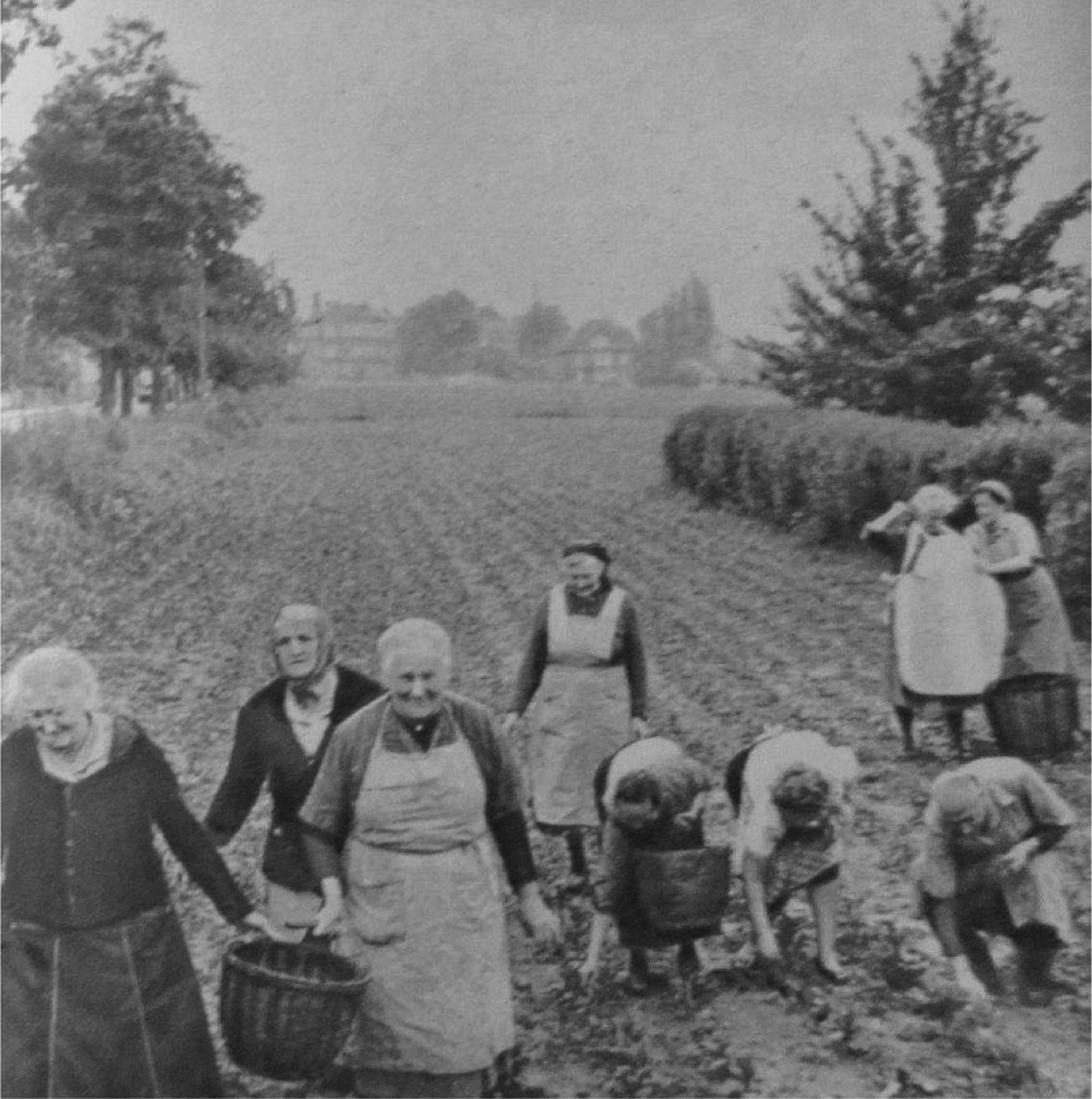
The extant scholarship on the East German family has been strikingly focused on middle-aged women, juggling motherhood and work, while neglecting the elderly almost completely (either they are absent or they appear as bit players in their children's lives).Footnote 65 Nonetheless, families at the time often had three or four generations, and an inclusion of the elderly enriches our understanding of these themes. Although hamstrung in some ways by traditional gender norms, the Volkssolidarität did try to cultivate a form of aging that could reasonably be described as socialist-feminist. To be sure, old women were portrayed in a gendered manner. Although elderly women were included on the TV program, they hardly spoke at all, even though at least one of them had been some kind of worker herself. All the same, elderly women were portrayed as serious laborers in pursuit of socialism, and in their typically socialist rundowns of comradely heroes, women were enlisted as full participants in the grand drama of German socialism (one characteristic entry in the Volkshelfer from July 1966 praised a woman who had darned socks for striking textile workers in the Wilhelmine era, worked with the Rote Hilfe in the 1920s, and was now fulfilling her comradely duties at the VS).Footnote 66 One form this took was the celebration of old women's labor outside the home. Old women in VS publications were portrayed as doing industrial and construction labor, even if not as frequently as men were.Footnote 67 More frequently, they were shown doing agricultural labor, as on the cover of the VS journal Volkshelfer in August 1961 (see Figure 3). While images of East German agriculture tended toward the grand projects of the communist style, in the VS it was still viewed as a rather quaint, communal activity that brought together women to labor happily for the homeland.Footnote 68
Elderly laborers as portrayed in the East German journal Volkshelfer, August 1961.
Even if old women were not portrayed as isolated or frail, they often were depicted as grandmothers—a role that was, like motherhood, politicized. In an authoritative Textbook on Social Hygiene from 1959, for instance, the section on old age concluded with a paean to the labor of elderly women. After discussing the problems inherent in keeping old men active, the author pivoted and claimed that, for old women, the problem was precisely the opposite: they are “too indispensable” to social functioning. Despite all the socialist advances in childcare, the socialist order relied in fact on armies of grandmothers, whose heroic labors on behalf of others should provide, the author hoped, a model for us all.Footnote 69
Grandmotherhood was portrayed by the Volkssolidarität and the Democratic Women's League (Demokratischer Frauenbund Deutschlands, DFD), the mass organization of women in the GDR founded in March 1947, as an opportunity to advance the building of socialism precisely by performing the types of care labor that middle-aged women were meant to avoid in order to pursue remunerated fulltime employment. Although this kind of intergenerational dependency was common in Europe, as in the United States, the East German case seems unique in that this role was celebrated and politicized. The most colorful program was known as the Wunsch-Oma (literally, Desired Grandma), which allowed families in need of care labor to find elderly women available to help.Footnote 70 Throughout the Ulbricht era, elderly women were mobilized to do childcare, granting political imprimatur and organization to a traditional practice. The VS did not provide regular childcare, a duty of the state, but stepped in to supplement to care for sick children or to babysit in the evenings, allowing mothers to do housework or participate in cultural and political life. And as we have already seen in the case of Wolmirstedt, old women were especially used for sewing and mending.Footnote 71 Unlike the isolated and purposeless old woman of the West, the VS insisted, old women in the East were full participants in an antifascist, socialist, and potentially even feminist form of eldercare.
The argument here is not that the West German example was the only, or even the most important, factor to consider when unpacking the East German approach to old age. Pride of place must be given to the pragmatic considerations faced by a communist leadership seeking to govern an aging country, and lacking the ability or ambition to craft generously funded social insurance programs. And yet such considerations are not enough to explain socialist aging, just as demographic and economic realities do not explain the attitude toward the elderly (or toward children or the disabled) in any other place. The question of how to age as a socialist had never properly been asked before. To answer it, East Germans looked across the Iron Curtain. For if one thing about socialist aging was certain, it is that it would look different from its capitalist twin.
Conclusion
East German eldercare cannot be understood especially well as an outgrowth of German communism or as an importation of methods and ideas from the Soviet bloc. Instead, it emerged from an entangled, German space, as East German experts and leaders struggled to forge a variety of eldercare that could adequately address the critiques they had of capitalist aging and social insurance. This finding has at least two important ramifications. The first is methodological and has significance for modern historians of welfare and the family in general. The elderly have been almost entirely ignored by historians, and not only historians of Germany, for the past several decades. This has deleterious consequences for our own discipline, which has not interrogated the experience of a vast and growing population, but also for the interdisciplinary study of old age, which has not been adequately nourished by historical methods and reasoning and which remains trapped in either national or comparative frameworks. This article has shown how transnational or entangled history, perhaps the biggest growth area for historians in the past two decades, can be used to study old age. This opens new vistas on a problem that is, inescapably, a global one, structured by circulatory flows of bodies, public health expertise, and ideas about the good life.
The second concerns the history of East Germany in particular. Historian Thomas Lindenberger, in a recent essay on the present and future of GDR studies, suggested that the history of the GDR could prove its relevance only by connecting to larger questions and histories, beyond the relatively meager physical borders of the state and the antiquarian concern for the workings of a defunct system.Footnote 72 His own work offers one possible pathway, pointing out how the GDR, as a “welfare dictatorship,” shared in some of the pathologies that recent political scientists have uncovered in their own studies of the welfare state: notably, the tight linkage between welfare and exclusion (the formation of a racialized underclass in the West, alongside the conjuring of an “asocial” class of shirkers in the GDR).Footnote 73
Lindenberger, in other words, uses Konrad Jarausch's category of the welfare dictatorship to find pathological commonalities between the GDR and its industrialized counterparts. This essay has attempted something rather different. As welfare states enter crisis, and as scholars like Lindenberger and many others explain their repressive aspects, might we not mine history for examples of periods, institutions, and policies that attempted to think beyond traditional forms of welfare, imagining instead forms of solidarity and social mobilization that addressed crises of care without recourse to familiar, paternalist modes of welfare? The point here is not to praise East German eldercare as superior to its Western counterpart; by almost any empirical metric, it was not. The point, instead, is to be reminded that past societies have been surprisingly creative in their approach to elder issues and that the Procrustean bed of the “welfare state” (a term in English coined only in the 1940s) might blind us to some of them. East Germans in the 1950s and 1960s, it transpires, looked to the West German social state and tried to do something different. These attempts, and others like them, merit our consideration and attention, especially once we recognize that the West German solution, too, was based in overly optimistic demographic and economic projections and has had to be seriously reformed. After all, as an East German gerontologist told a newspaper reporter in 1967, the idea that the twentieth century would be “the century of the child” was already outdated. They lived, instead, in “the century of the elderly”—a statement that, however demographically obvious, has yet to be fully assimilated by historical reason.Footnote 74