


Introduction
Salkovskis’ (Reference Salkovskis1999) model of obsessive-compulsive disorder (OCD) has been highly influential in OCD theory and research (Taylor et al., Reference Taylor, Abramowitz and McKay2007). It is one of the most commonly used clinical theories of OCD (Fenger et al., Reference Fenger, Mortensen, Rasmussen and Lau2007), and has informed cognitive behavioural treatment approaches featuring in the official UK National Institute for Health and Care Excellence guidelines (NICE, 2005). The theory builds upon the cognitive specificity hypothesis (Beck, Reference Beck1976), which suggests that particular maladaptive beliefs will lead to certain patterns of psychological difficulty. This and other central concepts have been developed by Salkovskis and colleagues in a series of papers (Salkovskis, Reference Salkovskis1985; Salkovskis, Reference Salkovskis1989; Salkovskis et al., Reference Salkovskis, Forrester and Richards1998; Salkovskis, Reference Salkovskis1999).
Salkovskis’ model asserts that certain critical incidents and early experiences elicit the formation of maladaptive assumptions and beliefs around responsibility for harm, which in turn lead to misinterpretations of the significance of otherwise innocuous intrusive thoughts (e.g. an image of a man with cancer) as indicating personal responsibility (e.g. ‘If I don’t wash my hands 10 times, my husband will die’). This element of the model draws upon Rachman’s (Reference Rachman1997, Reference Rachman1998) theory, wherein he describes how ‘catastrophic misinterpretations’ of intrusive thoughts lead to distressing obsessions. The appraisal of personal responsibility for harm elicits significant anxiety and engenders the urge to engage in neutralizing actions. Neutralizing can be both external and behavioural (e.g. hand washing), and/or internal and cognitive (e.g. visualizing the intrusive thought being ‘put right’). These neutralizing actions are carried out in order to prevent the content of the intrusive thought from occurring. In addition, the principle of negative reinforcement means that neutralizing efforts persist as long-term behaviour patterns due to their capacity to provide immediate relief from anxiety. Engagement in neutralizing actions also perpetuate OCD symptoms by preventing disconfirmation of the feared outcome or misinterpreted appraisal (i.e. by engaging in handwashing compulsions, the individual does not learn that her husband will not come to harm). The model also suggests that responsibility appraisals provoke heightened attentional biases for threat related stimuli, as well as changes in mood, and additional counterproductive attempts at controlling thoughts/avoiding triggers that maintain the disorder (Salkovskis, Reference Salkovskis1999).
Empirical support exists for the relevance of the individual components of Salkovskis’ model in OCD, i.e. early experiences (Briggs and Price, Reference Briggs and Price2009), critical incidents (Rhéaume et al., Reference Rhéaume, Freeston, Léger and Ladouceur1998), responsibility assumptions and beliefs (Abramowitz et al., Reference Abramowitz, Schwartz and Moore2003; Romero-Sanchiz et al., Reference Romero-Sanchiz, Nogueira-Arjona, Godoy-Ávila, Gavino-Lázaro and Freeston2015), misinterpretation of intrusive thoughts (Abramowitz et al., Reference Abramowitz, Khandker, Nelson, Deacon and Rygwall2006), neutralizing actions (Salkovskis et al., Reference Salkovskis, Westbrook, Davis, Jeavons and Gledhill1997), attention bias (Amir et al., Reference Amir, Najmi and Morrison2009), counterproductive safety strategies (Abramowitz et al., Reference Abramowitz, Tolin and Street2001) and mood changes (Purdon, Reference Purdon2001). In addition, there is also support for the proposed relational pathways within the model, with early experiences and critical incidents being linked to the formation and activation of maladaptive beliefs around responsibility (Coles and Schofield, Reference Coles and Schofield2008; Coles et al., Reference Coles, Pietrefesa, Schofield and Cook2008; Collins and Coles, Reference Collins and Coles2018) and the misinterpretation of intrusions having a crucial mediating role between maladaptive beliefs and symptoms of OCD (Pleva and Wade, Reference Pleva and Wade2006). However, these pathways have typically been examined in isolation and have not been concurrently examined in a comprehensive test of the model. This is a limitation of the current evidence base, as the model was developed as a comprehensive aid to the understanding and treatment of OCD.
Research into the specific types of beliefs and appraisals that underlie obsessive compulsive symptoms suggests that constructs additional to responsibility may also be relevant. For example, beliefs about cognitive capacities including memory, attention and perception have been implicated in OCD (Hermans et al., Reference Hermans, Engelen, Grouwels, Joos, Lemmens and Pieters2008), with negative beliefs about memory having been shown to induce checking in an experimental manipulation (Alcolado and Radomsky, Reference Alcolado and Radomsky2011). The widely studied belief and appraisal domains identified by the Obsessive Compulsive Cognitions Working Group (OCCWG, 1997, 2001, 2003, 2005) of responsibility/elevated threat estimation, perfectionism/intolerance of uncertainty and the importance of/need to control thoughts are all associated with symptoms of OCD (Wheaton et al., Reference Wheaton, Abramowitz, Berman, Riemann and Hale2010). However, Taylor et al. (Reference Taylor, Coles, Abramowitz, Wu, Olatunji, Timpano and Tolin2010) conducted a large scale modelling study (n = 5015) with belief and symptom data, and found that responsibility/threat estimation predicted all six OCI-R symptom subtypes when controlling for the other Obsessive Belief Questionnaire (OBQ) belief domains. Perfectionism/intolerance of uncertainty predicted ordering symptoms beyond the effects of importance/control of thoughts and responsibility/threat estimation, whereas importance/control of thoughts predicted neutralizing, washing and obsessions beyond the effects of the other domains. Similarly, Gagné et al. (Reference Gagné, Van Kirk, Hernandez-Vallant, Potluri, Krompinger, Cattie, Garner, Crosby, Brennan and Elias2018b) found that when administering a shortened 9-item version of the OBQ to a sample of participants who were seeking intensive inpatient treatment for OCD, the responsibility/threat over-estimation subscale was the only significant predictor of all four symptom dimensions on the Dimensional Obsessive-Compulsive Scale (DOCS; Abramowitz et al., Reference Abramowitz, Deacon, Olatunji, Wheaton, Berman, Losardo, Timpano, McGrath, Riemann, Adams and Björgvinsson2010). While these cross-sectional findings are commensurate with the general cognitive model of the OCCWG (Frost and Steketee, Reference Frost and Steketee2002), they are also highly supportive of Salkovskis’ (Reference Salkovskis1999) model, in that responsibility was the most consistent predictor of symptoms. Pozza and Dèttore (Reference Pozza and Dèttore2014) recently reviewed case control studies and found a large effect size for responsibility beliefs favouring groups with OCD over non-OCD groups, and a medium effect size for groups with OCD over other anxiety disorder groups. However, they suggested that publication bias was likely to have influenced these results, preventing definitive confirmation of the specifity of inflated responsibility to OCD. In addition to the above evidence from cross-sectional psychometric studies, a significant body of experimental work is supportive of the causal role of inflated responsibility in OCD. For example, Ladouceur et al. (Reference Ladouceur, Rhéaume, Freeston, Aublet, Jean, Lachance, Langlois and de Pokomandy-Morin1995) manipulated perceived responsibility in a manual classification task and found that participants in the ‘high responsibility’ group experienced significantly higher checking, hesitation and anxiety than participants in the ‘low responsibility’ group. Similarly, in a sample of adults with compulsive checking, Lopatka and Rachman (Reference Lopatka and Rachman1995) found that induced declines in perceived responsibility led to a reduction in estimated probability of harm, urge to check, and likelihood of the particular misfortune occurring. Moreover, Arntz et al. (Reference Arntz, Voncken and Goosen2007) also found an effect of experimentally induced responsibility on checking behaviours. Importantly, participants with OCD in the ‘high responsibility’ condition showed more checking behaviour and OCD-like experiences than a control group with anxiety but not OCD, and a group of non-patients, suggesting responsibility is particularly pertinent in OCD. More recently, Leonhart and Radomsky (Reference Leonhart and Radomsky2017) demonstrated that inducing responsibility beliefs in an experimental task led to higher covert reassurance seeking from a confederate in the task, which was suggested to be a form of compulsive checking by proxy. While this robust experimental evidence strongly suggests a causal role for responsibility experiences in eliciting symptoms of OCD, the studies do not draw discrete boundaries between the concepts of responsibility beliefs and appraisals, as the model would suggest, with participants typically being asked about feelings of responsibility or urges to neutralize, rather than explicit pre-existing beliefs or appraisal tendencies. Similarly, the outcome measures in these experimental studies focus on neutralizing and compulsions moreso than mood changes and counterproductive safety strategies as delineated in the model. A recent meta-analysis concluded that while responsibility appraisals are implicated in the maintenance of OCD symptoms, current research cannot clearly demonstrate the specificity of this construct to OCD (Mantz and Abbott, Reference Mantz and Abbott2017). Further research into the inflated responsibility hypothesis is thus warranted, in order to comprehensively synthesize the robust experimental findings around induced responsibility and compulsions, and the theoretical and psychometric studies which have differentially emphasized the processes and pathways in Salkovskis’ model.
While accepting that any theoretical model is likely to be an imperfect approximation (MacCallum, Reference MacCallum2003), the Salkovskis (Reference Salkovskis1999) inflated responsibility model appears to balance solid supporting evidence with clinical utility and relative parsimony. With this in mind, the current study focused specifically on testing the Salkovskis (Reference Salkovskis1999) inflated responsibility model.
Rationale and aims
To the authors’ knowledge, no study has used multiple indicators to test the proposed latent constructs in the Salkovskis model, including the symptom constructs of ‘neutralizing actions’, ‘counterproductive safety strategies’, and ‘mood changes’. These constructs extend beyond a single measure of symptoms of OCD, and provide useful theoretical information to guide clinicians. For example, counterproductive safety strategies including avoidance and thought suppression are qualitatively different from neutralizing rituals, and this distinction is likely to have clinical relevance. As such, the current study aimed to concurrently examine several core components of the inflated responsibility model, evaluating its empirical plausibility, and hence strengthening the theoretical basis behind current OCD treatment. Structural equation modelling (SEM) was used to cross-sectionally test an inflated responsibility model that was an approximation of the original Salkovskis (Reference Salkovskis1999) theory. Mediational pathways were then analysed, with the prediction that responsibility appraisals would mediate the relationships between responsibility beliefs and neutralizing, counterproductive safety strategies and mood.
Method
Design
The study was a cross-sectional correlational study utilizing a large battery of quantitative self-report questionnaires to measure OCD-related variables. SEM was selected as an analysis methodology as it afforded the possibility to test complex theoretical relationships between a large number of psychological constructs – as well as their directionality – whilst accounting for measurement error (Schreiber et al., Reference Schreiber, Stage, King, Nora and Barlow2006). The questionnaires were used to operationalize latent variables within the Salkovskis (Reference Salkovskis1999) model of OCD. These variables included: Early Experiences, Critical Incidents, Responsibility Assumptions and Beliefs, Responsibility Appraisals/Misinterpretation of Intrusions, Mood Changes, Counterproductive Safety Strategies, and Neutralising Actions. Questionnaires were administered both on paper and online in psychology classes, and repeated measures t-tests indicated no significant differences on any variable based on mode of administration. A brief experimental measure of attention biases was also administered.
Participants
Participants were an opportunity sample of undergraduate psychology students at Queen’s University Belfast (n = 170). Participants took part voluntarily and received course credit for their participation. Mean age was 20.29 years (SD = 4.78; range = 18–48; 140 women).
Measures
OCD symptoms and neutralizing behaviour
The Yale-Brown Obsessive Compulsive Scale(self-report) (Y-BOCS; Baer et al., Reference Baer, Brown-Beasley, Sorce and Henriques1993)
The 10-item self-report version of the Y-BOCS measures five aspects of obsessions and compulsions, namely: time occupied/frequency, interference, distress, resistance, and perceived control. Reliability has been demonstrated to be satisfactory (Steketee et al., Reference Steketee, Frost and Bogart1996), and both convergent and divergent validity are supported (Ólafsson et al., Reference Ólafsson, Snorrason and Smári2010). The self-report version tends to produce lower symptom scores than the clinician-administered version; however, correlations between participant- and clinician-rated scores are moderate to large (Federici et al., Reference Federici, Summerfeldt, Harrington, McCabe, Purdon, Rowa and Antony2010).
The Obsessive Compulsive Inventory Revised (OCI-R; Foa et al., Reference Foa, Huppert, Leiberg, Langner, Kichic, Hajcak and Salkovskis2002)
The OCI-R is an 18-item self-report measure. It requires participants to rate the extent to which they have experienced OCD symptoms in the past month, and how bothered they have been by them (from 0: ‘not at all’, to 4: ‘very much’). Six symptom domains are assessed: washing, checking/doubting, obsessing, neutralizing, ordering, and hoarding. The measure has shown good reliability and validity (Foa et al., Reference Foa, Huppert, Leiberg, Langner, Kichic, Hajcak and Salkovskis2002), and the six-factor structure has been replicated in a non-clinical sample of college students (Hajcak et al., Reference Hajcak, Huppert, Simons and Foa2004).
The neutralizing subscale of the Y-BOCS and the neutralizing, washing, checking and ordering subscales of the OCI-R were used to indicate ‘neutralizing actions’. The neutralizing subscale of the OCI-R specifically measured mental neutralizing, so the additional scales were included to assess overt neutralizing behaviours.
Responsibility beliefs and appraisals
Responsibility beliefs
The latent variable of ‘responsibility beliefs’ was indicated by the responsibility/threat estimation subscale of the OBQ-44, and the Responsibility Attitude Scale (RAS).
The Obsessive Beliefs Questionnaire Responsibility Subscale (OBQ-44)
This subscale featured 14 items assessing inflated responsibility and elevated threat estimation.
The Responsibility Attitudes Scale (RAS; Salkovskis et al., Reference Salkovskis, Wroe, Gledhill, Morrison, Forrester, Richards and Thorpe2000)
This measure contains 26 statements regarding beliefs about personal responsibility. The RAS has shown high test–retest reliability (r = .94) and high internal consistency (α = .92), along with good concurrent validity for measures of OCD symptoms (Salkovskis et al., Reference Salkovskis, Wroe, Gledhill, Morrison, Forrester, Richards and Thorpe2000).
Appraisal/misinterpretation of intrusive thoughts
The ‘responsibility appraisals’ latent variable was indicated by the Responsibility Interpretations Questionnaire (RIQ) frequency and belief subscales, in addition to the responsibility appraisal item from the Revised Obsessional Intrusions Inventory (ROII).
The Responsibility Interpretations Questionnaire (RIQ; Salkovskis et al., Reference Salkovskis, Wroe, Gledhill, Morrison, Forrester, Richards and Thorpe2000)
The RIQ is a self-report questionnaire assessing the extent to which individuals appraise intrusive thoughts as indicating personal responsibility. Pleva and Wade (Reference Pleva and Wade2006) reported good internal consistencies for both subscales of the RIQ (α = .90 and .93, respectively).
The Revised Obsessional Intrusions Inventory (ROII; Purdon and Clark, Reference Purdon and Clark1994)
This is a self-report questionnaire consisting of three parts. Part 1 assesses the presence and frequency of unwanted intrusions. Part 2, the appraisal scale, requires participants to indicate their most distressing intrusion, then assesses the appraisal of this intrusion on a number of dimensions (unpleasantness, guilt, worry thought will come true, uncontrollability, unacceptability, likelihood thought will come true, importance of control, harm/danger, responsibility, and desire to avoid triggers.) These appraisals are in line with the appraisal dimensions indicated by the OCCWG. In addition, ten final items evaluate strategies used to deal with intrusions. The ROII has demonstrated good psychometric properties when used with student samples (Clark et al., Reference Clark, Purdon and Byers2000).
Mood changes
The latent variable of ‘mood changes’ was measured by the subscales of the Profile of Mood States – Short Form.
The Profile of Mood States – Short Form (POMS-SF; Curran et al., Reference Curran, Andrykowski and Studts1995)
This is a 37-item measure of mood state. The questionnaire measures six subscales of mood, including depression, anger, vigour, confusion, tension and fatigue. The 37-item short version used in this study has comparable psychometric properties to the original long form, and subscale correlations between the two forms were all greater than .95 (Curran et al., Reference Curran, Andrykowski and Studts1995).
Counterproductive safety strategies
A ‘counterproductive safety strategies’ latent variable consisting of deleterious forms of thought suppression and control, and experiential avoidance was indicated by the White Bear Suppression Inventory (WBSI), the Thought Control Questionnaire worry and punishment scales and the Acceptance and Action Questionnaire (AAQ-2).
Thought suppression/counterproductive control strategies
The White Bear Suppression Inventory (WBSI; Wegner and Zanakos, Reference Wegner and Zanakos1994)
The WBSI measures motivation to suppress thoughts, rather than success in doing so. The available evidence suggests that the WBSI measures a single factor (Palm and Strong, Reference Palm and Strong2007), and internal consistency is satisfactory (α = .88).
The Thought Control Questionnaire (TCQ; Wells and Davies, Reference Wells and Davies1994)
The TCQ is a 30-item measure, scored on a 4-point scale from ‘never’ to ‘almost always’. It assesses five different thought suppression strategies: distraction, social control, worry, punishment, and reappraisal. It is psychometrically sound in non-clinical samples (Wells and Davies, Reference Wells and Davies1994). Previous research has indicated that the punishment and worry subscales of the TCQ are the most relevant in OCD (Amir et al., Reference Amir, Cashman and Foa1997; Clark and Beck, Reference Clark and Beck2010; Fergus and Wu, Reference Fergus and Wu2010).
Avoidance
The Acceptance and Action Questionnaire (AAQ-2; Hayes et al., Reference Hayes, Strosahl, Wilson, Bissett, Pistorello, Toarmino and McCurry2004)
This is a 9-item questionnaire which assesses experiential avoidance. The AAQ-2 measures the extent to which an individual purposely avoids their emotions, thoughts and other experiences, and is unable to act in difficult situations. Psychometric properties are good (Bond and Bunce, Reference Bond and Bunce2003).
Excluded variables
Critical Incidents, Early Experiences and attention biases were also measured by the Parental Bonding Instrument (Parker et al., Reference Parker, Tupling and Brown1979), the Life Experiences Survey (Sarason et al., Reference Sarason, Johnson and Siegel1978), the Trauma History Questionnaire (Green, Reference Green1996), and a brief experimental test of attention to OCD-related stimuli. However, the data from these measures did not meet validity and reliability criteria to form latent variables and were thus not included in further modelling. The focus of empirical validation in the present study was therefore on the maintenance processes implied in Salkovskis’ model, rather than the hypothesized historical causative factors.
Analysis
After data screening, modelling was carried out in a two-step approach (Anderson and Gerbing, Reference Anderson and Gerbing1988). First, a measurement model was developed, wherein exploratory factor analysis was used to ensure accurate construct identification. Confirmatory procedures also ensured validity and reliability of the latent constructs. Second, the proposed specific relationships between these latent variables were analysed in a theoretically informed structural model. Maximum likelihood estimation was used, and model fit was assessed by several indices: (1) chi-square; (2) squared error of approximation (RMSEA); (3) comparative fit index (CFI), and (4) parsimony goodness-of-fit index (PGFI). RMSEA values of 0.8 or below (MacCallum et al., Reference MacCallum, Browne and Sugawara1996) combined with CFI values of 0.9 or more (Bentler, Reference Bentler1992) are indicative of acceptable model fit. PGFI values of 0.5 or greater are to be expected in parsimonious models (Mulaik et al., Reference Mulaik, James, Van Alstine, Bennett, Lind and Stilwell1989). In addition, Akaike’s Information Criterion (AIC) was used as a further aid to assessing relative model fit. A model within <2 AIC points of the model with the lowest AIC has some support, models between 4 and 7 AIC points higher have less support and models with >10 points over the lowest AIC scoring model have no support (Burnham and Anderson, Reference Burnham and Anderson2004). Mediation was tested using 2000 bias corrected bootstrap samples in AMOS.
Results
Descriptive statistics
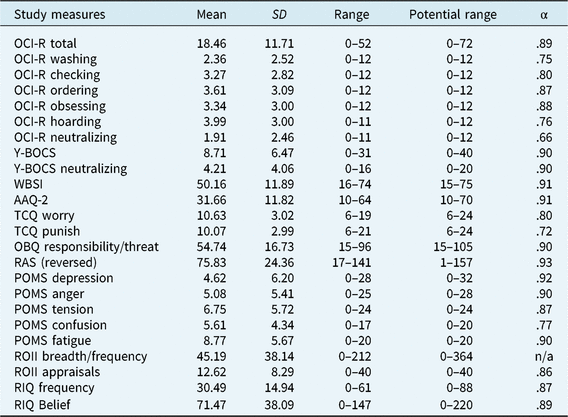
Table 1 displays descriptive information and Cronbach’s alpha values for the selected indicator variables in the study. All values were above 0.70, with the exception of OCI-R neutralizing, which was close at 0.66, indicating acceptable to excellent internal consistency for all scales.
Descriptive statistics and internal consistencies for indicator variables (n = 170)

OCI-R, Obsessive Compulsive Inventory Revised; Y-BOCS, Yale-Brown Obsessive Compulsive Scale; WBSI, White Bear Suppression Inventory; AAQ-2, Acceptance and Action Questionnaire; TCQ, Thought Control Questionnaire; OBQ-44, Obsessive Beliefs Questionnaire; RAS, Responsibility Attitudes Scale; RIQ, Responsibility Interpretations Questionnaire; POMS, Profile of Mood States; ROII, Revised Obsessional Intrusions Inventory.
Data screening
The data were screened for missing values. Cases were deleted if any individual questionnaire within this larger survey was more than 20% incomplete. After these cases were deleted (n = 15), 170 cases remained. The survey consisted of a total of 253 individual items. Of the 170 participants, two had three data points missing, five had two data points missing and, 27 had one data point missing. Median imputation was used to replace these missing values.
Due to their high combined kurtosis and skewness values, which were not improved by transformation, OCI-Rneut, POMSdep and POMSang were removed from the analysis.
Measurement model of inflated responsibility (Salkovskis) model
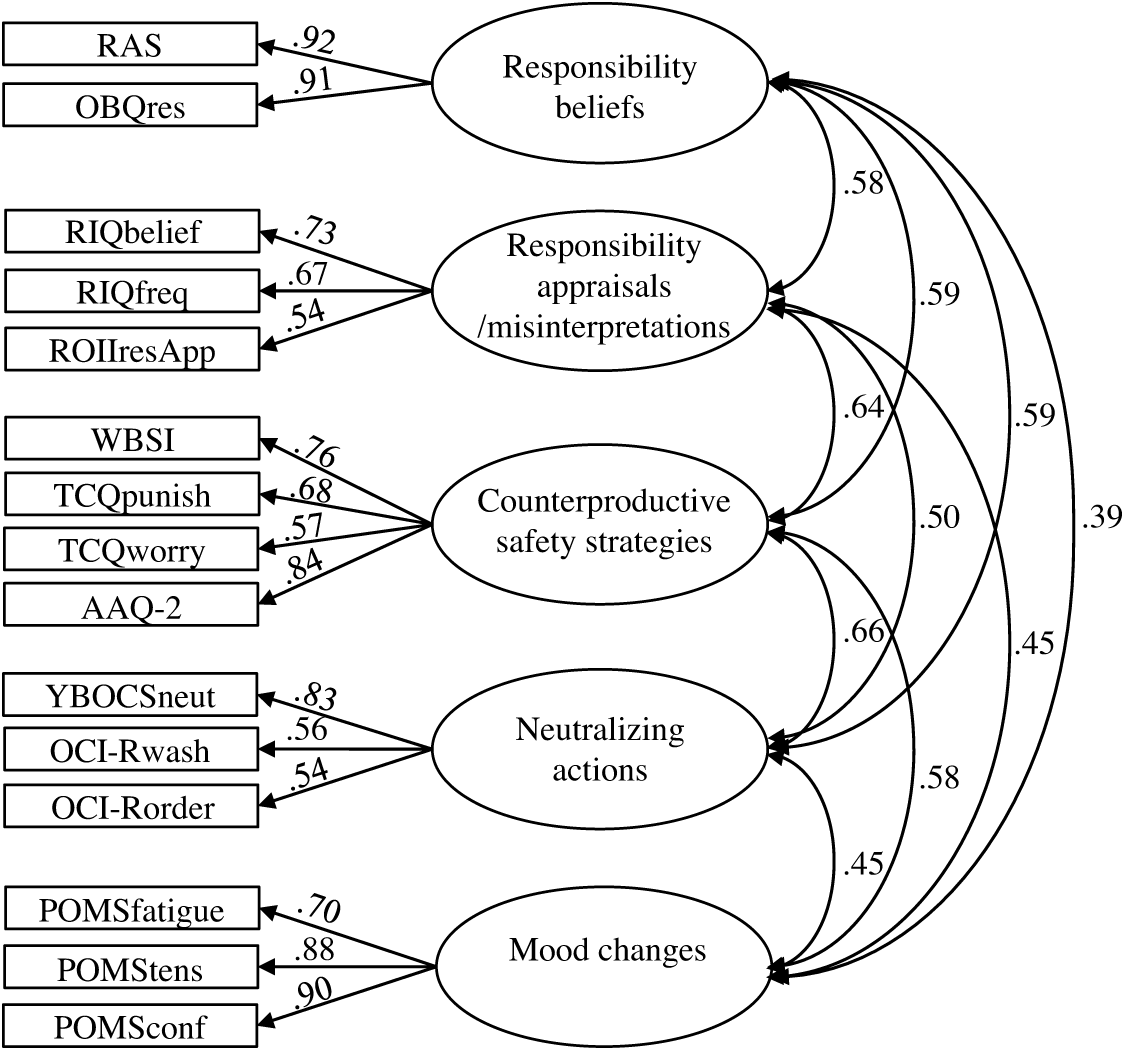
Figure 1 shows the measurement model, with standardized regression coefficients and correlations displayed.
Measurement model for the inflated responsibility model.

Reliability and validity
Reliability and validity were assessed by calculating composite reliability scores (CR), average variance extracted (AVE) and maximum shared variance (MSV). In line with Fornell and Larcker (Reference Fornell and Larcker1981), AVE was compared with MSV for each construct. If the AVE was greater than the MSV, then this would indicate discriminant validity. All latent variables showed adequate discriminant validity according to this method, with the exception of ‘neutralizing’, which had an AVE of .43 and an MSV of .44. Accordingly, the lowest loading indicator on this construct in the exploratory factor analysis was removed (OCI-Rcheck) and the analysis was re-run. This new measurement model showed good discriminant validity of latent constructs. Hair et al. (Reference Hair, Black, Babin and Anderson2010) have suggested that an AVE greater than 0.50 indicates good convergent validity, and a CR greater than 0.70 indicates sufficient reliability. All latent variables met both of these cut-offs, with the exception of ‘neutralizing’, which had sufficient reliability, but had an AVE score of 0.45. However, as this value was close to the suggested cut-off of 0.5, and the construct was theoretically important, reliable and distinct within our model, it was retained.
Model fit
Table 2 shows fit statistics for the inflated responsibility measurement model. As can be seen from the table, the model was a good fit for the data.
Fit statistics for the responsibility measurement model

Inflated responsibility structural model
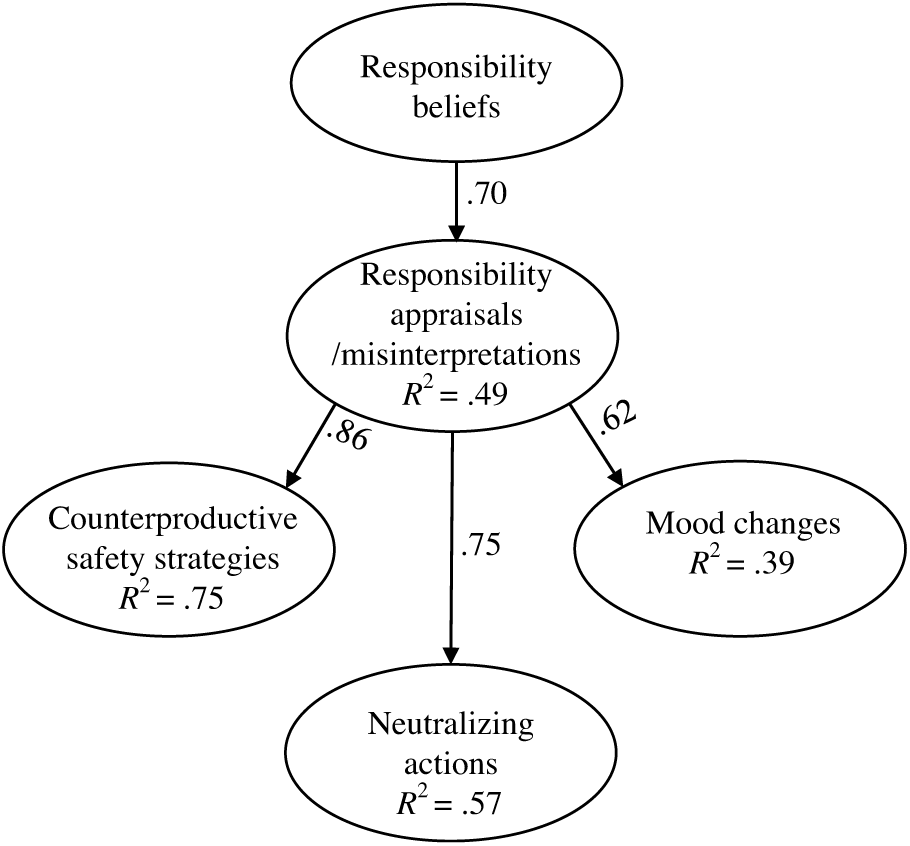
The inflated responsibility structural model was then specified and tested for fit. Figure 2 displays the final inflated responsibility model, with significant standardized coefficients reported. As can be seen, all predicted paths in the model were supported; responsibility beliefs predicted responsibility appraisals/misinterpretations (95% CI: 0.55–0.82, p < . 01), which in turn predicted counterproductive safety strategies (95% CI: 0.71–0.97, p < . 01), mood changes (95% CI: 0.47–0.75, p < . 01), and neutralizing actions (95% CI: 0.58–0.90, p < . 01). Table 3 displays model fit statistics. As this table shows, the model was a good fit for the data, according to RMSEA, CFI and PGFI values.
Structural model for the inflated responsibility model.

Fit statistics for the responsibility model

Mediation
The hypothesis that responsibility appraisals/misinterpretations of intrusions would mediate the relationship between responsibility beliefs and outcome measures was tested using 2000 bias corrected bootstrap samples in AMOS. The bootstrap indicated significant indirect paths from responsibility beliefs to mood (95% CI: 0.30–0.56, p < . 01), neutralizing (95% CI: 0.36–0.66, p < . 01), and counterproductive safety strategies (95% CI: 0.47–0.72, p < . 01). These results suggest that responsibility appraisals (i.e. misinterpretation of intrusive thoughts) mediated the relationship between responsibility beliefs and mood, neutralizing and counterproductive safety strategies.
A second model was tested which included additional direct paths from responsibility beliefs to mood, neutralizing and counterproductive safety strategies, to determine whether or not responsibility appraisals fully mediated the relationships between responsibility beliefs and symptoms. However, none of these direct paths was significant, and the Akaike’s Information Criterion (AIC) for this partial mediation model was more than 2 points higher than for the full mediation model (184.42), providing stronger support for the more parsimonious full mediation model (Burnham and Anderson, Reference Burnham and Anderson2004).
Discussion
The study provided empirical support for several key pathways within Salkovskis’ (Reference Salkovskis1999) model of OCD. The results support Salkovskis’ (Reference Salkovskis1985, Reference Salkovskis1999) assertion that dysfunctional appraisals of intrusive thoughts, in line with beliefs about responsibility, would lead to escalating thought control efforts, neutralizing behaviours, and negative mood changes. The results also suggest that the model is empirically plausible whenever these paths are considered concurrently, rather than solely in isolation. The results are in accordance with Pleva and Wade (Reference Pleva and Wade2006) who found a significant indirect effect of responsibility appraisals on the relationship between responsibility attitudes and symptoms of OCD. However, the findings of the current study and Pleva and Wade (Reference Pleva and Wade2006) both evidenced a significant indirect effect via misinterpretation of intrusions. In addition, the present study expanded upon the work of Pleva and Wade (Reference Pleva and Wade2006) by using multiple outcome measures to focus on Salkovskis’ proposed specific cognitive, affective and behavioural manifestations of OCD (i.e. neutralizing, counterproductive strategies, mood changes), beyond a single measure of symptoms. Consistent with prior work, responsibility appraisals predicted neutralizing (e.g. Shafran, Reference Shafran1997), counterproductive safety strategies (e.g. Morillo et al., Reference Morillo, Belloch and García-Soriano2007; Yorulmaz et al., Reference Yorulmaz, Gençöz and Woody2010), and mood changes (Kumar et al., Reference Kumar, Sharma, Kandavel and Janardhan Reddy2012).
Clinical implications
The present findings are supportive of the theoretical plausibility of Salkovskis’ (Reference Salkovskis1999) inflated responsibility model. By extension, this adds further support to the case for using this model as an aid to formulation and intervention with OCD, as suggested in national guidelines (NICE, 2005). Drawing attention to and helping clients to challenge responsibility beliefs and appraisals is likely to be of benefit in OCD, given the strong predictive relationships of these variables with the maladaptive outcome variables in this study. The findings are also consistent with the broader literature, which suggests that misinterpretation of intrusive thoughts is a core feature of OCD across cognitive models (Clark, Reference Clark2004; Frost and Steketee, Reference Frost and Steketee2002; Rachman, Reference Rachman1997; Salkovskis, Reference Salkovskis1999).
Limitations
The present study has several limitations. Three components of the Salkovskis model were not included in the structural analyses, namely early experiences, critical incidents, and attention bias as the indicators selected did not provide suitable data to construct latent variables, thus the study is not a full and comprehensive test. Crucially, the failure to develop appropriate latent variables in this study with these measures should not be interpreted as an indication that these variables are not relevant. The OCI-R neutralizing subscale and the POMS depression and anger subscales had to be dropped from the analyses due to combined skewness and kurtosis, which is a significant limitation of the study. However, the latent variables all had a broad range of relevant indicator variables, and the study is the most comprehensive test to date to our knowledge.
The latent variable of ‘neutralizing’ also had borderline discriminant validity. Given the conceptual overlap with ‘counterproductive safety strategies’, this is unsurprising. However, it was reliable, distinct and theoretically important, so these constructs were retained as separate in the analyses.
The study was cross-sectional and cannot confirm the causality of the processes under investigation. However, in accordance with prior research, the current results suggest that the model is theoretically plausible. The sample had limited representativeness as it was conducted on a student population, reducing its generalizability to people with OCD. It may be that the processes involved in the onset and maintenance of clinical OCD are not comparable to those in subclinical obsessive compulsive symptoms. However, several recent review articles have found strong support for the validity of using analogue samples in OCD research (Abramowitz et al., Reference Abramowitz, Fabricant, Taylor, Deacon, McKay and Storch2014; De Putter et al., Reference De Putter, Van Yper and Koster2017; Gagné et al., Reference Gagné, Kelly-Turner and Radomsky2018a).
A final limitation regards the focus on responsibility. Extensive research has implicated beliefs and phenomena additional to responsibility in OCD (OCCWG, 2005). The current study is deliberately focused on responsibility as this model has been arguably the most influential in cognitive therapy for OCD (Taylor et al., Reference Taylor, Abramowitz and McKay2007). It is possible that adding the other OCCWG beliefs and appraisals may increase the percentage of variance explained in the endogenous latent variables. However, this was beyond the scope of the current study, which was focused on the empirical plausibility of the inflated responsibility model.
Future directions
Several research avenues arise from the present results. First, the present model should be replicated in different samples, including clinical samples, to further verify validity (Preacher and Merkle, Reference Preacher and Merkle2012). The collection of additional data at multiple time points would strengthen the causal claims of the model, and in conjunction with data from different samples, would permit more confidence in the theory. Also, selecting more appropriate measures of early experiences and critical incidents may facilitate the development of latent variables of these constructs, thus permitting empirical testing of their proposed relationships in the model. In addition, developing latent variables of other implicated beliefs and appraisals (e.g. OCCWG, 2005) and testing these alongside responsibility beliefs and appraisals in a comprehensive model may help with the clarification of the most appropriate cognitive conceptualization of OCD.
Conclusions
The present study tested an approximation of Salkovskis’ (Reference Salkovskis1999) inflated responsibility model. The model was a good fit in the present sample, providing further empirical validation of Salkovskis’ (Reference Salkovskis1999) theory and supporting the therapeutic focus on responsibility beliefs and appraisals. Rachman’s (Reference Rachman1997) emphasis on ‘catastrophic misinterpretations’ of intrusive thoughts was also a crucial component, suggesting that the manner in which intrusive cognitions are related to is an essential feature in the maintenance of OCD, and should be a primary focus of intervention.
Acknowledgements
None.
Financial support
The study was completed as part of a PhD for the first author, which was funded by the Department for Employment and Learning, Northern Ireland.
Conflicts of interest
The authors have no conflicts of interest with respect to this study.
Ethics statement
Ethical approval was granted by the Queen’s University Belfast Ethics Committee.





Comments
No Comments have been published for this article.