Introduction
The majority of UK Armed Forces (AF) personnel cope well with the challenges of military service and successfully adapt to veteran life after they leave (Royal British Legion, 2014). For some, military service can negatively impact their mental health (Iversen & Greenberg, Reference Iversen and Greenberg2009; Stevelink et al., Reference Stevelink, Jones, Hull, Pernet, MacCrimmon, Goodwin and Wessely2018). Ensuring that the mental health needs of veterans are met is a UK Government priority (Defence Select Committee, 2018) and legal obligation is enshrined in the AF Covenant (Taylor, Reference Taylor2011). Despite this, there is little UK research into how the mental health of veterans compares to the general population.
Much international research has been conducted on the mental health of serving military personnel (Fear et al., Reference Fear, Jones, Murphy, Hull, Iversen, Coker and Wessely2010; Hooff et al., Reference Hooff, McFarlane, Davies, Searle, Fairweather-Schmidt, Verhagen and Hodson2014; Lee, Sudom, & Zamorski, Reference Lee, Sudom and Zamorski2013; Sundin et al., Reference Sundin, Herrell, Hoge, Fear, Adler, Greenberg and Bliese2014). UK comparisons made between serving personnel and working non-veterans found symptoms of common mental disorders (CMD) to be more common among serving military personnel (Goodwin et al., Reference Goodwin, Wessely, Hotopf, Jones, Greenberg, Rona and Fear2015). Alcohol misuse has also been found to be more common in UK military personnel than the general population with heavy drinkers less likely to change their drinking patterns over time (Fear et al., Reference Fear, Iversen, Meltzer, Workman, Hull, Greenberg and Wessely2007; Goodwin et al., Reference Goodwin, Norton, Fear, Jones, Hull, Wessely and Rona2017; Thandi et al., Reference Thandi, Sundin, Ng-Knight, Jones, Hull, Jones and Fear2015).
Though studies from other countries have shown veterans to have poorer mental health than non-veterans (Hoerster et al., Reference Hoerster, Lehavot, Simpson, McFall, Reiber and Nelson2012; Oster, Morello, Venning, Redpath, & Lawn, Reference Oster, Morello, Venning, Redpath and Lawn2017), findings from the few UK studies comparing military veterans and non-veteran mental health have suggested that there is little difference between the two groups (Murphy, Palmer, Westwood, Busuttil, & Greenberg, Reference Murphy, Palmer, Westwood, Busuttil and Greenberg2016; Woodhead et al., Reference Woodhead, Rona, Iversen, MacManus, Hotopf, Dean and Fear2011a, Reference Woodhead, Rona, Iversen, MacManus, Hotopf, Dean and Fearb). Analysis restricted to a representative sample of post-national service veterans (n = 257) found no statistically significant difference in the prevalence of poor mental health between veterans and non-veterans (Woodhead et al., Reference Woodhead, Rona, Iversen, MacManus, Hotopf, Dean and Fear2011b). However, the study utilised a small sample of veterans, few of whom had served while recent military operations were ongoing in Iraq and Afghanistan. Recent estimates suggest that probable post-traumatic stress disorder (PTSD) is now higher among UK veterans compared to those in service (Stevelink et al., Reference Stevelink, Jones, Hull, Pernet, MacCrimmon, Goodwin and Wessely2018). Whether it is also higher compared to the general population remains uncertain, as is our understanding of the manifestation of PTSD; veterans may experience more severe or differing symptoms than non-veterans (Vasterling et al., Reference Vasterling, Proctor, Friedman, Hoge, Heeren, King and King2010; Wilkins, Lang, & Norman, Reference Wilkins, Lang and Norman2011).
This study compares the prevalence of CMD, PTSD and alcohol misuse, and the associated domains of PTSD and alcohol misuse, in current cohorts of veterans who served at the time of recent conflicts and in non-veterans using large, nationally representative samples. Socio-demographic characteristics such as employment status and socio-economic grade are commonly associated with mental health (Ostler et al., Reference Ostler, Thompson, Kinmonth, Peveler, Stevens and Stevens2001), these factors will be adjusted for in our analysis and prevalence estimates will be made in working and non-working groups as well as overall. Analyses will also examine if there are gender differences in how veterans compare to equivalent non-veterans.
This study aims to:
(1) Establish how the prevalence of mental health problems and domains compare for veterans and non-veterans, by gender, including individual comparisons for working and non-working groups.
(2) Examine the association of socio-economic grade, employment status, education and marital status with mental health, and how these associations differ between veterans and non-veterans.
Methods
Data
Veterans
Our veteran sample was taken from phase 3 of the King's Centre for Military Health Research (KCMHR) cohort study, a large ongoing study of UK military personnel assessing the physical and mental health consequences (CMD, PTSD and alcohol misuse) of military service and deployment. Previous waves of the cohort were collected between June 2004 and March 2006 (phase 1) (Hotopf et al., Reference Hotopf, Hull, Fear, Browne, Horn, Iversen and Wessely2006), and November 2007 and September 2009 (phase 2) (Fear et al., Reference Fear, Jones, Murphy, Hull, Iversen, Coker and Wessely2010). This study uses the most recent phase (phase 3) for which data was collected between October 2014 and December 2016 with an overall response rate of 44% (Stevelink et al., Reference Stevelink, Jones, Hull, Pernet, MacCrimmon, Goodwin and Wessely2018). Sample weights were calculated as the inverse probability of an individual being sampled from a specific subpopulation (TELIC, Era, HERRICK, phase two replenishment, phase three replenishment) and specific engagement type (regular or reserve). Response weights were generated to account for non-response and calculated as the inverse probability of responding once sampled, driven by factors shown empirically to predict the response (gender, age, rank, service, engagement type, serving status, subpopulation and the interaction between subpopulation and engagement type). The sample weights and response weights were multiplied together to make a single weight. The weighted analyses provided valid results under the assumption that the data were missing at random and that the observed variables modelled to drive non-response were correctly identified (see (Stevelink et al., Reference Stevelink, Jones, Hull, Pernet, MacCrimmon, Goodwin and Wessely2018)).
This study defines veterans as those who have served in the military as a regular and have since left. Those still engaging in active service, and those who only served as reservists were excluded from these analyses.
Non-veterans (general population)
Our non-veteran sample was taken from two surveys; the 2014–2016 UK Household Longitudinal Study (UKHLS) and the 2014 Adult Psychiatric Morbidity Survey (APMS). The use of two surveys was necessary as mental health assessments needed to be made using the same measures of PTSD, CMD and alcohol misuse as used by the KCMHR cohort study to ensure comparability – UKHLS contains the same measure of CMD, while APMS contains the same measures of PTSD and alcohol misuse. No single general population survey with all three measures was available.
The UKHLS is the largest panel survey in the world. Launched in 2008 as a continuation of the British Household Panel Survey (Lynn, Reference Lynn2006), the UKHLS follows the original sample and also includes a newly-selected General Population Sample (GPS) of 25 500 responding households across the UK. The GPS is based upon a proportionately stratified, equal probability (clustered) sample of residential addresses drawn to a uniform design throughout England, Scotland and Wales (Lynn, Reference Lynn2006). Wave 6 of UKHLS (2014–2016) achieved an individual adult response rate of 65%.
The APMS provides data on the prevalence of both treated and untreated psychiatric disorders in the English adult population (aged 16 yrs and over). The sample for APMS 2014 was designed to be representative of the population living in private households in England, adopting a multi-stage stratified probability sampling design (McManus, Bebbington, Jenkins, & Brugha, Reference McManus, Bebbington, Jenkins and Brugha2016) and achieved a response rate of 57%. Though both datasets included optional weights, neither were used in this analysis.
Measures
Mental health and alcohol misuse
Mental health and alcohol misuse were evaluated using the 12-item GHQ-12 (Goldberg et al., Reference Goldberg, Gater, Sartorius, Ustun, Piccinelli, Gureje and Rutter1997) to assess CMD, the 17-item National Centre for PTSD Checklist – Non-veteran version (PCL-C) (Weathers, Litz, Herman, Huska, & Keane, Reference Weathers, Litz, Herman, Huska and Keane1994) to assess PTSD, and the 10-item World Health Organization's Alcohol Use Disorders Identification Test (AUDIT) to identify probable alcohol misuse (Babor, Higgins-Biddle, Saunders, & Monteiro, Reference Babor, Higgins-Biddle, Saunders and Monteiro2001; Fear et al., Reference Fear, Iversen, Meltzer, Workman, Hull, Greenberg and Wessely2007).
GHQ-12 symptoms were rated on a four-point scale. A bi-modal scoring method of 0–0–1–1 was used (Goldberg et al., Reference Goldberg, Gater, Sartorius, Ustun, Piccinelli, Gureje and Rutter1997). Possible scores ranged from 0 to 12 with a cut-off of 4 or more to represent probable CMD (Goldberg et al., Reference Goldberg, Gater, Sartorius, Ustun, Piccinelli, Gureje and Rutter1997). PCL-C symptoms were rated 1–5. Possible scores ranged from 17 to 85 with a cut-off point of 50 or more to assess caseness (Weathers et al., Reference Weathers, Litz, Herman, Huska and Keane1994). DSM-IV domains: re-experiencing, avoidance and hyperarousal were also assessed (Taylor, Koch, Kuch, Crockett, & Passey, Reference Taylor, Koch, Kuch, Crockett and Passey1998). The study is restricted to the use of DSM-IV criteria as PCL-C was the only measure of PTSD included in APMS.
AUDIT scores range from 0 to 40 and a cut off of 16 or more was used to assess caseness (Babor et al., Reference Babor, Higgins-Biddle, Saunders and Monteiro2001; Fear et al., Reference Fear, Iversen, Meltzer, Workman, Hull, Greenberg and Wessely2007). The AUDIT's three mutually exclusive domains were also examined (Babor et al., Reference Babor, Higgins-Biddle, Saunders and Monteiro2001):
• Hazardous drinking: a pattern of alcohol consumption that increases the risk of harmful consequences for the user or others – based on frequency and quantity of alcohol consumption.
• Evidence of present harm: alcohol consumption that results in consequences to physical and mental health – indicated by drinking-related injuries, blackouts and/or guilt as well as concern from others.
• Dependant drinking: a strong desire to consume alcohol and diminished control over its use despite harm-full consequences – indicated by impaired control over drinking, increased salience of drinking and drinking in the morning.
Socio-demographic characteristics
The socio-demographic characteristics of veterans and non-veterans were examined using data on gender, age in years (22–34, 35–44, 45–54, 55–64, 65–74), level of education (no qualification, GCSE or equivalent, A-level or degree level), marital status (married/in a relationship, single or divorced/separated/widowed), and employment status (employed part-time/full-time, unemployed, retired, long-term ill/disabled or economically inactive).
A dichotomised version of employment status was used in our comparison of mental health prevalence (to assess mental health differences by veteran status in working and non-working groups) with employed part-time/full-time defined as working, and all other responses defined as non-working.
A five-category NS-SEC social grade variable (Office for National Statistics, n.d.) was available in both the APMS and UKHLS datasets. This data was not available in the KCMHR cohort and as such, veterans were manually assigned an NS-SEC social grade based on their reported job title. A total of 6.1% of employed veterans were unable to assign an NS-SEC social grade as their job title was not reported (n = 195), or their job title was not sufficiently detailed to allow for a classification (n = 223).
Statistical analysis
Restricting the military sample
Of the 8094 personnel who participated in phase 3 of the KCMHR cohort study, 3008 met our definition of a veteran (a former regular who is no longer affiliated with the military). Thirty-five veterans were excluded as information on employment status was not provided. Further exclusions were made during mental health comparative analysis as some veterans did not respond to any items on the respective scale (GHQ n = 56, PCL-C n = 67, AUDIT n = 64). Our veteran sample size ranged from 2906 to 2917 depending on the mental health outcome. The sample size was reduced (n = 418) for models where social grade (NS-SEC) of employed veterans was accounted for.
Matching samples on age and gender
To enable comparisons between veterans and non-veterans, our non-veteran samples were reweighted to match on age and gender with the veteran sample.
For our comparison of CMD across veterans and non-veterans, KCMHR and UKHLS data were combined into a single dataset. UKHLS participants outside the age range of our veteran sample (22–74 years) were removed from the sample (n = 8065) as were those who reported currently or previously serving in the AF (n = 75). The remaining sample of 22 760 was reweighted to match the exact age and gender of veterans in the KCMHR data using entropy balancing [a multivariate reweighting method described in (Hainmueller, Reference Hainmueller2012)] to ensure comparability.
Entropy balancing allows the researcher to obtain a high degree of covariate balance between samples, it is also versatile and retains valuable information in the pre-processed data by allowing the unit weights to vary smoothly across units. Entropy balancing is only problematic if misused. Imposing a large number of constraints or setting unrealistic balance constrains with small and/or limited data can lead to inflated standard errors. To avoid this, we have only imposed two constraints (age and gender) and have used large datasets without unrealistic balance constraints.
Separate analyses were conducted for comparisons of PTSD and alcohol misuse in veterans and non-veterans where KCMHR and APMS data were combined into a single dataset. APMS participants outside the age range of the veteran sample (n = 1157) or who reported ever serving in the AF (n = 518) were excluded. The remaining sample of 5871 was re-weighted to match on age and gender using entropy balancing.
For each set of analysis (KCMHR v. UKHLS & KCMHR v. APMS) our veteran sample was weighted for non-response (Stevelink et al., Reference Stevelink, Jones, Hull, Pernet, MacCrimmon, Goodwin and Wessely2018), and entropy weights were applied to the respective non-veteran samples to ensure age and gender comparability. All proportions and odds ratios reported in this study are weighted, frequencies are unweighted.
Analysis
(1) Prevalence of GHQ-12, PCL-C and AUDIT caseness were calculated, and adjusted logistic regression analyses used to compare veterans and non-veterans in working and non-working groups after accounting for socio-demographic characteristics (age, gender, education, marital status, employment and social grade). These comparisons were stratified by gender, as gender moderated the effect of veteran status on mental health caseness.
(2) Caseness for AUDIT and PCL-C domains were compared between veterans and non-veterans using unadjusted and logistic regressions (adjusting for socio-demographic characteristics).
(3) Using logistic regression, the association between socio-demographic characteristics and mental health caseness was assessed in veteran and non-veteran samples separately. Interaction effects were tested using a Wald test to compare models with and without an interaction term to determine whether sociodemographic characteristics moderated the effect of being a veteran (compared to not being a veteran) on mental health outcomes.
(4) Sensitivity analyses were conducted in males and females separately to examine differences between veterans and non-veterans, stratifying the samples based upon the veterans’ military experience. The veteran sample was stratified by i) deployment to Iraq or Afghanistan (yes, no) and ii) restricted to only those who were deployed, whether they had deployed in a combat role (yes, no) (in males only). Veterans within each of these strata were matched on age and gender to non-veterans, and the prevalence of probable CMD, PTSD and alcohol misuse was compared using logistic regression before and after adjusting for education and marital status (as indictors of socio-economic status and a proxy for social support).
All data were analyzed using the statistical software package Stata (version 14).
Results
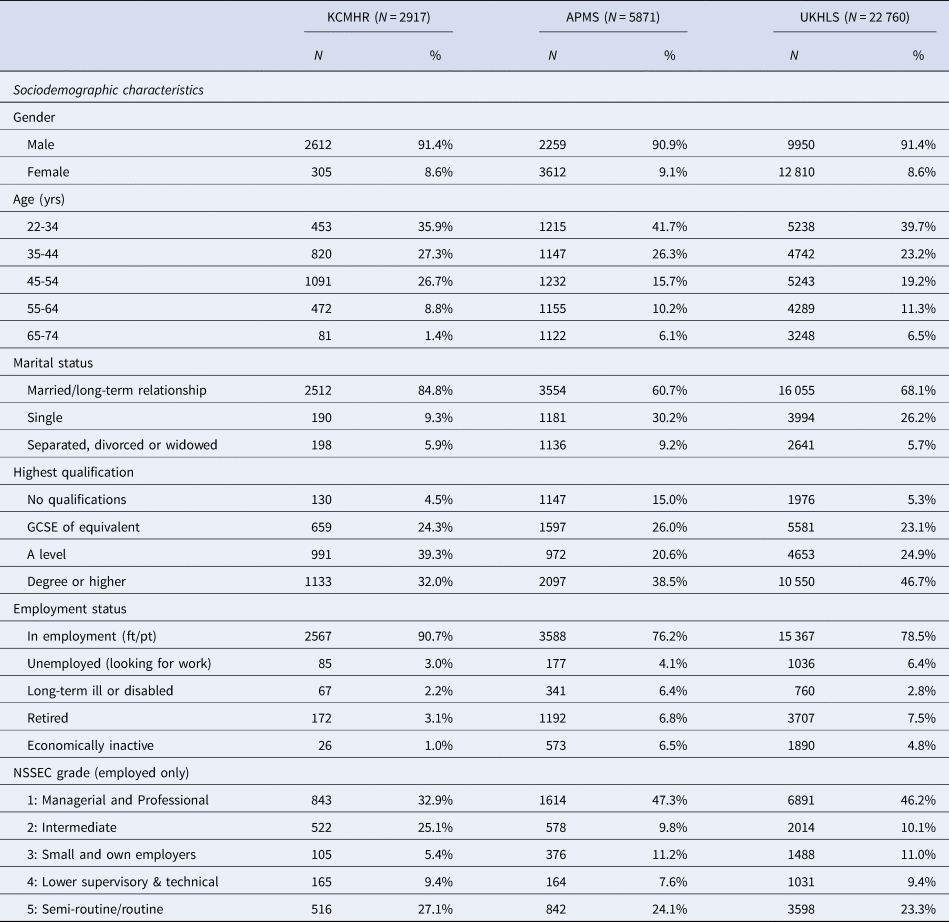
Table 1 shows the sociodemographic characteristics for KCMHR, APMS and UKHLS samples after entropy balancing.
Sociodemographic characteristics for veteran and general population samples

Sample size may vary slightly due to missing data in outcome variables.
Mental health prevalence and employment status
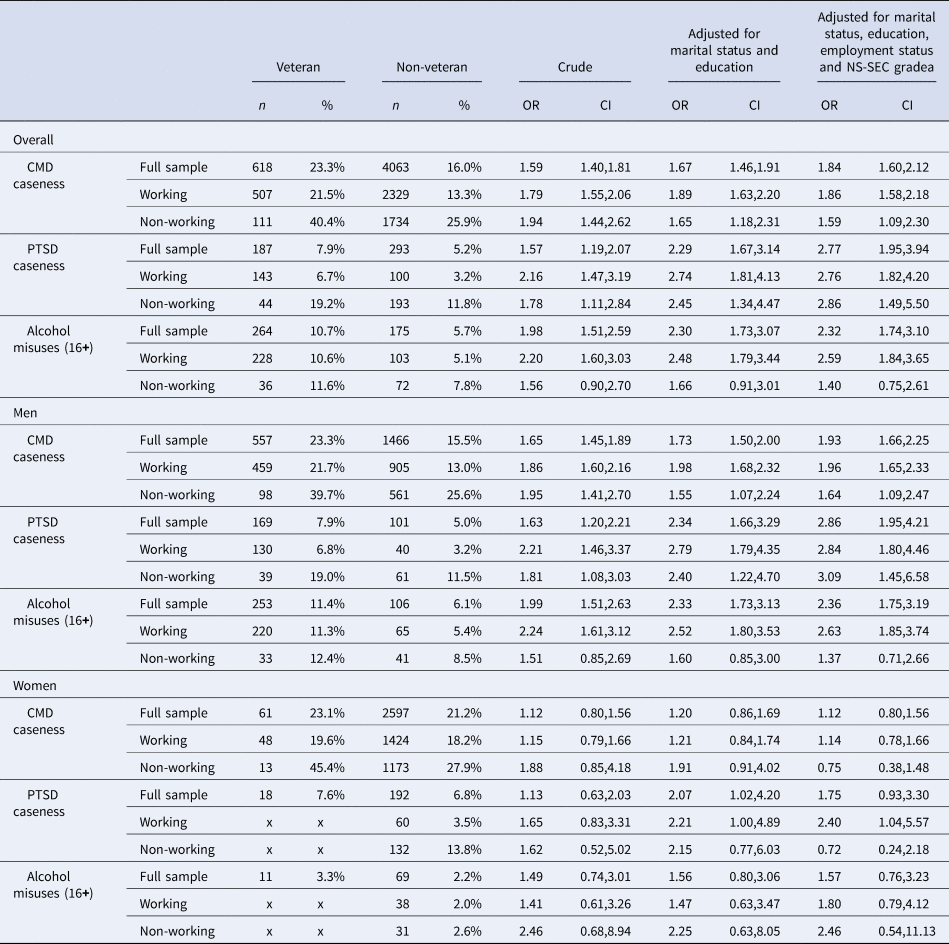
Overall, veterans report significantly higher prevalence of CMD (23% v. 16%), PTSD (8% v. 5%) and alcohol misuse (11% v. 6%) than non-veterans (see Table 2). Caseness for CMD and PTSD is also significantly lower for working people compared to non-working people for both veterans and non-veterans.
Sample on mental health caseness by employment status

x = Suppressed due to low n (threshold is 10).
a = NSSEC grade only adjusted for in working groups.
Amongst men, being a veteran was significantly associated with reporting probable CMD for both working and non-working groups. The strength and significance of these associations remain largely unchanged when adjusting for socio-demographic characteristics. There was no significant difference in CMD prevalence between female veterans and female non-veterans regardless of the working group.
Male veterans in both working and non-working groups were significantly more likely to report probable PTSD than non-veterans. Female veterans in employment were significantly more likely to report probable PTSD than employed women from the general population (there was no significant difference amongst non-working women).
Only employed male veterans were significantly more likely to report alcohol misuse than their non-veteran counterparts. Being a veteran was not found to be associated with reporting alcohol misuse for women, regardless of the working group.
Domains
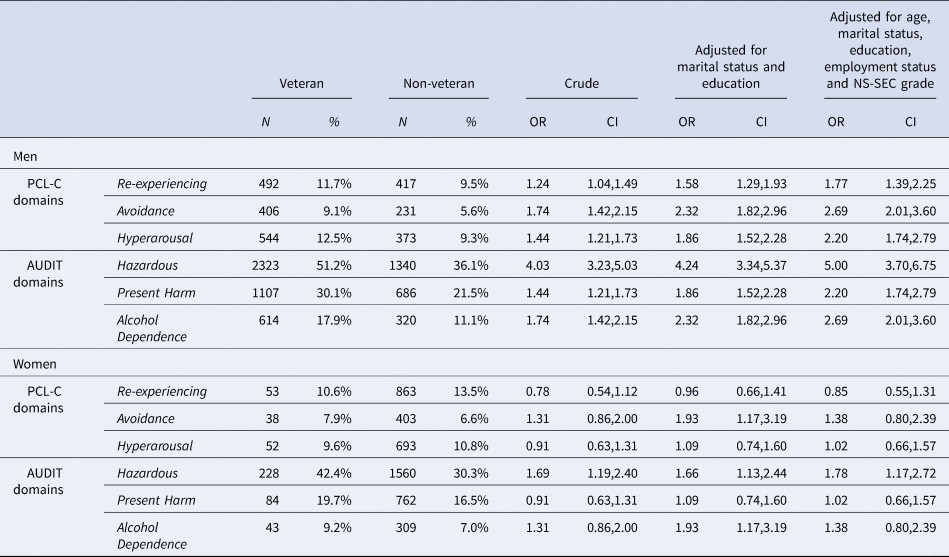
Male veterans were significantly more likely to meet criteria for all PTSD domains. There was no statistically significant association between being a veteran and any PTSD domain for women. Male veterans were significantly more likely to meet the criteria for hazardous, dependent and harmful drinking than non-veterans. Female veterans were significantly more likely to report symptoms of hazardous drinking only (compared to female non-veterans) (see Table 3).
Mental health domain prevalence in veterans and non-veterans

Sociodemographic characteristics associated with poor mental health
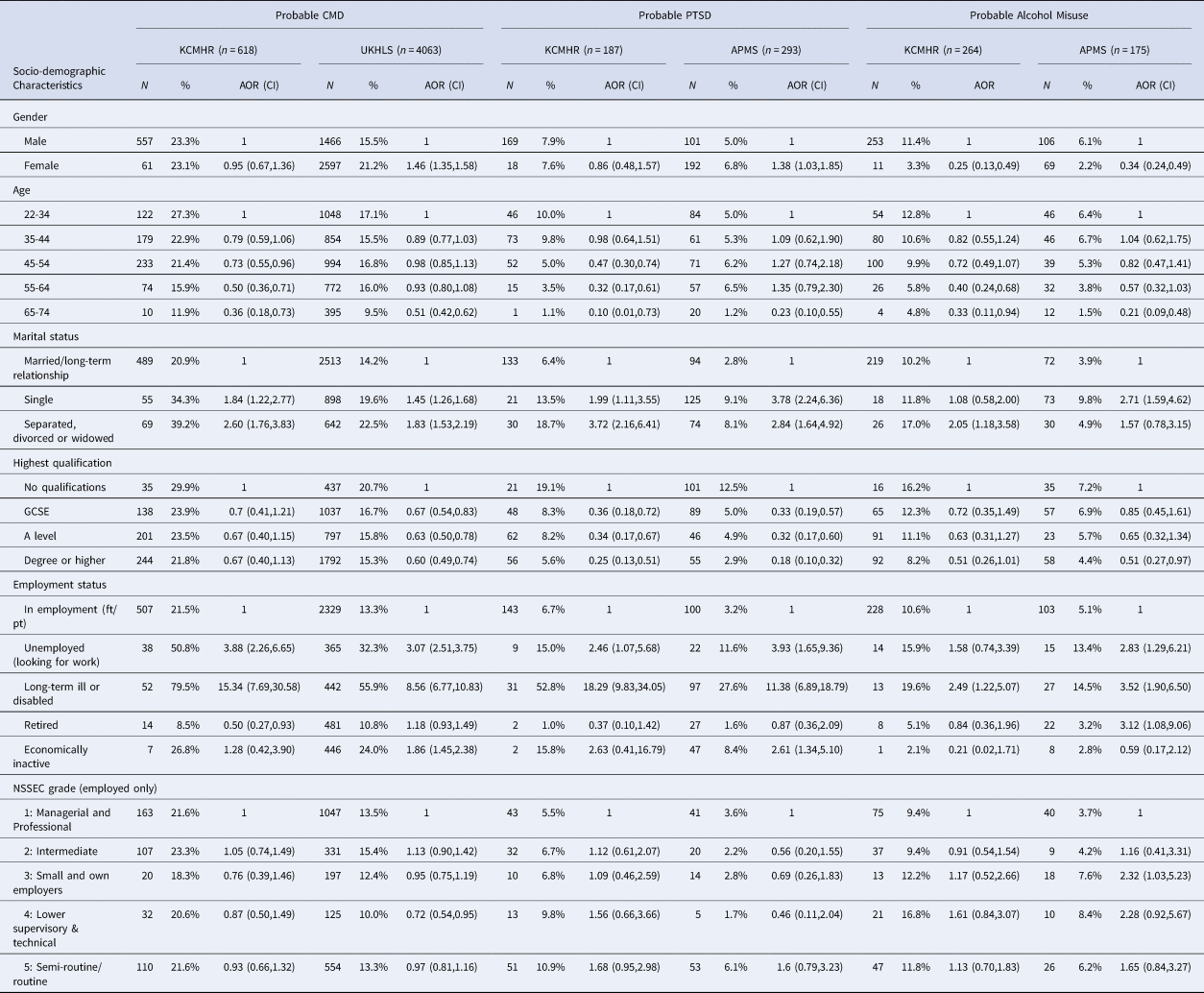
Table 4 shows the age and gender-adjusted associations between socio-demographic characteristics and mental health caseness for veterans and non-veterans separately.
Regression analysis to show the association of socio-demographic characteristics on mental health for veterans and non-veterans separately

AOR = adjusted for age and gender.
Common mental disorders
Employment status (p < 0.01, χ2 = 12.9, df = 4), gender (p < 0.005, χ2 = 9.2, df = 1) and age (p < 0.05, χ2 = 11.1, df = 4) were found to significantly moderate the effect of being a veteran on CMD.
Being unemployed and long-term ill or disabled was associated with CMD caseness for both veterans and non-veterans, although the size of the effect was larger for veterans. Amongst the general population, gender was significantly associated with probable CMD, with women having greater odds of meeting caseness criteria. There was no statistically significant association between gender and CMD caseness amongst veterans. Veterans aged 45+ years were less likely to meet the threshold for CMD caseness than younger participants, though, for non-veterans, only those aged 65+ years were significantly less likely to indicate probable CMD.
PTSD
Marital status (p < 0.01, χ2 = 8.20, df = 2) and age (p < 0.01, χ2 = 15.42, df = 4) were found to significantly moderate the effect of being a veteran on PTSD. For both samples, being single was significantly associated with probable PTSD compared to being in a relationship, although the association was significantly smaller for veterans. Veterans aged 44–74 yrs were less likely to meet criteria for PTSD caseness than participants aged 22–44 yrs, as were non-veterans aged 65–74 yrs.
Although no statistically significant interactions were found for level of education or employment status, having any educational qualification was associated with a decreased likelihood of meeting criteria for PTSD caseness for both samples compared to having no qualifications. Additionally, for both samples, compared to being employed, being unemployed and long-term ill or disabled was associated with PTSD caseness.
Alcohol misuse
Marital status significantly moderated the effect of being a veteran on alcohol misuse (p < 0.01, χ2 = 14.26, df = 2). For non-veterans, being single (compared to being in a relationship) was associated with alcohol misuse. For veterans, being separated, divorced or widowed (compared to being in a relationship) was associated with alcohol misuse.
No statistically significant interactions were found for employment, though for both samples, participants unable to work, because they were long-term ill or disabled, were more likely to misuse alcohol (compared to those in employment).
Sensitivity analysis
Results of our sensitivity analysis showed that male veterans were significantly more likely than non-veterans of the same age to exhibit probable CMD and alcohol misuse regardless of i) whether or not they had deployed and ii) whether or not they were deployed in a combat role (see online Supplementary Table S1).
When analyses were restricted only to veterans who had deployed, we found male veterans were significantly more likely than non-veterans of the same age to meet criteria for PTSD caseness. However, when comparing male veterans who had not been deployed with non-veterans of the same age, we found no significant difference between the two groups in the proportion of those who met criteria for probable PTSD. Male veterans were also significantly more likely than non-veterans to meet criteria for PTSD caseness when restricted to veterans deployed in a combat role. Prior to adjusting for education and marital status, we found no difference between veterans who were deployed in a non-combat role and non-veterans of the same age. After making this adjustment however, male veterans were significantly more likely to meet criteria for PTSD than non-veterans of the same age.
We found no statistically significant differences between female veterans and non-veterans when accounting for deployment.
Discussion
This study has compared alcohol misuse, PTSD and CMD in a large representative sample of recent military service leavers to the general population. We found that, overall, UK veterans who served at the time of recent military operations were more likely to exhibit probable CMD, PTSD and alcohol misuse than non-veterans. These findings persist after adjusting for socio-demographic characteristics. When stratifying by working status, working veterans compared to working non-veterans were at a significant disadvantage for all three outcomes whereas non-working veterans compared to non-working non-veterans were more likely to report probable CMD and PTSD. Stratifying by gender showed that the negative impact of being a veteran on mental health and alcohol misuse was restricted to male veterans. Being ill or disabled was associated with CMD and PTSD for both veterans and non-veterans.
The only previous UK-wide mental health comparison study between veterans and non-veterans – Woodhead et al. (Reference Woodhead, Rona, Iversen, MacManus, Hotopf, Dean and Fear2011a, Reference Woodhead, Rona, Iversen, MacManus, Hotopf, Dean and Fearb) – found no significant difference between the two groups. Woodhead et al. (Reference Woodhead, Rona, Iversen, MacManus, Hotopf, Dean and Fear2011a, Reference Woodhead, Rona, Iversen, MacManus, Hotopf, Dean and Fearb) utilised a previous cohort of veterans, few of whom had served during recent military operations in Iraq and Afghanistan. This might suggest that the mental health disparity between veterans and non-veterans in the current study could have resulted from deployment to these recent operations. The findings of our sensitivity analysis partially support this hypothesis. They show that while veterans who had been deployed to Iraq or Afghanistan were more likely to meet criteria for probable PTSD than non-veterans of the same age, veterans who had not been deployed were not more likely to meet criteria. Male veterans were more likely to meet criteria for probable CMD and misuse of alcohol than non-veterans of the same age regardless of whether they were deployed to Iraq or Afghanistan, or whether they were deployed in a combat role. Deployment to Iraq or Afghanistan therefore may not be the only factor contributing to the increased levels of CMDs and alcohol misuse in male veterans. It is possible that other vulnerability factors, such as childhood adversity (Iversen et al., Reference Iversen, Fear, Simonoff, Hull, Horn, Greenberg and Wessely2007), family separations, work-related injuries, struggling to adapt to civilian life may explain the difference for CMD and alcohol use (the latter may also reflect a continuation of heavy drinking from military life). Alternatively, our contradictory findings to Woodhead et al. (Reference Woodhead, Rona, Iversen, MacManus, Hotopf, Dean and Fear2011b) could be due to different age composition of the sample used in this study or recent changes made to the process of leaving the military.
There are notable gender differences in our findings. Among non-veterans, CMD and PTSD prevalence were greater in women compared to men [in line with recent estimates (McManus et al., Reference McManus, Bebbington, Jenkins and Brugha2016)]. For veterans, the prevalence of CMD and PTSD was significantly higher than non-veterans for men only. This is partially supported by some PTSD studies which have found no gender differences in military and police samples (Pole et al., Reference Pole, Best, Weiss, Metzler, Liberman, Fagan and Marmar2001; Sutker, Davis, Uddo, & Ditta, Reference Sutker, Davis, Uddo and Ditta1995). However, the finding that female veterans are no more likely to have CMD than male veterans contradicts USA and previous UK studies (Haskell et al., Reference Haskell, Gordon, Mattocks, Duggal, Erdos, Justice and Brandt2010; Stansfeld, Rasul, Head, & Singleton, Reference Stansfeld, Rasul, Head and Singleton2011). Overall, for CMD and PTSD, caseness was generally much lower in working people (veterans and non-veterans) compared to non-working people, and specifically in working veterans compared to non-working non-veterans.
Both male and female veterans are more likely to report symptoms of drinking at a hazardous level than their non-veteran counterparts. Furthermore, male veterans are more likely to report symptoms of dependence and harmful drinking than men of the same age. These findings, combined with previous studies, indicate that a culture of excessive and persistent drinking exists in the military compared to the general population (Fear et al., Reference Fear, Iversen, Meltzer, Workman, Hull, Greenberg and Wessely2007; Goodwin et al., Reference Goodwin, Norton, Fear, Jones, Hull, Wessely and Rona2017). This suggests that drinking habits acquired before or during military service endure after transitioning into non-veteran life. A recent UK study has also found hazardous drinking to be prevalent amongst female spouses of military personnel (Gribble, Goodwin, & Fear, Reference Gribble, Goodwin and Fear2019), suggesting that there are implications of the drinking culture in females both within and connected to the AF. This is important as evidence suggests that women may be particularly susceptible to alcohol-related physical and mental harm (Erol & Karpyak, Reference Erol and Karpyak2015). Working and non-working veterans report similarly high levels of alcohol misuse. Unlike in the non-veteran sample, employment is not associated with reduced alcohol misuse in veterans. Further work is needed to understand this finding, such as exploration of the type of work undertaken by veterans compared to non-veterans.
Unemployed and ill or disabled veterans were more likely to exhibit probable CMD and PTSD than veterans in employment. This is supported by previous research which has found poor mental health to be high in unemployed veterans compared to those in employment (Hamilton, Williams, & Washington, Reference Hamilton, Williams and Washington2015; Harden & Murphy, Reference Harden and Murphy2018). A high prevalence of CMD has also been identified among veterans with a physical impairment (Stevelink et al., Reference Stevelink, Malcolm, Mason, Jenkins, Sundin and Fear2015). Further longitudinal analysis is needed, not only to unpick the causal relationship between employment and mental health status for veterans but to determine if physical health affects veteran's ability to work and whether this in turn negatively impacts their mental health.
Implications
Findings from this study demonstrate that veterans (especially male veterans) are at a disadvantage to non-veterans in respect of their mental health. In particular, it appears that service leavers may benefit from interventions targeting alcohol misuse, with recent evidence suggesting that electronic interventions could be suitable (Leightley, Puddephatt, Goodwin, Rona, & Fear, Reference Leightley, Puddephatt, Goodwin, Rona and Fear2018). This is especially important for those who had harmful and persistent drinking habits during their military service. Veterans who are unable to work for health reasons may also benefit from additional social support. Being removed from the support and structure of military life and unable to work, they are at risk of becoming isolated which in turn can negatively impact their health (Elovainio et al., Reference Elovainio, Hakulinen, Pulkki-Råback, Virtanen, Josefsson, Jokela and Kivimäki2017; Hatch et al., Reference Hatch, Harvey, Dandeker, Burdett, Greenberg, Fear and Wessely2013).
Strengths and limitations
This study utilises data representative of veterans who served in the UK military during recent military operations in Afghanistan and Iraq, allowing us to gain an insight into the mental health of recent service leavers compared to non-veterans.
This study does have some limitations. Results are derived from self-reported data and geographic distribution of participants could not be accounted for. Many of the veterans who participated in phase 3 of the KCMHR cohort left service around the time of their participation in phase 1 (2004–2006), the results of our study are therefore not necessarily representative of veterans who left service more than 12 years ago. These veterans also are more likely to be aware of the most common symptoms of PTSD than civilians due to ongoing efforts in the military to increase awareness and reduce stigma, which in some cases could have resulted in veterans being more likely to have reported symptoms. We acknowledge this study is restricted to using DSM-IV criteria to assess probable PTSD domain caseness, in order to use comparable measures across populations. The general population surveys utilised in this survey used different methods of data collection than the KCMHR study. APMS was conducted in England only while UKHLS and KCMHR were conducted UK-wide. Due to the lack of available data in the non-veteran population, we were also unable to examine the potential moderating effect of childhood adversity on the association between military service and mental health. Furthermore, due the to the small number of older veterans, entropy balancing may not have been fully able (in some cases) to resolve the differences between the samples. Finally, our veteran sample is only 10% female (n = 305), and whilst this is representative of the UK veteran population, some of our analysis restricted to females may be underpowered.
Conclusion
It is only by understanding the relative mental health burden experienced by veterans that the Government can ensure that they are at ‘no disadvantage’ which is a key principle of the AF covenant (Taylor, Reference Taylor2011). Our findings demonstrate that, whilst the same sociodemographic groups within the veteran and non-veteran populations seemed to have an increased risk of mental health problems (e.g. those who were unemployed), male veterans, in particular, appear to be at a distinct disadvantage compared to those who have never served.
Supplementary material
The supplementary material for this article can be found at https://doi.org/10.1017/S0033291720001944.
Author contributions
DM and LG conceived the study concept and design with input from NF and NG. RR, DM and LG contributed to the design of the analysis. MJ curated the military dataset utilised in this study. RR conducted the statistical analysis and wrote the article supervised by DM and LG. All authors provided feedback on the manuscript.
Acknowledgements
We would like to thank the Forces in Mind Trust for funding this study (FiMT16/0304K).
The KCMHR study was funded by the UK Ministry of Defence.
APMS 2014 was commissioned by NHS Digital, funded by the Department of Health, and carried out by NatCen Social Research and the University of Leicester.
UKHLS is primarily funded by the Economic Social Research Council but is also supported both financially and in kind by a wide range of other co-funding organisations detailed here: https://www.understandingsociety.ac.uk/about/funders
The funders of the study had no role in study design, data analysis, or data interpretation. The corresponding author had full access to all the data in the study and had final responsibility for the decision to submit for publication. Forces in Mind Trust (FiMT16/0304 K).
Conflict of interest
NTF is a trustee of a charity providing support to veterans and their families and is a member of IGARD. DM is a Lead Consultant Psychiatrist for an NHS veteran mental health service for London and the South East of England. NG is the Royal College of Psychiatrists lead for military health.
Ethical standards
This study received ethical approval from the Proportionate Review Sub-committee of the West Midlands–- South Birmingham Research Ethics Committee (REC reference:17/WM/0147, IRAS project ID: 224664).
Ethical approval for the KCMHR study was granted by the UK Ministry of Defence Research Ethics Committee (reference: 448/MODREC/13) and the King’s College London Psychiatry Nursing and Midwifery Research Ethics Subcommittee (reference: PNM/12/13–169).
Ethical approval for the ongoing UKHLS survey was obtained from University of Essex Ethics Committee and is detailed in the UKHLS user guide, available at: https://www.understandingsociety.ac.uk/sites/default/files/downloads/documentation/mainstage/user-guides/mainstage-user-guide.pdf
Ethical approval for APMS 2014 was obtained from the West London National Research Ethics Committee (reference: 14/LO/0411)