Introduction
Substance use disorders (SUDs) and anxiety-related and depressive disorders (anxiety/depression) are among the leading causes of disability and are associated with increased mortality (Saraceno, Reference Saraceno2002; Wittchen et al., Reference Wittchen, Jacobi, Rehm, Gustavsson, Svensson, Jönsson, Olesen, Allgulander, Alonso, Faravelli, Fratiglioni, Jennum, Lieb, Maercker, van Os, Preisig, Salvador-Carulla, Simon and Steinhausen2011; Whiteford et al., Reference Whiteford, Degenhardt, Rehm, Baxter, Ferrari, Erskine, Charlson, Norman, Flaxman, Johns, Burstein, Murray and Vos2013; Laramee et al., Reference Laramee, Leonard and Buchanan-Hughes2015; Westman et al., Reference Westman, Wahlbeck, Laursen, Gissler, Nordentoft, Hällgren and Ösby2015; Meier et al., Reference Meier, Mattheisen, Mors, Mortensen, Laursen and Penninx2016). Epidemiologic surveys have revealed substantial comorbidity between SUDs and anxiety/depression (Regier et al., Reference Regier, Farmer, Rae, Locke, Keith, Judd and Goodwin1990; Swendsen et al., Reference Swendsen, Merikangas, Canino, Kessler, Rubio-Stipec and Angst1998; Merikangas et al., Reference Merikangas, Mehta, Molnar, Walters, Swendsen, Aguilar-Gaziola, Kolody, Vega, Wittchen and Kessler1998a; Teesson et al., Reference Teesson, Hall, Lynskey and Degenhardt2000; Farrell et al., Reference Farrell, Howes, Bebbington, Brugha, Jenkins, Lewis and Meltzer2001; Burns and Teesson, Reference Burns and Teesson2002; de Graaf et al., Reference de Graaf, Bijl, Smit, Vollebergh and Spijker2002; Pirkola et al., Reference Pirkola, Isometsä, Suvisaari, Aro, Joukamaa, Poikolainen, Koskinen, Aromaa and Lönnqvist2005; Kessler et al., Reference Kessler, Berglund, Demler, Jin, Merikangas and Walters2005a; Conway et al., Reference Conway, Compton, Stinson and Grant2006; Flensborg-Madsen et al., Reference Flensborg-Madsen, Mortensen, Knop, Becker, Sher and Grønbæk2009; Toftdahl et al., Reference Toftdahl, Nordentoft and Hjorthøj2016; Plana-Ripoll et al., Reference Plana-Ripoll, Pedersen, Holtz, Benros, Dalsgaard, de Jonge, Fan, Degenhardt, Ganna, Greve, Gunn, Iburg, Kessing, Lee, Lim, Mors, Nordentoft, Prior, Roest, Saha, Schork, Scott, Scott, Stedman, Sørensen, Werge, Whiteford, Laursen, Agerbo, Kessler, Mortensen and McGrath2019), which is associated with even higher disability, poorer treatment outcomes, and elevated mortality (Blanco et al., Reference Blanco, Xu, Brady, Pérez-Fuentes, Okuda and Wang2013; Meier et al., Reference Meier, Mattheisen, Mors, Mortensen, Laursen and Penninx2016).
A meta-analysis found individuals with SUDs to have two to three times the odds of having any anxiety disorder compared to those without SUDs (Lai et al., Reference Lai, Cleary, Sitharthan and Hunt2015). On the other hand, mixed associations between specific disorders with SUDs have been found. In the National Epidemiologic Survey on Alcohol and Related Conditions (NESARC) and the Epidemiologic Catchment Area Study (ECA), of all anxiety disorders, panic disorder had the strongest and specific phobias the weakest association with SUDs, whereas mood-related disorders (depression, dysthymia) had stronger associations with SUDs than did anxiety disorders (Regier et al., Reference Regier, Farmer, Rae, Locke, Keith, Judd and Goodwin1990; Conway et al., Reference Conway, Compton, Stinson and Grant2006). In contrast, the associations between all types of anxiety/depressive disorders and SUDs were similar in the National Comorbidity Survey (NCS) (Swendsen et al., Reference Swendsen, Merikangas, Canino, Kessler, Rubio-Stipec and Angst1998). The British National Household Survey found that mixed anxiety was the most prevalent anxiety/depressive disorder among those with SUD (Farrell et al., Reference Farrell, Howes, Bebbington, Brugha, Jenkins, Lewis and Meltzer2001). Differences in the associations between specific anxiety and depressive disorders and SUDs remain uncertain, as many of the prior studies have not used formal statistical tests to verify them. Additionally, previous studies have often assessed the comorbidity of SUDs and anxiety or depression without accounting for other comorbid disorders. Potential sex differences in the comorbidity also remain poorly understood, as some studies report no differences (Swendsen et al., Reference Swendsen, Merikangas, Canino, Kessler, Rubio-Stipec and Angst1998; Farrell et al., Reference Farrell, Howes, Bebbington, Brugha, Jenkins, Lewis and Meltzer2001; Conway et al., Reference Conway, Compton, Stinson and Grant2006), whereas others find stronger associations among women (Farrell et al., Reference Farrell, Howes, Bebbington, Brugha, Jenkins, Lewis and Meltzer2001; de Graaf et al., Reference de Graaf, Bijl, Smit, Vollebergh and Spijker2002; Conway et al., Reference Conway, Compton, Stinson and Grant2006) or men (Conway et al., Reference Conway, Compton, Stinson and Grant2006) for specific disorder combinations.
Importantly, the underlying causes of the comorbidity remain unclear. Several not mutually exclusive mechanisms are possible: unidirectional or reciprocal causal effects between SUDs and anxiety/depression, or shared etiological factors such as genetic liability or environmental influences could explain the associations (Schuckit, Reference Schuckit2006; Saraceno et al., Reference Saraceno, Munafó, Heron, Craddock and Van Den Bree2009; Turner et al., Reference Turner, Mota, Bolton and Sareen2018). Ordinary epidemiological studies cannot exclude shared underlying liabilities. Therefore, to better understand the potential direct effects between SUDs and anxiety/depression, genetically informative data is needed. Family and twin studies have found shared genetic and environmental influences to partly explain the comorbidity between SUDs and post-traumatic stress disorder (Xian et al., Reference Xian, Chantarujikapong, Scherrer, Eisen, Lyons, Goldberg and True2000; Sartor et al., Reference Sartor, McCutcheon, Pommer, Nelson, Grant, Duncan, Waldron, Bucholz, Madden and Heath2011), as well as between alcohol use and anxiety (Tambs et al., Reference Tambs, Harris and Magnus1997; Merikangas et al., Reference Merikangas, Stevens, Fenton, Stolar, O'Malley, Woods and Risch1998b). Other studies have found familial liabilities for SUDs and anxiety/depression to be primarily separate (Kendler et al., Reference Kendler, Walters, Neale, Kessler, Heath and Eaves1995, Reference Kendler, Prescott, Myers and Neale2003; Pickens et al., Reference Pickens, Svikis, McGue and LaBuda1995; Savage et al., Reference Savage, Kaprio, Korhonen, Pulkkinen, Rose, Verhulst and Dick2016). However, many findings were based on relatively small samples and focused only on specific combinations of SUDs and anxiety and depressive disorders.
To a large degree, psychiatric comorbidity has been studied in voluntary surveys. Survey studies may be biased due to sample selection, as individuals with severe mental illness are less likely to participate (Galea and Tracy, Reference Galea and Tracy2007; Markkula et al., Reference Markkula, Suvisaari, Saarni, Pirkola, Peña, Saarni, Ahola, Mattila, Viertiö, Strehle, Koskinen and Härkänen2015). Further, retrospective recall may bias estimates of comorbidity (Takayanagi et al., Reference Takayanagi, Spira, Roth, Gallo, Eaton and Mojtabai2014). Using prospective data from population-based health registers could help overcome these limitations, but very few studies have investigated the SUD-anxiety/depression comorbidity using nationwide register data (Toftdahl et al., Reference Toftdahl, Nordentoft and Hjorthøj2016; Plana-Ripoll et al., Reference Plana-Ripoll, Pedersen, Holtz, Benros, Dalsgaard, de Jonge, Fan, Degenhardt, Ganna, Greve, Gunn, Iburg, Kessing, Lee, Lim, Mors, Nordentoft, Prior, Roest, Saha, Schork, Scott, Scott, Stedman, Sørensen, Werge, Whiteford, Laursen, Agerbo, Kessler, Mortensen and McGrath2019). Previous register-based studies have not studied comorbidity separately for different anxiety/depression diagnoses, nor have they taken into account shared underlying liabilities.
To describe the comorbidity between substance misuse and anxiety/depression in the population and to better understand the causes of comorbidity, we used Swedish nationwide register data to (1) estimate associations of substance misuse and anxiety/depression in the general population, and (2) test the associations while taking into account genetic and shared environmental factors by conducting stratified analyses and quantitative genetic models within siblings and twin pairs.
Methods
Study population
The study population included individuals born in Sweden between January 1968 and December 1997. The cohort was followed up from January 1997 to December 2013. Several Swedish population registers, linked with the unique personal identity number (Ludvigsson et al., Reference Ludvigsson, Otterblad-Olausson, Pettersson and Ekbom2009), were utilized. Individuals selected from the Total Population Register were linked to the Cause of Death Register, the Migration Register, the Longitudinal Integration Database for Health Insurance and Labor Market Studies (LISA), census data from Statistics Sweden, and the Multi-Generation Register with information available on demographic variables: sex, birth year, death and emigration date, parental education, and family socio-economic status. The sample included 2 996 398 individuals after excluding individuals with a diagnosis dated before age five (n = 110), those whose parents could not be identified from the Multi-Generation Register (n = 42 365), and those who had died (n = 28 621) or emigrated (n = 98 326) before January 1997. The Multi-Generation Register and the Swedish Twin Registry were used to identify full siblings, maternal/paternal half-siblings, and monozygotic (MZ) and dizygotic (DZ) twins (Ekbom, Reference Ekbom2011).
Psychiatric diagnoses
Psychiatric diagnoses were retrieved from The National Patient Register (NPR) which covers inpatient (1973–) and outpatient (2001–) diagnoses nationwide (Ludvigsson et al., Reference Ludvigsson, Andersson, Ekbom, Feychting, Kim, Reuterwall, Heurgren and Otterblad Olausson2011). ICD-10 was implemented in Sweden in 1997, introducing fine-grained distinctions among different anxiety-related disorders (World Health Organization, 1992). The year 1997 was thus chosen as the baseline for the follow-up of the cohort. The diagnoses included in the analyses were: drug and alcohol use disorders (F10–F16, F18–F19), anxiety disorders (F40–F43), and depressive disorders (F32–F34, F38–F39) (online Supplementary eTable 1). Personality disorders (F60.0–F60.9) were used in a sensitivity analysis. The cohort members' diagnoses were the main exposure and outcome variables. Parental history of psychopathology was included as a covariate, defined as either parent having any psychiatric diagnosis (ICD-8, ICD-9 or ICD-10) in the NPR.
Criminal convictions
Convictions of driving under the influence of alcohol/drugs, and possession, manufacturing, trafficking, or sales of narcotics were included from the Crime Register to capture a wider range of substance use-related problems. Of those with substance-related convictions (n = 126 391), 32% had a SUD diagnosis in the NPR.
Statistical analyses
Factor analysis
To reduce the number of associations to be analyzed, we used exploratory factor analysis and combined correlated diagnoses based on the factor structure (online Supplement). Four factors best explained the data: (1) one representing SUDs and substance-related crimes (substance misuse), and three anxiety/depression factors representing (2) depressive disorders and non-specific, generalized anxiety; (3) specific phobias and obsessive-compulsive disorder; and (4) panic disorder, agoraphobia and social phobia, respectively (online Supplementary eFig. 3).
We did not utilize factor scores but instead used dichotomous variables as proxies for the factors. Having any of the disorders loading on the factor was coded as 1 and having no diagnoses within the factor was coded as 0. We refer to these variables as ‘diagnostic dimensions’.
Association between substance misuse and anxiety/depression dimensions
We report comorbidity both as absolute and relative risks. Absolute risks describe the proportion of individuals with anxiety/depression among those with substance misuse and vice versa. In the main analyses, we estimated relative risks as risk ratios (RR) between lifetime (i.e. present at any time during the follow-up) substance misuse and anxiety/depression dimensions. RRs were chosen because it allowed for separate estimates for the relative risk of anxiety/depression given the person had substance misuse, and vice versa. Lifetime associations were estimated instead of time-dependent associations between prior substance misuse and subsequent anxiety/depression, and vice versa, because the diagnostic registration dates do not correspond with disorder onset, thus rendering it uncertain which disorder had developed first.
Sex and birth year were adjusted for in the first model. The second model further adjusted for parental education, family socioeconomic status, parental history of psychopathology, and parental immigration status. The non-independence of observations due to familial clustering was accounted for by using a cluster-robust sandwich estimator for standard errors.
Sex differences were examined by comparing tetrachoric correlation coefficients in men and women. Tetrachoric correlations use the probit link and differences in the coefficients are thus interpretable as differences in an underlying normally distributed liability. Sex-stratified RRs were estimated in case the correlation coefficients suggested sex differences.
Within-family analyses
To examine the associations controlling for familial influences, we conducted fixed effects regression models (Gunasekara et al., Reference Gunasekara, Richardson, Carter and Blakely2014) which rule out all factors which are constant within sibling clusters. Fixed effects models use information from all families; informative clusters are the ones with discordance in the exposure. Discordance in substance misuse, for example, is then assigned if at least one sibling has either ICD-10 substance use disorder or a substance use related criminal conviction while the other siblings do not have any substance use diagnoses or substance-related criminal convictions.
Individual-level associations may be explained by (1) genetic factors which are shared completely by MZ co-twins, on average 50% shared by full siblings and DZ co-twins, and on average 25% shared by half-siblings, (2) shared environmental factors assumed to correlate perfectly among all siblings reared together, and (3) non-shared environmental factors which make siblings different from one another. The contribution of genetic and shared environmental factors can be examined by comparing individual-level estimates to those obtained from stratified analyses in different sibling types (Lahey and D'Onofrio, Reference Lahey and D'Onofrio2010; D'Onofrio et al., Reference D'Onofrio, Lahey, Turkheimer and Lichtenstein2013). If within-family estimates are similar to the individual-level estimates, the association is not due to familial factors and may be causal. A situation where the association is reduced equally in MZ twins and full siblings suggests shared environmental variables partly explain the association. In contrast, the association being attenuated more in MZ twins than in other types of siblings suggests the contribution of genetic factors (D'Onofrio et al., Reference D'Onofrio, Lahey, Turkheimer and Lichtenstein2013).
Quantitative genetic models
To complement the within-family regression models, we also fitted quantitative genetic models for MZ (n pairs = 5647) and same-sex DZ (n pairs = 4359) twins in the data to estimate the contributions of genetic and environmental sources to the co-variation between substance misuse and each of the three anxiety/depression dimensions. In quantitative genetic modeling, the phenotypic variance is decomposed into additive genetic (A), common or shared-environmental (C), and unique environmental (E) effects. In a bivariate model, the covariance between two traits is partitioned into the A, C and E components using the Cholesky decomposition model (Neale and Cardon, Reference Neale and Cardon1992). All analyses were conducted using a liability-threshold model, where the categories (diagnosis present v. not present) were assumed to reflect an imprecise measurement of an underlying normal distribution of liability (Rijsdijk and Sham, Reference Rijsdijk and Sham2002). All models were adjusted for birth year and sex.
Sensitivity analyses
While the main analyses estimated lifetime RRs during the study period, the baseline risks for substance misuse and anxiety/depression may be dependent on age. Further, the main analysis did not consider the order of the diagnoses. As a sensitivity analysis, Cox proportional hazards regression was conducted to estimate the effect of substance misuse as a time-varying covariate on the relative hazard of subsequent anxiety/depression, and vice versa, in a subsample born 1985–1997 (n = 1 408 355) followed up from their 12th birthday until December 2013. The underlying time scale was attained age; individuals were followed until the date of first anxiety/depression diagnosis or substance misuse event, emigration, death, or the end of the follow-up, whichever occurred first. To control for familial confounding, stratified models within sibling clusters were conducted. We adjusted for all covariates in the model. Time-varying coefficients were also tested but there was no evidence for systematic age differences in the coefficients.
In further sensitivity analyses, we tested whether (i) the anxiety/depression dimensions had independent associations with substance misuse by including all dimensions simultaneously as predictors, and (ii) if the associations were confounded by personality disorders. Personality disorders were examined because they may increase the risk of addiction among those who are treated with benzodiazepines for anxiety. Comorbid personality disorders also affect the severity of anxiety/depression symptoms among those with SUDs (Langas et al., Reference Langas, Malt and Opjordsmoen2012; Kasteenpohja et al., Reference Kasteenpohja, Marttunen, Aalto-Setälä, Perälä, Saarni and Suvisaari2016).
Further, to investigate the effect of disease load, i.e. having more than one diagnosed disorder within each diagnostic dimension, we conducted Poisson regressions to estimate the associations between counts of different registered anxiety/depression disorders within dimensions and counts of different substance misuse registrations. Fixed-effects Poisson models were conducted within siblings and twin pairs.
We also estimated RRs between alcohol use disorder and anxiety/depression dimensions to elucidate potentially different associations of drug and alcohol use disorders with anxiety/depression.
Finally, to investigate comorbidity between less severe cases of substance misuse and anxiety/depression, we examined associations between diagnoses from primary care in the Stockholm county in 2003–2015 (online Supplement).
Factor analysis was performed using the ‘psych’ package (Revelle, Reference Revelle2018) in R 3.4.1, Stata 14 was used for regression analyses, and quantitative genetic modeling was conducted with the OpenMx package in R version 3.4.1.
Results
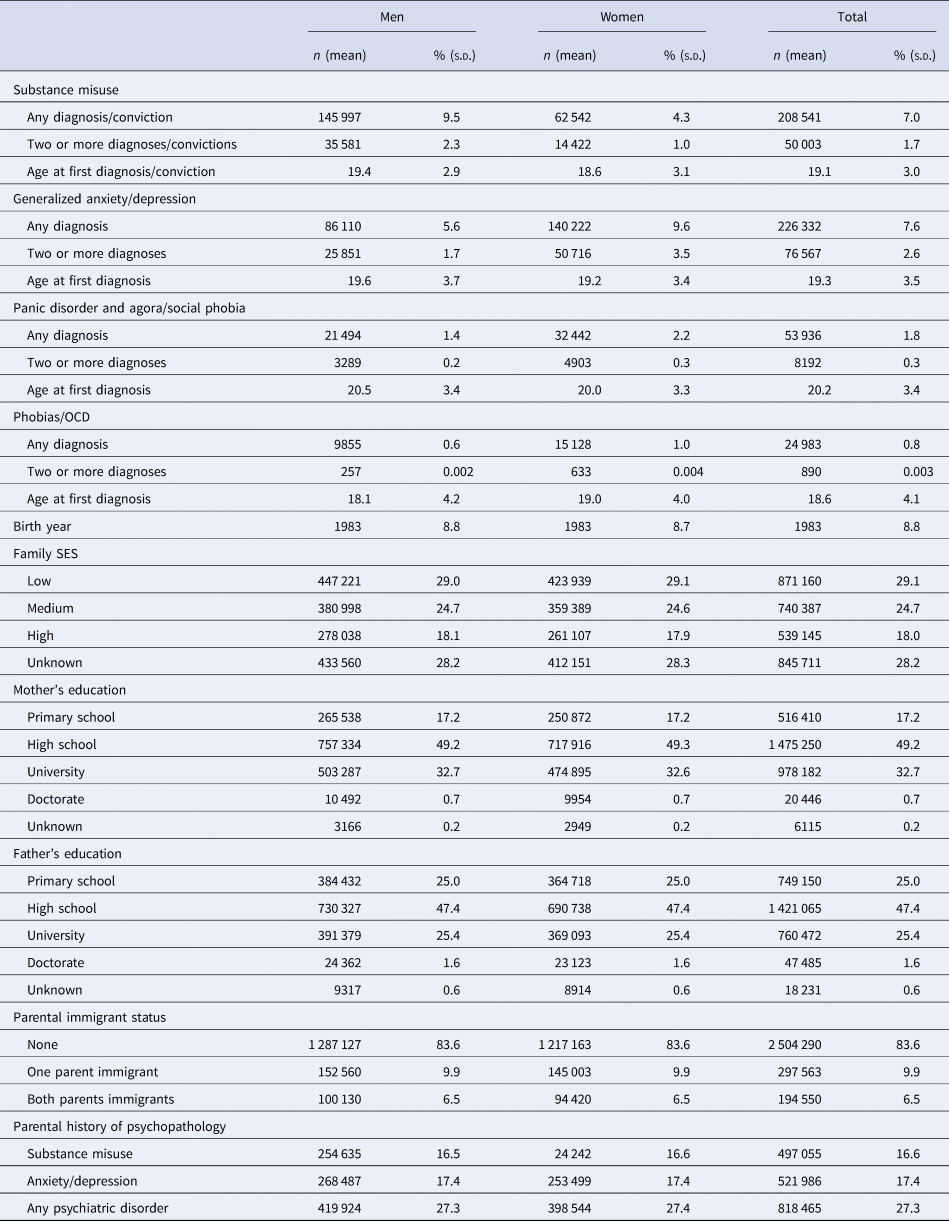
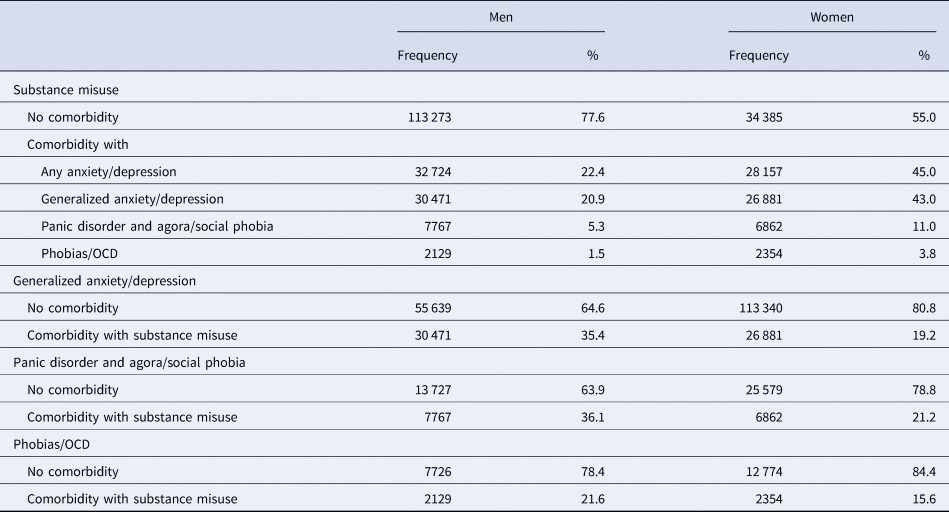
Table 1 presents descriptive statistics of the cohort. The frequencies of diagnostic dimensions and covariates are shown for the entire sample, while the age at first diagnosis is reported for the sub-sample born 1985–1997. Frequencies describing the absolute risks of comorbidity are presented in Table 2.
Sample characteristics (total n = 2 996 398; men n = 1 539 816; women n = 1 456 582)

Substance misuse, SUDs and substance-related criminal convictions; SES, socioeconomic status; OCD, obsessive-compulsive disorder.
Note: Number of diagnoses refers to the number of different diagnoses present within the diagnostic dimension; age at first diagnosis/conviction is reported for the sub-sample born 1985–1997.
Absolute risks of comorbidity between substance misuse and anxiety/depression

Substance misuse, substance use disorders and substance-related criminal convictions; OCD, obsessive-compulsive disorder.
Association between substance misuse and anxiety/depression
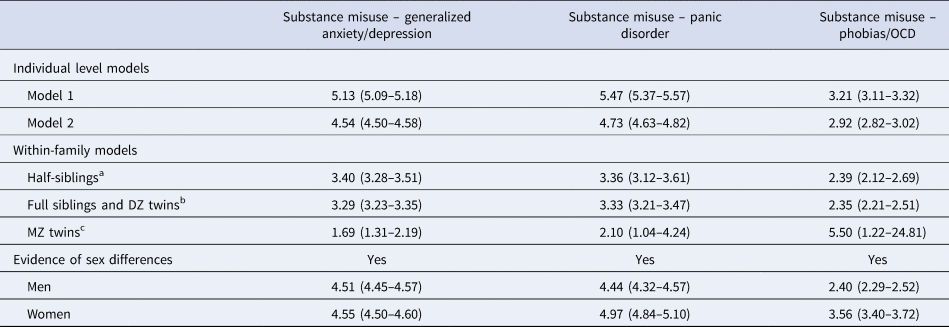
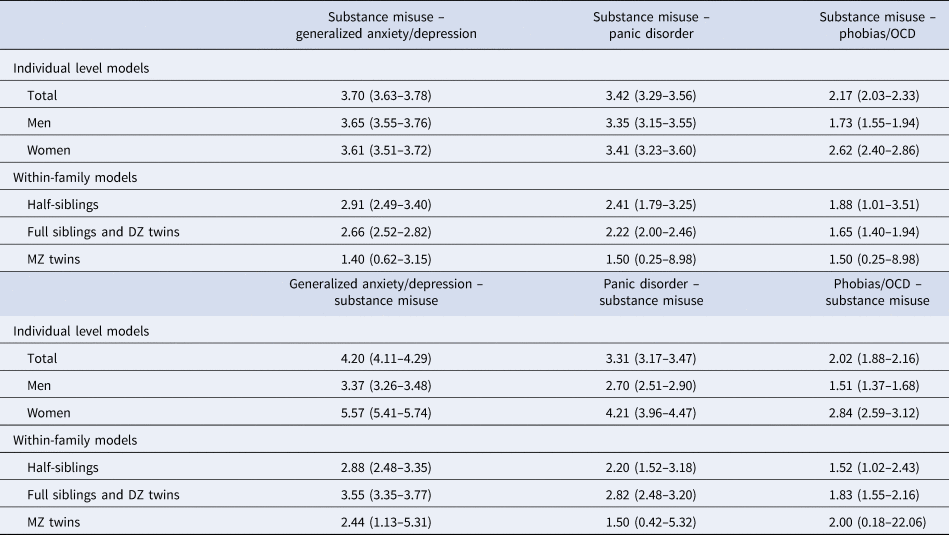
Those with lifetime exposure to substance misuse were at 2.9–4.7-fold elevated risk of having anxiety/depression compared to those without substance misuse (Table 3). Relative risks were similar for generalized anxiety/depression and the panic disorder and agora/social phobia dimension, whereas the association was weaker between substance misuse and phobias/OCD. In within-family analyses, the associations were attenuated but elevated risk of anxiety/depression was still found in all models. There was evidence of sex differences, with tetrachoric correlations being higher in women than in men (online Supplementary eTable 4). The relative risk of anxiety/depression was higher in women except for generalized anxiety/depression for which no sex differences were found.
Risk ratios (95% CIs) between substance misuse (exposure) and anxiety/depression (outcome)

Substance misuse, substance use disorders and substance-related criminal convictions; panic disorder, anxiety/depression dimension including panic disorder and agora/social phobia; OCD, obsessive-compulsive disorder; DZ, dizygotic; MZ, monozygotic.
Full and half-siblings include both same-sex and opposite-sex siblings.
Note: Model 1 adjusted for sex and birth year; Model 2 adjusted for sex, birth year, socioeconomic covariates, and parental psychopathology; Within-family and sex-stratified models adjusted for sex, birth year, socioeconomic covariates, and parental psychopathology.
a N individuals from families discordant for substance misuse = 81 519.
b N individuals from families discordant for substance misuse = 1 038 339.
c N individuals from pairs discordant for substance misuse = 1534.
Association between anxiety/depression and substance misuse
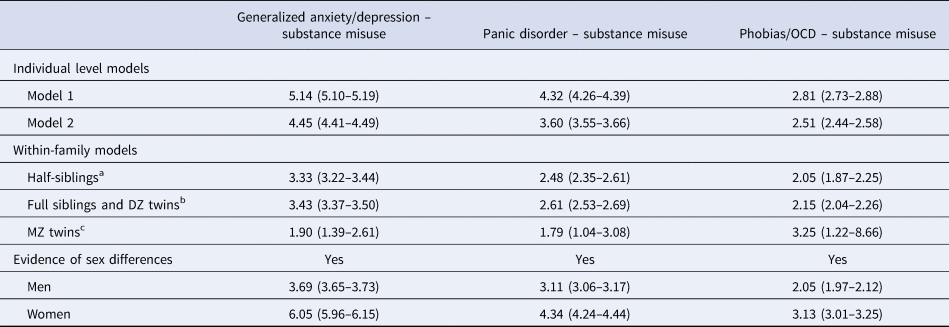
Individuals with a lifetime diagnosis of anxiety-related or depressive disorders had 2.5–4.5 times the risk of substance misuse compared to those without anxiety/depression (Table 4). The estimates and the overall pattern of results were similar to analyses with substance misuse as the exposure and anxiety/depression as the outcome.
Risk ratios (95% CIs) between anxiety/depression (exposure) and substance misuse (outcome)

Substance misuse, substance use disorders and substance-related criminal convictions; panic disorder, anxiety/depression dimension including panic disorder and agora/social phobia; OCD, obsessive-compulsive disorder; DZ, dizygotic; MZ, monozygotic.
Full and half-siblings include both same-sex and opposite-sex siblings.
Note: Model 1 adjusted for sex and birth year; Model 2 adjusted for sex, birth year, socioeconomic covariates, and parental psychopathology; Within-family and sex-stratified models adjusted for sex, birth year, socioeconomic covariates, and parental psychopathology.
a N individuals from families discordant for generalized anxiety/depression; panic disorder; phobias/OCD = 78 844; 22 245; 8816.
b N individuals from families discordant for generalized anxiety/depression; panic disorder; phobias/OCD = 1 076 717; 825 882; 776 733.
c N individuals from pairs discordant for generalized anxiety/depression; panic disorder; phobias/OCD = 1879; 573; 299.
Quantitative genetic models
The covariances between substance misuse and the three anxiety/depression dimensions were best explained by additive genetic and non-shared environmental influences (online Supplementary eTable 5). Approximately 76% of the covariance between substance misuse and generalized anxiety/depression was explained by genetic factors, and the remaining 24% by non-shared environmental factors. Genetic and non-shared environmental correlations were 0.60 (95% CI 0.50–0.69) and 0.30 (95% CI 0.16–0.44), respectively. The covariance between substance misuse and panic disorder and agora/social phobia was best explained by genetic (77%) and non-shared environmental factors (23%), and genetic and non-shared environmental correlations were 0.47 (95% CI 0.28–0.66) and 0.23 (95% CI −0.03 to 0.47). Similarly, the association between substance misuse and phobias/OCD was explained by genetic (53%) and non-shared environmental influences (47%), with genetic and non-shared environmental correlations being 0.24 (95% CI 0.00–0.47) and 0.29 (95% CI −0.03 to 0.60), respectively.
Sensitivity analyses
The results of the fully adjusted Cox regression models were consistent with estimates from the main analyses with the difference that most within-MZ-pair estimates, while all above 1, were statistically non-significant (Table 5).
Hazard ratios (95% CIs) between substance misuse and anxiety/depression dimensions

Substance misuse, substance use disorders and substance-related criminal convictions; panic disorder, anxiety/depression dimension including panic disorder and agora/social phobia; OCD, obsessive-compulsive disorder.
Note: Upper part: Hazard ratios between substance misuse (exposure) and anxiety/depression (outcome), lower part: HRs between anxiety/depression (exposure) and substance misuse (outcome). Models were adjusted for sex, birth year, socioeconomic covariates, and parental psychopathology.
Further, analyses mutually adjusting for the diagnostic dimensions suggested the association between lifetime anxiety/depression and substance misuse was mainly driven by generalized anxiety/depression (RR = 4.15, 95% CI 4.11–4.20), whereas the association of the panic disorder and agora/social phobia dimension with substance misuse was modest (RR = 1.46, 95% CI 1.43–1.48). Phobias/OCD, when adjusted for other anxiety and depressive dimensions, were not associated with substance misuse (RR = 0.97, 95% CI 0.95–1.00). Controlling for personality disorders significantly reduced but did not eliminate the associations between anxiety/depression dimensions and substance misuse (online Supplementary eTable 6). Exposure to alcohol use disorder was associated with similar relative risks of anxiety/depression as compared to the estimates in Table 3, where the exposure was any substance misuse. In model 2, we entered a variable for all other substance use disorders (coding: 1 = any ICD-10 substance use disorder other than alcohol present, 0 = not present) to the model. The associations between alcohol use disorder and anxiety/depression dimensions attenuated significantly. In these models, RRs of drug use disorders (RR ~ 4.0) were systematically higher than those for alcohol use disorders (online Supplementary eTable 7). When alcohol use disorder was used as the outcome and anxiety/depression dimensions as the exposures (online Supplementary eTable 8), the RRs were slightly higher than the estimates in Table 4 where the outcome was substance misuse. Thus, individuals with anxiety/depression diagnoses had a higher relative risk of having alcohol use disorder than substance misuse in general.
The models using count measures instead of dichotomous indicator variables showed positive associations between the number of different types of registrations within the substance misuse dimension and the number of different anxiety/depression diagnoses (online Supplementary eTables 9 and 10), and similar to the main analyses significant associations were also found within MZ pairs.
Finally, associations between substance misuse and anxiety/depression in primary care were consistent with the NPR associations (online Supplementary eFig. 4).
Discussion
Using a prospective design with clinician-diagnosed disorders in 3 million individuals from Swedish nationwide registers we found an elevated risk of anxiety-related and depressive disorders in individuals with substance misuse and vice versa. Our results confirm previous studies using other designs (Lai et al., Reference Lai, Cleary, Sitharthan and Hunt2015), but also extend them by showing associations independent of genetic and shared environmental factors, which are consistent with a partially causal hypothesis.
Our main contribution was the finding of associations between substance misuse and anxiety/depression even after accounting for all genetic and shared environmental factors, suggesting that the observed associations were not completely explained by familial liabilities. This was confirmed with quantitative genetic models showing non-shared environmental correlations between substance misuse and anxiety/depression dimensions. The associations were gradually attenuated in the within-sibling analyses and often appeared weaker in MZ twins than in full siblings, suggesting shared genetic background. The results from quantitative genetic models supported this conclusion with genetic correlations ranging from 0.24 to 0.60. However, elevated risks were still observed within MZ twin pairs. Taken together, the pattern of results indicates that genetic and environmental influences, such as socioeconomic factors (Kessler et al., Reference Kessler, McGonagle, Zhao, Nelson, Hughes, Eshleman and Kendler1994), partially explain the comorbidity, in line with previous findings of shared genetic and environmental influences on SUDs and anxiety/depression (Tambs et al., Reference Tambs, Harris and Magnus1997; Merikangas et al., Reference Merikangas, Mehta, Molnar, Walters, Swendsen, Aguilar-Gaziola, Kolody, Vega, Wittchen and Kessler1998a; Xian et al., Reference Xian, Chantarujikapong, Scherrer, Eisen, Lyons, Goldberg and True2000; Sartor et al., Reference Sartor, McCutcheon, Pommer, Nelson, Grant, Duncan, Waldron, Bucholz, Madden and Heath2011). On the other hand, other studies found primarily separate genetic and shared environmental liabilities for disorders in the internalizing and externalizing dimensions (Kendler et al., Reference Kendler, Walters, Neale, Kessler, Heath and Eaves1995, Reference Kendler, Prescott, Myers and Neale2003). While strong genetic correlations were found within the internalizing and externalizing spectrums, these studies also show weaker associations between the externalizing and internalizing disorders (Kendler et al., Reference Kendler, Prescott, Myers and Neale2003), indicating modest familial liabilities likely detected in our well-powered study. Importantly, our findings also suggest that besides shared liabilities, causal effects between substance misuse and anxiety/depression may exist. A partially causal association would imply that interventions or treatments for one of the disorders should also reduce the risk of developing the other disorder. However, further studies with other causally informative research designs are still needed.
The absolute risks of comorbidity were substantial, with up to 45% of women with substance misuse having anxiety/depression during the follow-up. Generalized anxiety/depression had the strongest association with substance misuse, consistent with earlier findings (Regier et al., Reference Regier, Farmer, Rae, Locke, Keith, Judd and Goodwin1990; Farrell et al., Reference Farrell, Howes, Bebbington, Brugha, Jenkins, Lewis and Meltzer2001; Pirkola et al., Reference Pirkola, Isometsä, Suvisaari, Aro, Joukamaa, Poikolainen, Koskinen, Aromaa and Lönnqvist2005; Conway et al., Reference Conway, Compton, Stinson and Grant2006). Further, exposure to substance misuse was associated with over 4.5-fold risk of having either generalized anxiety/depression or panic disorder and agora/social phobia. Studies in the NESARC and the ECA samples have also shown strong links between panic disorder and SUDs (Regier et al., Reference Regier, Farmer, Rae, Locke, Keith, Judd and Goodwin1990; Conway et al., Reference Conway, Compton, Stinson and Grant2006). In contrast, the association between panic disorder and agora/social phobia and substance misuse was mostly explained by comorbid generalized anxiety/depression. A Finnish study also suggested that depression may mediate the relationship between anxiety and substance use problems (Fröjd et al., Reference Fröjd, Ranta, Kaltiala-Heino and Marttunen2011). Similar to earlier studies, we found that specific phobias/OCD had the weakest association with substance misuse (Regier et al., Reference Regier, Farmer, Rae, Locke, Keith, Judd and Goodwin1990; Conway et al., Reference Conway, Compton, Stinson and Grant2006); in fact, the association appeared to be entirely explained by the comorbid generalized anxiety/depression dimension. Phobias and OCD have been suggested to be protective of substance misuse due to traits such as risk aversion (Bejerot and Humble, Reference Bejerot and Humble1999; Kessler et al., Reference Kessler, Chiu, Demler and Walters2005b). Our findings thus highlight the importance of distinguishing between different types of anxiety-related disorders and taking generalized anxiety/depression into account in associations with substance misuse.
The severity of comorbidity in substance misuse, i.e. the number of different substance use diagnoses/drug-offence registrations was associated with a higher number of different anxiety/depression diagnoses, and vice versa. These results are in line with earlier findings showing an increase in the magnitude of psychiatric comorbidity according to the level of severity of substance problems (Merikangas et al., Reference Merikangas, Mehta, Molnar, Walters, Swendsen, Aguilar-Gaziola, Kolody, Vega, Wittchen and Kessler1998a).
We also estimated associations between alcohol use disorder and anxiety/depression. When alcohol and drug use disorders were entered to the same model as distinct categories, we found associations of alcohol use disorders with anxiety/depression to be systematically attenuated. This suggests that a large proportion of the association between alcohol use disorder and anxiety/depression is explained by comorbid drug use. Previous studies have found similar results, reporting stronger associations between drug use disorders and anxiety/depression than between alcohol use disorder and anxiety/depression (Merikangas et al., Reference Merikangas, Mehta, Molnar, Walters, Swendsen, Aguilar-Gaziola, Kolody, Vega, Wittchen and Kessler1998a, Kessler et al., Reference Kessler, Chiu, Demler and Walters2005b). Further, when alcohol use disorder was treated as an outcome, the RRs were slightly higher than in associations between anxiety/depression and substance misuse. Thus, individuals with anxiety/depression had a higher relative risk of having alcohol use disorder than substance misuse in general, which in our study included drug-related criminal offences.
Expressed as relative risks, comorbidity was stronger in women than in men with the exception of generalized anxiety/depression given substance misuse. Thus, sex differences seem to depend on the specific substance misuse and anxiety/depression combination examined (Swendsen et al., Reference Swendsen, Merikangas, Canino, Kessler, Rubio-Stipec and Angst1998; Farrell et al., Reference Farrell, Howes, Bebbington, Brugha, Jenkins, Lewis and Meltzer2001; de Graaf et al., Reference de Graaf, Bijl, Smit, Vollebergh and Spijker2002; Conway et al., Reference Conway, Compton, Stinson and Grant2006). However, these results should be interpreted with caution as they may reflect differences in treatment seeking, as well as in diagnostic accuracy.
Identifying comorbidities is important during the initial clinical assessment because a dual-diagnosis complicates the prognosis and planning of treatment (Kranzler and Rosenthal, Reference Kranzler and Rosenthal2003). However, our findings underline the importance of monitoring comorbid symptoms throughout the treatment, as substance misuse or anxiety/depression can develop later due to the prior condition.
Our study had some important limitations. First, we have not included all cases of anxiety/depression and SUDs in the population, because the NPR only captures diagnosed cases among the treatment-seeking population in inpatient and outpatient clinics, and the indexing of disorders also changed during the follow-up as the outpatient specialist information did not cover the entire period. Moreover, individuals with multiple diagnoses are more likely to seek treatment, which may inflate the comorbidity estimates. We examined comorbidity also in primary care patients and found similar associations. A study by Sundquist et al. (Reference Sundquist, Ohlsson, Sundquist and Kendler2017) reported slightly lower correlations between anxiety, depression, and substance use disorders in a different sample of Swedish primary care patients and using somewhat different groupings of diagnoses. As we used data from Stockholm county only, it is possible that the associations in our data differ from the associations found in other counties or in Swedish primary care population overall. A further limitation concerns the timing of disorders. In the main analysis, we did not explore whether substance misuse preceded anxiety/depression or vice versa because the first registered diagnosis date does not correspond with disorder onset. Due to the structure of the register data, individuals in the sample also had different follow-up periods. To account for these factors, all models were adjusted for birth year, and survival analysis was conducted as a sensitivity analysis in a sub-sample. Only the association between generalized anxiety/depression and substance misuse remained significant within monozygotic twins in the sub-sample that was followed longitudinally, which is compatible with the possibility of a self-medication pathway from generalized anxiety/depression to substance misuse. However, this finding needs to be replicated in a sample with more reliable timing for disorder onset. In these data, first registrations occurred at an average age of 18–19 for substance misuse, generalized anxiety/depression, and phobias/OCD, while the first panic disorder or agora/social phobia diagnoses were registered slightly later. However, anxiety disorders typically have a much earlier onset, at a median age of 11 (Kessler et al., Reference Kessler, Chiu, Demler and Walters2005b). Further, diagnostic misclassification may introduce bias which appears as evidence for genetic confounding in within-family analyses (McGue et al., Reference McGue, Osler and Christensen2010; D'Onofrio et al., Reference D'Onofrio, Lahey, Turkheimer and Lichtenstein2013). On the other hand, individual-specific confounding factors, such as early traumatic experiences associated with both substance misuse and other psychiatric disorders (De Bellis, Reference De Bellis2002), cannot be fully ruled out in within-family analyses (McGue et al., Reference McGue, Osler and Christensen2010). Thus, instead of a causal effect, elevated risks in MZ co-twins might reflect factors such as the common method bias: correlations between diagnoses acquired from a single source such as the NPR might reflect treatment/diagnostic policies rather than actual relationships between disorders. To partially address this issue, we also included substance use-related criminal convictions in our definition of substance misuse.
Conclusion
To the best of our knowledge, the present study is the first to use nationwide register data to estimate associations between substance misuse and different types of anxiety and depressive disorders while accounting for familial influences. We found familial liabilities to partially explain the associations, but substantial comorbidity remained after accounting for genetic and shared environmental factors, compatible with a partially causal relationship between substance misuse and anxiety/depression. Future studies should examine the developmental mechanisms of the comorbidity in more detail.
Supplementary material
The supplementary material for this article can be found at https://doi.org/10.1017/S0033291719001788
Acknowledgements
We acknowledge the Swedish Twin Registry for access to data. The Swedish Twin Registry is managed by Karolinska Institutet and receives funding through the Swedish Research Council under the grant no 2017-00641.
Financial support
The Swedish Twin Registry is managed by Karolinska Institutet and receives funding through the Swedish Research Council under the grant no 2017-00641. This study was supported by funding from the Academy of Finland grants 308698 and 314196.
Conflict of interest
Dr Larsson has served as a speaker for Evolan Pharmaand Shire and has received research grants from Shire, all outside the submitted work. Professor Mataix-Cols receives royalties from Wolters Kluwer Health and Elsevier, all outside the submitted work. Other authors declare no conflicts of interest.