Introduction
With increasing urbanization and environmental degradation, urban landscapes are increasingly expected to provide a wide range of ecosystem services typically associated with rural areas, including biodiversity conservation, water filtration and stormwater infiltration, food production and even carbon sequestration for climate change mitigation. At the same time, these landscapes must continue to fill their cultural roles in affording, for example, recreational opportunities (Lovell and Taylor, Reference Lovell and Taylor2013). Because residential landscapes constitute the largest single land use category in many urban areas, domestic gardens have emerged as a topic of research interest and planning concern (Cameron et al., Reference Cameron, Blanuša, Taylor, Salisbury, Halstead, Henricot and Thompson2012; Dewaelheyns et al., Reference Dewaelheyns, Rogge and Gulinck2014). While these gardens have been shown to fulfill important functions such as conserving biodiversity (Smith et al., Reference Smith, Thompson, Hodgson, Warren and Gaston2006; Loram et al., Reference Loram, Thompson, Warren and Gaston2008) and promoting human well-being (Matsuoka and Kaplan, Reference Matsuoka and Kaplan2008), their contributions to the broader urban green infrastructure have not been rigorously measured (Cameron et al., Reference Cameron, Blanuša, Taylor, Salisbury, Halstead, Henricot and Thompson2012). (We broadly define green infrastructure as any landscape feature providing ecosystem services (Lovell and Taylor, Reference Lovell and Taylor2013).) In fact, in the developed world, research on the contributions of domestic gardens to even plant diversity has mostly focused on European cities—with limited studies in US cities—possibly due to the assumptions that these spaces are dominated by lawn and are difficult to access because they are privately owned (Taylor and Lovell, Reference Taylor and Lovell2014). Studies in the USA have further tended to use neighborhood rather than household level variables to examine the relationship between sociodemographic characteristics and plant diversity (cf. Kinzig et al., Reference Kinzig, Warren, Martin, Hope and Katti2005).
In studies of European cities, gardens—whether private home gardens or community or allotment gardens in public spaces—have been characterized as contributing strongly to the plant diversity of the urban environment, with largely non-native species accumulating across gardens at a higher rate than for other urban land use types due to the internal heterogeneity of gardens and the management practices of gardeners (Loram et al., Reference Loram, Thompson, Warren and Gaston2008). Plant diversity is key to maintaining the overall species diversity of urban environments, because it functions as the template for biodiversity at higher trophic levels and is the only component of urban biodiversity over which humans have direct control (Faeth et al., Reference Faeth, Bang and Saari2011). However, with few exceptions (cf. Smith et al., Reference Smith, Thompson, Hodgson, Warren and Gaston2006; Loram et al., Reference Loram, Thompson, Warren and Gaston2008; Knapp et al., Reference Knapp, Dinsmore, Fissore, Hobbie, Jakobsdottir, Kattge, King, Klotz, Mcfadden and Cavender-Bares2012; Van Heezik et al., Reference Van Heezik, Freeman, Porter and Dickinson2014), plant diversity surveys and inventories of residential gardens in the USA and elsewhere in the developed world have focused on spaces that are visually accessible to researchers (Cook et al., Reference Cook, Hall and Larson2012), primarily front yards and parkways (the strip of land between sidewalk and street) (Hunter and Brown, Reference Hunter and Brown2012). Homeowners’ landscape preferences, however, may differ between front and back yards, with potential implications for landscape structure and biodiversity (Cook et al., Reference Cook, Hall and Larson2012). While the composition of the front yard purportedly reflects social class, backyards are alleged to be ‘dreamscapes’ reflecting the owner's ‘true’ landscape preferences (Larsen and Harlan, Reference Larsen and Harlan2006). The form of these landscapes is reportedly independent of factors such as household income (Larsen and Harlan, Reference Larsen and Harlan2006) that drive diversity (Hope et al., Reference Hope, Gries, Zhu, Fagan, Redman, Grimm, Nelson, Martin and Kinzig2003), but the culture and social class of household members can be expected to influence backyard landscape aesthetics. The forms of urban backyards, which are often visible from public ways and adjacent houses (Taylor and Lovell, Reference Taylor and Lovell2015) may also be influenced by neighborhood landscape norms.
Research on residential plant diversity in developed countries has further tended to focus on lower density residential developments in suburban areas (cf. Daniels and Kirkpatrick, Reference Daniels and Kirkpatrick2006; Van Heezik et al., Reference Van Heezik, Freeman, Porter and Dickinson2014) and on owner-occupied and/or single-family dwellings (cf. Smith et al., Reference Smith, Thompson, Hodgson, Warren and Gaston2006; Loram et al., Reference Loram, Thompson, Warren and Gaston2008; Van Heezik et al., Reference Van Heezik, Freeman, Porter and Dickinson2014), even though cultivated plant richness has been found to increase with housing density, up to a point (Loram et al., Reference Loram, Thompson, Warren and Gaston2008; Marco et al., Reference Marco, Dutoit, Deschamps-Cottin, Mauffrey, Vennetier and Bertaudière-Montes2008). The majority of urban residents live in multifamily buildings, and the scant existing research suggests that the diversity and dynamics of their shared, sometimes co-managed yards differ from those of yards managed by a single, home-owning household (Loram et al., Reference Loram, Thompson, Warren and Gaston2008).
In the USA, residents of the urban core are also more likely to live in poverty than those who live in metropolitan areas but not in principal cities (Denavas-Walt and Proctor, Reference Denavas-Walt and Proctor2014). While the biodiversity and ecosystem processes of vacant lots in urban low-income neighborhoods have been characterized and compared with those of community gardens (Grewal et al., Reference Grewal, Cheng, Masih, Wolboldt, Huda, Knight and Grewal2011; Yadav et al., Reference Yadav, Duckworth and Grewal2012), the species composition and social-ecological dynamics of surrounding private gardens have been overlooked. The strategies that households in these neighborhoods use to furnish their backyard ‘dreamscapes’ with plants may be much different from those of households with greater financial resources. In the USA, factors other than household income, such as social capital, social connectedness and lifestyle may contribute to plant diversity at the level of the residential lot (Grove et al., Reference Grove, Troy, O'NEIL-Dunne, Burch, Cadenasso and Pickett2006; Taylor and Lovell, Reference Taylor and Lovell2014; Taylor and Lovell, Reference Taylor and Lovell2015).
In addition to conserving biodiversity, multifunctional urban landscapes are increasingly expected to provide food (Lovell, Reference Lovell2010). Published research on the biodiversity of urban food gardens in the USA has focused on the crop diversity (Corlett et al., Reference Corlett, Dean and Grivetti2003; Vitiello and Nairn, Reference Vitiello and Nairn2009) or overall plant diversity of community gardens (Clarke and Jenerette, Reference Clarke and Jenerette2015), with a single study documenting the crop diversity of home gardens (Airriess and Clawson, Reference Airriess and Clawson1994). No studies in the USA, to our knowledge, have systematically examined the overall plant diversity, structure (two- and three-dimensional spatial organization), or ecosystem processes of urban residential gardens in the context of food gardening. Food gardening may have a large impact on residential landscape structure, particularly in backyard spaces, and on biodiversity, with food plants displacing native or non-native ornamental plants, lawn, and tall, woody vegetation that casts shade. Unlike the perennial plants they replace, many food plants are short-lived annuals, providing only ephemeral habitat for vertebrates and invertebrates.
The literature on home gardens in developed and developing countries suggests a wide range of factors may influence crop plant diversity in these domestic agroecosystems (Taylor and Lovell, Reference Taylor and Lovell2014). In developing countries, food production as an ecosystem service may be concentrated in lower income urban households, leading to higher edible plant richness in the associated gardens (Jaganmohan et al., Reference Jaganmohan, Vailshery, Gopal and Nagendra2012; Cilliers et al., Reference Cilliers, Cilliers, Lubbe and Siebert2013). In the USA, on the other hand, urban food production—and presumably food plant richness—is reportedly correlated with household income and home ownership (Smith et al., Reference Smith, Greene and Silbernagel2013). In the rural North, women's gardens have been reported to harbor greater crop plant diversity than men's gardens (Reyes-García et al., Reference Reyes-García, Vila, Aceituno-Mata, Calvet-Mir, Garnatje, Jesch, Lastra, Parada, Rigat, Vallès and Pardo-De-santayana2010). The traditional foodways of internal or international migrants may drive the species composition of gardens (Airriess and Clawson, Reference Airriess and Clawson1994; Corlett et al., Reference Corlett, Dean and Grivetti2003; Nazarea, Reference Nazarea2005; Galluzzi et al., Reference Galluzzi, Eyzaguirre and Negri2010; Mazumdar, Reference Mazumdar2012) as may a lack of access to culturally appropriate foods (Kortright and Wakefield, Reference Kortright and Wakefield2011). Increasing transnationalism potentially facilitates the bidirectional flow of germplasm across borders (Aguilar-Stoen et al., Reference Aguilar-Stoen, Moe and Camargo-Ricalde2009), and the urban home gardens of migrants in developed countries may consequently harbor traditional crop species and varieties (Gladis and Pistrick, Reference Gladis and Pistrick2011; Taylor and Lovell, Reference Taylor and Lovell2015), as do their rural counterparts in both the North and South (Nazarea, Reference Nazarea1998; Nazarea, Reference Nazarea2005; Aguilar-Stoen et al., Reference Aguilar-Stoen, Moe and Camargo-Ricalde2009; Galluzzi et al., Reference Galluzzi, Eyzaguirre and Negri2010). In the rural south, gardens afford opportunities for farming households to experiment with and to modify new varieties with little risk to household income (Aguilar-Stoen et al., Reference Aguilar-Stoen, Moe and Camargo-Ricalde2009). Urban gardeners in the north may similarly experiment with new varieties and crops, enriching the species composition of residential lots (Taylor and Lovell, Reference Taylor and Lovell2014).
This multidisciplinary study, which was part of a multiscalar project focusing on the social and ecological dynamics of urban food production in Chicago, seeks to address these gaps in the literature by: (1) documenting the plant diversity of the home food gardens of inner city ethnic and migrant households residing in single- and multifamily dwellings; (2) examining the factors, processes and practices influencing the cultivated plant diversity of those gardens; and (3) developing a foundation for future quantitative research on residential lots with food gardens and their contributions to urban green infrastructure.
Preliminary results from this project, based on an initial sample of 31 home food gardens, were previously published as a From the Field report in Renewable Agriculture and Food Systems (Taylor and Lovell, Reference Taylor and Lovell2015). This paper reports the results for a final sample of 61 gardens. Based on data from this larger sample, it updates previously reported summary variables and explores in further detail the cultivated plant diversity of these gardens, the factors contributing to that diversity, the three-dimensional structure of the gardens and the potential tradeoffs between ecosystem services in the space of the home garden.
Methods
Study site and focal groups
The project focused on home gardening among three groups—African American, Chinese-origin and Mexican-origin households—in Chicago, IL. For purposes of this study, a home food garden is defined as a fruit and/or vegetable garden on leased, owned or borrowed land adjacent to the gardener's residence (Kortright and Wakefield, Reference Kortright and Wakefield2011). The first two groups were selected based on findings from previous research on the spatial distribution of food gardens in Chicago. Single-plot vacant lot gardening, a form of home gardening, is most common in disinvested, predominantly African American neighborhoods on the city's south and west sides, while Chinese-origin households appear to participate in on-lot food gardening at much higher rates than other groups (Taylor and Lovell, Reference Taylor and Lovell2012). Mexican-origin households were included because of their potential policy relevance. Persons of Mexican descent constitute the largest Latino group in Chicago, and the city has the second largest Mexican immigrant population of any US city (Zong and Batalova, Reference Zong and Batalova2014). For Chicago NGOs such as the Little Village Environmental Justice Organization, urban agriculture has been one strategy for enhancing community development and food security in the city's majority Mexican-origin neighborhoods. The inclusion of Mexican-origin households in this study further provides an opportunity to compare the garden-related practices of two different immigrant groups.
With a land area of more than 606 km2, Chicago is the third most populous city in the USA. As with many industrial cities in the USA, the city's population has declined since the middle of the 20th century, from a high of over 3.6 million in 1950 to 2.7 million in 2010. Population loss, disinvestment and economic redevelopment have been highly uneven, spatially and socially. Predominantly African American community areas on the city's south and west sides have suffered the highest rates of population loss. The population of Englewood on the south side, for example, declined from a peak of more than 97,000 inhabitants to approximately 40,000 in 2000 (Stockwell, Reference Stockwell2005) and lost an additional 10,000 residents from 2000 to 2010 (City of Chicago, 2015). Downtown Chicago, on the other hand, has recently experienced a population and housing boom, with the population almost doubling between 2000 and 2010 (Levy et al., Reference Levy, Gilchrist and Association2012).
In 2012, the project initially focused on three study areas that were predominantly African American, Chinese-origin or Mexican-origin. By 2014, the scope of the project had expanded to include 13 community areas on the city's south and west sides. African American households were selected from seven predominantly African American community areas on the south side. Mexican-origin households were selected from a majority Mexican-origin community area on the south side and another on the west side. Chinese-origin households were selected from Armour Square, which includes Chicago's Chinatown, and four additional community areas on the near west and near south sides with minority Chinese-origin populations. (With the exception of Armour Square, the specific community areas are not identified to protect the confidentiality of study participants. For similar reasons, participants are identified by pseudonyms throughout this paper.) The community areas from which Chinese- and Mexican-origin households were drawn overlapped.
Because so little research has been conducted on home food gardens in US cities, a purposive sampling strategy was employed to explore the social and ecological dynamics of home gardens across a small but diverse sample of households. Households with gardens in the selected areas were initially identified from the primary and secondary authors’ dataset of larger home gardens in Chicago. This dataset was developed through manual photointerpretation of aerial images in Google Earth (Taylor and Lovell, Reference Taylor and Lovell2012). Flyers in English, Spanish and Chinese were mailed to these households, and gardeners were asked to contact a study representative (the primary author or a bilingual research assistant) about participating in the study. Project staff visited non-responding households in person. Additional, smaller food gardens were identified through fieldwork—by driving and walking up and down neighborhood streets and alleys—and were added to the recruitment effort. Households were also recruited through the personal contacts of the undergraduate and graduate student research assistants who interviewed Mexican- and Chinese-origin gardeners. The research assistants were ‘insiders’ who lived in the neighborhoods from which gardeners were recruited, facilitating both gardener recruitment and data collection. The Chinese-origin research assistants spoke Cantonese and Taishanese, a dialect related to Cantonese, as did the households recruited for the study. Gardens of diverse types and sizes and households of diverse structure were sought during recruitment.
Data collection
In the 2012 and 2014 growing seasons, data collection began with a visit to each participating household. During this visit, project staff conducted the first of one to three in-depth, hour-long interviews with the household's primary gardener on a wide range of topics, including garden history, gardening practices and personal history. The questions asked during the interview were developed with reference to Vogl et al. (Reference Vogl, Vogl-Lukasser and Puri2004), Nazarea (Reference Nazarea1998), Martin (Reference Martin2004), and literature on tropical homegardens (cf. Méndez et al., Reference Méndez, Lok and Somarriba2001; Nair, Reference Nair, Kumar and Nair2006; Aguilar-Stoen et al., Reference Aguilar-Stoen, Moe and Camargo-Ricalde2009; Buchmann, Reference Buchmann2009). Interviews often began in the garden, which allowed the interviewer to observe the gardener's practices and his or her interactions with both plants and passersby. The primary author conducted all interviews with African American gardeners, while bilingual research assistants conducted interviews with Chinese- and Mexican-origin gardeners.
Food gardens were inventoried and surveyed. Crops were classified at the species level with several exceptions. Crops in the genus Brassica, for example, exhibit a wide range of functional diversity within species—e.g., cabbage, collards and kale, all varieties of Brassica oleracea—and were consequently assigned to functional taxa within species, to reflect the importance of their cultural uses. Similarly, the species Capsicum annuum is represented by two functional taxa, hot pepper and sweet pepper, and was recorded as such. Culinary herbs were classified as food crops, while the few exclusively medicinal herbs inventoried—including rue (Ruta graveolens) and marijuana (Cannabis sativa)—were classified as ornamental species because of their small number. (Gardeners, particularly Chinese-origin gardeners, reported that they grew some food crops such as bitter melon (Momordica charantia) and Jerusalem artichoke (Helianthus tuberosus) for both their culinary and medicinal qualities.) The vast majority of cultivated plants were identified in the field by the primary author, who supervised plant surveys and garden mapping to ensure consistency in the application of methods across gardens. Plants that could not be identified in the field were photographed in detail, to assist in identification in the laboratory.
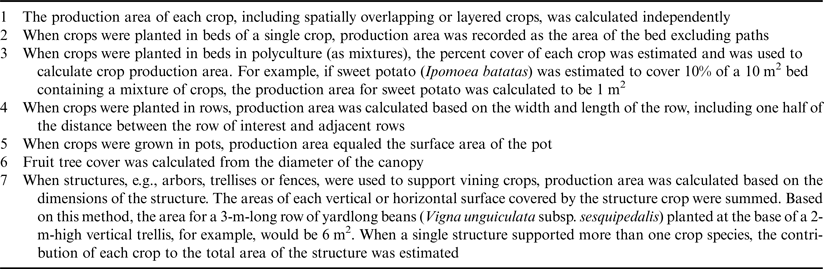
In ecological research, plant abundance is commonly measured as plant number or cover (Wheater et al., Reference Wheater, Bell and Cook2011). However, counting individual plants in gardens is time consuming (Vogl et al., Reference Vogl, Vogl-Lukasser and Puri2004), and plant cover has been used as a measure of abundance in studies of both home gardens and community garden plots (cf. Clarke and Jenerette, Reference Clarke and Jenerette2015). Because abundance in this study was used as a proxy for crop importance, it was measured as the area devoted to the production of each crop (henceforth referred to as ‘crop production area’) rather than as plant number or plant cover in the strict sense of foliar cover as measured by the vertical projection of foliar area to the ground surface (Anderson, Reference Anderson1986). Measurement was complicated by gardeners’ diverse planting systems, including polycultures (the mixed cultivation of two or more crop species) and the maximization of production area by some gardeners through the use of garden structures such as fences, arbors and trellises (see Figure 1). Consequently, to standardize the measurement of plant abundance across crops and gardens, production area was measured for each crop independently—allowing for the vertical overlap of crops—according to a set of decision rules developed by the primary author (Table 1).
Expansion of production area in the food gardens of Chinese-origin households in Chicago, IL, through the use of horizontal and vertical supports for crop plants. (1) An arbor supporting a canopy of winter melon (B. hispida) over a ground layer of shade-tolerant leafy crops. (2) A property line fence supporting a red-podded variety of yardlong bean (Vigna unguiculata subsp. sesquipedalis).

Decision rules for calculating the production area of each crop grown in 61 home food gardens of African American, Mexican-origin and Chinese-origin households in Chicago, IL.

All cultivated ornamental plant taxa on the lot(s) associated with the participating household were inventoried at the species level when possible. Following Smith et al. (Reference Smith, Thompson, Hodgson, Warren and Gaston2006), no attempt was made to identify individual, naturally occurring varieties or cultivated varieties (cultivars). Horticultural cultivars of complex, often interspecific heritage were placed in a single taxon at the genus level, e.g., Rosa cv. Abundance data were not collected for individual ornamental plant species. Instead, the cultivated area of all ornamental plants on the lot, excluding trees and lawn, was measured using the same rules as for crop plants.
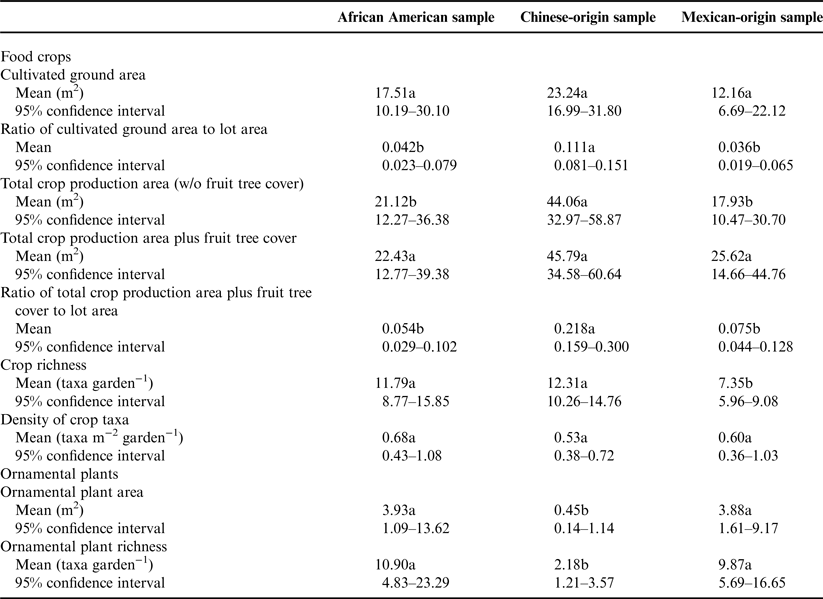
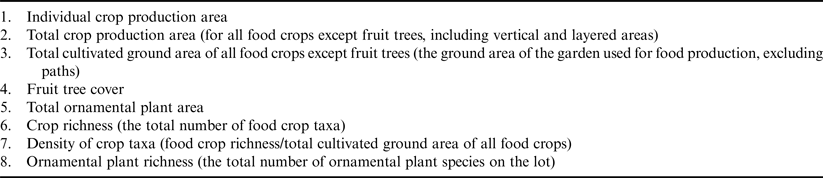
Based on the inventory and survey data collected in the field, summary variables were calculated for each garden (Table 4), and lot size was determined from county property records (Table 3). Summary variables were compared across the three groups of gardeners by GLM procedure in SAS 9.4 with LSMEANS for mean separations using the Tukey–Kramer adjustment (adjust = Tukey) (Table 2). Data were log transformed prior to analysis to improve normality. Back transformed values for means and confidence intervals are reported in the text, tables and figures (McDonald, Reference McDonald2009). Because of back transformation, confidence intervals are not symmetric around means.
Comparisons of summary variables for 61 home food gardens of American, Mexican-origin and Chinese-origin households in Chicago, IL.

Means and confidence intervals have been back transformed from the log transformed values.
Confidence intervals are not symmetric around the mean due to back transformation.
Means followed by different letters are considered significantly different at P < 0.05.
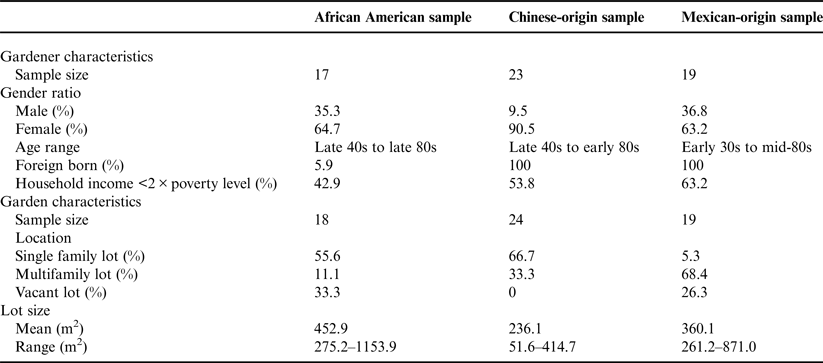
Sample characteristics of the gardeners and gardens selected for a study of 59 African American, Mexican-origin and Chinese-origin households with home food gardens in Chicago, IL (updated from Taylor and Lovell, Reference Taylor and Lovell2015).

To compare crop plant composition across gardens, a non-metric dimensional scaling (NMDS) ordination of gardens was performed using a Bray–Curtis dissimilarity matrix of relative abundance data for crop taxa (R 3.1.3) (McCune et al., Reference McCune, Grace and Urban2002). To test associations between crop and ornamental plant richness and species density and lot and garden characteristics, Pearson's product moment correlations and linear regressions were conducted for the sample as a whole and by ethnic group (R 3.1.3). Because some gardens were inventoried and surveyed multiple times during the project and others only once, plant inventory and survey data from only a single comparable point in time, in mid to late summer, rather than cumulative data, were included in these analyses.
Using an emergent coding approach, in which themes were allowed to emerge from repeated readings (Patton, Reference Patton2014), interview transcripts were coded by hand or with NVivo for Mac. Analytic concepts were developed from the initial codes and were documented in concept memoranda (Patton, Reference Patton2014). Sociodemographic data for gardeners and qualitative and quantitative data for gardens, e.g., species inventories and garden surveys, were kept in separate Excel workbooks linked to interview data by codes for gardeners. All study procedures, instruments and forms were reviewed and approved by the university's Institutional Review Board.
Results
Gardener characteristics
Updated sociodemographic characteristics for the 59 gardeners (19 Mexican-origin, 23 Chinese-origin and 17 African American) in the final study sample are provided in Table 3. (Note that two gardeners—one African American and one Chinese-origin gardener—each cultivated two spatially distinct gardens, for a total of 61 gardens.) In summary, more African American gardeners were homeowners (16 of 17) than members of the other two groups, and African American gardeners and Chinese-origin gardeners were, as a whole, older than Mexican-origin gardeners, more of whom had young children at home. All Mexican- and Chinese-origin gardeners were immigrants, and 7 of the 17 African American gardeners had migrated to Chicago from the American South as teenagers or young adults. Approximately 90% of Chinese-origin gardeners participating in the study were women, while over one-third of Mexican-origin and African American gardeners were men.
Garden typologies, features and land use areas
As with the preliminary sample of 31 gardens (Taylor and Lovell, Reference Taylor and Lovell2015), garden location and spatial organization for the final sample of 61 gardens were highly diverse, with common patterns within each group of gardens (Table 3). Both backyard (n = 12) and single-plot vacant lot food gardens (n = 6) of African American households generally had an orthogonal design, with food crops planted separately from ornamental plants in rows or beds in native soil, often at the back of the lot adjacent to the alley. There were exceptions. One gardener grew her crops entirely in pots, and two gardeners used raised beds filled with a topsoil–compost mix because of concerns about soil contamination. Two other gardeners planted polycultures of ornamental and food plants. Garden sharing was not uncommon. One backyard gardener also gardened a neighbor's vacant lot, two gardeners reported sharing space in their gardens with neighbors or friends, and another backyard gardener helped tend a friend's garden on the vacant lot adjacent to the former's residence.
Summary variables calculated for a study of 61 home food gardens of African American, Mexican-origin and Chinese-origin households in Chicago, IL.

Single-plot vacant lot gardens (n = 5) were also commonly associated with Mexican-origin households, but the majority of gardeners grew their crops on the lots of the multifamily buildings in which they lived (and which they sometimes owned). Growing food in shared spaces or under conditions of tenancy influenced garden structure (Taylor and Lovell, Reference Taylor and Lovell2015). One gardener grew vegetables primarily in pots because, as a tenant, she was not allowed to plant in the ground, while three other tenant gardeners colonized unused front yards with food plants. On-lot gardens in the final sample were often pushed to the edges of the backyard, leaving a central rectangle of lawn or paving for shared recreational use (Taylor and Lovell, Reference Taylor and Lovell2015).
Occasionally used to support vining crops in African American and Mexican-origin households’ gardens, trellises, arbors and fences were a defining feature of those of Chinese-origin households (Taylor and Lovell, Reference Taylor and Lovell2015). The degree and form of vertical gardening in these gardens varied greatly (Fig. 1). At one end of the spectrum, gardeners grew crops such as winter melon (Benincasa hispida), fuzzy melon (B. hispida var. chieh-qua), bitter melon, yardlong bean and squash or pumpkin (Cucurbita sp.) on pre-existing fences 1–2 m in height along property lines, on internal trellises or on small, relatively low arbors built from found or purchased lumber. In the extreme, they constructed permanent arbors over 2 m in height that covered the entire growing area. Successional leafy crops, e.g., bok choy (Brassica rapa subsp. chinensis), requiring less light than root or fruiting crops were grown beneath these structures, sometimes doubling the production area (Taylor and Lovell, Reference Taylor and Lovell2015).
The gardens of Chinese-origin households were located primarily in the backyards of single-family dwellings, multifamily buildings or family buildings (multifamily buildings in which different units are occupied by members of the same extended family) with secondary growing areas in front and side yards. One gardener cultivated her own backyard and that of her next-door neighbor. Three other gardeners who lived in townhouse developments gardened their small front yard gardens and also appropriated common space for food production. Lawn was entirely absent from all of the gardens of Chinese-origin households. Gardens were unpaved and almost entirely devoted to food production or combined unpaved growing areas with expanses of paving. Production was sometimes expanded to paved areas by planting crops in recycled containers, including bins, tubs and buckets.
Mean total cultivated crop area was not significantly different across groups (Table 2), but, on average, Chinese-origin households devoted a significantly higher proportion of their lot to food production than did African American or Mexican-origin households, which did not significantly differ (0.111 versus 0.042 and 0.036, respectively, P < 0.05; Table 2). Mean total crop production area—not including fruit tree cover—of the gardens of Chinese-origin households was significantly greater than that of either African American or Mexican-origin households' gardens, which were not significantly different (44.06 m2 versus 21.12 m2 and 17.93 m2, P < 0.05; Table 2).
Fruit tree plantings, a form of domestic agroforestry, may be an additional strategy home gardeners use to maximize space. Fruit trees were most abundant in Mexican-origin households’ gardens and least abundant in those of Chinese-origin households. Including fruit tree cover increased average total crop production area of the former by 43% to 25.62 m2; fruit tree cover contributed 6% and 4% to the total production area of African American and Chinese-origin households' gardens, respectively. With the addition of fruit tree cover, production area was not significantly different across groups (P > 0.05; Table 2). However, with vertical layering from both structures and fruit trees, the average ratio of production area to lot area increased to 0.218 for the gardens of Chinese-origin households, which was significantly higher (P < 0.05) than the ratio for African American or Mexican-origin households’ gardens, which did not significantly differ (0.054 versus 0.075, P > 0.05; Table 2).
The area occupied by ornamental plants (not including trees) in Chinese-origin households’ gardens was on average significantly less than that of either African American or Mexican-origin households’ gardens (0.45 m2 versus 3.93 and 3.88 m2, respectively, P < 0.05; Table 2). Ornamental plant area was not significantly different between the latter two garden types.
Crop plant diversity and culture-specific plant assemblages
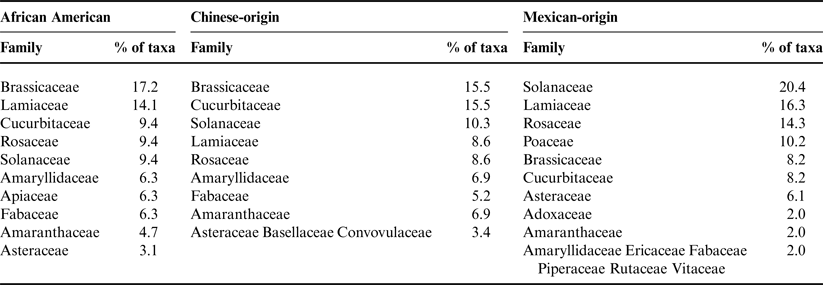
A total of 123 edible plant taxa representing 102 species from 25 families were identified across the 61 gardens, including 17 species of fruit crops, 27 species of culinary herbs and 79 taxa of vegetable crops. Only three species, Jerusalem artichoke, pokeweed (Phytolacca americana) and fox grape (Vitis labrusca) are native to the Chicago area (Swink and Wilhelm, Reference Swink and Wilhelm1994). Across all gardens, the highest numbers of taxa were recorded for the Lamiaceae (14%), Brassicaceae (13.2%), Cucurbitaceae (9.9%), Solanaceae (9.9%) and Rosaceae (7.4%). Gardens of African American households included the greatest number of taxa (n = 64) and families (n = 19), followed by those of Chinese-origin (n = 58 and 16) and Mexican-origin (n = 49 and 15) households. Plants from the Brassicaceae made the greatest contribution to the food crop richness of garden tended by African American and Chinese-origin households (17.2 and 15.5%, respectively), while the Solanaceae accounted for 20.4% of the food plant taxa identified in the gardens of Mexican-origin households (Table 5).
Plant families with the ten highest levels of representation in the combined food crop taxa of 61 home gardens in Chicago, by group.

The average crop plant richness of Mexican-origin households’ gardens was significantly lower, at 7.35 taxa per garden (P < 0.05), than that of African American or Chinese-origin households’ gardens. The average richness of the latter two groups of gardens was not significantly different (11.79 versus 12.31 taxa, respectively P > 0.05; Table 2). As was found for the preliminary sample (Taylor and Lovell, Reference Taylor and Lovell2015), density of food crop taxa was not significantly different across the three samples (0.68 versus 0.53 versus 0.60 crops m−2, P > 0.05, for African American, Chinese-origin and Mexican-origin households’ gardens, respectively; Table 2).
The NMDS plot for all gardens indicates that ethnicity had a strong influence on the crop species composition of all gardens. The gardens of each ethnic group occupy a unique location on axis 1, with some overlap between the gardens of African American and Mexican-origin households on that axis (Fig. 2). On axis 2, the gardens of Mexican-origin households occupy a unique location relative to those of either Chinese-origin or African American households, which occupy a roughly similar location. The gardens of Chinese-origin households are the most tightly clustered in ordination space, indicating that these gardens are the most homogeneous in species composition; those of African American households are the most dispersed, suggesting greater heterogeneity in species composition.
NMDS ordination based on Bray–Curtis dissimilarity matrix for all food crop species (excluding fruiting trees) for 61 home food gardens in Chicago (African American households, 1-18; Chinese-origin, 19-42; Mexican-origin, 43-61).

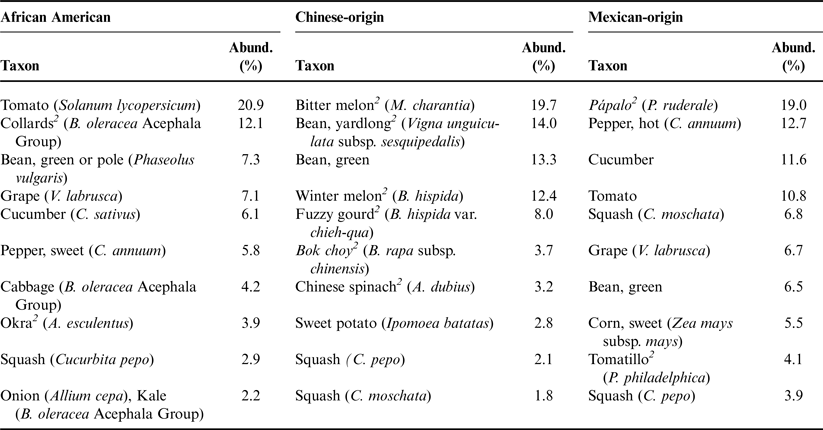
Of the ten taxa with the highest aggregate crop production area for Chinese-origin households’ gardens, six—bitter melon, yardlong, winter melon, fuzzy melon, bok choy and Chinese spinach (Amaranthus dubius)—are unique to those gardens, and only three—green beans and two squash species, Cucurbita pepo and Cucurbita maxima—are among the ten most abundant taxa in either African American or Mexican-origin households’ gardens (Table 6). Four taxa—tomato, cucumber (Cucumis sativus), grape and squash (C. pepo)—are ranked among the ten taxa with the highest aggregate crop production areas for both African American and Mexican-origin households’ gardens. Two highly ranked taxa—collards (B. oleraceae Acephala Group) and okra (Abelmoschus esculentus)—are unique to the gardens of African American households, while two other taxa—pápalo (Porophyllum ruderale) and tomatillo (Physalis philadelphica)—were found only in the gardens of Mexican-origin households. Only C. pepo is included among the ten most abundant taxa for all three samples.
Food crop taxa 1 with the ten highest aggregate proportional abundances for 61 home gardens in Chicago, by group.

1 Does not include fruit trees.
2 indicates a food crop unique to the sample.
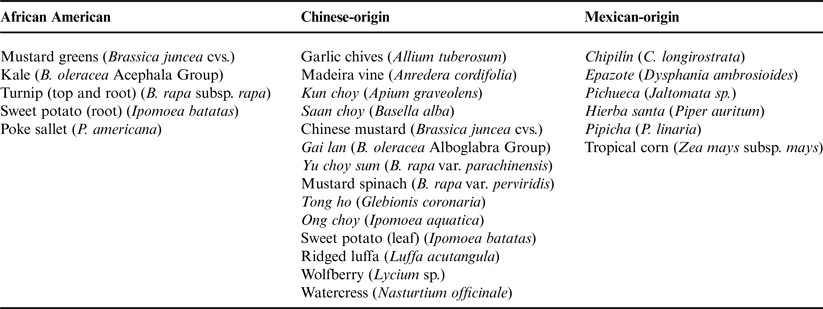
Many less abundant taxa were found only in the gardens of a particular ethnic group or were, according to gardeners, connected to ethnic foodways or to foodways of the gardener's place of origin (Taylor and Lovell, Reference Taylor and Lovell2015) (Table 7). Overall, more unique crop taxa were inventoried in the gardens of African American (n = 35) or Chinese-origin (n = 36) households than were found in those of Mexican-origin households (n = 21). Reporting abundance data at a common level of taxonomic resolution, however, obscures some lower level diversity identified in surveyed gardens. For example, a total of 14 hot pepper varieties from three species (C. annuum, Capsicum chinense and Capsicum pubescens) were inventoried in the gardens of Mexican-origin households in the final sample, an increase of four varieties over the inventory for the preliminary sample (Taylor and Lovell, Reference Taylor and Lovell2015).
Lower abundance food crops associated with ethnic or regional foodways identified in 61 home gardens in Chicago, by group (updated from (Taylor and Lovell, Reference Taylor and Lovell2015).

Ornamental plant diversity
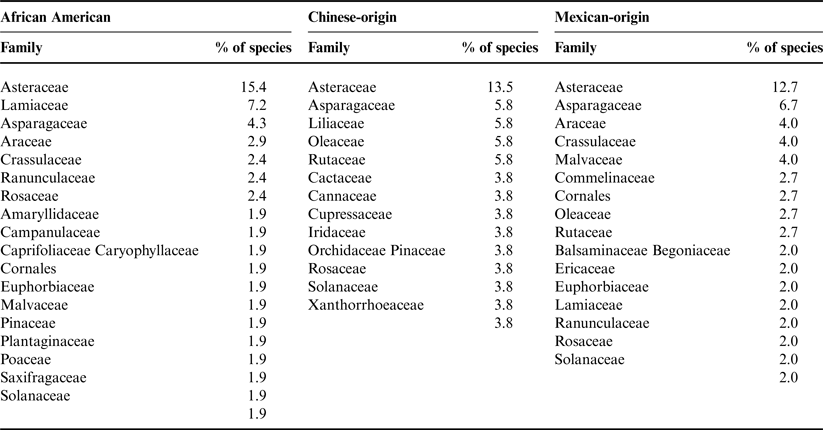
A total of 288 cultivated, ornamental plant species from 85 families were identified across the 61 gardens. These include: 114 annuals or tender perennials: 119 hardy, herbaceous perennials: 36 shrub species; 12 tree species: and 7 vining plant species. Only 32 of the inventoried species (11.1%) are native to the Chicago region, according to Swink and Wilhelm (Reference Swink and Wilhelm1994). Across all gardens, the highest numbers of species were recorded for the Asteraceae (13.5%), Lamiaceae (5.2%), Asparagaceae (4.5%) and Araceae (3.5%) (Table 8). As a whole, the gardens of African American households included the greatest number of ornamental plant species (n = 208) and families (n = 69) followed by those of Mexican- (n = 151 and 65) and Chinese-origin (n = 52 and 28) households. Plants from the Asteraceae made the greatest contribution to the richness of all three garden types, with the relative ranking of other families varying by garden type (Table 8). The ornamental plant richness of African American and Mexican-origin households’ gardens was not, on average, significantly different (10.90 species versus 9.87 species per garden, P > 0.05; Table 2), while the richness of Chinese-origin households’ gardens (2.18 species per garden) was significantly lower (P < 0.05) than that of the other two groups’ gardens.
Plant families with the ten highest rates of representation in the ornamental flora of 61 home gardens in Chicago, by group.

Vegetative structure
As the summary of species by plant growth habit suggests, the vegetation of gardens was not, in general, structurally complex. Except for fruit trees, small or large trees were found on only seven of the 61 residential lots in the study. Few shrubs, vines or even fruit trees were found on the lots of Chinese-origin households, 39% of which lacked any woody vegetation. Similarly, on the lots of African American and Mexican-origin households, plantings of woody species—aside from fruit trees, brambles (Rubus sp.), blueberry bushes (Vaccinium corymbosum) and grapevines—were absent or provided little coverage, were confined to front yards, and/or were often sheared or heavily pruned to control their growth.
Garden size and plant diversity
Neither crop nor ornamental plant richness was significantly related to lot size or to total garden area by group or for the full sample. However, density of crop taxa was exponentially related to total cultivated crop area, and the log of density was negatively correlated with the log of total cultivated area (r 2 = 0.74, P < 0.001; Fig. A). Ornamental plant species density was also exponentially related to ornamental plant area, and the log of density was negatively correlated with the log of area (r 2 = 0.55, P < 0.001; Fig. 3B).
Log–log relationships between (A) crop species density and cultivated crop area (n = 61, r 2 = 0.74, P < 0.001) and (B) ornamental plant species density and ornamental plant area (n = 44, r 2 = 0.55, P < 0.001) for home food gardens in Chicago.

Interview findings: Factors and processes shaping the plant diversity of home gardens
Findings from the qualitative interviews with gardeners confirm and enrich the results from the analysis of quantitative data on the spatial structure and species composition of the 61 home food gardens in the study.
Ethnic and family culture
The crop plant assemblages found in the gardens of African American gardeners—particularly those who had migrated from the American South—were associated with Southern culinary traditions (Taylor and Lovell, Reference Taylor and Lovell2015). For later generations of African American gardeners, ties between Southern culture and garden diversity were more tenuous than they were for first generation migrants, and other culinary and gardening discourses shaped the form and species composition of their gardens. Two of the Chicago-born African American gardeners were Master Gardeners (individuals who have received intensive training in home horticulture from a university in the USA or Canada (AHS, 2015)) and members of a local gardening club. Their gardens housed diverse ornamental plant collections in addition to food plants, which included heirloom tomato varieties not found in other gardens. Another native Chicagoan, Ms. Lowell (a pseudonym, like all names used to identify gardeners in this paper) drew her culinary and gardening inspiration from television programs. She attempted to ‘channel’ P. Allen Smith, a popular gardening communicator, in the design of her garden, but Martha Stewart was her primary mentor for both home and gardening activities. The Chicago-born Ms. McDaniels reminisced about the large gardens of her Southern-born relatives on the city's South Side but actively participated in local and national virtual communities of gardeners through on-line groups, including the Chicago-based Advocates for Urban Agriculture. She consulted these groups for gardening advice, exchanged seeds through them, and also secured plants and other materials for her garden through the Freecycle Network™. Ms. Fouret's parents, who were not gardeners, were home cooks who excelled in the culinary traditions of their native Mississippi and Louisiana. However, Ms. Fouret, California-born and Chicago-raised, considered herself to be a ‘foodie’ with a developing appreciation for wine; the edible plants in her backyard garden reflected that identity. For these gardeners, lifestyle (Pickett et al., Reference Pickett, Cadenasso, Grove, Boone, Groffman, Irwin, Kaushal, Marshall, Mcgrath and Nilon2011) rather than ethnic identity was a major driver of the species composition of their gardens.
Mexican-origin gardeners, all of whom were migrants, grew a wide range of herbs, chili pepper varieties and other plants associated with the culinary traditions of their places of origin within Mexico (Taylor and Lovell, Reference Taylor and Lovell2015). A total of seven of the gardeners in the study, for example, grew pápalo (P. ruderale), a pungent herb popular in the Mexican states of Guerrero and Puebla. Two of these gardeners sold pápalo, accounting for its dominance in their gardens and its first place ranking in the proportional abundance data for food crops in the gardens of Mexican-origin households. Mrs. Rodriguez, who was from Guerrero, cultivated not only pápalo but also pipicha (Porophyllum linaria) and a third species of culinary herb that she called chichihuate but which was not present in her garden at the time of data collection. She also grew two leguminous plants native to southern Mexico, chipilín (Crotalaria longirostrata) and guaje (Leucaena sp.) in her small backyard garden. Mr. Gutierrez grew tropical corn (Zea mays subsp. mays) and used the leaves to make corundas, a tamale-like dish indigenous to the state of Michoacán (Taylor and Lovell, Reference Taylor and Lovell2015). Attaining a height of three or more meters before tasseling in September, tropical corn is a striking botanical feature in Chicago neighborhoods, potentially acting as a signifier of regional and ethnic identity and reifying shared agricultural and culinary knowledge.
Ethnic food culture and preferences most strongly influenced the species composition of Chinese-origin households’ gardens. Regional differences in crop plant assemblages were not noted, as they were for Mexican-origin gardeners, because all participating gardeners were from the same area in southern China. Gardeners reported they preferred Chinese to ‘American’ vegetables. As one gardener stated, ‘I really don't eat American vegetables.’ Chinese-origin gardeners also had a productionist approach to gardening that influenced their planting decisions. When asked her annual household income, one gardener retorted, ‘It's very little; why else would I have to grow my vegetables?’ Another gardener grew food because, ‘There is the land to use. It would be a waste if I didn't use it.’ These gardeners grew vegetables that could not be purchased locally, were deemed to be of poor quality or to be too expensive in local stores, or had other desirable characteristics that made them worthy of cultivation, such as the storage qualities of winter melon. This productionist orientation toward gardening may contribute to the low abundance of non-food plants in Chinese-origin households’ gardens, which Mrs. Cheung linked to Chinese cultural identity: ‘Chinese people usually plant vegetables, and Americans plant flowers.’ With assimilation, however, values may change along with the symbolism of domestic landscapes, resulting in a generation gap. Ms. Cheung's son, for example, apparently wanted her to garden like an American, ‘My son complains that I shouldn't garden and should plant flowers.’
Not all Chinese-origin gardeners grew only traditional crop species or varieties or focused solely on production. Mrs. Kuo, for example, grew potatoes (Solanum tuberosum) and spinach (Spinacia oleracea) in addition to a wide range of more traditional Chinese crops. Her garden also had the largest ornamental plant area and the second highest number of non-legacy ornamental species (nine) of all gardens of Chinese-origin households. Mrs. Kuo appeared to be more assimilated into mainstream American culture than most of the other Chinese-origin gardeners in the study. She easily engaged the primary author in conversation in English during the garden survey, and her front yard featured not only a small planting of hot peppers but also a large display of flowering annuals which, she said, elicited compliments from passersby who sometimes stopped to photograph it.
Not surprisingly, family culinary traditions and food preferences further influenced the species composition of gardens. One African American gardener grew eggplant specifically for eggplant Parmesan, while another grew tomatoes for salsa for tacos, which were her grandchildren's favorite food. Mrs. Cole, an 81-year-old gardener originally from Arkansas, grew all of the five or six vegetables required for her vegetable soup except corn. Mrs. Rodriguez reported that she grew ‘a little lime tree because I like to drink the leaves in tea in the morning,’ while Mrs. Hernandez and Mr. Guerrero both grew cucumbers for their children, who enjoyed eating them with lime and chili powder. Mrs. Chan, a Chinese-origin gardener, planted an Asian pear tree simply because, as she said, ‘I like to eat pears.’
Germplasm acquisition
Gardeners reported a wide range of practices and strategies related to the acquisition and maintenance of crop and ornamental plant diversity in their gardens. The majority of the crop taxa grown in the gardens of Chinese-origin households were grown from seed (Taylor and Lovell, Reference Taylor and Lovell2015). Only nine taxa were reported to be purchased as plants or starts. All 23 Chinese-origin gardeners saved the seed of at least some of their crops, most often those of cucurbits and beans, which were easier to collect than the seeds of leafy crops. The original source of saved seed was identified for 108 crop records; reported sources included China (58.3%), friends (21.3%) or local stores (20.4%), typically in Chinatown. Seeds from China included those purchased directly from commercial seed houses or procured through friends and relatives. Gardeners saved seed from the same crops year after year.
A smaller percentage of plants in the gardens of Mexican-origin households were grown from seed; of 172 crop records for which the source—purchased plant or seed—was identified, 59 (34.3%) were grown from seed by the gardener. Of the 59 seed-grown crops, 15 (25.4%) were grown from seed directly from Mexico, 9 (15.3%) from saved seed originally from Mexico and 35 (59.3%) from saved seed from other sources, including tomatoes and peppers purchased at local markets. Two Mexican-origin gardeners also reported they had received seeds for green beans and squash from their Chinese-origin neighbors. Attitudes toward transporting germplasm across the border with Mexico varied. One Mexican-origin gardener with a house in Mexico refused to bring back plants or seeds for fear of being stopped at the border. Two others, however, regularly imported seed for pápalo or tropical corn, and Mrs. Rodriguez, who also had a house in Mexico, planned to plant a papaya—grown in her Chicago garden from the seed of a particularly flavorful fruit purchased in a local grocery store—in her garden in Mexico. Only ten of the 19 Mexican-origin gardeners (52.6%) saved seed, but even fewer African American gardeners—five out of 17 (29.4%)—saved seed, most of which appeared to be originally derived from commercial sources.
African American and Mexican-origin gardeners accumulated the sometimes-diverse ornamental flora of their gardens from a variety of sources using a wide range of strategies. Plants were acquired as seeds, transplants, cuttings and divisions from commercial sources and through social networks. Garden plant diversity was not necessarily correlated with financial resources (Taylor and Lovell, Reference Taylor and Lovell2015). Some gardeners with meager financial resources but high social capital, such as Mrs. Murphy, who had an ornamental plant collection of 51 species, drew on networks of friends, family, acquaintances and non-government organizations in addition to market sources to assemble their garden flora. On the lots of some multifamily buildings, more than one household contributed to the richness of the flora and the management of the garden. Mrs. García and her husband, for example, planted and cared for a vegetable garden in the backyard of their apartment building, while their landlady planted and managed herbaceous perennials and flowering shrubs in both the front and backyards. Similarly co-managed spaces were identified in the African American and Chinese-origin study neighborhoods.
Discussion
This study builds on published, preliminary findings from an initial sample of 31 gardens (Taylor and Lovell, Reference Taylor and Lovell2015). It corroborates those findings and expands on them. In doing so, it addresses significant gaps in the literature on the contributions of domestic gardens to urban ecosystems. It is the first study to examine total plant diversity in the context of urban residential food production in the USA and to compare the diversity-related practices of three groups, African American, Chinese-origin and Mexican-origin gardeners. By combining plant inventory and abundance data with information from interviews conducted with gardeners, it explores some of the factors—including ethnic and regional culture, processes of assimilation, social networks, multifamily residency and popular culture—and some of the tradeoffs specific to growing food in the city that may influence domestic garden diversity. Furthermore, the study focuses on ethnic and migrant households living in diverse housing types in inner city neighborhoods. These are policy relevant groups and spaces that have been overlooked in the research on urban biodiversity and urban ecosystems in general.
These gardeners—and food gardeners overall—may have landscape values that diverge from those of city residents in general, with implications for garden composition and structure and cascading impacts on ecosystem processes at higher levels. While the general population may, for example, prioritize aesthetics, low maintenance, floral biodiversity and neatness in domestic gardens (Larson et al., Reference Larson, Nelson, Samples, Hall, Bettez, Cavender-Bares, Groffman, Grove, Heffernan and Hobbie2015), food gardeners are more likely to place a higher value on provisioning functions, with implications for garden structure and composition. In this study, Chinese-origin households appeared to prioritize production over aesthetics and floral biodiversity, resulting in low richness and abundance of ornamental species in their gardens. Ethnic or migrant gardeners may also place greater value on the contribution of residential gardens to the reproduction of traditions and heritage more than the population at large (Mazumdar, Reference Mazumdar2012), for whom this cultural service is reportedly relatively unimportant (Larson et al., Reference Larson, Nelson, Samples, Hall, Bettez, Cavender-Bares, Groffman, Grove, Heffernan and Hobbie2015). Study findings suggest that with assimilation the value accorded this service may decline.
Garden plant diversity in the study was linked to the cultural and lifestyle diversity of participating gardeners. For immigrants, particularly recent immigrants, ethnic and regional culture had a large impact on garden structure and on the composition and abundance of food taxa, resulting in the development of culture-specific crop plant assemblages in gardens. Similar, culturally based assemblages of food plants have been identified in US cities in the community garden plots of African American, Asian, and Hispanic gardeners (Clarke and Jenerette, Reference Clarke and Jenerette2015), Hmong refugees (Corlett et al., Reference Corlett, Dean and Grivetti2003) and Oaxacan indigenous immigrants (Minkoff-Zern, Reference Minkoff-Zern2012) and in the backyard gardens of Vietnamese immigrants (Airriess and Clawson, Reference Airriess and Clawson1994).
In this study, NMDS ordination of study gardens based on relative crop abundance resulted in the clustering of gardens by ethnic group. The gardens of Mexican- and Chinese-origin households were relatively tightly clustered in ordination space, indicating a greater degree of similarity in the species composition of their gardens compared with those of African American gardeners. The latter group was more demographically heterogeneous than the Chinese- and Mexican-origin gardeners participating in the study, all of whom were foreign born. The majority (n = 9) of the African American gardeners were second or third generation Chicagoans; seven had migrated to Chicago from the American South 40 or more years earlier. While Chicago-born gardeners continued to grow crops associated with Southern foodways, such as collards, they grew other crops as well, as did some Southern born gardeners. A subset of gardeners in both subgroups—exclusively women—identified as lifestyle gardeners who prioritized aesthetics, floral diversity, experimentation with plants, and communing with nature in the space of the garden. Their gardens tended to be more diverse than their counterparts—almost exclusively men—who equated gardening with farming.
In addition to their acknowledged productive and cultural functions, home gardens in developed countries are increasingly recognized as sites for the in situ conservation of crop plant diversity (Eyzaguirre and Bailey, Reference Eyzaguirre and Bailey2009), and the gardens of immigrants in particular may be ‘hotspots’ for agrobiodiversity that can potentially serve as a genetic resource for crop development (Gladis and Pistrick, Reference Gladis and Pistrick2011). Findings from this study suggest that even the inner city home gardens of migrant households in Chicago may conserve agrobiodiversity with roots in developing countries (Taylor and Lovell, Reference Taylor and Lovell2015), which encompass centers of diversity for many economically important crops (Kloppenburg, Reference Kloppenburg2005). This agrobiodiversity may, in fact, be more concentrated in urban areas in the USA than in the gardeners’ places of origin. Clarke et al. (Reference Clarke, Li, Jenerette and Yu2014), for example, identified 100 edible species in 102 gardens along a suburban to rural transect in the Beijing Municipality of China. In Chicago, 58 edible species were inventoried in the 23 much smaller urban gardens of Chinese-origin households participating in this study.
Chinese-origin gardeners in Chicago may be not only conserving germplasm. Through simple mass selection, they may also be developing new landraces of culturally important crops adapted to local environmental conditions and preferences. Gardeners in this study reported that they saved seed from the ‘best’ plants: the largest melons or the longest yardlong bean pods. If gardens were isolated, selection over time could result in the loss of genetic diversity. Garden populations of a crop species, however, could be considered to constitute a metapopulation, with gene flow between gardens facilitated by the clustering of gardens in the urban landscape, the sharing of germplasm by gardeners, and the activities of pollinators. The introduction of seeds from outside sources, e.g., China or domestic commercial sources, and by successive waves of migrants from different regions of China and Asia may further diversify the gene pool of crop populations in Chicago, potentially making these locally adapted populations more resilient in the face of climate change and other selection pressures (Aitken and Whitlock, Reference Aitken and Whitlock2013). With assimilation and generational change in the Chinese-origin community, however, diversity may be lost over time. Further research with US-born Chinese-origin gardeners is needed to test this hypothesis.
In general, urbanization, has been shown to increase overall plant diversity because of the introduction of non-native species (Faeth et al., Reference Faeth, Bang and Saari2011). Our findings indicate home food gardeners are potentially important yet often unappreciated actors in shaping that diversity. In the aggregate, the gardens in this study supported a concentrated number of diverse plant species, and we found an inverse, exponential relationship between both density of crop taxa and cultivated ground area and ornamental plant richness and ornamental plant area. We identified a total of 123 edible plant taxa representing 102 species from 25 families and 288 ornamental species from 85 families, for a combined total of 387 unique species from 90 families. The aggregate area of the residential lots included in this study was 2.1 ha, yielding 184 unique species per hectare, a much higher level of species richness per unit area than the 108 species per hectare found in a comparable study of community gardens in Los Angeles (Clarke and Jenerette, Reference Clarke and Jenerette2015). A far higher number of plant species (n = 1166) were identified in an identical number of residential gardens (n = 61) in Sheffield, UK. However, the area surveyed in that study was not reported, and all vascular plants on the lot were surveyed, including planned and unplanned or associated species (Smith et al., Reference Smith, Thompson, Hodgson, Warren and Gaston2006).
An appropriate ‘native’ comparison for our purposes would be prairie, the dominant ecosystem in Chicago prior to European settlement. The richness of the aggregate 2.1 ha of residential property inventoried in this study was comparable to or exceeded that of a 34 ha prairie remnant, the Wolf Road Prairie, located 22 km west of Chicago (Sluis, Reference Sluis2002). However, the vast majority of the garden species (90.4%) were not native to the Chicago region per Swink and Wilhem (Swink and Wilhelm, Reference Swink and Wilhelm1994), indicating replacement of natives by non-natives in study gardens. (While the associated or unplanned flora of the gardens was not surveyed, it may be expected to consist primarily of common lawn flora and ruderal or competitive non-natives with a minority of native species.)
Enrichment of the flora through the replacement of native by non-native plants does not necessarily enhance biodiversity at higher trophic levels (Faeth et al., Reference Faeth, Bang and Saari2011). Compared with non-native plantings, native plant landscaping in urbanizing settings has been found to have a positive impact on native arthropod diversity and, consequently, on native avian diversity (Burghardt et al., Reference Burghardt, Tallamy and Gregory Shriver2009), though exotic trees may be underestimated as a resource for native birds (Gray and Van Heezik, Reference Gray and Van Heezik2015). Replacing native with non-native plants can also lead to the biotic homogenization of urban ecosystems at larger scales, as assemblages of plant species across cities with similar climates converge through the activities of consumers and the horticultural industries (McKinney, Reference McKinney2006). Consequently, though the gardens included in this study supported a large pool of non-native, cultivated plant species, they may make little contribution to aboveground biodiversity at the local or regional levels. At the same time, the gardens of the lifestyle gardeners and immigrant gardeners in the study appeared to harbor crop and ornamental species unlike those observed in adjacent yards, suggesting that they do enrich the local flora, though with unknown consequences for biota at higher trophic levels. The impact of food gardens on belowground biodiversity is similarly unknown. While the addition of organic matter to garden soils may favor the development of diverse microbial communities, frequent tillage and the use of chemical fertilizers—common practices among the gardeners in this study—may reduce soil microbial diversity in agroecosystems, with associated negative impacts on the ecosystem services microbes provide, e.g., nutrient cycling (Brussaard et al., Reference Brussaard, De Ruiter and Brown2007).
Beyond the diversity of garden flora, study findings suggest that food gardeners’ unique concerns differentiate them from other urban residents in ways that drive the vegetative structure of their gardens, with implications for urban biodiversity conservation and ecosystem processes. Because light is a limiting factor in urban food production (Wortman and Lovell, Reference Wortman and Lovell2013), the shading of growing areas by buildings, trees, and other vegetation was a central concern of gardeners, and the few gardeners who had large trees on their lots expressed a desire to remove them. This attitude stands in marked contrast to the preferences of urban residents in general, who identify the shade provided by trees as an important ecosystem service of residential gardens (Avolio et al., Reference Avolio, Pataki, Pincetl, Gillespie, Jenerette and Mccarthy2015; Larson et al., Reference Larson, Nelson, Samples, Hall, Bettez, Cavender-Bares, Groffman, Grove, Heffernan and Hobbie2015), particularly in warm climates (Avolio et al., Reference Avolio, Pataki, Pincetl, Gillespie, Jenerette and Mccarthy2015). It also contradicts the dominant discourses on the urban forest in planning and research, which position it as a universally desirable public good, which mitigates urban heat island effects (Akbari et al., Reference Akbari, Pomerantz and Taha2001) and provides habitat for vertebrates and invertebrates (Nowak and Dwyer, Reference Nowak, Dwyer and Kuser2007), among other benefits. The lack of trees in inner city neighborhoods has been attributed to high housing density and low household income (Iverson and Cook, Reference Iverson and Cook2000) and to a lack of investment in the urban forest in low income and ethnic minority neighborhoods (Heynen et al., Reference Heynen, Perkins and Roy2006). The removal of healthy trees from private urban lots has also been ascribed to a “desire to enact moral imperatives” based in nativist ideologies (in the case of non-native trees) and to changes in fashion (Kirkpatrick et al., Reference Kirkpatrick, Davison and Daniels2013). Our study suggests that, at the scale of the residential lot, another factor—food production—may also account for an absence of urban trees. The individual household's decision not to plant trees in favor of producing food potentially has impacts on ecosystem processes at higher levels now and in the future because of legacy effects, particularly in areas with large numbers of home gardens, e.g., Chicago's Chinatown (Taylor and Lovell, Reference Taylor and Lovell2012). With estimates of up to 33% of households in urban areas in the USA participating in food production (Smith et al., Reference Smith, Greene and Silbernagel2013), the magnitude of these impacts may be underappreciated.
For potentially similar reasons, gardens in this study overall lacked a well-developed shrub layer, and the gardens of Chinese-origin households and some other gardens also lacked perennial groundlayer vegetation. Layered vegetation in urban areas enhances the diversity of vertebrate and invertebrate species (Goddard et al., Reference Goddard, Dougill and Benton2010; Sattler et al., Reference Sattler, Duelli, Obrist, Arlettaz and Moretti2010) and in the aggregate may affect diversity and processes at broader scales. Within the garden, the absence of such vegetation may not only reduce biodiversity but also productivity. In other agroecosystem types, the addition of areas of diverse perennial plants, particularly flowering plants, has been demonstrated to increase pollination and predation services to adjacent field crops (Nicholls and Altieri, Reference Nicholls and Altieri2013).
Fruit trees and fruiting vines, shrubs, and subshrubs were one exception to the lack of vegetative structure in the home food gardens included in this study. Fruit trees in particular were more abundant in the gardens of Mexican-origin households. The vertical and layered plantings of Chinese-origin households’ gardens were a second exception. These strategies for increasing and diversifying production area may increase biodiversity at higher trophic levels by providing more material and spatial resources and ecological niches for insects, birds, and mammals, as do the small-scale agroforestry systems found in tropical homegardens (Scales and Marsden, Reference Scales and Marsden2008). The clustering of such gardens in ethnically homogeneous neighborhoods may strengthen their impact on urban ecosystem processes.
Overall, this study indicates that additional research on urban domestic gardens is needed if the full extent of their potential positive contributions to urban ecosystems is to be realized and their negative contributions are to be minimized. This study included only residential lots with food gardens. Because of the lack of any baseline data for residential gardens in Chicago, the inclusion of matched lots without a food garden could, in future work, provide a basis for comparing the diversity of each garden type and for identifying the potential factors—and tradeoffs in ecosystem services—accounting for differences in diversity. Additional research is needed on the impacts of garden composition, features, and structure, e.g., the arbor systems of the gardens of Chinese-origin households and domestic agroforestry systems, and soils and soil management practices on ecological processes and ecosystem characteristics beyond plant diversity. By illuminating social factors and processes contributing to the diversity of urban domestic gardens, this study—with its purposive sample and semi-structured interview format—develops hypotheses that can be tested in future quantitative studies employing large representative samples systematically selected from a wide range of population subgroups and housing types. Such research would contribute to a broader understanding of the contributions that domestic gardens make to ecosystems at the level of the neighborhood and the city. Findings from this study also suggest that seed saving and seed sharing practices and networks and the genetic composition of urban crop populations are potentially fecund areas of research. Exploration of these topics would help to illuminate the role of urban gardens in conserving crop plant diversity, the impact of selection on crop plant genetics and productivity, gene flow between gardens, and introgression of new germplasm. Such research could contribute more generally to our understanding of plant population genetics in urban environments. Finally, participatory, in situ experimental research exploring the tradeoffs between food production and ecological benefits could inform the development of outreach programs to gardeners that would help them garden productively in ways that enhance urban biodiversity and ecosystem processes. Such research must engage ethnic and migrant groups—and food gardeners as a whole—whose domestic gardening activities have been invisible to academics, non-government organizations, and policymakers (Taylor and Lovell, Reference Taylor and Lovell2014; Taylor and Lovell, Reference Taylor and Lovell2015). Working with these stakeholders to incorporate more ecological functions into their gardens will ultimately be more productive than working against their landscape preferences and values (Larson et al., Reference Larson, Nelson, Samples, Hall, Bettez, Cavender-Bares, Groffman, Grove, Heffernan and Hobbie2015).
Conclusion
As a major land use, domestic gardens have the potential to make large, positive contributions to urban ecosystems. However, efforts to capitalize on these gardens as part of the green infrastructure of the city must recognize the different cultural and social roles they play for diverse urban populations. Academics and policymakers must also acknowledge and seek to address the real tradeoffs that occur as increasing demands are placed on these domestic ecosystems, in the face of increasing food insecurity, climate change and environmental degradation.
Acknowledgements
The authors would like to acknowledge and thank the 59 Chicago gardeners participating in this project, who shared their gardens and their stories with us. We would also like to recognize the invaluable contributions of our three research assistants—Aranzasu Bermudez, Adriana Rodriguez and Anna Zheng—who conducted interviews with the Chinese- and Mexican-origin gardeners in the study. Finally, we would like to thank the three anonymous reviewers for their careful review of the manuscript and helpful comments. This material is based upon work that is supported by the National Institute of Food and Agriculture, US Department of Agriculture, Hatch project under ILLU-802-383.