Borderline personality disorder (BPD) is characterised by identity disturbance, unstable and intense interpersonal relationships, impulsive and self-damaging behaviour, anger dyscontrol, affective instability, problems tolerating being alone, and chronic feelings of emptiness (Gunderson and Zanarini, Reference Gunderson and Zanarini1987; Leichsenring et al., Reference Leichsenring, Leibing, Kruse, New and Leweke2011). The clinical presentation is recognised to be heterogeneous (Smits et al., Reference Smits, Feenstra, Bales, de Vos, Lucas, Verheul and Luyten2017), and psychosis-like symptoms, especially hallucinations are an additional feature in some patients (Yee et al., Reference Yee, Korner, McSwiggan, Meares and Stevenson2005; Slotema et al., Reference Slotema, Daalman, Blom, Diederen, Hoek and Sommer2012; Zanarini et al., Reference Zanarini, Frankenburg, Wedig and Fitzmaurice2013; Pearse et al., Reference Pearse, Dibben, Ziauddeen, Denman and McKenna2014). A clinical association with major affective disorder is also increasingly recognised (Koenigsberg et al., Reference Koenigsberg, Anwunah, New, Mitropoulou, Schopick and Siever1999), with up to 80% of BPD patients having met criteria for major depressive disorder at some point in their lives (Zanarini et al., Reference Zanarini, Frankenburg, Dubo, Sickel, Trikha, Levin and Reynolds1998), and approximately 20% for bipolar I or II disorder (Zimmerman and Morgan, Reference Zimmerman and Morgan2013).
Biological factors are currently considered to be important in BPD, with positive findings being reported in genetic, structural imaging and functional imaging studies (Lis et al., Reference Lis, Greenfield, Henry, Guilé and Dougherty2007; Leichsenring et al., Reference Leichsenring, Leibing, Kruse, New and Leweke2011). Brain functional abnormality, in particular, has mostly been investigated from the perspective of the emotional dysregulation associated with the disorder. Schulze et al. (Reference Schulze, Schmahl and Niedtfeld2016) meta-analysed 19 studies using emotional tasks (e.g. recall of conflict-inducing events, facial emotion processing) or cognitive-emotional tasks (e.g. emotional versions of the Stroop and flanker tasks) in BPD patients and healthy controls. Convergent evidence was found for reduced activation in the dorsolateral prefrontal cortex (DLPFC) bilaterally, the left lingual gyrus and the left superior parietal gyrus. There was also evidence of increased task-related activation, most robustly in the posterior cingulate gyrus and the left middle temporal gyrus, but also in the left amygdala and hippocampus, among other areas.
Functional imaging of cognition is also of interest in BPD. Evidence of impaired cognitive performance in disorder was found in a meta-analysis of 10 studies carried out between 1991 and 2004 (Ruocco, Reference Ruocco2005). While some of these studies were subsequently criticised on methodological grounds (LeGris and van Reekum, Reference LeGris and van Reekum2006), more recent studies have documented circumscribed deficits in executive function and working memory (Beblo et al., Reference Beblo, Saavedra, Mensebach, Lange, Markowitsch, Rau, Woermann and Driessen2006; Haaland et al., Reference Haaland, Esperaas and Landrø2009; Hagenhoff et al., Reference Hagenhoff, Franzen, Koppe, Baer, Scheibel, Sammer, Gallhofer and Lis2013). Examination of the brain functional correlates of such cognitive impairment, however, has been limited, and almost all studies to date have employed tasks with an emotional component as well. Thus, Holtmann et al. (Reference Holtmann, Herbort, Wüstenberg, Soch, Richter, Walter, Roepke and Schott2013) examined 16 BPD patients and 24 healthy controls using a task which required inhibition of prepotent responses in the context of either neutral or fearful faces. No areas of significant difference in activation related to cognitive performance were seen in regions of interest (ROIs) placed in the amygdala, the anterior cingulate cortex, the DLPFC and the fusiform face area. Krause-Utz et al. (Reference Krause-Utz, Oei, Niedtfeld, Bohus, Spinhoven, Schmahl and Elzinga2012) examined 22 BPD patients and 22 healthy controls using the Sternberg working memory task with neutral or emotional pictures as distractors. Whole-brain analysis revealed clusters of significantly different activation in the amygdala, the insula, the DLPFC and the anterior cingulate cortex among other areas. However, further examination revealed that the changes all reflected a group × emotionality interaction rather than effects related to the cognitive aspects of the task. Two studies using the go/no-go task (Silbersweig et al., Reference Silbersweig, Clarkin, Goldstein, Kernberg, Tuescher, Levy, Brendel, Pan, Beutel, Pavony, Epstein, Lenzenweger, Thomas, Posner and Stern2007; Jacob et al., Reference Jacob, Zvonik, Kamphausen, Sebastian, Maier, Philipsen, Tebartz van Elst, Lieb and Tüscher2013), reviewed by Sebastian et al. (Reference Sebastian, Jung, Krause-Utz, Lieb, Schmahl and Tüscher2014), failed to find evidence of activation differences in an emotionally neutral condition.
Only one study to date has used a cognitive task without an emotional component. Mensebach et al. (Reference Mensebach, Beblo, Driessen, Wingenfeld, Mertens, Rullkoetter, Lange, Markowitsch, Ollech, Saveedra, Rau and Woermann2009) examined 18 BPD patients during word list recall and performance of a verbal fluency task. In the former task, whole-brain analysis revealed increased activation in the patients in the posterior cingulate cortex bilaterally, the left middle and superior temporal cortex, the right lateral frontal cortex and the right angular gyrus. In the latter task, the patients again showed a pattern of increased activation, this time affecting the right posterior cingulate cortex, the right fusiform gyrus, the left anterior cingulate cortex, and the left postcentral gyrus.
Examining the brain functional correlates of cognitive task performance in BPD is also of potential interest from another perspective. This is that a number of psychiatric disorders have been found to be characterised not only by activation changes but also by failure of de-activation. This latter abnormality, affecting particularly the medial frontal cortex, has been documented in schizophrenia (e.g. Pomarol-Clotet et al., Reference Pomarol-Clotet, Salvador, Sarró, Gomar, Vila, Martínez, Guerrero, Ortiz-Gil, Sans-Sansa, Capdevila, Cebamanos and McKenna2008; Mannell et al., Reference Mannell, Franco, Calhoun, Cañive, Thoma and Mayer2010; Whitfield-Gabrieli et al., Reference Whitfield-Gabrieli, Thermenos, Milanovic, Tsuang, Faraone, McCarley, Shenton, Green, Nieto-Castanon, LaViolette, Wojcik, Gabrieli and Seidman2009; Salgado-Pineda et al., Reference Salgado-Pineda, Fakra, Delaveau, McKenna, Pomarol-Clotet and Blin2011; Schneider et al., Reference Schneider, Royer, Grosselin, Pellet, Barral, Laurent, Brouillet and Lang2011; Dreher et al., Reference Dreher, Koch, Kohn, Apud, Weinberger and Berman2012) and major affective disorder, including both major depression (Broyd et al., Reference Broyd, Demanuele, Debener, Helps, James and Sonuga-Barke2009; Grimm et al., Reference Grimm, Boesiger, Beck, Schuepbach, Bermpohl, Walter, Ernst, Hell, Boeker and Northoff2009; Marchetti et al., Reference Marchetti, Koster, Sonuga-Barke and De Raedt2012) and bipolar disorder (Pomarol-Clotet et al., Reference Pomarol-Clotet, Moro, Sarró, Goikolea, Vieta, Amann, Fernandez-Corcuera, Sans-Sansa, Monté, Capdevila, McKenna and Salvador2012; Fernández-Corcuera et al., Reference Fernández-Corcuera, Salvador, Monté, Salvador Sarró, Goikolea, Amann, Moro, Sans-Sansa, Ortiz-Gil, Vieta, Maristany, McKenna and Pomarol-Clotet2013). A not-dissimilar pattern of de-activation failure has also been described in autism (Kennedy and Courchesne, Reference Kennedy and Courchesne2008; Spencer et al., Reference Spencer, Chura, Holt, Suckling, Calder, Bullmore and Baron-Cohen2012). These changes have been widely interpreted as reflecting dysfunction in the default mode network, a series of brain regions that normally de-activate during performance of tasks requiring external attention, and which include prominently two midline areas, one located anteriorly in the medial prefrontal cortex and the other posteriorly in the posterior cingulate cortex/precuneus (Buckner et al., Reference Buckner, Andrews-Hanna and Schacter2008). The inferior parietal cortex, the hippocampus and the lateral temporal cortex that are also currently considered to form part of the network.
The aim in the present study was to examine brain activations in a large sample of BPD patients during performance of a cognitive, specifically executive, task. We used the n-back paradigm, which has been consistently found to produce activations in the so-called working memory network in normal subjects (Owen et al., Reference Owen, McMillan, Laird and Bullmore2005), and employed whole-brain analysis with correction for multiple comparisons. The second aim was to examine task-related de-activations, for which the n-back task is also appropriate, having been found to reliably produce de-activation in the default mode network in healthy subjects (Pomarol-Clotet et al., Reference Pomarol-Clotet, Salvador, Sarró, Gomar, Vila, Martínez, Guerrero, Ortiz-Gil, Sans-Sansa, Capdevila, Cebamanos and McKenna2008; Whitfield-Gabrieli et al., Reference Whitfield-Gabrieli, Thermenos, Milanovic, Tsuang, Faraone, McCarley, Shenton, Green, Nieto-Castanon, LaViolette, Wojcik, Gabrieli and Seidman2009; see also Piccoli et al., Reference Piccoli, Valente, Linden, Re, Esposito, Sack and Di Salle2015).
Method
Participants
The patient sample consisted of 67 BPD patients (64 women and three men) who were recruited from the specialist services of two hospitals in Barcelona, the Hospital de la Santa Creu i Sant Pau and the Consorci Sanitari de l'Anoia. They were part of a total sample of 89 patients, 22 of whom were ultimately not included due to excessive movement during fMRI, poor n-back task performance or self-termination of the scanning because of claustrophobia or fatigue.
The diagnosis of BPD was made according to DSM-IV criteria, using the Spanish version of the Structured Clinical Interview for DSM-IV Axis II Personality Disorders (SCID-II) (Villar García et al., Reference Villar García, Pérez Prieto, Hernández Viadel, Renovell Farré, Leal Cercos and Gómez Beneyto1995). The patients were also required to score above the cutoff (score ⩾ 6) on the Spanish Revised Diagnostic Interview for Borderlines (DIB-R) (Barrachina et al., Reference Barrachina, Soler, Campins, Tejero, Pascual, Alvarez, Zanarini and Pérez Sola2004). Other inclusion criteria were age between 18 and 55 years; being right-handed and having an IQ in the normal range (based on educational data plus an IQ estimate based on two subtests of the WAIS-III, Vocabulary and Matrix Reasoning).
Fifty of the 67 patients were taking psychotropic medication: 24 antidepressants (13 with a mood stabiliser as well), four antipsychotics (1 with a mood stabiliser as well); and 16 both antidepressants and antipsychotics (four with a mood stabiliser). Six patients were on mood stabilisers only.
Exclusion criteria were: history of brain trauma (as indexed by skull fracture, loss of consciousness for more than 24 h or presence of post-traumatic amnesia), presence of neurological disease and alcohol/substance abuse or dependence within the 6 months prior to participation. Any patients who had a history of schizophrenia, schizoaffective disorder or bipolar affective disorder, as assessed using the lifetime version of the Structured Clinical Interview for DSM-IV (SCID-I) (First, Reference First1999), were also excluded. Because major depression is itself associated with brain functional changes (e.g. Drevets, Reference Drevets2000; Rive et al., Reference Rive, van Rooijen, Veltman, Phillips, Schene and Ruhé2013), we excluded patients who currently met criteria for major depression. However, we did not exclude patients who had previously met criteria for this disorder, but instead examined its potential influence on any brain functional changes found.
A sample of healthy control subjects was recruited from nonmedical staff working in the above two and other hospitals, their relatives and acquaintances, and independent sources in the community. The controls were recruited to be similar to the patient sample in terms of age, sex and estimated IQ. They were interviewed and excluded if they reported a history of mental illness or treatment with psychotropic medication. They were also questioned about family history of mental illness and excluded if a first-degree relative had experienced symptoms consistent with a major psychiatric disorder.
fMRI task
The participants performed a sequential-letter version of the n-back task (Gevins and Cutillo, Reference Gevins and Cutillo1993). Two levels of memory load (1-back and 2-back) were presented in a blocked design manner. Each block consisted of 24 letters that were shown every 2 s (1 s on, 1 s off) and all blocks contained five repetitions (1-back and 2-back depending on the block) located randomly within the blocks. Individuals had to indicate repetitions by pressing a button. Four 1-back and four 2-back blocks were presented in an interleaved way, and between then a baseline stimulus (an asterisk flashing with the same frequency as the letters) was presented for 16 s. To identify which task had to be performed, characters were shown in green in 1-back blocks and in red in the 2-back blocks. All participants went through a training session outside the scanner. The n-back task was programmed using the Tcl-TK language.
The behavioural measure used was the signal detection theory index of sensitivity, d′ (Green and Swets, Reference Green and Swets1966). Higher values of d′ indicate better ability to discriminate between targets and distractors. Subjects who had negative d′ values in either or both of the 1-back and 2-back versions of the task, which suggests that they were not performing it, were excluded from the study.
fMRI data acquisition
In each scanning session, 266 volumes were acquired from a 1.5-T GE Signa scanner. A gradient-echo echo-planar imaging (EPI) sequence depicting the blood oxygenation level-dependent (BOLD) contrast was used. Each volume contained 16 axial planes acquired with the following parameters: TR = 2000 ms, TE = 40 ms, flsc angle = 70°, section thickness = 7 mm, section skip = 0.7 mm, in-plane resolution = 3×3 mm. The first 10 volumes were discarded to avoid T1 saturation effects.
fMRI data analysis
fMRI image analyses were performed with the FEAT module, included in FSL software (Beckmann et al., Reference Beckmann, Jenkinson, Woolrich, Behrens, Flitney, Devlin and Smith2006). At a first level, images were corrected for movement and eventually co-registered to a common stereotaxic space (Montreal Neurologic Institute template). To minimise unwanted movement-related effects, individuals with an estimated maximum absolute movement >3.0 mm or an average absolute movement >0.3 mm were excluded from the study and thus are not reported. General linear models (GLMs) were fitted to generate individual activation maps for the 1-back and 2-back tasks v. baseline and also the 2-back v. 1-back contrast.
Comparisons between groups were made to evaluate differences between BPD and healthy controls. These comparisons were performed within the FEAT module, fitting mixed-effects GLM models (Beckmann et al., Reference Beckmann, Jenkinson, Woolrich, Behrens, Flitney, Devlin and Smith2006) and thresholding the results at the cluster level at a corrected p-value of 0.05.
Additionally, a functional connectivity analysis was performed to evaluate potential differences in the default mode network integrity between patients and controls while performing the n-back task. Specifically, the pipeline proposed by the FSL group based on combining a probabilistic independent component analysis (Melodic ICA) followed by a two-step dual regression (Nickerson et al., Reference Nickerson, Smith, Öngür and Beckmann2017) on the default mode network component was applied to our data.
Results
Demographic and clinical data
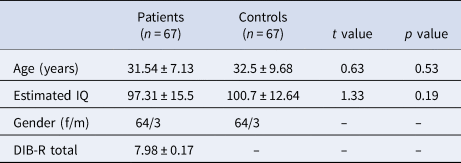
Demographic data on the patients and controls are shown in Table 1. The two groups were well matched for age, sex and estimated IQ.
Demographic and clinical characteristics for the patients and the controls

Thirty-one of the BPD patients had a history of major depression and 36 did not. These two subgroups did not differ significantly in age (with depression: mean 32.77 ± 6.73 years; without depression: mean 31 ± 7.29 years; t = 1.05; p = 0.3); sex (with depression: 30 women and 1 man; without depression: 34 women and 2 men; χ2 = 0.21; p = 0.65); and IQ (with depression: mean 96.30 ± 14.70; without depression: mean 97.62 ± 17.13; t = 0.33; p = 0.74).
Behavioural performance
The patients and the controls did not differ significantly on the 1-back version of the task (mean d′ controls: 4.31 ± 0.73; mean d′ patients: 4.20 ± 0.77, t = 0.89, p = 0.37) or on the 2-back version (mean d′ controls: 3.26 ± 0.91; mean d′ patients: 3.02 ± 0.94, t = 1.54, p = 0.12).
Within-group activations and de-activations and comparison between groups
The main focus here was on the 2-back v. baseline contrast, but for completeness we also report findings for the 2-back v. 1-back contrast. Activations in the 1-back v. baseline contrast were broadly similar to but less extensive than those in the 2-back v. baseline contrast and are not described further (for details of this analysis see online Supplementary text and Supplementary Fig. 1).
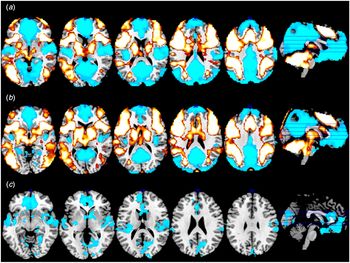
2-Back v. baseline: In this contrast the healthy controls showed a large confluent cluster of significant activation in the DLPFC bilaterally and the superior medial prefrontal cortex, extending bilaterally to temporal and occipital regions, posterior parietal areas, and subcortically to the putamen, the pallidum and the thalamus (77 688 voxels, peak at −34 −52 46; z = 12.1; p < 0.001) (see Fig. 1a). The same cluster involved parts of the left and right insula, neighbouring regions of the frontal operculum and the cerebellum. There was also a single large cluster of de-activation (70 826 voxels, peak at −2 −50 34; z = 11.2; p < 0.001). It extended from the medial frontal region to the superior occipital cortex and included the anterior and posterior cingulate gyrus, as well as the precuneus/cuneus and parts of the lingual gyrus and fusiform gyrus. This cluster also included the temporal poles extending to the superior temporal cortex and the supramarginal/inferior parietal cortex, and also the bilateral amygdala, hippocampus and parahippocampal regions.
Within-group activations (red) and de-activations (blue) in the 2-back v. baseline contrast for (a) the healthy controls and (b) the BPD patients. Clusters of significant difference between the patients and the controls are shown in the bottom panel (c). Images are displayed in neurological convention (right is right).

The pattern of activations in the BPD patients was broadly similar to that in the healthy controls (see Fig. 1b). A large cluster of 86 332 voxels (peak at: −34 20 2; z = 11.3; p < 0.001) was located in the DLPFC, the occipital region and the temporal and parietal cortex. Unlike the controls, however, the patients also showed activation in the head of the caudate nucleus bilaterally. De-activations were seen in a large cluster of 39 751 voxels (peak at: −2 −50 32; z = 10.3; p < 0.0001) that encompassed the medial frontal region and the anterior and posterior cingulate gyrus, also involving the superior occipital cortex, the posterior insular cortex, the precuneus/cuneus, and lingual, fusiform and parahippocampal regions.
In the between group comparison, there were no clusters where the patients showed reduced activation relative to the healthy controls. However, the patients showed two clusters of relatively increased activation (see Fig. 1c). One (18 566 voxels; peak at 10 42 −30; z = 5.54; p < 0.001) was in the inferior medial frontal cortex, reaching the inferior frontal and bilateral temporal cortex, the hippocampus and parahippocampal region bilaterally, the caudate nucleus and the amygdala. The second cluster (3139 voxels; peak at 18 −64 20, z = 4.78, p < 0.001) was located in the precuneus bilaterally also including the lingual gyrus and the calcarine cortex. ROIs based on mean activations in these two clusters confirmed that they both reflected reduced de-activation in the patients (see online Supplementary Fig. S2).
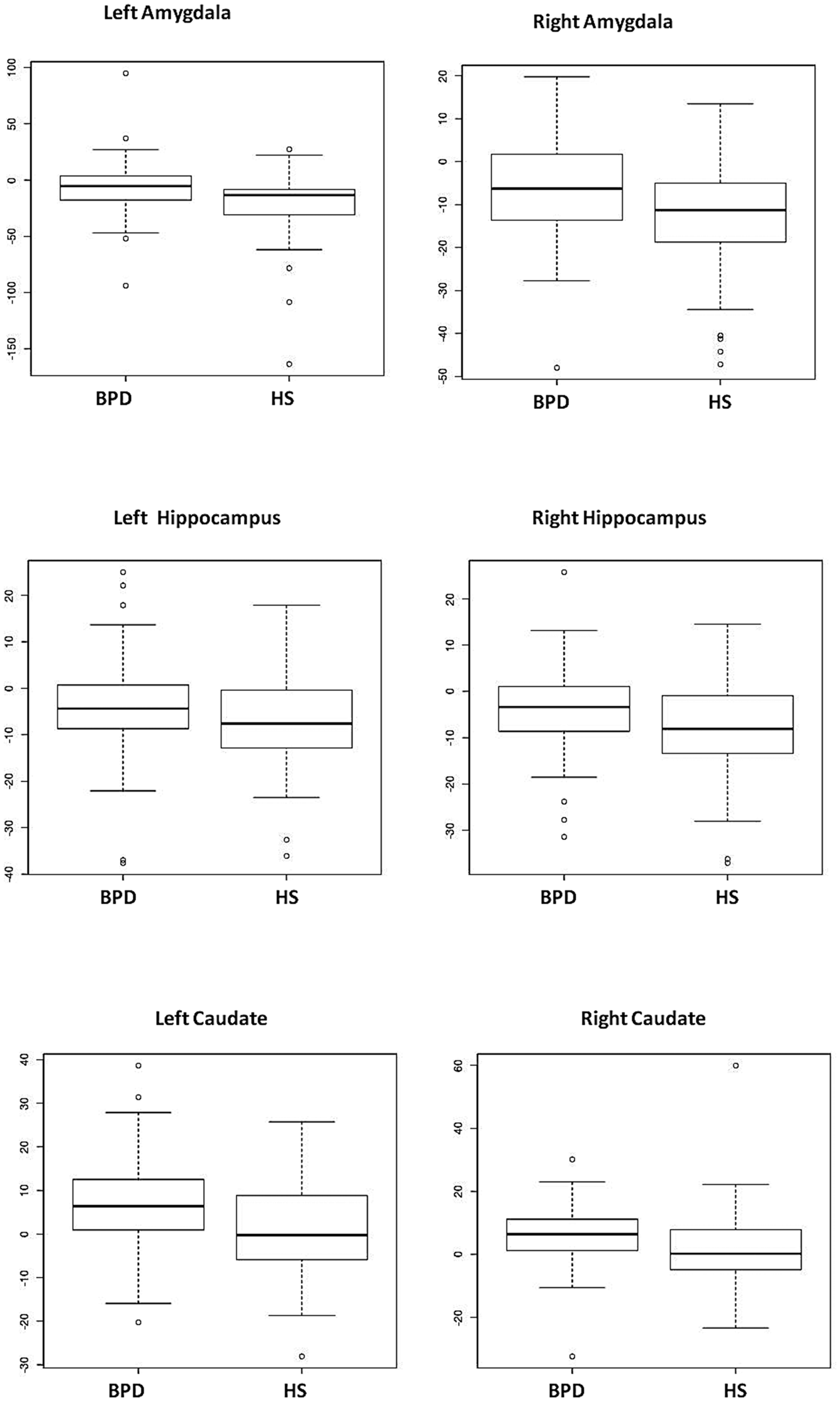
Because the first cluster of significant difference between the BPD patients and the healthy controls was large and extended subcortically to the amygdala, hippocampus and caudate nucleus, ROIs for these subcortical regions were also extracted and examined separately, using the MNI standard atlas provided in the FSL package. Boxplots for these regions are shown in Fig. 2; it can be seen that the changes in the amygdala and hippocampus represented diminished de-activation in the patients, whereas the caudate nucleus was activated in the patients but not in the controls.
Boxplots of activation differences between BPD and controls in subcortical regions, the amygdala, hippocampus and caudate.

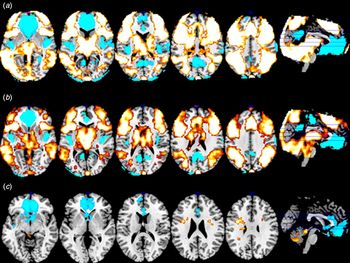
2-Back v. 1-back: Activations and de-activations for the healthy controls and the BPD patients in this contrast are shown in Fig. 3a and b. As in the 2-back v. baseline contrast the controls showed a large bilateral confluent cluster of significant activation (115 980 voxels; peak at −34 −66 −36; z = 11.3; p < 0.001) that included the DLPFC and the superior middle and medial prefrontal cortex, the left and right insula, regions of the temporal, occipital and parietal cortex and the putamen, pallidum, thalamus and posterior hippocampus. This cluster also involved the cerebellum. Five clusters of de-activation were also seen: one (26 820 voxels; peak at: 0 46 −14; z = 9.89; p = 3.21 × 10−38) was located in the medial prefrontal cortex and the orbitofrontal cortex, extending to the right pre- and postcentral cortex, the posterior insula and superior temporal cortex bilaterally, and the amygdala, the anterior hippocampus and the parahippocampal area. A second cluster was in the cuneus and lingual area bilaterally (2168 voxels; peak at −6 −56 12; z = 6.63; p = 2.8 × 10⁻⁶). The third was in the left pre/postcentral cortex (1039 voxels; peak at −36 −32 68; z = 7.3; p = 0.002) and the fourth (662 voxels; peak at 20 −100 16; z = 6.64; p = 0.03) and fifth (595 voxels; peak at −22 −102 18; z = 5.3; p = 0.048) were in the right and left superior occipital cortex, respectively.
Within-group activations (red) and de-activations (blue) in the 2-back v. 1-back contrast for (a) the healthy controls and (b) the BPD patients. Clusters of significant difference between the patients and the controls are shown in the bottom panel (c). Images are displayed in neurological convention (right is right).

The pattern of activations in the BPD patients was again similar to that in the healthy controls. There was a large cluster (96 329 voxels; peak at 4 20 48; z = 9.66; p < 0.001) extending from the DLPFC to occipital regions and including the temporal and parietal cortex and the head of the caudate nucleus bilaterally. De-activations were seen in four clusters. One (10 898 voxels; peak 0 30 −6; z = 6.22; p = 1.73 × 10⁻²⁰) was located bilaterally in the medial prefrontal and orbitofrontal cortex extending to the posterior insula and rolandic operculum, as well as to the amygdala, anterior hippocampus and parahippocampal area. A second cluster (1523 voxels; peak at −8 −62 16; z = 5.27; p = 9.72 × 10⁻⁵) involved the calcarine cortex, the cuneus and the precuneus. A third cluster was in the right pre/postcentral cortex (1486 voxels; peak at 42 −28 70; z = 3.92; p = 0.0001). Finally, a cluster (648 voxels; peak at −10 −104 10; z = 3.75; p = 0.03) was seen in the left occipital cortex.
In the 2-back v. 1-back contrast, unlike the 2-back v. baseline contrast, the BPD patients showed clusters of reduced activation compared to the healthy controls (see Fig. 3c). One was a bilateral cluster in the cerebellar vermis (1256 voxels; peak at 12 −62 −38; z = 4.29, p = 0.0005). The second and third clusters were in the left (1249 voxels; peak at −36 0 32; z = 4.14; p = 0.0005) and right (1045 voxels; peak at 22 −6 44; z = 4.23; p = 0.002) precentral cortex. Finally, there was a cluster in the left parietal cortex (617 voxels; peak at −54 −48 62; z = 4.14; p = 0.04).
There were two clusters of relative de-activation in the patients. One was in the medial frontal cortex bilaterally, mainly localised subgenually and perigenually (9140 voxels; peak at 0 44 −18; z = 4.78; p = 4.21 × 10⁻¹⁸).This cluster also extended subcortically to involve the left hippocampus and amygdala. The other cluster was in the right inferior temporal cortex (2601 voxels; peak at 46 16 −42; z = 4.45; p = 2.98 × 10⁻⁷). It also extended subcortically to involve the right hippocampus and amygdala.
Functional connectivity findings
The combined Melodic ICA+ dual regression analysis findings for the healthy controls and BPD patients are shown in online Supplementary Material (Fig. S3). Comparison between the two groups revealed no significant differences in the functional connectivity of the default mode network.
Relationship to history of major depression
To investigate the influence of this variable, mean activations in the BPD patients with and without a history of major depression were examined in ROIs based on the clusters that emerged in the comparison between the BPD patients and the healthy controls.
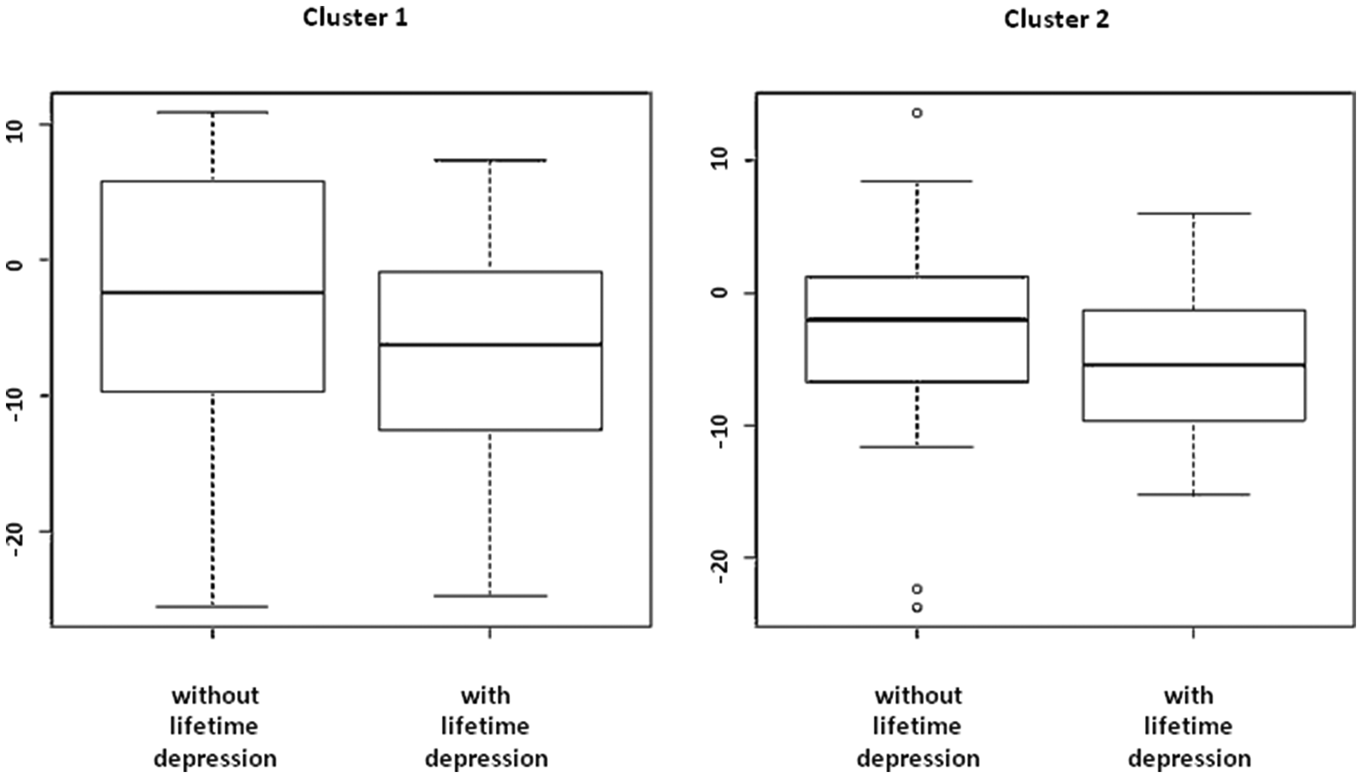
In the 2-back v. baseline contrast there was a trend towards greater de-activation in one of the two clusters of de-activation (cluster 1, inferior medial frontal cortex/temporal cortex/hippocampus/parahippocampal gyrus) in the patients with a history of depression (with depression: mean −6.8 ± 8.38: without depression: mean −2.9 ± 9.61; t = 1.73, p = 0.09) (see Fig. 4). Findings were in the same direction in the second cluster (cluster 2, precuneus/calcarine cortex), but did not reach trend level (with depression: mean −5.36 ± 5.83; without depression: mean −3.05 ± 7.27; t = 1.47, p = 0.16).
Boxplots of differences between BPD patients with and without a lifetime history of depression in the two significant clusters of de-activation found in the 2-back v. baseline comparison between patients and controls.

ROIs based on the six clusters that emerged in the comparison between the BPD patients and the controls in the 2-back v. 1-back contrast were also compared between patients with and without a lifetime history of major depression. No significant differences were found (see online Supplementary Table S1).
Discussion
The major finding of this study was that patients with BPD showed a pattern of failure of de-activation in the two midline regions of the default mode network, along with other regions including the bilateral temporal cortex and the hippocampus. We also found evidence of reduced working memory-related activation in the patients in the precentral gyrus and the left inferior parietal cortex, although these changes were only present in the 2-back v. 1-back contrast. None of the changes found appeared to be attributable to lifetime history of depression, which was present in nearly half the sample.
The fact that the BPD patients in our study did not show any evidence of reduced task-related activation in the main 2-back v. baseline comparison is perhaps understandable, given that they did not show poorer performance on the task than the healthy controls. On the other hand, we did find evidence of reduced activation in the 2-back v. 1-back contrast: this affected the left parietal cortex, which is part of the working memory network (Owen et al., Reference Owen, McMillan, Laird and Bullmore2005), though not the DLPFC. As noted in the Introduction, imaging studies that have examined cognition-related (as opposed to emotion-related) brain activations in BPD have had variable findings, either of no differences from controls (Silbersweig et al., Reference Silbersweig, Clarkin, Goldstein, Kernberg, Tuescher, Levy, Brendel, Pan, Beutel, Pavony, Epstein, Lenzenweger, Thomas, Posner and Stern2007; Krause-Utz et al., Reference Krause-Utz, Oei, Niedtfeld, Bohus, Spinhoven, Schmahl and Elzinga2012; Holtmann et al., Reference Holtmann, Herbort, Wüstenberg, Soch, Richter, Walter, Roepke and Schott2013) or increased activation (Mensebach et al., Reference Mensebach, Beblo, Driessen, Wingenfeld, Mertens, Rullkoetter, Lange, Markowitsch, Ollech, Saveedra, Rau and Woermann2009). Taken together, therefore, the findings to date concerning cognitive task-related activation alterations in BPD remain equivocal.
The possibility that BPD is characterised by failure of de-activation has not previously attracted attention. In the only other study that reported de-activations, Minzenberg et al. (Reference Minzenberg, Fan, New, Tang and Siever2007) examined 12 BPD patients and 12 healthy controls while they viewed fearful, angry and neutral faces. In the comparison between fearful and neutral faces, they found that the patients showed increased de-activation in the anterior cingulate cortex, i.e. the opposite of what we found. However, it may also be relevant here that Schulze et al.'s (Reference Schulze, Schmahl and Niedtfeld2016) meta-analysis of studies of emotional and cognitive-emotional tasks in BPD found evidence for increased activation in the posterior cingulate gyrus. Since the subtractive nature of fMRI analysis means that greater activation and reduced de-activation will both produce a picture of apparent hyperactivation (see Gusnard and Raichle, Reference Gusnard and Raichle2001), it is possible that this apparent increased activation may actually have represented failure of de-activation.
We also found failure of de-activation in the hippocampus and amygdala, bilaterally in the 2-back v. baseline contrast and on the left in the 2-back v. 1-back contrast. The hippocampus is currently considered to form part of the default mode network, and so this finding is not unexpected. However, the amygdala does not form part of the network, although Price and Drevets (Reference Price and Drevets2012) have noted that it has close connections with the medial frontal cortex, and argued that it forms part of an extended system which is involved in forebrain modulation of visceral function in response to sensory or emotive stimuli. Our findings with respect to these subcortical structures are additionally of interest because they have been found to show structural abnormality in BPD. Thus, two meta-analyses of studies examining ROIs in the amygdala and/or hippocampus found evidence for volume reductions in BPD (Nunes et al., Reference Nunes, Wenzel, Borges, Porto, Caminha and de Oliveira2009; Ruocco et al., Reference Ruocco, Amirthavasagam and Zakzanis2012). Schulze et al. (Reference Schulze, Schmahl and Niedtfeld2016) also found reduced volume of the right hippocampus, and less robustly of the left hippocampus, in a meta-analysis of 10 whole-brain, voxel-based studies of BPD.
Abnormalities in the default mode network have also been found at rest in BPD. Thus, Visintin et al. (Reference Visintin, De Panfilis, Amore, Balestrieri, Wolf and Sambataro2016) pooled data from three studies that examined resting-state activity using PET in patients with the disorder and found evidence for it being increased in the medial prefrontal cortex and the right precuneus/posterior cingulate cortex, although with significant heterogeneity. Four studies using fMRI to examine resting-state connectivity have further supported these findings (Salvador et al., Reference Salvador, Vega, Pascual, Marco, Canales-Rodríguez, Aguilar, Anguera, Soto, Ribas, Soler, Maristany, Rodríguez-Fornells and Pomarol-Clotet2014; Xu et al., Reference Xu, Cullen, Mueller, Schreiner, Lim, Schulz and Parhi2016; Baczkowski et al., Reference Baczkowski, van Zutphen, Siep, Jacob, Domes, Maier, Sprenger, Senft, Willenborg, Tüscher, Arntz and van de Ven2017; Lei et al., Reference Lei, Zhong, Liu, Jin, Zhou, Xi, Tan, Zhu, Yao and Yi2017). Our functional connectivity analysis did not reveal evidence of abnormality in the default mode network in BPD patients. However, it should be noted that this was not specifically a resting-state connectivity analysis.
The question arises of what default mode network dysfunction in BPD might imply. Clues to the normal function of the network come from the fact that, while most cognitive tasks produce de-activation in healthy subjects, some been found to activate parts of it (see Buckner et al., Reference Buckner, Andrews-Hanna and Schacter2008). These tasks include autobiographical recall (Svoboda et al., Reference Svoboda, McKinnon and Levine2006), imagining the future (Schacter et al., Reference Schacter, Addis and Buckner2007), making social and emotional judgements about oneself (and others) (Murray et al., Reference Murray, Schaer and Debbané2012), making moral judgments (Boccia et al., Reference Boccia, Dacquino, Piccardi, Cordellieri, Guariglia, Ferlazzo, Ferracuti and Giannini2017) and performing some theory of mind tasks (Schurz et al., Reference Schurz, Radua, Aichhorn, Richlan and Perner2014). This has led to the view that the default mode network is particularly concerned with self-related mental activity (Buckner et al., Reference Buckner, Andrews-Hanna and Schacter2008), or making mental simulations of the world (Buckner, Reference Buckner2012), both of which are of obvious relevance to psychiatric disorders such as schizophrenia and autism. Such a conceptualisation might also be applicable to some aspects of BPD, for example identity disturbance, but seems less easy to apply to other aspects of the disorder, especially the emotional dysregulation that is a prominent part of its symptomatology – although the close connections between the medial frontal cortex and the amygdala noted by Price and Drevets (Reference Price and Drevets2012), above, could be important for this.
In conclusion, our findings suggest that it might be appropriate to add BPD to the growing list of psychiatric disorders – including schizophrenia, major affective disorder and autism – that are characterised by default mode network dysfunction. Some limitations need to be acknowledged. Although the sample was large by functional imaging standards, at 31 and 36, the numbers in the subsamples with and without a history of major depression may not have been sufficient to detect differences between them. We did not examine for relationships with other comorbidities of BPD such as post-traumatic stress disorder and psychotic-like experiences. Given that the majority (50 of 67) of the BPD patients were taking a variety of different psychotropic medications, it was not possible to examine whether there were associations between medication status and the functional imaging changes found. Finally, the study was carried out using a 1.5T scanner, which is less sensitive than the increasingly used 3T imaging.
Supplementary material
The supplementary material for this article can be found at https://doi.org/10.1017/S0033291719001880
Acknowledgements
We acknowledge support from FIDMAG Germanes Hospitalàries Research Foundation (Barcelona, Spain) and to Benito Menni CASM (Sant Boi de Llobregat, Barcelona, Spain); to the Departament de Psiquiatria i Medicina Legal of the Universitat Autònoma de Barcelona (UAB) in Barcelona, Spain; to the Faculty of Psychology of the University of Barcelona, Bellvitge Hospital, Barcelona, Spain; to the Servei de Psiquiatria i Salut Mental, Consorci Sanitari de l'Anoia, Igualada, Spain; to the Department of Psychiatry, Hospital de la Santa Creu i Sant Pau, Barcelona, Spain and to the Hospital Sant Joan de Déu, Esplugues de Llobregrat, Spain.
Financial support
This work was supported by the Catalonian Government (2017 SGR 1271 and 2017 SGR 1265), the foundation La Fundació La Marató de TV3 (2009-092410) and several grants from the Plan Nacional de I+D+i 2013–2016, and the Instituto de Salud Carlos III and co-funded by European Union (ERDF/ESF, ‘Investing in your future’): Miguel Servet Research Contracts (CPII13/00018 to RS and CPII16/00018 to EP-C).
Conflict of interest
None declared.
Ethical standards
The authors assert that all procedures contributing to this work comply with the ethical standards of the relevant national and institutional committees on human experimentation and with the Helsinki Declaration of 1975, as revised in 2008. The authors assert that all procedures contributing to this work comply with the ethical standards of the relevant national and institutional guides on the care and use of laboratory animals. The study was carried out in accordance with the latest version of the Declaration of Helsinki and was approved by the relevant research ethics committee (Comité Ético de Investigación Clínica de las Hermanas Hospitalarias, Barcelona). Written informed consent was obtained from all subjects. The participants did not receive any economic compensation.