Introduction
Immigration detention is the practice of holding in custody people (and in some cases families) who are subject to immigration control, either while they await permission to enter, or prior to their deportation or removal from a country (McGinley & Trude, Reference McGinley and Trude2012). The first such Immigration Removal Centre (IRC) in the UK was opened in 1970 at Harmondsworth, next to London Heathrow Airport. Since then, the immigration detention estate has grown in size, with a corresponding increase in the associated legal framework (including tribunals, judges and caseworkers). In January 2015, there were 11 centres (Wilsher, Reference Wilsher2011). There has also been an increase in the number of statutory immigration-related offences. This has taken place against a backdrop of public and political anxiety about immigration and crime, and in parallel with what some refer to as a process of criminalisation of migration, sometimes referred to as ‘crimmigration’ (Stumpf, Reference Stumpf2006). The recent increase in the population of displaced persons throughout the world has highlighted the importance of these issues and increased their media prominence (Berger & Abbasi, Reference Berger and Abbasi2015).
The detention system in the UK is now one of the largest in Europe, with reports that the UK detains a greater number of asylum-seekers for longer periods than any other European country (Bosworth, Reference Bosworth2008). As many as 32 741 individuals entered detention in the year ending September 2015, an increase of 11% from the previous year (UK Home Office Immigration Statistics, 2015). People who are detained in IRCs are a diverse group ranging from people who have overstayed their visa arrangements to foreign national ex-prisoners. A significant proportion of this detained population had been resident in the UK for periods of months or even years prior to their detention.
In contrast with practice in other European Union (EU) countries, there is no legal limit to the length of time that people can be held in detention in the UK (Teather, Reference Teather2015). Detainees can potentially remain in detention indefinitely until an immigration decision is made or until they are removed or deported. Calls to introduce a time limit on immigration detention have been rejected by the Government. The reasons appear to be largely political (Herald Scotland, 2015; Teather, Reference Teather2015).
IRCs in the UK can now hold a total of around 3500 detainees at any one time; the average length of stay is about 2 months (Shaw, Reference Shaw2016). Around 90% of the IRC detainee population are young adult males (Aas & Bosworth, Reference Aas and Bosworth2013). They come from all over the world, but a particularly high number are Commonwealth citizens from former British colonies (Bosworth, Reference Bosworth2012). The majority of the population in IRCs (around 60%) are people who have sought asylum (UK Home Office Immigration Statistics, 2015).
The higher prevalence of mental disorders such as post-traumatic stress disorder (PTSD), depression and anxiety in asylum-seekers and refugees when compared with the general populations in Western countries is well documented (Fazel et al. Reference Fazel, Wheeler and Danesh2005; Heeren et al. Reference Heeren, Mueller, Ehlert, Schnyder, Copiery and Maier2012), though information is lacking as to whether asylum-seekers have an excess prevalence of mental disorders compared with rates in their country of origin. Psychological symptoms like anxiety, depression, PTSD, self-harm and suicidal ideas can be worsened by immigration detention (Keller et al. Reference Keller, Rosenfeld, Trinh-Shevrin, Meserve, Sachs, Leviss, Singer, Smith, Wilkinson, Kim, Allden and Ford2003; Steel et al. Reference Steel, Silove, Brooks, Momartin, Alzuhairi and Susljik2006; Robjant et al. Reference Robjant, Hassan and Katona2009a; Procter et al. Reference Procter, De Leo and Newman2013). Time in detention, uncertainty of immigration status, time in prison and having been the victim of interpersonal violence are significantly associated with severity of mental health problems, as well as with increased risk of self-harm among this group (Momartin et al. Reference Momartin, Steel, Coello, Aroche, Silove and Brooks2006; Hallas et al. Reference Hallas, Hansen, Stæhr, Munk-Andersen and Jorgensen2007; Robjant et al. Reference Robjant, Hassan and Katona2009a, Reference Robjant, Robbins and Seniorb; Griffiths, Reference Griffiths2013). Another important group within IRCs are foreign national prisoners who are detained with a view to deportation. They may be particularly difficult to engage with mental health services despite their considerable vulnerabilities (Forrester et al. Reference Forrester, Singh, Slade, Exworthy and Sen2014; Sen et al. Reference Sen, Exworthy and Forrester2014).
The feasibility of conducting a survey of psychiatric morbidity in an IRC is unknown. We thus set out to establish this in a preliminary study among the (exclusively male) population of one IRC. We tested the feasibility of screening for a wide range of mental disorders including autism, intellectual disability (ID), attention deficit hyperactivity disorder (ADHD) and personality disorder. A secondary objective of our study was to compare the mental health of a group seeking asylum with that of immigration detainees who were not seeking asylum.
Method
Study design
A cross-sectional survey was conducted in a single IRC in the south of England, with capacity to hold up to 400 male foreign national detainees. Data were collected through a structured, verbal interview using six validated questionnaires (see Measures).
Procedure
Informed consent was obtained both in oral and written form. An assessment of the participants’ knowledge of English was made by the researcher while seeking informed consent. Participants were recruited 24 h before the scheduled interview, which took place in a private interview room in the IRC's visitors’ centre. The interview lasted between 45 and 60 min. Data collection took place in two phases. The first phase took place over 4 weeks in June/July 2014 and was carried out by one researcher. The second phase took place over 8 weeks in January/February 2015 and was carried out by two other researchers.
Participant selection
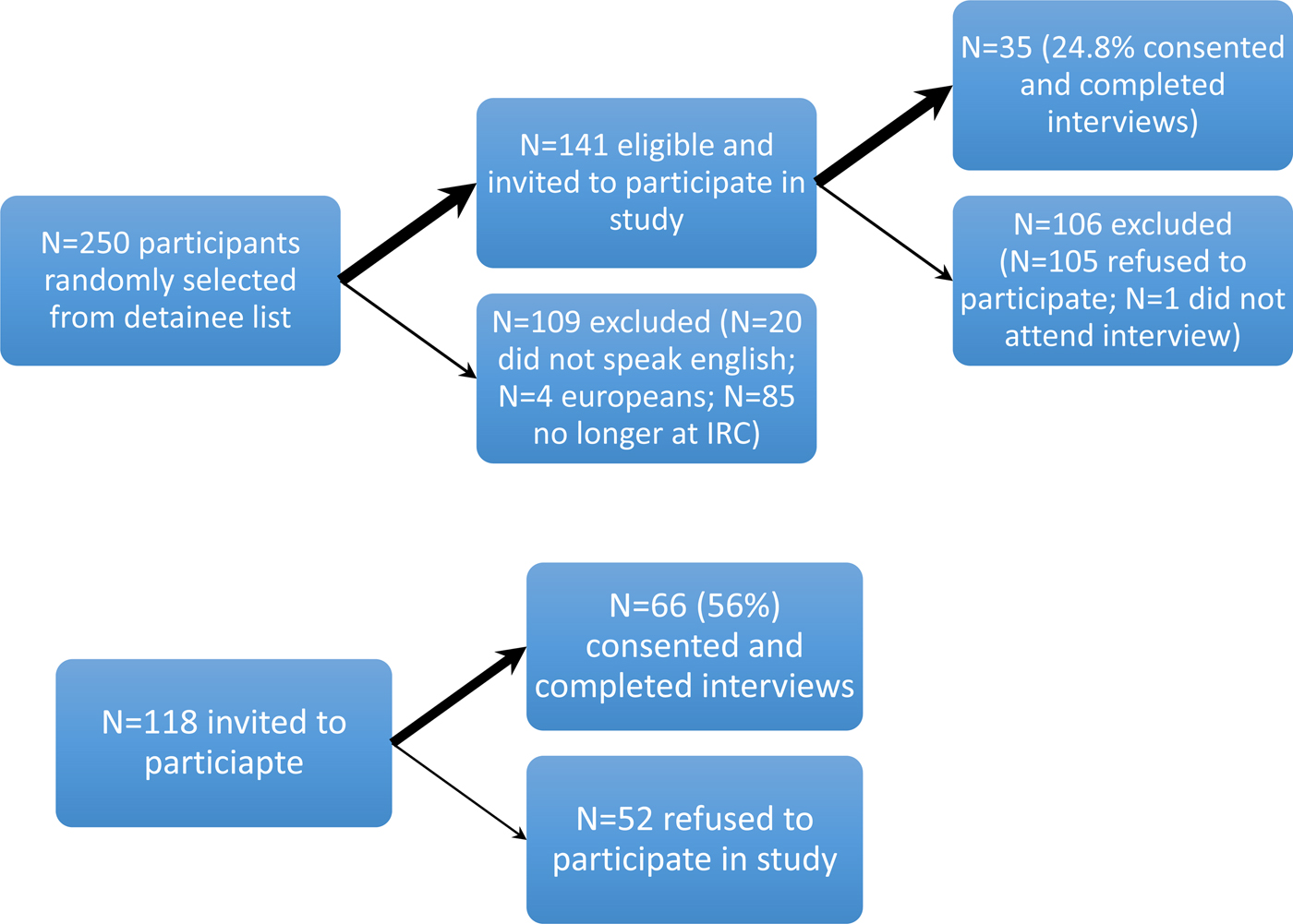
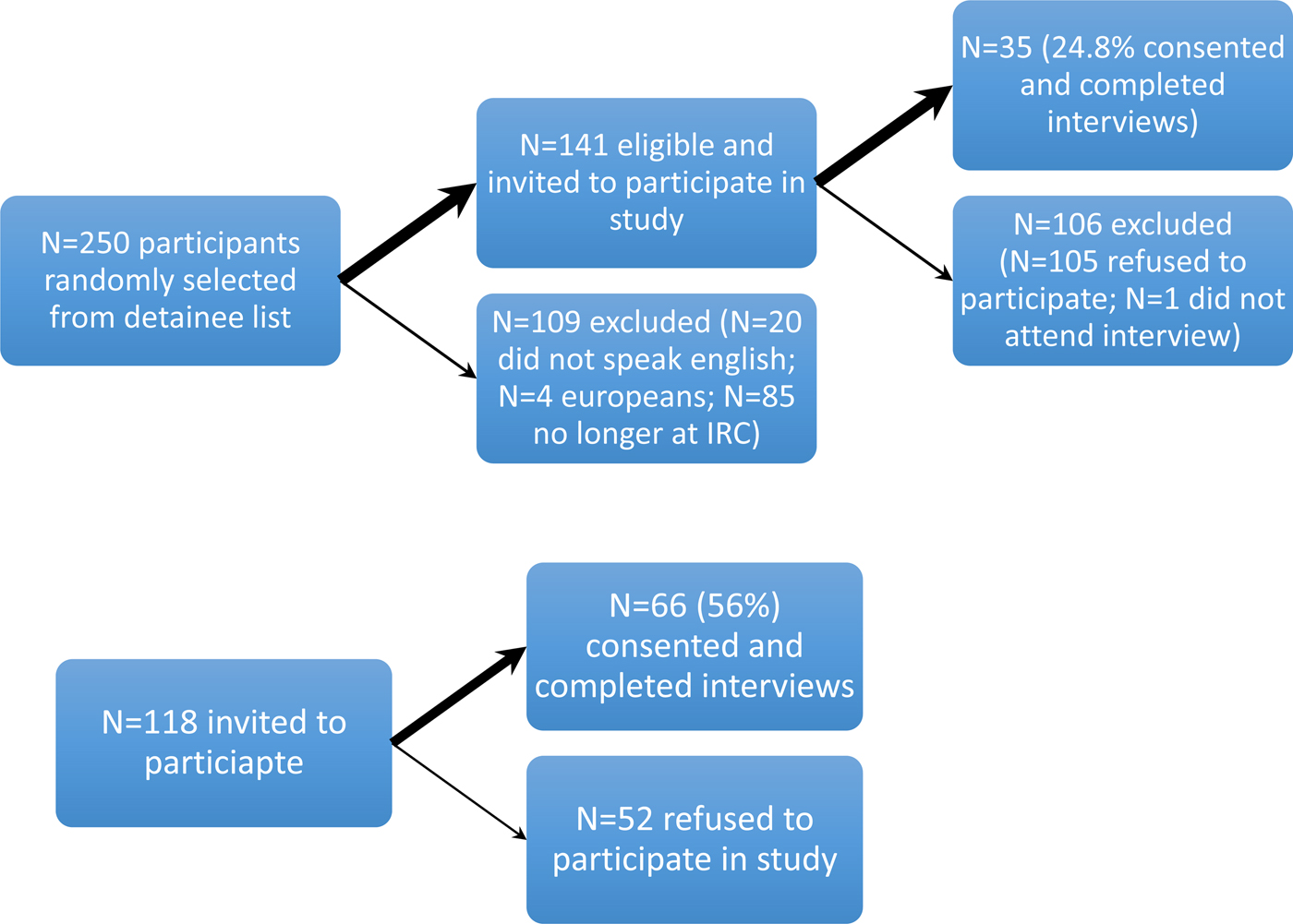
Participants were selected using simple random sampling during phase 1 and the first half of phase 2. Participants were identified for inclusion in the study using a Microsoft Excel random number generator applied to the full list of detainees at the centre. Those selected by the randomisation process were then given an information sheet about the study by researchers accompanied by IRC officers, and were invited to participate in the study. Those willing to participate were then given a time at which the interview was due to take place. Due to relatively poor phase 1 recruitment, permission was sought and obtained from the ethics committee for a protocol amendment changing to an opportunistic method of sampling. This was implemented during phase 2. All potential participants resident in a particular ‘block’ (accommodation area) of the IRC were approached by a member of the IRC's mental health in-reach team. The same member of staff then returned the next day, and those willing to participate were given an interview time. This meant that access to all participants was far easier for the in-reach team member, who was then able to fix up the appointment with the researcher. Once there was no further recruitment in one block, the whole recruitment process was repeated in the next block. The recruitment flow-chart is reported in Fig. 1.
Sampling and recruitment flow sheet over the two phases of the study. Phase one: Random sampling. Phase two: Opportunity sampling.
Eligibility criteria for participation were as follows: being born outside the EU, being over the age of 18 and (because it was impractical to use interpreters) possessing a working knowledge of English, (which was assessed through their capacity to understand the contents of the consent form while providing informed consent). According to the Inspection Report for the IRC in 2010, approximately 75% of detainees understood spoken English and 67% understood written English.
Measures
Six validated screening tools were used for the assessment interview: the Mini International Neuropsychiatric Interview MINI v6.0 (Sheehan et al. Reference Sheehan, Lecrubier, Sheehan, Amorim, Janavs, Weiller, Hergueta, Baker and Dunbar1998), which assesses common Diagnostic and Statistical Manual diagnoses, the Standardised Assessment of Personality Abbreviated Scale SAPAS (Moran et al. Reference Moran, Leese, Lee, Walters, Thornicroft and Mann2003), the Autism-Spectrum Quotient 10 AQ-10 (Allison et al. Reference Allison, Auyeung and Baron-Cohen2012), Part A of the Adult ADHD Self-Report Scale ASRS (Kessler et al. Reference Kessler, Adler, Ames, Demler, Faraone, Hiripi, Howes, Jin, Secnik, Spencer, Ustun and Walters2005), The Learning Disability Screening Questionnaire LDSQ (McKenzie & Paxton, Reference McKenzie and Paxton2006; McKenzie et al. Reference McKenzie, Michie, Murray and Hales2012), and the Camberwell Assessment of Needs – Forensic Version CANFOR (Thomas et al. Reference Thomas, Slade, Mccrone, Harty, Parrott, Thornicroft and Leese2008). The clinical and/or diagnostic purpose of each test is clear from its title. The rationale for choice of the screening tools was that we had identified prison studies using these tools (McCarthy et al. Reference McCarthy, Underwood, Hayward, Chaplin, Forrester, Mills and Murphy2015).
The interviewers were trained to use the MINI and the other tools by the chief investigator (PS). Inter-rater reliability was assessed by joint ratings of all measures with each of the researchers on at least one study participant.
The following demographic data were also obtained: age; nationality; immigration status; and any information regarding prior imprisonment.
Ethical considerations
Ethical approval, including approval for the amendment to the sampling methodology, was obtained from the NRES ethics committee of East of England and from the National Offender Management Service. The Research Ethics Committee reference number was 13/EE/0182.
The prevalence rate from the current study was compared with the prevalence rates reported within comparable published studies in community or prison populations.
Results
In total 101 male detainees took part in the study. The response rate for Phase 1 was 24.8%, with 35 participants taking part out of 141 approached, while the response rate for Phase 2 was 56%, with 66 participants taking part out of 118 approached. The overall response rate for the study was 39%.
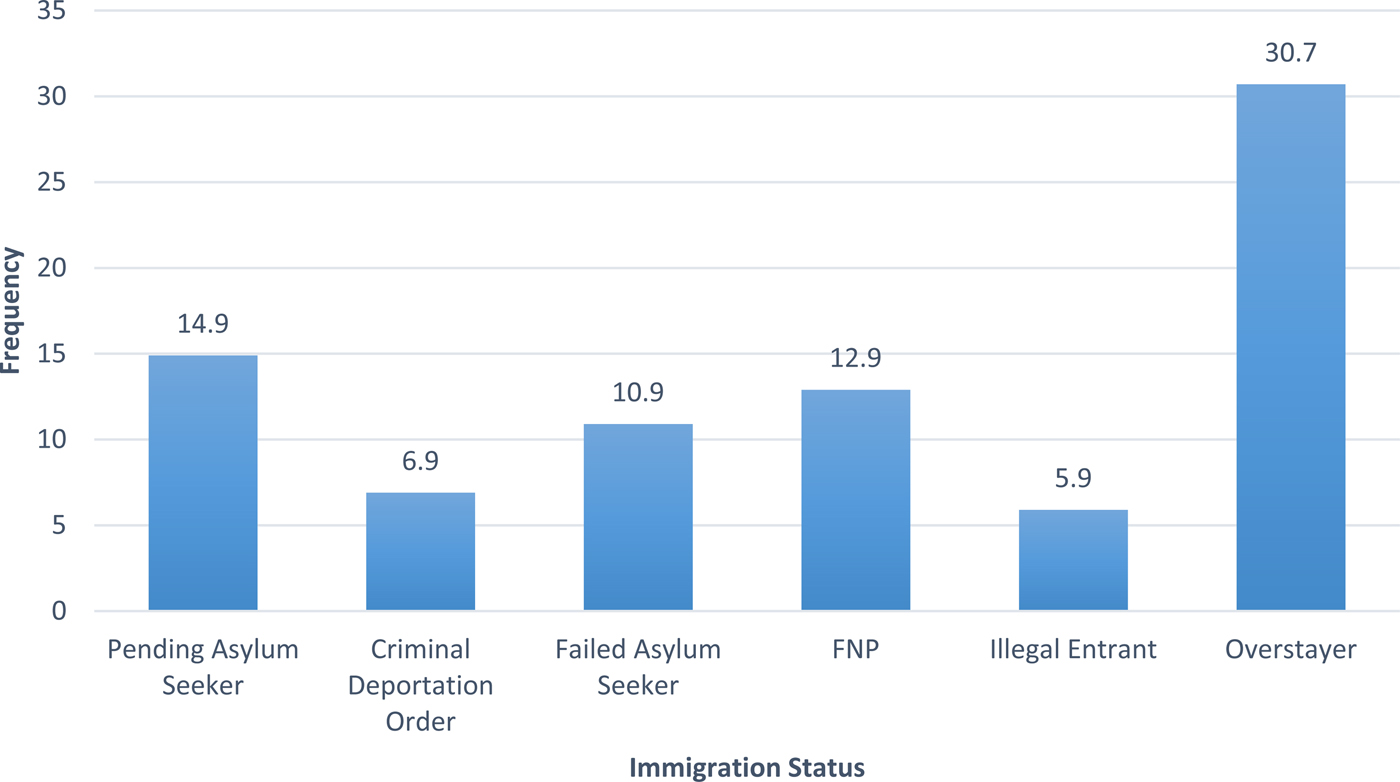
The mean age of the whole sample was 31.65 years (s.d. = 9.51); ages ranged 18–60 years, with 58% of the sample aged 21–30. More than half of the sample (55.4%) had not been educated beyond secondary school. More than three-quarters (77%) were single. There was wide variation in their year of arrival in the UK, from 1980 to 2015. The detainees also varied in their immigration status (see Fig. 2). The participants came from 27 different countries, with the majority from the Indian subcontinent and Africa. 35% had previously been to prison. 31% reported having a current mental health disorder and 19% reported having had a past mental health disorder.
Bar chart showing the frequency and distribution of participants' immigration status in the sample.
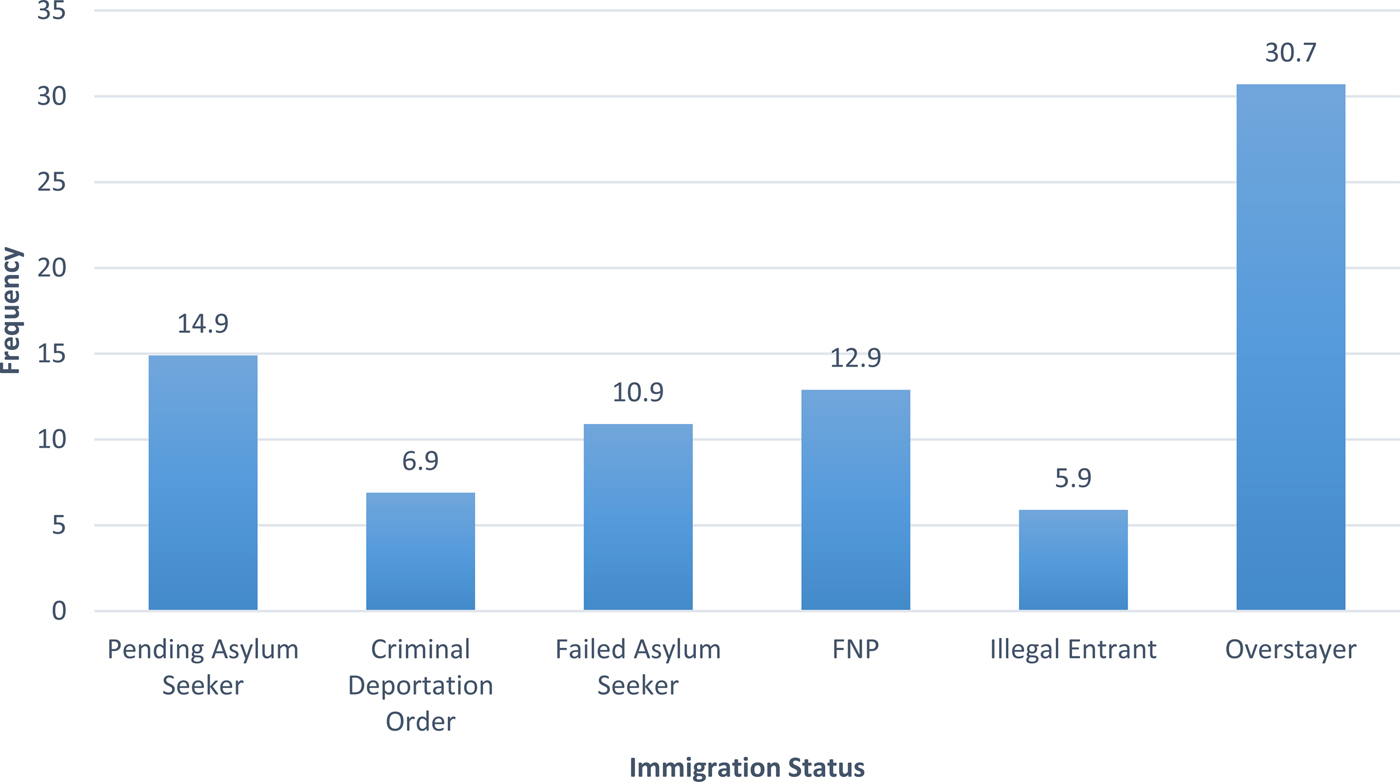
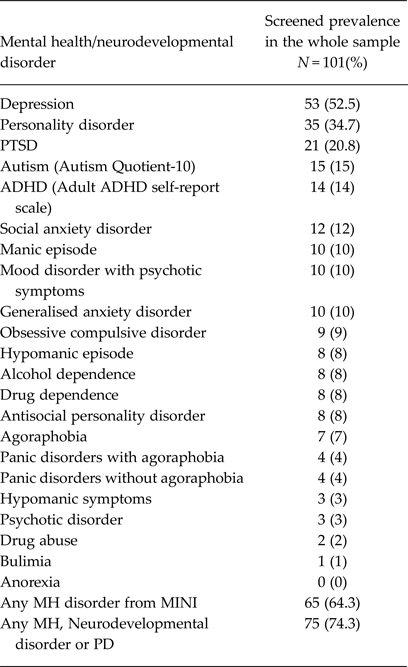
Table 1 outlines the at-risk prevalence for each mental health, developmental or personality disorder as screened through the MINI, Adult ADHD self-report scale, AQ-10 and SAPAS. A total of 22 detainees (21.8%) screened positively for suicidal ideation. Overall, the screened prevalence for any mental health, developmental or personality disorder was 74.3%, with 55.4% screening positive for more than one disorder.
Prevalence according to screening tests
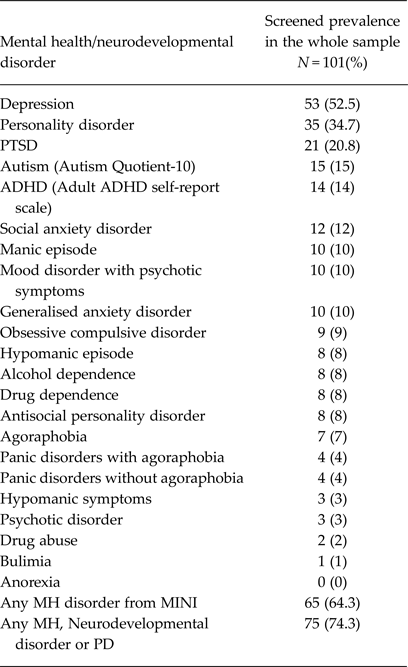
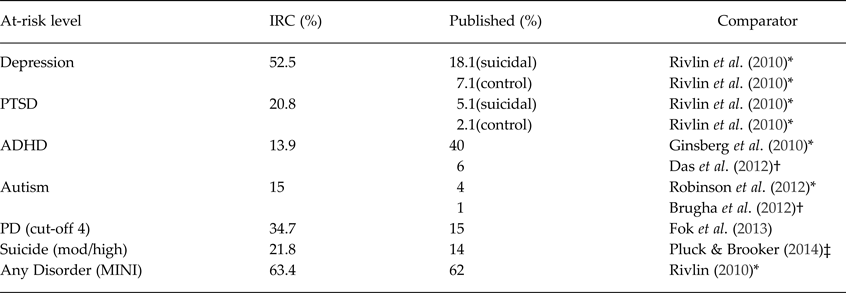
Table 2 summarises our results against those from the community- and prison-based studies (Ginsberg et al. Reference Ginsberg, Hirvikoski and Lindefors2010; Rivlin et al. Reference Rivlin, Hawton, Marzano and Fazel2010; Brugha et al. Reference Brugha, Cooper, McManus, Purdon, Smith, Scott, Spiers and Tyrer2012; Das et al. Reference Das, Cherbuin, Butterworth, Anstey and Easteal2012; Robinson et al. Reference Robinson, Spencer, Thomson, Stanfield, Owens, Hall and Johnstone2012; Fok et al. Reference Fok, Hotopf, Stewart, Hatch, Hayes and Moran2013; Pluck & Brooker, Reference Pluck and Brooker2014) that used the same screening tools, which we identified as providing meaningful comparisons with our IRC data. Caution should nonetheless be applied in interpretation of the differences, given the differences in comparator characteristics between the current and published samples with respect to sample size, assessment instruments used, as well as characteristics of the sample. For this reason, we have not reported formal tests of statistical significance for these apparent differences.
Summary of the frequency rates for the IRC compared with community, probation and prison populations

*Prison sample.
†Community sample.
‡Probation sample.
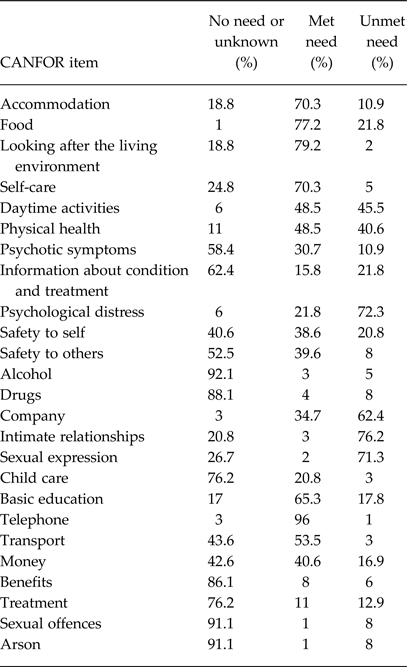
Table 3 outlines the level of met and unmet needs for the IRC sample, as identified by CANFOR. In addition, the table outlines the proportion of needs that were ‘unmet’. Most needs were met (M = 8.6; s.d. = 4.05), with a lower level of unmet needs (M = 5.7; s.d. = 3.31). However, at least one unmet need was reported by 95% of the participants. The most common unmet needs included intimate relationships (77%), psychological distress (73%) and sexual expression (72%). Other frequently unmet needs included company (63%), daytime activities (46%) and physical health needs (41%).
Frequency of need, met need and unmet need on CANFOR

Discussion
Overall, 75% of the sample screened positive for at least one mental health disorder. The most common psychiatric problems that emerged were depression, personality disorders and moderate to high levels of suicidality. The prevalence of depression was higher than the reported prevalence in prisons using the same screening tool (Rivlin et al. Reference Rivlin, Hawton, Marzano and Fazel2010). The rates of PTSD were lower compared with those reported in detention (Heeren et al. Reference Heeren, Mueller, Ehlert, Schnyder, Copiery and Maier2012) and were also lower than have been reported in asylum-seekers living in the community (Fazel et al. Reference Fazel, Wheeler and Danesh2005) They were, however, higher than in a study of prisoners using the same screening tool (Rivlin et al. Reference Rivlin, Hawton, Marzano and Fazel2010). The overall presence of mental disorder in the sample was comparable with the levels found in prisons. The rates of suicidality are also comparable with the male prison population (Prison Reform Trust, 2014).
To the best of our knowledge, this is the first study to screen for neurodevelopmental disorders Attention Deficit Hyperactivity Disorder (ADHD), Autism and ID in immigration detainees using recognised screening tools. The prevalence rates for these conditions were lower than those detected in British prisoners using the same screening tools (McCarthy et al. Reference McCarthy, Underwood, Hayward, Chaplin, Forrester, Mills and Murphy2015). However, the prevalence for autism spectrum disorder was higher than a North American high secure prison sample (Fazio et al. Reference Fazio, Pietz and Denney2012). The comparatively low prevalence figures detected in our study does raise questions about the validity of using this set of screening tools in populations containing large numbers of people from Africa and the Indian subcontinent.
The findings for the LDSQ screening for ID were not reported as it became apparent that the LDSQ was inappropriate for use in our study sample. This was because it included questions on their ability to read and write, whether they had a job, lived independently and had contact with learning disability services, all of which were inappropriate for a detained IRC group, with English not their first language. A better screening tool needs to be identified for future studies with greater emphasis on non-verbal skills. However, at the very least, our findings indicate a need for greater awareness of staff within IRCs about the presence of neurodevelopmental disorders to facilitate early recognition and appropriate onward referral. This is particularly important as there are serious questions about the vulnerability and capacity of detainees with limited cognitive function to ask for assistance, and to be aware of the services available to them.
This was also the first study to screen for the presence of personality disorder in detained foreign nationals. Perhaps unsurprisingly, the prevalence of screen-positive personality disorder was higher than estimates reported in community samples using the same screening instrument, the SAPAS. This is at variance with the results of other studies which suggest lower rates of personality disorder among immigrant populations (Tyrer et al. Reference Tyrer, Merson, Onyett and Johnson1994; Pascual et al. Reference Pascual, Malagón, Córcoles, Ginés, Soler, García-Ribera, Pérez and Bulbena2008; Nielsen et al. Reference Nielsen, Ziegenbein and Sieberer2014). Bearing in mind the limitations of our sample, and the use of a PD screen (rather than a formal diagnostic process), the findings need to be interpreted cautiously. Nonetheless, they serve to highlight the importance of screening for personality disorder within IRCs, as a positive screen is likely to have prognostic implications for recovery from associated health conditions (Tyrer et al. Reference Tyrer, Merson, Onyett and Johnson1994; Fok et al. Reference Fok, Hotopf, Stewart, Hatch, Hayes and Moran2013).
There are some key limitations to our study. The lack of interpreters meant that detainees without a working knowledge of English were excluded from the study. This group could arguably constitute the most vulnerable detainees, and our mental disorder prevalence figures could thus be an under-estimate because of their exclusion. There were relatively high refusal rates, especially in the first phase of the study, which may indicate self-selection bias. Specific reasons for refusal were not sought from the participants, another limitation of the study. However, in our view, the principal reasons for poor recruitment in the first phase were the reliance on IRC staff for recruiting participants, the presence of only one researcher for data collection, and the data collection period overlapping with the holy month of Ramadan, which meant that several detainees were fasting and hence not in the best frame of mind to take part in the study.
These issues were addressed in the second phase, where the involvement of a member of the mental health in-reach team for the initial approach seemed to be the single biggest factor in improved recruitment. We do not have data to determine whether subjects with more severe symptoms are more likely to participate or refuse to take part. It is, however, clear that possible self-selection in the context of high refusal rates limits the generalisability of the results. Additionally, most of the tests administered were intended for screening rather than for generating definitive diagnoses. The screening tools were also not validated in an immigration detainee population. The numbers were also too small to generate any meaningful sub-group analysis. The study was conducted in only one site, and thus the results might not be generalisable to the whole IRC population. There were no women or children included in the study population. EU nationals were excluded from the study sample as it was felt that they would be in the IRC for reasons not connected with immigration, but future studies should perhaps include them, as they are subject to similar issues as other detainees. There are further difficulties in applying our findings internationally, since immigration detention policy and practice worldwide are very variable.
Despite these shortcomings, we have demonstrated that it is feasible, albeit challenging, to conduct psychiatric research in an IRC setting. One of the major strengths of the study was the involvement of the mental health in-reach team from a very early stage. The members of the in-reach team were able to approach and secure approval from the governor of the IRC who then sent out a circular to all staff to instruct maximum co-operation with the researchers. This model also helped to ensure somewhat the perceived neutrality of the researchers as they were not seen going around with the IRC staff recruiting participants.
The project had a steering group, which met regularly with participation from key stakeholders, which included representatives from the in-reach team. Discussions with staff from the IRC took place at an early stage. This was crucial to ensure that the research procedures were acceptable to IRC staff and did not hamper the smooth functioning of the IRC. It took nearly 2 years to gain approval from all parts of the system before the commencement of data collection. However, with close co-operation between the clinicians at the IRC and the academics through the steering group, the project was completed successfully within the constraints of the dissertation submission deadlines for the students who took part in it. Our study thus helps to demonstrate that research in IRCs is indeed feasible, provided that the right model for data collection is followed and the right stakeholders involved from an early stage.
It is important to note that IRCs do not serve the same functions as prisons. Prisons are intended to deter, punish and rehabilitate as well as providing retribution. Most prisoners serve pre-defined sentence periods. In contrast, IRCs serve an ‘administrative’ function, detaining people who have either committed no crime or who have completed their prison sentences. Length of detention is often not specified clearly, there is no active rehabilitative function and no question of retribution. Detainees face the prospect of an imminent return to their country of origin, which they may wish to avoid.
There was a significant change in detention policy in the UK in 2010. Until then, people with a mental illness were only considered suitable for detention ‘under exceptional circumstances.’ This was amended so that individuals with mental health problems were only exempt if their mental health problems ‘could not be managed satisfactorily in the detention setting’. However, the Royal College of Psychiatrists supports the position that serious mental health problems cannot be managed satisfactorily in such detention settings and such detention is likely to be harmful to detainees’ mental health (Royal College of Psychiatrists, 2013). There have also been several cases where the detention of people with mental illness has breached the threshold of Article 3 of the Human Rights Act (Royal College of Psychiatrists, 2013). The high levels of morbidity found in our study offer support for the argument that community provision should be actively considered as a possible alternative to custodial detention for many of those who are currently detained, as well as continuing to ensure that people with serious mental illness are not subjected to immigration detention. The study also supports the findings of other research demonstrating high rates of mental health problems in immigration detainees and high levels of vulnerability.
Concerns about detaining people with mental health problems have been raised repeatedly by various bodies (Teather, Reference Teather2015). The standard of healthcare, including mental healthcare, within IRCs, has been identified as cause for serious concern (Royal College of Psychiatrists, 2013; Grant-Peterkin et al. Reference Grant-Peterkin, Schleicher, Fazel, Majid, Robjant, Smith and Katona2014). To maintain appropriate standards of care, responsibility for healthcare in IRCs has recently been transferred from the Home Office to the Department of Health (Pickles & Hartree, Reference Pickles and Hartree2013). Commissioning responsibilities have been transferred to NHS England, using a process that had previously taken place in prison healthcare and which has also been considered or implemented in other parts of the criminal justice system (Ramsbotham, Reference Ramsbotham1996; Forrester et al. Reference Forrester, Valmaggia and Taylor2016). In prisons, these changes followed the publication of estimates, which included a series of single site studies (Brooke et al. Reference Brooke, Taylor, Gunn and Maden1996; Birmingham et al. Reference Birmingham, Mason and Grubin1997) and a national morbidity study (Singleton, Reference Singleton1998). The findings resulted in new mental health in-reach services that were then rolled out nationally (Department of Health, HM Prison Service, and The National Assembly of Wales, 2001). Subsequently, however, the in-reach teams encountered higher levels of morbidity than had been anticipated, and there was early evidence of under-resourcing (Forrester et al. Reference Forrester, Singh, Slade, Exworthy and Sen2014). Given the lessons from these earlier changes within prison healthcare, it would be important to assess the prevalence of psychiatric morbidity within IRCs to ensure that in-reach mental health services are commissioned and resourced appropriately. Failure to do so breaches the core principles of the human rights-based approach to healthcare provision, based on the principles of fairness(F), respect(R), equality(E), dignity(D) and autonomy(A)-also known as FREDA (Curtice & Exworthy, Reference Curtice and Exworthy2010).
In view of our results suggesting a high prevalence of mental disorders in IRCs, we would recommend that a national multi-site prevalence study of mental health morbidity is required in order to improve understanding of the needs of detainees in such a setting. Such a survey is more likely to be successful with the assistance of a representative from the mental health in-reach service for the initial approach to potential participants. The multi-site model would also help to ensure that subjects consenting to take part are not missed, as the turnover of detainees is very high in IRCs. Finally, we recommend that future research should include appropriate interpreting facilities and should not exclude EU nationals, without which the sample would not be truly representative.
We are aware that the UK government has undertaken a review to implement the Tavistock Institute's report on mental health in Immigration Removal Centres, which makes some important recommendations about change of practice in IRCs, particularly with regard to mental health, and has accepted most of its recommendations (Home Office, 2015; Lawlor et al. Reference Lawlor, Sher and Stateva2015; Shaw, Reference Shaw2016). There was an inquiry into the use of immigration detention by an All-Party Parliamentary Group (Teather, Reference Teather2015), which made many key recommendations to the government on fundamentally altering the system of immigration detention, learning from community-based alternatives practiced in countries like Sweden and the USA. Similar recommendations were made in a Government-sponsored report (Shaw, Reference Shaw2016). Suicide attempts in IRCs are at an all-time high, attracting national headlines (Taylor, Reference Taylor2016). The challenges around providing appropriate mental health care to refugees and asylum-seekers continue to be debated in the psychiatric literature (Sen, Reference Sen2016). We hope the findings from our study contribute to this debate.
Supplementary material
The supplementary material for this article can be found at https://doi.org/10.1017/S2045796017000269.
Acknowledgements
The authors thank all detainees who participated in the research for their time, willingness to participate and share their experience with the researchers. The authors would also like to thank the National Offender Management Service for permission to carry out the study and for critically reviewing the study protocol before granting approval.
Financial Support
Travel and subsistence costs for the researchers were met by King's College. No other form of financial support was available for the study.
Conflicts of Interest
None.
Ethical Standards
The authors assert that all procedures contributing to this work comply with the ethical standards of the relevant national and institutional committees on human experimentation and with the Helsinki Declaration of 1975, as revised in 2008.
Availability of data and materials
Uploaded as supplementary file.