A parent's history of childhood maltreatment has been associated with a higher risk of the offspring being maltreated by the parent and/or by another individual (for reviews, see Berzenski, Yates, & Egeland, Reference Berzenski, Yates, Egeland, Korbin and Krugman2014; Madigan et al., Reference Madigan, Cyr, Fearon, Eirich, Ly, Poole and Alink2019). However, despite evidence of some intergenerational continuity of maltreatment, a substantial number of parents who were maltreated in childhood do not perpetuate the cycle of maltreatment (Thornberry, Knight, & Lovegrove, Reference Thornberry, Knight and Lovegrove2012). The presence of intergenerational discontinuity of maltreatment raises the question of why some maltreated parents maintain the cycle of maltreatment with their children (by maltreating their child and/or by failing to protect their child from maltreatment by others), whereas others do not perpetuate this cycle. Under which conditions is there intergenerational continuity/discontinuity? The main purpose of the current study was to identify factors that distinguish parents who maintain the cycle from parents who interrupt it to shed light on moderating mechanisms that may amplify or attenuate intergenerational continuity (Belsky, Conger, & Capaldi, Reference Belsky, Conger and Capaldi2009; Egeland, Bosquet, & Chung, Reference Egeland, Bosquet, Chung, Browne, Hanks, Stratton and Hamilton2002).
Intergenerational (Dis)continuity of Maltreatment and the Diathesis-Stress Model
A diathesis-stress model of ineffective parenting (Phelps, Belsky, & Crnic, Reference Phelps, Belsky and Crnic1998) posits that certain individual experiences (e.g., childhood experiences of poor parenting) or characteristics (e.g., negative internal working models) constitute a diathesis or vulnerability that can lead to an intergenerational cycle of problematic parenting, but only if other precipitating risk factors are present. In line with an ecological perspective that views child maltreatment as multiply determined (Belsky, Reference Belsky1993; Bronfenbrenner & Morris, Reference Bronfenbrenner, Morris, Damon and Lerner2006; Cicchetti & Lynch, Reference Cicchetti and Lynch1993), potential precipitating factors could stem from individual, sociodemographic, family, and contextual levels of risk. In view of their documented links with child maltreatment (see Stith et al., Reference Stith, Liu, Davies, Boykin, Alder and Harris2009), parental psychological problems and family-ecology related stressors could precipitate (moderate) the risk of intergenerational continuity of maltreatment. These factors are reviewed subsequently.
Psychological functioning and intergenerational (dis)continuity of maltreatment
Parenting stress
Despite its widely acknowledged importance in relation to child abuse and neglect (McDaniel & Slack, Reference McDaniel and Slack2005; Stith et al., Reference Stith, Liu, Davies, Boykin, Alder and Harris2009), the role of parenting stress in the intergenerational (dis)continuity of maltreatment remains poorly documented. A rare study that included an examination of the subjective experience of parenting found that high satisfaction with regard to their parental role reduced the likelihood that maltreated parents would maltreat their children (Thornberry et al., Reference Thornberry, Henry, Smith, Ireland, Greenman and Lee2013). This finding suggests that parenting stress (likely an indication of low parental satisfaction) could moderate intergenerational continuity by heightening the risk of child maltreatment among maltreated parents. In support of this idea, a recent study showed high levels of parenting stress to be associated with greater intergenerational continuity of harsh discipline (Niu, Liu, & Wang, Reference Niu, Liu and Wang2018).
Psychological distress
Mental health problems, which can impact both psychological well-being and interpersonal functioning, may contribute to caregivers’ emotional unavailability and lack of sensitive responsiveness to children's needs, and increase the risk of neglecting and/or abusive parenting behavior (Stith et al., Reference Stith, Liu, Davies, Boykin, Alder and Harris2009). Research examining the moderating role of psychological distress on intergenerational continuity of maltreatment has yielded mixed results. Some studies have shown that maltreated parents with high levels of psychological distress were at greater risk of maltreating their children compared to maltreated parents with low psychological distress (Jaffee et al., Reference Jaffee, Bowes, Ouellet-Morin, Fisher, Moffitt, Merrick and Arseneault2013; Leifer, Kilbane, & Kalick, Reference Leifer, Kilbane and Kalick2004). In contrast, Dixon, Browne, and Hamilton-Giachritsis (Reference Dixon, Browne and Hamilton-Giachritsis2009) did not find that the presence of mental illness predicts intergenerational continuity of maltreatment. It is possible that methodological issues may partially account for these differences, as some studies included a limited number of abused parents who maintained the maltreatment cycle (e.g., n = 9 in Dixon et al., Reference Dixon, Browne and Hamilton-Giachritsis2009).
Dissociative symptoms
Another mental health problem that is of particular interest in the study of the intergenerational (dis)continuity of maltreatment is dissociation. The disconnection of thoughts, emotions, and actions, coupled with the inability to integrate past traumatic maltreatment experiences into a coherent view of self, may increase the risk that maltreated individuals perpetuate the cycle of maltreatment. To our knowledge, only two studies have examined whether dissociation could attenuate or amplify the risk of intergenerational continuity of maltreatment, and discriminate parents who perpetuate the cycle of maltreatment from those who break it. Leifer et al. (Reference Leifer, Kilbane and Kalick2004) showed that mothers with a childhood sexual abuse history whose children were also sexually abused reported more dissociative symptoms than mothers who broke the intergenerational cycle. Egeland and Susman-Stillman (Reference Egeland and Susman-Stillman1996) considered intergenerational continuity more broadly by including various forms of maltreatment in both mothers and children. Their results showed that mothers who perpetuated the cycle (n = 14) reported higher levels of dissociative symptoms than maltreated mothers who broke the cycle of maltreatment (n = 10).
Family-ecology factors and intergenerational (dis)continuity of maltreatment
Sociodemographic risk
Low income and poverty-related factors, such as unemployment, receipt of welfare, low levels of parental education, and single-parent status, have been linked to child maltreatment (see Drake & Jonson-Reid, Reference Drake, Jonson-Reid, Korbin and Krugman2014; Sedlak et al., Reference Sedlak, Mettenburg, Basena, Petta, McPherson, Greene and Li2010; Trocmé et al., Reference Trocmé, Fallon, MacLaurin, Sinha, Black, Fast and Holyroyd2010). Contributing to family economic hardship, these factors constitute important stressors that may hinder parents’ capacity to provide adequate care to their children. Young parenthood has also been associated with child maltreatment. Adolescent parents, who have not yet completed their own development and generally lack basic knowledge and preparedness for parenting, are at heightened risk of abusing and neglecting their children (Wu et al., Reference Wu, Ma, Carter, Ariet, Feaver, Resnick and Roth2004). Little information is available regarding sociodemographic characteristics as potential moderators that could increase or attenuate intergenerational continuity of maltreatment. One study found that economic hardship distinguished families in which the cycle of maltreatment was maintained from families in which the cycle was broken (Dixon et al., Reference Dixon, Browne and Hamilton-Giachritsis2009). In view of the dearth of empirical data on this question, authors have recently advocated the need to more closely examine how poverty-related factors might be involved in maltreatment (dis)continuity from one generation to the next (Geiger et al., Reference Geiger, Schelbe, Hayes, Kawam, Katz, Klika, Daron, Donnelly, Huang and Powell2015).
Intimate partner violence (IPV)
IPV has been repeatedly identified as an important risk factor related to child abuse and neglect (see Alhusen, Ho, Smith, & Campbell, Reference Alhusen, Ho, Smith, Campbell, Korbin and Krugman2014). The presence of IPV in a family creates a climate of violence that often “spills over” into parent–child relationships, with either the abusive partner or the IPV victim, or both, perpetrating child maltreatment. There is some evidence that IPV increases the risk of intergenerational continuity of maltreatment. For example, results of a population-based cohort study indicate that the risk of maltreated mothers’ offspring being maltreated was greater when mothers experienced IPV victimization (Tracy, Salo, & Appleton, Reference Tracy, Salo and Appleton2018). In contrast, Dixon et al. (Reference Dixon, Browne and Hamilton-Giachritsis2009) found that living with a violent adult did not distinguish families who perpetuated versus broke the cycle of maltreatment.
Stressful life events
Research indicates that families of maltreated children experience more stressful life events (such as job loss, birth of a child, separation/divorce, serious illness, and death of a close friend or family member) than nonmaltreating families (Li, Godinet, & Arnsberger, Reference Li, Godinet and Arnsberger2011; Stith et al., Reference Stith, Liu, Davies, Boykin, Alder and Harris2009). Cumulative life events, which are known to be associated with disturbances in personal and family functioning, may increase the risk of parenting difficulties. Moving is a stressful event that has received particular attention from maltreatment researchers. Residential instability has been associated with a greater risk of maltreatment reports to Child Protection Services (CPS; McDaniel & Slack, Reference McDaniel and Slack2005; Sidebotham, Heron, Golding, & ALSPAC Study Team, Reference Sidebotham, Heron and Golding2002). Frequent moving can be particularly disruptive in families’ lives and put a strain on parent–child relationships as both parents and children have to repeatedly adapt to new surroundings and acquaintances, and possible changes in routines.
Little is known regarding the role, if any, of stressful life events in the intergenerational (dis)continuity of maltreatment. One study, conducted on a fairly small sample of 30 maltreated mothers, showed that mothers who maltreated their children reported more stress related to life events than mothers who did not perpetuate the cycle of maltreatment (Egeland, Jacobvitz, & Sroufe, Reference Egeland, Jacobvitz and Sroufe1988). Of some relevance here are the results of another study focusing, not on intergenerational continuity of maltreatment, but on predictors of resilience among adults with a history of childhood maltreatment (DuMont, Widom, & Czaja, Reference DuMont, Widom and Czaja2007). Maltreated individuals who experienced more stressful life events were less likely to be resilient than those with fewer stressful events.
Social support
Several studies have shown that maltreating families are often socially isolated and report less social support from friends, family, and other people than nonmaltreating families (Kang, Reference Kang2013; Stith et al., Reference Stith, Liu, Davies, Boykin, Alder and Harris2009). Without an adequate social support network, the challenges and demands inherent to child caretaking may become overwhelming and increase the risk of poor parenting. Findings are mixed concerning the role of social support as a moderator of the intergenerational continuity of maltreatment. Whereas some studies found that maltreated parents’ social isolation and lack of social support were associated with an increased risk of their offspring being maltreated (Dixon et al., Reference Dixon, Browne and Hamilton-Giachritsis2009; Tracy et al., Reference Tracy, Salo and Appleton2018), others did not (Bartlett & Easterbrooks, Reference Bartlett and Easterbrooks2015; Jaffee et al., Reference Jaffee, Bowes, Ouellet-Morin, Fisher, Moffitt, Merrick and Arseneault2013). Focusing on childhood relationships, one study with maltreated mothers showed that those who perpetuated the cycle of maltreatment with their own child were less likely to have had access to a supportive caregiver (other than the abusive parent) in childhood than mothers who broke the cycle of maltreatment (Egeland et al., Reference Egeland, Jacobvitz and Sroufe1988).
Childhood maltreatment experiences and intergenerational (dis)continuity
Certain characteristics of parents’ history of childhood maltreatment have been examined in relation to intergenerational (dis)continuity of maltreatment. One study showed that parents severely abused in childhood were more likely to be abusive with their children than moderately abused parents (Pears & Capaldi, Reference Pears and Capaldi2001). Other authors have looked at parents’ childhood experiences of multiple forms of maltreatment (cumulative childhood maltreatment). One study on child neglect found that mothers’ childhood history of multiple maltreatment was associated with a greater risk of neglecting their infants, whereas a maternal childhood history of only one form of maltreatment was not (Bartlett & Easterbrooks, Reference Bartlett and Easterbrooks2015). Similar results were reported by Jaffee et al. (Reference Jaffee, Bowes, Ouellet-Morin, Fisher, Moffitt, Merrick and Arseneault2013), showing that children whose mothers experienced three or more forms of maltreatment had a greater risk of being abused than children whose mothers experienced only one or two forms. These findings highlight the importance of parents’ severity of childhood maltreatment experiences as well as cumulative maltreatment as moderating factors that increase the risk of intergenerational continuity. However, considering that each of these studies only focused on one type of offspring maltreatment (either abuse only or neglect only), more research is needed to verify if these moderating effects are also observed when a broader view of intergenerational continuity is adopted to include a wider array of offspring's maltreatment experiences.
The Present Study
Knowledge on factors that may increase or reduce the risk of intergenerational continuity and distinguish maltreated parents who maintain the cycle from those who break it is still limited. Existing research on the role of certain factors such as parental psychological distress, IPV, and social support has yielded mixed results. Other factors that might be of relevance to intergenerational (dis)continuity in view of their demonstrated links to child maltreatment, such as parenting stress, dissociation, sociodemographic risk, and stressful events, have been little investigated. In addition, some studies included only a limited number of maltreated parents who maintained the cycle with their child. More studies with larger sample sizes of parents who perpetuate the intergenerational cycle are needed to further evaluate the roles of parental psychological functioning and family ecology in the (dis)continuity of maltreatment.
In the search for mechanisms related to intergenerational (dis)continuity, researchers have mostly focused on one form of discontinuity, namely, maltreated parents who break the cycle. The other form of discontinuity, that is, parents without a history of childhood maltreatment but whose child is maltreated, has received considerably less attention. The limited results suggest that compared to nonmaltreated parents whose child has no history of maltreatment, those whose child is maltreated present more risk factors such as psychological problems, financial difficulties, and living with a violent partner (Dixon et al., Reference Dixon, Browne and Hamilton-Giachritsis2009; Leifer et al., Reference Leifer, Kilbane and Kalick2004). A better understanding of factors that increase risk for this form of discontinuity is necessary, both for early identification of at-risk parents prior to maltreatment taking place and for the development of targeted prevention strategies.
Intergenerational transmission is present when a parent maltreated in childhood perpetrates maltreatment toward his/her child (Valentino, Nuttall, Comas, Borkowski, & Akai, Reference Valentino, Nuttall, Comas, Borkowski and Akai2012). In contrast, intergenerational continuity is present when the parent has a childhood maltreatment history and his/her child is maltreated, by the parent and/or by another person. In the present study, we focused on intergenerational continuity of maltreatment. In light of the fact that co-occurrence of two or more forms of child maltreatment in the same individual is frequent (Herrenkohl & Herrenkohl, Reference Herrenkohl and Herrenkohl2009; Van Scoyoc, Wilen, Daderko, & Miyamoto, Reference Van Scoyoc, Wilen, Daderko, Miyamoto, Daron, Donnelly, Huang and Powell2015), we examined intergenerational continuity regardless of whether parent and child experienced the same form(s) of maltreatment.
The aim of the present study was to investigate the roles of parental psychological functioning (parenting stress, psychological distress, and dissociation) and family-ecology related factors (sociodemographic risk, IPV, stressful events, residential instability, and lack of family support) in the intergenerational (dis)continuity of maltreatment in a sample of maltreated and nonmaltreated children (aged 4 to 6) and their low-income mothers (with or without a childhood maltreatment history). We sought to identify factors that would differentiate mother–child dyads where intergenerational continuity was present from dyads characterized by intergenerational discontinuity. We focused on mothers in particular as they are most often the primary caregivers in families involved with CPS (Trocmé et al., Reference Trocmé, Fallon, MacLaurin, Sinha, Black, Fast and Holyroyd2010). In addition, with the exception of sexual abuse, mothers are also identified as perpetrators (alone or with another caregiver) in the majority of maltreatment cases, particularly neglect (Gilbert et al., Reference Gilbert, Widom, Browne, Fergusson, Webb and Janson2009; Sedlak et al., Reference Sedlak, Mettenburg, Basena, Petta, McPherson, Greene and Li2010; Trocmé et al., Reference Trocmé, MacLaurin, Fallon, Daciuk, Billingsley, Tourigny and McKenzie2001).
In order to test for factors associated with (dis)continuity of maltreatment experiences, we conducted the following group comparisons. The first comparison involved maltreated mothers who maintained the cycle of maltreatment with their child (continuity of maltreatment) versus maltreated mothers who broke this cycle (discontinuity of maltreatment). To more fully characterize maltreated mothers who broke the intergenerational cycle of maltreatment, we also compared them to nonmaltreated mothers who maintained a nonmaltreating child-rearing environment (continuity of nonmaltreatment). The third comparison opposed nonmaltreated mothers whose child was maltreated (discontinuity of nonmaltreatment) to nonmaltreated mothers who maintained a nonmaltreating child-rearing environment (continuity of nonmaltreatment). We hypothesized that, among maltreated mothers, higher levels of risk factors would be associated with increased odds that the intergenerational cycle of maltreatment would be maintained (i.e., belonging to the group of maltreated mothers who maintained the cycle). Considering their history of childhood maltreatment, we further hypothesized that maltreated mothers who broke the cycle would be more likely to show elevated scores on the risk factors when compared to nonmaltreated mothers who maintained a nonmaltreating child-rearing environment. We also hypothesized that, among nonmaltreated mothers, higher scores on the risk factors would be associated with increased likelihood of child maltreatment (i.e., belonging to the group of nonmaltreated mothers whose child was maltreated). Finally, we also tested whether characteristics of mothers’ childhood maltreatment history (e.g., severity of maltreatment and cumulative maltreatment) would distinguish maltreated mothers who maintained the cycle of maltreatment from maltreated mothers who broke it.
Method
Participants
The sample included 193 children (aged between 4 and 6 years; M = 61.9 months, SD = 8.3) and their mothers (predominantly low income). Participants were drawn from two populations: 74 maltreated children (38 girls, 36 boys) recruited through CPS and 119 nonmaltreated children (60 girls, 59 boys) recruited among low-income families in the community (information on recruitment provided subsequently). Mother–child dyads came from a vast region in the province of Quebec (Canada) that includes both urban (medium-size cities) and rural areas. Children were all living at home with their biological mothers at the time of the study, and 57% were in a single-parent family. Mothers had on average 10.4 years of schooling (SD = 2.4). Eighty-four percent of families had an income (in Canadian dollars) under $25,000, 14% an income between $25,000 and $40,000, and 2% earned $40,000 or more. The mothers provided informed consent for their participation, as well as permission to access CPS records to confirm child maltreatment status.
Maltreated children were recruited through a CPS liaison who examined CPS records to identify 4- to 6-year-old maltreated children living with their biological mothers. The CPS liaison contacted eligible families to explain the study and, after getting mothers’ permission, transferred contact information to the research team. Considering that maltreated children come mainly from low-income families (Sedlak et al., Reference Sedlak, Mettenburg, Basena, Petta, McPherson, Greene and Li2010), nonmaltreated children and their mothers were mostly recruited among economically disadvantaged families through (a) official lists of families receiving social welfare, (b) preschool centers and schools, and (c) Community Health and Social Services.
Initially, 207 mother–child dyads were recruited. Maltreatment status of all children was established through examination of CPS records (following parental consent) for the presence of substantiated reports of maltreatment. The absence of past or current substantiated report of child maltreatment was examined for children in the nonmaltreated group. To avoid potential confounding data, 12 mother–child dyads had to be eliminated from the nonmaltreated group: 8 due to past substantiated reports of child maltreatment and 4 because dyads were involved at some point with CPS.
Children in the maltreatment group were receiving services from CPS, at the time of the study or within a few months of participating in the study, for substantiated reports of maltreatment. Two children who had experienced sexual abuse in the absence of other forms of maltreatment were eliminated from the sample. We opted to exclude these two cases as no information was available on the identity of the perpetrator, rendering impossible to establish whether they were cases of child maltreatment within or outside the family context (e.g., abuse by a teacher or a stranger). The final sample was therefore composed of 193 mother–child dyads: 119 nonmaltreated and 74 maltreated children and their mothers. Of the 74 maltreated children, 95.9% experienced neglect, 16.2% emotional abuse, 6.8% physical abuse, and 6.8% sexual abuse. When looking at maltreatment type co-occurence, 74.3% experienced neglect only, 21.6% experienced both neglect and abuse, and 4.1% experienced abuse only.
Measures
Mothers’ experiences of childhood maltreatment
Mothers completed the Childhood Trauma Questionnaire (CTQ; Bernstein & Fink, Reference Bernstein and Fink1998), a 28-item retrospective self-report questionnaire measuring childhood maltreatment experiences. The instrument consists of five scales assessing physical abuse, emotional abuse, sexual abuse, physical neglect, and emotional neglect. Each item is rated on a 5-point scale. The scoring guidelines include cutoff points on each maltreatment scale for classifying maltreatment on a 1 to 4 severity scale ranging from none or minimal to severe to extreme. The CTQ has been shown to have good psychometric properties in both clinical and community samples (Bernstein & Fink, Reference Bernstein and Fink1998). In the present study, internal consistency indices (Cronbach's α) were 0.89 for emotional abuse, 0.82 for physical abuse, 0.94 for sexual abuse, 0.90 for emotional neglect, and 0.78 for physical neglect.
Mothers’ childhood maltreatment status was established based on the absence (none or minimal) versus presence (be it low, moderate, or severe) of any form of childhood maltreatment. Use of this cutoff point maximizes sensitivity, while keeping specificity to a very satisfying level, thus maximizing the chances of detecting any maltreatment history (Bernstein & Fink, Reference Bernstein and Fink1998). Of the 193 mothers, 143 (74.1%) reported having experienced at least one form of maltreatment during childhood. Within the group of maltreated mothers (n = 143), 78.3% of mothers reported having been emotionally neglected, followed by emotional abuse (69.9%) and sexual abuse (66.4%). Less than half of the maltreated mothers reported having been victims of physical neglect (44.1%) or physical abuse (37.8%). The majority of maltreated mothers in the sample were both abused and neglected (69.9%), whereas a fifth experienced abuse only (20.3%), and a tenth were victims of neglect only (9.8%). Within the group of maltreated mothers, examination of cumulative childhood maltreatment (number of different forms of childhood maltreatment, ranging from 1 to 5) indicates the following: 21.0% of mothers reported having experienced only one form of childhood maltreatment; 21.7% reported two different forms of maltreatment; 18.9% three forms of maltreatment; 16.8% four forms of maltreatment; and 21.7% reported having experienced all five forms of maltreatment.
Creation of maltreatment groups
Participating mother–child dyads were divided into four maltreatment groups based on both mothers’ maltreatment status (nonmaltreated vs. maltreated according to the CTQ) and children's maltreatment status (nonmaltreated vs. maltreated according to CPS records). The distribution of the 193 mother–child dyads in the four maltreatment groups was as follows: 33 (17.1%) were in the both nonmaltreated group, 17 (8.8%) in the only child maltreated group, 86 (44.6%) in the only mother maltreated group, and 57 (29.5%) in the both maltreated group.
Maternal psychological functioning
Measures of maternal psychological functioning included parenting stress, psychological distress, and dissociation.
Parenting stress
Mothers completed the Parenting Stress Index-Short Form (PSI-SF), a 36-item questionnaire focusing on sources of perceived stress related to the parental role (Abidin, Reference Abidin1995). Items rated on a 5-point scale are summed to generate a total stress score and three subscale scores. A total score of 90 or above is considered to denote a clinical level of stress. The PSI-SF has adequate psychometric properties in both clinical and community populations (Abidin, Reference Abidin1995; Reitman, Currier, & Stickle, Reference Reitman, Currier and Stickle2002). In this study, Cronbach's α was 0.91 for the total parenting stress score.
Psychological distress
Mothers completed the Symptom Checklist-90-Revised (SCL-90-R; Derogatis, Reference Derogatis1994; Derogatis & Lazarus, Reference Derogatis, Lazarus and Edward1994), a self-report questionnaire containing 90 items describing a broad range of psychological symptoms. Mothers must indicate on a 5-point scale how much each symptom item affected them in the past week. The SCL-90-R consists of 9 symptom dimensions subscales, from which a total score of symptomatology, the Global Severity Index (GSI), is computed as an indicator of psychological distress. The GSI was used in the study analyses. Raw scores were converted to T scores using adult nonpatient norms from the authors. A T score of 61 or above on the GSI is considered to denote a clinical level of psychological distress. The SCL-90-R has excellent internal consistency and convergent and discriminant validity (Derogatis & Lazarus, Reference Derogatis, Lazarus and Edward1994). In this study, Cronbach's α for the GSI was 0.97.
Dissociation
The Dissociative Experiences Scale (DES; Carlson & Putnam, Reference Carlson and Putnam1993) is a 28-item self-report questionnaire that assesses dissociative symptoms experienced in everyday life. The items cover experiences of memory disturbances, identity, awareness, and cognition. Respondents must indicate on an 11-point scale from 0% (never) to 100% (always) how often they experience each item. A total dissociation score is computed from the mean of the 28 items. The DES has good psychometric properties (Carlson & Putnam, Reference Carlson and Putnam1993; see van IJzendoorn & Schuengel, Reference van IJzendoorn and Schuengel1996). Cronbach's α was 0.88 for this dissociation scale in the current sample.
Family ecology
Measures of family ecology included sociodemographic risk, residential instability, mothers’ lack of family support, IPV, and stressful events.
Sociodemographic risk
A sociodemographic risk index (ranging from 0 to 4) was computed based on the presence of the following four risk factors: no high school diploma, single-parent status, adolescent motherhood (being under age 20 at birth of first child), and receiving social welfare. Information regarding these factors was obtained from the family background questionnaire. These various risk factors were fairly frequent in the sample. Fifty-seven percent of mothers were single parents, 51.3% were receiving social welfare, 40.9% had no high-school diploma, and 33.7% had their first child when they were 19 years or younger.
Residential instability
Residential instability refers to the number of times the family changed residence since the child's birth. This information was obtained from the family background questionnaire.
Lack of family support
In the family background questionnaire, mothers were asked to rate the frequency of social contacts with relatives on a 0 to 3 scale (0 = never, 1 = rarely, 2 = occasionally, 3 = frequently). Low frequency of contact with relatives is indicative of a lack of family support.
IPV
The Revised Conflict Tactics Scale (CTS2; Straus, Hamby, Boney-McCoy, & Sugarman, Reference Straus, Hamby, Boney-McCoy and Sugarman1996) was used to measure the extent to which mothers were victims of psychological violence (8 items) and physical violence (12 items) from a current or former partner over the past year. A partner could be a stable committed partner who shared the mother's home or a transient/less stable partner who visited the mother's home a few times per week. Following authors’ recommendations, frequency response categories were recoded using the approximate midpoints of the ranges. A score of 0 was assigned to the response category not in the past year, but it did happen before as well as to mothers without a partner in the last year (n = 45).Footnote 1 Psychological and physical violence scales were summed to create a total IPV score. Higher scores indicate higher level of IPV. The CTS2 has been extensively used in studies on IPV and demonstrated good reliability and validity (Straus et al., Reference Straus, Hamby, Boney-McCoy and Sugarman1996). In this study, αs for psychological and physical violence were, respectively, 0.81 and 0.94.
Stressful events
Mothers completed a modified version of the Life Experiences Survey (Sarason, Johnson, & Siegel, Reference Sarason, Johnson and Siegel1978). The inventory consisted of a 29-item checklist about positive and negative life experiences (excluding residential moves) likely to have a stressful impact on the family, such as divorce, birth of a child, serious illness of a family member, death of relatives or close friends, or a new job. Mothers indicated which of these events were experienced in the family in the previous year. A total score was created by summing the number of events reported by mothers. The instrument has demonstrated good validity and test–retest reliability over a 5-week interval (Sarason et al., Reference Sarason, Johnson and Siegel1978).
Data analytic strategy
Data analyses were performed using SPSS (version 24.0; SPSS windows). Pearson correlations were first computed to evaluate associations between variables related to maternal psychological functioning and family ecology. We then conducted a multinomial logistic regression to assess the extent to which investigated risk factors distinguished maltreatment groups, while controlling for all variables in the model. Three group comparisons were performed: (a) the both maltreated group versus the only mother maltreated group, (b) the only mother maltreated group versus the both nonmaltreated group, and (c) the only child maltreated group versus the both nonmaltreated group. For the first comparison, the only mother maltreated group was the reference category. For the last two comparisons, the both nonmaltreated group was the reference category. A simultaneous variable entry procedure was used. Finally, t test and chi-square analyses were performed on mothers’ experiences of childhood maltreatment to examine whether maltreated mothers who maintained the cycle of maltreatment with their child (both maltreated) differed from mothers who broke the cycle (only mother maltreated).
Results
Descriptive statistics and correlations among study variables
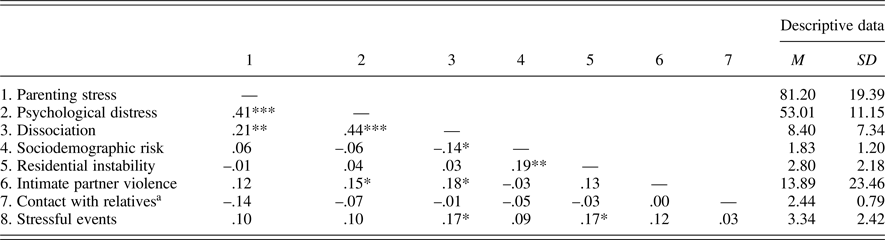
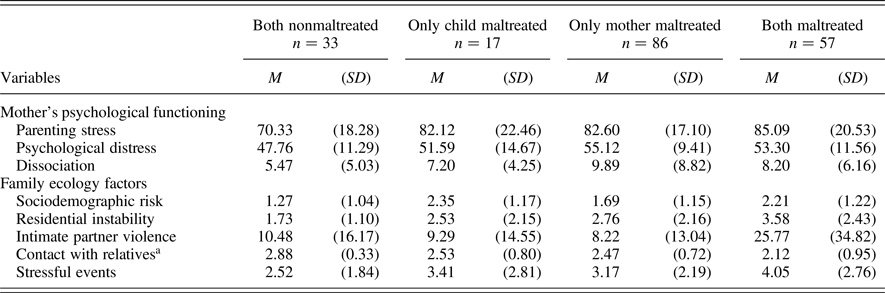
Table 1 presents means, standard deviations, and intercorrelations between the different maternal and family-ecology variables for the entire sample. Correlations were small (rs between .00 and .21) according to Cohen's (Reference Cohen1988) thresholds, with the exception of moderate correlations between maternal psychological distress and both parenting stress (r = .41) and dissociation (r = .44). Table 2 presents the means and standard deviations for measures of maternal psychological functioning and family ecology as a function of maltreatment groupings.
Descriptive statistics and intercorrelations among study variables

Note: aA low score is indicative of a lack of family support. *p < .05. **p < .01. ***p < .001.
Means (and standard deviations) for mother's psychological functioning and family ecology factors as a function of maltreatment groups

Note: aA low score is indicative of a lack of family support.
Multinomial logistic regression comparing maltreatment groups
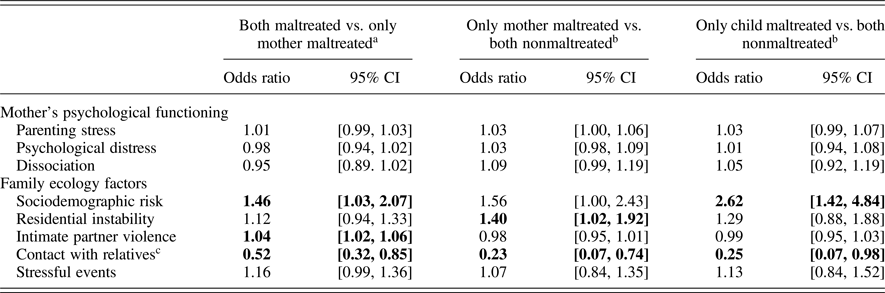
Results of the multinomial logistic regression analysis conducted to test whether maternal psychological functioning and family ecology differentiated maltreatment groups are presented in Table 3. The contribution of each variable was evaluated while controlling for all other predictors simultaneously. The model demonstrated a good fit, χ2 (24) = 104.31, p < .001, and explained 45.6% (Nagelkerke's R2) of the variation in maltreatment groups. The first comparison, involving mothers who maintained the cycle of maltreatment with their child (both maltreated) and those who broke the cycle (only mother maltreated), showed that three family-ecology factors significantly differentiated these mothers. Higher levels of sociodemographic risk and IPV were both associated with an increased likelihood that the cycle of maltreatment would be maintained rather than broken. More contact with relatives was associated with a reduced risk that the cycle of maltreatment be maintained. None of the maternal psychological functioning variables distinguished these two groups of mothers.
Comparison between maltreatment groups for mother's psychological functioning and family ecology variables

Note: CI = confidence interval. Significant differences are reported in bold (p < .05). aThe reference group is the only mother maltreated group. bThe reference group is the both nonmaltreated group. cA low score is indicative of a lack of family support.
Comparison of maltreated mothers who broke the cycle (only mother maltreated) and nonmaltreated mothers whose child was not maltreated (both nonmaltreated) revealed that two family-ecology factors, but not maternal psychological functioning variables, differentiated these mothers. Compared to nonmaltreated mothers whose child was not maltreated, maltreated mothers who broke the cycle were more likely to experience residential instability, and less likely to have contact with relatives.
The last comparison, involving the two groups of nonmaltreated mothers, showed that two family-ecology factors distinguished mothers whose child was maltreated (only child maltreated) from those whose child was not maltreated (both nonmaltreated). A higher level of sociodemographic risk was associated with increased likelihood of child maltreatment, and more contact with relatives was associated with reduced odds of maltreatment. No other variable significantly differentiated the two groups.
Characteristics of childhood maltreatment experiences among maltreated mothers
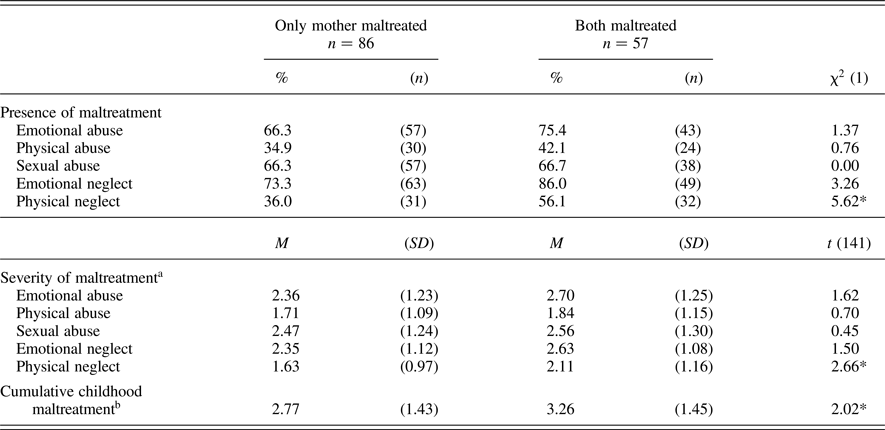
We now turn our focus to the subsample of maltreated mothers (n = 143) to examine whether those who maintained the cycle of maltreatment with their child (both maltreated) differed from mothers who broke the cycle (only mother maltreated) on experiences of childhood maltreatment. Table 4 presents the proportions of mothers who experienced each form of childhood maltreatment, as well as mean severity scores for each maltreatment type, and mean scores of cumulative childhood maltreatment as a function of group membership (only mother maltreated vs. both maltreated). Also displayed in Table 4 are results of the analyses performed on these variables. Chi square analyses revealed that, among mothers whose child was maltreated (both maltreated), there was a significantly greater proportion who reported having been physically neglected than among mothers whose child had no history of maltreatment (only mother maltreated). No significant group difference emerged on the proportions of mothers who experienced the other forms of childhood maltreatment. Results of t tests on the severity scores (ranging from 1 to 4) of each form of childhood maltreatment showed only one significant difference: mothers who maintained the cycle of maltreatment with their child experienced greater severity of physical neglect than mothers who broke the cycle. The test t conducted on cumulative childhood maltreatment scores (ranging from 1 to 5) indicated that mothers whose child was maltreated (both maltreated) experienced greater cumulative childhood maltreatment (a greater number of different forms of childhood maltreatment) than mothers whose child was not maltreated (only mother maltreated).
Proportions of mothers who experienced each form of childhood maltreatment, and mean scores of maltreatment severity and cumulative childhood maltreatment as a function of group membership

Note: aMaltreatment severity scores range from 1 to 4. bCumulative childhood maltreatment scores range from 1 to 5. *p < .05.
Discussion
This research makes an original contribution to furthering our understanding of the mechanisms involved in the intergenerational (dis)continuity of maltreatment. Factors of interest included mothers’ psychological functioning, various aspects of family ecology, and characteristics of maternal history of childhood maltreatment. Providing additional support to the ecological perspective's conception of maltreatment as being multidetermined, maltreatment groups (characterized by intergenerational continuity or discontinuity) were discriminated on the basis of individual, sociodemographic, family, and contextual factors. Greater knowledge of the processes involved has the potential to inform prevention and intervention strategies to reduce the risk of intergenerational continuity of maltreatment.
Mothers’ childhood maltreatment experiences and intergenerational (dis)continuity
One of the objectives of the study was to assess whether certain characteristics of mothers’ childhood maltreatment history would distinguish mothers who maintained the cycle of maltreatment with their child from those who broke the cycle. Mothers whose child was maltreated reported having experienced significantly more forms of maltreatment than mothers who broke the cycle. This finding is consistent with previous studies showing that co-occurrence of multiple forms of maltreatment was associated with increased risk of individuals perpetuating the cycle into the next generation (Bartlett & Easterbrooks, Reference Bartlett and Easterbrooks2015; Ben-David, Jonson-Reid, Drake, & Kohl, Reference Ben-David, Jonson-Reid, Drake and Kohl2015; Jaffee et al., Reference Jaffee, Bowes, Ouellet-Morin, Fisher, Moffitt, Merrick and Arseneault2013). Having been exposed to multiple forms of maltreatment can be particularly damaging for the developing child (Gilbert et al., Reference Gilbert, Widom, Browne, Fergusson, Webb and Janson2009) and possibly reduces the likelihood of having had some positive, reparative interactions with a caregiver in childhood, a protective factor that has been associated with breaking the intergenerational cycle of maltreatment (Egeland et al., Reference Egeland, Jacobvitz and Sroufe1988).
Among the different forms of maltreatment, only physical neglect distinguished mothers who broke the cycle from those who maintained it. Another study reported similar results showing that a history of childhood neglect was associated with a heightened risk of child maltreatment perpetration in adulthood (Ben-David et al., Reference Ben-David, Jonson-Reid, Drake and Kohl2015). Contrary to physical and sexual abuse, which involves acts of commissions, physical neglect is characterized by the caregiver's inability to meet the child's basic physical needs (e.g., food and clothing) and provide adequate supervision. This likely creates an environment where the child is often left unattended and unsupervised (with few opportunities of interactions with caregivers) that may be associated with long-term interpersonal difficulties (Widom, Czaja, & Dutton, Reference Widom, Czaja and Dutton2014). In light of these childhood relational experiences (or lack thereof), one can speculate that physically neglected individuals may be particularly ill prepared for parenting, and at risk of perpetuating maltreatment with their child, possibly reproducing a child-rearing environment similar to the one they experienced in childhood. This result is particularly noteworthy in light of the fact that most maltreated children in this sample were victims of neglect.
Family ecology and intergenerational (dis)continuity of maltreatment
Maltreated mothers who maintained the cycle of maltreatment and those who broke the cycle
In this study, we also sought to identify family-ecology risk factors associated with intergenerational (dis)continuity of maltreatment. Three out of the five family-ecology variables distinguished maltreated mothers who perpetuated the cycle with their child from maltreated mothers whose child had no history of maltreatment. The sociodemographic risk index, which included no high school diploma, single-parent status, adolescent motherhood, and receiving social welfare, was associated with increased odds of intergenerational continuity of maltreatment. Higher scores on this index likely denote greater levels of poverty and more precarious living conditions. In line with Dixon et al.’s (Reference Dixon, Browne and Hamilton-Giachritsis2009) finding of economic hardship being more characteristic of parents who maintained the cycle of maltreatment, this result provides additional support to Geiger et al.’s (Reference Geiger, Schelbe, Hayes, Kawam, Katz, Klika, Daron, Donnelly, Huang and Powell2015) hypothesis that poverty-related factors are important mechanisms involved in the intergenerational (dis)continuity of maltreatment. It may be particularly challenging for parents to care for children when economic and contextual resources are limited, unstable, or overextended. Poverty and its related risk factors (single parent, limited education, etc.) restrict parents’ ability to meet their child's basic needs and to provide access to adequate resources (Berger & Waldfogel, Reference Berger and Waldfogel2011). It is not surprising that evidence shows an association between high socioeconomic risk and child neglect, likely due to increased family stress and reduced parental capacity to provide a safe and nurturing environment (see Daley et al., Reference Daley, Bachmann, Bachmann, Pedigo, Bui and Coffman2016). Socioeconomic risk and related stress can also be associated with child abuse by limiting parents’ access to varied disciplinary and behavioral control strategies, leading to harsh physical discipline (Berger & Waldfogel, Reference Berger and Waldfogel2011).
IPV victimization in mothers was also associated with a greater risk that the cycle of maltreatment be perpetuated to the next generation. This finding adds to the small body of work on that issue and constitutes further evidence of the deleterious role of IPV in increasing the risk of intergenerational continuity of maltreatment (Jaffee et al., Reference Jaffee, Bowes, Ouellet-Morin, Fisher, Moffitt, Merrick and Arseneault2013; Tracy et al., Reference Tracy, Salo and Appleton2018). Mothers who are victims of IPV experience a significant amount of prolonged stress (Boeckel, Viola, Daruy-Filho, Martinez, & Grassi-Oliveira, Reference Boeckel, Viola, Daruy-Filho, Martinez and Grassi-Oliveira2017) that may impact their parenting skills. Preoccupations for their own safety and dysfunctional interactional patterns with their partner likely interfere with mothers’ emotional availability and capacity to provide basic care and nurturance to their children, increasing the odds of child abuse and neglect (Nicklas & Mackenzie, Reference Nicklas and Mackenzie2013; Taylor, Guterman, Lee, & Rathouz, Reference Taylor, Guterman, Lee and Rathouz2009). Children living in families where IPV is present are also at risk of being maltreated by mothers’ violent partner (see Alhusen et al., Reference Alhusen, Ho, Smith, Campbell, Korbin and Krugman2014).
Results of previous studies on intergenerational (dis)continuity of maltreatment were mixed concerning the role of social support, or lack thereof (e.g., Dixon et al., Reference Dixon, Browne and Hamilton-Giachritsis2009; Jaffee et al., Reference Jaffee, Bowes, Ouellet-Morin, Fisher, Moffitt, Merrick and Arseneault2013), and little research focused specifically on kinship relationships. In this sample, maltreated mothers whose child was maltreated were less likely to have contact with relatives than mothers who broke the cycle. This lower frequency of family contact might, in part, reflect the inherent complexity and challenge of maintaining relationships with relatives who were potentially, and may still be, neglecting or abusing, and with whom mothers may have shared troubled and painful childhood interactional patterns. On the flip side, it may be that mothers who broke the cycle of maltreatment had access in their childhood to at least one emotionally supportive family member (Egeland et al., Reference Egeland, Jacobvitz and Sroufe1988), with whom they still have contact with and can rely on for support. Another possibility is that lack of family contact might have been motivated in certain mothers by a (legitimate) desire to cut ties or distance themselves from very dysfunctional family relationships.
The lack of an adequate social support network is especially concerning for low-income families who often rely on friends and relatives, not only for emotional support, but also for instrumental assistance in coping with normal basic everyday needs, such as food, clothing, child care, transportation, and small money loans (Henly, Reference Henly and Munger2002; Henly, Danziger, & Offer, Reference Henly, Danziger and Offer2005). In the context of an accumulation of stress-related factors such as those previously described, not having access to family members who could help alleviate stress, and offer tangible as well as emotional support, may increase the risk of child maltreatment.
In sum, the overall picture that emerges from these findings is one where mothers who maintained the cycle of maltreatment were confronted with stressors stemming from the sociodemographic and family levels. The accumulation of poverty-related stressors, coupled with experiences of revictimization in romantic relationships and a lack of family support, likely erode personal skills and resources (DuMont et al., Reference DuMont, Widom and Czaja2007). In such a context, mothers with a history of maltreatment are probably at increased risk of reproducing inadequate and ineffective parenting behaviors. Conversely, the picture that emerges for mothers who broke the cycle of maltreatment is one where, despite a history of childhood maltreatment, the family ecology of these mothers was characterized by fewer stress-generating factors, with more access to family support, fewer poverty-related stressors, and exempt of the “pathogenic relational environment” of IPV (Maughan & Cicchetti, Reference Maughan and Cicchetti2002).
Maltreated mothers who broke the cycle of maltreatment and nonmaltreated mothers who maintained a nonmaltreating child-rearing environment
One of the objectives of the study was to further our understanding of mothers with a history of childhood maltreatment who did not perpetuate the cycle with their child (discontinuity of maltreatment). Therefore, in addition to examining what distinguished them from maltreated mothers who maintained the cycle, we also tested if they differed from nonmaltreated mothers who maintained a nonmaltreating child-rearing environment (continuity of nonmaltreatment). Few prior studies have included a comparison of these two groups, and of those that exist, findings do not always converge.
Among the family-ecology variables examined in the present study, residential instability characterized maltreated mothers who interrupted the cycle when compared to nonmaltreated mothers who maintained a nonmaltreating child-rearing environment. Change of residence, a stress-generating event in itself for both parents and children, is likely to affect daily family routine, and also create some disruptions in the social network. Seeing as moving is often compounded by other events such as transitions in parents’ intimate partner relationships or job changes (Kull, Coley, & Lynch, Reference Kull, Coley and Lynch2016), the greater residential instability observed in mothers who broke the cycle of maltreatment might denote a certain difficulty achieving stability more generally in their lives.
Results also showed that maltreated mothers who broke the cycle were less likely to have contact with relatives than nonmaltreated mothers whose child was not maltreated. Social isolation and lack of support were also found to distinguish these groups of parents in two prior studies (Dixon et al., Reference Dixon, Browne and Hamilton-Giachritsis2009; Jaffee et al., Reference Jaffee, Bowes, Ouellet-Morin, Fisher, Moffitt, Merrick and Arseneault2013). It is possible that mothers who broke the cycle prefer to maintain distance from problematic family relationships that were characterized by childhood maltreatment experiences. However, it is important to underline that, despite being less likely to have contact with relatives when compared with nonmaltreated mothers whose child was not maltreated, maltreated mothers who broke the cycle were characterized by more frequent contact with relatives in comparison to mothers who perpetuated the cycle, thus demonstrating a level of family contact between that of the two other groups.
Taken together, these results suggest that even among mothers who broke the intergenerational cycle, a history of childhood maltreatment is associated in adulthood with a certain level of psychosocial risk. On a continuum of family-ecology related risk, maltreated mothers who broke the intergenerational cycle would appear to show a moderate level of risk, somewhere between maltreated mothers who maintained the cycle (at the higher end of the risk continuum) and nonmaltreated mothers whose child was not maltreated (at the lower end of the continuum). This moderate level of risk may suggest “partial resilience” following childhood adversity.
Nonmaltreated mothers whose child was maltreated and nonmaltreated mothers who maintained a nonmaltreating child-rearing environment
This study also focused on mothers without a history of childhood maltreatment but whose child was maltreated, a form of intergenerational discontinuity that has received little empirical attention. Results of the present study indicated that two family-ecology factors distinguished the two groups of nonmaltreated mothers. Mothers whose child was maltreated were more likely to experience higher sociodemographic risk, a result consistent with Dixon et al.’s (Reference Dixon, Browne and Hamilton-Giachritsis2009) finding of greater economic hardship in these parents. They were also less likely to have frequent contact with relatives, a difference not observed in Dixon et al.’s (Reference Dixon, Browne and Hamilton-Giachritsis2009) study. These two family-ecology factors appear to be important markers of child maltreatment risk, and neglect more specifically, as they were also found, in this study, to characterize maltreated mothers who perpetuated the intergenerational cycle with their child. Despite this similarity between these two groups of mothers, it is worth noting that IPV was associated with increased odds of child maltreatment only in the context of a maternal history of childhood maltreatment.
Maternal psychological functioning and intergenerational (dis)continuity of maltreatment
One objective of this study was also to evaluate the role of mothers’ psychological functioning in the intergenerational (dis)continuity of maltreatment. Results showed that parenting stress, psychological distress, and dissociation did not distinguish maltreated mothers who maintained the cycle of maltreatment from those who broke the cycle; nor did they distinguish nonmaltreated mothers who maintained a nonmaltreating child-rearing environment from maltreated mothers who broke the cycle or from nonmaltreated mothers whose child was maltreated. Only a few studies have evaluated the role of parenting stress (Niu et al., Reference Niu, Liu and Wang2018; Thornberry et al., Reference Thornberry, Henry, Smith, Ireland, Greenman and Lee2013) or dissociation (Eegland & Susman-Stillman, Reference Egeland and Susman-Stillman1996; Leifer et al., Reference Leifer, Kilbane and Kalick2004), but their results have shown these factors are associated with increased risk of intergenerational continuity of maltreatment. Studies on psychological distress are somewhat more numerous; however, the pattern of results is inconsistent. In some studies, psychological distress increased the risk of intergenerational continuity of maltreatment (Jaffee et al., Reference Jaffee, Bowes, Ouellet-Morin, Fisher, Moffitt, Merrick and Arseneault2013; Leifer et al., Reference Leifer, Kilbane and Kalick2004), whereas in others, no relation was observed (Dixon et al., Reference Dixon, Browne and Hamilton-Giachritsis2009), or it was in the reverse direction (higher psychological distress associated with breaking the cycle of maltreatment; Pears & Capaldi, Reference Pears and Capaldi2001).
Research suggests that some parents under stress or from at-risk populations may underreport symptoms of psychopathology. For instance, underreporting of depressive symptoms (when evaluated through inventories as opposed to clinical interviews) is more common in less educated populations (Enns, Larsen, & Cox, Reference Enns, Larsen and Cox2000). A meta-analysis also showed that parents undergoing custody evaluations were more likely to underreport symptoms of psychopathology (Baer & Miller, Reference Baer and Miller2002). Thus, it may be that some parents experiencing greater sociodemographic risk and/or involvement with CPS underreport psychological symptoms, either by consciously attempting to conceal existing symptoms of psychopathology or out of defensiveness. To better understand the role of maternal psychological functioning in the intergenerational (dis)continuity of maltreatment, future studies should include a variety of psychological measures including inventories and clinical interviews.
Study strengths and limitations
A distinctive feature of this study is the inclusion of potential influential factors from several ecological levels: psychological, sociodemographic, family, and contextual levels. An additional strength of the study is the use of CPS records for measuring offspring's maltreatment status, as opposed to parents’ reports that are subject to bias. It should be noted, however, that CPS records likely constitute an underestimation of actual abuse and neglect cases and possibly represent more severe experiences of maltreatment. Therefore, some children who were considered nonmaltreated in the sample might actually have been victims of some milder form of maltreatment without having been identified by CPS.
Limitations of this study include the reliance on a retrospective self-report measure of maternal history of childhood maltreatment (subject to recall bias) and the use of a cross-sectional design that does not allow for evaluation of causal relations between variables. Another limitation is the fact that the sample was composed of mother–child dyads drawn from two populations: maltreated children recruited through CPS agencies, and nonmaltreated children recruited from community low-income families not involved with CPS. Considering that families with and without CPS involvement might differ on a number of factors other than income (which was controlled in the present study), we cannot entirely rule out the possibility that differences found between maltreated mothers who maintained the cycle (CPS recipients) and those who broke the cycle (non-CPS recipients) might not only be associated with breaking the cycle, but also may reflect differences more largely related to CPS involvement. However, this limitation is not specific to the present study. In intergenerational maltreatment research, CPS involvement is frequently used as a measure of offspring maltreatment to identify parents who maintain the cycle and those who break it (for a review, see Thornberry et al., Reference Thornberry, Knight and Lovegrove2012). The fact that we did not have information on the severity of children's maltreatment experiences and perpetrator's identity constitutes an additional limitation, although mothers were likely the perpetrator in most cases as the majority of maltreated children in the study were neglected. An additional limitation has to do with the absence of information regarding fathers, including their childhood maltreatment history, which would have provided a more complete evaluation of intergenerational (dis)continuity in the family. The family-ecology related factors that were examined as a way to better understand the intergenerational (dis)continuity of maltreatment from mother to child may be active at the family level and also contribute to the intergenerational (dis)continuity from father to child. Finally, it is important to underline that the sample was composed mainly of neglected children. Thus, the factors of influence identified here might be specific to intergenerational continuity of maltreatment in the context of offspring neglect.
Clinical implications
The findings of this study have important clinical implications for prevention of child maltreatment, and neglect in particular. Results underscore the need to adopt a broader ecological approach to child maltreatment prevention and intervention with at-risk families (e.g., low-income families and adolescent parents), with the aim of reducing intergenerational continuity. In addition to considering parents’ psychological profile and parenting skills, risk assessments and screenings by service providers (e.g., visiting nurses and social workers) should also include an evaluation of different family-ecology related stressors, such as those identified in the present study.
Family support network appears to be a key element to consider in maltreatment prevention, and it can easily be included in screening and risk assessments. As mentioned previously, family support is especially important for low-income families, not only for emotional support, but also for tangible help (e.g., caring for the child for a few hours or small money loans). In the absence of a close social support network, efforts should be made to weave a safety net around the parent, and ensure that it be easily accessible when the parent requires support (nearby, and available days, nights, and weekends). Help provided by different organizations is surely beneficial, but usually lacks the flexibility and accessibility of informal social networks, such as relatives or close friends. Programs that include pairing parents with other parents or members of the community could be one way to approximate family support and compensate when it is lacking.
For better effectiveness, intervention strategies should be tailored to the specific needs and characteristics of the family, with the aims of reducing some of the stressors and increasing resources and social support (both emotional and instrumental). In families where risk of maltreatment is high, intervention efforts should also directly target the parent–child relationship in order to increase parents’ emotional availability and responsiveness to the child's needs and signals (Moss et al., Reference Moss, Dubois-Comtois, Cyr, Tarabulsy, St-Laurent and Bernier2011). Moreover, considering the association of IPV with negative family dynamic and its well-documented spillover effect that increases risk of child maltreatment, practitioners should systematically assess for the presence of IPV, particularly among mothers with a childhood history of maltreatment. When IPV is present or suspected, intervention should focus on helping mothers who are victims of IPV find ways to both end the violence (which may not necessarily imply ending the relationship with the partner) and provide a safe environment for the child (Alhusen et al., Reference Alhusen, Ho, Smith, Campbell, Korbin and Krugman2014).
Conclusion
This study expands previous research by shedding light on factors that distinguish dyads characterized by intergenerational continuity of maltreatment from dyads in which discontinuity is present, thus increasing our understanding of potential moderating mechanisms that amplify or attenuate intergenerational continuity. One of the key findings of this study is that mothers who perpetuated the cycle of maltreatment experienced higher levels of family-ecology related stressors and had less family support than mothers who broke the cycle. These results lend empirical support to the diathesis-stress model of poor parenting (Phelps et al., Reference Phelps, Belsky and Crnic1998), which proposes that only when a parent's childhood maltreatment experiences are combined with other stress factors will there be intergenerational continuity of maltreatment. The present findings suggest that family-ecology related stress, but not a parent's psychological difficulties, may create additional burden that will precipitate the risk that the parent perpetuate the maltreatment cycle. Identified factors of influence might be specific to child neglect, as the sample was almost exclusively composed of neglected children.
These findings raise the question of the developmental pathways that lead to these different patterns of outcomes in the different maltreatment groups. Longitudinal research is needed to investigate the mechanisms that may be involved in maltreated individuals’ developmental trajectories of risk or resilience leading them in adulthood to either (a) face few stressors, making it more likely that efforts not to repeat the cycle of maltreatment will succeed; or, conversely, (b) be confronted with several stress-related factors that may not only interfere with efforts to break away from the cycle of maltreatment, but also contribute in perpetuating it. Results of the present study also suggest that, among the different forms of maltreatment, childhood experiences of physical neglect and multitype maltreatment might increase the risk that the individual embarks, and remains, on a developmental risk trajectory that may set the conditions for perpetuating maltreatment into the next generation. More research should be devoted to longitudinally examining the long-term differential consequences, including intergenerational (dis)continuity, of various types of maltreatment, focusing in particular on physical neglect and multitype maltreatment.