




No CrossRef data available.
Article contents
Molecular epidemiological survey on the vectors of Thelazia gulosa, Thelazia rhodesi and Thelazia skrjabini (Spirurida: Thelaziidae)
Published online by Cambridge University Press: 17 October 2003
Abstract
A Polymerase Chain Reaction (PCR)- based assay developed for the specific identification of Thelazia gulosa, Thelazia rhodesi and Thelazia skrjabini (Nematoda, Spirurida), which cause bovine ocular thelaziosis, was evaluated for its usefulness in detecting the intermediate hosts and in estimating the infection prevalence of vectors in field conditions throughout 5 years (from 1997 to 2001). A total of 5190 flies were captured and identified as Musca larvipara, Musca osiris, Musca autumnalis, Musca tempestiva or Musca domestica. Genomic DNA was extracted from pools constituted by heads, thoraces, abdomens and wings of 10 flies of each species, and 2076 samples were subjected to a PCR assay to specifically detect the ribosomal ITS-1 sequence of bovine Thelazia. Amplicons were sequenced and subjected to digestion with CpoI restriction enzyme. M. autumnalis, M. larvipara, M. osiris and M. domestica species were shown to be PCR positive. T. gulosa was specifically detected by PCR in M. autumnalis, M. larvipara, M. osiris and M. domestica, whereas T. rhodesi is in M. autumnalis and M. larvipara. Of 27 positive samples, 23 were positive for T. gulosa and 4 for T. rhodesi, with a mean prevalence of 2·86% in the whole fly population collected. The highest mean prevalence values of infection were detected in M. autumnalis (4·46%) and M. larvipara (3·21%), and the former species was confirmed to be the vector of T. gulosa and T. rhodesi. This study is the first report of M. osiris as a vector of T. gulosa and M. larvipara as a vector of T. gulosa and T. rhodesi under natural conditions. The occurrence of Thelazia in fly populations in the Apulia region of Italy (in the 5 grazing seasons considered) indicates that cattle thelaziosis is enzootic in southern Italy. This molecular assay should be a useful epidemiological tool for assessing the role of different species of flies as intermediate hosts of thelaziae.
Information
- Type
- Research Article
- Information
- Copyright
- 2003 Cambridge University Press
INTRODUCTION
The genus Thelazia (Spirurida, Thelaziidae) comprises a cosmopolitan group of spirurids, commonly named eyeworms, which cause ocular infections in domestic and wild animals (Yamaguti, 1961; Skrjabin, Sobolev & Ivashkin, 1967). Transmission occurs by means of non-biting flies, which feed on animal lacrimal secretions and become infected with the 1st-stage larvae (L1). These larvae go through further developmental stages while remaining encapsulated in different parts of the vectors' body, as is generally the case for Thelazia species. Infective 3rd-stage larvae (L3) of Thelazia emerge from the labella of infected flies when they feed on the lacrimal secretions of animals, and develop into the adult stage in the ocular cavity (Skrjabin et al. 1967; Vilagiova, 1967). Eyeworms localize under the lids and the third eyelid, in conjunctival sacs, in naso-lacrimal ducts, and in excretory ducts of their glands (depending on the species of Thelazia), and are responsible for eye inflammation, with varying symptoms, such as ocular discharge, epiphora and, occasionally, corneal opacity or ulcers (Yamaguti, 1961; Skrjabin et al. 1967).
Bovine thelaziosis is caused by Thelazia rhodesi Desmarest 1828, Thelazia gulosa Railliet & Henry 1910, and Thelazia skrjabini Erschow 1928, which occur in many countries; T. gulosa and T. skrjabini have been reported mainly in the New World (Lyons & Drudge, 1975; Geden & Stoffolano, 1980, 1981), whereas T. rhodesi is particularly common in the Old World (Corba, 1985; Puccini, Giangaspero & Bisceglia, 1988). In Italy, T. rhodesi has been reported several times in southern regions (D'Esposito, 1949; Panebianco, 1955) and, only recently, T. gulosa and T. skrjabini have been identified as the cause of infection in autochthonous cattle from the Apulia region (Giangaspero et al. 2000).
Despite the considerable amount of information on the morphology of Thelazia affecting cattle and the treatments used, the number of reports on their epidemiology and their intermediate hosts are scant. This is predominantly due to the difficulties in retrieving larvae in the body of muscid flies for reasons such as the low prevalence and mean intensity of infected flies (Geden & Stoffolano, 1981).
Thirteen species of Musca have been incriminated in the transmission of eyeworms, but only face flies (i.e. Musca autumnalis and Musca larvipara) have been demonstrated, both under experimental and natural conditions, to act as vectors in a few countries (Stoffolano, 1970). Most of the investigations on the Thelazia vectors have been carried out in the USA and Canada by dissecting infected flies. For example, in experimental infection trials, M. autumnalis proved to be the vector of T. gulosa (Krastin, 1950 a; Geden & Stoffolano, 1982), T. skrjabini (O'Hara & Kennedy, 1991) and T. rhodesi (Klesov, 1949, 1950; Vilagiova, 1967), whereas M. larvipara was demonstrated to be the vector of T. rhodesi (Klesov, 1950; Keiserovskaya, 1975). In the 1970s and 1980s, some surveys were carried out in North America to investigate the role of M. autumnalis as a vector for Thelazia spp. In these studies the prevalence of infection in flies ranged from 0 to 5·7% (mean value 2·62%), with an average larval burden of 2·3–4·2 (Branch & Stoffolano, 1974; Moolenbeek & Surgeoner, 1980; Geden & Stoffolano, 1981; Krafsur & Church, 1985). The identification of immature eyeworms to species by fly dissection constitutes an important constraint for the assessment of the vectorial role of muscids collected in the field (Geden & Stoffolano, 1981); for instance, the morphological identification of Thelazia L3 to species is possible only by comparison with larvae of thelaziae recovered from laboratory-infected flies (O'Hara & Kennedy, 1989).
In Europe, the only report of Thelazia spp. vectors is from Sweden (Chirico, 1994 a) where both gonoactive and non-gonoactive females of M. autumnalis were found to be infected (Chirico, 1994 b). In Italy, the intermediate hosts of bovine eyeworms had not been identified. The predominant secretophagous Muscidae collected from the periocular region of cattle bred in farms with a history of thelaziosis were the face flies, M. autumnalis and M. larvipara, followed by Musca osiris, Musca tempestiva and Musca domestica (Giangaspero & Broce, 1993). These species could represent potential vectors of bovine eyeworms in southern Italy, given their feeding behaviour (Giangaspero & Broce, 1993).
In the past 20 years, the advent of PCR-based techniques has changed the approach of parasitologists to the study of parasites and has extended their knowledge in many areas (e.g. taxonomy, phylogeny, population genetics and molecular identification, diagnosis and control) (reviewed by Gasser, 1999).
Nuclear ribosomal DNA (rDNA) has proven to be a reliable genetic target for different molecular purposes in parasitology (Gasser, 1999). In particular, the first and second internal transcribed spacers (ITS-1 and ITS-2) are commonly used for the molecular differentiation and identification of parasitic nematodes (Powers et al. 1997; Gasser & Newton, 2000; Blouin, 2002) because of the low level of intraspecific sequence variation combined with higher levels of interspecific differences.
Many studies have been carried out to characterize the ITS sequences of gastrointestinal strongylids (Hoste et al. 1995, 1998; Newton et al. 1998 a,b; Hung et al. 1999), lungworms (Conole et al. 1999; Høglund et al. 1999) and hookworms (Chilton & Gasser, 1999). Despite the studies on the rDNA of nematodes of the orders Ascaridida (Zhu, Gasser & Chilton, 1998; Kijewska et al. 2002) and Strongylida (reviewed by Gasser & Newton, 2000), there are few data regarding the molecular information on the ITS regions of Spirurida nematodes.
Current information demonstrates that also spirurids can be identified to the species level (Morales-Hojas et al. 2001; Mar et al. 2002). For example 3 bovine thelaziae could be identified using a PCR-restriction fragment length polymorphism (PCR-RFLP) analysis of the ITS-1 (Otranto et al. 2001). In the present study, this method has been used to evaluate the vectorial role that different species of Musca collected from the periocular region of cattle have for bovine eyeworms and to provide a molecular assay for the specific differentiation of T. gulosa, T. rhodesi and T. skrjabini in their vectors.
MATERIALS AND METHODS
Flies
Flies were collected in the Apulia region (southern Italy) from May to October of each year (from 1997 to 2001) from 6 farms (referred to as farm A, B, C, D, E and F) with a history of thelaziosis diagnosed in cattle at the slaughterhouse commencing from 1996 (Giangaspero et al. 2000). Non-biting flies were netted from the periocular region of grazing cattle bred in the farms A–E located in the municipality of Mottola (province of Taranto) and in farm F located in the municipality of Cassano Murge (province of Bari). The flies were delivered alive to the University of Bari, where they were kept at 25±1 °C and relative humidity of 70±5% in cubic cages and fed sugar solution ad libitum. After 2–5 days, the flies were anaesthetized, sacrificed (by placing in a jar containing cotton wool soaked in ether, for about 3–5 min), identified morphologically to species (Giangaspero, 1997) and coded according to the site and date of collection, species and sex. After being washed in phosphate-buffered saline (PBS), each fly was separated into 4 parts (i.e. head, thorax, abdomen and wings) under a stereomicroscope.
Pools of heads, thoraces, abdomens and wings, constituted by 10 units each, were prepared and stored at −20 °C.
DNA isolation and PCR
After disruption in liquid nitrogen, genomic DNA was extracted from the pooled samples of flies by using a commercial kit (QIAamp Tissue Kit, Qiagen GmbH, Germany) and stored at +4 °C until analysis.
Two conserved primers designed to the 18S and 5·8S genes of Caenorhabditis elegans rDNA, namely rDNA-A (5′AGGTGAACCTGCGGAAGGA3′) and rDNA-C (5′CACATTAATTCTCGCAGCTAGC3′) (Bachellerie & Qu, 1993), were chosen for the PCR amplification of the ITS-1 region from Thelazia. Amplicon size differs by 400–650 bp among T. gulosa, T. rhodesi and T. skrjabini (Fig. 1) (Otranto et al. 2001).

Fig. 1. Amplification patterns of Thelazia gulosa (G), T. rhodesi (R), T. skrjabini (S) with the primers (A–C) as indicated on the top; Weight marker 100 bp (λ1).
Each PCR reaction was performed using 4 μl of DNA extracted from each fly pool which served as a template in a total volume of 50 μl in a mix containing 25 mM MgCl2, 1× buffer (100 mM Tris–HCl, pH 8·3 and 500 mM KCl), 1·25 mM of each dNTP, 50 pmol of each primer and 1·25 units of Ampli Taq Gold (Applied Biosystems).
After an initial step at 94 °C for 12 min (Taq Gold activation), reactions were cycled in an Applied Biosystems 2700 Thermocycler as follows: 30 cycles at 94 °C for 30 sec, 58 °C for 45 sec, 72 °C for 45 sec, with a final extension at 72 °C. The amplicons were electrophoresed on a 1·6%-TAE agarose gel (Ambion), stained with ethidium bromide (10 mg/ml) and photographed (Gel Doc 2000-Gel Documentation System, Bio- Rad).
Negative and positive control reactions were also carried out by substituting the fly DNA template with distilled water and DNA from T. gulosa clone Tg4C (see below), respectively.
Cloning and sequencing of the Thelazia ITS-1
The ITS-1 of T. gulosa, T. rhodesi and T. skrjabini was cloned mainly because of the lack of worm specimens available for the latter two species.
The ITS-1 amplicons obtained by PCR from DNA from single adult worms of each species of bovine Thelazia were ligated into TA plasmid vectors (Invitrogen). They were then purified in Ultrafree-DA columns (Amicon, Millipore) and sequenced directly in an ABI-PRISM 377, using the Taq DyeDeoxyTerminator Cycle Sequencing Kit (Applied Biosystems). Recombinant plasmid DNA (1–2 μg) was required for sequencing. Both strands of the clones were sequenced with the general primers of the vector and amplicons with the sequence-specific primers mentioned above. For each PCR product 2 clones were sequenced and 3 clones, i.e. Tg4C, Tr3C and Ts5C, for T. gulosa, T. rhodesi, T. skrjabini respectively, were chosen as references.
Amplicons from positive samples of flies were sequenced as described above and the sequences compared with those available in current databases by using BLAST, and then aligned by Clustal X (Thompson et al. 1997) with sequences of T. gulosa, T. rhodesi and T. skrjabini (Accession numbers AF337895, AF337896 and AF337897, respectively) and with those of the clones.
Pairwise comparisons were made of the level of sequence differences among the ITS-1 sequences as described previously by other authors (Chilton, Gasser & Beveridge, 1995; Hoste et al. 1998).
Restriction fragment length polymorphism analysis
Amplicons were subjected to diagnostic restriction analysis by using the CpoI enzyme to differentiate and identify the bovine thelaziae as previously described (Otranto et al. 2001).
Sensitivity of the assay
In order to assess the ‘sensitivity’ of this method, DNA extracted by 3 steps of phenol/chloroform treatment followed by a purification/elution passage with a QIAgen spin column from 1 specimen of T. gulosa, was quantified spectrophotometrically (70 ng/μl) and spiked with DNA (135 ng/μl) from a single fly captured in a Thelazia-free area. The dilutions were made by serially titrating nematode DNA into fly DNA samples which were then subjected to PCR.
RESULTS
A total of 5190 flies were captured (in 105 collections). They were identified as M. larvipara, M. osiris, M. autumnalis, M. tempestiva or M. domestica, with a female[ratio ]male ratio of 4[ratio ]1 (Table 1).

Of the 2076 samples (from 519 pooled samples – of 10 flies each – and divided into heads, thoraces, abdomens and wings) subjected to PCR, 27 produced amplicons detectable on an agarose gel, with a positivity rate of 5·2% considering that none of the pools came from the same flies. Of the 5 species of Musca examined, M. autumnalis, M. larvipara, M. osiris and M. domestica, were found to contain DNA of Thelazia spp. upon PCR (Tables 2 and 3). These ‘positive’ flies came from 5 of the 6 farms.
Table 2. Number of flies (N) for Musca autumnalis and Musca larvipara divided according to collection season (Data on the number of positive pooled samples (+) and their mean value of positivity expressed in percentage (M*) are reported both on whole populations and according to sex.)

Table 3. Number of flies (N) for Musca osiris, Musca domestica and Musca tempestiva divided according to collection season (Data on the number of positive pooled samples (+) and their mean value of positivity expressed in percentage (M*) are reported both on whole populations and according to sex.)

Of the 27 positive samples, 9 were represented by pools of heads, 4 by pools of thoraces and 14 by pools of abdomens (see Table 4). No amplicons were produced from any of the pools of wings subjected to PCR.
Table 4. Positive samples per year broken down according to the section of the insect body (Bo) constituting pooled samples (i.e. a, abdomen; t, thorax; h, head), date of collection (Da) and species of Thelazia (Sp) detected by PCR (Tg, Thelazia gulosa; Tr, Thelazia rhodesi) (Data are divided according to the species and sex of flies examined.)

The sequences of Tg4C, Tr3C and Ts5C showed 99·1, 97·5 and 98·3% identity to sequences of the corresponding species available in GenBank. Of the 27 sequences obtained from positive pooled samples, 23 exhibited 98·3% to 99·8% identity to the Tg4C sequence, whereas 4 showed 99·8% to 100% identity to the Tr3C sequence. When compared with sequences in the GenBank, the ITS-1 sequences determined from the ‘positive’ samples displayed 98·1 to 99·1% (T. gulosa) or 97·3 to 97·5% (T. rhodesi) identity. Differences among nucleotide sequences were due to insertions/deletions of 1–6 nucleotides and substitution events. T. skrjabini DNA was not detectable in any of the fly DNA samples tested.
RFLP analysis of amplicons yielded profiles consistent with T. gulosa or T. rhodesi profiles (Otranto et al. 2001).
The lowest amount of Thelazia DNA detectable by PCR in the presence of fly DNA was estimated to be 0·14 pg.
DISCUSSION
The number of specimens of each species of Musca captured around the eyes of grazing cattle was consistent with their biological characteristics. Although they are all secretophagous species which feed on the ocular secretions of animals, the most common species retrieved (M. larvipara, M. osiris, M. autumnalis) are esophylic, whereas M. domestica (house fly) is endophylic and was collected only occasionally in the locations surveyed. The female[ratio ]male ratio (4[ratio ]1) was not substantially different from those registered for other muscids and may be explained by the fact that males only rarely feed on secretions from the eyes of cattle (O'Hara & Kennedy, 1989).
Of the 2076 samples, 27 were ‘positive’ by PCR, of which 23 were positive for T. gulosa and 4 for T. rhodesi. Considering that the pooled samples each contained 10 flies, a PCR-positive sample may detect DNA in up to 10 infected flies in the pool. Thus, the prevalence estimated for the whole fly population collected (throughout the 5 years) seems to range from 0·52 to 5·2% with a mean of 2·86%. These findings are in accordance with those of surveys carried out previously on naturally infected flies, in which a prevalence of 0·6% (Chirico, 1994 b) to 5·7% (Geden & Stoffolano, 1981) was reported. Furthermore, the mean value for Thelazia spp., calculated on the basis of all data available from the literature (Branch & Stoffolano, 1974; Moolenbeek & Surgeoner, 1980; Geden & Stoffolano, 1981; Krafsur & Church, 1985), is 2·6%, which is very similar to that observed in the present survey (2·86%). On the basis of the data in the literature and of our results, the high percentage of M. autumnalis naturally infected with T. skrjabini (37%) determined by O'Hara & Kennedy (1989) is difficult to explain.
The detection of T. gulosa and T. rhodesi larvae in flies was not surprising, given previous prevalence estimates for species of bovine thelaziae determined in cattle bred in the same geographical area (Giangaspero et al. 2000). The absence of positive samples for T. skrjabini is supported by the low prevalence of adults of T. skrjabini in Apulia (0·8%) in a previous study (Giangaspero et al. 2000).
The vectorial role of different species of Musca for Thelazia spp. has been assessed only in experimental trials as it is very difficult to confirm these data in the field, given the difficulties of reliably identifying immature stages to species (O'Hara & Kennedy, 1989).
In the present study the vectorial role of the different species of Musca was supported by (1) the maintenance in the laboratory of all the flies captured in the field for about 2–5 days post-collection. This allowed migration of the L1 through the gut wall and their encapsulation in the attachment sites for T. gulosa, T. rhodesi and T. skrjabini (Klesov, 1950; Vilagiova, 1967; Geden & Stoffolano, 1982; O'Hara & Kennedy, 1991), and (2) the finding of some positive samples from heads and thoraces which permitted discrimination between infected (positive abdomens) and potentially infectious (positive heads-thoraces) flies. In fact, in flies naturally infected by Thelazia spp., invasive L3 have been demonstrated to migrate to the thorax and to the head leaving larval capsules in the abdomen (Branch & Stoffolano, 1974; Moolenbeek & Surgeoner, 1980; O'Hara & Kennedy, 1989).
Concerning the different species of flies identified, M. autumnalis has always been considered as the major vector of T. gulosa and T. skrjabini in North America (Geden & Stoffolano, 1982; O'Hara & Kennedy, 1991) and of T. rhodesi in Eastern Europe (Krastin, 1958; Vilagiova, 1967). Surveys conducted on naturally infected M. autumnalis showed prevalence rates of infection ranging from 0 to 5·7% (mean value 2·62%) (Branch & Stoffolano, 1974; Moolenbeek & Surgeoner, 1980; Geden & Stoffolano, 1981; Krafsur & Church, 1985). The present results support experimental findings that M. autumnalis is the vector of both T. gulosa (Krastin, 1950 a; Geden & Stoffolano, 1982) and T. rhodesi (Klesov, 1949, 1950; Vilagiova, 1967). The range of the mean prevalence values (2·63–5·97%) in the period of 5 years (mean value 4·46%) were consistent with those reported previously.
While M. larvipara was experimentally demonstrated to be a vector of T. rhodesi (Klesov, 1950; Keiserovskaya, 1975) and of T. gulosa (Klesov, 1950), its vectorial role for T. gulosa was questioned by Skrjabin et al. (1967), and there is no evidence on the vectorial role of M. larvipara in field conditions. The fact that T. gulosa and T. rhodesi were found in the heads and abdomens of M. larvipara in our survey may demonstrate the role of this fly species as a vector of T. gulosa even because those are the same locations observed under laboratory conditions (Klesov, 1950). The mean percentage (2·87–4·86%) of infected M. larvipara is comparable only with the values recorded for other species of fly (e.g. M. autumnalis). Data for M. larvipara infected under natural conditions are not available.
M. osiris has not been demonstrated to be infected by cattle thelaziae, but only acts as an intermediate host of Thelazia lacrymalis, which causes equine thelaziosis (Skrjabin et al. 1967). In Crimea, Musca vitripennis, considered synonymous with M. osiris (Pont, 1986), was reported to be the vector of T. gulosa (Krastin, 1950 a,b; Skrjabin et al. 1967). Our results appear to support the hypothesis that M. osiris is a vector of T. gulosa, since T. gulosa was detected in 2 distinct pools of fly heads, with a mean prevalence of 0·87% for all flies collected.
Although some experiments have demonstrated that M. domestica is not a suitable vector for bovine eyeworms (Klesov, 1950; Geden & Stoffolano, 1982), the evidence that the house fly may act as intermediate host of T. gulosa and T. rhodesi (Vilagiova, 1967; Gupta, 1970) seems to indicate that where M. domestica and eyeworms have shared a common habitat for long periods of time, selection could have favoured a successful vector–nematode relationship (Geden & Stoffolano, 1981). The present study detected only 1 positive abdomen sample (T. gulosa) which may be explained by the presence of either developing encysted L1 or developing abnormal larvae free in the haemocoel before the immune reaction of the fly (melanization) occurs (Geden & Stoffolano, 1982).
Although M. tempestiva has been considered to be the host of T. gulosa (Vilagiova, 1968), no PCR-positive samples were detected for this species.
In the area of our surveys the face fly, M. larvipara, is more common than M. autumnalis (which has been always considered the major vector of bovine eyeworms); this may relate to the fact that the highest number of positive samples was detected in M. larvipara, although the mean infection rate of M. larvipara (3·21%) was lower than that of M. autumnalis (4·46%). These findings suggest that the south of Italy provides a more suitable habitat for M. larvipara than for M. autumnalis which, however, has remained the favourite vector of bovine eyeworms.
The mean prevalence rates for infected male flies was very low, 0·40% for M. larvipara and 0·55% for M. autumnalis; no males of M. domestica and M. osiris were found to be infected. These findings are in accordance to those of other epidemiological surveys in which all dissected male face flies were shown not to harbour nematodes, probably due to the fact that males seldom feed at the eyes of cattle (O'Hara & Kennedy, 1989).
Nevertheless, it has been proposed that the activity and the biology of egg follicles of flies are important for the development of immature Thelazia spp. (Krastin, 1950 a; Vilagiova, 1962, 1967; Miyamoto et al. 1965). This hypothesis has been questioned by Stoffolano (1970) and it has been demonstrated that the capsules in which T. gulosa larvae develop are attached either to the abdominal body wall or to the body fat (Branch & Stoffolano, 1974; Geden & Stoffolano, 1982). The finding of positive M. autumnalis and M. larvipara males in the present study seems to support the hypothesis that Thelazia develop in both male (Vilagiova, 1962) and female flies (O'Hara & Kennedy, 1989, 1991). The low positivity rate recorded in male face flies may therefore be associated with different feeding habits of each sex of non-biting flies.
In an investigation carried out in Massachussetts (USA) where populations of M. autumnalis caught in the wild and infected mainly with T. gulosa were dissected, the highest values of parasitism were found in late June and early September and the lowest values from mid-July to mid-August (Geden & Stoffolano, 1981). The present data are in agreement with those of Geden & Stoffolano (1981), since the highest number of fly specimens positive for T. gulosa was captured in late spring/early summer and in late summer. This seasonality for T. gulosa differs from T. skrjabini (see O'Hara & Kennedy, 1989), which does not appear to have any fluctuation in the temporal pattern of parasitism in a face fly population infected by T. skrjabini. The seasonality observed in T. gulosa in the present study and by Geden & Stoffolano (1981) probably indicates that the presence/absence of seasonal fluctuation depends on the species of eyeworm.
Nine out of the 14 samples of pooled abdomens (64%) were positive in late spring/early summer. This may be explained by the fact that this is the time when the immature eyeworms are still encapsulated in their attachment sites in the abdomen of the flies. The positive thoraces and heads, however, came from flies captured in July, August and September, when the eyeworms most likely moulted to L3 and localized in the thorax and mainly in the head. The latter considerations are supported by the finding of a high number of empty abdominal capsules in flies late in the summer in North America (Branch & Stoffolano, 1974; O'Hara & Kennedy, 1989).
The PCR-positivity recorded for pooled samples consisting of abdomens of flies collected in late summer may indicate that there is a 2nd cycle of infestation in the fly population. This is in accordance with the dynamics of thelaziosis in cattle where 2 peaks of parasitism may occur, namely in early summer (adult nematodes that had over-wintered) and in late summer (adult nematodes developed from L3 deposited by infected flies in early summer) (Klesov, 1950).
The molecular approach described in this paper seems to be a reliable tool for detecting the species of Thelazia in their different vectors; this is possible also thanks to the high sensitivity of this PCR assay, i.e. 0·14 pg, corresponding to about to 1/75th of a single nematode larval stage (Gasser, Woods & Bjørn, 1998). This molecular investigation is able to overcome some frequent constraints (e.g. time-consuming procedures, dependence on operator skill, sensitivity of the methodology, misidentification) that may occur in investigating the vectorial role of muscids by dissecting them and by morphologically identifying larval stages. The results of this study fill some of the knowledge gaps for vectors of Thelazia in southern Europe and offer new prospects for epidemiological investigations into thelaziosis. The molecular method employed to identify larval stages of Thelazia to species level in their vectors thus provides a powerful tool to study the transmission patterns and prevalence of Thelazia. This is of importance in countries, such as those of southern and eastern Europe, where more than one species of Thelazia are sympatric and may cross-infect the same host simultaneously. Molecular epidemiological investigations will extend our knowledge concerning the natural intermediate hosts of other eyeworms, causing human and canine thelaziosis, such as Thelazia callipaeda, whose biology and epidemiology are unknown.
The authors thank Eugene Lyons (Department of Veterinary Science, Gluck Equine Research Center, University of Kentucky, USA) and Jan Chirico (Department of Parasitology, National Veterinary Institute, Uppsala, Sweden) for their constructive comments on the manuscript and Athina Papa for revising the English text. The authors are particularly grateful to an anonymous referee for her/his valuable suggestion.
References
REFERENCES
BACHELLERIE, J. P. &
QU, L. H.
(1993).
Ribosomal RNA probes for detection and identification of species. In
Methods in Molecular Biology. Vol. 21: Protocols in Molecular Parasitology
(ed. Hyde, J. E.), pp. 250–254.
Humana Press. Inc., Totowa, NJ, USA.CrossRef
BLOUIN, M. S.
(2002).
Molecular prospecting for cryptic species of nematodes: mitochondrial DNA versus internal transcribed spacer.
International Journal for Parasitology 32, 527–531.CrossRefGoogle Scholar
BRANCH, G. J. &
STOFFOLANO, J. G.
(1974).
Face fly: invertebrate vector and host of a mammalian eyeworm in Massachussetts.
Journal of Economic Entomology 67, 304–305.CrossRefGoogle Scholar
CHILTON, N. B. &
GASSER, R. B.
(1999).
Sequence differences in the internal transcribed spacers of DNA among four species of hookworm (Ancylostomatoidea: Ancylostoma).
International Journal for Parasitology 29, 1971–1977.CrossRefGoogle Scholar
CHILTON, N. B.,
GASSER, R. B. &
BEVERIDGE, I.
(1995).
Differences in a ribosomal DNA sequence of morphologically indistinguishable species within the Hypodontus macropi complex (Nematoda: Strongyloidea).
International Journal for Parasitology 25, 647–651.CrossRefGoogle Scholar
CHIRICO, J.
(1994 a).
A comparison of sampling methods with respect to cattle-visiting Muscidae and their nematode infections.
Medical and Veterinary Entomology 8, 214–218.Google Scholar
CHIRICO, J.
(1994 b).
Prehibernating Musca autumnalis (Diptera: Muscidae) an overwintering host for parasitic nematodes.
Veterinary Parasitology 52, 279–284.Google Scholar
CONOLE, J. C.,
CHILTON, N. B.,
JARVIS, T. &
GASSER, R. B.
(1999).
Intraspecific and interspecific variation in the second internal transcribed spacer (ITS-2) sequence for Metastrongylus (Nematoda: Metastrongyloidea) detected by high resolution PCR-RFLP.
International Journal for Parasitology 29, 1935–1940.CrossRefGoogle Scholar
CORBA, J.
(1985).
Die geographische Verbreitung der Thelaziose der Rinder in der Welt.
Folia Veterinaria 12, 55.Google Scholar
D'ESPOSITO, L.
(1949).
Di alcuni casi di infezione del sacco congiuntivale dei bovini da Thelazia.
Clinica Veterinaria 72, 108–118.Google Scholar
GASSER, R. B.
(1999).
PCR-based technology in veterinary parasitology.
Veterinary Parasitology 84, 229–258.CrossRefGoogle Scholar
GASSER, R. B. &
NEWTON, S. E.
(2000).
Genomic and genetic research on bursatenematodes: significance, implications and prospects.
International Journal for Parasitology 30, 509–534.CrossRefGoogle Scholar
GASSER, R. B.,
WOODS, W. G. &
BJØRN, H.
(1998).
Distinguishing Oesophagostomum dentatum from Oesophagostomum quadrispinulatum developmental stages by a single-strand conformation polymorphism method.
International Journal for Parasitology 28, 1903–1909.CrossRefGoogle Scholar
GEDEN, C. J. &
STOFFOLANO, J. G.
(1980).
Bovine thelaziasis in Massachussets.
Cornell Veterinary 70, 344–359.Google Scholar
GEDEN, C. J. &
STOFFOLANO, J. G.
(1981).
Geographic range and temporal patterns of parasitization of Musca autumnalis De Geer by Thelazia spp. in Massachussets with observation on Musca domestica as an unsuitable host.
Journal of Medical Entomology 18, 449–456.Google Scholar
GEDEN, C. J. &
STOFFOLANO, J. G.
(1982).
Development of the bovine eyeworm, Thelazia gulosa Railliet and Henry 1910 in experimentally infected female Musca autumnalis De Geer.
Journal of Parasitology 68, 287–292.CrossRefGoogle Scholar
GIANGASPERO, A.
(1997).
Le Mosche di Interesse Veterinario. I Muscidae. Guida alla Conoscenza e al Riconoscimento.
Edagricole,
Bologna, Italy.
GIANGASPERO, A. &
BROCE, A. B.
(1993).
Micromorphology of the prestomal teeth and feeding behaviour of Musca autumnalis, M. larvipara and M. osiris (Diptera: Muscidae).
Medical and Veterinary Entomology 7, 398–400.Google Scholar
GIANGASPERO, A.,
OTRANTO, D.,
VOVLAS, N. &
PUCCINI, V.
(2000).
Thelazia gulosa Railliet & Henry, 1910 and T. skrjabini Erschow, 1928 infection in southern Europe (Italy).
Parasite 7, 327–329.Google Scholar
GUPTA, V. P.
(1970).
Musca domestica an intermediate host of two spiruroid nematode parasites of livestock. Orissa Veterinary Journal 5, 147–150.Google Scholar
HØGLUND, J.,
WILHELMSSON, E.,
CHRISTENSSON, D.,
MORNER, T.,
WALLER, P. &
MATTSSON, J. G.
(1999).
ITS2 sequences of Dictyocaulus species from cattle, roe deer and moose in Sweden: molecular evidence for a new species.
International Journal for Parasitology 29, 607–611.CrossRefGoogle Scholar
HOSTE, H.,
CHILTON, N. B.,
BEVERIDGE, I. &
GASSER, R. B.
(1998).
A comparison of the first internal transcribed spacer of ribosomal DNA in seven species of Trichostrongylus (Nematoda: Trichostrongylidae). International Journal for Parasitology 28, 1251–1260.CrossRefGoogle Scholar
HOSTE, H.,
CHILTON, N. B.,
GASSER, R. B. &
BEVERIDGE, I.
(1995).
Differences in the second internal transcribed spacer (ribosomal DNA) between five species of Trichostrongylus (Nematoda: Strongylidae).
International Journal for Parasitology 25, 75–80.CrossRefGoogle Scholar
HUNG, G. C.,
GASSER, R. B.,
BEVERIDGE, I. &
CHILTON, N. B.
(1999).
Species-specific amplification by PCR of ribosomal DNA from some equine strongyles. Parasitology 119, 69–80.CrossRefGoogle Scholar
KEISEROVSKAYA, M. A.
(1975).
The biology of Thelazia rhodesi in Azerbaijzhan. In
Issledovaniya po gelmintologii v Azerbaidzhane
(ed. Mikailov, T. K.), pp. 66–69. Baku,
USSR.
KIJEWSKA, A.,
ROKICKI, J.,
SITKO, J. &
WEGRZYN, G.
(2002).
Ascaridoidea: a simple DNA assay for identification of 11 species infecting marine and freshwater fish, mammals, and fish-eating birds.
Experimental Parasitology 101, 35–39.CrossRefGoogle Scholar
KLESOV, M. D.
(1949).
The biology of the nematode Thelazia rhodesi (Desmarest, 1827) Doklady Akademy Nauk SSSR 66, 309–311.Google Scholar
KLESOV, M. D.
(1950).
Contribution to the question of the biology of two nematodes of the same genus Thelazia Bosc 1819, parasites of the eyes of cattle. Doklady Akademy Nauk SSSR 75, 591–594.Google Scholar
KRAFSUR, E. S. &
CHURCH, C. J.
(1985).
Bovine thelaziasis in Iowa. Journal of Parasitology 71, 279–286.CrossRefGoogle Scholar
KRASTIN, N. I.
(1950 a).
A study of the developmental cycle of the nematode Thelazia gulosa (Railliet & Henry, 1910) a parasite of the eyes of cattle.
Doklady Akademy Nauk SSSR 70, 549–551.Google Scholar
KRASTIN, N. I.
(1950 b).
Elucidation of the biological life cycle of a second vector of thelaziasis.
Veterinaryia 27, 20–21.Google Scholar
KRASTIN, N. I.
(1958).
Development of Thelazia rhodesi in the definitive host. In
Contributions to Helminthology.
Published to commemorate the 60th birthday of R. S. Shults by the Israel Program for Scientific Translations, pp. 206–213.
Moscow Izdatelstvo,
Akademy Nauk SSSR.
LYONS, E. T. &
DRUDGE, J. H.
(1975).
Two eyeworms, Thelazia gulosa and Thelazia skrjabini in cattle in Kentucky.
Journal of Parasitology 61, 1119–1122.CrossRefGoogle Scholar
MAR, P. H.,
YANG, I. C.,
CHANG, G. N. &
FEI, A. C.
(2002).
Specific polymerase chain reaction for differential diagnosis of Dirofilaria immitis and Dipetalonema reconditum using primers derived from internal transcribed spacer region 2 (ITS2).
Veterinary Parasitology 106, 243–252.CrossRefGoogle Scholar
MIYAMOTO, K.,
KANO, R.,
KANEKO, K.,
SHIMIZU, N.,
AKAMATSU, T.,
NAGASHIMA, A.,
NAGAOKA, S.,
EBINA, R.,
HAGINO, K. &
MORITA, K.
(1965).
Studies on intermediate hosts of bovine thelazia. Investigations in Niikappu Pasture, Hokkaido. Japanese Journal of Sanity and Zoology 16, 194–200.Google Scholar
MOOLENBEEK, W. S. &
SURGEONER, G. A.
(1980).
Southern Ontario survey of eyeworms Thelazia gulosa and Thelazia lacrymalis in cattle and larvae of Thelazia spp. in the face fly Musca autumnalis. Canadian Veterinary Journal 21, 50–52.Google Scholar
MORALES-HOJAS, R.,
POST, R. J.,
SHELLEY, A. J.,
MAIA-HERZOG, M.,
COSCARON, S. &
CHEKE, R. A.
(2001).
Characterisation of nuclear ribosomal DNA sequences from Onchocerca volvulus and Mansonella ozzardi (Nematoda: Filarioidea) and development of a PCR-based method for their detection in skin biopsies.
International Journal for Parasitology 31, 169–177.CrossRefGoogle Scholar
NEWTON, L. A.,
CHILTON, N. B.,
BEVERIDGE, I. &
GASSER, R. B.
(1998 a).
Genetic evidence indicating that Cooperia surnabada and Cooperia oncophora are one species.
International Journal for Parasitology 28, 331–336.Google Scholar
NEWTON, L. A.,
CHILTON, N. B.,
BEVERIDGE, I. &
GASSER, R. B.
(1998 b).
Differences in the second internal transcribed spacer of four species of Nematodirus (Nematoda: Molineidae).
International Journal for Parasitology 28, 337–341.Google Scholar
O'HARA, J. E. &
KENNEDY, M. J.
(1989).
Prevalence and intensity of Thelazia spp. (Nematoda: Thelazioidea) in a Musca autumnalis (Diptera: Muscidae) population from central Alberta. Journal of Parasitology 75, 803–806.Google Scholar
O'HARA, J. E. &
KENNEDY, M. J.
(1991).
Development of the nematode Thelazia skrjabini (Nematoda: Thelazioidea) in experimentally infected face flies Musca autumnalis (Diptera: Muscidae). Journal of Parasitology 77, 417–425.CrossRefGoogle Scholar
OTRANTO, D.,
TARSITANO, E.,
TRAVERSA, D.,
GIANGASPERO, A.,
DE LUCA, F. &
PUCCINI, V.
(2001).
Differentiation among three species of bovine Thelazia (Nematoda: Thelaziidae) by PCR-RFLP of the ITS-1 (rDNA). International Journal for Parasitology 31, 1693–1698.CrossRefGoogle Scholar
PANEBIANCO, F.
(1955).
La telaziosi oculare del bovino. Segnalazioni di alcuni focolai in Calabria e Sicilia. Zooprofilassi 10, 653–658.Google Scholar
PONT, A. C.
(1986).
A revision of the Fannidae and Muscidae described by J. W. Meigen. Insecta: Diptera. Annals of Naturist Museum of Wien 87, 197–253.Google Scholar
POWERS, T. O.,
TODD, T. C.,
BURNELL, A. M.,
MURRAY, P. C. B.,
FLEMING, C. C.,
SZALANSKI, A. L.,
ADAMS, B. A. &
HARRIS, T. S.
(1997).
The rDNA internal transcribed spacer region as a taxonomic marker for nematodes.
Journal of Nematology 29, 441–450.Google Scholar
PUCCINI, V.,
GIANGASPERO, A. &
BISCEGLIA, D.
(1988).
La telaziosi dei bovini.
Obiettivi e Documenti Veterinari 9, 17–19.Google Scholar
SKRJABIN, K. I.,
SOBOLEV, A. A. &
IVASHKIN, V. M.
(1967).
Principles of Nematology Vol. IX. Spirurata of Animals and Man and the Disease Caused by Them. Part. 4: Thelazioidea.
Published by the Israel Program for Scientific Translations. Washington, USA.
STOFFOLANO, J. G.
(1970).
Nematodes associated with the genus Musca (Diptera: Muscidae).
Bulletin of the Entomological Society of America 16, 194–203.CrossRefGoogle Scholar
THOMPSON, J. D.,
GIBSON, T. J.,
PLEWNIAK, F.,
JEANMOUGIN, F. &
HIGGINS, D. G.
(1997).
The Clustal X windows interface: flexible strategies for multiple sequence alignment aided by quality analysis tools.
Nucleic Acids Research 24, 4876–4882.CrossRefGoogle Scholar
VILAGIOVA, I.
(1962).
Supplement to the hitherto knowledge on developmental cycle of Thelazia gulosa Railliet and Henry 1910.
Zoologicke Listy Brno 11, 332–334.Google Scholar
VILAGIOVA, I.
(1967).
Results of experimental studies on the development of pre-invasive stage of worms of the genus Thelazia Bosc 1819 (Nematoda: Spirurata) parasitic in the eye in the cattle.
Folia Parasitologica 74, 275–280.Google Scholar
VILAGIOVA, I.
(1968).
Ecological specificity of intermediate hosts of Thelazia in cattle and the relation of their infective larvae to some unusual hosts. Helminthologia 9, 563–566.Google Scholar
YAMAGUTI, S.
(1961).
Sistema Helminthum. Vol. III. The Nematodes of Vertebrates Part I. Interscience Publishers, Inc., New York, USA.
ZHU, X.,
GASSER, R. B. &
CHILTON, N. B.
(1998).
Differences in the 5·8S rDNA sequences among ascarid nematodes.
International Journal for Parasitology 28, 617–622.CrossRefGoogle Scholar
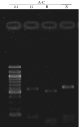
Fig. 1. Amplification patterns of Thelazia gulosa (G), T. rhodesi (R), T. skrjabini (S) with the primers (A–C) as indicated on the top; Weight marker 100 bp (λ1).
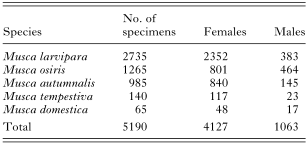
Table 1. Species and number of flies collected from May to October (1997–2001) divided according to their sex

Table 2. Number of flies (N) for Musca autumnalis and Musca larvipara divided according to collection season

Table 3. Number of flies (N) for Musca osiris, Musca domestica and Musca tempestiva divided according to collection season
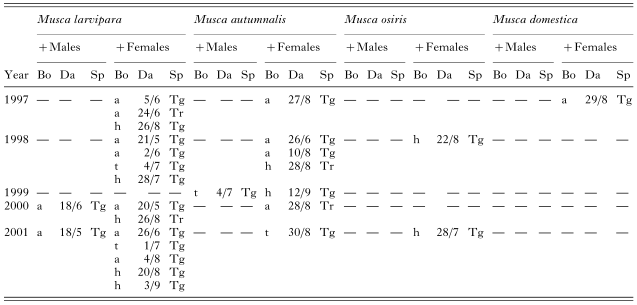
Table 4. Positive samples per year broken down according to the section of the insect body (Bo) constituting pooled samples (i.e. a, abdomen; t, thorax; h, head), date of collection (Da) and species of Thelazia (Sp) detected by PCR (Tg, Thelazia gulosa; Tr, Thelazia rhodesi)
 You have
Access
- 33
- Cited by