



1 Introduction
Lorentz spaces, denoted by
 $L^{p,q}$
, are precisely the spaces which appear in the real interpolation of
 $L^1$
and
 $L^\infty $
(see [Reference Bergh and Löfström1, Theorem 5.2.1]). They include, of course, the familiar example of
 $L^p$
space, though they allow for a broader variety of the behavior of their elements. They are often introduced via a quasi-norm that encodes information about the “size” of a function, just as the
 $L^{p}$
norm does. The two basic qualitative notions of “size” of a function are: how tall is the graph of the function, and how spread out is it? The Lorentz norms provide tighter control over both properties than the
 $L^{p}$
norms, by exponentially rescaling the measure in both the range p and the domain q. As is well-known, the Lorentz spaces
 $L^{p,q}$
are used in the Marcinkiewicz interpolation theorem, which says the following theorem.
Theorem 1.1 Let
 $(X,\mu )$
and
 $(Y,\nu )$
be
 $\sigma $
-finite measure spaces, and let T be a bounded sublinear operator from
 $L^{p_0,1} (X )$
to
 $L^{p_0,\infty } (Y)$
and from
 $L^{p_1,1}(X)$
to
 $L^{p_1,\infty }(Y)$
with
 $p_0\not =p_1$
and
 $0<p_0,p_1\leq \infty $
. Assume that
 $M_0$
and
 $M_1$
are constants satisfying the following weak-type bounds:
 $$\begin{align*}\Vert T (f) \Vert_{L^{p_0, \infty}} \leq M_0 \Vert f \Vert_{L^{p_0,1}}, \quad \forall\,f\in L^{p_0,1}(X), \end{align*}$$
 $$\begin{align*}\Vert T (f) \Vert_{L^{p_1, \infty}} \leq M_1 \Vert f \Vert_{L^{p_1,1}}, \quad \forall\,f\in L^{p_1,1}(X). \end{align*}$$
Then, there exists a constant C such that for every
 $r \in [1, \infty ]$
and
 $f \in L^{p,r} (X)$
, we have
 $$\begin{align*}\|T f\|_{L^{p,r}(Y)} \;\le\; C\,M_0^{\,1-\theta}\,M_1^{\,\theta}\,\|f\|_{L^{p,r}(X)}, \end{align*}$$
where
 $\theta \in (0,1)$
and
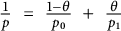 $\frac 1p \;=\;\frac {1-\theta }{p_0}\;+\;\frac {\theta }{p_1}$
.
Given a suitable function
 $b $
, we denote by
 $M_b$
the multiplication operator defined by
 $ M_bf = b\cdot f $
for any measurable function
 $f.$
The commutator
 $[M_b, T ]$
formed by the singular integral operator T and
 $M_b$
, which is defined by
 $[M_b, T ] f= M_{b}(T f) -T (M_{b} f )$
, has played a vital role in harmonic analysis, complex analysis, and partial differential equations (see, for example, [Reference Calderón3, Reference Castillo, Fernández and Trousselot4, Reference Christ and Geller7, Reference Coifman, Lions, Meyer and Semmes8, Reference Coifman, Rochberg and Weiss9, Reference Dafni10]). To simplify the notation in this article, we write
 $[b,T]$
for
 $[M_b, T]$
.
Motivated by the recent work of Dao and Krantz [Reference Dao and Krantz11] on Lorentz boundedness and compactness characterizations of commutators of Cauchy–Szegő projections on bounded strongly pseudoconvex domains in
 ${\mathbb {C}}^n$
, we will establish the Lorentz boundedness and compactness characterization of Riesz transform commutators on general stratified Lie groups, along the lines of [Reference Chen, Duong, Li and Wu5, Reference Duong, Li, Li and Wick12].
We now state our results explicitly. Suppose
 $\mathcal {G}$
is a stratified nilpotent Lie group of homogeneous dimension
 $\mathbb {Q}$
, and let
 $\{\mathrm {X}_{j}\}_{1 \leq j \leq n}$
be a basis for the left-invariant vector fields of degree one on
 $\mathcal {G}.$
Let
 $\Delta =\sum _{j=1}^{n} \mathrm {X}_{j}^{2}$
be the sub-Laplacian on
 $\mathcal {G}.$
The jth Riesz transform on
 $\mathcal {G}$
is defined formally by
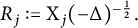 $R_{j}:=\mathrm {X}_{j}(-\Delta )^{-\frac {1}{2}}.$
We write
 $\nabla = (\mathrm {X}_1,\ldots ,\mathrm {X}_n)^\top $
for the gradient operator. It is well-known that such
 $R_{j}$
s are Calderón–Zygmund operators on
 $\mathcal {G}$
. We also recall that in [Reference Duong, Li, Li and Wick12] the authors established the pointwise kernel lower bound of the Riesz transform
 $R_{j}$
, which will be useful in our main results regarding the commutator
 $[b,R_j]$
.
Many of the harmonic-analysis tools we employ are formulated on spaces of homogeneous type – quasi-metric measure spaces equipped with a doubling measure. For the reader’s convenience, we recall the precise definition.
Definition 1.2 Let
 $(X,\rho ,\mu )$
be a quasi-metric measure space. Then,
 $(X,\rho ,\mu )$
is said to be a space of homogeneous type provided
-
(i)
 $\rho :X\times X\to [0,\infty )$
is a quasi-metric, i.e., there exists a constant
$K\ge 1$
such that for all
$x,y,z\in X$
$$\begin{align*} & \rho(x,y)=0\iff x=y,\qquad \rho(x,y)=\rho(y,x),\qquad \\ & \rho(x,z)\le K\bigl(\rho(x,y)+\rho(y,z)\bigr). \end{align*}$$
-
(ii)
$\mu $
is a non-negative Borel measure on X satisfying the doubling condition: there exists a constant
$C_D\ge 1$
such that for every
$x\in X$
and every
$r>0$
, where
$$\begin{align*}\mu\bigl(B(x,2r)\bigr)\le C_D\,\mu\bigl(B(x,r)\bigr), \end{align*}$$
$B(x,r):=\{y\in X:\rho (x,y)<r\}$
is the quasi-metric ball of radius r centered at x.
-
(iii) Each ball has strictly positive and finite measure; that is, for every
$x\in X$
and
$r>0$
,
$$\begin{align*}0<\mu\bigl(B(x,r)\bigr)<\infty. \end{align*}$$






We now consider the Lorentz spaces on spaces of homogeneous type.
Definition 1.3 Let
 $(X,\rho ,\mu )$
be a quasi-metric measure space. Let
 $1 \leq p < \infty $
. The Lorentz norm
 $\| \cdot \|_{L^{p,q} (X)}$
is defined as follows:
 $$ \begin{align} \| f \|_{L^{p,q} (X)} := \begin{cases} \displaystyle p^{\frac{1}{q}} \left( \int_0^\infty \left[ d_f (s)^{\frac{1}{p}} s \right]^q \frac{ds}{s} \right)^{\frac{1}{q}}, & \text{if } 1 \leq q < \infty, \\[9pt] \displaystyle \sup\limits_{s>0} s \, d_f (s)^{\frac{1}{p}}, & \text{if } q = \infty, \end{cases} \end{align} $$
where
 $d_f (s) := \mu (\{ x \in \mathcal G : |f(x)|> s \})$
represents the distribution function of f.
One says
 $\| \cdot \|_{L^{p,q} (X)}$
is a quasi-norm, meaning that there exists a constant
 $C_{p,q}> 0$
, depending only on p and q, such that
 $$ \begin{align} \| f + g \|_{L^{p,q} (X)} \leq C_{p,q} \left( \| f \|_{L^{p,q} (X)} + \| g \|_{L^{p,q} (X)} \right). \end{align} $$
In fact,
 $L^{p,q} (X)$
has an equivalent norm, which can be defined by introducing non-increasing rearrangements. The space
 $L^{p,q} (X)$
is complete with respect to this quasi-norm and therefore a quasi-Banach space. If
 $p \geq 1$
, then
 $L^{p,p} (X)=L^{p} (X)$
. Suppose
 $1\leq q\leq p<\infty $
or
 $p=q=\infty $
. Then,
 $\Vert \cdot \Vert _{L^{p,q} (X)}$
is a rearrangement-invariant Banach function space under the quasi-norm
 $\Vert \cdot \Vert _{L^{p,q} (X)}$
.
Theorem 1.4 Let
 $\mathcal {G}$
be a stratified nilpotent Lie group,
 $1 < p < \infty $
and
 $1 \leq q \leq \infty $
and
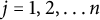 $j = 1,2,\dots n$
. Let
 $b\in L^1_{loc}(\mathcal G)$
. Then, if b is in
 $\mathrm {BMO}(\mathcal {G})$
, the commutator
 $[b,R_j]$
is bounded on
 $L^{p,q} (\mathcal {G})$
with
 $$ \begin{align*} \Vert [ b, R_j] : L^{p,q} (\mathcal{G}) \to L^{p,q} (\mathcal{G}) \Vert \lesssim \Vert b \Vert_{\mathrm{BMO}(\mathcal{G})}; \end{align*} $$
moreover, if
 $[b,R_j]$
is bounded on
 $L^{p,q} (\mathcal {G})$
then b is in
 $\mathrm {BMO}(\mathcal {G})$
, with
 $$ \begin{align*} \Vert b \Vert_{\mathrm{BMO}(\mathcal{G})} \lesssim\Vert [ b, R_j] : L^{p,q} (\mathcal{G}) \to L^{p,q} (\mathcal{G}) \Vert. \end{align*} $$
Theorem 1.5 Let
 $\mathcal {G}$
be a stratified nilpotent Lie group,
 $1 < p < \infty $
and
 $1 \leq q \leq \infty $
and
 $j = 1,2\dots n$
. Then, the commutator of
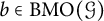 $b \in \mathrm {BMO}(\mathcal {G})$
and the Riesz transform is compact from
 $L^{p,q} (\mathcal {G})$
to
 $L^{p,q} (\mathcal {G})$
if and only if
 $b \in \mathrm {VMO}(\mathcal {G})$
.
The key techniques here are to establish the suitable estimates and properties of the Lorentz spaces
 $L^{p,q} (\mathcal {G})$
, and then to apply the suitable decomposition of
 $\mathcal {G}$
according to the definition of the Lorentz spaces
 $L^{p,q} (\mathcal {G})$
, and to match the pointwise kernel upper and lower bound of
 $R_{j}$
. Moreover, we note that the Riesz–Kolmogorov theorem plays a fundamental role in the compactness argument in the classical setting. It has been intensively studied in the context of the Lebesgue space
 $L^p$
on general spaces of homogeneous type. However, a suitable form in terms of the Lorentz spaces
 $L^{p,q}$
in general setting was missing. We will also establish this missing form for spaces of homogeneous type.
This article is organized as follows. In Section 2, we provide the preliminaries on stratified Lie groups
 $\mathcal G$
, then in Section 3, we establish suitable properties of the Lorentz spaces
 $L^{p,q} (\mathcal {G})$
on
 $\mathcal G$
. Section 4 is devoted to a Lorentz-scale extension of the classical Riesz–Kolmogorov compactness theorem. In Sections 5 and 6, we prove Theorems 1.4 and 1.5, respectively.
2 Preliminaries on stratified Lie groups
$\mathcal G$

Recall that a simply connected nilpotent Lie group
 $\mathcal {G}$
is said to be stratified if its left-invariant Lie algebra
 $\mathfrak {g}$
(assumed real and of finite dimension) admits a direct sum decomposition
 $$ \begin{align*} \mathfrak{g} = \bigoplus_{i = 1}^s V_i , \quad [V_1, V_i] = V_{i + 1}, \ \text{ for } i \leq s - 1 \text{ and } [V_1, V_s]=0. \end{align*} $$
The number s is called the step of the group
 $\mathcal G$
.
For
 $i=1,\ldots ,s$
, let
 $n_i=\dim V_i$
and
 $m_i= n_1+\cdots +n_i$
,
 $m_0=0$
and
 $m_s=N$
. We choose once and for all a basis
 $\{X_1,\ldots , X_N\}$
for
 $\mathfrak {g}$
adapted to the stratification, that is, such that
 $\{X_{m_{j-1}+1},\ldots , X_{m_j}\}$
is a basis of
 $V_j$
for each
 $j=1,\ldots ,s$
. One identifies
 $\mathfrak {g}$
and
 $\mathcal {G}$
via the exponential map
 $$ \begin{align*} \exp: \mathfrak{g} \longrightarrow \mathcal{G}, \end{align*} $$
which is a diffeomorphism, i.e., any
 $g\in \mathcal {G}$
can be written in a unique way as
 $g=\exp (x_1X_1+\cdots +x_NX_N)$
. Using these exponential coordinates, we identify g with the N-tuple
 $(x_1,\ldots ,x_N)\in \mathbb {R}^N$
and identify
 $\mathcal G$
with
 $(\mathbb {R}^N, \circ )$
, where the group operation
 $\circ $
is determined by the Campbell–Hausdorff formula (cf. [Reference Bonfiglioli, Lanconelli and Uguzzoni2, Section 2.2.2]).
We fix once and for all a (bi-invariant) Haar measure
 $dx$
on
 $\mathcal G$
(which is just the lift of Lebesgue measure on
 $\frak g$
via
 $\exp $
).
There is a natural family of dilations on
 $\frak g$
defined for
 $r> 0$
as follows:
 $$ \begin{align*} \delta_r \bigg( \sum_{i = 1}^s v_i \bigg) = \sum_{i = 1}^s r^i v_i, \quad \text{with } v_i \in V_i. \end{align*} $$
This allows the definition of dilation on
 $\mathcal {G}$
, which we still denote by
 $\delta _r$
.
Writing
 $n=n_1$
for the basis
 $\{{\mathrm {X}}_1, \ldots , {\mathrm {X}}_n\}$
of
 $V_1$
, we consider the sub-Laplacian
 $\Delta = \sum _{j=1 }^n {\mathrm {X}}_j^2 $
. Observe that
 ${\mathrm {X}}_j$
(
 $1 \leq j \leq n$
) is homogeneous of degree
 $1$
with respect to the dilations, and
 $\Delta $
is of degree
 $2$
in the sense that:
 $$ \begin{align*} &{\mathrm{X}}_j \left( f \circ \delta_r \right) = r \, \left( {\mathrm{X}}_j f \right) \circ \delta_r, \qquad 1 \leq j \leq n, \ r> 0, \ f \in C^1, \\ &\delta_{\frac{1}{r}} \circ \Delta \circ \delta_r = r^2 \, \Delta, \quad \forall r > 0. \end{align*} $$
Let
 $\mathbb {Q}$
denote the homogeneous dimension of
 $\mathcal {G}$
, namely,
 $$ \begin{align} \mathbb{Q}= \sum_{i=1}^s i\, \mathrm{dim} V_i. \end{align} $$
And let
 $p_h$
(
 $h> 0$
) be the heat kernel (i.e., the integral kernel of
 $e^{h \Delta }$
) on
 $\mathcal G$
. For convenience, we set
 $p_h(g) = p_h(g, 0)$
(i.e., in this note, for a convolution operator, we will identify the integral kernel with the convolution kernel) and
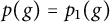 $p(g) = p_1(g)$
.
Recall that (cf. for example, [Reference Duong, Li, Wick and Yang13, Reference Folland and Stein14, Reference Franchi, Tchou and Tesi15])
 $$ \begin{align} p_h(g) = h^{-\frac{\mathbb{Q}}{2}} p(\delta_{\frac{1}{\sqrt{h}}}(g)), \qquad \forall h> 0, \ g \in \mathcal G. \end{align} $$
The kernel of the
 $j^{\mathrm {th}}$
Riesz transform
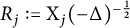 $R_j:={\mathrm {X}}_j (-\Delta )^{-\frac {1}{2}}$
(
 $1 \leq j \leq n$
) is written simply as
 $K_j(g, g') = K_j(g^{\prime -1} \circ g)$
. It is well-known that
 $$ \begin{align} K_j \in C^{\infty}(\mathcal G \setminus \{0\}), \ K_j(\delta_r(g)) = r^{-\mathbb{Q}} K_j(g), \quad \forall g \neq 0, \ r> 0, \ 1 \leq j \leq n, \end{align} $$
which also can be explained by (2.2) and the fact that
 $$ \begin{align*} K_j(g) = \frac{1}{\sqrt{\pi}} \int_0^{+\infty} h^{-\frac{1}{2}} {\mathrm{X}}_j p_h(g) \, dh = \frac{1}{\sqrt{\pi}} \int_0^{+\infty} h^{- \frac{\mathbb{Q}}{2} - 1} \left( {\mathrm{X}}_j p \right)(\delta_{\frac{1}{\sqrt{h}}}(g)) \, dh. \end{align*} $$
By [Reference Hebisch and Sikora19], the group G may be equipped with a smooth subadditive homogeneous norm
 $\rho $
, a continuous function from G to
 $[0,\infty )$
that is smooth on
 $\mathcal G\setminus \{o\}$
and satisfies
-
(i)
$\rho (g^{-1}) =\rho (g)$
; -
(ii)
$\rho (g^{-1}h) \leq \rho (g) + \rho (h)$
; -
(iii)
$\rho ({ \delta _t(g)}) =t\rho (g)$
for all
$g\in G$
and all
$t \in \mathbb {R}_+$
; -
(iv)
$\rho (g) =0$
if and only if
$g=o$
.
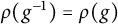




Abusing notation, we set
 $\rho (g, g') := \rho (g^{-1} g')$
for all
 $g, g' \in \mathcal G$
; this defines a metric on G. We write
 $B(g, r)$
for the open ball with center g and radius r with respect to
 $\rho $
:
 $$\begin{align*}B(g, r) = g B(o,r) = g \{ h \in \mathcal G : \rho(h) < {\color{red} r} \}. \end{align*}$$
Then,
 $|B(g,r)| = r^{\mathbb Q} |B(g,1)|$
. The metric space
 $(G,\rho )$
is geometrically doubling; that is, there exists
 $A \in \mathbb {N}$
such that every metric ball
 $B(x,2r)$
may be covered by at most A balls of radius r.
3 Duals of Lorentz spaces
We refer the reader to [Reference Grafakos18, Proposition 1.4.10] for the following result.
Lemma 3.1 Let
 $(X,\mu ) $
be a measure space,
 $0 < p < \infty $
and
 $0 < q_1 < q_2 \leq \infty $
. Then, the Lorentz space norms
 $L^{p,q} (X)$
satisfy
 $$ \begin{align} \Vert f \Vert_{L^{p, q_2}(X)} \leq \left(\frac{q_1}{p} \right)^{\frac{q_2-q_1}{q_1 q_2} }\Vert f \Vert_{L^{p, q_1}(X)}. \end{align} $$
Given a quasi-Banach space X with norm
 $\Vert \cdot \Vert _X$
, we let
 $X^*$
be its dual space, which consists of all continuous linear functionals T on X, equipped with the norm
 $$ \begin{align*} \Vert T \Vert_{X^{*}} = \sup_{\Vert x \Vert_X = 1} |T(x)|. \end{align*} $$
We first recall Helly’s theorem, a fundamental result in functional analysis that addresses the convergence of bounded sequences in the dual space of a normed linear space. This theorem is instrumental in establishing the existence of a convergent subsequence in the dual space. For the proof, we refer the reader to [Reference Royden and Fitzpatrick26, p. 171].
Theorem 3.2 (Helly’s Theorem)
Let X be a separable normed linear space and let
 $\{T_n\}$
be a sequence in its dual space
 $X^*$
that is bounded. Specifically, there exists a constant
 $M> 0$
such that for all
 $f \in X$
and all n,
 $$\begin{align*}|T_n(f)| \leq M \|f\|_{X}. \end{align*}$$
Then, there exists a subsequence
 $\{T_{n_k}\}$
of
 $\{T_n\}$
and a functional
 $T \in X^*$
such that
 $$\begin{align*}\lim_{k \to \infty} T_{n_k}(f) = T(f) \quad \text{for all } f \in X. \end{align*}$$
We now present the following theorem concerning the dual spaces of Lorentz spaces, which demonstrates that
 $L^{p,q}(X)$
is normable for
 $1 < p < \infty $
and
 $1 \leq q \leq \infty $
. This result can be found in [Reference Grafakos18, pp. 57, 79].
Theorem 3.3 Let
 $(X,\mu )$
be a non-atomic
 $\sigma $
-finite measure space. If
 $1 < p < \infty $
and
 $1 \leq q < \infty $
, then
 $(L^{p,q}(X))^* = L^{p',q'}(X)$
. Here,
 $p'$
and
 $q'$
denote the conjugate exponents of p and q, respectively; that is,
 $\frac {1}{p} + \frac {1}{p'} = \frac {1}{q} + \frac {1}{q'} = 1$
. In other words, for
 $1<p< \infty $
and
 $1 \leq q \leq \infty ,$
and a continuous linear functional
 $ T $
on
 $ L^{p,q}(X) $
, there exists a function
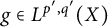 $ g \in L^{p',q'}(X) $
such that
 $$\begin{align*}T(f) = \int_X f(x)\, g(x) \, d\mu(x) \quad \text{for all } f \in L^{p,q} (X). \end{align*}$$
In particular,
 $$ \begin{align} \Vert g \Vert_{L^{p'q'} (X)} \leq C(p,q) \Vert T \Vert, \end{align} $$
where
 $$ \begin{align*} C(p,q) = \frac{p \; 2^{\frac{1}{p}} }{ (p'/ (q'-p')) \left(1- 2^{ 1- (q' / p') } \right)}. \end{align*} $$
Moreover, for
 $1 < p < \infty $
and
 $1 \leq q \leq \infty $
, one has
 $$ \begin{align} \sup \left\{ \left|\int_{\mathcal{G}} f(g) h(g) \, dg \right| : \| h \|_{L^{p',q'}(\mathcal{G})} \leq 1 \right\} \approx \| f \|_{L^{p,q}(\mathcal{G})}. \end{align} $$
Indeed, the left-hand side of (3.3) defines a norm on
 $L^{p,q}(X)$
for
 $1 < p < \infty $
and
 $1 \leq q \leq \infty $
.
We next present the following lemma regarding the density of a specific class of simple functions in Lorentz spaces
 $L^{p,q}(\mathcal {G})$
. While this result is, in fact, applicable to more general settings, we restrict our discussion to the case of stratified nilpotent Lie groups to align with the focus of this article. For the proof, we refer to [Reference Grafakos18, Proposition 1.4.21].
Lemma 3.4 Let
 $(X, \mu )$
be a measure space and let
 $S_0 (X)$
be the space of functions of the form
 $$ \begin{align} \sum_{i = m_1}^{n_1} 2^{-i} \chi_{A_i} - \sum_{i = m_2}^{n_2} 2^{-i} \chi_{B_i}, \end{align} $$
where
 $m_1 < n_1$
,
 $m_2 < n_2$
and
 $A_i$
,
 $B_i$
are subsets of X of finite measure. Then, for
 $0 <p,q< \infty $
, the space
 $S_0 (X)$
is dense in
 $L^{p,q} (X)$
.
Theorem 3.5 Let
 $ (X, \mu ) $
be a nonatomic
 $\sigma $
-finite measure space, and let
 $ 1 < p < \infty $
. Define
 $ S_0(X) $
as in (3.4). Then, the dual space of the closure of
 $ S_0(X) $
with respect to the
 $ L^{p,\infty }(X) $
norm, denoted by
 $$\begin{align*}\overline{S_0(X)}^{\Vert \cdot \Vert_{L^{p,\infty}(X)}}, \end{align*}$$
is the Lorentz space
 $ L^{p',1}(X) $
, where
 $ p' $
is the conjugate exponent of
 $ p $
(i.e.,
 $ \frac {1}{p} + \frac {1}{p'} = 1 $
). In other words, for every continuous linear functional
 $ T $
on
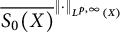 $ \overline {S_0(X)}^{\Vert \cdot \Vert _{L^{p,\infty }(X)}} $
, there exists a function
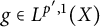 $ g \in L^{p',1}(X) $
such that
 $$\begin{align*}T(f) = \int_X f(x)\, g(x) \, d\mu(x) \quad \text{for all } f \in \overline{S_0(X)}^{\Vert \cdot \Vert_{L^{p,\infty}(X)}}. \end{align*}$$
Proof We begin by considering the case where
 $ \mu (X) < \infty $
. Let
 $ T: \overline {S_0(X)}^{\Vert \cdot \Vert _{L^{p,\infty }(X)}} \to \mathbb {R} $
be a bounded linear functional.
Define a set function
 $ \nu $
on the collection of measurable sets of
 $ X $
by
 $$\begin{align*}\nu(E) = T(\chi_E), \quad \text{for every measurable set } E \subseteq X. \end{align*}$$
We now claim that
 $ \nu $
is a signed measure. To this end, let
 $ \{ A_k \}_{k=1}^\infty $
be a countable collection of disjoint measurable subsets of
 $ X $
. Define
 $ E = \cup _{k=1}^\infty A_k $
. By the
 $\sigma $
-finiteness of
 $ \mu $
, we have
 $$\begin{align*}\mu(E) \leq \sum_{k=1}^\infty \mu(A_k) < \infty, \end{align*}$$
which implies that
 $ E $
has finite measure. Consequently,
 $$\begin{align*}\lim_{n \to \infty} \sum_{k=n+1}^\infty \mu(A_k) = 0. \end{align*}$$
Thus,
 $$\begin{align*}\lim_{n \to \infty} \left\Vert \chi_E - \sum_{k=1}^n \chi_{A_k} \right\Vert_{L^{p,\infty}(X)} \leq \lim_{n \to \infty} \left( \sum_{k=n+1}^\infty \mu(A_k) \right)^{\frac{1}{p}} = 0. \end{align*}$$
Since
 $ T $
is both linear and continuous on
 $ L^{p,\infty }(X) $
, we have
 $$ \begin{align} \nu(E) = T(\chi_E) = \lim_{n \to \infty} T\left( \sum_{k=1}^n \chi_{A_k} \right) = \lim_{n \to \infty} \sum_{k=1}^n T(\chi_{A_k}) = \sum_{k=1}^\infty \nu(A_k). \end{align} $$
This establishes countable additivity of
 $ \nu $
.
We next verify that the series on the right-hand side of (3.5) converges absolutely. To this end, consider the series
 $$\begin{align*}\sum_{k=1}^\infty T\left(\text{sgn}(T(\chi_{A_k})) \chi_{A_k}\right). \end{align*}$$
By an argument similar to the one above, this series forms a Cauchy sequence in
 $ \mathbb {R} $
. It follows that
 $$\begin{align*}|\nu(A_k)| = T\left(\text{sgn}(T(\chi_{A_k})) \chi_{A_k}\right), \end{align*}$$
and therefore the series
 $$\begin{align*}\sum_{k=1}^\infty |\nu(A_k)| = \sum_{k=1}^\infty T\left(\text{sgn}(T(\chi_{A_k})) \chi_{A_k}\right) \end{align*}$$
converges. Thus, the series on the right-hand side of (3.5) converges absolutely. This proves that
 $ \nu $
is indeed a signed measure.
We next observe that for every measurable set
 $ E \subseteq X $
with
 $ \mu (E) = 0 $
, we have
 $ \Vert \chi _E \Vert _{L^{p,\infty }(X)} = 0 $
, and thus,
 $$\begin{align*}\nu(E) = T(\chi_E) = 0. \end{align*}$$
Therefore, the measure
 $ \nu $
is absolutely continuous with respect to
 $ \mu $
. It then follows from the Radon–Nikodym Theorem (see [Reference Royden and Fitzpatrick26, p. 384]) that there exists a function
 $ f: X \to \mathbb {R} $
such that
 $$\begin{align*}T (\chi_E) = \nu(E) = \int_E f \, d\mu \quad \text{for every measurable set } E \subseteq X. \end{align*}$$
By the linearity of
 $ T $
, we conclude that
 $$ \begin{align} T(\phi) = \int_X f(x)\, \phi(x) \, d\mu(x) \end{align} $$
for every simple function
 $ \phi \in S_0(X) $
. Moreover, for
 $1 < q < \infty $
, we have
 $$ \begin{align} L^{p,q}(X) = \overline{S_0(X) }^{\Vert \cdot \Vert_{L^{p,q}(X)}} \subseteq \overline{S_0(X)}^{\Vert \cdot \Vert_{L^{p,\infty}(X)}} \end{align} $$
by Lemmas 3.1 and 3.4. Therefore, for
 $1<q<\infty $
,
 $$ \begin{align} \left| T (\phi) \right| \leq \Vert T \Vert \left\Vert \phi \right\Vert_{L^{p,\infty} (X)} \leq \left( \frac{q}{p}\right)^{\frac{1}{q}} \Vert T \Vert \Vert \phi \Vert_{L^{p,q} (X)} \end{align} $$
holds for every
 $\phi \in L^{p,q}(X)$
by (3.1). Combining (3.6)–(3.8), we obtain that for every
 $1 < q < \infty $
,
 $$ \begin{align*} \left| \int_X f \phi \, d\mu \right| \leq \left( \frac{q}{p}\right)^{\frac{1}{q}} \Vert T \Vert \Vert \phi \Vert_{L^{p,q} (X)} \end{align*} $$
holds for every
 $\phi \in S_0(X) \cap L^{p,q} (X) $
. From Theorem 3.3 and Lemma 3.4, it follows that for
 $1 < q < \infty $
 $$ \begin{align} \Vert f \Vert_{L^{p',q'} (X)} \leq C(p,q) \left( \frac{q}{p}\right)^{\frac{1}{q}} \Vert T \Vert, \end{align} $$
where
 $C(p,q)$
is the constant given in (3.2). Next, we apply Fatou’s Lemma to deduce that
 $$ \begin{align*} \Vert f \Vert_{L^{p',1} (X)} &= p' \int^\infty_0 d_f(s)^{\frac{1}{p'}} \, ds \\ &= p' \int_0^\infty \lim_{q' \to 1} \left( d_f(s)^{\frac{q'}{p'}} s^{q'-1} \right) \, ds \\ &\leq \liminf_{q' \to 1} p' \int_0^\infty \left( d_f(s)^{\frac{q'}{p'}} s^{q'-1} \right) \, ds \\ &= \liminf_{q' \to 1} \Vert f \Vert_{L^{p',q'} (X)}^{q'} \\ &\leq \liminf_{q' \to 1} C(p,q) \left( \frac{q}{p}\right)^{\frac{1}{q}} \Vert T \Vert^{q'} \\ &= \frac{p \; 2^{1/p}}{ (p'/(1-p') ) (1- 2^{1-(1/p')}) } \Vert T \Vert\\ & < \infty, \end{align*} $$
where
 $ d_f(s) = \mu \left ( \{ x \in X : |f(x)|> s \} \right ) $
is the distribution function of
 $ f $
, and we use inequality (3.9) in the last inequality. Furthermore, since for every
 $ \phi \in S_0(X), $
we have
 $$ \begin{align} T(\phi) - \int_X f \phi \, d\mu = T(\phi) - \int_X f \phi \, d\mu = 0, \end{align} $$
it follows that
 $$\begin{align*}T(\phi) = \int_X f \phi \, d\mu \end{align*}$$
for every
 $\phi \in S_0 (X) $
. By a standard approximation argument, this equality extends to all
 $ g $
in the closure
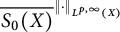 $ \overline {S_0(X)}^{\Vert \cdot \Vert _{L^{p,\infty }(X)}} $
, since
 $ S_0(X) $
is dense in this space. Therefore,
 $$ \begin{align*} T(g) = \int_X f g \, d\mu \quad \text{for all } g \in \overline{S_0(X)}^{\Vert \cdot \Vert_{L^{p,\infty}(X)}}. \end{align*} $$
We now consider the case where
 $ X $
is
 $\sigma $
-finite (not necessarily of finite measure). Let
 $ \{ X_n \}_{n=1}^\infty $
be an increasing sequence of measurable subsets of
 $ X $
with finite measure such that
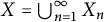 $ X = \bigcup _{n=1}^\infty X_n $
. For each fixed
 $ n $
, from our earlier result, there exists a function
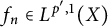 $ f_n \in L^{p',1}(X) $
satisfying
-
(i)
$$ \begin{align*} f_n= 0 \text{ on }X \setminus X_n; \end{align*} $$
-
(ii)
$$ \begin{align*} \Vert f_n \Vert_{L^{p',1} (X)} \leq \Vert T \Vert; \end{align*} $$
-
(iii)
(3.11)
$$ \begin{align} T(g) = \int_X f_n g \; d\mu \text{ for every } g\in \overline{S_0(X)}^{\Vert \cdot \Vert_{L^{p,\infty}(X)}} \text{ with } g=0 \text{ on }X \setminus X_n. \end{align} $$


Since for each
 $ n, $
the function
 $ f_n $
with these properties is uniquely determined on
 $ X_n $
up to sets of measure zero, and since the restriction of
 $ f_{n+1} $
to
 $ X_n $
also satisfies these properties, we may assume without loss of generality that
 $ f_{n+1} = f_n $
on
 $ X_n $
. Define
 $ f: X \to \mathbb {R} $
by setting
 $$ \begin{align*} f(x) = \sup_{n \in \mathbb{N}} f_n(x) \,. \end{align*} $$
Using the Monotone Convergence Theorem for the increasing sequence
 $ |f_n| $
, we obtain
 $$\begin{align*}\Vert f \Vert_{L^{p',1}(X)} = \lim_{n \to \infty} \Vert f_n \Vert_{L^{p',1}(X)} \leq \Vert T \Vert. \end{align*}$$
Therefore,
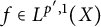 $ f \in L^{p',1}(X) $
. It remains to show that
 $$\begin{align*}T(g) = \int_X f g \, d\mu \end{align*}$$
for every
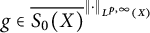 $ g \in \overline {S_0(X)}^{\Vert \cdot \Vert _{L^{p,\infty }(X)}} $
. To this end, let
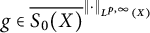 $ g \in \overline {S_0(X)}^{\Vert \cdot \Vert _{L^{p,\infty }(X)}} $
and define
 $ g_n = g \chi _{X_n} $
for each
 $ n $
. Note that
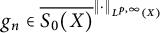 $ g_n \in \overline {S_0(X)}^{\Vert \cdot \Vert _{L^{p,\infty }(X)}} $
and
 $ g_n = 0 $
on
 $ X \setminus X_n $
. Since
 $ |f g_n| \leq |f g| $
and
 $ |g_n| \leq |g| $
, and because
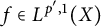 $ f \in L^{p',1}(X) $
and
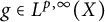 $ g \in L^{p,\infty }(X) $
, we can apply the Lebesgue Dominated Convergence Theorem to obtain
 $$\begin{align*}\lim_{n \to \infty} \int_X f g_n \, d\mu = \int_X f g \, d\mu. \end{align*}$$
Moreover, one easily sees that
 $$ \begin{align} \{ g_n \}_n \to g \text{ in } L^{p,1} (X) \text{ as } n \to \infty. \end{align} $$
Therefore,
 $$ \begin{align*} \int_X f g \; d\mu &= \lim_{n \to \infty} \int_X f g_n \; d\mu\\ & = \lim_{n \to \infty } \int_X f_n g_n \; d\mu\\ & = \lim_{n \to \infty} T(g_n) \\ & = T(g), \end{align*} $$
where we use (3.11) in the third equality and (3.12) in the last equality. This completes the proof.
We next recall an important result that provides an analog of the Euclidean dyadic cubes in the setting of spaces of homogeneous type. This result was established by Christ in [Reference Christ6] and has been used in [Reference Holmes, Lacey and Wick20, Reference Lacey22, Reference Lerner, Ombrosi and Rivera-Ríos24, Reference Nehari25, Reference Uchiyama27].
Theorem 3.6 Let
 $(X , \rho ,\mu )$
be a space of homogeneous type. Then, there exists a collection of open subsets
 $ \{ Q_\alpha ^k \subseteq X : k \in \mathbb {Z}, \alpha \in I_k \} $
, along with constants
 $ \delta \in (0,1) $
,
 $ a_0> 0 $
,
 $ \eta> 0 $
, and
 $ C_1, C_2 < \infty $
, such that the following properties hold:
-
(i) for every
$k \in \mathbb {Z}$
, the set
$ X $
is covered almost everywhere by the collection
$ \{ Q_\alpha ^k \}_\alpha $
, i.e.,
$$ \begin{align*} \left| X \setminus \bigcup_{\alpha} Q_\alpha^k \right| = 0, \quad \forall k; \end{align*} $$
-
(ii) for any
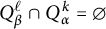
$ \ell> k $
, either
$ Q_\beta ^\ell \subseteq Q_\alpha ^k $
or
$ Q_\beta ^\ell \cap Q_\alpha ^k = \emptyset $
; -
(iii) for each pair
$ (k, \alpha ) $
, and for each
$ \ell < k $
, there exists a unique index
$ \beta $
such that
$ Q_\alpha ^k \subseteq Q_\beta ^\ell $
; -
(iv) the diameter of each set
$ Q_\alpha ^k $
is bounded by
$$ \begin{align*} \mathrm{diam}(Q_\alpha^k) < C_1 \delta^k; \end{align*} $$
-
(v) each
$Q_\alpha ^k$
contains some ball
$B(z^k_\alpha , a_0 \delta ^k)$
; -
(vi) for all
$ k $
,
$ \alpha $
, and
$ t> 0 $
, we have
$$ \begin{align*} \left| \{ x \in Q_\alpha^k : \rho(x, X \setminus Q_\alpha^k) \leq t \delta^k \} \right| \leq C_2 t^\eta |Q_\alpha^k|. \end{align*} $$




Lemma 3.7 Let
 $(X,\rho , \mu )$
be a space of homogeneous type with
 $\mu $
being a Radon measure, A be a measurable set in X which satisfies
 $\mu (A) < \infty ,$
and
 $\{ Q_{k}^\alpha \subseteq X: k \in \mathbb {Z} , \alpha \in I_k\}$
be the collection of open subsets of X as given in Theorem 3.6. Then, for
 $1 \leq p < \infty $
,
 $1 \leq q \leq \infty ,$
and
 $\varepsilon>0$
, there exist
 $k_0 \in \mathbb {Z}$
and a finite index set
 $\widetilde {I}_{k_0} \subseteq I_{k_0}$
such that the union
 $$\begin{align*}\widetilde{A}_{k_0} := \bigcup_{\alpha \in \widetilde{I}_{k_0}} Q_\alpha^{k_0} \end{align*}$$
satisfies
 $$\begin{align*}\| \chi_{\widetilde{A}_{k_0}} - \chi_A \|_{L^{p,q}(\mathcal{G})} < \varepsilon. \end{align*}$$
Proof Fix
 $\varepsilon>0$
, and let
 $C_{p,q}$
be the constant depending only on p and q, as given in (1.2). Since
 $\chi _A$
has finite measure, there exists a bounded closed subset
 $F \subseteq A$
such that
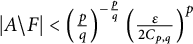 $|A \setminus F| < \left ( \frac {p}{q} \right )^{-\frac {p}{q}} \left ( \frac {\varepsilon }{2 C_{p,q}} \right )^p$
. This implies that
 $$ \begin{align} \| \chi_A - \chi_F \|_{L^{p,q}(\mathcal{G})} < \frac{\varepsilon}{2 C_{p,q}}. \end{align} $$
For each
 $k \in \mathbb {Z}$
, define the open set containing F by
 $$\begin{align*}\widetilde{A}_k := \bigcup_{\alpha \in \widetilde{I}_k} Q_\alpha^k, \end{align*}$$
where
 $\widetilde {I}_k = \{ \alpha \in I_k : Q_\alpha ^k \cap F \neq \emptyset \}$
. Since
 $(\mathcal {G}, \rho )$
is geometrically doubling, the property
 $(v)$
in Theorem 3.6 implies that
 $\tilde {I}_k$
is finite for every
 $k \in \mathbb {Z}$
. Therefore,
 $|\tilde {A}_k| < \infty $
for every
 $k \in \mathbb {Z}$
.
Since F is closed and the property
 $(iv)$
in Theorem 3.6 yields
 $$\begin{align*}0 \leq \lim_{k \to \infty} \operatorname{diam}(Q_\alpha^k) \leq \lim_{k \to \infty} C_1 \delta^k = 0, \end{align*}$$
we have
 $$\begin{align*}\bigcap_{k = 1}^\infty \widetilde{A}_k = F, \end{align*}$$
which implies
 $$\begin{align*}\lim_{k \to \infty} |\widetilde{A}_k| = |F|. \end{align*}$$
It follows that there exists
 $k_0 \in \mathbb {Z}$
such that
 $$ \begin{align} \| \chi_{\widetilde{A}_{k_0}} - \chi_F \|_{L^{p,q}(\mathcal{G})} \leq \frac{\varepsilon}{2 C_{p,q}}. \end{align} $$
Combining (3.13) and (3.14), we obtain
 $$ \begin{align*} \| \chi_{\widetilde{A}_{k_0}} - \chi_A \|_{L^{p,q}(\mathcal{G})} &\leq C_{p,q} \left( \| \chi_{\widetilde{A}_{k_0}} - \chi_F \|_{L^{p,q}(\mathcal{G})} + \| \chi_F - \chi_A \|_{L^{p,q}(\mathcal{G})} \right) \\ &< \varepsilon. \end{align*} $$
This completes the proof.
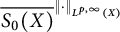
The above lemma, together with Lemma 3.4, immediately yields the following result.
Theorem 3.8 Let
 $(X,\rho , \mu )$
be a space of homogeneous type with
 $\mu $
being a Radon measure. Then,
-
(i)
$L^{p,q} (X)$
is separable when
$1\leq p < \infty $
,
$1 \leq q < \infty $
; -
(ii)
$\overline {S_0(X)}^{\Vert \cdot \Vert _{L^{p,\infty }(X)}}$
is separable when
$1\leq p < \infty $
.



4 Lorentz-scale extension of the Riesz–Kolmogorov theorem
The Riesz–Kolmogorov theorem is a fundamental result in functional analysis that characterizes compactness in
 $L^p$
spaces. Its importance lies in providing conditions for relative compactness, which is essential for understanding convergence in function spaces. The theorem has wide-ranging applications, including the study of partial differential equations, spectral theory, and the analysis of compact operators. In [Reference Górka and Macios16], an alternative version of the Riesz–Kolmogorov theorem concerning
 $L^p$
spaces in metric spaces with a doubling measure is presented. In this section, we extend that result to the scale of Lorentz spaces. To proceed, we first recall the definitions of equi-integrability and convergence in measure in a metric space.
Definition 4.1 Let
 $(X , \rho ,\mu )$
be a space of homogeneous type. A collection of real-valued functions
 $\{ g_k \}_k$
on X is said to be
 $L^{p,q}(X)$
-equi-integrable if, for every
 $\varepsilon> 0$
, there exists
 $\delta> 0$
such that
 $$ \begin{align*} \Vert g_k \Vert_{L^{p,q} (A)} < \varepsilon \end{align*} $$
for every measurable set
 $A \subseteq X$
with
 $\mu (A) < \delta $
.
Definition 4.2 Let
 $(X , \rho ,\mu )$
be a space of homogeneous type, and let
 $\{ g_k \}_k$
be a sequence of real-valued functions on X. We say that
 $g_k$
converges in measure if, for every
 $\varepsilon> 0$
,
 $$ \begin{align*} \lim_{k_1, k_2 \to \infty} \mu\left( \{x \in X : |g_{k_1} (x) - g_{k_2} (x)|> \varepsilon \} \right) = 0. \end{align*} $$
Lemma 4.3 Let
 $(X , \rho ,\mu )$
be a space of homogeneous type, and let
 $B \subseteq X$
be a measurable set with
 $\mu (B) < \infty $
. Consider a sequence of functions
 $\{ g_k \}_{k=1}^\infty $
on X such that
 $\operatorname {supp} g_k \subseteq B$
for all k. Suppose that for some
 $1 < p < \infty $
and
 $1 \leq q \leq \infty $
, the sequence
 $\{ g_k \}_{k=1}^\infty $
is equi-integrable in the Lorentz space
 $L^{p,q}(X)$
, and that
 $g_k$
converges in measure on X. Then,
 $\{ g_k \}_{k=1}^\infty $
is a Cauchy sequence in
 $L^{p,q}(X)$
.
Proof Fix
 $\varepsilon> 0$
. By the definition of equi-integrability in
 $ L^{p,q}(X) $
, there exists
 $\delta> 0$
such that for every measurable set
 $ A \subseteq X $
with
 $ \mu (A) < \delta $
, we have
 $$\begin{align*}\Vert g_k \Vert_{L^{p,q}(A)} < \varepsilon \end{align*}$$
for all
 $ k \in \mathbb {N} $
. Moreover, since
 $ \{ g_k \}_{k=1}^\infty $
converges in measure on
 $ X $
, there exists
 $ K \in \mathbb {N} $
such that for all
 $ k_1, k_2> K $
, the following inequality holds:
 $$ \begin{align} \mu\left( \left\{ x \in X : |g_{k_1}(x) - g_{k_2}(x)|> \varepsilon \right\} \right) \leq \delta. \end{align} $$
Define the set
 $$\begin{align*}A := \left\{ x \in X : |g_{k_1}(x) - g_{k_2}(x)|> \varepsilon \right\}. \end{align*}$$
By inequality (4.1), we have
 $ \mu (A) \leq \delta $
for
 $ k_1, k_2> K $
. Since
 $ L^{p,q}(X) $
is a quasi-Banach space, its quasi-norm satisfies the quasi-triangle inequality involving a constant
 $ C_{p,q} $
(as specified in equation (1.2)). Thus, we have
 $$ \begin{align*} \Vert g_{k_1} - g_{k_2} \Vert_{L^{p,q}(X)} \leq C_{p,q} \left( \Vert g_{k_1} - g_{k_2} \Vert_{L^{p,q}(A)} + \Vert g_{k_1} - g_{k_2} \Vert_{L^{p,q}(X \setminus A)} \right). \end{align*} $$
For the first term on the right-hand side, we use (4.1) to obtain
 $$ \begin{align} \Vert g_{k_1} - g_{k_2} \Vert_{L^{p,q}(A)} &\leq C_{p,q} \left( \Vert g_{k_1} \Vert_{L^{p,q}(A)} + \Vert g_{k_2} \Vert_{L^{p,q}(A)} \right) \nonumber \\ &\leq 2C_{p,q} \varepsilon, \end{align} $$
for
 $k_1, k_2> K$
. For the second term on the right-hand side of the inequality, we observe that
 $$\begin{align*}X \setminus A = \left\{ x \in X : |g_{k_1}(x) - g_{k_2}(x)| \leq \varepsilon \right\}. \end{align*}$$
Therefore, for
 $1 \leq q < \infty $
, we have
 $$ \begin{align} \Vert g_{k_1} - g_{k_2} \Vert_{L^{p,q}(X \setminus A)} &= p^{\frac{1}{q}} \left( \int_0^\infty \left( \mu\left(\{ x \in X \setminus A : |g_{k_1}(x) - g_{k_2}(x)|> s \}\right)^{\frac{1}{p}} s \right)^q \frac{ds}{s} \right)^{\frac{1}{q}} \nonumber \\ &= p^{\frac{1}{q}} \left( \int_0^\varepsilon \left( \mu\left(\{ x \in X \setminus A : |g_{k_1}(x) - g_{k_2}(x)| > s \}\right)^{\frac{1}{p}} s \right)^q \frac{ds}{s} \right)^{\frac{1}{q}} \nonumber \\ &\leq p^{\frac{1}{q}} \left( \int_0^\varepsilon \mu(B)^{\frac{q}{p}} s^{q-1} \, ds \right)^{\frac{1}{q}} \nonumber \\ &= \left( \frac{p}{q} \right)^{\frac{1}{q}} \mu(B)^{\frac{1}{p}} \varepsilon \end{align} $$
holds for
 $1 \leq q < \infty $
. For
 $ q = \infty $
, using the definition of
 $ X \setminus A $
once again, we obtain
 $$ \begin{align} \nonumber \Vert g_{k_1} - g_{k_2} \Vert_{L^{p,\infty}(X \setminus A)} &= \sup_{0<s} s \;\mu \left( \{ x \in X \setminus A : |g_{k_1}(x) - g_{k_2}(x)|>s \}\right)^{\frac{1}{p}}\\ \nonumber &= \sup_{0< s \leq \varepsilon} s\; \mu \left( \{ x \in B : |g_{k_1}(x) - g_{k_2}(x)|> s \} \right)^{\frac{1}{p}}\\ & \leq \mu(B)^{\frac{1}{p}} \varepsilon. \end{align} $$
The combination of (4.2)–(4.4) yields
 $$ \begin{align*} \Vert g_{k_1} - g_{k_2} \Vert_{L^{p,q}(X)} \leq \left( 2C_{p,q}^2 + C_{p,q} \left( \frac{p}{q} \right)^{\frac{1}{q}} \mu(B)^{\frac{1}{p}} \right) \varepsilon. \end{align*} $$
This completes the proof.
We now present the main result of this section, which extends the Riesz–Kolmogorov theorem to Lorentz spaces, in line with the approach taken in [Reference Górka and Macios16].
Theorem 4.4 Let
 $(X , \rho ,\mu )$
be a space of homogeneous type. Assume further that for each
 $r> 0$
, the function
 $$\begin{align*}h(r) := \inf_{x \in X} \mu(B(x, r))> 0. \end{align*}$$
Let
 $1 < p < \infty $
and
 $1 \leq q \leq \infty $
. Suppose that a subset
 $\mathcal {F}$
of
 $L^{p, q}(X)$
satisfies the following conditions:
-
(i)
(4.5)
$$ \begin{align} \sup_{f \in \mathcal{F}} \Vert f \Vert_{L^{p, q}(X)} < \infty; \end{align} $$
-
(ii)
(4.6)
$$ \begin{align} \lim_{r \to \infty} \Vert f \Vert_{L^{p,q}(X \setminus B(x_0, r))} = 0, \quad \text{uniformly for } f \in \mathcal{F}; \end{align} $$
-
(iii)
(4.7)
$$ \begin{align} \lim_{r \to 0} \Vert f(\cdot) - (f)_{B(\cdot, r)} \Vert_{L^{p,q}(X)} = 0, \quad \text{uniformly for } f \in \mathcal{F}. \end{align} $$
Then,
$\mathcal {F}$
is relatively compact.


Proof Suppose (4.5)–(4.7) hold. Let
 $\{ f_k \}_{k=1}^\infty $
be a sequence of functions in
 $\mathcal {F}$
. We shall show that there exists a subsequence of
 $\{ f_k \}_{k=1}^\infty $
converging in
 $L^{p,q} (X)$
. To this end, we first claim that there exists a subsequence
 $\{f_{k_j} \}_j$
such that for each
 $m \in \mathbb {N}$
,
 $$ \begin{align} f_{k_j} \chi_{B(x_0,m)} \text{ converge in } L^{p,q }(X). \end{align} $$
We now verify that for each
 $m\in \mathbb {N}$
,
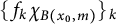 $\{ f_k \chi _{B(x_0,m)} \}_k$
is
 $L^{p,q}(X)$
-equi-integrable. Fix
 $\varepsilon> 0$
. By (4.7), there exists
 $r> 0$
such that
 $$ \begin{align*} \Vert f_k (\cdot ) - (f_k)_{B(\cdot,r)} \Vert_{L^{p,q} (X)} \leq \frac{\varepsilon}{2}. \end{align*} $$
Moreover, for every measurable set
 $A\subseteq X$
with
 $$ \begin{align} \mu (A) \leq \left( \frac{\varepsilon}{2 \sup\limits_{k \in \mathbb{N} } \Vert f_k \Vert_{L^{p,q}(X)} } \right)^{q} h(r)^{\frac{q}{p}}, \end{align} $$
we have
 $$ \begin{align} \nonumber \Vert f_k \chi_{B(x_0,m)} \Vert_{L^{p,q} (A )} &\leq \Vert f_k \Vert_{L^{p,q} (A)}\\ \nonumber & \leq C_{p,q} \left( \Vert f_k (\cdot) - (f_k)_{B(\cdot,r)} \Vert_{L^{p,q} (A)} + \Vert (f_k)_{B(\cdot,r)} \Vert_{L^{p,q} (A)} \right)\\ & \leq C_{p,q} \left( \frac{\varepsilon}{2} + \Vert (f_k)_{B(\cdot,r)} \Vert_{L^{p,q} (A)} \right). \end{align} $$
Using Hölder’s inequality, we obtain
 $$ \begin{align*} (f_k)_{B(\cdot,r)} = \frac{1}{|B(\cdot,r )| } \int_{B(\cdot,r )} f_k (y) \; d\mu(y) & \leq \frac{1}{|B(\cdot,r )|} \Vert f_k \Vert_{L^{p,q} (X)} |B(\cdot,r )|^{1- \frac{1}{p}}\\ & \leq \Vert f_k \Vert_{L^{p,q} (X)} \frac{1}{h(r)^{\frac{1}{p}}} \end{align*} $$
and thus for every
 $A \subseteq X$
satisfying (4.9), we have
 $$ \begin{align} \Vert (f_k)_{B(\cdot,r )} \Vert_{L^{p,q} (A)} \leq \ \frac{\mu (A)^{\frac{1}{q}}}{h(r)^{\frac{1}{p}}} \sup\limits_{k\in \mathbb{N}} \Vert f_k \Vert_{L^{p,q} (X)} \leq \frac{\varepsilon}{2}. \end{align} $$
The combination of (4.10) and (4.11) then gives
 $$ \begin{align*} \Vert f_k \chi_{B(x_0,m)} \Vert_{L^{p,q} (A)} \leq C_{p,q} \varepsilon, \end{align*} $$
which verifies
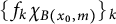 $\{ f_k \chi _{B(x_0,m)} \}_k$
is
 $L^{p,q}(X)$
-equi-integrable.
We next verify that there exists a subsequence
 $\{ f_{k_j} \}_j$
of
 $\{ f_k \}_k$
such that for each
 $m \in \mathbb {N}$
,
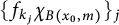 $\{ f_{k_j} \chi _{B(x_0 , m )} \}_j$
converges in measure. Fix
 $\varepsilon>0$
, we observe that for
 $k_1$
,
 $k_2 \in \mathbb {N}$
, we have
 $$ \begin{align*} &\ \{ x\in X : |f_{k_1} \chi_{B(x_0,m)} (x) - f_{k_2} \chi_{B(x_0,m) }(x)|> \varepsilon \}\\=&\ \{ x \in B(x_0, m) : |f_{k_1} (x) - f_{k_2} (x)|> \varepsilon\} \\\subseteq &\ \{ x \in B(x_0,m) : |f_{k_1} (x) - (f_{k_1} )_{B(x,r)}| > \frac{\varepsilon}{3} \}\\\cup&\ \{ x \in B(x_0,m) : |(f_{k_1} )_{B(x,r)} - (f_{k_2})_{B(x,r)} | > \frac{\varepsilon}{3} \}\\\cup &\ \{ x \in B(x_0,m) : |(f_{k_2})_{B(x,r)} -f_{k_2}(x)| > \frac{\varepsilon}{3} \}\\:= &\ A_1 \cup A_2 \cup A_3. \end{align*} $$
For
 $A_1$
and
 $A_3$
, we apply Lemma 3.1 and Chebyshev’s inequality and deduce that
 $$ \begin{align*} |A_1| \lesssim \left( \frac{1}{\varepsilon} \Vert f_{k_1} (\cdot) - (f_{k_1})_{B(\cdot,r)} \Vert_{L^{p,\infty} (X)}\right)^p \leq \left( \frac{1}{\varepsilon} \Vert f_{k_1} (\cdot) - (f_{k_1})_{B(\cdot,r)} \Vert_{L^{p,q} (X)}\right)^p \end{align*} $$
and
 $$ \begin{align*} |A_3| \lesssim \left( \frac{1}{\varepsilon} \Vert f_{k_2} (\cdot) - (f_{k_2})_{B(\cdot,r)} \Vert_{L^{p,\infty} (X)}\right)^p \leq \left( \frac{1}{\varepsilon} \Vert f_{k_2} (\cdot) - (f_{k_2})_{B(\cdot,r)} \Vert_{L^{p,q} (X)}\right)^p. \end{align*} $$
Since the right-hand sides of the two inequalities above tend to
 $0$
as
 $r \to 0$
by (4.7), there exists
 $r_0> 0$
such that
 $|A_1| < \frac {\varepsilon }{3}$
and
 $|A_3| < \frac {\varepsilon }{3}$
for all
 $r \leq r_0$
.
Now, we consider the set
 $A_2$
. Since
 $\{ f_k \}_k$
is a bounded sequence in
 $L^{p,q}(X)$
, it follows from Lemma 3.1 that
 $\{ f_{k} \}$
is also a bounded sequence in
 $L^{p,\infty }(X)$
. Therefore, by Helly’s Theorem (see Theorem 3.2), there exists a function
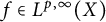 $f \in L^{p,\infty }(X)$
and a subsequence
 $\{ f_{k_j} \}$
of
 $\{ f_k \}_k$
such that
 $$ \begin{align} \lim_{j \to \infty} \int_X f_{k_j}(x) g(x) \, dx = \int_X f(x) g(x) \, dx \end{align} $$
holds for all
 $g \in L^{p,1}(X)$
.
Since
 $\chi _{B(x,r)} \in L^{p,1}(X)$
for every
 $x \in X$
and
 $r>0$
, we take
 $g = \chi _{B(x,r)}$
in (4.12), which implies that
 $$ \begin{align*} \lim_{j \to \infty}(f_{k_j})_{B(x,r)} = (f)_{B(x,r)} \end{align*} $$
holds for every
 $x \in X$
and
 $r>0$
. Therefore, for each
 $m \in \mathbb {N}$
and
 $r> 0$
, we have
 $$\begin{align*}(f_{k_j})_{B(\cdot,r)} \xrightarrow{j \to \infty} f_{B(\cdot,r)} \quad \text{in measure on } B(x_0, m) \end{align*}$$
(see [Reference Wheeden and Zygmund29, Theorem 4.21], for instance). By the definition of convergence in measure, there exists
 $K(r) \in \mathbb {N}$
such that for all
 $k_1, k_2> K(r)$
, the inequality
 $|A_2| < \frac {\varepsilon }{3}$
holds. This verifies that, for each
 $m \in \mathbb {N}$
, the sequence
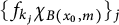 $\{ f_{k_j} \chi _{B(x_0, m)} \}_j$
converges in measure.
As for each
 $m\in \mathbb {N}$
,
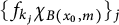 $\{ f_{k_j} \chi _{B(x_0,m)} \}_j$
is
 $L^{p,q}(X)$
-equi-integrable and Cauchy in measure, there exist functions
 $g_m:X \to \mathbb {R}$
such that
 $g_m(x) = 0 $
for
 $x \in X \setminus B(x_0,m)$
and
 $$ \begin{align*} f_{k_j} \chi_{B(x_0,m)} \xrightarrow{j \to \infty} g_m \text{ in } L^{p,q}(X) \end{align*} $$
for every
 $m \in \mathbb {N}$
. In particular, we observe that for any
 $m_1, \; m_2 \in \mathbb {N}$
with
 $m_1 < m_2,$
we have
 $$ \begin{align*} \Vert g_{m_1} - g_{m_2} \Vert_{L^{p,q} (B(x_0, m_1))} &\leq C_{p,q} \left( \Vert g_{m_1} - f_{k_j} \Vert_{L^{p,q} (B(x, m_1))} + \Vert f_{k_j} - g_{m_1} \Vert_{L^{p,q} (B(x_0, m_2))} \right)\\ &\leq C_{p,q} \left( \Vert g_{m_1} - f_{k_j} \Vert_{L^{p,q} (B(x, m_1))} + \Vert f_{k_j} - g_{m_2} \Vert_{L^{p,q} (B(x_0, m_2))} \right)\\ & \to 0 \text{ as } j \to \infty. \end{align*} $$
Thus, for every
 $m \in \mathbb {N}$
, we have
 $g_{m_1}(x) = g_{m_2}(x)$
for almost every
 $x \in B(x_0, m_1)$
. It follows that the function
 $\widetilde {f}: X \to \mathbb {R}$
, defined by
 $$\begin{align*}\widetilde{f}(x) := \sup_{m \in \mathbb{N}} g_m(x), \end{align*}$$
satisfies
 $$ \begin{align} f_{k_j} \chi_{B(x_0, m)} \to \widetilde{f} \chi_{B(x_0, m)} \quad \text{in } L^{p, q}(X) \end{align} $$
for every
 $m \in \mathbb {N}$
.
Next, we verify that
 $ \widetilde {f} \in L^{p,q}(X) $
. To establish this, we observe that for each
 $ m \in \mathbb {N} $
, there exists an index
 $ \ell _m \in \{ k_j \}_j $
such that, by inequality (4.13), we have
 $$\begin{align*}\Vert \widetilde{f} - f_{\ell_m} \Vert_{L^{p,q}(B(x_0, m))} < 1. \end{align*}$$
This inequality implies that for each
 $ m \in \mathbb {N} $
,
 $$ \begin{align} \Vert \widetilde{f} \Vert_{L^{p,q}(B(x_0, m))} &\leq C_{p,q} \left( \Vert \widetilde{f} - f_{\ell_m} \Vert_{L^{p,q}(B(x_0, m))} + \Vert f_{\ell_m} \Vert_{L^{p,q}(B(x_0, m))} \right) \nonumber \\ &\leq C_{p,q} \left( 1 + \sup_{k \in \mathbb{N}} \Vert f_k \Vert_{L^{p,q}(X)} \right). \end{align} $$
Therefore, by the monotone convergence theorem, we deduce that
 $$ \begin{align*} \Vert \widetilde{f} \Vert_{L^{p,q}(X)} &= \lim_{m \to \infty} \Vert \widetilde{f} \Vert_{L^{p,q}(B(x_0, m))} \\ &\leq \lim_{m \to \infty} C_{p,q} \left( 1 + \sup_{k \in \mathbb{N}} \Vert f_k \Vert_{L^{p,q}(X)} \right) \\ &= C_{p,q} \left( 1 + \sup_{k \in \mathbb{N}} \Vert f_k \Vert_{L^{p,q}(X)} \right) \\ &< \infty, \end{align*} $$
provided that
 $ 1 \leq q < \infty $
. For the case
 $ q = \infty $
, we argue by contradiction. Suppose that
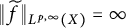 $ \Vert \widetilde {f} \Vert _{L^{p,\infty }(X)} = \infty $
. Then, there exists
 $ s_0> 0 $
such that
 $$ \begin{align} s_0 \left[ \mu \left( \left\{ x \in X : |\widetilde{f}(x)|> s_0 \right\} \right) \right]^{\frac{1}{p}} > 2 C_{p,q} \left( 1 + \sup_{k \in \mathbb{N}} \Vert f_k \Vert_{L^{p,\infty}(X)} \right). \end{align} $$
However, using inequality (4.14) and the monotonicity of the measure
 $ \mu $
, we have
 $$ \begin{align*} s_0 \left[ \mu \left( \left\{ x \in X : |\widetilde{f}(x)|> s_0 \right\} \right) \right]^{\frac{1}{p}} &= \lim_{m \to \infty} s_0 \left[ \mu \left( \left\{ x \in B(x_0, m) : |\tilde{f}(x)| > s_0 \right\} \right) \right]^{\frac{1}{p}} \\ &\leq \lim_{m \to \infty} \Vert \widetilde{f} \Vert_{L^{p,\infty}(B(x_0, m))} \\ &\leq C_{p,q} \left( 1 + \sup_{k \in \mathbb{N}} \Vert f_k \Vert_{L^{p,\infty}(X)} \right), \end{align*} $$
which contradicts inequality (4.15). Thus, we conclude that
 $ \widetilde {f} \in L^{p,q}(X) $
.
Finally, we prove that
 $$\begin{align*}f_{k_j} \xrightarrow{j \to \infty} \widetilde{f} \quad \text{in } L^{p,q}(X). \end{align*}$$
Fix
 $ \varepsilon> 0 $
. By inequality (4.6), there exists
 $ R> 0 $
such that
 $$ \begin{align} \Vert f_{k_1} - f_{k_2} \Vert_{L^{p,q}(X \setminus B(x_0, R))} < \frac{\varepsilon}{2 C_{p,q}} \end{align} $$
for all
 $ k_1, k_2 \in \mathbb {N} $
. Moreover, it follows from inequality (4.13) that there exists
 $ N \in \mathbb {N} $
such that for all
 $ k_1, k_2> N $
,
 $$ \begin{align} \Vert f_{k_1} - f_{k_2} \Vert_{L^{p,q}(B(x_0, R))} < \frac{\varepsilon}{2 C_{p,q}}. \end{align} $$
Combining inequalities (4.16) and (4.17), we obtain for all
 $ k_1, k_2> N $
,
 $$ \begin{align*} \Vert f_{k_1} - f_{k_2} \Vert_{L^{p,q}(X)} &\leq C_{p,q} \left( \Vert f_{k_1} - f_{k_2} \Vert_{L^{p,q}(B(x_0, R))} + \Vert f_{k_1} - f_{k_2} \Vert_{L^{p,q}(X \setminus B(x_0, R))} \right) \\ &< C_{p,q} \left( \frac{\varepsilon}{2 C_{p,q}} + \frac{\varepsilon}{2 C_{p,q}} \right) = \varepsilon. \end{align*} $$
Thus,
 $ \{ f_{k_j} \}_{j=1}^\infty $
is a Cauchy sequence in
 $ L^{p,q}(X) $
. Since
 $ L^{p,q}(X) $
is a quasi-Banach space, it is complete, and there exists a function
 $ g \in L^{p,q}(X) $
such that
 $ f_{k_j} \to g $
in
 $ L^{p,q}(X) $
. Moreover, by (4.13), we have
 $ \widetilde {f} = g $
almost everywhere on
 $ X $
. Therefore,
 $ f_{k_j} \to \tilde {f} $
in
 $ L^{p,q}(X) $
, completing the proof.
5 Proof of Theorem 1.4
To begin, we recall that by the classical estimates for the heat kernel and its derivatives on stratified Lie groups (see, for example, [Reference Varopoulos, Saloff-Coste and Coulhon28]), it is known that for any
 $ 1 \leq j \leq n $
and
 $ g \neq g' $
,
 $$ \begin{align} |K_j(g, g')| + d(g, g') \sum_{i = 1}^n \left( |{\mathrm{X}}_{i, g} K_j(g, g')| + |{\mathrm{X}}_{i, g'} K_j(g, g')| \right) \lesssim d(g, g')^{-Q}, \end{align} $$
where
 $ {\mathrm {X}}_{i, g} $
denotes the derivative with respect to
 $ g $
.
Next, we recall an important result from [Reference Duong, Li, Li and Wick12], which shows that for
 $1 < p < \infty $
the commutator of
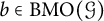 $b \in \mathrm {BMO}(\mathcal {G})$
and the Riesz transform
 $R_\ell $
satisfies
 $$ \begin{align} \Vert [b, R_\ell] : L^{p}(\mathcal{G}) \to L^{p}(\mathcal{G}) \Vert \approx \Vert b \Vert_{\mathrm{BMO}(\mathcal{G})}. \end{align} $$
This estimate, together with the generalized Marcinkiewicz interpolation theorem for Lorentz spaces (see, for instance, [Reference Grafakos18, Theorem 1.4.19]), immediately yields the following boundedness result for the commutator
 $[b, R_\ell ]$
on Lorentz spaces.
Proposition 5.1 Let
 $1\leq j\leq n$
and
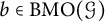 $b\in \mathrm {BMO}(\mathcal G)$
. Then,
 $[b,R_\ell ]$
is bounded on
 $L^{p,q}(\mathcal G)$
for
 $1<p<\infty $
and
 $1 \leq q \leq \infty $
with
 $$ \begin{align} \|[b,R_\ell]: {L^{p,q}(\mathcal G)\to L^{p,q}(\mathcal G)}\| \lesssim \|b\|_{\mathrm{BMO}(\mathcal G)}. \end{align} $$
Proof Fix a measurable set
 $A\subset \mathcal G$
. By (5.2), for every
 $1<p<\infty ,$
we have
 $$\begin{align*}\|[b,R_\ell]\chi_A\|_{L^p(\mathcal G)} \lesssim \|b\|_{\operatorname{BMO}(\mathcal G)}\, \|\chi_A\|_{L^p(\mathcal G)} =\|b\|_{\operatorname{BMO}(\mathcal G)}\,|A|^{1/p}. \end{align*}$$
Thus,
 $[b,R_\ell ]$
is of restricted weak type
 $(p,p)$
in the sense of [Reference Grafakos18, Definition 1.4.18]. An application of Theorem 1.1 then yields
 $$\begin{align*}\|[b,R_\ell]:L^{p,q}(\mathcal G)\to L^{p,q}(\mathcal G)\| \lesssim \|b\|_{\operatorname{BMO}(\mathcal G)} \quad \text{for } 1<p<\infty,\;1\le q\le\infty. \end{align*}$$
This completes the proof.
Using the above proposition, to prove Theorem 1.4, it is now sufficient to establish the reverse inequality of Proposition 5.1.
Proposition 5.2 Let
 $1\leq j\leq n$
. Suppose
 $b\in L^1_{loc}(\mathcal G)$
and
 $[b,R_\ell ]$
is bounded on
 $L^{p,q}(\mathcal G)$
for some
 $1<p<\infty $
and
 $1 \leq q \leq \infty $
. Then, we have
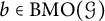 $b\in \mathrm {BMO}(\mathcal G)$
with
 $$ \begin{align} \|b\|_{\mathrm{BMO}(\mathcal G)} \lesssim \|[b,R_\ell]: {L^{p,q}(\mathcal G)\to L^{p,q}(\mathcal G)}\|. \end{align} $$
Proof To prove this result, we first recall an important lower bound for the kernel
 $K_j(g_1, g_2)$
of the Riesz transform
 $R_j$
, when
 $g_1$
and
 $g_2$
are far apart, is given in [Reference Duong, Li, Li and Wick12, Proposition 3.2]. Now, we need a lemma.
Lemma 5.3 Fix
 $j=1,\ldots ,n$
. There exist
 $ 0<\varepsilon _o\ll 1$
and
 $C(j,n)$
such that for any
 $0 <\eta < \varepsilon _o$
and for all
 $g \in \mathcal G$
and
 $r> 0$
, we can find
 $g_* = g_*(j, g,r) \in \mathcal G$
with
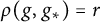 $\rho (g, g_*) = r$
and satisfying
 $$ \begin{align} |K_j(g_2^{-1}g_1)| \geq C(j,n) r^{- \mathbb Q}, \quad \forall g_1 \in B(g, \eta r), \ g_2 \in B(g_*, \eta r). \end{align} $$
Moreover, the sign of
 $K_j(g_2^{-1}g_1)$
is invariant for every
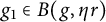 $g_1\in B( g, \eta r)$
and for every
 $g_2\in B( g_*, \eta r)$
.
With this lemma in hand, we return to the proof of Proposition 4.2.
Fix a ball
 $B(g,r)$
and find a ball
 $B(g_*,r)$
as in Lemma 5.3. By continuity, we either have
 $$ \begin{align*}K_j(g_2^{-1}g_1)\geq c_{\mathcal{G}}r^{-\mathbb{Q}},\quad g_1\in B(g,r),\quad g_2\in B(g_*,r)\end{align*} $$
or
 $$ \begin{align*}K_j(g_2^{-1}g_1)\leq -c_{\mathcal{G}}r^{-\mathbb{Q}},\quad g_1\in B(g,r),\quad g_2\in B(g_*,r).\end{align*} $$
For definiteness, we restrict ourselves to the first case.
Let
 $m_{b,*}$
be the median value of b over
 $B(g_*,r),$
that is,
 $$ \begin{align*}\left|\left\{g_2\in B(g_*,r):\, b(g_2)<m_{b,*}\right\}\right|, \left|\left\{g_2\in B(g_*,r):\, b(g_2)>m_{b,*}\right\}\right|\leq\frac12r^{\mathbb{Q}}.\end{align*} $$
Set
 $$ \begin{align*}E_1=\left\{g_1\in B(g,r):\, b(g_1)\leq m_{b,*}\right\},\quad E_2=\left\{g_1\in B(g,r):\, b(g_1)>m_{b,*}\right\}\end{align*} $$
and
 $$ \begin{align*}F_1=\left\{g_2\in B(g_*,r):\, b(g_2)\geq m_{b,*}\right\},\quad F_2 =\left\{g_2\in B(g_*,r):\, b(g_2)\leq m_{b,*}\right\}.\end{align*} $$
By construction, we see that
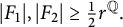 $|F_1|,|F_2|\geq \frac 12r^{\mathbb {Q}}.$
By Hölder’s inequality,
 $$ \begin{align*}|\langle [b,R_j]\chi_{F_k},\chi_{E_k}\rangle|\lesssim \|[b,R_j]\|_{L^{p,q}(\mathcal G)\to L^{p,q}(\mathcal G)}r^{\mathbb{Q}},\quad k=1,2.\end{align*} $$
Clearly,
 $$ \begin{align*}\langle [b,R_j]\chi_{F_1},\chi_{E_1}\rangle=\int_{E_1\times F_1}(b(g_1)-b(g_2))K_j(g_2^{-1}g_1)dg_1dg_2.\end{align*} $$
Since
 $$ \begin{align*}b(g_1)-b(g_2)\leq b(g_1)-m_{b,*}\leq 0,\quad K_j(g_2^{-1}g_1)\geq c_{\mathcal{G}}r^{-\mathbb{Q}},\quad g_1\in E_1,\quad g_2\in F_1,\end{align*} $$
it follows that
 $$ \begin{align*}|\langle [b,R_j]\chi_{F_1},\chi_{E_1}\rangle|\geq c_{\mathcal{G}}r^{-\mathbb{Q}}\int_{E_1\times F_1}|b(g_1)-m_{b,*}|dg_1dg_2= c_{\mathcal{G}}\int_{E_1}|b(g_1)-m_{b,*}|dg_1.\end{align*} $$
Thus,
 $$ \begin{align*}c_{\mathcal{G}}\int_{E_1}|b(g_1)-m_{b,*}|dg_1\leq 2r^{\mathbb{Q}}\|[b,R_j]\|_{L^{p,q}(\mathcal G)\to L^{p,q}(\mathcal G)}.\end{align*} $$
Similarly,
 $$ \begin{align*}c_{\mathcal{G}}\int_{E_2}|b(g_1)-m_{b,*}|dg_1\leq 2r^{\mathbb{Q}}\|[b,R_j]\|_{L^{p,q}(\mathcal G)\to L^{p,q}(\mathcal G)}.\end{align*} $$
Adding the last two inequalities, we obtain
 $$ \begin{align*}c_{\mathcal{G}}\int_{B(g,r)}|b(g_1)-m_{b,*}|dg_1\leq 4r^{\mathbb{Q}}\|[b,R_j]\|_{L^{p,q}(\mathcal G)\to L^{p,q}(\mathcal G)}.\end{align*} $$
Hence,
 $$ \begin{align*} {1\over |B(g,r)|}\int_B|b(g')-b_{B(g,r)}|dg' &\leq{2\over |B(g,r)|}\int_B|b(g')-m_{b,*}|dg'\\ &\lesssim {r^{\mathbb{Q}}\over |B(g,r)|} \|[b,R_j]\|_{L^{p,q}(\mathcal G)\to L^{p,q}(\mathcal G)}\\ &\lesssim \|[b,R_j]\|_{L^{p,q}(\mathcal G)\to L^{p,q}(\mathcal G)}. \end{align*} $$
Taking the supremum over all balls
 $B(g,r) \in \mathcal G$
, we complete the proof.
6 Commutators and VMO(
$\mathcal {G}$
)

Definition 6.1 Let
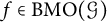 $f \in \mathrm {BMO}(\mathcal {G})$
. Then, f is said to be in
 $\mathrm {VMO}(\mathcal {G})$
if and only if
 $f $
satisfies the following conditions:
-
(i)
$\lim \limits _{a \to 0} \sup \limits _{r_B = a } \frac {1}{|B|} \int _B |f(g ) - f_b| \; d g =0;$
-
(ii)
$\lim \limits _{a \to \infty } \sup \limits _{r_B = a } \frac {1}{|B|} \int _B |f(g ) - f_b| \; d g =0; $
-
(iii)
$\lim \limits _{r \to \infty } \sup \limits _{B \subseteq \mathcal {G} - B(0,r)}\frac {1}{|B|} \int _B |f(g ) - f_b| \; d g =0. $



It has been proved in [Reference Chen, Duong, Li and Wu5, Theorem 4.4] that
 $ \mathrm {VMO}(\mathcal {G}) $
is the closure of the
 $ C_0^\infty $
functions under the
 $ \mathrm {BMO}(\mathcal {G}) $
norm.
We are now ready to give the proof of Theorem 1.5.
Proof Sufficient condition: We first claim that for every
 $b \in C_0^\infty (\mathcal {G})$
, the commutator
 $[b,\mathcal R_\ell ]$
is compact. To this end, let
 $E \subseteq L^{p,q} (\mathcal {G})$
be a compact set; it suffices to show that
 $[b,\mathcal R_\ell ] E \subseteq L^{p,q} (\mathcal {G})$
satisfies (4.5)–(4.7) in Theorem 4.4. First, by Theorem 1.4,
 $[b, \mathcal R_\ell ] $
is bounded on
 $L^{p,q}(\mathcal G),$
which yields
 $[b, \mathcal R_\ell ] E$
is also bounded, which gives (4.5) in Theorem 4.4.
For (4.6) in Theorem 4.4, we assume that
 $b\in C_0^\infty (\mathcal G)$
has support in
 $ B(0,R)$
. Then, for any
 $t>2$
, we have
 $$ \begin{align*} &\left\|[b, \mathcal R_\ell]f\right\|_{L^{p,q}}(\mathcal G\setminus B(0, tR))\\=&\ \Vert b R_\ell (f) - R_\ell (bf) \Vert_{L^{p,q} (\mathcal{G} \setminus B(0, tR)))}\\\leq &\ C_{p,q} \left( \Vert b R_\ell (f) \Vert_{L^{p,q} (\mathcal{G} \setminus B(0, tR) )} + \Vert R_\ell (b f ) \Vert_{L^{p,q } (\mathcal{G} \setminus B(0, tR))} \right). \end{align*} $$
Since
 $\mathrm {supp} \ b \subset B(0, R)$
and
 $B(0, R) \cap (\mathcal {G} \setminus B(0, tR)) = \emptyset $
, the first term in the previous inequality vanishes. To estimate the second term, note that for
 $g \in \mathcal {G} \setminus B(0, tR)$
, by (5.1), Hölder’s inequality in the Lorentz space setting, and the fact that
 $b \in C_0^\infty (\mathcal {G})$
, we have
 $$ \begin{align*} \big|\mathcal R_\ell(bf)(g)\big| &\leq \int_{\mathcal G}|K_\ell(g,g')| |b(g')| |f(g')|dg' \\ & \lesssim \Vert b \Vert_{L^\infty(\mathcal{G})}\int_{B(0,R)}{1\over d(g,g')^{\mathbb{Q}}}|b(g')| |f(g')|dg'\\ &\lesssim{1\over d(0,g)^{\mathbb{Q}}} \Vert b \Vert_{L^\infty(\mathcal{G})} \int_{B(0,R)} |f(g')|dg'\\ &\lesssim{1\over d(0,g)^{\mathbb{Q}}} \Vert b \Vert_{L^\infty(\mathcal{G})} \|f\|_{L^{p,q }(\mathcal G)} \Vert \chi_{B(0,R)} \Vert_{L^{p',q'} (\mathcal{G})}\\ &\lesssim{1\over d(0,g)^{\mathbb{Q}}} \Vert b \Vert_{L^\infty(\mathcal{G})} \|f\|_{L^{p,q}(\mathcal G)}R^{\frac{\mathbb{Q}}{p'}}. \end{align*} $$
The above inequality then yields that
 $$ \begin{align*} \left\|[b, \mathcal R_\ell]f\right\|_{L^{p,q}(\mathcal G\setminus B(0, tR))} &\lesssim R^{\frac{\mathbb{Q}}{p'}} \Vert b \Vert_{L^\infty(\mathcal{G})} \|f\|_{L^{p,q}(\mathcal G)} \left\Vert \frac{1 }{ d (0, \cdot )^{\mathbb{Q}} } \right\Vert_{L^{p,q } (\mathcal G\setminus B(0, tR))} \\ &\lesssim R^{\frac{\mathbb{Q}}{p'}} \Vert b \Vert_{L^\infty(\mathcal{G})} \|f\|_{L^{p,q }(\mathcal G)} (t R)^{\frac{\mathbb{Q}}{p} -\mathbb{Q}}\\ &\lesssim \Vert b \Vert_{L^\infty(\mathcal{G})} \Vert f \Vert_{L^{p,q} (\mathcal{G})} t^{\mathbb{Q}(\frac{1}{p} -1)}\\ & \to 0 \text{ as } t \to \infty. \end{align*} $$
Thus,
 $[b, \mathcal R_\ell ]E$
satisfies the condition (4.6) in Theorem 4.4.
Finally, we prove that
 $[b, \mathcal R_\ell ]E$
satisfies (4.7) in Theorem 4.4. By a change of variables, we have
 $$ \begin{align*} [b, \mathcal R_\ell]f(g)-\left([b,\mathcal R_\ell]f \right)_{B(g,r)} &={1\over |B(g,r)|}\int_{B(g,r)} [b, \mathcal R_\ell]f(g)-[b, \mathcal R_\ell]f(g') dg'\\ &={1\over |B(0,r)|}\int_{B(0,r)} [b, \mathcal R_\ell]f(g)-[b, \mathcal R_\ell]f(\widetilde gg) d\tilde g \,. \end{align*} $$
Fix
 $\varepsilon \in (0,{1\over 2})$
,
 $r\in ( 0 , \infty ),$
and
 $\tilde g\in B(0,r)$
. Then, for any
 $g\in \mathcal G$
, we decompose
 $[b, \mathcal R_\ell ]f(g)-[b, \mathcal R_\ell ]f(\tilde gg)$
as follows:
 $$ \begin{align*} & [b, \mathcal R_\ell]f(g)-[b, \mathcal R_\ell]f(\tilde gg) = L_1 + L_2 + L_3 + L_4, \end{align*} $$
where
 $$ \begin{align*} & L_1 :=\int_{d(g,g')>\varepsilon^{-1}d(\tilde g, 0)} K_\ell(g, g')\left(b(g)-b(\widetilde g g)\right)f(g')dg',\\ &L_2: = \int_{d(g,g')>\varepsilon^{-1}d(\tilde g, 0)}\left( K_\ell(g, g')-K_\ell(\widetilde g g, g')\right)\left(b(\widetilde gg)-b(g')\right)f(g')dg',\\ &L_3 := \int_{d(g,g')\leq\varepsilon^{-1}d(\tilde g, 0)} K_\ell(g, g')\left(b(g)-b(g')\right)f(g')dg',\\ &L_4: = \int_{d(g,g')\leq\varepsilon^{-1}d(\tilde g, 0)} K_\ell(\tilde gg, g')\left(b(\widetilde g g)-b(g')\right)f(g')dg'. \end{align*} $$
As demonstrated in [Reference Chen, Duong, Li and Wu5, p. 1665], the following estimates hold:
 $$ \begin{align*} |L_1|&\lesssim d(\tilde g, 0) \mathcal R^*_\ell(f)(g);\\ |L_2|&\lesssim \varepsilon M(f)(g);\\ |L_3|& \lesssim\varepsilon^{-1}d(\tilde g, 0)M(f)(g);\\ |L_4|&\lesssim \varepsilon^{-1}d(\tilde g, 0)M(f)(g), \end{align*} $$
where
 $\mathcal {R}^*_\ell $
is the maximal Riesz transform on
 $\mathcal {G}$
, and
 $M(f)$
is the Hardy–Littlewood maximal operator on
 $\mathcal {G}$
.
Using the above estimates, we deduce that
 $$ \begin{align*} & \Vert [b, R_\ell ] f(\cdot) - ([b, R_\ell ] f )_{B(\cdot,r)} \Vert_{L^{p,q } (\mathcal{G})} \\ &\leq \left\Vert {1\over |B(0,r)|^p} \int_{B(0,r)}\left(|L_1(\cdot)| +|L_2(\cdot)|+|L_3(\cdot)|+|L_4(\cdot)|\right)d\widetilde g \right\Vert_{L^{p,q} (\mathcal{G})}\\ &\lesssim \Vert r R_\ell^* (f) (\cdot) + (\varepsilon + \varepsilon^{-1} r) \mathcal{M}(f) (\cdot) \Vert_{L^{p,q} (\mathcal{G})} \\ &\lesssim C_{p,q} \left( r \Vert R_\ell^* (f) \Vert_{L^{p,q} (\mathcal{G})} + (\varepsilon + \varepsilon^{-1} r) \Vert \mathcal{M}(f) \Vert_{L^{p,q} (\mathcal{G})} \right) \\ &\lesssim C_{p,q} \left( r\|f\|_{L^{p,q}(\mathcal G)}+ \left( \varepsilon+\varepsilon^{-1}r\right)\|f\|_{L^{p,q}(\mathcal G)}\right). \end{align*} $$
The last inequality follows from the boundedness of the Hardy–Littlewood maximal operator on Lorentz spaces
 $L^{p,q}(\mathcal {G})$
(see, for instance, [Reference Dao and Krantz11, Theorem 3.1]) and the boundedness of the maximal Riesz transform on Lorentz spaces
 $L^{p,q}(\mathcal {G})$
, which can be established by combining results from [Reference Hu, Yang and Yang21, Theorem 1.3], [Reference Grafakos17, Theorem 9.4.5], and the Generalized Marcinkiewicz Interpolation Theorem for Lorentz spaces (see [Reference Grafakos18, Theorem 1.4.19]). This completes the proof of the claim.
Now, let
 $ b \in \mathrm {VMO}(\mathcal {G}) $
(not necessarily in
 $ C_c^\infty (\mathcal {G}) $
), and let
 $\{ f_n \}_n$
be a bounded sequence in
 $ L^{p,q}(\mathcal {G}) $
. Then, there exists
 $b_1 \in C_c^\infty (\mathcal {G})$
such that
 $$ \begin{align*} \Vert b - b_1 \Vert_{\mathrm{BMO}(\mathcal{G})} < \frac{1}{2}. \end{align*} $$
Moreover, since
 $[b_\varepsilon , R_\ell ]$
is compact, as established in the claim, there exists a strictly increasing sequence of integers
 $\{ s(1,n) \}_n$
such that the sequence of functions
 $[b_\varepsilon , R_\ell ] (f_{s(1,n)})_n$
is a Cauchy sequence in
 $L^{p,q} (\mathcal {G})$
. We continue this selection process to obtain an increasing sequence of natural numbers
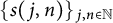 $\{ s(j,n) \}_{j,n \in \mathbb {N}}$
and a sequence of function
 $\{ b_j \}_{j=1}^\infty $
of
 $C_c^\infty (\mathcal {G})$
such that
-
(i)
$\{ s(j+1,n) \}_{n=1}^\infty $
is a subsequence of
$\{ s(j,n) \}_{n=1}^\infty $
; -
(ii)
$\Vert b- b_j \Vert _{\mathrm {BMO}(\mathcal {G})} < \frac {1}{2^j}$
; -
(iii)
$\{ [b_j , R_\ell ](f_{s(j,n)}) \}_{n=1}^\infty $
converges in
$L^{p,q} (\mathcal {G})$
.





Now, define
 $n_k = s(k,k)$
for each
 $k \in \mathbb {N}$
. We observe that, for every
 $n_{k_1}$
,
 $n_{k_2}\in \mathbb {N}$
,
 $$ \begin{align*} &\Vert [b , R_\ell ](f_{n_{k_1}} ) - [b , R_\ell ](f_{n_{k_2}} )\Vert_{L^{p,q} (\mathcal{G})}\\ & \quad \leq C_{p,q} \left( \Vert [b - b_{n_{k_1}} , R_\ell ] (f_{n_{k_1}} -f_{n_{k_2}} ) \Vert_{L^{p,q} (\mathcal{G})} + \Vert [b_{n_{k_1}},R_\ell ] (f_{n_{k_1}} -f_{n_{k_2}}) \Vert_{L^{p,q} (\mathcal{G})} \right)\\ & \quad \leq 2 C_{p,q } \Vert [b - b_{n_{k_1}} , R_\ell ] :L^{p,q} (\mathcal{G}) \to L^{p,q} (\mathcal{G}) \Vert \; \sup_{n \in \mathbb{N}} \Vert f_n \Vert_{L^{p,q} (\mathcal{G})} \\ & \qquad + C_{p,q} \Vert [ b_{n_{k_1}} , R_\ell ] (f_{n_{k_1}} -f_{n_{k_2}} ) \Vert_{L^{p,q} (\mathcal{G})}\\ & \quad \lesssim \frac{\sup\limits_{n \in \mathbb{N}} \Vert f_n \Vert_{L^{p,q} (\mathcal{G})}}{2^{n_{k_1}} } + \Vert [ b_{n_{k_1}} , R_\ell ] f_{n_{k_1}} -[ b_{n_{k_1}} , R_\ell ] (f_{n_{k_2}}) \Vert_{L^{p,q} (\mathcal{G})}\\ & \quad \to 0 \text{ as } n_{k_1},\; n_{k_2} \to \infty. \end{align*} $$
This completes the proof of the sufficient condition.
Necessary condition: Assume that the commutator
 $[b, R_\ell ]$
is compact on
 $L^{p,q}(\mathcal {G})$
. By Theorem 1.4, it follows that
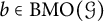 $b \in \mathrm {BMO}(\mathcal {G})$
, since
 $[b, R_\ell ]$
is assumed to be bounded. For the sake of contradiction, further assume that
 $b \notin \mathrm {VMO}(\mathcal {G})$
. This assumption implies that b must fail to satisfy at least one of the three conditions given in Definition 6.1. Since the argument for contradiction is similar in all three cases, we will only present the case where the first condition in Definition 6.1 does not hold.
We now assume that the first condition in Definition 6.1 does not hold. That is, there exist
 $\delta _0>0$
and a sequence of balls
 $\{B_j\}_{j=1}^\infty =\{B_j(x_j,r_j)\}_{j=1}^\infty \subset \mathcal {G}$
such that
 $r_j\to 0$
as
 $j\to \infty $
and that
 $$ \begin{align} {1\over |B_j|}\int_{B_j} |b(g)-b_{B_j}|\; dg \geq\delta_0. \end{align} $$
Without loss of generality, we can further assume that
 $$ \begin{align} 4^p |B_{j+1}| \leq |B_j|. \end{align} $$
Applying Proposition 5.3, we conclude that for each
 $ j $
, there exists
 $ 0 < \eta \ll 1 $
and a ball
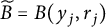 $\widetilde {B} = B(y_j, r_j)$
such that
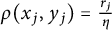 $\rho (x_j, y_j) = \frac {r_j}{\eta }$
and the kernel
 $K_\ell $
of the
 $\ell ^{\mathrm {th}}$
Riesz transform
 $R_\ell $
satisfies
 $$ \begin{align} |K_\ell(g_1, g_2)|> C(j, n) \eta^{\mathbb{Q}} r_j^{-{\mathbb{Q}}} \end{align} $$
for all
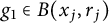 $ g_1 \in B(x_j, r_j) $
and
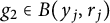 $ g_2 \in B(y_j, r_j) $
. Moreover, the sign of
 $ (g_1, g_2) $
is invariant for every
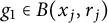 $ g_1 \in B(x_j, r_j) $
and
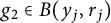 $ g_2 \in B(y_j, r_j) $
.
Let
 $ m_b(\widetilde {B}_j) $
be a median value of
 $ b $
on the ball
 $\widetilde {B}_j$
. Specifically,
 $ m_b(\widetilde {B}_j) $
is a real number such that each of the following sets has measure at least
 $\frac {1}{2} \lvert \widetilde {B}_j \rvert $
:
 $$ \begin{align*} F_{j,1} := \{ \tilde{g} \in \widetilde{B}_j : b(\tilde{g}) \leq m_b(\widetilde{B}_j) \}, \qquad F_{j,2} := \{ \tilde{g} \in \widetilde{B}_j : b(\tilde{g}) \geq m_b(\widetilde{B}_j) \}. \end{align*} $$
Next, we define
 $$\begin{align*}E_{j,1} = \{ g \in B : b(g) \geq m_b(\widetilde{B}_j) \}, \qquad E_{j,2} = \{ g \in B : b(g) < m_b(\widetilde{B}_j) \}. \end{align*}$$
It follows that
 $ B_j = E_{j,1} \cup E_{j,2} $
and
 $ E_{j,1} \cap E_{j,2} = \emptyset $
. Moreover, one easily sees that
 $$ \begin{align} b(g) - b(\widetilde{g}) &\geq 0, \quad (g, \widetilde{g}) \in E_{j,1} \times F_{j,1}, \nonumber \\ b(g) - b(\widetilde{g}) &< 0, \quad (g, \widetilde{g}) \in E_{j,2} \times F_{j,2}. \end{align} $$
It then follows from (6.4) that for
 $(g, \widetilde {g}) \in (E_{j,1} \times F_{j,1}) \cup (E_{j,2} \times F_{j,2})$
, we have
 $$ \begin{align} & |b(g) - b(\widetilde{g})| = |b(g) - m_b(\widetilde{B}_j)| + |m_b(\widetilde{B}_j) - b(\widetilde{g})| \geq |b(g) - m_b(\widetilde{B}_j)|. \end{align} $$
We now define
 $$\begin{align*}\widetilde{F}_{j,1} := F_{j,1} \setminus \bigcup_{\ell=j+1}^\infty \widetilde{B}_\ell, \quad \text{and} \quad \widetilde{F}_{j,2} := F_{j,2} \setminus \bigcup_{\ell=j+1}^\infty \tilde{B}_\ell, \quad \text{for } j = 1, 2, \ldots \end{align*}$$
Then, the decay condition (6.2) for the measures of
 $\{B_j\}_j$
implies that for each j, we have
 $$ \begin{align} |\widetilde{F}_{j,1}|&\geq |F_{j,1}| - \Big| \bigcup_{\ell=j+1}^\infty \widetilde{B}_\ell \Big| \nonumber\\ &\geq \frac{1}{2} |\widetilde{B}_j| - \sum_{\ell=j+1}^\infty |\widetilde{B}_\ell| \nonumber\\ & \geq \frac{1}{2} |\tilde{B}_j| - \frac{1}{4^p} \left( \frac{1}{ 1- \frac{1}{4^p}} \right) |\widetilde{B}_j| \nonumber \\ &\geq \frac{1}{2} |\widetilde{B}_j| - \frac{1}{3} |\widetilde{B}_j| \nonumber \\ &\geq \frac{1}{6} |\widetilde{B}_j|. \end{align} $$
Following a similar argument, we also obtain
 $$ \begin{align*} |\widetilde{F}_{j,2}| \geq \frac{1}{6} |\widetilde{B}_j|. \end{align*} $$
Now, for each j, we have that
 $$ \begin{align*} &{1\over |B_j| } \int_{B_j} |b(g)-b_{B_j}|dg\\ &\leq{2\over |B_j|}\int_{B_{j}}\big|b(g)-m_b(\widetilde B_j)\big|dg\\ &= {2\over |B_j| }\int_{E_{j,1}}\big|b(g)-m_b(\widetilde B_j)\big|dg + {2\over |B_j| }\int_{E_{j,2}}\big|b(g)-m_b(\widetilde B_j)\big|dg. \end{align*} $$
The combination of (6.1) and the above inequalities then yields that at least one of the following inequalities holds:
 $$ \begin{align*} {2\over |B_j| }\int_{E_{j,1}}\big|b(g)-m_b(\widetilde B_j)\big|dg \geq {\delta_0\over2},\quad {2\over |B_j| }\int_{E_{j,2}}\big|b(g)-m_b(\widetilde B_j)\big|dg \geq {\delta_0\over2}. \end{align*} $$
Without loss of generality, we now assume that the first one holds, i.e.,
 $$ \begin{align*} {2\over |B_j|}\int_{E_{j,1}}\big|b(g)-m_b(\widetilde B_j)\big|dg \geq {\delta_0\over2}. \end{align*} $$
Thus, for each j, using (6.3) and (6.6), we obtain
 $$ \begin{align*} {\delta_0\over4}&\leq{1\over |B_j| }\int_{E_{j,1}}\big|b(g)-m_b(\widetilde B_j)\big|dg\\ &\lesssim {1\over |B_j|}{{|\widetilde F_{j,1}|}\over |B_j|}\int_{E_{j,1}}\big|b(g)-m_b(\widetilde B_j)\big|dg\\ &\lesssim {1\over |B_j| }\int_{E_{j,1}}\int_{\widetilde F_{j,1}} |(g, \widetilde g)|\big|b(g)-b(\widetilde g)\big|d\widetilde gdg. \end{align*} $$
Since for
 $ g \in E_{j,1}, $
we see that
 $\widetilde {g} \in \widetilde {F}_{j,1} $
,
 $ (g, \widetilde {g}) $
does not change sign and
 $ b(g) - b(\widetilde {g}) $
also does not change sign, we have
 $$ \begin{align*} \delta_0 &\lesssim \frac{1}{|B_j|} \bigg| \int_{E_{j,1}} \int_{\widetilde{F}_{j,1}} (g, \widetilde{g}) \big( b(g) - b(\widetilde{g}) \big) \, d\widetilde{g} \, dg \bigg| \lesssim \frac{1}{|B_j|} \int_{E_{j,1}} \left| [b, R_\ell](\chi_{\widetilde{F}_{j,1}})(g) \right| \, dg \\ &= \frac{1}{|B_j|^{1/p'}} \int_{E_{j,1}} \left| [b, R_\ell] \left( \frac{\chi_{\widetilde{F}_{j,1}}}{|B_j|^{1/p}} \right)(g) \right| \, dg, \end{align*} $$
where
 $ p' $
denotes the conjugate index of
 $ p $
. By applying Hölder’s inequality in Lorentz space, we obtain
 $$ \begin{align} \delta_0 &\lesssim \frac{1}{|B_j|^{1/p'}} |E_{j,1}|^{1/p'} \Vert [b, R_\ell] f_j \Vert_{L^{p,q}(\mathcal{G})} \lesssim \Vert [b, R_\ell] f_j \Vert_{L^{p,q}(\mathcal{G})}, \end{align} $$
where, in the above inequalities, we denote
 $$\begin{align*}f_j := \frac{\chi_{\widetilde{F}_{j,1}}}{|B_j|^{1/p}}. \end{align*}$$
In particular, we observe that
 $\{f_j\}_{j=1}^\infty $
forms a sequence of disjointly supported functions, and, by (6.6), it follows that
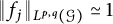 $\|f_j\|_{L^{p,q}(\mathcal {G})} \simeq 1$
.
We treat the two regimes separately. For
 $q>1,$
we adapt, with minor amendments, the method of Theorem 1.4 in [Reference Lacey and Li23]. That argument fails at the endpoint
 $q=1$
(see (6.9)); here, we employ Helly’s selection theorem instead, an approach that actually covers the regime
 $1\le q<\infty $
and, in particular, resolves the case
 $q=1$
.
The case
 $ (q> 1)$
: We now assume
 $q>1$
. Due to the compactness of
 $[b, R_\ell ]$
, there exists
 $\phi \in L^{p,q}(\mathcal {G})$
such that
 $[b, R_\ell ] f_j$
converges to
 $\phi $
in
 $L^{p,q}(\mathcal {G})$
as
 $j \to \infty $
. Without loss of generality, we may further assume that
 $$ \begin{align} \|\phi - [b, R_\ell](f_j)\|_{L^{p,q}(\mathcal{G})} \leq 2^{-j}. \end{align} $$
Next, consider the non-negative numerical sequence
 $\{a_i\} = \frac {1}{i}$
, and define
 $\psi = \sum _{i} a_i f_i$
. We claim that
 $\psi \in L^{p,q}(\mathcal {G})$
for any
 $q> 1$
. To establish this, we note that condition (6.2) implies that
 $$ \begin{align*} \frac{1}{|B_{1}|^{1/p}} < \frac{1}{2|B_{2}|^{1/p}} < \frac{1}{3|B_{3}|^{1/p}}< \cdots \end{align*} $$
and thus
 $$ \begin{align*} \left\Vert \psi \right\Vert_{L^{p,q} (\mathcal{G})}^q & = \int^\infty_0 \left( |\{ x \in \mathcal{G}: \sum_{i=1}^\infty a_i f_{i} (g)> s \}|^{\frac{1}{p}} s \right)^q \frac{ds}{s}\\ & = \int_0^{\frac{1}{|B_{1}|^{1/p}}} \left( \left( \sum_{i=1}^\infty |\chi_{\widetilde F_{i,1}}| \right)^{\frac{1}{p}} s \right)^{q}\; \frac{ds}{s} + \int_{\frac{1}{|B_{1}|^{1/p}}}^{\frac{1}{2 |B_{2}|^{1/p} }} \left( \left( \sum_{i=2}^\infty |\chi_{\widetilde F_{i,1}}| \right)^{\frac{1}{p}} s \right)^{q}\; \frac{ds}{s}\\ &\quad + \int^{\frac{1}{3|B_{3}|^{1/p}}}_{\frac{1}{2 |B_{2}|^{1/p} }} \left( \left( \sum_{i=3}^\infty |\chi_{\widetilde F_{i,1}}| \right)^{\frac{1}{p}} s \right)^{q}\; \frac{ds}{s} + \dots\\ & \lesssim \left( \sum_{i=1}^\infty |B_{i}| \right)^{\frac{q}{p}} \left( \frac{1}{|B_1|^{\frac{q}{p}}} \right) + \left( \sum_{i=2}^\infty |B_{i}| \right)^{\frac{q}{p}} \left( \frac{1}{2^q |B_2|^{\frac{q}{p}}} - \frac{1}{|B_1|^{\frac{q}{p}}} \right)\\ &\quad + \left( \sum_{i=3}^\infty |B_{i}| \right)^{\frac{q}{p}} \left( \frac{1}{3^q |B_3|^{\frac{q}{p}}} - \frac{1}{2^q |B_2|^{\frac{q}{p}}} \right) + \cdots \,. \end{align*} $$
Now, using the fact
 $ q> 1 $
, we have the estimate
 $$ \begin{align} \nonumber \left\Vert \psi \right\Vert_{L^{p,q} (\mathcal{G})}^q & \lesssim \left( |B_1| \right)^{\frac{q}{p}} \left( \frac{1}{|B_1|^{\frac{1}{p}}} \right)^{q} + \left( |B_2| \right)^{\frac{q}{p}} \left( \frac{1}{2|B_2|^{\frac{1}{p}}} \right)^{q} + \left( |B_3| \right)^{\frac{q}{p}} \left( \frac{1}{3|B_3|^{\frac{1}{p}}} \right)^{q} + \dots\\ &= (1)^q + (1/2)^q + (1/3)^q + \dots < \infty. \end{align} $$
Thus,
 $ \psi \in L^{p,q} (\mathcal {G})$
which proves the claim.
Next, we observe that
 $$ \begin{align*} \left\Vert \sum_i a_i \phi - [b,R_\ell] \psi \right\Vert_{L^{p,q} (\mathcal{G})} &\lesssim \left\Vert \sum_{i=1}^\infty a_i (\phi - [b,R_\ell](f_i) ) \right\Vert_{L^{p,q} (\mathcal{G})}\\ & \leq \Vert a_i \Vert_{\ell^\infty}\left\Vert \sum_{i=1}^\infty \phi - [b,R_\ell](f_i) \right\Vert_{L^{p,q} (\mathcal{G})}\\ & = \left\Vert \sum_{i=1}^\infty \phi - [b,R_\ell](f_i) \right\Vert_{L^{p,q} (\mathcal{G})}. \end{align*} $$
In particular, we recall that for any functions
 $ g_1, g_2, \dots , g_k \in L^{p,q}(\mathcal {G}) $
, there exists
 $\alpha> 0$
depending on p and q such that
 $$ \begin{align*} \Vert g_1 + g_2 + \dots + g_k \Vert_{L^{p,q}(\mathcal{G})}^\alpha \leq 4 \left( \Vert g_1 \Vert_{L^{p,q}(\mathcal{G})}^\alpha + \Vert g_2 \Vert_{L^{p,q}(\mathcal{G})}^\alpha + \dots + \Vert g_k \Vert_{L^{p,q}(\mathcal{G})}^\alpha \right) \end{align*} $$
(see, for instance, [Reference Grafakos18, p. 76]). Using this, we deduce that the sequence
 $\left \{ \sum _{i=1}^n \phi - [b, R_\ell ](f_i) \right \}_{n=1}^\infty $
is Cauchy in
 $L^{p,q}(\mathcal {G})$
by (6.8). Since
 $L^{p,q} (\mathcal {G})$
is a quasi-Banach space, we obtain
 $$ \begin{align*} \left\Vert \sum_i a_i \phi - [b,R_\ell] \psi \right\Vert_{L^{p,q} (\mathcal{G})} &\lesssim \left\Vert \sum_{i=1}^\infty \phi - [b,R_\ell](f_i) \right\Vert_{L^{p,q} (\mathcal{G})} < \infty. \end{align*} $$
This implies that
 $\sum _i a_i \phi \in L^{p,q}(\mathcal {G})$
. Nevertheless,
 $\sum _i a_i \phi $
diverges on a set of positive measure, which yields a contradiction. Therefore, the proof is complete.
The case
 $ (1 \le q < \infty )$
: Assume
 $1 \le q < \infty $
. By Helly’s theorem (see Theorem 3.2), together with Theorems 3.3 and 3.5, there exists a function
 $\widetilde {f}\in L^{p,q}(\mathcal {G})$
and a subsequence
 $\{f_{j_k}\}_{k=1}^{\infty }\subset \{f_j\}_{j=1}^{\infty }$
such that
 $$\begin{align*}\lim_{k\to\infty}\int_{\mathcal{G}} f_{j_k}(g)\,\phi(g)\,dg =\int_{\mathcal{G}}\widetilde{f}(g)\,\phi(g)\,dg \end{align*}$$
for every
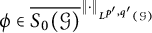 $\phi \in \overline {S_0(\mathcal {G})}^{\|\cdot \|_{L^{p',q'}(\mathcal {G})}}$
. (In particular, by Lemma 3.1, this space contains
 $ L^{p',\ell }(\mathcal {G}) $
for
 $\ell < q'$
.) Furthermore, due to the disjoint support of the sequence
 $\{f_j\}_{j=1}^\infty $
, it follows that
 $\widetilde {f} = 0$
. Returning to the assumption of compactness, there exists a subsequence
 $\{f_{j_{k_\ell }} \}_\ell $
of
 $\{ f_{j_k} \}_k$
and a function
 $F \in L^{p,q}(\mathcal {G}) $
such that
 $[b, R_\ell ] f_{j_{k_\ell }}$
converges to F in
 $L^{p,q} (\mathcal {G})$
as
 $\ell \to \infty $
.
We now claim that
 $F = 0$
. To see this, let
 $T^*$
denote the adjoint of
 $[b, R_\ell ]$
. Then, for every
 $\phi \in L^{p',\ell }(\mathcal {G}) $
with
 $\ell < q'$
, we have
 $$ \begin{align*} \int_{\mathcal{G}} F(g) \, \phi(g) \, dg &= \lim_{\ell \to \infty} \int_{\mathcal{G}} [b,R_\ell](f_{j_{k_\ell}})(g) \, \phi(g) \, dg \\ &= \lim_{\ell \to \infty} \int_{\mathcal{G}} f_{j_{k_\ell}}(g) \, T^*(\phi)(g) \, dg \\ & = \int_{\mathcal{G}}\widetilde{f}(g)\,T^*(\phi)(g)\,dg\\ &= 0. \end{align*} $$
Thus,
 $F = 0$
, as claimed, which contradicts (6.7). This completes the proof.



