Introduction
The impact of increasing numbers of older people on health services is well recognized. Healthcare workers caring for the ageing ‘baby boomers’ will increasingly encounter pathology previously thought of as being rare in those over 65 years. The increased susceptibility of older people to infection can be accounted for by multiple biological, cultural and societal factors, with ‘atypical’ presentations frequently encountered. Advances in viral diagnostic techniques have led to recognition of the pathogenic burden contributed by viruses. In this review we aim to reflect the breadth of virus-associated disease in a manner that is pertinent to clinicians working with older age groups.
Respiratory infections
Influenza
Influenza is a ubiquitous infection that exhibits seasonal incidence, affecting the northern hemisphere between November and April. Each year 5–15% of the UK population are affected.1 It is a single strand RNA virus composed of three distinct types (A, B and C), each of which cause the classic influenza illness.
Influenza A virus has two surface glycoproteins: haemagglutinin (H) and neuraminidase (N), which can mutate, preventing host immune recognition. This occurs by two methods: antigenic drift (annual minor changes due to selective pressure) and antigenic shift (major changes that may cause population-wide pandemics). ‘New’ mutations of Influenza A are responsible for influenza pandemics, such as those in 1918, 1957 and 1968. The first pandemic in this century, Influenza A/H1N1 2009, was striking in that older adults were proportionally less affected. This may in part to be due to exposure to previous pandemics.2, Reference Hancock, Veguilla, Lu, Zhong, Butler and Sun3
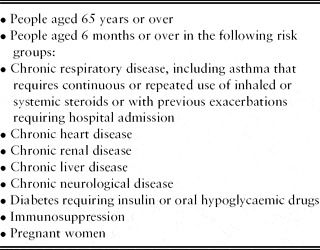
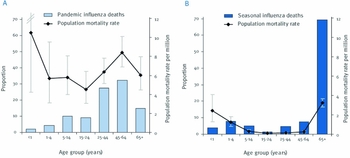
Mortality from influenza is highest in older people,Reference Armstrong, Mangtani, Fletcher, Kovats, McMichael and Pattenden4 as illustrated in Fig. 1,Reference Pebody, McLean, Zhao, Cleary, Bracebridge and Foster5 despite prevalence being greater in the young. After 1–2 days incubation, typical symptoms of fever, malaise, myalgia, pharyngitis and coryza occur. Most cases represent a self-limiting infection, but hosts are infectious from 24 hours before symptoms appear until approximately day 5 of illness. Risk groups of the immunocompromised, those with chronic medical conditions, pregnancy and those at extremes of age are more likely to suffer complications. These include primary viral pneumonia or secondary bacterial superinfection, usually due to the typical community-acquired pneumonia bacteria: Streptococcus pneumoniae, Haemophilus influenza and Staphylococcus aureus. Individuals at high risk of severe influenza for whom anti-viral treatment is advisable are shown in Table 1.
Individuals at high risk of severe influenza for whom anti-viral treatment is advisable

Age distribution of (A) pandemic influenza deaths, England, until February 2010 (n = 336) with cumulative population pandemic influenza mortality rate and (B) seasonal influenza deaths in England (January 2001– February 2009) (n = 334), with average annual population mortality rate (2001–2008). Reproduced with permission from Eurosurveillance.

Whilst diagnosis is often made on clinical grounds, distinguishing influenza from other viral pathogens by molecular testing polymerase chain reaction (PCR) on combined nose and throat swabs collected in viral transport medium is beneficial, as there are specific anti-viral agents for influenza. Treatment with the anti-viral neuraminidase inhibitors oseltamivir and zanamivir are indicated for at-risk groups listed below, ideally started within 48 hours of symptom onset. Supportive therapy with rest, hydration and anti-pyretics is universally indicated. Antibiotics should be considered if bacterial super-infection is suspected.
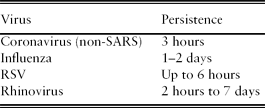
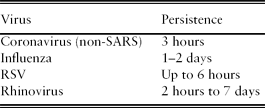
Transmission is by aerosol, droplets or through direct contact with respiratory secretions of an infected individual. Infection can spread rapidly through residential and care homes, therefore the cornerstones of management are a pre-emptive vaccination strategy and heightened awareness of infection control measures. Environmental cleaning will be an important infection control measure for those organisms that can survive in the environment (Table 2).
Persistence of virus on dry inanimate surfacesReference Pebody, McLean, Zhao, Cleary, Bracebridge and Foster5
It is still possible to catch ‘flu’ despite vaccination, due to strain and timing variables. Each year the required components for a new influenza vaccine are identified by the World Health Organisation (WHO) in anticipation of the likely circulating strains during the following season. All healthcare workers, those with chronic medical illness, and people over the age of 65 should be vaccinated. Effective immunity from vaccination is gained within 14 days but lost by the end of the season. In the elderly, protection produced by the vaccine may be lower, but immunization does reduce the incidence of severe disease including bronchopneumonia, hospital admissions and mortality.Reference Hancock, Veguilla, Lu, Zhong, Butler and Sun3, Reference Armstrong, Mangtani, Fletcher, Kovats, McMichael and Pattenden4, Reference Nichol, Nordin, Nelson, Mullooly and Hak7
Other respiratory viruses
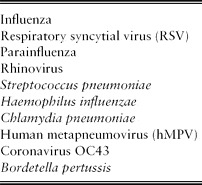
Other respiratory pathogenic viruses include respiratory syncytial virus (RSV), parainfluenza, coronavirus, rhinovirus and metapneumovirus (Table 3). Outside of supportive care, there are no specific anti-viral treatments indicated for immunocompetent adults and little data available on pathophysiology in the elderly. Infections in an immunocompromised host are more severe, with bone marrow transplant recipients being the worst affected. Differentiation on a purely clinical basis is almost impossible.
Relative frequency of organisms isolated from care home outbreaks of acute respiratory illnessReference Pebody, McLean, Zhao, Cleary, Bracebridge and Foster5

RSV causes an acute respiratory illness in people of all ages with varying manifestations. It is second place to influenza in terms of prevalence. Despite not undergoing periodic antigenic change, immunity is incomplete. It plays an under-recognized role in infections of the older adult. In a prospective cohort study of hospitalized adults, RSV was shown to have twice the annual incidence of influenza, with comparable lengths of stay, need for intensive care monitoring and mortality rate (8 and 7%, respectively).Reference Falsey, Hennessey, Formica, Cox and Walsh8 Ribavirin is only indicated in confirmed RSV infection in bone marrow transplant patients.Reference McColl, Corser, Bremner and Chopra9
Parainfluenza virus is responsible for 10% of acute adult respiratory illness, with type 3 being the most prevalent serotype. Outside of supportive measures, even in the immunocompromised, no specific anti-viral has shown benefit.
Rhinoviruses and coronaviruses tend to cause ‘the common cold’; they circulate throughout the year but peak in the spring and autumn. There are over 100 serotypes of rhinovirus.
Severe acute respiratory syndrome (SARS) was caused by an entirely novel coronavirus. It was first recognized in China in November 2003, spread to 29 countries, and had a fatality rate of 11%. There was a high level of transmission to healthcare workers. Older people had a lower incidence but higher mortality. No major outbreak has been reported since 2003.10
Human metapneumovirus is similar to RSV and was only first described in 2001. It is thought to be less virulent than RSV and influenza.Reference Falsey and Walsh11
Gastrointestinal infections
Outbreaks of viral gastroenteritis occurring in institutional settings, particularly in long-term care facilities for the elderly, are well documented to cause significant morbidity and death. In temperate climates, the winter months yield a dramatic rise in incidence, which in turn places significant pressure on secondary care resources.
Whilst most reported outbreaks in care homes are caused by norovirus, the other virus in the caliciviridae family, sapovirus, can also cause sporadic outbreaks of gastroenteritis across the globe. Incidence of sapovirus-related outbreaks may be rising.Reference Lee, Cebelinski, Fuller, Keene, Smith and Vinje12
Transmission is by contaminated food, water, fomites and occasionally aerosolization of secretions such as vomitus or diarrhoea. Other causes of viral gastroenteritis include rotavirus, astrovirus and adenovirus. All are more common in children but outbreaks in adults and the elderly have been described.
Norovirus
Norovirus is a highly infectious virus, implicated in seasonal winter outbreaks in temperate climates. It is a frequent cause of outbreaks of gastroenteritis in community settings, nursing homes and in hospital wards. Increased mortality has been described up to 30 days following the acute period in patients aged 85 and over, and in those aged 65 and over with co-morbidities.Reference Mattner, Sohr, Heim, Gastmeier, Vennema and Koopmans13, Reference van Asten, van den Wijngaard, van Pelt, de Kassteele, Meijer and van der Hoek14
Norovirus in healthy adults causes a short prodrome of anorexia, lethargy and headache, followed by vomiting and diarrhoea lasting 48–72 hours. Older people, particularly those with co-morbidities, tend to have prolonged symptoms, often for a week or more, with more complications.Reference Goller, Dimitriadis, Tan, Kelly and Marshall15 The majority develop lethargy and diarrhoea; over half will experience vomiting. Electrolyte disturbance can have widespread detrimental effects, including precipitation of cardiac arrhythmias. Prolonged non-specific symptoms such as thirst, dizziness, anorexia and lethargy may persist for more than 10 days following the resolution of diarrhoea. Immuno-suppressed patients are particularly at risk of prolonged symptoms and may require review of dosages of immunosuppressive agents.
Dehydration is not always evident clinically in older patients. This may trigger renal impairment, so requires early identification and careful management with volume replacement and electrolyte balance monitoring. Dialysis may be necessary in severe cases. The use of lactobacillus in pro-biotics has been shown to shorten pyrexia and change intestinal flora, although it does not shorten diarrhoea duration.Reference Nagata, Asahara, Ohta, Yamada, Kondo and Bian16
Prompt identification of an outbreak can minimize the number of secondary cases. Norovirus is transmitted by contaminated food or surfaces; shedding commences during the prodromal period. In hospital, infection control options include rapid isolation in single rooms, or in a bay or ward closed to further admissions,Reference Partridge, Evans, Raza, Kudesia and Parsons17 strict hand-washing and barrier methods,Reference Harris, Lopman and O'Brien18 increased environmental cleaning with 0.1% hypochlorite sodium solution, using disposables and avoidance of staff transfer between areas.
Herpes viruses
Varicella zoster virus
Herpes zoster or ‘shingles’ causes significant morbidity in older people. Latent varicella zoster virus (VZV) persists in sensory ganglia following primary varicella infection (chickenpox). Reactivation usually causes a unilateral, painful, vesicular rash within a dermatomal distribution. Debilitating localized pain can be the presenting feature prior to development of the classical rash.
Incidence increases with age, with a lifetime risk of 25–35%.Reference van Hoek, Gay, Melegaro, Opstelten and Edmunds19 In those aged over 65 years in the UK, incidence is greater than 900 cases per 100,000 person-years.Reference Brisson and Edmunds20 This is considered to be due to reduced VZV-specific cell-mediated immune response.Reference Gnann21
The most common complication of shingles is post-herpetic neuralgia (PHN), defined as pain persisting more than 3 months after the rash has healed. It can be severe and debilitating, affecting 13–26% of all patients. It is more common in older people, occurring in 50% of those aged 70 years or older.Reference Lang and Michel22 Other complications include encephalitis, zoster ophthalmicus and retinitis.Reference van Hoek, Gay, Melegaro, Opstelten and Edmunds19
Early and aggressive treatment of shingles shortens the acute illness and also reduces acute pain and duration of PHN, allowing more elderly patients to continue to manage at home rather than ending up institutionalized. Although 22% of patients with zoster will still develop PHN, it is milder.Reference Pentikis, Matson, Atiee, Boehlecke, Hutchins and Patti23 Corticosteroids do not significantly reduce the incidence of prolonged pain, and increase the risk of secondary bacterial skin infections as well as visceral and cutaneous dissemination of zoster.Reference Lang, Pautex, Belmin and Michel24
Guidelines suggest a stepwise approach for the management of acute herpes zoster neuralgia with anti-virals (within 72 hours of rash onset) and analgesia, as well as encouraging referral to pain specialists where pain is not adequately managed with medications.Reference Lang, Pautex, Belmin and Michel24 A similar stepwise approach of prescribing rules and recommendations for medication use in older people has been developed for PHN.Reference Lang, Pautex, Belmin and Michel24 Often neuropathic analgesics such as gabapentin or pregabalin are more effective than simple analgesics in controlling zoster-related pain and PHN. Care should be taken when prescribing such agents in an older population due to the increased risk of side-effects, e.g. sedation and increased falls risk. NICE Clinical Guideline 96 is a useful guide to the pharmacological management of neuropathic pain in adults in non-specialist settings. Newer formulations of aciclovir, such as valaciclovir – administered three times daily rather than five – are more cost effective as both oral bio-availability and compliance are improved. New agents for the treatment of zoster are under development, with at least one in a phase II trial.Reference Pentikis, Matson, Atiee, Boehlecke, Hutchins and Patti23
Currently mass vaccination of children to prevent primary varicella infection is not recommended in the UK, unlike in the USA and Japan.Reference Gilden25 There is concern that this might drive an increase of more severe disease in older non-immune individuals, and remove the immune priming effect of exposure to chickenpox, which has been shown epidemiologically to reduce the incidence of zoster.Reference Brisson, Gay, Edmunds and Andrews26
There is evidence that introducing zoster vaccination in the elderly could reduce the incidence of zoster cases.Reference van Hoek, Melegaro, Zagheni, Edmunds and Gay27 One placebo-controlled double-blind trial, using live attenuated VZV vaccine, demonstrated a 51% decrease in the incidence of zoster.Reference Gnann21, Reference Gilden25 Patients who developed zoster had a reduction in incidence of PHN by 39%, and a reduction in mean severity of illness.Reference Gnann21 The vaccine, Zostavax (Sanofi Pasteur MSD) is currently only available privately in the UK, but has been approved in the UK by the Joint Committee on Vaccination and Immunisation (JCVI). There are plans to introduce vaccination in those aged between 70 and 79 in 2013, and other patients with good reason may be eligible to be vaccinated on the NHS.Reference Gilden25 Modelling has suggested that vaccination would be cost effective, particularly in adults aged over 70 yearsReference van Hoek, Gay, Melegaro, Opstelten and Edmunds19 to prevent episodes of zoster; it is not indicated for the treatment of zoster or PHN.
Herpes simplex encephalitis
Herpes simplex virus (HSV) is the most common cause of sporadic fatal viral encephalitis in industrialized nations, with an incidence of 1–3 per million annually.Reference Steiner, Kennedy and Pachner28 Herpes simplex encephalitis (HSE) is caused by HSV1 in the majority of cases (>90%), but can be caused by HSV2,Reference Steiner, Kennedy and Pachner28, Reference Whitley29 seen more commonly in immunocompromised individuals. HSE can occur during primary infection with HSV or reactivation of latent infection.Reference Puchhammer-Stockl, Aberle and Heinzl30 The incidence has a bimodal distribution: one third of cases occur before 20 years of age and half over 50, peaking between 60 and 64 years.Reference Steiner, Kennedy and Pachner28, Reference Koskiniemi, Piiparinen, Mannonen, Rantalaiho and Vaheri31 Incidence decreases above age 65, but morbidity and mortality are significantly higher in this age group.Reference Koskiniemi, Piiparinen, Mannonen, Rantalaiho and Vaheri31, Reference Riera-Mestre, Requena, Martinez-Yelamos, Cabellos and Fernandez-Viladrich32 There is no seasonal distribution, and untreated HSE has a mortality rate of over 70%.Reference Whitley29
HSE usually presents as an acute onset (<1 week) non-specific meningo-encephalitis, with headache, fever and alterations in consciousness or behaviour. Fever is the most common sign at diagnosis, and headache occurs in up to 90%. Neck stiffness may be present, but more specific to HSE are prodromal symptoms relating to upper respiratory tract infection and fronto-temporal lobe dysfunction.Reference Steiner, Kennedy and Pachner28 Prompt recognition and treatment improves outcome.Reference Steiner, Kennedy and Pachner28, Reference Solomon, Michael, Smith, Sanderson, Davies and Hart33
National guidelines for the management of suspected viral encephalitis in adultsReference Solomon, Michael, Smith, Sanderson, Davies and Hart33 advise that all patients admitted with suspected encephalitis should have a lumbar puncture (LP), unless contra-indicated, plus a computed tomography (CT) scan of the brain as soon as possible. If performing an immediate LP immediately is unsafe, the situation should be reviewed every 24 hours and an LP carried out as soon as practicable. As well as standard cell counts, biochemistry and opening pressure, investigations on CSF should include PCRs for HSV1, HSV2, enterovirus and VZV.
If the clinical picture is in keeping with HSE, a ‘normal’ LP result should not prompt cessation of therapy. Rather, a repeat LP should be performed 24–48 hours later.Reference Solomon, Michael, Smith, Sanderson, Davies and Hart33
HSV causes a necrotizing encephalitis that typically involves the orbital surfaces of the frontal lobes and inferomedial temporal lobes, although other areas of the brain may also be affected.Reference Domingues, Fink, Tsanaclis, de Castro, Cerri and Mayo34 Magnetic resonance imaging (MRI) brain examination is more sensitive than CT and is the imaging modality of choice, ideally occurring within 24 hours of admission.Reference Solomon, Michael, Smith, Sanderson, Davies and Hart33
Treatment of HSE is with intravenous aciclovir (10 mg kg−1 three times daily), and should be started as soon as viral encephalitis is suspected. Dose adjustments for renal impairment should be made as necessary. Treatment duration for proven HSV encephalitis should be 14–21 days. A European Consensus Statement recommends repeating the LP prior to completion of treatment to ensure that HSV PCR is negative. Oral valaciclovir for HSE is not currently recommended, although this is being assessed. Similarly, the role of corticosteroids is currently unclear whilst the results of a randomized controlled trial are awaited.Reference Solomon, Michael, Smith, Sanderson, Davies and Hart33
Epstein–Barr virus and cytomegalovirus
Epstein–Barr virus (EBV) and cytomegalovirus (CMV) are herpes viruses that remain latent in B cells following primary infection and can reactivate, most commonly in immunosuppression, but also with senescence.Reference Stowe, Kozlova, Yetman, Walling, Goodwin and Glaser35 Both viruses are transmitted by close contact, with the majority of people being infected as children or young adults.
Primary EBV infection is often asymptomatic, and classically causes ‘infectious mononucleosis’ or ‘glandular fever’ in teenagers and young adults. Only 3–10% of adults over 40 remain susceptible to acute EBV infection.Reference Auwaerter36 Diagnosing primary infection in older adults may be difficult as the presentation can be atypical. The classical pharyngitis and splenomegaly are often absent; presentations may include jaundice with cholestatic hepatitis, prolonged fever, anaemia and Guillain–Barré syndrome.Reference Horwitz, Henle, Henle, Schapiro, Borken and Bundtzen37 Management of acute EBV infection is generally supportive; the majority of infections resolve spontaneously, although the illness may be more protracted in older adults.
Reactivation of EBV is generally associated with immunosuppression. It is considered to contribute to oncogenesis in several lymphoproliferative disorders, including Hodgkin's lymphoma, Burkitt's lymphoma, post-transplant lymphoproliferative disorders and human immunodeficiency virus (HIV)-associated lymphomas. More recently, particularly in Asia, it has been associated with EBV-positive diffuse large B-cell lymphoma of the elderly (included in the WHO classification (4) of lymphomas).Reference Castillo, Beltran, Miranda, Paydas, Winer and Butera38
Acute CMV infection is usually asymptomatic, although it can also cause mononucleosis, and is followed by latent infection. A seroprevalence study in the USA between 1988 and 1994 estimated the prevalence of CMV infection in those aged 60 and over to be 83%.Reference Staras, Dollard, Radford, Flanders, Pass and Cannon39 Acute infection has been associated with mainly venous thrombosis in over 100 case reports,Reference Justo, Finn, Atzmony, Guy and Steinvil40 although no prospective study has yet been carried out.
Disease from CMV reactivation may be a presenting feature of HIV/AIDS infection, or a consequence of immunomodulatory therapy for malignancies or inflammatory disorders. Disease features include end-organ damage such as retinitis, pneumonitis, oesophagitis and colitis. Ganciclovir and Foscarnet have good anti-CMV activity but have associated toxicities including marrow suppression and electrolyte imbalance. They should be prescribed in conjunction with virology or infectious diseases advice for monitoring and support.
Chronic infection and reactivation of CMV and EBV is thought to be associated with increased frailty and inflammation, possibly contributing to cardiovascular disease, Alzheimer's disease, type 2 diabetes and cancer.Reference Bennett, Glaser, Malarkey, Beversdorf, Peng and Kiecolt-Glaser41 There is currently no licensed vaccine for prevention of either infection.
Human immunodeficiency virus
The dramatic improvement in survival of people living with HIV infection means that HIV incidence in older adults is increasing. Highly active anti-retroviral therapy (HAART), available since 1995, has led to a significant decline in cases of AIDS (acquired immune deficiency syndrome). However, longer term complications are now being recognized, such as increased cardiovascular risk, renal impairment, osteopenia and osteoporosis.Reference Bhavan, Kampalath and Overton42
Unfortunately, there is often a delay in diagnosis of new infections in older people.Reference Pratt, Gascoyne, Cunningham and Tunbridge43, Reference Asboe, Aitken, Boffito, Booth, Cane and Fakoya44 In 2010 in the UK, an estimated 91,500 people were living with HIV, of whom 21% were over the age of 50 (in comparison with 11% in 2001) and 19–30% remained undiagnosed. By the end of 2012, it is expected that more than 100,000 people will be living with HIV in the UK.45 In the USA, it is estimated that by 2015 over 50% of people living with HIV will be over the age of 50.Reference Effros, Fletcher, Gebo, Halter, Hazzard and Horne46
There are several reasons why older people may be at risk of HIV. Firstly, the misconception that older people are sexually inactive leads to omission of consideration of the diagnosis by healthcare professionals, therefore testing is not offered. However, foreign travel to destinations with thriving sex industries has increased, plus potency drugs have extended the sex lives of many elderly males.Reference Pratt, Gascoyne, Cunningham and Tunbridge43, Reference Sankar, Nevedal, Neufeld, Berry and Luborsky47 Secondly, early symptoms may be ascribed to ageing – both by people with HIV and healthcare professionals. Thirdly, there is a lack of prevention measures and education aimed at this age group. Some cohorts studied have shown a lack of perception of risk, and a reluctance to learn about HIV.Reference Sankar, Nevedal, Neufeld, Berry and Luborsky47 Other risk factors include current or previous injecting drug use. Also, the fear of stigma associated with an HIV diagnosis may preclude older people from seeking medical help.Reference Pratt, Gascoyne, Cunningham and Tunbridge43
Given these statistics, those involved in the care of older people should be familiar with the prevention, diagnosis and management of HIV. This includes taking a comprehensive sexual and drug history, and providing education to patients about risks and prevention. There are a number of specific diagnoses which should prompt an automatic HIV test – such as lymphomas, leukaemias, cervical cancer, early dementia, lung cancer and recurrent shingles.Reference Justo, Finn, Atzmony, Guy and Steinvil40 A late diagnosis with low CD4 count is associated with a significantly higher morbidity and mortality (a 10-fold increased risk of death within 1 year of HIV diagnosis).45 Therefore, physicians need to be both aware of HIV and willing to offer testing. Although testing does require a patient's verbal consent, there is no longer a requirement for in-depth specialist counselling prior to testing and all doctors should be competent to do this.Reference Pratt, Gascoyne, Cunningham and Tunbridge43
HIV, since the introduction of HAART, is a chronic disease, which requires regular monitoring and specialist follow-up in an HIV centre. However, there are many co-morbidities associated with HIV infection that may be managed in primary care, and potentially by geriatricians. Co-morbidities are extremely common in older people with HIV, with the majority having at least one.Reference Zhao and Goetz48 Examples include hypercholesterolaemia, cardiovascular disease, diabetes, cancers and neurocognitive dysfunction. It is also thought that HIV may accelerate some age-related conditions, with an increase in frailty and decrease in bone mineral density.Reference Bhavan, Kampalath and Overton42, Reference Asboe, Aitken, Boffito, Booth, Cane and Fakoya44 Absorption and metabolism of drugs may be different, and it is recommended that older patients are monitored more closely for toxicity.Reference Asboe, Aitken, Boffito, Booth, Cane and Fakoya44
To ensure optimal management of this age group, HIV specialists, geriatricians and primary care healthcare providers need to work together to ensure a holistic approach to care.
Viral hepatitis
The viral hepatidites are increasingly recognized as significant causes of morbidity and mortality in all ages. However, older people tend to have a poor outcome, in part due to age-associated physiological changes, such as immune senescence and reduced liver perfusion. Although serological evidence of previous exposure to hepatitis A (HAV) and hepatitis E (HEV) increases with age, older adults with acute HAV and HEV have increased rates of hospitalization and mortality from these infections.Reference Carrion and Martin49
Viral chronic hepatitis B (HBV) and C (HCV) are considered to have a higher prevalence in the elderly compared with others in the USA.Reference Smith, Morgan, Beckett, Falck-Ytter, Holtzman and Teo50 They usually go unrecognized, as the majority of patients are asymptomatic or display non-specific manifestations, such as generalized malaise, fatigue or arthralgia. Recent years have seen significant gains in knowledge of natural history, non-invasive assessment and therapeutic options for both infections.Reference Calvaruso and Craxi51
Relevant risk factors include blood transfusions, dialysis, subjects of mass vaccination, war veterans, a history of imprisonment or injecting drug use, endemic country of origin and direct relatives with a diagnosis of viral hepatitis. Other more subtle modes of transmission include sharing razors at barbers. Absence of current or past symptoms and signs should not preclude testing, as signs such as jaundice during the acute episode are rare, particularly for hepatitis C.
Screening in asymptomatic patients should be considered for HBV and HCV in patients from China and the Far East, Sub-Saharan Africa, the Indian subcontinent, Middle East and Eastern Europe. South American countries such as Bolivia also have a high prevalence of hepatitis C. Close contacts, such as partners and children of any age, should also be offered testing, with immunization with hepatitis B vaccine offered to those susceptible to prevent transmission.
HBV and HCV are a major cause of liver cirrhosis with or without decompensation, and of hepatocellular carcinoma, with significantly increased mortality.Reference Ly, Xing, Klevens, Jiles, Ward and Holmberg52, Reference Duberg, Torner, Davidsdottir, Aleman, Blaxhult and Svensson53 Extra hepatic manifestations may include autoimmune phenomena, membranous glomerulopathy and skin disorders, plus an association with lymphoproliferative disorders. Excess cryoglobulin production in HCV can cause skin ulcers; porphyria cutanea tarda is also associated.Reference Zignego, Ferri, Pileri, Caini and Bianchi54
All patients with liver dysfunction or a history of risk should have a non-invasive liver screen, including HBV surface antigen, core antibody and HCV antibody. HCV antibody positivity should prompt HCV RNA testing to confirm active infection. Prompt referral to a specialist centre is advised for assessment of liver disease stage and consideration for treatment.
Treatment of HBV aims to control the infection and reduce complications. Oral therapy with tenofovir or entecavir is well tolerated and used in advanced liver disease or fulminant hepatitis. Additionally, pre-emptive control of HBV reactivation can be gained in those undergoing immunosuppressive therapy including biological agents for rheumatological, dermatological and gastrointestinal conditions, bone marrow transplant and chemotherapy.Reference Roche and Samuel55
Treatment of hepatitis C aims to cure the infection and prevent long-term complications. Therapy ranges from 12 to 48 weeks duration. Newer therapies have led to response rates of up to 80%; however, this figure is diminished in older people.Reference Carrion and Martin49 Significant side-effects can include flu-like symptoms, anaemia and depression, which may outweigh the benefits from curing the infection.
Immunization against HAV and HBV are important preventative measures and should be considered for sero-negative at-risk individuals of any age. Following HAV vaccination, antibody peak titres are lower in older people, although no study has examined vaccine response in people aged over 65 years. Vaccination should occur at least 4 weeks before travel, but in practice this is often not the case.Reference Leder, Weller and Wilson56 A second dose of HAV vaccine 2–4 weeks after the first dose or an early booster dose is suggested for older people, along with routine antibody testing to identify non-responders.Reference Genton, D'Acremont, Furrer, Hatz and Loutan57 Response to hepatitis B vaccination has also been noted to be much lower in older people.
Prevention of viral illnesses associated with travel
In 2011 there were over 5.9 million visits abroad by UK residents aged 65 and over. Most of these visits were to Europe, but almost 1.2 million were further afield.58 Vaccinations are frequently recommended prior to travel to many holiday destinations. Travellers visiting friends or family abroad often underestimate their potential risk of infection and fail to plan preventative measures. In addition, changes in immune response in older people often mean a decrease in quantity and quality of response to illness and vaccination
As well as vaccinations for infectious diseases acquired abroad, special consideration should be given for holidays such as cruises, which are especially popular with older age groups. Outbreaks of influenza and norovirus have been reported on several cruises, with significant morbidity. Influenza vaccination is recommended in the UK for all people aged over 65 years, and is advised in some countries for all those travelling in large tourist groups.Reference Brotherton, Delpech, Gilbert, Hatzi, Paraskevopoulos and McAnulty59 Education about spread of infection and hygiene measures may be important to include in pre-travel counselling, as well as consideration of vaccination.
Yellow fever virus is a flavivirus transmitted by mosquitoes in some areas of Africa and South America. It is a mostly rural disease, and a vaccine has been available for over 60 years. Since 1996 several cases of yellow fever vaccine-associated neurotropic and viscerotropic disease have been reported, leading to concerns about its safety. The risk of serious adverse events occurring after yellow fever vaccination increases significantly with age, especially over the age of 60. The recommendation is therefore that the vaccine be used with caution in anyone aged 60 years and over, ideally with specialist support.60
Dengue fever is another mosquito-borne viral infection for which there is no effective vaccine or therapy. Epidemiologically it is common in South-East Asia and the Indian sub-continent, the Caribbean, South America and some areas of sub-Saharan Africa. Measures to prevent acquisition include the use of insect repellents, long-sleeved clothing and bed-nets for sleeping. Diagnosis is made through serology, in practice often after other illnesses such as malaria have been excluded.
Japanese encephalitis vaccine appears to have similar immunogenicity in older people.Reference Leder, Weller and Wilson56 Following rabies vaccine, antibody titres are lower in older people, but it is unclear whether this correlates with decreased protection.Reference Leder, Weller and Wilson56 However, vaccine-related antibodies to poliomyelitis do appear to wane, with 20% of those over 50 having undetectable levels.Reference Bouree61 Older people travelling to areas where poliomyelitis is still endemic may therefore benefit from vaccination.
Conclusion
The manner in which older patients respond to disease, and more specifically viral infections, will vary greatly, depending on co-morbidities and interactions with medication, as well as physiological variables. A clinician's ability to care for this cohort requires a breadth of knowledge of pathology greater than that of previous generations of geriatricians. With the therapeutic and diagnostic advances of recent years, a response of ‘it's just a viral infection, there is little we can do’ will not be acceptable. Increased recognition of the impact of viruses will in future help reduce and pre-empt the disease burden being managed by those caring for older people.